DiscoverFlourishing in Medicine: From Surviving to Thriving
Flourishing in Medicine: From Surviving to Thriving
Claim Ownership

Flourishing in Medicine: From Surviving to Thriving

Author: EmPRO Insurance

Subscribed: 5Played: 3
Share

Description

Flourishing in Medicine: From Surviving to Thriving explores ways that health professionals- physicians, nurses and nurse practitioners, physician assistants, mental health providers, therapists, and others- can truly flourish in the complex and challenging world of health care.

The ability for physicians and other health professionals to practice high quality care and attain professional satisfaction and meaning in their work has been under continued challenge. These critically important members of our communities experience ongoing threats to their well-being and hence to the quality of care they deliver. The recent pandemic has only exacerbated changes that have occurred over the preceding years in the practice of medicine, exposing even further the fragility of our imperfect health care systems. This podcast explores the many ways that physicians can and do flourish, including a deeper exploration of what it means to work at the frontier of human frailty and suffering, while applying biomedical science and compassionate care to address the complexities of the human condition. It is the hope that this podcast can help support these health professionals and ultimately translate into improved care of themselves, their patients, and our communities.

Your host, Mick Krasner M.D., F.A.C.P, is a Professor Emeritus of Medicine at the University of Rochester School of Medicine and Dentistry. Dr. Krasner has been teaching Mindfulness-Based programs to patients, medical students, and health professionals for more than 23 years, involving over 4000 participants and more than 2000 health professionals, and continues to facilitate Mindfulness-Based Stress Reduction for employees and dependents of the University of Rochester. He was the project director of Mindful Communication: Bringing Intention, Attention, and Reflection to Clinical Practice, sponsored by the New York Chapter of the American College of Physicians, funded by the Physicians Foundation for Health Systems Excellence, with results reported in JAMA in September 2009. This program led to the establishment of Mindful Practice in Medicine Programs at the University of Rochester which he co-directs, offering continuing educational programs to health professionals and educators locally and internationally for the past 13 years, and includes a multi-year teacher training program for future facilitators of Mindful Practice. He has been engaged in a variety of research projects including the investigations of the effects of mindfulness practices on the immune system in the elderly, on chronic psoriasis, and on caregivers of Alzheimer’s patients. His most recent project, The Healer’s Journey, is a documentary film in production that explores the professional identity formation of our newest health professionals, the medical students.

Dr. Krasner graduated from the University of California, Berkeley in 1983 and received the Doctor of Medicine degree from the University of California, San Diego School of Medicine in 1987, completing residency in both Internal Medicine and Pediatrics at the University of Rochester School of Medicine and Dentistry where he continued as a full-time faculty member, engaging in medical student and residency education, post-graduate medical education, and research. He has shared his work in peer-reviewed publications, scientific assemblies, workshops, visiting professorships, and intensives throughout the world, focusing primarily on the roots of Hippocratic medicine through the cultivation of attention, awareness, and reflection on the health professional- healing relationship. Having recently left clinical practice, he now devotes all his time to the pursuit of helping physicians and other health professionals flourish.
36 Episodes
Reverse
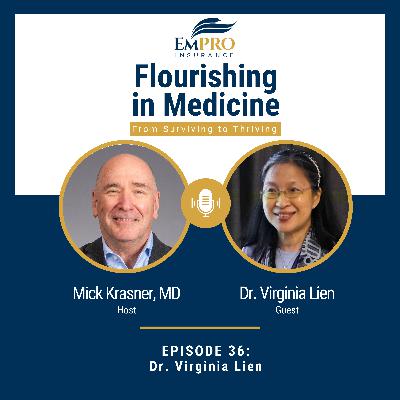
Today, we are joined by Dr. Virginia Lien, a physician, psychotherapist, and mindfulness teacher from Singapore who has been caring for others for four decades.Dr. Virginia Lien is a physician, psychotherapist and mindfulness teacher caring for others for four decades in Singapore. Since retiring from clinical medicine after a serious accident 12 years ago, she has recovered to start The Mindful Compassion Project in 2017. This is a not-for-profit partnership offering mindful compassion programs and retreats to promote well-being and flourishing among local professional caregivers in medicine and healthcare. Working with many gifted clinicians and medical educators locally and internationally, she is passionate about promoting Mindfulness and Compassion in Medicine to effect holistic changes both at the personal and the organizational leadership level. She believes that, together, we can bring healing back to healthcare, beginning by caring for ourselves and our dedicated colleagues. In the conversation, Dr. Lien shares how a traumatic burn injury transformed her understanding of both patient and caregiver experience, leading her to create circles of connection that ripple outward to influence healthcare culture in Singapore and beyond.We also cover:The rapid evolution of Singapore's healthcare system and the escalating pressures on students and cliniciansThree key programs: Mindful Self-Care, Self-Compassion for Healthcare Communities, and Mindful Practice in MedicineHow small circles of practitioners create ripple effects of kindness and humanity in healthcare systemsDr. Lien concludes by emphasizing the importance of bringing mindfulness and compassion to leadership levels, noting that compassionate leadership actually strengthens resilience and connection rather than creating weakness or inefficiency.Links:The Mindful Compassion Project: https://www.themindfulcompassionproject.com/ EmPro Website: https://www.myempro.com/ EmPro Peer Support Program: https://www.myempro.com/peer-support/ Physician Support Line: +1(888) 409-0141Physician Support Line Website: https://www.physiciansupportline.com/ Dr. Krasner's Website: https://mickkrasnermd.com/ Mindful Practice in Medicine Website: https://mindfulpracticeinmedicine.com/ Chapters:(00:00) Introduction(05:28) Why Medicine(06:40) Childhood Illness (10:12) Healthcare Journey (11:30) Patient Experience(12:00) Discovering Mindfulness and Self-Compassion(13:58) Healthcare in Singapore(16:55) Pressures on Healthcare Professionals(19:15) The Mindful Compassion Project(22:24) Transformation During COVID(24:21) The Power of Connection(25:25) Scaling Programs in Singapore's Healthcare System(28:14) Community, Practice, and Regional Vision(30:00) Opportunities in China and Asia Pacific(32:22) Bringing Compassion to Leadership(34:24) Conclusion
Today, we are joined by Dr. Sarah Smithson, MD, MPH, and Jane Cooper-Driver, co-founders and co-CEOs of Relational Leadership Partners.In the conversation, Dr. Smithson and Cooper-Driver explore relational leadership as a human-centered approach that cultivates connection, collaboration, and belonging while addressing how traditional hierarchical models in healthcare leave authenticity, innovation, and quality on the table.We also cover:How relational breakdowns contribute to burnout and why healthcare has become transactional rather than relationship-centeredPractical, teachable relational practices that transform conflict into creativity and build psychological safety within teamsWhy these skills are not optional extras but foundational to patient care, team resilience, and organizational sustainabilityDr. Smithson and Cooper-Driver conclude by envisioning a healthcare system where team members feel part of something greater, where resilience lives within the collective, and where both staff and patients experience genuine care and belonging.Links:Relational Leadership Partners: https://rlpconnect.com/ Dr. Sarah Smithson LinkedIn: https://www.linkedin.com/in/sarah-smithson/ Jane Cooper-Driver LinkedIn: https://www.linkedin.com/in/jane-cooper-driver-01000b6/ EmPro Website: https://www.myempro.com/ EmPro Peer Support Program: https://www.myempro.com/peer-support/ Physician Support Line: +1(888) 409-0141Physician Support Line Website: https://www.physiciansupportline.com/ Dr. Krasner's Website: https://mickkrasnermd.com/ Mindful Practice in Medicine Website: https://mindfulpracticeinmedicine.com/ Chapters:(00:00) Introduction(02:00) Relational Leadership(03:00) Sarah's Origin Story(06:00) The Cadaver Lab Experience(08:00) Jane's Cross-Cultural Journey to Leadership(11:00) Defining Relational Leadership(14:00) Traditional vs. Relational Leadership Models(17:00) The All-Knowing Leader Myth(18:00) Common Relational Breakdowns in Healthcare(21:00) Conflict, Communication, and Trust(24:00) The New York Driving Analogy(25:00) Conflict Transformation vs. Resolution(27:00) Can Relational Skills Be Taught?(29:00) Intentionality in Practice(32:00) Integration vs. Compartmentalization(34:00) The Patient Experience Connection(36:00) Envisioning a Relationally Grounded Future(39:00) Love and Collective Resilience(41:00) Conclusion
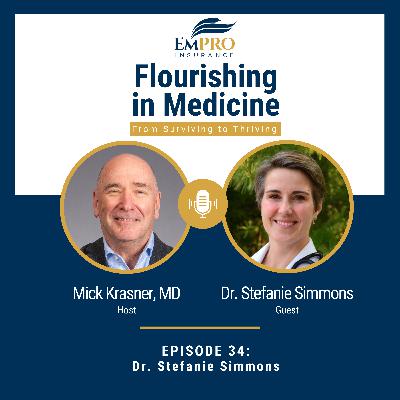
Today, we are joined by Dr. Stefanie Simmons, emergency medicine physician, national leader in clinician wellbeing, and Chief Medical Officer of the Dr. Lorna Breen Heroes Foundation, for a conversation about service, systemic change, and reimagining healthcare workers as emotional and intellectual athletes.In this conversation, Stefanie reflects on her unexpected path into medicine. Originating from a family ethic of service and her father's repeated message: our duty is to use our talents to make the world a better place. She traces how her historian's eye for systems and change, combined with early experiences of misalignment between medicine's ideals and realities, led her to focus on the interpersonal, cultural, and systemic dimensions of healing.We also cover:The tragic story of Dr. Lorna Breen and the foundation's mission to dismantle structural barriers to mental healthcare for clinicians, including invasive licensing and credentialing questions about past mental health treatmentHow personal struggles with unaddressed mental health needs and stigma shaped her commitment to changing medical culture and treating healthcare workers with the same care they provide to patientsThe foundation's comprehensive work across research, education, collaboration with national organizations, and accelerating solutions through the impact badge program that recognizes institutions removing stigmatizing questionsHer vision for the future: treating healthcare workers as emotional and intellectual athletes who deserve proper training, rest, coaching, and supportive systems designed to help them thrive rather than injure themThroughout, Dr. Simmons embodies moral clarity, vulnerability, and hope—grounded in systems thinking, dedicated to cultural transformation, and committed to a more humane medical profession. She closes with a powerful reframe: in order to reach a state where our healthcare workforce is healthy and thriving, we need to treat ourselves and each other as the intellectual and emotional athletes that we are.Links:LinkedIn: https://www.linkedin.com/in/stefsimmons/ Lorna Breen Heroes Foundation: https://drlornabreen.org/EmPro Website: https://www.myempro.com/EmPro Peer Support Program: https://www.myempro.com/peer-support/Physician Support Line: +1(888) 409-0141Physician Support Line Website: https://www.physiciansupportline.com/Dr. Krasner's Website: https://mickkrasnermd.com/Mindful Practice in Medicine Website: https://mindfulpracticeinmedicine.com/Chapters:(00:00) Introduction (00:15) Welcome and Overview(01:21) Path into Medicine(03:19) Dr. Simmon’s Origin Story (04:00) Family Service Ethic (06:00) Her Father's Influence (07:45) Personal Evolution (23:10) Lorna Breen Heroes Foundation(24:30) Dr. Lorna Breen(25:00) Finding the Foundation (26:15) Future Vision (27:00) Physicians as Athletes(29:15) Designing for Wellbeing (29:50) Closing Reflections (30:00) Mindfulness Exercise (32:07) Conclusion
Today, we are joined by Dr. Ross Carne.Dr. Ross Carne MBBS, FRACP, MD(Melbourne), MMEd (Dundee), FASLM, LMusA is a neurologist and clinical neurophysiologist who is American Board of Electrodiagnostic Medicine Certified and a Mindfulness Based Stress Reduction (MBSR) Certified Teacher through MTIA. He holds a Doctorate of Medicine investigating brain imaging in epilepsy and a Masters in Medical Education. He is currently an Affiliate Professor at School of Medicine, Deakin University, Geelong, Victoria, Australia.In this conversation, Ross reflects on the formative experiences that drew him into medicine and how these shaped his lifelong desire to relieve suffering and make complexity understandable to others.We also cover:How mindfulness transformed both his clinical practice and personal life, opening space for authenticity, deeper presence, and creative explorationHis "Belonging in Medicine" program, which helps clinicians reconnect with intention, beauty, and collegial connections across individual, interpersonal, and organizational dimensionsHow contemplative practices like attentive listening, acknowledging emotional content, and sharing experiences with colleagues directly counter the components of burnout: depersonalization, emotional exhaustion, and professional inadequacyThroughout, Dr. Carne embodies a creative, curious spirit—open to possibilities, grounded in presence, and dedicated to helping clinicians discover and rediscover meaning, connection, and humanity in their work. He closes with a reminder from Rumi: "On a day when the wind is perfect, the sail just has to open and the world is full of beauty. Today is such a day."Links:Mindfulness Training Institute Australia New Zealand: https://www.mtia.org.au/search-results/teacher?id=51 EmPro Website: https://www.myempro.com/EmPro Peer Support Program: https://www.myempro.com/peer-support/Physician Support Line: +1(888) 409-0141Physician Support Line Website: https://www.physiciansupportline.com/Dr. Krasner's Website: https://mickkrasnermd.com/Mindful Practice in Medicine Website: https://mindfulpracticeinmedicine.com/Chapters:(00:00) Introduction(00:15) Dr. Carne’s path into medicine(01:00) Early experiences with illness and caregiving(02:25) The emotional impact of feeling powerless(04:10) How those moments shaped his calling(06:22) Living with seizures and personal vulnerability(07:45) Finding meaning in the healer’s role(09:12) Mindfulness and the “traveling intention”(10:27) The epiphany that shifted his practice(11:45) First encounter with mindfulness in medicine(12:15) Beginning formal mindfulness training(14:00) Integrating attention and compassion in care(16:30) The science behind awareness and suffering(18:10) The role of presence in clinical encounters(21:00) Belonging and connection in healthcare teams(24:40) What physicians need to thrive(29:34) Creativity, writing, and narrative work(31:48) Final reflections on wonder and curiosity(32:19) Closing thoughts from Dr. Carne(33:07) Guided mindfulness exercise(35:31) Conclusion
Today, we are joined by Dr. Jodi Jackson, Professor of Pediatrics in the Division of Neonatology at Children's Mercy-Kansas City/UMKC School of Medicine.Through a clinical partnership, Dr. Jodi Jackson has served as Medical Director of the NICU at AdventHealth Shawnee Mission (AHSM) since 2007. She was a founding member of the Physician Wellness program and Meaning in Medicine program with AHSM. From 2010 to present, she has been training in Mindful Practice, Quality of Care, Quality of Caring and Resilience, and is now certified to teach Mindfulness in Medicine through the Advanced Teacher Training Program for Mindful Practice in Medicine (MPIM), University of Rochester School of Medicine. She presently serves on faculty and the advisory board for the Mindful Practice in Medicine (MPIM) program, University of Rochester School of Medicine and Dentistry.In this conversation, Dr. Jackson reflects on her unconventional path to medicine, driven not by a childhood dream of becoming a doctor, but by deep curiosity about how the body and world work, and a desire for grounded understanding amid family health anxieties.We also cover:How her journey to medicine was guided by genuine curiosity rather than a predetermined visionHow the Mindfulness Scholars Program at UMKC fosters intergenerational learning, narrative sharing, psychological safety, and demonstrable improvements in wellbeingHow combining the wisdom of mindfulness and Enneagram teachings creates powerful tools for self-discovery, noticing where we're stuck, and navigating human relationships with greater compassionThroughout, Dr. Jackson embodies the way of the teacher. She is open but not attached to outcomes, committed to walking the path, and dedicated to helping shape a more conscious, humane generation of health professionals.Links:Mindful Practice in Medicine (MPIM): https://mindfulpracticeinmedicine.com/about/who-we-are/UMKC Mindfulness Scholars Program: https://libguides.library.umkc.edu/c.php?g=1441182&p=10704649EmPro Website: https://www.myempro.com/EmPro Peer Support Program: https://www.myempro.com/peer-support/Physician Support Line: +1(888) 409-0141Physician Support Line Website: https://www.physiciansupportline.com/Dr. Krasner's Website: https://mickkrasnermd.com/Mindful Practice in Medicine Website: https://mindfulpracticeinmedicine.com/Chapters:(00:00) Introduction(01:15) An unconventional path to medicine(04:00) Choosing Neonatology(07:00) The Impact of Mindful Practice(10:30) Building the Mindfulness Scholars Program(14:00) Training Students and Faculty Together(17:30) Culture Change in Medical Education(21:00) The Hidden Curriculum(24:00) Enneagram and Mindfulness(28:00) Understanding Patterns and Compassion(31:00) Tools for Healing and Growth(36:00) The Enneagram & Mindfulness(42:45) Guided Mindfulness Practice(45:00) Conclusion
Today, we are joined by Dr. Anamaria Whitmer Jacobsson, MD, a senior OB/GYN surgeon at Varberg and Kungsbacka Hospitals in Sweden, and Dr. Fredrik Bååthe, PhD, a senior researcher and lecturer at the Institute of Stress Medicine in Gothenburg and guest researcher at the Legeforskningsinstituttet in Oslo.In the conversation, Drs. Whitmer Jacobsson and Bååthe share their deeply personal “why,” exploring how formative experiences shaped their values of service, connection, and human potential. We also cover:Why traditional debriefing can backfire when teams are outside their window of tolerance and what to do insteadHow trauma-informed, appreciative questions help clinicians and patients heal, learn, and reconnect after crisesWhat sustainable healthcare looks like in practice, with lessons from a Swedish clinic achieving low burnout and high fulfillment for over 20 yearsLinks:Dr. Whitmer Jacobsson’s LinkedIn: se.linkedin.com/in/anamaria-whitmer-jacobsson-b69b966b Dr. Bååthe’s LinkedIn: /www.linkedin.com/in/fredrik-b%C3%A5%C3%A5th-10682a89/Claritatis AB: https://claritatisab.com/new-page-1 A.L.S.O. Scandinavia: https://www.also-scandinavia.com/kurs-i-sverige/ SLF: https://slf.se/in-english/ SFOG: https://www.sfog.se/kunskap/psykosocial-ob-gyn-samt-sexologi-pos-arg/ ISM: https://tinyurl.com/5n7ce2d5 LEFO: https://tinyurl.com/3mv2nbzy EmPro Website: https://www.myempro.com/ EmPro Peer Support Program: https://www.myempro.com/peer-support/ Physician Support Line: +1(888) 409-0141 Physician Support Line Website: https://www.physiciansupportline.com/ Dr. Krasner's Website: https://mickkrasnermd.com/ Mindful Practice in Medicine Website: https://mindfulpracticeinmedicine.com/Chapters:(00:00) Introduction(02:00) The Why: Service and Human Connection(10:00) From Industry to Healthcare: Unlocking Human Potential(20:00) Mindful Practice and the Birth of the Swedish Model(30:00) Complexity Science and Organizational Healing(37:00) Trauma-Informed, Appreciative Inquiry in Practice(43:00) Sustainable Healthcare in Sweden(47:00) Expanding to Michigan and Beyond(51:00) Vision for the Future of Care(55:00) Conclusion
Today, we are joined by Dr. Elizabeth Gaufberg, MD, MPH, an Associate Professor of Medicine and Psychiatry at Harvard Medical School and Director of Professional and Academic Development at the Cambridge Health Alliance.In the conversation, Dr. Gaufberg shares how a formative anatomy lab moment sparked her lifelong commitment to reflective practice and using the arts and humanities to cultivate essential clinical skills.We also cover:How the Cambridge Integrated Clerkship model preserves patient-centeredness through longitudinal relationships and relational learningUsing "third things" like visual art and poetry to teach observation, bias awareness, teamwork, and tolerance for ambiguityPractical approaches for bringing arts-based reflection into clinical settings to support psychological safety and professional flourishingLinks:Dr. Elizabeth Gaufberg Faculty Profile: https://postgraduateeducation.hms.harvard.edu/faculty-staff/elizabeth-gaufbergCambridge Health Alliance: https://www.chacmc.org/new-pageCambridge Health Alliance PAD: https://chacpad.org/staffDr. Gaufberg LinkedIn: https://www.linkedin.com/in/elizabeth-gaufberg-503a0b7a/AAMC FRAHME: https://www.aamc.org/about-us/mission-areas/medical-education/frahmeEmPro Website: https://www.myempro.com/EmPro Peer Support Program: https://www.myempro.com/peer-support/Physician Support Line: +1(888) 409-0141Physician Support Line Website: https://www.physiciansupportline.com/Dr. Krasner's Website: https://mickkrasnermd.com/Mindful Practice in Medicine Website: https://mindfulpracticeinmedicine.com/Relevant Publications:Hirsh D, Gaufberg E, Ogur B, Cohen P, Krupat E, Cox M, Pelletier S, Bor D. Educational outcomes of the Harvard Medical School-Cambridge integrated clerkship: a way forward for medical education. Acad Med. 2012 May;87(5):643-50. doi: 10.1097/ACM.0b013e31824d9821. PMID: 22450189.Gaufberg E, Hirsh D, Krupat E, Ogur B, Pelletier S, Reiff D, Bor D. Into the future: patient-centredness endures in longitudinal integrated clerkship graduates. Med Educ. 2014 Jun;48(6):572-82. doi: 10.1111/medu.12413. Epub 2014 Apr 9. PMID: 24713035.Chapters: (00:00) Introduction(03:00) Origin Story and Path to Medicine(08:00) Why Psychiatry After Internal Medicine(10:00) Formative Anatomy Lab Moment(14:00) The Arts and Humanities in Medical Education(24:00) Bringing Arts-Based Reflection to Clinical Teams(29:00) Cambridge Integrated Clerkship Model(38:00) Challenges and Boundary Issues in Relational Learning(43:00) Hypothetical Impact on Medical Culture(49:00) Personal Well-Being Practices(52:00) Conclusion and Reflection Exercises
Today, we are joined by Dr. Catherine Pound, MSc, MPH, MD, FRCPC, Director of Physician Support and Wellness at the Canadian Medical Protective Association.Dr. Pound joined CMPA as a Physician Advisor in Safe Medical Care Learning in 2021 and became the Director of Physician Support and Wellness in 2023. She is also a pediatrician and researcher, and was an Associate Professor in the Department of Pediatrics at the University of Ottawa until 2024. Dr. Pound holds master's degrees in epidemiology as well as in public health, with a focus on health policy. Dr. Pound has obtained multiple research grants, and has been published extensively in the areas of medical education, health promotion, and clinical medicine. She has also implemented and led multiple physician wellness programs, both in clinical and administrative settings.In the conversation, Dr. Pound shares her personal journey from experiencing burnout early in her career to recognizing the widespread silent suffering among physicians and dedicating her work to systemic change that helps healthcare professionals thrive.We also cover:How her values of connection, compassion, and curiosity led her from pediatrics through public health to physician wellness leadershipCMPA's innovative programs including peer support, longitudinal coaching, and the national Physician Wellbeing Index assessmentThe critical connection between healthcare professional wellbeing and patient safety as a public health issueDr. Pound concludes by envisioning a healthcare system where professionals give themselves permission to acknowledge when they need help, creating environments of trust, collaboration, and compassionate care.Links:Dr. Catherine Pound LinkedIn: https://www.linkedin.com/in/catherine-pound-b22a921/ CMPA: https://www.cmpa-acpm.ca/en/home CMPA Practically Speaking podcast: https://www.cmpa-acpm.ca/en/education-events/cmpa-podcasts EmPro Website: https://www.myempro.com/ EmPro Peer Support Program: https://www.myempro.com/peer-support/ Physician Support Line: +1(888) 409-0141 Physician Support Line Website: https://www.physiciansupportline.com/ Dr. Krasner's Website: https://mickkrasnermd.com/ Mindful Practice in Medicine Website: https://mindfulpracticeinmedicine.com/Chapters:(00:00) Introduction(03:00) Why Medicine: Connection and Compassion(08:00) Personal Journey to Physician Wellness Work(11:00) Public Health Approach to Prevention(14:00) Physician Wellbeing as Public Health Crisis(15:00) Joining CMPA and Building Programs(17:00) Developing Evidence-Based Support Systems(22:00) Theater-Based Training and Team Approaches(25:00) Research-Driven Program Development(27:00) Envisioning the Future of Healthcare(32:00) Conclusion
Today, we are joined by Dr. Donald E. Moore, MD, MPH, a Yale-trained physician, longtime Brooklyn primary care doctor and hospital attending educator at Weill Cornell, Downstate and Pace.Dr. Donald E. Moore earned his M.D. and M.P.H. from Yale in 1981. He is an Adjunct Professor of Biology at Pace University and a Clinical Assistant Professor at Weill Cornell Medicine and Downstate Health Sciences University. For more than 30 years, Dr. Moore served as an Attending Physician at New York Presbyterian Brooklyn Methodist Hospital while also managing a primary care practice in Brooklyn for over 35 years. He is the former President of the Provident Clinical Society of Brooklyn and currently holds leadership positions in the Medical Society of the State of New York (MSSNY), including Chair of the Wellness and Resilience Committee and Chair of the AI Taskforce. Additionally, he has served as the past Chair of the Committee on Physician Health. Dr. Moore advocates for a healthcare system focused on patient care, access to quality medicine, and ethical doctor-patient relationships rooted in trust and beneficence.In the conversation, Dr. Moore traces his calling to medicine from a transformative college biology class through his humanistic education at Yale, sharing how ethics, trust, and beneficence guide his practice.We also cover:Making over 20,000 house calls and what horizontal care taught him about doctor-patient relationshipsHis leadership in physician wellness and moving from downstream treatment to upstream prevention of burnoutArtificial intelligence in medicine and the essential role of curiosity in medical practiceDr. Moore concludes by reflecting on medicine as a calling rather than just a job, emphasizing that physicians are healers and teachers who must maintain curiosity and dedication throughout their careers.Links:Dr. Donald Moore Website: https://donaldmooremd.comDr. Donald Moore LinkedIn: https://www.linkedin.com/in/donald-e-moore-m-d-m-p-h-a3868868/Pace University Advisory Board: https://www.pace.edu/dyson/about-dyson/advisory-board/donald-moore-76EmPro Website: https://www.myempro.com/EmPro Peer Support Program: https://www.myempro.com/peer-support/Physician Support Line: +1(888) 409-0141Physician Support Line Website: https://www.physiciansupportline.com/Dr. Krasner's Website: https://mickkrasnermd.com/Mindful Practice in Medicine Website: https://mindfulpracticeinmedicine.com/Chapters:(00:00) Introduction(03:00) Dr. Moore’s Calling to Medicine(08:00) Yale's Humanistic Medical Education(12:00) Ethics, Trust, and Beneficence in Practice(21:00) The Art of Making House Calls(28:00) Horizontal Care and Patient Relationships(30:00) Leadership in Physician Wellness(36:00) Embracing Artificial Intelligence in Medicine(42:00) The Central Role of Curiosity(47:00) Conclusion
Today, we are joined by Colleen Camenisch, MBA, Executive Director of the Nevada Physician Wellness Coalition.Colleen Camenisch, MBA, is an experienced Chief Executive Officer with a demonstrated history of working with leaders in the mindfulness industry and in the higher education industry and Medicine. She has a wide range of skills that include Management, Strategic Planning, Marketing Strategy, Mindfulness Based Interventions, and Public Speaking. Her strong business development experience with a post graduate training in International Business and Trade Law from United Nations' International Labour Organization (ILO) in conjunction with the University Institute of European Studies adds depth and a worldview rarely found in leaders of a community organization like the NPWC. She is a certified Mindfulness Based Stress Reduction Teacher and Teacher Trainer who regular teaches programs for the University of Massachusetts and Brown University.In the conversation, Colleen shares the deeply personal story of how losing her father to a likely medical error led her on a healing journey through mindfulness and eventually into transformative work supporting healthcare professionals.We also cover:The grassroots evolution of the Nevada Physician Wellness Coalition from responding to physician suicides to a dynamic statewide organizationHow mindfulness practice informs her leadership in navigating uncertainty and holding space for difficult conversationsThe coalition's innovative programs including peer support networks, hospital leadership collaboratives, and medical student mentorshipColleen concludes by envisioning a future where healthcare professionals feel safe, valued, and have time for meaningful patient care, while sharing her hope to replicate the coalition model nationally.Links: Nevada Physician Wellness Coalition: https://www.nevadaphysicianwellnesscoalition.com/ Colleen Camenisch’s LinkedIn: https://www.linkedin.com/in/colleen-camenisch-mba/ TEDx Reno Talk: https://www.youtube.com/watch?v=hQo-CQzoW24EmPro Website: https://www.myempro.com/ EmPro Peer Support Program: https://www.myempro.com/peer-support/ Physician Support Line: +1(888) 409-0141 Physician Support Line Website:  https://www.physiciansupportline.com/ Dr. Krasner’s Website: https://mickkrasnermd.com/ Mindful Practice in Medicine Website: https://mindfulpracticeinmedicine.com/Chapters: (00:00) Introduction (03:00) Personal Origin Story and Loss (08:00) Finding Calling in Healthcare Support (11:00) Evolution of the Nevada Physician Wellness Coalition (15:00) Coalition Programs and Services (18:00) Collaborative Working Groups (24:00) Assessment and Net Promoter Score (25:00) Mindfulness and Leadership (30:00) Balancing Training with Broad Impact (33:00) Envisioning the Future of Healthcare (40:00) Conclusion
Today, we are joined by Dr. Todd Hill and Dr. Ward Flemons.Dr. Todd Hill is a clinical psychologist, professor and Director of Behavioral Medicine in the Dept of Family Medicine at the University of Calgary's Cumming School of Medicine (CSM). He is also the Director of the CSM's Centre for Mindfulness (C4M). Dr. Ward Flemons is a Professor Medicine, Cumming School of Medicine and Department of Medicine Vice-Chair, Health Analytics and Safety. He is the former Head of Respiratory Medicine at the University of Calgary and former Medical Director of the Foothills Medical Centre's Sleep Clinic. He was a Medical Director for the Health Quality Council of Alberta (HQCA) for over 10 years.In the conversation, Dr. Hill and Dr. Flemons share how their personal journeys and formative experiences led them to discover mindfulness as a vital tool for fostering compassionate care and culture change within medical education.We also cover:How childhood experiences and early mentors shaped their commitment to helping others flourishThe evolution from individual mindfulness practice to institutional culture change through breaking down silosTheir vision for cultivating a culture of compassionate caring where meaning in medical work is recognizedDr. Hill and Dr. Flemons conclude by envisioning a future where leaders embody mindful practice naturally, creating institutions where people care not because they have to, but because they want to.Website Links & Phone Numbers: Dr. Todd Hill’s LinkedIn: https://www.linkedin.com/in/todd-hill-56b61573/ Dr. Ward Flemon’s LinkedIn: https://www.linkedin.com/in/w-ward-flemons-740244121/ Centre for Mindfulness, Cumming School of Medicine: https://cumming.ucalgary.ca/centres/centre-mindfulness/home EmPro Website: https://www.myempro.com/ EmPro Peer Support Program: https://www.myempro.com/peer-support/ Physician Support Line: +1(888) 409-0141 Physician Support Line Website:  https://www.physiciansupportline.com/ Dr. Krasner’s Website: https://mickkrasnermd.com/ Mindful Practice in Medicine Website: https://mindfulpracticeinmedicine.com/Relevant Publications: Flemons WW, Feasby TE, Wright B. Building a safety and quality culture in healthcare: where it starts. Healthc Pap. 2011;11(3):41-7; discussion 79-83. doi: 10.12927/hcpap.2011.22552. PMID: 21952026.Chapters:(00:00) Introduction(03:00) Origin Stories in Healthcare(10:00) Todd's Path to Medical Education(13:00) Ward's Journey to Patient Safety(17:00) Discovering Mindfulness for Healthcare(22:00) Conceiving Culture Change(26:00) Building Leadership Support(35:00) Collaboration and Mindfulness(42:00) Envisioning Future Success(49:00) Conclusion and Reflection Exercise
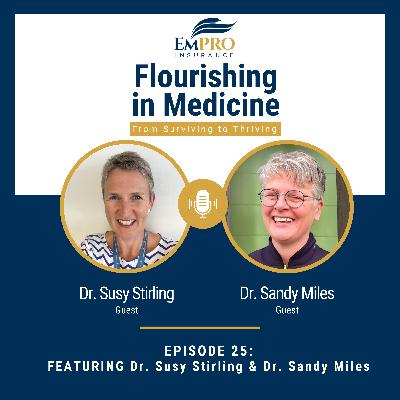
Today, we are joined by Dr. Susy Stirling, a Public Health Physician and Associate Dean based in Yorkshire & Humber, and Dr. Sandy Miles, a GP and Medical Educator in Devon, both from the United Kingdom.Dr. Susy Stirling MBChB, MSc, MPH, DCH, FFPH trained in medicine and after early career jobs in hospital medicine in the NHS, worked as a General Medical Officer in rural South Africa for 2 years. She returned to the UK to train in Public Health and was previously Lead for Migrant, Asylum Seeker and Refugee Health across the Yorkshire & Humber region.Dr. Sandy Miles is a GP and Medical Educator in Devon. Alongside her clinical role as a GP, she works in Postgraduate GP training, was Clinical Director of Eastleigh Primary Care Network and, together with Dr. Sam Powell, established popular retreats for doctors. In the conversation, Dr. Miles and Dr. Stirling share their journeys from early medical careers through personal challenges and discoveries that led them to focus on supporting healthcare professionals through storytelling, coaching, and addressing shame in medical practice.We also cover:How personal experiences with inequality, family history, and burnout shaped their paths toward supporting healthcare professionalsThe transformative power of medical humanities education and its impact on professional identityTheir collaboration on the National Health Stories experience, creating platforms for healthcare workers to share narratives of hope and humanityDr. Sandy Miles’ LinkedIn: https://www.linkedin.com/in/sandy-miles-4552a294/ Dr. Susy Stirling’s LinkedIn: https://www.linkedin.com/in/susy-stirling-469976146/Relevant Publications:Miles S. Addressing shame: what role does shame play in the formation of a modern medical professional identity? BJPsych Bulletin. 2020;44(1):1-5. doi:10.1192/bjb.2019.49Podcast Interview:https://youarenotafrog.com/episodes/152/Website Links & Phone Numbers:EmPro Website: https://www.myempro.com/EmPro Peer Support Program: https://www.myempro.com/peer-support/Physician Support Line: +1(888) 409-0141Physician Support Line Website:  https://www.physiciansupportline.com/Dr. Krasner’s Website: https://mickkrasnermd.com/Mindful Practice in Medicine Website: https://mindfulpracticeinmedicine.com/Chapters:(00:00) Introduction(03:00) Origin Stories: Why Medicine?(08:00) Susy's Path from Medicine to Medical Education(11:00) Sandy's Journey Through Burnout and Recovery(17:00) The Transformative Power of Medical Humanities(31:00) Understanding Shame in Medical Identity Formation(38:00) The Genesis of National Health Stories(43:00) Using Shame as a Compass for Core Values(51:00) The Importance of Connection in Healthcare(59:00) Envisioning a Future Healthcare System(01:07:00) Conclusion
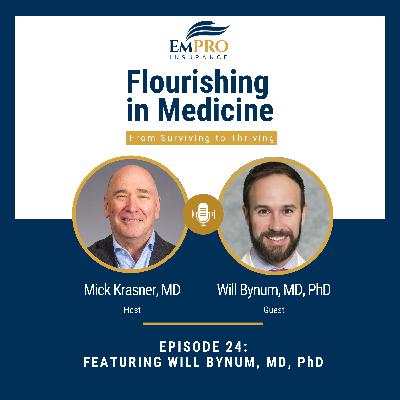
Today, we are joined by Dr. Will Bynum.Will Bynum, MD, PhD., is an Associate Professor of Family Medicine in the Duke University School of Medicine. Prior to arriving at Duke in October 2017, he served for seven years on Active Duty in the US Air Force. Will's military service included four years of faculty duties in the NCC Family Medicine Residency Program, a deployment to East Africa as the senior medical director of a special operations command, and multiple overseas trips providing medical support to traveling congressional delegations. Will currently serves as the Duke Family Medicine Residency Program Director and Faculty Advisor to the Duke School of Medicine Student Wellness Committee. Will's primary academic interest centers on the role of self-conscious emotions (shame, guilt, and pride) in the medical learning experience. He has conducted some of this research through his PhD work in health professions education at Maastricht University in the Netherlands.In the conversation, Dr. Bynum shares his journey from a service-oriented upbringing to becoming a leader in addressing shame in healthcare, exploring how authentic human connection forms the foundation of his work as both clinician and educator.We also cover:● His experiences in military service and the paradoxical psychological safety he found there compared to healthcare environments● The personal crisis that led him to study shame in medical education and healthcare● How storytelling and narrative serve as powerful tools for addressing shame● The concept of "shame competence" and shame-sensitive practices in healthcare● His vision for a more connected, authentic healthcare system that integrates humanities and creativityDr. Bynum concludes by reflecting on finding joy in his life through connecting with his family, building new experiences with his children, and creating work that feels meaningful enough to blur the line between profession and passion.Dr. Bynum’s LinkedIn: https://www.linkedin.com/in/william-bynum-698a1889/Website - Shame Space Consortium: https://www.theshamespace.com/Chapters:(00:00) Introduction(01:45) Dr. Bynum’s Background(04:00) Dr. Bynum's Path to Medicine(07:15) Service-Oriented Family Influence(10:30) Military Service Experience(16:00) Journey into Medical Education(18:45) Origin Story of Studying Shame in Medicine(24:15) Storytelling as a Tool for Addressing Shame(28:30) Comparing Military and Healthcare Environments(34:30) Shame Competence and Shame-Sensitive Practices(38:30) Creativity, Arts, and Humanities in Healthcare(42:00) Imagining a Transformed Healthcare Future(47:45) Personal Life and Finding Joy(50:15) ConclusionResources/References: The Shame Conversation Film: https://www.theshamespace.com/film Dr. Brene Brown Ted Talks on shame and vulnerability: https://www.youtube.com/watch?v=psN1DORYYV0https://www.youtube.com/watch?v=iCvmsMzlF7o Bynum WE 4th, Sukhera J. Perfectionism, Power, and Process: What We Must Address to Dismantle Mental Health Stigma in Medical Education. Acad Med. 2021;96(5):621-623. doi:10.1097/ACM.0000000000004008 Bynum WE 4th, Varpio L, Lagoo J, Teunissen PW. 'I'm unworthy of being in this space': The origins of shame in medical students. Med Educ. 2021;55(2):185-197. doi:10.1111/medu.14354 Bynum WE 4th, W Teunissen P, Varpio L. In the "Shadow of Shame": A Phenomenological Exploration of the Nature of Shame Experiences in Medical Students. Acad Med. 2021;96(11S):S23-S30. doi:10.1097/ACM.0000000000004261
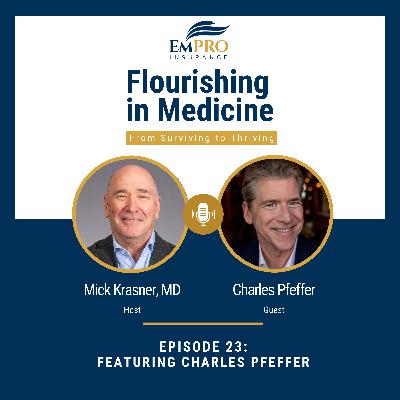
Today, we are joined by Charles Pfeffer.Charles is an organizational consultant and executive coach with over 30 years of experience helping leaders harness their own and their organization's inherent ability to create change through learning and adaptation. He guides partly through his listening skills, honed through a life-long engagement with self-awareness approaches and group dynamics training, guiding his clients to clarify what they want – for their enterprise, their teams, themselves, and the world. Has assisted executives across many varied industries and organizations, including FedEx, Xerox, DuPont, and Medifast, to align teams, develop leaders, communicate rigorously, and produce results, and has coached teams with assignments ranging from bringing the world's first production digital color printer to market to safely closing the NASA Space Shuttle program. Collaborating with Nvolv Partners, Charles worked with Starbucks and Save the Children to align leadership, strategy, and talent, and has teamed with Brimstone Consulting on strategic change initiatives at the New York Times, ExpressScripts, and the State of Maine. Working with the pioneering DEI firm, The Kaleel Jamison Consulting Group, Charles helped to bring the power of inclusion to accelerate strategy deployment at Merck, United Airlines, and EcoLab.In the conversation, Charles shares insights from his "accidental" journey into personal growth work and executive coaching, highlighting how he helps leaders navigate complexity and change while maintaining authentic purpose.We also cover:The fundamental question he poses to clients: "What do you want?" and how this simple inquiry can unlock deeper purposeHow organizations navigate change through disruption and the role of leaders in transforming systemsThe parallels between executive leadership challenges and healthcare professionals' experiencesThe connection between oath, authenticity, and purpose in professional identityHis vision for healthcare environments that provide calm, competent care through better alignment of capacity and demandCharles concludes by sharing his personal approach to flourishing, which includes time in nature - walking in the woods, kayaking, and skiing - as restorative practices that help him maintain balance while supporting leaders through complex challenges.Website: https://www.charlespfeffer.com/LinkedIn Page: https://www.linkedin.com/in/charlespfeffer/-Chapters:(00:00) Introduction(01:15) Charles Pfeffer’s Background(04:15) Charles' Journey into Personal Growth and Coaching(08:00) Early Influences and Moving Beyond Blame(10:30) The Concept of Polarities: Freedom and Responsibility(13:00) How Executive Coaching Works(17:00) Understanding Leadership and Organizational Complexity(22:45) The Challenge of Integration in Healthcare Systems(26:45) Complexity, Disruption, and Organizational Change(33:45) Flourishing Through Authentic Purpose(37:30) What Allows Charles to Flourish in His Work(41:00) Imagining a Better Healthcare Future(45:15) Personal Wellness Practices(46:15) Conclusion
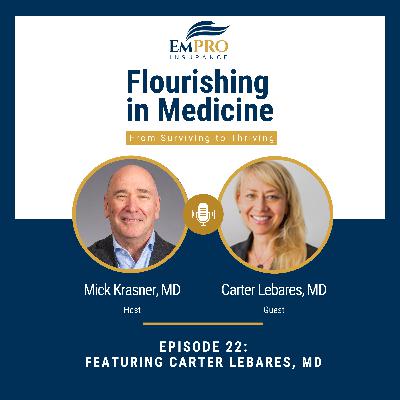
Today, we are joined by Dr. Carter Lebares.Dr. Lebares is an Associate Professor of Surgery in the Division of General Surgery and the Director of the Center for Mindfulness in Surgery at the University of California, San Francisco. She is a gastrointestinal and bariatric surgeon who specializes in treating gastrointestinal disease, using minimally invasive surgery, such as robotics and surgical endoscopy. Her expertise includes treatments for reflux disease, obesity, early esophageal or gastric cancer, esophageal motility disorders, hernias, gallbladder disease and some kinds of biliary disease.Lebares' research interests include resilience and mindfulness in surgery, mindfulness and nutrition in metabolic syndrome and obesity, the neuroendocrine and cognitive effects of stress on learning and performance. She has developed and studied a customized curriculum specifically designed for surgeons, the Enhanced Stress Resilience Training (ESRT), which has been demonstrated to improve burnout and global executive function.In the conversation, Dr. Lebares shares her journey from biochemistry to academic surgery, driven by a deep commitment to advocacy and empowering others through resilience-building approaches.We also cover:Her early experiences advocating for disadvantaged youth that ultimately led her to medicineThe evolution of surgical training environments and challenges to physician wellbeingDevelopment of the Enhanced Stress Resilience Training (ESRT) specifically designed for surgeonsHer vision for systemic changes in healthcare to preserve medicine as a "pillar of civilization"Dr. Lebares concludes by reflecting on finding joy in the simplicity of everyday life - being outdoors, connecting with people outside medicine, and appreciating ordinary moments that meditation helps bring into focus.Guest: Carter Lebares, MDAssociate Professor of Surgery, Division of General SurgeryDirector, Center for Mindfulness in SurgeryPrincipal Investigator, The Lebares Resilience LabUniversity of California, San FranciscoFaculty webpage: https://generalsurgery.ucsf.edu/faculty/acute-care-surgery/carter-lebares,-md.aspxLebares Resilience Lab Website: https://carterlebares.org/LinkedIn Page: https://www.linkedin.com/in/carter-lebares-a3970b8/Selected Resources/References:About Ann Masten PhD: https://en.wikipedia.org/wiki/Ann_MastenLibby Zion Law: https://en.wikipedia.org/wiki/Libby_Zion_LawLuton OW, James OP, Mellor K, Eley C, Hopkins L, Robinson DBT, Barlow E, Lebares CC, Lewis WG, Egan RJ; Welsh Surgical Research Initiative (WSRI) Collaborative. Enhanced Stress Resilience Training for UK Surgical Trainees; Effect and Evolution Evaluated. J Surg Educ. 2023 Oct;80(10):1395-1402. doi: 10.1016/j.jsurg.2023.07.017. Epub 2023 Aug 9. PMID: 37567800.Luton OW, James OP, Mellor K, Eley C, Hopkins L, Robinson DBT, Lebares CC, Powell AGMT, Lewis WG, Egan RJ. Enhanced stress-resilience training for surgical trainees. BJS Open. 2021 Jul 6;5(4):zrab054. doi: 10.1093/bjsopen/zrab054. PMID: 34323917; PMCID: PMC8320339.Lebares CC, Coaston TN, Delucchi KL, Guvva EV, Shen WT, Staffaroni AM, Kramer JH, Epel ES, Hecht FM, Ascher NL, Harris HW, Cole SW. Enhanced Stress Resilience Training in Surgeons: Iterative Adaptation and Biopsychosocial Effects in 2 Small Randomized Trials. Ann Surg. 2021 Mar 1;273(3):424-432. doi: 10.1097/SLA.0000000000004145. PMID: 32773637; PMCID: PMC7863698.Lebares CC, Guvva EV, Ascher NL, O'Sullivan PS, Harris HW, Epel ES. Burnout and Stress Among US Surgery Residents: Psychological Distress and Resilience. J Am Coll Surg. 2018 Jan;226(1):80-90. doi: 10.1016/j.jamcollsurg.2017.10.010. Epub 2017 Oct 26. PMID: 29107117.
Today, we are joined by Dr. Maura Kenny.Dr. Kenny is a psychiatrist with Southern Australian Health and a mindfulness teacher, trainer and researcher with 20 years of experience teaching mindfulness courses in both clinical and organizational settings. Her special interest is the wellbeing and resilience of healthcare staff, and she's developed a six week mindfulness course that has been delivered for several years in South Australia's public health settings and in other healthcare and university settings around Australia, the United Kingdom, Singapore and Taiwan.Maura is also the inaugural director of Staff Wellbeing at the largest healthcare network of over 17,000 employees in South Australia Health.In the conversation, Dr. Kenny traces her journey from aspiring domestic science teacher to psychiatry, driven by her fascination with biology and a desire to alleviate suffering.We also cover:Her pivotal encounter with Professor Mark Williams that introduced her to mindfulnessAdapting mindfulness practices specifically for exhausted healthcare professionalsThe limitations of individual interventions without system-level changesHer role as Director of Staff Wellbeing and the challenges of connecting different parts of the healthcare systemThe importance of peer support and camaraderie in medicineDr. Kenney concludes by reflecting on finding joy amid the inherent challenges of healthcare and the privilege of being present for patients during significant moments in their lives.Chapters:(00:00) Introduction(03:00) Dr. Kenny's Path to Medicine(11:40) Introduction to Mindfulness in Practice(15:20) Pivotal Workshop with Professor Mark Williams(19:40) Adapting Mindfulness for Healthcare Professionals(24:20) Healthcare Staff Wellbeing in Australia(31:00) Social Justice in Australian Healthcare(34:00) Leadership Challenges and "No Villains" Mantra(37:20) Importance of Peer Support and Camaraderie(41:00) "A Brief for the Defense" Poem Reading(44:20) Finding Joy Amidst Challenges(48:00) Conclusion and The Guest House PoemGuest: Maura Kenny, MBChB, MRCPsych, FRANZCPDirector, Staff Wellbeing, SA Health (South Australia Health)LinkedIn Page: https://www.linkedin.com/in/dr-maura-kenny-b5bb1b53/Website for the Mindful Self Care Course: https://www.mindfulscp.com/Resources/References:Kenny M, Luck P, Koerbel L. Tending the Field of Mindfulness-Based Programs: The Development of International Integrity Guidelines for Teachers and Teacher Training. Glob Adv Health Med. 2020 May 7;9:2164956120923975. doi: 10.1177/2164956120923975. PMID: 32426180; PMCID: PMC7218322.Amishi Jha, PHD and her work and research: https://amishi.com/Guest House Poem, Rumi: https://www.scottishpoetrylibrary.org.uk/poem/guest-house/Mindful Self-Compassion, Kristen Neff PhD, and Chris Germer PhD: https://centerformsc.org/about/A Brief for the Defense, Poem by Jack Gilbert: https://genius.com/Jack-gilbert-a-brief-for-the-defense-annotated
Today, we are joined by Dr. Janine Kirby, an integrative medical doctor, homeopath and mindfulness teacher based in East London.After completing her medical degree, she obtained a Diploma in Child Health, a Diploma in Obstetrics and a Masters in Family Medicine. She worked in the public sector for many years before starting her own integrative medical practice and acquiring professional qualifications in Homeopathy. She has a passion for helping her patients understand the importance of the intimate connection between the body, thoughts and emotions in healing.Janine enjoys teaching, having facilitated both under- and post-graduate Family Medicine training. She has been teaching the 8-week Mindfulness Based Stress Reduction Program (MBSR) with psychologist Barbara Gerber since 2010. She also co-facilitates mindfulness-informed programs for healthcare practitioners dealing with stress and burnout, and is the current Chairperson of IMISA, the Institute for Mindfulness South Africa, involved on national and international levels in promoting mindfulness programs and developing teacher training standards.In the conversation, Dr. Kirby shares the profound impact of her early life experiences and the environment of apartheid South Africa on her journey into medicine and mindfulness.We also cover:How her brother's illness shaped her holistic understanding of healingThe challenges of integrating traditional and modern medical practicesHer work with the Institute for Mindfulness of South Africa (IMISA)Dr. Kirby’s mindfulness programsThe balance between professional challenges and personal fulfillmentShe concludes by sharing her desire to expand mindfulness programs and contribute to the global mindfulness conversation and reflecting on the balance between professional challenges and personal fulfillment.-Chapters:(00:00) Introduction(03:31) Dr. Kirby’s Medical Journey(04:39) Janine's Experiences with Her Brother’s Illness(08:52) Traditional Healing in South Africa(14:19) Challenges in South African Healthcare(22:54) Burnout and Mindfulness in Medicine(26:33) Janine's Personal Journey with Mindfulness(38:17) Future of Mindfulness in South Africa(43:14) ConclusionGuest: Janine Kirby, MBChBFamily Practitioner / Homeopath in private practice; Chairperson of IMISA (Institute of Mindfulness SA)LinkedIn Page: https://www.linkedin.com/in/janine-kirby-525b595a/Institute for Mindfulness South Africa website: https://mindfulness.org.za/Facebook Page, Institute for Mindfulness South Africa: https://www.facebook.com/instituteformindfulnesssouthafrica/Resources/References:Kirby JM, Milligan PD, Conradie HH, McIntosh BM. A mindful approach to physician self-care. S Afr Fam Pract (2004). 2024;66(1):e1-e4. Published 2024 Jan 30. doi:10.4102/safp.v66i1.5836
Our guest today is Sara C. Charles, MD, a psychiatrist, and professor emerita at the University of Illinois College of Medicine. In 1976, Dr. Charles endured a six-week trial for medical malpractice in federal court which resulted in a defense verdict. The experience of the trial so profoundly affected her that she began to study the mental, emotional, and physical effects of malpractice litigation on physician defendants. Her pioneering research published in the 1980s and 90s is relied on today by physicians, clinicians, and experts in physician wellness. A prolific writer, books co-authored by Dr. Charles include Defendant, A Psychiatrist on Trial for Medical Malpractice (written with her husband, Dr. Eugene Kennedy), and Adverse Events, Stress and Litigation (written with her dear friend and attorney, the late Paul Frisch).Retired from active practice, Dr. Charles remains engaged in promoting the wellness of all healthcare professionals who become involved in malpractice litigation and in this conversation, she shares her journey into medicine, shaped by her upbringing in a large Irish Catholic family that valued education. Despite initial thoughts of pursuing social work, she pursued a path in biology and chemistry, ultimately finding her calling in psychiatry due to her ability to connect with patients. She recounts a pivotal event in their career when a patient sued her, sparking an interest in addressing the emotional toll of malpractice litigation on physicians. Her experiences during the lengthy malpractice proceedings highlighted the lack of support and isolation physicians face, driving her advocacy for cultural change within the medical community to better address the psychological impact of litigation. Her interest, research, and investigations about this topic led to the publications of several seminal books about the experience of physicians of being sued and the establishment of the Physician Litigation Stress Organization.Emphasizing the importance of peer support and cultural change within medicine, Dr. Charles advocates for a deeper appreciation of the moral and existential nature of medical work in medical education, aiming to address the emotional toll of malpractice litigation and improve physician well-being. Her varied interests and deep social connections underscore the role of community, the importance of medical work, and the cultivation of an integrated social fabric in finding flourishing in medicine and in life. Guest: Sara Charles, MD Founder, The Physician Litigation Stress Resource Center Website: https://physicianlitigationstress.org/ Resources/References: Charles SC and Frisch PR.Adverse Events, Stress, and Litigation: A Physician’s GuideNew York. Oxford University Press, 2005. Charles SC, Kennedy EC.Defendant: A Psychiatrist on Trial for Medical Malpractice New York. Random House, (Vintage Books), 1986. Plumb EJ. World changing. Ann Intern Med. 2015 Apr 21;162(8):594-5. doi: 10.7326/M14-2076. PMID: 25894031.
Our guest today is Dr. Jane Fogg, a physician leader and executive with broad experience leading health care delivery, focusing on primary care, systems redesign, and value-based delivery models and a Senior Physician Advisor for the division of Professional Satisfaction & Practice Sustainability at the American Medical Association. Prior to this, she was the Executive Chair of Internal Medicine Family Medicine at Atrius Health, an innovative value-based healthcare leader in Massachusetts, and a member of Optum, responsible for the care delivery and outcomes of a practice with 350 physicians and advanced practice clinicians caring for 400,000 patients. She implemented advanced primary care redesign for reliable systems that are team-based, patient-centered, innovative, and return joy to the practice of medicine. Dr. Fogg is a Lecturer at Harvard Medical School, Affiliate Faculty at the Center for Primary Care, and speaks internationally and locally on value-based care delivery, innovation in health care, physician wellbeing, and in basket reduction.During this conversation, Dr. Fogg recounts her interest in a medical career that was spurred by experiences as a medical assistant in oncology, where she experienced the pivotal role of relationships in healthcare. Reflecting on her over three-decade career hence, she has grown increasingly aware of systemic deficiencies in the organization of healthcare, especially in primary care, which have fueled her commitment to addressing these issues in her many leadership roles. While grappling with physician burnout and systemic challenges, Dr. Fogg advocates for fundamental changes in healthcare deliver, in particular promoting and implementing value-based care which aligns financial incentives with quality patient care. She emphasizes quite persuasively that the transition to value-based care and data-driven decision-making while optimizing clinical operations can enhance physician wellbeing as well as practice efficiency. She shares actionable strategies such as in-basket workload reduction while championing honesty, gratitude, and joy in healthcare practice and leadership.Guest: Jane Fogg, MD, MPH, Lecturer on Global Health and Social Medicine, Harvard Medical School, Affiliate Faculty, Center for Primary Care, Harvard Medical SchoolLinkedIn Page: https://www.linkedin.com/in/jane-f-fogg-md-mph-52a61349/Resources/References:AMA STEPS Forward® practice innovation strategies offer real-world solutions to the challenges that your practice is confronting today. Gain the tools you need to overcome barriers and restore the joy in your practice of medicine: https://www.ama-assn.org/practice-management/ama-steps-forwardJane Fogg, MD, MPH, and Christine Sinsky, MD: In-Basket Reduction: A Multiyear Pragmatic Approach to Lessen the Work Burden of Primary Care Physicians Published April 19, 2023, NEJM Catal Innov Care Deliv 2023;4(5)DOI: 10.1056/CAT.22.0438 https://catalyst.nejm.org/doi/pdf/10.1056/CAT.22.0438?download=true“Participant joyfully in the world…” a quote by Campbell from the book This guidance occurred in the 1991 book Reflections on the Art of Living: A Joseph Campbell Companion which consisted of material selected and edited by Diane K. Osbon.Anthropologist Angeles Arrien re the four questions a healer would ask (YouTube video of Dr. Arrien): https://www.youtube.com/watch?v=HUJQlVeGZzY&t=34s
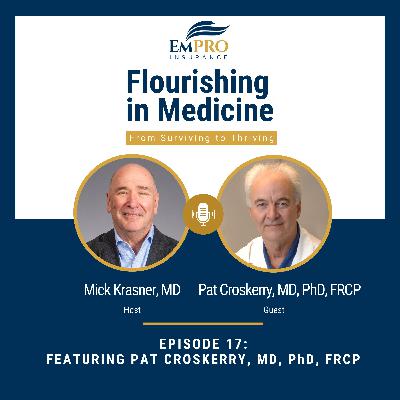
The guest today is Pat Croskerry, MD, PhD, is a professor in emergency medicine at Dalhousie University in Halifax, Nova Scotia, Canada. Trained as an experimental psychologist, Dr. Croskerry went on to become an emergency medicine physician and found himself surprised by the relatively scant amount of attention given to cognitive errors. He has become one of the world's foremost experts in safety in emergency medicine and diagnostic errors. Dr. Croskerry is currently Director of the Critical Thinking Program within the Division of Medical Education, Dalhousie University. His interests lie primarily in clinical decision making, diagnostic failure, and the role of cognitive and affective bias in decision making. Recent work is aimed at cognitive bias mitigation.During this fascinating conversation, Pat shares his unique path to medicine, stemming from a background in psychology that instilled a focus on critical thinking and cognitive biases, and the discipline to study medicine, informed by his brief rowing career during which, as a member of the Canadian National Team he competed in the Olympic Games. He delves into specific biases affecting medical decision-making, such as emotional affective, anchoring, and search satisficing biases, stressing the need to mitigate these biases for accurate diagnoses. Furthermore, he explores the impact of cognitive load and decision fatigue on physician well-being, advocating for a reconsideration of critical thinking's role in modern medical practice to ensure optimal performance and professional satisfaction.Guest: Pat Croskerry, MD, PhD, FRCPLinkedIn Page: https://www.linkedin.com/in/pat-croskerry-199a8132/Wikipedia page: https://en.wikipedia.org/wiki/Patrick_CroskerryNEJM Interview: https://www.nejm.org/action/showMediaPlayer?doi=10.1056%2FNEJMdo002218&aid=10.1056%2FNEJMp1303712&area=Other references:Croskerry P, Clancy M. Advancing diagnostic excellence: the cognitive challenge for medicine. BMJ. 2022 Mar 29;376:o799. doi: 10.1136/bmj.o799. PMID: 35351777.Olson A, Rencic J, Cosby K, Rusz D, Papa F, Croskerry P, Zierler B, Harkless G, Giuliano MA, Schoenbaum S, Colford C, Cahill M, Gerstner L, Grice GR, Graber ML. Competencies for improving diagnosis: an interprofessional framework for education and training in health care. Diagnosis (Berl). 2019 Nov 26;6(4):335-341. doi: 10.1515/dx-2018-0107. PMID: 31271549.Croskerry P. From mindless to mindful practice--cognitive bias and clinical decision making. N Engl J Med. 2013 Jun 27;368(26):2445-8. doi: 10.1056/NEJMp1303712. PMID: 23802513.
loading
Comments 
loading