


 Claim Ownership
Stories That Stick
Subscribed: 10Played: 30
Subscribe

© 2026 Copyright 2023 All rights reserved.
Description
Join Laura, resident storyteller, as she shows you how oral stories inspire and captivate minds young and old. Tune in each week to hear a compelling story and join in meaningful conversations. Laura will be digging deep into the heart of storytelling: connection and listening. Come get lost in another world and discover how stories shape our lives.
36 Episodes
Reverse
In this Season 3 opener of "Stories That Stick," Laura is joined by educator, author, and founder of Your Natural Learner and Bridge Academy, Leah McDermott, for a conversation about courage and child-led learning. Leah has spent years helping families and educators break free from rigid, traditional models so children can learn in ways that honor who they are. In this episode, they explore the heart of unschooling, natural literacy development, and what it means to truly trust children’s learning without checklists, timelines, or pressure.
Highlights:
Redefining Learning Beyond School: Leah breaks down the most common misconceptions about unschooling and explains why it isn’t anti-school. You’ll hear how removing children from rigid structures opens the door to deeper curiosity, intrinsic motivation, and authentic engagement with the world.
Natural Literacy as Expression, Not a Timeline: We discuss why pushing reading too early can backfire and how literacy develops through language, connection, and real-world context. Leah explains what natural literacy looks like day-to-day and why trusting a child’s brain development leads to stronger, more confident readers in the long run.
Doing the Adult Work: A major theme in this episode is unlearning. Leah and Laura talk about the internal work adults must do from examining fears, to undoing their own educational conditioning, all while learning to trust the process.
Navigating Fear, Pressure, and the Unknown: What if you let go of timelines? What if your child learns differently than you did? Leah offers grounded, compassionate advice for navigating the fear and societal pressure that often arise when you choose a path outside the norm.
If you’ve ever wondered what learning might look like without the pressure, the power struggles, or the constant comparison, this episode will feel like a breath of fresh air. Leah’s insights offer a vision of education rooted in connection, curiosity, and trust—one that prepares children for a rapidly changing world by honoring who they are today.
Connect with Laura:
Instagram: @little.stories.that.stick
Website: Little Stories That Stick
Get support on your own journey in The Play-Led Literacy Program
Connect with Leah:Instagram: @yournaturallearnerWebsites: Your Natural Learner & Bridge Academy
Learn more about Natural Learning from Dr. Peter Gray’s substack or books.
Today, I’m joined by Beck Goodman who is an early childhood learning expert specializing in early literacy. Her company’s mission is to end the preschool power struggles around learning by equipping grownups with the tools they need to use play-based approaches that foster connection, not conflict. We discuss joy and child interest as the cornerstone to supporting early literacy development.
Highlights:
Silliness as a Tool for Engagement: Beck emphasizes the power of silliness—whether it’s making up ridiculous words with magnetic letters or engaging in playful language games. Children are naturally silly—let's embrace that playfulness.
Using Children’s Interests to Drive Learning: Both Beck and Laura discuss the importance of leaning into a child’s interest and disinterest. Whether it’s saying yes to a request for ketchup at mealtime or experimenting with different ways to engage a child during literacy activities, honoring what excites them can build trust and create more opportunities for learning.
Letting Children Take the Lead: Learn how to avoid power struggles and encourage more collaborative problem-solving. Laura and Beck discuss how giving children a voice in problem-solving situations can help build autonomy and investment in the learning process.
If you’ve ever wondered how to meet children where they are and embrace their interests and silliness, this episode is for you. Beck’s strategies will help you navigate the delicate balance between structured learning and free play, ultimately creating an environment where children feel empowered to explore language and literacy on their terms.
Connect with Laura:
Instagram: @little.stories.that.stick
Website: Little Stories That Stick
Connect with Beck:
Instagram: @growwithbeck
Website: growwithbeck.com
Today, I’m joined by Jenn Zollinger from Play Before Pencils to talk about emergent writing and its deep connection to storytelling. As an early childhood educator and advocate for play-based learning, Jenn shares how she transitioned from a teacher-led, academic-focused preschool setting to a more child-led, developmentally responsive approach. We explore the magic that happens when children are given space to explore writing organically—through storytelling, play, and meaningful experiences.
Highlights:
What is Emergent Writing? Jenn explains how children naturally progress through stages of emergent writing, from scribbles to phonetic spelling, and why these early marks are crucial to literacy development.
The Role of Play in Writing Development: Jenn and I discuss how open-ended materials and opportunities for storytelling supports children in seeing themselves as writers—long before they master letter formation.
Oral Storytelling: Jenn shares how incorporating oral storytelling in her classroom led to incredible engagement, creativity, and a stronger connection to written language.
If you’re tired of how limiting traditional literacy instruction is with worksheets and scripted small groups, tune in and find out how to create an environment where writing feels meaningful and accessible to all children. If you’ve ever wondered how to nurture early writing skills without forcing them or want to explore the magic of storytelling in your classroom, this episode is for you!
Connect with Laura:
Instagram: @little.stories.that.stick
Website: Little Stories That Stick
Connect with Jenni:
Instagram: @play_before_pencils
Website: playbeforepencils.com
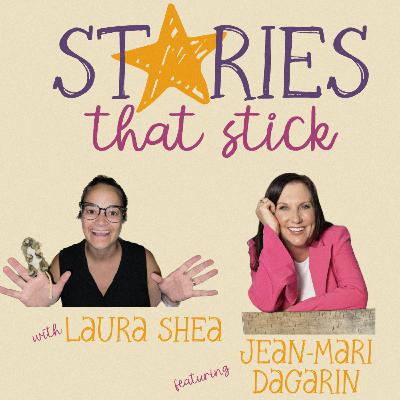
Jean-Mari Dagarin, from The Early Childhood POV, joins me today to talk about a growing concern in early education: 'schoolification'—the push to bring formal academic practices into early childhood spaces. With over 30 years of experience as an early childhood advocate, administrator, college professor, and developmentally appropriate practice expert, Jean Marie has seen firsthand how these pressures impact young learners. Today, we’re unpacking what schoolification means, why it’s problematic, and, more importantly, how educators can combat it while staying true to developmentally appropriate practices.
Highlights:
Defining Schoolification: Jean Marie breaks down the concept of "schoolification" in early childhood, discussing how academic pressures are being pushed down to younger ages and why this is often developmentally inappropriate.
Examples of Inappropriate Early Literacy Practices: Jean Marie shares specific examples of early literacy practices that do not align with developmentally appropriate principles, highlighting the need for a child-centered approach. Laura shares some that she did before she knew better
Natural Literacy Development in Play-Based Learning: Jean Marie and Laura provide insights into how early literacy skills can unfold naturally through play, offering practical strategies for fostering language and literacy in a way that supports children's developmental stages.
If you want to think deeper about early literacy, what’s often done wrong, and how teachers can nurture children’s natural literacy development through play, this episode is for you! So, grab a cup of coffee, get comfortable, and let’s jump into this eye-opening conversation with Jean-Mari.
Connect with Laura:
Instagram: @little.stories.that.stick
Website: Little Stories That Stick
Learn more with the Play-Based Literacy Masterclass
Connect with Jean-Mari:
Instagram: @the.early.childhood.pov
Website: earlychildhoodpov.com
Learn more with DAP 101
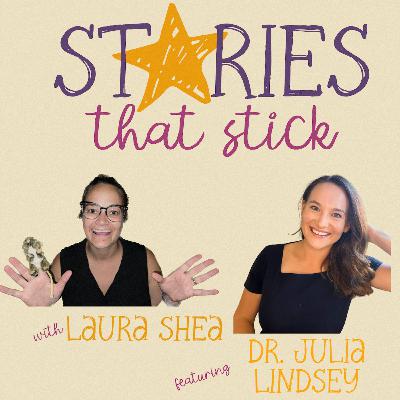
In this episode, I’m thrilled to welcome Dr. Julia B. Lindsey, Ph.D., a leading expert in foundational literacy and the author of Reading Above the Fray: Research-based Routines for Developing Decoding Skills. With a wealth of experience as both an educator and researcher, Dr. Lindsey has made significant contributions to the field of literacy, including the creation of widely used knowledge-rich decodable texts. Together we simplify and break down all the different aspects of early literacy using research.
Highlights:
Explicit Reading Instruction: Hear some concrete reasons why some literacy skills have to be explicitly taught and the research that supports this. Learn simple ways to do this with young children in a play-based setting.
Phonemic Awareness: Julia simply explains the difference between phonemic and phonological awareness and their role in developing early literacy skills.
How It's All Connected: Laura and Julia discuss how reading and writing is deeply interconnected with language. They also share how joyful literacy learning can be for young children as they start to make sense of the code that they see all around them.
If you’re ready to start building in 5-7 minutes of explicit literacy instruction a day and aren’t sure where to start, this episode is for you. Find out how and why you should be doing this and what the current research says.
Connect with Laura:
Instagram: @little.stories.that.stick
Website: Little Stories That Stick
Learn more with the Play-Based Literacy Masterclass
Connect with Dr. Julia Lindsey:
Instagram: @juliablindsey
Website: www.juliablindsey.com
Her book: Reading Above the Fray
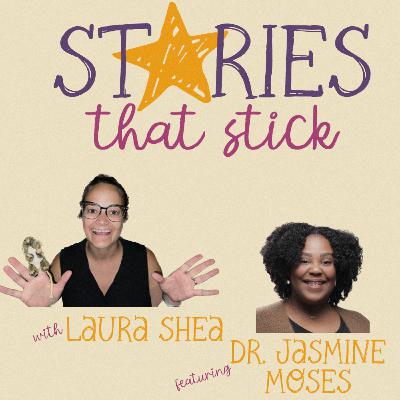
Laura welcomes Dr. Jasmine Moses, an anti-bias early childhood educator dedicated to promoting anti-bias and anti-racist practices within early childhood education. Jasmine shares insights into how anti-bias education can help raise more aware, kind, and forgiving children. This chat covers the importance of addressing biases, involving the community in this collective effort, and using children's literature as a powerful tool to promote diversity, inclusivity, and critical thinking among young children.
Highlights:
Defining Anti-Bias Education: Laura and Jasmine discuss their shared understanding of this complex topic and the four aspects of this work.
Incorporating Anti-Bias Education into ECE: Learn how anti-bias work seamlessly fits into early childhood education. Jasmine provides insights into the important work adults must do to engage in learning alongside children.
Using Children’s Literature: Laura and Jasmine share resources, favorite books, prompts to use, and questions to ask yourself (and children).
If you’re ready to start being proactive rather than reactive when addressing topics of culture, race, gender, and more, this episode will help. Jasmine shares practical tips on selecting diverse books and offers an extensive list of recommended reads for both children and adults engaging in anti-bias education. Additionally, you’ll learn some places to start and how to start decentering yourself and centering this work.
Connect with Laura:
Instagram: @little.stories.that.stick
Website: Little Stories That Stick
Free Guidebook: Culturally Responsive & Inclusive Storytelling
Connect with Jasmine:
Instagram: @theantibiasece
Website: The Anti-Bias ECE
Free Guide: Now We're Talking
Resources:
Social Justice Books
Guide for selecting children’s books
Book lists
Some of the Books Mentioned:
Anti-Bias Education for Young Children and Ourselves by Louise Derman-Sparks
Social Justice Parenting: How to Raise Compassionate, Anti-Racist, Justice-Minded Kids in an Unjust World by Traci Baxley
Raising Anti Racist Children: A practical guide by Britt Hawthorne
First Conversations books
Bodies Are Cool by Tyler Feder
Big by Vashti Harrison
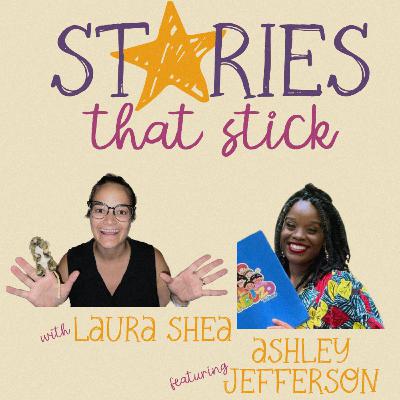
In this episode of “Stories That Stick,” Laura and Ms. Ashley chat about storytelling and how it supports children to learn about the world around them. Ashley is THE early childhood enthusiast and creator of Nguzo Babies. She’s dedicated to exposing children to new cultures and languages through storytelling and puppetry. Together Laura and Ashley explore how storytelling can build connections and teach important social concepts to kids.
Highlights:
Continuous Learning: Ashley shares about the importance of cultural respect in language learning and how adults must shift their perspective on teaching.
Authenticity: Laura and Ashley discuss why children need to be exposed to different cultures and how to do this with authentic resources and stories.
Fostering Understanding: At the heart of all social studies is supporting others in celebrating diverse stories, background, and cultures. Through puppetry and character development, Ashley shares strategies to foster understanding and compassion with children.
If you have been looking for ways to build more cultures and social studies into your early learning environment, this episode is just what you need! Tune in to this episode to learn about Nguzo Babies and the ideas behind how puppetry and cultural exploration helps children to connect with diverse backgrounds and languages.
Connect with Laura: @little.stories.that.stick & website
Free guidebook ‘Culturally Responsive & Inclusive Storytelling’: Download here!
Connect with Ashley: @NguzoBabies, Nguzo Babies YouTube Channel & Nguzobabies.com
Learn more on teaching Social Studies with Young Children: Anti-Bias Education for Young Children and Ourselves by Louise Derman-Sparks
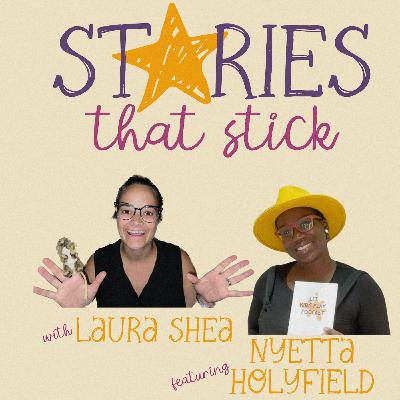
In this episode of “Stories That Stick,” Laura and Nyetta chat about homeschooling with their children and how they understand the Science of Reading. Nyetta is the self-proclaimed Mom Playologist and founder of The Activity Playhouse. Nyetta shares about her journey as a stay-at-home mom and homeschooling parents that naturally learned the importance of play in children’s development.
Highlights:
Different Journeys: Nyetta shares about how she became a stay-at-home mom that homeschools her three children. Laura and Nyetta reflect on what brought them to homeschool and draw parallels between their experiences.
Play and Early Literacy: Laura and Nyetta discuss the importance of play in early childhood education and how fostering early literacy is critical for later reading success.
Unpacking the Science of Reading: Laura and Nyetta know that although explicit instruction and following a scope and sequence is necessary, building background knowledge, vocabulary and comprehension is just as important. They both give examples from their lives of how these skills develop naturally through play.
If you have been hearing about the Science of Reading, but you’re not sure how it applies to you as an early childhood educator, tune in to this episode. Along with learning some practical ways to embrace literacy learning through child-led play, you may also be inspired to explore additional ways to support learning outside of the classroom.
Connect with Laura: @little.stories.that.stick & website
Free guide with 50 ideas to incorporate literacy into play: Download here!
Connect with Nyetta: @TheActivityPlayhouse & website
Check out Nyetta's podcast: Let Kids Play!
Tune in and listen as Laura shares part 2 to the story of Tea and Honey (listen to Tea & Honey: Part 1 first!)! She's fully invested in the family of robins that built a nest outside her kitchen window. Find out what happened after they built their nest.
If you’re ready to start telling stories of your own, but need a little nudge, you can grab some story cards here to help!
Follow Laura on Instagram: @little.stories.that.stick
Check out her stories on YouTube: Little Stories That Stick
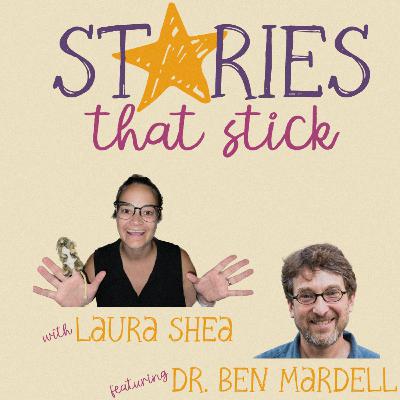
In this episode, Laura welcomes Dr. Ben Mardell, a mentor who has profoundly influenced her understanding of storytelling and story acting. Dr. Mardell, the Atelierista and Pedagogista at the Newtown School, shares his extensive experience in early childhood education. Together they talk about the excitement and learning that storytelling brings to young children.
Highlights:
Power Dynamics: Laura and Ben discuss the importance of shifting the power dynamics when learning alongside children. Ben explains how empowering children enhances the overall power and capability of a classroom or family, rather than diminishing adult authority.
Storytelling as Play: Laura and Ben met through their work with Storytelling and Storyacting. They chat about how storytelling is inherently playful, allowing children to express agency and creativity.
Being a Storytelling: Ben shares a memorable storytelling experience from year ago, where he discovered the power of storytelling in engaging children. Laura and Ben discuss the importance of being present and engaged while telling stories.
Storytelling is essential in early childhood education. You need to incorporate it into your daily rhythms. You can start small and embrace all the imperfections of storytelling, practice leads to improvement and deeper connections with children! If you’re looking for some practical advice on embracing being a storyteller, or how to bring storytelling to life in your classroom, listen up!
Connect with Laura: @little.stories.that.stick & website
Learn more about Storytelling and Storyacting with this free handout
Download a PDF of the book “A Pedagogy of Play: Supporting playful learning in classrooms and schools” by Ben Mardell, Jen Ryan, Mara Krechevsky, Megina Baker, Savhannah Schulz, and Yvonne Liu Constant
This story is for one of "Stories That Stick" biggest fans. Enjoy Manu, thanks for all your support.
If you’re ready to start telling stories of your own, but need a little nudge, you can grab some story prompts here to help!
Follow Laura on Instagram: @little.stories.that.stick
Check out her stories on YouTube: Little Stories That Stick
 1
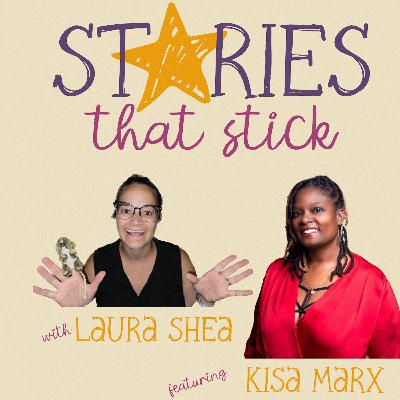
1In this heartfelt and deeply personal episode, Laura is joined by Kisa Marks, founder of The Play Lab Foundation. Together, they explore how stories support humans through trauma. Kisa shares her commitment to addressing the needs of underserved children, offering them the opportunities they need to flourish. When Kisa first came across Laura’s storytelling style, she realized she has always been a storyteller and began to fully embrace it.
Highlights:
Personal Stories of Growth and Support: Kisa gives a glimpse into her childhood and Laura discusses her current struggles as a mother. Both women share how trauma has impacted them and children in their lives.
Understanding Trauma and Healing: Laura and Kisa share their understanding of trauma and describe it as unresolved experiences that can manifest physically and emotionally over time. They discuss the importance of addressing trauma and providing children with safe spaces to process their experiences.
Healing and Connection Through Storytelling: Kisa and Laura highlight the power of storytelling in helping children understand and process challenging events. They share personal anecdotes about using stories to explain and cope with grief, such as the death of a pet.
Have children experienced challenging things and you’re not sure how to support them through? Have you ever wondered if you should talk about the pet that died or why you were crying at lunch? If so, this episode will give you just enough courage to embrace telling stories, or listening to stories from children, that capture uncomfortable experiences.
Connect with Laura: @little.stories.that.stick & website
Connect with Kisa Marx: iam_still_learning
Podcast episode referenced: Unlocking Resilience With Fairy Tales and Storyacting: A journey with Dr. Stephanie Goloway
Dr. Stephanie Goloway's book: Happily Ever Resilient
Imagine seahorses that live in the sky amongst the clouds and rainbows. There you'll find a family of seaunicorns. But one day, one of the seaunicorns wakes up to a problem. Her horn is gone! Tune in to find out what happened to it.
If you’re ready to start telling stories of your own, but need a little nudge, you can grab some story cards here to help!
Follow Laura on Instagram: @little.stories.that.stick
Check out her stories on YouTube: Little Stories That Stick
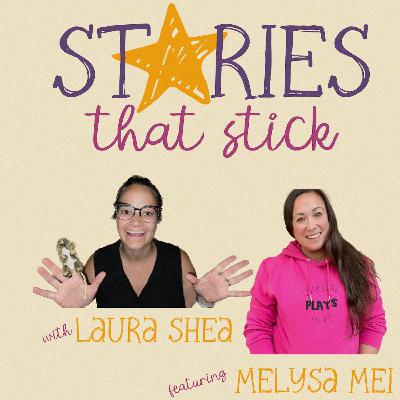
Laura chats with Melysa Mei, of PreK Spot, to discuss the challenges and rewards of implementing play-based learning in public schools with box curricula. Melysa has administrative and family support to follow the children’s lead in her NYC Pre-K classroom. With this she adapts her teaching to foster play and storytelling in her classroom.
Highlights:
Boxed Curricula: Laura and Melysa both have used Creative Curriculum. They share the pros and cons and ways they’ve adapted it to meet the needs of their play-based classrooms.
“Justifying” Play-Based Teaching Methods: Laura and Melysa share about the importance of documenting to show learning that is taking place. By capturing small moments of play, you can help others see all that is unfolding while children engage in their own play.
Fantasy Play: Melysa and Laura give examples of imaginative play that they recently saw unfold. In both instances, children were using materials unconventionally and instead of intervening, they allowed the play to unfold.
Listen in to get insights into Melysa’s experiences as a New York City public school Pre-K teacher and how play is a vital part of children’s learning and development. If you’re ready to take some small steps towards implementing play-based learning in an environment that has a mandated curriculum, this episode is for you!
Connect with Laura: @little.stories.that.stick & littlestoriesthatstick.com
Connect with Melysa Mei: @prek.spot & www.pre-kspot.com
Have you ever heard of an Ankylosaurus who's favorite food is letters of the alphabet? When you have children that are interested in letters and LOVE dinosaurs, why not mix the two into a simple, short story? Remember stories don't have to be elaborate, you can tell them in 1 or 2 minutes.
If you’re ready to start telling stories of your own, but need a little nudge, you can grab some story prompts here to help!
Follow Laura on Instagram: @little.stories.that.stick
Check out her stories on YouTube: Little Stories That Stick
Laura chats with Jocelyn Manzanarez, founder of Circle Time Success and incredible singer. Through her Seattle based early childhood music education program and online resources, Jocelyn is bringing the fun back to teaching and learning with music and movement. Laura found Jocelyn a few years ago and has since been incorporating her music into her stories. Together they discuss the impactful blend of storytelling and music.
Highlights:
Benefits: Laura and Jocelyn discuss how incorporating music and stories in educational settings can engage children, foster creativity, and build foundational skills
Practical Tips: They share practical tips for educators and caregivers on embracing their creative side, using music and stories to capture children's attention, and utilizing resources like books and instruments to make learning dynamic and inclusive.
Personal Reflections: Laura and Jocelyn share about how they found storytelling and its role in their lives as they grew. This conversation emphasizes storytelling’s power in creating lasting memories and inspiring imaginative thinking.
Tune in to hear a rundown of the importance of storytelling and music in education and ways to blend them together. Grab some insights and encouragement to incorporate these elements into your teaching or caregiving practices.
Connect with Laura: @little.stories.that.stick & website
Connect with Jocelyn Manzanarez: @Circle_Time_Success_Kids & circletimesuccess.com; musicallyminded.net
Books referenced:
Three Singing Pigs: Traditional stories
Once Upon a Time: Using Storytelling, Creative Drama, and Reader's Theater with Children in Grades Prek-6 by Judy Freeman
We Are The Dinosaurs! by Laurie Berkner
Dinosaurumpus! by Tony Mitten
One Duck Stuck: A mucky ducky counting book by Phyllis Root

Tune in and listen as Laura shares a story from her life that's happening right now! She's following the journey of a family of robins from outside her kitchen window. Find out what happened when they tried to build their nest.
If you’re ready to start telling stories of your own, but need a little nudge, you can grab some story cards here to help!
Follow Laura on Instagram: @little.stories.that.stick https://www.instagram.com/little.stories.that.stick/
Check out her stories on YouTube: Little Stories That Stick
Laura invites Melissa McCall of Moving Little Minds to chat about early literacy, play, and explicit instruction. Both Laura and Melissa have experience in preschool classrooms where there are curricula that must be implemented to explicitly teach early literacy skills like phonological awareness. Together they discuss how to embrace a play-based approach, while also recognizing that some skills have to be directly taught by adults.
Highlights:
Components of Early Literacy: Melissa discusses the six components of early literacy and shares about which are really important to be taught explicitly.
Multi-sensory Activities: Laura and Melissa give some ideas on ways to incorporate explicit instruction into playful activities. They share about how there is a polarizing idea that someone cannot be play based and also have teacher led learning.
Resources: Laura shares about some of Melissa’s resources that she’s found helpful with her own children. Melissa explains her “100 Days of Literacy” calendar and how just 5 minutes a day can make a difference!
If you find yourself wondering what teaching literacy to young children looks and sounds like, this episode is a great place to start! Want to know more and how to embrace being play-based and following the science of reading? Follow them both for lots more on this topic.
Connect with Laura: @little.stories.that.stick & littlestoriesthatstick.com
Get on a waitlist for the Play-Based Literacy Masterclass: here
Connect with Melissa:@movinglittleminds & www.movinglittleminds.com
Tune in to hear Laura tell a story that she has a familiar character and storyline. She tells this story regularly but changes parts of it along the way. The elf and it's problem is always the same, but how the elf breaks the magic spell can chance each time.
If you’re ready to start telling stories of your own, but need a little nudge, you can grab some story prompts here to help!
Follow Laura on Instagram: @little.stories.that.stick
Check out her stories on YouTube: Little Stories That Stick
Laura chats with her pal and co-facilitator of The Nature and Play Based Consortium, Ade Hofmann. Ade is the founder of Nature Play All Day and she left over a decade of traditional teaching experience behind when she traded fluorescent lights for sunshine. Her philosophy for early childhood education is that living is learning and that play is an essential right to for all! Together Laura and Ade talk about two things they love, stories and outdoor play. They also explore adult control and how this presents barriers for free play.
Highlights:
Co-Create Materials Together: Ade shares about how she creates some storytelling materials alongside children rather than providing them for them.
Play Barriers: Laura and Ade discuss how they are recovering perfectionists and their inner dialogue can become a play barrier that can stunt our creativity.
Rewriting: Listen in as Ade shares some ways to get out of your own way and rewrite the narrative to truly share space with children.
Learn how play barriers can inhibit our ability to be present with children or listen to their stories. Find out some ways to let go of control and embrace creative storytelling!
Connect with Laura: @little.stories.that.stick & website
Connect with Ade: @natureplayallday & follow her podcast The Outside the Box
Grab Ade's freebie: Play matters more, Kindergarten Readiness is a Myth

Comments

Download from Google Play

Download from App Store
 United States