


 Claim Ownership
Soundwalk
Subscribed: 5Played: 174
Subscribe

© Chad Crouch
Description
Soundwalk combines roving field recordings with an original musical score. Each episode introduces you to a sound-rich environment, and embarks on an immersive listening journey.
chadcrouch.substack.com
chadcrouch.substack.com
115 Episodes
Reverse
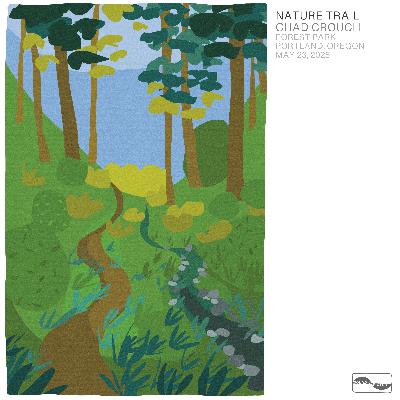
This is a story about a trail called Nature Trail. At the heart of the story is a simple question: What is nature for? Feel free to click play above to listen to the soundscape of Nature Trail as we ponder this question. Nature Trail was built in the 1960’s in the interior of the roughly 5,000-acre nature park that had been dedicated 20 years prior, but received little attention in the way of development. Indeed, the most newsworthy question in those early years seemed to be what should we call it? In 1957, a call for suggestions—perhaps favoring something more showy than the functional, socially adopted name, The Forest Park—yielded many (Skyline, Tualatin, Wildwood, Tualatin Mountain…) but the de-facto name won the day. Officially, “Portland’s Forest Park” was favored by one vote over “Skyline Forest Park”. The “Portland’s” part never seemed to really catch on.Actually, the biggest changes to the park, to this day, came in response to a 1951 fire that burned over 1200 acres in the center of it. Fifteen emergency access fire lanes were constructed in the early 1950’s, broadly perpendicular to the slope of the Tualatin Mountains, like rungs on a ladder. What was nature for in the 1950’s? Accessible nature was becoming scarce. The public wanted protections from both development and the threat posed by wildfire. These fire lanes likely became informal points of entry for the park users in the early years. A network of hiking trails was modest: around 10 miles in total, on the southern end in 1960. Today there are over 80 miles of trails.What was nature for in 1960? A refuge to visit and admire via trails and lanes. Today, Nature Trail still harbors subtle clues to its origins There’s an old steel pole gate and concrete bollards covered by so much moss they could pass for stumps at the end of Fire Lane 1. It all appears quite out of place in the quiet interior of Forest Park. Nearby there is a meadow-like ridge with a couple weathered picnic tables. Starting in the late 60’s and running for about two decades or so, this was the drop zone for thousands of children in a campaign to foster a connection with nature, formalized in 1968. A rare 1968 publication in the Library Use Only stacks of Multnomah County Library holds the key to understanding Nature Trail: Portland’s Forest Park Nature Trail was a 32-page interpretive guide authored by Oregon Outdoor Education Councils as informal curriculum for a generation of school children. Fifty-two markers on Nature Trail were keyed to entries in the guide. Midway through the trail was a shelter, bathroom and campfire area. Bus drop off and pickup areas were located on each end. What was nature for in 1968? Nature was a common good. It was a living lab for learning about the interconnectedness of plants, animals and humans, as stated in the booklet introduction:If you are quiet and observant, you may see some of the animals that live here.The forest community is a living area of plants and animals. It has many parts. Some tall plants shade everything on the ground. Under these grow the medium size and the small ground plants. Part of the forest community is the soil and the many organisms that live in the ground. It is the animals that live in the forest. It is the water that comes from the forest. The forest community is many more things. (Portland’s Forest Park Nature Trail, 1968)Mind you, this was all designed and implemented a couple years before Earth Day made its debut. A 1970 Oregonian article about Nature Trail noted the large coalition involved— the Park Bureau, Multnomah County schools, U.S. Forest Service, Oregon State Game Commission, Industrial Forestry Association, and others. Much of the trail building for Nature Trail was done by the Neighborhood Youth Corps, employing low-income urban teenagers in public works projects. It all took coordination and vision. Precisely who the masterminded Nature Trail isn’t easily discerned, but there is little doubt Thornton T. Munger was a galvanizing force from the late 40’s into the 60’s, inspiring people to work together, while advancing principles of conservation and education in the nascent Forest Park.Munger’s own connection to nature can be traced back to growing up next to an eighteen-acre natural area called Hillhouse Woods in North Adams, Massachusetts, which fostered his lifelong interest in forests. In 1908 he was hired by the US Forest Service, and trained under Gifford Pinchot, who between 1905 and 1910 oversaw a rapid expansion, roughly tripling the number of National Forests and acreage. In his retirement, Munger chaired the Committee of Fifty, convincing city leaders to designate the lands as a nature park. The committee eventually became the Forest Park Conservancy, that to this day provide a Nature Education Program with free public events, organize volunteers, raise money, and conduct community outreach.In 1960, Munger—in collaboration with C. Paul Keyser—wrote a 32 page report entitled The History of Portland’s Forest Park. In Part IV A Look Ahead, they write, In a few years nearly a million people will be living within a few miles of the Forest Park. Residences will crowd about it on three sides and industry will dominate its eastern edges. …There will be pressure to widen the roads, to straighten the curves, to pave, to build more roads. This should be resisted, for this “wilderness within a city” is not a place for speeding motorists; here there should be no need for haste. ...Here within city limits will be a continuous forest 7½ miles long. The roads and trails will be under over-arching trees, varying from virgin forest with giants up to 8 feet in diameter, to thrifty second-growth stands of tall Douglas fir.What was nature for in the 1960’s and beyond?* To provide facilities that will afford extensive nearby outdoor recreation for the people and attract tourists.* To beautify the environs of Portland.* To provide food, cover, and a sanctuary for wildlife* To provide a site on which youth and other groups may carry on educational projects.* To grow timber which will in time yield an income and provide a demonstration forest.That last point became contentious within a couple decades. Limited timber harvests were being recommended by the committee up until 1975, when the Portland Parks superintendent, facing environmentalist pressure, ruled out selective logging as part of over-all park management. What was nature for in 1975? Forest Park was closer to becoming a quasi-wilderness area, protected from all resource harvesting. (The Forest Park Rock Quarry lease was terminated in 1979.) Fire suppression remained a primary concern, though seasonal manned fire lookouts were by then retired.So when and why did the Nature Trail program dissolve? It’s not clear when, and I can only speculate on why. For starters, interior access roads around the park were closed to motor vehicles sometime in the 1980’s. Therefore, any bus passage would have been met with more friction. The built elements of Nature Trail would have be approaching their expected lifespan: numbered posts would be weathered and broken, the shelter roof would have by then become what we now call a “living roof”: an ecosystem of duff, mosses and seedlings. Beyond that, the environmentalist awakening of the 1970s met a formidable obstacle with the Reagan administration of the 1980s. So where are we now? What is nature for in 2026? In the pendulum swing of US politics we are lurching back to the 80’s mindset. Environmental protections are being systematically dismantled by the current administration in naked collusion with the fossil fuel industry. “Drill baby drill,” is one of the president’s most cherished rally cries.When I think back to my childhood in primary school, my most vivid memories are of when either someone visited the classroom, or the class took a field trip someplace. I distinctly remember going to a site to hunt for fossils. I vividly remember Outdoor School; basically an overnight camp experience for sixth graders. Perhaps that’s what really replaced Nature Trail: the significant expansion of its objectives with Outdoor School.The first large scale implementation of Outdoor School in Oregon occurred in 1966, serving 500 students. The program grew steadily for decades, but faced budget pressures over the years as schools cut extracurricular spending. In 2016, Ballot Measure 99 saved and expanded it, setting aside Oregon Lottery funds to provide Outdoor School for every one of Oregon's 50,000 fifth and sixth graders, passing with over 67% of the vote. While other states have more modest programs or aspirations, this guaranteed entitlement is unique to Oregon. Perhaps more than any point in the last 50 years, US leaders have adopted an aggressively extractive attitude toward nature. For Oregonians, the 67% vote for Measure 99 was its own kind of answer to the question Nature Trail was asking back in 1968. May in Forest Park is peak birdsong time. My score is electric piano centered—I love the deep tones of this one. It’s naive and minimal as per usual.Thanks for reading and listening. Nature Trail is available on all music streaming services today, March 13th, 2026. This is a public episode. If you'd like to discuss this with other subscribers or get access to bonus episodes, visit chadcrouch.substack.com/subscribe
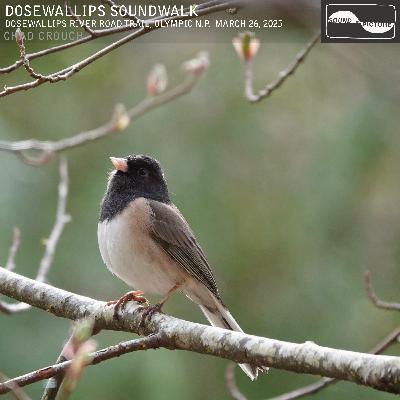
Olympic National Park is the 8th most visited National Park in the US. About 95% of the park is roadless and designated wilderness, making it one of the most wild and undeveloped parks in the entire National Park system. Many of these most-visited parks have a significant road footprint, which makes much of their interior accessible. In contrast, Olympic National Park is largely one big wilderness, absent of roads. There are highways encircling it, and a few spur roads reaching in a few miles, but none passing through the interior. Dosewallips River Trail is the remains of one such spur road that washed out in 2002. The road reroute/repair proved too costly, and so has added to the relative inaccessibility of the canyon. When paired with the East Fork Quinault River Trail, this makes an enticing 35-mile multi-day backpack traverse through Enchanted Valley in the southern interior of the park. The Enchanted Valley offers lush old-growth rainforests, towering mountains with countless waterfalls, and an iconic chalet, nestled in an absolutely stunning valley.This soundwalk barely scratches the surface of the wilderness soundscape that awaits the visitor here, but it’s an appealing teaser. In these lower reaches, small wetlands thrive, fed by creeks coming down the mountain, making for ideal frog habitat. Trilliums burst through the resplendent mosses found here. A Great Blue Heron perches above a creek channel. The name Dosewallips derives from a Twana Indian myth about a man named Dos-wail-opsh who was turned into a mountain at the river's source. Twana is the umbrella term for nine bands of Coast Salish groups that lived around Hood Canal, the largest being the Skokomish. As with so many tribes of the Pacific Northwest, a defining conflict the Skokomish faced over the last century was the salmon fishery collapse.The ironically-named 1855 Treaty of Point No Point established a roughly 5000-acre reservation at the Skokomish River delta for the Twana bands, roughly 30 miles south of where the Dosewallips meets the Hood Canal, part of the Salish Sea. The 1920’s-era Cushman Dam projects on the North Fork of the Skokomish not only blocked fish passage to the upper river, they also removed the water from the river, tunneled it through a mountain, and dumped it directly into Hood Canal. From 1930 to 2008 the North Fork of the Skokomish ran nearly dry. Because lower river flows no longer flushed sediment and debris in the lower river, it caused a devastating pattern of flooding in the Skokomish valley where two-thirds of the Skokomish Reservation is within the floodplain. After decades of legal struggle, the tribe reached a settlement in 2009 with Tacoma Power that resulted in a 2010 amendment to the dam’s federal license. This restored about 40% of natural river flows and gave the tribe joint management authority. The river now has considerably more water, a salmon restoration effort is in place on the North Fork, and the delta benefits from increased flows. Still, it’s just the first step toward restoration. The Skokomish valley is still flood-prone after 80 years of sediment aggradation, and the fish passage solutions are as yet underperforming. So, what does this have to do with listening to the sounds of the Dosewallips River? For me, listening to a place just naturally arouses my curiosity. Who is making the sound? Why is it called Dosewallips? Who named it? Where are they now? What will I find upriver, downriver? How will the sound change? How has it changed over time?That the mountain, river, and tribe were named after a mythical chief who was transformed into a mountain tells us something about a worldview tied to the language, where the landscape itself is imbued with not only personhood, but ancestry. Twana people viewed the river not as a resource, the land not as property, but as a living entity, as family. Coast Salish people spoke of animals with a similar non-hierarchical framing. Salmon were seen as gift-bearing relatives.This was such a departure from the Euro-American worldview it was, and is, both hard to grasp and easy to dismiss. With the benefit of hindsight, though, it’s worth questioning how the English language encodes a worldview that can lead to short-sighted outcomes.My score for the Dosewallips soundwalk is very relaxed and minimal; just four instrument voices in all. I drew inspiration from the frog choruses. It’s unusual for me to rest on an undulating single chord arpeggio for several minutes, but that’s what felt right for “Part 7, Frog Chorus”. Now that I know a little more about the area, I’m eager to make a return. Thanks for reading and listening. Dosewallips Soundwalk is available on all music streaming services today, February 13th, 2026. This is a public episode. If you'd like to discuss this with other subscribers or get access to bonus episodes, visit chadcrouch.substack.com/subscribe
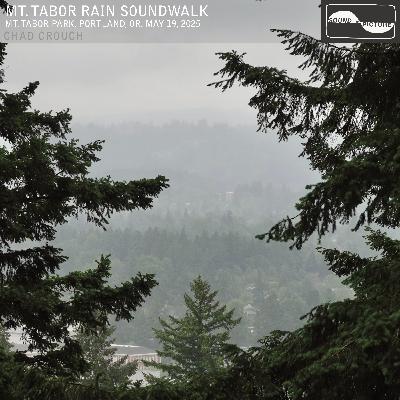
This is a free preview of a paid episode. To hear more, visit chadcrouch.substack.com When I first heard a radio piece about Mt. Tabor Park being awarded America’s first Urban Quiet Park I have to admit I was incredulous. Don’t get me wrong, I’m all for it, but of all the parks I visit to make field recordings in the Portland area, this one might be the most frustrating. That is, if you’re hoping to get away from anthropogenic sounds—people and their machines.It was just last October that I introduced you to Mt. Tabor (if you weren’t already acquainted.) I described it as a “island of green in a patchwork of grey.” And so it is: all 176 acres of it. The deal with mountains, though, is they only give the listener more acoustic vantage as you venture further up and in. There are few folds in the park’s contours, so getting out of earshot of boulevards pulsing with machine energy and airplanes raining down sound waves on approach to PDX, just 5 miles to the north, is nearly impossible. It’s also a well-loved, well-used park. Runners and cyclists breathe heavy scaling its slopes. People talk. On phones. It is not packed on a weekday, but it sure isn’t lonely either. All this sound energy is not a bad thing, don’t get me wrong, but why the first urban quiet park in the US? This is an exemplar?It’s all about framing isn’t it? I mean yeah, you walk up the mountain and there’s downtown looking like a diorama set against the green West Hills. It looks quiet. It seems quiet. Quiet is so slippery, so subjective. Maybe it’s the signal-to-noise ratio of the near field soundscape—of being able to key in on small sounds because the background noise is just a wash—that lends itself to the perception of quiet. When you can hear little birds, with their little bird-whisper sounds. Or rain. Yes, rain with its crowd-suppressing effect; it makes the park seem quieter. Rain and wind in the trees masks the city din. Like passing through a veil, moving through the rain can feel transportive. It sounds a sizzle on the reservoirs, a diffused and hushed drum circle played on millions of leaves. But still, the first quiet urban park in the whole of the USA? I love the sentiment, but the logic seemed imprecise. Unearned, even.And then a few weeks ago, on a Wednesday, I went up there for a walk. Something was different. The gate to one of several lanes leading to one of several parking areas was locked shut. “Park Closed to Vehicles on Wednesday” a sign read. I don’t remember this. Is this new? Then a thought occurred to me: maybe this is why it’s the first urban quiet park. Maybe it is earned. After all, cordoning off whole interior parking lots, even one day a week is sure to rankle some folks. This is what intention looks like, I thought. This is a place that, at least on Wednesdays, sounds different. Measurably quieter. It came with a cost. People can’t vroom in and out. They have to enter from the perimeter and use good old-fashioned human power to move through it. Mt. Tabor Park, I’m sorry I ever doubted you. But how long has this been going on? A while, it seems. According to a 2013 article, which references the closure policy, it’s been well over a decade; so long even the internet doesn’t know. I love it when the internet—and AI, when it’s not hallucinating— doesn’t know something. That’s when I let my fingers do the walking through the maze of research tools the Multnomah County Library provides: not quite microfiche, but as close to it as digital gets. Could the policy go back to the 1980’s? Conceivably. In a bulletin of Matters to be Considered by City Council, the Apr. 6, 1981 Oregonian references “an ordinance authorizing Parks to install 5 traffic control gates in Mt. Tabor Park” up for consideration. I found no events programmed for the park on a Wednesday thereafter, save for Audubon bird walks embarking from a perimeter entrance in 2006.If it goes back that far, what really motivated no-vehicle-Wednesdays? Was a day of peace and quiet? Wilderness-in-the-city-Wednesdays? I’d like to think so.On several spring and summer Wednesday nights, however the quiet park is jolted to life. Established in 2020, Mount Tabor Dance Community (aka MTDC or Tabor Dance) saw another role that the closure policy could lend itself to in summertime: Insulating their outdoor music-fueled events from the dense neighborhoods of SE Portland, while also minimizing potential conflicts of park users. Tracing its roots to the pandemic and dancing in chalk circles drawn for distancing, the event grew over the years to draw crowds in the hundreds. Last spring and summer MTDC started again at Mt. Tabor, then hopped around to at least five other Portland parks, making good on the motto “Portland is our dance floor.”My score for Mt. Tabor Rain Soundwalk is very gauzy: mostly languorous synth pads and drones. Electric piano only enters the instrumentation in the final third of the recording. That’s my favorite moment; a tender melody receding into the blue-grey distance.Thanks, my friends, for reading and listening. Mt. Tabor Rain Soundwalk is available on all music streaming services on January 16th, 2026.
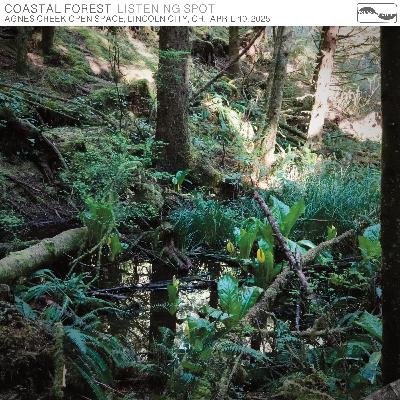
And so we start again. Happy New Year everyone!I picked this album to coincide with the new year because the field recording it is built on is, to me, a kind of tonic. It pulses with the sound of distant surf, wildlife, and a spring rain shower.Recorded on April 10th last year at Agnes Creek Open Space, a 57 acre woodland in the heart of Lincoln City, Oregon, this soundscape features the low din of the ocean, the ebullient Pacific Wren, and a very nice ensemble of Varied Thrush adding their ethereal single-note song. In the distance we hear cheerful American Robins and Song Sparrows. In time, a Purple Finch and a Douglas’ squirrel take positions in the soundstage. Mixed flocks—bushtits and Chestnut-backed Chickadees primarily—pass through. It sounds like a thriving habitat, but it was not always this way.The area was clear-cut in the 1960s. After that, it regenerated naturally, resulting in a very dense thicket of young conifers that became draped with invasive species. By 2000, when the city purchased the property with funds from an open space acquisition bond, it was overgrown and trash-strewn.In 2013 the city conducted a selective forest thinning project, which improved forest health, and provided wood chips for a new loop trail. In 2016 a ribbon cutting ceremony celebrated carved benches and a footbridge created by local groups. This environmental recording serves as a testament to the forces of both neglect and attention to create renewal. Yes, neglect. Don’t we all have issues we don’t tend to? We make resolutions and then fail to act on them. Sometimes that’s just a necessary step in natural rejuvenation, creating the necessary conditions for real transformation.My composition takes cues from the low moan of the surf, with a variety of sampled and synthesized instrument voices selected to preserve space in the higher frequencies for the wildlife. Coastal Forest is available under the artist name Listening Spot on all streaming platforms Friday, January 2nd, 2026. I’ve made it available here in its entirety with the idea it might be somehow useful. Thanks for reading and listening. And, again, may the promise of a fresh new year be a boon to us all!Thanks for reading Soundwalk! This post is public so feel free to share it.ps. For a deeper dive from, see also Field Report Vol 26: Nelscott by Chad Crouch available on all-but-one streaming services. This is a public episode. If you'd like to discuss this with other subscribers or get access to bonus episodes, visit chadcrouch.substack.com/subscribe
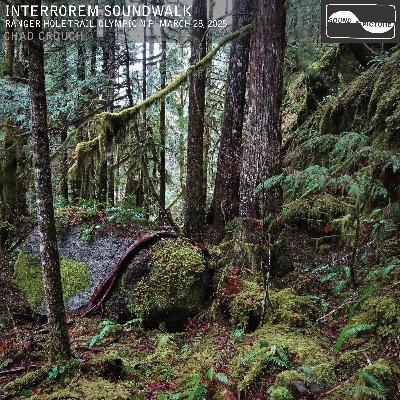
This is a free preview of a paid episode. To hear more, visit chadcrouch.substack.comHi Everyone. How are we? Are you OK? I’m OK. I’m just really grateful to be able to do this: to walk, listen, make music. To share it here. It’s a dream gig, really.So for starters today, I think we should discuss the weird name of this week’s soundwalk. It comes from a log cabin built in 1907, as the first administrative site in the Olympic National Forest. Ranger Emery J. Finch constructed it for his bride Mabel, and they moved in on April 22, 1908. Word has it he chose the spot for a nearby fishing hole, which came to be known as Ranger Hole. But the name, recorded in early years as “No. 27 Interrorem Administrative Site,” remains something of a mystery. This rustic cabin is still standing proud, near the SE border of the park, and you can even book a stay for $58/night in the near future.“Interrorem” is latin. It’s law jargon for a legal threat, meant to compel compliance without resorting to a lawsuit or prosecution. It’s basically what a cease and desist letter attempts to accomplish, and it is undoubtedly a primary objective of any ranger: to convey authority over a domain. It is not however, a term that would often enter the lexicon of an early 20th century ranger. It’s difficult to imagine Emery saying to Mabel, after putting his whipsaw and adze to rest, “This will be our home, dear. We’ll call it Interrorem.” Some say it was a scrambling of the less fussy word “interim.” Seems like we’ll never know. The important thing for this story is that the trail I walked for this soundwalk is basically the same path Ranger Emery J. Finch wore into the once-primeval forest to go down to the Duckabush River fishing hole he prized. The cabin itself is surrounded by Big Leaf Maple trees in a clearing, giving way along the trail to western hemlock, Douglas-fir, and western red cedar. The Olympic National Forest is famous for its temperate rain forests, and while this watershed may not see the 130” of annual rainfall the famous Hoh Valley does, it too is a mossy wonderland. On this rainy day soundwalk we are greeted in the beginning by Varied Thrush, before the woodland seems to envelop the visitor in quiet. As the rain lets up a little, we hear Golden-crowned Kinglets and trailside rivulets before the surging Duckabush River comes into the fore. Clocking in at 19 minutes, it’s on the shorter side, but long enough to relax me into slumberland. This is just a taste of what’s to come. We’ll hear more soundscapes from Olympic National Park in 2026! Thank you, as always, for joining me here, and for listening.Interrorem Soundwalk is available on all music streaming services on December 12th, 2025.
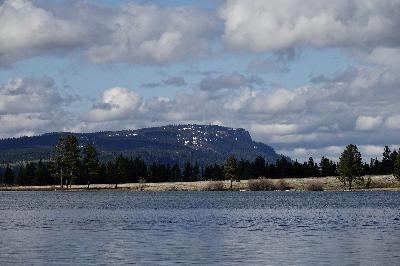
This is a free preview of a paid episode. To hear more, visit chadcrouch.substack.comThe view from Morgan Lake looks more like Montana than Oregon to me. It’s big sky country.Just 10 minutes up a gravel road from the eastern Oregon city of La Grande, Morgan Lake is mysteriously a world apart. From its shores you see only rolling prairie giving way to distant mountains. Situated on a ridge, Morgan and its sibling Twin Lake have an implacable mirage-like quality. The surrounding topography—the absence of enfolding contours—doesn’t readily explain their presence. There is no incoming stream to feed them. Subterranean springs pump water from an active aquifer hidden below.I found myself on the lake shore on a breezy March Saturday. People were fishing nearby. The wind billowed through the Ponderosa Pine canopy. An osprey occasionally called out. Nuthatches passed through. Later on, White-throated Sparrows sing in the quiet, followed by a wayfaring Winter Wren.As I’ve shared in the past, I like to program my releases in batches. This is the last in a trilogy located in the Pacific Northwest, east of the Cascade Range. It’s lodgepole and ponderosa pine country. Once again, the main character in this soundscape is the mesmerizing whisper of the wind in the pines. This particular day was dynamic; the breeze ebbed and flowed. Occasionally it howled. The arrangement is super sparse. Honestly it would likely fail as a piece of music without the wind. The ratio of solos to duets is about 50/50. Most of my arrangements are comprised of at least duets, most of the time. I think I was responding to the sense of loneliness I felt in the physical space. The chord progression is progressive. Each part adds another chord and more harmonic complexity. There is a touch of minor color, which sounds a little unsettling. Though it was recorded in early spring, it strikes me as a wintry listen. I hope you enjoy it.Morgan Lake is available under the artist name Listening Spot on all streaming platforms today Friday, December 5th, 2025.
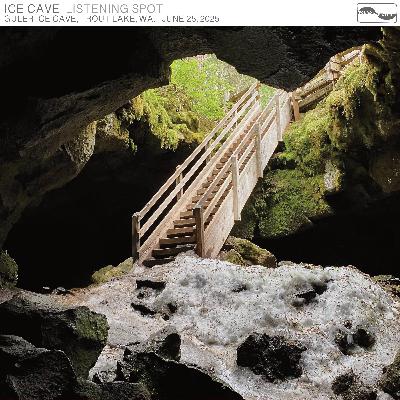
Dear Reader, In this Thanksgiving season, I just wanted to take a moment to express gratitude I’ve been feeling for three people here on Substack that I admire, and who have helped me to connect with a bunch of you.Carson Ellis Carson is a busy artist / illustrator and children’s book author, but when I asked her for her take on Substack almost two years ago she emailed back the same day with a 600 word email. At some point between then and now she added Soundwalk to the recommendations that appear in the sidebar of her newsletter, Slowpoke. In the interim nearly one in five of my subscribers found me through her! That knocked my socks off. It’s a testament to the naturally curious people that gravitate to her and her amazing work. Three cheers for Carson Ellis!Rowen Brooke I was immediately curious about Rowen’s fast-growing newsletter, Field Notes, from its title. Her posts relate her observations, challenges and insights in pursuit of becoming both a regenerative flower farmer & florist and aspiring naturalist. Her recent posts indicate a measured advance toward the latter, given the sensory detail emerging in her writing. Rowen’s past recommendation of Soundwalk points to nearly one in ten subscribers finding me through Field Notes. Thanks Rowen! Colin Meloy Colin is the frontman for The Decemberists, the author of many books, and is married to Carson Ellis. You’d be forgiven for thinking he couldn’t possibly sound like his writing in real life, given his ability to weave in some impressive and uncommon vocabulary words in his newsletter, Colin Meloy’s Machine Shop, but I’m here to tell you that he does. He writes like he talks, folks. Colin slipped Soundwalk into a little list he worked up for the official guest-authored compendium The Substack Post halfway through 2024. I recollect my subscriber count jumped by well over 100 overnight! A generous inclusion, to be sure. Thanks Meloy! It really underscores how meaningful word-of-mouth is to someone like me. If you’re reading this and found me through a recommendation, feel free to let me know with a ‘like’ or comment below. On to this week’s soundwalk. Last week I shared a recording made at Natural Bridges in Washington, a site with two rock bridges spanning a rock-jumbled ravine. The bridges were the remnants of a lava tube cave ceiling, created 12,000 to 18,000 years ago. A few miles away, another complex of lava tubes known as Guler Ice Cave(s) remain intact. These caves, once commercialized for their ability keep ice and preserve harvested crops by one Christian Guler, are easily accessed today, though exploring them extensively requires crawling through cold, dark, tight passages. My recording is centered on the main cave mouth that is pictured above. Once again you hear that marvelous wind in the pines (which appeared in the previous two recordings) juxtaposed against a constellation of drips, plinks and plops in the foreground. My composition pulls from complimentary instrument voices: the sweep of a dobro-derived synth pads; the resonance of low end stringed instruments; the percussive twinkle of a Dulcitone celeste; the shimmer of a percolating “swarm” synth pad. It’s all designed to mirror the tonality of the cave entrance environment.Strains of Pine Siskin and Dark-eyed Junco filter in. This is a short, textural audio postcard. I hope you enjoy it. Ice Cave is available under the artist name Listening Spot on all streaming platforms today Friday, November 21st, 2025. This is a public episode. If you'd like to discuss this with other subscribers or get access to bonus episodes, visit chadcrouch.substack.com/subscribe
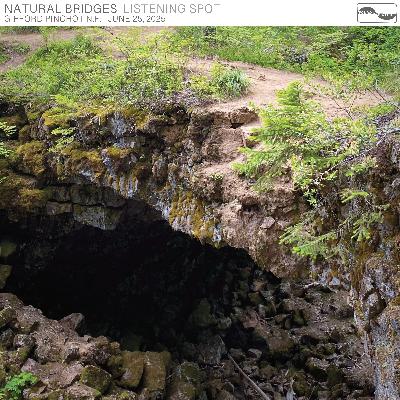
This is a free preview of a paid episode. To hear more, visit chadcrouch.substack.comIt’s a Substack exclusive!Natural Bridges was on the shorter side (11:34) so I didn’t slate it for a wide release. I hadn’t even listened to it for over four months, until a few days ago. It surprised me how good it was: how transportive, how intertwined, how gentle, how concise.This all brings to mind the subject of confidence in artistry. A few years ago, when I was just beginning my explorations in environmental music—and while explaining what I’d been up to lately at a wedding reception—I decided to try on a few words: I’m the best at it.My logic was this: being the best at something almost nobody does is really pretty easy—an absurdist boast—so why not frame it that way? Why not project seriousness with a touch of humor? (This was well before my stats on the leading streaming service increased, by the way, so it wasn’t any kind of posturing based on numbers.) Isn’t it what every artist secretly wants: to be the best at what they do? So I said, “I make soundwalks. I record the sound of my walk and compose instrumental music to go with it. I’m the best at it.” I scanned the table for responses. I was surrounded by musicians who were all more skilled than me, incidentally. I saw some thin smiles, but overall a muted response. Usually when I’m uncomfortable, I immediately follow up with a qualifying remark, but I was determined to let this linger. Then a friend I admire said something along the lines of, “I don’t know… the best, huh?” like he was challenging me to a soundwalk duel, or at least like he imagined I would go down pretty easily in a soundwalk duel. It was delivered like a line at a poker table. I couldn’t tell if it was casual or calculated, or both. In that moment, though, I decided that the bravado didn’t suit me. I laughed it off and switched the subject. The exchange helped me realize I don’t need to, or want to be the best. Being the best is defending a title. It’s not motivating, it’s not authentic. It’s conflict, it’s worry, it’s stress. No thanks.But, I’m okay going on the record that this 11 minutes, 34 seconds of audio is good. In fact, maybe it’s the best 11:34 of environmental music I presently have to offer. Natural Bridges is a geological curiosity and a short hiking destination in Gifford Pinchot National Forest in SW Washington state. The “natural bridge” features are the remnants of a lava tube cave ceiling that collapsed, created during lava flows 12,000-18,000 years ago. The site is in a quiet region of mountain prairies, lakes and coniferous forests. Natural Bridges is only available (for the foreseeable future) to paid subscribers. Soundwalk is a reader-supported publication. Thank you for reading and listening. And, thank you for your support!
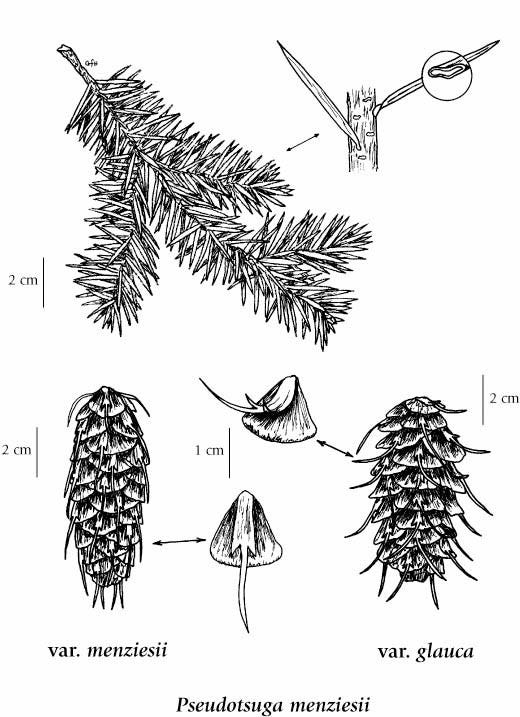
This is a free preview of a paid episode. To hear more, visit chadcrouch.substack.comOne thing I think you come to appreciate after some months or years of field recording, or intentional listening, is the variability of sound that conifers make when played by the wind.Where I live, I’m surrounded by conifers. Douglas-firs abound. They produce a sharp sound in the wind, occasionally what you might call a hiss. Just an hour to the east, beyond the crest of the Cascade Range, a more arid landscape plays host to ponderosa pine trees. The wind on their needles is quite different. Because their needles are flexible and bundled together, they sway and brush against each other in waves, producing a softer sound. More of a shush. Words fail me here. You just have to listen.This recording captures the song of the pines as a backdrop for the birds that make this habitat their home.We hear Western Wood Pewee, Pine Siskin, American Goldfinch, Hairy Woodpecker, White-crowned sparrow, American Robin, Red-breasted Nuthatch, and California Quail—to name names—on a mild June evening near Glenwood, Washington. But what is it about ponderosa pine trees that they produce such a sonorous sound? According to field recordist Gordon Hempton, the pitch is a function of the length of the needle or blade of grass. “We can go back to the writings of John Muir, which — he turned me on to the fact that the tone, the pitch, of the wind is a function of the length of the needle or the blade of grass. So the shorter the needle on the pine, the higher the pitch; the longer, the lower the pitch.”-Gordon Hempton, recordistWhile that sounds plausible and is certainly memorable, it’s not the whole story. It’s not just about length; stiffness, density, bundling, and flexibility all matter too. All the complexity of the canopy structure goes into the sound. The turbulence of the wind moving between needles, branches and trunks, and the brushing of the needles against each other all plays a role. Take a guitar string; the string is fixed at both ends and vibrates at specific frequencies determined by its length, tension, and mass. Needles are only fixed at one end, so they’re more like tines than strings. The frequency of a guitar string follows clear mathematical relationships: a string twice as long vibrates at half the frequency (one octave lower), assuming same tension and thickness. The sound of pine needles comes primarily from aerodynamics: wind flowing around needles creates fluctuations in the air. Needles twice as long do not whisper an octave lower; rather, they produce a lower range of pitches due to the lower frequency of movements and resulting turbulence they create. A string can produce a clear frequency. A needle produces a spectrum of frequencies; a texture. What can be said about all the variety of needles, leaves, and blades of grass and the sounds they make in the wind? Has someone attempted to map them? If there is such an inventory, I did not find it, but I did find the following observations made nearly seven centuries ago in an interesting piece of nature writing. It’s observational, philosophical, and poetic all at once: Wind cannot create sound on its own: it sounds only in connection with things. It is unlike the ferocious clamor of thunder, which rumbles through the void. Since wind sounds only in connection with things, its sound depends on the thing: loud or soft, clear or vague, delightful or frightening—all are produced depending on the form of the thing. Though it may come into contact with earthen or rock pedestals in the shape of tortoises, sounds are not produced. If a valley is empty and immense, its sound is vigorous and fierce; when water gently flows, its sound is still turbulent and agitated—neither achieves a harmonious balance, and both cause man to feel fearful and frightened. Therefore, only plants and trees can produce suitable sounds.Among plants and trees, those with large leaves have a muffled sound; those with dry leaves have a sorrowful sound; those with frail leaves have a weak and unmelodic sound. For this reason, nothing is better suited to wind than the pine.Now, the pine as a species has a stiff trunk and curled branches, its leaves are thin, and its twigs are long. It is gnarled yet noble, unconstrained and overspreading, entangled and intricate. So when wind passes through it, it is neither obstructed nor agitated. Wind flows through smoothly with a natural sound. Listening to it can relieve anxiety and humiliation, wash away confusion and impurity, expand the spirit and lighten the heart, make one feel peaceful and contemplative, cause one to wander free and easy through the skies and travel along with the force of Creation. It is well suited to gentlemen who seek pleasure in mountains and forests, delighting in them and unable to abandon them.-Liu Chi, (1311–1375)Thanks for listening and reading. If you made it this far, consider tapping ‘like’ just to let me know you were here. I often wonder things like, will I lose readers with this big block quote? Are subscribers alienated by a post marked ‘paid’? Ponderosa Grove is available under the artist name Listening Spot on all streaming platforms today Friday, November 7th, 2025.
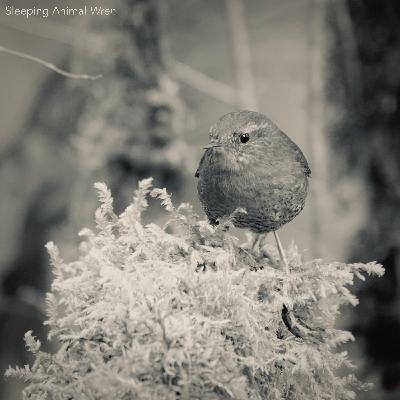
I hadn’t planned to write a post for Wren. In fact, just yesterday I was thinking about how I could skip even writing a Substack Note, which I had been mulling over. What to say? And then I found myself returning to the interesting thing I learned earlier in the week: how the Cherokee traditional calendar ended and started in the fall, and how that made intrinsic sense to me. A time of harvest and reflection. So, I’m feeling inclined to reflect because this is the last Sleeping Animal release from a slate of several this year. As a brief recap, Sleeping Animal came about as a solution for two of my concerns: first, I was swamping my own name with too many releases, and second, I’d long feared my preoccupation with incorporating environmental recordings was seen as little more than a gimmick. So Sleeping Animal became my repository for instrumental works, destined to succeed or fail on their own birdsong-less merits. Let’s turn the clock back to 1994. Having re-enrolled at the University of Oregon after a stint at community college, I was edged out of upper level fine arts courses that I needed for my degree. They were all full. The solution was Independent Study. I would pay the university for credits I needed with the minimum amount of instruction. No problem, I thought. I’d already done that in high school by completing an International Baccalaureate art portfolio, a boon to my college credit tally going in. I wanted to impress my professor/mentor, so I put a lot of hours into having what amounted to a full exhibit’s worth of paintings to show at our first meeting. The oil paintings were monochromatic—raw umber primarily—using a medium to essentially mimic a watercolor technique. The subject matter was figurative, featuring simple, almost abstracted backgrounds. So there I was, in the little-used art school room I’d been using for a studio, with all my paintings spread out, only weeks into the term. I imagined my mentor would be surprised. He might say something like, “Well you’ve been busy!”What happened was he entered the room, said almost nothing, ranged around with a pained expression on his face, seemingly finding nothing worth examining closely, asking few if any questions, and then proclaimied—in so many words—that the work was thin and cartoony. Those were the words I specifically remembered anyway, because they cut. They hurt. There was not the slightest scrap of praise offered for my work ethic. If anything, it seemed like the number of paintings was taken as an affront; evidence for their thin-ness. I did not mount much of a defense, and was relieved when I was again by myself in the quiet room. In the following weeks I painted over every one of them. Though hard to hear, it was true. The paintings were essentially drawings, rendered with paint. You could see the gesso brush strokes under the washier areas. In my second act of Independent Study I turned to landscapes and still life. A little bit Rothko, a little bit Morandi. A completely different path. Now, looking at the gallery of album art that has swiftly assembled for Sleeping Animal—all monochrome and seemingly in service of a neoclassical trope—how could I not be reminded of that formative season thirty years ago?Now, in the peak of fall with my body of work on display, for all to hear, I’m drawn back to that quiet classroom in my mind. What is the verdict?Well, I’ll be the first to say they all look and sound more or less the same. Having said that, it’s not a matter of if you’ve heard one, you’ve heard them all. More like if you heard one and didn’t find it at all useful, you can skip the others. But, isn’t it like that for most artists?When I first imagined Sleeping Animal, I thought I would revisit a type of work I made that was built up with arpeggiated synthesizers. I also thought that I would leave an opening for vocals, at first just dipping my toe in those waters. Alas, I never came round to those programmed arpeggios. The vocal layers, however, are a unique attribute, mixed at a whisper. I wanted them to be felt more than heard. What I’m proud of is how naive, imperfect and unvarnished these works are. And, for this first act, I’m happy that I didn’t come out with arpeggiated synths blazing. The thing I prize most about them, as compositions, is how they breathe. They expand and contract. They are expressive not through dexterity or dynamics, but in their relationship to time.Now for act two! Thanks for joining me on this trip down memory lane. It only took me a few decades to be able to tell the story. Find Wren filed under Sleeping Animal today Oct. 30th, 2025 on all streaming services. I rely on word of mouth to find my audience, so if you find my music or my storytelling entertaining, useful or relatable, please do share it with someone. This is a public episode. If you'd like to discuss this with other subscribers or get access to bonus episodes, visit chadcrouch.substack.com/subscribe
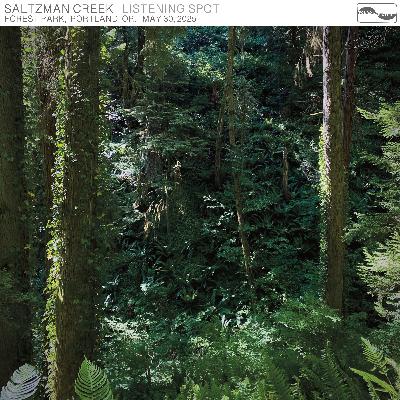
Today’s environmental recording captures the sound of an area within Forest Park that few people gave much thought to, until a headline grabbed their attention 21 years ago.In 2004, a pair of off-trail endurance runners came across a father and daughter living in a dugout shelter in Portland’s 5200 acre Forest Park. They had been living there for four years.Upon discovery, police were dispatched for a wellness check. Eventually one officer helped the two resettle on a horse farm where the father, Frank, worked and they attended the local church. They left the farm after about a month, never to be heard from again. Their story inspired Peter Rock’s 2009 fictionalized novel My Abandonment, which was adapted into the acclaimed 2018 film Leave No Trace.When first discovered, Frank was 53 and Ruth was 12. Their makeshift home was constructed on the side of a steep hill, not far from where this recording was made. Inside the shelter were encyclopedias, a bible, toys, a doll, sleeping bags. Nearby was a planted vegetable garden and a water catchment structure.“But how could a 53 year old father with a 12 year old daughter survive in this thick, dense forest for four years?” asks a reporter as he bushwhacks down a brushy hillside in a 2004 segment for KATU news. “Well, police say Frank’s a smart guy, college-educated. He’s also an ex-marine who served two tours in Vietnam.”The reporter concludes, “So why would a father with no job, but a $400 a month disability check, hide in the forest? Those that saw them on their weekly walks out of the woods to church, the library and to buy food say it was a father’s fear society might separate him from the one he loves.” Amateur mystery detectives on Reddit wanted to know more. Based on the few details in the 2004 news stories, they placed the father, Frank Trecarten, in articles 20 years prior in 1984, describing a manhunt for a mountain man or “survivalist”, in Quebec and New Hampshire after allegations of desecrating an church altar and attempted arson. Then in 2005, log books for Appalachian Trail hikers signed by “Mountain Man” and “Miss Mountain Dew”—believed to be trail names for Frank and Ruth—were discovered. A photo corroborates the placement with the identifying note: Frank “Trefcarten”. Most recently, in 2013, the name Frank Treecarten reappears in articles outlining a flare gun shooting assault in Concord, New Hampshire, where it appears Frank was charged with two felonies and held on $8,000 bail. The verdict in the case is unknown.These details paint the story in a more acute light, potentially revealing a decades-long pattern of living on the fringes, possibly exacerbated by PTSD.I re-watched Leave No Trace and listened to the My Abandonment audiobook. Although the movie is adapted from the book, they diverge significantly, especially approaching their conclusions. The book is decidedly more tragic, while the movie hits a more optimistic note. The optimist in me wants the film to be closer to the truth. One can’t help but wonder about Ruth, who would be in her mid 30’s now, and Frank, now in his mid 70‘s. If amateur investigators are to be believed, Ruth is now married and living in Oregon. Another thing that I noticed and appreciated in the film was how sparse the score was. It was barely there. It inspired me to further pare down my own future scores, letting the soundscape “take solos”. Additionally, a lot of films get the wildlife sounds wrong, but this was better than most. Varied Thrush, and Northern Pygmy Owl stood out to my ear. I don’t remember hearing Pacific Wren though; a true soundmark of Forest Park. That late May morning I sat in the middle of the Maple Trail above Saltzman Creek. No one passed by. The trail had been closed for some time following bridge damage. Portions of steel decking were broken off and the railing remained squashed from the impact of a fallen tree. While there, I made an oil pastel drawing while soaking up the tranquil setting. I also made a half-hearted attempt to scout around looking some clue of a former habitation; a whisper trail, a depression. Then it occurred to me that I really didn’t know precisely where to look. That ridge or this ridge? It seemed pointless, really. Perhaps the reason that this story still looms so large in imaginations is because it makes us confront how estranged we truly are from the old ways: living light in the woods, not too far removed from hunting and gathering. We don’t really hear these kind of narratives in the USA anymore. We are aghast to discover that a father and daughter did so, undetected, for four years in a city nature park. It defied expectation. I wonder what this says about us; about the velocity and trajectory of civilization? I don’t have any conclusions of my own to offer. All I know is a young person, I spent nights discretely camped at a few dubious spots while cycling across the USA. You definitely sleep lighter. I can’t imagine that kind of background anxiety over the long term.My score attempts to hold these two things in tension: the wonder and a the discomfort of living outdoors, close to the land, peering into its wildness.Thanks for listening and reading. Saltzman Creek is available under the artist name Listening Spot on all streaming platforms today Friday, October 24th, 2025. This is a public episode. If you'd like to discuss this with other subscribers or get access to bonus episodes, visit chadcrouch.substack.com/subscribe

I’m sitting on a bench at the nearby city park listening to Creek & Raven. It comes out in a few days, as I write this. I haven’t listened to it for many months now, so it’s both surprising and unsurprising how it opens. Unsurprising is the trilling Pacific Wren, a distant Common Raven and the faint sound of a creek. Surprising is the mournful synthesizer lead that resembles a French horn.The vibe is meeting me where I am today, on this last overcast day of another extended Portland Indian summer. Winter is coming, literally and figuratively. I feel it; stark, curious and foreboding.The environmental audio was captured in one of the deeper canyons of Forest Park in early June of this year. The creek that carved this deep canyon is named Rocking Chair Creek after the discovery of a rocking chair in its waters. I’m visualizing it now like the heirloom bentwood rocker in my living room, half sunk with gold-green moss growing on it, illuminated in a sunbeam. I returned to the canyon a few weeks ago and made more sketches. It’s interesting to me how the palette shifted, on return, to bluer hues of green. This brings to mind how the observer influences a scene; how interpretations and tone can shift. About 8 miles away from this canyon is a different scene that has captured the imagination of the nation, and beyond, in the recent news cycle.Here, a nondescript beige multi-story federal building stands between Interstate 5 and the Willamette river on the margins of downtown Portland, Oregon. It is ground zero for a political Rorschach test. A lot has been written about it. I’m not interested in trying to summarize that here. If you know, you know…you know?But the idea that there is any debate about facts on the ground; that there is any set of conditions that presently call for US military intervention in my home town is unnerving. It is deeply strange and seemingly animated by a dark fantasy. Most here poke fun at the absurdity of it all; the disconnect between truth and image-peddling. A few have their own reasons to support some hazy notion of a “crackdown”. The city is not without problems, after all. Anyone can tell you that. It’s been a tough run over the better part of a decade, here and most everywhere. On that score, there have been plenty of indications that the city turned a corner. I travelled to four capital cities in Europe over the summer and they didn’t strike me as better or worse, any more or less livable on the whole.The fever-pitched finger pointing is what makes my stomach churn. The notion that educated people cannot in good faith arrive at a consensus on whether a city is “war-ravaged”, “under siege”, even “burning to the ground” or about average for its size is like a chapter out of George Orwell’s 1984. “Reality exists in the human mind, and nowhere else.”“2 + 2 = 5”-Party doctrine from 1984 by George OrwellIn the finale of Creek and Raven we hear ravens croak and rattle with gusto. What are they saying?Ravens have long been cast as messengers in the symbology of First Nations. As a communicative carrion bird, their associations with prophecy, insight, and playing intermediary between life and death are long held. Do these ravens have any prophecies or insights to share about their home in Portland, Oregon? Recent studies have identified at least 30 to 40 distinct vocalizations in ravens’ repertoire. They vocalize for the same reasons humans do: talking about food, keeping track of family members, socializing, bonding, playing, warning, and identifying each other specifically. Ravens even use “emotional” prosody; they convey urgency or calm through tone. They can learn new vocalizations, mimicking human speech and other sounds.I think we could all benefit by taking time to actively listen to what Bernie Krause coined the “biophony”, the layer of the soundscape made by living organisms. We would do well to listen to each other as well; us human animals. I believe estrangement from the biophony, can lead to less empathy, and that can lead to all sorts of unfortunate outcomes.We have some mending to do. We have holes in our social fabric left over from the pandemic; splits aggravated by social media and the tribalism of news media empires. Maybe we can take a lesson from ravens and just remember to talk to each other; to shoot the breeze about food and family.A raven’s warning call is a sharp, urgent Kawk! Kawk! Kawk! But what happens when one of the flock spreads alarm when there is no real threat? We know from the old folk tale how Chicken Little—the sky is falling!—learns a lesson about spreading alarm without evidence…in the sanitized version of the tale. In most versions, the characters (Chicken Little, Ducky Lucky, Goosey Loosey, and Turkey Lurkey) encounter Foxy Loxy who uses the panic to trick them into his den and eat them all. What I think we are facing in this country is leadership that is acting like Chicken Little while also behaving like Foxy Loxy. It’s not normal. It’s not okay. I think it needs to be called out. I think we—all of us—deserve more from elected leaders. I’m not typically an outspoken person, but now doesn’t feel like the time to sit back and say nothing.Thank you, as always, for joining me here, and for listening to my point of view. Creek & Raven is available on all music streaming services October 17th, 2025. This is a public episode. If you'd like to discuss this with other subscribers or get access to bonus episodes, visit chadcrouch.substack.com/subscribe
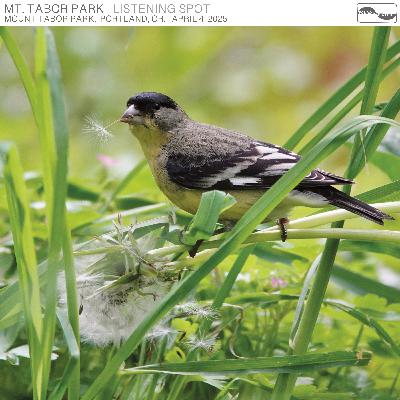
It’s been a little while since my last Listening Spot release. If you’re just joining, Listening Spot is a pseudonym I use for stationary environmental recordings paired to atmospheric “ambient” compositions. Once again, however, I’m breaking with the tradition of avoiding piano with a Listening Spot release. Pianet electric piano alternates with Korg synthesizer “dew drops” at the center of this musical score. This time we are visiting the iconic Mt. Tabor Park of Portland, Oregon. The 636 ft (194 meter) forested peak rises up from the otherwise mostly level plane of SE Portland. It’s a dormant cinder cone volcano from a lava field formation now quiet for over 300,000 years. From a bird’s eye view, it’s a promising rest stop on migration, offering an island of green in a patchwork of grey.On spring mornings the park bustles with both bird and human activity. Many exercise routines target the broad summit, offering the reward of a city view looking west toward downtown Portland. Here’s a sketch of it I made on my phone:As far as environmental recording goes, I’ve historically found Mt. Tabor to be a difficult place to make “pleasing” recordings. This notion of pleasing is, of course, entirely subjective. But, in general, the topography and popularity of the park makes the anthropogenic layers more of a focal point. Dogs barking, joggers huffing up trails, sirens wailing, trucks beeping… These are all fine and interesting sounds—I’ve actually recently come to find backup beeps an interesting musical counterpoint to the sound of nuthatches, for example—but they are not the sounds I’ve set out to capture…yet anyway.More recently, I found a spot that’s pretty well insulated from the city soundscape and the bulk of human visitors. There is a knob between reservoir 1 and 5 with a solitary bench on top, offering a relatively tranquil listening spot in the 176 acre park. Here, I made this recording on April 4th of this year. The sounds of the city barely register below the songbirds belting out their springtime melodies.We hear Lesser Goldfinch, Red-breasted Nuthatch, American Robin, Song Sparrow, Pine Siskin, Steller’s Jay, Northern Flicker, and a Swainson’s Thrush, to name a few. It’s a sharp contrast to the subdued songs of fall.My score is of the minimal, imperfect, reflective and tender sort. I hope you enjoy it. Thanks for coming along for the journey. It’s not always clear to me if I’m connecting with readers and listeners via Substack, so feel free to say hi.Or, if you can think of someone who might like what I’m doing, please let them know. It means a lot to me. Mt. Tabor Park is available under the artist name Listening Spot on all streaming platforms Friday October 3rd. This is a public episode. If you'd like to discuss this with other subscribers or get access to bonus episodes, visit chadcrouch.substack.com/subscribe
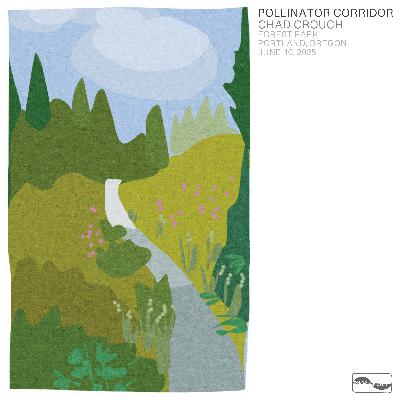
I like to work in batches. Pollinator Corridor can be filed under two batches: 1) Forest Park and 2) plein air soundwalks. So Forest Park is self explanatory, but could use some contextualizing, which I’ll get into shortly. The plein air soundwalks batch is still taking shape. Basically it’s just me recording and sketching—like I said last time—offering a little twist on my Soundwalk formula. One little experiment I did on this particular day was to make some botanical sketches.For being in Forest Park, you might notice on this cover that the view here isn’t thickly forested:This is the view looking back up the hill on BPA road, where a swath of forestland was removed long ago to accommodate the high voltage power lines that run up and over the Tualatin Mountains here on the north end of the 5000 acre wooded park. The gravel and dirt lane is maintained for power line inspection and maintenance purposes, while serving dual purpose as a multi-use trail connecting the trails that intersect it. It’s a distinct habitat in Forest Park; an edge land where grasses, berries and wildflowers grow, attracting some different animal species than the forest interior. Portland Parks & Rec. calls this a Pollinator Corridor. If you’re patient, you’ll see and hear these visitors: the migratory Rufous Hummingbird with its little toy motorcycle sound; berry-eating songbirds like the Black-headed Grosbeak; insects like bumble bees, and Western Tiger Swallowtail butterflies; and deer or sometimes elk slowly cracking through downed branches on the perimeter, coming and going. There are few places in Forest Park that open up sufficiently to afford views of the Cascade Mountains to the west. This is one of them: Fireweed, oceanspray, western goldenrod, and Oregon Sunshine also thrive here. Here’s a sketch of orange honeysuckle.It’s both serene and pulsing with life.For the score, I really leaned into the sound of the Soma Lyre “Organismic Synthesizer”. I’m using a virtual instrument playable by a midi keyboard, but the original inductive pad and knob box hardware is quite fascinating. Many electronic musicians find it unusually emotive and inspiring. I’m also using a virtual instrument that samples the quieter timbres created by manipulating the tone bars of a 50’s / 60’s Hammond organ. I used to own a Hammond M3 organ, and my earliest musical experiments involved playing with the toggle switches and tone bars to add warm, crackly textures to my nascent experimental performances. I didn’t reach for any Electric Piano for this one. In this way it’s crossbred with my Listening Spot ouvre, I suppose.Reaching the end of BPA Road, the hiker is presented with a three way fork. All options are a road less travelled. Two lanes lead out to prominences topped by high voltage electric towers overlooking the Willamette River and the lower Columbia beyond. The other lane plunges down to Hwy 30 below, and is prone to overgrowth. Here’s the view from the northernmost point. It’s very peaceful place with a meadowy feel, and a nice view of the Multnomah Channel and the Sauvie Island Bridge:Thank you, as always, for joining me here. I hope you enjoy Pollinator Corridor. It’s available on all music streaming services today, September 19th, 2025. Also, last week I released another instrumental EP under the pseudonym Sleeping Animal. So if you’re in the mood for some impressionistic electric piano-centered music, I’ve got you covered there too. That one is called Traverse, also available on all music streaming services. This is a public episode. If you'd like to discuss this with other subscribers or get access to bonus episodes, visit chadcrouch.substack.com/subscribe
 1
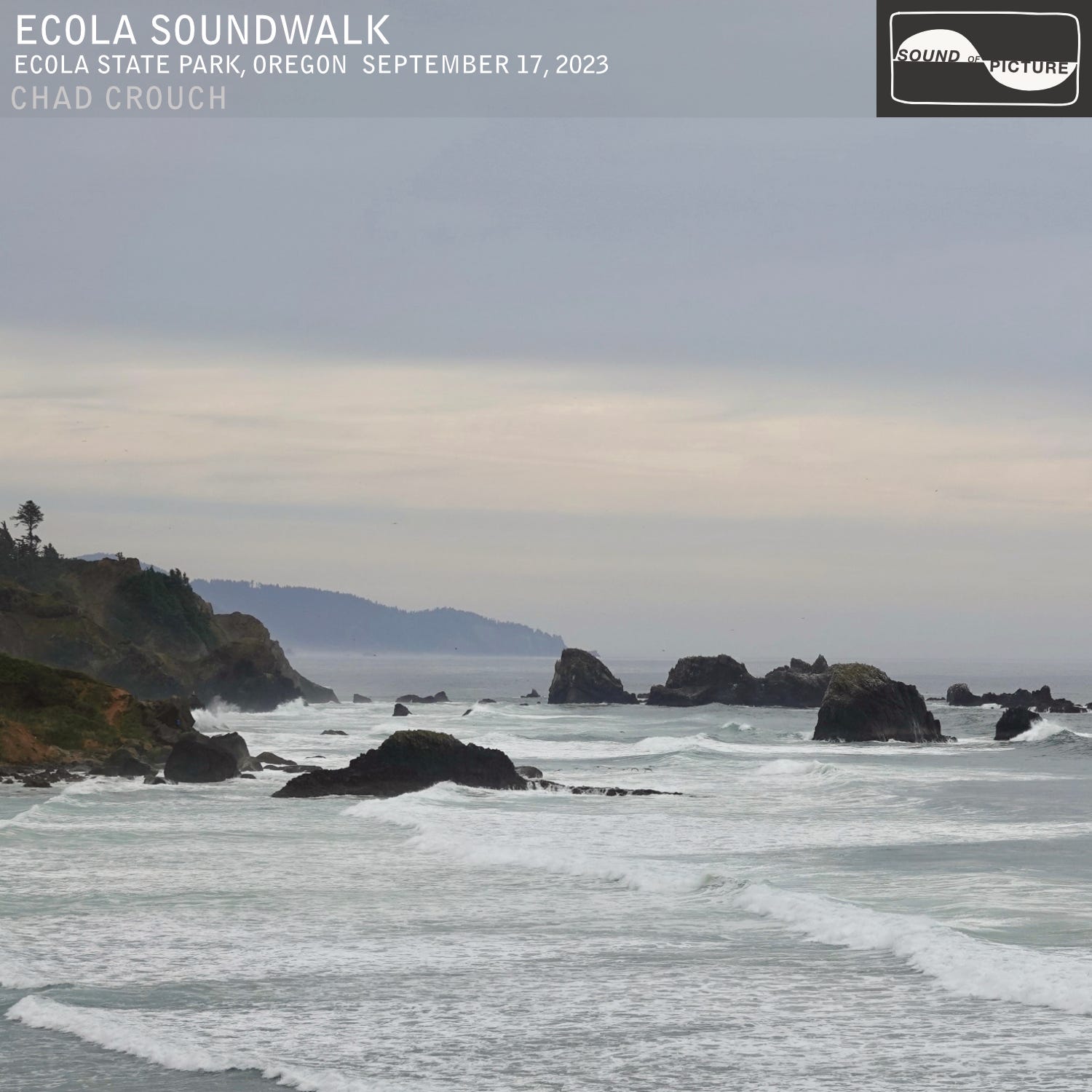
1This is a free preview of a paid episode. To hear more, visit chadcrouch.substack.comWhen it comes to soundwalks, it’s unusual for me to let two years go by from the time of capturing audio until release. I had to leave this one alone for a while and come back to it with fresh ears. Dear reader, this is Ecola Soundwalk.There are a number of hiking routes at Ecola State Park just north of Cannon Beach, Oregon. It’s an astonishingly beautiful headland chock full of seastacks and fog belt Sitka spruce coastal forests. It’s a national treasure really, as far as state parks go.I went for the Clatsop Loop route, hoping the inland leg would provide for some quiet encounters with wildlife. It was quiet, and this ultimately informed the instrumentation I chose. When I finally came back to it, I realized the whole thing just needed to be softer and quieter. That’s what was missing from my first pass at composing and arranging, over a year before.Not that any of my soundwalks are recommended for listening in a car or on a plane trip, but Ecola Soundwalk should come with a warning label: Do not attempt to listen outside a quiet environment. It won’t sound good. There are even some passages that might sound experimental with their woozy, threadbare, textured minimalism. Ruby-crowned Kinglets and Chestnut-backed Chickadees eventually enter the soundscape after the five minute mark, and they come and go through the middle bit. Red Crossbills fly over and Red-breasted Nuthatches move slowly through the upper canopy.After a Barred Owl sighting, we once again hear the surf about 2/3 of the way through. It’s distant. Below. This is not a beach soundwalk. It’s a moody coastal forest soundwalk.And, it’s a walk with periodic astonishing vistas. The lonesome Tillamook Rock Lighthouse is a sight to behold.Well, that’s really all I can think of to say this week. Thanks for reading and listening. Thanks for sticking with me.Ecola Soundwalk is available on all music streaming services today, September 5th, 2025.

After a few weeks, I’m back, and excited to share something new. Out today is Meadow Showers, an album offering a new twist on the soundwalk form that has given shape to my work over the last three years. The twist is admittedly a gentle one: In a nutshell, it’s simply less footsteps in the mix. On this soundwalk I’m engaged at intervals in plein air (outdoor) painting using an iPad (or phone), while quietly soaking up the soundscape as I sketch. If you’ve been keeping up, you may recall this post from June 12, introducing the concept: The soundscape for Meadow Showers was captured on June 20th of this year at the Holman Lane entrance to Forest Park in Portland Oregon. The meadow had already grown tall. Grass cuttings lay on the trail. A squall whipped through the trees.I took cover across the meadow under a broadleaf tree with a bench underneath it, Looking in the opposite direction, I worked up this image as a summer rain shower passed over.Eventually other visitors came into the scene. A child squealed with delight. A group of young people walked by speaking Chinese. The birds were temporarily quieted by the weather.Before long, I ventured out on the Wildwood Trail, stopping to sketch this image of the hillside terrain:Rain clouds came and went. With another downpour brewing, I found myself taking shelter under a tree overlooking this woodland scene with two snags emerging from the bracken: The wind massaged the canopy, playing it like an instrument.In all, Meadow Showers is a postcard-esque series of vignettes, writ in image and sound. It’s a new soundwalk formula that I will revisit through the coming year. The first handful is already on deck and slotted in the release schedule, and I have designs for creating more, with the aim of pushing against some of the self-imposed boundaries of my craft.I’ve been feeling a little stuck and disaffected lately, I guess. Insofar as this relates to my work, I’m hopeful a new angle can open some doors. What do you do when you feel stuck, alienated, or upset? Feel free to help me brainstorm with a comment.Thanks for reading and listening. I’m glad to have you along!Meadow Showers is available on all music streaming services August 29, 2025. This is a public episode. If you'd like to discuss this with other subscribers or get access to bonus episodes, visit chadcrouch.substack.com/subscribe
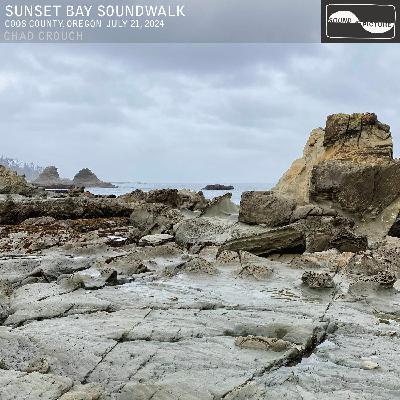
I recorded the environmental sound for Sunset Bay Soundwalk about year ago while meandering over the rocky tidal landscape on a mild summer Sunday morning at Sunset Bay, near the city of Coos Bay, Oregon.Sunset Bay has a crescent-shaped beach, sheltered by the North Pacific waves. Here, little rollers fan out, lapping against the rocky head outcrops on each side. Acoustically it’s a natural amphitheater. The birds, foraging in the tree canopy on the bluffs sound amplified. A Swainson’s Thrush ethereal song reverberates. The surf sound is a distant murmur. Windstill.Perhaps the first thing you register though, is the sound of humans. For this edit, I spliced clips that were peppered here and there with human voices. They are largely undecipherable; adding a textural layer in the soundscape. We hear feet scuffling over rocks, with no rhythm. No urgency. While there, I gazed into the tide pools, enchanted by the colors. Looking for movement, I was delighted by these little colonies of life adapted to the flushing seawater tides in their dance with the moon.I did my best to translate the sweetness of the morning in music. Nothing like a morning outside to rinse and reset the mind!Thanks for listening and reading. As per usual, Sunset Bay Soundwalk is available on all music streaming services today, August 1, 2025. This is a public episode. If you'd like to discuss this with other subscribers or get access to bonus episodes, visit chadcrouch.substack.com/subscribe
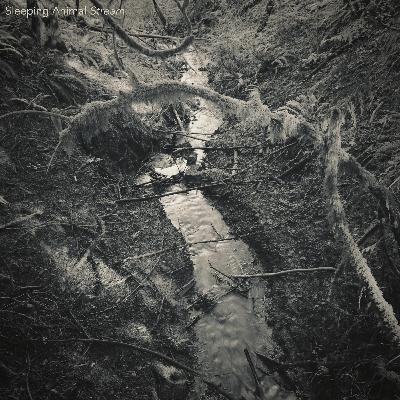
Out today under my instrumental Sleeping Animal pseudonym is a composition entitled Stream. It’s a measured and minimal eleven minute miniature suite for electric piano and synthesizers. Look for Stream today, July 25, 2025 on all streaming services.I’m over half way through the release schedule of Sleeping Animal releases that took shape pretty quickly at the beginning of this year. My hope was that they might find an audience outside the niche I’ve cultivated with my penchant for field recording taking a co-equal, or maybe even primary role in my music. It seems like a fine time to reflect on how the Sleeping Animal experiment is going. If you’re interested in this, by all means read on. If it’s not what you signed up for, feel free to skip it. Neo-classical, Chilly Gonzales, Mood Music, and What Now?I’m thinking about an essay by Chilly Gonzales entitled Why I Regret Giving Birth to the Neoclassical Genre that opens with this paragraph:It’s usually a forest, or a mountainside, or a beach. Ideally, it’s an otherworldly volcanic terrain, maybe in Iceland. A piano sits conspicuously in the middle of this landscape, as a pianist with eyes closed exaggerates the effort required to present some familiar arpeggios on the white keys. This is Neoclassical music, a genre I may have birthed, and I hate myself for it.I had to laugh. This was accurately calling out Sleeping Animal before it even came to be. It’s usually a forest. Check. Familiar arpeggios on the white keys. Fair enough. I mean, I’m pretty comfortable on the black keys too, but I tend to follow familiar pathways when composing, so touché, and ouch!In this essay Gonzales reflects on his 2004 solo piano release, aptly entitled Solo Piano, offered up as a curveball to the “electro-hipster” fanbase he garnered in the preceding years.Back in 2004 my music business contacts saw my Solo Piano transformation as career suicide. Nobody thought of solitary piano music as a potential gravy train. But here we are, the algorithm has spoken and background music is now big business.Playlists like Peaceful Piano or Music for Studying have turbo-charged the monetisation of functional background music. These playlists pay, albeit badly. And when the playlists pay, the industry pays attention…The essay was published in September last year. While the Peaceful Piano playlist is still a gravy train for the premiere names of the genre, the chill playlist diaspora have been largely reprogrammed with “ghost artists”. (In a nutshell, ghost artists are fictional artist identities given to tracks created by for-hire studio musicians willing to crank out original songs to fit a mood, all in an obfuscated scheme to cut costs for the platform.) Today, the few high traffic playlist slots that remain for real artists might be the last of the low hanging fruit for the AI-generated music tidal wave that we are being warned about. I’m not ashamed to say that the invention of Sleeping Animal was in part an experiment to see if I could grow my streaming income by diversifying. I said that much from the get-go, calling it a spin off.Gonzales relayed an anecdote about the allure of chasing playlists: A musician friend of mine worked painstakingly for years on a complex and challenging album only to hear from his record label that “we love it but we feel we could invest more of our time, energy and money if you would add something for the fans of Ludovico Einaudi”. In other words, to become Zweinaudi or Dreinaudi.It’s difficult to resist this pressure. It wasn’t long before my friend went back to the studio and aimed a few more pieces squarely at the “peaceful piano” bullseye. And worst of all, my friend and the label were rewarded mightily for their capitulation.But really, worst of all? This seems a bit holier than thou, honestly. So, real artists only make complex, challenging music and never think about earning a living?I watched the 2019 documentary, Shut up and Play the Piano, profiling Gonzales several years ago. He exudes main character energy in the film in a way that’s almost hard to watch: complex, bedeviled, and willing to go to extremes to compensate for something—we’re not sure what. A sibling rivalry? Imposter syndrome from portraying himself as a musical genius, while struggling to read beginner level sheet music? For all the vulnerable sequences and observations in the film, there’s an equal number of clips cultivating a chameleonic chicanery.I am one of the many devotees to Gonzales’ solo piano works. These albums featured minimalist black and white drawings, evoking the trope of a serious, studied artiste. His cover for Solo Piano III went so far as to insinuate technical prowess: three disembodied hands dancing across the surface of a piano keyboard. I bought it. I thought he was a piano genius. In a way, both he and the movie pulled the rug out from under fans like me. I wasn’t sure how to feel about it.When I listen to Gonzales’ solo piano pieces, I hear sincerity, depth, melody, sophistication. They want for nothing, to my ear. Did that opening paragraph in his essay ring so true because it cuts close to home? A lot of ink has been spilled about the dumbing down of musical taste at the hands of tech overlords and opportunistic hacks in service of the playlist era, serving up mood music: frictionless, dull, generic background music to soundtrack one’s aspirational chill. It’s hard to shake the fear that my own catalogue isn’t also being dragged through the mud with this critique. A lot of hand-wringing and dislocation will certainly play out in the dawning era of AI in the music industry. The neo-classical, and lo-fi beats genres that populate so many chill and focus playlists will almost certainly be inundated. How are artists like myself to navigate the shifting sands?Ten to twenty years after they were released, Chilly Gonzales’ solo piano albums sound timeless. To me, they are classics. I hope to feel something similar for my own work after the passing of many years. That’s my aim. This is a public episode. If you'd like to discuss this with other subscribers or get access to bonus episodes, visit chadcrouch.substack.com/subscribe
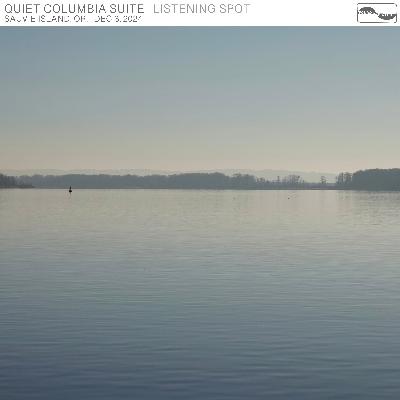
This is a free preview of a paid episode. To hear more, visit chadcrouch.substack.comThe Columbia River basin is roughly the size of France. The Columbia is the fourth-largest river in the United States by flow, and the largest river emptying into the eastern Pacific Ocean. In the last 90 years, this mighty river has been mightily renovated. The multitude of dams (around 150) in the basin now represent 44% of all US hydro-electric power generation. It all started in the 1930’s with the Bonneville Dam, a signature project of The New Deal. The Bonneville Power Administration (BPA) was created by Congress to market the power generated by the dam. The agency would grow over the years as more and more dams were built in the basin. My father was hired by BPA around 1970 as an electrical engineer. Within a few short years his salary enabled him to purchase a new home for his young family of four, and a new Ford Mustang for his commute to work from the Portland suburbs. As the 70’s drew to a close, my father began climbing a managerial ladder at BPA. Visiting his office was exciting for a kid. At one point it was located on the upper floors of the tallest building on Portland’s east side. The cars on the street looked like toys from up there. Elevator rides were a thrill. My sister and I would jump at the first sign its rapid ascent was slowing, elated by the hang time we felt.In 1984 dad moved to a new office, in an even fancier building with a curved facade overlooking the freeway. I distinctly remember him telling me about a modern white noise system that was built in. It made the office seem quieter, he said, by adding sound; a special sound that made background noise less noticeable. Conversations in far-off cubicles couldn’t be heard. This puzzled me. It sounded like white noise was black magic. Adding sound, in my experience, was a surefire way to make something— someplace—louder. What exactly he did at work in those years wasn’t obvious to me. His white collar job, in his white noise office wasn’t tangibly connected to the mechanics of hydro-power or the delivery of electricity into our homes in the Pacific Northwest. Similarly, now a generation removed, my son is both uninterested and unimpressed by my vocation, which amounts to me spending a lot of time in my home office/studio with headphones on, plunking away on a midi keyboard, scrutinizing bands of orange-hued spectrogram stereo files, poking and prodding at them with a mouse in hand.In the words of Woody Guthrie—who was hired by BPA in 1941 to ennoble the burgeoning hydro-electric empire in song—the Columbia rolls on. It rolls on four miles north of our home. Electrons arriving in wires from turbines at Bonneville Dam are converted to LCD light and computational power right here in front of me, enabling, in part, the wonderfully complicated but seemingly straightforward task of drafting this post. It rolls on and I take it for granted. Air conditioning requires a great deal many more electrons, which I’m also currently enjoying, with little thought given to it. While the hydroelectric empire of the Columbia has given the region abundant renewable electricity and supplied it with water to irrigate arid landscapes, it has done so at the cost a once great salmon fishery.Here BPA would say, no it wasn’t us. We’ve helped Salmon. We’ve spent billions. Look at all our hatcheries and fish ladders. We even transport fish in trucks around our dams. It was the fishermen and canneries who depleted the fishery before the dams were built. On that score, they wouldn’t be entirely mistaken. The early 1900’s Columbia commercial fishery knew no bounds, and within half a century it brought about its own demise. But to say that salmon and dams can get along hunky-dory, well, that’s increasingly hard to fathom.Less than a year ago, three hundred miles to the south, a campaign of dam removals was concluded on the Klamath River. The basin is still far from its pre-Euro-American state, but it was is a big move for restoration of salmon spawning habitat in the upper Klamath. Within days of the last dam removal, fall run Chinook were observed upriver for the first time in a century. Years from now perhaps stakeholders will look to the Klamath for answers about what to do about the aging infrastructure on the Columbia.Celilo Falls and the Cascades of the Columbia, once roaring, are but memories of a mighty river that ran wild nearly a century ago. Submerged by slackwater pools, today’s river soundscape is now formed by the wakes created by cargo ships and barges that ply its lower reaches. This recording is essentially a slice of time on a mild December day in 2024 between two such vessels. Centered on a reach of river absent of shoreline highways, it harkens back to a quieter time. It captures the sound of a great expanse; miles in all directions.Accordingly, the musical composition and arrangement are imbued with harmonic complexity that I don’t usually reach for: 7th suspended 4th chords, add-9th chords. Delivered in slow, overlapping succession, these unsettled voicings follow each other rhythmically, like waves tumbling ashore. Small animals scuttle through the brush on the shore while gulls and Bald Eagles cry in the middle distance. Common Mergansers call to each other upriver. Whorls of water formed by the current hint at the great power that lies beneath the placid surface. Roll on Columbia, roll on… Thanks for reading and listening, friend. Quiet Columbia Suite is available under the artist name Listening Spot on all streaming platforms today Friday, July 18th.
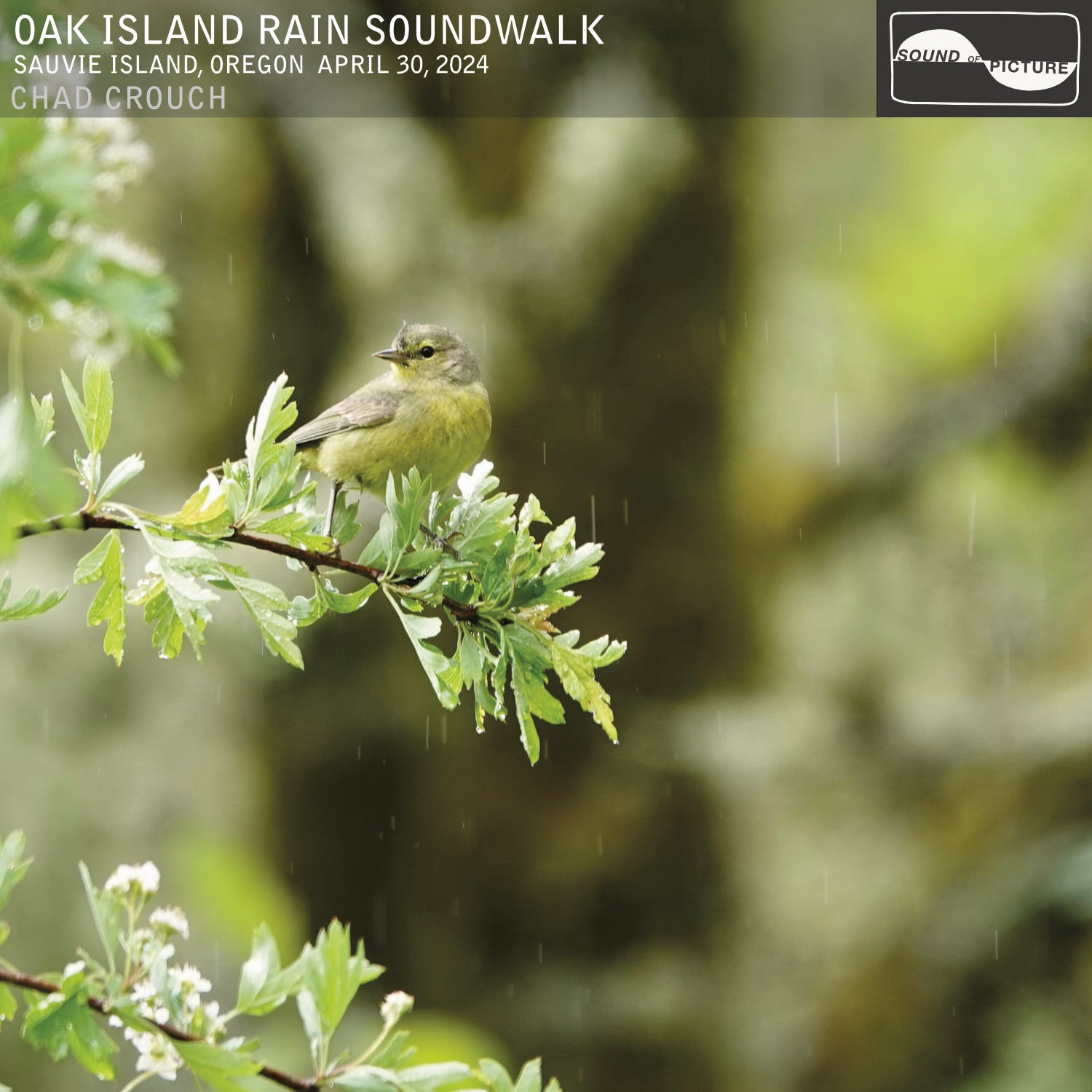
The environmental recording for Oak Island Rain Soundwalk was recorded April 30th 2024. It’s a really gentle soundscape; dewy and hushed. I chose this photo for the cover because, if you look closely, it captures the fine rain drops that fell that morning. It’s hard to take a picture of rain. I got lucky here. I’ve gave Oak Island quite a bit of attention last year, initially surveying the soundscape without ornamentation:Later, I visited the spur road that leads to the area in the winter, basking in the sound of skeins of geese overhead and croaking Sandhill Cranes foraging in fallow fields. Finally, I used a recording made peering in the heart of the 100 acre Oak Savanna preserved at Oak Island for my sophomore Listening Spot effort: So we’re back, and even though it captures an out-of-season sound for this part of the world, I thought it might be a soothing addition for summer programming. The weather here in the Pacific Northwest has been idyllic. Meanwhile, headlines land in my news feed about heat waves on the US East Coast and in Europe. If you're feeling the heat, this one goes out to you.In this season of open windows and being outside, our cities become a little noisier. Sometimes that can be exciting. Sometimes it can be unwanted. I make no pretenses about what my soundwalks are for, what purpose they serve, but if this one can quell any thirst for peace, quiet, and tenderness out there, I’m all for it.In this landscape we hear migratory Bullock’s Oriole, Rufous Hummingbird, Orange-crowned Warbler, Yellow-rumped Warbler, Western Tanager, Purple Finch, Tree Swallow, Black-headed Grosbeak, Savannah Sparrow, Red-wing Blackbird... The interesting thing is they are all singing lowkey, as the kids say, as in quietly. The rain seems to have a subduing effect. Thanks for listening and reading! I’m making this one available in its entirety here on Substack, because I think there is probably someone new-to-me it could be useful to. If you enjoy what you hear, please consider telling just one person about it. As per usual, Oak Island Rain Soundwalk is available on all music streaming services today, July 4, 2025, Happy Independence Day! This is a public episode. If you'd like to discuss this with other subscribers or get access to bonus episodes, visit chadcrouch.substack.com/subscribe

Comments

Download from Google Play

Download from App Store
 United States