


 Claim Ownership
Connecting the Dots with Dr Wilmer Leon
Subscribed: 28Played: 294
Subscribe

© Copyright 2023 All rights reserved.
Description
You know him from Sirius XM and Sputnik Radio. Now join Dr. Wilmer Leon every week for Connecting the Dots where he pulls back the curtain for a deeper look at the world’s top issues, powered by the expertise of journalists, academics, and activists from around the world. With so much happening in these times, it can be crazy and overwhelming out there, so let Dr. Leon help you ”connect the dots”!
47 Episodes
Reverse
((Recorded Live)) As America prepared for one of the most pivotal elections in recent history, I went live to break down the stakes, the key players, and the issues that could shape the future of the nation. Join me as we explore what’s at risk in the 2024 election, from the candidates’ platforms to the critical choices facing voters. Whether you tuned in live or are catching the replay, don’t miss this deep dive into the upcoming election and what it means for all of us!
We are live Monday through Friday!
Find me and the show on social media.
Click the following links or search @DrWilmerLeon on X/Twitter, Instagram, Facebook, and YouTube!
-Please consider donating to keep us on the air.
-Patreon.com/WilmerLeon
Announcer (00:00:07):
Connecting the dots with Dr. Wilmer Leon, where the analysis of politics, culture, and history converge.
Wilmer Leon (00:00:15):
Good morning. Good morning. And as most of you know by now, this coming Tuesday, November 5th will be as the Constitution states, the Tuesday next, after the first Monday in November is election day. What are you all going to do? Are you going to vote? Are you going to abstain? If you decide to vote, who are you going to cast your ballot for? Let's talk and let's talk live. We're live today. I want to welcome you all to the Connecting the Dots podcast with me. I am Dr. Wiler Leon. And here's the point. We have a tendency to view current events as though they occur in a vacuum, failing to understand the broader historic context in which most events take place. During each episode, my guests and I have probing, provocative, and in-depth discussions that connect the dots between these events and the broader historic contexts in which they occur, thus enabling you to better understand and analyze the events that impact the global village in which we live.
(00:01:26):
On today's episode, it's just me, it's me, no guests. I'm live today. And I know this is very, very short notice, but here we are. So the issues or the issue before us is or are this Tuesday, as I said in the tease, November 5th will be as the Constitution states, the Tuesday next after the first Monday in November is election day. Folks, what are you all going to do? Are you going to vote or are you going to abstain? If you decide to vote, who are you going to cast your ballots for? And for me, here's the real important salient question, why vote or abstain? I strongly suggest voting. I don't think that you can abdicate your duty as a citizen and sit this one out. And I firmly believe that the primary responsibility of a citizen is to participate in the electoral process to determine who you select to represent your interests in government.
(00:02:48):
Folks, I believe America is recklessly muddling its way through these incredibly, incredibly perilous times, very, very recklessly. As America muddles its way through these perilous times, there are too many Americans that appear to be more confused than ever. Many of us have traded our interests in for electability or anybody. But Trump, former NAACP board chairman Julian Bond, told us that in the African-American community, we have no permanent friends. We have no permanent enemies, we have just permanent interests. Malcolm called them permanent agendas. And as we look at this whole issue of America muddling its way through these perilous times, I think it's very, very important for us to understand what this really means and who is responsible for the peril that we find ourselves in. Many of you all may take exception to what I'm about to say, but I think the data supports disposition. The American empire is on the wane. It is failing. Some will say it has already failed, and what we are experiencing are the last kicks of a dying mule. I think the African proverb says the last kicks of a dying mule are or can be the most dangerous.
(00:04:26):
The United States started this war in Ukraine. The United States is backing the genocide that we see playing itself out right before our very eyes in the Zionist colony known as Israel. The United States is trying to provoke a fight with Venezuela by not recognizing the democratically elected president Nicholas Maduro as the president of Venezuela. The United States is trying to start a fight with China over Taiwan. So that's why I say that we are in incredibly, incredibly perilous times and most of this peril is at our own doing. And I see sister Sandra Muhammad, thank you so much for tuning in greatly, greatly appreciated. So again, incredibly reckless. Too many of us are confused more than ever again. Many of us have traded in our interests for this concept of electability and anybody but Trump. Well, we have to ask ourselves, what are our politics really all about?
(00:05:53):
And this question not only applies to those of us in the African-American community, but it applies to the country overall. Candidates right now are out on the campaign trail asking us for our vote. But what are they offering us? Even more important than that, even more important than what are they offering? What are we as citizens demanding from them? For the most part, I'm hearing racist diatribes of I'm hearing, I'm hearing racist diatribes. I'm hearing offers of higher taxes that are really masking themselves as tariffs on imported goods. I'm hearing anti-immigrant rhetoric, and I'm hearing a lot of ideas being floated as policy. They sound great, but they'll meet stiff opposition if they make their way to Congress. Let me just quickly jump back to the anti-immigrant rhetoric because both sides from the Trump campaign as well as from the Harris campaign, there's a whole lot of clamoring. There's a whole lot of chatter that we're hearing regarding the border immigration.
(00:07:21):
Oh, our country's being overrun by immigrants. I Trump tells you they're eating our pets. And Vice President Harris talks about building the wall funding for more border agents. All of this stuff about keeping people out. What I don't hear anybody talking about, I don't hear anybody asking the question, why are these people trying to come in the first place? Why are Mexicans trying to cross the border? Why are people from Honduras? Why are people from Guatemala risking life in limb, spending thousands of dollars that they've spent years saving, trying to come across this border? I don't hear anybody asking that question. Donald Trump and JD Vance made this horrifically racist, unsupportable false accusation that Haitian immigrants, who by the way, are in Springfield, Ohio legally, who by the way, salvage the economy of Springfield, Ohio. Nobody's asking the question, why are Haitians there in the first place and nobody talks about American foreign policy?
(00:09:00):
Do you think Mexicans just want to come to the United States because they woke up last week and said, you know what? I think I'm going to risk life and limb and go to the United States. Do you think Guatemalans, do you think Hondurans? Do you think El Salvadorians are saying to themselves, you know what, I ain't got nothing else better to do. I'm going to pay some Mule $3,000 that it took me five years to save to risk life and limb to try to sneak into the United States only to run the risk of being deported and wasting all that money. Do you think that maybe they're making these decisions because their economies have been decimated by American foreign policy and they're coming. So you don't hear the immigration czar as Donald Trump loves to call Vice President Harris. You don't hear her talking about that. You don't hear Donald Trump talking about that. They talk about failed solutions such as building the wall and all that other foolishness. They don't talk about the real crux of the problem, which is American foreign policy in their countries. What happened with Mexican corn? Well, it got decimated because of nafta importing American yellow corn into Mexico. And that brown multicolored Mexican indigenous corn got decimated through cross pollenization by the American yellow corn that was imported because of nafta, decimating agriculture in Mexico. So what are those farmers to do? Nobody's offered them any assistance. What are those farmers to do?
(00:11:09):
Chiquita brands, about a month ago was convicted in federal court in Florida for funding death squads in Columbia. Chiquita brands now has to pay millions of dollars, millions of dollars to families in Columbia because they were backing death squads in Columbia. So if you are a Colombian, what are you to do? Stay in your native country, running the risk of being murdered by death squads funded by Chiquita brands or do everything in your power to get out of Columbia and go someplace else. And where is that someplace else? The United States as Donald Trump is using these, I see Steve, I'm getting to Haiti right now. Steve, stay out of my head, man. Stay out of my head. Steve. I'm getting to Haiti right now.
(00:12:22):
As Donald Trump and JD Vance are extolling these racist diatribes about Haitians eating dogs and cats. Steve, here we go. Nobody's asking why are the Haitians in Springfield, Ohio in the first place? Nobody's asking why'd they leave Haiti and come to the United States? They should be sitting on the island drinking barbering court five star rum in Eaton Grill. No, they've left their lovely country come to the United States. Why? Here's the answer. As during the debate, you saw Vice President Harris wring her hands and twist contorting her face and showing the utter disgust for that racist diatribe that she should have shown. But nobody asked her Vice President Harris, why did you go to Racom last year and try to convince the leaders of Racom, the organization of Caribbean states to be the tip of the United States spear as the United States is trying to rein, invade Haiti, recolonize Haiti? Nobody asked her that question. And I think that's a very, very important question to ask. I call that minstrel diplomacy,

In this explosive episode of "Connecting the Dots," I tackle the recent drone strike on Israeli Prime Minister Netanyahu's vacation home—an intense response to the IDF’s assassination of Hamas leader Yaya Seir. With award-winning journalist Laith Maru by my side, we break down the escalating conflict in Gaza and Lebanon, Netanyahu’s hardline stance, and the powerful symbolism of martyrdom. We also expose the Western media’s biased coverage and dive deep into the impact of U.S. foreign policy. The stakes are high, and we explore the very real possibility of a broader regional war—calling for global solidarity in these dangerous times.
Find me and the show on social media. Click the following links or search @DrWilmerLeon on X/Twitter, Instagram, Facebook, Patreon and YouTube!
Hey everyone, Dr. Wilmer here! If you've been enjoying my deep dives into the real stories behind the headlines and appreciate the balanced perspective I bring, I'd love your support on my Patreon channel. Your contribution helps me keep "Connecting the Dots" alive, revealing the truth behind the news. Join our community, and together, let's keep uncovering the hidden truths and making sense of the world. Thank you for being a part of this journey!
Wilmer Leon (00:00):
A drone strike hit Israeli Prime Minister Benjamin Netanyahu's vacation home after the IDF martyred Hamas' political and military leader, Yahya Sinwar, in Gaza. The genocide operations continue in Gaza and Lebanon, while Netanyahu declares, "nothing will deter us." Yet, this insanity continues. Let's dive into it.
Announcer (00:37):
Connecting the Dots with Dr. Wilmer Leon, where the analysis of politics, culture, and history converge.
Wilmer Leon (00:44):
Welcome to the Connecting the Dots podcast. I am Dr. Wilmer Leon. Here's the point: we often view current events as though they occur in isolation, but most events take place within a broader historical context. My guests and I probe these issues to connect the dots between events and the broader context, helping you better understand and analyze the global events shaping our world. Today, we’re tackling the ongoing U.S.-backed genocide in Gaza and the looming threat of World War III. My guest for this episode is an award-winning broadcaster and journalist, based in Beirut, Lebanon—my dear brother, Laith Marouf. Welcome back, Laith.
Laith Marouf (01:43):
Great to be with you, Wilmer.
Wilmer Leon (01:45):
Laith, I finally got it right this time! For further analysis and interviews from the region, go to FreePalestine.Video to see Laith in action. Did I get that right, Laith?
Laith Marouf (02:08):
Yes, absolutely.
Wilmer Leon (02:09):
Alright, let’s dive in. Al Jazeera and other outlets confirmed that Israel’s IDF killed Hamas’ political and military leader, Yahya Sinwar, in Gaza. He was martyred a few days ago. Laith, can you talk about his significance? Some compare him to Che Guevara or General Soleimani. Who was Yahya Sinwar?
Laith Marouf (02:49):
Yahya Sinwar was a crucial leader for the Palestinian cause. He was imprisoned for over 20 years by the Israeli regime, with a 400-year sentence against him. During his imprisonment, he worked closely with Palestinian prisoners from various factions, becoming a prominent figure in the movement for prisoner rights in occupied Palestine. He was later released in a prisoner exchange between Hamas and Israel, after Hamas captured Israeli soldiers.
Once released, Sinwar vowed to fight for the rights of Palestinian prisoners, whom many Palestinians regard as living martyrs—those who pay the ultimate price for Palestine's liberation. Sinwar’s leadership culminated in the planning of the October 7th operation, where Israeli soldiers were captured to secure the freedom of Palestinians imprisoned in Israeli jails.
Even until his last moments, Sinwar fought for the freedom of Palestinian prisoners. Israeli media had slandered him, claiming he was hiding or that he kept Israeli prisoners around him as shields. But the truth? He was on the frontlines with his soldiers, resisting Israeli invaders for over a year.
Wilmer Leon (05:30):
Laith, I want to explore something you’ve brought up before—the concept of martyrdom. I think many in the West know the term, but they don’t grasp its significance in the region. Could you elaborate on what it means when someone like Yahya Sinwar or Palestinian prisoners are called martyrs?
Laith Marouf (08:21):
Absolutely, Wilmer. The concept of martyrdom exists in many cultures, even beyond a religious context. For example, Soviet communists called their dead martyrs when fighting the Nazis, and French revolutionaries used the term during their revolution. In Christianity, saints who died spreading the faith were considered martyrs.
In Islam, the word "Shahid" (martyr) holds even more weight. It comes from the Arabic root meaning "to witness." A Shahid is an eternal witness to the injustice they fought against and provides testimony to God. In Islam, martyrs hold the highest place in heaven, alongside the prophets.
Wilmer Leon (10:08):
President Joe Biden called Yahya Sinwar’s death an “opportunity for a new day” in Gaza and suggested this could lead to a political settlement between Israelis and Palestinians. Biden described Sinwar as an insurmountable obstacle. What are your thoughts on these statements, Laith?
Laith Marouf (11:29):
Biden’s comments show how much they feared Sinwar as a leader. To call him an “insurmountable obstacle” reveals the West's complete misunderstanding of the situation. This is not the politics of personality; it's the politics of persecution. Biden's administration and the West fundamentally misunderstand that this is a people's resistance movement, not centered around one individual. Yahya Sinwar’s principles and actions galvanized the resistance. In truth, it is the imperialist mindset that’s failing here.
The West tries to erase its historical crimes—genocide in the Americas, Africa, and more. Sinwar exposed the beast for what it is. His achievement on October 7th? He showed the world the real face of white supremacy and colonialism.
Wilmer Leon (13:14):
What’s your take on the rhetoric from Western leaders like Biden and Kamala Harris? They talk about peace, but they’re assassinating negotiators and leaders like Hassan Nasrallah or Soleimani, who could facilitate dialogue. How does this fit in with their supposed efforts toward peace?
Laith Marouf (21:53):
There’s no safety with the empire, Wilmer. Assassination has always been part of its modus operandi. Indigenous leaders in the U.S. were murdered while negotiating treaties. Soleimani was killed on a peace mission in Iraq. This hypocrisy isn’t new—it’s just becoming more blatant. The Zionist regime and the U.S. imperial powers believe they can impose whatever deal they want on Palestine and Lebanon. But they are gravely mistaken.
Wilmer Leon (24:00):
Before we talk about the drone strike on Netanyahu’s vacation home, I want to address the idea that some confuse restraint with weakness. Could you explain why resistance movements, like Hezbollah, take a different approach compared to an oppressing force like Israel?
Laith Marouf (25:05):
Absolutely. Resistance movements like Hezbollah are defensive. In 1982, Israeli forces took just four days to march from southern Lebanon to Beirut. In 2006, they couldn’t get past the valleys in the south, and now, in 2023, they can’t even advance a few meters into Lebanon. Hezbollah has repelled their attempts for 18 days straight, destroying their tanks and armored vehicles.
Hezbollah doesn't need to invade northern Palestine at this moment. Its strategy is to weaken the Israeli military, so when the time comes, an invasion will be decisive.
Wilmer Leon (28:13):
You mentioned that a full-scale war could erupt before the U.S. elections. Why would the Biden-Harris administration risk such a conflict so close to an election?
Laith Marouf (29:06):
Netanyahu and the Zionist lobby in the U.S. want to ensure that, no matter who wins the election, the war continues. Both Trump and Biden will be trapped into supporting Israel's agenda. I wouldn’t even be surprised if Kamala Harris suspended the election under martial law, should American soldiers start returning in body bags.
Wilmer Leon (31:24):
Many African Americans ask why they should care about Palestine. Could you explain the connection between our struggles?
Laith Marouf (33:37):
Historically, the struggles of African Americans and Palestinians are deeply intertwined. The Black Panthers trained with Palestinian resistance fighters in Algeria. In the 60s and 70s, many African Americans, Indigenous Americans, and leftist movements understood the international struggle against imperialism. Today, the empire is once again repressing marginalized communities, and Palestinians are facing similar repression. This should resonate with African Americans, as it's a global fight against the same oppressors.
Wilmer Leon (37:03):
Now, about the drone strike on Netanyahu's vacation home. I remember saying on my show that someone needed to send a message, perhaps with a missile in his swimming pool—not to assassinate him, but to show they could reach him anytime. What do we know about this recent strike?
Laith Marouf (38:48):
Yes, the drone strike was surgical. Netanyahu’s house near Tel Aviv was hit, and although Israeli media claims that Netanyahu and his wife narrowly escaped, the message was clear. The operation was meticulous, with missiles and drones sent in layers to confuse Israel's defense systems. Hezbollah has shown it can strike when and where it wants.
Wilmer Leon (40:59):
This dark humor among Palestinians and Lebanese—like the jokes about sending quiet drones—seems to reflect something deeper about their mindset. What are your thoughts?
Laith Marouf (41:42):
You're absolutely right. People here use dark humor and poetry to cope with endless invasions and destruction. It's a way to
In this electrifying episode of Connecting the Dots, I sat down with Jon Jeter—two-time Pulitzer Prize finalist, former Washington Post bureau chief, and Knight Fellowship recipient—who pulled no punches as we unraveled the hidden dynamics of America’s class war. Drawing from his explosive book Class War in America, Jeter revealed how the elite have masterfully weaponized race to keep the working class fractured and powerless, ensuring they stay on top. He delves into the ways education is rigged to widen inequality, while elite interests tighten their grip on public policy. With gripping personal stories and razor-sharp historical insight, Jeter paints a vivid picture of the struggle between race and class in America and leaves us with a tantalizing vision of a united working-class revolution on the horizon. This is an episode that will shake your understanding of power—and inspire you to see the potential for change.
Find me and the show on social media. Click the following links or search @DrWilmerLeon on X/Twitter, Instagram, Facebook, Patreon and YouTube!
Hey everyone, Dr. Wilmer here! If you've been enjoying my deep dives into the real stories behind the headlines and appreciate the balanced perspective I bring, I'd love your support on my Patreon channel. Your contribution helps me keep "Connecting the Dots" alive, revealing the truth behind the news. Join our community, and together, let's keep uncovering the hidden truths and making sense of the world. Thank you for being a part of this journey!
Wilmer Leon (00:00:00):
I'm going to quote my guest here. We've been watching for a while now via various social media platforms and mainstream news outlets, the genocide of the Palestinian people, what do the images of a broad swath of Americans, whites and blacks, Latinos, Arabs and Asians, Jews and Catholics and Muslims, and Buddhists shedding their tribal identities and laying it all out on the line to do battle with the aristocrats who are financing the occupation. Slaughter and siege mean to my guest. Let's find out
Announcer (00:00:40):
Connecting the dots with Dr. Wilmer Leon, where the analysis of politics, culture, and history
Wilmer Leon (00:00:46):
Converge. Welcome to the Connecting the Dots podcast with Dr. Wilmer Leon, and I am Wilmer Leon. Here's the point. We have a tendency to view current events as though they happen in a vacuum, failing to understand the broader historical context in which many of these events take place. During each episode, my guests and I have probing, provocative, and in-depth discussions that connect the dots between these events and the broader historic context in which they occur, thus enabling you to better understand and analyze the events that impact the global village in which we live. On today's episode, the issue before us is again, quoting my guest. When the 99% come together to fight for one another rather than against each other is the revolution. Na, my guest is a former foreign correspondent for the Washington Post. His work can be found on Patreon as well as Black Republic Media, and his new book is entitled Class War in America. How The Elite Divide the Nation by asking, are you a worker or are you white? Phenomenal, phenomenal work. John Jeter is my guest, as always, my brother. Welcome back to the show.
Jon Jeter (00:02:07):
It's a pleasure to be here. Wilmer.
Wilmer Leon (00:02:10):
So class war in America, how the elites divide the nation by asking, are you a worker or are you white? You open the book with two quotes. One is from the late George Jackson, settle Your Quarrels, come together, understand the reality of our situation. Understand that fascism is already here, that people are already dying, who could be saved that generations more will live. Poor butchered half lives. If you fail to act, do what must be done. Discover your humanity and love your revolution. Why that quote? And then we'll get to the second one. Why that quote, John?
Jon Jeter (00:02:50):
That quote, really that very succinct quote by the revolutionary, the assassinated revolutionary. George Jackson really explains in probably a hundred words, but it takes me 450 pages to explain, which is that the ruling class, the oligarchs, we call 'em what you want. Somewhere around the Haymarket massacre of 1886, I believe they figured out that the way that the few can defeat the many is to divide the many to pit it against itself, the working class against itself. And so since then, they have a embark on a strategy of pitting the working class against itself largely along, mostly along racial or tribal lines, mostly white versus black. And it has enveloped, the ruling class has enveloped more and more people into whiteness. First it was Italians and Germans and Jews, or Jews really starting after World War II and the Holocaust. And then it was gays and women, and now even blacks themselves have been enveloped in this sort of adjacency to whiteness where everyone sort of gets ahead by beating up, by punching down on black people. And so George Jackson's quote really sort of encapsulates the success that we, the people can have by working together. And I want to be very clear about the enemy is not white people. The enemy is a white identity.
(00:04:48):
Hungarians and Czech and the Brits and the French and the Italians are not our enemy. They are glorious people who have done glorious things, but the formation of a white identity is really the kryptonite for working class movements in this country.
Wilmer Leon (00:05:07):
In fact, I'm glad you make that point because I wanted to call attention to the fact that a lot of people listening to this and hear you talk about the Irish or the Poles or the Italians, that in Europe, those were nationalisms, those were not racial constructs. Those were not racial identities. And that it really wasn't until many of them came to America and or post World War ii, that this construct of whiteness really began to take hold as the elite in America understood, particularly post-slavery. That if the poor and the working class whites formed an alliance with the newly freed, formerly enslaved, that that would be a social condition that they would not be able to control.
Jon Jeter (00:06:11):
It was almost, it was as close to invincible as you could ever see. This coalition, which particularly after slavery, very tenuously,
(00:06:24):
But many, many whites, particularly those who were newer to the country, Germans and Italians and Irish, who had not formed a white identity, formed a white identity here. As you said in Europe, they were Irish Italians. Germans. One story I think tells the tale, it was a dock workers strike in New Orleans in 1894. I read about this in the book, and the dock workers were segregated, black unions and white unions, but they worked together, they worked in concert, they went on strike for higher wages, and I think a closed shop, meaning that if you worked on the docks, you had to belong to the union and they largely won. And the reason for that is because the bosses, the ship owners tried to separate the two. They would tell the white dock workers, we'll work with you, but we won't work with those N words.
(00:07:22):
And many of the dock workers at that time had just come over from Europe. So they were like, what are you talking about? He's a worker just like me. I worked right next to him, or he works the doc over from me or the platform over from me. He's working there. So what do you mean you're not going to work with, you're going to deal with all of us? And that ethos, that governing ethos of interracial solidarity was one that really held the day until 20 years later, 20 years later, by which time Jim Crow, which was really an economic and political strategy, had really taken hold. And many of the dock workers, their children had begun to think of themselves as white.
Wilmer Leon (00:08:06):
In fact, I'm glad you referred to the children because another parallel to this is segregated education. As the framers, and I don't mean of the constitution, but of this culture, wanted to impose this racial caste system, they realized you can't have little Jimmy and little Johnny playing together sitting next to each other in classrooms and then try to impose a system of hierarchy based on phenotype as these children get older. What do you mean I can't play with him? What do you mean I can't play with her? She's my friend. No, not anymore. And so that's one of the things that contributed to this phenotypical ethos separating white children from black children.
Jon Jeter (00:09:01):
Education has been such a pivotal instrument for the elites, for the oligarchs, for the investor class in fighting this class war. It's not just been an instrument, a tool to divide education in the United States. It's largely intended to reproduce inequality, and it always has been, although obviously many of us, many people in the working class see, there's a tool to get ahead. That's not how the stock class sees it.
(00:09:35):
But beyond that even it is the investment in education. This is a theme throughout the book from the first chapter to the last basically where education, because it is seen as a tool for uplift by the working class, but by the investment class, it's seen as a tool to divide. And increasingly really since about really the turn of the century, this century, the 21st century, it's been seen as an investment opportunity. So that's why we have all of these school closures and the school privatization effort. It's an investment opportunity. So the problem is that we're fighting a class war. We've always been fighting a class war, but it's something that is seldom mentioned in public discussions in the media, the news or entertainment media, it's seldom mentioned, but schools education, you could make an argument that it is the holy grail of the class war, whoever can capture the educational system because it can become
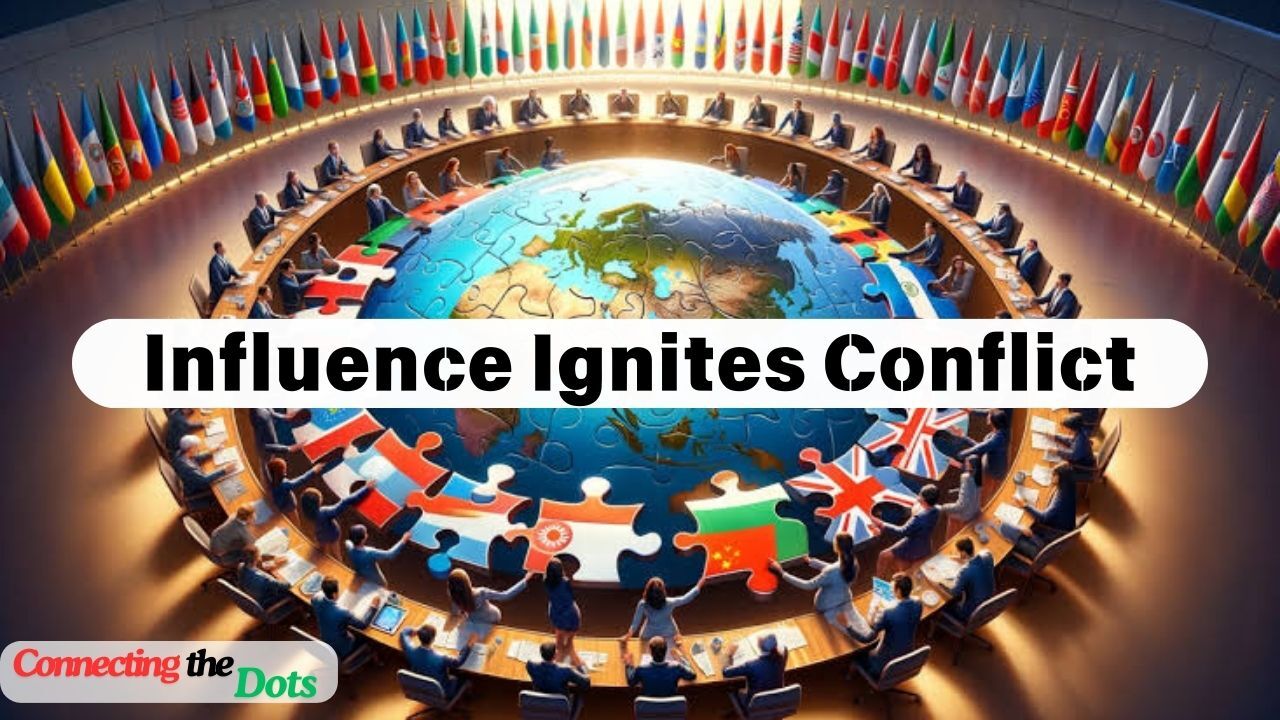
In this episode of Connecting the Dots, I dive into how U.S. foreign policy impacts major conflicts in Ukraine, China, and the Middle East. Rather than simply telling you what to think, my goal is to provide context and analysis so you can form your own conclusions about these complex issues.
We’ll look at the roots of the Ukraine conflict, the Nord Stream pipeline sabotage, and how these events ripple across Europe. I also examine U.S. military aid to Israel and its implications for the Gaza conflict, touching on questions of international law and diplomacy.
Additionally, I explore the effects of significant events, like the deaths of Hassan Nasrallah and Qasem Soleimani, and what they mean for long-term stability in the region. Join me as I connect the dots and invite you to critically assess how U.S. policy shapes the global landscape today.
Find me and the show on social media. Click the following links or search @DrWilmerLeon on X/Twitter, Instagram, Facebook, Patreon and YouTube!
Hey everyone, Dr. Wilmer here! If you've been enjoying my deep dives into the real stories behind the headlines and appreciate the balanced perspective I bring, I'd love your support on my Patreon channel. Your contribution helps me keep "Connecting the Dots" alive, revealing the truth behind the news. Join our community, and together, let's keep uncovering the hidden truths and making sense of the world. Thank you for being a part of this journey!
Wilmer Leon (00:01):
Hey folks. Look, when you understand what's happening in Ukraine, when you understand what's happening in China as it relates to the United States trying to start a war with China over Taiwan, when you look at the latest developments the Middle East, you have to ask yourself this. And has President Biden become a victim of his own rhetoric? Has he fallen into his own trap? Let's talk about this,
Announcer (00:41):
Connecting the dots with Dr. Wilmer Leon, where the analysis of politics, culture, and history converge.
Wilmer Leon (00:49):
Welcome to the Connecting the Dots podcast with Dr. Wilmer Leon and I am Wilmer Leon. Here's the point. We have a tendency to view current events as though they happen in a vacuum, failing to understand the broader historic context in which they take place. So today, looking at Ukraine, looking at China, looking what's happening in the Middle East, I decided that I would just take a few minutes and just give you some extemporaneous just off the top of the head kind of stuff. No guests on this segment. Y'all are just stuck with me. So let's start here. In his last address to the United Nations as President Joe Biden said, I recognize the challenges from Ukraine and Gaza to Sudan and beyond. War, hunger, terrorism brutality, record displacement of people, a climate crisis, democracy at risk, strains within our societies, the promise of artificial intelligence and its significant risks. The list goes on.
(02:00):
Well, when you start to unpack that knapsack, when you really pay attention to the list of things, the litany of conflicts and tensions that Joe Biden just articulated, you have to ask yourself this. He mentions Ukraine, who started the conflict in Ukraine? Why did it start? Well, it started in 2014, during the Obama administration went with what was known as the Maidan Coup. The United States went in. In 2014, Victoria Newland led the effort overthrew the democratically elected government of Victor Jankovich, and installed a Nazi based Ukrainian nationalist government led by the current President, Volodymyr Zelensky. It escalated during the Biden administration and it has become a full-blown military conflict that President Biden refuses to settle. In fact, one of the most recent speeches given by Vice President Harris talking about the Ukraine, she said, the Russian proposal is not a peace deal. It is not a settlement.
(03:30):
She said, it is a surrender. Well, if you look at the data, it is a surrender because the Ukraine has lost, they hardly have any artillery shells left. Just about all of their tanks have been blown to smithereens. The F-16's that they've just received, some of them were blown up before they even made it off the runway. And you have US generals saying that the F sixteens that the United States and NATO sent are no match for the Russian Air Force. Their army is totally depleted. They've had to go to their prisons, empty their prisons, and send prisoners to the front. They have what are called press gangs that are scouring the Ukrainian countryside kidnapping men of age, sending them to the front.
(04:35):
It's over, it's over. The fat lady just ain't sung yet. That's really what you're looking at in Ukraine. It's over, but they just haven't blown the whistle. So yeah, it's going to be a surrender. You might as well, you might as well fire up the USS Missouri resurrect Emperor Hirohito from World War II and have Ukraine surrender the same way Japan had to because that's the way this has gone. September 26th, 2022, a series of underwater explosions and consequent gas leaks occurred on three or four pipelines of the Nord Stream pipeline in the Baltic Sea. This occurred during and based upon the Sy Hersh reporting tells us that this was conducted during the Biden administration. The Biden administration blew up three of the four pipelines of the Nord Stream pipeline, which provided natural gas from Russia to Germany and Germany was the distribution point for low cost natural gas throughout Europe.
(05:59):
And since 2022, what has happened to the economy of Germany and what has happened to other economies of European countries? They've been decimated because they now are forced to buy natural gas from the United States because the United States blew up their pipeline cutting off their access to Russian natural gas. Why? Because if you remember, when the Ukraine conflict started, president Biden told us what we're going to turn the rubble into rubble. Y'all remember that We're going to turn the ruble into rubble. Has that happened? Not at all. In fact, the rubble, the rubble, the ruble, which is the currency in Russia, is now one of the most stable currencies in the world. The Russian economy is in the top five economies in the world. Why? Because the United States was not able to bring about regime change in Russia through the Ukraine conflict. The United States was not able through its sanctions regime to bring about crippling sanctions on the Russian economy.
(07:18):
They have been able to find workarounds, and they have been able to continue to engage in international business all around the world. Look at the BRIC's meeting that's about to take place in Russia. You've got China. Well, the BRIC's, the acronym for what? For Brazil, Russia, India, China, South Africa. And now you have a number of other countries that are joining this economic cooperative, and they are finding workarounds around the sanctions that the United States is imposing on all of these countries. In terms of Gaza, who's funding the genocide in Gaza, the Biden administration, of course, president Biden in May of 2024 said, he said what he would halt some of the shipments of American weapons to Israel, which he acknowledged had been used to kill civilians in Gaza. If Prime Minister Benjamin Netanyahu ordered a major invasion in the city of Rafa, well, Netanyahu did it. Biden did not honor his word. He still sent those weapons to Israel. And what do we find now?
(08:47):
$8.7 billion on their way of weapons and military aid are now on their way to Israel. Citizens have been killed in Gaza as a consequence of the bombs and other ways in which they go after population centers. Biden said this on CNN to Aaron Burnett back in May of 2024, civilians have been killed in Gaza as a consequence of those bombs and other ways in which they Israel go after population centers. He said that to CNN, and he still sends weapons to Gaza. He said, I made it clear that if they go into Rafa, and they haven't gone into Rafa yet, if they go into Rafa, this was May of 2024. I'm not supplying the weapons. They've been used historically to deal with Rafa to deal with the cities that deal with that problem. Where are we now? Four months later, Israel said in September, it had secured an $8.7 billion aid package from the United States to support its ongoing military efforts and to maintain a qualitative military edge in the region.
(10:20):
Folks for the United States to send military weapons into Israel violates international law. It violates American law. It violates the Arms Export Control Act. It violates American law for the United States government to send weapons to countries that are in the midst of oppressing their own people. Look up the arms. Export Control Act. $8.7 billion of your hard earned tax dollars are being sent to Israel to support genocide. This package includes three and a half billion dollars for essential wartime procurement, what they call essential wartime procurement, which has already been received and earmarked for critical military purchases. What does that mean? Well, in common parlance, we'd call that a money laundering scheme. So the United States sends $8.7 billion or earmarks or tags or identifies $8.7 billion for Israel for military weaponry. And what then happens? Well, that money goes to Lockheed Martin, that money goes to Boeing, that money goes to Raytheon.
(11:52):
That money goes to what Dwight Eisenhower told us in his 1959 farewell address to the American people, the military industrial complex. So the United States Funds genocide is backing the extermination, the elimination, the removal of innocent Palestinian people while American arms manufacturers make billions and billions of dollars. Oh, and by the bye, president Biden also said he's sending another $8 billion to Ukraine. So that's 8 billion to Ukraine. That's 8.7 to Israel. That's $16.7 billion, and they're sending almost 600 million to Taiwan. Tha

n this hard-hitting episode of Connecting the Dots, I reveal the shocking truth behind Israel’s Mossad planting deadly devices in pagers ordered by Hezbollah. Joined by lawyer and journalist Dimitry Lascaris, we expose the dangerous global implications—this isn’t just espionage, it’s terrorism and a war crime, all ignored by Western media.
We uncover the sinister connections between Zionist ideology, Christian nationalism, and neoliberal politics, showing how civilians are left to suffer while world powers look the other way. Our political system is failing, and bold, principled leadership is more urgent than ever. Don’t miss this eye-opening truth they don’t want you to know.
Find me and the show on social media. Click the following links or search @DrWilmerLeon on X/Twitter, Instagram, Facebook, Patreon and YouTube!
Hey everyone, Dr. Wilmer here! If you've been enjoying my deep dives into the real stories behind the headlines and appreciate the balanced perspective I bring, I'd love your support on my Patreon channel. Your contribution helps me keep "Connecting the Dots" alive, revealing the truth behind the news. Join our community, and together, let's keep uncovering the hidden truths and making sense of the world. Thank you for being a part of this journey!
Wilmer Leon (00:00):
Reuters reports. Israel's Mossad spy agency planted a small amount of explosives inside as many as 5,000. Taiwan made pagers ordered by the Lebanese group Hezbollah months before they were detonated. Is anyone safe? Let's talk.
Announcer (00:27):
Connecting the dots with Dr. Wilmer Leon, where the analysis of politics, culture, and history converge.
Wilmer Leon (00:34):
Welcome to the Connecting the Dots podcast with Dr. Wilmer Leon and I am Wilmer Leon. Here's the point. We have a tendency to view current events as though they happen in a vacuum, failing to understand the broader historic context in which most of these events take place. During each episode, my guests and I have probing, provocative, and in-depth discussions that connect the dots between these events in the broader historic context in which they occur. This enables you to better understand and analyze the events that impact the global village in which we live on today's episode. The issue before us is, as I said earlier, is anyone safe? Israel's consumer tech terrorism across Lebanon signals a terrifying new threat raising urgent concerns about the security of international supply chains and the growing insecurity of civilians worldwide. For insight into this, let's turn to my guest. He's a lawyer and journalist. He's based in Montreal, Canada and Kalama Greece. In fact, he joins us from Ada Greece. Dimitry Lascaris, Dmitri, welcome to the show.
Dimitry Lascaris (01:48):
Thank you, Wilmer. It's a pleasure to be here.
Wilmer Leon (01:51):
So I thought that this most recent act of terrorism in a spate of acts of terrorism would be a great place to start the conversation. The cradle reports that this brutal attack should serve as a dire warning to the world. A stark reminder that the occupation states criminal actions, no, no limits indiscriminately targeting those who challenge its interest or those of its Western allies. Dmitri, your thoughts?
Dimitry Lascaris (02:24):
Well, for really decades, but particularly the last 11 months, the West and particularly the major Western powers, the governments of the United States, Britain, Germany, and France, have sent an unequivocal message to Israel. And that message is you can do whatever you want. There's no red line From our perspective, we will continue to shovel weapons your way, even if that involves the depletion of our own weapon stocks. We will continue to exercise vetoes or abstentions at United Nations. We will continue to repeat your lies and support you rhetorically and from a propagandistic perspective. We'll continue to give you trade benefits under free trade agreements. So-called free trade agreements between our countries and yours. We will not impose any sanctions on you, even though we've imposed sanctions on states that were far less violative of international law and human rights than you. That's the message. They got the message very loudly and clearly, and I fear, I hope I'm wrong, Wilmer, I really do.
(03:31):
But I fear that this pager, walkie talkie terrorist attack is just a harbinger of things to come. Who knows what dirty, nasty, terroristic tricks Israel has up its sleeve, and it is not used up until this point in time because frankly before the genocide began in Gaza, there was some restraint being imposed upon Israel. It wasn't much, but there was some, so occasionally you would get leaders of the United States or other western countries signaling to Israel that their appetite for the depravity of this genocidal regime was not unlimited, but that's gone away now. And so everything that Israel is capable of doing from the perspective of violence, terror, oppression, we are now going to see it's all going to come out. And I think that this is just an indication of what is coming. What we saw in Lebanon last week, and it was as the former head of the CIA Leon Panetta said to a national audience on CBS last week, it was unquestionably a form of terrorism.
Wilmer Leon (04:38):
When someone in the position and former positions such as Leon Panetta makes a statement like that, what does that signal to you? Former head of the CIA, he's from the Clinton camp and advisors advisor Conti to the biggest and the best, and I put that in quotes. What does that signal to you? He definitely went off script on that one.
Dimitry Lascaris (05:16):
Yeah, I don't think that Leon Panetta has had a come to Jesus moment. I think he's still the self-interested war monger,
(05:27):
Neoliberal that he always was. So when I saw this statement, which was startling, it was quite something to see the former head of the CIA. And by the way, this was not surprisingly, I guess picked up by the Israeli press. The Times of Israel had an article yesterday which was expressing its chagrin that Leon Panetta said this. So what's going on here? I can only hazard a guess Wilmer because I'm not in the man's mind and nor do I have any desire to be. But the first thing that popped into my head was this guy has some connection to a major technology company, and he's doing this because his boss or his benefactors in the technology industry are alarmed. They're alarmed about the fact that their business model is being threatened by Israel's latest technological terrorist gimmick. And sure enough, I didn't know this before I learned of the Panetta statement to CBS, but I discovered that he is on the board of Oracle, one of the most important, significant, powerful and influential technology companies in the world based in the United States.
(06:30):
Of course, whether this is influencing him, I can't say for sure, but the best guess that I can hazard based on the limited information available to me is that his colleagues in the technology industry are very upset about this and so should they be. If they're not, they aren't nearly the wizards and geniuses that they claim to be. If I were in their position, I'd be saying already the public has serious doubts. Thanks, for example, to the heroic revelations from Edward Snowden about the devices we sell to them, the technologies we sell to them, they already suspecting that this is a means whereby we can engage in mass surveillance, destroy their privacy, but never before have they thought that these devices that we sell to them are potentially bombs that could blind them, dismember them, kill them, or their children. Now everybody, any rational human being out there who knows about this terrorist attack has that thought in their mind, and that is a serious threat to the profitability of the Western technology industry.
Wilmer Leon (07:40):
One of the things that really, I use the word surprise, but I use it guardedly, is how little follow up there has been with Western media in terms of how horrific these actions by Israel have been. I remember reading a story, I think the young girl's name was Fatima, she was maybe five or six years old. Her father's pager was on the kitchen table. The pager goes off, she picks up the pager to take it to her father, and before she can get to him, the pager explodes. And I think the story said blowing off half of her face. And this happened all over Lebanon and it was reported on, but the context in which it was reported on was solely, solely lacking.
Dimitry Lascaris (08:38):
I am going to plug two outlets right now, and I want be clear before I do that, that I have absolutely no connection to them. None whatsoever. And they are two telegram channels. One of them is called the Military Media Channel and the other is called the Resistance News Network. These were brought to my attention a few months ago by people in Lebanon who are sympathetic to the resistance. And every single day Wilmer, I spend, I devote an hour to two hours to reviewing what they put out, not because I believe everything that they say they're engaged in a war and information is part of warfare. So I'm cognizant of that, but they're giving us, they offer to us another perspective. So one of the things that I've learned by following the military media channel and the Rise News Network is that an extraordinary number of people, and they've offered gruesome video evidence and photographic evidence to back this up in Lebanon, were blinded by these devices.
(09:42):
People lost their hands. There are people with holes in their pelvises, in their abdomens, and I'm talking about children, women, elderly men, and of course military aged men. A cross section of Lebanese society was basically maimed, wounded and killed massed by these attacks. You're not going to find this information in the Western media, nor would you find information in the western media about the retaliation that He
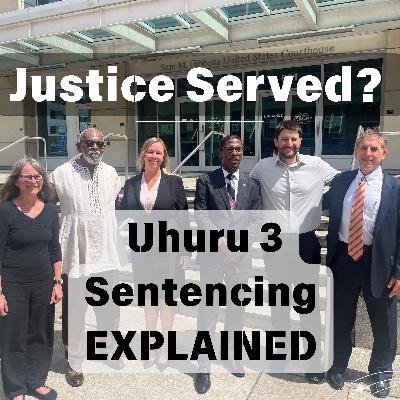
n the latest episode of "Connecting the Dots," Dr. Wilmer Leon drops bombshell revelations on the U.S. government's alleged attack on free speech. Featuring Chairman Omali Yeshitela recently cleared of shocking charges of being a Russian agent, this episode dives deep into systemic oppression, global politics, and the fight for freedom of expression. Despite government seizures and legal battles, Yeshitela and his colleagues triumphed in court. Don’t miss this urgent call to action—your rights could be next!
Find me and the show on social media. Click the following links or search @DrWilmerLeon on X/Twitter, Instagram, Facebook, Patreon and YouTube!
Hey everyone, Dr. Wilmer here! If you've been enjoying my deep dives into the real stories behind the headlines and appreciate the balanced perspective I bring, I'd love your support on my Patreon channel. Your contribution helps me keep "Connecting the Dots" alive, revealing the truth behind the news. Join our community, and together, let's keep uncovering the hidden truths and making sense of the world. Thank you for being a part of this journey!
Wilmer Leon (00:00):
I opened with this piece last week, and I'm going to open with it again because it's as applicable today as it was last Thursday. The linguist, no Chomsky tells us the smart way to keep people passive and obedient is to strictly limit the spectrum of acceptable opinion, but allow very lively debate within that spectrum, even encouraged the more critical and dissident views that gives people the sense that there's free thinking going on while all the time the presuppositions of the system are being reinforced by the limits put on the range of the debate. That's from Noam Chomsky. Is this what the so-called Justice Department is doing via selective persecution and mainstream American media, and those in Western established press are complicit in promoting and protecting. Let's discuss it,
Announcer (01:00):
Connecting the dots with Dr. Wilmer Leon, where the analysis of politics, culture, and history converge.
Wilmer Leon (01:08):
Welcome to the Connecting the Dots podcast with Dr. Wilmer Leon. I am Wilmer Leon. Here's the point. We have a tendency to view current events as though they occur in a vacuum, failing to understand the broader historical context in which most events take place. During each episode, my guests and I have probing, provocative, and in-depth discussions that connect the dots between these events in the broader historic context in which they occur. This enables you to better understand and analyze the events that impact the global village in which we live on today's episode. The issue before us is very simply the first amendment, freedom of speech and the US government's attack on this inalienable, right? And my guest is a political activist and author, co-founder and current chairman of the African People Socialist Party, which was formed in 1972 and which leads the O Movement and he's one of the oi, he is Chairman Omali Yeshitela. Chairman Omali, welcome back to the show.
Chairman Omali Yeshitela (02:15):
Thank you so much. It's very good to be with you, Dr. Wilmer.
Wilmer Leon (02:22):
Not a problem.
Chairman Omali Yeshitela (02:24):
But the reason I really want to express appreciation to you and even the comments that you just quoted from Chomsky is that one of the reasons that we were able to come out of that courtroom after going to trial on September 3rd with an amazing victory, and we were able to fracture the total or the absolute solidarity of opinion regarding black people and the righteousness of our struggle and the validity of the criticism that we make against the United States government. Because as you know, we were charged the three of us, me, penny Hess and Jesse Neville with being Russian agents. And then we were charged with conspiring, I guess, to be Russian agents. And what they have done is taken issues like reparations, like the charge of genocide against the United States government for treatment of black people. Our opinion that differed from theirs on the Ukraine war and things like that.
(03:35):
They're saying that it was the Russians who were responsible. In fact, in the trial itself, they went so far as to say the Russians came up with the reparations idea. Russians came up with the genocide idea. Russians were responsible for the institutions that we've created over the number of years for the liberation of African people. So they would maintain that kind of position, and so that would protect them from any criticism that black people had about our treatment in this country. So they would restrict the discussion so that if we said something that challenges acceptable narrative, then it was because we were paid by the Russian. Some foreign entity was responsible for that. And so I think it was really important that we went to trial and that the jury was able to see through the essential question here, and the state lost in terms of its efforts to criminalize black people fighting for freedom.
(04:43):
It lost by saying that what we were doing was a consequence of being hired by the Russians. The jury said they didn't believe that the jury said not guilty. We were not guilty of being paid working for Russia and without registering as foreign agents. And the conclusion there was that the struggle of act people is legitimate, that we have legitimate wives, we have legitimate criticism of the government, and we showed the whole history of our fighting around these interests going back many, many years. We connected the struggle of African people here and African other places around the world. We did that during this trial. And so the jury said that they agreed that we had the right to do that. The problem, of course, was the confusing second charge, if you will. I say second, I don't know if it was a second charge, what order if you want to put it in, but there was the secondary charge.
(05:45):
It was secondary in the sense that not just because the penalty is like five years as opposed to a maximum 10 year penalty that we would've gotten for the conviction of working for the Russians. But also the fact is that the jury was confused by what that meant as I am even as we have this discussion now, what was the conspiracy? If the jury said that we were innocent, that we were not guilty of working for the Russians, then what was the conspiracy? And are they saying that we wanted to work for the Russians but it didn't work and so we conspired to do something and fail to carry it out? Is that what they're saying? And I think it's a lot more to it than that. And of course, we're going to be appealing this and there's a lot of work we have to do between now and then and the work that you have done, the doors you have opened for us and others, forces like yourself contributed to I think this magnificent victory that we had.
(06:50):
They couldn't put us on trial in the darkness. People were aware of it. People came to Tampa, the courthouse was full, and they had to get a larger courtroom. And every day the courtroom was full. And when the jury looked out at that courtroom, they saw people who looked just like them. And I doubt if they saw anybody that they would've characterized as a Russian there. So that was really important to get the people there, to get people from September 3rd throughout the duration of the trial and to make them have to put this thing carried out in the light of day. And that's what we are contending with right now because we still have to go for sentencing for on November 25th, we'll be going to sentencing and it's going to be important to get people to Tampa to that courthouse for that as well.
Wilmer Leon (07:42):
You talk about September 3rd, and the trial started on September 3rd. And if my memory serves me correctly, they were expecting a four to five week trial.
(07:55):
What said. And what they wound up with was not even 10 days.
Chairman Omali Yeshitela (08:00):
No, no.
Wilmer Leon (08:01):
They ran out of ammo. They ran out
Chairman Omali Yeshitela (08:03):
Of ammo.
Wilmer Leon (08:04):
Go ahead, go ahead.
Chairman Omali Yeshitela (08:06):
Really important to mention that because the thing is that the government attacked us and according to their own testimony, their witnesses and what have you, they took something like terabytes of materials that constituted at least 1.5 million books. So all the stuff they took from our cell phones, from our laptops, from other devices that we had, it was enough material for 1.5 for one and a million, half million books. And the thing was that out of all of that, I think they used something like four or five emails or stuff from Facebook because there was nothing. There was nothing there. There was no there. And the state did not even have a human being or people who testified against us. All of their witnesses were people who worked for the state FBI agents, they had 12 FBI agents. They had two. So-called experts and experts who didn't know how much under cross examination had to admit, first of all, they knew nothing about the case. Secondly, one of whom had to say that he didn't even know how much he was getting paid for doing this. And he was actually a Russian who was waiting to get his citizenship to be able to achieve citizenship in this country.
(09:48):
And they were unable going through stuff for more than 10 years of materials and the two year duration after this attack on us. They could not bring a single human being into that courtroom who would validate anything they said about what we stand for, who we are, that we somehow working for Russians, that anything we're doing now is different from what we've done for the last 50 years. They couldn't do that. We were the only human beings in that court when it comes to testimony and what have you. The state testified and then they saw people, and we were the people. And the people in that audience who came to this trial wer

In this explosive episode of "Connecting the Dots," I sit down with Professor Dan Kovalik to expose the harsh reality of free speech under attack in America. Dan shares his chilling story of being detained for hours at Miami Airport, interrogated simply for telling the truth on RT and other alternative news outlets. He’s part of a disturbing trend—journalists in the U.S. being raided, arrested, and harassed for daring to speak out. Is free speech in America on life support? We dive into Noam Chomsky’s theory of controlled debate, where public opinion is tightly managed, and how today’s media manipulates what we’re allowed to hear. From the prosecution of dissent to the silencing of pro-Palestine voices on college campuses, this conversation reveals the frightening erosion of our First Amendment rights. Don’t miss this urgent wake-up call—are we witnessing the death of free speech in the land of the free?
Find me and the show on social media. Click the following links or search @DrWilmerLeon on X/Twitter, Instagram, Facebook, Patreon and YouTube!
Hey everyone, Dr. Wilmer here! If you've been enjoying my deep dives into the real stories behind the headlines and appreciate the balanced perspective I bring, I'd love your support on my Patreon channel. Your contribution helps me keep "Connecting the Dots" alive, revealing the truth behind the news. Join our community, and together, let's keep uncovering the hidden truths and making sense of the world. Thank you for being a part of this journey!
Wilmer Leon (00:00):
The linguist, Noam Chomsky tells us the smart way to keep people passive and obedient is to strictly limit the spectrum of acceptable opinion, but allow very lively debate within that spectrum. Even encourage the more critical and dissident views that gives people the sense that there's free thinking going on. While all the time the presuppositions of the system are being reinforced by the limits put on the range of debate. That's Noam Chomsky. Let's talk about it. Stay tuned.
Announcer (00:43):
Connecting the dots with Dr. Wilmer Leon, where the analysis of politics, culture, and history converge.
Wilmer Leon (00:51):
Welcome to the Connecting the Dots podcast with Dr. Wilmer Leon, and I am Wilmer Leon is this what American mainstream media and those in Western established press are engaging in actually the violation of the First Amendment? Let's discuss this. Here's the point. We have a tendency to view current events as though they occur in a vacuum, failing to understand the broader historic context in which these events occur. During each episode of this podcast, my guests and I, we have probing, provocative, and in-depth discussions that connect the dots between these events and the broader historic context in which they occur. This enables you to better understand and analyze the events that impact the global village in which we live. On today's episode, the issue of force is very simple. The first amendment, freedom of speech, and the US government's attack on this inalienable right, and my guest is a US labor and human rights lawyer, writer, author, and activist. His latest book is entitled The Case for Palestine, why It Matters and Why You Should Care. He has been a peace activist throughout his life. He has been deeply involved in the movement for peace and social justice in Columbia, Venezuela, Nicaragua, and other countries in the global south. He's also taught international human rights law at the University of Pittsburgh School of Law since 2012. He is Professor Dan lik. Dan, welcome.
Dan Kovalik (02:26):
Thank you. Thanks for having me. Always a pleasure. Wilmer.
Wilmer Leon (02:30):
So there are a number of events. We're going to connect a number of dots here, but let's start with the First Amendment and it reads as follows, Congress shall make no law respecting an establishment of religion or prohibiting the free exercise thereof or abridging the freedom of speech or of the press or the right of people to peaceably, to assemble and to petition the government for a redress of grievances. Dan, we take this as Americans, we take this for granted, but as the first amendment of the first 10, this one was very important and made number one for a reason why?
Dan Kovalik (03:18):
Well, because the founding fathers having come from England, where there was a king who was able to prescribe speech arbitrarily, wanted to protect the right of free spree speech, the right of religion. Of course, England had a state religion, the Anglican Church, and they wanted to make sure that Americans had the right to such things as speech and religion and freedom of the press. In England. Those things were not protected even to this day. By the way, great Britain does not have a written constitution and does not protect those types of rights in the way that the United States does.
Wilmer Leon (04:05):
And again, we've taken this right for granted for so many years, but we have found history shows us, particularly during times of war, when the United States feels that it is being threatened, the screws tighten on free speech, hence people get charged with sedition and other types of violations. When the government feels it's being threatened, when there is a perceived threat from outside the country, then the government will tend to tighten the screws restrict speech, and then once that threat is vanquished, then the prohibitions relax. Have you found history to prove that to be true?
Dan Kovalik (04:57):
Yes. I mean, one of the most famous examples, of course is during World War I, people like Eugene v Debs, great socialist from Terre Haute, Indiana. He was put in jail for publicly opposing World War I and famously his persecution and those of others like him was approved by the Supreme Court in a famous case by Oliver Wendell Holmes is one of the most celebrated jurors, and he created the clear and present danger rule. And what that says is that the First Amendment is not, as they often say, the US Constitution is not a suicide pact. He said that in cases of a clear and present danger, Congress in fact could
(05:59):
Limit speech. He gave the example famous example of you're not allowed to yell fire in a crowded theater, for example. And he compared incredibly advocating for peace during a time of war as tantamount to claiming there's a fire in a crowded theater. And that remains the law of the day. And so that law or that decision, which is now almost a hundred years old, I think sets the precedent that advocating for peace in the United States is somehow a clear and present danger. And so when we look to how speech is being regulated and limited today, what we often see it being regulated when people are clamoring for peace.
Wilmer Leon (06:58):
There's an interesting piece in consortium news entitled Free Speech in the Department of Political Justice, and it's written by former judge Andrew Napolitano, who was a superior court judge in New Jersey. And he writes in this piece, I don't want to spend a lot of time getting into the weeds of the First Amendment, but I think this is very germane to what we find ourselves dealing with. He writes, the framers of the Constitution, were debating this idea of free speech, and they concluded that expressive rights are natural to all persons no matter where they are born. And natural rights are, as Jefferson had written in the Declaration of Independence inalienable. That's why I refer to them as inalienable rights in the open stated differently. He writes, Madison and his colleagues gave us a constitution and a bill of rights that on their face recognized the prepo political existence of the freedom of speech and of the press in all persons and guaranteed that in Congress, by which they meant the government could not and would not abridge them until now. And he, in his piece, he's referencing some charges that the United States government has imposed against some Americans and some Russians, and it's not even a matter of challenging war as much as it is challenging the established government narrative. Your thoughts?
Dan Kovalik (08:35):
Yes. So again, this is very similar to laws and regulations that have come down before during World War I and also around the same time you had the pomades against socialists and union leaders. Of course you had the McCarthy period, which also really represented an abridgement of peace of speech and of course very, I think relevant to today because of course the McCarthy period, at least ostensibly involved the persecution of communists. Though of course a lot of people persecuted were not communists, though a lot of the people who were persecuted were communists. Most notably in my mind, the great Paul Robeson who went, he and I went to the same law school. By the way, it's a big reason I went to Columbia Law School is because Paul Robeson went there, one of my heroes.
Wilmer Leon (09:31):
He was a few years ahead of you though.
Dan Kovalik (09:33):
A few years, yeah, yeah. I know I look old, but I'm not quite old enough to cross paths with Mr. Robeson. But why is that important? Because of course that involved claims that the communists were somehow how stooges of the Soviet Union. And now of course you have people making allegations that those opposing US foreign policy are pawns of Russia and Vladimir Putin. Right. So it's the same old trope that we've been hearing for years and years, and we see this manifested in the last two weeks with the Justice Department announcing indictments against people associated with rt, formerly known as Russia Today News based in Moscow. You had Anthony Blinken statements over the weekend that RT should be considered an espionage organization that means a spy organization. And of course the implication being that those Americans that work with it are spies. And then you had Hillary Clinton chiming in, I believe yesterday, saying that people spreading propaganda, Russian propaganda should be
In this episode of Connecting the Dots with guest former Governor L. Douglas Wilder, we cut right to the chase: forget the polls, the hype, and identity politics—what really matters in the 2024 race is what the candidates have done and what they’re going to do. Former Governor Wilder doesn’t hold back as we dive into the hard truth: track records and real actions are what voters should care about. From public safety to education, we tear through the noise and focus on what’s truly at stake. If you're not asking what these candidates have delivered, you’re missing the point. Buckle up for a no-nonsense conversation that flips the script on political analysis
Find me and the show on social media. Click the following links or search @DrWilmerLeon on X/Twitter, Instagram, Facebook, Patreon and YouTube!
Hey everyone, Dr. Wilmer here! If you've been enjoying my deep dives into the real stories behind the headlines and appreciate the balanced perspective I bring, I'd love your support on my Patreon channel. Your contribution helps me keep "Connecting the Dots" alive, revealing the truth behind the news. Join our community, and together, let's keep uncovering the hidden truths and making sense of the world. Thank you for being a part of this journey!
Dr. Wilmer Leon (00:00):
The 2024 presidential race is shaping up as we sit here in early September. The Hill reports Harris v Trump polls Harris has a 4% lead based upon 162 polls. If you're a Harris fan, that's great for the popular vote, but the number that matters is 270. What's behind these numbers? Let's find out
Announcer (00:31):
Connecting the dots with Dr. Wilmer Leon, where the analysis of politics, culture, and history converge.
Dr. Wilmer Leon (00:39):
Welcome to the Connecting the Dots podcast with Dr. Wilmer Leon, and I'm Wilmer Leon. Here's the point. We have a tendency to view current events as though they occur in a vacuum, failing to understand the broader historical context in which most events take place. During each episode, my guests and I have probing, provocative and in-depth discussions that connect the dots between these events and the broader historic context in which they occur. This enables you to better understand and analyze the events that impact the global village in which we live. On today's episode, the issue of force is what's the layout of the domestic political landscape and for some invaluable insight into this and some other issues. Let's turn to my guest. He continues to be one of the most astute political minds of our time. He's the 66th governor of Virginia, the nation's first elected African-American governor, former mayor of Richmond, Virginia, and he's the founder of the l Douglas Wilder School of Government and Public Affairs at Virginia Commonwealth University in Richmond, Virginia. And a man that I am very proud to be able to a governor L. Douglas Wilder. Welcome to the show.
Gov. L. Douglas Wilder (01:56):
Thank you Wilmer, and it's always good to be with you and always learn from you as well and share opportunities for us to spread to others who would look to what we say for guidance or correction or whatever it is they feel. I'm always privileged to be with you.
Dr. Wilmer Leon (02:19):
Well, sir, the privilege is mine. Thank you so much for those compliments. Before we get to your analysis of the upcoming election, talk a little bit about the L. Douglas Wilder School of Government and Public Affairs at VCU. It's my opinion that of all of your historic and significant accomplishments, this one is historic and significant.
Gov. L. Douglas Wilder (02:43):
It is, and we have an excellent dean, Dean, Susan Gooden, who understands the importance of what we call government and public affairs. They understand what government is and as you and I discussed and have discussed on any numbers of occasions, that government, which is closest to the people is that which most affects the people at local government. Yes, we're concerned about who's going to be president, but who's going to pick up the trash, who's going to provide housing, and so we connect those dots between national elections, national government and local government and we involve the issues. We have a measure that she calls rise, a research Institute for social equity and it's very important, and that's distinguished from DEI talking about America and Wilmer. I don't have to tell you, you have no idea how many people are not aware of the history of America. Not just black history, but American history, which improves all of America's people. That's what we try to do at our school. We're critical, we're analytical and we hope to improve.
Dr. Wilmer Leon (04:07):
Your point about people not being aware of American history, and I'm going to get to the Wilder bite in just a minute because you did some surveys on some of those issues, but just the overall idea of teaching government in school, that is becoming harder and harder to find middle schools and high schools that are going to teach government in school.
Gov. L. Douglas Wilder (04:36):
You'd be surprised or maybe not surprised to know that our governor, governor Glenn Young requested Syl from our schools as well as a couple of other schools in Virginia as to what is being taught relative to this history. The governor of the state of Virginia most will be able to approve himself singularly, not the boards of visitors, not the people who are the historians, but he wants to do it and we projected it. People have rejected it, and I think one of the reasons is people want more of a corrective history. Tell it all the good, the bad and the ugly, and then we can improve upon it. We can see what it is we may have done wrong. When I ran for office, I never ran as a black person. I ran as a person entitled to run because I fulfilled the obligations of the need to run for office age, residency, et cetera. And then I never have considered myself a black governor. The vast majority of people in this state are not black. Matter of fact, Virginia, when I ran, was the lowest concentration of black voters or black population of any of the southern states, but for whites voting for me overwhelmingly to the extent that they did not overwhelming in terms of the numbers, numbers but overwhelming in terms of precedent. I wouldn't be here talking to you today as the former governor or the former mayor or the former.
Dr. Wilmer Leon (06:27):
One of the things that I find incredibly invaluable is I get that you have a publication Wilder Policy Bites
(06:36):
And the most recent, which I think was released on the 25th of August is entitled Commonwealth Poll. Most Virginians agree, history of race should be taught in schools. One of the issues of education, I'm sorry, on the issue of education, 75% of respondents think the history of race should be a subject In K through 12, there were three bullets. That's the first one. The second one is about Gaza and Israel's military action. 39% said Israel was justified in taking action in Gaza. And the third point, a high percentage of Virginians agree that VCU President Michael Rouse should provide public accounting of money. I highlight those three because that's quite a diverse area of information and polling that you all are doing with your Wilder policy bites.
Gov. L. Douglas Wilder (07:33):
Well, thank you very much. And policy bites put on by our school Dean Gooden and Dr. Robin McDougall handles the polling that we have put forth, but what you just cited was the illustrative of what the governor obviously doesn't know. The people want the things that you just described. They want to know about education, they want to know about the history. They want to know about what should or should not be taught. They're not asking the governor to tell teachers what to teach. Let the teachers who are trained to do the instruct our youngsters to let them know who we are as a people. And so in policy base, we also want to, and our polling, when you see the numbers of people, we, as I said, are not a purple state nor a blue state or a red state. We're a people state and that's why I've always been a little weary of polls because I wonder why no one ever call me. I thought of a poll and yet involving now with policy base and polling and knowing how fair that this poll is being conducted. Listen to the people and they'll tell you what you might not want to hear, but they'll tell you the truth.
Dr. Wilmer Leon (09:07):
I said, now let's turn to the current landscape. And I said in the open that the Hill has reported that Harris now has a 4% lead based on 162 polls, and we understand polls are no more than just a snapshot in a moment of time. But I also said that said, if you're a Harris fan, that's a very encouraging number, but the number that matters is two 70. So just give me first of all your overall thoughts of the political landscape as it stands before us right now.
Gov. L. Douglas Wilder (09:50):
Well, as you know, there are those who vacillate from day to day in terms of what this group says, what this person says, as I see the political landscape now, it's a turnout election. By that I mean not notwithstanding what the poll says. Who's going to vote, who's going to get up, who's going to feel motivated, who's going to feel inspired? That's why even in our state, our last poll showed plus or minus three to four, and that was with Harris leading. But are those people going to get out? Are they going to go out? Are they going to vote supposed it rains? Suppose you're not having childcare, suppose any numbers of the things, how important is it for early voting
(10:48):
Were going to do that, so I wouldn't pay any attention to those polls as it relates to being comfortable. I would consider them in terms of being inspired to say, look, we can win. This is what I think it takes to win and go to the people. And I think in this case the debates do matter and this next debate or this first debate betwe
Get ready to rethink everything you know about the Democratic Party! In this explosive episode of Connecting the Dots, I sit down with historian and author Jeremy Kuzmarov to reveal how the party’s messaging has quietly embraced militarism—and what it means for America's future. This isn't just another political chat; we’re diving deep into the hidden history behind today’s headlines, exposing the bipartisan grip of the military-industrial complex on both parties.
Jeremy and I break down how Democrats have shaped U.S. foreign policy, fueling wars and global interventions that have real-world impacts on immigration and international relations. If you’re ready for a raw, eye-opening conversation on how our political system prioritizes power over peace, you won’t want to miss this!
Tune in for insights that challenge the status quo and uncover the urgent need for a more balanced, humane approach to politics, both at home and abroad. Watch or Listen now to join the conversation!
Find me and the show on social media. Click the following links or search @DrWilmerLeon on X/Twitter, Instagram, Facebook, Patreon and YouTube!
Hey everyone, Dr. Wilmer here! If you've been enjoying my deep dives into the real stories behind the headlines and appreciate the balanced perspective I bring, I'd love your support on my Patreon channel. Your contribution helps me keep "Connecting the Dots" alive, revealing the truth behind the news. Join our community, and together, let's keep uncovering the hidden truths and making sense of the world. Thank you for being a part of this journey!
Dr. Wilmer Leon (00:00:00):
Hey, here are a couple questions. Has the messaging from the Democrats changed over the past few years? Is the messaging more jingoistic, more saber rattling, have they become the party of militarism? Let's find out
Announcer (00:00:22):
Connecting the dots with Dr. Wilmer Leon, where the analysis of politics, culture, and history converge.
Dr. Wilmer Leon (00:00:30):
Welcome to the Connecting the Dots podcast with Dr. Wilmer Leon. I am Wilmer Leon. Here's the point. We have a tendency to view current events as though they happen in a vacuum, failing to understand the broader historical context in which they take place. During each episode, my guests and I have probing, provocative, and in-depth discussions that connect the dots between these events and the broader historic context in which they occur, thus enabling you to better understand and analyze the events that impact the global village in which we live. On today's episode. The issue before is militarism and messaging. My guest is a man who holds a PhD in American history from Brandeis University. He's the managing editor of Covert Action Magazine. He's the author of five books on US Foreign Policy. He's the author of a piece at Covert Action entitled DNC Convention Features former CIA director who was in charge of drone programs that killed thousands. He is Dr. Jeremy Komaroff. Jeremy, welcome to the show.
Dr. Jeremy Kuzmarov (00:01:39):
Thanks so much for having me. Great to be with you.
Dr. Wilmer Leon (00:01:41):
You open your peace in covert action as follows, Leon Panetta was drowned out by anti-war activists when he spoke at the 2016 convention, but not this time. Former CIA director, Leon Panetta, who was the director from 2009 to 2011, was among the featured speakers on the final day of the DNC in Chicago on August 22nd when Kamala Harris accepted the party's nomination as its presidential candidate. Jeremy, does this represent just a shift in rhetoric, or is this a shift in policy and a shift in direction?
Dr. Jeremy Kuzmarov (00:02:25):
Well, I think we see a lot of continuity. I mean, Panetta was there in 2016. He's giving the same kind of speech eight years later. In 2016, he was really promoting these anti-Russia themes, anti Putin. This was the forerunner of the Russia gate. They were already attacking Donald Trump as a Russian agents. And his speech in 2024 was the same kind of thing. It was really very jingoistic militaristic in that speech. He was invoking the glory of the Obama administration assassination of Osama Bin Laden or alleged assassination because there are a lot of different theories about what really might've gone on there. And the official story was shown to be a lie. Seymour Hirsch had a piece that was very good, and he compared it to Alice Wonderland, and their rhetoric was so far out there as to what really is known to have happened. And yeah, there are a lot of question mark or they dumped the body at sea, so there are no autopsy and some question if that was even Bin Laden.
(00:03:31):
Some people believe he died years earlier from renal failure. But in any event, that's the kind of thing they were doing just touting the War on terror. The US military Panetta said something that America made mistake of trying to be isolationist in the 1930s. And there's this kind of insinuation, you can't appease Putin as if he the new Hitler and America was not really isolationist. It was a global empire starting the late 19th century when it acquired the Philippines and Puerto Rico and Cuba and function as a global empire from that time period. So it never really isolationist. And FDR had this major naval buildup in the Asia Pacific that essentially provoked the Pacific War. It was a horrific war. So I mean, he obviously doesn't know his history that well, but this is just theater. Yeah, it's a very hawkish theme. He's a dancing and his speech echoed Kamala Harris' speech, anti-Russia themes, pro-military themes.
(00:04:36):
So that's what you get nowadays out of the Democratic party. And yeah, I mean there were booze of Panetta in 2016, but it was quiet this time around. It seems that people are just trying to mobilize around Harris and the EM of the anti-war movement. I mean, there were protestors outside of the convention. A lot of that centered exclusively on Israel Palestine. So I don't know. I mean, I think the protestors in 2016 were part of the Bernie Sanders faction. Maybe they had some hope in the party then, but now I think anti-war people have no hope in the Democratic Party. So they left or somewhere outside protesting.
Dr. Wilmer Leon (00:05:21):
Well, in fact, that was really the crux of my question, Panda's rhetoric versus the convention's response. And does the convention's response, or some might say lack of response, indicate that there's a serious shift in the party, particularly as we look at how easily war mongering legislation gets passed through Congress, through the democratic elements of Congress as it relates to funding for Ukraine and funding for Gaza and more jingoistic rhetoric as it relates towards China?
Dr. Jeremy Kuzmarov (00:06:01):
Absolutely, and I think it's telling that Robert Kennedy and Tulsa Gabbard are considered more peace candidates and they've made a lot of statements critical of US foreign policy, especially regarding Ukraine. Less so for Kennedy, and I think also Gabbard, Israel, Gaza, but definitely Ukraine. They've both been very critical and called for easing of relation with Russia. And they've warned about the threat of nuclear war and that we're in an era and new Cuban missile crisis, they've compared it to, and they were booted out of the party. I mean, Tulsa, they were treated horribly beyond just debate. I mean, Gabbard, she was in one of the CNN debates or televised debates in 2020 as she was running in the primary. And she was viciously attacked by Hillary Clinton and Kamala Harris and others who dominate the party in kind of Neo McCarthy I term, and they called her a Putin stooge.
(00:07:01):
And a Bashir saw theologist because she wanted to, she was against the covert operations in Syria and the escalation of conflict. And somehow they called her all these kind of names and really treated her in the way that Joseph McCarthy would recognize or victim of McCarthyism with reminiscence of that. So she was totally driven out of the party. Now you find they're more on Fox News. I mean, I think the Republican, they're trying to capitalize on the disinfection of many pacifists and peace oriented people with the Democrats, and they're trying to recruit them and draw them into the fold. And that's why they brought in Kennedy and gather. But personally, I think that they're just, they're very cynical operative and their Republican party are just trying to get that vote. But they're not really peace oriented party either. And Trump's foreign policy was very bellicose and aggressive in many ways, certainly toward Latin America.
(00:08:00):
The drone war, Trump escalated the drone war, escalated war in Somalia, and he's very aggressive and very xenophobic and threatens a major escalation, I think with China. So I think it's just a cynical ploy by the GOP to try and get these disaffected people are disaffected with the Democrats and by recruiting Kennedy and Gabbard to create this persona as a new peace party. But I don't think they really are a peace party. And so those of us who are really committed to pacifism, anti imperialistic politics really have nowhere in the mainstream American politics, and I think we should work on developing our own independent parties.
Dr. Wilmer Leon (00:08:47):
Before I get back to your piece, you mentioned in your earlier answer a reference to people trying to compare former President Trump to Hitler. And I was at the RNC when JD Vance was, his name was placed in nomination and he accepted the nomination. And I was doing my standup after the nomination. And I was saying as I was closing my analysis, I said, I find it very interesting, if not ironic, that a guy who just a couple of years ago was comparing Donald Trump to Adolf Hitler is now his vice presidential nominee, and we'll be standing next to him on stage. I said, how does that happen? And when I said that, there was a guy standing next to me who turned to my cameraman and said, you guys have to leave. You hav
Get ready for a game-changing episode of Connecting the Dots! Dr. Wilmer Leon and Caleb Maupin dive into the seismic shifts happening worldwide—where the U.S. is no longer the sole superpower and what that means for our future. They explore a growing movement challenging America's global influence and break down what the 2024 election could mean for the future of U.S. politics. If you care about where our country is headed, this is a must-listen. Don’t miss out on insights that could change how you see the world!
Find me and the show on social media.
Click the following links to find @DrWilmerLeon
on X/Twitter, Instagram, Facebook, Patreon and YouTube!
Hey everyone, Dr. Wilmer here! If you've been enjoying my deep dives into the real stories behind the headlines and appreciate the balanced perspective I bring, I'd love your support on my Patreon channel. Your contribution helps me keep "Connecting the Dots" alive, revealing the truth behind the news. Join our community, and together, let's keep uncovering the hidden truths and making sense of the world. Thank you for being a part of this journey!
Wilmer Leon (00:00:00):
As we are living through a pivotal moment in world history, the shift from a unipolar to a multipolar world, anti-imperialism is at the core of this global movement as the US is at the center of this global shift. How did anti imperialism take hold in the us? Let's find out
Announcer (00:00:27):
Connecting the dots with Dr. Wilmer Leon, where the analysis of politics, culture, and history converge.
Wilmer Leon (00:00:35):
Welcome to the Connecting the Dots podcast with Dr. Wilmer Leon and I am Wilmer Leon. Here's the point. We have a tendency to view current events as though they happen in a vacuum, failing to understand the broader historical context in which these events take place. During each episode, my guests and I have probing, provocative, and in-depth discussions that connect the dots between these events and the broader historical context in which they take place. This enables you to better understand and analyze the events that impact the global village in which we live. On today's episode. The issue before us, the issues before us, are the shift from a unipolar to a multipolar world. How is this happening and what does it mean? As well as the developing 2024 US presidential political landscape to help me work through these issues. Let's turn to my guest. He's an author, independent journalist, political analyst and reporter for RT, and his latest book is entitled “Out of the Movement to the Masses, Anti-Imperialist Organizing in America”. And he's also the author of Kamala Harris and The Future of America, an essay in Three Parts. He is Caleb Maupin, my brother. Welcome back!
Caleb Maupin (00:01:53):
Sure. Glad to be here.
Wilmer Leon (00:01:55):
So first of all, your thoughts on my introduction, is that a hyperbole or is that a fairly accurate description of the dynamics that we find ourselves dealing with?
Caleb Maupin (00:02:13):
Trying to stop the rise of a multipolar world would be a lot like trying to stop the sun from rising in the morning, maybe trying to stop gravity. That's the way the world is moving. But our leaders are committed to trying to keep the world centered around Wall Street and London and they are going to fail. The question is how much of a cost in terms of human lives, in terms of the economy, in terms of political repression, are we going to have to endure before they come to the terms of reality, which is that we're going to have a world where there are other centers of power and countries trade with each other on a different basis. So I would agree with you,
Wilmer Leon (00:02:54):
And so as we look at this changing dynamic from the unipolar to the multipolar, we've got China, we have Russia, we have India. There are a number of countries that over the years have been targets of American sanctions, regimes and all other types of pressure from the United States. With all of that or from all of that, we now have the rise of the BRICS nations, we've got Brazil, we've got Russia, we've got India, we've got China, we've got South Africa, and now what about how many, I've lost track now about 15 or 17 other countries that have joined this organization, this economic organization, which also seems to be an anti imperialist organization.
Caleb Maupin (00:03:49):
Sure. I mean, if you understand imperialism in the economic sense, imperialism is a system rather than a policy, right? Kind of layman's terms imperialism is when one country is mean to another country or attacks another country. But we're referring specifically to imperialism as an economic system when the world is centered around financial institutions, trusts, cartels and syndicates centered in the Western countries that dominate the world through the export of capital, sending their corporations all over the world to dominate the economies of developing countries, to hold back economic development, to keep countries as captive markets and spheres of influence. That process whereby countries are prevented from lifting themselves up, from electrifying, from building modern education systems, developing modern industries, developing their own economies, and just kind of used to dump the excess commodities of Western countries and have their economy dominated by a foreign country and a foreign monopolies and big corporations from another country from the west.
(00:04:55):
That process refers to, that's what I mean when I say imperialism. I'm referring to a global economic setup, and that economic setup is on its way out. And that's been pretty clear and a lot has gone on, went on in the 20th century to kind of erode imperialism. And in the 21st century, imperialism continues to be in the decline, and there is this new economy rising around the world, centered around the two U superpowers, Russia and China. They are kind of at the center, the linchpin of a global network of countries, Iran, Venezuela, Cuba. But then there's even other countries that are willing to trade and are kind of on the one hand friendly to the United States, but on the other hand are happy to work with Russia or China if they give them a better deal. The shape of global politics is changing, the world is changing, and this is just something we need to embrace. The world is not going to be centered around the West as it was for so long during the age of colonialism and sense.
Wilmer Leon (00:05:54):
In fact, what we're finding out is that on the 27th and the 28th of August, Moscow is hosting the sixth annual, the sixth International Municipal BRICS Forum. And what might surprise a lot of people is there are delegations from 126 countries that are expected to take part, more than 5,000 participants from 500 cities around the world. This isn't getting very much attention or coverage here in the western media, but folks need to understand, as we talked about the shift from the unipolar to the multipolar, this is a perfect example of that shift isn't happening, that shift HAS happened.
Caleb Maupin (00:06:45):
Sure. When I was at the Valdi Discussion Club in Sochi, Russia in the mountains near the city, I saw Ael Togi, the head of the Norwegian Nobel Institute, and he pointed out that in the Eurasian subcontinent and outside of the Western countries, this is like a golden era. The amount of electrification that's going on, the amount of roads and railways that are being constructed, I mean, there is a whole exploding new economy happening in the world. And I saw that when I was at the Yalta Economic Forum in Crimea in 2018, and other people have seen it when they go to the Vladi Stock Economic Forum in the Russian Far East. People have seen it with the Belt and Road Initiative and the Shanghai Cooperation Organization that China is building. There is this whole new economy in the world now that is focused on development and growth, building power plants, building schools, building universities, building hospitals, and it's a really, really big part of the global economy. And our leaders are being very foolish by trying to just barricade it and blockade it and oppose it because they're locking the United States out of that economic growth. When somebody's growing economically, they have more money to spend, they have more products they can buy, and we could be benefiting from this new economy that's rising, but instead, our Western leaders are committed to maintaining their monopoly at all costs. And so we are getting locked out of an explosion of growth. It's just a very, very mistaken approach.
Wilmer Leon (00:08:18):
And I want to, with that intro shift to shift to your book out of the movement to the masses, anti-imperialist organizing in America, because as I said in the intro, one of the major elements I believe of this shift from the unipolar to the multipolar is anti imperialism. And you write in the second paragraph of your introduction, what made the Communist party USA important was that it was the first anti-imperialist organization to take hold in the country. There were certainly anti-war organizations such as Mark Twain's, anti-Imperialist League. There had been pacifists and socialists like Eugene Debs, who opposed War on a Class basis, but the Communist party of USA was founded on the ideological breakthroughs of the Bolshevik Revolution and Russia specifically the teachings of Vladimir Lenin. So I wanted to use this book out of the Movement to the Masses, which is a textbook, and wanted to start the conversation with what motivated you to write this book and what motivated you to write this as a textbook?
Caleb Maupin (00:09:33):
Well, it's important to understand that I think the ultimate interest of we the American people is in a society free from imperialism. I don't think that helping ExxonMobil and BP and Shell and Chevron dominate the global oil markets really benefits American working people in the long
Join Dr. Wilmer Leon as he takes you inside the 2024 Democratic National Convention at Chicago's United Center. Get a first-hand look at the electric atmosphere, from behind-the-scenes preparations to exclusive interviews with political heavyweights like Bernie Sanders, Maxine Waters, and Terry McAuliffe. Discover the key issues driving the convention and why this election is critical for communities of color. Don't miss this dynamic, insider's perspective on the DNC as Dr. Leon connects the dots between politics, culture, and history!
Find me and the show on social media. Click the following links or search @DrWilmerLeon on X/Twitter, Instagram, Facebook, Patreon and YouTube!
Hey everyone, Dr. Wilmer here! If you've been enjoying my deep dives into the real stories behind the headlines and appreciate the balanced perspective I bring, I'd love your support on my Patreon channel. Your contribution helps me keep "Connecting the Dots" alive, revealing the truth behind the news. Join our community, and together, let's keep uncovering the hidden truths and making sense of the world. Thank you for being a part of this journey!
Announcer 1 (00:06):
Connecting the dots with Dr. Wilmer Leon, where the analysis of politics, culture, and history converge.
Announcer 2 (00:14):
It's the 2024 Democratic National Convention. Join the conversation with web channel politics and color powered by bit Central Globecast, Blake Hahn Media and AZA Group.
Dr. Wilmer Leon (00:34):
Wilmer Leon here at the Democratic National Convention 2024 coming to you from the United Center in Chicago, Illinois, in the house that Mike built. And we thought we'd just go inside, go down to the floor of the arena as they're preparing for the event to kick off tomorrow, Monday with Joe Biden going to be the primary speaker at the event opening up the event. And let's get a little behind the scenes look, see how they're setting things up, listening to some of the music. The DJs are preparing for the introduction of the states and all kinds of different roll calls. Votes are going to take place, all kinds of things that they're doing here. Let's go inside and get a peek behind the scenes here on the floor at the 2024 convention and just wanted, again to give you a little insight, the behind the scenes as things are setting up, they're testing out the musicians, the temps are playing as we're here. And you can see you've got CNN, you've got the NBC news, Fox News, PBS, all of the channels and all of the networks that you're used to seeing from the other side of the camera. We can see as they've got the stage set up, it's a really, really beautiful backdrop that they've created here for the convention, the
Announcer 3 (01:46):
Democratic Party, the 47th President of the United States
Tiana Thomas - Volunteer (01:50):
I am here to be politically aware and to be civically engaged in what is going on with the Democratic Party and this nation's politics.
Dr. Wilmer Leon (01:57):
So as a volunteer, what are some of the things that they have you engaged in?
Tiana Thomas - Volunteer (02:01):
So I'm serving as a foreign press liaison, and so I'm working with the foreign press and making sure that they get to where they need to be and that they're educating Americans abroad about what's going on with the DNC.
Dr. Wilmer Leon (02:11):
Yes, we do have a special guest here. We have the former governor of Virginia, Terry McCullough. Thank you so much for joining us, governor. Well,
Terry McAuliffe - Fmr. Gov of MD (02:18):
It great to be with you, man. Excited.
Dr. Wilmer Leon (02:20):
Why are you excited?
Terry McAuliffe - Fmr. Gov of MD (02:22):
Well, let's see. This is my 13th convention. Okay. I've run a couple of these. I've chaired them, chaired the National Party. Usually when you have these events, it takes a day or two. The warring factions got to come together after the primaries. None of that. This time everybody's together. There's joy, there's happiness. Record amount of money's been raised, record amount of grassroots supporters have signed up to knock on doors. We've never experienced anything like this. It's extraordinary. So I'm pretty fired up. Got a long way to go, but I'd much rather be us than them.
Dr. Wilmer Leon (02:53):
My guest, rear Admiral retired Mike Smith. He is the president and founder of the National Security Leaders for America. Admiral Smith, thank you so much for joining us.
Ret. Admiral Mike Smith (03:03):
Thank you. Thank you for having me.
Dr. Wilmer Leon (03:05):
Many would say we didn't expect that this would be the National Security Year, that it has become a lot of things going on out there. What do you see the immediate future looking like?
Ret. Admiral Mike Smith (03:18):
I think the immediate future, given how close the race is, is potentially frightening.
Dr. Wilmer Leon (03:27):
I'm joined by Ashanti Golar, president of Emerge. Yes. And you are building a woman led America, one woman at a time.
A' shante Gholar, President, Emerge (03:34):
Yes. We are so excited to be here talking to you today.
Dr. Wilmer Leon (03:38):
Thank you for joining us. So what type of training program do you provide?
A' shante Gholar, President, Emerge (03:42):
So what we do is break down and demystify what it takes to run for our elected office for women. We do this through our signature training programs, our bootcamps, our step forwards. But most importantly, we let women know that they already have what it takes. We just give them those tools, the skills, the resources, but most importantly, a network of support so they don't have to do it alone.
Dr. Wilmer Leon (04:08):
Politics and color was able to catch up with Senator Bernie Sanders as he was entering the floor of the Democratic National Convention here in Chicago, Illinois. And here's what he had to say.
Reporter (04:18):
Senator Sanders, how does it feel to be here at the Democratic National Convention?
Bernie Sanders, US Sen. Vermont (04:22):
Well, it feels great. Nice to see that Michael Jordan statue.
Dr. Wilmer Leon (04:25):
He was obviously happy to see the statue of Michael Jordan and was expressing the increase in energy that is being now demonstrated and felt throughout the entire party. Politics and color was also able to catch up with California Congresswoman the Maxine Waters here at the Democratic National Convention in Chicago.
Rep. Maxine Waters CA (04:42):
Well, I want to tell you, I'm a friend of politics. I stuck with him until he made his decision. I think he said to some of us a long time ago, you have not back and I'll have, he's done everything that he says he would do. He's an honorable man and he did the most historic and fantastic things when he and endorse
Dr. Wilmer Leon (05:03):
Congresswoman Maxine Waters was expressing the appreciation that chief feels for the service provided by President Joe Biden. And that is felt throughout the entire Democratic party. Senator, I'm joined here by Malcolm Kenyata, Pennsylvania State representative. My first question, there's a lot of enthusiasm here that the gears have shifted dramatically over the last three weeks. What is in it for communities of color?
Rep. Malcolm Kenyatta - PA (05:28):
Everything. Everything. I will say it this way. America is great, but everybody hasn't benefited from its greatness. And a part of what we know is that there are far too many families who are experienced in life the way that I did. I grew up in a working poor family in North Philly. My dad was a social worker, my mom was a home health aide. I spent a lot of my life moving around five, six different places by the time I graduated high school, got my first job at 12 years old, washing dishes at a little restaurant. And a part of what I learned very early on is that for far too many families, it doesn't matter how hard you work, you get up every single day working your heart out, and yet you can't look your kid in the eye with a straight face and say it's going to be better for you than it is for us right now or than it was for me.
Dr. Wilmer Leon (06:24):
Congressman Glenn Ivy, fourth District of Maryland. Prince Georges County, prince
Glen F. Ivey - US Rep, MD (06:28):
Prince Georges County.
Dr. Wilmer Leon (06:29):
Thank you so much for joining me.
Glen F. Ivey - US Rep, MD (06:30):
Thanks for having me.
Dr. Wilmer Leon (06:32):
One of the questions that I've been asking most of my guests, why is this 2024 election so important to communities of color?
Glen F. Ivey - US Rep, MD (06:40):
Well, two sets of reasons. One is that there's a lot of positive things that are coming out of the Biden Harris era from the legislation they put in place trying to keep the cost down on prescription drugs. Insulin was the first one, but there are others coming now, trying to continue expanding internet access so everybody has the opportunity to use it because it's not optional anymore. You need it for homework, you need it for doctor's appointments, you need it for all kinds of things. So they're trying to build that out as well. And abortion rights and reproductive rights.
Dr. Wilmer Leon (07:10):
Why is that so hard to do? People would think in this country that internet access would be a given...!
(07:20):
Wilmer Leon live from the Democratic National Convention in Chicago, Illinois at the United Center for Politics and color.com
Announcer 1 (07:26):
Connecting the dots with Dr. Wilmer Leon, where the analysis of politics, culture, and history converge.
Brace yourself for exclusive, insider access! I’m Dr. Wilmer Leon, and on my "Connecting the Dots" podcast, I’m taking you straight into the heart of the Democratic National Convention. I’m sitting down with America’s most powerful voices to uncover the strategies and stakes behind the epic showdown between Vice President Kamala Harris and former President Donald Trump. These are the interviews and insights you won’t find anywhere else. Don’t miss out—stay tuned for a sneak peek of what’s coming in this can’t-miss series!
Find me and the show on social media. Click the following links or search @DrWilmerLeon on X/Twitter, Instagram, Facebook, Patreon and YouTube!
Hey everyone, Dr. Wilmer here! If you've been enjoying my deep dives into the real stories behind the headlines and appreciate the balanced perspective I bring, I'd love your support on my Patreon channel. Your contribution helps me keep "Connecting the Dots" alive, revealing the truth behind the news. Join our community, and together, let's keep uncovering the hidden truths and making sense of the world. Thank you for being a part of this journey!
Announcer (00:06):
Connecting the dots with Dr. Wilmer Leon, where the analysis of politics, culture, and history converge.
Dr. Wilmer Leon (00:15):
Hey folks, Dr. Wilmer Leon here, coming to you from the Democratic National Convention in Chicago, Illinois, in the United Center, the house that Mike built here for the Democratic Convention. Whole lot of energy. Really, really great energy. Much more than one would've thought if Joe Biden were still the nominee. We've done some tremendous, tremendous interviews. You can see them at Connecting the Dots, connecting the dots with Dr. Wimer Leon. You can also go to Politics and Color. Go to politics and color.com. You'll be amazed at the folks I've been able to talk to, the information I've been able to get and the things that you're going to learn. Stay here with Connecting the Dots with Dr. Wimer Leon. I'm out
Announcer (01:04):
Connecting the dots with Dr. Wilmer Leon, where the analysis of politics, culture, and history converge.
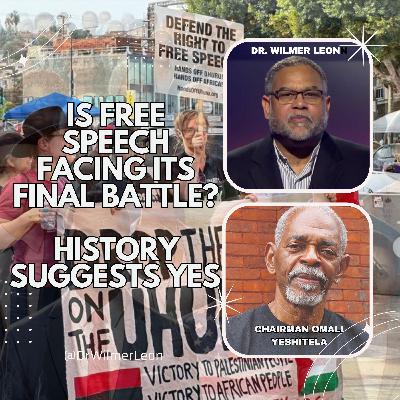
In this episode, Dr. Wilmer Leon is joined by Chairman Omali Yeshitela to explore the fight for free speech as the Uhuru Three face charges for opposing U.S. government narratives. Together, they uncover the shocking connections between the trial, colonialism, and the global struggle for freedom.
Find me and the show on social media. Click the following links or search @DrWilmerLeon on X/Twitter, Instagram, Facebook, Patreon and YouTube!
Hey everyone, Dr. Wilmer here! If you've been enjoying my deep dives into the real stories behind the headlines and appreciate the balanced perspective I bring, I'd love your support on my Patreon channel. Your contribution helps me keep "Connecting the Dots" alive, revealing the truth behind the news. Join our community, and together, let's keep uncovering the hidden truths and making sense of the world. Thank you for being a part of this journey!
Wilmer Leon (00:00:00):
The first amendment of the Constitution reads as follows, Congress shall make no law respecting the establishment of religion or prohibiting the free exercise thereof or abridging the freedom of speech or the press or the right of people peaceably to assemble and to petition the government for a redress of grievances. With that, here's a very simple question. If Congress cannot make a law abridging, which in law means to diminish or reduce in scope the freedom of speech, then why will the Yahoo three have to go on trial on September 3rd, 2024 in the federal court in Tampa, Florida? If you want to know the answer to that, let's find out
Announcer (00:00:53):
Connecting the dots with Dr. Wilmer Leon, where the analysis of politics, culture, and history converge.
Wilmer Leon (00:01:03):
Welcome to the Connecting the Dots podcast with Dr. Wilmer Leon and I am Wilmer Leon. Here's the point. We have a tendency to view current events as though they happen in a vacuum, failing to understand the much broader historical context in which most of these events take place. During each episode of this podcast, my guests and I have probing, provocative, and in-depth discussions that connect the dots between these events and the broader historic context in which they occur. This enables you to better understand and analyze the events and that impact the global village in which we live on today's episode. The issue before us is or are the indictments of the Uru three are the indictments of the Uru three a test case for the federal government. If Chairman Yella, penny Hess and Jesse Neville are convicted in this political attack, will free speech as we know it in this country, no longer exist for anyone. Let's talk with my guest. He's a political activist and author. He's the co-founder and ker chairman of the African People's Socialist Party, which was founded in 1972, and he also leads the Uhuru movement and he's one of the Uhuru 3 Chairman, Omali Yeshitela. Welcome back to the show.
Chairman Omali Yeshitela (00:02:23):
Thank you so very much. It is good to be with you again. This question of free speech is something that reverberates so many means, and this you give me access to speak with your show, and that's extremely important because some people recognize that how people who want to speak affect it negatively if they cannot speak. But many people do not recognize that a free speech attack does not only prevent me from speaking, it prevents people from hearing what I got to say. So it's an assault on people's ability to hear something that the government might not want heard or any other source. And so it's a critical question and it's one of the things that gives such significance being able to be here with you Brother Leon.
Wilmer Leon (00:03:19):
So the three of you are being charged with a violation of statute 18 USC, section 3 71, conspiring to commit an offense against the United States and acting as an agent of a foreign government and foreign officials to wit the Russian Federation without prior notification to the Attorney General as required by law in violation of 18 USC 9 51 A. With that as the technical description of what you all are charged with, what does that mean and what is the basis of these baseless charges?
Chairman Omali Yeshitela (00:04:00):
I think it's a really important question because what the government is doing is using some facts to obscure truth, to hide truth. The fact is, I did not register with the United States government as a foreign agent. That's a fact. But the truth is I'm not a foreign agent, never have been one, and I've always only worked for African people. They said that we ran candidates for office in 2017 and 2019 because the Russians wanted us to do that and paid for it. It's a fact we ran candidates for city council and mayor in St. Petersburg, Florida in 2017 and 2019. But the truth is the Russians did not pay for this. The Russians was not the idea of Russians, and we've been involved in Micropolitics and have been teaching other Africans how to be involved in Micropolitics for decades. They used the fact that we participated in a tour that was actually hosted by Fran fan's daughter throughout the United States, a committee of the United Nations checking on the conditions of African people, and we collected petitions on the question of genocide and fact.
(00:05:29):
We did go on that tour, we called it a winter tour, went to Jackson, Mississippi, Washington DC I think New York, and one or two other, Chicago, Illinois. That's a fact. We did those things. But the truth is that we did not do this for Russia. We did it because we wanted the United Nations to deal with this issue of genocide and reparations for African people in this country. So what they've done is take these facts and then construct a false conclusion for people, and it's extremely dangerous. And they do this at the expense of First Amendment because everything they've charged us with has to do with us speaking with us utilizing the Bill of Rights or utilizing the First Amendment that you just mentioned in the opening of this show. But they cannot say that we are attacking them because they use speech. They cannot say they're attacking us because just because we ran for office, which is something that we are supposed to have a constitutional right to do, it says not because they spoke.
(00:06:35):
It's because they spoke because the Russians wanted them to speak. The Russians wanted them to sow discord. The Russians wanted them to run for office in St. Petersburg, Florida as a stepping stone to somehow Russian interfering in the election, the national elections in this country. So that's dangerous because that means that anybody, oh, and it's a fact that I went to Moscow in May and September of 2015 at the invitation of a non-governmental organization, anti-global movement of Russia to participate in discussions with other people around democratic rights and around self-determination for peoples from various places around the world. So those are facts. I did that, but it is a lie that I was a Russian agent and I did it in the service of Russia. I did it because Zuckerberg and because the New York Times and because the Washington Post and because the Democratic Party and various other entities refuse to give access to black people so that we can speak independently about what our situation is. And you got to remember what was happening in 2014, 2015 with Mike Brown uprising because of the police murder of that young man in August of 2014, I think it was because of all kinds of police murder right before that one, the brother who was choked to death in New York, just all kinds of things were happening and the story of our people from our own initiatives could not be heard. And so I wanted to be heard, and I've been struggling for our story to be heard all around the world for the longest period of time.
Wilmer Leon (00:08:35):
Well, everybody knows that if you are planning to conspire against the government, if you're planning to bring down the American empire, the City Council of St. Petersburg, Florida is where you're going to start. That's the underbelly. That's the soft spot. That's the weak link in the American Empire is St. Petersburg, Florida. So I can see where the government would get the idea that, oh my gosh, the City Council of Florida and then the world, you mentioned that when you said you were brought to Moscow on behalf of an NGO, A non-government organization that made me think about the myON coup in Ukraine and Samantha Power and the NGOs that the United States has used to overthrow the democratically elected government in Ukraine. How the United States has been trying to overthrow Venezuela through NGOs.
(00:09:48):
They've got a playbook as it relates to non-governmental organizations. They've got a playbook and they understand very clearly how that game gets played. So that's one of the hypocrisies that immediately jumps out at me. And another one is they, they're claiming or they're charging you with running people for elected office. When apac, it was published in the New York Times back in April, that APAC came out and said they are committing 100 million to the 2024 election to unseat democratically elected officials who they deemed to be operating against the interests of Israel. And Jamal Bowman has been a victim of that. And Co Bush became a fell victim to that in Kansas City.
Chairman Omali Yeshitela (00:10:48):
She's from St. Louis, Missouri. So
Wilmer Leon (00:10:50):
St. Louis, thank you. Thank you. I get my Kansas City and my St. Louis mixed up. I got you. Yeah, in St. Louis. So here we have APAC operating on or for the interests of the Zionist government of Israel saying publicly we're spending a hundred million, I think they spent 7 million to 1C Bowman. So there seems to be some inconsistency if not in the rule of law, at least in the practical applications here.
Chairman Omali Yeshitela (00:11:22):
Yeah, and that's true. I mean, especially APAC is a splendid example, and
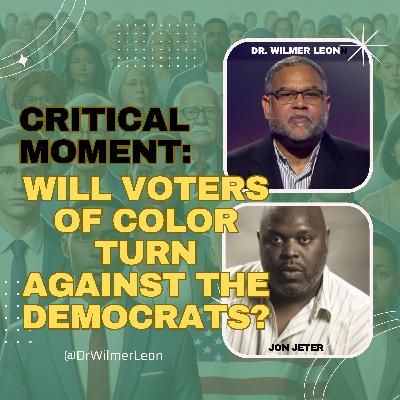
In this gripping episode of "Connecting the Dots," Dr. Wilmer Leon and two-time Pulitzer Prize finalist Jon Jeter expose the Democratic Party's desperate reliance on voters of color to save them from political collapse.
Find me and the show on social media. Click the following links or search @DrWilmerLeon on X/Twitter, Instagram, Facebook, Patreon and YouTube!
Hey everyone, Dr. Wilmer here! If you've been enjoying my deep dives into the real stories behind the headlines and appreciate the balanced perspective I bring, I'd love your support on my Patreon channel. Your contribution helps me keep "Connecting the Dots" alive, revealing the truth behind the news. Join our community, and together, let's keep uncovering the hidden truths and making sense of the world. Thank you for being a part of this journey!
FULL TRANSCRIPT:
Dr. Wilmer Leon (00:00:00):
I have two questions. The first question, has the Democratic Party committed suicide by biting the black hands that feed it? Here's the second question. Has the African-American community allowed itself to be taken for granted and thereby taken advantage of
Jon Jeter (00:00:25):
Connecting the dots with Dr. Wilmer Leon, where the analysis of politics, culture, and history converge?
Dr. Wilmer Leon (00:00:32):
Welcome to the Connecting the Dots podcast with Dr. Wilmer Leon. I'm Wilmer Leon. Here's the point. We have a tendency to view current events as though they happen in a vacuum, failing to understand the broader historical context in which a lot of these events occur. During each episode, my guests and I have probing, provocative, and in-depth discussions that connect the dots between these events and the broader historic context in which they occur. This enables you to better understand and analyze the events that impact the global village in which we live. Black Agenda report has a piece entitled How the Democratic Party Committed Suicide by Biting the Black Hands That Feed It On today's episode. The issues before us are, as I stated at the top, has the party in fact committed suicide and has the African-American community allowed itself to be taken for granted and thereby to advantage of for insight into this?
(00:01:35):
And for answers to these questions, let's turn to my guest. He's a former foreign correspondent for the Washington Post. He's the co-author of a Day Late and a Dollar Short, dark Days and Bright Nights in Obama's post-Racial America. His work can be found at Patreon as well as Black Republic Media. He's the author of this piece. He is John Jeter brother John Jeter. Welcome back. The pleasure is all mine, brother. Thank you for having me. You opened your piece as follows, the Democratic Party dug its own grave decades ago when it began trying to siphon voters from the Republican party or the GOP by appealing to conservatives and ignoring the needs of its strong base of African-American people. If political parties were prominent people, you'd have stumbled upon this obituary. Today, the Democratic Party, one half of America's longstanding ruling duopoly, and the author of political movements as disparate as Jim Crow and the New Deal died Wednesday, July 24. It was 196 sources said the cause was suicide following along illness. John, that's incredibly, incredibly creative. I've gone through the coroner's report. I can't make heads nor tails when it comes to the cause of
Speaker 3 (00:02:58):
Death.
Dr. Wilmer Leon (00:02:59):
So what was the cause of death on July 24th?
Speaker 3 (00:03:03):
It sort of slit death by a thousand cuts, but slitting your throat a thousand times slowly over the years. Man, I really, that piece really meant something to me. I am, as I think you would say, you are a man of a certain age and I remember very clearly Jesse Jackson's 1984 and 88 campaigns for President. I remember the energy and the excitement. I remember, even though I was just in my teens and early twenties, I remember that it was electric, those campaigns. And then I remember Bill Clinton running for president and I voted for Bill Clinton. But I remember thinking, I remember holding my nose while I voted because I remember Bill Clinton lecturing Jesse Jackson about Sister Soldier lecturing black people going to black church, lecturing black people about how we have failed Martin Luther King. And I didn't quite understand it other than I thought, well, bill Clinton is like most white people I know, racists most, not all the most.
(00:04:13):
And I just wrote it off as that when I was a young journalist at the Detroit Free Press. Later, I got to Washington the same time as Bill Clinton In 1993, January of 1993, I got to the Washington Post, and it sort of dawned on me over the years, particularly as I heard democratic presidents and democratic candidates for President repeat these same tropes scolding black people. I remember, and I was in a very different place at this point, but I remember Barack Obama talking down the black people in a way that just really offended me, scolding black fathers for their failure to raise their kids when a study at that time had been produced, which showed that black men who are separated from their families are actually better parents, actually spend more quality time with their kids than any other ethnic group. Barack Obama telling a black church, I believe it was in South Carolina, that a good plan for economic development would be to stop throwing Popeye's chicken wrappers out of your car window, right?
(00:05:23):
Just the infantilization of the black voting block, black electorate. And it struck me that this is by design. They're talking to white people. And then this is only in the last few years where I read David Roder, the labor economist, labor, labor historian, I'm sorry, who wrote about the Reagan Democrats in Michigan, who we elected the blue collar white workers who we elected Ronald Reagan, president who crossed over to elect Ronald Reagan president. And how his polling showed that their main motivation was race or racism, I should say. They did not like black people. They defined black people as pulling down the party. And they divided Democrats as people who catered to blacks who were lazy welfare, all the tropes that were popularized by, built by Ronald Reagan. And it struck me that the Democrats in 92, the astrophysicists, I believe they talk about solar systems that are so distant, you can't see the sun, but you can tell by the movement of the planets that there is indeed a solar system by the movement of the stars and the planets that there is indeed a sun there, that it is indeed a solar system.
(00:06:43):
No one really wrote it down really. Although the poster Stanley Stanley, I can't remember his name now, but the post of the Greenberg for the Democrats, he came close, but we can see by their actions that the Democrats in 1992 especially were wrestling with how to win the White House after they had been exiled by 12 years of Republican rule. And they decided they chose between Jesse Jackson's campaign, which was trying to reunite that New Deal coalition, tenuous as it was, but it was still a new deal, coalition of black and white workers, and then Ronald Reagan's approach, which was to basically return to the old Southern Democrats, George Wallace, basically, and refusing to be out in worded right, keeping up this racist animosity and resentment.
Dr. Wilmer Leon (00:07:40):
I think that was Strom Thurman who originally made that quote, I will never be. Right.
Speaker 3 (00:07:45):
Right. That's right. That's right. Yeah. George Wallace took it to another level, and I think that that has been the Democrat's problem ever since. And you would think a child could have told them, this is not going to work well for you to antagonize purposefully your base, but this is the moment we're in where you see the Democrats, it's almost like a circus, a dog and pony show where Democrats spend four years openly denouncing or renouncing their black base and then in the election year trying to make up for it, trying to gin up the black vote. It is almost like this awkward dance that they're doing. And now we're seeing the culmination, because this has been going on pretty much for the last 30 years. I think Obama was the Navy or the Zenith, depending on how you want to look at it. But I think that it's really run its course. I think it's possible Kamala Harris can win this election, but even if that is the case after four years in office, the Democrats are a spent force. They can't continue this dance.
Dr. Wilmer Leon (00:08:52):
So to those who would say, well, wait a minute, John, how can you say that the party is biting the hand that feeds it when you've had a President Barack Obama from 2009 to 2017, and they are set as we assume that when they come out of their convention in a couple of weeks, that Kamala Harris will be the nominee for 2024. So how do you answer those folks who say, well, they're not taking us for granted. Let's assume that she wins in November. They've had two African American presidents. We could talk about African Jamaican, but we'll just put Kamala in the box over 20 year span,
Speaker 3 (00:09:48):
And they've completely ignored, completely frustrated black demands, right? You think about Kamala Harris. Well,
Dr. Wilmer Leon (00:09:57):
Barack Obama told us we didn't make any demands, which is why we didn't get anything. When he was asked that question. His answer was, you didn't demand anything. Yeah.
Speaker 3 (00:10:06):
And I would have to say, he's actually got to give the devil this dude. He was right on that one. Hey, look, the 2008, what they did, what the Democrats did in pushing Barack Obama passed Hillary Clinton was a stroke of genius. It really was. They had the perfect candidate to whip up to generate this black excitement, excitement in the black community, which at that same time, they were ripping off through these subprime mortgages, right, which were disproporti
Find me and the show on social media. Click the following links or search @DrWilmerLeon on X/Twitter, Instagram, Facebook, and YouTube!
FULL TRANSCRIPT:
Wilmer Leon (00:00):
So here's a question. How does the false construct of race, and yes, it is a false construct or the real constructs of culture and cultural identity factor into our opposition to or support for a political candidate. Let's find out
Announcer (00:26):
Connecting the dots with Dr. Wilmer Leon, where the analysis of politics, culture, and history converge.
Wilmer Leon (00:33):
Welcome to the Connecting the Dots podcast with Dr. Wilmer Leon and I am Wilmer Leon. Here's the point. We have a tendency to view current events as though they occur in a vacuum, failing to understand the broader historical context in which most events take place. During each episode of connecting the dots, my guests and I have probing, provocative, and in-depth discussions about the broader historic context in which most events occur. This enables you to better understand and analyze the events and the impact that these events have on the global village in which we live on today's episode. The issue before us is, as I stated, how does the false construct of race and it is a false construct and or the real issues of culture and cultural identity factor into our opposition to and support for candidates for insight. Let's turn to my guest, Dr.
(01:35)
Chantel Sherman is a historian and journalist whose work documents deconstructs and interprets eugenic themes in popular culture, identity formation among African-Americans and reproductive apartheid in carceral spaces and within marginalized communities. Publisher of Acumen Magazine, author of In Search of Purity, eugenics and Racial Uplift among New Negroes, 1915 and 1935, as well as popular eugenics in television and film. Also, she's a novelist of Fester and Spill. Dr. Chantel Sherman, welcome back. Good morning. Thank you for having me. And as always, thank you for joining me. And I got to add, she's a very, very dear friend as well, so I get to call her Chantel, before we get to the question posed in the open, A viewer of our last discussion reached out to me and wanted us to elaborate on the issues of eugenics in medicine because many of us know some things about the Tuskegee study as well as Ms. Henrietta Lacks, but there's an awful lot more to eugenics and medicine than just those two issues. So starting there, particularly with the Tuskegee experiment, I elaborate, clarify what you know to be some of the misunderstandings about that, a little bit about Henrietta Lacks and then where are we with eugenics in medicine?
Shantella Sherman (03:10):
Sure. It's a loaded question because it actually has, the response is almost a series of volumes, quite frankly, but to synthesize this understanding, eugenics means what you're trying to do is create better people. And in order to create better people, you have to know what they're made of, what makes good stock, what makes good genes. And so what we've tried to do in this country through eugenics is to create better people by restricting who can and who cannot have children incarcerating people performing sterilizations for sterilizations on folks who we deem as unfit. And so it's not just about the body, but it's the body politic. So if I determine that you're poor, for instance, it's believed that poverty is in your DNA diseases are automatically in your DNA. And so black people as a whole, were considered to be contaminated. We are still considered to be largely contaminated.
(04:17)
We are a bad gene pool, we are a subhuman group according to science and eugenics. So based on this, studying any type of disease means studying black people, and sometimes it means injecting them with certain things. So with Tuskegee, there's been a bit of a revisionist history about these are black people who had syphilis and we simply did not treat them in order to see the development of the disease or the course of the disease over years. The truth of the matter is many of these men were injected with syphilis, and that's the original documentation that we don't necessarily look at. We have to get to a point where we're looking at the entire scope of information and data. Alabama, Tuskegee was not the only place where these syphilis studies were taking place. The serological studies were taking place in six different states and they were all connected to sharecropping or farming communities, sharecropping communities where the black people there could not necessarily leave of their own free will.
(05:23)
And then based upon that, you had a population that you could study, you could inject with different things. I've seen studies where folks are literally looking at how pesticides work by spraying cotton fields and leaving the black people who are working in the cotton fields in the fields so that as they develop lung conditions, you now start to talk about how black people don't have the capacity to breathe in certain places or they have bad lungs or these other things as if they're genetic, when the truth of the matter is you are experimenting on them. And so we've been the Guinea pigs unwittingly in this country for a long time, but because the stroke and the core of the information is based upon black people being somehow contaminated anyway, being less human, then we become like the lab rats or the little white mice in the labs where constantly we're having things tested on us and we don't necessarily know this. Then the scope of that becomes black people are 10 times more likely to have this. They're 10 times more likely to do this or to die of these conditions, or their behaviors lend themselves to these particular things.
Wilmer Leon (06:39):
When you said make better people, it was inferred, but I want to state the obvious. When the Nazis were trying to make the superior race, they were not doing this for the betterment of mankind, even though in their warped racist minds, they thought, so this was not altruistic by any stretch of the imagination. They were trying to make better white people at the expense of people of color. Is that hyperbolic on my
Shantella Sherman (07:22):
No, it's on point. I mean, the fact of the matter is if you consider non-white people to be subhuman, there we go. Or a subspecies. Let's pull this into America. When you say American, you're not talking about black people, you're talking about white people. That's why you have to add these hyphens, African-American, because America is the culture. It is also the race. It is also the health. It is also the patriotism. It is also the citizenship. And so this language becomes loaded. So when you say American, I'm looking at things that are talking about the American birth rate. The American birth rate is not going down when we're talking about black people or Hispanic people. So where in America is the birth issue? It's an American issue. It's a white issue.
Wilmer Leon (08:15):
It's a very white issue. And I'm quickly trying to put my hands on a piece by Dr. Walters here. I think I have it that speaks to this in the political context where, well, I can't find the quote, but he basically talks about, it's very important to understand that, oh, here we go. This is from white nationalism, black interests, and so this is your eugenics. On the policy side, if a race is dominant to the extent that it controls the government of the state defined as the authoritative institutions of decision-making, it is able to utilize those institutions and the policy outcomes they produce as instruments through which it is also structures its racial interests. Given a condition where one race is dominant in all political institutions, most policy appears to take on an objective quality where policymakers argue they're acting on the basis of national interests rather than racial ones. So that's Dr. Walters telling us, if I can just cut to the chase, when white folks run the show and they speak in the national interest, they're talking about their interests, not ours, and that's absolutely okay. Alright,
Shantella Sherman (09:55):
That's it.
Wilmer Leon (09:55):
So two other points about Tuskegee that I think are very important for people to understand. I know there were black nurses involved and weren't there also black physicians involved?
Shantella Sherman (10:08):
Absolutely.
Wilmer Leon (10:09):
And there is some question about whether there was actual consent. How much of this did they actually know or were they dupes? Isn't that a question that gets posed?
Shantella Sherman (10:24):
It's a question that's posed often because the belief is that if there's a black person in the room that they're going to side for black people, they're going to defend, they're going to try and help. But the reality is when we're talking science, we're talking medicine and science on behalf of the nation, on behalf of American Americans, we want to make sure that we have a healthy pool of black people as well. So it benefited and it benefits currently many black leaders to hold onto these eugenic things and these eugenic tropes and these eugenic theories where even though we don't talk about sterilizing people in the same way we did, then you still hear people say, black people, even this person has too many kids, they don't need to have any more kids. They're on welfare already. So what do you do? You
Wilmer Leon (11:18):
Give them Ronald Reagan's welfare queen,
Shantella Sherman (11:20):
Right? Well, right. If a white person says this, it's racist. If a black person says she already has 10 kids, she doesn't need anymore. She can't afford 'em, now she's neglecting them. We start with this other thing and it becomes, so what do we do? Give her no plan or something. And if that doesn't work, go ahead and give her a hysterectomy. That's eugenics.
Wilmer Leon (11:41):
An example of that on the other side is Octo mom
Find me and the show on social media. Click the following links or search @DrWilmerLeon on X/Twitter, Instagram, Facebook, and YouTube!
FULL TRANSCRIPT:
Wilmer Leon (00:00):
I am back. I'm back. I went to what I'm calling Cult Fest 2024, also known as the RNC in Milwaukee, Wisconsin. That was a site to behold. But with all that said, president Joe Biden has decided not to pursue a second term for 2024. Without a primary, without an open process, vice President Kamala Harris has quickly become the Democrat's. Presumptive nominee. Is this democracy or a Bernie Sanders? Redo. Stay tuned. We're going to answer those questions,
Announcer (00:41):
Connecting the dots with Dr. Wilmer Leon, where the analysis of politics, culture, and history converge.
Wilmer Leon (00:49):
Welcome to the Connecting the Dots podcast with Dr. Wilmer Leon. I'm Wilmer Leon. Here's the point. We have a tendency to view current events as though they are current, a vacuum failing to understand the broader historical context in which most events take place. During each episode, my guests and I have probing, provocative, and in-depth discussions that connect the dots between these events and the broader historic context in which they occur, thus enabling you to better understand and analyze the events that impact the global village in which we live. On today's episode, the issue before us is the 2024 presidential election and how the Democrats are selecting their nominee. My guest is Tom Porter. He's a lifelong activist and scholar, former dean of the African-American Studies Department at Ohio University, former director of the King Center in Atlanta, former host of morning conversations with Tom Porter. Tom Porter. Welcome back to podcast, my brother.
(01:57)
So Tom, as I said in the open President, Joe Biden has decided not to pursue a second term for 2024 without a primary, without an open process. Vice President Kamala Harris has quickly become the Democrat's presumptive nominee. I believe she has now amassed the requisite delegates in order to become officially the nominee on July 8th. Clinton advisor, James Carville, who is one tricky, somebody wrote a piece entitled Biden Won't Win, Democrats need a Plan. Here's one wherein he wrote, the Jig is Up, and the sooner Mr. Biden and Democratic leaders accept this, the better we need to move forward. But it can't be by anointing Vice President, Kamala Harris or anyone else as the presumptive democratic nominee. We've got to do it in the open, the exact opposite of what Donald Trump wants us to do. Tom, it doesn't appear, at least at this point that the Dems are listening to Carville
Tom Porter (03:09):
And they shouldn't.
Wilmer Leon (03:10):
Okay?
Tom Porter (03:11):
And they shouldn't. I remember the most important black labor leader in the country came out of a meeting with Clinton Carville and Al from, and he said, Tom, they're a bunch of fascists. It is the Clinton Wing that took over the Democratic Party under the leadership of the Democratic Leadership Conference, which was made of Southern governors, which has gotten the Democratic Party in trouble ever since. And what that means is that CarVal didn't want Kamala Harris. That's what that means. It had nothing to do with the open process and what have you. He would know open if he had a can opener,
Wilmer Leon (03:58):
But to his point about an open process, because further on in that piece, he talks about Clinton and Obama selecting, I think it was eight potential nominees, and that they needed to have regional town halls where these individuals would travel the country explaining their policies, introducing themselves to the electorate, and then based upon that, an individual would be, I think the term was selected, Tom.
Tom Porter (04:30):
Well, the effect of it is one of the things that Jesse Jackson and the Jackson campaign of 1984 is instructive and people should study that more. What Jesse found out that even though he was leading the other presidential candidates, that the rules of the Democratic party was stacked against him. It was called front loading. So for CarVal, they throw the word around democracy. First of all, the America's never been a democracy. It was born in slavery, genocide of Native Americans, and still the land from the Mexican. So the fact of it is it only had the possibility of becoming a democracy, and it has yet to come there. So what car is talking about it seems very, very interesting. But he crow controls the process, controls the day, and I'll guarantee you that Clinton and CarVal and that bunch are not going to have any kind of process that they don't control. And so it may look like it. I mean, it looks like Biden was chosen. He was number four. How did he get past three candidates and become number one? It wasn't open process. And I tell you one thing carve out and nobody else said anything because he was their choice because they wanted to stop Bernie Sanders.
Wilmer Leon (05:52):
There are those who say that Joe Biden was selected not to defeat Donald Trump. Joe Biden was selected to defeat Bernie Sanders,
Tom Porter (06:03):
And you are absolutely right. And that is what they have done. They did it with Jesse in 84. The whole Jaime thing was just that a hoax. Jesse never said it in any kind of way that was demeaning towards the Jews, but the JDL disrupted interrupted Jesse's announcement when he announced that he was going to run for president and hounded us, us being me, Florence Tate and Jesse, who were three people called the road team. When Jesse first started running in 84, they hounded us to JDO every place we went. And before we got secret service protection, it was Farhan and the FOI that protected us. So they were after Jesse from the beginning. It's instructed for people to read the platform of the Rainbow Coalition because Jesse has had the most progressive populous campaign in the 20th century.
Wilmer Leon (07:00):
I'm glad you brought that up. This takes us a bit off topic, but I think it is relevant because James Clyburn and a group of African-American leadership went in and met with Biden a couple of weeks ago, and that's when Clyburn came out with the line, we Riding with Biden. And one of the things that I said as a result of that was, what did you get for that endorsement When you walked into the room and you sat down with Joe Biden, did you put your own project 2025 plan on the table and say, look, Joe, here's what we need. Here's what we want. Here's what we demand. You're going to sign this or we're going to go back out here and tell people that you just fell asleep in the meeting. I don't know what they got for that. And based upon the way that this whole thing has gone, it seems as though they were once again on the wrong side of history. So for you to say that people need to go back and read the plan from the Jackson campaign, and then we can even go back to the black political, the Gary Conference,
Tom Porter (08:15):
Gary Convention, that
Wilmer Leon (08:17):
There's enough data. Go ahead.
Tom Porter (08:19):
Those are two documents that people need to read. Not only read, but they need to update them. That is the agenda that came out of the Gary Convention and Jesse Jackson's platform. Not only was Jesse's platform the most advanced in 1984, when I left the university, I was looking for something to do, so I decided to run for Congress and Jackie Jackson called me Jesse's wife and said, Jesse wants to meet with you. And I was in Cincinnati running for Congress, and I went to Chicago, spent the night at Jesse's house the day before 1983, and that's when Jesse asked me if I would work with him in the campaign. But I ran for Congress in Ohio and I ran in two counties that were 99% white and blacks and white in Cincinnati, which was a big city, said, don't go out there, show your literature, but don't show your face. Long story short, Mondell was at the top of the ticket. I got 2000 more votes than he did in Brown County and a thousand more than he did in Claremont County. He was at the top of stick. He was supposed to ticket, he was supposed to help me. The fact of it is it was just as populism that got basically these working class, mostly Republican whites to get behind Jesse because of his platform. It was a very populous platform to the left. Trump came along with a populous platform from the
Wilmer Leon (09:52):
Right, from
Tom Porter (09:53):
The right. And so the Democratic Party, instead of embracing Jesse's platform, which came out of the Gary Convention, instead of embracing it, they moved the leadership of the Democratic Party to the Democratic Leadership Conference and hired all of Jesse's people and gave them jobs which are meaningless jobs, moved the structure from the party someplace else. But these Negroes became deputy. This deputy, I call their names, but I don't want to, some of my still call friends, but they drank the Kool-Aid. And if you read some of the press around Clinton and his crew Al from, and James Carve, one theme was We don't need Jesse Jackson anymore. They marginalized Jesse so much so that in the convention in New York, Jesse didn't have a VIP pass. He had to come through the door like everybody else. That's Clinton and his crew, and Nancy Pelosi and Clyburn and all of the Negroes come out of that. Obama's position was to negate the progress and the black leadership that had gone before he calling Dr. King a simple country preacher, he couldn't carry Dr. King's dirty underwear.
Wilmer Leon (11:12):
Well, in fact, wait a minute. First of all is that negating the negation is the one question. And to your point, you can go and read President Obama's acceptance speech at the Nobel where he talks about Dr. King and then says, but I'm an American president. I have a different set of concerns that I must address. You don't quote Dr. King and then say, yeah, but you say, yeah, yeah.
Tom Porter (11:43):
But h
Find me and the show on social media. Click the following links or search @DrWilmerLeon on X/Twitter, Instagram, Facebook, and YouTube!
FULL TRANSCRIPT:
Announcer (00:06):
Connecting the dots with Dr. Wilmer Leon, where the analysis of politics, culture, and history converge.
Wilmer Leon (00:15):
Welcome to the Connecting the Dots podcast with Dr. Wilmer Leon. I'm Wilmer Leon. There's a lot that's been going on this week. Both Biden and Trump failed to deliver during the so-called debate. Biden's obvious cognitive decline captured the news cycle over Trump's obvious racism, lying, and failure to demonstrate a command of the subject matter. After that horrific display by President Biden, Democrats are now scurrying around like rats on a sinking ship trying to decide if they need to rearrange the chairs on the Titanic called the Biden Harris campaign. Vice President Harris is angry that her name is not at the top of the list of potential Democratic party options to replace Biden. She has her surrogates now out and about asking if that's due to the Democratic Party elite not wanting a black woman at the top of the ticket. Well, that's true. Dems don't want a black woman at the top of the ticket, but that's not her problem.
(01:24)
Her problem is wait for it, wait for it. Her. She didn't get 4% of the vote when she ran in 2020 and she was the first candidate out of the primaries on the Democrat side. African-Americans didn't even vote for her. Folks can't understand what she's talking about because she is the sous chef of the word salad. Anyway, all of that to say I'm on my way to Milwaukee to cover the Republican Convention, so we're going to be away for the next two weeks when the convention starts. Go to politics in color.com for election coverage that will be relevant to you and to your interests and concerns. That's where you'll find me. You'll find me in Milwaukee streaming over politics in color.com. So as always, thank you all so much for listening to the Connecting the Dots podcast with me, Dr. Wilmer Leon. Stay tuned for new episodes every week except for the next two because I'm going to be preparing for the Republican Convention in Milwaukee where you can find me@politicsincolor.com.
(02:35)
Also, please follow and subscribe. Leave a review. Please, please share the show. Follow us on social media. You can find all the links below in the show description. Go to Patreon and please make a contribution because these processes aren't cheap to get into. This is where the analysis of politics and history converge. Talk without analysis is just chatter and we don't chatter on connecting the dots. See you again in two weeks. Follow me on politics and color.com. Broadcasting live from the Republican Convention in Milwaukee. Until then, I'm Dr. Woman Leon. Have a good one. Peace. I'm out
Announcer (03:26):
Connecting the dots with Dr. Wilmer Leon, where the analysis of politics, culture, and history converge.
Find me and the show on social media. Click the following links or search @DrWilmerLeon on X/Twitter, Instagram, Facebook, and YouTube!
Our guest this week, Steve Poikenon can be found at his website here.
FULL TRANSCRIPT:
Dr Leon (00:00):
Now, usually I start this part of the show with a question or a few questions, but today I have to make a statement. After 13 years of either being held up in the Ecuadorian Embassy in Britain, or being in Belmar Prison in solitary confinement, Julian Assange walks free. Why does this matter what led the Biden administration to finally come to its senses and accept a deal? Why should this matter to you?
Announcer (00:42):
Connecting the dots with Dr. Wilmer Leon, where the analysis of politics, culture, and history converge.
Dr Leon (00:49):
Welcome to the Connecting the Dots podcast with Dr. Wilmer Leon. I'm Wilmer Leon. We have a tendency to view current events as though they happen in a vacuum, failing to understand the broader historical context in which most events take place. During each episode, my guests and I have probing, provocative, and in-depth discussions that connect the dots between the events and the broader historical context in which they take place. This enables you to gain a better understanding and to analyze events that impact the global village in which we live. On today's episode. The issue before us is what's the significance of WikiLeaks and what's the impact on the freedom of the press? My guest for today's conversation is the host of AM Wake Up and Slow Newsday, which you can watch live on Rock Fin and Rumble, and you can listen anywhere. Podcasts are served. Steve Poin and Steve, welcome.
Steve Poikenon (01:51):
Thank you very much, Wilmer. It's good to see you not on the radio,
Dr Leon (01:57):
Man. Well, I have the perfect face for radio from what they tell me, and it's great to see you to be able to put a face with a voice. We've been talking for a couple years now, and it's finally great to be able to put a face with a voice. So footage tweeted by WikiLeaks, I think Julian Assange's wife showed him walking up the stairs onto an aircraft bound for Sipan in the US administered Mariana Islands. He has agreed to plead guilty to one count under the espionage act of conspiracy to disseminate national defense information. Steve, what were your thoughts when you first heard the news that Julian Assange was free?
Steve Poikenon (02:44):
I was a little stunned. This is something that we've discussed on and off over the last couple of years, and certainly in the last couple of months there have been substantiated rumors that the Biden Justice Department was preparing some sort of plea deal, whether or not the Assange team was going to accept it. That was the thing that we didn't have any certainty about whatsoever. They obviously have gone forward with accepting the deal. He should be, at this point, touching down or walking into the courtroom in the Marianas Islands says a lot about the state of the US empire that we even have a district courthouse in the Mariana Islands. That's just wild to me to begin with, but from the best that I can tell, and Wilmer, you may correct me if I'm wrong, from the best that I can tell, there's nothing in the initial plea agreement that says Julian won't be allowed near a computer or won't be able to access the internet.
(03:51)
Can't give speeches or interviews or can't have documentaries made about a situation. So by all accounts, up to this point, it appears that when he walks out of the courtroom later in the next couple of hours, he will be a legitimately free human being, and that is a win in and of itself. I'm a father. I can't imagine being taken away from my kids for making the US government angry and then having to know that they're growing up without me. And so the ability for him to take part in raising his own children, I think is the biggest godsend out of all of this. And then we can get into the implications and the impact that this is going to have on press freedom and citizen journalism and everything else going forward. But the huge win here is that he's no longer an inmate in the Guantanamo Bay of the United Kingdom where he was being held with the worst criminals on the island, having never once committed any crime of any sort of significance that would warrant that cell.
Dr Leon (05:12):
Do you have any idea in terms of why the Mariana Islands other than is the closest space that will enable him then to go from there to his home of Australia?
Steve Poikenon (05:25):
I think that was the ultimate deciding factor was proximity to Australia. It's not like the US can't construct a kangaroo court anywhere, and it's not like if they didn't have a different provisional, different courthouse, they wouldn't be going through the same sort of performative motions in the eyes of the Biden administration. I think the guilty plea is the thing that they were looking for, something that they could make at least a political, if not a legal for, and then also to not have it be an election issue going forward.
Dr Leon (06:04):
And from what I understand, this is not precedent setting because this was the result. This is the outcome of a plea deal. This did not actually come as the result of a trial.
Steve Poikenon (06:17):
If they would've gone to trial and evidence presented and a conviction was rendered and then upheld by a judge, then it would establish a legal precedent because he pled and pled out to time served for what he'd already done. The only thing that it can be used to set a precedent for is politically, or I guess emotionally or spiritually, where people are more hesitant to approach national security reporting or classified information, talk about it, disseminate any of that. And that is I think the real ultimate goal of not just the Biden administration, but the Trump administration and ultimately the Obama administration from where all of this stems is to redefine journalism in the future.
Dr Leon (07:10):
I want to read from the paragraph from the Washington Post as they reported out this story, Julian Assange's plea deal, sparks global celebration and condemnation reactions were divided as WikiLeaks. Julian Assange heads to a US Pacific territory to cement a plea deal that could soon set him free. WikiLeaks founder, Julian Assange's tentative plea deal with the United States, which could soon bring an end to his years long international legal legal saga, drew celebration and criticism reflecting the divisive nature of his role in obtaining and publishing classified military and diplomatic documents. A couple of things. One is the condemnation side of this. The only folks that I can see that would be condemning this deal are people that are tied to the Trump administration, people that are tied to the Biden administration. I don't understand where they get this idea that there's all this divisiveness and condemnation.
Steve Poikenon (08:23):
There were the usual, the people you just spoke of, but Mike Pence was one of the loudest. There have been a number of former Trump administration officials and a number of former Obama administration intelligence apparatus and national security apparatus officials who have expressed distaste. This now and again, realize that to be opposed to this means you wanted to see a 50-year-old man, 51-year-old man get effectively tortured to death in a US prison for the rest of his life. That's what being in opposition to this effectively means. The reasoning behind it though is because information is currency. Assange and WikiLeaks were a broker of this information that wasn't part of the sanctioned club, and so Pompeo called them a hostile rogue intelligence agency, non-state intelligence agency. If you are viewed like that amongst the apparatus that's making the national security decisions, it doesn't matter what the end result is, if it's not your wholesale destruction, they're going to be displeased.
Dr Leon (09:43):
There's another paragraph. While Assange supporters saw him as a courageous whistleblower of government misdeeds, his critics saw him as a self-promoter oblivious to the harm that his leaks might cause, oblivious to the harm that his leaks might cause. There has not been one shred of evidence presented to show that any harm other than embarrassment by Hillary Clinton and some of the other government officials who were identified through these WikiLeaks releases, maybe their egos were damaged. But short of that, there's been no harm. WikiLeaks publication of the Afghan War logs did not obscure the names of Afghan civilians who provided information to the US military and omission that dismayed human rights groups and national security officials. Who are they talking about? Steve?
Steve Poikenon (10:49):
Okay, so when they say that the harm that they're talking about, it's not just their ego, it's their ability to continue to spy on their friends and allies that was harmed. It was the harm that was done by letting people know what the US government is doing with our tax dollars and our names. But Wim
Dr Leon (11:07):
Steve, it's not as though the allies did not know that they were being spied on. Remember what happened with Bill Clinton and Angela Merkel's? I think it was the Clinton administration and Angela Merkel's cell phone. I mean, it's not as though we don't know. We don't know Israel. It's not as though we don't know that Israel is spying on us. I mean, it's the game that they play.
Steve Poikenon (11:31):
It is the game that they play, but we're not supposed to know. And the rest of the diplomatic core is all that operates on the pretense and the fiction that it's not happening. That everybody's there to politely try to sort out the ills of the world and that all of the espionage going on in the background is never to be brought up. It doesn't have to stop. You just can't talk about it. If you bring it to light, th
Find me and the show on social media. Click the following links or search @DrWilmerLeon on X/Twitter, Instagram, Facebook, and YouTube!
FULL TRANSCRIPT:
Wilmer Leon (00:00):
There have been tensions between the US and its neighbor 90 miles to the South Cuba since 19 59, 65 years. Why? And are there indications that changes on the horizon or will the issues become more significant?
Announcer (00:27):
Connecting the dots with Dr. Wilmer Leon, where the analysis of politics, culture, and history converge.
Wilmer Leon (00:33):
Welcome to the Connecting the Dots podcast with Dr. Wilmer Leon. I am Wilmer Leon. Here's the point. We have a tendency to view current events as though they occur in a vacuum, failing to understand the broader historical context in which these events occur. During each episode of this program, my guests and I have probing, provocative, and in-depth discussions that connect the dots between these events and the broader historic context in which they occur. This enables you to better understand and analyze the events that impact the global village in which we live. My guest for today's show is a Cuban American journalist, radio host, author, and host of RTS Direct Impact. He is Ricardo Leon Sanchez de Ronaldo, also known as Rick Sanchez. Let's connect some dots. Rick, welcome to the show.
Rick Sanchez (01:33):
Hey, it is great. Great to be here with you. Wilmer. Always a pleasure, doctor.
Wilmer Leon (01:37):
Did I get it right?
Rick Sanchez (01:38):
Well, yeah, you did. I mean, I don't use it anymore, but it's funny. I guess one point back in 1958, when I was born on July 3rd, my mother named me in little Guanabacoa, Cuba, a suburb just outside of Havana. The doctor said, what are you going to name this kid? He's ugly as hell, but let's give him a name anyway. And she said, Ricardo de San Aldo. So there you go. Is part of the history in Latin America, which I think is a great thing in our culture, you carry the mother's name for at least one generation. So when a woman marries a man and they have a child, that child will carry her name for at least that one generation. Whereas in our culture, you just throw the mother's name away.
Wilmer Leon (02:17):
Well, out of respect to your mother. So just a little historic context, because context for me is always so important. Cuba's ruler CIO Batista.
Rick Sanchez (02:35):
Oh yeah, the old Batist. You're
Wilmer Leon (02:37):
Starting there overthrown. He was overthrown by Fidel Castro, his brother, Raul Checo Rivera, and a lot of other folks in 1959.
Rick Sanchez (02:47):
That's correct.
Wilmer Leon (02:47):
This revolution had and continues to have powerful and profound domestic and international repercussions. Give us your thoughts on where the countries, the US and Cuba is today. Because for example, a lot of people don't really even appreciate the impact that this relationship has on us. Domestic politics.
Rick Sanchez (03:14):
Oh my God. Politics are fascinating in that sense. I don't think there's ever been a better example of a country that is being castigated more than Cuba has been castigated by the US government. No country in the history of the world has been sanctioned and castigated economically for a longer period of time than Cuba has. The United States has done everything possible for some 70 years to literally keep Cuba under its thumb, by the way. And Cuba's economy has paid for it drastically. Remember when I was in Cuba interviewing Fidel Castro in 1991 during Glas and Troika? I remember at the time that I talked to Castro and I asked him about what was happening. He seemed desperate. He had to be desperate to invite me to give me an interview on the island. At the time, they don't usually talk to Guanos. I am a guano.
(04:15)
A guano means a worm. A worm is somebody who left the revolution and betrayed the revolution. But I left because my parents left. I mean, I was two years old when I left Cuba. But it's funny because I'll just say this, that era, that 1991, I go and I talk to Castro in Cuba, which was really fascinating. Then I go to New York and I talk to Gorbachev, and I asked Gorbachev, I was working as a correspondent at NBC, and I was assigned to go to New York to speak with President Gorbachev, and I asked President Gorbachev about Fidel Castro, and I said, you were recently in Havana. You and Mr. Castro apparently have had a falling out. He didn't even go see you at the airport. And Gorbachev stops right there, Wilmer. And he says to me, you know what your problem is. You know what the problem you have and the problem with all you Cubans, you're obsessed with Castro.
(05:07)
Why are you asking me a question about Castro with all the things going on in the world? I don't want to talk about Castro. Next question. I was like, whoa. I couldn't believe he was coming at me like that. But it just shows. There's an old story if you want to talk history, and I wrote this once in one of my books. I said, let's see if I can quote myself here. Cuba was the slave of the Spanish, the prostitutes of the Americans and the child of the Soviets. It has always been taken and oppressed and used and mistreated by somebody. First, it was the Spanish. They broke from that. Then they got the Americans. The Americans really screwed the Cubans over in every way they could. Americans just owned 70% of the land in Cuba. Think about that for a minute. So it was easy for Fidel Castro to turn to these people back then and say to them, they own 70% of your land. You can't own a business here. They control the government. Batista works for the mafia, which he did. By the way. He was one of the most corrupt presidents. Literally, the mafia ran Havana. So when he says,
Wilmer Leon (06:20):
Watch the Godfather,
Rick Sanchez (06:22):
Yeah, the scene in Godfather two. So in the end, let me close with this. The US government, like the Spanish government, and in many ways, like the Soviets all used and abused Cuba. And to this day, Cuba is suffering the consequences of it because it's a sad place economically to go. And the US to this day is doing everything possible to punish Cuba and keep him under the thumb with an embargo that still persists. And they also have him on a list called the States that condone terrorism lists. There's only like three or four countries, Iran, Cuba, North Korea, and a couple others. And I mean, really, Cuba, it's tough to be Cuba because of that.
Wilmer Leon (07:10):
So to that point, at the end of May, it was reported that the Biden administration eases some economic restrictions on Cuba. Private enterprises with no link to the government will be granted access to US banks and additional internet services. The Biden administration seems to have amended and clarified a number of sanctions against Cuba, allowing private entrepreneurs and businesses again to open US bank accounts. They portray this as increasing support for Cuban people. But we'll talk about what that really means. The acronym Micro and Deanna's impress us.
Rick Sanchez (08:10):
Yes,
Wilmer Leon (08:10):
Rick Sanchez. Small
Rick Sanchez (08:11):
Businesses. Small Businesses is what Businesses Small. Yeah, yeah, essentially. I mean, it's a bunch of acronyms. Too many letters for a very simple description. You're absolutely right. And you know what? I think the Biden administration did a good thing with that. A lot of people have been pushing for it. And what it basically says is the Biden administration is looking at Cuba and saying, wow, there's something going on in Cuba for the first time in some 60 or 70 years. Now, I thought what Obama did was fantastic. Obama was the first president, thank God, who came along and said, why do we hate these people? Why do we have to have an enemy that's 90 miles away because of something between Khrushchev and Kennedy? And Eisenhower? Man, that's been a long time. Let's turn over a new leaf. Let's start something new. And Obama allows the United States and people in the United States to start traveling to Cuba. Suddenly, Cuba starts doing really well. People in Miami start going to see their cousins. They're buying, they're trading. Suddenly the Cuban economy starts to show signs of life. It was all really good
Wilmer Leon (09:13):
Cruise lines.
Rick Sanchez (09:14):
What cruise lines, exactly. The whole thing had the promise of starting all over again. So let me attack that first before I tell you about the people you mentioned a little while ago. But we have these absolute morons in Florida politics in particular. You have some idiot named Marco Rubio, for example. You got another guy named Rick Scott. These guys, they live off of hate. The only way that they can stay in power is to make sure the people in South Florida vote for them. And the only way they think the people in South Florida will vote for 'em if they scare them into thinking that somehow Cuba is the boogeyman. It's a horrible communist country that's coming to kill and blah, blah, blah. And because of that, people in South Florida, even if they really deep down don't think that, and even if they really deep down would love nothing more than to be able to visit their mom and their dad and their brothers and their sisters, and to somehow create some kind of reproachment with Cuba, they're afraid to say it.
(10:18)
So they say publicly, oh, I hate Cuba. It's horrible. Yay. Marco Rubio. They're afraid because they live in an environment in South Florida, which is run by the older exiles and by the Marco Rubios, where they think if they say that they're not going to get a job, they're not going to be hired. Nobody wants to be called a communist in Miami. So it's this vicious cycle that has continued for so many years, and it's the politicians who continue that. Marco Rubio went to President Trump as soon as President Trump came into office, and he said, here's what you have to do. Cancel everything Obama did. Kill it, des
Find me and the show on social media. Click the following links or search @DrWilmerLeon on X/Twitter, Instagram, Facebook, and YouTube!
FULL TRANSCRIPT:
Wilmer Leon (00:00):
Let's play a word association game. When I say eugenics, what comes to mind? What does it mean? Is the opposition to critical race theory? A eugenics construct is eugenics alive and well and still impacting our culture? Does eugenics influence the character portrayals in movies that you see in commercials? And what are your children being taught in school and why?
Announcer (00:35):
Connecting the dots with Dr. Wilmer Leon, where the analysis of politics, culture, and history converge.
Wilmer Leon (00:43):
Welcome to the Connecting the Dots podcast with Dr. Wilmer Leon and I am Wilmer Leon. Here's the point. We have a tendency to view current events as though they happen in a vacuum, failing to understand the broader historic context in which most events take place. During each episode of this podcast, my guests and I have probing, provocative, and in-depth discussions that connect the dots between these events and the broader historic and the broader historic context in which they occur. This enables you to better understand and analyze the events that are impacting the global village in which we live on today's episode. The issue before us is eugenics. Is it a warped pseudoscience of the past or is it still impacting how people view each other? My guest is a historian and journalist whose work documents deconstructs and interprets eugenics themes in popular culture, identify formation among African-Americans and reproductive apartheid in carceral spaces and within marginalized communities. She's the author of In Search of Purity, popular Eugenics and Racial Uplift Among New Negroes, 1915 to 1935, and Pop U, popular Eugenics in television and film. She is Dr. Chantel Sherman. Chantel, welcome to the show.
Dr Shantella Sherman (02:19):
Thank you. I appreciate you having me. Always.
Wilmer Leon (02:23):
Before we get to your work as a researcher and historian, let's talk about your work as a researcher, historian, and journalist. You're the founder of the Acumen Group and you're also the Acumen Group, publishes Acumen Magazine. What is the Acumen Group?
Dr Shantella Sherman (02:43):
The Acumen Group is basically an institution where we are training, it's a nonprofit where we're training folks to deconstruct the things around them, specifically related to eugenics, but also related to race to the world around them, how we construct identities not only racially, but within our families, within our nation, and how we view and observe the worlds around us. So the goal with the Acumen Group was to take what it is that we have in institutions and do a trickle down, or I like to say like a sprinkler system, so that every person has the ability to actually see what it is that we're studying, know what folks are saying when they create policy, understand the dynamics that go into creating policy and the power that they have to change it. But since most people aren't comfortable being in school anymore, or they figure once they reach the 12th grade, then that's it. They stop reading, they stop, I'm having conversations. They stop really engaging with the process of life. And so the goal is to tool people up, first of all, by making them comfortable with being in classrooms again, being armchair historians and armchair politicians so that they understand the world around them and then giving them the tools to actually go out and change the things that they need to change.
Wilmer Leon (04:06):
And Acumen Magazine, how often is it published? Where do people get it? What's in Acumen Magazine?
Dr Shantella Sherman (04:14):
Acumen Magazine came about because we have students, a lot of students who once they got the information, they were on fire. They really wanted to be able to tell this information and represented it and reproduce it. And so we created the magazine as a quarterly. It is student led, it is student produced with me at the helm doing much of the graphic design and the editing. But it is students from around the globe at this point that showcase their research. It is dialed down in a way that it's journal quality, but in a rather popular and inviting way of reading it. So it's more like a magazine, even though it feeds like a journal.
Wilmer Leon (05:00):
One of the things that has stood out to me, as you and I talk about all the work that you're doing, all the research that you're doing, all the presentations, it seems as though, and if I'm wrong, please correct me. It seems as though there's a lot more interest in your work abroad as in Europe than there is here in the United States.
Dr Shantella Sherman (05:24):
Yes, it's the quick answer. I think that there's a real passion across the globe, but specifically in these European spaces, because even though eugenics took off here in America, and I think it was the perfect laboratory for the pseudoscience, it in fact originated in Europe. And so the concept of how to create better people, the concept of how to nation build it comes from them as part of the colonial mainframe. And so it's that colonizing empire with its tentacles. But how do you manage people that you consider to be less than, to be inferior, to be the world's workers, to be low on the totem pole? How do you manage them? And so Europeans are still looking at this in other ways. They never stopped the eugenic mainframe. They never stopped the cogs and the wheels from spinning. And so when we look at things today, and I know we'll get to this artificial intelligence or people talking about genomes and helping with medicine, creating the medicine that you need based upon gene pools and gene sets, these are all tentacles and legs of the original eugenics movement.
(06:45)
And so if we don't understand what that is, then the folks in Europe understand it. And so they're courses, they're college courses are designed to fit around this, whether it's law, whether it is political science, whether it's journalism, they understand that eugenics is still a part of the conversation. So for instance, Francis Go, who's considered to be the father of Eugenics, his original laboratory, the Eugenics Records lab, those societies are still very much in existence under different names. So the original Eugenics Institute under Francis Galton has now been renamed, and it's called the Adelphi Forum. And they're still having meetings early or as late as 20 23, 20 24. So part of, again, what the Acumen Group does is we send researchers, or I will attend myself, and we go in and we listen to how eugenics is now being talked about, or genetic research is now being talked about in a rather deconstructed way, so that folks are studying what happened, for instance, with Covid trying to determine through blood types or through environment who was more prone to having contagions.
(08:07)
And that way it's no longer about the survival of the fittest, about who can survive different catastrophes and disasters based upon the help of science. Because if it's survival of the fittest, when the smoke cleared according to data, 63.7% globally of the folks who died from covid or complications from Covid were white people. So it makes sense that you then want to try and figure out if survival of the fit is about white people dominating people of color, but you have a pandemic come through, and the majority of the folks who passed away from this epidemic pandemic were white people. How do you explain that in a scientific way? So you'd start to study them all over again. So again, that's that eugenic tentacle still reaching out the way it does.
Wilmer Leon (09:00):
So let's take a step back and start with a definition of this pseudoscience known as genetics, known as eugenics. And after you define it, explain why it's a pseudoscience.
Dr Shantella Sherman (09:16):
Perfect. The term itself came about roughly 1840, though folks have believed that you could create or build better people or better societies through reproduction probably since the beginning of time. So the idea was that you can, in the same way you manufacture or manipulate the DNA, we weren't using the term DNA then, but germ plasm of plants and animals. You want to breed in certain things and breed out certain things. We believe that some point in this country and across the globe that you could actually do the same thing with people. And Francis goin took this science to a different level. And at the time it was considered a science. It was a bonafide science. The theories were that in the same way that you reproduce height and weight and hair color and eye color and things like that and pass them on to your children, that you could also pass along your characteristics.
(10:15)
So they were stuck. There was a gene for lying, there was a chromosome for stealing. It is the belief that if you mix this type of person with this type of person, you'll end up with these type of children. And the belief eugenically was that these genes sat for generation after generation after generation. So if you had a great, great grandfather who was a criminal, that criminality was in your genes and the genes of your children, and that it was just one thing that would potentially push it on out, or in other instances it just manifested itself. So we know it to be a pseudoscience. All of the theories were fallible because if that was the case that meant that we just have a world full of criminals, we would have a world full of liars. And it's not to say that this, to some extent we don't, but these are things that can't be set aside.
(11:13)
One of the things that is really defining about eugenics as well is that poverty is considered to be in your DNA. So this is the reason why, again, when we start talking about social sciences and reform work, the belief is that if you are born poor, you're going to

Comments

Download from Google Play

Download from App Store
 United States