


 Claim Ownership
History Profiles
Subscribed: 13Played: 341
Subscribe

Description
Greetings,
This is Ollie from History Profiles, I will be revealing the historical truths behind the lives of some of the most famous and powerful people in the historical world.
Subscribe to keep up to date with all my latest content.
Check out all my content: inlet.fm/history-profiles
285 Episodes
Reverse
In the early dawn of post-Roman Britain, Cerdic emerges from legend and history. Recognized by the Anglo-Saxon Chronicle as the first king of Wessex, he ruled from approximately 519 to 534 AD. His legacy links him as the ancestor of subsequent Wessex kings. However, Cerdic's origins, ethnicity, and very existence are subjects of intense debate, straddling myth and historical memory.
Cerdic, in his time, was not known as a “West Saxon” king but as the leader of the Gewissae—a tribal group believed to be Germanic mercenaries settling in Britain post-Roman era. Fascinatingly, Cerdic's name might not be Germanic but Brittonic, possibly derived from Caratīcos, hinting at his potential native Briton roots, with his lineage becoming Anglicised over time. This theory is supported by the names of his descendants—Ceawlin, Cedda, and Cædwalla—reflecting a fusion of cultures.
The Anglo-Saxon Chronicle, composed over three centuries after Cerdic's death during Alfred the Great’s reign, is influenced by time, politics, and myth-making. Still, it immortalizes Cerdic as the first king of Wessex, tracing his lineage back to Woden, the chief god of the Germanic pantheon. Whether Cerdic was a man, myth, or something in between, he remains a pivotal figure in England's formation, where legends melded with kingship.
00:00: Introduction02:09: Cerdic in the Anglo-Saxon Chronicle04:57: Opinions of Historians08:14: Legacy
#Cerdic #Wessex #Anglo-SaxonChronicle #Englishkings #Gewissae #Cerdic'sancestry #mythandhistory #Brittonicorigins #Woden #Anglo-Saxonhistory
See show notes: https://inlet.fm/history-profiles/episodes/6982b670000ba87757641613
Learn more about your ad choices. Visit podcastchoices.com/adchoices
Explore the legendary tales of Ragnar Lothbrok's five famous sons. Delve into riveting stories of Ivar the Boneless, Halfdan Ragnarsson, Ubba Ragnarsson, Sigurd Snake-in-the-Eye, and Björn Ironside.
Chapters:
00:00 Introduction - Ragnar Lothbrok
02:26 Ivar the Boneless - The Cursed Heathen
19:12 Halfdan Ragnarsson - The First Viking King of Northumbria
33:58 Ubba Ragnarsson - Legendary Viking War Lord
42:56 Sigurd Snake-in-the-Eye - The Mythical Ancestor of Kings
52:58 Björn Ironside - The Warrior Champion
Music by Alexander Nakarada - CreatorChordsTrack: Celtic Music → "Grundar" by Alexander Nakarada (Royalty Free)Listen here
Sources:
The Gesta Danorum
The Saga of Ragnar Lodrok and his Sons
Annals of Ireland
Annals of Ulster
Vulsunga saga
The Anglo-Saxon Chronicle
00:00:00: Introduction - Ragnar Lothbrok00:02:26: Ivar the Boneless - The Cursed Heathen00:19:12: Halfdan Ragnarsson - The First Viking King of Northumbria00:33:58: Ubba Ragnarsson - Legendary Viking War Lord00:42:56: Sigurd Snake-in-the-Eye - The Mythical Ancestor of Kings00:52:58: Björn Ironside - The Warrior Champion
#RagnarLothbrok #IvartheBoneless #HalfdanRagnarsson #UbbaRagnarsson #SigurdSnake-in-the-Eye #BjörnIronside #Viking #Vikinghistory #Norsemythology #Vikinglegends
See show notes: https://inlet.fm/history-profiles/episodes/697d707ca0b588c7d4f588d2
Learn more about your ad choices. Visit podcastchoices.com/adchoices
Across the cold lands of the Viking Age, funerals were more than farewells; they were rituals of power and transformation. These traditions are revealed through Old Norse poetry, Icelandic sagas, and astonished travelers from the Muslim world, who watched these events in disbelief.
A warrior's resting place was dictated by their status. Farmers returned to the soil, while chieftains and heroes required grander send-offs. Status influenced death as it did life, yet beneath the Norsemen's iron pride lay a deeper dread of what awaited beyond.
Funerals intertwined theater and terror. Sacrifices were staged, woven into narratives where the dead played their final roles. These rites extended for days, characterized by feasting, drinking, and rituals that blurred the line between worlds; drums, chants, and songs echoed beneath the sky.
Central to these rites were fire and ships—cremation liberated the spirit, while ship burials carried the dead to eternity. Each rite declared death not as an end, but a passage into legend. Burial mounds became lasting testaments to a chieftain's life, enshrining their deeds and memory.
Join us as we delve into Norse funeral practices, exploring their rituals, beliefs, and fears, and discover why, to the Vikings, death and burial held as much significance as life.
00:00: Introduction02:34: Burial Mounds or Barrows05:33: Ship Burials09:19: Ibn Fadlan's account of A Varangian Funeral20:24: Legacy
#Vikingfunerals #Norserituals #OldNorsepoetry #Icelandicsagas #VikingAge #shipburials #cremation #burialmounds
See show notes: https://inlet.fm/history-profiles/episodes/6978fd4f7e9685ce71cd9f28
Learn more about your ad choices. Visit podcastchoices.com/adchoices
Before Christianity's arrival, England thrived with gods, spirits, and ancient rituals. The Anglo-Saxons, who settled between the 5th and 8th centuries AD, practiced a rich tapestry of beliefs now known as Anglo-Saxon paganism—a Germanic faith shared across northwestern Europe.
This religion originated from northern Europe's Iron Age traditions and reached Britain with the Anglo-Saxon migrations in the mid-5th century. For centuries, it influenced daily life, from seasonal cycles to kingly authority. As Christianity spread in the 7th and 8th centuries, remnants of the old faith lingered, merging into folklore and memory.
We learn about these ancient practices mainly from Christian chroniclers like Bede and Aldhelm, who documented a world their faith aimed to replace. Temples and altars were destroyed, sacred groves vanished, and rituals stopped. Yet, the old beliefs left enduring marks: in the days of the week, named after gods like Woden and Thunor; in royal genealogies linking kings to divine ancestors; and in archaeological treasures like Sutton Hoo, where a helmet with dancing warriors reflects the spiritual imagination of a people who revered both natural and supernatural realms.
Join us on a journey to uncover what remains of this once-dominant religion in England: its gods, sacred traditions, and magical rituals that guided life, death, and the invisible forces surrounding them.
00:00 Introduction02:11 Woden (God of Wisdom)04:31 Týr (God of War, Law & the Sky)06:38 Thunor (God of Thunder)08:31 Frīg (Goddess of Marriage, Childbirth & prophecy)10:30 Ing (God of Fertility)12:52 Ēostre (Goddess of Spring & Renewal)14:40 Siġel and Mōna (The Solar and Lunar Deities)16:34 Seaxnēat (The Warrior God of the Saxons)17:53 Shamanism, magic, and witchcraft21:07 Legacy
Music by Alexander Nakarada: Grundar (Royalty Free)
00:00: Introduction02:11: Woden (God of Wisdom)04:31: Týr (God of War, Law & the Sky)06:38: Thunor (God of Thunder)08:31: Frīg (Goddess of Marriage, Childbirth & prophecy)10:30: Ing (God of Fertility)12:52: Ēostre (Goddess of Spring & Renewal)14:40: Siġel and Mōna (The Solar and Lunar Deities)16:34: Seaxnēat (The Warrior God of the Saxons)17:53: Shamanism, magic, and witchcraft21:07: Legacy
#anglo-saxon #paganism #gods #woden #thunor #frīg #ing #Ēostre #Seaxnēat #shamanism #magic #witchcraft #archaeology #folklore #Christianity
See show notes: https://inlet.fm/history-profiles/episodes/697192d86f54d6b81f81bf87
Learn more about your ad choices. Visit podcastchoices.com/adchoices
The Winged Hussars were an elite heavy cavalry unit serving Poland and the Polish-Lithuanian Commonwealth from 1503 to 1702. Their name derives from the impressive feathered wings on their backs, designed to instill fear and confusion in enemies during charges. Renowned for their effectiveness, they often defeated forces much larger than their own.
For generations, these elite warriors marked their prominence in Polish cavalry, earning the nickname “angels of death” on the battlefield. They played pivotal roles in many of Europe’s iconic battles. After their military service ended, the hussars transitioned to ceremonial duties, concluding a remarkable military era.
Music: "VOICE OF PRAYER" by Noel Malekar
Watch the video here.
00:00:00: Introduction00:01:20: Origins00:03:12: Armour & Weapons00:05:52: Battle of Kircholm (1605)00:09:32: Battle of Klushino (1610)00:13:39: Battle of Khotyn (1673)00:15:41: Battle of Vienna (1683)00:18:24: Battle of Kliszów (1702)00:21:00: End of an Era & Legacy
#WingedHussars #Polishhistory #elitecavalry #angelsofdeath #cavalrycharge #BattleofKircholm #BattleofKlushino #BattleofKhotyn #BattleofVienna #BattleofKliszów #militaryhistory
See show notes: https://inlet.fm/history-profiles/episodes/69692b498f887fa6fca82f98
Learn more about your ad choices. Visit podcastchoices.com/adchoices
Niklot, the steadfast prince of the Obotrites, stood firm as Europe's pagan era faded. As the mid-12th century ushered in forced baptisms and surrender, Niklot chose defiance. Leading the Wendish lands along the Baltic frontier, he faced relentless forces: Saxon lords, Danish kings, and the Wendish Crusade's holy banners cloaking conquest in salvation's guise. Niklot, unyielding and independent, defended sacred groves and ancient customs, fighting for memory, identity, and belief.
While others converted for power, Niklot waged war not for glory, but for his people's right to exist on their terms. He was ultimately ambushed, his lance failing against knights, leading to his demise.
Centuries later, Niklot is remembered as the last great pagan defender of the western Slavs, a symbol of resistance against overwhelming odds. Though his enemies claimed the land, his legacy endures, a testament to those who stood against Europe's tumultuous conversion.
00:00 Introduction
01:48 Background & Rise to Power
04:17 The Wendish Crusade (1147)
09:07 Death In Battle
12:19 Legacy
Music by Alexander Nakarada - CreatorChords
Track: Celtic Music → "Grundar" by Alexander Nakarada (Royalty Free)
Link: https://www.youtube.com/watch?v=WZjpLQYAnr8
Music: "VOICE OF PRAYER" by "Noel Malekar"
Video Link: https://www.youtube.com/watch?v=TSpEjSoiZ6c
00:00: Introduction01:48: Background & Rise to Power04:17: The Wendish Crusade (1147)09:07: Death In Battle12:19: Legacy
#Niklot #Obotrites #pagan #WendishCrusade #Europeanhistory #Slavs #medievalhistory #resistance #Balticfrontier
See show notes: https://inlet.fm/history-profiles/episodes/696188771e976ebf9099a685
Learn more about your ad choices. Visit podcastchoices.com/adchoices
In the rich tapestry of ancient Greek mythology, Achilles shines as a symbol of unparalleled martial skill and divine anger. Before his legendary birth, the cosmos danced as Zeus and Poseidon competed for Thetis, a water goddess, in marriage. Themis, the goddess of law, shared a prophecy that Thetis would have a son whose glory would outshine his father.
Understanding the prophecy, Zeus and Poseidon stepped back from pursuing Thetis. Fate led to Thetis marrying Peleus, King of the Myrmidons, resulting in the birth of Achilles, both mortal and divine.
Chapters:
00:00 Achilles: The Unyielding Fury01:27 The Chosen One04:02 The Trojan War Beckons05:38 The Wrath of Achilles09:11 Prince Hector, Champion of Troy14:10 Achilles Duels the Demi-God Memnon17:42 The Tragic Turn19:00 Legacy
Music credit to: Savfk - MusicLink
00:00: Achilles: The Unyielding Fury01:27: The Chosen One04:02: The Trojan War Beckons05:38: The Wrath of Achilles09:11: Prince Hector, Champion of Troy14:10: Achilles Duels the Demi-God Memnon17:42: The Tragic Turn19:00: Legacy
#Achilles #Greekmythology #warrior #TrojanWar #Thetis #Zeus #Poseidon #Hector #Myrmidons #Memnon #Iliad
See show notes: https://inlet.fm/history-profiles/episodes/695d4dcf15a8fdb9afd72fac
Learn more about your ad choices. Visit podcastchoices.com/adchoices
Siward, a formidable eleventh-century earl in northern England, became legendary for his towering stature and exceptional strength. Rising to prominence under Cnut the Great, he became Earl of Northumbria, ruling a land marked by feuds and independence.
By 1033, Siward governed southern Northumbria, modern Yorkshire, for Cnut. He consolidated power amid Scottish raids and local unrest. Loyal to the crown, Siward supported Cnut's successors, Harthacnut and Edward the Confessor, and gained renown through his Scottish campaign against King Macbeth, later inspiring Shakespeare.
Fierce and pragmatic, Siward's legacy endures as the last Viking Lord of the North.
Music by Alexander Nakarada - CreatorChordsTrack: Celtic Music → "Grundar" by Alexander Nakarada (Royalty Free)Link: Celtic Music by Alexander Nakarada
00:00:00: Introduction00:01:58: Ancestry & Early Life00:05:13: The Earl of Northumbria & Reign of Cnut00:08:11: The Reign of Cnut's sons00:11:46: The Reign of Edward the Confessor00:15:13: War with the Scots00:18:24: Death and Legacy
#Siward #Northumbria #Vikings #Anglo-Saxonhistory #CnuttheGreat #EdwardtheConfessor #Macbeth #Scottishhistory #Medieval
See show notes: https://inlet.fm/history-profiles/episodes/6954132d8bf240b5b086247f
Learn more about your ad choices. Visit podcastchoices.com/adchoices
The Danelaw was a significant region in England from the late ninth century until the Norman Conquest, where Danish laws prevailed over Anglo-Saxon governance. This area emerged due to the Danish Viking conquest and occupation across eastern and northern England during this period.
The term Danelaw refers to regions where English kings allowed Viking settlers to maintain their legal customs after the early tenth-century reconquest, in exchange for loyalty to the English crown.
This episode traces the Danelaw's full history: its origins, rise to prominence, and eventual decline and disappearance.
00:00 Introduction00:35 First Viking Raids in England (787-851)04:06 The Ragnarsons Invade England (865-878)11:58 Alfred, Guthrum & Establishment of Danelaw (878-899)14:50 Edward the Elder & Æthelflæd reconquer the Danelaw (899-924)19:38 Æthelstan First King of the English (924-939)24:29 Edmund's loss and recovery of the north (939-944)27:44 Eadred defeats the Last Viking King of Northumbria (946-955)
All credit for the music goes to: Savfk - MusicLink: Savfk - Music
00:35: First Viking Raids in England (787-851)04:06: The Ragnarsons Invade England (865-878)11:58: Alfred, Guthrum & Establishment of Danelaw (878-899)14:50: Edward the Elder & Æthelflæd reconquer the Danelaw (899-924)19:38: Æthelstan First King of the English (924-939)24:29: Edmund's loss and recovery of the north (939-944)27:44: Eadred defeats the Last Viking King of Northumbria (946-955)
#Danelaw #Vikinghistory #Anglo-Saxon #AlfredtheGreat #Æthelflæd #EdwardtheElder #Æthelstan #Vikingraids #Northumbria #Guthrum #VikingEngland
See show notes: https://inlet.fm/history-profiles/episodes/694835b40a6f5559ea05551c
Learn more about your ad choices. Visit podcastchoices.com/adchoices
Explore the intriguing lives of Godwin, the Earl of Wessex, Harold Godwinson, the King of England, Tostig Godwinson, the Earl of Northumbria, and Edith of Wessex, the Queen of England.
Music: "VOICE OF PRAYER" by Noel Malekar
Video Link: Watch here
00:00:00: Godwin, Earl of Wessex (1001 - 1053)00:52:51: Harold Godwinson (1022 - 1066)01:41:54: Tostig Godwinson (1029 - 1066)02:23:10: Edith of Wessex (1025 - 1075)
#Godwin #HaroldGodwinson #TostigGodwinson #EdithofWessex #Anglo-Saxonhistory #HouseofGodwin #BattleofHastings #Vikinghistory #Wessex #Northumbria
See show notes: https://inlet.fm/history-profiles/episodes/694592b78832d1232310356c
Learn more about your ad choices. Visit podcastchoices.com/adchoices
Explore the epic tales of three legendary Viking kings: Sweyn Forkbeard, Cnut the Great, and Harald Hardrada. Discover their fascinating life stories and lasting impact on history.
Sweyn Forkbeard (963-1014)
Cnut the Great (990-1035)
Harald Hardrada (1015-1066)
All credit for the music goes to: Savfk - MusicLink to the music
00:00:00: Sweyn Forkbeard (963-1014)00:57:05: Cnut the Great (990-1035)01:53:27: Harald Hardrada (1015-1066)
#SweynForkbeard #CnuttheGreat #HaraldHardrada #Vikingkings #Vikinghistory #medievalhistory #Norwegianhistory #Danishhistory #Englishhistory #Vikingwarriors
See show notes: https://inlet.fm/history-profiles/episodes/693efb2f251a5f5acfa070f1
Learn more about your ad choices. Visit podcastchoices.com/adchoices
Canute IV, famously known as Canute the Holy, reigned as the Danish king during the late 11th century. He aimed to bolster the Danish monarchy and reclaim the North Sea Empire, once ruled by his grand-uncle, Canute the Great. Viewing William the Conqueror as an illegitimate ruler of England, Canute initiated multiple raids to extend his influence.
A fervent advocate of the Roman Catholic Church, Canute was dedicated to religious reforms, yet this fervor contributed to his downfall. His enforcement of strict tithes (church taxes) led to widespread dissent among his subjects. By empowering the clergy to levy taxes and fines on church land peasants, he estranged the common populace.
These grievances incited a peasant revolt in early 1086 in Vendsyssel, coinciding with Canute's presence there. Seeking refuge in a church, he was ultimately killed by rebels, marking a brutal end to his rule.
In 1101, the Roman Catholic Church canonized Canute, making him the first Danish king to receive sainthood, and recognizing him as Denmark's patron saint.
Music: "VOICE OF PRAYER" by Noel MalekarVideo Link: https://www.youtube.com/watch?v=TSpEjSoiZ6c
Music by Alexander Nakarada - CreatorChordsTrack: Celtic Music → "Grundar" by Alexander Nakarada (Royalty Free)Link: https://www.youtube.com/watch?v=WZjpLQYAnr8
00:00: Introduction01:36: Ancestry & Early Life02:41: Danish Attack on Norman England (1069–1070)06:12: Raid of 107507:17: Ascension to the Danish Throne08:32: A Holy Man10:30: Planned Invasion of England13:26: Peasant Uprising, Death & Legacy
#CanutetheHoly #Vikinghistory #Danishmonarchy #NorthSeaEmpire #WilliamtheConqueror #RomanCatholicChurch #religiousreform #peasantuprising #canonizedsaint #Denmark
See show notes: https://inlet.fm/history-profiles/episodes/69346f2bb384267ddbf0c9d0
Learn more about your ad choices. Visit podcastchoices.com/adchoices
As William the Conqueror heralded Norman rule in England, another figure navigated the misty fenlands with different ambitions. Hereward the Wake, an Anglo-Saxon nobleman, resisted the conqueror to avenge his murdered family.
Leading a guerrilla group of warriors and deemed an outlaw by the Normans, Hereward became a symbol of native resistance. Despite his fame, he remains an enigmatic figure. What do we truly know about this rebel who defied William and his armies?
Reliable information is limited, primarily preserved in the Peterborough Chronicle and the Gesta Herewardi. The latter, an early twelfth-century Latin translation of a lost Old English account, was reportedly written by Leofric, a priest in Hereward’s household. By the time it was copied, the original was already damaged, with missing sections reconstructed from oral tradition. What survives is a mix of memory, storytelling, and history.
The origin of his epithet, “the Wake,” is uncertain. Some trace it to an Old English word meaning “watchful,” while others argue it was later invented by an Anglo-Norman family claiming descent from him. By the fourteenth century, he is clearly recorded as “Hereward the Wake,” although he has also been remembered as “the Outlaw” and “the Exile.”
Over time, parts of his story may have intertwined with or inspired elements of the Robin Hood tradition. Yet, regardless of legend, Hereward remains in the English imagination as a champion against Norman tyranny—sometimes hailed as “the last Englishman.”
Music by Alexander Nakarada - CreatorChordsTrack: Celtic Music → "Grundar" by Alexander Nakarada (Royalty Free)
00:00:00: Introduction00:02:08: Ancestry & Early Life00:03:09: Exile00:07:41: Return to England & Rebellion00:18:09: Legacy & Historicity
#HerewardtheWake #NormanConquest #Anglo-Saxon #medievalEngland #WilliamtheConqueror #rebellion #Englishhistory #guerrillawarfare #RobinHoodlegend #historicalfigures
See show notes: https://inlet.fm/history-profiles/episodes/692c8627fbde30bad7301571
Learn more about your ad choices. Visit podcastchoices.com/adchoices
In the final days of Japan's samurai era, Nakano Takeko emerged as a beacon of bravery amidst the Boshin War (1868–1869). As a warrior from the Aizu Domain, she stood firm against the rise of Emperor Meiji's forces. Nakano embodied the enduring spirit of the samurai, even as the era was nearing its end.
Leading the Jōshitai, or 'Women's Brigade,' Nakano fought fiercely with her naginata, a traditional weapon of Japan's women warriors. Although not formally recognized by the Aizu army, these women bravely defended their land and honor. During the Battle of Aizu, Nakano's valor left a lasting impression on both sides of the conflict.
Tragically, Nakano was mortally wounded by a bullet. In her final act of samurai honor, she asked her sister to behead her to prevent her enemy from claiming her head, ensuring her spirit rested peacefully beneath the trees of Aizu. Her legacy as one of the last female samurai lives on, emblematic of fearless loyalty to the samurai code.
00:00:00: Introduction00:02:54: Early Life00:04:35: The Boshin War00:07:55: Battle of Aizu & Death00:11:45: Legacy
#NakanoTakeko #femalesamurai #BoshinWar #AizuDomain #Jōshitai #Japanesehistory #samuraicode
See show notes: https://inlet.fm/history-profiles/episodes/6921fa2a28e4af852752fadd
Learn more about your ad choices. Visit podcastchoices.com/adchoices
Explore the stories of Japan's legendary samurai, starting with Taira no Masakado, a descendant of Emperor Kanmu. Known as the first samurai, Masakado defied the central government and became a demigod in local folklore, recognized among the “Three Great Onryō of Japan.”
Honda Tadakatsu, a formidable samurai and general, served Tokugawa Ieyasu during the Sengoku and Edo periods. Renowned for his invincibility, Tadakatsu never sustained an injury despite his participation in 57 military campaigns.
Dive into the life of Miyamoto Musashi, an undefeated swordsman, strategist, and artist. Famous for his double-bladed technique, Musashi founded the Niten Ichi-ryū swordsmanship style and authored the influential works, The Book of Five Rings and Dokkōdō.
00:00:00: Taira no Masakado (900 - 940)00:42:16: Honda Tadakatsu (1548 - 1610)01:14:33: Miyamoto Musashi (1584 - 1645)
#samurai #TairanoMasakado #HondaTadakatsu #MiyamotoMusashi #Japanesehistory #swordsmanship #TokugawaIeyasu #NitenIchi-ryū
See show notes: https://inlet.fm/history-profiles/episodes/6918bfa49634c1e2f66a2c67
Learn more about your ad choices. Visit podcastchoices.com/adchoices
From the moment his name was first uttered, Robin Hood captured imaginations as the outlaw who defied authority to champion the poor. But was Robin Hood an actual person—a master archer in the flesh—or merely a legendary figure crafted through generations of storytelling?
Numerous theories have aimed to reveal his true identity, yet no definitive proof has emerged to confirm the man behind the legend. What remain are five ancient ballads that shape our understanding of England's most iconic outlaw: Robin Hood and the Monk, Robin Hood and the Potter, Robin Hood and Guy of Gisborne, Robin Hoode his Death, and A Geste of Robyn Hoode.
In this episode, we examine these primary sources to trace the origins of the legend. What do they reveal about Robin's life, his loyal allies, and his battle against tyranny? And we contemplate a question that has captivated historians for ages: Was Robin Hood a real person—or simply the ideal hero for a world that yearned for one?
Embark on a journey into the depths of Sherwood Forest to unravel the truth behind the Robin Hood legend.
Music by Alexander Nakarada - CreatorChords
Track: Celtic Music → "Grundar" by Alexander Nakarada (Royalty Free)Link
00:00:00: Introduction00:01:27: Robin Hood and the Monk (1450)00:03:44: A Geste of Robyn Hode (1470–1500)00:06:12: Robin Hood and Guy of Gisborne (1475)00:09:58: Robin Hood and the Potter (1503)00:12:34: Robin Hood his Death (1600s)00:15:04: Conclusion
#RobinHood #outlaw #legend #historicalfigure #SherwoodForest #ballads #medieval #folklore #myth #England
See show notes: https://inlet.fm/history-profiles/episodes/69122837da4e169acabd086f
Learn more about your ad choices. Visit podcastchoices.com/adchoices
Björn Ironside, a legendary Norse chieftain and king of Sweden, was renowned for his warrior spirit and as the son of famed Viking hero Ragnar Lothbrok. His exploits in England, West Francia, and the Mediterranean are well-documented in history.
Björn's legacy is chronicled in medieval sources like the Saga of Ragnar Lothbrok, The Tale of Ragnar’s Sons, Gesta Danorum, Hervarar Saga, and Gesta Normannorum Ducum.
Though semi-legendary, his memory lingers in saga, song, and stone. Björn's barrow, a great burial mound in Uppland, Sweden, once marked by a runestone, connects us to Viking kings and mythical heroes.
Join us as we explore ancient sources recounting Björn Ironside's life, delve into the origins of his fearsome name, and trace his legendary exploits. We maintain the individuality of each account, honoring the unique narratives.
00:00 Introduction01:33 The Gesta Danorum04:16 The Saga of Ragnar Lodbrok & his Sons05:37 The Chronicon Fontanellense06:55 The Annals of Bertinius07:45 Gesta Normannorum Ducum17:47 Fornaldarsögur Norðurlanda32:32 Hervarar saga33:46 Burial Mound of Björn Ironside
Music by Alexander Nakarada - CreatorChordsTrack: Celtic Music → "Grundar" by Alexander Nakarada (Royalty Free)Link
00:00:00: Introduction00:01:33: The Gesta Danorum00:04:16: The Saga of Ragnar Lodbrok & his Sons00:05:37: The Chronicon Fontanellense00:06:55: The Annals of Bertinius00:07:45: Gesta Normannorum Ducum00:17:47: Fornaldarsögur Norðurlanda00:32:32: Hervarar saga00:33:46: Burial Mound of Björn Ironside
#BjörnIronside #Vikinghistory #Norsechieftain #RagnarLothbrok #medievalsources #Vikingraids #Swedishhistory #GestaDanorum #HervararSaga #Vikinglegends
See show notes: https://inlet.fm/history-profiles/episodes/6908edf5e285dac3cced1dea
Learn more about your ad choices. Visit podcastchoices.com/adchoices
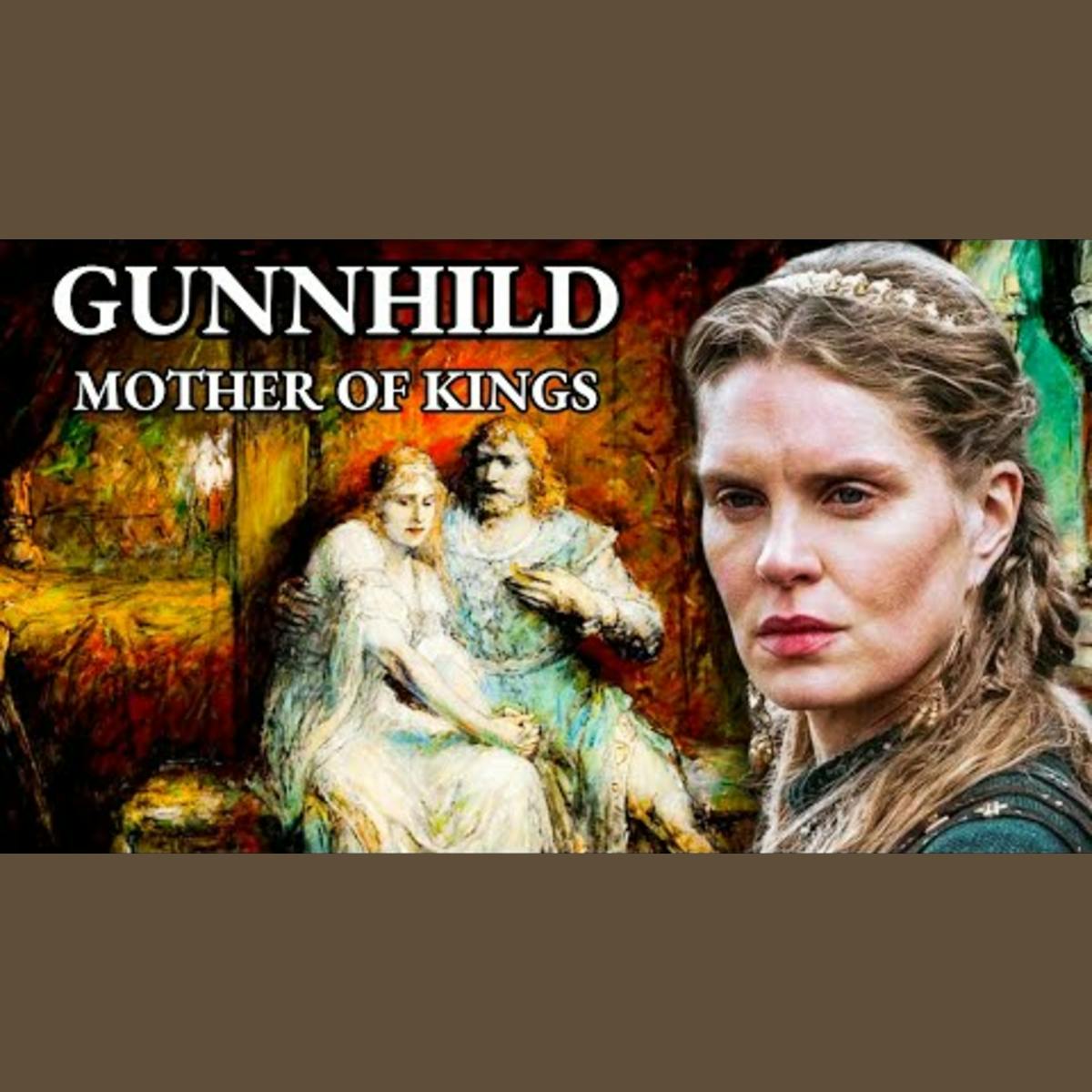
Gunnhild, known from the series Vikings as Bjorn Ironside's wife, contrasts sharply with her historical counterpart. Renowned for sorcery and beauty, Gunnhild was the wife of Erik Bloodaxe, son of Harald Fairhair and King of Norway. She earned the title 'Mother of Kings' as her sons rose to power in Norway.
Gunnhild is depicted in over five Norse and Icelandic sagas, often as a villain. Erik Bloodaxe, hardly mentioned in the Heimskringla (Saga of the Norwegian Kings), was unpopular—many believed Gunnhild, with her influence, steered his rule. Snorri Sturleson noted, "Of Eirik Blood-axe's five years' reign there is no separate saga. He appears not to have been beloved by the people and his queen Gunhild seems to have had a bad influence on him."
In these sagas, Gunnhild is a formidable character—admired for beauty and generosity but feared for her magic, cunning, and ambition. She is remembered as powerful and ruthless, captivating yet dangerous.
This is the story of Gunnhild.
Music by Noel MalekarListen here
00:00: Introduction01:53: Ancestry & Early Life04:38: Of Erik Bloodaxe07:16: Conflict with Egill Skallagrímsson10:09: Erik & Gunnhild Flee Norway14:15: The Mother of Kings18:33: Of Gunnhild's Lover21:03: Exile, Death & Legacy
#Gunnhild #VikingWitchQueen #ErikBloodaxe #Norway #Norsesagas #sorcery #MotherofKings #Norsehistory
See show notes: https://inlet.fm/history-profiles/episodes/68fbbead1609f530071f84e1
Learn more about your ad choices. Visit podcastchoices.com/adchoices
Arthur Guinness, 1st Baron Ardilaun, was a notable Irish businessman, philanthropist, and politician, renowned for his role in the Guinness brewing dynasty. A descendant of the original Arthur Guinness, he was educated at Eton and Trinity College Dublin. His career in politics led him to serve as a Member of Parliament for Dublin before becoming Baron Ardilaun in 1880.
Arthur Guinness was passionate about public service and philanthropy, contributing significantly to Dublin's development. He played a major role in the restoration of St. Patrick’s Cathedral and the creation of public spaces like St. Stephen’s Green. As a conservationist, he invested in preserving forests and historic sites, leaving a lasting impact as a benevolent Anglo-Irish noble during transformative times in Ireland.
This episode explores his remarkable legacy.
Music by Alexander Nakarada - CreatorChords
Link
00:00:00: Introduction00:01:24: Early Life00:03:20: Involvement in The Brewery00:04:55: Sexuality00:07:29: Political Life00:09:59: Philanthropy & Death
#ArthurGuinness #BaronArdilaun #Guinnessbrewery #Irishhistory #philanthropy #St.Stephen’sGreen #St.Patrick’sCathedral #Anglo-Irishnobility
See show notes: https://inlet.fm/history-profiles/episodes/68f264af30450a985e845849
Learn more about your ad choices. Visit podcastchoices.com/adchoices
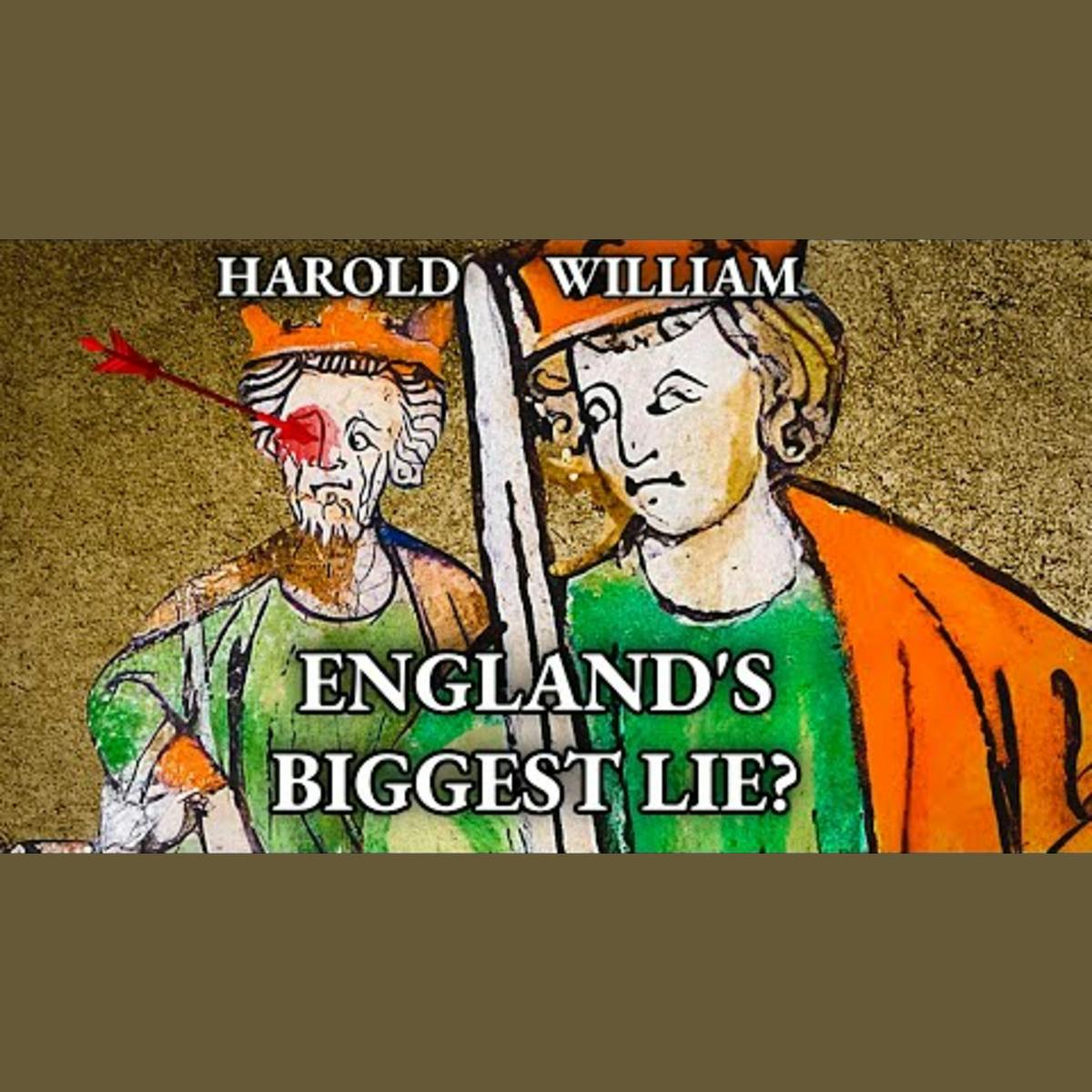
The Battle of Hastings is a legendary conflict in English history, centered on King Harold Godwinson's fight to defend his throne against William, Duke of Normandy, who claimed King Edward the Confessor promised him succession.
This battle was not just for the throne but reshaped England's destiny. One enduring image from the Bayeux Tapestry shows Harold struck by an arrow to the eye, but did this iconic scene truly occur?
Historical accounts offer differing versions, leaving the truth uncertain. Harold was a seasoned warrior, having defeated a Viking invasion and killed Harald Hardrada at the Battle of Stamford Bridge, marking the end of the Viking Age in England.
How fierce was the struggle at Hastings, and how did it truly unfold? Sources from the period offer conflicting tales, challenging modern historians to piece together this contested history. Norman propaganda depicted Harold's death as divine punishment to legitimize William the Conqueror's claim. This narrative suggested Harold broke an oath to William and deserved divine retribution. But how true is this propaganda?
Join us as we explore the sources in chronological order to understand the evolution of battle narratives and why modern history teaches Harold's famed arrow-to-the-eye death.
Key Timeline:00:00 Introduction02:20 Anglo-Saxon Chronicle (1066)03:10 The Song of the Battle of Hastings (1066-1067)05:35 Bayeux Tapestry (1070s)08:26 Gesta Willelmi ducis Normannorum et regis Anglorum (1071-1077)11:01 Chronicon ex Chronicis (Early 1100s)12:25 Gesta Regum Anglorum (1125)14:10 Historia Anglorum (1129-1135)15:00 Vie de seint Aedward le Rei (1230s-1240s)17:06 Conclusion
Music: "VOICE OF PRAYER" by Noel MalekarListen on YouTube
00:00:00: Introduction00:02:20: Anglo-Saxon Chronicle (1066)00:03:10: The Song of the Battle of Hastings (1066-1067)00:05:35: Bayeux Tapestry (1070s)00:08:26: Gesta Willelmi ducis Normannorum et regis Anglorum (1071-1077)00:11:01: Chronicon ex Chronicis (Early 1100s)00:12:25: Gesta Regum Anglorum (1125)00:14:10: Historia Anglorum (1129-1135)00:15:00: Vie de seint Aedward le Rei (1230s-1240s)00:17:06: Conclusion
#HaroldGodwinson #BattleofHastings #WilliamtheConqueror #BayeuxTapestry #Normanconquest #Anglo-Saxon #VikingAge #medievalhistory #Englishthrone
See show notes: https://inlet.fm/history-profiles/episodes/68e949a288bb078776ec23bd
Learn more about your ad choices. Visit podcastchoices.com/adchoices

Comments

Download from Google Play

Download from App Store
 United States