


 Claim Ownership
 Homebrewed Christianity
Homebrewed ChristianitySubscribed: 1,636Played: 80,472
Subscribe

© 2008 and beyond
Description
Our goal is to bring the wisdom of the academy's ivory tower into your earbuds. Think of each episode as an audiological ingredient for your to brew your own faith. Most episodes center around an interview with a different scholar, theologian, or philosopher.
941 Episodes
Reverse
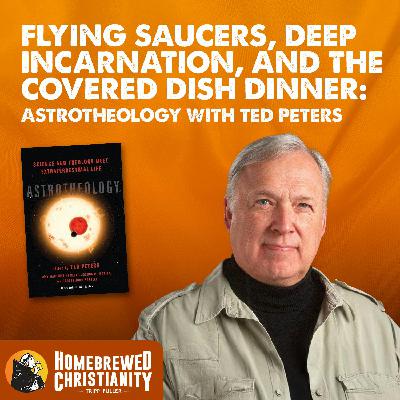
What happens when a Lutheran theologian who grew up reading UFO books and whose parents followed a Venusian contactee cult becomes one of the most rigorous thinkers at the intersection of space science and Christian theology? You get Ted Peters — and one of the most genuinely fun conversations I've had on the podcast. Ted coined the term astro theology and has spent decades asking what the discovery of extraterrestrial life would mean for our doctrines of creation, incarnation, and the common good. We get into why astrobiology is almost a religious science, the ethics of protecting microbial life on Europa, whether Jesus's incarnation is sufficient for the whole cosmos or if God might show up on other planets too, the Copernican fallacy hiding inside a lot of anti-anthropocentric arguments, what Christians should do if a UFO lands at the church potluck (hospitality, obviously), and why both ufologists and astrobiologists need to be at the same barbecue. If the government finally releases the files tomorrow, Ted is the person you want to call — and after this conversation, you'll understand why.
You can WATCH the conversation on YouTube
Ted Peters is a Lutheran theologian, professor emeritus at the Graduate Theological Union in Berkeley, California, and a senior fellow at the Center for Theology and the Natural Sciences (CTNS). He coined the term astro theology to describe theological reflection on the implications of off-earth, non-human intelligence, and has spent decades at the frontier where Christian doctrine meets space science, artificial intelligence, and public ethics. His systematic theology, God — The World's Future, remains one of the most widely used constructive theology texts in graduate education. He is the author and editor of numerous books, including a volume on Astrotheology, and writes the Substack newsletter The Voice of Public Theology, where he engages with science, religion, global politics, and the impact of advancing technology for a broad public audience.
Join us at Theology Beer Camp, October 8-10, in Kansas City!
ONLINE LENT CLASS: Jesus in Galilee w/ John Dominic Crossan
What can we actually know about Jesus of Nazareth? And, what difference does it make?
This Lenten class begins where all of Dr. John Dominic Crossan's has work begins: with history. What was actually happening in Galilee in the 20s CE? What did Herod Antipas' transformation of the "Sea of Galilee" into the commercial "Sea of Tiberias" mean for peasant fishing communities? Why did Jesus emerge from John's baptism movement proclaiming God's Rule through parables—and what made that medium so perfectly suited to that message? Only by understanding what Jesus' parables meant then can we wrestle with what they might demand of us now.
The class is donation-based, including 0, so join, get info, and join up here.
This podcast is a Homebrewed Christianity production. Follow the Homebrewed Christianity, Theology Nerd Throwdown, & The Rise of Bonhoeffer podcasts for more theological goodness for your earbuds. Join over 75,000 other people by joining our Substack - Process This! Get instant access to over 50 classes at www.TheologyClass.com
Follow the podcast, drop a review, send feedback/questions or become a member of the HBC Community.
Learn more about your ad choices. Visit megaphone.fm/adchoices

In this second live Q&A of our Lent 2025 series Jesus in Galilee, Dom works through nearly 40 questions from the more than 2,000 people in the class — and Dom is, as promised, brief. The conversation moves from Cyrus and the economic disruption of Roman Galilee, to the misplaced colon in Isaiah 40 that quietly rewrote John the Baptist's identity, to why Mark borrowed a Roman horror story about a prostitute at a banquet to tell the story of John's execution. Dom defends his claim that Jesus underwent a genuine conversion after John's death — bigger than Paul's, he says, because it involved a different vision of God entirely — and insists that the apocalyptic tradition of waiting for God to intervene is not just a theological mistake but, after 2,000 years, edges toward something harsher than delusion. As always, Dom leaves you with more to think about than when you started. To join the class and get access to all four visual lectures, head to CrossanClass.com.
You can WATCH the conversation on YouTube
ONLINE LENT CLASS: Jesus in Galilee w/ John Dominic Crossan
What can we actually know about Jesus of Nazareth? And, what difference does it make?
This Lenten class begins where all of Dr. John Dominic Crossan's has work begins: with history. What was actually happening in Galilee in the 20s CE? What did Herod Antipas' transformation of the "Sea of Galilee" into the commercial "Sea of Tiberias" mean for peasant fishing communities? Why did Jesus emerge from John's baptism movement proclaiming God's Rule through parables—and what made that medium so perfectly suited to that message? Only by understanding what Jesus' parables meant then can we wrestle with what they might demand of us now.
The class is donation-based, including 0, so join, get info, and join up here.
John Dominic Crossan, professor emeritus at DePaul University, is widely regarded as the foremost historical Jesus scholar of our time. He is the author of several bestselling books, including The Historical Jesus, How to Read the Bible and Still Be a Christian, God and Empire, Jesus: A Revolutionary Biography, The Greatest Prayer, The Last Week, and The Power of Parable. He lives in Minneola, Florida.
Previous Podcast Episodes with Dom & Tripp
A Tale of Two Gods: Why C.S. Lewis’s Famous Argument Falls Apart
From Iron Swords to Nuclear Bombs: Tracing 3,000 Years of Escalatory Violence
Paul, Christ, & the Mystery of Execution & Resurrection
Paul, Josephus, & the Challenge of Nonviolent Resistance
Paul, Rome, & the Violent Normalcy of Civilization
Paul & the Fictional History of Luke-Acts
Paul & Thecla
Ask JC Anything
This podcast is a Homebrewed Christianity production. Follow the Homebrewed Christianity, Theology Nerd Throwdown, & The Rise of Bonhoeffer podcasts for more theological goodness for your earbuds. Join over 75,000 other people by joining our Substack - Process This! Get instant access to over 50 classes at www.TheologyClass.com
Follow the podcast, drop a review, send feedback/questions or become a member of the HBC Community.
Learn more about your ad choices. Visit megaphone.fm/adchoices

In this audio essay from my SubStack ,Process This, I take Stephen Miller's claim that the "real world" is governed by strength and force and use it as a window into something much bigger than one political figure—a diagnosis of the soul of America. Drawing on the thesis Tom Holland developed in Dominion: How the Christian Revolution Remade the World, Reinhold Niebuhr's The Children of Light and the Children of Darkness, and the Black prophetic tradition of King and West, traced by Gary Dorrien in his 3 volume history of the Black Social Gospel movement, I argue that what we're witnessing isn't actually Christian nationalism triumphing—it's post-Christian nationalism wearing Christian clothes. The cross is still everywhere, but the crucified one has been removed, and what's left is just Rome again: empire, domination, and the ancient lie that might makes right. But here's where it gets really interesting—Niebuhr doesn't let progressives off the hook either, naming them as "children of light" who kept the Christian ethics of justice and victim-focus but severed them from grace, forgiveness, and the theological roots that make them sustainable. It's a prophetic call that refuses easy partisanship, traces the American rhetoric of force back through white supremacy to its Roman origins, and ultimately invites us back to the "sublime madness" of King's Beloved Community—where power is redefined not as domination but as the capacity to achieve a shared, constructive purpose.
You can subscribe to the Audio Essay podcast feed here.
Join us at Theology Beer Camp, October 8-10, in Kansas City!
ONLINE LENT CLASS: Jesus in Galilee w/ John Dominic Crossan
What can we actually know about Jesus of Nazareth? And, what difference does it make?
This Lenten class begins where all of Dr. John Dominic Crossan's has work begins: with history. What was actually happening in Galilee in the 20s CE? What did Herod Antipas' transformation of the "Sea of Galilee" into the commercial "Sea of Tiberias" mean for peasant fishing communities? Why did Jesus emerge from John's baptism movement proclaiming God's Rule through parables—and what made that medium so perfectly suited to that message? Only by understanding what Jesus' parables meant then can we wrestle with what they might demand of us now.
The class is donation-based, including 0, so join, get info, and join up here.
This podcast is a Homebrewed Christianity production. Follow the Homebrewed Christianity, Theology Nerd Throwdown, & The Rise of Bonhoeffer podcasts for more theological goodness for your earbuds. Join over 75,000 other people by joining our Substack - Process This! Get instant access to over 50 classes at www.TheologyClass.com
Follow the podcast, drop a review, send feedback/questions or become a member of the HBC Community.
Learn more about your ad choices. Visit megaphone.fm/adchoices

In this first live Q&A of our Lent 2025 series Jesus in Galilee, Dom and I work through 35 questions from the more than 2,000 people who have joined the class — and true to form, Dom tries to honor every single one of them. The conversation ranges from the silver cups of Boscoreale to the Gulf of Mexico, from Josephus's gritted-teeth defense of Judaism to what a State of the Union address might look like if Jesus gave it tonight. Dom argues that the apocalyptic imagination is, bluntly, a loss of faith; that coinage was the only real mass media of antiquity; that nonviolent resistance was invented — not borrowed — in first-century Judea; and that if you want to understand what an autocrat is planning, read very carefully what the autocrat accuses his opponents of. It is, in other words, exactly the kind of conversation I look forward to all year. If you want in on the rest of the series — the lectures, the live Q&As, and the full archive — head to CrossanClass.com.
You can WATCH the conversation YouTube
ONLINE LENT CLASS: Jesus in Galilee w/ John Dominic Crossan
What can we actually know about Jesus of Nazareth? And, what difference does it make?
This Lenten class begins where all of Dr. John Dominic Crossan's has work begins: with history. What was actually happening in Galilee in the 20s CE? What did Herod Antipas' transformation of the "Sea of Galilee" into the commercial "Sea of Tiberias" mean for peasant fishing communities? Why did Jesus emerge from John's baptism movement proclaiming God's Rule through parables—and what made that medium so perfectly suited to that message? Only by understanding what Jesus' parables meant then can we wrestle with what they might demand of us now.
The class is donation-based, including 0, so join, get info, and join up here.
John Dominic Crossan, professor emeritus at DePaul University, is widely regarded as the foremost historical Jesus scholar of our time. He is the author of several bestselling books, including The Historical Jesus, How to Read the Bible and Still Be a Christian, God and Empire, Jesus: A Revolutionary Biography, The Greatest Prayer, The Last Week, and The Power of Parable. He lives in Minneola, Florida.
Previous Podcast Episodes with Dom & Tripp
A Tale of Two Gods: Why C.S. Lewis’s Famous Argument Falls Apart
From Iron Swords to Nuclear Bombs: Tracing 3,000 Years of Escalatory Violence
Paul, Christ, & the Mystery of Execution & Resurrection
Paul, Josephus, & the Challenge of Nonviolent Resistance
Paul, Rome, & the Violent Normalcy of Civilization
Paul & the Fictional History of Luke-Acts
Paul & Thecla
Ask JC Anything
This podcast is a Homebrewed Christianity production. Follow the Homebrewed Christianity, Theology Nerd Throwdown, & The Rise of Bonhoeffer podcasts for more theological goodness for your earbuds. Join over 75,000 other people by joining our Substack - Process This! Get instant access to over 50 classes at www.TheologyClass.com
Follow the podcast, drop a review, send feedback/questions or become a member of the HBC Community.
Learn more about your ad choices. Visit megaphone.fm/adchoices
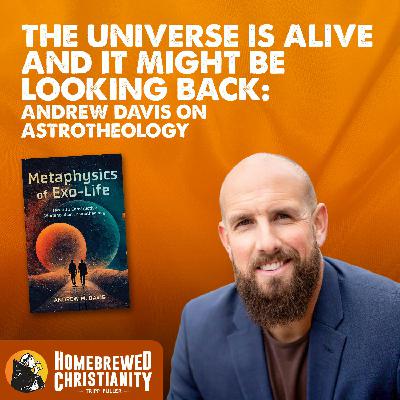
My buddy Andrew Davis is back on the pod, and this time we're talking about aliens — yes, that kind. Andrew is a process philosopher who's been publishing serious academic work in astrobiology, and with Obama casually confirming UFOs are real, the Age of Disclosure documentary making waves, and Spielberg's Disclosure Day film on the way, it felt like the right time to ask: how does a Whiteheadian process thinker engage the question of extraterrestrial life? Turns out, with a lot more philosophical firepower than you'd expect. We dig into Andrew's critical engagement with Steven Dick's cosmo-theology and why he thinks Dick is right that humanity is cosmologically peripheral but wrong to draw the metaphysical conclusion that we're therefore insignificant — because we're an anthropo-cosmic expression of what this universe is doing, not an accident in it. Andrew introduces his concept of exo-axiology (the philosophical exploration of value beyond Earth), and we get into why Whitehead's philosophy of organism flips the modern assumption that the universe is fundamentally dead and life is the weird anomaly. For Whitehead, life, mind, and value go all the way down — which means if you rewind evolution on another planet with the right conditions, something like us might show up again, not because it's designed for us, but because the universe is in the business of producing aesthetic intensities. We tackle the Fermi Paradox, the Dark Forest hypothesis, whether aliens would be hostile or hospitable (Andrew's a cosmological optimist who thinks any civilization advanced enough to reach us would've had to undergo a spiritual evolution to get past the bottleneck), plasma intelligence, UAPs, and why we should take people's encounter experiences seriously without being naive about them. Phil Clayton apparently thinks Andrew is the David Ray Griffin of this generation, so take that for what it's worth — it's worth a lot. Also, if you've had a weird encounter story and want to share it, send it to me. I'm collecting them. And if you've been wanting to get into Whitehead's process philosophy, Andrew's intro course is running in March and April at whiteheadsuniverse.com Listeners who took the last round loved it. Limited space. Go sign up.
You can WATCH the conversation on YouTube
Andrew M. Davis is an American process philosopher, theologian, and scholar of the cosmos. He is the academic and research director for the Center for Process Studies where he researches, writes, teaches, and organizes conferences on various aspects of process-relational thought (Whitehead and Beyond).
Andrew’s Previous visits to the podcast
Whitehead’s Universe: a Guide to Thinking Process
Mind, Value, and the Cosmos.
the Power of Love & the Experience of God
ONLINE LENT CLASS: Jesus in Galilee w/ John Dominic Crossan
This podcast is a Homebrewed Christianity production. Follow the Homebrewed Christianity, Theology Nerd Throwdown, & The Rise of Bonhoeffer podcasts for more theological goodness for your earbuds. Join over 75,000 other people by joining our Substack - Process This! Get instant access to over 50 classes at www.TheologyClass.com
Follow the podcast, drop a review, send feedback/questions or become a member of the HBC Community.
Learn more about your ad choices. Visit megaphone.fm/adchoices

Philosopher and religion scholar Tad DeLay (author of Future of Denial) drops a guest essay on us this week, and it's a barn-burner. Tad brings together Wilhelm Reich, Walter Benjamin, Lacan, Althusser, and Adorno — yeah, the whole squad — to lay out a series of theses on how reactionary consciousness actually works, from repressed sexuality to theological cover stories for raw materialism. He makes the case that white evangelicalism is basically a half-century-old improvisation around whiteness and anticommunism, and that Trumpism is its perfected form — an ecumenical fascism where confessing the dear leader functions like a sinner's prayer. Along the way he unpacks Frank Wilhoit's devastating one-line definition of conservatism, explains why charging evangelicals with hypocrisy is a category error (they simply don't care what they believe), and uses Lacanian psychoanalysis to show how shame, guilt, and anxiety keep the whole machine running. Fair warning: Tad doesn't let liberals off the hook either — the essay's conclusion forces all of us to sit with the moral compromises we've made and what it means to keep breathing in hell.
Tad DeLay, PhD is a philosopher, religion scholar, and interdisciplinary critical theorist. He has written four books, including his latest, Future of Denial: The Ideologies of Climate Change. He is a philosophy professor and lives in Grand Rapids.
ONLINE LENT CLASS: Jesus in Galilee w/ John Dominic Crossan
What can we actually know about Jesus of Nazareth? And, what difference does it make?
This Lenten class begins where all of Dr. John Dominic Crossan's has work begins: with history. What was actually happening in Galilee in the 20s CE? What did Herod Antipas' transformation of the "Sea of Galilee" into the commercial "Sea of Tiberias" mean for peasant fishing communities? Why did Jesus emerge from John's baptism movement proclaiming God's Rule through parables—and what made that medium so perfectly suited to that message? Only by understanding what Jesus' parables meant then can we wrestle with what they might demand of us now.
The class is donation-based, including 0, so join, get info, and join up here.
This podcast is a Homebrewed Christianity production. Follow the Homebrewed Christianity, Theology Nerd Throwdown, & The Rise of Bonhoeffer podcasts for more theological goodness for your earbuds. Join over 75,000 other people by joining our Substack - Process This! Get instant access to over 50 classes at www.TheologyClass.com
Follow the podcast, drop a review, send feedback/questions or become a member of the HBC Community.
Learn more about your ad choices. Visit megaphone.fm/adchoices

We lost a giant. Reverend Jesse Jackson has passed away, and I wanted to share this conversation we had with him back during lockdown in 2020 as part of the Black Theology reading group Adam Clark and I were running with over 3,000 people. We were joined by Grace Ji-Sun Kim, who edited a collection of Jackson's sermons and speeches called Keeping Hope Alive, and the Reverend himself showed up and gave us a masterclass in what it looks like when theology breaks out of its bubble — and that bubble image is the thing that'll stick with you. Jackson talked about growing up in Greenville, South Carolina, where the entire Black community lived behind walls that white people set up for exploitation, and how your theology can either reinforce the bubble or blow it apart. He drew a sharp line between piety — behaving, adjusting, staying safe — and power, which is what happens when you follow a Jesus who challenges domination systems instead of one who follows you to the back of the bus. He gave us the real history of the movement, from Rosa Parks and Emmett Till to Fannie Lou Hamer and Daisy Bates, made a clear-eyed and probably controversial distinction between King and Malcolm — arguing Malcolm never really broke out of the bubble while King changed actual public policy — and told the origin story of both "I Am Somebody" and "Keep Hope Alive." He talked about being one of the first Black ministers to publicly embrace the LGBTQ community, about internationalizing Black identity from "Black" to "African American," and about why Obery Hendricks' The Politics of Jesus changed how he saw Christ. Grace brought the warmth and the theological framing, Adam brought the hard questions about Kwame Ture and SNCC, and I mostly just sat there grateful to be in the room with a man who spent his entire life pulling down walls so the sun could get in.
ONLINE LENT CLASS: Jesus in Galilee w/ John Dominic Crossan
What can we actually know about Jesus of Nazareth? And, what difference does it make?
This Lenten class begins where all of Dr. John Dominic Crossan's has work begins: with history. What was actually happening in Galilee in the 20s CE? What did Herod Antipas' transformation of the "Sea of Galilee" into the commercial "Sea of Tiberias" mean for peasant fishing communities? Why did Jesus emerge from John's baptism movement proclaiming God's Rule through parables—and what made that medium so perfectly suited to that message? Only by understanding what Jesus' parables meant then can we wrestle with what they might demand of us now.
The class is donation-based, including 0, so join, get info, and join up here.
This podcast is a Homebrewed Christianity production. Follow the Homebrewed Christianity, Theology Nerd Throwdown, & The Rise of Bonhoeffer podcasts for more theological goodness for your earbuds. Join over 75,000 other people by joining our Substack - Process This! Get instant access to over 50 classes at www.TheologyClass.com
Follow the podcast, drop a review, send feedback/questions or become a member of the HBC Community.
Learn more about your ad choices. Visit megaphone.fm/adchoices
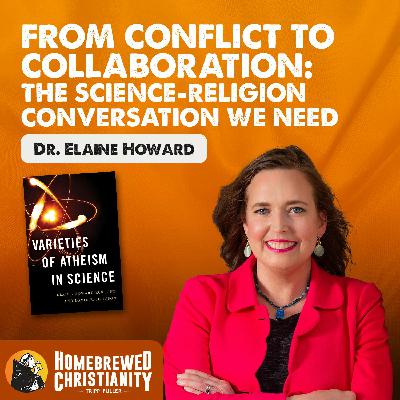
The conflict between science and religion? Turns out it's mostly a myth perpetuated by a handful of really loud voices on both sides. Dr. Elaine Howard Ecklund has spent 15 years using actual social science to study what scientists and religious people really think about each other, and the results are surprising: nearly half of elite scientists maintain religious commitments, most aren't hostile to faith communities, and there are way more varieties of atheism than you'd think (including "religious atheists" who attend church and pray). We dive into her research on "spiritual entrepreneurs," the eight shared values between science and religion (yeah, doubt is on the list for both), what went wrong during COVID, and why the science-religion conflict narrative is particularly American and Western. Plus, we get super practical about what churches can actually do—spoiler: it starts with honoring the scientists already sitting in your pews. This conversation challenged my assumptions, gave me hope, and reminded me that the people doing the real work are way more interesting than the stereotypes suggest.
You can WATCH this conversation on YouTube
Dr. Elaine Howard Ecklund is the Herbert S. Autrey Chair in Social Sciences and Professor of Sociology at Rice University, where she directs the Religion and Public Life Program. A leading scholar in the sociology of science and religion, she has conducted groundbreaking research surveying over 15,000 scientists and interviewing nearly 1,000 across eight countries to understand how scientific and religious communities actually relate to each other. Her books include Science vs. Religion: What Scientists Really Think, Varieties of Atheism in Science (with David Johnson), Why Science and Faith Need Each Other, and Secularity and Science: What Scientists Around the World Really Think About Religion. Her work challenges popular stereotypes, revealing the complex and often collaborative relationship between science and faith—and offering practical wisdom for churches, scientists, and anyone trying to hold these worlds together.
UPCOMING ONLINE LENT CLASS: Jesus in Galilee w/ John Dominic Crossan
What can we actually know about Jesus of Nazareth? And, what difference does it make?
This Lenten class begins where all of Dr. John Dominic Crossan's has work begins: with history. What was actually happening in Galilee in the 20s CE? What did Herod Antipas' transformation of the "Sea of Galilee" into the commercial "Sea of Tiberias" mean for peasant fishing communities? Why did Jesus emerge from John's baptism movement proclaiming God's Rule through parables—and what made that medium so perfectly suited to that message? Only by understanding what Jesus' parables meant then can we wrestle with what they might demand of us now.
The class is donation-based, including 0, so join, get info, and join up here.
This podcast is a Homebrewed Christianity production. Follow the Homebrewed Christianity, Theology Nerd Throwdown, & The Rise of Bonhoeffer podcasts for more theological goodness for your earbuds. Join over 75,000 other people by joining our Substack - Process This! Get instant access to over 50 classes at www.TheologyClass.com
Follow the podcast, drop a review, send feedback/questions or become a member of the HBC Community.
Learn more about your ad choices. Visit megaphone.fm/adchoices
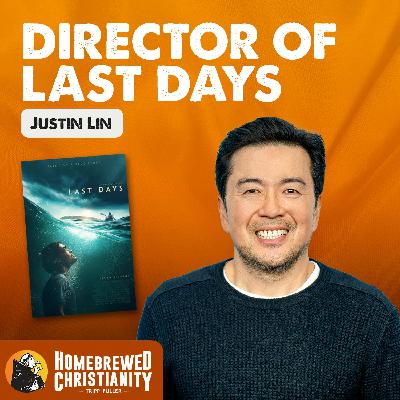
My friend and filmmaker Sarey Concepción and I got to sit down with Justin Lin — yeah, that Justin Lin, the Fast and Furious guy — but this time he's not racing cars, he's exploring the too-fast-too-furious side of evangelical missions gone to the extreme. His new film Last Days tells the story of John Chau, the young American missionary who was killed trying to bring the gospel to the uncontacted Sentinelese tribe off the coast of India. If you remember, two years ago we screened the documentary about this story at Theology Beer Camp, and this is a totally different angle — a scripted Hollywood film from an outsider to Christianity who read the news story, had the same eye-roll most of us did, and then did what good artists do: made something to understand what he couldn't dismiss. What's remarkable is that Justin took the time to get to know the diversity within evangelicalism, so you get characters ranging from the hardcore adventure missionaries who are basically Carmen San Diego with Bibles, to John's immigrant father wrestling with how his roughest years shaped his son's path, to a parallel storyline with an Indian police officer whose own experience with religion's harm makes her a mirror image of John's conviction. It's a film about faith without being a faith-based film — it doesn't mock John or martyrize him — and it creates this cognitive empathy where you get to sit with the logic that says if people really are going to hell, why wouldn't you risk everything? Sarey and I unpack the father-son dynamics, the theological engine of unreached people groups and unlocking the second coming, those surprisingly sexy Australian missionaries, and why the Voyage of the Dawn Treader might be the most spiritually dangerous book in the Narnia series. We also may have invented the entire backstory of the Presbyterian minister with a Tesla who stole someone's missionary girlfriend, and honestly, Justin should use it for the sequel.
You can WATCH the conversation on YouTube
Join us at Theology Beer Camp, October 8-10, in Kansas City!
UPCOMING ONLINE LENT CLASS: Jesus in Galilee w/ John Dominic Crossan
What can we actually know about Jesus of Nazareth? And, what difference does it make?
This Lenten class begins where all of Dr. John Dominic Crossan's has work begins: with history. What was actually happening in Galilee in the 20s CE? What did Herod Antipas' transformation of the "Sea of Galilee" into the commercial "Sea of Tiberias" mean for peasant fishing communities? Why did Jesus emerge from John's baptism movement proclaiming God's Rule through parables—and what made that medium so perfectly suited to that message? Only by understanding what Jesus' parables meant then can we wrestle with what they might demand of us now.
The class is donation-based, including 0, so join, get info, and join up here.
This podcast is a Homebrewed Christianity production. Follow the Homebrewed Christianity, Theology Nerd Throwdown, & The Rise of Bonhoeffer podcasts for more theological goodness for your earbuds. Join over 75,000 other people by joining our Substack - Process This! Get instant access to over 50 classes at www.TheologyClass.com
Follow the podcast, drop a review, send feedback/questions or become a member of the HBC Community.
Learn more about your ad choices. Visit megaphone.fm/adchoices

I don't remember who first told me to read Yanis Varoufakis's Techno-Feudalism: What Killed Capitalism, but whoever you are—thank you and also how dare you. This book broke something in my brain, in that good way where you realize the map you've been using doesn't match the territory anymore and now you have to rethink everything. Varoufakis isn't a theologian, but reading him felt like encountering a prophetic voice—someone naming the powers and principalities of our moment with a clarity that made me uncomfortable in all the right ways.
So what you're about to read isn't exactly a book review. It's more like the stuff that ran through my head while I was reading—the connections I couldn't stop making to our faith, our politics, our souls. I kept thinking about Paul's language of powers and principalities. I kept thinking about the psalmist's warning against idols. I kept thinking about Jesus flipping tables in the temple, and wondering what he'd do with an algorithm. Varoufakis gave me a new vocabulary for something I'd been feeling but couldn't name: the sense that we've crossed into a new kind of unfreedom, one that's less about chains on our bodies and more about the curation of our desires.
Consider this an invitation. Read the book. Argue with it. Let it mess with you. And then let's figure out together what faithfulness looks like when the lords live in the cloud.
You can subscribe to the Audio Essay podcast feed here.
Join us at Theology Beer Camp, October 8-10, in Kansas City!
UPCOMING ONLINE LENT CLASS: Jesus in Galilee w/ John Dominic Crossan
What can we actually know about Jesus of Nazareth? And, what difference does it make?
This Lenten class begins where all of Dr. John Dominic Crossan's has work begins: with history. What was actually happening in Galilee in the 20s CE? What did Herod Antipas' transformation of the "Sea of Galilee" into the commercial "Sea of Tiberias" mean for peasant fishing communities? Why did Jesus emerge from John's baptism movement proclaiming God's Rule through parables—and what made that medium so perfectly suited to that message? Only by understanding what Jesus' parables meant then can we wrestle with what they might demand of us now.
The class is donation-based, including 0, so join, get info, and join up here.
This podcast is a Homebrewed Christianity production. Follow the Homebrewed Christianity, Theology Nerd Throwdown, & The Rise of Bonhoeffer podcasts for more theological goodness for your earbuds. Join over 75,000 other people by joining our Substack - Process This! Get instant access to over 50 classes at www.TheologyClass.com
Follow the podcast, drop a review, send feedback/questions or become a member of the HBC Community.
Learn more about your ad choices. Visit megaphone.fm/adchoices

This is an audio essay from my Substack, Process This.
Look, I wasn't planning to write 5,000 words on Steve Bannon, but then he goes on his podcast and announces that ICE—the same agency that just shot two American citizens in Minneapolis—is going to "surround the polls" in November, and I couldn't help myself. So I went back to Reinhold Niebuhr's 1944 book The Children of Light and the Children of Darkness, where he divided the political world into naive idealists who think reason and dialogue will save us, and moral cynics who understand power but recognize no law beyond their own will. Turns out Niebuhr basically wrote Bannon's biography eighty years early. This essay traces how Bannon evolved from "flooding the zone with shit" to proposing armed federal agents at polling places—and why liberals kept bringing fact-checks to a knife fight. Niebuhr called the children of darkness "wise" because they understand self-interest, but he also called them "evil" because they serve no good beyond domination. The question he leaves us with is whether the children of light can get wise without losing their souls. Spoiler: he doesn't promise we win.
PS. I was in the middle of writing a completely different essay on Niebuhr before Bannon interrupted me. I loved re-reading The Children of Light and the Children of Darkness recently, and it's way too timely.
You can subscribe to the Audio Essay podcast feed here.
Join us at Theology Beer Camp, October 8-10, in Kansas City!
UPCOMING ONLINE LENT CLASS: Jesus in Galilee w/ John Dominic Crossan
What can we actually know about Jesus of Nazareth? And, what difference does it make?
This Lenten class begins where all of Dr. John Dominic Crossan's has work begins: with history. What was actually happening in Galilee in the 20s CE? What did Herod Antipas' transformation of the "Sea of Galilee" into the commercial "Sea of Tiberias" mean for peasant fishing communities? Why did Jesus emerge from John's baptism movement proclaiming God's Rule through parables—and what made that medium so perfectly suited to that message? Only by understanding what Jesus' parables meant then can we wrestle with what they might demand of us now.
The class is donation-based, including 0, so join, get info, and join up here.
This podcast is a Homebrewed Christianity production. Follow the Homebrewed Christianity, Theology Nerd Throwdown, & The Rise of Bonhoeffer podcasts for more theological goodness for your earbuds. Join over 75,000 other people by joining our Substack - Process This! Get instant access to over 50 classes at www.TheologyClass.com
Follow the podcast, drop a review, send feedback/questions or become a member of the HBC Community.
Learn more about your ad choices. Visit megaphone.fm/adchoices
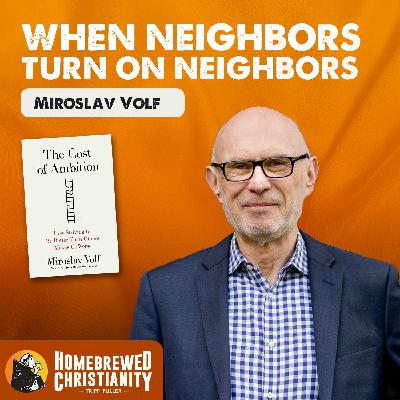
What happens when our obsession with being better than everyone else destroys both who we are and how we relate to each other? Dr. Miroslav Volf joins us to talk about his new book The Cost of Ambition and why America's comparison culture, achievement addiction, and hardening tribal identities are setting us up for something dangerous. Volf witnessed neighbors turn on neighbors during the Yugoslav wars, and he's seeing the warning signs again—right here, right now. We dive into how striving for superiority traps us in an unstable cycle of pride and inferiority, why our worth can't be based on achievement, and what it means to trust in our naked humanity as the site of God's gift rather than our endless performance metrics. From social media's algorithmic comparison engines to the terror of trusting Jesus to raise our kids, this conversation cuts deep into the spiritual crisis of modern life and points toward a different way—one grounded in the self-giving love of Christ rather than the desperate scramble to stay on top.
You can WATCH the conversation on YouTube
Dr. Miroslav Volf is the Henry B. Wright Professor of Theology at Yale Divinity School and founding director of the Yale Center for Faith and Culture. Born in Croatia, he lived through the Yugoslav wars—an experience that profoundly shaped his theological work on reconciliation, identity, and belonging. He is the author of numerous influential books including Exclusion and Embrace, Free of Charge, and his newest works The Cost of Ambition and Glimmerings (co-authored with poet Christian Wiman). Widely recognized as one of the world's most respected theologians, Volf's work bridges the academy and the church, helping Christians reflect on faith, public life, and what it means to follow Christ in fractured times.
You can listen to our previous conversation on the podcast here: Faith in the Public Square in the Era of Trump.
UPCOMING ONLINE LENT CLASS: Jesus in Galilee w/ John Dominic Crossan
What can we actually know about Jesus of Nazareth? And, what difference does it make?
This Lenten class begins where all of Dr. John Dominic Crossan's has work begins: with history. What was actually happening in Galilee in the 20s CE? What did Herod Antipas' transformation of the "Sea of Galilee" into the commercial "Sea of Tiberias" mean for peasant fishing communities? Why did Jesus emerge from John's baptism movement proclaiming God's Rule through parables—and what made that medium so perfectly suited to that message? Only by understanding what Jesus' parables meant then can we wrestle with what they might demand of us now.
The class is donation-based, including 0, so join, get info, and join up here.
This podcast is a Homebrewed Christianity production. Follow the Homebrewed Christianity, Theology Nerd Throwdown, & The Rise of Bonhoeffer podcasts for more theological goodness for your earbuds. Join over 75,000 other people by joining our Substack - Process This! Get instant access to over 50 classes at www.TheologyClass.com
Follow the podcast, drop a review, send feedback/questions or become a member of the HBC Community.
Learn more about your ad choices. Visit megaphone.fm/adchoices
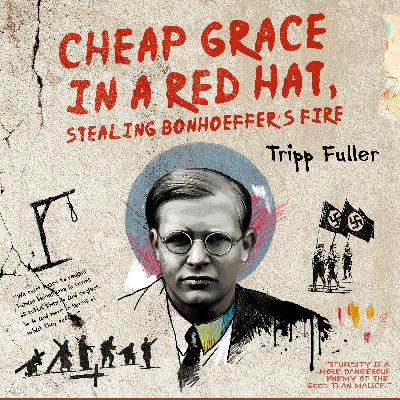
Friends, this week we're diving into something that's been eating at me for a while now—how the architects of Christian nationalism have had the audacity to claim Dietrich Bonhoeffer as one of their own. I'm talking about Project 2025 invoking "costly grace" as if Bonhoeffer wasn't writing about them. Here's the thing: when Bonhoeffer penned those famous words in 1937, he wasn't crafting a devotional for suburban book clubs—he was running an illegal seminary under Nazi surveillance, training pastors who were forfeiting their careers, their pensions, and their safety to follow Jesus instead of the Führer. The German Christians of his day fused faith with national identity, blessed political power, and demanded loyalty to a strongman who promised to make their country great again. Sound familiar? The brutal irony is that those who now quote Bonhoeffer are functionally aligned with the very forces he resisted—they're the German Christians quoting the Confessing Church, and that's about as theologically obtuse as Caesar celebrating the cross while forgetting he's the one who put Jesus on it. Costly grace is still available, y'all—it just actually has to cost something.
Read the full essay and subscribe for more at my SubStack, Process This
You can subscribe to the Audio Essay podcast feed here.
Join us at Theology Beer Camp, October 8-10, in Kansas City!
UPCOMING ONLINE LENT CLASS: Jesus in Galilee w/ John Dominic Crossan
What can we actually know about Jesus of Nazareth? And, what difference does it make?
This Lenten class begins where all of Dr. John Dominic Crossan's has work begins: with history. What was actually happening in Galilee in the 20s CE? What did Herod Antipas' transformation of the "Sea of Galilee" into the commercial "Sea of Tiberias" mean for peasant fishing communities? Why did Jesus emerge from John's baptism movement proclaiming God's Rule through parables—and what made that medium so perfectly suited to that message? Only by understanding what Jesus' parables meant then can we wrestle with what they might demand of us now.
The class is donation-based, including 0, so join, get info, and join up here.
This podcast is a Homebrewed Christianity production. Follow the Homebrewed Christianity, Theology Nerd Throwdown, & The Rise of Bonhoeffer podcasts for more theological goodness for your earbuds. Join over 75,000 other people by joining our Substack - Process This! Get instant access to over 50 classes at www.TheologyClass.com
Follow the podcast, drop a review, send feedback/questions or become a member of the HBC Community.
Learn more about your ad choices. Visit megaphone.fm/adchoices
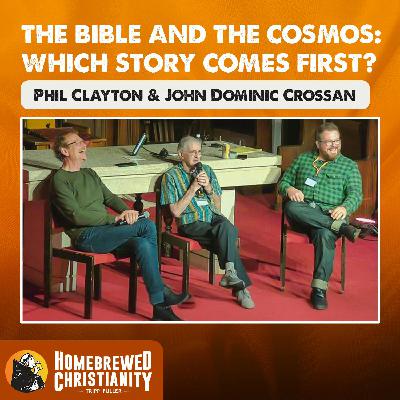
So Dom Crossan (JC) and Philip Clayton (PC) came together for this conversation I've been hoping would happen for a year and a half, and it was everything I wanted. We started with this question about why atheist political philosophers like Badiou and Žižek are turning to Paul because they need someone who has a militancy about being human that can resist civilization's death-dealing power. Dom and Phil had this beautiful back-and-forth about whether we should start with Cosmology or the Bible - Dom says both, simultaneously, which is a contradiction but he owns it. They talked about civilization as fundamentally violent since Mesopotamia, whether we're a sustainable species, and what it means that we can finally ask that question seriously. The Kingdom of God language came up as "kin-dom" - returning to our evolutionary origins where we lived in groups of about 200 people, before agriculture trapped us in civilization. Phil made this point about how our brains were formed on the grasslands of Africa for hundreds of thousands of generations, and now we're living in a hyper-civilized world where the devil looks primitive compared to OpenAI's $500 billion valuation. The hope is in asking the right questions, in returning to a kin-dom structure, and in Jesus sending out his disciples to do healing, not setting up a healing shop in Nazareth.
You can WATCH the conversation on YouTube
Join us at Theology Beer Camp, October 8-10, in Kansas City!
As a scholar, Philip Clayton (Ingraham Professor, Claremont School of Theology) works at the intersection of science, philosophy, and theology. As an activist (president of EcoCiv.org, President of IPDC), he works to convene, facilitate, and catalyze multi-sectoral initiatives toward ecological civilization. As a disciple of Jesus, he finds himself energized by the Spirit in the Quaker community.
John Dominic Crossan, professor emeritus at DePaul University, is widely regarded as the foremost historical Jesus scholar of our time. He is the author of several bestselling books, including The Historical Jesus, How to Read the Bible and Still Be a Christian, God and Empire, Jesus: A Revolutionary Biography, The Greatest Prayer, The Last Week, and The Power of Parable. He lives in Minneola, Florida.
UPCOMING ONLINE LENT CLASS: Jesus in Galilee w/ John Dominic Crossan
What can we actually know about Jesus of Nazareth? And, what difference does it make?
This Lenten class begins where all of Dr. John Dominic Crossan's has work begins: with history. What was actually happening in Galilee in the 20s CE? What did Herod Antipas' transformation of the "Sea of Galilee" into the commercial "Sea of Tiberias" mean for peasant fishing communities? Why did Jesus emerge from John's baptism movement proclaiming God's Rule through parables—and what made that medium so perfectly suited to that message? Only by understanding what Jesus' parables meant then can we wrestle with what they might demand of us now.
The class is donation-based, including 0, so join, get info, and join up here.
This podcast is a Homebrewed Christianity production. Follow the Homebrewed Christianity, Theology Nerd Throwdown, & The Rise of Bonhoeffer podcasts for more theological goodness for your earbuds. Join over 75,000 other people by joining our Substack - Process This! Get instant access to over 50 classes at www.TheologyClass.com
Follow the podcast, drop a review, send feedback/questions or become a member of the HBC Community.
Learn more about your ad choices. Visit megaphone.fm/adchoices
Okay, so you know that bone-deep exhaustion you feel? That sense that no matter how hard you run, you're still falling behind? What if I told you that's not a personal failure—it's a structural trap? German sociologist Hartmut Rosa has been asking why modern life feels like a whirlpool we can't escape, and his diagnosis is devastating: our growth economy requires our exhaustion. It's a feature, not a bug. But here's where it gets good for us theology nerds—Rosa's solution isn't just slowing down. It's something he calls resonance, and when you hear him describe it, you're gonna think, "Wait, that sounds like prayer. That sounds like what church is supposed to be." This essay is my attempt to lay out Rosa's big ideas and why I think every person of faith should be paying attention to this guy. We're reading his new book Time and World with Matt Segall this February, so consider this your on-ramp and feel the lure.
If you want to join the Rosa reading group this February, become a member of the Process This Substack and you will get invited to all the zoom sessions and have access to the recordings after.
Join us at Theology Beer Camp, October 8-10, in Kansas City!
UPCOMING ONLINE LENT CLASS: Jesus in Galilee w/ John Dominic Crossan
What can we actually know about Jesus of Nazareth? And, what difference does it make?
This Lenten class begins where all of Dr. John Dominic Crossan's has work begins: with history. What was actually happening in Galilee in the 20s CE? What did Herod Antipas' transformation of the "Sea of Galilee" into the commercial "Sea of Tiberias" mean for peasant fishing communities? Why did Jesus emerge from John's baptism movement proclaiming God's Rule through parables—and what made that medium so perfectly suited to that message? Only by understanding what Jesus' parables meant then can we wrestle with what they might demand of us now.
The class is donation-based, including 0, so join, get info, and join up here.
This podcast is a Homebrewed Christianity production. Follow the Homebrewed Christianity, Theology Nerd Throwdown, & The Rise of Bonhoeffer podcasts for more theological goodness for your earbuds. Join over 75,000 other people by joining our Substack - Process This! Get instant access to over 50 classes at www.TheologyClass.com
Follow the podcast, drop a review, send feedback/questions or become a member of the HBC Community.
Learn more about your ad choices. Visit megaphone.fm/adchoices
In this preview for our upcoming Lent class, Jesus in Galilee, John Dominic Crossan dives into what he calls "A Tale of Two Gods"—Caesar and Christ. He takes on C.S. Lewis's famous trilemma (Lord, Lunatic, or Liar) and asks the question Lewis never considered: what if there were two contemporary claimants to divinity? Because there were. Before Jesus ever showed up, Caesar Augustus was already being called Son of God, Savior of the World, and Lord. Dom walks us through the Battle of Actium and how Octavian's victory became the foundation for a theology of peace through violent victory—and then sets that against the Jesus movement's counter-claim: peace through distributive justice. It's not just ancient history either; as our live audience pointed out, we're watching the "normalcy of civilization" play out in real time right now. The big question Dom leaves us with is whether our species is sustainable if we keep betting on escalatory violence. Heavy stuff, but exactly the kind of thing we'll be unpacking together throughout Lent. Hope you'll join us at CrossanClass.com—lectures drop soon, and we'll have live Q&As throughout Lent.
You can WATCH the lecture and see all the slides on YouTube.
Join us at Theology Beer Camp, October 8-10, in Kansas City!
UPCOMING ONLINE LENT CLASS: Jesus in Galilee w/ John Dominic Crossan
What can we actually know about Jesus of Nazareth? And, what difference does it make?
This Lenten class begins where all of Dr. John Dominic Crossan's has work begins: with history. What was actually happening in Galilee in the 20s CE? What did Herod Antipas' transformation of the "Sea of Galilee" into the commercial "Sea of Tiberias" mean for peasant fishing communities? Why did Jesus emerge from John's baptism movement proclaiming God's Rule through parables—and what made that medium so perfectly suited to that message? Only by understanding what Jesus' parables meant then can we wrestle with what they might demand of us now.
The class is donation-based, including 0, so join, get info, and join up here.
This podcast is a Homebrewed Christianity production. Follow the Homebrewed Christianity, Theology Nerd Throwdown, & The Rise of Bonhoeffer podcasts for more theological goodness for your earbuds. Join over 75,000 other people by joining our Substack - Process This! Get instant access to over 50 classes at www.TheologyClass.com
Follow the podcast, drop a review, send feedback/questions or become a member of the HBC Community.
Learn more about your ad choices. Visit megaphone.fm/adchoices
David Congdon came on to talk about his lecture from the Democracy in Tension summit, and man, did we get into it. We're unpacking what liberalism actually means - not the Fox News version or the MSNBC version, but the philosophical tradition that emerged because people were literally killing each other over interpretations of the Eucharist after the Reformation. David makes this case for why we need to rejuvenate liberalism as a framework for dealing with diversity, because the postliberals basically want to recreate medieval Christendom through authoritarian power, which is... problematic. We talked about historical amnesia, why privatizing religion isn't the same as excluding it from public life, how both the left and right misunderstand what liberalism offers, and why we can't just abandon institutions even when they're flawed. Plus David schooled me on what he's learned spending eight years working in political theory and philosophy, which has given him a way more nuanced view than most theologians have about this stuff.
You can get access to Congdon's lecture and the entire Democracy in Tension series here.
You can WATCH this conversation on YouTube
Join us at Theology Beer Camp, October 8-10, in Kansas City!
UPCOMING ONLINE LENT CLASS: Jesus in Galilee w/ John Dominic Crossan
What can we actually know about Jesus of Nazareth? And, what difference does it make?
This Lenten class begins where all of Dr. John Dominic Crossan's has work begins: with history. What was actually happening in Galilee in the 20s CE? What did Herod Antipas' transformation of the "Sea of Galilee" into the commercial "Sea of Tiberias" mean for peasant fishing communities? Why did Jesus emerge from John's baptism movement proclaiming God's Rule through parables—and what made that medium so perfectly suited to that message? Only by understanding what Jesus' parables meant then can we wrestle with what they might demand of us now.
The class is donation-based, including 0, so join, get info, and join up here.
This podcast is a Homebrewed Christianity production. Follow the Homebrewed Christianity, Theology Nerd Throwdown, & The Rise of Bonhoeffer podcasts for more theological goodness for your earbuds. Join over 75,000 other people by joining our Substack - Process This! Get instant access to over 50 classes at www.TheologyClass.com
Follow the podcast, drop a review, send feedback/questions or become a member of the HBC Community.
Learn more about your ad choices. Visit megaphone.fm/adchoices

What is up, Theology Nerds! This week I'm joined by my buddy Matthew Segall from the Footnotes to Plato Substack to announce something exciting: we're doing a joint reading group on Hartmut Rosa's new book Time and World. Rosa's a German sociologist who does big-picture thinking—like old school "let me tell you about modernity" stuff—and his work resonates deeply with process philosophy. His diagnosis? We're stuck in what he calls a frenetic standstill—exhausted, burnt out, running faster just to stay in place. I gave Matt my above-ground pool whirlpool metaphor: we're all running in circles, and if you stop, you get pulled under. Modernity promises us the good life through control—making everything available, accessible, attainable—but the cost is a mute world and the birth of monsters. Rosa's antidote isn't slowing down; it's resonance—a mode of relationship where we're genuinely touched, we respond, we're transformed, and we accept it's all gloriously uncontrollable. Process folks will eat this up: it's Whitehead's prehension, creativity, and divine persuasion in sociological clothing. The invitation? Stop. Listen. Let the world address you again. If you want to join us for the Zoom sessions this February, become a member of either Process This or Footnotes to Plato—preferably both. See you soon.
You can WATCH the conversation on YouTube
Join us at Theology Beer Camp, October 8-10, in Kansas City!
Dr. Segall is a transdisciplinary researcher and teacher who applies process philosophy to various natural and social sciences, including consciousness. He is also an Assistant Professor in the Philosophy, Cosmology, and Consciousness Program at the California Institute of Integral Studies in San Francisco, CA.
Make sure you check out SubStack Footnotes to Plato, his YouTube channel, and his recent book.
Previous Podcasts with Matt
The Meaning Crisis in Process
Processing the Political
Cosmology, Consciousness, and Whitehead’s God.
Science, Religion, Eco-Philosophy, Etheric Imagination, Psychedelic Eucharist, Ecological Crisis and more…
UPCOMING ONLINE LENT CLASS: Jesus in Galilee w/ John Dominic Crossan
What can we actually know about Jesus of Nazareth? And, what difference does it make?
This Lenten class begins where all of Dr. John Dominic Crossan's has work begins: with history. What was actually happening in Galilee in the 20s CE? What did Herod Antipas' transformation of the "Sea of Galilee" into the commercial "Sea of Tiberias" mean for peasant fishing communities? Why did Jesus emerge from John's baptism movement proclaiming God's Rule through parables—and what made that medium so perfectly suited to that message? Only by understanding what Jesus' parables meant then can we wrestle with what they might demand of us now.
The class is donation-based, including 0, so join, get info, and join up here.
This podcast is a Homebrewed Christianity production. Follow the Homebrewed Christianity, Theology Nerd Throwdown, & The Rise of Bonhoeffer podcasts for more theological goodness for your earbuds. Join over 75,000 other people by joining our Substack - Process This! Get instant access to over 50 classes at www.TheologyClass.com
Follow the podcast, drop a review, send feedback/questions or become a member of the HBC Community.
Learn more about your ad choices. Visit megaphone.fm/adchoices
This is an audio essay from my SubStack, Process This. You can head over here to read or watch the entire essay.
I grew up as a Baptist church planter's kid, and the church gave me everything that matters most to me—my faith, my love of Scripture, my relationship with Jesus. But for over two decades now, I've watched the tradition that formed me transform into something I barely recognize. In this essay, I explore the concept of "sequential complicity"—how small, seemingly reasonable compromises lock communities into escalating patterns of moral accommodation. Using research on how ordinary German Christians became bystanders during the Nazi era, I trace a similar pattern in white American evangelicalism: from the real origins of the Religious Right in the 1970s (hint: it wasn't abortion), through Reagan, through the Iraq War, and into the Trump era. The data is stark—white evangelicals have undergone the most dramatic ethical shift of any religious group in modern polling history. And the most devout churchgoers aren't the exception; they're the most captured. This isn't an outsider's attack. It's a lament from someone who still reads his Bible every night and talks to Jesus before bed. I'm not asking anyone to become a Democrat. I'm asking whether the sequence has carried us somewhere we never intended to go—and whether it's too late to find our way back.
I hope you enjoy it and consider supporting my work by joining 75k+ other people on Process This. If you want to read or watch the essay, you will find it here on SubStack.
UPCOMING ONLINE LENT CLASS: Jesus in Galilee w/ John Dominic Crossan
What can we actually know about Jesus of Nazareth? And, what difference does it make?
For over five decades, Dr. John Dominic Crossan has been one of the world's foremost scholars of the historical Jesus—rigorously reconstructing the life, teachings, and world of a first-century Jewish peasant who proclaimed God's Rule in Roman-occupied Galilee. His work has shaped an entire generation of scholarship and transformed how millions understand the figure at the center of Christian faith.
This Lenten class begins where all of Dom's work begins: with history. What was actually happening in Galilee in the 20s CE? What did Herod Antipas' transformation of the "Sea of Galilee" into the commercial "Sea of Tiberias" mean for peasant fishing communities? Why did Jesus emerge from John's baptism movement proclaiming God's Rule through parables—and what made that medium so perfectly suited to that message? Only by understanding what Jesus' parables meant then can we wrestle with what they might demand of us now.
The class is donation-based, including 0, so join, get info, and join up here.
Join us at Theology Beer Camp, October 8-10, in Kansas
This podcast is a Homebrewed Christianity production. Follow the Homebrewed Christianity, Theology Nerd Throwdown, & The Rise of Bonhoeffer podcasts for more theological goodness for your earbuds. Join over 75,000 other people by joining our Substack - Process This! Get instant access to over 50 classes at www.TheologyClass.com
Follow the podcast, drop a review, send feedback/questions or become a member of the HBC Community.
Learn more about your ad choices. Visit megaphone.fm/adchoices

Marvin Wickware came on to talk about his lecture from the Democracy in Tension summit and his book Loving Through Enmity, and we got into some really beautiful and difficult territory. Marvin's story is powerful - raised by an interracial couple in 1980s Indiana who were treated terribly by churches, converted through evangelical campus ministry, ended up at Union studying with James Cone, and that's where his faith, his values, and his intellectual work all clicked together. We talked about need-based love as an ethical framework, how both democracy and Christianity are aspirational projects that we're always falling short of, and how to navigate the gap between ideals and reality without either abandoning the dream or using it to mask our failures. Marvin shared about being a black theologian in predominantly white mainline spaces, the importance of having people on your side who can tell you you're not crazy, and how to practice love toward enemies without being naive about power and harm. It's the kind of conversation that makes you think differently about what love actually requires of us in this political moment.
You can get access to Dr. Wickware's lecture and the entire Democracy in Tension series here.
You can WATCH the conversation on YouTube
Join us at Theology Beer Camp, October 8-10, in Kansas City!
ONLINE CLASS: The Rise of the Nones
One-third of Americans now claim no religious affiliation. That's 100 million people. Ryan Burge & Tony Jones have conducted the first large-scale survey of American "Nones", which reveals 4 distinct categories—each requiring a different approach. Understanding the difference could transform everything from your ministry to your own spiritual quest.
Get info & join the donation-based class (including 0) here.
This podcast is a Homebrewed Christianity production. Follow the Homebrewed Christianity, Theology Nerd Throwdown, & The Rise of Bonhoeffer podcasts for more theological goodness for your earbuds. Join over 75,000 other people by joining our Substack - Process This! Get instant access to over 50 classes at www.TheologyClass.com
Follow the podcast, drop a review, send feedback/questions or become a member of the HBC Community.
Learn more about your ad choices. Visit megaphone.fm/adchoices


Download from Google Play

Download from App Store
 United States
The situation in Palestine is a televised holocaust and any Christian who approves or maintains indifference is on the level of a Nazi collaborator. To say nothing of the anti-Trump progressive Christians who conveniently found reasons to support the Biden administration and subsequent Harris campaign in the midst of carrying out this bloodbath.
shit, it has been 15 years.
The land is a part of our spirituality because it represents an alternative symbol of the ancestors who are always present as the life and spirit we can connect to in nature as the living and spiritual reality of the land. 33:38
African mystical perspective of God as a powered energy or spirit that we can connect to at any moment. This led to a pantheism or panentheism that is similar to Sally McFague’s perspective of the universe as God’s body. 32:04
In a secular sense, we are constantly looking forward to a better future. In a theological sense, we are looking back at the past. When are we in the now, in the present moment? 17:24
MSNBC is garbage. Diana is a first-rate intellect but her incessant libbery is troubling. Recommending Bill Kristol's podcast 😠
David Brooks fucking sucks.
I gave it a shot. First episode is full of Biblical misunderstandings. Maybe spend more time in the Bible. Blessings to all.
Nonsense. French Enlightement was influenced by British thought. Major figures of French Enlightement pretty much worshipped everything British.
This was a fabulous episode. Loved Tripp's description of sacred practices.
this guy has a tiny, tiny penis.
Thanks nerds, The argument that God is distant and only resides in the philosophical if God doesn't get angry, as a way of justifying the acts that God commands and allows, in the OT, is weak. I agree God is angry and unhappy with many of the ways we behave BUT God rarely if ever resorts to punishment and then only when it doesn't significantly or permanently harm those punished. This means we have to treat with great suspicion, parts of the Bible that do suggest that is how God behaves. In fact we must admit that these represent a significant misunderstanding of God. Blessings.
Tripp sounds so bored in this podcast.
lol @ respecting David Brooks