


 Claim Ownership
unSILOed with Greg LaBlanc
Subscribed: 103Played: 4,462
Subscribe

© All rights reserved.
Description
unSILOed is a series of interdisciplinary conversations that inspire new ways of thinking about our world. Our goal is to build a community of lifelong learners addicted to curiosity and the pursuit of insight about themselves and the world around them.*unSILOed Podcast is produced by University FM.*
625 Episodes
Reverse
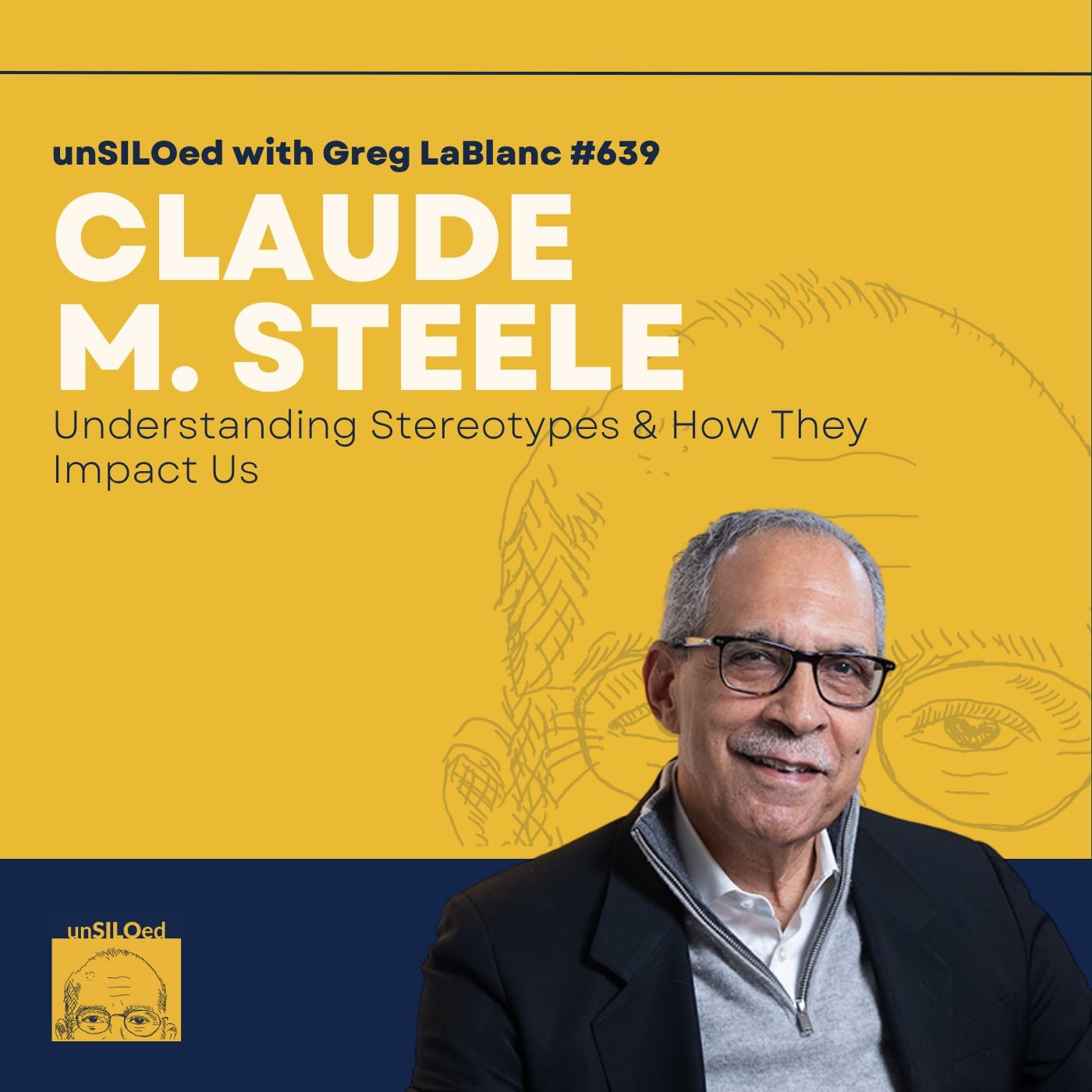
Claude Steele is a professor of psychology at Stanford University and the author of the landmark book, Whistling Vivaldi: How Stereotypes Affect Us and What We Can Do. His new book, Churn: The Tension That Divides Us and How to Overcome It, takes the theories from Whistling Vivaldi and examines the psychological stress that comes with navigating diversity.
Claude joins Greg to discuss his decades' worth of research on the concept of identity, the impacts stereotypes have on our cognitive load, even if we don’t subscribe to those stereotypes, the limits to “colorblindness”s, the concept of “wiseness,” and why trust could be the antidote to the churn.
*unSILOed Podcast is produced by University FM.*
Episode Quotes:
The tension beneath how we come together
08:39: I'm trying to characterize, with the term “churn,” this sort of emotion that can be a real factor in our experience of diversity and our coming together. We're a multiracial, multi-ethnic, multi-religious, multi-class society. And to function well, we have to get along well in these critical situations—school, workplace—and churn is a symptom of the tensions that can arise.
Trust is the antidote of churn
10:10: The hopeful part of churn is that it does have a remedy, an antidote, and that is trust. As soon as we've built trust together, then I relax. Well, I know you're not going to do that.
How do you build trust?
29:13: You really do have to try to get yourself in the position of the other, to see the world from the other person's shoes. That really helps to build trust. Just the effort that you're interested in doing that is maybe the most fundamental step forward that a person in authority can take to build trust in people that work for them or work with them.
The limits of being colorblind
19:48: I think in many aspects of our society, it's absolutely essential. We have to think that way, that we have to have policing, healthcare access, housing, mortgages be colorblind. So, I'm uncompromising on many aspects of it, but I think if we take it too far, we can ignore the experiences that people have because of their identities. Yeah, just because of their identity. So, if we're colorblind, I don't need to know about all those things that affect your life that have to do with your identity.
Show Links:
Recommended Resources:
Erving Goffman
Affirmative action
“Differences in STEM doctoral publication by ethnicity, gender and academic field at a large public research university” by Mendoza-Denton and Fisher
Guest Profile:
Faculty Profile at Stanford University
Former Provost Bio at UC Berkeley
Guest Work:
Churn: The Tension That Divides Us and How to Overcome It
Whistling Vivaldi: How Stereotypes Affect Us and What We Can Do
Hosted by Simplecast, an AdsWizz company. See pcm.adswizz.com for information about our collection and use of personal data for advertising.
How is governance dysfunction linked to declining ‘middle-ring’ community ties?
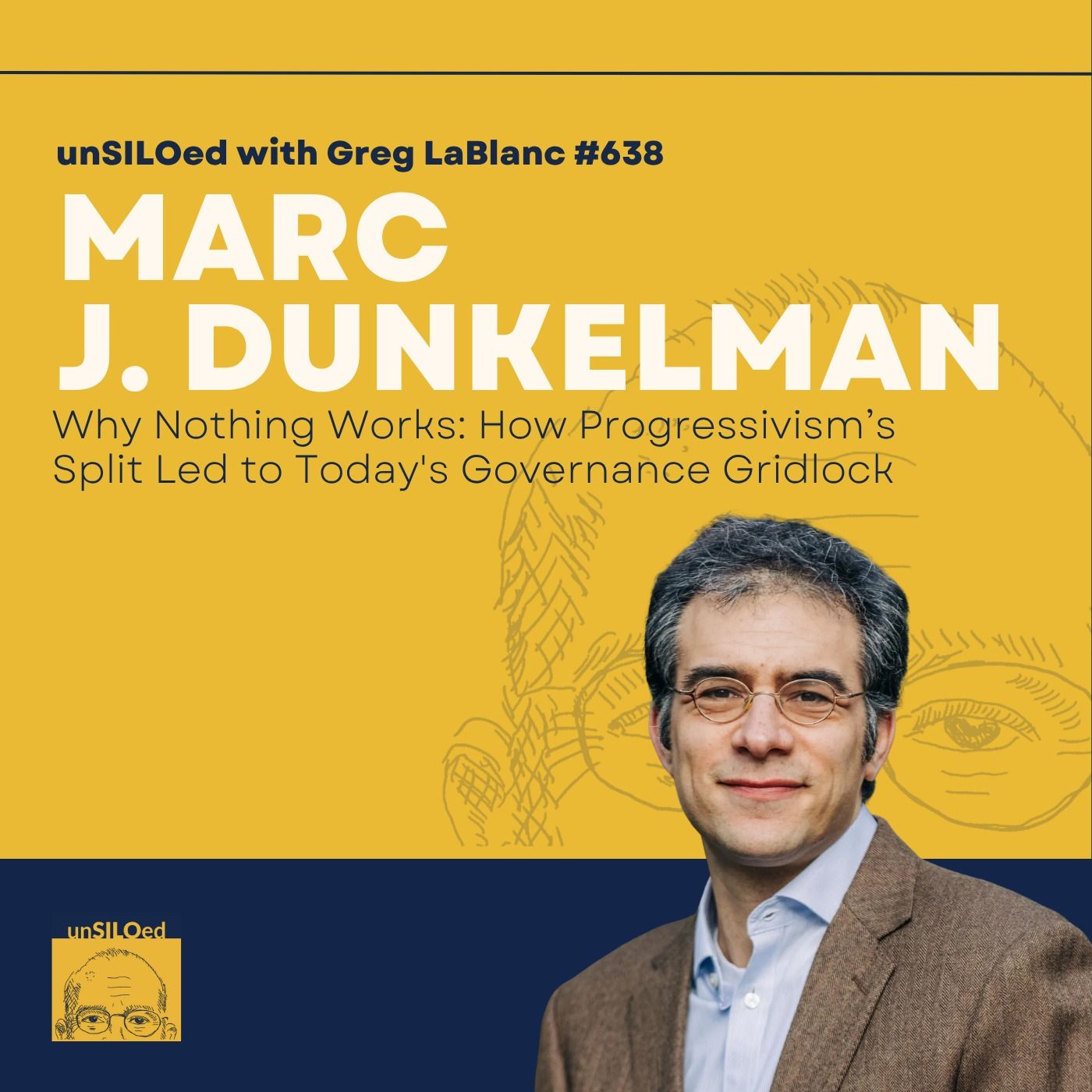
Marc J. Dunkelman is a fellow at Brown University and a fellow at the Searchlight Institute in Washington, D.C. Marc is also the author of two books, Why Nothing Works: Who Killed Progress—and How to Bring It Back and The Vanishing Neighbor: The Transformation of American Community.
Greg and Marc discuss how U.S. progressivism has long been split between a Jeffersonian impulse to decentralize power and curb “bigness” and a Hamiltonian impulse to centralize authority in expert institutions. Marc explains how figures like Robert Moses could push projects through, while today expanded rights, litigation, and procedural checks—driven by 1960s–70s distrust of authority (Vietnam, civil rights failures, environmental and consumer scandals, Watergate-era culture)—have reduced discretion so much that even widely supported projects stall.
*unSILOed Podcast is produced by University FM.*
Episode Quotes:
Why is it so hard to build things?
44:34: You're awarding rights to classes of individuals who have long been stepped on by powerful people. And, like, award these new standing. Exactly. To your point, in order to reduce the discretion of the would-be Robert Moses, who would make that choice on their own without ever really thinking through, alright, now that all these people have, like, a voice, how are we going to resolve that?
And to this day, I don't think the progressives have actually answered that question. I don't think that we have in our minds even a system by which you would make trade-offs between those groups. And it's one of the reasons, to your point, it's so hard to build things, like, if everyone wants that new road to be built, but each individual constituency has enough power to say, not through this particular route, you're fundamentally stuck.
What motivated Marc to write “Why Nothing Works.”
05:07: The motivation here was to understand what had changed between the fifties and the 2010s, to make it so that it used to be that bad projects couldn't be stopped, and now good projects couldn't go. That prompted a whole series of questions that eventually would lead to this book, Why Nothing Works.
On tension within progressivism
36:28: There is sort of a notion that centralized power itself is up to no good, and that, in order for America to restore its promise and luster, we need to restore the power, the individual agency that people once had. And, I want to make this clear: that shift is remarkably profound within progressivism, but it is not that the old effort to centralize power wasn't progressive. And it's not that this new impulse to restore power to the woman who wants to control her own body, to the black family that wants to be able to rent a room in any hotel of their choosing, to the ordinary person who doesn't want to be the victim of discrimination, to the neighborhood that doesn't wanna be clobbered by, like—these are both ultimately progressive impulses.
Show Links:
Recommended Resources:
The Power Broker
Robert Moses
Progressivism
Louis Brandeis
Sacco and Vanzetti
Felix Frankfurter
Cadillac Desert
Bowling Alone
Abundance
Guest Profile:
Faculty Profile at the Watson School of International and Public Affairs
Searchlight Institute
LinkedIn Profile
Social Profile on X
Guest Work:
Amazon Author Page
Why Nothing Works: Who Killed Progress—and How to Bring It Back
The Vanishing Neighbor: The Transformation of American Community
Hosted by Simplecast, an AdsWizz company. See pcm.adswizz.com for information about our collection and use of personal data for advertising.
When AI tells us what we want to hear, is it acting in a rogue way, or is it emulating behavior that society clearly values? How does our ability to sleep enable us to update faster than neural networks currently can, and what will be different when they can update themselves more frequently?
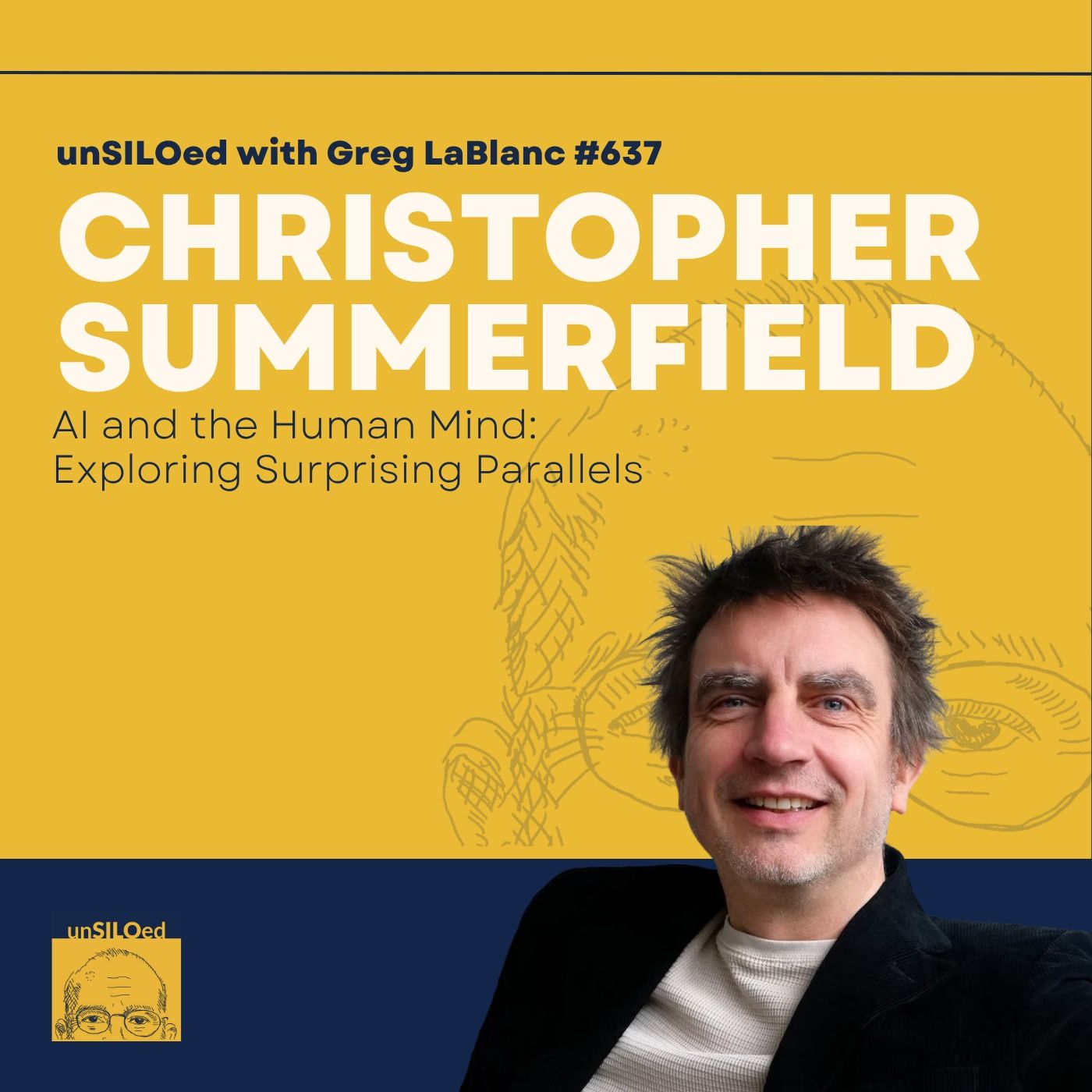
Christopher Summerfield is a professor of cognitive neuroscience at Oxford University, the Research Director at the UK’s AI Safety Institute, and the author of the book These Strange New Minds: How AI Learned to Talk and What It Means.
Christopher and Greg discuss the historical split between symbolic, rule-based “rationalist” AI and data-driven “empiricist” learning, arguing that the recent success of large models vindicates the latter despite earlier skepticism. They discuss how structured behavior can emerge from messy networks, how modern models are trained with reinforcement learning to produce step-by-step reasoning, and why systems often “make” solutions by writing code rather than routing to specialized tools.
*unSILOed Podcast is produced by University FM.*
Episode Quotes:
From messy brains to intelligent machines
04:40: If you look inside the brain, your brain and mine and the brains of other biological species, they're really messy. They're like really, really messy and unstructured. So nature managed to solve the problem. And so maybe that gave impetus for this movement to kind of, you know, continue to sort of plug away. And when we finally got computers big enough to process lots and lots of data, it started to take off. And the rest is history.
Hallucinations aren’t just an AI problem
34:36: How does the model know what is the kind of socially or culturally appropriate response? We're often very worried about the models, like, the models don't tell the truth and they make stuff up. But people forget that most of language is literally making stuff up. That is what you do when you open your mouth.
Is language more powerful than we thought?
32:05: The surprising thing is that language, it turns out, is sufficiently rich and expressive that if you have it in huge volumes and you process it effectively, then you can actually make a whole bunch of inferences about the world, which are surprisingly accurate. So you would think that you would need to actually experience them firsthand rather than just through hearsay, because we work like that, right? Like we rely on our senses. Of course, we rely on hearsay a little bit, and we think about what other people say, and it allows us to infer new things. But like the models just have language, well, I mean now they have multimodal data, but let's take a conversational agents lms, and what I think has been so surprising is that language contains enough structure that you can really uncover patterns of information that you would think that you would need to see.
Show Links:
Recommended Resources:
Rationalism
Empiric School
George Bull
Frank Rosenblatt
Neural Network (machine learning)
Marvin Minsky
Perceptron
GPTs
Guest Profile:
Human Information Processing Lab
Social Profile on X
Guest Work:
These Strange New Minds: How AI Learned to Talk and What It Means
Google Scholar Page
Hosted by Simplecast, an AdsWizz company. See pcm.adswizz.com for information about our collection and use of personal data for advertising.
It’s one of the oldest debates in political philosophy: Do good laws make good men, or do good men make good laws? Minds have been wrestling with this question since the days of Petrarch and Machiavelli, but both sides may have insights that can inform modern political philosophy.
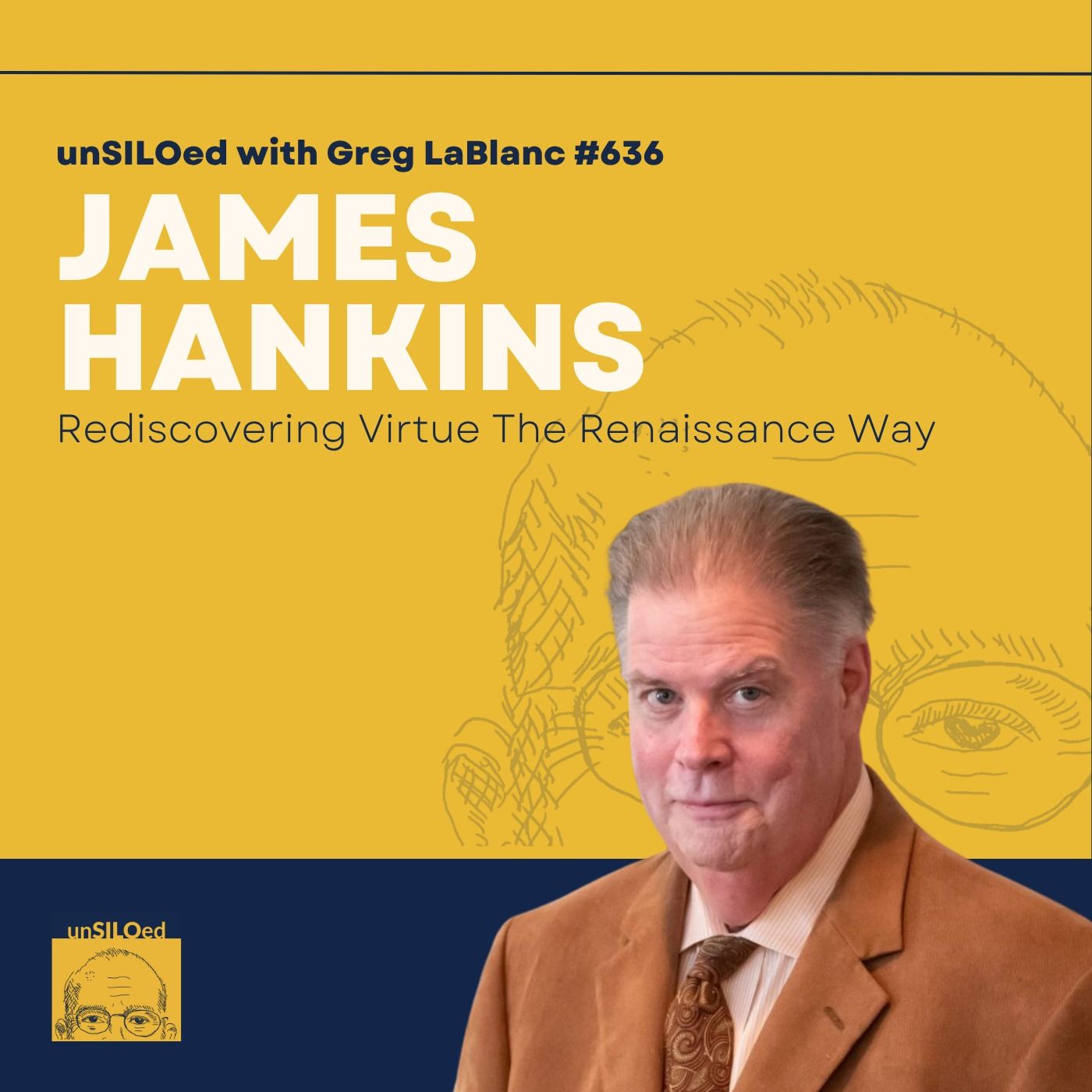
James Hankins is a professor of history at Harvard University, a visiting professor of humanities at the University of Florida’s Hamilton School, and author of numerous books including Virtue Politics: Soulcraft and Statecraft in Renaissance Italy and Political Meritocracy in Renaissance Italy: The Virtuous Republic of Francesco Patrizi of Siena. He’s also the co-author of the textbook, The Golden Thread, which focuses on the history of Western civilization.
Greg and James discuss Renaissance humanism, sparked by Petrarch’s response to 14th‑century crises, and explore the humanist education focused on virtue, rhetoric, and moral philosophy. They also delve into Machiavelli’s critiques and pushback against humanism, how Chinese Confucianism compares with the West’s legal system, and why James believes virtue should be brought back into modern education.
*unSILOed Podcast is produced by University FM.*
Episode Quotes:
Why we need both systems and good character
11:47: I think I agree with the people who think there should be a balance between good character and the formation of good character and expertise and wisdom and competence and the people who say that systems can solve all your problems and you just get the right systems and thinkful function. I think that is a very, kind of left, left hemispheric way of understanding human nature.
Good law is nothing without good people
07:59: If you have great laws, but corrupt judges, you are going to have bad laws. If you have laws being written by corrupt people, that is even worse. So the humanist is saying the whole problem is, the human heart, right? This is where the problem is. And what we have to do is to bring back antiquity.
Is democracy only the legitimate form of government?
47:14: Today, we might say that a democracy is the only legitimate form of government where a republic reflects the will of the people. But they would not say that in the Renaissance. They talk about better and worse, that monarchs are better when you have got a good monarch. But when you have a bad monarch, the monarch of the republic is better. It is that kind of calculation. It is not the way we think about political regimes today as being, legitimate or illegitimate.
Show Links:
Recommended Resources:
Petrarch
Francesco Patrizi
Niccolò Machiavelli
Isocrates
Lorenzo Valla
Thomas Aquinas
Cola di Rienzo
Guest Profile:
Faculty Profile at Harvard University
Faculty Profile at Hamilton School at the University of Florida
Professional Website
Guest Work:
Virtue Politics: Soulcraft and Statecraft in Renaissance Italy
The Cambridge Companion to Renaissance Philosophy
Political Meritocracy in Renaissance Italy: The Virtuous Republic of Francesco Patrizi of Siena
The Golden Thread: A History of the Western Tradition, Volume I: The Ancient World and Christendom
Hosted by Simplecast, an AdsWizz company. See pcm.adswizz.com for information about our collection and use of personal data for advertising.
Today's AI has been designed using insights from how humans learn and think about the world. Are there certain psychological lessons we can glean from these artificial minds to further our understanding of human ones?
Tom Griffiths is a professor of information technology, consciousness, and culture at Princeton University. His books, The Laws of Thought: The Quest for a Mathematical Theory of the Mind and Algorithms to Live By: The Computer Science of Human Decisions, explore how algorithms and mathematics can be used to understand the human mind, and how it differs from AI.
Tom and Greg discuss the origins of the surprising convergence of psychology and computer science over the last 50 years and delve into the work done by the interdisciplinary minds who made it happen. They also cover how psychology and linguistics impact the current world of machine learning and AI.
*unSILOed Podcast is produced by University FM.*
Episode Quotes:
How do we build good inductive bias into AI systems?
26:07: How do we build good inductive bias into these systems? And at the moment that is being engineered to some extent by doing things like synthetic pre-training, where you might pre-train on data which is not the human language data but data that you think is quite good data for shaping the kinds of things that your neural network is going to be biased towards. And then there are some other more sophisticated methods for doing that. In my lab, we use a method called metalearning, where you're explicitly creating a neural network that has initial weights, that has some sort of initial associations that it's already formed, that are going to make it easy for that model to be able to learn from small amounts of data.
Neural networks vs. human learners
23:00: One of the big differences between even the fancy neural networks that we have today and human learners is that human learners learn language from far less data than our neural network models do.
What is a neural network?
18:30: The way I think about neural networks is that they're a tool for thinking about computation in spaces, a way of mapping one space to another based on the information that you've received that allows you to then build up to more and more complex computations.
Show Links:
Recommended Resources:
David Maher
John B. Watson
B. F. Skinner
Jerome Bruner
John von Neumann
Herbert A. Simon
Noam Chomsky
Allen Newell
Frank Rosenblatt
Marvin Minsky
“Embers of autoregression show how large language models are shaped by the problem they are trained to solve” - Paper
Roger Shepard
Jeffrey Elman
Been Kim
Guest Profile:
Faculty Profile at Princeton University
Computational Cognitive Science Lab
Professional Profile on LinkedIn
Guest Work:
The Laws of Thought: The Quest for a Mathematical Theory of the Mind
Algorithms to Live By: The Computer Science of Human Decisions
Hosted by Simplecast, an AdsWizz company. See pcm.adswizz.com for information about our collection and use of personal data for advertising.
When the concept of ‘gamifying life’ comes up, scoring is transparent and portable but strips nuance, creating a gap between what’s measurable and what matters. When codifying everything through metrics, massive amounts of nuance is lost, so how can we utilize game theory without reducing everything to a high score?
C. Thi Nguyen is a professor of philosophy at the University of Utah. He is also the author of the books The Score: How to Stop Playing Somebody Else's Game, The Routledge Handbook of Philosophy of Games, and Games: Agency As Art.
Greg and Thi discuss the differences between genuine gameplay and institutional metrics and gamification. Thi explains Huizinga’s “magic circle” concept, where games create a temporary space with altered meanings and low real-world stakes, enabling intense striving without value capture. Drawing also on Bernard Suits, Thi frames games as voluntarily taking on unnecessary obstacles and distinguishes achievement play (valuing winning) from striving play (valuing the struggle), separating these from intrinsic vs extrinsic motivations.
They discuss how clear scoring is transparent and portable but strips nuance, creating a gap between what’s measurable and what matters; transparency can reduce bias yet undermine expertise. Examples include social media likes, quotas, education metrics, sports rule changes, cooking “recipe vs dish,” and academia’s citation and ranking pressures.
*unSILOed Podcast is produced by University FM.*
Episode Quotes:
The paradox on inefficiency
08:31: To play a game is to voluntarily take on unnecessary obstacles, to create the possibility of struggling to overcome them, which I find, it’s got to be to be inefficient, but interestingly not fully inefficient. So we're not trying to be as inefficient as possible. One of the ways to put the paradox of games is we take on an inefficiency and then we try to be as efficient as possible inside that inefficiency.
The trap of simple scoring
04:00: One of the biggest differences between real games and the kinds of gamifications of work and education that we find is that gamifications are attempts to modify things into line with simple scoring systems that occur continuously with the rest of life that have direct connections to valuable resources.
Collapsing the magic circle
05:08: Twitter likes and citation rates and gamified work are modifications of something that has preexisting value, preexisting activity. So I think the important thing about Twitter, X, Facebook is those scoring systems don't occur in a magic circle. They don't occur in a space with separated meaning. They modify our activities in the real world and change our attitudes and interactions over real world resources. So I think exactly like this easy glide from games or grudge to like we should gamify everything ignores one of the most crucial elements, which is some version of this magic circle is basically active in a lot of genuine gameplay, but is completely inactive, is completely canceled. We have the superficiality of scoring systems and game-ishness, but deep down we don't have the core guts of transferring into a temporary alternate meaning space whose meanings kind of can be held relatively isolated.
Show Links:
Recommended Resources:
Johan Huizinga
Lusory Attitude
Dungeons & Dragons
John Dewey
Goodhart's Law
Onora O'Neill
John Thorne
Theodore Porter
Autotelic
Diagnostic and Statistical Manual of Mental Disorders (DSM)
Guest Profile:
Faculty Profile at the University of Utah
Thi Nguyen’s Website
Wikipedia Profile
Social Profile on X
Guest Work:
Amazon Author Page
The Score: How to Stop Playing Somebody Else's Game
The Routledge Handbook of Philosophy of Games
Games: Agency As Art
Hosted by Simplecast, an AdsWizz company. See pcm.adswizz.com for information about our collection and use of personal data for advertising.

While philosophers have long wrestled with questions about technology’s impact on humanity, these questions have taken on a whole new level of urgency and significance with the rise of AI, smartphones, and the Internet. It’s more pressing than ever now to ask: What does it mean to be human?
Christine Rosen is a senior fellow at the American Enterprise Institute and a fellow at the University of Virginia’s Institute for Advanced Studies in Culture. Her latest book, The Extinction of Experience, delves into how modern technologies are reshaping what it means to be human by mediating experience, promising convenience and control while subtly narrowing choices and changing social norms.
Christine and Greg discuss the trade-offs of this digital age: as friction, risk, boredom, and unstructured time disappear, so do the skills and forms of attention that develop through direct interaction with other people and the world. They argue that many of these technologies offer safe simulations of connection that can weaken real relationships, and explore what a renewed humanism would look like.
*unSILOed Podcast is produced by University FM.*
Episode Quotes:
Why technology removes the friction that makes us human
07:37: This is the really seductive thing about these technologies is that they do both at the same time, and they do that by promising us control. And they give us control. If I am having a FaceTime conversation with someone and it gets awkward, or I don't want to continue anymore, I can just press a button and that person disappears. If I'm standing with them face-to-face, I can't really do that. I have to adapt to the situation. I have to deal with it in a completely different way. I would argue a more human way with a lot of friction. So then I learn certain skills of how to be a better human being in those situations. The mediating technology flattens, makes easier, convenient, and more control is promised, and it gives us that.
The hidden value in boredom
28:48: Boredom opens up all kinds of meandering paths in the brain that take you to really interesting places if you let it.
Protecting human relationships in the age of AI
20:44: We are at a crucial moment right now, particularly with the huge push to integrate AI into so many aspects of life, education, work, home, your daily life. I just think that we have this opportunity now to really be clear about what it is we value in human relationships and what makes it unique and distinct and important to protect those relationships.
Why friction and failure are essential for human development
11:21: We learned by failing. We learned with a lot of friction. We learned by having arguments and fights and all that stuff. If kids today don't get that experience as kids in a safe environment with people who love and care for them, when they become adults it is scary because you have to practice. So I would say these are important human skills, and we can no longer take them for granted because there are alternative things to do, like never talk to another human being. But ultimately, I think rates of loneliness and isolation and anxiety suggest that that isn't really the way most people want to live their lives.
Show Links:
Recommended Resources:
Walter Benjamin
Theodor W. Adorno
Jean Baudrillard
Neil Postman
Ready Player One
Robert Nozick
Experiece machine
Sherry Turkle
Christopher Lasch
Nicholas Carr’s The Mirrorball Self
Guest Profile:
Fellow Profile at American Enterprise Institute
Guest Work:
The Extinction of Experience
My Fundamentalist Education
Hosted by Simplecast, an AdsWizz company. See pcm.adswizz.com for information about our collection and use of personal data for advertising.
How is modern self-knowledge acquired? In what ways can ‘yoga of the mind’ help you find and explore new thoughts and thought processes, giving you ongoing courage to confront discomfort and realign consciousness beyond ego narratives?
J. Eric Oliver is a professor of political science at the University of Chicago and is also the author of several books. His latest titles are How To Know Your Self: The Art & Science of Discovering Who You Really Are, Democracy in Suburbia, and Enchanted America: How Intuition & Reason Divide Our Politics.
Greg and Eric discuss Eric’s popular Knowing Yourself course, combining neuroscience, Buddhism, philosophy, psychology, and reflective exercises. Eric explains the evolution of the class from abstract texts to practical self-inquiry aimed at expanding students’ vocabulary of lived experience, identifying unhelpful mental loops, and cultivating empathy by seeing the self as layered processes shared with other beings. He connects this work to his earlier research in Enchanted America on intuition, conspiracy beliefs, and the political rise of intuitionism, arguing that weakened institutional authority and information overload amplify anxiety.
*unSILOed Podcast is produced by University FM.*
Episode Quotes:
The Gold Star illusion is not an end all be all
30:15: Most high achieving, intellectually engaged people, I think, are brought up with this Gold Star illusion, which is this thing that if I could just collect all of my gold stars, you know, go to the right schools, get the right job, find the right person, buy the right house, then this sort of happily ever after scenario awaits me. And then what most of us find is that even after we collect all these gold stars, the neurosis and anxieties and miseries don't go away. If anything, they become more profound. And so part of what I'm trying to do, at least with my undergraduates, is sort of say, okay, it's helpful if you can sort of, even if you're going to be on the Gold Star trajectory, because that's so powerfully inculcated into you to begin to realize that that's not going to be the end all be all. Because when you get to the end of that gold star rainbow and you realized, “oh, is this all there is?” You won't be at such a loss, and there won't be necessarily the same level of crisis that awaits you.
There is no self as a noun, we are verbs
36:56: There is no self as a noun. We are verbs, we're processes, so we're continually unfolding. And this is great news because we're not stuck in any way. You're not a bad person, you're not a fixed person.
Why the information age makes us anxious
20:06: With the explosion of our information technologies and the ability for someone who has a conspiracy theory to suddenly post things online and have just enormous reach that 20 years ago they wouldn't have, suddenly floods our discourse space with these alternative paradigms and these alternative ways of understanding the world, and the fact that we are so saturated now with information from around the globe. So how can we not be anxious?
Show Links:
Recommended Resources:
Sigmund Freud
Buddhism
Know thyself
Intuitionism
Rationalism
Gross National Happiness
Alexis de Tocqueville
Yoga
Guest Profile:
Faculty Profile at The University of Chicago
JEricOliver.com
Social Profile on X
Guest Work:
Amazon Author Page
How To Know Your Self: The Art & Science of Discovering Who You Really Are
Democracy in Suburbia
Enchanted America: How Intuition & Reason Divide Our Politics
Local Elections and the Politics of Small-Scale Democracy
The Paradoxes of Integration: Race, Neighborhood, and Civic Life in Multiethnic America
Fat Politics: The Real Story behind America's Obesity Epidemic
Google Scholar Page
Hosted by Simplecast, an AdsWizz company. See pcm.adswizz.com for information about our collection and use of personal data for advertising.
What do particle physicists and Wall Street traders have in common? How did finance become more like physics, and how is physics now becoming more like finance?
Emanuel Derman is an emeritus professor at Columbia in financial engineering and the author of several books, including My Life as a Quant: Reflections on Physics and Finance and Models. Behaving. Badly.: Why Confusing Illusion with Reality Can Lead to Disaster, on Wall Street and in Life. His work examines the entanglement of physics and finance, using memoir to reveal hidden truths about the theories and models practitioners rely on.
Greg and Emanuel discuss his transition from physics to Wall Street, revealing that he found finance to be more social and creative. They also explore how early quant work required both theory and hands-on programming, what distinguishes models from theories, and why, despite some superficial similarities, the fields of finance and physics couldn’t be more different.
*unSILOed Podcast is produced by University FM.*
Episode Quotes:
Financial models require confidence without hubris
29:29: In my life as a quant, I think I said you had to be cocky when you were using models and push them as far as you possibly could, but stop short of hubris, and I think that's important. You ought to understand that your model isn't going to be correct. In the end, the world is going to violate it.
When physics meets social sciences
09:35: I think to some extent they [psychists] confuse accuracy with point of view. Even progressive theories get more and more accurate. Newton's laws aren't as accurate as relativity, but they still, both theories, the one just does better than the other, but they still have this nature of saying, let me describe the way the world works rather than, let me make an analogy.
Why model builders must explain where models fail
30:46: There's a clear distinction between concentrators to tell the people that use it that this is where it's going to fail, as best I can see. And they'll use it in this regime. And these are the assumptions I'm making. Don't just let them run wild with the formula. I think traders are smarter now and more numerate and maybe understand this better, but I think that's important.
Why financial engineers need perspective beyond mathematics
28:13: I don't think one should be teaching philosophy necessarily, but I think one should learn enough to know about the history of finance and to be able to back off a little and look at what you're doing. Not just, I don't know. I have a feeling more and more of the programs focus on mathematics and behavioral psychology.
Show Links:
Recommended Resources:
Dictionary of Financial Risk Management
Salomon Brothers
James Clerk Maxwell
Baruch Spinoza
Johann Wolfgang von Goethe
Fischer Black
Black Scholes
Black Derman Toy model
Put call parity
Paul Wilmott
Binomial options pricing model
Mark Rubinstein
Freeman Dyson
Guest Profile:
Faculty Profile at Columbia University
Professional Website
Professional Profile on X
Guest Work:
Brief Hours and Weeks: My Life as a Capetonian
My Life as a Quant: Reflections on Physics and Finance
The Volatility Smile: An Introduction for Students and Practitioners
Models. Behaving. Badly.: Why Confusing Illusion with Reality Can Lead to Disaster, on Wall Street and in Life
Hosted by Simplecast, an AdsWizz company. See pcm.adswizz.com for information about our collection and use of personal data for advertising.
Romantic relationships are something uniquely human — we form attachments and perceive compatibility in ways no other species does. So what explains the idiosyncratic preferences people have for one potential partner over another? And why have popular conceptions based on evolutionary psychology been wrong about when it comes to how humans choose their mates?
Psychology professor Paul Eastwick is the head of UC Davis’ Social-Personality Psychology program and the director of the Attraction and Relationships Research Lab. His book, Bonded by Evolution: The New Science of Love and Connection, challenges society’s core assumptions about attraction and compatibility, and presents new findings on the key to long-lasting commitment. He also co-hosts the podcast, Love Factually, with his colleague Eli Finkel, which explores the science of relationships through film.
Paul and Greg discuss how a distorted view of evolutionary psychology has perpetuated inaccurate ideas about dating and relationships, the effect online dating has had on intensifying competition and gender differences, and some key tips for building strong, long-lasting connections.
*unSILOed Podcast is produced by University FM.*
Episode Quotes:
Why dating apps can’t replace real romantic connections
39:57: The apps make you think like a romantic connection is right there. Like maybe it will be tonight. I would encourage people instead to think about what is it like just to hang out with other people and give the romantic possibilities some time to fall out of those networks a little bit more organically, a little bit more naturally. It takes a while. Like it can take quite a long time, especially like if we haven't been tending to our networks recently, but nevertheless, like this is at least an approach that people should be supplementing with their online dating if, if they're going to continue to use the apps.
Why are some couples happy and some are not?
22:46: Compatibility, how well two people fit together. That is probably explaining the lion’s share of why some couples are happy and some couples are not. Rather than this idea that like, oh, you got a good long-term partner, that's probably not the best way to think about it.
Compatibility is something couples build together
25:17: Compatibility can be many, many things. It can be like, we seem to get along and coordinate well. It could be about our easy flowing conversation, but it also could be about how we get through the day. And often that's what relationships are. It's an interdependent web of goals and preferences and values that two people negotiate together. And it's very hard for people to know how that negotiation is going to turn out until they really dig in and start to try to do it.
The evolutionary mismatch behind modern dating
45:44: What I think is deeply ironic is that some of the earliest evolutionary psychological findings happened to be the ones that reinforced the view that really fits this hierarchy idea, the mismatch component of it. So it's like, I love the idea of the evolutionary mismatch, thinking deeply about the environment in which we evolved. My problem is like a lot of the early ev psych ideas actually weren't doing that all that, all that well, that in reality, right? We evolved in small groups. You got to know a limited number of potential partners. There were going to be other people involved trying to shape, you know, who you spent time with and who you got to meet. It wasn't this dramatic marketplace of inequality.
Show Links:
Recommended Resources:
The Moral Animal by Robert Wright
John Bowlby
Queen Victoria’s Costume Balls
Guest Profile:
Faculty Profile at UC Davis
Professional Website
Guest Work:
Bonded by Evolution: The New Science of Love and Connection
Love Factually podcast
Hosted by Simplecast, an AdsWizz company. See pcm.adswizz.com for information about our collection and use of personal data for advertising.
What if the tale of Genesis were reframed as a story of humanity’s ascent into awareness of mortality and entropy? How are both connectedness and a “mattering project” key to flourishing as an individual?
Rebecca Goldstein is the author of several fiction and non-fiction books, including The Mattering Instinct: How Our Deepest Longing Drives Us and Divides Us, 36 Arguments for the Existence of God: A Work of Fiction, Plato at the Googleplex: Why Philosophy Won't Go Away, and The Mind-Body Problem.
Greg and Rebecca discuss how the ideas in her new book, The Mattering Instinct, trace back to her novel, The Mind-Body Problem. Rebecca details a long-developed theory of human motivation: beyond survival and pleasure, humans are “creatures of matter who long to matter,” driven to justify themselves in their own eyes (homo justificans). To Rebecca, this is linked to self-reflection, theory of mind, and existential “absurdity.” This episode will outline some mattering strategies and also discuss personality links, ethics, and concerns about AI.
*unSILOed Podcast is produced by University FM.*
Episode Quotes:
We are creatures of matter who long to matter
08:21: What we are are creatures of matter who long to matter. I love that we can do that in English. You know, we can't do it; it can't be replicated in other languages. But thank goodness for English, two amazing words: the noun matter and the verb matter.
Why everyone needs to feel like they matter
04:23: Look, everybody needs to feel like they matter. Then there's a great diversity of ways in which we might try to prove to ourselves that we matter.
The human search for values
15:11: Entering into this world of entropy, where everything eventually runs out of energy and does die, the universe itself will run out of energy and thermal equilibrium that awaits the universe, with that stepping out of paradise. They took on the burden, but the dignity of being human, of trying to justify becoming Homo Justific, becoming creatures who are in search of values that will justify them in their own eyes. We come up with a whole bunch of values, and we disagree tremendously about these values, but there's something so grand about being creatures who need values in order to be able to live with themselves, even if they're bad values, but that we bring values into the universe because we are creatures longing to matter.
Show Links:
Recommended Resources:
Ludwig Wittgenstein
Aristotle
Book of Genesis
Baruch Spinoza
Eudaimonia
Happiness Economics
Sigmund Freud
Entropy
Second Law of Thermodynamics
Theory of Mind
Blaise Pascal
“The unexamined life is not worth living.”
Darwinism
William James
Guest Profile:
RebeccaGoldstein.com
Wikipedia Profile
Profile on the National Endowment for the Humanities
Guest Work:
Amazon Author Page
The Mattering Instinct: How Our Deepest Longing Drives Us and Divides Us
Incompleteness: The Proof and Paradox of Kurt Gödel
36 Arguments for the Existence of God: A Work of Fiction
Plato at the Googleplex: Why Philosophy Won't Go Away
The Mind-Body Problem
Betraying Spinoza: The Renegade Jew Who Gave Us Modernity
Kurt Gödel
The Dark Sister
Mazel
Properties Of Light
Late Summer Passion of a Woman of Mind
The Mattering Map | Substack Newsletter
Hosted by Simplecast, an AdsWizz company. See pcm.adswizz.com for information about our collection and use of personal data for advertising.
A key precondition for democracy is civic trust and commitment to common goods; polarization and party identity undermine this, worsened by modern communication technologies that enable separate realities.
Josiah Ober is a professor of Political Science and Classics at Stanford University and also the author and co-author of several books about Athens, Civics, and Ancient Democracy. His latest title is The Civic Bargain: How Democracy Survives.
Greg asks Josiah about his work linking ancient Athens to modern democracy and organizational design. Josiah argues that political science necessarily blends positive and normative theory, joining rational self-interest with ethical reasoning to secure both stability and the good. He also compares firms and states as purposeful organizations governed by rules, incentives, and norms, noting that democracies struggle to scale but can outperform hierarchies by aggregating dispersed knowledge if institutions align incentives and citizens share information. Josiah emphasizes civics as teachable skills—listening, bargaining, and positive-sum compromise. He makes an appeal for renewed civics education informed by history and classical thinkers, including a rehabilitated view of the sophists and strategic reasoning.
*unSILOed Podcast is produced by University FM.*
Episode Quotes:
Why democracies know more than hierarchies
14:58: The democratic system, intrinsically, knows more than a highly hierarchical boss centered system, simply because those who see themselves as citizens have reason to share what they know. Those who are subjects have reasons to not share what they know. Therefore, it is possible for a democracy for reasons that, you know, Friedrich Hayek talked about in terms of why markets work, because all of that information comes together in, you know, producing a price, it is possible for well-structured democracies to bring in a great deal of information. From a great deal of people who have very different experiences, know different things, to solve the problems that they need to solve.
Does democracy only work when the design is right?
15:45: You have to have the right kind of organization, not only of, sort of voting and so on, but of incentives for people to bring what they know to the right place at the right time, not to the wrong place at the wrong time. And that is hard to do. You get it right and you get this tremendous success. You get it wrong and it does not work very well.
Politics should work like buying a car
32:22: When we go into the political regime space nowadays, it's that, well, compromise is bad now. We gave up, they won. The imagination now of politics is something like a football game in which there's a winner and a loser, and the winners cheer and the losers cry. But that's not what politics is. It is much more like buying a used car.
Show Links:
Recommended Resources:
Aristotle
Robinson Crusoe
Friedrich Hayek
Athenian Democracy
Stanford Civics Initiative
Logos
Techne
Sophist
Protagoras
Thomas Hobbes
Alexander Hamilton
Guest Profile:
Faculty Profile at Stanford University
Hoover Institution Profile
Guest Work:
Amazon Author Page
The Civic Bargain: How Democracy Survives
The Greeks and the Rational: The Discovery of Practical Reason
The Threshold of Democracy: Athens in 403 BCE
The Athenian Revolution: Essays on Ancient Greek Democracy and Political Theory
Athenian Legacies: Essays on the Politics of Going On Together
Political Dissent in Democratic Athens: Intellectual Critics of Popular Rule
Democracy and Knowledge: Innovation and Learning in Classical Athens
Mass and Elite in Democratic Athens: Rhetoric, Ideology, and the Power of the People
Origins of Democracy in Ancient Greece
A Company of Citizens: What the World's First Democracy Teaches Leaders About Creating Great Organizations
Google Scholar Page
Hosted by Simplecast, an AdsWizz company. See pcm.adswizz.com for information about our collection and use of personal data for advertising.

How important are relationships and the feeling of being loved to human happiness? How have the fields of happiness studies and relationship studies converged?
Sonja Lyubomirsky is a professor of psychology at the University of California, Riverside. She is also the author or co-author of the books How to Feel Loved: The Five Mindsets That Get You More of What Matters Most, The How of Happiness: A New Approach to Getting the Life You Want, and The Myths of Happiness: What Should Make You Happy, but Doesn't, What Shouldn't Make You Happy, but Does.
Greg and Sonja discuss her shift from happiness research to her co-authored book with Harry Reis, How to Feel Loved. Sonja explains that many happiness interventions (gratitude letters, kindness practices, and variations like texting gratitude vs. social media posting vs. private writing) work largely because they increase feelings of love and connection
They also discuss why listening is difficult, with Sonja sharing her experience in a Tel Aviv listening workshop, and the need for compassion and a growth mindset. Other themes include the Michelangelo effect (helping others become who they aspire to be), balancing sharing and listening (avoiding monologues or interrogations), appropriate vulnerability and gradual self-disclosure, and the “multiplicity” mindset of seeing people as complex quilts of good and bad traits to reduce harsh judgment.
The episode also considers whether people can feel loved without being loved, including AI companions that can mimic excellent listening but lack a genuine open heart, and the risk that some people may substitute simulated relationships for real ones.
*unSILOed Podcast is produced by University FM.*
Episode Quotes:
What’s the distinction between being loved and feeling loved?
07:42: A lot of us are loved, but we do not feel loved. So we might have, we might know that our partner loves us or child, or a family member or friend or colleague. But we do not really feel loved. And when you think about it, feeling loved is what really matters even more, right? Because if, you know, if you love me, but I do not feel loved by you, it is almost like you do not love me, right? Like, because I am not really sensing that, and so feeling loved is really important. That is what really matters to happiness.
The key to feeling loved is really to be known and to know the other
10:16: The key to feeling loved is really to be known and to know the other, and we get known by taking the wall down a little bit. And I get to know you if I help you take your wall down. How do I help you take your wall down? By showing curiosity. Then hopefully you will start to open up a little bit. I show even more curiosity. I ask you questions and I l truly listen, not really just try to fix it or help you or tell my own story. I just listen to learn.
The first step to feel more loved
09:11: If I want to feel more loved, the first step, which may sound counterintuitive, is to help the other person feel loved first. You go first. I go first. The first step is to show genuine curiosity in the other person, in their inner life and the details of their day, their dreams, goals, values, fears. We all want that. We want to be seen, we want to be heard, and we do not get genuine curiosity very often. When was the last time you remember telling a story about yourself and the other person was so curious they could not wait for you to finish the sentence? It is rare. When it happens, it is priceless. That is such a gift to someone, to show authentic curiosity in them. It has to be authentic because you cannot fake it. That is the first step. You help the person be seen by showing curiosity in them, and that helps them open up more.
Real connection requires both listening and sharing
18:48: If you only share, it is a monologue. You are spouting off. If you only listen, then it is an interview. It is an interrogation sometimes. You really need to do both. They go together. That is where the emotional intelligence comes in. Because when you are sharing, the entire time you are sharing, and we all know people who do not do this, they go off and they seem to not see any cues that the other person is not interested in continuing the story.
Show Links:
Recommended Resources:
Harry Reis
Relationship Science
Michelangelo Phenomenon
Impression Management
Multiplicity
The All-or-Nothing Marriage: How the Best Marriages Work
Esther Perel
Love 2.0: How Our Supreme Emotion Affects Everything We Feel, Think, Do, and Become
Techne
Unsiloed 208: Psychological Safety and the Benefits of Discomfort with Todd Kashdan
Guest Profile:
SonjaLyubomirsky.com
Faculty Profile at UC Riverside
LinkedIn Profile
Profile on Wikipedia
Social Profile on Instagram
Social Profile on X
Guest Work:
Amazon Author Page
How to Feel Loved: The Five Mindsets That Get You More of What Matters Most
The How of Happiness: A New Approach to Getting the Life You Want
The Myths of Happiness: What Should Make You Happy, but Doesn't, What Shouldn't Make You Happy, but Does
Google Scholar Page
TED Talk | 1 thing you can do today to be happier
Hosted by Simplecast, an AdsWizz company. See pcm.adswizz.com for information about our collection and use of personal data for advertising.
How could AI shift medical value toward primary care relationships if pattern-recognition specialties are more automatable? What would people prefer if given the choice between discussing their problems with a human or with non-judgmental empathic AI?
Allison J. Pugh is a Professor of Sociology at Johns Hopkins University and the author of several books. Her most recent works are The Last Human Job: The Work of Connecting in a Disconnected World and The Tumbleweed Society: Working and Caring in an Age of Insecurity.
Greg and Allison discuss Allison’s newest book and her concept of “connective labor,” defined as the relational practice of seeing another person and having them feel seen. They also contrast this idea with more individual-centered ideas like EQ. Allison argues that this type of work is reciprocal, widespread across roles (therapists, teachers, chaplains, primary care, managers, service work), and increasingly important as the economy shifts toward requiring more “feeling.” Allison also talks about how AI is being used in new ways to help automate different aspects of different jobs, and along with that come connected effects like the rise of automated medical scribes amongst the medical community, but also the drastic reduction of interns and the near elimination of that valuable aspect of education and job training for an intern’s future professional life. They also discuss how the different efficiency tools can backfire because of the increased need to oversee and validate automated output.
*unSILOed Podcast is produced by University FM.*
Episode Quotes:
Why friction is essential to human connection
17:26: Part of the relationship with another human being involves the friction of not being able to control what they say, of running up against their disagreement or conflict or even tension, or they have their own ideas, their own desires. And that is part of making our way through this world, and it is a really important part of being in community, in relationship with other human beings. And that is what chatbots do not give us. They give us no friction.
AI is mirror, not a relationship
17:08: So with chatbots, you are not really experimenting how to be with another human being. You are instead experimenting with a mirror, and that is just not going to have the same powerful impact.
Who gets humans, and who gets machines?
12:27: The idea that technology will be better than nothing, I am afraid, will not lead to greater opportunities to be seen, for less advantaged people. Instead, they will just have machines seeing them, and the rich people get humans seeing them, and that is an inequality that I find kind of tragic.
Seeing people is a leadership skill
49:52: When people have a chance to kind of express their values at work, figure out who they are and have their values kind of enacted in their work and kind of basically attach a purpose to what they are doing, a more transcendent purpose than just kind of earning the paycheck, it translates into a kind of deep meaningfulness, and that is part of the outcome of connective labor. And so it is really worth it for managers to get good at this because it enables people, the people they are seeing, to figure out what matters to them and to find that in relationships at work. That is a path to meaningfulness that can be very important.
Show Links:
Recommended Resources:
Moneyball: The Art of Winning an Unfair Game
Automated Medical Scribe
Chat Checkout Lanes
Unsiloed 469: Matt Beane - The Importance of Learning by Doing
Guest Profile:
Faculty Profile at Johns Hopkins
AllisonPugh.com
LinkedIn Profile
Social Profile on X
Guest Work:
Amazon Author Page
The Last Human Job: The Work of Connecting in a Disconnected World
The Tumbleweed Society: Working and Caring in an Age of Insecurity
Beyond the Cubicle: Job Insecurity, Intimacy, and the Flexible Self
Longing and Belonging: Parents, Children, and Consumer Culture
Google Scholar Page
Hosted by Simplecast, an AdsWizz company. See pcm.adswizz.com for information about our collection and use of personal data for advertising.
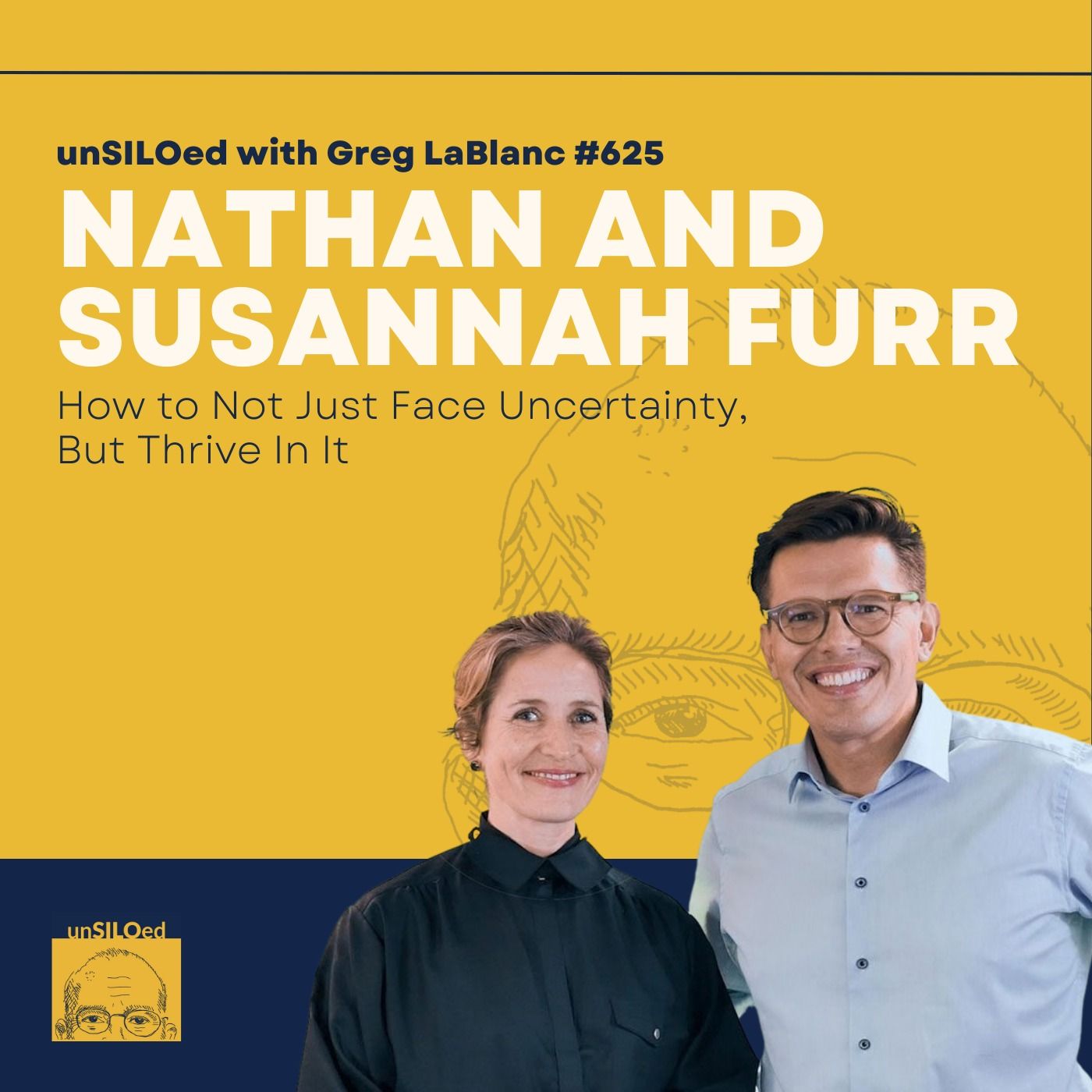
We live in an age where uncertainty lurks around every corner, but what if uncertainty didn’t have to be an anxiety-inducing, uncomfortable part of life?
The Upside of Uncertainty: A Guide to Finding Possibility in the Unknown, by INSEAD professor Nathan Furr and entrepreneur Susannah Harmon Furr, presents strategies and tools to embrace uncertainty and turn it into opportunity.
Nathan, Susannah, and Greg discuss why humans are naturally wired to avoid the unknown, and how our capacity to face it can be strengthened through learnable tools. The conversation covers some of the strategies described in the book like creating “islands of certainty” through rituals and support systems, maintaining a portfolio of personal options instead of going all-in too early, and focusing on what’s within one’s control while pursuing other meaningful goals, internally.
*unSILOed Podcast is produced by University FM.*
Episode Quotes:
The golden space of uncertainty
26:59: [Nathan Furr] The American can-do attitude is it was this kind of illusion that we control the world. And most people who have been through something hard recognize it is not totally in our control. We sure we influence it, we nudge it, but a lot of things are outside our control. And so the people who are able to approach uncertainty with greater calm also kind of said, you know, what is in my control? I will focus on that, and what is outside of my control, or partially outside of my control, I am not going to obsess about that. And so there is this kind of golden space where you are focused on what are my internal goals, being the best, doing my best, making a contribution in the world. And I recognize that, there is some element of, in this complex, ambiguous world that I do not control, and so I am just going to focus on the things I can control and let the other pieces go. That leads to a much calmer view of the world. The video and audio are not synched
On being comfortable with uncertainty
11:42: [Susannah Furr]: All of us could have cooler and more brilliant lives if we just tried a little bit more, if we got a little bit more comfortable with uncertainty. It is good to know, like, Ooh, I do not like risks. And we have a tool for that. Like, know what risks you have affinities and aversions for, but definitely do not just decide, Nope, I do not do uncertainty, because you are, you are missing out.
The real danger isn’t risk
18:29: [Nathan Furr] The real danger is not that you are going to go all in on the uncertain thing, it is that you are probably going all in on the certain thing, and you are not bringing that thing you care about, that thing you dream about, into the portfolio of options in your life.
Show Links:
Recommended Resources:
Ben Feringa
World Uncertainty Index
Sam Yagan
Martin Seligman
Kathleen M. Eisenhardt
Ayana Elizabeth Johnson
Guest Profile:
Nathan Furr Faculty Profile at INSEAD
Nathan Furr on LinkedIn
Susannah Harmon Furr Profile at INSEAD
Susannah Harmon Furr on LinkedIn
The Uncertainty Possibility School
Guests’ Work:
The Upside of Uncertainty: A Guide to Finding Possibility in the Unknown
The Innovator's Method: Bringing the Lean Start-up into Your Organization
Leading Transformation: How to Take Charge of Your Company's Future
Innovation Capital: How to Compete--and Win--Like the World’s Most Innovative Leaders
Hosted by Simplecast, an AdsWizz company. See pcm.adswizz.com for information about our collection and use of personal data for advertising.
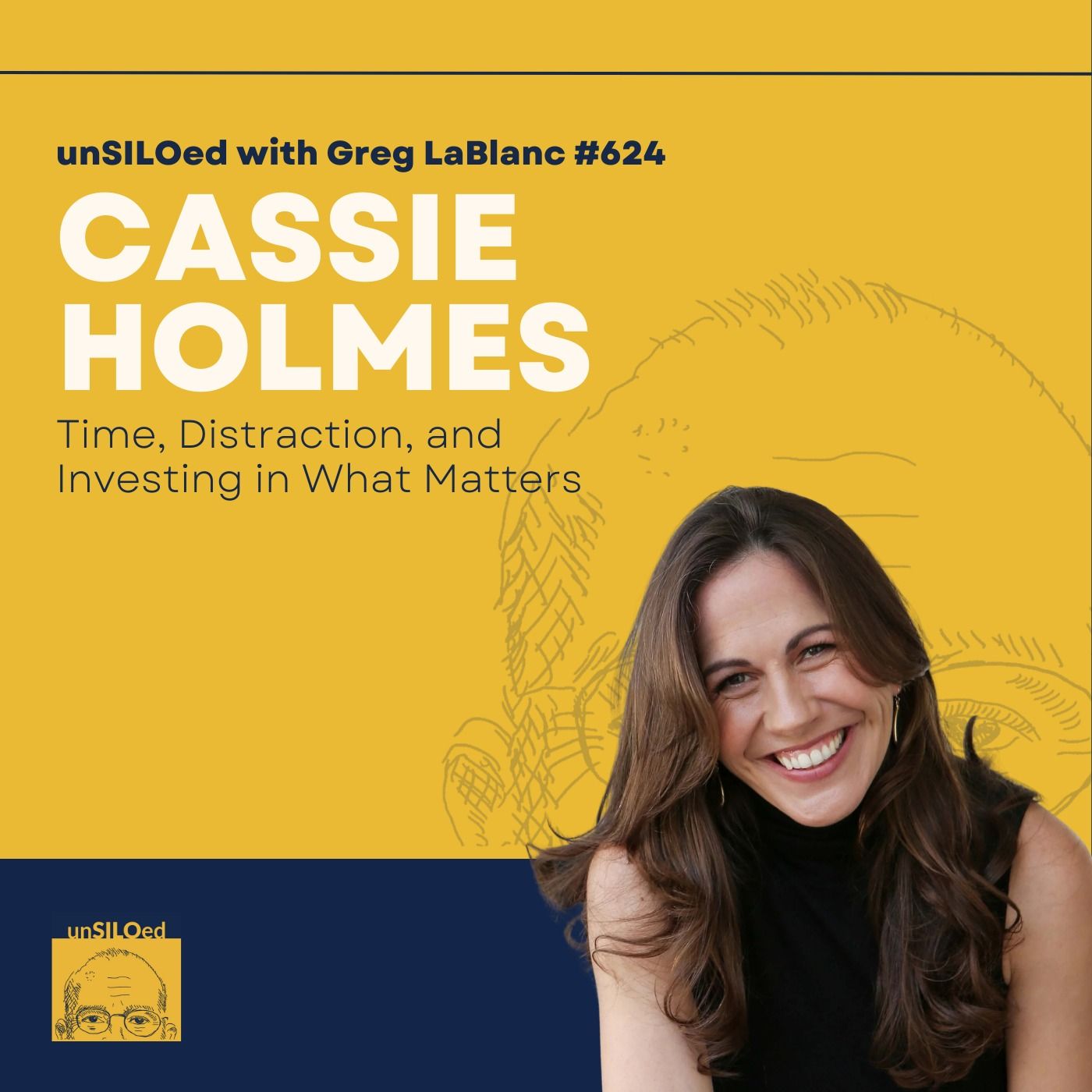
What happens when you start thinking of time as a scarce resource? What practical strategies can you use to protect it from being passively spent or hijacked so that you can spend the time you have in more fulfilling and meaningful ways?
Cassie Holmes is a professor at UCLA’s Anderson School of Management, and also the author of the book Happier Hour: How to Beat Distraction, Expand Your Time, and Focus on What Matters Most.
Greg and Cassie discuss how to use time more intentionally to increase both day-to-day joy and overall life satisfaction. Cassie explains how even though these happiness questions are timeless, they have become newly urgent due to modern distractions, cell phones, productivity culture, and the pandemic’s effects on time perception, anxiety, burnout, and workplace engagement. Cassie describes exercises such as tracking one’s time and rating activities to identify what is personally most joyful and meaningful, noting common low-happiness activities (commuting, work, housework) and how individuals can find variation within them. Cassie opens the window on some of the examples of this within her own life through her regular coffee dates with her daughter and a prearranged commitment device that allows her to count on date nights with her husband. They also cover bundling chores with enjoyable activities, selectively outsourcing tasks, and the tradeoffs of pricing time in money, emphasizing that better time management enables more meaningful and satisfying life activities, not simply doing less.
*unSILOed Podcast is produced by University FM.*
Episode Quotes:
Why being busy doesn't make you fulfilled
08:46: The unhappiness comes from when you have been busy and have spent your time and are looking back on it, feeling unfulfilled, like it got spent without you having invested in anything that ultimately matters to you. Whether it is things that give you that like true sense of joy and enjoyment, oftentimes through our interpersonal relationships, but also even that sense of satisfaction when you are making actual progress on whatever your project is, whatever that endeavor that you are sort of working towards is in line with your purpose, whether it is your personal purpose, which is really what my focus on is in the book, is the individual, and then ideally it is aligned. Your personal purpose is aligned with the sort of purpose of the work that you are doing.
What is time poverty?
40:31: What time poverty is, it is this feeling of having too much to do and not enough time to do it. It is a feeling of being limited by the resources, in this case, time that you have available to achieve what you set out to do.
Why isn't more enough, when it comes to happiness?
20:22: Not recognizing the role of hedonic adaptation is sure that first half hour, like, yes, that is the delight, right? You have your glass of wine, and you finally can kick back. But once you press, next episode, and you are three hours into your watching TV that night, you see on the happiness ratings that it, your enjoyment goes down over time. So that is also really helpful information, right? Because if we are trying to optimize using your optimization, sort of discipline and thinking, then we will, well, actually, we should spread out those positives, like my TV watching. This is also where intentionality comes into play. Like instead of zoning out for like many hours every night, just watch that first half hour.
Show Links:
Recommended Resources:
Happiness
Hedonic Treadmill
Intentionality
Marie Kondo
George Shultz
Time Poverty
Katy Milkman
Guest Profile:
CassieHolmes.com
Faculty Profile at UCLA Anderson School of Management
LinkedIn Profile
Guest Work:
Happier Hour: How to Beat Distraction, Expand Your Time, and Focus on What Matters Most
TEDx Talk | Finding Happiness in Ordinary Moments
Hosted by Simplecast, an AdsWizz company. See pcm.adswizz.com for information about our collection and use of personal data for advertising.
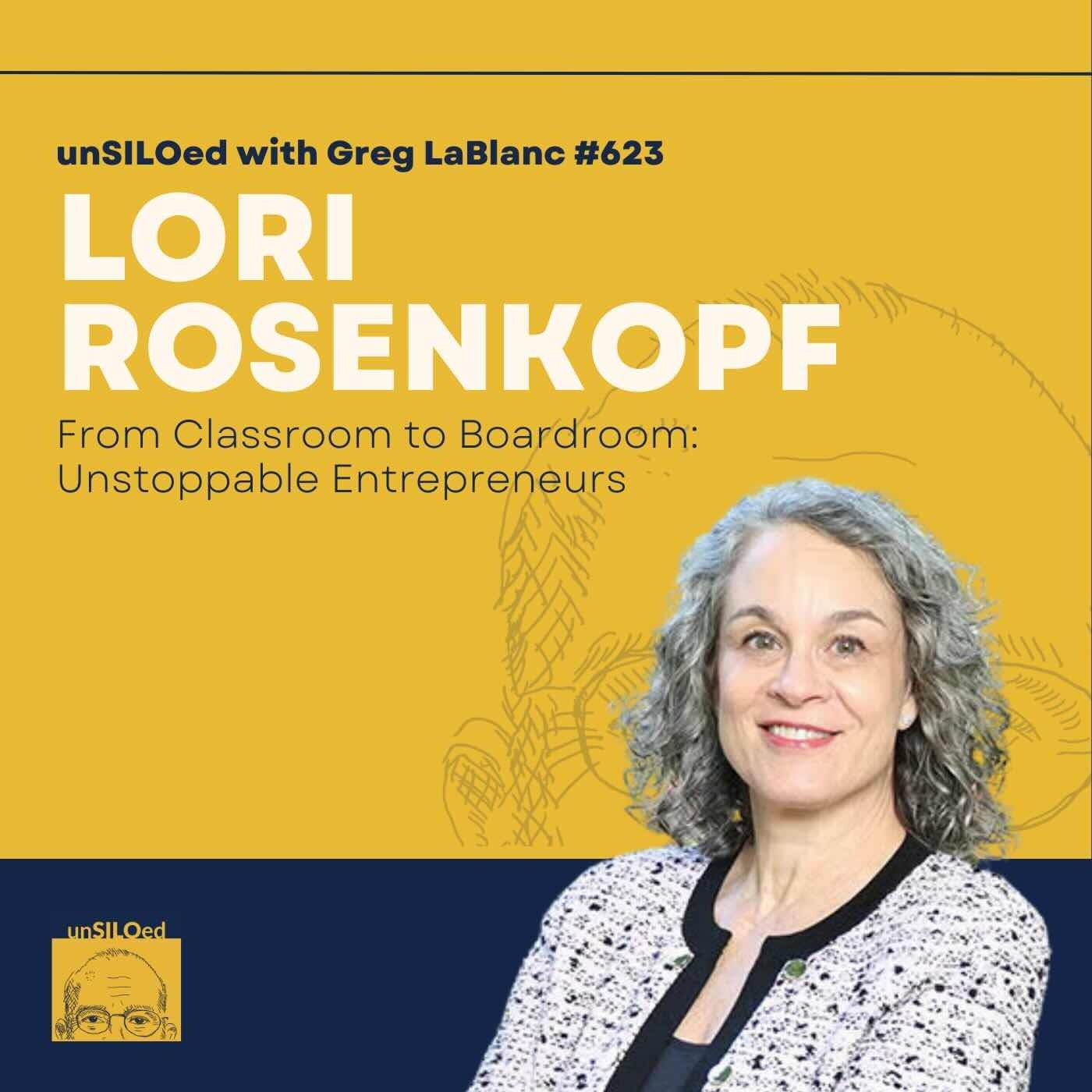
What makes for a good entrepreneur in today’s start-up landscape? How do you work to scale and when is it right to go from bootstrapping to seeking funding? How are the roots of innovation now fundamentally different than the dot com era?
Lori Rosenkopf is a Professor of Management and also the Vice Dean of Entrepreneurship at the Wharton School, San Francisco campus. She is also the author of the book Unstoppable Entrepreneurs: 7 Paths for Unleashing Successful Startups and Creating Value through Innovation.
Greg and Lori discuss Lori’s focus on Wharton’s student and alumni entrepreneurial ecosystem, and she explains how entrepreneurship skills overlap with the innovation inside large organizations and universities. Lori describes seven entrepreneurial pathways and six “Rs” that reflect an entrepreneurial mindset, emphasizing that many successful entrepreneurs first build industry experience in standard careers rather than launching ventures immediately after school.
Their conversation covers how Wharton’s curriculum has evolved over time, adding majors and coursework in entrepreneurship, innovation, analytics, and now AI; experiential learning; venture pitching for credit. Greg asks how the Venture Acceleration Lab helps expose students to scaling alumni ventures. Lori and Greg discuss different stereotypes of entrepreneurs, and Lori touches on why alumni and industry-affiliation networks remain powerful, how innovation increasingly happens through ecosystems, partnerships, and acquisitions rather than in-house R&D, and the continuing importance of universities in basic science commercialization, including Penn’s Pennovation initiative and strong biomedical startup activity.
*unSILOed Podcast is produced by University FM.*
Episode Quotes:
The stereotype of a unicorn founder
17:18: I think that we have grown accustomed to a stereotype, which is, let us name them out, college dropout. Young. Venture capital backed tech, unicorn, great personal and commercial wealth. And now we are depending on them for philanthropy. We can have a whole discussion just about whether that is a good thing or not. But that is sort of the image.
Is there a way people can cultivate their resilience?
32:00: Resilience, it can come from being in love with your problem and wanting to solve that so deeply. Now it has to be a problem that enough of the marketplace shares that they are willing to think about your solution. But people who want to solve a problem are going to claim lots and lots of different ways to attack it. And this is what entrepreneurs are constantly dealing with, negative feedback and challenges. In many cases, it is very rare that companies of ventures first offering is something that everybody falls in love with.
What has Lori learned about information diffusion over 30 years of research?
11:17: I think that as we have gone to where more digital products and services, that it gives us the opportunity to build up these bigger ecosystems where different parties are collaborating in a variety. So it might be as extreme as acquisitions. And that is not just happening when Apple, that is CPG companies are buying little startups where people have developed new grants that are cool. They are partnering in many cases, so they may not be a full on acquisition, but there will be a contractual set of arrangements and maybe a conformance to a standard, as well. So that has become more and more common, and the idea that any one firm can invent everything in house, I think it does feel a little bit passé, you know, like rate of change is getting quicker and quicker.
Show Links:
Recommended Resources:
Patrick T. Harker
Entrepreneurship
Venture Lab | University of Pennsylvania
Max Weber
Bell Labs
Guest Profile:
Faculty Profile at Wharton Business School
LoriRosenkopf.com
LinkedIn Profile
Guest Work:
Unstoppable Entrepreneurs: 7 Paths for Unleashing Successful Startups and Creating Value through Innovation
Google Scholar Page
Hosted by Simplecast, an AdsWizz company. See pcm.adswizz.com for information about our collection and use of personal data for advertising.
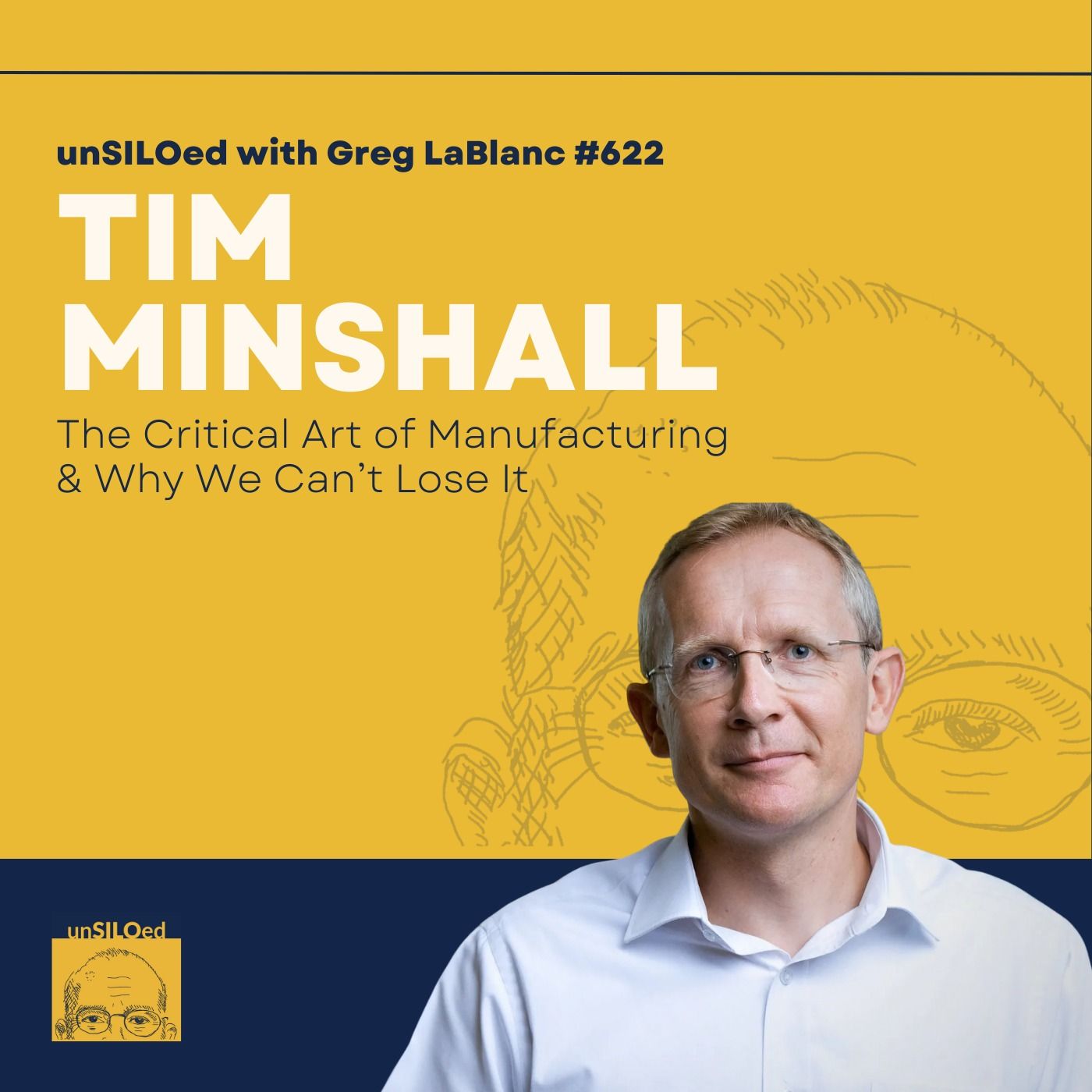
In today’s world where every imaginable product can appear at your doorstep with the click of a button, the art that goes into manufacturing those products is increasingly overlooked.
Tim Minshall is a professor of innovation at the University of Cambridge and the author of How Things Are Made: A Journey Through the Hidden World of Manufacturing. As head of the Institute for Manufacturing, Tim is shaping the future leaders of manufacturing and reinforcing the critical role manufacturing plays in today’s world.
In this conversation, Tim and Greg discuss the disconnect happening between modern-day consumers and the products they buy, plus the misconception that manufacturing has declined. They also delve into the complexity and fragility of manufacturing systems, the role of education in manufacturing, challenges in reviving manufacturing, and the future of manufacturing and software integration.
*unSILOed Podcast is produced by University FM.*
Episode Quotes:
Bridging the gap between idea and implementation
08:09: The narrative has got a bit confused. This idea that there is a thing called innovation where you have got all the great science and technology and all this cool stuff happening, and that is brilliant. And then there is a bit, which is now implement, or we can call that manufacturing and, as you say, not without its challenges to scale and support software at scale. It is a non-trivial challenge. But if you are scaling up the production process for a new cell therapy to treat cancer or scaling up the production of, a novel semiconductor approach using, I do not know, compound semiconductors, there is, as you say, massive physical challenges involved there, so, but to me that is all part of the same innovation story. You go from the idea and the market opportunity all the way through is part of the innovation story. There is not this neat line in the middle which goes, yes, we have done with the innovation, now we manufacture.
Have we become disconnected from how manufacturing happens?
Every single thing we can see, unless it is a plant, a rock, an animal, or another human, has been manufactured...All of these things have been manufactured, and so there has been a slight worrying thing that has happened, certainly in the UK, and I suspect a little bit in the US as well, which is we have become disconnected from how that happens. And the more we become disconnected from it, the less we appreciate how incredibly clever it is.
What are one of the biggest challenges facing manufacturing?
16:39: One of the biggest challenges facing manufacturing is. Getting good people to want to work in factories. Surely step one is making it visible. If you do not know it and you have not seen it, you are unlikely to just go, oh, I want to get involved in manufacturing. You need to have seen it.
Repositioning manufacturing as the thing that drives solution
23:24: We have to reposition manufacturing as the thing that drives solutions. It is the thing that pushes us to deal with the energy transition. It allows us to deal with our multiple healthcare crises. It is what allows us to deal with sustainability challenges, all of these, it allows us to deal with the defense challenges. Geopolitics at the moment is pointing to extremely important role for manufacturing. We would rather not be in this situation, but it is an absolute truth.
Show Links:
Recommended Resources:
I, Pencil
Breakneck: China's Quest to Engineer the Future by Dan Wang
Why Isn't the Whole World Developed? Lessons from the Cotton Mills by Gregory Clark
Jeff Immelt | unSILOed
John Taylor
Ha Joon Chang | unSILOed
Guest Profile:
Faculty Profile at University of Cambridge’s Institute for Manufacturing
Professional Profile on LinkedIn
Profile on X
Guest Work:
How Things Are Made: A Journey Through the Hidden World of Manufacturing – A Guide to Sustainable Innovation - US
Your Life Is Manufactured: How We Make Things, Why It Matters and How We Can Do It Better - UK
Google Scholar Page
Hosted by Simplecast, an AdsWizz company. See pcm.adswizz.com for information about our collection and use of personal data for advertising.

What is the impact of land reform on economic development? What are the implications of property law when a financial crisis hits? This episode offers a comprehensive look at how land has shaped socio-economic landscapes.Mike Bird is the Wall Street editor at The Economist and the author of the new book, The Land Trap: A New History of the World's Oldest Asset.Greg and Mike discuss the historical and contemporary importance of real estate as an asset class, its undervaluation in modern investment strategies, and its critical role in the financial systems. Their conversation explores the distinction between land and other assets, and how mortgage-backed securities have revolutionized real estate finance. Mike lays out the history of land financing from colonial North America to present-day reforms, touching on the influence of key historical figures and economic theories. *unSILOed Podcast is produced by University FM.*Episode Quotes:How land reform fueled economic growth41:29: These sort of moments of expropriation are really focused on land quite tightly. They do not spread over into sort of general expropriation attitudes. They can have seemingly really positive impacts. So lots of people credit land reform in Japan in particular with sort of establishing the basis of a democratic society, of massively accelerating the education boost in Japan. If you are a tenant farmer and you are given land yourself, you are able to actually invest in it. And you want to make the most of it because it is no longer the landlord taking it from you. The surplus you create is your own. Most of those people used the extra money they made to massively accelerate the education of their children. This generation of people in Japan becomes a more educated one, which fuels the economic development that happens, you know, 1950s, 1960s, 1970s. So the spillover effect from land reform is really quite large.ETF vs home ownership psychology50:15: I would say, I think half the answer here is behavioral and slightly irrational and social, and half of the answer is deeply rational and makes sense to any student of finance. The side that is irrational is home and land ownership has a reputation and a status that other asset ownership does not have. You have people who say they do not want to form a family until they can own a home. That is a fairly common sentiment in large parts of the world. Nobody says, I have got to own $300,000 in my S and P 500 ETF, or I am not starting a family. It is not a common thing. There is a sense of status security, middle class belonging that comes through owning a home, which makes it very unusual. And I think this digs into a deep historical thing about freedom from feudalism, from living under a landlord, from living, in sort of someone else's pocket.Why housing isn’t diversified54:52: Obviously what you cannot buy unless you are buying an extremely well diversified REIT, for example, you cannot buy a US house, right? It has to be somewhere. You are plugging into the opportunities and rewards or punishment of a local economy, and so on, I am not enormously surprised at that. I think the thing that is unique in the US relative to the rest of the world is just how well you can do and have done historically investing in listed equities, investing in risk assets and getting the compounded returns relative to home ownership, which I think is massively to America's credit. This is not true in other large portions of the rest of the world.Show Links:Recommended Resources:Samuel AdamsHernando de SotoZamindarHenry GeorgeProgress and PovertyGeorgismLeasehold EstateDuke of WestminsterWolf LadejinskyCase–Shiller IndexGuest Profile:MikeBird.coProfile on The EconomistLinkedIn ProfileSocial Profile on XSocial Profile on BlueSkyGuest Work:The Land Trap: A New History of the World's Oldest Asset Hosted by Simplecast, an AdsWizz company. See pcm.adswizz.com for information about our collection and use of personal data for advertising.
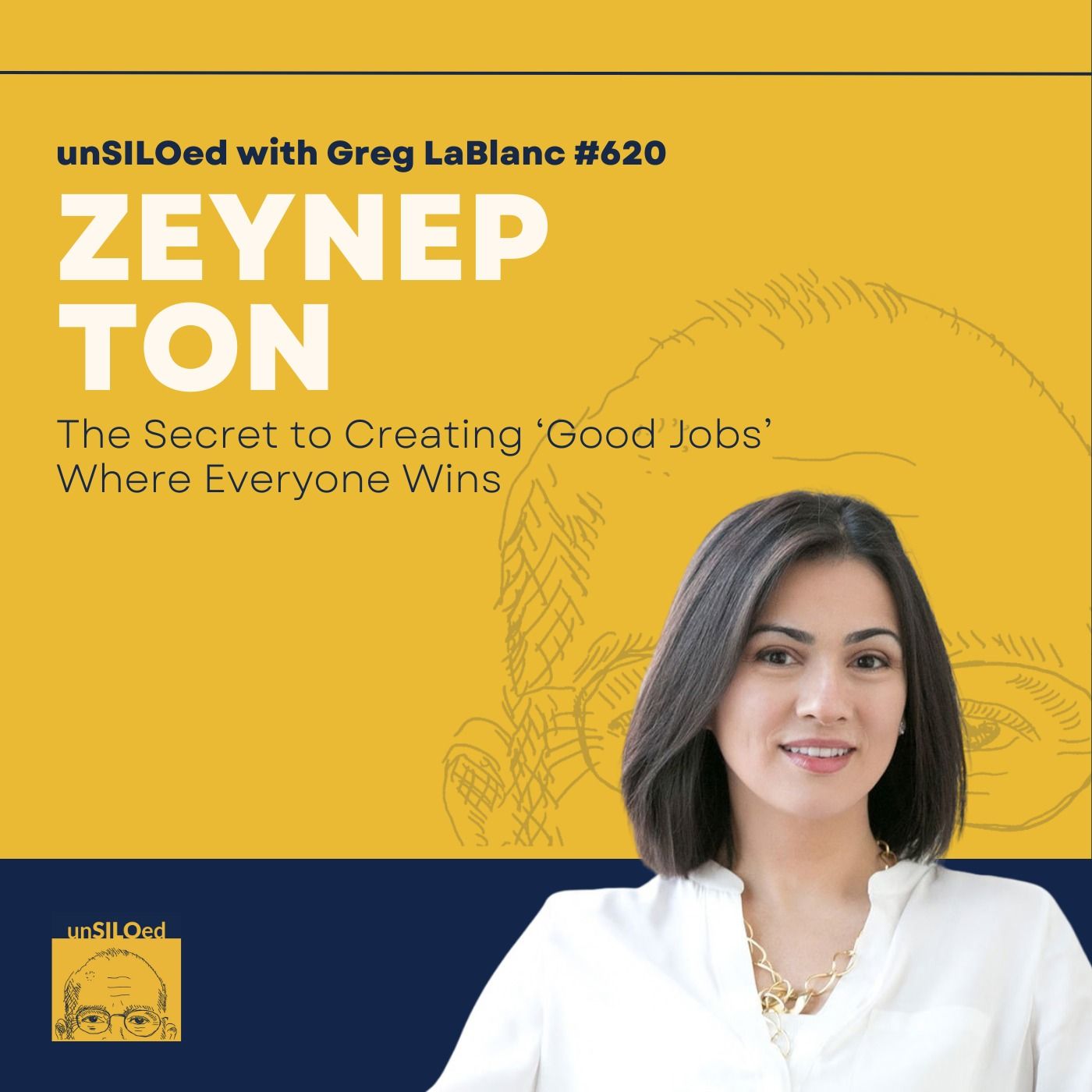
What if a company could deliver high quality products at low cost, improving the value for customers and giving it a competitive edge, all while offering higher pay and career growth opportunities for its employees and not hurting the bottom line?Zeynep Ton is a professor at MIT’s Sloan School of Management, president of the Good Jobs Institute, and author of The Case for Good Jobs: How Great Companies Bring Dignity, Pay, and Meaning to Everyone's Work. Zeynep joins Greg to explain the interconnected components of the “good job strategy,” such as standardization, empowerment, cross-training, simplification, and the incorporation of slack in schedules. She emphasizes that companies should view their workforce as value drivers rather than costs to be minimized, advocating for investment in employees for better productivity and sustainable company growth.*unSILOed Podcast is produced by University FM.*Episode Quotes:The ‘good job strategy’ requires systems thinking43:47: A lot of organizations operate in silos, and ‘the good job strategy’ requires systems thinking, interconnected decisions, and all the decisions coming back to: how do we create value for the customer and how does this interact with other choices to deliver that type of value? And as long as we do the AB testing and requiring on, rigorous, and I do not think it is rigorous, it is, yeah, it is math, but it is not rigorous logic, it will be very difficult to adopt this.Standardization is a gift28:51: Standardization is a gift because there are so many things I do not even have to think about. So, think each of these choices is helpful to say what are the mindsets that are driving the choices, when used that way, and standardization is not just about work, [but also] standardization of management practices.Why ‘the good job strategy’ creates competitive advantage13:02: I can see a lot of companies in the same industry using ‘the good job strategy’ as long as they have a differentiation in the eyes of their customers and they’re improving their value, continuously using the strategy. It’s not good jobs that differentiates. It’s the customer value that is a source of competitive advantage.Why unmet basic needs drive employee turnover17:02: You ask our students what motivates people. Everybody is gonna talk about is a sense of belonging, achievement, meaning, recognition. Of course, those things are the motivators. But so many people do not have their basic needs met. And there is tremendous lack of awareness. And those are, oftentimes, the biggest reasons for employee turnover that I have seen in many organizations that I work with.Show Links:Recommended Resources:Good Jobs Institute Toyota Production SystemJohn Paul MacDuffieCharlie MungerQueueing theory“How CEOs Manage Time” by Michael Porter and Nitin NohriaBob NardelliPete StavrosGuest Profile:Faculty Profile at MIT Sloan School of ManagementProfessional WebsiteProfessional Profile on LinkedInGuest Work:The Case for Good Jobs: How Great Companies Bring Dignity, Pay, and Meaning to Everyone's WorkThe Good Jobs Strategy: How the Smartest Companies Invest in Employees to Lower Costs and Boost Profits Hosted by Simplecast, an AdsWizz company. See pcm.adswizz.com for information about our collection and use of personal data for advertising.

Comments

Download from Google Play

Download from App Store
 United States