


 Claim Ownership
The Practitioner-Scholar: The PennCLO Podcast
Subscribed: 2Played: 7
Subscribe

© Penn GSE
Description
Welcome to "The Practitioner-Scholar: The PennCLO Podcast," the flagship production of the renowned Penn Chief Learning Officer Executive Doctoral Program at the University of Pennsylvania. Immerse yourself in a curated blend of scholarly insights and industry expertise, offering a profound exploration of organizational learning and leadership. Unveiling strategies and success indicators crucial in today's dynamic landscape, this podcast is a testament to the distinctive approach fostered by our program.
Join us on a transformative journey through the multifaceted world of leadership, where practitioner-scholar approaches shine as a beacon of excellence. As we spotlight luminaries within our esteemed student, faculty, and alumni circles, "The Practitioner-Scholar" podcast becomes a unique channel for intellectual engagement and actionable takeaways. For prospective students, seasoned executives, and dedicated scholar-practitioners alike, this platform is your exclusive access to the extraordinary content emanating from the heart of the PennCLO Executive Doctoral Program.
Subscribe now to tailor your learning journey and be part of the vibrant community shaping the future of leadership.
To learn more about the Penn Chief Learning Officer, Doctor of Education (Ed.D.) program, visit the Penn GSE website.
26 Episodes
Reverse
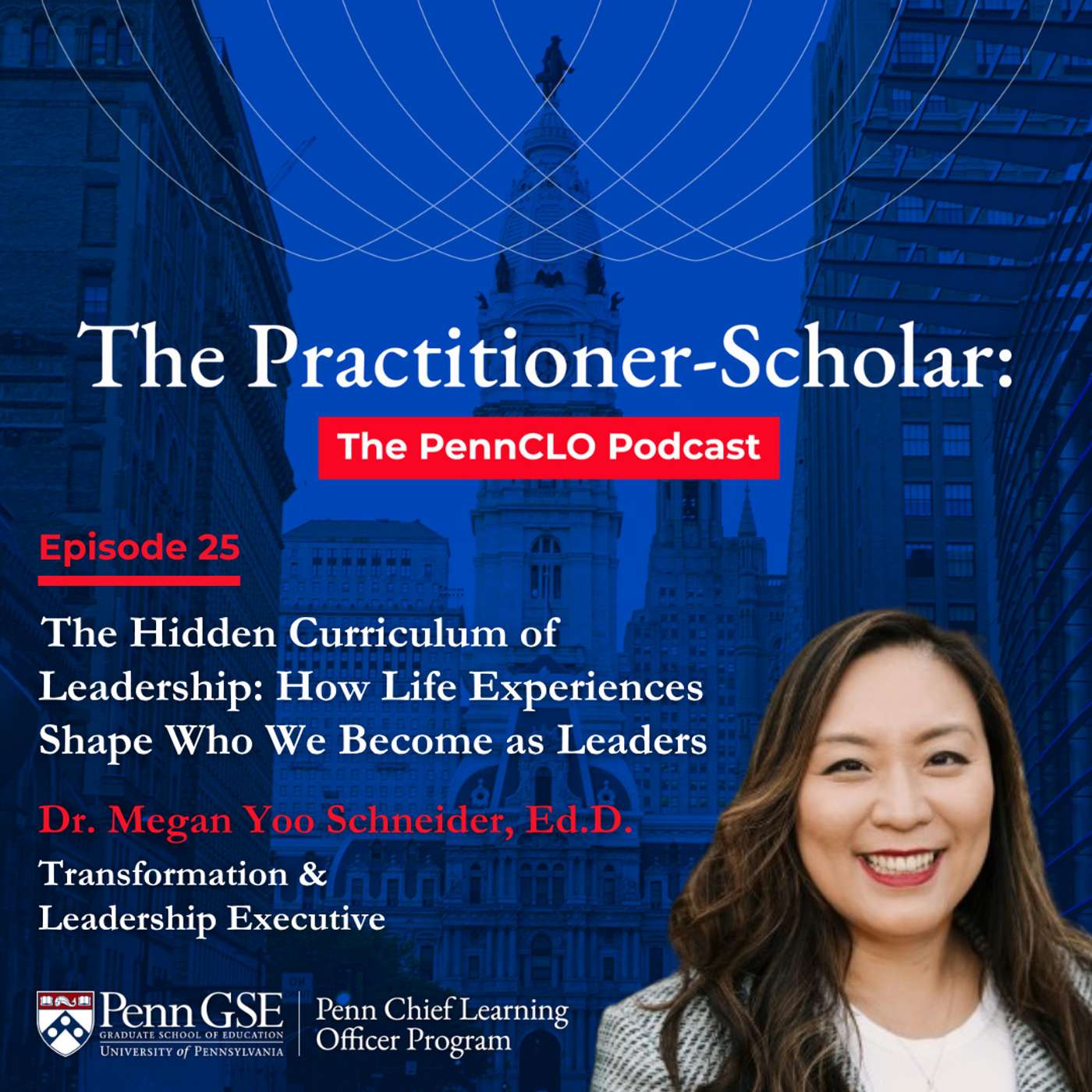
In this episode of The Practitioner Scholar, host Dr. Jess Jones welcomes Dr. Megan Yoo Schneider, a strategy and transformation leader, executive coach, and University of Pennsylvania Chief Learning Officer doctoral graduate, to explore an often-overlooked dimension of leadership development: the experiences that shape us outside the workplace.Organizations invest significantly in developing leaders through formal training, assessments, and professional experiences. Yet some of our most formative experiences happen outside the workplace, influencing how we see ourselves, navigate complexity, make decisions, and lead others.Drawing on over two decades of experience in strategy, organizational transformation, and leadership development, Megan introduces the concept of the hidden curriculum of leadership—the significant life experiences that shape leader identity, perspective, and adult development. She shares insights from her doctoral research, including how leaders often draw upon non-work experiences to inform their leadership, even when they may not initially recognize their influence.Megan also reflects on how her research became deeply personal when she received an unexpected ovarian cancer diagnosis and subsequently underwent major spinal surgery. These experiences deepened her appreciation for a central insight from her work: experience alone does not necessarily lead to development. Intentional reflection and meaning-making can help us learn, grow, and evolve through what we've lived.Through her Learn, Create, Share framework, developed through reflection following her doctoral research, Megan offers a practical approach to translating lived experiences into greater self-awareness, intentional leadership, and meaningful impact. She and Jess also explore the growing importance of empathy, contextual judgment, and adaptive leadership as artificial intelligence continues to reshape how we work and lead.Ultimately, this conversation invites us to consider how integrating our lived experiences into leadership development can help cultivate more thoughtful, adaptable leaders and strengthen the organizations and communities they serve.Key TopicsThe hidden curriculum of leadership: How experiences beyond the workplace contribute to leader identity and development.Insights from doctoral research: Exploring the relationship between significant life experiences, leadership perspectives, and decision-making.From experience to development: The role of intentional reflection, meaning-making, and adaptability in navigating change and uncertainty.The Learn, Create, Share framework: A practical approach to integrating lived experiences into personal growth and leadership practice.Authenticity and human-centered leadership: Bringing greater self-awareness and empathy into leadership while maintaining thoughtful professional boundaries.Leadership in the age of AI: The importance of empathy, contextual judgment, and values-based decision-making as technology transforms organizations.
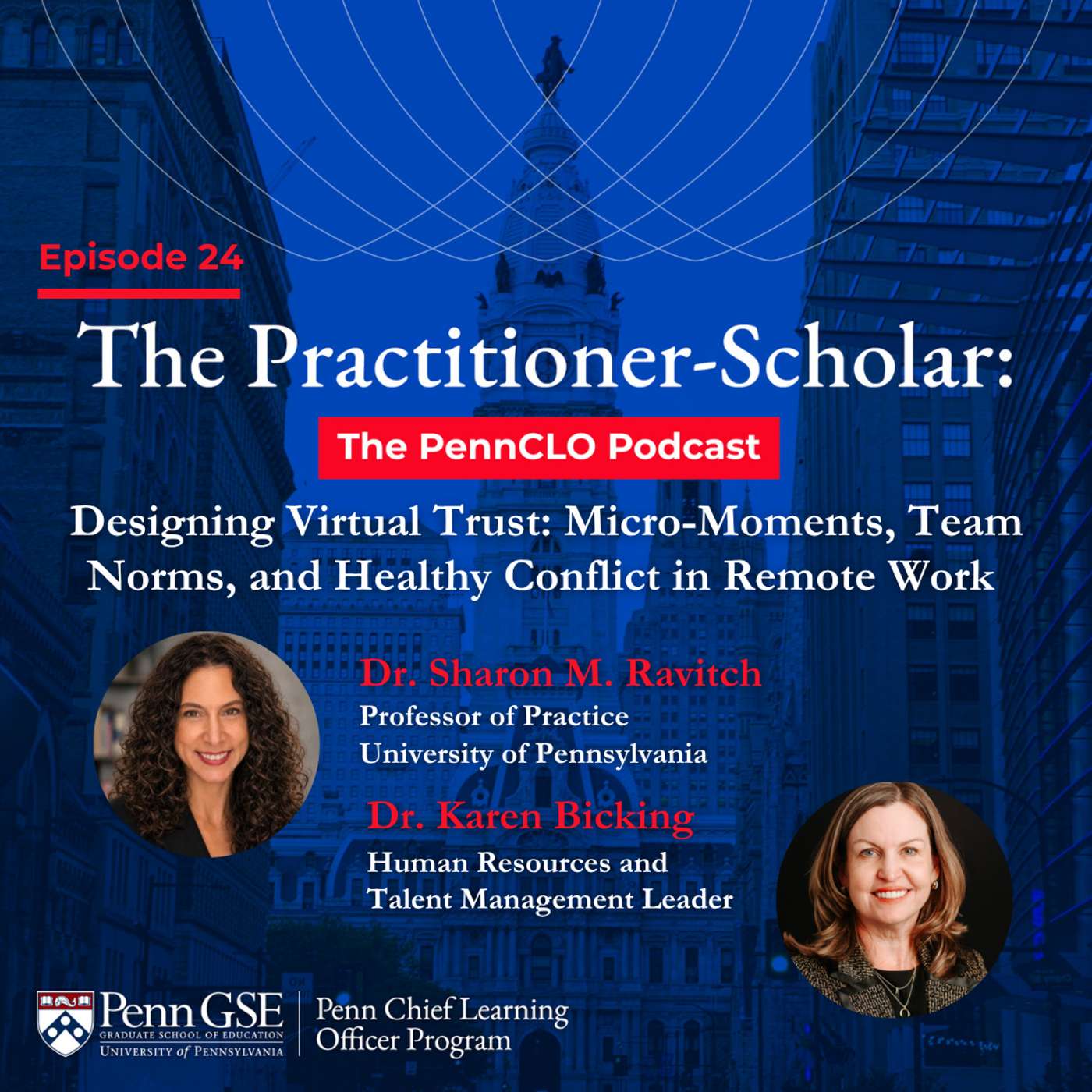
In this episode of The Practitioner Scholar: The Penn CLO Podcast, Dr. Sharon Ravitch explores the practicalities of remote team leadership with Dr. Karen Bicking, Head of Talent Management at CompoSecure and Penn CLO graduate. Grounded in her research chapter in Leaders as Architects of Change: Designing Organizations for Connection and Resilience in Times of Uncertainty (co-edited by Dr. Ravitch and Dr. Raghu Krishnamoorthy), Dr. Bicking offers actionable guidance for managers navigating hybrid and virtual team friction.Highlighting her chapter, "The Emotionally Intelligent Organization: Trust, Conflict, and Connection in Virtual Teams," Dr. Bicking walks listeners through real-world examples of how virtual teams navigate non-verbal cue deficits, sarcastic chat misunderstandings, and time-zone delays. From establishing transparent group chat protocols to implementing lighthearted team accountability mechanisms (like "swear jars" or coffee bets), Dr. Bicking demonstrates how small, daily micro-interactions build lasting trust and prevent team burnout.Key Topics:Dr. Bicking’s Real-World Research: What sets high-performing virtual teams apart from struggling, low-trust groups.Decoding Digital Silence: How Dr. Bicking advises leaders to step in when virtual meetings turn silent or sidebar conversations take over.Micro-Moments of Connection: Utilizing quick check-ins, personal milestone celebrations, and informal touchpoints to strengthen relationships.Practical Accountability: Creative, lighthearted methods Dr. Bicking has seen teams use to enforce agreed-upon communication norms.Mid-Year Resets: How leaders can facilitate quick "stop, start, continue" sessions to continuously fine-tune virtual team dynamics.
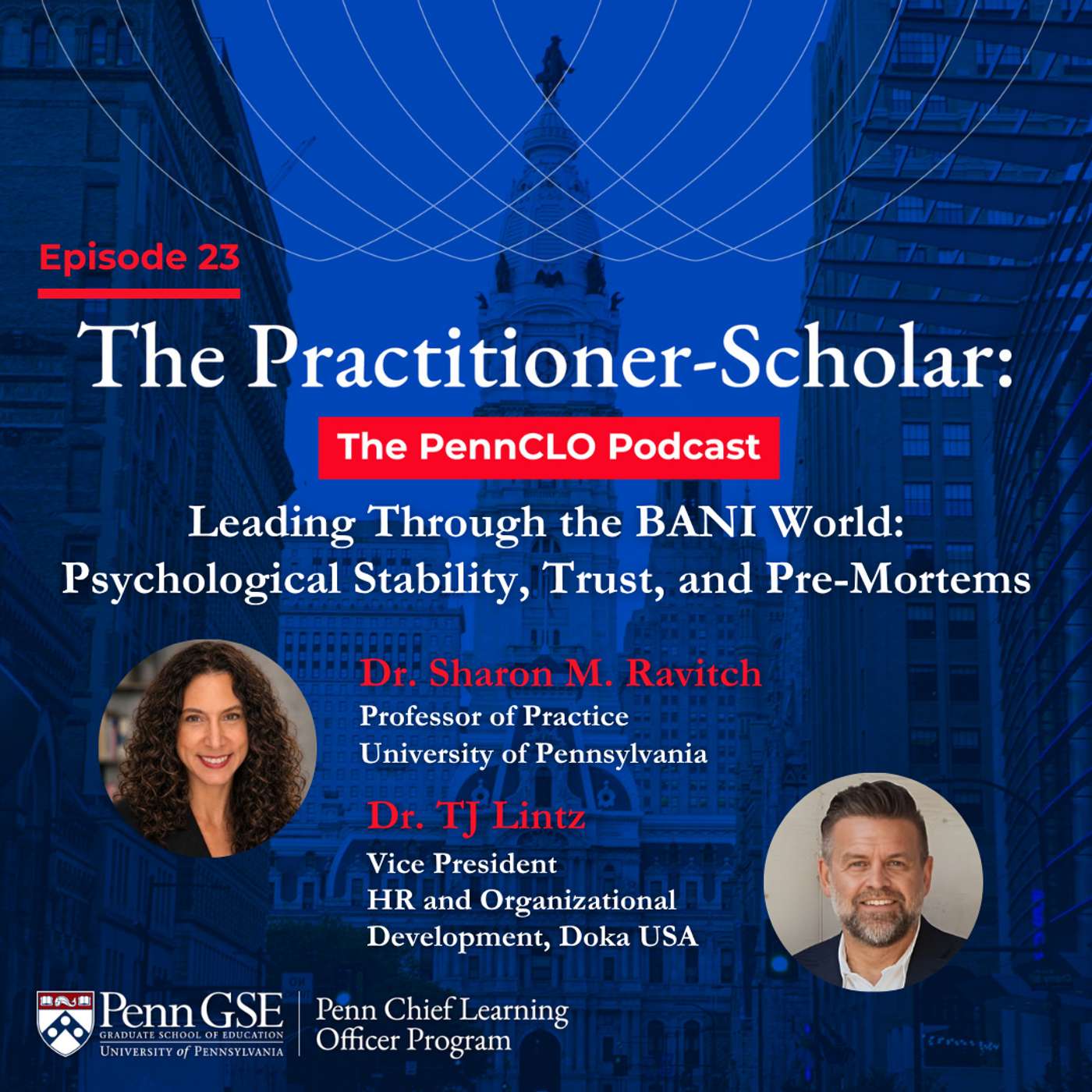
Dr. Sharon Ravitch is joined by HR executive and scholar-practitioner Dr. TJ Lintz. Reflecting on his doctoral research at the University of Pennsylvania, Dr. Lintz explores how leaders transform moments of extreme disruption into catalysts for long-term organizational evolution.This episode explores the intersection of crisis management, artificial intelligence, and human-centered leadership. Dr. Lintz explains why artificial intelligence will never replace the human touch required for emotional support, but emphasizes how AI can serve as a vital sparring partner during risk assessment. He leaves listeners with actionable frameworks for creating safe conditions where employees at all levels can contribute transformative ideas. As a contributing author to the book Leaders as Architects of Change, co-edited by Dr. Ravitch and Dr. Raghu Krishnamoorthy, Dr. Lintz draws on his chapter to explore these ideas.Key topics:How effective leaders act as a stabilizing presence during high-anxiety organizational stormsThe role of artificial intelligence as a strategic sparring partner for strategic scenario planningWhy psychological stability forms the foundation for cross-functional collaboration and rapid decision-makingTransforming talent management frameworks to evaluate resilience before crises occurPractical steps for executive leaders to encourage intelligent risk-taking and "failing forward"Redefining executive leadership in a brittle, anxious, non-linear, and incomprehensible (BANI) environmentHow concise, frequent communication builds emotional infrastructure and reduces organizational anxiety
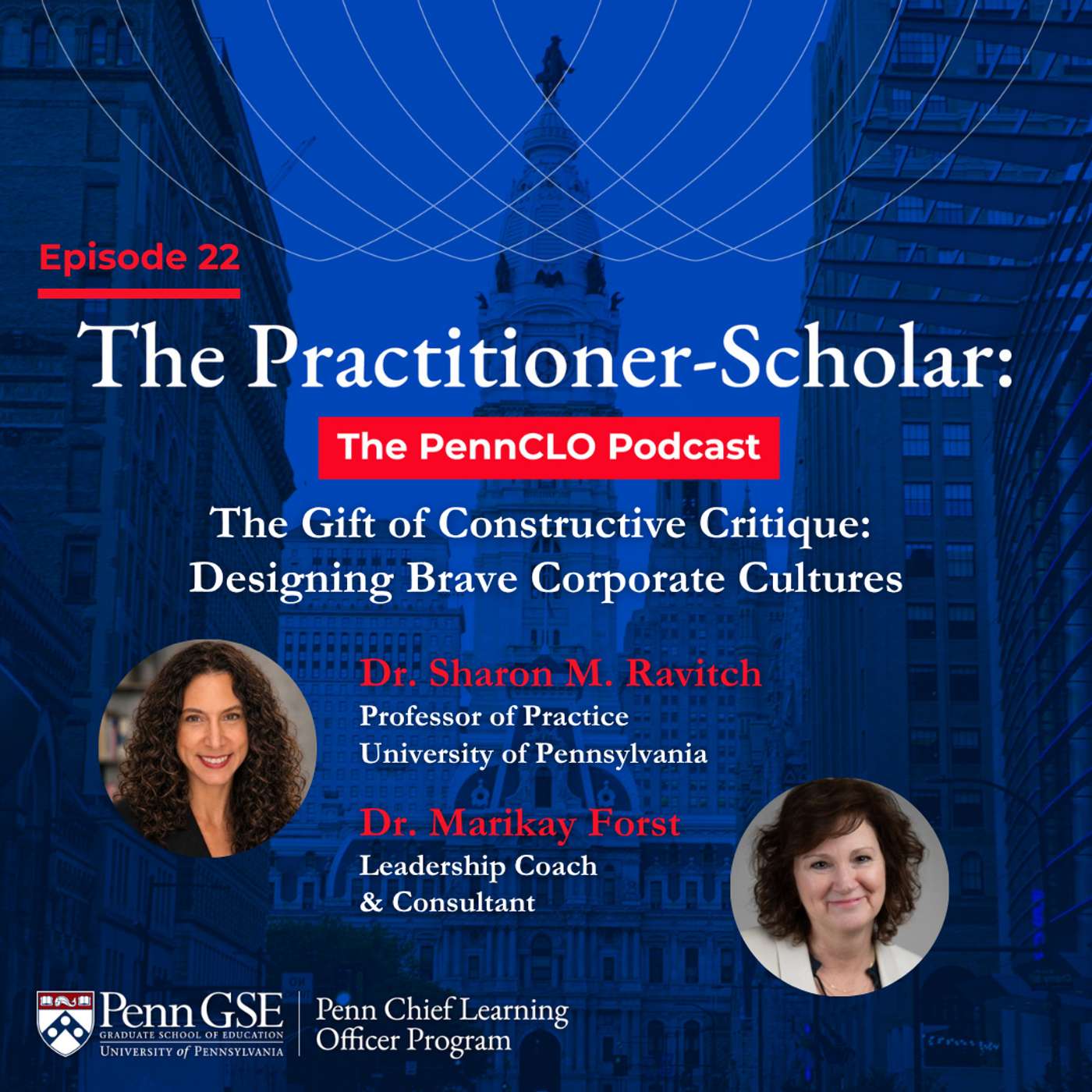
In this episode of the PennCLO podcast, Dr. Sharon Ravitch is joined by Dr. Marikay Forst, a distinguished leadership expert and author of the groundbreaking chapter, Architecting Dissent by Design: Psychological Safety, Diverse Thinking, and Brave Cultures, featured in the new book Leaders as Architects of Change.Dr. Forst’s work tackles a critical paradigm shift in modern organizational design: transforming how leaders perceive, encourage, and process constructive disagreement. Moving past traditional views that equate critique with disloyalty, she shares qualitative research proving that inviting dissenting voices is a leadership team's best defense against catastrophic errors. Through a collection of organizational practices and tools, this conversation provides a practical roadmap for top executives to build strategic, psychologically safe environments where multiple viewpoints are intentionally surfaced and acted upon.Alongside the technical strategies, Dr. Forst explores the human dynamics behind corporate decision-making—including the intersection of Carol Dweck’s growth mindset, the invisible costs of ignoring feedback, and the value of maintaining procedural discipline when facing intense time and budget constraints.Key topics:Why dissent is a strategic mechanism for risk prevention and corporate innovationThe blueprint for aligning stated organizational core values with actions.Managing power dynamics and neutralizing the unconscious consequences of speaking upPractical tools for leaders: Designing effective pre-mortems and structured brainstorming sessionsCultivating a growth mindset to enhance constructive critique
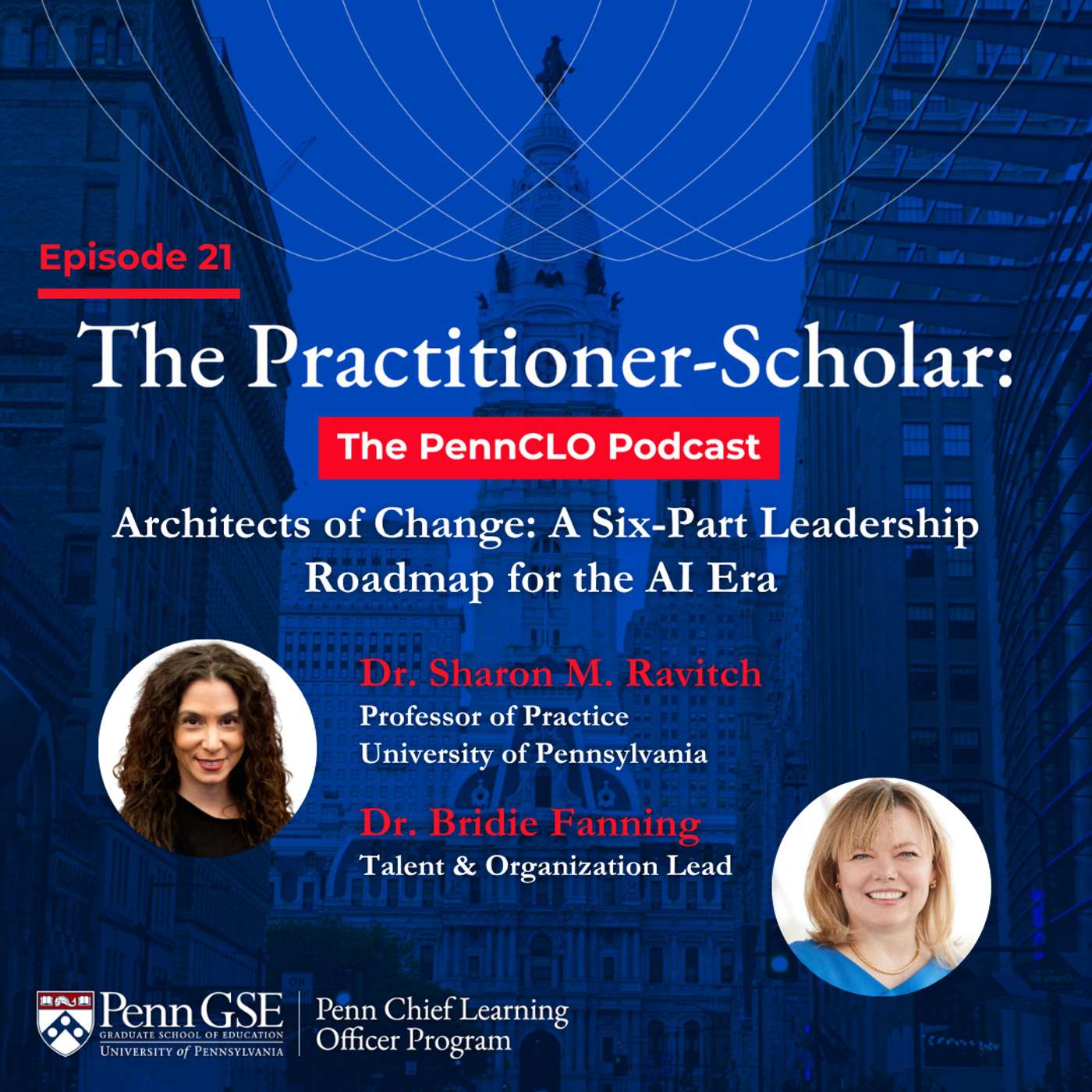
In this episode of The Practitioner Scholar, Dr. Sharon Ravitch sits down with Dr. Bridie Fanning, Managing Director at Accenture and former Chief HR Officer, to discuss her critical contributing chapter to the ground-breaking new book, Leaders as Architects of Change (edited by Dr. Sharon Ravitch and Dr. Raghu Krishnamoorthy). While modern headlines focus heavily on what artificial intelligence can automate, Dr. Bridie Fanning argues that the future of work will not be dictated by technology, but by leadership choices. This conversation dives deep into her chapter's core ethos: that AI is fundamentally a human learning story, that leaders must build psychological safety for continuous experimentation, and that traditional, linear change management models must be entirely rewritten to align with the framework of the book.Key Takeaways:Amara’s Law in Action: Why we are currently overestimating AI's short-term hype while drastically underestimating its massive, long-term societal and operational impact.The Death of Traditional Change Management: Moving away from traditional "Point A to Point B" transition models and adopting dynamic, continuous, and iterative organizational capabilities.The "Inverted" Problem-Solving Approach: Why leaders must stop asking "What can AI do?" and instead start with their biggest organizational pain points, working backward to find technical solutions.

Comments

Download from Google Play

Download from App Store
 United States