


 Claim Ownership
Battling with Business
Subscribed: 10Played: 330
Subscribe

© Copyright 2023 All rights reserved.
Description
In this podcast, Gareth Tennant, a former Royal Marines Officer, and Chris Kitchener, a veteran of the software development world, explore ideas and concepts around teams and teamwork, leaders and leadership, and all things in between. It’s a discussion between a former military commander and a business manager, comparing and contrasting their experiences as they attempt to work out what makes teams, leaders, and businesses tick.
159 Episodes
Reverse
In this week’s episode we continue our exploration of what it really means to lead and manage in a world increasingly shaped by AI. Rather than asking whether AI is good or bad, we focus on a harder and more important question: how leadership, culture, trust and experience change when intelligent systems begin to make decisions alongside us, or instead of us.
We reflect on how quickly AI is moving from a visible tool to an embedded part of everyday systems, much like navigation or automation in heavy industry, and what that means for managers who may find themselves acting less as decision makers and more as the accountable interface between machines and organisations. We dig into the uncomfortable reality that junior roles, often the foundation of experience and judgement, may be the first to disappear, and ask how organisations can still develop depth, mastery and resilience without simply hollowing out the future talent pipeline.
The conversation then turns to values, culture and trust. If AI systems increasingly communicate with customers, recommend actions, or even shape strategy, how do leaders ensure those systems reflect the culture they claim to stand for. We explore why culture is not something you can just encode once and forget, why predictability matters, and why leading by algorithm demands very different skills from leading by example.
We also challenge the idea that humans will always retain a unique edge, questioning assumptions about creativity and empathy, while still arguing that leadership choices, trade offs and restraint matter more than ever. This episode is not about answers. It is about asking better questions, understanding the risks of being confidently wrong, and recognising that how leaders respond now will shape whether AI strengthens organisations or quietly undermines them. If you lead people, build teams, or care about the future of work, this is a conversation you cannot afford to ignore.
In this week's episode we start a new mini series by asking a question that sits underneath all the noise about artificial intelligence and jobs.
What does leadership and management actually mean when AI becomes a permanent participant in how organisations think, decide, and act?
Rather than debating whether AI is good or bad, we focus on the practical reality that it is already here and already shaping behaviour, decisions, and power. We explore how leaders can lead when parts of the organisation are no longer human, how experience and judgment are built if entry level roles disappear, and what happens to values, culture, and trust when decision making becomes increasingly opaque.
Drawing on examples from business, education, policing, medicine, and the military, we talk through why this is not just a philosophical discussion but a very real leadership challenge.
The leaders who succeed will be the ones who understand how to work with AI as a judgment system rather than treating it as a simple tool or a replacement for thinking.
This episode sets the context for the rest of the series and makes the case that leadership in an AI enabled world will demand more clarity, accountability, and intent than ever before. If you care about building teams, developing future leaders, and retaining trust in complex organisations, this is a conversation worth spending time with.
In this week’s episode we look at one of the most uncomfortable leadership stories of the modern business era. Elizabeth Holmes and Theranos force us to confront how easily confidence, narrative, and status can be mistaken for competence and truth. We explore how a young, driven, and highly credible founder built a nine billion dollar company, attracted world class investors, and became a symbol of innovation, while quietly crossing the line from ambition into deception.
We talk about the cult of leadership, the danger of survivor bias, and why we are so keen to believe in heroic founders. We examine the grey area between selling a vision and selling something that simply does not exist, and how leaders can gradually drift from optimism into outright dishonesty without a single dramatic moment of failure.
The episode explores integrity, authority bias, and the responsibility of both leaders and followers. We discuss why intelligent, experienced people can still be fooled, what this story teaches us about accountability, and how leaders should balance hope, confidence, and truth when the stakes are high.
This is not just a story about one flawed individual. It is a lesson for anyone who leads, invests, follows, or wants to believe in simple stories of success. If you care about leadership, ethics, and decision making under pressure, this episode will challenge some comfortable assumptions.
In this week’s semi-emergency episode we discuss the recent events in Venezuela attempting to look beyond the obvious political and moral dimensions, and instead look to see what we can learn from a leadership, management and culture perspective. Of course, knowing Gareth and Chris it also leads to a conversation about the future of NATO!
If you've ever wondered what it takes to plan a military raid, well you've come to the right place. Gareth shares his military knowledge and shares what it takes to plan and execute the kind of raid we saw the US deliver in Venezuela on the 3rd of January.
However, beyond the military approach to planning, we also discuss some of the more uncomfortable truths in leadership and management. Most organisations talk endlessly about leadership and culture while quietly tolerating behaviours that undermine it. What are the short and long term impacts of this raid on culture and strategy not just in Venezuela and the US, but around the world. Was this raid a brilliant strategic success or is the answer more complicated?
We explore where leadership narratives drift away from reality, why management systems often reward the wrong things, and how well intentioned leaders can slowly lose credibility without ever noticing. We discuss why clarity, accountability, and trust are harder to maintain in modern organisations than most leaders admit, and why confidence is often mistaken for competence.
If you care about building teams that perform under pressure, leading people who trust your judgement, or understanding the potential long term impacts of your tactical actions, this conversation will resonate. It is a candid discussion designed to provoke reflection and, ideally, better leadership in the real world.
Leadership under extreme pressure is rarely about heroic speeches or rank. It is about judgement, trust, and knowing when to lead and when to follow.
In the second part of our conversation with Baz Gray former Royal Marine, polar explorer, leadership coach and now Yeoman Warder of the Tower of London we explore what Shackleton’s Antarctic expeditions really teach us about leadership today. Baz draws on his own experience recreating Shackleton’s most dangerous journey, sailing and climbing with 100 year old equipment, to unpack how teams survive when everything goes wrong.
We discuss why selecting the right people matters more than technical brilliance, how leaders earn authority by being good followers, and why humility and self awareness are non negotiable in high pressure environments. Baz also reflects on transitioning from extreme expedition leadership to a highly traditional public facing role at the Tower of London, and what modern organisations can learn from both worlds.
This episode is for anyone leading teams through uncertainty, complexity, or sustained pressure. It challenges simple leadership models and replaces them with something more honest, demanding, and human.
In this episode of Battling with Business, Gareth Tennant and Chris Kitchener record from one of the most iconic leadership environments in the UK, the Tower of London, joined by Baz Gray, former Royal Marine, Arctic explorer, and Yeoman Warder.
Drawing on a career that spans reconnaissance operations, mountain leadership, extreme expeditions, and senior military command, Baz explores what calm, credible leadership really looks like under pressure. The discussion challenges loud, performative models of leadership and instead makes the case for quiet competence, consistency, and trust.
From leading soldiers in whiteout conditions to shaping behaviour in corporate boardrooms, Baz explains how leaders are revealed under stress, why patience and observation matter more than charisma, and how high performance teams are built deliberately over time.
Listeners will gain practical insight into decision making under pressure, the importance of self control, and how leaders earn respect through behaviour rather than authority. This episode is essential listening for anyone interested in leadership that endures when conditions are hardest.
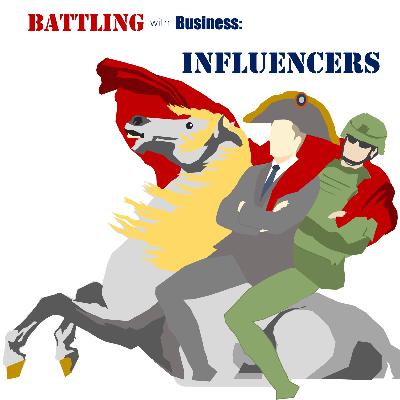
Battling with Business returns with Part Two of its Influencers series on Charles de Gaulle, moving from wartime exile to political dominance and lasting national legacy.
In this episode, Gareth Tennant and Chris Kitchener examine how leadership is forged not just through bravery or competence, but through narrative control, political instinct, and an unyielding sense of purpose. As de Gaulle outmanoeuvres rivals, frustrates allies, and repeatedly puts the idea of France above consensus or popularity, the discussion asks an uncomfortable management question: when does conviction become arrogance, and when does arrogance become effective leadership?
We discuss the rivalry with Henri Giraud, the power of communication and symbolism, leading without formal authority, and how long term vision can outweigh short term cooperation. The episode also explores de Gaulle’s post war leadership, his role in reshaping the French state, and the enduring impact of values driven leadership.
This is a nuanced discussion about legitimacy, influence, and the cost of single minded leadership. Ideal listening for anyone leading teams through ambiguity, politics, or competing centres of power.
In this Part 1 of 2, re-release of an earlier Influencers series of Battling with Business, Gareth Tennant and Chris Kitchener explore the leadership and influence of Charles de Gaulle, a figure often overlooked in British narratives of the Second World War. Through the lens of military history and modern management thinking, they examine how conviction, strategic foresight, and personal ego combine to shape leaders in moments of national crisis.
What does it take to declare yourself the voice of a nation when no one has elected you, few are listening, and defeat seems inevitable? Charles de Gaulle did exactly that, and in doing so reshaped France and Europe.
In this episode we'll learn that leadership is not always granted. Sometimes it is asserted. We'll also hear how sometimes strategic thinking often emerges from adversity, reflection, and exposure to different perspectives and that rigid doctrine can be comforting, but adaptability wins in complex and changing environments. We learn more about De Gaulle's personal conviction and how ego can both enable and endanger effective leadership. Influence often precedes authority, not the other way around.
Join us in this first episode and reflect on how de Gaulle’s journey from overlooked officer to self-declared leader mirrors modern challenges in business and organisational leadership. This episode challenges assumptions about legitimacy, strategy, and what it really means to lead when the stakes are highest.
This episode explores how leaders can navigate unprecedented change by understanding the hidden forces reshaping conflict, technology, and decision making. In this conversation with Dr Matthew Ford, we unpack how the smartphone has quietly transformed modern warfare and why leaders in every sector must rethink how they interpret information, manage uncertainty, and respond to rapid shifts.
We start to look at how the smartphone has blurred the line between civilian and combatant, reshaping risk and responsibility and how modern conflict is now inseparable from a participatory media environment where everyone contributes, knowingly or not. We discuss how organisations struggle when they assume they understand the environment and how leaders must cultivate curiosity, humility, and systems thinking.
It's clear that AI is not the beginning of radical change but the acceleration of trends already reshaping society and leaders must protect core expertise while adapting to technological change.
This episode of Battling with Business dives deep into modern leadership and management through the lens of defence innovation. Gareth Tennant and Chris Kitchener are joined by John Ridge, Chief Adoption Officer at the NATO Innovation Fund, to explore how technology, agility and organisational culture shape today’s capabilities.
Leaders often talk about innovation, speed and agility, but how do those ideas work when the stakes are measured in national security rather than quarterly targets? This episode reveals what real innovation looks like when it must be fast, iterative and mission‑critical.
You'll hear how and why NATO created a multinational deep‑tech venture fund and how modern defence challenges mirror classic product management problems. You'll learn why iteration, modularity and open architectures matter more than ever and how leaders can create cultures that embrace experimentation while managing risk. We also talk about the critical role of passion, mission alignment and end‑user closeness.
Listen to hear a powerful conversation that blends defence, technology and leadership lessons relevant for every leader, in or out of uniform.
In this episode Battling with Business explores leadership and decision making under pressure through a deep dive into “The War Game,” a five‑part immersive geopolitical simulation from Sky.
https://podcasts.apple.com/gb/podcast/the-wargame/id1547225334
Gareth and Chris unpack how realistic war gaming exposes blind spots, stress‑tests assumptions, and reveals how people truly behave when everything happens at once.
Leadership is easy when nothing is at stake. The real test is how you think, act, and adapt when the world tilts under your feet.
We hear why immersive simulations reveal more than theoretical discussions, how pressure changes decisions that seem obvious in hindsight, what war gaming teaches us about communication, clarity, roles, and information flow, how leaders can use structured stress‑testing in business just as effectively as governments use it in crisis planning and why confronting unlikely but high‑impact risks is essential for modern leaders.
Listen to hear how a fictional crisis uncovers real lessons for leaders in any environment.
"Thank God I have done my duty."
This episode explores leadership through the life and legacy of Admiral Horatio Nelson. Gareth and Chris unpack the myth, the reality, and the enduring lessons behind one of Britain’s most iconic naval commanders.
What makes someone a great leader when history elevates them to near‑mythical status? And what happens when we discover the real person beneath the legend?
Nelson’s success came from clear communication, trust, preparation, and personal courage. His “Nelson touch” showed how leaders build unity and belief through simple, human behaviours. While mythmaking distorts history, core leadership principles endure across eras and great leadership is not about perfection but about consistent, purposeful action.
This episode encourages listeners to reflect on what truly builds trust and followership, and why understanding leaders of the past helps us lead better today.
In this the week of remembrance in the UK, we commemorate those who have served and died in conflicts.
In a worthy re-release of a previous episode we sat down with Commander Roly Woods, a retired Royal Navy officer with over 46 years of service, to explore the personal and institutional journey of LGBTQ+ inclusion in the British Armed Forces.
This week's re-release is particularly relevant as only this week at the National Memorial Arboretum the Fighting with Pride team were invited to attend the Armistice Day service, in the presence of HRH The Princess of Wales, at which the Bishop of Lichfield talked of HM The King’s Dedication of the LGBT Armed Forces Community Memorial.
Roly Woods, laid a wreath at the LGBT Armed Forces Community Memorial. The wreath was affixed with a card which read:
“For those members of the LGBT community we have lost, many of whose names we will never know. Lest We Forget.”
As the LGBT Armed Forces Community Memorial Officer for the charity Fighting with Pride, Roly reflected on his early motivations to join the Navy, leadership experiences, and the dramatic transformation of military culture since the lifting of the ban on LGBT personnel in 2000.
Together, we delved into the challenges LGBTQ+ service members faced under institutional discrimination, from living in secrecy, to emotional isolation, to dishonourable discharges and loss of medals. Roly shared deeply moving personal stories and historic insights into how courageous individuals and strong leadership drove systemic change across the Royal Navy, leading to today’s more inclusive and emotionally intelligent environment.
We also discussed the ongoing efforts of Fighting with Pride, including:
Raising awareness of the Veterans’ Financial Recognition Scheme
Supporting LGBTQ+ veterans in restoring medals and service records
Building community through initiatives like the Snowdonia retreat
Leading the creation of the LGBT Armed Forces Memorial at the National Memorial Arboretum
Whether you’re interested in military leadership, organizational change, or the evolving rights of LGBTQ+ veterans, this episode provides an essential perspective on how empathy, courage, and advocacy can reshape even the most traditional institutions.
Listen now to hear about the untold stories behind the UK military’s transformation, and how leaders like Commander Woods continue to inspire change today.
Leadership is not just about having data. It’s about knowing when the data matters, and how to apply your experience. In a world obsessed with dashboards and algorithms, are you still cultivating your leader’s instinct?
In this episode of Battling with Business, Gareth and Chris dive into one of the most pressing questions for modern leaders: how do you balance data with intuition? From battlefield intelligence to product strategy, they explore when leaders should trust the numbers and when human judgment, instinct, and experience must take the lead.
Data is powerful, but insufficient without human interpretation and strategic context. Intuition is informed by experience, not guesswork. The best leaders fuse insight from multiple data sources rather than rely on one. AI amplifies decision‑making but doesn't replace judgment, creativity, or innovation. Knowing what question to ask is often more important than knowing the answer.
Change is inevitable, but how leaders handle transitions, both their own and their team’s, defines long-term success. In this reflective episode, Chris and Gareth explore the many faces of transition: from promotions and career shifts to redundancy, retirement, and identity change.
Drawing on Chris’s recent personal experience of redundancy, they unpack how leaders can guide themselves and others through the uncertainty of change with honesty, empathy, and resilience. The discussion ranges from the emotional impact of transitions to practical advice on handovers, adaptability, and reframing identity.
They explore how leadership is tested most during times of transition, how managing emotional as well as operational aspects of change is critical. They also discuss how every transition, personal or professional, is an opportunity to grow. Leaders must support both those leaving and those staying behind and change, handled well, strengthens resilience and adaptability.
If you’ve ever faced a major shift in work or life, or led others through one, this episode offers grounded wisdom, humour, and perspective. Tune in to reflect, reset, and rethink how you handle transition.
In this high-stakes episode, a release of one of our very first episodes, Gareth Tennant shares a gripping real-world account of how a small, well-trained team of Royal Marine Commandos outsmarted a group of Somali pirates, and what it reveals about building truly adaptive teams.
Discover how elite military units use repetition, rehearsals, mission command, and common operating procedures to stay agile under pressure. From battlefield coordination to business boardrooms, this episode breaks down the core principles behind high-performance teamwork in unpredictable environments.
Whether you're leading in crisis or just want to level up your team's adaptability, this story-driven episode is packed with actionable insights on resilience, trust, and executing flawlessly when it matters most.
Perfect for leaders, entrepreneurs, and teams who want to thrive under pressure.
Tune in now to learn how to build agile, high-functioning teams that can outpace the unexpected.
In this episode of Battling with Business, hosts Gareth Tennant and Chris Kitchener explore the life and leadership lessons of Sir Richard Branson the entrepreneur, adventurer, and founder of the Virgin Group. Branson’s story is one of audacious vision, relentless optimism, and authentic leadership that continues to inspire generations of business leaders.
What does it take to build a global empire while staying true to yourself, and still have fun along the way? Leadership isn’t about control, it’s about curiosity and courage. Failure isn’t fatal; it’s feedback for the next attempt. Passion and fun can drive exceptional performance. Authenticity builds loyalty faster than authority ever can. Vision, optimism, and risk-taking create lasting impact.
From selling records and surviving a near-drowning in the Atlantic to building airlines and space ventures, Branson’s journey reveals how courage, curiosity, and compassion can coexist with commercial success. Gareth and Chris unpack his philosophy, from hiring to your weaknesses and putting people first to embracing failure as a path to learning.
Tune in to hear how Branson’s life of adventure mirrors the principles of great leadership, and why “Dr. Yes” might just be the ultimate example of leading with positivity.
In this episode of Battling with Business, Gareth Tennant and Chris Kitchener take on the challenge of Red Teaming, a structured way to challenge assumptions, stress test plans, and think like competitors or critics. They put the concept into practice by running a live exercise on air.
Listeners will learn why Red Teaming is different from everyday critique or boardroom debates, how it helps organisations avoid blind spots, groupthink, and overconfidence along with real examples from military operations, business transformations, and the COVID-19 crisis and then finishing up with a quick discussion about practical tools for applying Red Teaming in organisations of any size
Whether you are a CEO, team leader, or individual contributor, this episode will get you thinking differently about planning and resilience. Imagine a business where Red Teaming is a habit rather than a rarity. That's a business far better prepared for the unexpected!
Listen in to learn how Red Teaming can sharpen your strategy and strengthen your leadership.
Gareth Tennant and Chris Kitchener reveal the second half of the UK military’s seven-step planning model, and show how every business can boost resilience and performance with clear, communal frameworks.
This episode focuses on turning strategy into execution: allocating resources, orchestrating timing, defining coordination, and establishing practical control measures. The discussion tackles cross-departmental alignment, reporting cycles, culture, and learning how to manage through real-world complexity and unexpected change. Listeners will discover how the discipline of “chunked” planning and cascading communication connects even the most junior team members to the outcome.
If you’re serious about building agile, winning teams in any industry, don’t miss this practical, engaging conclusion to the Combat Estimate series, and walk away ready to apply a proven template for smarter, faster business execution.
Unlock the secrets of robust planning and flexible leadership by learning from both the battlefield and the boardroom.
In the first episode of our exploration of the British military’s Combat Estimate, Gareth and Chris kick off a two-part deep dive into the UK military's renowned 'Seven Questions' Combat Estimate — a practical, repeatable approach for building resilient teams and effective management strategies.
This episode charts how military planning models, built for complexity and clarity, can transform business practices. Explore why a decision is better than indecision, and why planning is not just about the document but the discussion and alignment across every level. Key takeaways include the power of context, the importance of communicating intent, and the principle that adapting is winning — whether you're leading eight people or a thousand.
Don’t miss the engaging debate on why organizations often rush into execution over thoughtful strategy, and how adopting a repeatable planning framework can drive competitive advantage. Listen now for insights and prepare for Part 2, where Gareth and Chris unravel the remaining questions and reveal how every business can use the Combat Estimate to win in fast-changing environments.

Comments

Download from Google Play

Download from App Store
 United States