DiscoverTrey Knowles Comedy
Trey Knowles Comedy
Claim Ownership

Trey Knowles Comedy

Author: Trey Knowles

Subscribed: 1Played: 8
Share

Description

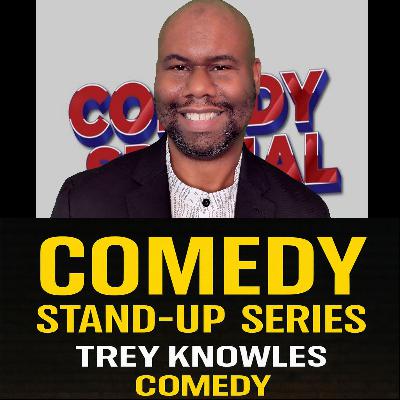
Welcome to a world where everyday life becomes hilariously extraordinary. Trey Knowles Comedy dives into the mind of stand-up comedian Trey Knowles—an ordinary guy with an uncanny ability to find humor in the most relatable moments. From the awkward to the everyday, Trey's storytelling blends sharp observational humor, clean comedy, and down-to-earth charm that keeps audiences laughing from start to finish.


But Trey Knowles isn't just about jokes—he's a thinker. Known for his allegorical comedy specials, Trey weaves humor together with deeper philosophical and spiritual themes. His stand-up often explores subjects like faith, deception, truth, and the complexities of modern society. Through wit, sarcasm, and clever biblical references, he invites his audience to laugh, reflect, and see life from a fresh perspective.


Whether he's breaking down everyday moments or uncovering deeper meaning beneath the surface, Trey Knowles brings a unique comedic voice that entertains, challenges, and inspires.
72 Episodes
Reverse
Trey Knowles' “Contentment” is a funny stand-up piece that flips the so-called American Dream on its head. We're told to live to work and work to prepare for death — but that's not the life God designed for you. That's the life the enemy sells. While the world pushes life insurance, God already prepared the way for eternal life. He's done the heavy lifting. The pressure is off. Your job isn't to grind yourself into the ground — it's to live, trust, and learn how to be content.
Trey Knowles' “Chasing the Wind” is a hilarious stand-up routine where Trey breaks down life's greatest scam: vanity on top of vanity. Everybody's out here sprinting after success, money, and approval—basically chasing the wind… and spoiler alert: the wind never clocks in. In the set, Trey tells a wild allegory about his son-in-law's dad, who worked himself into the ground and never actually got around to living. Now the son-in-law says he misses his dad and wishes he could come back to life. Trey fires back, “Your dad does NOT want to be resurrected just to punch another timecard. Heaven ain't got a 9-to-5!” The routine turns into a comedy sermon about hustling yourself into the grave, grinding just to die tired, and realizing too late that you spent your whole life chasing the wind instead of enjoying the breeze. It's a funny, sharp, and painfully relatable take on working hard, missing life, and learning the ultimate lesson: don't die exhausted from nonsense.
Trey Knowles' Love and Hate is a sharp, thought-provoking comedy special that dives into the messy realities of human emotion. With humor and plainspoken wisdom, Trey reminds us that love corrects—even when it's uncomfortable—while fools despise instruction and refuse to grow. Through laughter and truth, Trey challenges audiences to confront resistance to correction, arguing that rebuke, when rooted in love, helps others learn and mature. He draws a clear contrast between love and hate: love seeks restoration, while hate lives in condemnation, offering neither repentance nor mercy. At the heart of the special is a simple but powerful question: Are you zealous for love or for hate? Because in the end, the choice is yours—you either love what is good or hate what is evil. Packed with laughs, insight, and common sense, Trey Knowles delivers a message that sticks long after the punchlines land.
Trey Knowles' “Tarzan Transitive” is an allegorical comedy that uses satire to question how society approaches belief, identity, and acceptance. Through exaggerated humor, Knowles invites the audience to consider how certain claims are embraced without critical examination. In one comedic example, he jokingly describes himself as an ape, prompting laughter because of the obvious absurdity of the claim. This moment is used as a metaphor to explore how ideas can feel emotionally convincing while still appearing illogical when taken literally. The comedy is designed to provoke thought and discussion rather than offer literal judgments, relying on parody to challenge the audience's assumptions. Trey explains, “You see, all of this sounds like a schizophrenia mental illness when taken literally,” urging the audience to reflect critically.
Justifiable American Tails is a bold and hilarious stand-up comedy by Trey Knowles that exposes the irony of modern justification—where claiming to be “without sin” becomes permission for the American Justice League to act without restraint. Through sharp satire, Knowles likens this mindset to modern-day Roman or German systems dressed in the language of Christianity, where Jesus is spoken of, but His spirit and actions are nowhere to be found. This comedy feels like witnessing a modern Barabbas moment, not among ancient crowds, but within the citizens of America themselves. The audience is confronted with a powerful question: what do we choose—true moral righteousness or a system elevated into a personal religion, justified for some and condemning to others? With fearless humor, Trey Knowles contrasts Constitution versus conscience, delivering a stand-up performance that is both laugh-out-loud funny and uncomfortably revealing.
Trey Knowles' The American Esau is a funny stand-up piece in which Trey travels to Arkansas to visit his friend Esau—a redheaded lawyer who loves guns and blowing things up. Esau takes Trey hunting to introduce him to his way of life, proudly showing off his passion for destruction. As the trip unfolds, Trey tries to understand why Esau kills animals he has no intention of eating. The mystery deepens when Trey reveals that Esau once possessed a special birthright—the Book of Truth—but traded it away for a gun so he could continue destroying things.
Trey Knowles' The Real John Wayne is a hilarious stand-up in which he recounts a trip to Texas to visit his white Uncle Bobby, a Constitution-loving gun enthusiast. Through stories about Uncle Bobby and his friends, Knowles takes a sharp and insightful look at human behavior—especially their racial attitudes. He compares these gun-worshipping personalities to their idol, John Wayne: people who glorify violence and seem ready to shed blood at any moment. The irony, and much of the comedy, comes from the fact that they proudly call themselves Christians. With humor that feels uncomfortably real, Knowles exposes the contradictions and behavior of Uncle Bobby's circle, touching on experiences as tense and revealing as driving through a sundown town.
Trey Knowles' The Justice League is a short, comedic satire about “superhero Christians” who compromise with the world—even though God the Father tells us not to love the world. Instead of following Him, the Justice League Christians do the opposite, claiming “liberty for some and justice for all.” Trey jokingly portrays them as flag-waving, gun-worshippers. When the Justice League becomes offended and asks, “Why are you judging me?” Trey humorously responds, “I don't even know you—and why are you pointing your guns at me?” He then walks away, ending with the reminder that whoever wants to be a disciple of Jesus must deny themselves.
In “Higher Education of America,” Trey Knowles delivers a sharp, funny comedy set aimed at college students, calling out the hypocrisy of their parents—many of whom are now judges and lawyers. Knowles humorously reminds students of their parents' own wild behavior during their college years, especially at fraternity parties, and contrasts it with the moral judgment those same parents now pass on others. With playful embarrassment and a memorable joke about “casting the first stone,” Knowles exposes the double standards behind authority, respectability, and self-righteousness, turning laughter into a pointed critique of hypocrisy.
In “Woe to You, Teachers of the Law,” Trey Knowles delivers a short comedic message aimed at college students studying to become attorneys. Using humor and satire, Trey challenges them not to imitate the hypocrisy he sees in past generations of lawyers and judges who present themselves as morally superior while judging others. He points out the contradiction of enforcing the law unevenly—punishing some harshly while excusing the same offenses in others—and exposes the pretense of appearing holy without acknowledging personal wrongdoing. Beneath the comedy, the message carries a serious critique of hypocrisy, urging future attorneys to pursue honesty, humility, and integrity rather than self-righteous judgment.
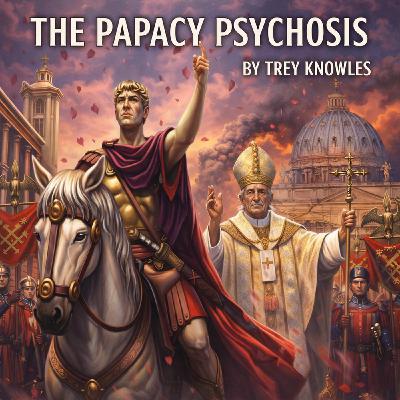
The Papacy Psychosis is a stand-up allegory comedy special by Trey Knowles that blends sharp satire with deliberately unhinged humor. Throughout the performance, Knowles playfully challenges the Vatican's claim to moral and spiritual dominance, joking that it seeks to control the world by positioning itself as Earth's ultimate authority. A standout bit riffs on the Pope's claim to hold the “keys to heaven,” with Knowles quipping that they're borrowed from Peter—who, he argues, would never call himself “Pope” because he recognizes only one Father in Heaven. From there, the jokes escalate: if they can “steal” Peter from Jesus, Knowles warns, they'll steal from you too—your money, your identity, even your citizenship. Through bold punchlines and absurdist logic, Knowles turns paranoia into parody, bringing the idea of psychosis to life in a provocative, laugh-forward comedy special.
Trey Knowles' “Members of Your Own House Is Your Enemy” is a short, confrontational comedy built on satire, scripture, and sharp irony. In the set, Trey jokes about refusing to waste his time arguing with people who only mock faith instead of seeking truth, saying he won't cast “pearls” to audiences who have already made up their minds. He then turns his focus inward, humorously criticizing churches and religious institutions that, in his view, compromise their convictions and selectively follow God's will. Through exaggerated contrasts and blunt punchlines, Trey explores the frustration of spiritual hypocrisy and the idea that opposition often comes not from outsiders, but from those who claim to share the same faith. The comedy lands on a recurring, tongue-in-cheek refrain that captures the heart of the set: sometimes the biggest enemies aren't strangers—but members of your own house.
“She Is a Snake” is a stand-up allegory comedy piece by Trey Knowles that humorously explores temptation, deception, and misplaced authority through the metaphor of the snake. Using wit and exaggeration, Knowles reimagines the snake not just as a symbol of temptation, but as a manipulative figure that convinces people it holds authority over God on Earth—encouraging them to do the exact opposite of what they're told. The comedy escalates as the snake's influence grows, exposing how easily deception can masquerade as wisdom, leadership, or even love. In Knowles' telling, the snake doesn't just tempt—it recruits, dominates, and ultimately demands worship, positioning itself as a false “father” figure. The absurdity highlights how far influence can go when people stop questioning the source of authority. “She Is a Snake” blends satire and social commentary, turning a familiar symbol into a comedic lens on obedience, power, and how temptation succeeds not through force, but persuasion.
Alien Invasion is a bold and thought-provoking stand-up comedy special from Trey Knowles that flips conspiracy culture on its head. While most people agree aliens don't exist, Trey asks a far more unsettling question: what if the real invasion isn't from outer space—but spiritual? What if what we call “aliens” are more like watchers—similar to angels—tasked with observing humanity and intervening before people destroy themselves through their own wickedness? Blending sharp humor with biblical insight, Trey explores the idea that what many label as “alien influence” closely resembles spiritual warfare—forces attempting to infiltrate human minds like parasites. Drawing inspiration from Ephesians 6:12, he humorously breaks down how unseen principalities and powers may be shaping human behavior in ways we rarely acknowledge. Trey also connects pop culture to theology, referencing the fictional destruction of Superman's home planet, Krypton, by the villain Brainiac—an entity that consumes the minds and souls of the corrupt and prideful. Through comedy, Trey challenges audiences to reflect on the consequences of persistent evil, moral decay, and ignoring God's righteous decrees. Alien Invasion is comedy with depth—funny, imaginative, and unsettling in the best way—inviting laughter while provoking deeper thought about spiritual influence, human behavior, and the unseen battles shaping the world today.
Trey Knowles' “America Is Not Ready for Aliens” is a short, funny stand-up comedy where Trey Knowles jokes that Americans are completely unprepared for an alien landing. Trey imagines different “first contact” scenarios and none of them go well. What happens if a gay American meets an alien and the alien starts asking uncomfortable questions like, “How do you reproduce?” What if a hardcore gun lover encounters the alien and it innocently asks, “Why do you like destruction?” Through exaggerated but relatable situations, Trey highlights the absurdity, confusion, and contradictions within American culture. With sharp observations and playful sarcasm, Trey jokingly concludes that America is not ready for aliens, turning social commentary into a laugh-out-loud exploration of what would really happen if extraterrestrials showed up.
Trey Knowles' “The World's Reaction to Aliens” is a funny stand-up bit imagining what would really happen if aliens landed on Earth. Trey breaks down how the world—especially America—would react, joking that nations would argue and fight over the aliens instead of listening to them. The comedy takes a sharp turn when Trey suggests the aliens might come telling humanity to repent, but people aren't ready—because the world is already too wicked. Funny, bold, and thought-provoking.
Trey Knowles - UFOs

Trey Knowles - UFOs

2025-12-2202:59

“UFOs” is a short but powerful comedy bit where Trey Knowles explains why aliens avoid Earth—it's too evil, too wicked, and way too confusing. As Trey jokes about where aliens could realistically land, the laughter turns into reflection. His deeper point hits hard: if societies can't accept the people who were here first, what chance would aliens have? A funny take with a serious message about the human heart.
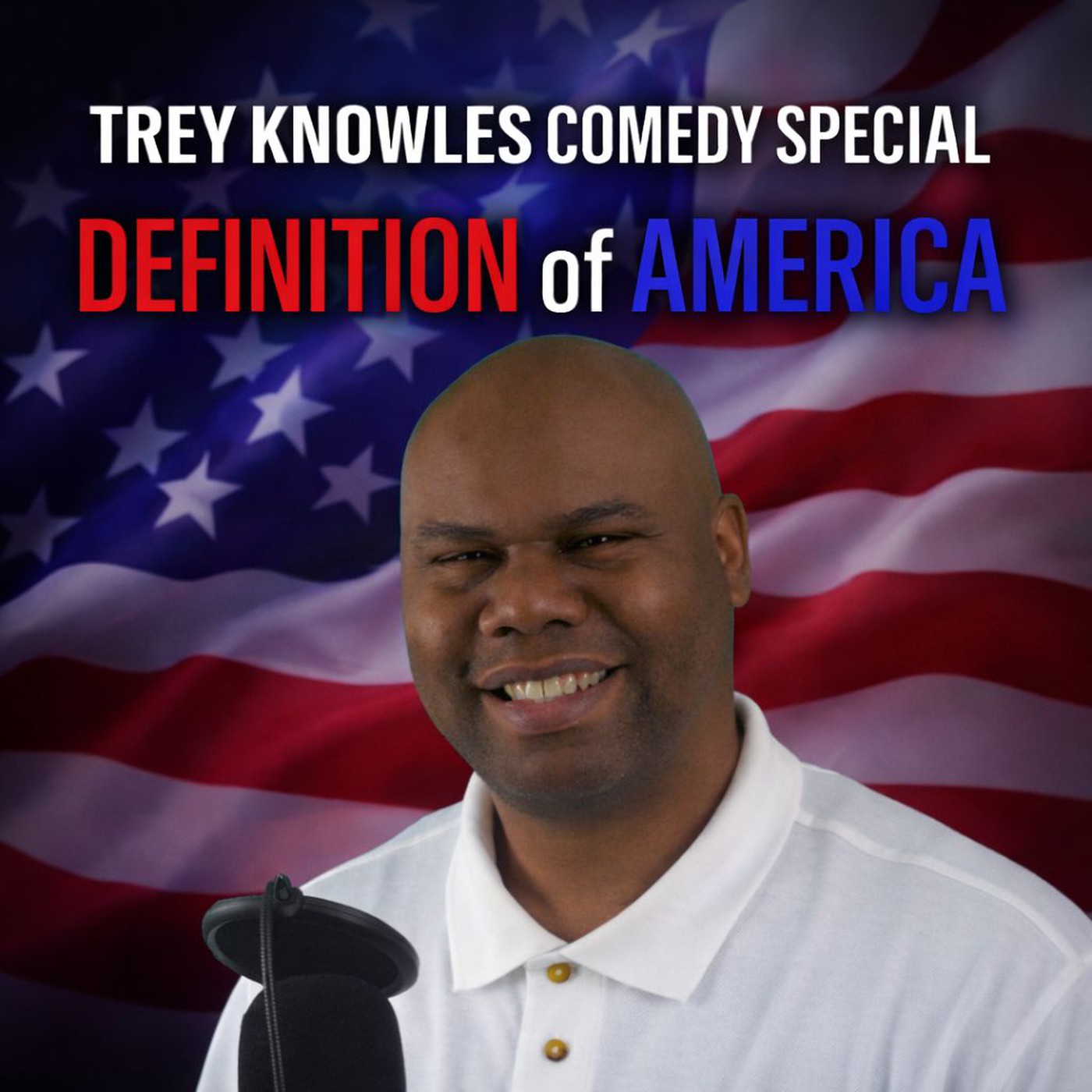
Trey Knowles' “Definition of America” is a bold stand-up comedy piece that jokes about how people in America define their identity through false idols. Trey humorously points out that when people don't know who they are, the devil is quick to offer them a definition—often one rooted in negativity and behavior opposite of God. Through stories about his friend Definition, Trey exposes how negative labels shape identity, while also diving into the deeper reason behind the “Definition of America,” connecting it to the mistreatment of Black people and the lasting impact of slavery. Blending sharp humor with truth, Trey challenges audiences to laugh, reflect, and rethink where identity really comes from.
Trey Knowles' “Definition Get Fired” is a short stand-up comedy piece built around irony and consequences. Trey jokes about getting his Black friend, Definition, fired for repeatedly using the N-word toward him. The humor escalates when Trey turns the tables—pointing out that Definition once got Trey's white friend fired for doing the same thing. What makes it funny is the hypocrisy and the lesson behind it: what goes around comes around.
Trey Knowles' The Visit of Definition is a comedic piece that uses humor to explore why meaningful improvement in the Black community is often difficult. He jokes that the issue is not a lack of money—in fact, more money could make things worse—but rather a poverty of spirit. Through satire, Knowles imagines what might happen if he openly confronted Definition's friends with this uncomfortable truth.
loading
Comments