


 Claim Ownership
Smarter Sourcing
Subscribed: 3Played: 23
Subscribe

© Copyright 2024 All rights reserved.
Description
The Smarter Sourcing podcast is dedicated to helping sourcing, procurement, and finance leaders elevate their influence and get their seat at the table. Each episode features conversations with innovative leaders, sharing best practices, lessons learned, and actionable insights you can apply immediately. Whether you’re focused on procurement strategies, supply chain optimization, or aligning financial goals with operational excellence, this podcast will leave you with actionable insights that you can immediately put to work.
36 Episodes
Reverse
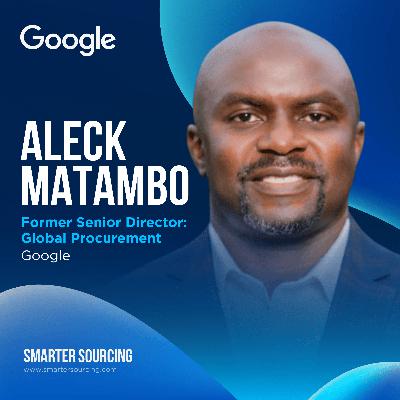
Aleck Matambo's approach to supplier relationships proved critical during Dell's COVID-era factory relocations. When inventory shortages forced allocation decisions across the industry, suppliers prioritized Dell because of partnerships built long before the crisis. His framework moves beyond transactional cost negotiations to create symbiotic relationships focused on innovation, market insights, and long-term value creation. This partnership model becomes essential during supply chain disruptions, enabling faster adaptation and stronger resilience against geopolitical challenges that continue reshaping global manufacturing.
Aleck’s experience at Google reveals that most procurement teams struggle with AI adoption because they lack aligned strategy and change management. Rather than implementing AI tools to improve existing workflows, he advocates for using AI's transformational capabilities to reimagine operating models entirely. The key lies in selecting three to five priority areas, building strong business cases that address change impact, and investing in reskilling so teams view AI as capability augmentation rather than job replacement.
Topics discussed:
How e-procurement and e-auctions in automotive achieved 20-30% savings while enabling low-cost sourcing expansion into China.
The transition from operator to consultant, bridging the gap between conceptual strategy and practical implementation.
Partnering with senior executives to identify how procurement addresses boardroom priorities like innovation, resilience, and growth.
Redefining procurement as a strategic enabler rather than cost center through executive partnerships, data-driven decision making, and leveraging AI and digital tools to reimagine workflows and organizational value.
Using data as a compass for opportunity identification rather than a mirror for cost savings alone.
Building symbiotic supplier relationships that deliver competitive advantages during crises.
The balance of trade program where procurement opened doors for sales teams by leveraging supplier relationships that sales didn't have.
AI implementation challenges where 85-95% of programs fail to achieve ROI, requiring aligned corporate strategy, prioritized use cases, strong change management, and focus on reskilling rather than replacement.
Moving beyond cost-focused metrics to measure total cost of ownership, supplier partnership quality, third-party risk management, and procurement's contribution to organizational resilience and agility during supply chain shocks.
Listen on Apple
Listen on Spotify
Watch on YouTube
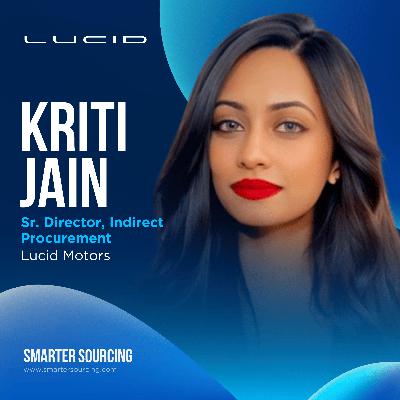
Kriti Jain, Sr. Director of Indirect Procurement, walked into Lucid Motors to find an indirect procurement function that barely existed — a team in single digits without the infrastructure to support a scaling EV manufacturer competing against established players. Within a year, she built what she calls "indirect procurement 2.0," growing to nearly 30 people globally while establishing frameworks that position procurement as a strategic partner rather than a cost-cutting function.
Her grandfather, who built an ice factory by hand in India, taught her at age 10 to trace problems upstream to root causes rather than wait for symptoms to cascade. That lesson about following data to find solutions shapes how she approaches organizational transformation decades later, actively seeking companies with "maximum problems" because that's where change creates the most value. She explains why 80% information is enough for decision-making when you can bridge the gap with accumulated expertise, how her team resolves stakeholder pushback through peer-to-peer subject matter expert engagement rather than escalation, and what it takes to earn credibility with engineering-focused leadership in a capital-intensive startup racing established competitors.
Topics discussed:
Building procurement infrastructure for technology, manufacturing, and automotive operations simultaneously in an EV startup environment.
The decision to prioritize tomorrow's organizational scalability over immediate cost savings when defining transformation success metrics.
An 80% information threshold for decision-making that relies on accumulated cross-industry expertise to bridge remaining uncertainty.
Developing team ownership mindsets that enable subject matter experts to resolve stakeholder pushback without leadership escalation.
How intentionally targeting companies with maximum operational chaos creates the most valuable conditions for professional growth.
The three-pillar focus strategy of technology innovation, policy evolution, and people development to avoid overwhelming teams with market changes.
How peer-to-peer communication between procurement specialists and business stakeholders builds stakeholder buy-in.
Building procurement team capabilities by hiring for ownership mindset and communication effectiveness.

LogicSource Board Chairman & Former CFO of Victoria’s Secret Tim Johnson's three-pillar methodology for collaborative cost cultures centers on objective third-party benchmarking, transparent measurement systems, and positioning procurement teams as strategic partners at the decision-making table. His approach consistently delivered results by focusing resources on growth and innovation rather than headcount reduction.
His organizational structure insights prove equally valuable: he advocates for indirect procurement reporting through finance rather than operations, citing the analytical rigor and accountability that finance leaders bring to cost initiatives. This ensures savings actually flow through P&L statements rather than disappearing into budget assumptions.
Topics discussed:
Building cost-conscious cultures through collaboration rather than budget cuts to fund growth and innovation initiatives.
Implementing three-pillar methodology: objective third-party data, transparent measurement systems, and strategic partnerships.
Addressing the "episodic problem" where companies go to market infrequently versus specialized providers' continuous benchmarking.
Positioning indirect procurement under finance leadership for analytical rigor and P&L accountability.
Creating regional micro-distribution centers using closed retail spaces to accelerate store remodeling timelines and reduce project delays.
Applying indirect procurement frameworks across industries through common spend categories and benchmarking approaches.
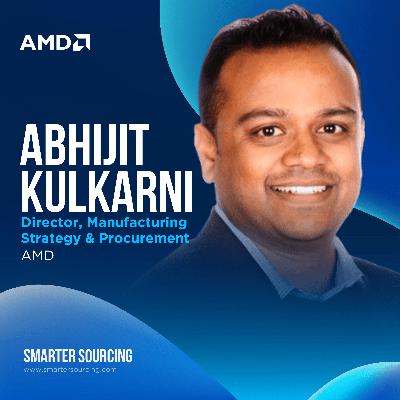
Transactional supplier relationships weren’t working out, so Abhijit Kulkarni, Director of Manufacturing Strategy and Procurement at AMD, and his team shifted to identifying "growth partners" who can scale across AMD's entire product portfolio over three-to-five year horizons.
Abhijit also offer insight on crisis management: AMD runs supply chain stress tests every 3 to 6 months, but he's learned that 60% of leadership development happens during real disruptions, not simulations. His hiring criteria reflects this reality: he looks for business acumen, communication clarity, and "conscious learning," the continuous improvement mindset that separates advancing procurement professionals from those who plateau.
Topics discussed:
Identifying 3- to 5-year growth partners versus transactional supplier relationships.
Tier 2 and tier 3 supplier mapping as "marathon exercise" for supply chain visibility and risk mitigation.
Supply chain stress testing cadence of running scenario analysis every 3 to 6 months for disruption preparedness.
Top 3 hiring criteria for procurement talent: business acumen, communication clarity, and conscious learning mindset.
Leadership development philosophy is 60% on-the-job crisis training and 40% formal mentoring and classroom learning.
Crisis management during real-world disruptions like Taiwan hurricanes and floods affecting semiconductor production.
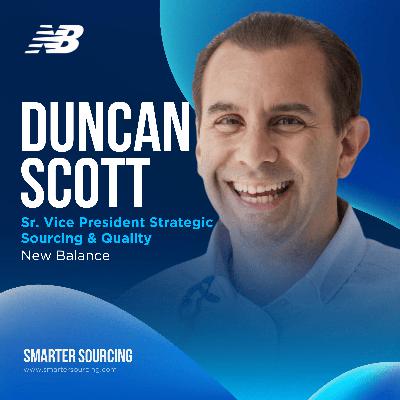
Duncan Scott, Sr VP of Strategic Sourcing & Quality at New Balance, manages sourcing and quality for a company that introduces thousands of new footwear and apparel products annually, each requiring specialized manufacturing capabilities that generic suppliers cannot provide. His approach rejects commoditization in favor of deep category expertise and multi-decade supplier partnerships.
The athletic footwear industry operates at a complexity level that surprises outsiders. While automotive manufacturers might produce one mold per model, New Balance requires 39 different molds for a single shoe design to accommodate size and width variations. This specialization demands supplier relationships built on technical expertise rather than cost alone.
Topics discussed:
How athletic footwear manufacturing requires dozens of molds per product, creating unique infrastructure and sourcing challenges.
How 40-year supplier relationships with specialized factories deliver competitive advantage over generic sourcing tools flooding the market.
The cultural differences between Korean vertical integration and Taiwanese interdependent manufacturing models.
Why New Balance operates US manufacturing facilities despite higher costs, focusing on efficiency improvements, not pure labor arbitrage.
How 3D printed molds enable faster production and complex undercut designs but create new technical challenges.
The infrastructure limitations preventing scaled US footwear manufacturing.
Why continuous lean efficiency improvements offset inevitable labor rate increases better than chasing the lowest-cost locations.
Staying ahead of material science trends by monitoring other industries 3 to 5 years before technologies become cost-effective.
The importance of collaborative price point negotiations with suppliers, recognizing that consumer acceptance determines whether cutting-edge features achieve volume scale.
Why maintaining objectivity and ethical supplier relationships produces superior problem-solving outcomes.
How Asia's emergence as a major consumer market is shifting traditional export-focused manufacturing toward regional onshoring and nearshoring strategies.
Freya Hurwitz, Director of Procurement at TripAdvisor, manages procurement for TripAdvisor's 3,500 employees across four global brands with just one and half people on her team. Rather than trying to control every transaction, she built scalable systems that empower stakeholders to handle their own procurement while her team focuses on high-impact negotiations.
Freya discusses how her cross-functional background helps her understand commercial models, build stakeholder relationships, and skip steps that traditional procurement professionals struggle with. She also addresses a fundamental shift happening in software procurement as vendors move to non-negotiable pricing models and pricing transparency increases across the industry. Her response isn't defensive but strategic: repositioning procurement's value upstream to focus on implementation complexity, tech stack integration, and operational readiness rather than just discount negotiations.
Topics discussed:
Managing global procurement for 3,500 employees across four brands with a 1.5-person team by building scalable self-service systems.
How cross-functional experience in marketing, product management, and IT operations creates competitive advantages.
Creating internal portals with negotiation frameworks and contract templates that empower stakeholders.
How procurement teams uniquely see across all functions while other departments remain within specific business units.
Achieving 98% adoption of collaboration tools across 3,500 users in one month through extensive stakeholder engagement and addressing specific team concerns months before launch.
The strategic challenge of creating economies of scale when independent business units prioritize autonomy.
Why procuring technology differs from commodity purchasing due to nuanced feature sets, integration requirements, and implementation complexity.
How pricing transparency and non-negotiable vendor pricing models are eliminating traditional procurement leverage based on discount negotiations.
Repositioning procurement value upstream to advise on tool selection, implementation complexity, and tech stack integration.
Using finance and accounting knowledge to navigate budget approvals, understand cost structures, and communicate effectively.
Balancing "speed wins" culture with necessary compliance requirements and contract review processes at a public company.
The shift in commercial models as software vendors establish fixed pricing tiers with limited negotiation flexibility.
Why staying curious about new technologies, processes, and continuous improvement drives long-term success.
How TripAdvisor's user-generated content model for reviews, photos, and videos differs from competitors and creates unique QC challenges.
Cost avoidance delivers the same strategic value as cost savings, but CFOs often miss this reality when evaluating procurement performance. At JLL, Sr. Director, Group Sourcing Lead Brent Kellett has cracked the code on demonstrating total cost of ownership value through cross-functional partnerships that quantify operational efficiencies, energy savings, and service reliability improvements that don't show up in traditional savings calculations.
Brent's approach transforms procurement from order-taking to strategic advisory by focusing early stakeholder involvement and building trusted partnerships with internal teams. His systematic integration methodology turns potential resistance into collaboration when outsourced procurement integrates with existing functions, starting with empathy to understand career drivers and making internal stakeholders look good rather than replaced. JLL's initiative trains procurement professionals to deliver compelling five-minute client pitches, reflecting the C-level presentation skills needed to secure strategic involvement rather than last-stage procurement calls.
Topics discussed:
Treating cost avoidance as equally valuable to cost savings when demonstrating total cost of ownership to CFOs.
Building trusted partnerships with internal stakeholders by understanding their career drivers and making them look successful.
Implementing early stakeholder involvement strategies to transform procurement from last-stage participation to strategic front-end engagement.
Integrating outsourced procurement teams with existing client functions through empathy-driven relationship management and collaboration approaches.
Deploying unified technology platforms that connect contract lifecycle management, spend analytics, and work order systems globally.
Rolling out Azara business intelligence tool for real-time predictive analysis and facility management operational efficiency.
Training procurement professionals to deliver compelling 5-minute client pitches requiring C-level presentation and sales skills.
Managing global supplier performance through standardized cost, quality, delivery, and innovation metrics across all JLL verticals.
Mark Vierling, Procurement & Supply Chain Leader, makes a simple observation: while fractional COOs, CEOs, and CFOs are common, virtually no one was providing fractional Chief Procurement Officer services to companies that desperately needed them. His embedded approach, which he shares with John, differs from traditional consulting by making fractional leaders part of the client team rather than external advisors.
Drawing from automotive supply chain excellence learned at General Motors and applied across industries from manufacturing to government, Mark emphasizes why procurement must evolve from reactive cost management to proactive strategic capability. His experience implementing transformations demonstrates how the science of supply chain scales across entirely different business models and regulatory environments.
Topics discussed:
How fractional supply chain leadership fills a gap in the executive services market via embedded CPO expertise without long-term hiring commitments.
The transformation of procurement from reactive cost management to proactive strategic capability.
Common ERP implementation failures caused by inadequate current-state analysis.
AI applications in competitive sourcing for companies under $500 million, focusing on increasing competition among existing supplier bases rather than sophisticated predictive modeling.
The three P's — people, process, and performance — as the foundation of supply chain management that scales across industries.
Why data management and analytics will become the primary competitive differentiator in supply chain excellence.
The evolution of entry-level procurement roles as AI automates bid processes and RFP management.
Strategic alignment challenges between procurement teams and corporate vision, particularly in smaller companies.
The importance of robust SIOP processes for demand and supply management.
How do you centralize procurement across a $1+ billion health system while maintaining 24/7 operations that literally keep people alive? Dawn Watkins, Director of Strategic Sourcing at UF Health, gives John her blueprint for transforming independent hospitals into an integrated clinical enterprise. Her team of 25 is expanding to 50+ as they merge previously independent facilities across 12 hospitals, nearly 3,000 patient beds, and hundreds of physician practices from Gainesville to Jacksonville. This isn't just organizational restructuring — it's a shift from decentralized decision-making to enterprise-wide standardization that's already delivering concrete results.
Dawn's journey from forklift operator at Honda to directing strategic sourcing for over a billion dollars in non-labor spend reveals how manufacturing discipline translates to healthcare procurement. She brings Honda's core principle of "removing waste before adding complexity" and her MBA professor's warning to "don't pave the cow path" — meaning never automate broken processes without first questioning what truly adds value. Her practical approach includes everything from streamlining supplier invoice corrections (reducing two actions to one) to building mutual incentive partnerships where both UF Health and suppliers benefit from shared success metrics, all while navigating the unique constraints of a regulated industry where you can't simply pass costs to patients.
Topics discussed:
Moving from historically independent decision making to centralized procurement across 12 hospitals and 3,000 patient beds, including the governance structure involving C-suite leaders to guide category prioritization and strategy.
The principles of "removing waste before adding complexity" and "don't pave the cow path" philosophy — questioning what truly adds value rather than simply automating existing inefficiencies.
Creating enterprise-wide collaboration through operational leaders who serve as scaffolding during transformation, ensuring no procurement decisions are made without direct input from clinicians and patient care providers.
Building intelligence through supplier relationships and global monitoring services to assess tariff risks, country of origin impacts, and geopolitical disruptions across 100,000+ unique items.
Operating in a regulated industry where revenue doesn't always cover basic expenses, making cost pass-through to patients impossible while maintaining 24/7 service demands without downtime.
Developing supplier relationships built around shared measurable outcomes where both UF Health and suppliers benefit from aligned success metrics.
Systematically identifying opportunities to consolidate products across previously independent hospitals while aggregating purchasing volume for better pricing and supply risk mitigation.
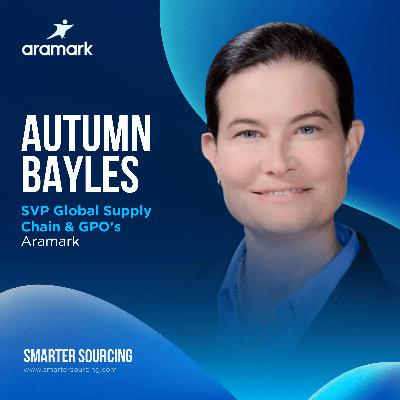
When Aramark acquired Avenger International—the GPO consortium built by Marriott, Hilton, and other major hotel chains—they weren't just buying a customer list. They were executing a 15-year strategic plan to close competitive gaps while creating unprecedented scale for premium hospitality products. Autumn Bayles, SVP Global Supply Chain & GPOs at Aramark, reveals how this acquisition transformed their ability to serve luxury hotels and stadiums alike with everything from grass-fed beef to regional stadium favorites.
From her strategic role orchestrating multiple GPO acquisitions to building advanced analytics dashboards that answer questions like "how many sustainable products do we buy," Autumn shares the playbook for scaling procurement operations while maintaining the hospitality-first culture that drives guest experience from luxury hotels to stadium concessions.
Topics discussed:
AI implementation methodology for automated product matching across distributor systems with different naming conventions and data structures
A three-year technology consolidation process and backend system harmonization challenges
Five-tier product stratification architecture enabling simultaneous ultra-premium and economy sourcing within single-supplier relationships
Global business continuity protocol design requiring geographic supplier diversification beyond traditional backup supplier models
A dual-accountability leadership structure for managing internal procurement operations while retaining external GPO clients
Local-regional supplier network integration strategy balancing national contract leverage with location-specific guest experience requirements
Enterprise data processing infrastructure: daily management of millions of transaction rows with AI-enhanced analytical output
Cross-GPO spend consolidation identification using harmonized data to reveal supplier relationship optimization opportunities
Hospitality vertical complexity: simultaneous procurement for luxury hotels, sports venues, healthcare facilities, and corporate dining environments
Strategic GPO portfolio expansion rationale and competitive market positioning through vertical acquisition integration
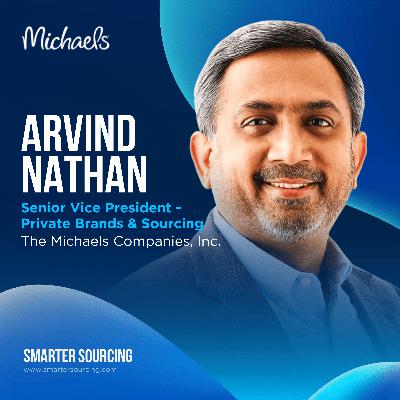
Arvind Nathan, SVP of Private Brands & Sourcing at The Michaels Companies, Inc., didn't plan to revolutionize how global teams think about private brand sourcing, but his mathematical approach to procurement has transformed operations in both his current role and his previous one at Walmart. Managing 220 people across Asia and the US taught him that successful sourcing isn't about having better tools than competitors — it's about building the right equation from available variables.
Arvind's framework treats every sourcing decision as part of a balanced equation where over-indexing any single variable can destroy the entire strategy, whether that's cost, quality, speed, or innovation. At Michaels, he oversees 14-15 private brands that must reflect the retailer's identity while competing against national brands with established equity. His team operates on three core principles that have proven essential as the distance between supply and demand continues to shrink in global commerce.
Topics discussed:
The mathematical framework for balancing sourcing variables without over-indexing any single factor like cost, quality, or delivery speed.
How private brand sourcing complexity exceeds national brand challenges due to retailer reputation risk and personalization requirements.
Building cultural alignment across 220-person global teams through shared experiences, open dialogue, and cross-functional storytelling.
The evolution of supplier assessment from basic cost-quality-delivery metrics to 15-dimensional evaluations, including e-commerce capabilities and cross-functional support.
Strategic approaches to crisis management learned from 2008 and 2020 disruptions, emphasizing fundamental strength over contingency planning.
The transformation of supplier relationships from transactional manufacturing focus to revenue generation and innovation partnership models.
Leadership principles for global procurement teams including ready-aim-fire decision making, alignment without agreement, and Formula One pit stop operational speed.
Cultural adaptation strategies for international business including curiosity as active respect and understanding rather than navigating differences.
Technology integration challenges in procurement including AI limitations and the continued importance of human relationship management.
Career development advice emphasizing curiosity, agility, exposure to challenges, ownership mindset, and people business fundamentals.
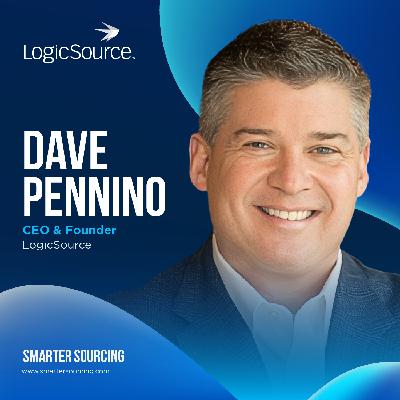
David Pennino, CEO & Founder, built LogicSource by recognizing that indirect procurement represents the largest untapped opportunity for most enterprises. His conversation with John highlights how a company processing $150 billion in spend data approaches categories that consume 20% of revenue but receive minimal professional attention. David's methodology challenges traditional consulting models through comprehensive free assessments and frequency-based expertise that most organizations cannot develop internally.
David discusses his unique assessment-first approach, explaining how this model achieves a 93% win rate by proving value rather than promising it. His team's frequency advantage demonstrates how specialized expertise scales across complex procurement categories. The conversation also explores LogicSource's expansion into healthcare, where "wedding pricing" creates unique opportunities for systems that cannot pass cost increases to patients.
Topics discussed:
The development of LogicSource's free assessment model and why it outperforms traditional consulting approaches in procurement transformation.
How frequency-based expertise in categories like software licensing, marketing services, and facilities management creates sustainable competitive advantages over internal teams.
The strategic addition of healthcare markets and why hospital systems face unique pricing challenges that indirect procurement can address.
Building category expertise by hiring professionals from both supplier and buyer sides to understand complete cost structures and margin opportunities.
The evolution of procurement from "three bids and a cloud of dust" methodology to comprehensive category management that considers relationships, quality, and strategic value.
Why GPOs often underperform compared to enterprise-specific procurement strategies for larger companies with significant spend volumes.
The importance of vision sessions in aligning procurement strategies with broader business objectives beyond simple cost reduction.
How AI will enhance procurement decision-making while requiring domain experts to train and validate machine learning outputs.
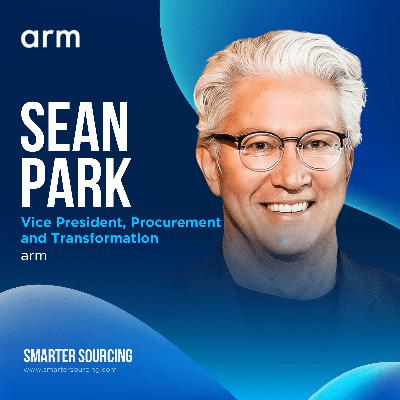
Sean Park, VP of Procurement and Transformation at Arm, didn't set out to revolutionize procurement at Arm, but when you're scaling a $4 billion semiconductor company at 20% year-over-year growth without adding procurement headcount, revolution becomes necessity. Sean offers John a peek at how Arm achieved nearly 20% savings on an 8-figure server deal using AI agents that required zero human intervention once launched, completing negotiations in days rather than weeks.
He also shares his SPORT framework — Strategy, Processing & Policy, Organization, Reporting, Technology — that represents a complete reimagining of procurement priorities, while his prediction that 20-40% of procurement knowledge becomes obsolete annually reflects the accelerating pace of change facing the profession. Sean's vision for procurement as a consumer-grade experience, combined with his philosophy of supplier relationships rooted in mutual respect rather than adversarial negotiations, offers a blueprint for procurement leaders navigating AI transformations of their own.
Topics discussed:
The SPORT framework for procurement transformation, encompassing Strategy, Processing & Policy, Organization, Reporting, and Technology as interconnected elements.
Implementing AI-powered negotiation agents that achieved 18% savings on 8-figure server procurement with zero human intervention after launch.
Scaling procurement impact at a $4 billion company experiencing 20% year-over-year growth without increasing team headcount.
Cultural lessons from Japan on the power of listening before reacting, and how this approach transforms stakeholder relationships in high-margin industries.
Supplier relationship philosophy based on mutual respect and interdependence rather than adversarial price-focused negotiations.
The accelerating obsolescence of procurement knowledge, with 20% or more becoming irrelevant year-over-year thanks to AI advancement.
Organizational design featuring business partners vertically oriented by function rather than horizontally by category to improve stakeholder experience.
Technology-first approach, where breakthrough tools drive changes in organizational structure, processes, and strategic objectives.
Creating consumer-grade procurement experiences through unified platforms, chatbot integration, and simplified stakeholder interfaces.
Predictive sourcing and negotiation platforms that accelerate savings maximization while maintaining supplier relationship quality and service.
Geographic and functional coverage strategies for global procurement operations spanning multiple continents and complex supplier ecosystems.
Managing 8+ billion products annually across 180+ countries while reducing logistics footprint by 27% requires more than traditional supply chain thinking. Steeve Yammine, Global SVP of Supply Chain at BIC, has orchestrated this complex operation by fundamentally reimagining how global companies approach contingency planning, regionalization, and talent development.
He tells John his journey from brewery night shifts in Belgium to steering one of the world's most recognizable consumer goods supply chains offers practical frameworks for building resilient, efficient operations. Steeve also touches on how BIC transformed from inventory-heavy contingency planning to dynamic scenario mapping, implemented meaningful sustainability initiatives beyond product redesign, and developed a hiring philosophy that prioritizes critical thinking over technical knowledge in an AI-driven landscape.
Topics discussed:
The evolution from inventory-based contingency planning to dynamic scenario mapping using digital tools that activate different responses based on real-time conditions rather than stockpiling safety stock.
Implementing a regionalization strategy that balances proximity to demand with strategic global redundancy, ensuring dual sourcing across different geographic regions to avoid single points of failure.
Achieving a 27% reduction in logistics footprint through better planning and technology optimization rather than traditional cost-cutting measures.
Developing sustainability initiatives that focus on supply chain footprint optimization alongside product innovation, including 78% ocean plastic content in select pen lines and refillable lighter systems.
Building and managing culturally diverse teams across global operations while maintaining operational coherence through people-first leadership and cross-cultural communication strategies.
Talent selection philosophy, emphasizing 80% focus on problem-solving approach and critical thinking skills versus 20% on technical knowledge, recognizing AI's impact on skill requirements.
Managing the complexity of vertically integrated manufacturing where BIC produces everything from raw resin to finished products across 20+ factories globally.
Strategies for navigating geopolitical uncertainties and tariff fluctuations while maintaining supply chain stability and avoiding constant operational disruptions.
The transformation of supply chain leadership from operational support roles to strategic business partners with seats at executive decision-making tables post-COVID.
Integration challenges and supply chain strategies for recent acquisitions like Tangle Teezer and Inkbox, expanding BIC's portfolio beyond traditional product categories.
"I'm a fireman," is how Yelena Mogelefsky, SVP of Production and Sourcing at Komar describes her role to her children — a perfect metaphor for the daily crisis management that defines sourcing leadership in fashion. In this captivating episode of Smarter Sourcing, Yelena walks John through how she transformed an entrepreneurial opportunity into a $150+ million division over 14 years.
From navigating the complexities of intimate apparel to managing a global team across Sri Lanka, Hong Kong, and the U.S., Yelena reveals how fashion industry sourcing has evolved beyond cost-cutting to become a sophisticated discipline balancing sustainability, transparency, supply chain resilience, and value creation in an increasingly unpredictable geopolitical landscape.
Topics discussed:
The entrepreneurial journey of building Komar's intimate apparel division from virtually nothing to a $150+ million business, demonstrating how calculated career risk-taking and strong industry relationships can drive exponential growth.
Komar's strategic shift from cost-focused procurement to holistic value creation, measuring success through metrics like cost aversion, chargeback prevention, container optimization, and packaging efficiency rather than simply lowest prices.
How Komar structures its procurement with a decentralized approach for general sourcing but maintains a centralized team specifically for their nutrition arm, illustrating how manufacturing businesses can tailor their sourcing organization to product-specific needs.
Implementing robust supplier vetting practices after a crisis situation with a Chinese manufacturer revealed financial instability, showcasing how deep supply chain verification prevents costly production disruptions.
The critical importance of transparency and traceability in modern sourcing, with Komar developing a proprietary technology platform to track their complete supply chain from raw materials to finished products.
Tactical strategies for sustainability implementation, including consolidating fabric orders to achieve cost-neutral recycled materials and working collaboratively with factories to improve their environmental practices rather than simply eliminating non-compliant suppliers.
Practical China sourcing mitigation strategies in response to geopolitical uncertainty and tariff increases, reducing Chinese manufacturing footprint from a majority position to just 20-30% of production through strategic diversification.
Education gaps in preparing future sourcing professionals, particularly in hands-on technology experience, real-world problem-solving skills, and communication techniques for managing international supplier relationships.
"If your supply chain only reduces costs, it's not a strategic asset — it's a commodity," Randy Bradley, PhD & EVP of Digital Transformation in Life Sciences at BSMA, tells John in this episode of Smarter Sourcing. When 80% of executives claim their supply chain is strategic but expect it only to cut costs, Randy helps expose the disconnect that keeps procurement leaders trapped in operational thinking.
Drawing from 25+ years bridging technology and supply chain, he explains why healthcare organizations relegate their supply chains to "the basement next to the morgue" and provides a roadmap for elevating procurement's role through liquid data assets and a critical mindset shift from resilience to agility.
For procurement professionals tired of being cost-cutters instead of value-creators, Randy's frameworks for translating operational metrics into C-suite language will transform how you position your function's strategic impact.
Topics discussed:
How to distinguish between commoditized and strategic supply chains by examining whether they contribute to top-line revenue generation rather than just cost reduction.
Translating operational metrics into C-suite language and how to convert supply chain KPIs like inventory turns into financial metrics that executives care about.
Why healthcare's operational excellence mindset and failure to reconcile competing global supply dynamics has prevented innovation and strategic elevation.
The "resilience vs. agility" framework for supply chain strategy and why organizations should strive for agility (emerging with new capabilities) rather than mere resilience (weathering challenges) when facing disruptions.
A three-part methodology for developing data that can be easily recombined, monetized, and shared through engaged data democracies that break down departmental barriers.
Why focusing on using AI to eliminate distractions rather than replace jobs allows organizations to unlock human intellectual potential and avoid the resistance that causes organizations to fall behind.
Embedding risk management as core business practice and how to shift from reactive disruption response to proactive capability building that prevents supply chain disruptions from causing business interruptions.
What does it take to transform procurement from a cost center into a strategic value driver? Johnathon Baker, Operating Partner & Head of Strategic Sourcing and Procurement at Apollo Global Management, shares his expertise in procurement transformation, gained from leading strategic initiatives at major companies like Starbucks, before taking on his current role at Apollo.
His discussion with John on this episode of Smarter Sourcing explores how Johnathon’s team drives value across Apollo's portfolio companies through strategic sourcing, leveraging AI and analytics while building strong CPO partnerships. From managing complex supplier relationships to preparing for global economic shifts, Johnathon offers valuable insights into modern procurement leadership and the evolution of sourcing from a back-office function to a strategic business driver.
Topics discussed:
The evolution of procurement into a strategic business function driving organizational value and operational excellence.
Transformation of procurement practices at Starbucks during the 2009 recession, particularly cost reduction while maintaining supplier relationships.
Building effective partnerships with portfolio company CPOs while driving significant cost savings and operational improvements.
Leveraging AI and analytics to manage complex procurement data across Apollo's extensive portfolio of companies.
Preparing portfolio companies for economic shifts through scenario planning and strategic supplier relationship management.
The importance of balancing cost-reduction goals with maintaining strong supplier partnerships and business growth.
Implementation of technology solutions to streamline procurement processes and enhance decision-making capabilities.
Managing procurement transformation across diverse portfolio companies while maintaining individual company autonomy.
Development of procurement talent and the changing skill sets required in modern strategic sourcing.
Creating value through procurement beyond cost savings, including revenue growth and operational efficiency improvements.

In this episode of Smarter Sourcing, John welcomes Jeff Bever, VP of Strategic Sourcing and Procurement at Russell Stover Chocolates, to discuss how a 100-year-old company is transforming its procurement and supply chain operations for the modern era. Jeff reflects on his diverse career journey across agriculture, construction, and confectionery, sharing how each experience has shaped his leadership style.
He discusses the challenges of building sustainable supply chains, managing cocoa supply in a volatile market, and using an enterprise-wide mindset to drive business value. Jeff also discusses mentoring the next generation of supply chain professionals and the evolving role of AI in procurement.
Topics discussed:
How diverse career experiences across industries drive innovation in procurement and sourcing.
The importance of building trust and relationships across global management teams.
Sustainability challenges in cocoa supply chains, including pricing volatility and farmer welfare.
Why a growth mindset is critical for sourcing professionals and team building.
The enterprise mindset: thinking beyond silos to drive holistic business value.
The role of AI and technology in accelerating procurement innovation and decision-making.
Contingency planning for a constantly volatile supply chain landscape.
Mentoring the next generation of supply chain leaders to think beyond traditional boundaries.
Aligning procurement strategies with broader organizational goals and future growth.
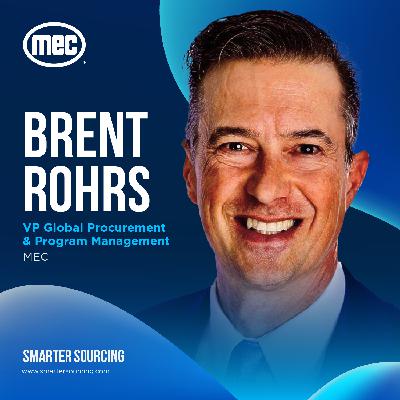
In this episode of Smarter Sourcing, John speaks with Brent Rohrs, VP of Global Procurement & Program Management at Mayville Engineering Company (MEC), to discuss the evolving world of procurement and supply chain management. Brent shares insights from his career, including the importance of centralizing procurement operations to enhance supplier collaboration and efficiency.
Brent and John also explore lessons learned during the pandemic, such as managing supply chain risk and balancing cost with lead times. Brent offers advice on embracing cross-functional learning and building resilient teams in today’s dynamic environment.
Topics discussed:
Navigating global supply chain disruptions and the need for stronger risk management strategies in an unpredictable world.
The benefits of centralizing procurement operations to leverage scale, reduce costs, and enhance supplier collaboration.
How cross-functional learning fosters team collaboration and problem-solving across diverse groups and industries.
Lessons from the pandemic, including balancing cost, lead time, and inventory to meet unprecedented demand.
Strategies for building supplier partnerships and treating suppliers as extensions of internal operations.
The value of understanding numbers and cost drivers, even without a finance background.
Developing resilient teams by encouraging open communication and communal learning across all levels of an organization.
Embracing diverse career experiences and taking on challenges outside your comfort zone to grow professionally.
The role of technology in modernizing procurement, from supplier portals to artificial intelligence applications.
Key skills for supply chain professionals, including emotional intelligence and effective relationship-building with vendors.
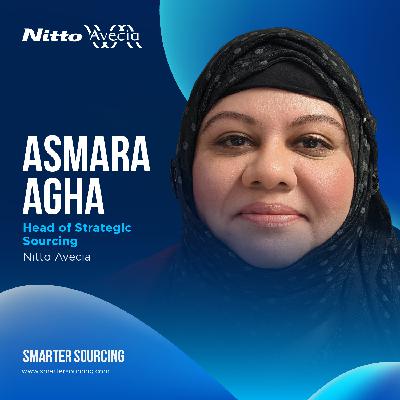
In this episode of Smarter Sourcing, John speaks with Asmara Agha, Head of Strategic Sourcing at Nitto Avecia, who shares her insights on the evolving landscape of supply chain management. She discusses the critical role of resilience and adaptability in navigating challenges, especially in the wake of the pandemic.
Asmara emphasizes the importance of leveraging AI and predictive modeling to enhance efficiency and risk mitigation. Additionally, she highlights her commitment to empowering women in the industry and fostering a culture of collaboration and innovation.
Topics discussed:
The significance of resilience in supply chain management, particularly in overcoming challenges posed by global events like the COVID-19 pandemic.
How AI and predictive modeling can enhance efficiency and risk mitigation in supply chain operations, enabling better decision-making and planning.
The importance of contingency planning and having multiple strategies in place to address potential disruptions in the supply chain.
The role of emotional intelligence and soft skills in negotiations and relationship management within the supply chain industry.
Initiatives for promoting women empowerment and leadership within the supply chain sector, addressing the challenges women face in advancing their careers.
The impact of sustainability and green procurement practices on supply chain strategies and the importance of reducing carbon footprints.
Insights into the technological advancements in Japan and how they can influence supply chain practices in other regions, particularly in the U.S.
The necessity of training and development programs for supply chain professionals to adapt to changing technologies and market dynamics.
Approaches to vendor management and building strong relationships with suppliers to foster innovation and collaboration in sourcing.

Comments

Download from Google Play

Download from App Store
 United States