


 Claim Ownership
Deep Seed - Regenerative Agriculture
Subscribed: 60Played: 1,228
Subscribe

© Raphael Esterhazy
Description
Welcome to the Deep Seed Podcast, your ultimate source for all things regenerative agriculture, soil health, and ecosystem restoration!
Join your host, Raphaël, on an exciting journey into the heart of sustainable farming and environmental resilience. The podcast is packed with inspiring conversations with regenerative farmers, cutting-edge innovators, and leading experts who are pioneering the movement towards a more regenerative food system.
Whether you’re a passionate advocate for sustainability, a professional in agriculture or environmental science, or just curious about the future of our food systems, the Deep Seed Podcast is your gateway to the vibrant world of regenerative agriculture.
Key topics discussed include:
Agroecology and its role in creating sustainable food systems
The power of agroforestry in boosting biodiversity and productivity
How carbon farming can fight climate change while benefiting farmers
The benefits of no-till farming for soil health and erosion prevention
Holistic grazing practices that restore ecosystems and enhance animal welfare
Crop rotation and polyculture for nutrient-rich soils and resilient farms
Exploring the potential of food forests and other nature-based solutions
The critical link between soil microbiology and plant health
Restoration agriculture and the future of land regeneration
Climate solutions that leverage regenerative practices to sequester carbon
Promoting biodiversity through sustainable farming approaches
Insights into the importance of sustainable diets and their environmental impact
Rewilding and its role in ecosystem restoration and preservation
Produced in partnership with Soil Capital, a leader in supporting regenerative agriculture and rewarding farmers for improving soil health, this podcast is a must-listen for anyone interested in sustainable farming and climate action.
Get in touch with me LinkedIn - Raphael Esterhazy
Hosted on Ausha. See ausha.co/privacy-policy for more information.
90 Episodes
Reverse
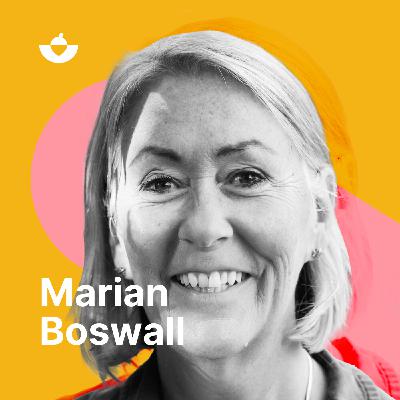
What if restoring our soils isn’t just a scientific challenge… but an emotional, even spiritual one? What if the future of farming depends as much on beauty, connection, and intention as it does on data, yields, and carbon? In this powerful episode of the Deep Seed Podcast, landscape architect Marian Boswall takes us on a journey that starts with dead soil… and leads to a completely new way of seeing land, food, and life itself. This is not your typical conversation about agriculture. It’s deeper. Slower. More human. And, honestly, more hopeful. 🌍 Why You Should Watch This Episode If you care about: · Regenerative agriculture · Soil health & soil microbiology · Sustainable farming & food systems · Biodiversity & ecosystem restoration · Nutrient density & human health …this episode will expand how you think about all of them. Because regeneration isn’t just about techniques. It’s about how we relate to the land... and to each other! 🧠 What You’ll Learn · The fundamentals of soil health, composting, and the soil food web · Why nutrient density starts in the soil (and affects your gut health) · How biodiversity and agroecology can transform farms and landscapes · Why beauty, design, and even energy matter in regenerative systems · How anyone (yes, even in a city) can contribute to regeneration · The risks of greenwashing in the regenerative agriculture movement · Why beavers might be some of the best ecosystem engineers on Earth 🌱 A Different Perspective on Regenerative Agriculture Most conversations around regenerative agriculture focus on carbon, metrics, and productivity. This one adds something we don’t talk about enough: care, intention, and connection. Marian shares how landscapes can heal people, not just produce food. Farmers can reconnect with the food they grow Small actions (like compost or a balcony garden) can scale into ecosystem restoration “We don’t just grow food—we grow the conditions for life.” 🎙️ About the Guest Marian Boswall is an award-winning landscape architect, agroecology coach, and author. Her work bridges regenerative agriculture, ecology, and human wellbeing, helping design landscapes that restore both ecosystems and the people living within them. 🌿 SOIL CAPITAL This episode was made in partnership with Soil Capital, a company accelerating the transition to regenerative agriculture. www.soilcapital.comHosted on Ausha. See ausha.co/privacy-policy for more information.

What if the future of food isn’t high-tech… but ancient wisdom?We’ve built a global food system on just four crops... and it’s starting to crack! The real question is: what happens when it breaks?In this episode of the Deep Seed Podcast, Professor Sayed Azam-Ali (University of Nottingham, Crops For the Future) reveals why the key to resilient, nutritious, and truly sustainable food systems might already exist—hidden in so-called “forgotten crops.”We unpack how modern agriculture became dangerously dependent on a handful of commodity crops like wheat, rice, maize, and soy—and why this lack of diversity is driving soil degradation, biodiversity loss, climate vulnerability, and hidden hunger.But this isn’t just a problem story. It’s a roadmap for transformation.You’ll discover:Why crop diversity is the foundation of regenerative agriculture and food system resilienceHow underutilised crops like Bambara groundnut and fonio can outperform industrial staples in harsh climatesThe hidden link between ultra-processed food, micronutrient deficiency, and chronic diseaseWhy global supply chains (COVID, Ukraine, Suez Canal) exposed the fragility of our food systemHow indigenous knowledge and farmer-led innovation hold critical solutions we’re at risk of losingWhat needs to change—from seed systems and subsidies to consumer behavior and food cultureWe also dive into the bigger picture:Can regenerative agriculture scale without cultural change?What role should corporations, governments, and consumers really play?And why “cheap food” might be the most expensive mistake we’ve ever madeThis conversation sits at the intersection of agroecology, climate change, nutrition, and food sovereignty—and challenges everything we think we know about what we should grow and eat.Because the future of farming might not be about producing more……but about growing differently.“We cannot fix the food system by tweaking it. We have to transform it.”⸻🌿 SOIL CAPITAL - this episode was made in partnership with Soil Capital www.soilcapital.com❤️ Episode hosted by Federica UrsoHosted on Ausha. See ausha.co/privacy-policy for more information.
![The Farming System Is Broken... And Farmers Know It! [DAVID WHEATLEY]](https://image.ausha.co/pPSdi7HHsBeoSeeil7RTNv7u8w6Shoezx40smCYL_1400x1400.jpeg?t=1773761898 "The Farming System Is Broken... And Farmers Know It! [DAVID WHEATLEY]")
What happens when a farmer publicly admits that modern agriculture might be broken?In this episode, British farmer David Wheatley joins the Deep Seed Podcast to share the unfiltered reality of modern farming. After losing almost everything in a devastating farm fire and facing years of financial losses during COVID, David started posting honest videos about life on his farm — and unexpectedly built an audience of millions.Today, his content offers a rare window into the real economics of agriculture: volatile weather, rising input costs, global commodity markets, and the constant risk farmers face every season.David is a fourth-generation farmer from Cambridgeshire, UK, managing around 450 acres of arable crops, orchards and flowers. In this conversation we go beyond the viral videos to explore the deeper forces shaping farming today — and the new opportunities emerging through direct-to-consumer food systems, social media, and regenerative agriculture.You’ll hear:• how David nearly lost his farm after years of financial losses• why many farmers feel trapped in a system where “the more you grow, the less you get paid”• how social media unexpectedly became a lifeline for his farm• why he sells flowers and apples directly to consumers instead of supermarketsWe also discuss David’s heritage orchards with over 250 apple varieties, why he refuses to certify them organic even though they are grown without sprays or fertilisers, and how customers are rediscovering what real food tastes like.The conversation also explores David’s first experiments with regenerative agriculture, cover crops, direct drilling, biodiversity and diversified farming systems, and the real risks farmers face when transitioning away from conventional agriculture.This episode is for anyone interested in:• regenerative agriculture• sustainable farming• soil health and biodiversity• the future of food systems• farm economics and agricultural policy• food security and resilienceAt its heart, this conversation reminds us that the future of agriculture may depend on rebuilding the relationship between farmers, land and the people who eat the food.⎯👨🏼🌾 About the guestDavid Wheatley is a UK farmer, flower grower and orchard keeper known for sharing the unfiltered reality of modern farming with hundreds of thousands of followers online. His work highlights the economic pressures farmers face while exploring new ways to produce and sell food outside the traditional agricultural system.Instagram: @petitepeonysWebsite: petitepeonys.co.uk⎯🌿 This episode was made in partnership with Soil Capitalwww.soilcapital.com❤️ Special thanks to Federica Urso for the research and preparation of this episode.Hosted on Ausha. See ausha.co/privacy-policy for more information.
![How This Regenerative Farmer Cut Costs and Increased Profits [JAMES BUCHER]](https://s3.castbox.fm/be/a3/83/11167659dd773283122dc00f20d0632901_scaled_v1_400.jpg "How This Regenerative Farmer Cut Costs and Increased Profits [JAMES BUCHER]")
What happens when a former hedge fund trader walks away from finance… survives a near-fatal accident… and rebuilds his farm using regenerative agriculture?In this episode of the Deep Seed Podcast, James Butcher shares how he transformed his Suffolk farm from a high-input, chemical-dependent system into a diversified regenerative farming model using:Companion croppingLivestock integrationAgroforestryReduced synthetic nitrogenBiological soil health principlesAnd here’s the kicker:He slashed growing costs from £1,500–£2,000 per hectare to under £600 per hectare — while increasing resilience and, in some cases, yields.Including one wheat field that yielded 2 tonnes per hectare MORE after being grazed by sheep.Yes, really.⸻🌱 What You’ll Learn in This EpisodeWhy regenerative agriculture may be LESS financially risky than conventional farmingHow companion cropping reduces disease pressure without fungicidesThe economics of cutting synthetic nitrogen by more than 60%Why grazing sheep on standing wheat can increase yieldHow agroforestry improves biodiversity and long-term farm resilienceThe real psychological barriers preventing farmers from transitioningWhy lower input costs = lower financial risk in volatile marketsIf you care about soil health, biodiversity, food systems, climate resilience, carbon farming, or the future of sustainable agriculture — this conversation is for you.⸻🐑 The Regenerative Practices James Uses TodayWheat grown with clover, vetch, peas or beansLegumes fixing up to 100 kg nitrogen per hectareNo insecticidesNo fungicidesNo seed treatmentsHome-saved seedGrazing sheep across winter cerealsRed Poll cattle mob grazing2,500+ trees planted in an agroforestry systemFruit, nuts, coppice biomass & biodiversity stripsThis is regenerative agriculture in practice — not theory.⸻🌍 Why This Conversation MattersGlobal food systems are under pressure:Rising fertilizer costsCommodity price volatilityClimate-driven droughtsSoil degradationBiodiversity collapseJames’ story shows that regeneration isn’t just environmental — it’s economic.As Wendell Berry said: “The soil is the great connector of lives.”And rebuilding it may be the smartest financial decision a farmer can make.⸻👤 About James ButcherJames Butcher is a regenerative farmer in Suffolk, UK. After starting his career in finance, he returned to his family farm and led a full-system transition toward regenerative agriculture, agroecology, livestock integration, and agroforestry.His work focuses on soil health, biodiversity restoration, economic resilience, and long-term farm viability.⸻🌿 SOIL CAPITAL - this episode was made in partnership with Soil Capitalwww.soilcapital.com❤️ Special thanks to Federica Urso who did all the research for this episode and helped me craft the questionsHosted on Ausha. See ausha.co/privacy-policy for more information.
![India’s Farming Revolution Is Led by Women 🇮🇳 [NITYA RAO]](https://s3.castbox.fm/e7/55/bd/bd499b2ba15295a419d9a71a0333749192_scaled_v1_400.jpg "India’s Farming Revolution Is Led by Women 🇮🇳 [NITYA RAO]")
What if the future of regenerative agriculture won’t be decided in Europe… but in India, Africa, and the Global South?In this powerful Deep Seed mini-episode, we sit down with Professor Nitya Rao, leading gender and climate researcher and contributor to the Lancet Commission on Food Systems, to explore a perspective we rarely hear in the regenerative agriculture movement.Because here’s the uncomfortable truth:👉 Many smallholder farmers in India are already farming regeneratively — not because it’s trendy, but because they have no choice.👉 Women are carrying entire food systems on their backs — yet remain invisible in climate policy.👉 And if governments don’t act wisely, the Global South may repeat the same industrial agriculture mistakes that pushed us beyond planetary boundaries.⎯⎯🔎 In this episode, we explore:Why 90% of Indian farmers cultivate less than 5 hectares — and what that means for regenerative agricultureHow monocultures, fertilizer subsidies, and “yield at all costs” policies affect soil health and biodiversityThe hidden reality of male migration and how women are sustaining farming and food systemsWhy gender-blind climate policies fail — and what intersectionality really means in agricultureThe groundbreaking case of Andhra Pradesh’s community-based natural farming movementIndigenous knowledge, nutrient-dense traditional foods, and ecosystem restorationThe biggest blind spot in the regenerative agriculture movement: evidence, economics, and social realitiesProfessor Rao challenges us to ask a deeper question: "regenerative for whom?"Because sustainability isn’t just about carbon farming or agroecology techniques. It’s about livelihoods, labor, time, access to land, credit systems, and power dynamics.If we ignore that… we risk romanticizing regenerative farming instead of scaling it effectively.⎯⎯🌱 Why This Conversation MattersAccording to the Lancet Commission, global food systems contribute nearly 30% of greenhouse gas emissions and drive transgressions of multiple planetary boundaries — from nitrogen cycles to biodiversity loss.The Global South stands at a crossroads.Should countries increase industrial agriculture to raise yields?Or can they leapfrog directly into nature-based solutions and sustainable farming systems that protect soil microbiology, biodiversity, and long-term food security?As Professor Rao says:“This is a very good moment for governments to say: don’t go down that track. Let’s show a different pathway.”⎯⎯🎧 If You Care About:Regenerative agriculture beyond the Western lensAgroecology and smallholder farmingNutrient density and sustainable dietsClimate resilience and food systems transformationGender equity in agricultureIndigenous knowledge and ecosystem restorationThis episode will challenge and expand your perspective.⎯⎯🌿 SOIL CAPITAL - this episode was made in partnership with Soil Capitalwww.soilcapital.com❤️ Special thanks to Federica Urso who did all the research for this episode and helped me craft the questionsHosted on Ausha. See ausha.co/privacy-policy for more information.
![Does Regenerative Agriculture Actually Work? Top Scientist Answers [LYNN DICKS]](https://s3.castbox.fm/47/da/b4/c4bed2323ce55bfeffb6a991b289e08388_scaled_v1_400.jpg "Does Regenerative Agriculture Actually Work? Top Scientist Answers [LYNN DICKS]")
Can regenerative agriculture really restore biodiversity, rebuild soil health, increase farmer profits and still feed the world? Or is it just a powerful story we want to believe?In this evidence-based Deep Seed conversation, biodiversity scientist Professor Lynn Dicks shares groundbreaking real-world research from commercial farms in the UK and India — revealing what the science actually says about regenerative agriculture, agroecology, nature-based solutions, and the future of our food system.This episode is essential listening for farmers, policymakers, sustainability professionals, researchers, and anyone working to transform agriculture.🌱 What the Research ShowsThrough the UK-funded H3 Project (Healthy Soil, Healthy Food, Healthy People), Lynn and her team studied regenerative and conventional farms across England using real-world commercial data.They found:Increased soil carbon storageImproved soil health and earthworm densityHigher biodiversity in key beneficial speciesReduced synthetic fertilizer and pesticide useStrong potential for increased farm resilienceBut the story is nuanced. Pollinator numbers, for example, depend heavily on landscape-scale habitat — reminding us that biodiversity restoration requires thinking beyond individual fields.🌍 Biodiversity vs. Productivity — A False Trade-Off?We explore whether sustainable farming and high productivity can coexist.Topics include:Integrated Pest Management (IPM)Ecological intensificationCarbon farmingLandscape restorationLivestock systems and land useReducing chemical inputs without reducing yieldsThe true cost of foodA global meta-analysis discussed in this episode shows farmers could reduce insecticide use by 44% without yield loss simply by spraying only when thresholds are reached.That’s not ideology. That’s data.💰 Is Regenerative Agriculture Profitable?Profitability determines adoption.Evidence from regenerative farms in the UK, US, and India shows:Lower input costsReduced dependency on synthetic fertilizers and pesticidesComparable yieldsIncreased resilience to market shocksIn some cases, significantly higher profitsWe also discuss agricultural policy reform, biodiversity net gain, nature credits, and who should pay for ecosystem services and public environmental goods.🔑 Soil CapitalThis episode was made in partnership with Soil Capital - accelerating the transition to regenerative agriculture by financially rewarding farmers who improve soil health and biodiversity. wwwe.soilcapital.comHosted on Ausha. See ausha.co/privacy-policy for more information.
![How Do We Really Scale Regenerative Agriculture? [ANDREW VOYSEY]](https://s3.castbox.fm/66/77/a5/15fae0b4d0b85ae6ff175155c75a36c294_scaled_v1_400.jpg "How Do We Really Scale Regenerative Agriculture? [ANDREW VOYSEY]")
In this episode of Deep Seed, I sit down with Andrew Voysey, Chief Impact Officer at Soil Capital, to go beyond slogans and dig into what it actually takes to scale regenerative agriculture in a world built for short-term output.We unpack why most farmers feel trapped, why markets alone won’t fix our food systems, and how credible impact measurement — paired with smart policy and aligned incentives — could unlock transition at scale.Whether you’re a farmer, a food-chain professional, a policymaker, an investor, or someone who eats food every day (which is all of us), this conversation reframes regenerative agriculture as economic reality rather than idealistic aspiration.In plain language and big ideas, we cover:Why soil is a hidden systemic lever - and why degraded soil is behind so many global crisesThe real reason farmers are stuck - risk, cashflow pressures, and fragile livelihoodsHow Soil Capital is forging real economic pathways - paying farmers for measurable impact, not just good intentionsWhy big companies actually care - resilience, supply-chain security, and risk managementBeyond carbon - how soil, biodiversity, water, and farm resilience can be credibly measured at scaleThe limits of markets - why policy and public finance still matterHeadwinds and opportunities - political shifts, economic pressures, and the resilient core of the transitionThis is not another “optimistic farming chat.” This is a real-world, systems-level, deeply practical conversation about how change actually happens when you remove the fantasy, face the bottlenecks, and structure incentives that work.If you care about food, climate, landscapes, rural economies, or simply how the world actually works beneath the headlines, this episode is for you! 🎯 Topics CoveredSoil health, market incentives, regenerative practices, impact measurement, carbon vs. beyond carbon, agricultural economics, supply chain resilience, policy, and systems transformation.—This episode was produced in partnership with Soil Capital, a company accelerating the regenerative transition by financially rewarding farmers who improve soil health & biodiversity.https://www.soilcapital.com/—Usefull Links:ANDREW VOYSEY: LinkedIn SOIL CAPITAL: https://www.soilcapital.com/THE DEEP SEED PODCAST - link —Follow Us• Instagram: @deep_seed_podcast• LinkedIn: https://www.linkedin.com/company/deep-seed• Email: raphael@deepseed.euHosted on Ausha. See ausha.co/privacy-policy for more information.
![Why the Food System is About to Collapse [TIM BENTON]](https://s3.castbox.fm/28/41/20/5c5824aa9541cad5c26dc344be3f8ea839_scaled_v1_400.jpg "Why the Food System is About to Collapse [TIM BENTON]")
Our food system is on the verge of collapse — but we can fix it.In this episode, we’re joined by Tim Benton, one of the world’s leading experts on food security, to unpack the deep systemic drivers behind the crisis… and what a truly regenerative future could look like.We cover:Why the food system is fundamentally unsustainableThe 3 “lock-ins” keeping us stuckHow planetary boundaries apply to farming and dietsThe myth of green growthWhat gives Tim hope — and what needs to change nowThis is one of the most powerful and important episodes we’ve recorded. If you care about the future of food, farming, or the planet, you need to hear this.🎙️ Guest: Tim Benton - Professor of Ecology, Chatham House Research Director, and former UK Food Security Champion💚 Official partner: Soil Capital - a company accelerating the transition to regenerative agriculture → www.soilcapital.com📬 Stay connected:Instagram → @deep_seed_podcastLinkedIn → Deep Seed PodcastWebsite → www.deepseedpodcast.comHosted on Ausha. See ausha.co/privacy-policy for more information.
![True Cost of Cheap Food: How to Fix Our Broken Food System [ADELE JONES]](https://s3.castbox.fm/02/49/39/461e3892a562bcbbab86711082d9cc5eb0_scaled_v1_400.jpg "True Cost of Cheap Food: How to Fix Our Broken Food System [ADELE JONES]")
What if every bite of cheap food you eat is secretly costing society triple the price you paid at checkout?In this eye-opening episode, food systems expert Adele Jones (former Executive Director of the Sustainable Food Trust) pulls back the curtain on the true cost of our food. From soil health and ecosystem collapse to diet-related disease and skyrocketing healthcare costs, Adele explains how we’re already paying the true price of industrial farming. And it’s way more than what we spend at the supermarket! But it’s not all bad news. Adele lays out a hopeful, inspiring roadmap to a regenerative food system where farmers are rewarded for improving soil, boosting biodiversity, and producing truly nutrient-dense food. We cover groundbreaking concepts like True Cost Accounting, the Global Farm Metric, and why livestock farming might just be part of the solution.If you’ve ever wondered how to fix food, protect nature, and improve public health all at once: this episode is a must-listen! It’s one of the most mind-expanding conversations we’ve ever had.⎯⎯⎯🔍 Topics CoveredTrue Cost Accounting: the economic revolution hiding in plain sightHow food is much more expensive than it seems (but not at the checkout)Regenerative agriculture vs. conventional farmingWhy big food companies are (finally) waking up to soil and sustainabilityLivestock farming: villain or ecosystem ally?What if we paid farmers for nutrition per hectare instead of yield?Feeding Britain regeneratively: is it possible? (Yes!)Nutrient density, soil health, and the future of public healthLessons from Bhutan: what a happiness-first food system looks likeThe Global Farm Metric: a universal language for farm sustainabilityHow to make food and farming a political (and public) priority⎯⎯⎯Official partner: Soil Capital-> a company accelerating the regenerative transition by financially rewarding farmers who improve soil health & biodiversity.https://www.soilcapital.com/Usefull Links:ADELE JONES: https://www.linkedin.com/in/adelejones/SUSTAINABLE FOOD TRUST: https://sustainablefoodtrust.org/The Hidden Cost of UK FOOD - link Follow Us• Instagram: @deep_seed_podcast• LinkedIn: https://www.linkedin.com/company/deep-seed• Email: raphael@deepseed.euHosted on Ausha. See ausha.co/privacy-policy for more information.
![Rewind #11 - Syntropic Agroforesty: Farming like a Forest [ANTONIO COELHO]](https://s3.castbox.fm/3a/3e/ac/db2c0121c82485fb510a9c1515be06583d_scaled_v1_400.jpg "Rewind #11 - Syntropic Agroforesty: Farming like a Forest [ANTONIO COELHO]")
In one of the driest, most degraded landscapes in Europe, farmer and agroforester Antonio Coelho has built 60 cm of fertile topsoil, raised organic matter to 7.4%, and slashed irrigation by 85% - all in just six years! In this #REWIND episode, Antonio shares his deeply inspiring journey into entropic agroforestry, a form of regenerative agriculture that mimics forest ecosystems to grow food, restore land, and rebuild water cycles. He explains how complex, layered polycultures can outcompete monocultures - not just ecologically, but economically too - if we shift how we define productivity.You’ll learn:Why dense, multi-species systems don’t compete — they cooperateHow to retain water and thrive even with 8-month droughtsWhat it means to feed the soil first, not just the cropWhy economic models must account for real planetary costsHow biomass, pruning, and photosynthesis create energy loops that regenerate land over timeThis episode challenges conventional logic about competition, inputs, and profitability — and offers a bold, hopeful vision for the future of farming.🎧 Tune in now and see why this is Deep Seed’s most-watched episode on YouTube yet. To see Antonio’s farm and the system in action, head to our YouTube channel for the full visual experience.If you enjoy this episode, leave a rating or share it with someone who still thinks farming in the desert is impossible ❤️- This episode was made in partnership with Soil Capital - www.soilcapital.comHosted on Ausha. See ausha.co/privacy-policy for more information.
![Rewind #10 - how to bring a river BACK TO LIFE with Regenerative Agriculture [SILVIA QUARTA]](https://image.ausha.co/xhqNY7U4hvbdE3cRXNYFFg0ExkcCsrZZdnLJJ2zx_1400x1400.jpeg?t=1765887143 "Rewind #10 - how to bring a river BACK TO LIFE with Regenerative Agriculture [SILVIA QUARTA]")
What if you could bring a dead river back to life by working with farmers, not against them? In this powerful #REWIND episode, Silvia Quarta shares the story of a forgotten valley in one of Europe’s driest regions, where springs stopped flowing, wells ran dry, and the river disappeared. But through radical listening, community trust, and regenerative agriculture, a new vision is starting to emerge. Rooted in hope, soil, and local food systems. This episode is about reimagining what rural life can be, and showing that farmers, shepherds, and citizens can become stewards of large-scale ecological restoration. 🌱 Topics covered: • Community-led ecosystem restoration • Water retention and soil regeneration • Rural resilience and land abandonment • Regenerative agriculture as a water solution • Local food systems and consumer connection • Working with farmers to restore landscapes • Building collective hope in degraded regions ⸻ This episode was made in partnership with Soil Capital ❤️ www.soilcapital.comHosted on Ausha. See ausha.co/privacy-policy for more information.
![Rewind #9 - How to prove regenerative agriculture really works! [PETER FROHLICH]](https://image.ausha.co/PF1owOhbO4k8ch9vWlHkqNCjAVoBfsQxNZ1F7V7x_1400x1400.jpeg?t=1765459924 "Rewind #9 - How to prove regenerative agriculture really works! [PETER FROHLICH]")
What if we stopped just talking about regeneration… and started measuring it? In this #REWIND episode, Peter Fröhlich, engineer, farmer, and co-founder of AgriPurpose, lays out a powerful, outcome-driven approach to regenerative agriculture. No fluff! Just clear, data-informed tools to guide land restoration at scale. Peter explains how satellite data, targeted soil testing, and simple metrics like biomass productivity, plant cover, and input efficiency can help farmers, funders, and policymakers align around real impact — not vague promises. This is regeneration with roots. Practical, radical, and full of hope. ⸻ 🧠 Topics covered: • Outcome-based regenerative agriculture • Soil health and biomass productivity • Remote sensing and satellite measurement • Regenerative indicators beyond labels • Ecosystem restoration through data • Lowering input costs through smarter design ⸻ This episode was made in partnership with Soil Capital, a company accelerating the transition to regenerative agriculture by financially rewarding farmers who improve soil health and biodiversity 💚 www.soilcapital.comHosted on Ausha. See ausha.co/privacy-policy for more information.
![Rewind #8 - Why farmers are paid so little in the current system [NICOLAS VERSCHUERE]](https://image.ausha.co/TEjNJaPnFUNlfDD4BI0WDss7eSQkENI4baleLatL_1400x1400.jpeg?t=1765292722 "Rewind #8 - Why farmers are paid so little in the current system [NICOLAS VERSCHUERE]")
This episode will change the way you think about farming, food, and fairness. When we talk about regenerative agriculture, we often focus on soil. But what about value? What about money, structure, and power in the food system?In this #REWIND episode, agronomist and regenerative ag pioneer Nicolas Verschuere unpacks how we can rebuild fair, functional value chains that truly reward farmers without making food more expensive. From launching a barley-to-beer cooperative in Belgium to scaling regenerative grains across Europe, this is a powerful look at what it takes to make regeneration viable and scalable.If you’ve ever wondered how we connect healthy soil to a healthy economy -> this one’s for you!🧠 Topics covered in this episode:How regenerative farmers can earn more — without consumer prices risingWhy farmers are paid so little in the current systemThe creation of a cooperative model for regenerative grainsBuilding fairer value chains for sustainable agricultureWhy most “premiums” never reach the farmerThe role of cooperation, shared infrastructure, and transparencyWhat it takes to scale regenerative agriculture in EuropeThe future of supply chains in a regenerative food system⎯This episode was made in partnership with Soil Capital - a company accelerating the transition to regenerative agriculture by financially rewarding farmers who regenerate their soil health and biodiversity ❤️www.soilcapital.comHosted on Ausha. See ausha.co/privacy-policy for more information.
![Rewind #7 - The 4 Pillars of Regenerative Agriculture [NICOLAS VERSCHUERE]](https://image.ausha.co/NN2S9RCc9gedcOwMqCcIs68dJGDbAs2rxYJD9d2R_1400x1400.jpeg?t=1765292715 "Rewind #7 - The 4 Pillars of Regenerative Agriculture [NICOLAS VERSCHUERE]")
Farmers aren’t the problem... they’re the solution! In this eye-opening episode, agronomist Nicolas Verschuere dismantles common myths about soil health, tillage, and agrochemicals. He reveals what actually works to make farming more regenerative, resilient, and profitable.Drawing on decades of hands-on experience with European farmers, he explains why cover crops, minimal disturbance, and smarter input use are not about perfection but about progress. It’s practical, grounded, and surprisingly hopeful. If you’re curious about how we can heal soils without blaming farmers, this is a must-listen.🧠 Topics covered in this episode:The true role of tillage in regenerative agricultureWhy cover crops are essential for living soilsHow to reduce fertilizers and pesticides without going extremeWhy the real challenge is complexity, not ideologyWhat it takes to support farmers through meaningful changeThe power of diversity and agroecological systems to build resilience⎯This episode was made in partnership with Soil Capital - a company accelerating the transition to regenerative agriculture by financially rewarding farmers who regenerate their soil health and biodiversity.www.soilcapital.comHosted on Ausha. See ausha.co/privacy-policy for more information.
![Rewind #6 - 🇫🇷 Et si labourer tuait notre avenir ? [MARC-ANDRE SELOSSE]](https://s3.castbox.fm/47/ce/1b/495f1a1422dd9ed7bd1516f1a06cb2c18a_scaled_v1_400.jpg "Rewind #6 - 🇫🇷 Et si labourer tuait notre avenir ? [MARC-ANDRE SELOSSE]")
Notre agriculture va droit dans le mur.C’est ce que rappelle, sans détour, le biologiste et mycologue Marc-André Selosse dans ce #REWIND coup de poing.Il nous livre un éclairage saisissant sur le coût réel de l’agriculture conventionnelle : dégradation de la santé des sols, explosion des coûts de dépollution de l’eau, perte de matière organique, émissions de CO₂, et dépendance aux engrais chimiques.Mais il montre aussi qu’un autre chemin est possible — moins coûteux, plus fertile, et plus vivant.En défendant les pratiques de non-labour, de couvre-sol, ou encore la culture des blés pérennes, il bouscule nos croyances et rappelle que les alternatives existent — et fonctionnent.🧠 Une masterclass de microbiologie du sol, d’agriculture régénérative, et d’intelligence écologique.🎯 Thèmes abordés :Agriculture régénérative & agriculture de conservationSanté des sols & matière organiqueNon-labour et pratiques agricoles durablesPollution de l’eau & coût environnemental cachéRéseaux mycorhiziens & microbiologie du solHistoire et résilience des sols agricoles🔁 Épisode original complet : https://youtu.be/UVYodvZ8sSU Episode réalisé en partenariat avec Soil Capital www.soilcapital.comHosted on Ausha. See ausha.co/privacy-policy for more information.
Et si l’agriculture de demain passait par un retour aux racines? Dans cet épisode, le professeur Marc-André Selosse, biologiste, mycologue et vulgarisateur hors pair, nous emmène dans l’univers fascinant du sol vivant et des réseaux mycorhiziens, ces alliances secrètes entre champignons et racines qui façonnent la fertilité de nos terres. Avec passion et précision, il nous explique pourquoi la santé des sols est la clé de notre santé à tous, comment l’agriculture conventionnelle a sauvé l’humanité… mais aussi pourquoi elle atteint aujourd’hui ses limites. Ce n’est pas une leçon de morale. C’est un appel à la lucidité. À la science. Et à la responsabilité collective. Un épisode indispensable pour comprendre les fondations biologiques de l’agriculture régénérative, de l’agriculture de conservation, et du lien intime entre santé des sols et avenir de l’humanité. 🧠 Thèmes abordés : • Microbiologie du sol et réseaux mycorhiziens • Agriculture régénérative vs agriculture conventionnelle • Pollution, pesticides, engrais et santé humaine • Couverture végétale, non-labour et pratiques vertueuses • Rôle des citoyens et des consommateurs dans la transition 🔁 Épisode original complet : https://youtu.be/UVYodvZ8sSU - Episode réalisé en partenariat avec Soil Capital www.soilcapital.comHosted on Ausha. See ausha.co/privacy-policy for more information.
![Rewind #4 - How LENTELAND is Rethinking Land Ownership in Farming [ELINE VENINGA]](https://s3.castbox.fm/e2/c7/9f/dfb648c3ab327fc18d563147baa601226e_scaled_v1_400.jpg "Rewind #4 - How LENTELAND is Rethinking Land Ownership in Farming [ELINE VENINGA]")
What if farms were owned by communities... and managed for generations to come? 🌱In this #REWIND episode, we revisit a powerful moment with Eline Veninga, co-founder of Lenteland, a groundbreaking initiative in the Netherlands that’s rethinking land ownership, farmer succession, and regenerative agriculture from the ground up.Eline breaks down the structural barriers young farmers face — from sky-high land prices to outdated financial systems — and how Lenteland’s community-owned, farmer-led model offers a radically hopeful alternative.She also shares how Lenteland supports farmers with training, team-building, and long-term security — creating a new path for regenerative farmers to thrive, not just survive.🎧 Topics covered:Land access and generational transitionRegenerative farming and soil healthCommunity-owned agriculture modelsAlternative farm financingFarmer support and education🔁 Originally aired: Feb 11, 2025 🎧 Listen to the full episode here - https://open.spotify.com/episode/5vZjGJQF91FWAzHXcxxTuz?si=450a2d13492f4046⎯ This episode was made in partnership with Soil Capital, a company accelerating the transition to regenerative agriculture by financially rewarding farmers who improve soil health and biodiversity 💚 www.soilcapital.comHosted on Ausha. See ausha.co/privacy-policy for more information.
![Rewind #3 - From Weeds to Regeneration: The Wilder Land Story [MATTHIJS WESTERWOUDT]](https://image.ausha.co/HEDXDvbDkL2DPU4PAqtGwinheLwzAR5pmWVgq1rQ_1400x1400.jpeg?t=1764622319 "Rewind #3 - From Weeds to Regeneration: The Wilder Land Story [MATTHIJS WESTERWOUDT]")
What if “weeds” could become the future of farming? 🌿 In this #REWIND episode, Matthijs Westerwoudt, co-founder of Wilder Land, shares how a bold idea to grow native plants for tea turned into a regenerative business model for biodiversity. Inspired by Commonland’s landscape restoration framework, Matthijs set out to build a company that wouldn’t just “do less harm”, but would actually restore ecosystems as it scaled. In this short, punchy episode, he explains how native herbs like chamomile, yarrow, and nettle — often dismissed as weeds — can create income for farmers, bring back pollinators, and regenerate entire landscapes. 💡 This is regeneration done differently: cheeky, smart, and rooted in common sense. 🎧 Topics covered: • Native plants & biodiversity • Building regenerative supply chains • Agroecology & ecosystem restoration • Business models for nature-based solutions • Rethinking sustainability vs. regeneration 🔁 Originally aired: Jan 28, 2025 🎧 Listen to the full episode now on Spotify & Apple podcast ⎯ This episode was made in partnership with Soil Capital, a company accelerating the transition to regenerative agriculture by financially rewarding farmers who improve soil health and biodiversity 💚 www.soilcapital.comHosted on Ausha. See ausha.co/privacy-policy for more information.
![Rewind #2 - Can We Learn to Live With Wolves? [WILLEMIJN DE IONGH]](https://image.ausha.co/aADO4ZRhmrtSlsBWkrcLKnKZmlqncEtlA6mBbv16_1400x1400.jpeg?t=1764328250 "Rewind #2 - Can We Learn to Live With Wolves? [WILLEMIJN DE IONGH]")
Wolves are returning to Europe... and it’s stirring up powerful emotions! Can we learn to coexist with predators in a human-dominated landscape? 🐺🌾 In this #REWIND episode of the Deep Seed Podcast, we revisit a powerful moment with Willemijn de Iong from Commonland. Willemijn shares her insights on the return of wolves in the Netherlands, the conflict with sheep farmers, and what we can learn from human-wildlife conflict in Kenya. This conversation dives into: ✅ How wolves are changing ecosystems in real time (trophic cascades) ✅ The emotional and cultural tensions with rewilding ✅ Compensation and policy solutions for coexistence ✅ What Maasai communities in Kenya taught her about respect, conflict, and change ⎯ 🎙️ Originally aired: January 21, 2025 Watch the full original episode here - https://youtu.be/slUPVmg-e20 ⎯ This episode was made in partnership with Soil Capital, a company accelerating the transition to regenerative agriculture by financially rewarding farmers who improve soil health and biodiversity 💚 www.soilcapital.comHosted on Ausha. See ausha.co/privacy-policy for more information.
![Rewind #1 - Can Farming Be a Force for Good? [WILLEMIJN DE IONGH]](https://image.ausha.co/ao6tDGsj0dMtTvONaAzQq9CektUx39mF1AXVaQbe_1400x1400.jpeg?t=1764099462 "Rewind #1 - Can Farming Be a Force for Good? [WILLEMIJN DE IONGH]")
🎧 In this Deep Seed #REWIND episode, we revisit a powerful reflection from Willemijn de Iong of Commonland, who shares how farmers in the Netherlands are redefining their role in ecosystem restoration.She dives into the heart of the Wijland project, where over 300 farmers are shifting away from intensive dairy monocultures toward regenerative and nature-inclusive farming practices — all while building community and economic resilience.Willemijn also unpacks the deep structural challenges and offers an inspiring vision for how we can create a new “Combined Zone” that integrates agriculture and biodiversity.This mini-episode is a powerful reminder: regenerative agriculture isn’t about doing less — it’s about doing better, together.🌍 Topics covered:Regenerative agriculture in the NetherlandsThe Four Returns framework (Inspiration, Social Capital, Natural Capital, Financial Return)Land use and zoning reformFarmer-led change and community buildingFood forest legislation & landscape restoration⎯ This episode was made in partnership with Soil Capital, a company accelerating the transition to regenerative agriculture by financially rewarding farmers who improve soil health and biodiversity 💚 www.soilcapital.comHosted on Ausha. See ausha.co/privacy-policy for more information.


Download from Google Play

Download from App Store
 United States
excellent as before ❤️❤️❤️
Thank you very much for every moment you are spending on producing this podcast. It is highly informative and educational. Please keep on, and I hope the best for you.