


 Claim Ownership
How Fitting: design a slow fashion business that fits
Subscribed: 26Played: 400
Subscribe

© 2020-2025 Alison Hoenes Design, LLC
Description
How Fitting® is the podcast for slow fashion designers who want to create clothing and grow a business that fits their customer, lifestyle, and values. In biweekly episodes, hear how relatable fashion entrepreneurs (the kind who run their businesses from kitchen tables and cutting tables, not boardroom tables) navigate the fashion industry with integrity and define success based on their own principles.
In each conversation, host Alison Hoenes (a freelance women’s apparel patternmaker) explores the things that all slow fashion business owners experience: the vulnerability of launching something new, the deeply empathetic process of designing clothes that fit a niche market, the challenges of pursuing both financial and environmental sustainability, the late nights of reckoning with your values that make you consider shutting the whole thing down, and the rewarding moments that make it all worth it.
In addition, hear from experienced fashion industry resources that are helping indie designers make a difference and a profit – like low MOQ factories, fashion marketing and business coaches, or sustainable fabric suppliers.
How Fitting® offers validation that you are not alone in your fashion entrepreneurship experience, ideas to try on in your fashion business to create a better fit, and a curious look into how other slow fashion brands are making it work. How fitting is that?
In each conversation, host Alison Hoenes (a freelance women’s apparel patternmaker) explores the things that all slow fashion business owners experience: the vulnerability of launching something new, the deeply empathetic process of designing clothes that fit a niche market, the challenges of pursuing both financial and environmental sustainability, the late nights of reckoning with your values that make you consider shutting the whole thing down, and the rewarding moments that make it all worth it.
In addition, hear from experienced fashion industry resources that are helping indie designers make a difference and a profit – like low MOQ factories, fashion marketing and business coaches, or sustainable fabric suppliers.
How Fitting® offers validation that you are not alone in your fashion entrepreneurship experience, ideas to try on in your fashion business to create a better fit, and a curious look into how other slow fashion brands are making it work. How fitting is that?
134 Episodes
Reverse

If you are anything like me, you’ve started paying way more attention to the ingredients in our food and realized just how many nasty ingredients are hidden within. If comprehensive ingredient labels existed for clothing, they would be equally shocking. Even in garments labeled as “natural fibers”, there are hidden sources of plastic and chemicals that have a negative effect on our health and the health of our planet.
For Meli and Rensso Hinostroza, this realization turned into curiosity and a deep dive into 100% plastic-free clothing production. The two siblings have started two brands – Arms of Andes and Eco Aya. In episode 133, we go into the nitty gritty details of eliminating all plastic from the clothing they make down to every thread, zipper, button, and fabric finishing and how they had to set up their manufacturing to do it.
Melissa and Rensso Hinostroza are the sibling co-founders of Eco Aya, a plastic-free non-toxic lifestyle brand, and Arms of Andes, home of the world’s only 100% alpaca outdoor apparel. In an industry dominated by synthetic fibers and microplastics, the sibling duo have returned to their roots to offer a high-performance alternative that is entirely natural and biodegradable.
Born in California and raised between the U.S. and Peru, they have spent their lives navigating two worlds, a perspective that allowed them to see how heritage-driven techniques could solve the modern environmental crisis in the global outdoor market.
Meli Hinostroza is the brand’s creative force and strategic visionary. She leads marketing, sales, and the customer experience, ensuring that every campaign reflects their deep-rooted commitment to the planet. For Meli, the mission is to dismantle the industry's reliance on plastics by building a brand that connects people back to nature through sustainable, purposeful design.
Rensso Hinostroza is the operational backbone of the company. With a background in international business, he manages the entire supply chain directly from Peru. He is the guardian of the brand’s transparency, overseeing everything from sourcing raw fibers to final production. A believer in a minimalist approach to adventure, Rensso is dedicated to proving that performance gear doesn't need chemicals or plastics to excel in the world's harshest environments.
Together, Meli and Rensso are bridging the gap between ancestral wisdom and modern technical performance, proving that the future of the outdoors isn't synthetic, it's natural.
This episode explores:
Fitting the customer
Who Meli and Rensso designed Arms of Andes and Eco Aya for
The questions Meli and Rensso wish customers would ask of brands
The questions brands should be asking of their suppliers
Fitting the lifestyle
How the sustainable lifestyle Meli and Rensso grew up with influenced their early business decisions
Why Meli and Rensso decided to bring all their textile and garment production in-house in a single country
The nitty gritty details of how Rensso and Meli got rid of the hidden sources of plastic in their brand’s clothes
Fitting the values
Why Meli and Rensso put so much value (and effort) into making clothes plastic-free
The balance between longevity and biodegradability
People and resources mentioned in this episode:
Eco Aya. website
Arms of Andes website
Eco Aya Instagram
Eco Aya email
Take the podcast listener survey here.
Do you want fashion business tips and resources like this sent straight to your inbox? Sign up for the How Fitting newsletter to receive new podcast episodes plus daily content on creating fashion that fits your customer, lifestyle, and values.

The custom fit of bespoke clothing with the efficiency and scale of factory production: this is the sweet spot that so many fashion businesses are aiming for. However, finding this sweet spot can be as difficult as finding a pair of jeans that fits just right. Daniela Rodriguez and Andre Ramirez-Cedeno of Neems Jeans have found both. Traditional manufacturing is still evolving and the technology is still emerging. In episode 132, we look at what is working and what still needs work when it comes to custom clothing production.
Daniela Rodriguez-Firmani and Andre Ramirez-Cedeno are the co-founders of Neems Jeans, a fashion-tech company using AI body-scanning technology to create custom-fit jeans for every body. Both Miami natives and Northwestern graduates, Dani and Andre worked as management consultants before their personal frustrations changed everything: they could never find jeans that fit perfectly.
In 2020, they launched Neems together - armed with zero fashion experience but fierce determination to solve a problem millions face every time they shop for denim. Together, they've scaled Neems into a rapidly growing seven-figure brand serving thousands of customers internationally, challenging the myth of standard sizing while proving that innovation and sustainability can coexist. Their mission: make clothing that fits people, not the other way around.
This episode explores:
Fitting the customer
Why Neems isn’t constrained to fitting one customer niche
The biggest customer segments for Neems and what that says about the fit of off-the-rack options
How Daniela and Andre overcome skepticism from customers
Fitting the lifestyle
The point-of-no-return investment that Daniela and Andre made
How Neems production has evolved through different stages of the business’ life
How Daniela and Andre arrived at the price point for their custom jeans
Fitting the values
The vision and values that keeps them going even when things are hard
The different reasons why customers buy Neems
People and resources mentioned in this episode:
Neems Jeans website
Neems Jeans Instagram
Choozr body scanning/measuring technology
Tukatech pattern software and machinery
Do you want fashion business tips and resources like this sent straight to your inbox? Sign up for the How Fitting newsletter to receive new podcast episodes plus daily content on creating fashion that fits your customer, lifestyle, and values.

If there is one thing that entrepreneurs face every day, it is choices. Some choices are deliberate and planned in advance. Others are made last-minute when something unexpected happens – like a 13 second video going viral when the featured product is already sold out. With every choice, you get to choose the type of life and business you want to run.
This is just what Kelsey Campion has been doing for the past 10 years. She is the founder and Chief Sequin Officer of Fringe + Co and my guest in this episode 131. What started in her spare bedroom, grew into a thriving brand that supports color, celebration, and her local New Orleans community. With each stage of her business – even when the decisions haven’t been so sparkly and fun – Kelsey has chosen to transparently live by her values.
Kelsey Campion is the founder and Chief Sequin Officer of Fringe + Co., a New Orleans–based fashion brand rooted in celebration, color, and community. She started Fringe + Co. over 10 years ago out of her 200-square-foot spare bedroom, building the business from the ground up with creativity, grit, and a belief that getting dressed should feel like a party.
As the brand grew, Kelsey faced a turning point: scaling production without sacrificing her values. Determined to keep manufacturing local and ethical, she partnered with a New Orleans manufacturer for four years. In 2021, a single viral video changed everything — accelerating the business and creating the opportunity to purchase that very manufacturer in 2022.
Today, Kelsey not only produces Fringe + Co. locally, but also manufactures for other brands, helping founders bring their ideas to life while keeping production ethical, transparent, and community-driven. Her work and story have been featured on The Today Show, she’s been scouted by Shark Tank, and she continues to advocate for small-batch manufacturing, creative entrepreneurship, and building businesses that don’t require burning out or going it alone.
This episode explores:
Fitting the customer
How Kesley designs pieces that go beyond parades and special occasions
Why Kelsey is super transparent with her customers about the behind the scenes of her business
Why Kelsey describes herself as a “selfish creative” and how that has served her business
How Kesley makes Fringe + Co more accessible to people despite a higher price point
Fitting the lifestyle
Why Kelsey has been feeling a bit bored in her business right now and what she’s doing to bring creativity back
How going viral forced Kelsey and her team to systematize the business
How the city Fringe is part of (New Orleans) influences the brand
How running a fashion business for over a decade transforms your lifestyle
Fitting the values
The values Kesley will never leave behind as her business grows
How Fringe customers became some of the biggest advocates for Kelsey’s business values
The points where growth can test your values
People and resources mentioned in this episode:
Fringe + Co. website
Fringe + Co. Instagram
Fringe Factory Instagram
Kelsey’s email
Do you want fashion business tips and resources like this sent straight to your inbox? Sign up for the How Fitting newsletter to receive new podcast episodes plus daily content on creating fashion that fits your customer, lifestyle, and values.

We think that offering different sizes is serving our customers, but is it actually? Does standard sizing make it easier for the customer or does it just make it easier for the brand? Rick Levine and Steven Heard have thoughts.
They’ve each run multiple manufacturing businesses in different industries and are currently partners of the made-to-measure development and manufacturing studio ApparelWerks. No matter the business, their goal with product design, fit, and sizing has been the same: make each customer insanely happy. It impacts how they see production, technology, entrepreneurship, craftsmanship, customer relationships, and more. In episode 130, we cover it all.
Steven and Rick were introduced when Rick was looking into body scanning for a problem his daughter, an engineer, was trying to solve. "There's a guy in Portland who's been making customized clothing for decades. He knows all about scanners and measurement."
They discovered a shared appreciation for manufacturing technology, a fascination with old sewing machines, and a view that tech is only a means to an end; their past businesses were focused on making customers happy. Both were also looking for something new and interesting to do, and the result was starting ApparelWerks, a manufacturing and product development studio in Portland creating made-to-measure clothing.
Steven Heard has decades of experience making clothing, starting at the Levi Strauss factory on Valencia Street in San Francisco, at a time when all patterns and samples for the company were still created there. He was a senior pattern-maker for Levi's Dockers brand, and went on to spearhead the world’s first large-scale bespoke jeans production, leveraging body scanning technology to craft custom jeans for thousands of consumers. He founded pattern service bureau Clinton Park, doing garment development and pattern work for numerous national and start-up brands, and developed a reputation for being the go-to patternmaker for denim development. He went on to found Japanese-inspired San Francisco denim and workwear brand Dillon Montara in 2014, and was the development and manufacturing partner behind Portland's Ship John brand.
Rick Levine is the engineering black sheep in a family of artists. His father was a ceramist and designer, making and using tools to create mid-century ceramic tile and lamps on a large scale. Rick spent a lot of his time growing up around clay and machinery. Rick started his career as a producer and editor for film and video, and stepped sideways into programming tools and user interfaces for computer systems. He worked at Sun Microsystems early in its existence, and then at a series of start-ups. In 2006, Rick followed his interest in manufacturing automation to found chocolate brand Sun Cups. He repurposed industrial-scale chocolate techniques to create artisanal, organic, nut-free chocolates and made them available in thousands of stores. In 2013, he and his brother, designer Neil Levine, founded sock company XOAB, focusing on creating comfortable socks with a broad palette of Merino wool and Supima® cotton colors. They created a domestic supply chain, and used modified knitting machines and pattern analysis software to take new designs from sketch to shelf in less than a week, a capability unique in the hosiery industry.
This episode explores:
Fitting the customer
Why the garment won’t fit unless you’ve had a conversation with the customer
The difference between solving fit for your brand versus solving fit for your customer
The advantages and limitations of 3D body scanning for apparel development
How they know when they got the fit right
Fitting the lifestyle
Scaling on-demand production
How one-piece production flow changes the way you see efficiency
How Rick’s and Steven’s background lead to their perspectives on manufacturing
The tools Rick and Steven use to systemetize custom clothing
Fitting the values
Why there’s value in both craft and technology
Why Rick has a “healthy disrespect” for tools
People and resources mentioned in this episode:
ApparelWerks website
Dillon Montara website
ApparelWerks Instagram
Do you want fashion business tips and resources like this sent straight to your inbox? Sign up for the How Fitting newsletter to receive new podcast episodes plus daily content on creating fashion that fits your customer, lifestyle, and values.

As people in creative fields, many of us can look back and see how our activities and interests as a child led to the work we do today. We may have grown up and grown out of clothes along the way, but some things never change. Creativity and other values that are important to us show up in our adult life through our fashion businesses.
This is certainly true for today’s guest Bergen Anderson. Her brand, Lilla Barn, makes colorful and sustainable clothes for kids and grownups alike.
As a lifelong sewist, Bergen Anderson started Lilla Barn in order to make colorful, genderless, sustainable, baby clothes that stand out in a world of pinks and blues. In the last 12 years, she has grown her brand to include grown-up clothes, accessories, and homegoods including a storefront/studio in Andersonville, Illinois.
Inspired by visual artists who play with color and texture, her work is intended to bring joy, creativity, and individuality into everyday life. Bergen enjoys exploring the overlaps between traditional craft ("women's work"), modern textiles, and functional fine art. As a slow fashion advocate, she believes the personal is political and that our consumer habits and creating habits should align with our values.
This episode explores:
Fitting the customer
Why Bergen designs what she likes even though she is technically no longer her own target customer
Bergen’s process for patternmaking and sizing and its pros and cons for fit
Fitting the lifestyle
The hardest part about hiring a small team for Lilla Barn
The extent that creative habits are intertwined with personal and business lifestyles
The projects Bergen wants to take on in her business once she has a bigger team
How opening a retail space changed Lilla Barn’s business model
Fitting the values
How to communicate brand values in a way that is meaningful and relevant even as the broader culture changes around us
People and resources mentioned in this episode:
Lilla Barn website
Lilla Barn email
Lilla Barn Instagram
Do you want fashion business tips and resources like this sent straight to your inbox? Sign up for the How Fitting newsletter to receive new podcast episodes plus daily content on creating fashion that fits your customer, lifestyle, and values.

Fashion expects a lot from designers. It expects you to release new collections at a set seasonal schedule. It expects you to just know the right people and know where to find a good production partner (because as you know, some of the best factories don’t even have websites). It expects you to show up on social media to sell. These expectations can run your life if you let them.
Dana Mortada doesn’t let them. She gave up the traditional wholesale calendar and the pressure that came with it. Her four-year-old brand, dal the label, now releases new capsules on a flexible schedule that works for her. In episode 128, Dana shares how far she’s come by following intention instead of expectations.
dal the label is a California womenswear brand redefining modern luxury through elevated essentials. Founded by designer Dana Mortada, the brand focuses on timeless, ethical pieces designed in Los Angeles and made to be worn again and again. Each collection reflects a commitment to intentional design, quality craftsmanship, and a slower, more thoughtful way of dressing.
This episode explores:
Fitting the customer
Why simple designs are harder to fit
The marks of craftsmanship that Dana designs for and looks for in clothing
Fitting the lifestyle
Why Dana doesn’t want the traditional fashion calendar to run her life and instead releases capsules whenever she is ready
What makes Dana say dal has come a long way since first launching in 2022
The biggest challenge Dana is trying to solve on the business side
Why Dana moved some of her production overseas
Fitting the values
How long clothes last depends on the designer and the consumer
How Dana answers the question of “does the world need another fashion brand?” based on her values
People and resources mentioned in this episode:
Dal the Label website
Dal the Label email
Dal the Label Instagram
Do you want fashion business tips and resources like this sent straight to your inbox? Sign up for the How Fitting newsletter to receive new podcast episodes plus daily content on creating fashion that fits your customer, lifestyle, and values.

Changing algorithms, the constant time investment, and, with the rise of AI, even more content to compete with for customers’ attention make many of us want to avoid social media altogether. However, it can seem like a necessary evil. Isn’t every brand on social platforms? But what if staying off socials as a fashion brand isn’t just the right choice for your mental health as a founder, but also for your business strategy?
This is the choice that Maria Alejandra Alvarado has made for her luxury workwear brand ZADIMA. In episode 127, she shares how she’s connecting with people to market her brand instead of competing with algorithms. For Maria, it felt like a natural fit that aligns with her business.
María Alejandra Alvarado is a marketing leader with nearly 15 years of experience shaping brand and product launch strategies for global companies. For the past three years, she’s been building ZADIMA — a brand born from her desire to help modern professionals dress beautifully and intentionally, without adding more decisions to already full days.
Frustrated by the lack of color, personality, and quality in workwear, María set out to create pieces that combine great tailoring, elegant silhouettes, and luxurious Italian fabrics. Each garment is crafted from exquisite Italian deadstock textiles in a woman-owned atelier in Manhattan’s Garment District, designed to make women feel confident, polished, and effortlessly themselves.
This episode explores:
Fitting the customer
The smart questions Maria asked while gathering customer research
The ways that knowing her customer helped Maria make decisions about fabric, designs, and colors
Fitting the lifestyle
How the lifestyle of the Zadima customer shaped the marketing strategy
The practical ways Maria generates word-of-mouth referrals
How Maria represents her brand as the founder
How Maria prioritizes tasks in her business
Fitting the values
Why Maria decided to produce her collection in NY
How Maria uses AI tools in alignment with her relationships and quality-focused business values
People and resources mentioned in this episode:
ZADIMA website
ZADIMA email
Maria’s LinkedIn
Do you want fashion business tips and resources like this sent straight to your inbox? Sign up for the How Fitting newsletter to receive new podcast episodes plus daily content on creating fashion that fits your customer, lifestyle, and values.

In slow fashion, we like being intentional with our clothing choices. We want our wardrobes to be aligned with what we care about and how we live. It is a reassuring kind of intention. Then there is another type of intention that affects fashion founders – the way we intend things to go. We have intentions for the launch, product development timelines, or what it means to be a good founder.
But as anyone who has started a business knows, things don’t always go quite as intended. So how do we balance intention and reality? In episode 126, ARIMMA founder Lucielle Salomon shares how she moved past her assumptions about what it means to be a founder and finally launched her brand. Through the process, she now sees fashion in a new light.
Lucielle Salomon is a Dominican-American founder, fashion editor and storyteller advocating for a slower, more soulful approach to style and business. With a background in journalism and a sharp editorial eye, she blends thoughtful design with meaningful storytelling, inviting her audience to dress with intention, find beauty in the everyday and redefine what success looks like through a values-first lens.
She is the founder of ARIMMA, an on-demand women's wear brand rooted in romantic silhouettes, timeless details and environmental responsibility. Every piece is crafted only after it's ordered—minimizing waste, reducing overproduction and creating space for clothing to be made with care. ARIMMA designs use natural or low-impact materials and are constructed with durability, emotion and longevity in mind.
Through her Substack newsletter, Woven Letters, and growing digital platforms, Lucielle shares a curated blend of sustainable fashion finds, emerging brands, and everyday rituals—from what she's wearing to how she's slowing down. As a mother of two, she also explores the intersection of creativity, motherhood and entrepreneurship, offering a rare behind-the-scenes look at building a conscious business without burning out. Lucielle is available for interviews, panels, collaborations, and essays that explore the future of fashion, identity-driven entrepreneurship and intentional living.
This episode explores:
Fitting the customer
How Lucielle follows feelings, not trends with her designs
The part of development that was the biggest challenge for Lucielle
Fitting the lifestyle
What Lucielle would do differently now if she was starting over
How our mindset can hinder or help us in entrepreneurship
What Lucielle thought a good founder lifestyle should look like and why that didn’t work for her
Why Lucielle didn’t go all out for the launch
Fitting the values
How becoming a founder changed what Lucielle values about fashion
Why Lucielle reached out to factories before she even had designs
People and resources mentioned in this episode:
Arimma website
Arimma Instagram
Lucielle’s Instagram
Do you want fashion business tips and resources like this sent straight to your inbox? Sign up for the How Fitting newsletter to receive new podcast episodes plus daily content on creating fashion that fits your customer, lifestyle, and values.

Newness builds excitement, but consistency builds trust. Which one will get your brand to a decade in business? Erin Gray Morton just celebrated ten years of her gold-filled jewelry and premium tee shirt line erin gray. The brand has grown to being stocked in over 800 boutiques. To get there, Erin and her team have prioritized relationships while figuring out how to make each wholesale show feel new with basics products that are more timeless than trendy.
In episode 125, hear the ways erin gray builds trust with customers and the boutiques that buy wholesale from them, how Erin keeps herself from a lifestyle of overworking even when she loves what she does, and how Erin structured the business model and pricing from the very beginning to allow giving back to causes she values.
erin gray is a female-owned and operated brand from Atlanta designing elevated essentials with a touch of luxury. Their customers primarily love them for two things: their cult-favorite Pima cotton tees and refined tops that offer high-end style at accessible prices and our 14k gold-filled waterproof jewelry, which wears like solid gold without the high cost.
Erin built this brand from the ground up and the brand is now featured in more than 800 boutiques nationwide. Giving back is our heart - Erin lost her mother to cancer, so supporting cancer research is at the core. The atmosphere at erin gray's Atlanta warehouse is fun, respectful, flexible, family-oriented and customer-focused. The team gets things done without compromising the things and people who matter to them the most.
This episode explores:
Fitting the customer
The ways erin gray builds trust with customers and the boutiques that buy wholesale from them
The effort that went into developing the best basic white tee (because simple is never simple!)
How erin gray creates newness at each wholesale market with a basic, timeless product
Why Erin thinks wholesale shows will never go away
Fitting the lifestyle
What they did differently when erin gray introduced apparel alongside their jewelry line
How Erin keeps herself from overworking even when she loves what she does
How Erin has expanded her team over the years
The benefits of a long wholesale design and development calendar
What to do when you get bored of your product before it even launches
Fitting the values
How Erin structured the business model and pricing from the very beginning to allow giving back to causes she values
Ways your business can give back to causes you care about beyond cash donations
Why customer service is so important for the success of erin gray
People and resources mentioned in this episode:
Erin Gray website
Erin Gray email
Erin Gray Instagram
Erin’s LinkedIn
Do you want fashion business tips and resources like this sent straight to your inbox? Sign up for the How Fitting newsletter to receive new podcast episodes plus daily content on creating fashion that fits your customer, lifestyle, and values.
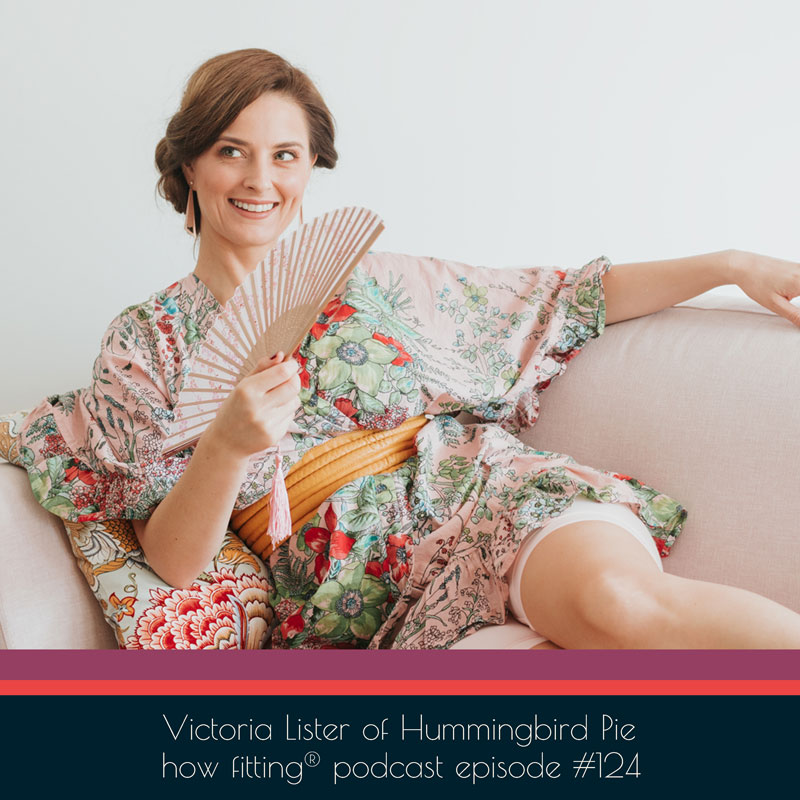
In an industry obsessed with outward appearances, what if we made decisions by listening to our body and not just looking at it? If clothing choices came from a place of self-awareness, how would that change the way we design products and run fashion businesses? Victoria Lister approaches her work from this perspective. In episode 124, she shares what made her start listening to her body and what that has meant for her underwear and lounge brand Hummingbird Pie.
Victoria is the founder and owner-operator of Hummingbird Pie, an Australian-based, micro-business that has supplied women with luxe, everyday basics since 2015. The business was born from Victoria's personal quest to solve the problem of thigh chafing without resorting to shapewear – a challenge that led her to create Hummingbird Pie’s flagship product, long-legged underpants known as ‘Longerpants’.
Today, the range has expanded to include outer as well as underwear, designed to help women of all ages, stages, shapes and sizes to feel at home in themselves – not reshaped, but supported, relaxed and free to be. Hummingbird Pie fits in and around Victoria's work as a researcher, with the help of her wonderful husband and two dear friends who work casually on different aspects of business, and local suppliers and manufacturers.
This episode explores:
Fitting the customer
How the Hummingbird Pie target customer has expanded since the start of the business
The mindset that unites Hummingbird Pie customers
What makes Hummingbird Pie garments different
The relationship Victoria wants her customers to have with Hummingbird Pie clothes
Fitting the lifestyle
The challenges of scaling a cottage business
Why new products don’t always start with design
What gave Victoria the courage to start a business
The behind the scenes lifestyle that supports Victoria’s business
Fitting the values
How Victoria’s self-awareness and valuing her body influences her approach to design
Why Victoria prefers working with other collaborators instead of learning how to do everything herself
People and resources mentioned in this episode:
Hummingbird Pie website
Hummingbird Pie email
Hummingbird Pie Instagram
Victoria’s LinkedIn
Do you want fashion business tips and resources like this sent straight to your inbox? Sign up for the How Fitting newsletter to receive new podcast episodes plus daily content on creating fashion that fits your customer, lifestyle, and values.
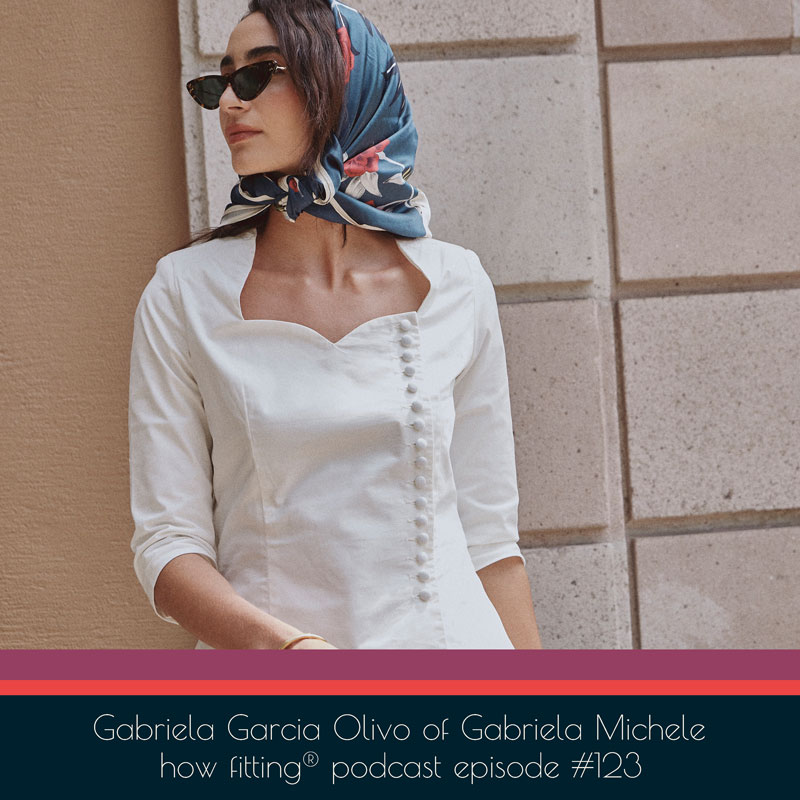
We talk about how timeless fashion lets us build sustainable wardrobes. What if the benefits of timelessness weren’t confined to our customers’ closets? Today’s guest, Gabriela Garcia Olivo, found that her timeless designs helped her build a more sustainable business. Her story is one of resilience, refinement, and reflection. In episode 123, she shares her perspective on what it takes and why it is worth it to build a fashion brand.
Gabriela Garcia Olivo is the founder and creative director of Gabriela Michele, a timeless women’s clothing brand inspired by the elegance of 1950s fashion and the captivating spirit of Latin American women. Born from a desire to celebrate feminine sophistication in everyday life, her brand merges vintage glamour with modern craftsmanship. With a commitment to quality, her collections feature natural fabrics, tailored fits, and thoughtful details that invite women to embrace their confidence and femininity.
This episode explores:
Fitting the customer
Why Gabriela does not use herself as the fit model even though she is her target market
The surprising demographic of women who resonate with her brand
The two things that have made the biggest difference in finding her customers and growing the brand
Fitting the lifestyle
How long it took from idea to launch
The aspects of vintage style that Gabriela has carried into her designs
Why Gabriela paused her brand twice since initially launching
What kept Gabriela going when sales were slow and burnout was looming
How Gabriela balances ambition with realistic expectations for her business
Fitting the values
How Gabriela found a factory and patternmaker that she trusts
How timeless style has led to a timeless business
People and resources mentioned in this episode:
Gabriela Michele website
Gabriela Michele Instagram
Gabriela Michele email
Do you want fashion business tips and resources like this sent straight to your inbox? Sign up for the How Fitting newsletter to receive new podcast episodes plus daily content on creating fashion that fits your customer, lifestyle, and values.
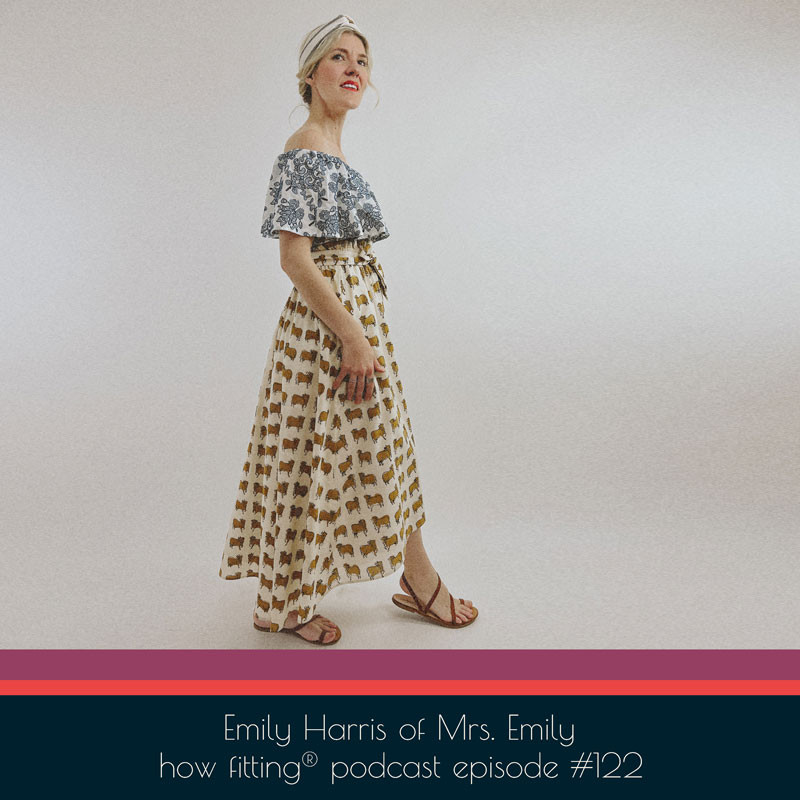
Emily Harris started out as a designer of clothes, but recently, she says she’s become more of a designer of supply chains. Over the fifteen years since starting her brand Mrs. Emily, Emily has produced her signature elastic-waist skirts in different ways – sewing them herself to order, working with a seamstress to stock a retail location, and now working with a fair trade mill and sewing studio to produce inventory. Her product has gotten even more beautifully simple, but the logistics have gotten far more complex.
In episode 122, Emily candidly shares how her target customer has grown as she and her business have, how her change in lifestyle required a change in manufacturing, and why play and personal style are necessities in her work and business.
Emily is a fashion designer, wife, and mom based in Champaign, Illinois. She studied fashion design at Southern Illinois University as a newlywed, and after graduating, she and her husband moved to New York City, where she worked for bridal designer Amsale Aberra. In 2010, Emily launched her own brand as a way to grow her design career while staying present with her young family.
After years of creating custom garments made to clients’ measurements, Emily developed a proprietary size chart and began manufacturing with small, family-run workshops in India and Bangladesh—workshops where she has personal relationships and deep trust. These teams produce extraordinary work and provide fair wages, healthcare, and childcare to their employees.
Now, 15 years into her brand and 14 years into motherhood, Emily continues to design every piece from her home studio. Her business has been shaped by a desire to live fully in all her roles: as a mother, a wife, and a designer.
This episode explores:
Fitting the customer
How her target customer has grown as Emily and her business have
How Emily decides what skirts to offer each season
How Emily balances the technical, quantitative feedback with personal, qualitative feedback as she designs
The ways that Mrs. Emily products have been simplified – and the work that has gone into doing so
Fitting the lifestyle
The lifestyle that inspired her signature elastic-waist skirts
How Mrs. Emily has changed as Emily’s daily lifestyle has changed over the years
Why Emily describes her role as being a designer of supply chains, not just a designer of clothes
What kept Emily going when everything in her business felt heavy and stressful
Fitting the values
What made Emily look at her product more seriously
The thing that really fuels inspiration
Why fair trade manufacturing is so important to Emily
Why play and personal style are necessities in Emily’s work and business
People and resources mentioned in this episode:
Mrs. Emily website
Mrs. Emily Instagram
Emily’s email
Mrs. Emily LinkedIn
Emily on How Fitting episode 9
Jackie of Motif Handmade on How Fitting episode 120
Do you want fashion business tips and resources like this sent straight to your inbox? Sign up for the How Fitting newsletter to receive new podcast episodes plus daily content on creating fashion that fits your customer, lifestyle, and values.
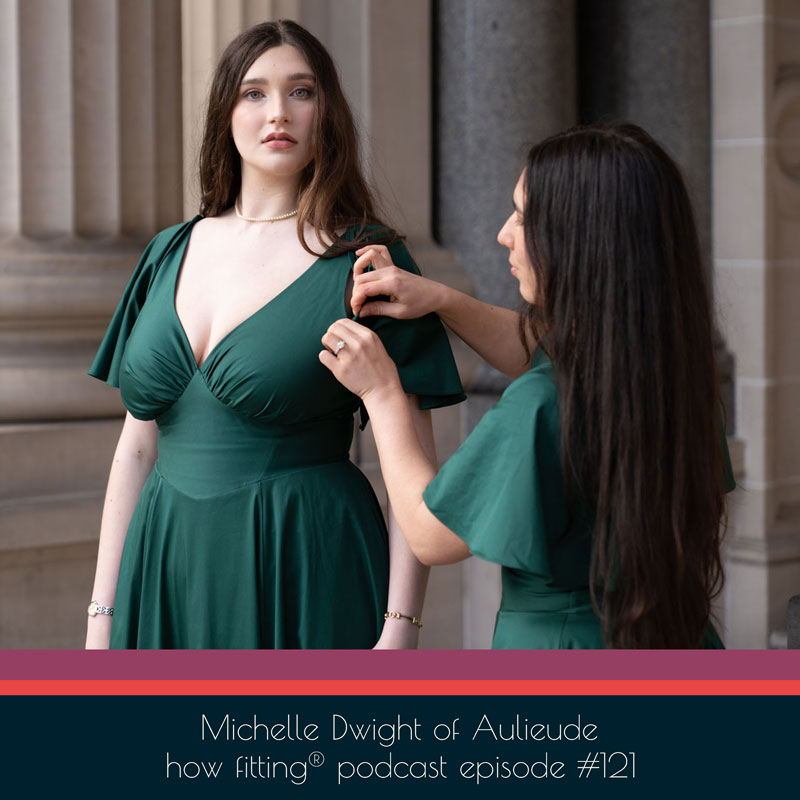
Michelle Dwight has a notebook of what she calls weird and wonderful ideas. These ideas become convertible dresses and swimwear for curvy women. She started her brand, Aulieude, as a young designer wanting stylish, sustainable fashion. As her business has grown, she’s learned to apply her creativity to her business and not just her designs. As she’s grown too, she’s decided what things are and are not worth compromising.
In episode 121, hear how the Aulieude customer has grown up as Michelle has, how Michelle’s lifestyle has played into her business decisions over the years, and why business values are extra important when you are ready to scale.
As a girl, Michelle loved creating beauty from the found materials around her. Often shopping clothes to sew into something new and pattern making from intuition on her spotlight mannequin with A4 printer paper and sticky tape. She made platform shoes in woodwork, leather working, making corsetry, consistently fascinated by the construction of various mediums. Michelle would dress her sister and her friends up in her creations and emulate vogue editorial shoots with an old SLR camera and a vision.
Aulieude was founded in 2017 by our then 23 year old Designer, Michelle Dwight, making dresses from her bedroom. After studying at Sydney’s Fashion Design Studio and working in the Fast fashion industry, Michelle grew tired of flimsy garments and wanted to craft quality fits that would be loved over a lifetime.
Passionate about sustainability, she set out to create conscious clothing that didn’t compromise on style. In lieu of (‘Au Lieu De’) shapeless eco fashion on the market, Michelle took pride in carefully constructing flattering feminine silhouettes that celebrated a woman’s curves – designing adjustable and multiway pieces that tailor to the wearer’s unique shape and style.
Gaining a loyal following in the Market stalls of Sydney and Melbourne, Aulieude transitioned to selling exclusively online. They have since proudly expanded their size range, introduced original prints and formal wear as well as their most recent category, Swim! Every Aulieude garment is pattern made by hand in Michelle’s Melbourne Studio by the designer herself. Aulieude samples are made for Michelle’s curvy body and she fits each creation on models of various sizes to make sure that the quality and fit of the pieces are absolutely perfect for you.
Michelle, now 32, is continually inspired by the wonderful community of women Aulieude has garnered. Strong, caring women who own their femininity and deserve to be supported and empowered. Engaging with and serving this community brings so much joy and fulfilment that continues to inspire the collections to come.
This episode explores:
Fitting the customer
Who Michelle designs for
What Michelle learned about her customers at markets
The new “risky” category that Aulieude recently added
Why Alieude changed how its pieces are sized
Fitting the lifestyle
How much Michelle saved up to start Aulieude and fund her first production run
The big mistake Michelle made when she attended her first market
How Michelle’s lifestyle has played into her business decisions
The reason Michelle didn’t want to be the face of Aulieude initially and what changed her mind
How Michelle has grown as her business has
Fitting the values
Why values are super important when you are ready to scale your business
An aspect of sustainability that many fashion founders overlook
Why Michelle travels to visit her factory (it is NOT to check in on production)
People and resources mentioned in this episode:
Aulieude website
Aulieude Instagram
Aulieude email
Do you want fashion business tips and resources like this sent straight to your inbox? Sign up for the How Fitting newsletter to receive new podcast episodes plus daily content on creating fashion that fits your customer, lifestyle, and values.
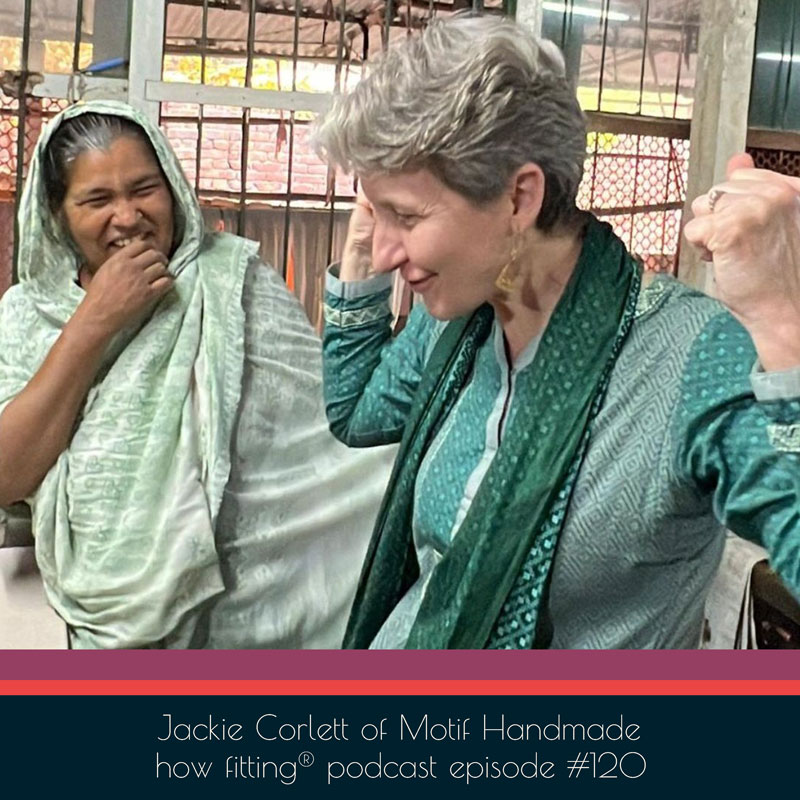
In today’s world, technology has woven its way into nearly every aspect of our lives and work. The fashion industry is always looking for ways to make things faster and automate work that always used to be done by humans – but not Jackie. She’s been working with hand weavers in Bangladesh for over three decades and is more passionate about the future of fair trade, hand-crafted fabrics than ever. Jackie teaches designers how to design their own handwoven fabrics and helps them get their textiles made through her business Motif Handmade.
In episode 120, Jackie shares how designing your own handwoven textiles is more accessible to you as an independent designer than you might realize, how she’s seen fair trade sourcing change lives, and the value that threads through all of Jackie’s work.
Jackie Corlett is the founder of Motif Handmade, a Brit who swapped the rolling hills of England for decades in vibrant Bangladesh, and now calls the wide-open prairies of Illinois home. As a textile designer, Jackie’s lifelong passion is for handcrafted fabrics and the remarkable artisans who bring them to life. Over the years, she’s helped students, designers and brands weave artisanal goods into their collections, creating beauty with purpose.
Today, through her course KIND FABRIC, Jackie’s mission is to empower designers with the skills and confidence to develop their own fair trade certified, custom fabrics and finished goods. She believes sourcing can be 100% transparent, giving you 100% peace of mind. From fibre to fabric to finished product, Jackie champions a world where creativity isn’t just about making things ... it’s about making a difference.
This episode explores:
Fitting the customer
Why handwoven textiles are more accessible to you as an independent designer than you might realize
The two big shifts that have accelerated the demand and accessibility of fair trade textiles over Jackie’s career
Fitting the lifestyle
What captured Jackie’s interest back in 1989 that started her on the path towards the work she is doing today
How fair trade sourcing changes us as designers
How long it takes to design your own handwoven fabrics and get them made
How the MOQs and cost of handwoven fabrics compare to other fabric options
Fitting the values
The thing that matters most to Jackie in her work
Why creating products with integrity is easier now than ever before
The ways that Fast Fashion mindsets creep into our work
The real impact of fair trade
People and resources mentioned in this episode:
Motif Handmade website
Motif Handmade Instagram
Jackie’s email
Jackie’s LinkedIn
Kind Fabric course
Previous How Fitting guests who use Motif fabrics in their collection: Mrs. Emily and Glean & Grace
Cyclo recycled fiber yarns
Plaidmaker plaid design tool
Future Fabrics Expo
Do you want fashion business tips and resources like this sent straight to your inbox? Sign up for the How Fitting newsletter to receive new podcast episodes plus daily content on creating fashion that fits your customer, lifestyle, and values.
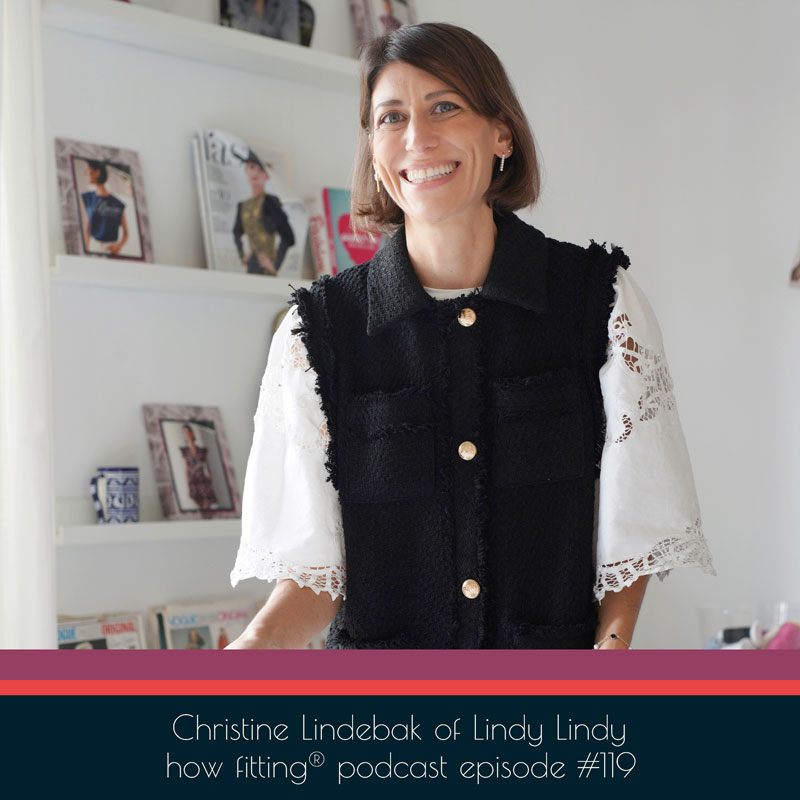
Luxury doesn’t always look like designer clothes, high heels, and a “dream” fashion job in NYC. Sometimes it looks more like quiet morning moments getting ready for a big day, hand-stitched embroidery on a vintage table linen, and barefoot commutes to a home office in a Spanish apartment. Christine Lindebak has always appreciated these small details. With her bridal loungewear brand, Lindy Lindy, she has leaned into these details even more. Each piece is crafted using vintage textiles that share a luxurious story of their own.
In episode 119, hear why her lounge and sleepwear designs were a perfect fit for brides, how Christine’s identity and lifestyle massively changed when she quit corporate, and the ways that Christine has considered scaling that align with her values.
Christine Lindebak is a fashion industry veteran, having worked for Emilio Pucci, Mulberry, and Alexis Bittar. She is the founder of Lindy Lindy, creating bespoke homewear from vintage Spanish linens for brides seeking one-of-a-kind getting-ready attire. Christine is also the force behind Sewing and the City, selling fashion sewing patterns online and in shops around the globe and inspiring people of all ages to sew their own clothes.
This episode explores:
Fitting the customer
Why the bridal loungewear market organically fit Lindy Lindy
How Lindy Lindy’s niche made marketing easier for Christine
How Lindy Lindy pieces are sized
Christine’s approach to pricing her pieces
Fitting the lifestyle
How Christine landed her first wholesale partnership
Why Christine quit her “dream” career in luxury retail
How Christine’s identity and lifestyle massively changed when she quit corporate
Fitting the values
The reason behind Christine’s premium sewing construction choices
How the textiles themselves shape Lindy Lindy designs
How Christine’s values play out in the day to day operations of Lindy Lindy
The ways that Christine has considered scaling that fit her values
People and resources mentioned in this episode:
Lindy Lindy website
Lindy Lindy Instagram
Sewing In The City website
Do you want fashion business tips and resources like this sent straight to your inbox? Sign up for the How Fitting newsletter to receive new podcast episodes plus daily content on creating fashion that fits your customer, lifestyle, and values.
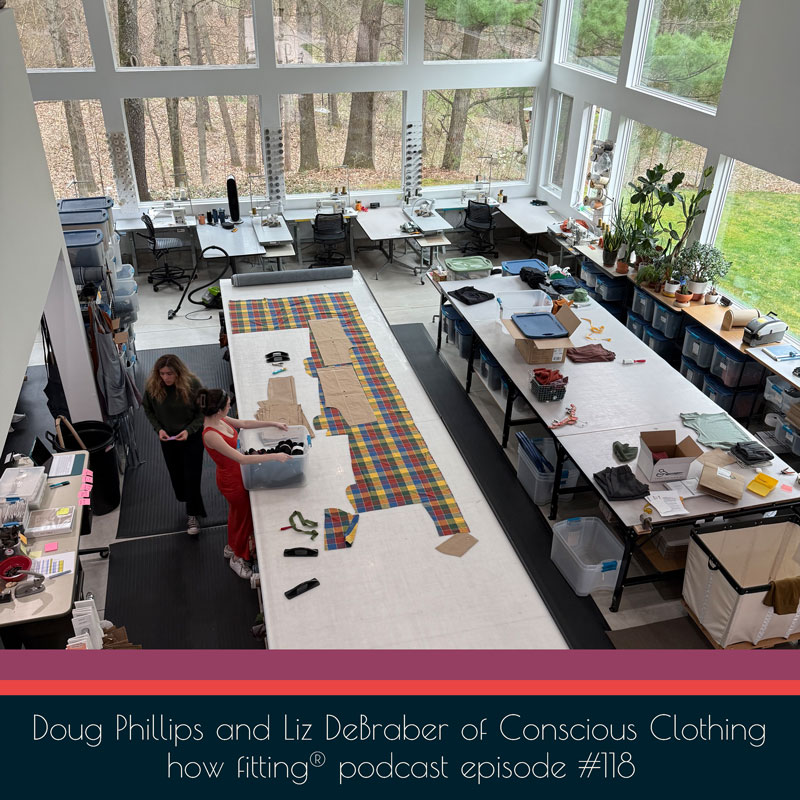
Rose and Doug Phillips asked: “how can we spend every day, together, doing what we love?” Their answer was Conscious Clothing. For two decades they built their business on this premise - even building the gorgeous, sun-filled Michigan studio where their team of ten designs and makes each piece of organic and natural fiber clothing.
Things haven’t always been dreamy, though. As the brand grew, work started to creep into the weekends. The pandemic hit. Then Doug lost his life and business partner. But, the heartfelt vision for Conscious Clothing remained. In this interview, Doug and General Manager Liz DeBraber share how they’re intentionally restructuring the business for the sake of themselves, their team, and their customers.
Doug Phillips is the owner of Conscious Clothing, an organic and natural fiber clothing company based in the Grand Rapids Michigan area. While navigating the challenges of designing and manufacturing in the US for over 23 years against a flood of cheap clothing imports, a mission was born. Exemplifying how a better way is possible by supporting local and organic is better for people and the planet. Doug hopes everyone realizes their power to create change with the purchase power they have and the brands they choose to support.
This episode explores:
Fitting the customer
How Liz is completely revamping Conscious Clothing’s pattern library to better fit their customers
The process behind extending their sizing from XS-XL to XS-6X.
How their small team things about customer service
Fitting the lifestyle
How founders Doug and Rose built the business from the ground up to realize the life they wanted together
What they changed to keep the growing business from taking over their life
How a years-long season of grief forced Doug to make big changes in the business
Why sustainability is just as much about the lifestyle of the team than it is about the products they are making
How they are balancing R&D with production
Fitting the values
Why organic and natural fibers and made-in-USA production are important to Conscious Clothing
How the industry and consumer values about organic clothing has changed over the 20+ years they’ve been in business
Why Doug is happy that Conscious Clothing is not as unique as it once was
People and resources mentioned in this episode:
Conscious Clothing website
Conscious Clothing Instagram
Fox fiber® - breeder and grower of organic, naturally colored cotton
Do you want fashion business tips and resources like this sent straight to your inbox? Sign up for the How Fitting newsletter to receive new podcast episodes plus daily content on creating fashion that fits your customer, lifestyle, and values.
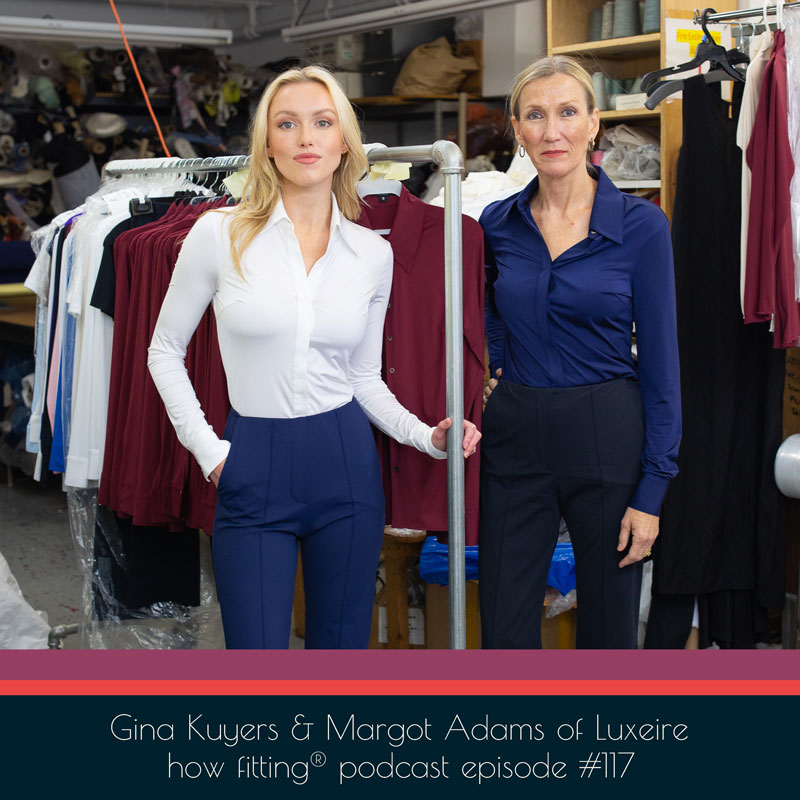
Work smarter, not harder. That is what the high achieving women who wear Luxeire’s technical tailored button-ups are doing and what mother-daughter co-founders Gina Kuyers and Margot Adams do in their business as well. (Okay, sometimes they are working smart and hard). In just five years, they’ve grown the brand to 7 figures. They’re self-funding the business and the growth hasn’t come without risks. They’ve learned to experiment quickly and have found what investments pay off for them and which don’t. Their whole business is built for problem solving.
In episode 117, Gina and Margot share how they’ve focused Luxeire’s marketing and ad strategy around what matters most to their customers, how they take risks without jeopardizing their family life, and why producing in New York city fits their business values.
Gina Kuyers: Co-Founder and CEO
The idea for Luxeire emerged from founder Gina Kuyers’ frustration with the discomfort and high maintenance of beautiful clothing. Gina, unable to find any brands that offered the perfect fit, decided to take matters into her own hands and create one. With a 20-year career and a PhD in school psychology, Gina had spent decades applying research to real-world problem solving. She used this expertise to identify a significant gap in the fashion industry: the lack of stylish, comfortable, and low-maintenance clothing that fits perfectly.
Motivated by her own experiences and the needs of countless others, Gina set out to create Luxeire. Gina’s meticulous approach to research and problem-solving has been instrumental in the development of Luxeire's unique product line. She has leveraged her analytical skills to source the finest materials and employ innovative design techniques that ensure each piece is both functional and beautiful. Luxeire’s wardrobe staples are a testament to Gina’s commitment to quality, comfort, and sustainability, offering a perfect fit for modern lifestyles. Luxeire stands as a testament to her dedication to solving everyday problems with elevated, practical solutions.
Margot Adams: Co-Founder and Head of Marketing and Sales
In December 2020, Margot Adams, Gina’s daughter, joined Luxeire as the dynamic head of marketing and sales. Serving as the driving force behind the brand’s direct-to-consumer launch, Margot's leadership has been instrumental in reshaping Luxeire’s market approach. Margot attended the prestigious Parsons School of Design in New York City, where she immersed herself in business design with a special focus on marketing and sustainability.
While at Parsons, she honed her creative skills and developed a keen eye for aesthetics and trends. Her time as a marketing assistant and stylist for Sarah Flint further enriched her understanding of the fashion world, allowing her to blend practical experience with academic knowledge. This background has been instrumental in shaping Luxeire’s brand identity, infusing it with innovative marketing strategies and a strong emphasis on sustainable practices.
Margot’s creative vision and strategic insight have been pivotal in elevating Luxeire's market presence, ensuring the brand resonates with contemporary consumers who value both style and sustainability. Her ability to merge creative artistry with business insights continues to be a driving force behind Luxeire’s success.
This episode explores:
Fitting the customer
Who the Luxeire customer is
The problems with classic tailoring that Gina and Margot set out to solve
How Margot focused Luxeire’s whole marketing and ad strategy around what matters most to their customers
Why it all started with a problem and one special fabric
Fitting the lifestyle
How Gina and Margot take risks without jeopardizing their family life
Gina and Margot’s vision for success
What Gina’s business plan looked like when she first started versus now
What has worked and not worked for Luxeire when it comes to hiring help
Fitting the values
Why producing in New York city fits Luxeire’s business values
What sustainability looks like in Luxeire’s products and business
People and resources mentioned in this episode:
Luxeire website
Luxeire Instagram
Do you want fashion business tips and resources like this sent straight to your inbox? Sign up for the How Fitting newsletter to receive new podcast episodes plus daily content on creating fashion that fits your customer, lifestyle, and values.
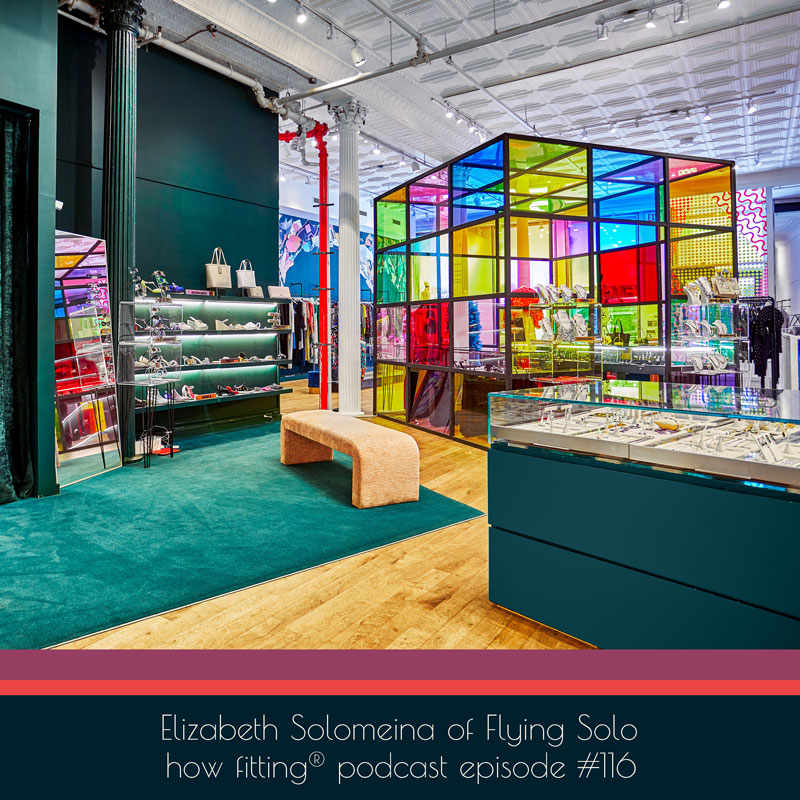
If you’ve ever dreamed of having your products in stores but are hesitant to dip your toes into retail because of high overhead, lower wholesale margins, or lack of retail experience, Elizabeth Solomeina has a solution.
In episode 116, Elizabeth shares her refreshingly different approach to retail. Her multi-city retail space and press showroom, Flying Solo, is designed just for independent designers to grow their brands and community. It is a collaborative retail space where designers get to control how their collection is presented, get feedback directly from customers, and make higher margins without the traditionally long wholesale lead times.
Elizabeth Solomeina is the co-founder of Flying Solo, a revolutionary fashion retail and PR platform based in New York and Paris. With a background in design and entrepreneurship, Elizabeth has built one of the most influential independent fashion platforms in the world — supporting thousands of emerging brands over the years and redefining how fashion reaches the market.
This episode explores:
Fitting the customer
Who the Flying Solo customer is
How Flying Solo presents diverse designers, collections, fits, and sizing cohesively to customers
The future of retail amidst today’s gloomy retail headlines
Fitting the lifestyle
What Elizabeth and her team look in the designer they stock
How brands can best prepare for a successful retail experience
How creatives can thrive by working together
How Flying Solo’s retail model gives so much more freedom and flexibility to designers
Fitting the values
Why Elizabeth believes so strongly in the value of collaboration and community
The benefits of creative experimentation for designers
People and resources mentioned in this episode:
Flying Solo website
Flying Solo Instagram
Elizabeth’s LinkedIn
Do you want fashion business tips and resources like this sent straight to your inbox? Sign up for the How Fitting newsletter to receive new podcast episodes plus daily content on creating fashion that fits your customer, lifestyle, and values.
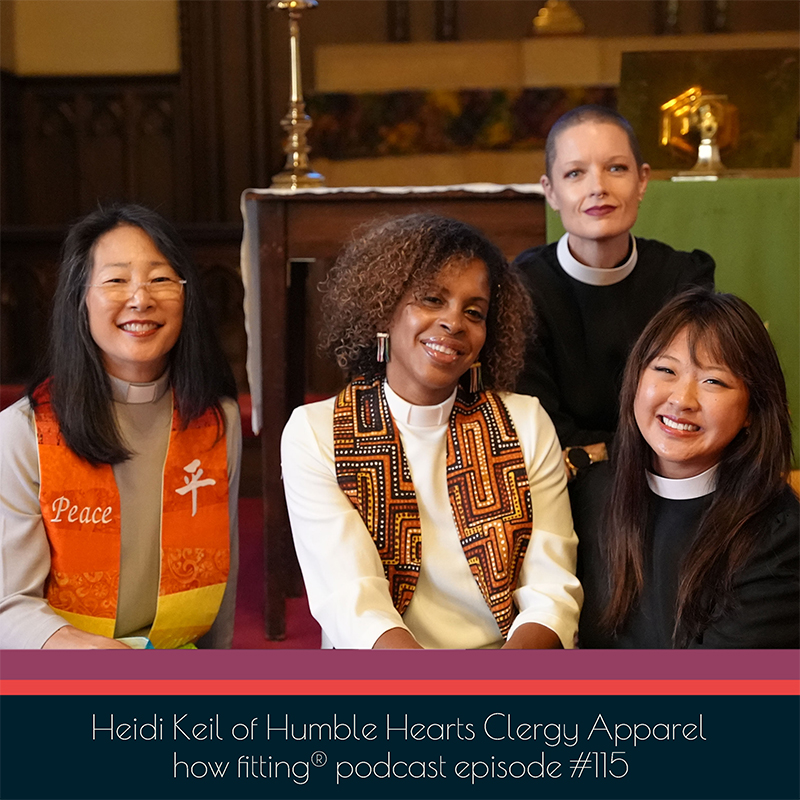
When your brand focuses on a specific body shape, creating clothes that fit is fairly easy. But what if you are designing for specific psychographics instead of demographics? What does fit look like then? Heidi Keil is the founder of Humble Hearts Clergy Apparel. She designs clothes for female pastors and chaplains – which is super niched on both faith values and vocation, not necessarily body type. Manufacturing clothes and a business that fits has been a prayer-filled journey for Heidi, but she serves in this way because she loves it.
In episode 115, hear how Heidi arrived at a size chart and a size range that fits the pastors she serves, why Heidi started Humble Hearts as a business but it’s turned into more of a hobby within her lifestyle, and how Heidi’s faith values and favorite bible verse inspire her humble approach to running her brand.
Heidi began designing clergy apparel, at the request of her pastor, when she was a student in an Apparel Design program. It was something Heidi continued to offer, somewhat sporadically, while working in the costume shop at The Guthrie Theater following graduation. When the theater closed due to the pandemic in 2020 she turned her time and attention to creating a line of clergy apparel (mainly due to her own need for something to fill her time). Gradually, with the help of family, friends, past instructors and work contacts she slowly developed an online presence. Humble Hearts Clergy Apparel is in its 5th year.
Where does the name come from? "...live a life worthy of the calling you have received. Be completely humble and gentle; be patient, bearing with one another in love." Ephesians 4:1-2
Heidi shares: "This small business has been a wonderful way to blend my interest in fashion and apparel design with my faith."
This episode explores:
Fitting the customer
The number of iterations it took to get the Humble Hearts size chart and size range right
The things Heidi had to learn when she switched from her costume shop job to manufacturing clothing for Humble Hearts
How Heidi learned what details and functionality are important for clergy apparel
What changed when Heidi realized she didn’t have to do everything herself
Fitting the lifestyle
Why Humble Hearts started out as a business and has now become more of a hobby for Heidi
How Heidi’s season of life allows her the time flexibility to run Humble Hearts
How those around Heidi support her in this business
The activity that has the biggest impact on sales for Humble Hearts
Fitting the values
Heidi’s humble approach to running her brand
How the liturgical calendar affects Humble Hearts’ selling season
How Heidi’s work with Humble Hearts serves a greater purpose
People and resources mentioned in this episode:
Humble Hearts Clergy Apparel website
Humble Hearts Clergy Apparel Instagram
Heidi’s email
Do you want fashion business tips and resources like this sent straight to your inbox? Sign up for the How Fitting newsletter to receive new podcast episodes plus daily content on creating fashion that fits your customer, lifestyle, and values.
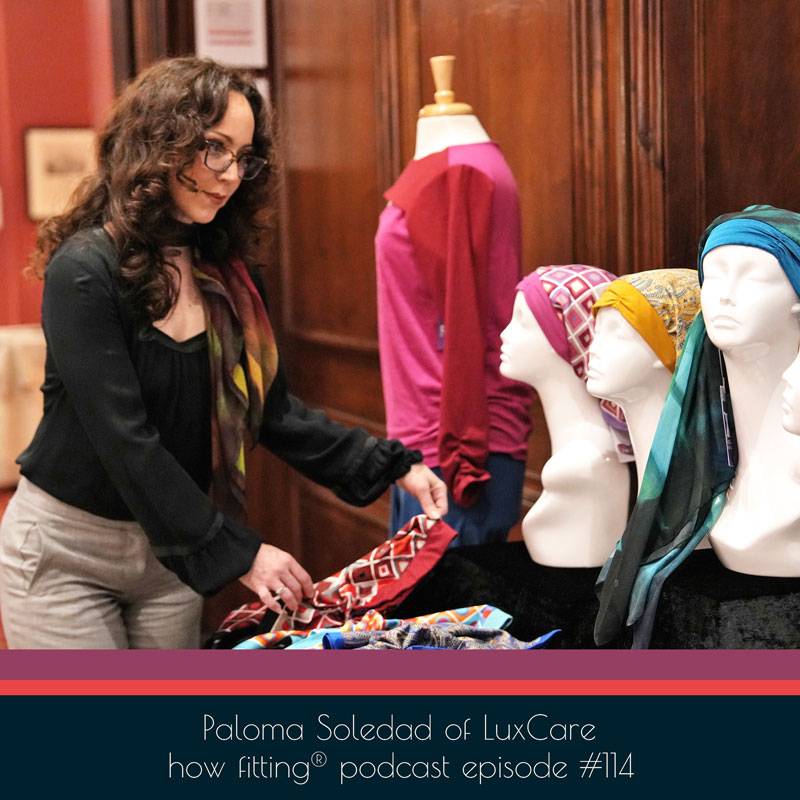
What would you be willing to do to better serve your customers and mission? Paloma Soledad, a three-time stage IV cancer survivor and founder of LuxCare, is making some big changes in her business to help women going through medical treatments feel more like themselves and less like a patient. In episode 114, she tells the careful details and entrepreneurial journey that has gone into creating LuxCare’s stylish and medically accessible clothing.
Paloma Soledad is a fashion designer and three-time cancer survivor. Inspired by her journey with stage IV cancer, Paloma created LuxCare, a gifting platform, and line of clothing designed to help individuals facing medical challenges feel more like themselves. LuxCare offers adaptive garments, including headscarves for those experiencing hair loss, and versatile clothing that blends comfort, style, and medical functionality. Her brand focuses on sustainability, timeless styles, custom prints, and high-quality fabrics.
Paloma's career highlights include designing for films such as "Coraline," receiving the "Best Emerging Designer" award at Portland Fashion Week, and being named one of Entertainment Weekly’s “Eight Costume Designers turned Fashion Headliner.” Her work has appeared in SPIN Magazine, L'Officiel, Photobook Magazine, and on electronic billboards in Times Square.
With a commitment to slow fashion and environmental sustainability, LuxCare uses certified organic fabrics and continually seeks innovative materials. Paloma's designs are crafted to uplift and empower, offering both comfort and elegance. Raised in Hawaii, her design aesthetics were shaped by the natural wonders around her, instilling a deep respect for the planet's limited resources. Mostly self-taught, she learned from her mother as a child and honed her skills on the job. Today, Paloma seamlessly integrates beauty and craftsmanship into her fashion projects, significantly enriching the lives of those she designs for.
This episode explores:
Fitting the customer
The LuxCare clothing details that made Paloma feel less like a cancer patient
The thoughtful details from design to packaging that provide care to each customer
How Paloma knew that it was time for a rebrand
What Paloma wished she’d thought about before choosing a brand name
Why gifting is a big part of the LuxCare brand
Fitting the lifestyle
The mental shifts needed to go from making everything yourself to producing at a factory
How Paloma moved from costuming in the film industry to designing fashion apparel
What Paloma had to learn when she transitioned from designer to entrepreneur
Fitting the values
Why Paloma compromised on her values to better serve LuxCare’s mission
People and resources mentioned in this episode:
LuxCare website
LuxCare Instagram
Paloma’s LinkedIn
FabScrap - textile reuse and recycling
Do you want fashion business tips and resources like this sent straight to your inbox? Sign up for the How Fitting newsletter to receive new podcast episodes plus daily content on creating fashion that fits your customer, lifestyle, and values.

Comments

Download from Google Play

Download from App Store
 United States