


 Claim Ownership
ConTejas Code
Subscribed: 14Played: 178
Subscribe

© Tejas Kumar
Description
ConTejas Code is a podcast in the web engineering space that has deep dives on various topics between frontend engineering with React, TypeScript, Next.js, and backend engineering with Kafka, Postgres, and more. The series is a mix of long-form content and guest episodes with industry leaders in the web engineering space.
From the podcast, listeners will take away actionable best practices that you can integrate into your workflows as well as valuable insights from prominent people in the industry.
Hosted on Acast. See acast.com/privacy for more information.
97 Episodes
Reverse
Links- CodeCrafters (Sponsor): https://tej.as/codecrafters- Guest Socials (Paul Aragones):Instagram: https://www.instagram.com/prequalizer/YouTube: https://www.youtube.com/@PinoyHusbands- Gottman Institute (The Four Horsemen): https://www.gottman.com/blog/the-four-horsemen-recognizing-criticism-contempt-defensiveness-and-stonewalling/- Cal.com (Peer Richelsen): https://cal.comMentioned Episodes- DiaznoSpotify: https://open.spotify.com/episode/4i4txd4HhngCGAtDWt0JZF?si=h-LM6LEPQGeh8Hsu2s5N4wApple: https://podcasts.apple.com/nz/podcast/diazno-how-to-unlock-creativity-taste-and-effective/id1731855333?i=1000747678547YouTube: https://www.youtube.com/watch?v=k8azxbxYBAc&list=PLEJpU2pV0Lie1VWU1unMg_7FRQ1gqFmAZ&index=4&t=5888s&pp=iAQBsAgCSummaryIn this episode, I sit down with Paul Aragones, an embedded Linux engineer who made the fascinating pivot to becoming a marriage coach. We explore the surprisingly deep parallels between building stable software systems and engineering a divorce-proof marriage. We discuss why marriage is actually the ultimate operating system for life, how to create a 'spec sheet' for your partner to avoid compatibility bugs, and why your friend circle might be increasing your divorce risk by 75%. Paul also opens up about his own journey through poverty and near-divorce, and we debate the controversial role of submission and servant leadership in modern relationships.Chapters00:00:00 Intro00:05:05 Marriage as an Operating System00:08:28 Building the Spec Sheet: Requirements for a Spouse00:13:38 Why Marry? The Societal & Financial API00:18:45 The Danger of Being Too Picky (The "Feature Creep" Problem)00:22:14 Defining Your 3 Non-Negotiables00:27:46 The "Timeout" Clause in Dating00:33:13 The Shock of v1.0: Early Marriage Bugs00:39:20 The 75% Rule: How Friends Influence Divorce Risk00:47:23 Implementing CI/CD: Continuous Improvement in Marriage00:54:30 Overcoming Male Pride & Finding Mentors01:01:15 Identity Stack: Husband > Father > Businessman01:06:11 Addressing Religious Trauma & Misconceptions01:19:58 The Four Horsemen: Predicting Divorce with 90% Accuracy01:27:08 Emergency Protocols: Saving a Dying Marriage01:37:41 Why It's All Worth It: The Highest Form of Satisfaction Hosted on Acast. See acast.com/privacy for more information.
Links- CodeCrafters (Sponsor): https://tej.as/codecrafters- The Rise of the AI Engineer (Latent Space): https://www.latentspace.com/p/ai-engineer- Anthropic Model Context Protocol (MCP): https://www.anthropic.com/news/model-context-protocolAnthropic Skills (SKILL.md): https://resources.anthropic.com/hubfs/The-Complete-Guide-to-Building-Skill-for-Claude.pdf?hsLang=en- Pratim Bhosale on Vector Search (Previous Episode): https://www.youtube.com/watch?v=ZJcrI1GbDec- OpenClaw (Official Repository): https://github.com/openclaw/openclaw- WormGPT/Prompt Injection Incident (The Verge Reference): https://www.theverge.com/ai-artificial-intelligence/881574/cline-openclaw-prompt-injection-hackSummaryIn this episode, I’m finally breaking down what AI Engineering actually looks like in 2026. We’ve moved past the "wow" phase of demos into the hard reality of production, where models lie, costs spike, and security is a nightmare. I define the role formally—separating it from ML engineering—and dive deep into the three core problems we solve daily: hallucinations, real-time knowledge, and context engineering. I also explore the explosion of agent runtimes, specifically dissecting OpenClaw (formerly Clawdbot/Moltbot) and why its open-source, device-local approach is winning. We talk about the Model Context Protocol (MCP), the new SKILL.md standard from Anthropic, and why I believe multi-agent concurrency is the inevitable future of software.Chapters00:00:00 Intro: The "Monday Morning" AI Nightmare00:08:15 What is AI Engineering?00:21:00 AI Engineers vs. ML Engineers00:36:20 Problem 1: Hallucinations00:48:30 Problem 2: Real-Time Knowledge00:59:00 Problem 3: Context Engineering01:13:00 Agents01:17:30 MCP (Model Context Protocol) Explained01:22:30 SKILL.md: The New Standard01:39:00 The 2026 Trend: Multi-Agent Concurrency01:42:30 Build Your Own OpenClaw01:52:00 Conclusion: Moving from Talk to Action Hosted on Acast. See acast.com/privacy for more information.
Links- CodeCrafters: https://codecrafters.io- Kyle Simpson (You Don't Know JS): https://www.youtube.com/watch?v=BEMG7Oxuan8- Josh Goldberg (CFP Advice): https://www.joshuakgoldberg.com/blog/how-i-apply-to-conferences/- JSHeroes CFP Guide: https://jsheroes.io/ (See blog section)- CFP.watch (by Roudy): https://cfp.watch- confs.tech (mentioned at ~00:34): https://confs.tech- Guillermo Rauch Episode: https://open.spotify.com/episode/6NzkPBjwpwLmhIntEUB95x?si=51ac6de6d8fa4f8e- Santosh Yadav Episode: https://open.spotify.com/episode/7HIl3zqyDd3cZDmJLzKR58- Jeff Escalante Episode: https://www.youtube.com/watch?v=uf2E3dWfK3k- System Design in 15 Minutes (Hello Interview): https://www.hellointerview.com/learn/system-design/in-a-hurry/introduction- Mikhail Korolev (X/Twitter): https://x.com/mkrl__- Mikhail on GitHub: https://github.com/mkrl- Mikhail on LinkedIn: https://www.linkedin.com/in/mkrl/- Mikhail on Bluesky: https://bsky.app/profile/mkrl.xyzSummaryI sat down with Mikhail "Misha" Korolev to discuss a reality many engineers face but rarely talk about: how to get into rooms where you technically "don't belong." We explored his journey from being unemployed after Toptal to networking his way into VIP dinners and eventually landing a role at Tekmetric. We dug deep into the "Pac-Man Rule" for networking, why I believe you shouldn't pursue DevRel jobs at companies with unfinished products, and the specific "cheat codes" Misha used to bypass standard interview gates—including how he used ChatGPT to speed-run a LeetCode assessment. If you're currently navigating the job market or trying to pivot from engineering to public speaking, this conversation is a masterclass in making your own luck.Chapters00:00:00 Intro & Sponsors00:02:45 The "VIP Dinner" Strategy00:06:00 How to Enter Rooms You "Don't Belong" In00:12:20 The Pac-Man Rule for Networking00:15:00 Dealing with Competitive Networking (The MKBHD Effect)00:20:00 Why You Shouldn't Idolize Tech Celebrities00:28:00 How to Start Speaking at Conferences (CFP Hacks)00:35:00 Live Coding vs. Pre-recorded Demos00:43:00 The Truth About DevRel vs. Engineering00:58:00 Misha's Accidental Path to Engineering (Quake & Turbo Pascal)01:07:30 Job Hunting in a Brutal Market01:13:30 Using ChatGPT to Pass LeetCode Interviews01:20:00 Getting Referrals (The Supabase Story)01:27:00 Closing Advice: Just Go Hosted on Acast. See acast.com/privacy for more information.
LinksCodeCrafters (Sponsor)Steve Jobs iPhone Introduction (2007)Steve Ballmer "Developers"Bill Clinton "I did not have sexual relations"Tejas's First Talk (JSConf EU)Tejas at React Summit (The "Sweaty Room" Talk)Amy Cuddy's Power Posing TED TalkDiazno on ConTejas"Thin Slicing" (Ambady & Rosenthal)Mehrabian's 7-38-55 Rule (Original Paper)Elaboration Likelihood Model (Petty & Cacioppo)Cognitive Load & Multimedia Learning (Mayer/Wiley)Narrative transportationExposure Therapy for Public Speaking (Frontiers)Breathing & Physiological Sigh (PMC)Deliberate practiceFeedbackSpacing + retrieval practiceSummaryIn this episode, we're doing something different. Instead of analyzing code, we're analyzing the science of communication. I've spoken on hundreds of stages, from massive conferences to small, sweaty rooms, and I've learned that great speakers aren't born—they're built. We're going to dismantle the "talent" myth and replace it with a repeatable system. I'll walk you through the three levers of connection (Clarity, Trust, Energy), debunk the famous 7-38-55 rule, and give you practical frameworks like the "4 L's of Listening" and the "4 C's of Storytelling." Whether you're an engineer trying to get buy-in for a refactor or a founder pitching a VC, this is how you make your ideas inevitable.Chapters0:00:00 Intro0:03:00 The Steve Jobs & Obama Standard0:07:37 The 3 Levers: Clarity, Trust, Energy0:10:33 Why Communication Fails (A Quick Diagnostic)0:16:16 Debunking the 7-38-55 Rule (Mehrabian)0:25:21 The 4 L's of Listening: Listen, Loop, Label, Lead0:36:55 The One-Sentence Thesis0:44:54 How to Change Minds (Elaboration Likelihood Model)0:57:15 High Stakes vs. Low Energy: Reading the Room1:03:00 Storytelling: The 4 C's (Context, Conflict, Choice, Change)1:13:57 Delivery: Removing Fluff & Cognitive Load1:21:00 Voice Control: Pace and Emphasis1:24:40 Gestures: The "Check the Floor" Mental Model1:30:56 Managing Nerves: Power Posing & Reappraisal1:44:40 The 7-Day Action Plan Hosted on Acast. See acast.com/privacy for more information.

Links- CodeCrafters (Sponsor) - Partner with ConTejas Code- Diazno on Spotify- Diazno on Instagram- Tejas’s Keynote in Malaysia (Sick Day)DescriptionIn this episode of the ConTejas Code Podcast, Tejas sits down with the artist, producer, and multi-instrumentalist Diazno. Often described as the "Black Rick Rubin" for his ability to curate sound and vibe, Diazno shares his profound insights on the intersection of creativity and execution.They dive deep into how to move from "idea" to "finished product" by overcoming the fear of commitment, the role of taste versus talent, and how true leadership is actually about influence and service. Diazno also opens up about his experiences directing major productions at venues like the Deutsche Oper, navigating cross-cultural communication, and how he views the rise of AI tools like Suno in the music industry. Whether you are a developer, a musician, or a team leader, this episode offers a masterclass in human connection and the discipline of high performance.Chapters00:00:00 Intro & Sponsors00:04:05 From Ideas to Execution: Overcoming "Fear of Commitment"00:12:12 Creativity is Life: The Cycle of Creation and Rest00:19:15 Consumption vs. Creation: Finding the Spark00:25:22 Taste vs. Talent: The Role of the Producer00:30:20 How to Get Buy-In00:37:25 Communicating a Vision00:42:15 Communication: Not What You Say, What They Hear00:49:18 Honoring People & Building Relational Equity01:00:20 The Power of Informal Relationships01:15:20 Reps & Consistency: Performing on Your Worst Days01:22:10 AI in Music: Will It Replace the Soul?01:38:05 Outro Hosted on Acast. See acast.com/privacy for more information.
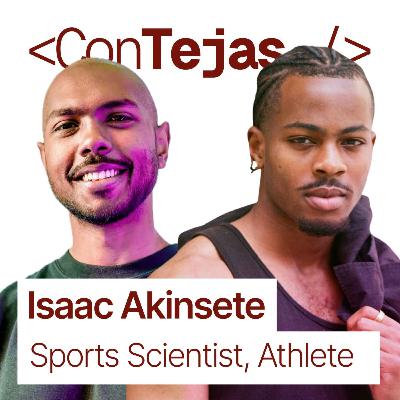
Links- Codecrafters (partner): https://tej.as/codecrafters- Isaac on Instagram: https://instagram.com/isaac11890- Contact: https://tej.asSummarySitting 8+ hours a day is destroying your biomechanics. Here is how to engineer your way back to health.In this episode of ConTejas Code, I sit down with professional footballer and CrossFit coach Isaac Akinsete to reverse the physical damage of the developer lifestyle. We dive deep into the anatomy of "tech neck," why stretching isn't enough, and how to trigger the EPOC "afterburn" effect to burn fat while sitting. Whether you have a full gym or zero equipment, Isaac outlines the exact protocols to maximize longevity, fix tight hip flexors, and optimize mental and spiritual health.In this episode, we cover:- The Desk Worker Protocol: A complete zero-equipment circuit routine for hypertrophy and cardio.- Mobility vs. Stretching: Why static stretching won't fix your posture.- RPE Explained: How to train for fat loss vs. strength without burnout.- CrossFit vs. Gym: Which is better for the average coder?- Mind & Spirit: The role of positive self-talk and faith in elite performance.Chapters00:00:00 Intro00:04:22 Isaac Akinsete00:09:10 Mythbusting: Does lifting weights stunt growth in kids?00:11:52 Am I too old to start working out?00:14:15 How to find the right workout intensity (RPE Scale)00:20:55 What sitting for 8+ hours actually does to your body00:26:08 Mobility vs. Stretching: Why stretching isn't enough00:30:12 How to fix "Tech Neck" and Hunchback posture00:42:50 Can you out-exercise a sedentary job?00:47:11 Do under-desk treadmills and walking pads work?00:53:36 Designing a workout routine for desk workers00:55:36 The "Zero Equipment" Home & Hotel Workout01:04:15 High Intensity Circuit Training & The EPOC Effect01:11:17 Traditional Gym vs. CrossFit01:16:05 Rapid Fire Questions01:22:25 Faith & Fitness: Treating your body like a temple01:29:53 The psychology of self-talk01:34:50 OutrooAVv7QV7tdStFFrhiZzZ Hosted on Acast. See acast.com/privacy for more information.
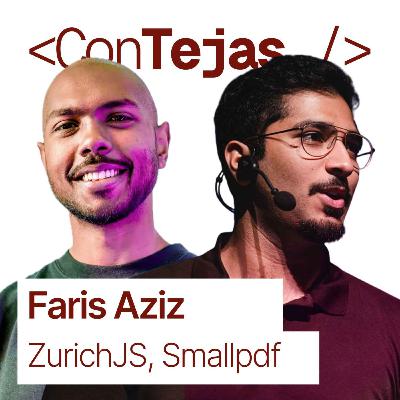
Links- Codecrafters (sponsor): https://tej.as/codecrafters- Become a guest on the podcast: https://forms.gle/wMqBmVhuzL46Ha3P7- ZurichJS Discount: https://conf.zurichjs.com?utm_source=contejas&utm_medium=partner&utm_campaign=zurichjs-conf-2026- Faris on X: https://x.com/farisaziz12- Faris on LinkedIn: https://www.linkedin.com/in/farisaziz12/- ZurichJS: https://zurichjs.com- SmallPDF: https://smallpdf.comWhat does it take to become an Engineering Manager at 21? How do you rebuild your identity when a chronic illness takes away your physical strength? In this episode of ConTejas Code, I sit down with Faris Aziz, a Staff Engineer at Smallpdf and the lead organizer of ZurichJS. At just 25 years old, Faris has lived a career’s worth of highs and lows. From failing his first coding bootcamp module to building a career ladder for a fintech startup, and from ranking as the 2nd fittest CrossFit athlete in Switzerland to being bedridden by an autoimmune condition, Faris shares the mindset required to navigate extreme volatility.This conversation moves beyond technical skills into the "internal garden"—how emotional regulation, sleep, and nutrition directly impact your ability to lead others. Faris breaks down his philosophy on "Peace of Mind" as the primary metric for promotion, why invisible work builds character, and how to steward authority without intimidation. Whether you are an aspiring manager, a developer looking to level up, or someone navigating a personal setback, this episode offers a blueprint for resilience and professional excellence.Chapters00:00:00 Intro00:04:33 Getting into Tech at 1900:08:12 Failing (and Surviving) Bootcamp00:11:00 Building a CrossFit App During Lockdown00:13:38 Getting Hired Without Writing Code00:18:49 Accidental Managers: Leading at 2100:22:19 Choosing a Pre-seed Startup Over High Salary00:28:53 Red Flags in Leadership00:33:41 Tending the Garden: Balancing Work & ZurichJS00:42:51 Health Crisis: From Top Athlete to Bedridden00:48:51 Emotional Regulation & Bio-Hacking00:59:36 Mindset: Gratitude vs. Bitterness01:07:44 Invisible Work & Building Character01:11:18 How to Get Promoted: Giving Peace of Mind01:17:28 Confidence vs. Arrogance01:21:42 Owning Mistakes Confidently01:25:38 Stewarding Authority (The Kent C. Dodds Example)01:28:06 Don't Just Be an Engineer: Solve Business Problems01:35:02 Managing "Diva" 10x Engineers01:40:12 Organizing the First ZurichJS01:46:30 Outro Hosted on Acast. See acast.com/privacy for more information.
Links- Codecrafters (sponsor): https://tej.as/codecrafters- Clerk: https://clerk.com- Auth0: https://auth0.com- Arctic (OAuth Library): https://arctic.js.org- Lucia (Session Library): https://lucia-auth.comWhy do we still use passwords in 2026? In this episode of ConTejas Code, we tear down the complex world of digital identity. From the horror story of getting hacked at a hookah bar to the mathematical elegance of public-key cryptography, we cover how the internet knows who you actually are.Let's break down the history of web authentication, explain why "logging in" is so much harder than it looks, and demystify the new standard taking over the web: Passkeys (WebAuthn). Whether you are a developer looking for an implementation playbook or just curious why your banking app requires a fingerprint, this deep dive explains the difference between Identity, Identifiers, and Credentials—and why you should stop rolling your own auth immediately.Chapters00:00:00 Welcome to ConTejas Code00:01:06 Sponsor: CodeCrafters00:01:42 Why Authentication Matters (High Stakes vs. Low Stakes)00:07:30 Storytime: Getting Hacked at a Shisha Bar00:19:48 The Vocabulary: Identity, Identifiers, and Credentials00:27:45 The Three Factors (Something You Know, Have, Are)00:34:28 Real World Analogies: House Keys, Speak-easies, and Hotel Cards00:41:10 A History of Web Auth: From Basic Auth to the "Social Login" Mess00:49:15 Authentication vs. Authorization vs. Accounting00:57:00 The Problem with Passwords & MFA Fatigue01:00:40 How Passkeys Work: Public Key Cryptography Explained01:07:00 Under the Hood: WebAuthn, FIDO2, and The "Ceremonies"01:13:40 Synced vs. Device-Bound Passkeys01:16:30 The Playbook: How to Design Auth for SaaS, Mobile, and B2B01:21:00 The Golden Rule: Don't Roll Your Own Crypto01:23:00 Libraries & Tools You Should Use (Clerk, Auth0, Arctic)01:28:40 The Minimum Viable Security Checklist01:32:30 The Future of Passwordless Identity Hosted on Acast. See acast.com/privacy for more information.
Links- Codecrafters: https://tej.as/codecrafters- Why We Sleep: https://www.amazon.de/-/en/Why-We-Sleep-Unlocking-Dreams/dp/1501144316- Matthew Walker's Podcast: https://open.spotify.com/show/1aIVAabjRjnmiouX0zCzF3- Sleep latency paper: https://pubmed.ncbi.nlm.nih.gov/33865376/#:~:text=Oral%20magnesium%20supplementation%20for%20insomnia,insomnia%20symptoms%20in%20older%20adults- Glycine for sleep: https://glowable.com.au/blogs/news/glycine-the-calming-nutrient-for-soothing-anxiety?srsltid=AfmBOor_YWMUUsqdS9AJjfSJLQb1F0CSEKrbw-0AhjCVkXCcHdjPGtWq#:~:text=of%20Pharmacological%20Sciences%20found%20that,often%20closely%20linked%20to%20anxiety- Dr. Andy Galpin's podcast: https://performpodcast.com/- Detachment paper: https://pubmed.ncbi.nlm.nih.gov/19592515/#:~:text=Results%3A%20%20Higher%20PEAT%20scores,of%20depression%20and%20negative%20affect- Quantified Scientist: https://www.youtube.com/c/TheQuantifiedScientistIn this episode, we learn how to engineer better health outcomes for ourselves to live fitter and healthier than ever before drawing on the latest research.Chapters00:00:00 Intro00:05:24 Episode Outline00:12:08 Sleep Architecture: Deep and REM00:24:17 How to Sleep Well00:34:31 My Routine with Sleep00:39:25 Using Temperature to Sleep Well00:41:55 Eating before Bed00:45:14 Getting more Deep Sleep and REM Sleep00:52:49 How to Eat Well00:56:05 How to Lose Fat01:02:35 How to Gain Muscle01:07:47 Vices: Alcohol, Nicotine, etc.01:10:28 Loneliness and Social Connection01:18:34 How to Develop Quality Social Connections01:25:54 Maximizing Productivity and Work/Life Balance01:33:36 Psychological Detachment01:36:33 Dealing with Getting Sick01:42:08 How to Avoid Jetlag and Travel Well01:46:14 Heart Rate Variability: Managing Stress and Recovery01:50:53 Conclusion Hosted on Acast. See acast.com/privacy for more information.
Links- CodeCrafters (partner): https://tej.as/CodeCrafters- Pratim on X: https://x.com/bhosalepratim- Tejas on X: https://x.com/tejaskumar_SummaryIn this conversation, we explore the journey from backend development to becoming a Google Developer Expert in Golang. We discuss the significance of microservices architecture, the importance of search technologies, and the development of Cargo Chat, a tool for searching codebases. Pratim shares insights on building effective search pipelines, Matryoshka embedding models, and the integration of hypothetical documents in search processes. The conversation concludes with a discussion on a mental health journaling app that connects personal reflections with religious texts for encouragement. Chapters00:00 Pratim Bhosale02:19 Introduction05:16 The Shift to Backend Development and Golang08:16 Becoming a Google Developer Expert11:20 Understanding Microservices Architecture14:19 Building Innovative Tools: Cargo Chat17:12 Search Technologies and Their Applications20:15 The Search Pipeline and Embedding Models29:49 Building a Vector Database33:13 Local First Movement and Security34:14 Understanding Hyde: Hypothetical Document Embeddings36:48 Matryoshka Embedding Models41:59 The Search Problem in AI43:57 Developing a Mental Health App48:02 Comparing Approaches to Vector Search52:56 Developer Experience and Product Growth01:02:52 Understanding Developer Experience Levers01:04:32 Making API Products Click01:07:40 The Role of Developer Advocacy01:11:06 Navigating Career Paths in Tech01:13:58 Finding Your Niche in Developer Relations01:20:18 Work-Life Balance and Avoiding Burnout01:24:01 The Importance of Mentorship01:27:07 Emerging Technologies and Trends Hosted on Acast. See acast.com/privacy for more information.
Links- CodeCrafters (partner): https://tej.as/codecrafters- WebAssembly on Kubernetes: https://www.cncf.io/blog/2024/03/12/webassembly-on-kubernetes-from-containers-to-wasm-part-01/- Shivay on X: https://x.com/howdevelop- Tejas on X: https://x.com/tejaskumar_SummaryIn this podcast episode, Shivay Lamba and I discuss the integration of WebAssembly with AI and machine learning, exploring its implications for developers. We dive into the benefits of running machine learning models in the browser, the significance of edge computing, and the performance advantages of WebAssembly over traditional serverless architectures. The conversation also touches on emerging hardware solutions for AI inference and the importance of accessibility in software development. Shivay shares insights on how developers can leverage these technologies to build efficient and privacy-focused applications.Chapters00:00 Shivay Lamba03:02 Introduction and Background06:02 WebAssembly and AI Integration08:47 Machine Learning on the Edge11:43 Privacy and Data Security in AI15:00 Quantization and Model Optimization17:52 Tools for Running AI Models in the Browser32:13 Understanding TensorFlow.js and Its Architecture37:58 Custom Operations and Model Compatibility41:56 Overcoming Limitations in JavaScript ML Workloads46:00 Demos and Practical Applications of TensorFlow.js54:22 Server-Side AI Inference with WebAssembly01:02:42 Building AI Inference APIs with WebAssembly01:04:39 WebAssembly and Machine Learning Inference01:10:56 Summarizing the Benefits of WebAssembly for Developers01:15:43 Learning Curve for Developers in Machine Learning01:21:10 Hardware Considerations for WebAssembly and AI01:27:35 Comparing Inference Speeds of AI Models Hosted on Acast. See acast.com/privacy for more information.
Links- Codecrafters (Partner): https://tej.as/codecrafters- Tejas on X: https://x.com/tejaskumar_- Mary Thengvall, The Business Value of Developer Relations: https://develocity.io/measuring-devrel-success-effective-metrics-for-impact/#:~:text=In%20a%20talk%20given%20at,5- Matthew Revell, “What is Developer Relations?”: https://developerrelations.com/guides/what-is-developer-relations/#:~:text=Most%20companies%20invest%20in%20DevRel,because%20they%20want%20to%20affect- Quinton Wall, Does Developer Relations Belong Under Marketing or Engineering?: https://www.linkedin.com/pulse/does-developer-relations-belong-under-marketing-engineering-wall-z9gic#:~:text=For%20early%20stage%20companies%2C%20Developer,the%20detriment%20of%20developer%20experience- Mike Stowe, A Brief History Of Developer Relations Programs: https://influitive.com/blog/brief-history-developer-relations-programs-developer-communities/#:~:text=When%20I%20joined%20Constant%20Contact,across%20one%20of%20these%20companies- R. Scott, Developer Relations: A Growth Engine from Day One: https://www.delltechnologiescapital.com/resources/devrel-day-one#:~:text=%E2%80%8DDeveloper%20Relations%20is%20at%20its,%E2%80%9D- Matt Bernier, The intersection of DevRel and Product Management: https://developerrelations.com/talks/intersection-dev-rel-product-management/#:~:text=The%20Barbican%2C%20London%2C%20UK- Develocity.io, Measuring DevRel Success: Effective Metrics for Impact: https://develocity.io/measuring-devrel-success-effective-metrics-for-impact/#:~:text=impact%20on%20user%20engagement%20and,2- Jake Prins, 10 Ways to Build a Developer Community: https://www.apideck.com/blog/ten-ways-to-build-a-developer-community#:~:text=in,seminar%2C%20or%20webinar- Francine Hardaway, DevRel: Marketing, Product Management, or Neither?: https://medium.com/influence-marketing-council/devrel-marketing-product-management-or-neither-77d6c4666f7f#:~:text=Most%20developer%20relations%20programs%20wrestle,sourced%20by%20DevRel%20are%20invaluableChapters00:00:00 Introduction00:02:28 The Core Thesis of DevRel00:12:41 History of DevRel: From Apple in the 80s to Today00:19:08 The Value of DevRel & Success Stories (Stripe, MongoDB)00:25:08 The Critical Role of the Feedback Loop00:27:03 The Danger of Ignoring DevRel Feedback00:34:33 Where DevRel Sits: Marketing vs. Product & Engineering00:37:22 The Gold Standard: A Product Engineer with a Megaphone00:49:37 Measuring DevRel Success: Beyond Vanity Metrics00:52:00 Key Metrics: Community, Satisfaction, & Monthly Active Developers (MAD)01:01:31 Practical DevRel: How to Build Community01:03:37 Practical DevRel: Content Strategy & "Carving the Turkey"01:06:50 Practical DevRel: Improving the Onboarding Experience01:11:00 Practical DevRel: Events, Public Speaking & Internal Advocacy01:17:20 Start of Q&A with Africa's DevRel Community01:18:02 Defining AI Engineering vs. Machine Learning01:20:01 Defining DevRel: It's High-Quality Customer Relations01:26:32 Q&A: Is Developer Experience (DX) the same as User Experience (UX)?01:29:14 Q&A: How AI is Changing UX/DX with Model Context Protocol (MCP)01:35:32 Q&A: Biggest Opportunities for DevRel in AI01:38:25 Q&A: Necessary Skills for AI DevRel (Communication is #1)01:44:22 Q&A: Where to Find Developers for New Niche Tools01:48:08 Q&A: What's Most Exciting in Tech Right Now?01:53:22 Q&A: Advice for New Developers in the AI Era (Build and Ship!)01:58:00 Q&A: How to Balance Technical Work with Community Management02:00:57 Q&A: How to Form Meaningful Professional Relationships02:05:56 Conclusion Hosted on Acast. See acast.com/privacy for more information.
Links- CodeCrafters (partner): https://tej.as/codecrafters- Dev on X: https://x.com/devagrawal09- Xolvio: https://xolv.io/- Tejas on X: https://x.com/tejaskumar_Previous Episodes- Taylor Desseyn - YouTube: https://www.youtube.com/watch?v=6l6GpkHNlZw - Spotify: https://open.spotify.com/episode/1xN7YeNpkCf4qJ3kUkVVuh - Apple: https://podcasts.apple.com/nz/podcast/taylor-desseyn-how-to-build-a-genuine-high-quality-network/id1731855333?i=1000684664112- Event Sourcing - YouTube: https://www.youtube.com/watch?v=VtmPTigdpos - Spotify: https://open.spotify.com/episode/32dmiUBZclkXNWT1YcUJHr - Apple: https://podcasts.apple.com/us/podcast/event-sourced-architecture-a-deep-dive/id1731855333?i=1000696976876SummaryWe discuss the journey of becoming a notable developer, the importance of intentional networking, and the role of content creation in building a professional presence. Dev shares insights from his experiences in DevRel, the challenges of the industry, and the significance of event sourcing in modern applications.We then discuss the intricacies of event sourcing, exploring its implications for software architecture, performance, and testing. The discussion highlights the importance of projections, caching, and the separation of command and query responsibilities (CQRS) in building efficient applications. Real-world applications, such as Git and Redux, are examined as examples of event sourcing in practice.Finally, we explore Solid.js and its comparison with React, focusing on fine-grained reactivity, the challenges of adopting new frameworks, and the evolution of web development practices. They explore the unique features of Solid.js, including its compiler and async signals, while discussing the broader implications for developers transitioning between frameworks. The conversation also touches on the importance of full stack development and the mindset required to excel in the field.Chapters00:00:00 Dev Agrawal00:04:16 Becoming Notable in Tech00:14:24 Intentional Networking and Building a Presence00:24:27 The Role of Content Creation00:34:29 DevRel Insights and Career Transitions00:44:05 Understanding Event Sourcing00:43:37 Caching and Performance in Event Sourcing00:48:42 Real-World Applications of Event Sourcing00:51:31 Command Query Responsibility Segregation (CQRS) Explained00:54:24 Event Sourcing in UI State Management00:57:25 Overcoming Resistance to Event Sourcing01:00:22 The Challenges of Transitioning to Event Sourcing01:04:34 Storing Events and Schema Management01:07:16 Testing with Event Sourcing01:08:51 Introduction to Solid.js and Its Advantages01:13:12 Understanding Fine-Grained Reactivity01:15:06 Challenges in Replacing React01:16:30 The Unique Model of Solid.js01:18:22 The Catch-22 of Learning React01:19:52 Comparing Fine-Grained Reactivity in Solid and React01:23:50 The Role of Solid's Compiler01:25:57 Exploring Solid.js 2.0 and Async Signals01:28:55 Server-Side Rendering and Async Signals01:35:08 Partial Pre-Rendering and Edge Workers01:37:41 Becoming a Full Stack Developer Hosted on Acast. See acast.com/privacy for more information.
Links- CodeCrafters (partner): https://tej.as/codecrafters- Lu on X: https://x.com/todepond- Lu on Bluesky: https://bsky.app/profile/todepond.com- Lu on YouTube: https://www.youtube.com/@todepond- tldraw: https://tldraw.com/- Make Real: https://makereal.tldraw.com/- tldraw computer: https://computer.tldraw.com/- Tejas on X: https://x.com/tejaskumar_SummaryWe talk with Lu Wilson, an engineer at tldraw: a startup focused on innovative whiteboard technology. Together, we discuss the evolution of tldraw, the impact of AI on creative workflows, and the importance of experimentation in tech development. Lu shares insights on their very interesting experiments like Make Real and the new tldraw Computer, emphasizing the need for user-friendly AI tools that empower everyone, not just programmers. The discussion also touches on building a culture of experimentation within teams and the future of AI in design and development.Chapters00:00 Lu Wilson04:12 Introduction to TL Draw and Lou Wilson's Work07:12 Exploring Make Real: AI and Canvas Integration10:07 The Evolution of TL Draw Computer12:56 User Experiences and Creative Applications15:57 Future Directions and Innovations in TL Draw19:06 AI Workflows: Democratizing Technology for Everyone35:16 The Evolution of Teal Draw's Features38:05 Challenges in Implementing Autocomplete41:23 Building a Future-Proof AI Module43:01 Understanding LLMs and Canvas Interaction45:52 Evaluating AI Performance on Canvas48:25 AI as a Collaborative Partner53:01 Fostering a Culture of Experimentation54:11 Balancing Innovation and Business Goals Hosted on Acast. See acast.com/privacy for more information.
Links- Codecrafters (sponsor): https://tej.as/codecrafters- Agent Experience: https://agentexperience.ax- Arrazo: https://spec.openapis.org/arazzo/latest.html- Netlify: https://netlify.com- Sean on X: https://x.com/JavaSquip- Tejas on X: https://x.com/tejaskumar_SummaryThis episode dives deep into the emerging field of Agent Experience (AX), exploring how software agents, including LLMs, will interact with the web and online services. The conversation highlights the distinction between the "human web" and the "agent web," emphasizing the need for new approaches to ensure agents can effectively understand context and execute tasks.Key topics include contextual alignment protocols like MCP (Machine Context Protocol), and standards such as `llms.txt` and `agents.json`, alongside efforts like Arrazo, which aim to provide structured information and enable complex workflows for agents. A significant portion of the discussion focuses on the challenges of authentication for agents, moving beyond human-in-the-loop processes and complex systems like OAuth2 towards more agent-friendly, secure, and auditable solutions, possibly involving dedicated agent user identities.The dialogue also covers practical considerations like providing data to LLMs efficiently, the importance of API accessibility for agents, and the need for businesses to adapt to this new paradigm of interaction. Finally, the conversation underscores that AX is a rapidly evolving area, transitioning from theoretical concepts to practical applications, with a strong call for community collaboration to develop best practices and robust solutions for the future of agent-driven web interactions.Chapters00:00 Intro03:35 Exploring Agent Experience (AX) and Its Importance06:23 Understanding the Role of Model Context Protocol (MCP)09:22 The Principles of Great Agent Experience12:24 Agent Accessibility and Its Challenges15:34 Contextual Alignment: Enhancing Agent Interaction18:31 Human-Centric Design in Agent Experience21:23 The Future of AI and Agent Experiences24:25 Improving Human Accessibility Through Agentic Experiences27:29 Primitives of Agent Accessibility30:22 Avoiding Human in the Loop Patterns33:19 Authentication in an Agentic World38:34 Navigating API Token Strategies43:30 Contextual Alignment: The Next Frontier55:50 Understanding Agents vs. Bots01:00:19 Optimizing Contextual Alignment for Agents01:14:11 Understanding Website Infrastructure and Cost Implications01:14:37 The Role of LLMs in Web Navigation01:17:54 Quantifying ROI in Web Technologies01:19:43 Introduction to Arazo and Workflow Management01:24:26 Measuring Human vs. Agent Interaction01:30:28 The Emergence of Agent Experience (AX)01:38:09 Five Principles of Agent Experience (AX) Hosted on Acast. See acast.com/privacy for more information.
Links- CodeCrafters (partner): https://codecrafters.io/- Santosh's website: https://santoshyadav.dev/- Santosh on X: https://x.com/santoshyadavdev- "My Journey to Staff Engineer" by Santosh: https://www.santoshyadav.dev/blog/2025-03-29-my-journey-to-staff-engineer/- The Staff Engineer's Path: https://www.oreilly.com/library/view/the-staff-engineers/9781098118723/Previous episode with Santosh- Apple: https://podcasts.apple.com/us/podcast/santosh-yadav-how-open-source-changes-lives-angular/id1731855333?i=1000664702562&l=pt-BR- Spotify: https://open.spotify.com/episode/1qjaz4PCxEMwUKP2IyBSBv?si=d338dd633c764939- YouTube: https://www.youtube.com/watch?v=MqlBFtg8EtUSummarySanthosh Yadav discusses his promotion to Staff Engineer at Celonis, contrasting it with his previous experiences of leaving jobs rather than being promoted. He emphasizes that management is a "side step" not a "step up" from an Individual Contributor (IC) role. The conversation moves into why engineers often leave jobs after two years, the importance of finding fulfilling work, and how a colleague's comment ("planted the seed") and the book "Staff Engineer's Path" helped him pursue the promotion.A significant portion covers Santhosh's personal health journey after a Type 2 diabetes diagnosis, which led him to prioritize health, drop conference speaking, and take up running. He shares his progress from struggling with 3km to completing a half marathon, emphasizing listening to his body, proper gear, rest, and not comparing himself to others. This inspired him to launch devswhorun.dev to motivate other developers.Other topics include:- The value of validation and good managers.- Dealing with toxic work environments (advice: leave).- Productivity while working from home.- His podcast "This is Tech Talks" and interest in home automation.The core message: cherish what you have and the importance of health for sustainable impact.Chapters00:00:00 Santosh Yadav00:04:31 Introduction and Guest Welcome00:05:31 Career Progression and Promotion Journey00:11:36 The Importance of Staying in One Place00:15:21 Understanding Solonis and Its Impact00:19:29 The Role of a Staff Engineer00:24:29 The Value of Validation in Career Growth00:31:31 Balancing Health and Career00:39:44 Conclusion and Future Aspirations00:40:39 Fitness Journey and Personal Records00:41:31 The Impact of Niceness on Management00:45:25 Transforming Toxicity into Calmness00:50:25 Building Connections Beyond Work00:52:55 The Importance of Compassion in the Workplace00:54:39 Work from Home vs. Office Productivity00:57:59 Exploring AI and Home Automation01:07:37 The Evolution of Angular and Personal Health Journey01:10:11 Health Transformation and Running a Half Marathon01:16:38 The Journey of Personal Growth Through Running01:20:23 Understanding the Importance of Recovery and Rest01:22:32 Choosing the Right Gear for Running01:25:12 Leveraging Technology for Training and Recovery01:33:36 Community Building Through Shared Experiences01:36:16 Transforming Personal Challenges into Community Impact Hosted on Acast. See acast.com/privacy for more information.
Links- Codecrafters (partner): https://tej.as/codecrafters- State of Devs survey: https://stateofdevs.com/en-US- Sacha's post on Dev.to: https://dev.to/sachagreif/how-the-devographics-surveys-are-run-2023-edition-1p6a\- Episode with Ujjwal Sharma (TC39 Chair): https://www.linkedin.com/posts/tejasq_contejas-code-ujjwal-sharma-how-javascript-activity-7185637709128884225-joHP- Sacha on X: https://x.com/SachaGreif- Sacha's website: https://sachagreif.com/- Tejas on X: https://x.com/tejaskumar_SummaryIn this discussion, we talk deeply with Sacha Greif, the founder of the popular State of JS, State of CSS, State of WebDev AI, and State of Devs surveys. We understand:1. What it takes to create a great survey2. How to process and visualize the data3. Interesting insights and trends from the latest surveysFinally, we explore the biggest lessons Sacha learned from running the surveys for the past 7 years.Chapters00:00:00 Introduction00:06:30 Goals & Scope of the Surveys00:09:15 Why the Surveys Resonat00:18:11 Survey Design00:23:20 Crafting Effective Survey Questions00:26:19 The Open Source Stack00:30:34 Monetization Strategy00:34:25 Potential Future Surveys00:36:04 Subjective Opinion vs. Objective Truth in Data00:37:42 Handling Bias, Demographics, and Language Barriers00:41:50 Optional Questions, Data Privacy, and Transparency00:48:33 Addressing Criticism: Representation and Influencer Lists00:57:20 Post-Survey: Data Analysis and Visualization01:04:19 The Technical Infrastructure Behind the Surveys01:08:13 Simplicity vs. Complexity in Development01:09:20 Biggest Traffic Drivers & YouTuber Influence01:11:08 Communicating Context and Avoiding Misinterpretation01:13:10 Key Finding 1: Things Change Slower Than Perceived01:15:13 Why the Disconnect Between Perception and Reality?01:19:26 Key Finding 2: State of Web Dev AI & "Vibe Coding" Reality01:27:48 Key Finding 3: The "Boomerang Effect"/Hype Cycle of Tools01:35:13 How Tools Supersede Each Other (Webpack/Vite, Node/Bun)01:42:12 How Established Tools Compete & Adapt01:44:17 Most Important Lessons Learned Running the Surveys01:49:46 Hope for the Surveys' Future Impact01:52:45 Call to Action: Take the State of Devs Survey Hosted on Acast. See acast.com/privacy for more information.

Links- Codecrafters (sponsor): https://tej.as- Alex: https://www.lichter.io/- Alex on YouTube: https://www.youtube.com/@TheAlexLichter- Alex on X: https://x.com/TheAlexLichter- VoidZero: https://voidzero.dev/- Vite Plus: https://i.redd.it/l0d9yemja1pe1.jpeg- Talk including VitePlus: https://youtube.com/watch?v=5mn3EpWCcJs&t=16353s- Rolldown Vite: https://vite.dev/rolldown- Oxc Custom Lint Plugins discussion: https://github.com/oxc-project/oxc/discussions/10342#discussioncomment-12828320Previous Episode- Apple: https://podcasts.apple.com/us/podcast/alexander-lichter-how-to-get-the-most-out-of-vue-js-and-nuxt/id1731855333?i=1000678873395- Spotify: https://open.spotify.com/episode/5NdqcW2GnQ57IetEKD1dua- YouTube: https://www.youtube.com/watch?v=Y32Ko_CkbAISummaryIn this conversation, Alexander Lichter and I discuss the evolution of JavaScript tooling, focusing on the significance of VoidZero and Vite. We explore the need for a unified JavaScript toolchain, the challenges faced by existing tools like Webpack, and the importance of user experience in development tools. We also touch on the lessons learned from the Rome project and the future of VoidZero, including its funding and vision for open-source development. Chapters00:00:00 Alex Lichter00:06:33 The Evolution of JavaScript Tooling00:09:34 Understanding VoidZero and Its Purpose00:12:15 The Need for a Unified JavaScript Toolchain00:15:16 Vite: The Cornerstone of Modern Development00:18:21 Comparing Vite and Webpack00:21:17 User Experience in Development Tools00:24:34 Lessons from Rome and Biome00:27:14 Funding and Future of VoidZero00:35:03 Introduction to Rolldown and Its Origins00:36:00 Understanding Rolldown's Purpose and Features00:39:34 The Transition from Rollup to Rolldown00:42:46 The Need for Speed in Development00:46:31 The Role of Plugins in Rolldown00:49:53 OxLint: A Game Changer for Linting00:57:33 Exploring the OxC Toolkit00:59:48 Clarifying Relationships in the Toolchain01:03:43 Type Checking Strategies and Future Directions01:05:21 Understanding Isolated Declarations in TypeScript01:06:20 Performance Comparison: OXC vs SWC01:09:11 The Role of Code Formatting in Development01:12:18 Extensibility and Plugin Architecture of OXC01:15:21 Dev Server Performance and Cold Starts01:21:35 The Role of Developer Relations at VoidZero01:27:24 Encouraging Contributions from the Community01:31:19 Collaboration Between Different Developer Communities01:33:21 Future Prospects and Final Thoughts Hosted on Acast. See acast.com/privacy for more information.
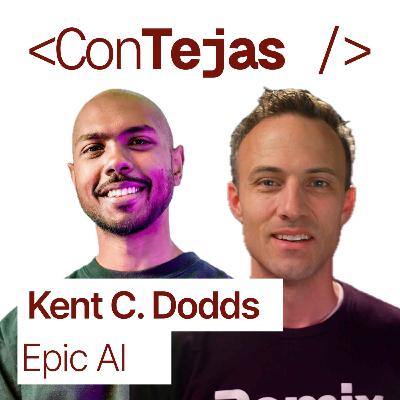
Links- Codecrafters (sponsor): https://tej.as/codecrafters- Epic AI: https://epicai.pro/- MCP: https://www.anthropic.com/news/model-context-protocol- Kent on X: https://x.com/kentcdodds- Tejas on X: https://x.com/tejaskumar_SummaryIn this episode, we explore the evolution of user interaction, particularly in the context of AI and the Model Context Protocol (MCP). We discuss how user experiences are shifting from traditional UI elements to more natural language interactions, akin to conversing with a human assistant. We also discuss the potential of AI to enhance user experiences and the implications of MCP in creating more efficient workflows. Kent shares his vision for a Jarvis-like AI assistant that could revolutionize how we interact with technology, emphasizing the importance of understanding and implementing MCP for developers and users alike. We also talk about security concerns, particularly tool poisoning, highlighted as significant issues that need addressing. Chapters00:00:00 Intro00:03:35 The Evolution of User Interaction00:07:41 AI and the Future of User Experience00:11:45 Building the Future: Jarvis and MCP00:15:34 MCP: Understanding the Model Context Protocol00:28:28 The Practical Implications of MCP00:42:14 Understanding MCP and LLM Interactions00:47:12 The Evolution and Maturity of MCP Spec00:52:07 The Future of MCP and Its Adoption01:01:07 Security Concerns in MCP: Tool Poisoning01:05:20 MCP's Impact on Digital Strategies01:22:25 The Future of AI and MCP01:28:18 User Experience and Adoption of AI01:33:44 How to Get Started with MCP01:40:50 Building MCP Servers and Best Practices01:45:46 Exploring AI Developments Beyond MCP01:52:45 Agent Communication and Tool Management01:57:31 Where to find Kent C. Dodds Hosted on Acast. See acast.com/privacy for more information.
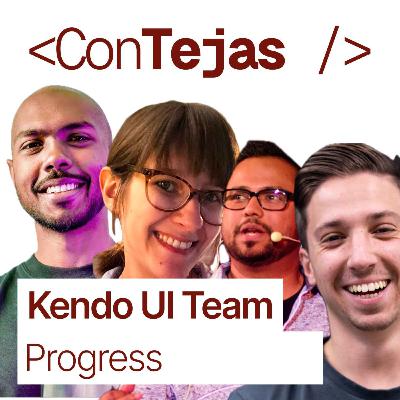
Links- Kendo React: https://www.telerik.com/kendo-react-ui/components/free- Kathryn's Book: https://www.telerik.com/campaigns/design-story/ebook--foundations-of-design-for-developers- Progress: https://progress.com - Sam on X: https://x.com/samidip- Kathryn on X: https://x.com/kathryngrayson- Kiril on X: https://x.com/kirchoniSummaryIn this episode, we talk with Sam Basu, Kathryn Grayson Nanz, and Kiril to explore Kendo UI and Kendo React. We discuss the evolution of UI libraries, the engineering behind Kendo's components, and the importance of accessibility in modern applications. The conversation delves into the unique offerings of Kendo React, particularly its data grid and virtualization techniques, as well as the design considerations that enhance user experience. The introduction of the Theme Builder is highlighted as a tool that bridges the gap between design and development, allowing for seamless collaboration and customization. We also cover the importance of collaboration between designers and developers, the significance of design tokens, and the incremental adoption of Kendo React in existing applications. Chapters00:00:00 Intro00:04:24 Kendo UI and Progress00:07:19 Kendo React's Unique Offerings00:10:35 The Engineering Behind Kendo UI Components00:13:10 Kendo React: A Case Study in UI Libraries00:16:19 Accessibility and Compliance in Kendo React00:19:35 Deep Dive into Kendo React's Data Grid00:22:26 Virtualization Techniques in Kendo React00:25:31 Design Considerations for Kendo UI Components00:28:37 Theme Builder: Bridging Design and Development00:38:15 Version Control in Design Workflows00:39:22 The Evolution of Theme Builder00:40:41 User-Centric Design and Feedback00:42:35 The Role of Design Systems00:44:37 Bridging the Gap: Designer-Developer Collaboration00:46:12 Understanding Design Tokens00:47:57 Incremental Adoption of Kendo React00:55:53 State Management in Kendo React00:62:37 Bundle Size Considerations01:10:35 Measuring the Success of a Design System01:15:14 Design Systems and Component Libraries01:19:45 The Role of Progress and Kendo UI01:24:21 Learning Resources for Developers01:27:56 Evaluating UI Component Libraries01:33:56 Collaboration in UI Design and Development01:36:14 Emerging Technologies and AI in UI Development01:44:23 Future Trends in React and UI Components Hosted on Acast. See acast.com/privacy for more information.


Download from Google Play

Download from App Store
 United States
I have had the opportunity to work with both automated and manual data annotation methods in computer vision, and I must say that the experience has been quite enlightening. The automated annotation process was efficient and saved a significant amount of time, allowing for quick processing of large datasets. However, I found that the manual annotation method provided a higher level of accuracy and precision in labeling the data, check for more on https://www.techgyd.com/automated-vs-manual-data-annotation-in-computer-vision/56839/ . The hands-on approach of manual annotation allowed for a deeper understanding of the nuances within the images, resulting in more detailed and accurate annotations. Overall, both methods have their strengths and weaknesses, and the choice between automated and manual annotation ultimately depends on the specific requirements of the project.