


 Claim Ownership
No Plot, Only Lore
Subscribed: 1Played: 9
Subscribe

© Copyright 2026 Josh Varty and Kristoffer Hansen
Description
Two old men talking about the art and craft of collaborative storytelling games.
78 Episodes
Reverse
We're back! We're doing audio and video now like a couple-a lunatics! We're doing a deep dive on the open gaming license and its impact on the entire tabletop RPG world, and we're blaming it on Kevin Siembieda! Not really. Maybe a little.
Look, December low-key sucks when it comes to a lot of things, and gaming is no different. But it doesn't have to suck completely! Come hang out with us and we'll talk about it.
This week Josh and Kris take a look at some of the non-Christmas winter traditions around the world and discuss ways that those traditions could be utilized in your own games, as well as starting a conversation about how holidays mark the passing of time for a people.
Josh and Chris for their second annual Holiday Gift Guide dedicated to the coolest tabletop role-playing games (TTRPGs) and accessories for 2023.Hear their takes on the year's biggest releases and hottest picks, including the tactical giant mech RPG Lancer, the Critical Role-backed Daggerheart, and the OSR darling Mythic Bastion Land.Plus, get recommendations for:TTRPG Books: Dive into the Cosmere RPG (Stormlight) Starter Set and the hilarious goofball game Pigeons 11.Accessories: Explore Hexbound aluminum dice, beautiful Dispels astral thread dice, gorgeous notebooks from Rook & Raven, and detailed minis from Arch Villain Games.Stocking Stuffers: Discover dry-erase condition rings, initiative trackers, and the Twice Dead King (Warhammer 40k) omnibus.If you're shopping for the D&D player, role-playing gamer, or TTRPG enthusiast in your life, you need this guide! Available on all podcast platforms and at noplotonly.com.
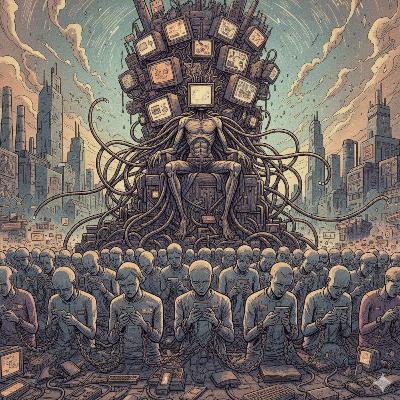
Hosts Josh and Kris tackle the Attention Economy and its uncomfortable role in the TTRPG space. From recognizing their place as "krill" in the same ecosystem as giants like Critical Role to debating whether the attention economy is "evil," they discuss how DMs can use its tricks—like rewarding quiet moments (the Mrs. Pots dinner scenario)—to keep players engaged and honor their time, without resorting to constant chaos. Plus, a tangent on Telltale's Dispatch and terrible modeling advice from grandmothers.
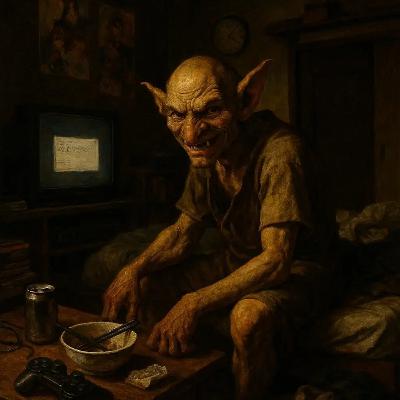
What is the difference between Goblin Mode and Goblin Core? Dive into the ecology of the internet's most feral archetype. We explore why embracing your inner "cozy swamp creature" is a coping mechanism for millennial burnout and the pressure of perfect adulting.
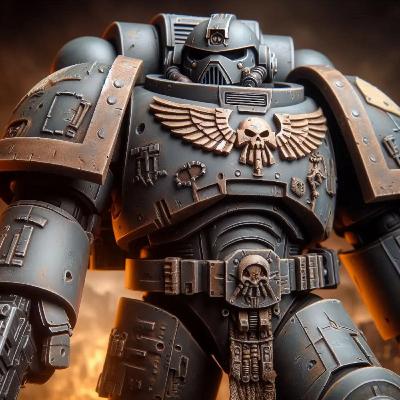
One Page Rules (OPR) started as a quick, simple alternative to Warhammer 40,000, but now it’s charting its own path with unique lore. The results? A minefield of mixed audience reactions.In this episode, we dive into the difficulties OPR faces transitioning from a '40k knock-off' to an original game system, and how the inherent differences in audience expectations—especially those conditioned by the constant feedback loop of the internet—make that transition so volatile
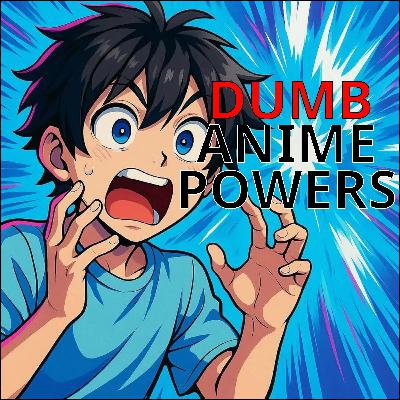
Welcome back to No Plot Only Lore! This week, your hosts Josh and Chris dive deep into the most chaotic and complex anime powers to figure out how to import them into your favorite TTRPG (like Dungeons & Dragons). If you love D&D mechanics, worldbuilding, and outlandish character concepts, this episode is for you.We break down the rules and roleplaying challenges of:The Social Credit Hero: A power set based entirely on a character's popularity and public trust. What happens to a superhero's power when their social score tanks?Death & Reset Mechanics: Examining the genre of "Groundhog Death Day" anime where a character resets time upon death, including the protagonist who killed himself 4,000 times to power up.Magical Garbage: Analyzing the unique ability to imbue mundane trash with extraordinary TTRPG powers.The Turbo Granny Problem: How to run an encounter against a villain with a bizarre, high-speed power, and the logistics of powers drawn from the series Dan Da Dan.Discover the best (and worst) ways to integrate these plot-bending abilities into your next D&D campaign or tabletop adventure.
Let’s talk about being cringe! Pretend play is an essential part of growing up and learning social roles and shit.This goes back to Piaget and Vygotsky - pretending is how we experiment and try on identities and learn empathy and problem-solving. Adults often repress that because it’s fucking cringe as hell.Sitting down to play a role-playing game reactivates that early developmental muscle, but it’s occasionally awkward and weird.Kids: The floor is lava! Adults: If I do enough pretend violence I might be able to afford pretend real estate! Irony is the Armor of SincerityMemes, quotes, and in-jokes make the table feel safe — a shared cultural shorthand.Emotional detachment also feels safe. Not caring about fake people is cooler than caring about fake people, and we usually want to be cool.But irony can also block emotional engagement. If everyone’s half-laughing through their character arcs, no one has to risk being sincere.The Cringe FrontierWhy do we generally cringe at sincerity? Is cringe just a way of enforcing emotional conformity? Can being cringy be brave, or is it always the absolute worst? We both come from improv backgrounds where being cringe is kind of a necessity. Has that better prepared us for cringe at our tables? Circle of SafetyI was reading a post recently from someone who was wondering if maybe we’d gone a bit too far on making game tables a safe space. I’m pretty sure I disagree with that person, but I will agree that the tools we have aren’t ideal and probably never will be.What are your personal safety mechanisms? How do you invite people to be sincere without forcing them to “act” at the table? What is the DM’s role in creating an emotional stable space for Big Feelings? Huizinga’s Magic Circle suggests that normal rules, even rules about social conformity, are suspended during play. Does that work if the real space (outside of the liminal shared imagined space of play) is not safe? How can we support emotional safety in service to enabling bravery?
We was talking clowns and that got me on the ha-has. The Party as a Comedy TroupeMost D&D tables accidentally become improv comedy theater.“Every game starts as Game of Thrones and ends as Monty Python.”Long campaigns kind of naturally develop bits and recurring gagsPlayers have a tendency to start to fall into roles associated with ensemble comedy subconsciously.QuotesI don’t know what to tell you, man - people are gonna quote D20, Critical Roll, Monty PythonThey aren’t necessarily meant to be funny? They’re more like a cultural shorthand and rituals for belonging.They say “I am one of you, I know the right scripts, I can do the call-and-response!” It’s like a meta-textual handshake of sorts.Often, the quotes mutate or change over time to become more specific to your group.The BitsEvery group, whether gaming or not, develops an internal economy. A bit is currency - you can buy attention or affection with it.You trade a bit for laughs or groans or the DM watching their soul evaporate into sighs.In some ways, tables will self-regulate this economy.Good bits live on, bad bits die, Legendary Bits may transcend this table or this game and be used at others. Modern table comedy is deeply parasocial.Many players have internalized the cadence of Brennan Lee Mulligan, Aabria Iyengar, or Matt Mercer.Quoting or mimicking them isn’t laziness — it’s a way to align tone and show respect.But it can also blur identity: Are we referencing their games, or ours?Is the humor derivative, or are we participating in a shared meta-culture of play?This creates a kind of folk comedy canon — the oral tradition of Actual Play media.The Function of Comedy in Collaborative PlayIt defuses tension, reinforces bonds, and stitches continuity across long gaps.Laughter is a feedback loop of participation — even disengaged players rejoin the moment when someone lands a good bit.Table humor = the heartbeat of the group.In many ways, the group’s sense of humor defines its culture more than its ruleset.The Meta Bit: When the Table Knows It’s a ShowFor Actual Play games, humor becomes performative.The “table” has a secondary audience.Every joke carries dual awareness:Does it land here?Does it land out there?The bit becomes both a bonding mechanism and part of the brand.You joke different if you know your joke could be on a mug forever.
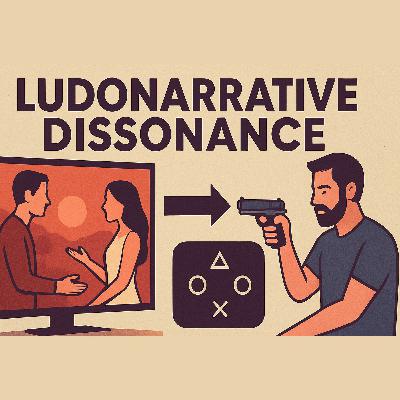
Time to get real pretentious with it again! Buckle up! Talking about the friction that takes place between a game's mechanics and that game's story, and how that impacts the art of gaming in general.
How do you make sure your players are ready to re-enter reality after the campaign is over?
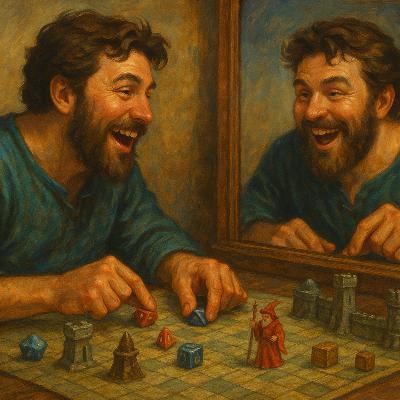
This week we talk about board games you can play all by your lonesome!
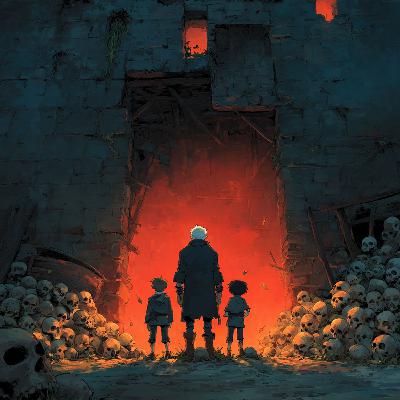
Raising kids is hard. It would be harder with cockatrices and manticores and shit.

Board game expansions - a fun way to spice up your favorite board game, or just a cult of commercial cardboard?
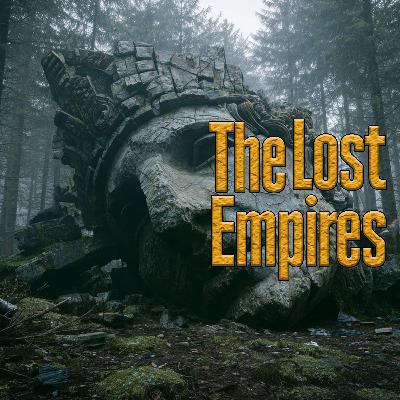
Lost CivilizationsOne of my least favorite tropes. What is a lost civilization? Not just Atlantis. Think of Eberron's giant ruins of Xen'drik, Skyrim's Dwemer, or Dark Souls' pile of forgotten kingdoms.Why are they useful in fantasy?Instantly adds history and depthAllows the GM/author to worldbuild without explaining everythingGreat excuse for dungeons, relics, and magic that no one understandsStorytelling functions:Symbol of hubrisCautionary taleBlank canvas for player projectionWhat do survivors remember? Oral traditions? Sacred ruins? Cursed bloodlines?Are they really gone?Sleeper gods or AI still running background processesInterdimensional echoes (like Shadow of the Colossus meets Echo Night)The civilization lives on… just not physically (digital ghosts, psychic imprints, inherited trauma)D&D examples: The Netherese Empire, the Sulat League (fiendish magic-scientists), or the ruins in Chult—each has different “flavor” of forgotten-nessWhat happens when modern civilizations try to revive or claim these ruins?Colonial critique: Who has the right to explore or excavate the past?Techno-magic horror: The past isn’t just misunderstood—it’s wrongFactions and relics: Everyone wants the magic battery that powers a floating city. Nobody knows how to stop it once it wakes upFun Hooks:A city that grew up inside a dead god’s ribcage (lol)A forgotten language that causes madness when spoken aloudA vault that only opens if you betray someone you love
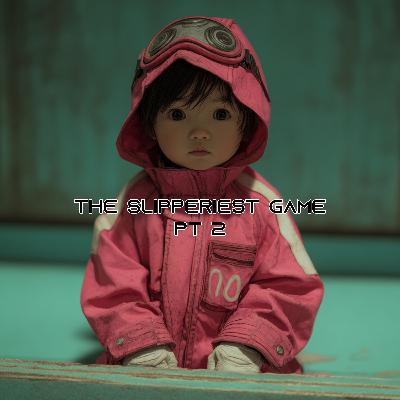
My big problems:The Murder Game. Until Tag was introduced, there was never a game where one player had to go out of their way to murder another player in order to win and survive. In every other game, murder was an *option* and the consequence of loss was always death, but it was possible to win without killing a person yourself. The “System” outsourced most of the actual violence. Tag fundamentally changed this and by doing so changed the dynamic and the social contract of the show entirely. There was no longer a plausible separation between winning and murder. The staff did the murder. The consequence for losing was death and your life was equally on the line. Not so in Tag. The fucking baby. One of the fundamental rules of the Squid Game event is that everyone is there by choice. It’s one of the themes that was hammered on in the first season, and it mirrored the capitalist rat race beautifully. Everyone was doing this of their own free will, and the second season even introduced voting between rounds to ensure that people were kept in the games by the Will of the People. But the baby didn’t consent and couldn’t consent to being involved in the games. The baby was an unwilling participant, and making the baby a ‘player’ undermined any trust the real players may have had that the games were in any way fair. Now, the games are _not_ fair. They never were. They rely on financial coercion, the illusion of fairness, random chance, positional chance, and the exploitation of personal relationships. But it maintains a facade. All of that breaks down with the baby.And I kinda get where they were going with this. I get that it’s illustrative of the unfairness of the institutions Squid Game is trying to criticize. The rules were never fair, the people running the games never cared about fairness at all, the whole thing is spectacle. But it also fundamentally undermines the premise of the games in a way that would be ruinous for anything other than a shadowy international rich-man’s dog fight.
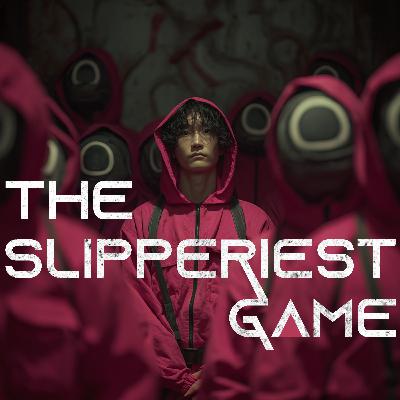
So, we’ve both finally seen all of Squid Game. Season 1 was a masterpiece that didn’t need a sequel.Season 2 started strong, but there was some strange decision-making. Best character in the series was introduced, though (Cho Hyun-ju)Season 3 undid all of my goodwill for seasons 1 and 2. Let’s get into it. General Issues: Repetition Lack of Innovation, even in the new games Focus on time between games, but not in like, an interesting way? More luck, less strategy (this was an issue I had with season 1, too, with the bridge) Less morality, more preaching, no evolution of themes.
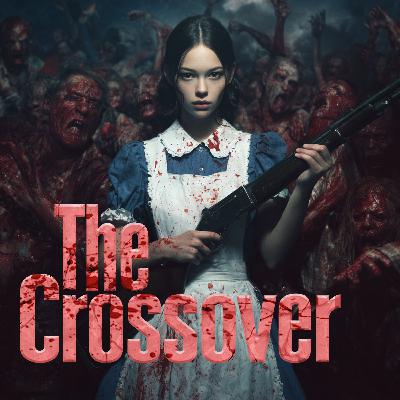
In which we put characters from beloved children's stories into stories that uh... Aren't so child-friendly...
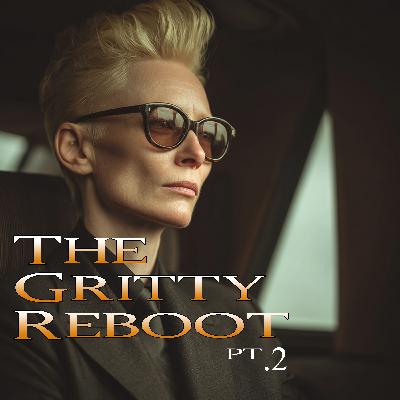
How much realism is too much? This week, we discuss the trend of gritty reboots and the concept of "HBO-ification" as seen in shows like The Wheel of Time and Andor. We lay out our dark, grounded plans for classic IPs, including turning Zorro into a Punisher-style vigilante and making Inspector Gadget a violent cyberpunk monster. Join us to find out how to make Narnia and Space Above and Beyond dark, serious television.

Comments

Download from Google Play

Download from App Store
 United States