Discover
Africa Here and NOW
Africa Here and NOW
Author: Martine Dennis
Subscribed: 15Played: 100Subscribe
Share
© Martine Dennis
Description
The conversation you've always wanted to have about Africa.Combining in-depth knowledge with exclusive analysis of events and trends affecting the continent. Our team has vast experience in Africa and has an extensive network of contacts from Cape Town to Cairo and from Addis to Accra, which will help us provide fresh commentary presented with wit and style.We believe there is a growing demand for accurate, incisive information about Africa and we are dedicated to asking the questions that matter and offering, at least, some of the answers.
Hosted on Acast. See acast.com/privacy for more information.
62 Episodes
Reverse
Africa Here and Now Aviation Special - we are asking why the sector is so problematic, what needs to be done to improve it and the huge potential it holds for the continent's development. KAMIL AL ALAWADHI, IATA Vice President for Africa and the Middle East shares insights into the unique hurdles facing African airlines, the impact of government policies, and strategies for sustainable growth across the continent. Discover how regional cooperation and safety initiatives are shaping the future of African aviation.My conversation with Kamil took place BEFORE the conflict in the Gulf. We discussed:*The role of IATA in aviation safety and sustainability *Key barriers to airline success in Africa: government interference, costs, and regulatory challenges*The importance of airline autonomy and strategic governance models in Africa*Success stories: Ethiopia, Rwanda, and Egypt’s airline development strategies*The impact of foreign investment and partnerships, including Qatar Airways*Blocked airline funds and recent progress in Nigeria*The significance and implementation challenges of the Single African Air Transport Market (SAATM)*Safety initiatives and the focus on lowering accident rates in AfricaTimestamps:00:27 - What is IATA and its role in global aviation sustainability01:20 - Current assessment of Africa’s aviation sector and growth challenges01:57 - Government interference and the need for airline autonomy in Africa02:39 - How political barriers hamper airline success across the continent04:01 - Why operating costs and perceived risks impact profitability in Africa04:32 - The disparity in airline profitability: Middle East vs. Africa05:00 - Cost factors: fuel, insurance, salaries, and operational expenses06:17 - The effect of regulatory and tax policies on airline viability06:49 - How non-aviation government decisions affect the aviation industry07:27 - Success stories from Ethiopia, Rwanda, and Egypt’s airline governance08:27 - The partnership between Rwanda and Qatar Airways and its benefits09:23 - Blocked airline funds: progress with Nigeria and regulatory efforts10:11 - The importance of supportive legal frameworks and international conventions11:03 - The future outlook for airline funding and financial flows in Africa12:05 - Challenges and delays in implementing the Single African Air Transport Market (SAATM)13:01 - The connection between open skies and Africa’s economic integration13:49 - Political hurdles to full regional aviation market liberalization14:19 - The need for industry-political collaboration and strategic leadership15:18 - The critical role of industry and government cooperation for success16:07 - Upcoming safety initiatives and safety performance in African aviation18:12 - Optimism for African aviation’s potential with continued effort and collaborationResources & Links:IATA - International Air Transport AssociationSAATM (Single African Air Transport Market) - African UnionCape Town Convention - Legal framework for aircraft leasingQatar Airways - Airline investment partner in Rwanda Hosted on Acast. See acast.com/privacy for more information.
Nigeria's Foreign Minister, YUSUF TUGGAR with his Ghanaian counterpart, SAMUEL ABLAKWA sat down with me at Chatham House to explore the complex security dynamics in West Africa, including threats from terror groups, regional cooperation efforts, and the importance of self-reliance and local solutions. Both ministers refuted suggestions that ECOWAS had been severely weakened by the exit of the three Sahelian states - Burkina Faso, Mali and Niger (AES). They revealed that there is regular contact with the AES and security arrangements are being made with their involvement.Earlier in the day, I had a 1+1 with Minister Tuggar and we delved deeper into Nigeria's regional security responsibilities and, more broadly, its approach to foreign policy. Key Topics:The proliferation of weapons and increasing attacks in the region, claiming at least 44 lives dailyThe role of regional military structures like the multinational joint task force and efforts to update security architecturesThe evolution of the ECOWAS security initiatives, including the new Coalition of the Willing and challenges faced by previous frameworks like the Accra InitiativeDiplomatic efforts to rebuild trust among countries in the Sahel, notably Nigeria's and Ghana's bilateral relations with Mali, Burkina Faso, and NigerThe importance of framing security issues as transnational violent extremism, not solely religious warfareThe need for regional ownership of security strategies, emphasising Nigeria’s leadership and contributionsAddressing root causes such as governance deficits, unemployment, and local economic development like infrastructure projectsThe global implications of regional insecurity, including energy markets and potential recession risksTimestamps:00:00 - The regional security crisis in West Africa and the need for multilateral collaboration00:36 - The daily toll of attacks and the impact on regional stability0:50 - Challenges of failed states, ungoverned spaces, and the epicenter of terror in the Sahel2:00 - Existing security architectures, including hot pursuit frameworks and cross-border cooperation3:42 - The evolving ECOWAS security initiatives, including the new Coalition of the Willing4:00 - The decline of the original Accra Initiative and political suspicions around regional efforts5:12 - Deployment of troops and the strategic approach to tackling insurgency6:36 - The importance of framing violent extremism beyond religious narratives7:22 - Nigeria's bilateral and regional security efforts and regional cooperation via ECOWAS8:52 - The cooperation among Sahelian countries and Nigeria’s engagement strategies9:08 - The significance of regional solutions led by African countries, avoiding externally imposed frameworks11:35 - The success of regional-led peacekeeping models like ECOMOG and local solutions12:40 - Challenges of cross-border conflicts like farmers versus herders and the need for coordinated approaches13:19 - Funding security efforts and Nigeria’s role in financing regional peace and stability14:14 - The strength of ECOWAS despite perceptions of weakening, and Nigeria’s historical leadership15:34 - Nigeria’s contributions to anti-colonial struggles and continental leadership recognition16:58 - Addressing root causes: governance, unemployment, and infrastructure development19:36 - Misunderstandings of Nigeria’s security situation in the West and global perceptions20:15 - The impact of global energy markets and the war in the Gulf on Africa’s economy21:17 - Mitigation strategies if critical regions like the Strait of Hormuz are compromised, including oil refinery developmentsResources & Links: Hosted on Acast. See acast.com/privacy for more information.
At 16, she was a policy volunteer. Today, Bogolo Joy Kenewendo is the economist rewriting the rules for De Beers and her country's diamond trade. In this exclusive interview, Botswana's visionary leader reveals why the "Diamond Era" is shifting—and how the country is racing to unearth a 70% unexplored frontier of critical minerals.We sit down at the 2026 Mining Indaba in Cape Town to discuss Botswana's seismic economic pivot under President Duma Boko. As the global market faces a diamond slump, Minister Kenewendo outlines a radical new strategy: moving beyond raw extraction into downstream beneficiation, regional power interconnectors, and the unearthing of green minerals like copper, nickel, and manganese.From the future of the De Beers partnership to the reality of Africa’s energy crisis and the "Kalahari Copper Belt," she outlines how she plans to navigate geopolitical turbulence while protecting Botswana's most valuable assets.Chapters:0:00 | The Diamond Dilemma: Why the monolith economy must pivot1:15 | The 70% Frontier: Unearthing Africa’s hidden minerals2:48 | Critical Minerals: Copper, Manganese, and the Green Revolution4:20 | Regional Collaboration: Mining in Zambia, DRC, and Sierra Leone5:50 | The Beneficiation Mandate: Why jewellery must be made in Botswana8:01 | The Career Trajectory: From youth delegate to Minister11:00 | Leading in a Male-Dominated Industry: “I stand my ground”12:45 | The New Social License: Beyond CSR and "School Shoes"14:30 | Nature Regeneration: Finalizing the new ESG policy16:03 | President Duma Boko’s Vision: Urgency and Diversification18:20 | Energy Security: The 500MW push for industrialization#botswana#diamonds#criticalminerals#mininginvestment#africa# Hosted on Acast. See acast.com/privacy for more information.

SAMAILA ZUBAIRU, CEO of Africa Finance Corporation, explores the strategic importance of African minerals in the context of global economic competition, infrastructure development, and the need for leadership coordination. As we chatted at the 2026 Investment in Mining Indaba in Cape Town, he emphasised the potential for Africa to transform its mineral resources into bankable projects that can drive economic growth and job creation. In our conversation, Mr Zubairu highlighted the urgency of seizing current opportunities while balancing domestic needs with global market demands.Key Takeaways*The strategic minerals compendium aims to reframe conversations around African minerals.*Africa's minerals should not be viewed merely as commodities for export.*Infrastructure development is crucial for realising Africa's aspirations.*Leadership coordination is essential for effective resource management.*Regional collaboration is vital for industrial decarbonisation and economic growth.*Investment in mining can exceed four to five billion dollars annually.*Africa's market potential is significant and must be recognized.*Domestic needs should be prioritised alongside global market demands.*Job creation is a key metric for evaluating projects in Africa.*Current political will presents a unique opportunity for development.Chapters00:00Reframing Africa's Mineral Narrative03:28Seizing the Moment for Infrastructure Development07:28Navigating Global Competition and Local Opportunities11:30Balancing Domestic Needs and Global Markets14:30The Moment for Leadership in AfricaKey Words*Africa, minerals, infrastructure, investment, leadership, economic development, industrialisation, global competition, market opportunities, sustainable growth Hosted on Acast. See acast.com/privacy for more information.
We talk to author, BARNABY PHILLIPS about his new book which details the British looting of Kumasi, the Ashanti heartland, in what is now Ghana. There had been many conflicts in the course of a century between the British and the Ashanti, but Barnaby focuses on the battle of 1874 in which the Asantehene's palace was systematically stripped of its treasures, many of which had sacred value. The loot was then officially auctioned off at Cape Coast Castle to British officers and traders. Described by one contemporary MP as 'simply a policy of robbery', the book highlights the moral contradiction of the British Empire. The British justified the invasion as a. mission to bring 'civilisation' to 'barbarians'. But the book sheds light on the 'racist hypocrisy' of the victors who, after destroying the city, sold the sacred religious artifacts to London jewellers and private collectors to raise fund for the war effort.The cultural heart and soul of the Ashanti kingdom - The Golden Stool - though was never taken. It was kept hidden in forests and protected by villagers for decades - ensuring the continuity of the kingdom despite the exile of its king and queen.Barnaby traces the specific journeys of famous items, like the 'Wallace Head',from the moment of their looting to their current locations. A key takeaway is how these objects shifted from being sacred royal regalia in Kumasi to being 'curios' in Victorian drawing rooms, and finally to contested museum exhibits in the 21st century.Barnaby tells us more about the recent return of some artifacts - a mere 32 of them - in 2024 and that it was the culmination of a century of diplomacy.Despite the burning of their capital in 1874, and the exile of their King Prempeh I in 1896, the Ashanti kingdom survived. We hear how the monarchy's prestige has been restored and how the current Asantehene, Osei Tutu II, successfully negotiated the return of his ancestors' treasures, if only on a loaned basis.I was joined by Patrick Smith, Editor of Africa Confidential and Writer and Broadcaster, Donu Kogbara.Barnaby Phillips' book The African Kingdom of Gold: Britain and the Asante Treasure is published by Oneworld Hosted on Acast. See acast.com/privacy for more information.
COVID-19, Africa, health preparedness, pandemic response, vaccine production, health financing, regional collaboration, conflict resolution, health systems, infectious diseases, ghost workers, corruption, inefficienciesIn this conversation, Dr. Jean Kaseya, Director General of Africa's Centres for Disease Control and Prevention (CDC), discusses the impact of COVID-19 on the continent. He emphasises the continent's need for improved health preparedness and self-sufficiency. He outlines five key pillars for pandemic preparedness, including health financing, local manufacturing, and digital health initiatives. We also cover the importance of regional collaboration, innovative financing strategies, and the intersection of health and conflict resolution. Dr. Kaseya highlights lessons learned from the pandemic and the necessity of being prepared for future outbreaks, while also addressing the challenges posed by infectious diseases in Africa.Takeaways:*Preparedness is essential for national and global security.*Africa must increase health financing and reduce inefficiencies. *Local manufacturing of health products is crucial for self-sufficiency.*Innovative financing methods can enhance health budgets.*Vaccine nationalism highlighted Africa's dependency on external supplies.*Regional collaboration is vital for effective health responses.*Health outcomes are linked to conflict resolution efforts.*Lessons from COVID-19 inform future health strategies.*The next pandemic is likely to be zoonotic and influenced by climate change.*Addressing infectious diseases requires a multifaceted approach.Chapters00:00Assessing Africa's COVID-19 Experience03:05Pillars of Pandemic Preparedness06:01Innovative Financing for Health08:52Local Vaccine Production and Technology Transfer11:53Regional Collaboration in Health14:51Health and Conflict Resolution17:57Lessons Learned from COVID-1920:49Preparing for Future Pandemics24:11Progress and Challenges in Health Systems27:03Addressing Infectious Disease Outbreaks Hosted on Acast. See acast.com/privacy for more information.
Ethiopian Airlines, Mesfin Tasew, aviation leadership, African aviation, airline strategy, Vision 2040, infrastructure investment, MRO Services, airline culture, career achievements In this conversation, Mesfin Tasew, CEO of Ethiopian Airlines, shares his extensive journey within the airline, highlighting the importance of leadership, strategic vision and a strong corporate culture in achieving success. He discusses the ambitious Vision 2040 for Ethiopian Airlines, the challenges faced by African aviation, and the critical investments in infrastructure and human capital necessary for future growth. Mesfin reflects on his more than 40 year career at Ethiopian Airlines, his achievements and the spirit of collaboration that has driven the airline's success.Takeaways*Mesfin Tasew has over 40 years of experience at Ethiopian Airlines*Leadership succession from within has been key to the airline's success*Ethiopian Airlines has a strong corporate culture that motivates employees*The airline's Vision 2040 aims to significantly increase passenger and cargo transport*Investment in infrastructure is crucial for the airline's growth*Ethiopian Airlines has operational autonomy, allowing for strategic decision-making without political interference*Challenges in African aviation include high operational costs and lack of cooperation among airlines* The new Bishoftu International Airport is a major investment for future growth* Training and developing internal talent is a key priority for Ethiopian Airlines* Mesfin reflects on a fulfilling career and the collaborative achievements of the airline.Chapters:00.00 Journey of a Leader: Mesfin Tasew's Background09:59 Ethiopian Airlines: A successful model19.47 Vision 2040: ambitious Goals for Ethiopian Airlines29.56 Challenges in African Aviation: A Broader Perspective36.11 Reflections on a Career: Achievements and Legacy Hosted on Acast. See acast.com/privacy for more information.
Join us for our explosive Year-Ender Special, bringing together the most powerful, controversial and uncensored interviews from across the continent. This is the truth about African power - who's fighting for it, who's paying the price and who refuses to be silenced.In this landmark episode, rounding off 2025, we dive deep into the struggles for democracy, justice and dignity featuring:NIGERIA's DELE FAROTIMI, The Lawyer Who Went to Jail: Hear from the revered lawyer and pro-democracy activist immediately following his release from jail. Dele details his relentless criticism of his country's justice system and government, and why he believes he has no choice but to fight for change.UGANDA'S BOBI WINE: His Dangerous Race to the Top: We sit down with Uganda's main opposition leader as he gears up to challenge a decades-old regime under incredibly oppressive conditions. His message of defiance is consistent and resolute.NIGERIA's PETER OBI: The Man Who Would be President: "The President in Waiting" addresses the core issues crippling the current government, how he sees his path to victory and his candid answer to the critical question: Can an Igbo candidate truly win the presidency in Nigeria?ZAMBIA'S DORA SILIYA: The Minister Who Fought a Tide of Slurs: Former six-time minister, Dora Siliya reveals the painful, sexist smear campaign alleging she SLEPT HER WAY TO THE TOP. This is her ;powerful, emotional account of battling political slander and paving the way for more women to enter African politics.The tide of social media content on BURKINA FASO'S Captain IBRAHIM TRAORE is the subject of our conversation with journalist DAVID HUNDEYIN.How much of it is TRUE? And how. much is FALSE?THE CALL FOR AFRICA FIRST: Former AU Ambassador ARIKANA CHIHOMBORI delivers her sharp, compelling answer to global politics in the President Trump era: if the West says 'Amercia First', then Africa's response must be a definitive 'AFRICA FIRST'.ZAMBIA'S PRESIDENT HAKAINDE HICHILEMA, in an EXCLUSIVE interview with Africa Here and Now, tells of the wrangle with the family of his deceased predecessor, EDGAR LUNGU, over where the former president should be buried. He addresses the controversial allegations of WITCHCRAFT being involved. President Hichilema also answers a question that many have thought but not asked: Why Does He Wear WHITE GLOVES?A ROYAL TRAGEDY: An Ethiopian Prince reveals the true saga surrounding the overthrow of his grandfather EMPEROR HAILE SELASSIE, ETHIOPIA's last Emperor. Prince Be'ede Mariam gives us a detailed and moving account of life in the palace with his grandfather and what happened when the soldiers came for him.delefarotimi #peterobi #bobiwine #dorasiliya#africafirst #nigerianpolitics #ugandanpolitics #zambianpolitics #haileselassie Hosted on Acast. See acast.com/privacy for more information.
Zambian visual artist, STARY MWABA, who grew up in the country's Copperbelt, discusses the enduring environmental and human cost of resource extraction in his home region. He details the history and current reality of the infamous Black Mountain in Kitwe - a century-old toxic slag heap - that is now a site of dangerous, informal mining and re-extraction. Stary explains his unique artistic technique, which literally perforates newspaper headlines to make space for the 'little narratives' of the exploited people and children whose suffering fuels the world's 'green' revolution.His signature method is creating a surface by collecting newspaper stories, stacking them on transparent baking paper' and then perforating the newsprint with minute holes. The idea came from an earlier installation in which he used vegetables and colour to demonstrate how plants absorb water and minerals - a critique of Chinese engagement.The physical act of 'removing words' and perforating the paper is to symbolically 'create space for the little stories' - the marginalised, human narratives. The work is 'painstaking' requiring intense concentration, which Stary describes as a form of 'therapy'.Stary paints from the reverse side of the perforated paper. He imposes the image so the paint literally 'seeps through the holes' and onto the front side, making the portrait a physical breakthrough of the headline.He displays the paintings by suspending them so that the viewer can 'see both sides of the story.'Follow Stary on instagram: starymwabaYou can see some of his works at the 37d Gallery, Lusaka#starymwaba#Zambianartist#copperbelt#coppermining#coblatmining#greenenergy#greeneconomy#evironmentaljustice#acidrain#pollution#zambia#kitwe#blackmountain#africanart#socialcommentary#artivism#untoldstories Hosted on Acast. See acast.com/privacy for more information.
Meet William and Lulu Wood, a Zambian couple known for their work in reframing and promoting Zambian cuisine through a contemporary lens, primarily through their platform, The Wood Kitchen.I went to The Wood Kitchen when I was visiting Lusaka a short while ago and had a fabulous time chatting with the couple. This is a family endeavour that focuses on sharing easy fusion recipes, cooking tips, and celebrating Zambia's diverse and delicious foods. As you'll hear, Lulu and William are acutely conscious of the cost of food in today's Zambia - food inflation, although down from July's figure, was in August this year at just under 15%. So affordability is an essential element of their recipes. They use digital media (like Facebook, Instagram, and YouTube) to showcase their work.Speaking to William and Lulu, I soon discovered that their main goal is to promote an under-explored cuisine by elevating and showcasing traditional Zambian dishes, which they feel are often underrated on the global stage.Fusion Cooking: They blend traditional Zambian foods from their respective heritage (Tonga and Lozi tribes) with techniques and flavours they've encountered while visiting various countries, creating a unique fusion style.Championing Local Ingredients: They emphasize using local, ethically sourced Zambian ingredients. They grow many of their own vegetables and herbs, a practice they recommend.Food Influencers: They've gained a growing online following and have been recognized as SME change-makers by META for harnessing digital media. They have also represented Zambia internationally in food events.Cultural Preservation: They see food as a powerful tool for celebrating and preserving Zambian heritage, educating both younger generations and wider audiences about their culture through cooking and sharing recipes.I hope you enjoy this show as much as I did making it. MD#zambiancuisine#chikanda#africanfood#culturalpreservation#food #foodies#foodinfluencers#fusioncooking#thewoodkitchen# Hosted on Acast. See acast.com/privacy for more information.
One in four people in the world will soon be African, and the majority will be under 30, urban, and digitally connected. We discuss with MICHELLE GAVIN how the demographic shift represents a new era for the continent —one that is already shaking the foundations of long-standing political power.Is this wave of popular demand a recipe for chaos or democratic renewal? Listen to find out why the "old playbook" for African politics is obsoleteThe conversation explores the transformative potential of Africa's youth in shaping the continent's political landscape. With a significant portion of the population being young and urban, there is a growing demand for change that challenges the existing political elite. The discussion delves into the implications of demographic shifts, economic challenges, migration patterns, and the role of external actors in Africa's future. It highlights the potential for both unrest and democratic renewal as young people assert their rights and seek opportunities for a better life.takeawaysOne in every four of the world's population will be African.Political volatility is going to shake up the region.Young people are increasingly urban and connected.Demographic dividend comes when the transition comes.Migration is going to be a part of the story.The future of work is uncertain for Africa.External actors are not the main factor driving change.Violence and unrest will happen, but not everywhere.Senegal could end up as an upholder of constitutionalism.We can learn a lot from these young societies.Michelle Gavin's book: How Urban Youth are Transforming African Politics Hosted on Acast. See acast.com/privacy for more information.
Standard Chartered Bank's Zambia CEO, SONNY ZULU, shares his journey from aspiring medical doctor, to metallurgist in his country's copper mines to the boss of one of the top banks. He discusses the importance of leadership and management skills, the challenges of job creation in Zambia, which he says, is a collective responsibility, not just for government. This is particularly crucial for a country like Zambia which has a median age of just 17. We talk about the bank's role in fostering economic growth. Sonny says the bank's focus is on empowering marginalised communities, especially women and young people. Training in financial management is as important as giving grants, he says, for successful entrepreneurship. I ask Sonny about the impact on African economies of American tariffs. He stresses the importance of intra-African trade. He identifies energy as one of the country's greatest challenges going forward, which is essential to fuel the ambitious increase in copper production which has been outlined by the government. Finally, Sonny tells us about his biggest professional mistake....We used data and graphics from KASI INSIGHT, Africa's leading decision intelligence company. They provide data-driven insights by combining high frequency data with AI to unpack markets.Chapters:00:00 From Medicine to Metallurgy: A Career Journey04:55 The Importance of Leadership and Management Skills10:45 Creating Jobs and Economic Growth15.05 Standard Chartered's Role in Economic Development19:56 Navigating the Retail Banking Landscape30:28 Impact of Global Tariffs on African Economies34:00 Learning from Mistakes: A Leadership Perspective Hosted on Acast. See acast.com/privacy for more information.
Several African countries score very well when tested for characteristics of flourishing, better even than the US, Sweden and the UK. They are Kenya, Nigeria, South Africa, Tanzania and Egypt. But what exactly is flourishing? And how is it measured? Questions for Dr VICTOR COUNTED, Associate professor at Regent University in the US. His research has revealed the shortcomings of the current idea of well-being which are heavily based on western values. There is an emphasis on the individual - job satisfaction, wealth, status etc. REAL well-being however, he says, should include how you relate to the people around you, the context in which you live, how valued you feel by your community etc areas in which African countries tend to perform well. It's about more than GDP.So how can these positive indices be used to enhance the view of African countries? Development goals, Dr COUNTED says, should be adapted to harness the positive attributes of African life and policies tailored to fit individual countries, working to their strengths.Find out more about Dr Counted's work:DR VICTOR COUNTED, THE HUMAN FLOURISHING PROGRAMMEwww.vcounted.com Hosted on Acast. See acast.com/privacy for more information.
In this exclusive interview, President Hakainde Hichilema discusses his transition from businessman to the highest political office in Zambia. He reflects on his motivations for entering politics, saying it became clear to him that sound economic policies were vital to allow businesses to flourish, leading to job creation and better opportunities for the Zambian people.'We can't share poverty', he says. 'We can't redistribute nothing'. President Hichilema speaks of the challenges faced during his tenure, including the Covid pandemic and the worst drought in living memory. A year before the next presidential election, he outlines the strategies he has implemented for economic recovery and the achievements of his administration so far, which include bringing two million children back into education. He discusses his hopes for big increases in copper mining, backed by international investors, and his determination to boost the management and processing of Zambia's raw materials for added value. The president explains how Zambia managed to reduce from 50% to 15% tariffs imposed by the Trump administration - and it didn't involve agreeing to take in people deported from the US. On the controversial issue of the burial of his predecessor, President Hichilema is adamant. The body of Edgar Lungu, who died in South Africa, must be returned to Zambia against the wishes of his family. 'The larger family of 20 million Zambians have prescribed how the former president must be buried,' he says. He decries allegations that witchcraft is involved, saying that as a Christian he has never believed in witchcraft. Addressing claims that Zambia is moving towards authoritarianism, President Hichilema denies that the democratic space is shrinking. He says that unlike his predecessors, he hasn't shut down TV or radio stations and election candidates are free to travel anywhere in the country.Finally, explaining why he can often be seen wearing white gloves, the president insists it's because of his belief in the importance of tradition, inherited from the British, rather than membership of any secret society. Hosted on Acast. See acast.com/privacy for more information.
We speak to Nigerian author NNAMDI CHIEKWU, a millenial who explains why he's angry and what he plans to do about it. Basically, Nnamdi says he is hugely disappointed with the generations who came before him who have left the African continent in such bad shape that he and his cohort need to lead 'a technocratic revolution' in order to revive its fortunes. He's scathing of earlier generations: 'Why didn't they take up the fight? They didn't have the courage. They wanted to ...ingratiate themselves into a western-led world. They had no confidence...in what...an African-led world looked like.'There's so much to do in a very short time. NNAMDI believes that Africa has a mere 5 years in which to turn itself around or face dire and irreversible consequences. 'We've reached our last chance as Africans, as civilisations. And that last chance is 2030' he says.NNAMDI feels so strongly that he's written a book ' AFRICA ON THE PRECIPICE' in which he lays out his theory of Afro-hegemony - a time when Africa and its peoples will dominate global affairs. But in order to reach that state of greatness, Africa's sub-Saharan nations have to come together as one in a kind of loose federation, Nnamdi says. 'The first thing that needs to happen...is that what we call African countries and governments are really colonial constructions....they were never intended for African innovation, liberation let alone dominance....they have to be collapsed.'NNAMDI puts the case for his generation: '..When we millennials look at the Africa we've inherited, we're saying, why are we listening to you? You people are lost. You don't have a direction. You don't have a plan for us. So we're going to take the power.'In NNAMDI's plan of action, out goes the Africa Union (AU) and in would come the African Defence and Advancement Federation - 'a technocratic entity that is dedicated to the defence and advancement of Africans'.NNAMDI acknowledges that the vast majority of Africans are more concerned with their daily struggles with poverty to buy into his plan, but, he believes, there's a 5% critical mass that is ready. His book, AFRICA ON THE PRECIPICE, is Nnamdi's blueprint. 'History is replete with civilisations that have disappeared...Native Americans, Aborigines, Afro Argentines...none of them know when their end was beginning.'AFRICA ON THE PRECIPICE, by Nnamdi Chiekwu is available on Amazon. It's in audiobook form on Spotify.Find out more about Nnamdi on his website: https://nnamdichiekwu.com Hosted on Acast. See acast.com/privacy for more information.
A tiny slice of South Africa's semi-arid Karoo region was painstakingly recreated at this year's Chelsea Flower Show in London. It was the first time such an ambitious project had been undertaken to display the world-famous Karoo succulents at Chelsea's annual Festival of Flowers and Plants. I caught up with ERNST VAN JARSVELDT a master botanist who spent a lifetime nurturing these hardy plants and trees. ERNST's passion for succulents is infectious; his knowledge is second to none. When he's not in London, ERNST is at the Babylonstoren Estate in South Africa's Franschhoek wine vally with its world-renowned botanical diversity. Hosted on Acast. See acast.com/privacy for more information.
PETER OBI believes he would have been Nigeria’s president now, were it not for widespread vote rigging at the last election in 2023. It’s a view shared by many of his fellow countrymen and women. In a wide-ranging interview with Africa Here And Now MR OBI confirms that he plans to run again in 2027 and believes that this time the outcome will be different. He says he’s optimistic that people will vote for the best candidate and not cast their ballot on the basis of tribe or religion – accusing the current political elite of deliberately fuelling divisions. “Nigerians will see that we voted religion, we voted tribe, now let's vote competence, capacity,” he says. He feels people would rise up if there were further attempts to manipulate the vote, knowing that failure to do so would lead to more years of hunger, darkness and disappointment. PETER OBI outlines what he would do differently if he were in charge, making education a priority to unleash Nigeria’s potential. He wants to see the country move from consumption to production, bemoaning the fact that 60% of Nigeria’s arable land is currently uncultivated. “We can make more money from agriculture than we can from oil,” he tells us. The former governor of Anambra State – a devout Christian - says despite his personal wealth he has always believed in helping the less privileged in society: “I don’t look down on people unless I am going to pull them up.” Looking east for inspiration, PETER OBI believe Nigeria could learn from the economic boom of recent decades in Asian countries including China, India and Vietnam. He expresses admiration for the former president of Indonesia, Joko Widodo, as someone who made his country better. It’s an ambition he holds for his own country and one he hopes to have a chance to fulfil after the next presidential election in Nigeria. We also find out a little about the man behind the politics. Donu asks him who his heroes are and what he is currently reading. We discover that PETER OBI is not given to taking holidays. ‘Can you take a holiday when your house is burning?’ he asks. He likens the situation to the Titanic sinking while people on the upper decks were dancing! Asking the questions with me was DONU KOGBARA, Abuja-based journalist and commentator. We chatted with PETER OBI in Abuja on June 11th 2025.#PeterObi #NigeriaPolitics #2027Elections #GoodGovernance #NigerianGovernment #LeadershipInAfrica #NaijaPolitics #ObidientMovement #AfricanLeadership #ElectionTalks #NigeriaDevelopment Hosted on Acast. See acast.com/privacy for more information.
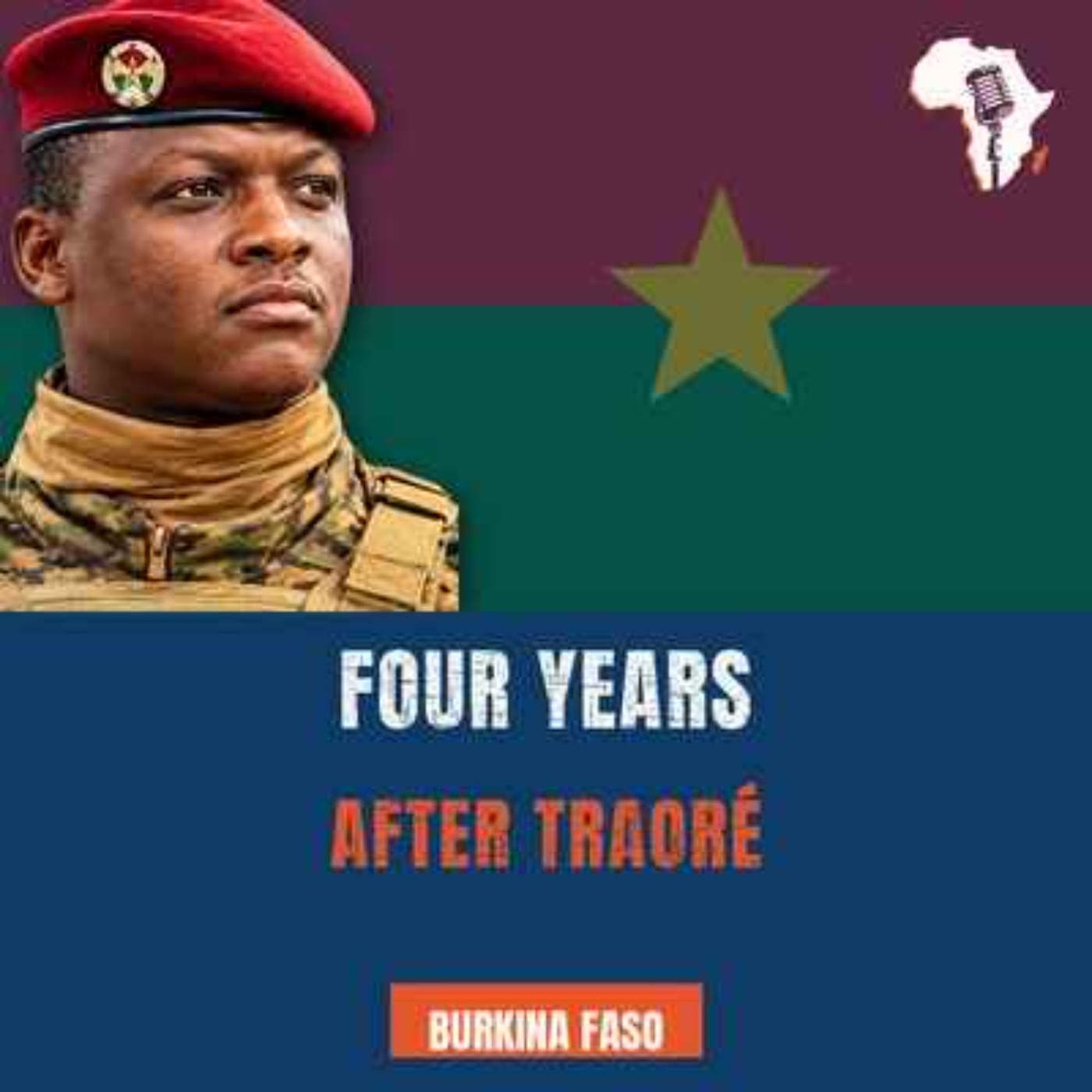
Has the shine come off the idea of democracy in parts of Africa? The continent's latest crop of military leaders seem to be enjoying immense popularity, like Burkina Faso's Captain Ibrahim Traore. So are Africans prepared to live under the rule of soldiers. Or is there another way?I speak to GILLES YABI, CEO and founder of the West Africa Citizen Think Tank in Dakar. And in Johannesburg, independent political analyst, MARISA LOURENCO. We explore what could be behind the recent spate of m ilitary takeovers in Guinea, Mali, Niger, Burkina Faso and Gabon and ask whether democratic forms of government have had their day on the continent.Both GILLES and MARISA are keen to point out that Africa is not a monolith - each country has had its own distinct circumstances that have led to military coups.Asked why these young coup leaders appear to be so popular, MARISA explains its because they represent a break with the status quo which had failed to deliver prosperity and security. GILLES makes the point that several of the countries that have experienced military coups are experiencing severe insurgencies often by violent Islamist groups. We also consider whether the ruling parties that have come to power after waging an armed struggle for independence, particularly in southern Africa, have managed to transition into parties that uphold democratic values of rule of law, strong institutions and individual freedoms.We are reminded that Afrobarometer polls regularly reveal that a majority of those surveyed are in favour Hosted on Acast. See acast.com/privacy for more information.
Ambassador Ebrahim Rasool discusses the recent efforts to reset relations between South Africa and the United States. President Ramaphosa's recent visit to the White House was a success, the ambassador says. He reflects on the challenges faced during his tenure as ambassador, including the backlash from the Trump administration and the influence of powerful South African figures in the US. He does not regret the candid remarks he made about the state of US politics - remarks that got him expelled from the country.We touch on the legacy of apartheid that continues to affect South African society today. Ambassador Rasool reveals his own experience of living under apartheid. He first tasted teargas as a youngster in 1976 - politics is not a career choice in South Africa he says. He was imprisoned which was when he met Nelson Mandela for the first time, was placed under house arrest and suffered like all non-white South Africans under apartheid. His experiences shaped his views on supremacy and justice.We also discuss the group of wealthy white South Africans who've come to be known as the Paypal Mafia and the influence they are having on U.S policy towards South Africa. How central is Elon Musk's Starlink satellite company to Pretoria's relationship with Washington? Abassador Rasool says that accepting Starlink is integral to Washington's dealing with African countries. Hosted on Acast. See acast.com/privacy for more information.
Why has Burkina Faso's military leader, IBRAHIM TRAORE, garnered such adulation? That's a question for the renowned investigative journalist, DAVID HUNDEYIN who replies that the young captain, he's just 37, symbolises s break from the status quo and offers hop to a youthful continent whose people yearn for a hero.Who, or what, is behind the social media tsunami that surrounds CAPTAIN TRAORE? We consider whether the multitude of social media posts extolling his often other-worldly virtues are true or fake. Many of them clearly use images and sound fabricated by AI - like a Beyonce look-alike who weeps as she prays for the protection of her 'king'.We wonder whether such fantastical excesses could actually undermine TRAORE. We also question why we hear so few Burkinabe voices on the matter.DAVID Suggests the Burkinabe authorities would do well to take a firmer grip of their own narrative. Impressive claims are made about the rule of CAPTAIN TRAORE, like ending all taxation and undertaking extensive road building. But what about the security situation? Reports suggest that government control extends to just a third of the country. The rest, they say, is under the control of various Islamist groups with many people displaced from their villages.What is needed, says PATRICK, is robust reporting by independent journalists from inside Burkina Faso to establish the facts. DAVID says objectivity in journalism does not exist - everyone has an interest, a bias.And DONU raises the inherent dangers of a cult of personality.DAVID suggests that there are limited benefits from democratic systems of government in Africa - economic freedom is what counts most.MARTINE DENNIS is Founder and Host of Africa Here and NowPATRICK SMITH is Editor of Africa ConfidentialDONU KOGBARA is a journalist and commentator based in NigeriaWe were talking with DAVID HUNDEYIN, Editor of West Africa Weekly Hosted on Acast. See acast.com/privacy for more information.