Discover
Good Enough Counsellors
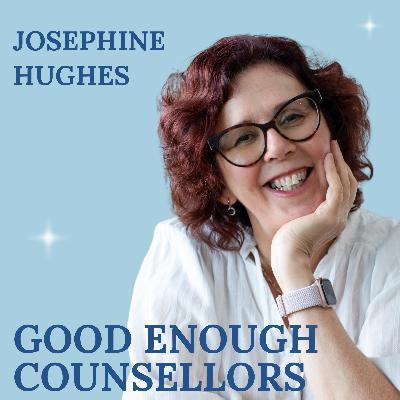
Author: Josephine Hughes
Subscribed: 51Played: 1,239Subscribe
Share
© Copyright 2026 Josephine Hughes
Description
Do you feel overwhelmed when you look around and see what other counsellors and psychotherapists are doing in private practice? Does it leave you wondering whether you’ll ever be able to build a sustainable counselling practice of your own?
The truth is, while there are lots of marketing strategies out there for therapists (which I’ll talk about), the most important thing is getting started and staying visible in your private practice. And that can feel incredibly hard when you’re faced with an empty diary, too many options, and the pressure of comparing yourself to glossy, confident-looking therapists online.
The Good Enough Counsellors podcast is for UK counsellors and psychotherapists in private practice who want to get clients, grow their confidence, and build a practice that feels ethical, realistic, and sustainable — without the pressure to be perfect.
I’m Josephine Hughes, a BACP Accredited Counsellor, and I help counsellors in private practice with marketing, visibility, and confidence so they can grow their practice in a way that feels like them.
The truth is, while there are lots of marketing strategies out there for therapists (which I’ll talk about), the most important thing is getting started and staying visible in your private practice. And that can feel incredibly hard when you’re faced with an empty diary, too many options, and the pressure of comparing yourself to glossy, confident-looking therapists online.
The Good Enough Counsellors podcast is for UK counsellors and psychotherapists in private practice who want to get clients, grow their confidence, and build a practice that feels ethical, realistic, and sustainable — without the pressure to be perfect.
I’m Josephine Hughes, a BACP Accredited Counsellor, and I help counsellors in private practice with marketing, visibility, and confidence so they can grow their practice in a way that feels like them.
105 Episodes
Reverse
f you’re replying to emails late at night, chasing invoices between sessions, or taking your laptop on holiday “just in case”, it might feel like admin is taking over your life.For private practice therapists, enquiries, invoicing, cancellations, GDPR, practice management systems, and Making Tax Digital can eat into the time that you'd much rather be using for seeing clients.In this episode, I’m joined by Anna Bunch of Psych VA to explore how virtual assistants for therapists can help lighten that admin load.We talk about:What a virtual assistant actually does in a therapy practiceManaging client enquiries and follow upsSupport with invoicing and insurance companiesGetting set up with practice management systems such as WriteUppMaking Tax Digital and accounting software like XeroConfidentiality and GDPR when outsourcing adminHow to know when it might be time to get helpIf admin is creeping into your evenings and weekends, this conversation will help you decide what support could look like for you.About Anna: Anna Bunch is the founder of Psych VA, a UK based virtual assistant agency supporting therapists and psychologists in private practice. Her team helps with admin, inbox and diary management, invoicing, insurance work, and practice management systems, helping clinics run smoothly and sustainably. You can find Anna HERE at her website, where you can book an appointment or contact her for her time tracker tool.Setting up in private practice? Download my free checklist HERENeed ideas for how to get clients? Download my free handout 21 Ways for Counsellors to Attract New Clients HEREYou can also find me here:The Good Enough Counsellors Facebook GroupJosephine Hughes on FacebookJosephine Hughes on YouTubeMy website: josephinehughes.comKeywords: private practice support, virtual assistant for therapists, therapist work-life balance, outsourcing therapy tasks, efficient client management, therapy growth strategies, practice management systems, therapist burnout prevention, administrative support for therapistsThe information contained in Good Enough Counsellors is provided for information purposes only. The contents of this podcast are not intended to amount to advice and you should not rely on any of the contents of this podcast. Professional advice should be obtained before taking or refraining from taking any action as a result of the contents of this podcast.Josephine Hughes disclaims all liability and responsibility arising from any reliance placed on any of the contents of this podcast.
The BACP No More Stiff Upper Lip campaign has generated significant national coverage - and strong reactions within the therapy profession.Rather than asking whether the campaign was “good” or “bad”, I’m exploring something slightly different:What was the campaign trying to do?Whether it "worked" - and what that even meansAnd what can we learn from it as therapists building private practicesTakeaways:Niching inevitably includes some people and excludes othersSecuring media attention and professional approval are not always the same thingStanding out may invite a critical reactionThink about how it might land with clientsA critical reaction does not automatically mean failureThis episode discusses the BACP No More Stiff Upper Lip campaign, therapy marketing, and niching in private practice.You can also find me here:The Good Enough Counsellors Facebook GroupJosephine Hughes on FacebookJosephine Hughes on YouTubeMy website: josephinehughes.comSetting up in private practice? Download my free checklist HERENeed ideas for how to get clients? Download my free handout 21 Ways for Counsellors to Attract New Clients HEREKeywordsprivate practice, women over 50, mental wellbeing, BACP campaign, No More Stiff Upper Lip, mental health awareness, therapy for women, public conversation about therapy, media coverage for therapy, counselling for women
How do you move from being found online to actually being booked by the right clients?In this episode, website and marketing specialist Kat Love breaks down the three stages of marketing for therapists, from visibility and awareness, to consideration, to making it easy for clients to take the next step.We talk about why marketing for therapists often feels overwhelming, how to reduce friction on your website so enquiries come more easily, how to avoid “psychobabble” that pushes potential clients away, and how to build ethical social proof without compromising your values.By the end of the episode, you'll understand which stage of your marketing needs attention and how to move from being found to being booked in a way that feels grounded and realistic.TakeawaysMarketing moves through three stages: being found, being considered, and being booked.Visibility is often uncomfortable. Choose activities in your marketing window of toleranceClients move at different speeds. Not everyone books straight awayMake the next step clear and reassuring on your websiteAvoid psychobabble. Use the words your clients would use.Social proof can be ethical and does not have to rely on testimonialsYou can find Kat at their website: https://katlove.comIf the psychobabble section has you rethinking your website or directory profile, you can find support in Therapy Growth Group where we regularly work on profiles, niching and clear messaging so that potential clients understand exactly how you help.Setting up in private practice? Download my free checklist HERENeed ideas for how to get clients? Download my free handout 21 Ways for Counsellors to Attract New Clients HEREYou can also find me here:The Good Enough Counsellors Facebook GroupJosephine Hughes on FacebookJosephine Hughes on YouTubeMy website: josephinehughes.comKeywords: marketing for therapists, private practice growth, therapist websites, referral networks, content marketing for therapists, SEO for therapy practices, ethical marketing, client testimonials, psychobabble in therapy, visibility in marketing, awareness stage marketing, consideration stage marketing, building a client baseThe information contained in Good Enough Counsellors is provided for information purposes only. The contents of this podcast are not intended to amount to advice and you should not rely on any of the contents of this podcast. Professional advice should be obtained before taking or refraining from taking any action as a result of the contents of this podcast.Josephine Hughes disclaims all liability and responsibility arising from any reliance placed on any of the contents of this podcast.
This episode continues last month’s discussion on why clients don’t always follow therapists on social media. In Part 1, I talked about how professional language can unintentionally create distance between therapists and potential clients. In this episode, I zoom out a little. Because it’s not just about the words we use - it’s about how people experience our content emotionally.Clients don’t follow therapists because they’re impressed. They follow when they feel understood.TakeawaysWhy social media can feel exposing and discouraging for therapistsHow fear of judgement can make our posts sound careful or stiltedWhy tone matters just as much as languageHow small moments of appropriate self-disclosure can build connectionWhy clients often follow for a while before making contactHow consistency over time helps people decide whether they feel safe with youI also share examples from my own experience, including how story-based posts help people relate to you rather than feeling talked at.At the end of the episode, I also share four simple themes you could use for March, based on upcoming awareness days:Safety, harm, and being believedIdentity, visibility, and inclusionRest, regulation, and wellbeingCare, connection, and unseen rolesAnd a reminder that in Therapy Growth Group, we're about to embark on Find Your Focus, including the Make Your Profile Work intensive week. This will help you shape your social media and blog posts to speak to the people you most want to reach.Setting up in private practice? Download my free checklist HERENeed ideas for how to get clients? Download my free handout 21 Ways for Counsellors to Attract New Clients HEREYou can also find me here:The Good Enough Counsellors Facebook GroupJosephine Hughes on FacebookJosephine Hughes on YouTubeMy website: josephinehughes.comKeywords: social media, therapists, client engagement, authenticity, emotional connection, content ideas, March themes, overcoming challenges, building trust, managing responsesThe information contained in Good Enough Counsellors is provided for information purposes only. The contents of this podcast are not intended to amount to advice and you should not rely on any of the contents of this podcast. Professional advice should be obtained before taking or refraining from taking any action as a result of the contents of this podcast.Josephine Hughes disclaims all liability and responsibility arising from any reliance placed on any of the contents of this podcast.
In this episode, I’m joined by Claire Hendrickson, a neurodivergent therapist who has built her private practice in a way that truly works for her.Rather than rushing, pushing, or following someone else’s formula, Claire has grown her practice at her own pace, listening to her nervous system and respecting her capacity. Over time, her steady and compassionate approach has led to a busy, sustainable practice.We talk openly about what it means to do private practice differently, especially if you’re neurodivergent, carry complex identity experiences, or feel pressure to be further ahead than you are.This conversation is for anyone who quietly worries they’re behind, doing it wrong, or taking too long.In this episode, we explore:What it looks like to build a private practice at your own paceHow working with your nervous system supports growthThe pressure therapists feel to rush or meet external expectationsNavigating recognition and visibility when you’re neurodivergentClaire also shares her experience as a member of Therapy Growth Group, and how having gentle, accessible support helped her move forward without overwhelming herself.You can find Claire via her website HERESetting up in private practice? Download my free checklist HERENeed ideas for how to get clients? Download my free handout 21 Ways for Counsellors to Attract New Clients HEREYou can also find me here:The Good Enough Counsellors Facebook GroupJosephine Hughes on FacebookJosephine Hughes on YouTubeMy website: josephinehughes.comThe information contained in Good Enough Counsellors is provided for information purposes only. The contents of this podcast are not intended to amount to advice and you should not rely on any of the contents of this podcast. Professional advice should be obtained before taking or refraining from taking any action as a result of the contents of this podcast.Josephine Hughes disclaims all liability and responsibility arising from any reliance placed on any of the contents of this podcast.
This 100th episode is a pause to reflect on what happens when you keep going, even when you don’t feel ready.In conversation with Natasha, who has edited the podcast from the very beginning, I look back over how The Good Enough Counsellors podcast grew from small, tentative steps into something that now reaches therapists around the world. But more importantly, we talk about what this journey can teach us about private practice, confidence, visibility, and the legacy we leave through our work.This episode is about the power of ordinary stories, trusting that small actions add up, and recognising that the work you do as a therapist can ripple out far beyond what you see day to day. We reflect on the power of everyday people doing meaningful work, and why showing up, imperfectly, really does make a difference.In this episode, we coverWhat 100 episodes has taught me about starting before you feel readyWhy small, consistent steps matter in private practiceThe importance of letting people know how they can work with youHow sharing your voice can help build confidence and connectionLessons from guest conversations about anxiety, self doubt, and diversityWhy hearing marginalised voices matters in therapy and beyondThe idea of legacy, and how everyday work can have a wider impactHow therapists can trust that what they do really does matterMentioned in this episode:Gloriously Unready, my earlier podcast projectThe Lost Sun Society, Natasha's fiction podcastTherapy Growth Group, my membership for counsellors in private practiceSetting up in private practice? Download my free checklist HERENeed ideas for how to get clients? Download my free handout 21 Ways for Counsellors to Attract New Clients HEREYou can also find me here:The Good Enough Counsellors Facebook GroupJosephine Hughes on FacebookJosephine Hughes on YouTubeMy website: josephinehughes.comKeywordspodcast, therapy, growth, confidence, storytelling, community, mental health, private practice, diversity, inspirationThe information contained in Good Enough Counsellors is provided for information purposes only. The contents of this podcast are not intended to amount to advice and you should not rely on any of the contents of this podcast. Professional advice should be obtained before taking or refraining from taking any action as a result of the contents of this podcast.Josephine Hughes disclaims all liability and responsibility arising from any reliance placed on any of the contents of this podcast.
Have you ever looked at your social media and felt disappointed because it seems that you're mainly followed by therapists?In this month's social media episode, I'm exploring the question of why clients don't always follow us, even when we're sharing thoughtful, reflective content. Is it really the problem we think it is, and what can we do about it?We look at how fear of visibility, professional language, and wanting to get things “right” can influence how you post and the impact that has on making connections with clients. I also explore what clients are actually looking for when they follow therapists on social media, and why warmth and feeling understood matter far more than sounding impressive or knowledgeable.This episode lays the groundwork for the next couple of monthly social media episodes, where I’ll continue to unpack this topic and look more closely at what helps clients feel safe enough to follow you, and how trust builds over time.In this episode, I cover:Why therapists in private practice often attract other therapists on social mediaWhy this is a completely normal stageHow fear of visibility and judgement affects what we shareThe difference between therapist-facing and client-facing contentWhy clients follow therapists who help them feel understoodWhy there’s nothing “wrong” with your content - it just may not be shaped for clients yetI also share four simple, client-focused themes you can use in February to help your social media speak more directly to the general public:Talking about feelings and reaching out for support (Time to Talk Day, Children’s Mental Health Week)Love, loneliness, and the ways we connect (Valentine’s Day, Singles Awareness Day, Aromantic Spectrum Awareness Week)Identity, inclusion, and feeling safe (LGBTQ+ History Month, Stand Up to Bullying Day)Nourishing your wellbeing (Boost Your Self-Esteem Month, Eating Disorders Awareness Week)You can also find me here:The Good Enough Counsellors Facebook GroupJosephine Hughes on FacebookJosephine Hughes on YouTubeMy website: josephinehughes.comSetting up in private practice? Download my free checklist HERENeed ideas for how to get clients? Download my free handout 21 Ways for Counsellors to Attract New Clients HEREThe information contained in Good Enough Counsellors is provided for information purposes only. The contents of this podcast are not intended to amount to advice and you should not rely on any of the contents of this podcast. Professional advice should be obtained before taking or refraining from taking any action as a result of the contents of this podcast.Josephine Hughes disclaims all liability and responsibility arising from any reliance placed on any of the contents of this podcast.
January can bring a lot of pressure for counsellors and therapists, with worries about enquiries, a sense of falling behind, and rising self-criticism. This can feel even more intense for neurodivergent counsellors and those who are highly sensitive to pressure.In this episode of Good Enough Counsellors, I’m joined by Eve Menezes Cunningham to explore a kinder way of moving through January, especially for counsellors in private practice.Eve draws on therapy, yoga therapy, coaching and writing to offer a deeply compassionate, embodied approach to wellbeing. We talk about self-compassion, nervous system care, and how understanding ourselves, including neurodivergence and survival responses, can reduce shame and self-criticism.Eve shares her accessible, cat-based way of explaining polyvagal theory (purr, hiss, hide), helping counsellors notice what state they’re in and respond with kindness rather than judgement.We also explore why boundaries can feel so uncomfortable to set, particularly for people who learned early on to please others in order to feel safe, and why holding yourself with compassion after setting a boundary is just as important as the boundary itself.We finish with Eve’s gentle invitation for January: to treat yourself as you would a beloved, precious creature, with curiosity, patience and care, rather than seeing yourself as a problem to fix.In This EpisodeWhy January often feels hard for counsellors and therapistsPressure, anxiety and self-criticism in private practiceSelf-compassion and being kinder to yourselfNeurodivergence and nervous system awarenessPolyvagal theory explained through cats (purr, hiss, hide)Why boundaries feel difficult and how to support yourselfA gentle, realistic approach to January without pressureEve Menezes Cunningham is a therapist, supervisor, podcast host and former Editor-in-Chief of the Irish Journal of Counselling and Psychotherapy. She has a monthly column in Platinum and her book 365 Ways to Feel Better is widely available. You can find Eve and her resources at https://selfcarecoaching.net.Setting up in private practice? Download my free checklist HERENeed ideas for how to get clients? Download my free handout 21 Ways for Counsellors to Attract New Clients HEREYou can also find me here:The Good Enough Counsellors Facebook GroupJosephine Hughes on FacebookJosephine Hughes on YouTubeMy website: josephinehughes.comThe information contained in Good Enough Counsellors is provided for information purposes only. The contents of this podcast are not intended to amount to advice and you should not rely on any of the contents of this podcast. Professional advice should be obtained before taking or refraining from taking any action as a result of the contents of this podcast.Josephine Hughes disclaims all liability and responsibility arising from any reliance placed on any of the contents of this podcast.
Accreditation is something many counsellors quietly wonder about, often alongside self-doubt, comparison, and pressure about where they think they should be in their career.With changes linked to the SCoPEd framework and the end of the transition period approaching, more counsellors are asking whether accreditation is worth the time, effort, and emotional energy it requires.In this episode, I take an honest and grounded look at accreditation. I talk about what accreditation actually means, why some counsellors choose to go for it, what the process involves, and how to decide whether it’s the right step for you. I also explore why choosing not to become accredited can be just as valid.This episode is for counsellors who want clarity rather than pressure, and reassurance rather than rules.In this episode, I cover:What professional accreditation really means for counsellorsThe difference between being qualified and being accreditedWhy accreditation is being talked about more right nowReasons some counsellors choose to become accreditedAccreditation as a personal and professional milestoneWhat the accreditation process typically involvesCommon fears, including academic writing worries and imposter syndromeHow to decide whether accreditation is right for youWhy choosing not to become accredited is a valid optionIf you'd like to join the BACP & NCPS Accreditation Support with Good Enough Counsellors Facebook group, you can do so HERESetting up in private practice? Download my free checklist HERENeed ideas for how to get clients? Download my free handout 21 Ways for Counsellors to Attract New Clients HEREYou can also find me here:The Good Enough Counsellors Facebook GroupJosephine Hughes on FacebookJosephine Hughes on YouTubeMy website: josephinehughes.comThe information contained in Good Enough Counsellors is provided for information purposes only. The contents of this podcast are not intended to amount to advice and you should not rely on any of the contents of this podcast. Professional advice should be obtained before taking or refraining from taking any action as a result of the contents of this podcast.Josephine Hughes disclaims all liability and responsibility arising from any reliance placed on any of the contents of this podcast.
For the final episode of the year, I’m doing something a little different. Instead of talking about marketing, confidence, or growing your private practice, I’m giving you a break - and introducing you to some of the wonderful podcasters I met at the Podcast Awards this autumn.If you’re heading out for a winter walk, hiding in the kitchen while basting the turkey, or simply wanting something fresh to listen to over the holidays, this episode brings you a handful of surprising, creative and thought-provoking podcasts to explore.These conversations touch on inclusivity, identity, nostalgia, storytelling and creativity - all themes that matter to us as therapists. And a few of them might simply entertain you, which is just as welcome at this time of year.In this Christmas Special, you’ll hear short interviews with creators of podcasts including:Pause and Rewind - powerful origin stories from changemakers working towards a more inclusive worldRainbow Mums and Dads - life stories from people coming out later in life while navigating family, identity and changeMag Hags - a funny and fascinating dive into women’s magazines from the 70s, 80s and 90sPast Master - a creative, AI-guided, choose-your-own-adventure history gameSpooky Storytime - bedtime ghost stories for adults (yes, really!)Sonic Field - a richly told journey through the history and culture of British music festivalsIt’s a celebration of stories, voices and perspectives we often don’t get to hear - and a lovely way to end Series 3 of Good Enough Counsellors.A little festive treat for youAs mentioned in the episode, you can download your free Twixmas Treats email mini-course: five tiny tasks to help you grow your private practice. You can use it between Christmas and New Year - or save it for January if that feels kinder. Download it HEREThank you for listeningThank you so much for tuning in throughout 2025. Your messages, reviews and kind words mean more than you know. I’ll be back in the New Year with more conversations, guidance and encouragement to help you build a thriving, sustainable private practice.Setting up in private practice? Download my free checklist HERENeed ideas for how to get clients? Download my free handout 21 Ways for Counsellors to Attract New Clients HEREYou can also find me here:The Good Enough Counsellors Facebook GroupJosephine Hughes on FacebookJosephine Hughes on YouTubeMy website: josephinehughes.comKeywords: humanity, storytelling, counseling, LGBTQ+, feminism, music festivals, podcasting, empathy, inclusivity, personal narrativesThe information contained in Good Enough Counsellors is provided for information purposes only. The contents of this podcast are not intended to amount to advice and you should not rely on any of the contents of this podcast. Professional advice should be obtained before taking or refraining from taking any action as a result of the contents of this podcast.Josephine Hughes disclaims all liability and responsibility arising from any reliance placed on any of the contents of this podcast.
Many therapists feel uncomfortable with marketing because it can seem like “selling yourself.” In this episode, I share how to reframe your marketing mindset and explore how to move away from the fear that your visibility is narcissistic. I'll help you gain a clearer sense of purpose in your private practice with some reflective prompts. And you’ll hear how reconnecting with what truly matters to you makes it easier to show up online, write content, and talk about your work without feeling pushy or self-focused.To round off the episode, you’ll get some January content ideas based on common themes clients are thinking about at the start of the year, including New Year reflections, self-love, relationships, and supporting parents.In this episode you’ll learn:• Why marketing often feels uncomfortable for therapists• How to shift from “selling” to “helping”• Three reflective prompts to guide your message• How your purpose can shape your January contentTo sign up for my Christmas gift of short, client-gaining strategies, click HEREYou can also find me here:The Good Enough Counsellors Facebook GroupJosephine Hughes on FacebookJosephine Hughes on YouTubeMy website: josephinehughes.comSetting up in private practice? Download my free checklist HERENeed ideas for how to get clients? Download my free handout 21 Ways for Counsellors to Attract New Clients HEREKeywordsprivate practice, mindset shift, core purpose, social media, therapy, client connection, values, marketing, January content, self-reflectionThe information contained in Good Enough Counsellors is provided for information purposes only. The contents of this podcast are not intended to amount to advice and you should not rely on any of the contents of this podcast. Professional advice should be obtained before taking or refraining from taking any action as a result of the contents of this podcast.Josephine Hughes disclaims all liability and responsibility arising from any reliance placed on any of the contents of this podcast.
In this episode, Josephine talks with website designer and SEO specialist John Garewal about how clients actually find a therapist online. John shares what he discovered when he searched for a therapist himself, why websites still matter, and simple steps therapists can take to make their site easier to find - without getting technical.When was the last time you tried to find a therapist?If you’ve done it recently for a friend, a family member, or even out of curiosity, you’ll know how confusing it can feel - so many names, so little guidance about who to choose.In this conversation, I'm joined by John Garewal, website designer and founder of Verum Design. John specialises in building therapist websites that don’t just look polished… they actually get found.John shares:What happened when he tried to find a therapist himself (and why it took months)Why a well-designed website can make contacting you feel emotionally safer for clientsWhether every therapist really needs a websiteWhat SEO actually means — explained without jargonWhat Google looks for when someone searches “anxiety therapist in Portsmouth”Why Google Business Profile matters more than most therapists realiseSmall changes that make a big difference to getting found locallyThe biggest website mistakes therapists make (especially on mobile)How to make your website easier to read, easier to use, and easier to act onWhy Schema, load speed and structure matter — in simple termsHow to help clients feel confident enough to make contactThe three small steps John recommends to boost visibility this monthIf you'd like to go deeper into SEO and therapist websites, John has shared a detailed training session inside Therapy Growth Group, including live examples, practical steps and Q&A.To contact John, please visit Verum DesignYou can also find me here:The Good Enough Counsellors Facebook GroupJosephine Hughes on FacebookJosephine Hughes on YouTubeMy website: josephinehughes.comSetting up in private practice? Download my free checklist HERENeed ideas for how to get clients? Download my free handout 21 Ways for Counsellors to Attract New Clients HEREKeywords:therapy, website design, SEO, mental health, online presence, client engagement, digital marketing, therapist marketingThe information contained in Good Enough Counsellors is provided for information purposes only. The contents of this podcast are not intended to amount to advice and you should not rely on any of the contents of this podcast. Professional advice should be obtained before taking or refraining from taking any action as a result of the contents of this podcast.Josephine Hughes disclaims all liability and responsibility arising from any reliance placed on any of the contents of this podcast.
More and more people are turning to AI tools like ChatGPT or asking their phones for answers instead of typing into Google. And clients are no different. Some are already saying things like, “I found you via ChatGPT.”So what does this mean for therapists who rely on directories, Google My Business or their websites to be found?In this episode, I look at how AI is changing the way people search - and what you can do to stay visible as things evolve.We explore:why clients may not be clicking into directories as oftenhow AI pulls answers from websites, blogs and social mediawhat “Answer Engine Optimisation” (AEO) actually meanssimple steps therapists can take to make their content more findablequick wins for your website, from image compression to structurewhy blogging and fresh content help both SEO and AI discoverabilityhow small actions now can keep you visible even as search keeps shiftingAnd if you’d like help creating content that works for both clients and search engines, I’ve got support for you inside Therapy Growth Group. There’s training on blogging, ideas to help you get started, and regular guidance to help you build a practice that people can actually find. At the time of recording, the Black Friday offer is still available.Setting up in private practice? Download my free checklist HERENeed ideas for how to get clients? Download my free handout 21 Ways for Counsellors to Attract New Clients HEREYou can also find me here:The Good Enough Counsellors Facebook GroupJosephine Hughes on FacebookJosephine Hughes on YouTubeMy website: josephinehughes.comKeywords:content creation, frequently asked questions, conversational search, AI interaction, natural language processing, therapy directoriesThe information contained in Good Enough Counsellors is provided for information purposes only. The contents of this podcast are not intended to amount to advice and you should not rely on any of the contents of this podcast. Professional advice should be obtained before taking or refraining from taking any action as a result of the contents of this podcast.Josephine Hughes disclaims all liability and responsibility arising from any reliance placed on any of the contents of this podcast.
Therapy is meant to be a place of healing - but what happens when it causes harm instead?In this powerful episode, I’m joined by therapist, supervisor and trainer Erin Stevens, who specialises in working with people who have experienced harm in previous therapy. Together we explore how harm in therapy can happen - even when we have good intentions - and what we can do as therapists to reduce the risk, respond to rupture, and create safer therapeutic spaces.We talk about the role of power and boundaries, why cultural misattunement often goes unacknowledged, and how shame can block honest reflection in supervision. Erin also shares their own story of being harmed in therapy and what helped them come back to the profession with compassion and clarity.Whether you’ve ever worried you might be getting it wrong - or just want to understand this issue more deeply - this conversation is for you.Takeaways:What “harm in therapy” really means - and why it’s so often missedHow boundary confusion and power imbalances can erode trustThe emotional labour of marginalised clientsWhy naming harm doesn’t make you a bad therapistHow to use supervision as a place of growth, not shamePractical steps for making your practice safer and more accountableErin Stevens (she/they) is a therapist, supervisor, writer and trainer based in West Yorkshire. Erin specialises in working with people who have been harmed in previous therapy and is passionate about raising awareness of the increased risk of harm for clients with marginalised identities. They offer therapy, consultation and training and you can visit their website HERESetting up in private practice? Download my free checklist HERENeed ideas for how to get clients? Download my free handout 21 Ways for Counsellors to Attract New Clients HEREYou can also find me here:The Good Enough Counsellors Facebook GroupJosephine Hughes on FacebookJosephine Hughes on YouTubeMy website: josephinehughes.comKeywords:therapy, harm, mental health, boundaries, cultural misattunement, supervision, client experience, therapist experience, power dynamics, preventionThe information contained in Good Enough Counsellors is provided for information purposes only. The contents of this podcast are not intended to amount to advice and you should not rely on any of the contents of this podcast. Professional advice should be obtained before taking or refraining from taking any action as a result of the contents of this podcast.Josephine Hughes disclaims all liability and responsibility arising from any reliance placed on any of the contents of this podcast.
Have your enquiries been slowing down? In this episode Josephine explores the question of whether AI is taking over from directories and what therapists can do about it. She shares a practical, human-first answer - why visibility still matters, how to show up without shouting, and simple December content ideas you can use right away.You’ll learnWhy AI can’t replace human connection in therapy—or your marketingWhat to do when directory profiles aren’t bringing steady enquiriesThree ways social media helps therapists (without being “an influencer”)How to show up in a way that feels safe and authentic (not oversharing)Simple December post ideas you can reuse or adapt when you’re busyHow reframing the purpose of your social media account can help make it easier for you to produce postsMentioned in this episode:Ep 24: Social Media ToolkitEp 75: Grow Your Therapy Practice by Nurturing Connection with Becky WilloughbyEp 86: Safe Self-Disclosure on Social MediaEp 89: Is Email Counselling Real Therapy with Chloe FosterYou can also find me here:The Good Enough Counsellors Facebook GroupJosephine Hughes on FacebookJosephine Hughes on YouTubeMy website: josephinehughes.comSetting up in private practice? Download my free checklist HERENeed ideas for how to get clients? Download my free handout 21 Ways for Counsellors to Attract New Clients HEREKeywords: AI, therapy, marketing, social media, visibility, trust, engagement, December content, therapist practices, client connectionThe information contained in Good Enough Counsellors is provided for information purposes only. The contents of this podcast are not intended to amount to advice and you should not rely on any of the contents of this podcast. Professional advice should be obtained before taking or refraining from taking any action as a result of the contents of this podcast.Josephine Hughes disclaims all liability and responsibility arising from any reliance placed on any of the contents of this podcast.
When counsellor Gemma Anderson started her training, she never imagined it would lead to a thriving private practice. A teenage mum who once worked as a cleaner, Gemma shares how she built a successful practice without a website or social media - just through her counselling directory profiles and a down-to-earth approach. Her advice? Feel the fear and do it anyway – but ask for help.About this episodeIn this honest and encouraging conversation, Gemma talks about:What first drew her into counselling - and the self-doubt she had to overcome.How life experience shaped the kind of therapist she’s become.Why she offers a half-price first session and focuses on being approachable and relatable.How she maintains a steady income by combining counselling with part-time work.Her practical routine for keeping her directory profiles visible and bringing in new clients.The importance of asking for help rather than trying to do everything alone.Gemma’s story is a reminder that there isn’t just one way to build a counselling practice. You don’t need a slick website or constant social media posts - just a clear, authentic presence and the courage to keep going.You can read Gemma's profile HERESetting up in private practice? Download my free checklist HERENeed ideas for how to get clients? Download my free handout 21 Ways for Counsellors to Attract New Clients HEREYou can also find me here:The Good Enough Counsellors Facebook GroupJosephine Hughes on FacebookJosephine Hughes on YouTubeMy website: josephinehughes.comThe information contained in Good Enough Counsellors is provided for information purposes only. The contents of this podcast are not intended to amount to advice and you should not rely on any of the contents of this podcast. Professional advice should be obtained before taking or refraining from taking any action as a result of the contents of this podcast.Josephine Hughes disclaims all liability and responsibility arising from any reliance placed on any of the contents of this podcast.
Email counselling is often misunderstood - some therapists worry it lacks depth, feels impersonal, or that clients simply won’t want it.In this episode of Good Enough Counsellors, I’m joined by Chloe Foster, humanistic counsellor, trainer, and founder of Email Counselling Academy, to explore what email counselling really looks like in practice - and why it can be a powerful, ethical, and deeply reflective way of working.Chloe explains:What email counselling actually involves - the structure, boundaries, and timing that make it safe and professionalHow counsellors use their skills in written form to create depth and connectionWhy clients do want email therapy, and which groups find it especially helpful (from neurodivergent clients to parents and shift workers)Common objections therapists have — and how to address themThe risks of offering email counselling without specialist training, including contracting, secure systems, and managing risk safelyChloe also shares how her passion for accessibility and ethical practice led her to create the Professional Certificate in Email Counselling - a six-month course for qualified counsellors who want to develop these skills properly. You can access the free quiz HERE and details about Email Counselling Academy HEREIf you’ve ever wondered whether email counselling is “real therapy”, or if you’ve been curious about diversifying your practice, this episode offers reassurance, insight, and inspiration. Key Quotes“Email counselling isn’t just typing back and forth - it’s a structured, therapeutic exchange with clear boundaries.”“Clients often go deeper through writing because they have time to reflect and choose their words.”“The more accessible therapy becomes, the more people we can reach.”Setting up in private practice? Download my free checklist HERENeed ideas for how to get clients? Download my free handout 21 Ways for Counsellors to Attract New Clients HEREYou can also find me here:The Good Enough Counsellors Facebook GroupJosephine Hughes on FacebookJosephine Hughes on YouTubeMy website: josephinehughes.comKeywordsemail counselling, email therapy, online counselling training, therapist objections, benefits of email counselling, risks of email therapy, Chloe Foster, Email Counselling Academy, counsellor professional developmentThe information contained in Good Enough Counsellors is provided for information purposes only. The contents of this podcast are not intended to amount to advice and you should not rely on any of the contents of this podcast. Professional advice should be obtained before taking or refraining from taking any action as a result of the contents of this podcast.Josephine Hughes disclaims all liability and responsibility arising from any reliance placed on any of the contents of this podcast.
Do you ever feel like running your private practice is a bit of a roller coaster?One week you’re full with enquiries and new bookings - and the next, it’s all cancellations and endings.In this episode of Good Enough Counsellors, Josephine explores the emotional and practical ups and downs of private practice, and why consistency in marketing is key to creating a steadier ride.There’s no magic wand for building a sustainable business, but there is a way to make it feel easier. Josephine shares how to make marketing a habit, manage your expectations, and measure success by your effort, not just your client numbers.You’ll learn:Why quick bursts of marketing lead to “feast or famine” cyclesHow to stay consistent when you’re busy with clientsThe mindset that helps you cope with slow progressSimple, realistic marketing habits that keep clients comingWhy your steady visibility builds trust and referrals over timeIf you're fed up with worrying where your next client is coming from, listen to this episode to help you resolve the roller coaster ride.Setting up in private practice? Download my free checklist HERENeed ideas for how to get clients? Download my free handout 21 Ways for Counsellors to Attract New Clients HEREYou can also find me here:The Good Enough Counsellors Facebook GroupJosephine Hughes on FacebookJosephine Hughes on YouTubeMy website: josephinehughes.comKeywordsprivate practice, marketing, client acquisition, mental resilience, sustainable growth, consistency, expectations, community support, content strategy, therapy growthThe information contained in Good Enough Counsellors is provided for information purposes only. The contents of this podcast are not intended to amount to advice and you should not rely on any of the contents of this podcast. Professional advice should be obtained before taking or refraining from taking any action as a result of the contents of this podcast.Josephine Hughes disclaims all liability and responsibility arising from any reliance placed on any of the contents of this podcast.
In this powerful and eye-opening episode, I chat with Dr. Yvon Guest - therapist, speaker, trainer, and contributor to Black Identities, White Therapy - about the often-overlooked experiences of mixed and multiracial clients in therapy.Yvon shares her own journey into this work, the invisibility many clients feel in therapeutic spaces, and the impact of growing up in families and communities where identity is constantly questioned. From internalised racism to the pressure to choose a side, and the emotional exhaustion of navigating a world full of assumptions - this episode explores what therapists need to know, and how we can show up with cultural humility, not just competence.Whether you’ve worked with mixed-race clients or not, this episode will leave you rethinking what it means to see someone in therapy.We discuss:Why many mixed-race clients feel unseen in therapyThe emotional toll of being constantly asked, “What are you?”Internalised racism and dissociation as survival strategiesThe difference between cultural competence and cultural humilityHow to create safer therapeutic spaces for clients of mixed heritageYvon’s upcoming conference on therapy with mixed and multiracial clientsNoteDespite heroic efforts by our sound editor, some of the audio is patchy so this episode is best listened to when it's quiet, or preferably with headphonesConference Info: Dr. Yvon Guest is hosting a one-day online conference, Working with Mixed and Multiracial Clients in Therapy, on 28th November 2025 via OnlineventsSetting up in private practice? Download my free checklist HERENeed ideas for how to get clients? Download my free handout 21 Ways for Counsellors to Attract New Clients HEREYou can also find me here:The Good Enough Counsellors Facebook GroupJosephine Hughes on FacebookJosephine Hughes on YouTubeMy website: josephinehughes.comKeywords multiracial therapy, identity, race, mixed race, therapy, mental health, racism, intersectionality, gender, mixed race, cultural humility, LGBTQThe information contained in Good Enough Counsellors is provided for information purposes only. The contents of this podcast are not intended to amount to advice and you should not rely on any of the contents of this podcast. Professional advice should be obtained before taking or refraining from taking any action as a result of the contents of this podcast.Josephine Hughes disclaims all liability and responsibility arising from any reliance placed on any of the contents of this podcast.
Self-disclosure is something many therapists are taught to avoid in the therapy room - so no wonder it feels confusing when it comes to social media. Should you share personal details? Is it unprofessional to post a photo of yourself? What if other therapists judge you?In this episode of Good Enough Counsellors, I unpack the fear of self-disclosure on social media and how to approach it safely. I share some of my own experiences - from being terrified teaching peers for the first time, to hitting “publish” on a podcast that felt very personal - and how honesty often builds more connection than hiding ever did.We’ll cover:Why therapists fear self-disclosure (and why it feels “wrong”)The difference between professional, personal, and private disclosureA simple checklist to help you decide what’s safe to shareHow small glimpses of your real life make you more relatable to clientsPost ideas for November where you can test safe self-disclosureClients don’t need us to be perfect - they need us to be human. And with a thoughtful approach, you can use self-disclosure on social media to build trust and show people you’re someone they can talk to.If you’d like support in working out what to post and how to share safely, you’ll find plenty of encouragement and practical help inside Therapy Growth Group🎧 Listen now to find out how to be real, stay boundaried, and grow your private practice without oversharing.Setting up in private practice? Download my free checklist HERENeed ideas for how to get clients? Download my free handout 21 Ways for Counsellors to Attract New Clients HEREYou can also find me here:The Good Enough Counsellors Facebook GroupJosephine Hughes on FacebookJosephine Hughes on YouTubeMy website: josephinehughes.comThe information contained in Good Enough Counsellors is provided for information purposes only. The contents of this podcast are not intended to amount to advice and you should not rely on any of the contents of this podcast. Professional advice should be obtained before taking or refraining from taking any action as a result of the contents of this podcast.Josephine Hughes disclaims all liability and responsibility arising from any reliance placed on any of the contents of this podcast.