


 Claim Ownership
Good Enough Counsellors
Subscribed: 59Played: 1,976
Subscribe

© Copyright 2026 Josephine Hughes
Description
Do you feel overwhelmed when you look around and see what other counsellors and psychotherapists are doing in private practice? Does it leave you wondering whether you’ll ever be able to build a sustainable counselling practice of your own?
The truth is, while there are lots of marketing strategies out there for therapists (which I’ll talk about), the most important thing is getting started and staying visible in your private practice. And that can feel incredibly hard when you’re faced with an empty diary, too many options, and the pressure of comparing yourself to glossy, confident-looking therapists online.
The Good Enough Counsellors podcast is for UK counsellors and psychotherapists in private practice who want to get clients, grow their confidence, and build a practice that feels ethical, realistic, and sustainable — without the pressure to be perfect.
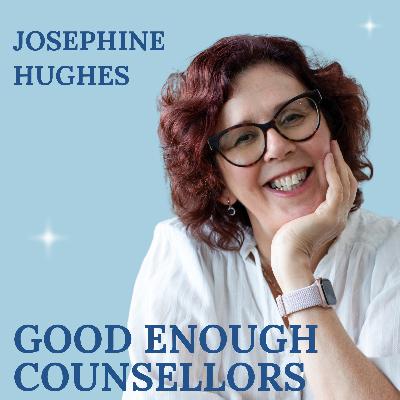
I’m Josephine Hughes, a BACP Accredited Counsellor, and I help counsellors in private practice with marketing, visibility, and confidence so they can grow their practice in a way that feels like them.
143 Episodes
Reverse
Are you a counsellor or therapist looking to diversify your income and build a more flexible private practice? In this episode, Dr Natalie Stott shares her experience of developing income streams beyond one-to-one therapy, including workshops and digital guides, while creating a working life that fits around her family.Our training teaches us how to work with clients, but working out how to earn a living and make room for the other things that matter to us can involve rather more trial and error.Natalie is a clinical psychologist and host of the Mastering Therapy podcast. She’s combined working in private practice with travelling with her young family, and we talk about how she’s tried out new ideas along the way.But what if you have an idea and find yourself thinking, “Who am I to be doing this?” We talk about that too, including the doubts and comparisons that can stop us before we’ve even started.Listen for ideas to help you:Find out whether people want your workshop or resource before you spend weeks creating itConnect with people who are interested in your work, whatever your follower numbersRecognise what you already have to offer, even when there are people with more experienceCatch yourself when comparison leaves you feeling overwhelmed or afraid to tryFind support from people who will encourage you and give you honest feedbackIf there’s something you’d love to try, I hope this conversation helps you give it a little more space. You don’t have to have the whole thing worked out before you begin.You can find Natalie's resources on her website: masteringtherapy.com or as follows:Mastering Therapy Podcast on Apple Podcasts (you can also find it on her website)Supervisor Platform (UK directory for finding clinical supervisors)Airnote (AI scribe for therapy sessions)Could clients find you through AI search?My new course and guide, More Enquiries for Your Therapy Practice: how to help clients find you through AI search is designed to help you optimise your online presence so it's easier for AI and clients to find you. Part 1 of the guide and five accompanying episodes are now available, included in the £9/month Patreon Backstage Pass (free for Therapy Growth Group members).Join by Monday 30 November for an invitation to a live Q&A on niching in the New Year. The first 50 therapists joining through the offer can also choose a podcast shout-out.Join Good Enough Counsellors on Patreon.Setting up in private practice? Download my free checklist HERENeed ideas for how to get clients? Download my free handout 21 Ways for Counsellors to Attract New Clients HEREYou can also find me here:The Good Enough Counsellors Facebook GroupJosephine Hughes on FacebookJosephine Hughes on YouTubeMy website: josephinehughes.comKeywords: second income for therapists, flexible working for therapists, counselling private practice, therapist business ideas, therapist confidence, Natalie Stott, Mastering Therapy, Josephine Hughes, Good Enough CounsellorsThe information contained in Good Enough Counsellors is provided for information purposes only. The contents of this podcast are not intended to amount to advice and you should not rely on any of the contents of this podcast. Professional advice should be obtained before taking or refraining from taking any action as a result of the contents of this podcast.Josephine Hughes disclaims all liability and responsibility arising from any reliance placed on any of the contents of this podcast.
Many counsellors are concerned that if they post on social media to reach out to clients, they'll receive negative comments.But how much do we really know about the people leaving those comments? And are their opinions representative of what most people think?In this episode, I share some surprising discoveries that made me question what I read on social media, and why we shouldn't let the fear of criticism stop us reaching the people who need our help.In this episode:Why some posts attract more criticism than othersHow social media algorithms can distort what we seeWhy the people commenting might not be the people you're trying to reachHow much weight to give negative commentsWays to cope with criticism and feel more confident postingFor social media ideas for December, please listen to Has Your Practice Gone Quiet? Let's talk about whyNeed some encouragement to put yourself out there?My Dream Builder Patreon membership is designed to help you overcome the fear of getting started, become more visible and take the next step towards your fulfilling your dreams. Find out about the Dream BuilderAnd a big thank you to Debbie from Lifehouse Therapy for subscribing and helping to keep the podcast lights on!Setting up in private practice? Download my free checklist HERENeed ideas for how to get clients? Download my free handout 21 Ways for Counsellors to Attract New Clients HEREYou can also find me here:The Good Enough Counsellors Facebook GroupJosephine Hughes on FacebookJosephine Hughes on YouTubeMy website: josephinehughes.comKeywords: negative comments on social media, coping with criticism, social media for counsellors, social media for therapists, social media confidence, fear of posting on social media, marketing for therapists, marketing for counsellors, counselling private practice, growing a therapy practice, attracting therapy clients, social media algorithms, online trolls, dealing with negative comments, social media anxiety, confidence in private practice, therapist marketing tips, online visibility for therapists, Good Enough Counsellors, Josephine HughesThe information contained in Good Enough Counsellors is provided for information purposes only. The contents of this podcast are not intended to amount to advice and you should not rely on any of the contents of this podcast. Professional advice should be obtained before taking or refraining from taking any action as a result of the contents of this podcast.Josephine Hughes disclaims all liability and responsibility arising from any reliance placed on any of the contents of this podcast.
Have you considered working with therapy clients where their counselling is paid for by insurance companies? In today's episode I speak with Louise Hiles, psychotherapist, supervisor and coach, who has a private practice where approximately 25% of her income is from insurance work.Louise explains what is involved when working with insurance companies like Bupa, Aviva and AXA, and what you need to consider before getting started.In this episode:How insurance work differs from EAP workAccreditation and registration requirements for working with insurance companiesHow clients find you and why you still need to market your practiceFees, payment times, invoices and policy excessesSession allowances and requesting extensionsDeciding whether or not this work is for you.Resources:Download Louise's free "Worth it or Not" guideAs a thank you for listening to Good Enough Counsellors, you can save 15% on Louise's course From Overwhelmed to Insurance Ready Use the code JOSEPHINE at checkout.You can find out more about Louise at her website: louisehiles.comSetting up in private practice? Download my free checklist HERENeed ideas for how to get clients? Download my free handout 21 Ways for Counsellors to Attract New Clients HEREYou can also find me here:The Good Enough Counsellors Facebook GroupJosephine Hughes on FacebookJosephine Hughes on YouTubeMy website: josephinehughes.comKeywords: getting therapy clients, insurance work for therapists, working with insurance companies, counselling private practice, how to get counselling clients, Bupa therapist, Aviva therapist, AXA therapist, insurance funded therapy, private health insurance counselling, accredited counsellors, therapist accreditation, building a private practice, Louise Hiles, Josephine Hughes, Good Enough CounsellorsWe are an affiliate of Louise Hiles and may be paid commission if you buy through our link. As we are an affiliate and From Overwhelmed to Insurance Ready was created by a third party, we shall have no liability whatsoever in any circumstances to you in relation to the course From Overwhelmed to Insurance Ready (including in relation to any consequential loss of any type whatsoever) other than in relation to matters for which we are not lawfully able to limit or exclude our liabilityThe information contained in Good Enough Counsellors is provided for information purposes only. The contents of this podcast are not intended to amount to advice and you should not rely on any of the contents of this podcast. Professional advice should be obtained before taking or refraining from taking any action as a result of the contents of this podcast.Josephine Hughes disclaims all liability and responsibility arising from any reliance placed on any of the contents of this podcast.
The BACP Ethical Framework 2026 includes a section on the ethical use of AI in therapeutic settings. However, many therapists don't know where to start with AI and indeed, may not want to use it at all in their practice. In this episode, we examine where you may be using AI without realising and what you need to consider in order to keep you and your clients safe.In this episode:Do you feel like you don't know enough? This isn't you, it's a reflection of how fast AI is changing our interactions with technologyCould you already be using AI without realising and why it is worth checking your practice management toolsWhat does the BACP Ethical Framework say about AI? Understanding risk, transparency and informed consentWhat happens to client information? What to ask and a tip on using AI to helpWhat about insurance and supervision?Further sources of supportResources:Ethical AI Practice: For Counsellors & Psychotherapists in the UK by Ken KellyThe BACP Ethics Checklist mentioned in the episode was removed from the website when the new Ethical Framework came into effect. Currently the website is hosting a video conversation Ethics and the Use of Artificial Intelligence (AI) and an updated checklist will be issued in the next few weeks.This episode is part of a series created about the new Ethical Framework. Catch up with the others as follows:Episode 138: Facebook and the New BACP Ethical FrameworkEpisode 139: Ethical Framework 2026: A conversation with BACPAnd over on Patreon, Good Enough Counsellors Backstage: Worried about getting the BACP Ethical Framework wrong?If you enjoy the podcast and it's helped you in your practice, please consider supporting Josephine's work over on Patreon. You'll receive extra resources, a shout out on the podcast and you'll be paying it forward for other therapists in the future.Setting up in private practice? Download my free checklist HERENeed ideas for how to get clients? Download my free handout 21 Ways for Counsellors to Attract New Clients HEREYou can also find me here:The Good Enough Counsellors Facebook GroupJosephine Hughes on FacebookJosephine Hughes on YouTubeMy website: josephinehughes.comKeywords: AI and counselling, BACP Ethical Framework 2026, ethical AI use, AI in private practice, counsellors and AI, client confidentiality, informed consent, client data protection, digital tools for therapists, professional judgement, AI risk assessment, counselling supervision, Ken Kelly, Ethical AI Practice, Good Enough CounsellorsThe information contained in Good Enough Counsellors is provided for information purposes only. The contents of this podcast are not intended to amount to advice and you should not rely on any of the contents of this podcast. Professional advice should be obtained before taking or refraining from taking any action as a result of the contents of this podcast.Josephine Hughes disclaims all liability and responsibility arising from any reliance placed on any of the contents of this podcast.
Has the new BACP Ethical Framework 2026 left you wondering what you’re supposed to do?In this episode, I’m joined by Nicola Blunden, BACP’s Deputy Head of Professional Standards, and Marita Morahan, who led the review of the Ethical Framework, to explore what it means for our everyday practice.We talk about why there isn’t always one answer that fits everyone, and how the framework’s decision-making questions can help us work out what is appropriate for our clients and our circumstances.We also discuss:Why relationship and context matter when making ethical decisionsWhat collaborative working with clients can look likeRecord keeping, clinical wills and concerns about notes after deathRecognising our power and responding when we get something wrongCompetence, training and supervisionSocial media, personal beliefs and the potential impact on clientsWhy we must retain responsibility for our decisions when using AII found the conversation helpful in understanding how to use the framework, and I hope it helps you feel more confident about approaching it too.The Ethical Framework 2026 takes effect on 3 November 2026. This conversation explores general principles and considerations rather than providing advice for individual ethical situations.You can also find me here:The Good Enough Counsellors Facebook GroupJosephine Hughes on FacebookJosephine Hughes on YouTubeMy website: josephinehughes.comSetting up in private practice? Download my free checklist HERENeed ideas for how to get clients? Download my free handout 21 Ways for Counsellors to Attract New Clients HEREBACP Ethical Framework 2026, BACP ethics, counselling ethics, ethical decision-making, clinical wills for counsellors, counselling record keeping, client notes after death, confidentiality, collaborative working, anti-oppressive practice, counselling supervision, therapist competence, social media boundaries, AI in counselling, counsellors in private practice, Nicola Blunden, Marita Morahan, Good Enough CounsellorsThe information contained in Good Enough Counsellors is provided for information purposes only. The contents of this podcast are not intended to amount to advice and you should not rely on any of the contents of this podcast. Professional advice should be obtained before taking or refraining from taking any action as a result of the contents of this podcast.Josephine Hughes disclaims all liability and responsibility arising from any reliance placed on any of the contents of this podcast.

Comments

Download from Google Play

Download from App Store
 United States