Discover
Crossing The River
Crossing The River
Author: More Than Human Life (MOTH)
Subscribed: 19Played: 183Subscribe
Share
© More Than Human Life (MOTH)
Description
In this podcast series, you will learn from multiple Indigenous leaders, who live on the front lines of the global climate crisis. Here they share their life experiences, knowledge, and urgent advice. They are the ones who are leading the path to a possible future.
It's time to listen to them, it's time to cross the river.
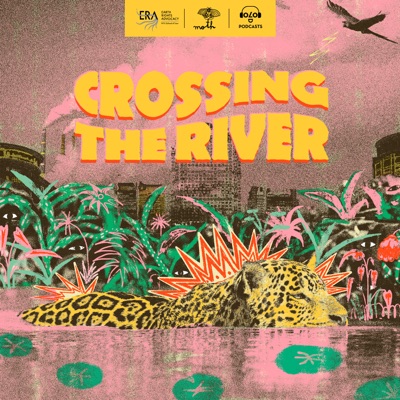
Crossing the River is a podcast from More Than Human Life (MOTH), based at the Center for Human Rights and Global Justice at NYU School of Law and 070 Podcasts.
It's time to listen to them, it's time to cross the river.
Crossing the River is a podcast from More Than Human Life (MOTH), based at the Center for Human Rights and Global Justice at NYU School of Law and 070 Podcasts.
33 Episodes
Reverse
Noemí Gualinga (Pueblo Indígena Sarayaku, Ecuador) es una lideresa indígena y miembro del colectivo Mujeres Amazónicas Defensoras de la Selva, una organización que trabaja por la protección de los derechos de las mujeres indígenas y sus territorios. Noemí ha cruzado el río muchas veces y ha aprendido a adaptarse: a la ciudad, a otros idiomas, a distintas reglas. Adaptarse, pero nunca olvidar quién es ni de dónde viene. Eso mismo les ha enseñado a sus hijos e hijas. Para ella, preservar y transmitir el conocimiento —y mantener la relación con su territorio— depende de algo esencial: proteger y cuidar su lengua. Porque es a través del idioma que las niñas y los niños aprenden el conocimiento del bosque, y cómo cuidar y defender sus raíces.
En este episodio, la abuela Helen Lindmark comparte su profunda conexión con la tierra y con la forma de vida Sámi. El pueblo sámi habita Sápmi, una vasta y remota región que abarca partes de Suecia, Finlandia, Noruega y la península de Kola en Rusia, ubicada dentro del Círculo Polar Ártico y rica en minerales como el cobre y el oro. Por esta razón, sus tierras y comunidades han estado históricamente amenazadas por industrias extractivas y fuerzas coloniales que han intentado suprimir su lengua y tradiciones culturales. Hoy en día, los Sámi son el único pueblo indígena reconocido dentro de la Unión Europea.A pesar de estos desafíos, la abuela Helen sigue defendiendo la relación sagrada entre su pueblo, la tierra y el mundo más-que-humano. A través del silencio y la práctica de escuchar profundamente el lenguaje de la naturaleza, nos recuerda la importancia de volver a nuestras raíces y reconocer nuestra profunda interconexión.
En este episodio, Christine Kandie (Pueblo Indígena Endorois, Kenia) comparte una historia profundamente personal de despojo, resistencia y sanación. Tras la expulsión forzada de su pueblo de su territorio ancestral en 1973, Christine creció escuchando relatos sobre un lago que fue como un vientre para su comunidad: vital, espiritual e irremplazable. En este episodio, seguimos su recorrido desde una infancia en el exilio hasta convertirse en fundadora de la Red de Empoderamiento de Mujeres Indígenas Endorois. A lo largo de este camino, ha desafiado múltiples capas de invisibilización para exigir justicia, reparación y reconocimiento. Esta es una historia sobre el poder de la memoria, la identidad y lo que significa seguir luchando cuando te dicen que debes olvidar quién eres.
En el primer episodio de la segunda temporada, Mphatheleni Makaulule (pueblo indígena Venda, Sudáfrica) comparte su experiencia como guardiana de los sistemas de conocimiento indígenas. Mphatheleni asegura que defender su territorio significa proteger su lengua, las palabras que ella y su pueblo utilizan para relacionarse con su territorio. Como parte de su trabajo, ha documentado y salvaguardado los conocimientos de los mayores y la sabiduría que encierra su lengua.
Alex Lucitante (Cofán Indigenous People, Colombia and Ecuador) knows that many Indigenous peoples have been compelled to speak the language of the law in order to be heard. Yet he insists on another language as well: the ancestral science of yagé, which has guided his people for millennia and sustains their relationship with their territory.The Cofán, known as the People of Yagé, have woven their history around this sacred vine. Alex descends from a lineage that has safeguarded this knowledge and protected it deep within the forest. His mission is to ensure that this science does not fade—to keep it at the center of territorial defense and to help future generations remember that yagé is alive, and that she, too, speaks.
Bárbara Muelas (Misak Indigenous People, Colombia), the first Indigenous woman in the Colombian Academy of Language, has spent her 80 years reviving Namtrik, her mother tongue—one of 65 Indigenous languages that still survive in Colombia despite centuries of colonization. Once spoken only aloud, it is now etched in writing so it will not vanish. Born to terrajeros during a time in which colonizers forced the Misak nation to work in their own land, she saw her people reclaim their territory in the 1980s and knew that freedom also meant reclaiming their language. Mamá Bárbara translated the ethnic chapter of Colombia’s Constitution into Namtrik, believing each language holds a unique way of seeing the world—and that by learning them, we also come to know ourselves, and the threads that bind us all.
In this episode, Grandmother Helen Lindmark (Sámi Indigenous People, Sápmi) shares her deep connection to the land and the Sámi way of life. The Sámi people inhabit Sápmi—a vast, remote region that spans Sweden, Finland, Norway, and Russia’s Kola Peninsula—located within the Arctic Circle and rich in minerals like copper and gold. Because of this, their lands and communities have long been threatened by extractive industries and colonial forces that have sought to suppress their language and cultural traditions. Today, the Sámi are the only Indigenous people recognized within the European Union.Despite these challenges, Grandmother Helen continues to defend the sacred relationship between her people, their land, and the more-than-human world. Through silence and the practice of deep listening to the language of nature, she reminds us of the importance of returning to our roots and recognizing our profound interconnectedness.
In this episode, Christine Kandie (Endorois Indigenous People, Kenia) shares a deeply personal story of dispossession, resistance, and healing. Following the forced eviction of her people from their ancestral land in 1973, Christine grew up hearing stories of a lake that was like a womb for her community—vital, spiritual, and irreplaceable. In this episode, we follow her journey from a childhood in exile to becoming the founder of the Endorois Indigenous Women Empowerment Network. Along the way, she has challenged layers of invisibility to demand justice, reparations, and recognition. This is a story about the power of memory, identity, and what it means to keep fighting when you are told to forget who you are.
In the first episode of the second season, Mphatheleni Makaulule (Venda Indigenous People, South Africa) shares her experience as a keeper of Indigenous knowledge systems. Mphatheleni argues that defending her territory means protecting her language—the words she and her people use to foster relationships with their land. As part of her work, she has documented and preserved the knowledge of the elders and the wisdom embedded in their language.
Crossing the River is a podcast in which we hear from Indigenous leaders who defend life on Earth every day, in their own words, because they are the protagonists of their own stories. To make the collective decisions which will define our present and our future, and to re-examine the stories we tell about our past, we must listen to their voices. This podcast amplifies Indigenous peoples’ voices; it does not explain or interrupt them. Here, you will hear directly from Indigenous leaders, because deep listening requires paying close attention to the way they pause and breathe and to the weight they carry in their voices.We invite you to cross the river, to connect and meet with Indigenous leaders and their peoples. With this exercise in attentive listening and practice, we plant this collective seed for the future with them.Welcome to the second season of Crossing the River.Crossing the River is a podcast from the More Than Human Life Program (MOTH), based at the Center for Human Rights and Global Justice at NYU School of Law and 070 Podcasts.The team behind the podcast is Carlos Andrés Baquero Díaz from MOTH, Natalia Arenas, Goldy Levy, and Andrés Villegas. The original art is by Nefazta and the music is by Cosmo Sheldrake.
Davi Kopenawa Yanomami (Yanomami Indigenous People, Brazil) is a shaman, a leader, and a scientist. Davi has crossed multiple rivers many times to question what he calls the “people of the merchandise” and their desire to exploit and possess human and more-than-human life. Davi, in this episode, delves into his ancestral knowledge to present his critique of a society obsessed with material objects, with trinkets. At the same time, Davi shares how the Yanomami people talk with nature, the being that does not lie.
Ana Manuela Ochoa (Kankuamo Indigenous People, Colombia) is the first Indigenous Justice at the Special Jurisdiction for Peace (JEP, for its acronym in Spanish). As part of her work, Ochoa has been arguing for the recognition of the territories as victims of the Colombian armed conflict. In her own words, human and more-than-human suffering should be recognized and repaired as part of the reconciliation process happening in the country.
In this episode, Luiz Eloy Terena (Terena Indigenous People, Brazil), explains the legal case of the Marco Temporal in Brazil, and the strategies of Indigenous organizations to overturn the unconstitutional initiative. Terena also explains his role as a lawyer and cultural translator for the Indigenous peoples and their organizations in Brazil.
José Gualinga (Kichwa Indigenous People of Sarayaku, Ecuador) introduces the concept of Kawsak Sacha (Living Forest) and describes its dual meaning: the profound connection between humans and their territory, and the core mission of the Sarayaku struggle. For the Sarayaku People, their territory and the more-than-human world must be protected and should be granted legal rights.
Joan Carling (Kankanaey Indigenous People, Philippines) poses a critical question: how do we respond to the global system that sees sustainability—and our planet's future—as merely another profit-making venture? The third episode of Crossing the River responds to the expansion of green colonialism and the climate crisis by emphasizing the crucial role of Indigenous peoples in the decision-making processes that affect their lives and territories.
Maurício Ye’kuana (Ye’kuana Indigenous People, Brazil), delves into the struggle of the Yanomami Indigenous People to oppose illegal gold mining in the Brazilian Amazon as well as the Brazilian government’s failure to respond meaningfully to this ongoing crisis. In the second installment of Crossing The River, concepts at the heart of the so-called First World – like progress, consumption, and extraction – are called into question as Maurício discusses the steps Indigenous peoples in the Amazon have taken to defend their lives and territories.
In this episode, Juma Xipaia (Xipaia Indigenous People, Brazil) shares her experiences as a woman and as an Indigenous leader while also commenting on the institutional transformations that have taken place in Brazil since the election of President Lula da Silva.
Crossing the River is a podcast in which we hear from Indigenous leaders that defend life on earth every day: in their own words, because they are the protagonists of their stories. Indigenous leaders are the voices that the world must listen to in order to make the collective decisions that define our present and future. Indigenous leaders have crossed the river from shore to shore many times and used different strategies to talk with Western society, but the West continues to do it only with violence, to colonize, extract, and destroy. This is an exercise to change that.
Patricia Tobón Yagarí (Pueblo Emberá-Chamí, Colombia) es abogada indígena especializada en derecho constitucional. Tobón ha estudiado y defendido los derechos territoriales de los pueblos indígenas. También ha participado en estrategias legales para proteger a las comunidades históricamente discriminadas. Fue designada como la única Comisionada indígena de la Comisión de la Verdad en Colombia y se desempeñó como Directora de la Unidad para las Víctimas.
Mari Luz Canaquiri (Kukama Indigenous People, Peru) grew up knowing that the Marañón River is sacred, because they carry life itself. When oil spills poisoned its waters and her people, her voice was dismissed because she was a woman. Refusing to be silenced, she joined other Kukama women to found the Huaynakana Kamatahuara Kana Federation, leading with a strength that is inclusive, resilient, and cannot be corrupted. Together, they won a landmark victory: the Marañón became the first river in Peru recognized as a subject of rights. In 2025, Mari Luz was honored with the Goldman Prize—the “Environmental Nobel”—for her fight to defend her river and her people.


![Noemí Gualinga: Los idiomas de la selva [ESP] Noemí Gualinga: Los idiomas de la selva [ESP]](https://s3.castbox.fm/e1/09/62/e6f1eaf2bfb06a032da4a0112a400ec856_scaled_v1_400.jpg)
![Abuela Helen Lindmark: Escuchar profundamente [ESP] Abuela Helen Lindmark: Escuchar profundamente [ESP]](https://s3.castbox.fm/8f/6c/32/9f33d6e9f744015c495ed70c7fd55f1247_scaled_v1_400.jpg)
![Christine Kandie: Reclamando las voces silenciadas [ESP] Christine Kandie: Reclamando las voces silenciadas [ESP]](https://s3.castbox.fm/d7/38/36/c666c65a910b6d447dfa4d778e22b8a4cf_scaled_v1_400.jpg)
![Mphatheleni Makaulule: Bordar el territorio con palabras [ESP] Mphatheleni Makaulule: Bordar el territorio con palabras [ESP]](https://s3.castbox.fm/80/a8/f4/b598f35a5178c0a77086fee009f89d2c63_scaled_v1_400.jpg)
![Alex Lucitante: Ancestral Science [ENG] Alex Lucitante: Ancestral Science [ENG]](https://s3.castbox.fm/ee/96/63/48618aa6309181fadc1fb0be1069f00bc0_scaled_v1_400.jpg)
![Bárbara Muelas: The Guardian of Language [ENG] Bárbara Muelas: The Guardian of Language [ENG]](https://s3.castbox.fm/e8/45/13/7137dbf396eae1ea66d4432755c26915be_scaled_v1_400.jpg)
![Grandmother Helen Lindmark: Deep Listening [ENG] Grandmother Helen Lindmark: Deep Listening [ENG]](https://s3.castbox.fm/04/52/89/b78231d9e5d5abe4917950fee5ab2e3d37_scaled_v1_400.jpg)
![Christine Kandie: Reclaiming Unheard Voices [ENG] Christine Kandie: Reclaiming Unheard Voices [ENG]](https://s3.castbox.fm/c4/a1/f9/3bad3e8ee69faec5ebe8ecb6fe8b76acb5_scaled_v1_400.jpg)
![Mphatheleni Makaulule: Words That Weave The Land [ENG] Mphatheleni Makaulule: Words That Weave The Land [ENG]](https://s3.castbox.fm/e4/ba/7c/65f210863d03e07847eaa6816719389af5_scaled_v1_400.jpg)
![Manifesto - Season 2 [ENG] Manifesto - Season 2 [ENG]](https://s3.castbox.fm/47/5f/74/e3f53088c6cfb1ab4588a160e4190eaedd_scaled_v1_400.jpg)
![Davi Kopenawa: Against The Society Of Junk [ENG] Davi Kopenawa: Against The Society Of Junk [ENG]](https://s3.castbox.fm/fb/fe/d8/71aea5d6cf86f604e7bcf6081c62a46ca2_scaled_v1_400.jpg)
![Ana Manuela Ochoa: Peace Is Not Just Between Humans [ENG] Ana Manuela Ochoa: Peace Is Not Just Between Humans [ENG]](https://s3.castbox.fm/2d/14/9b/7528cd8828d14574cb6d0a9d5e4a7f0fe8_scaled_v1_400.jpg)
![Luiz Eloy Terena: Claiming Back Indigenous Lands [ENG] Luiz Eloy Terena: Claiming Back Indigenous Lands [ENG]](https://s3.castbox.fm/73/2b/ee/3a09f8064822d9a6fd21c9f51ad2fd49bf_scaled_v1_400.jpg)
![José Gualinga: Our Strength Comes From The Living Forest [ENG] José Gualinga: Our Strength Comes From The Living Forest [ENG]](https://s3.castbox.fm/9b/e4/fb/3fd3a777b17d42ba89a2bbeb07a2f81f25_scaled_v1_400.jpg)
![Joan Carling: Unmasking Green Colonialism [ENG] Joan Carling: Unmasking Green Colonialism [ENG]](https://s3.castbox.fm/a4/06/96/553a4b709171404783a554efe59f0443de_scaled_v1_400.jpg)
![Maurício Ye'kuana: Is This The First World? [ENG] Maurício Ye'kuana: Is This The First World? [ENG]](https://s3.castbox.fm/cf/27/56/718317a208a9e198b66a7c20929bd08504_scaled_v1_400.jpg)
![Juma Xipaia: The Struggle From Within [ENG] Juma Xipaia: The Struggle From Within [ENG]](https://s3.castbox.fm/b0/cb/b6/f58eb5a6ba93518beb3cd293fe608310c5_scaled_v1_400.jpg)
![Manifesto [ENG] Manifesto [ENG]](https://s3.castbox.fm/32/29/11/0521f57cc9931bcf050631c431368eb2ca_scaled_v1_400.jpg)
![Patricia Tobón Yagarí: La que traspasa mundos [ESP] Patricia Tobón Yagarí: La que traspasa mundos [ESP]](https://s3.castbox.fm/e2/bc/ae/d3d68da8cf957da17cd7f27da3b1ef7d18_scaled_v1_400.jpg)
![Mari Luz Canaquiri: The Underwater Beings [ENG] Mari Luz Canaquiri: The Underwater Beings [ENG]](https://s3.castbox.fm/b5/1f/b4/b5dd4a29c32d28bcd61e7eac94d73e7d99_scaled_v1_400.jpg)

