


Autocrat- A Roman History Podcast
Subscribed: 21Played: 615
Subscribe

© Vince and Cassie
Description
A relaxed journey through Roman history and mythology, hopefully with plenty of tangents, sidebars and interesting distractions along the way. Our goal- even if it ends up being unrealised- is to journey from the Theogony all the way to the fall of Constantinople in 1453 and beyond. This show is just for fun, and we hope you have fun with it too!
127 Episodes
Reverse
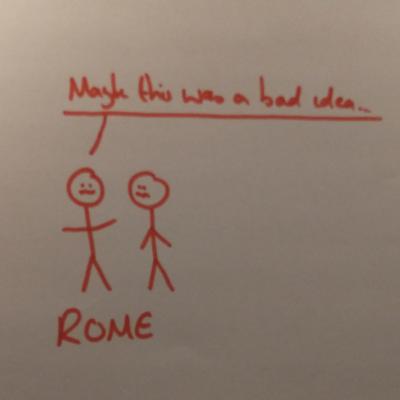
Romulus may have founded a city and invited a bunch of criminals who need asylum in, but there's still a problem to overcome. Namely, there are no women in Rome. Well, nothing a good old-fashioned bit of mass kidnapping, brutal warfare and Stockholm syndrome can't overcome! Let's watch Vince decide he can't spell the word 'the' and Cassie decide she can't pronounce... things.FYI: plea is a word derived from Anglo-French and area from Latin according to Etymology Online. Just in case anyone listened to the episode and thought they could do with that information.Sources for this episode:TBASound Effect by DRAGON-STUDIO from Pixabay
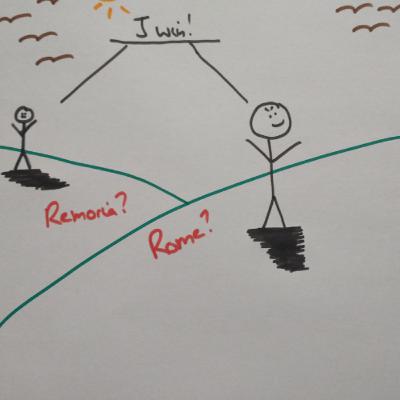
WE MADE IT! One hundred episodes in and we finally got to the founding of Rome. Just under thirty-nine hours of content later, we finally get to the point of the podcast. Romulus and Remus set out to found a city, but will it be Rome or Remoria? Will it be on the Palatine or the Aventine hill? Only one combination can win- and only one twin will leave the founding alive...Sources for this episode:TBA
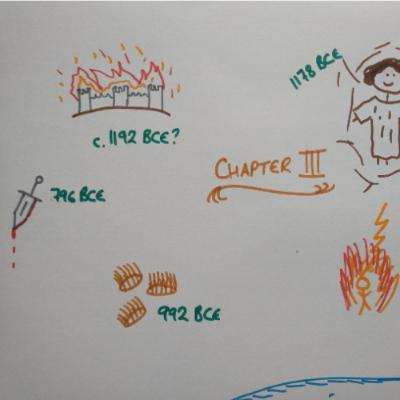
We've covered a lot of ground between the 1180s and 754 BCE. So, let's recap that in a bit more of a barebones recap today. Along the way, let's revisit the stories of Camilla, Remulus the hubristic king and Dido of Carthage. We'll also watch the co-hosts sass each other a lot more than necessary and pretend they don't know what a Rome is!
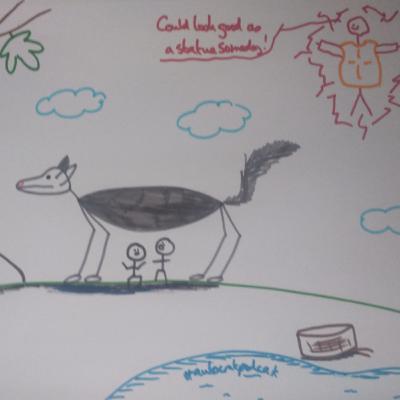
Romulus and Remus have been ejected into the Tiber by their granduncle/possibly father Amulius- but Fate has other plans. The boys wash up near a fig tree and survive by getting suckled by a she-wolf- all of which spells bad news for Amulius of Alba Longa...Sources for this episode:Boitani, L., Phillips, M. & Jhala, Y. V. ( 2023) Canis lupus (amended version of 2018 assessment). The IUCN Red List of Threatened Species 2023: e.T3746A247624660. Dio (1961), Dio’s Roman History (Volume I). Translated by E. Cary. London and Cambridge, Massachusetts: William Heinemann Ltd. and Harvard University Press.Eutropius (1760), Eutropius; Epitome of the Roman History. London: Printed for W. Johnston et al.Livy (1971), The Early History of Rome. Translated by A. de Sélincourt. Harmondsworth: Penguin Books Ltd.Plutarch (1938), Plutarch’s Lives (Volume I). London and New York: J. M. Dent & Sons Ltd. And E. P. Dutton & Co. Inc.Sextus Aurelius Victor (2004), Origo Gentis Romanae: The Origin of the Roman Race. Translated by K. Haniszewski, L. Karas, K. Koch, E. Parobek, C. Pratt and B. Serwicki. Canisius College Translated Texts 3. Canisius College, Buffalo, New York.Author unknown (date unknown), Nuremberg Chronicle: being the Liber Chronicarum of Dr. Hartmann translated in English. Morse Library, Beloit College.
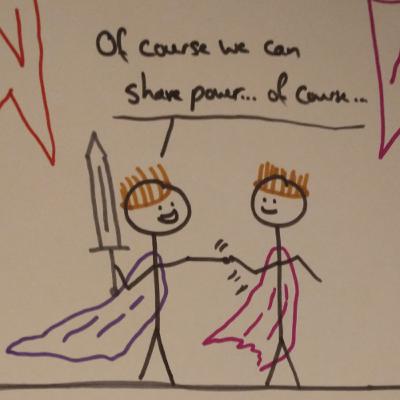
With the reign of Proca in the rear view mirror, we turn our attention to his two sons- Numitor and Amulius. A murderous plot and a usurpation leads to a young woman being condemned to a life as a Vestal Virgin. However, that doesn't stop her getting pregnant somehow. Oh well, let's put those twin boys in the Tiber...Sources for this episode:Appian (1972), Appian’s Roman History in Four Volumes (Volume I). London and Cambridge, Massachusetts: William Heinemann Ltd. and Harvard University Press.Dio (1961), Dio’s Roman History (Volume I). Translated by E. Cary. London and Cambridge, Massachusetts: William Heinemann Ltd. and Harvard University Press.Diodorus of Sicily (1993), The Library of History Books IV.59- VIII. Translated by C. H. Oldfather. London and Cambridge, Massachusetts: William Heinemann Ltd. and Harvard University Press.Dionysus of Halicarnassus (1960), The Roman Antiquities of Dionysus of Halicarnassus. Translated by E. Cary. Cambridge, Massachusetts and London: Harvard University Press and William Heinemann Ltd.The Editors, Encyclopedia Britannica (2025), Vestal Virgins (online) (Accessed 15/08/2025).Eutropius (1760), Eutropius; Epitome of the Roman History. London: Printed for W. Johnston et al.Livy (1971), The Early History of Rome. Translated by A. de Sélincourt. Harmondsworth: Penguin Books Ltd.Ovid (1968), The Metamorphoses of Ovid. Translated by M. M. Innes. Harmondsworth: Penguin Books Ltd.Plutarch (1938), Plutarch’s Lives (Volume I). London and New York: J. M. Dent & Sons Ltd. And E. P. Dutton & Co. Inc.Sextus Aurelius Victor (2004), Origo Gentis Romanae: The Origin of the Roman Race. Translated by K. Haniszewski, L. Karas, K. Koch, E. Parobek, C. Pratt and B. Serwicki. Canisius College Translated Texts 3. Canisius College, Buffalo, New York.Author unknown (date unknown), Nuremberg Chronicle: being the Liber Chronicarum of Dr. Hartmann translated in English. Morse Library, Beloit College.

Aventinus and Proca take us all the way down to the 790s BCE. Along the way, we see another hill of a certain famous city gets its name, the city chugs along quietly in the background, and the Herbology teacher from Harry Potter gets a cameo story in Ovid's Metamorphoses. Wait... What was that last part?Sources for this episode:Appian (1972), Appian's Roman History in Four Volumes (Volume I). Translated by H. White. London and Cambridge, Massachusetts: William Heinemann Ld. and Harvard University Press.Dio (1961), Dio's Roman History (Volume I). Translated by E. Cary. London and Cambridge, Massachusetts: William Heinemann Ltd. and Harvard University Press.Diodorus of Sicily (1993), The Library of History Books IV.59- VIII. Translated by C. H. Oldfather. London and Cambridge, Massachusetts: William Heinemann Ltd. and Harvard University Press.Dionysus of Halicarnassus (1960), The Roman Antiquities of Dionysus of Halicarnassus. Translated by E. Cary. Cambridge, Massachusetts and London: Harvard University Press and William Heinemann Ltd.Livy (1971), The Early History of Rome. Translated by A. de Sélincourt. Harmondsworth: Penguin Books Ltd.Ovid (1968), The Metamorphoses of Ovid. Translated by M. M. Innes. Harmondsworth: Penguin Books Ltd.Sextus Aurelius Victor (2004), Origo Gentis Romanae: The Origin of the Roman Race. Translated by K. Haniszewski, L. Karas, K. Koch, E. Parobek, C. Pratt and B. Serwicki. Canisius College Translated Texts 3. Canisius College, Buffalo, New York.Author unknown (date unknown), Nuremberg Chronicle: being the Liber Chronicarum of Dr. Hartmann translated in English. Morse Library, Beloit College.Author unknown, Wikipedia (date unknown), Seven hills of Rome (online) (Accessed 15/08/2025).
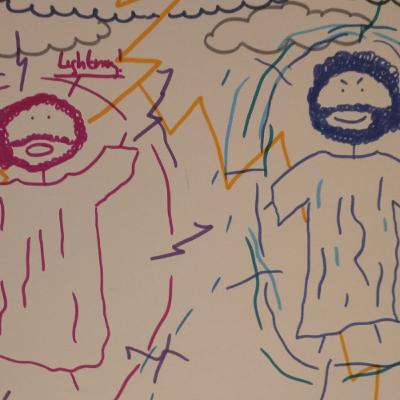
This episode is very, very frightning- me! But Bohemian Rhapsody references aside, we continue our story of the kings of Alba Longa down to 856 BCE. Join us for the arrogance of Remulus, earthquakes, divine punishments, and Cassie's intense dislike of an Alban king called Acrota.Sources for this episode:Appian (1972), Appian’s Roman History in Four Volumes (Volume I). London and Cambridge, Massachusetts: William Heinemann Ltd. and Harvard University Press.Dio (1961), Dio’s Roman History (Volume I). Translated by E. Cary. London and Cambridge, Massachusetts: William Heinemann Ltd. and Harvard University Press.Diodorus of Sicily (1993), The Library of History Books IV.59- VIII. Translated by C. H. Oldfather. London and Cambridge, Massachusetts: William Heinemann Ltd. and Harvard University Press.Dionysus of Halicarnassus (1960), The Roman Antiquities of Dionysus of Halicarnassus. Translated by E. Cary. Cambridge, Massachusetts and London: Harvard University Press and William Heinemann Ltd.Livy (1971), The Early History of Rome. Translated by A. de Sélincourt. Harmondsworth: Penguin Books Ltd.Ovid (1968), The Metamorphoses of Ovid. Translated by M. M. Innes. Harmondsworth: Penguin Books Ltd.Sextus Aurelius Victor (2004), Origo Gentis Romanae: The Origin of the Roman Race. Translated by K. Haniszewski, L. Karas, K. Koch, E. Parobek, C. Pratt and B. Serwicki. Canisius College Translated Texts 3. Canisius College, Buffalo, New York.Author unknown (date unknown), Nuremberg Chronicle: being the Liber Chronicarum of Dr. Hartmann translated in English. Morse Library, Beloit College.The lightning sound effect used is by TanwerAman (Thunder Strike (Wav) | Royalty-free Music - Pixabay), used under Pixabay licence (Content License - Pixabay).
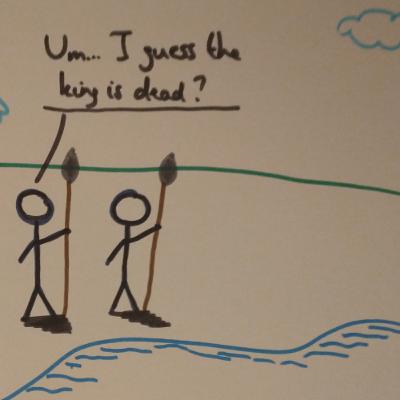
Quite a few reigns come and go as we head towards 916 BCE. Perhaps the most noteworthy of them all is that of Tiberinus- who drowns in the Albula river during a battle and becomes a god...Sources for this episode:Appian (1972), Appian’s Roman History in Four Volumes (Volume I). London and Cambridge, Massachusetts: William Heinemann Ltd. and Harvard University Press.Dio (1961), Dio’s Roman History (Volume I). Translated by E. Cary. London and Cambridge, Massachusetts: William Heinemann Ltd. and Harvard University Press.Diodorus of Sicily (1993), The Library of History Books IV.59- VIII. Translated by C. H. Oldfather. London and Cambridge, Massachusetts: William Heinemann Ltd. and Harvard University Press.Dionysus of Halicarnassus (1960), The Roman Antiquities of Dionysus of Halicarnassus. Translated by E. Cary. Cambridge, Massachusetts and London: Harvard University Press and William Heinemann Ltd.Livy (1971), The Early History of Rome. Translated by A. de Sélincourt. Harmondsworth: Penguin Books Ltd.Ovid (1959), Ovid's Fasti. Translated by J. G. Frazer. London and Cambridge, Massachusetts: William Heinemann Ltd. and Harvard University Press.Ovid (1968), The Metamorphoses of Ovid. Translated by M. M. Innes. Harmondsworth: Penguin Books Ltd.Sextus Aurelius Victor (2004), Origo Gentis Romanae: The Origin of the Roman Race. Translated by K. Haniszewski, L. Karas, K. Koch, E. Parobek, C. Pratt and B. Serwicki. Canisius College Translated Texts 3. Canisius College, Buffalo, New York.Author unknown (date unknown), Nuremberg Chronicle: being the Liber Chronicarum of Dr. Hartmann translated in English. Morse Library, Beloit College.
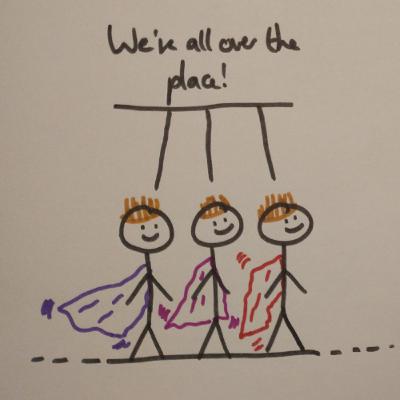
From about 1030 BCE, all of our sources about Alba Longa and its kings crumble into disagreement. Get ready for tales of heirs saving puppies in housefires, three kings at once, and whether the recording room of Autocrat is still haunted.Sources for this episode:Appian (1972), Appian’s Roman History in Four Volumes (Vol. I). London and Cambridge, Massachusetts: William Heinemann Ltd. and Harvard University Press.Dio (1961), Dio’s Roman History (Volume I). Translated by E. Cary. London and Cambridge, Massachusetts: William Heinemann Ltd. and Harvard University Press.Diodorus of Sicily (1993), The Library of History Books IV.59- VIII. Translated by C. H. Oldfather. London and Cambridge, Massachusetts: William Heinemann Ltd. and Harvard University Press.Dionysus of Halicarnassus (1960), The Roman Antiquities of Dionysus of Halicarnassus (Volume I). Translated by E. Cary. Cambridge, Massachusetts and London: Harvard University Press and William Heinemann Ltd.Livy (1971), The Early History of Rome. Translated by A. de Sélincourt. Harmondsworth: Penguin Books Ltd.Ovid (1959), Ovid's Fasti. Translated by J. G. Frazer. London and Cambridge, Massachusetts: William Heinemann Ltd. and Harvard University Press.Ovid (1968), The Metamorphoses of Ovid. Translated by M. M. Innes. Harmondsworth: Penguin Books Ltd.Author unknown (date unknown), Nuremberg Chronicle: being the Liber Chronicarum of Dr. Hartmann translated in English. Morse Library, Beloit College.
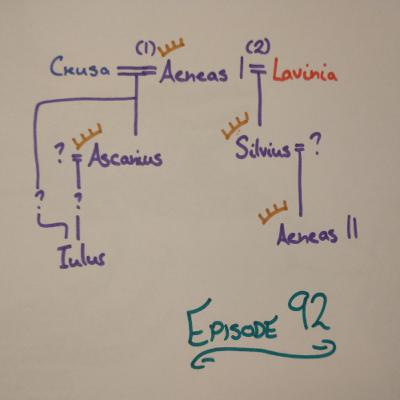
He's finally here! Aeneas II of Alba Longa! Long may he reign gloriously! Get ready for mighty battles, great conquests, soaring triumphs and... what's that? Ovid, Livy and Cassius Dio want to have a word? Well of course, I- what do you mean the history books are empty?Sources for this episode:Appian (1972), Appian’s Roman History in Four Volumes (Volume I). London and Cambridge, Massachusetts: William Heinemann Ltd. and Harvard University Press.Dio (1961), Dio’s Roman History (Volume I). Translated by E. Cary. London and Cambridge, Massachusetts: William Heinemann Ltd. and Harvard University Press.Diodorus of Sicily (1993), The Library of History Books IV.59- VIII. Translated by C. H. Oldfather. London and Cambridge, Massachusetts: William Heinemann Ltd. and Harvard University Press.Dionysus of Halicarnassus (1960), The Roman Antiquities of Dionysus of Halicarnassus. Translated by E. Cary. Cambridge, Massachusetts and London: Harvard University Press and William Heinemann Ltd.Livy (1971), The Early History of Rome. Translated by A. de Sélincourt. Harmondsworth: Penguin Books Ltd.Ovid (1968), The Metamorphoses of Ovid. Translated by M. M. Innes. Harmondsworth: Penguin Books Ltd.Sextus Aurelius Victor (2004), Origo Gentis Romanae: The Origin of the Roman Race. Translated by K. Haniszewski, L. Karas, K. Koch, E. Parobek, C. Pratt and B. Serwicki. Canisius College Translated Texts 3. Canisius College, Buffalo, New York.Author unknown (date unknown), Nuremberg Chronicle: being the Liber Chronicarum of Dr. Hartmann translated in English. Morse Library, Beloit College.
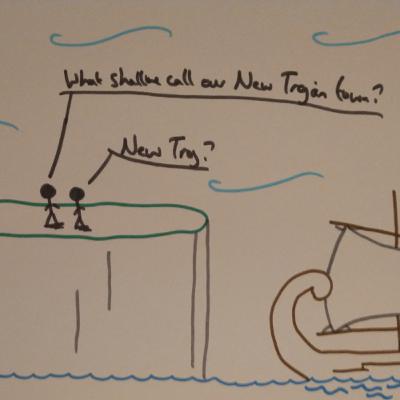
Pausing our narrative with the death of Silvius in 1111 BCE, we follow his exiled younger son Brutus, who winds up in Britain after a series of Odyssey-style adventures and becomes its first king. His family will rule Britain for centuries according to the mythological narrative of Geoffrey of Monmouth, taking us all the way to the epoch of Rome's founding before we circle back next week to deal with Aeneas II...Sources for this episode:Baker, R. (1670), A Chronicle of the Kings of England. London: Printed for George Sawbridge.Dio (1961), Dio’s Roman History (Volume I). Translated by E. Cary. London and Cambridge, Massachusetts: William Heinemann Ltd. and Harvard University Press.Dionysus of Halicarnassus (1960), The Roman Antiquities of Dionysus of Halicarnassus. Translated by E. Cary. Cambridge, Massachusetts and London: Harvard University Press and William Heinemann Ltd.Frazer, J. G. (1921), Apollodorus: The Library (Volume II). London: William Heinemann.Geoffrey of Monmouth (1966), The History of the Kings of Britain. Translated by L. Thorpe. Harmondsworth: Penguin Books Ltd.Livy (1971), The Early History of Rome. Translated by A. de Sélincourt. Harmondsworth: Penguin Books Ltd.Marks, A. and Tingay, G. (date unknown), Romans. London: Usborne Publishing.Shakespeare, W. (2014), The Complete Works of William Shakespeare. New York: Race Point Publishing.William of Malmesbury (1847), William of Malmesbury’s Chronicle of the Kings of England. London: Henry G. Bohn, York Street, Covent Garden.Author unknown (date unknown), Nuremberg Chronicle: being the Liber Chronicarum of Dr. Hartmann translated in English. Morse Library, Beloit College.Author unknown, Wikipedia (date unknown), Silvius (online) (Accessed 05/09/2024).Author unknown, Wikipedia (date unknown), Totnes (online) (Accessed 05/09/2024).
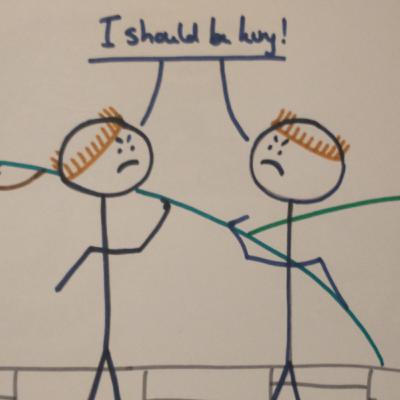
With Ascanius gone, his half-brother Silvius- the posthumous son of Aeneas and Lavinia- steps into the narrative. This week on Autocrat, a contested royal election, murky regency timelines, and the podcast hosts declaring war on Titus Livius.Would you be interested in a discussion on what the historical founding of Rome was like outside of its mythological origins? Let us know!Sources for this episode:Appian (1972), Appian’s Roman History in Four Volumes (Volume I). London and Cambridge, Massachusetts: William Heinemann Ltd. and Harvard University Press.Dio (1961), Dio’s Roman History (Volume I). Translated by E. Cary. London and Cambridge, Massachusetts: William Heinemann Ltd. and Harvard University Press.Diodorus of Sicily (1993), The Library of History Books IV.59- VIII. Translated by C. H. Oldfather. London and Cambridge, Massachusetts: William Heinemann Ltd. and Harvard University Press.Dionysus of Halicarnassus (1960), The Roman Antiquities of Dionysus of Halicarnassus. Translated by E. Cary. Cambridge, Massachusetts and London: Harvard University Press and William Heinemann Ltd.Livy (1971), The Early History of Rome. Translated by A. de Sélincourt. Harmondsworth: Penguin Books Ltd.Meade, G. (2021), Romans, Religion and the Aid of the Gods: An Exploration of the Pontifex Maximus in Roman Society. Portland State University: University Honors Theses: 1035.Ovid (1959), Ovid's Fasti. Translated by J. G. Frazer. London and Cambridge, Massachusetts: William Heinemann Ltd. and Harvard University Press.Ovid (1968), The Metamorphoses of Ovid. Translated by M. M. Innes. Harmondsworth: Penguin Books Ltd.Sextus Aurelius Victor (2004), Origo Gentis Romanae: The Origin of the Roman Race. Translated by K. Haniszewski, L. Karas, K. Koch, E. Parobek, C. Pratt and B. Serwicki. Canisius College Translated Texts 3. Canisius College, Buffalo, New York.Suetonius (1983), The Twelve Caesars. Translated by R. Graves. Harmondsworth: Penguin Books Ltd.Author unknown (date unknown), Nuremberg Chronicle: being the Liber Chronicarum of Dr. Hartmann translated in English. Morse Library, Beloit College.Sources for the pope's pontifical association (even if not outright calling him pontifex maximus):Kelly, J. N. D. (1996), Oxford Dictionary of Popes. Oxford: Oxford University Press.Author unknown (1916), The Book of the Popes (Liber Pontificalis) (Volume I). Translated by L. R. Loomis. New York: Columbia University Press.
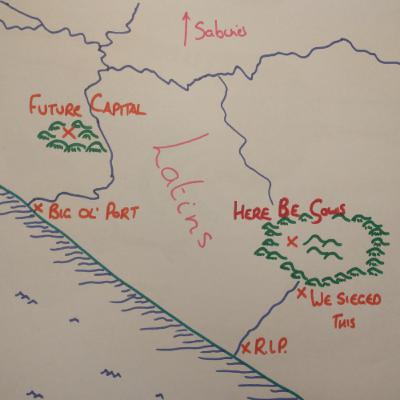
Alba Longa is here! Pig City! Or Long White City. Or Longtown... The etymology is disputed. As is pretty much everything else from the reign of Ascanius! Join us for revisions of our timeline from episode 77, a wine obsession on the part of Dionysus of Halicarnassus, and far too much of our Auto-cat Felix disrupting recording.Sources for this episode:Appian (1972), Appian’s Roman History in Four Volumes (Vol. I). London and Cambridge, Massachusetts: William Heinemann Ltd. and Harvard University Press.Dio (1961), Dio’s Roman History (Volume I). Translated by E. Cary. London and Cambridge, Massachusetts: William Heinemann Ltd. and Harvard University Press.Diodorus of Sicily (1993), The Library of History Books IV.59- VIII. Translated by C. H. Oldfather. London and Cambridge, Massachusetts: William Heinemann Ltd. and Harvard University Press.Dionysus of Halicarnassus (1960), The Roman Antiquities of Dionysus of Halicarnassus. Translated by E. Cary. Cambridge, Massachusetts and London: Harvard University Press and William Heinemann Ltd.Eutropius (1760), Eutropius; Epitome of the Roman History. London: Printed for W. Johnston et al.Livy (1971), The Early History of Rome. Translated by A. de Sélincourt. Harmondsworth: Penguin Books Ltd.Ovid (1968), The Metamorphoses of Ovid. Translated by M. M. Innes. Harmondsworth: Penguin Books Ltd.Sextus Aurelius Victor (2004), Origo Gentis Romanae: The Origin of the Roman Race. Translated by K. Haniszewski, L. Karas, K. Koch, E. Parobek, C. Pratt and B. Serwicki. Canisius College Translated Texts 3. Canisius College, Buffalo, New York.Virgil (1976), The Aeneid. Translated by W. F. J. Knight. London: Penguin Books Ltd.Wilkinson, P., Carroll, G., Faulkner, M., Field, J. F., Haywood, J., Kerrigan, M., Philip, N., Pumphrey, N. and Tocino-Smith, J. (2018), The Mythology Book. London: Dorling Kindersley Ltd.Author unknown (date unknown), Nuremberg Chronicle: being the Liber Chronicarum of Dr. Hartmann translated in English. Morse Library, Beloit College.Author unknown, Wikipedia (date unknown), Dionysus of Halicarnassus (online) (Accessed 23/11/2025).Author unknown, Wikipedia (date unknown), Falerna (online) (Accessed 23/11/2025).
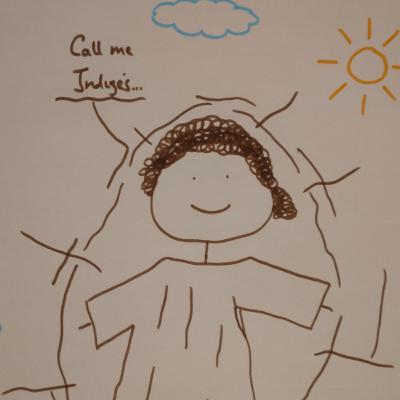
Everyone has their time come sooner or later- and that time has come for Aeneas. The new king of the Latins shuffles off this mortal coil, either to die and head down to Hades, or else to transform into the god Indiges. Either way, it's time for us to leave a character we've accompanied since the Iliad behind and travel on with his descendants!Sources for this episode:Dio (1961), Dio's Roman History (Volume I). Translated by E. Cary. London and Cambridge, Massachusetts: William Heinemann Ltd. and Harvard University Press.Diodorus of Sicily (1993), The Library of History Books IV.59-VIII. Translated by C. H. Oldfather. London and Cambridge, Massachusetts: William Heinemann Ltd. and Harvard University Press.Dionysus of Halicarnassus (1960), The Roman Antiquities of Dionysus of Halicarnassus. Translated by E. Cary. Cambridge, Massachusetts and London: Harvard University Press and William Heinemann Ltd.Livy (1971), The Early History of Rome. Translated by A. de Sélincourt. Harmondsworth: Penguin Books Ltd.Ovid (1968), The Metamorphoses of Ovid. Translated by M. M. Innes. Harmondsworth: Penguin Books Ltd.
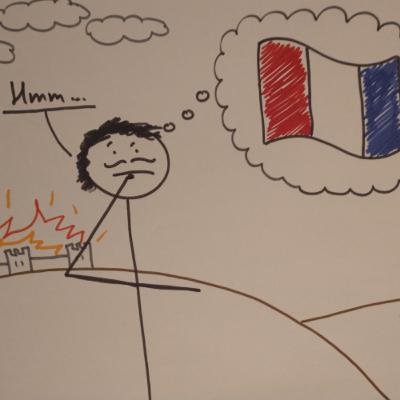
Now that we have finished the Aeneid- and indeed the epic narratives surrounding the Trojan War- we pause the narrative for a quick intermission before we finish off Aeneas. So, join us for three more stories of Greco-Roman protagonists founding nations of their own!Sources for this episode:de Ronsard, P. (1572), Les Quatre Premiers Livre de la Franciade, au Roy Tres-Chrestien, Charles, Neufieme de ce nom. Paris: Gabriel Buon.Hoffman-Beckering, D., History of the Germans (2025), Episode 204- Rudolf IV- Forger and Founder (online) (Accessed 20/08/2025).Ritter, R. and Tapie, V.-L., Encyclopedia Britannica (2025), Henry IV king of France (online) (Accessed 20/08/2025).Roulliere, A. (date unknown), Ronsard and the ghost of Astyanax. Trinity Hall College, University of Cambridge (thesis).Seznec, J. (1995), The Survival of the Pagan Gods: The Mythological Tradition and Its Place in Renaissance Humanism and Art. Princeton: Princeton University Press.
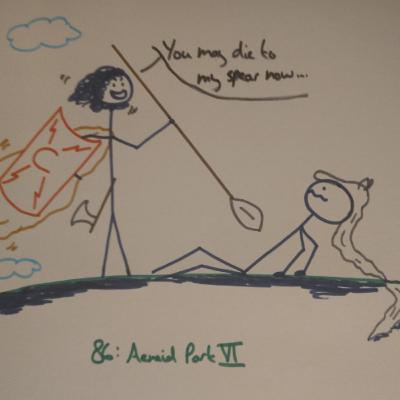
Aeneas has his final stand-off with Turnus, but that seems almost tangential in comparison to a daughter of a king called Camilla who carves a path of destruction and intimidation through the Trojan lines. As we wrap up the Aeneid and indeed the cycle of epics about the Trojan War and its aftermath, join us for vengeance for Pallas, military circle time and anti-prayers.Sources for this episode:Virgil (1976), The Aeneid. Translated by W. F. J. Knight. London: Penguin Books Ltd.Wilkinson, P., Carroll, G., Faulkner, M., Field, J. F., Haywood, J., Kerrigan, M., Philip, N., Pumphrey, N. and Tocino-Smith, J. (2018), The Mythology Book. London: Dorling Kindersley Ltd.
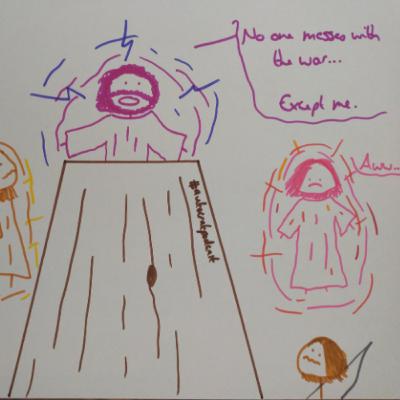
Virgil may be slowly unravelling as Augustus forces him to write propaganda into the Aeneid, but Aeneas is charging full steam ahead into his conflict against the Rutulians. Join us for duels, ancient world macchiatos and a boat-based answering machine. Oh, and a tangent exploring who exactly these Etruscans are we will be hearing so much about.Sources for this episode:Dudley, D. (1978), Roman Society. Harmondsworth: Penguin Books Ltd.Evelyn-White, H. G. (1943), Hesiod: The Homeric Hymns and Homerica. London: William Heinemann Ltd.Herodotus (1971), The Histories. Translated by A. de Selincourt. Harmondsworth: Penguin Books Ltd.Marks, A. and Tingay, G. (date unknown), Romans. London: Usborne Publishing.Matyszak, P. (2008), Chronicle of the Roman Republic: The Rulers of Ancient Rome from Romulus to Augustus. London: Thames & Hudson Ltd.Mountford, P. (date unknown), Aeneas: An Etruscan Foundation Legend. ASCS 32 Proceedings.Oglivie, R. M. (1976), Early Rome and the Etruscans. Glasgow: William Collins & Sons, Ltd.Oltermann, P. (ed.) et al. (date unknown), The Ancient World Day 3: Rome. The Guardian, The Observer and the British Museum.Pellecchia, M., Negrini, R., Colli, L., Patrini, M., Milanesi, E., Achilli, A., Bertorelle, G., Cavalli-Sforza, L. L., Piazza, A., Torroni, A. and Ajmone-Marsan, P. (2007), The mystery of Etruscan origins: novel clues from Bos taurus mitochondrial DNA. Proceedings of the Royal Society B: Biological Sciences 274(1614): 1175-1179.Suetonius (1983), The Twelve Caesars. Translated by R. Graves. Harmondsworth: Penguin Books Ltd.Thucydides (1971), History of the Peloponnesian War. Translated by R. Warner. Harmondsworth: Penguin Books Ltd.Woolf, A. (2014), A Short History of the World: The Story of Mankind from Prehistory to the Modern Day. London: Arcturus Publishing Ltd.Author unknown, Wikipedia (date unknown), Odysseus (online) (Accessed 20/10/2025).
Now in Italy, Aeneas gets a new wife called Lavinia- and rivalry for her hand starts a war against the king of the Rutilians. Join us for more prophecies and visions of Rome than you can shake a stick at, Venus magicking shields into Aeneas' tent, and just whether Aeneas is an introvert.Catch Tsar Power wherever you get your podcasts, and thanks to Roberto and Aurora for collaborating with us!Sources for this episode:Drummond, A. 2015), Evander. Oxford Classical Dictionary (online) (Accessed 19/10/2025).Graves, R. (1981), Greek Myths: Illustrated Edition. London: Cassell Ltd.Moorton, R. (1988), The Genealogy of Latinus in Vergil's Aeneid. Transactions of the American Philological Association 118: 253-259.Papaioannou, S. (2003), Founder, Civilizer and Leader: Vergil's Evander and His Role in the Origins of Rome. Mnemnosyne Fourth Series 56(6): 680-702.Rosivach, V. J. (1980), Latinus' Genealogy and the Palace of Picus (Aeneid 7, 45-9, 170-91. The Classical Quarterly 30(1): 140-152.Virgil (1976), The Aeneid. Translated by W. F. J. Knight. London: Penguin Books Ltd.Wilkinson, P., Carroll, G., Faulkner, M., Field, J. F., Haywood, J., Kerrigan, M., Philip, N., Pumphrey, N. and Tocino-Smith, J. (2018), The Mythology Book. London: Dorling Kindersley Ltd.Author unknown, Wikipedia (date unknown), Battle of Actium (online) (Accessed 18/10/2025).Author unknown, Wikipedia (date unknown), Evander of Pallantium (online) (Accessed 18/10/2025 and 19/10/2025).Author unknown, Wikipedia (date unknown), Latinus (online) (Accessed 18/10/2025).Author unknown, Wikipedia (date unknown), Janus (online) (Accessed 18/10/2025).Author unknown, Wikipedia (date unknown), Shield of Aeneas (online) (Accessed 18/10/2025).Author unknown, Wikipedia (date unknown), Temple of Janus (online) (Accessed 18/10/2025).Incidentally, Aphrodite's Wikipedia informs me that the story of her cheating with Ares comes from Book VIII of the Odyssey. So, the reference for the Odyssey is:Homer (1983), The Odyssey. Translated by E. V. Rieu. London: Penguin Books Ltd.
Aeneas holds some surprise funeral games in honour of his father, as he unexpectedly remembers that it's been one year since his father Anchises died. Not only that, but he must also venture deep into the bowels of the underworld to go and speak to that same father- and receive a prophecy about the future of his lineage and the people he will found. But does the underworld have any snack machines?Thanks again to Roberto from the History of Saqartvelo Georgia for collaborating with us! Check out his show wherever you get your podcasts.Sources for this episode:Virgil (1976), The Aeneid. Translated by W. F. J. Knight. London: Penguin Books Ltd.Wilkinson, P., Carroll, G., Faulkner, M., Field, J. F., Haywood, J., Kerrigan, M., Philip, N., Pumphrey, N. and Tocino-Smith, J. (2018), The Mythology Book. London: Dorling Kindersley Ltd.Author unknown, University of Leeds (date unknown), Inferno, Major Themes: Virglin (online) (Accessed 14/10/2025).Author unknown, Wikipedia (date unknown), Christian interpretations of Virgil's Eclogue 4 (online) (Accessed 14/10/2025).Author unknown, Wikipedia (date unknown), Dante Alighieri (online) (Accessed 14/10/2025).Author unknown, Wikipedia (date unknown), Inferno (Dante) (online) (Accessed 14/10/2025).Drum sound effect: Sound Effect by Adhi Mahadi from Pixabay
We set off from the burning rubble of Troy again- but this time instead of Odysseus, it's everyone's favourite serial kidnap victim Aeneas we are following! Join us for Carthage, Dido, very fast mural painters with very up-to-date information and Neptune advocating beaurocracy.Sources for this episode:Virgil (1976), The Aeneid. Translated by W. F. J. Knight. London: Penguin Books Ltd.

Comments

Download from Google Play

Download from App Store
 United States