


 Claim Ownership
Cattlemen’s Call Podcast
Subscribed: 64Played: 3,145
Subscribe

© All rights reserved
Description
Montana rancher and broadcaster Lane Nordlund hosts this monthly “coffee talk” style podcast focusing on the producers in the beef industry. Learn and laugh together with the stories of cattlemen and women from across the country. We all have stories to tell; we all have successes and failures; we all work with family and it’s always great to talk about what is going on in the beef industry across the country.
148 Episodes
Reverse
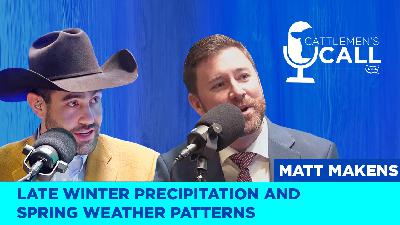
Atmospheric Scientist Matt Makens returns to the show following his presentation at CattleCon, bringing an in‑depth look at the spring weather outlook for producers. Matt breaks down the latest trends in moisture patterns, temperature shifts, and spring weather forecasts, emphasizing the critical need for late‑winter precipitation after a dry December and January.
He also explains why much of the western U.S. will rely on end‑of‑season storms to support rangeland and crop conditions, and what producers need to know as we transition into a Neutral ENSO phase with promising indications of El Niño development later this year.
This episode delivers essential, science‑based guidance to help you plan for spring.
This show is brought to you by John Deere (https://www.deere.com/en/).
Innovation is driving efficiency for the everyday cattle producer, and forage plays a crucial role in the cattle herd’s success. Scott Birker shares how his partnerships have shaped new ideas and solutions in baling and forage equipment to help his family save time and labor, giving Scott more time to focus on his family and the future of their multi-generational farm in Iowa. From the ground up, Scott’s hay and forage success lead to the success and quality of his cattle. Together, Scott and Kaylene Ballesteros are on the show talking about evaluating return on investment on equipment as they make lasting decisions. Learn more at https://www.deere.com/en/.
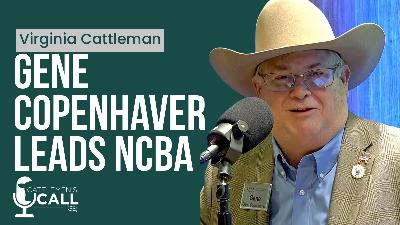
Gene Copenhaver took the reins as NCBA President after CattleCon 2026. He and his son Will join the podcast and share how they’ve worked together to transition majority ownership of Copenhaver Brothers Farms to Will and how they partner to make business decisions. Gene is excited for his year leading NCBA, especially as he sees young cattlemen and women who are eager to get involved in beef production and step into leadership, and one of his goals this year is to support the next generation. The Copenhavers are dedicated to their family and supporting other family operations across the country. This episode is brought to you by John Deere (https://www.deere.com/en/)
Maddux Cattle Company, located in southwest Nebraska, was homesteaded in 1886 and has grown in the last 140 years and now sustains about 2,500 cows and 5,000 yearlings. In 2026, the Maddux Cattle Co. is dispersing their mature bred cow herd at the Ogallala Livestock Auction. In this conversation, John Maddux walks us through the background of this decision and the opportunity for producers to acquire some of the genetics that they’ve spent decades investing and perfecting.
https://www.madduxcattle.com/
With CattleCon 2026 just around the corner, Feb. 3–5, in downtown Nashville — we’re taking a look at some of the standout highlights heading to Music City.
In this episode, we preview what’s ahead with Grammy-nominated songwriter and keynote speaker Jimmy Yeary, who shares how the power of storytelling connects country music with the lives of cattlemen and women, and NCBA President Buck Wehrbein, who highlights what attendees can expect as he wraps up his term, from new convention features to can’t-miss networking events.
If you’re planning to attend CattleCon, or still making the decision, this is your inside look at why Nashville is the place to be.
We’re tackling a critical topic for every cattle producer: business continuity and biosecurity during a disease outbreak. Joining us are Dr. Julia Herman, DVM and beef cattle specialist at NCBA, and Dr. Danelle Bickett-Weddle, DVM with Preventalytics. They discuss how the Secure Beef Supply (SBS) was created, how a USDA grant has helped NCBA improve educational resources SBS planning, and its importance for keeping cattle moving during a disease event. They give steps to make biosecurity manageable for any operation and tips for emerging threats like New World Screwworm. Prepare your operation for any scenario!
In this episode, we bring together voices from both the ranching and the policy front. Joining us are California cattle producer, Rick Roberti, and Kaitlynn Glover, executive director of Government Affairs for NCBA and the Public Lands Council. Together, they explore the real-world impacts of the Endangered Species Act, the controversy surrounding gray wolf protections, and the broader implications for ranchers across the West and Great Lakes. From predator management to federal policy, this episode offers a comprehensive look at how decisions in Washington, D.C., ripple through rural America.
The high demand for beef continues, and consumers are seeking a high-quality product. Beef producers have been answering that call, as is evident in the upward trend of beef quality grades, specifically Prime and Choice. Paul Dykstra, with Certified Angus Beef, joins to discuss the shifting dynamics of quality grades and what they mean for today’s cattle producers. Paul offers insights into market trends and the factors driving demand for premium beef. He explores how this directs both seedstock and commercial cattle producers’ breeding decisions.
Although Missouri isn’t known for being the home of vineyards and wineries, Windy Wine Company and KK Farms Red Angus are shaking up the narrative. Ken Keesaman and his son Kody operate a Red Angus herd, selling bulls locally and around the country, while Ken’s son Kraig used his culinary passion to begin a winery, incorporating various fruits and grapes that work well in Missouri's climate. Kraig’s creativity led him to develop unique flavors of wine, like Peanut Butter and Jelly. Ken, Kraig and Kody talk about working daily with family and, even though head butting happens from time to time, they wouldn’t change the opportunity they have to keep the land in the family. The Keesamans found a way to marry marketing their bulls, their beef and their wine.
The climate, forage species and desired cattle type vary greatly for these three producers who are 2025 ESAP Regional Winners. Mike Wilson, Whispering Hills Farm in Kentucky; Jack Smith, Smith Family Farms in Iowa; and Logan Pribbeno, Wine Glass Ranch in Nebraska, are on the show talking about the partnerships, programs and mentors that have shaped the way they raise and market cattle and how they take care of their natural resources. They explored the innovative techniques they implement, identified which ones were mistakes and which proved to be successful. Each of these operations were recognized for their dedication to finding the most effective ways to care for the land and grow profitable cattle. ESAP is generously sponsored by NRCS, Corteva Agriscience, and USFWS.
Whether it’s migrating birds, elk and deer, large predators or invasive species, these three cattlemen have spent decades adapting their management plans to coexist and promote the health of wildlife along with their cattle. Gregory Gardner, G&G Livestock & Cathey Cattle Co.; Mark Overstreet, M&D Overstreet Ranch; and Bob McCan, McFadden Ranch dive into which plant and animal species have been a challenge for them and which have benefited the sustainability and profitability of their operations. These 2025 Environmental Stewardship Award Regional winners share real stories of overcoming challenges and finding opportunity on their ranches. ESAP is generously supported by NRCS, Corteva Agriscience and USFWS.
Matt Makens returns to the show to talk about weather patterns that changed from his spring outlook and created unexpected moisture in different regions of the country this spring and summer. He also discusses his Cattle Comfort Index, a tool he is developing to help cattle feeders and cow-calf producers to manage heat stress on cattle and give producers better opportunity to prepare. In addition, Matt explores the history of the New World screwworm and explains what temperatures and environments NWS thrives in. Plus, hear from our partners Rabo AgriFinance and Ritchie.
Clip from Holes (2003), Walt Disney Pictures — “I’m tired of this, Grandpa!”
Clip from Reno 911!, Comedy Central — “New Boot Goofin’.”
On this episode, host Lane Nordlund visits with Dr. Rick Machen, Executive Director of the King Ranch Institute for Ranch Management, and graduate Garrett Stribling. They share the Institute’s mission of preparing future ranching leaders, the value of advanced training in ranch management, and how KRIRM’s legacy is shaping the next generation of cattlemen and women.
#KingRanchInstitute #RanchManagement #Cattlemen #FutureOfRanching #AgLeadership #BeefIndustry
#CattlemensCall #CattlePodcast #NCBA #LaneNordlund #RanchingLife #AgPodcast
Cattle producers know what it’s like to push through pain to get the job done, finish chores, feed and take care of their family. And Rachel O’Grady has personal experience with overcoming extreme pain to pursue her goals. Now she helps rural farmers, ranchers and rodeo athletes to heal and find pain relief without surgery or endless appointments. Rachel shares her story of overcoming a paralyzing disability and how that shaped her business, MSK Guide based out of Arizona, where she finds solutions for ranchers and farmers to continue working and earning a living, doing what they love. This episode is sponsored by MSK Guide (www.mskguide.com).
With the recent passing of the One Big Beautiful Bill, NCBA CEO Colin Woodall and Senior Vice President Ethan Lane dive into the important pieces of this bill for cattle producers including tax provisions. They examine Congress’s work on disaster relief programs and wildfire management as well as NCBA’s work defending public land grazing. With producer profitability always top of mind, NCBA’s Washington, D.C., team has had a busy year and is continuing to advocate on behalf of cattle producers on a variety of issues.
The New World screwworm has become a topic of discussion amongst cattle producers in the last few months as the pest has moved into Mexico. NCBA, state affiliates and USDA have partnered, working to prepare for this potential threat. In this episode, host Lane Nordlund sits down with NCBA CEO Colin Woodall and Texas & Southwestern Cattle Raisers Association First Vice President Stephen Diebel to discuss the issue as it stands today.
Larry and Ellie Primeaux, first-generation cattle farmers in Mississippi, balance full-time careers with raising Angus and Brangus cattle. Larry, a dedicated game warden and K-9 handler with the Mississippi Department of Wildlife, Fisheries, and Parks, brings his deep knowledge of local wildlife to their cattle operation. Ellie, a passionate 5th-grade teacher, integrates agriculture into the classroom, educating the next generation about farming and rural life. Larry and Ellie offer real-life insights into modern cattle farming plus the challenges and rewards of starting from scratch. They discuss how Larry’s law enforcement and military career often take him away from the farm for long stretches, but how fulfilling it is to serve their community and country. Larry and Ellie have taken advantage of opportunities for beginning producers and see value in meeting peers in the industry and furthering their education.
Brett Chedzoy of Angus Glen Farms in Watkins Glen, New York, shares how his family built a successful grass-fed cow-calf operation practicing agroforestry and silvopasture. As the 2024 ESAP Region I award winner, Brett discusses sustainable grazing, managing 100 paddocks across 500 acres, and using cattle to improve both land and legacy. From Argentina to upstate New York, their story displays stewardship, family, and forward thinking.
The Environmental Stewardship Award Program is sponsored by USDA NRCS, Corteva Agriscience, and USFWS.
Accuracy is important to move the industry in the right direction and cattle size and frame have changed significantly, but the yield grading system hasn’t changed since the 1960s to match them. We need new technology and new grading algorithms to accurately measure carcass data and return profit to the producer. Professor Ty Lawrence with West Texas A&M University and James Henderson with the Bradley 3 Ranch in Texas join us to talk about the changes coming to red meat yield.
https://www.stockmanshipandstewardship.org/
Gina Tran grew up in Orlando, Florida, without any agriculture experience or family connection. However, her introduction to agriculture in the FFA classroom transformed the trajectory of her thinking and education. Gina went on to earn an animal science degree from the University of Florida and work on numerous large ranches in Florida and Texas where she learned to rope, ride and so much more. Her passion for cattle farmers and ranchers led her to co-host a podcast, Herding Her Story, to share the challenges and beauty of the beef industry and has been a guide for her future career path. Learn more at herding-her-story.blubrry.net.

Comments

Download from Google Play

Download from App Store
 United States