


 Claim Ownership
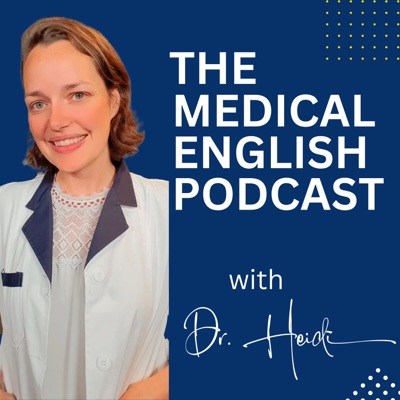
The Medical English Podcast
Subscribed: 301Played: 7,107
Subscribe

© Dr Heidi
Description
Welcome to The Medical English Podcast, designed to help healthcare professionals sharpen their English language skills. Hosted by Dr. Heidi, this podcast delves into vital medical terminology, common phrases, and specialised language across diverse healthcare settings. From patient consultations to medical conferences, we break down complex jargon, share real-life scenarios, and offer practical tips to elevate your language proficiency. Tune in and elevate your professional communication with The Medical English Podcast!
75 Episodes
Reverse

In this episode, we explore how to communicate clearly and confidently about CT scans in English clinical settings.Computed tomography (CT)—sometimes called a CAT scan—is one of the most commonly used imaging tools in modern medicine. While the technology is sophisticated, patients often feel anxious about the procedure, especially when they hear unfamiliar terms related to radiation, contrast dye, or imaging equipment. Clear and reassuring communication is essential to help patients understand what to expect.You’ll learn how to:• Explain what a CT scan is using clear, patient-friendly language• Describe how CT imaging creates detailed 2D and 3D images of the body• Use key clinical vocabulary such as contrast medium, radiographer, and gantry correctly• Prepare patients for sensations related to contrast dye, such as warmth or a metallic taste• Address common patient concerns about radiation exposure in a reassuring wayWe focus on practical communication strategies, including how to explain why a CT scan is ordered, what the scanning process looks like, and how to translate complex terminology—such as computed tomography—into simple explanations patients can easily understand.You’ll also learn how small language choices, like explaining the purpose of contrast medium or acknowledging patient concerns about radiation, can build trust and improve patient cooperation during imaging procedures.This episode is ideal for doctors, nurses, radiographers, international medical graduates, and healthcare professionals working in radiology, emergency medicine, internal medicine, or diagnostic imaging, or preparing for the Occupational English Test (OET).Enhance your clinical communication with The Medical English Collection:https://australiabiomed.com/med🎧 Free transcript & quiz:https://australiabiomed.com/mep-s4e23/Structured lessons, clinical scenarios, pronunciation training, and exam preparation designed specifically for healthcare professionals.Disclaimer: This podcast is for educational purposes only and does not provide medical advice.
In this episode, we explore how to communicate clearly and confidently about frostbite and cold injuries in English clinical settings.Frostbite is a time-critical medical emergency where clear instructions and rapid treatment can mean the difference between full recovery and permanent tissue damage. In high-stress environments—such as mountain rescues, emergency departments, or pre-hospital care—healthcare professionals must translate complex medical knowledge into simple, urgent language that patients can immediately understand.You’ll learn how to:• Explain frostbite and cold injury using clear, patient-friendly language• Distinguish between frostnip and true frostbite in clinical conversations• Give clear emergency instructions in high-stress situations• Replace complex medical terminology with simple, practical explanations• Describe symptoms, tissue damage, and recovery expectations to patientsWe focus on practical communication strategies, including how to explain why frostbitten skin must not be rubbed, how blood vessels clamp down in extreme cold, and what patients can expect during rewarming treatment, which can often be very painful as blood flow returns to the tissue.You’ll also learn how to describe key clinical signs—such as numbness, waxy skin, blisters, and gangrene—in language that patients can understand, while maintaining clarity and reassurance during emergency care.This episode is ideal for doctors, nurses, paramedics, international medical graduates, and healthcare professionals working in emergency medicine, wilderness medicine, rural care, or pre-hospital settings, or preparing for the Occupational English Test (OET).Enhance your clinical communication with The Medical English Collection:https://australiabiomed.com/med🎧 Free transcript & quiz:https://australiabiomed.com/mep-s4e22/Structured lessons, clinical scenarios, pronunciation training, and exam preparation designed specifically for healthcare professionals.Disclaimer: This podcast is for educational purposes only and does not provide medical advice.
In this episode, we explore how to communicate clearly and confidently about bowel cancer screening in English clinical settings.Screening for bowel cancer is one of the most effective ways to detect the disease early—often years before symptoms appear. When detected early, bowel cancer is highly treatable, making clear patient communication about screening essential for improving outcomes.You’ll learn how to:• Explain bowel cancer screening using clear, patient-friendly language• Describe how the fecal occult blood test (FOBT) works in simple terms• Use key clinical vocabulary such as stool, polyps, positive result, and colonoscopy correctly• Reassure patients about screening results and next steps• Translate complex medical terminology into language patients can easily understandWe focus on practical communication strategies, including how to explain why screening is important, how to guide patients through completing a home stool test, and how to discuss follow-up procedures such as a colonoscopy when screening results require further investigation.You’ll also learn how small changes in language—like explaining a positive test result without causing unnecessary fear—can dramatically improve patient understanding and trust.This episode is ideal for doctors, nurses, international medical graduates, and healthcare professionals working in primary care, gastroenterology, public health, or preventive medicine, or preparing for the Occupational English Test (OET).Enhance your clinical communication with The Medical English Collection:https://australiabiomed.com/med🎧 Free transcript & quiz:https://australiabiomed.com/mep-s4e21/Structured lessons, clinical scenarios, pronunciation training, and exam preparation designed specifically for healthcare professionals.Disclaimer: This podcast is for educational purposes only and does not provide medical advice.
In this episode, we explore how to communicate clearly and confidently about eye injuries and ocular burns in English clinical settings.Ocular burns are medical emergencies where the first minutes of treatment can determine whether a patient fully recovers their vision. While the clinical management requires rapid action, effective communication is just as critical—especially when patients are in severe pain, unable to see, and extremely anxious.You’ll learn how to:• Explain eye injuries and burns using clear, patient-friendly language• Distinguish between thermal burns and chemical burns in simple terms• Replace complex medical terminology with calm, reassuring explanations• Use clear action verbs when giving urgent instructions during emergencies• Communicate risks and possible outcomes with honesty and empathyWe focus on practical communication strategies, including how to explain chemical exposure, why the eye must be flushed immediately, and how to guide patients through procedures such as prolonged eye irrigation.You’ll also learn how to describe key clinical concepts in accessible language, including the cornea, conjunctiva, anesthetic eye drops, and diagnostic tools such as fluorescein dye and slit lamp examination.This episode also explores how to communicate serious possibilities—such as vision loss or severe tissue injury—while maintaining clarity, empathy, and patient trust.This episode is ideal for doctors, nurses, international medical graduates, and healthcare professionals working in emergency medicine, urgent care, ophthalmology, occupational health, or preparing for the Occupational English Test (OET).Enhance your clinical communication with The Medical English Collection:https://australiabiomed.com/med🎧 Free transcript & quiz:https://australiabiomed.com/mep-s4e20/Structured lessons, clinical scenarios, pronunciation training, and exam preparation designed specifically for healthcare professionals.Disclaimer: This podcast is for educational purposes only and does not provide medical advice.
In this episode, we explore how to communicate clearly and confidently about bone density testing in English clinical settings.Bone density testing—most commonly performed using a DEXA scan—is an essential tool for assessing bone strength and diagnosing conditions such as osteoporosis and osteopenia. While the medical terminology can be complex, effective patient communication requires clear, simple, and reassuring language.You’ll learn how to:• Explain bone density testing using clear, patient-friendly language• Describe osteoporosis and osteopenia in simple terms patients can understand• Use key clinical vocabulary such as bone density, fracture risk, and T-score correctly• Translate technical medical terms into clear explanations for patients• Communicate test results in a calm and supportive wayWe focus on practical communication strategies, including how to explain what a DEXA scan measures, how the T-scorehelps diagnose osteoporosis, and how to discuss fracture risk and prevention strategies with patients.You’ll also learn how to avoid common communication mistakes, such as leading with medical jargon, misplacing word stress in key terms like osteoporosis, and using language that may sound unnecessarily alarming to patients.This episode is ideal for doctors, nurses, international medical graduates, and healthcare professionals working in primary care, geriatrics, endocrinology, women’s health, or preparing for the Occupational English Test (OET).Enhance your clinical communication with The Medical English Collection:https://australiabiomed.com/med🎧 Free transcript & quiz:https://australiabiomed.com/mep-s4e19/Structured lessons, clinical scenarios, pronunciation training, and exam preparation designed specifically for healthcare professionals.Disclaimer: This podcast is for educational purposes only and does not provide medical advice.
In this episode, we explore how to communicate clearly and confidently about dialysis in English clinical settings.Dialysis—also known as renal replacement therapy—is a life-sustaining treatment for patients with kidney failure. While the physiology and equipment can be complex, effective communication requires clear, simple, and reassuring language that patients can easily understand.You’ll learn how to:• Explain dialysis using clear, patient-friendly language• Distinguish between hemodialysis and peritoneal dialysis in simple terms• Replace technical jargon with clear explanations patients can follow• Describe procedures, sensations, and equipment in everyday English• Communicate risks and warning signs without creating unnecessary fearWe focus on practical communication strategies, including how to explain concepts like “filtering the blood,”arteriovenous fistulas, and dialysis access, as well as how to describe symptoms such as fluid overload, confusion from toxin buildup, or low blood pressure during treatment.You’ll also learn how to explain key dialysis vocabulary used in real clinical practice, including exchanges in peritoneal dialysis, dwell time, and how to recognize serious complications like peritonitis.This episode is ideal for doctors, nurses, international medical graduates, and healthcare professionals working in nephrology, internal medicine, critical care, or preparing for the Occupational English Test (OET).Enhance your clinical communication with The Medical English Collection:https://australiabiomed.com/med🎧 Free transcript & quiz:https://australiabiomed.com/mep-s4e18/Structured lessons, clinical scenarios, pronunciation training, and exam preparation designed specifically for healthcare professionals.Disclaimer: This podcast is for educational purposes only and does not provide medical advice.
In this episode, you’ll learn how to explain menopause clearly and confidently in English.We cover essential clinical vocabulary including menopause, perimenopause, hot flashes (hot flushes), night sweats, irregular periods, mood swings, and hormone replacement therapy (HRT), along with correct pronunciation and practical examples. Most importantly, you’ll learn how to translate medical terminology into simple, reassuring language your patients can understand.Through a realistic consultation scenario, you’ll hear how clinicians discuss symptoms, explain hormonal changes, and counsel patients on treatment options, including lifestyle strategies and hormone therapy, in line with guidance from the Australasian Menopause Society.This episode will help you communicate more professionally, improve patient understanding, and build confidence when discussing sensitive and common women’s health concerns.Enhance your communication skills with The Medical English Collection, featuring clinical dialogues, patient-centered communication training, and preparation for the Occupational English Test (OET).https://australiabiomed.com/med🎧 Free transcript & quiz:https://australiabiomed.com/mep-s4e17Disclaimer: This episode is for educational purposes only and does not provide medical advice.
In this episode, we explore how to communicate clearly and confidently about altitude illness in English clinical settings.Altitude illness—including acute mountain sickness (AMS), high altitude cerebral edema (HACE), and high altitude pulmonary edema (HAPE)—is physiologically complex but requires simple, calm, and effective communication to ensure patient safety.You’ll learn how to:• Explain altitude illness using clear, patient-friendly language• Replace technical jargon with simple, reassuring explanations• Use essential clinical vocabulary in real scenarios• Communicate effectively with anxious or confused patients• Give clear instructions in emergency situationsWe focus on practical communication strategies, including how to explain “thin air,” recognize serious warning signs like brain swelling and fluid in the lungs, and give critical instructions such as when a patient must descend immediately.This episode is ideal for doctors, nurses, international medical graduates, and healthcare professionals working in emergency medicine, travel medicine, rural care, or preparing for the Occupational English Test (OET).Enhance your clinical communication with The Medical English Collection:https://australiabiomed.com/med🎧 Free transcript & quiz:https://australiabiomed.com/mep-s4e16/Structured lessons, clinical scenarios, pronunciation training, and exam preparation designed specifically for healthcare professionals.Disclaimer: This podcast is for educational purposes only and does not provide medical advice.
 1
1In this episode, you’ll learn how to explain a Full Blood Count (FBC) clearly and confidently in English.We cover essential clinical vocabulary including leukocyte, erythrocyte, platelet, hemoglobin, and anemia, along with correct pronunciation and practical examples. Most importantly, you’ll learn how to translate technical terminology into simple, reassuring language your patients can understand.This episode will help you communicate more professionally, improve patient understanding, and build confidence in everyday clinical conversations.Enhance your communication skills with The Medical English Collection, featuring clinical dialogues, patient-centered communication training, and preparation for the Occupational English Test (OET).https://australiabiomed.com/med🎧 Free transcript & quiz:https://australiabiomed.com/mep-s4e15/Disclaimer: This episode is for educational purposes only and does not provide medical advice.
n this episode, we break down three essential expressions every healthcare professional needs to communicate clearly and confidently in clinical settings: chase up, red flag, and touch base.You’ll learn exactly what these phrases mean, when to use them, and how to pronounce them naturally—so you can sound more professional when speaking with patients and colleagues. We also cover common mistakes, real clinical examples, and practical repetition exercises to help you build confidence immediately.These expressions are used every day in hospitals and clinics to follow up on results, identify serious warning signs, and manage ongoing patient care effectively.Enhance your communication skills with The Medical English Collection, featuring clinical dialogues, patient-centered communication training, and preparation for the Occupational English Test (OET).https://australiabiomed.com/med🎧 Free transcript & quiz:https://australiabiomed.com/mep-s4e14/Disclaimer: This episode is for educational purposes only and does not provide medical advice.
Dental Trauma Vocabulary | Practice your Medical English (S4E13)In this episode, we explore dental trauma, focusing on emergency management, patient reassurance, and clear explanations of treatment options in urgent situations.Enhance your communication skills with The Medical English Collection.https://australiabiomed.com/med🎧 Free transcript & quiz:https://australiabiomed.com/mep-s4e13/Disclaimer: This episode is for educational purposes only and does not provide medical advice.
Health Risks After Floods Vocabulary | Practice your Medical English (S4E12)Learn how to communicate health risks after natural disasters, including infections, injuries, and environmental hazards, using clear and practical medical English.Enhance your communication skills with The Medical English Collection.https://australiabiomed.com/med🎧 Free transcript & quiz:https://australiabiomed.com/mep-s4e12/Disclaimer: This episode is for educational purposes only and does not provide medical advice.
Gingivitis Vocabulary | Practice your Medical English (S4E11)This episode focuses on gingivitis, helping you explain gum inflammation, bleeding, plaque, and treatment options using simple, reassuring English.Enhance your communication skills with The Medical English Collection.https://australiabiomed.com/med🎧 Free transcript & quiz:https://australiabiomed.com/mep-s4e11/Disclaimer: This episode is for educational purposes only and does not provide medical advice.
Difficult Conversations in Healthcare Vocabulary | Practice your Medical English (S4E10)Practise medical English for difficult conversations, including breaking bad news, managing conflict, and responding to emotional patients with empathy and clarity.Enhance your communication skills with The Medical English Collection.https://australiabiomed.com/med🎧 Free transcript & quiz:https://australiabiomed.com/mep-s4e10/Disclaimer: This episode is for educational purposes only and does not provide medical advice.
Medical Certificates & Workplace Ethics Vocabulary | Practice your Medical English (S4E9)This episode explores medical certificates and workplace ethics, focusing on confidentiality, honesty, and professional boundaries when managing difficult or inappropriate patient requests.Enhance your communication skills with The Medical English Collection.https://australiabiomed.com/med🎧 Free transcript & quiz:https://australiabiomed.com/mep-s4e9/Disclaimer: This episode is for educational purposes only and does not provide medical advice.
Day Surgery Vocabulary | Practice your Medical English (S4E8)Learn how to explain day surgery clearly, including preparation, anaesthesia, recovery, and discharge instructions, using calm and professional medical English.Enhance your communication skills with The Medical English Collection.https://australiabiomed.com/med🎧 Free transcript & quiz:https://australiabiomed.com/mep-s4e8/Disclaimer: This episode is for educational purposes only and does not provide medical advice.
Cavities Vocabulary | Practice your Medical English (S4E7)This episode focuses on cavities (tooth decay) and helps you explain causes, symptoms, prevention, and treatment using simple, patient-friendly English through a realistic clinical dialogue.Enhance your communication skills with The Medical English Collection.https://australiabiomed.com/med🎧 Free transcript & quiz:https://australiabiomed.com/mep-s4e7/Disclaimer: This episode is for educational purposes only and does not provide medical advice.
Bedbugs Vocabulary | Practice your Medical English (S4E6)In this episode, we explore bedbug infestations, focusing on describing bites, transmission, and management in calm, non-judgemental English to reduce patient embarrassment and anxiety.Enhance your communication skills with The Medical English Collection.https://australiabiomed.com/med🎧 Free transcript & quiz:https://australiabiomed.com/mep-s4e6/Disclaimer: This episode is for educational purposes only and does not provide medical advice.
Bowel Cancer Screening Vocabulary | Practice your Medical English (S4E5)Learn how to confidently discuss bowel cancer screening, including FIT tests and colonoscopy, using calm and reassuring medical English. This episode focuses on reducing patient anxiety and explaining screening procedures clearly.Enhance your communication skills with The Medical English Collection.https://australiabiomed.com/med🎧 Free transcript & quiz:https://australiabiomed.com/mep-s4e5/Disclaimer: This episode is for educational purposes only and does not provide medical advice.
Dental Appliances Vocabulary | Practice your Medical English (S4E4)This episode covers dental appliances, helping you explain crowns, bridges, dentures, and implants in clear, understandable English. Practise discussing treatment options while addressing common patient concerns.Enhance your communication skills with The Medical English Collection.https://australiabiomed.com/med🎧 Free transcript & quiz:https://australiabiomed.com/mep-s4e4/Disclaimer: This episode is for educational purposes only and does not provide medical advice.


Download from Google Play

Download from App Store
 United States
Understanding scab-related terminology is essential for clear communication in medical settings. This vocabulary helps healthcare professionals describe wound healing accurately. It also supports better patient education and clinical documentation. A solid grasp of these terms improves overall medical English proficiency. http://www.askmap.net/location/7301833/united-states/empower-integrative-health https://citysquares.com/b/empower-integrative-health-26127458?updated=true https://pingdirapp41.directoryup.com/scottsdale-az-united-states/doctors/empower-integrative-health
The Hiccups Vocabulary guide is a useful resource for medical English learners. It helps healthcare professionals accurately describe symptoms and conditions. Clear terminology improves patient communication and clinical understanding. https://www.quora.com/profile/Bankruptcy-Law-Offices-of-Mark-L-Miller-1 https://www.apsense.com/user/sandiegobk https://the-dots.com/users/bankruptcy-law-offices-of-mark-l-miller-1853336
This sunburn vocabulary guide is a useful resource for healthcare professionals. It helps improve communication when discussing symptoms, treatment, and prevention with patients. Clear terminology is essential for accurate assessments and better care. A valuable tool for anyone working in medical or clinical settings. https://www.quora.com/profile/Infuse-Wellness-Center-Santa-Monica https://www.apsense.com/user/infusewellness https://www.provenexpert.com/infuse-wellness-center-santa-monica/
Food poisoning vocabulary helps people understand symptoms, causes, and prevention more clearly. Knowing terms like contamination, bacteria, and dehydration can improve awareness. It’s useful for learning how to describe illnesses accurately. Building this vocabulary supports better communication and safer food practices. https://www.quora.com/profile/Bukant-Naturopathic https://www.apsense.com/user/savannahbukant https://www.provenexpert.com/bukant-naturopathic/
Hi. Your podcast is so useful for us. Thanks a lot for producing this useful podcast. But there's a point I'm gonna tell you! Your podcast doesn't have a transcription and it makes the situation hard for foreign learners to learn new medical terms! Please produce a transcription for all episodes and share it with us🙏🙏🙏