


 Claim Ownership
Thriving Parent-ing
Subscribed: 4Played: 216
Subscribe

© Copyright 2026 Jen Cuttriss - Sleep Thrive Grow - Baby & Parent Sleep Coach & Mindset Mentor
Description
Welcome to Thriving Parent-ing with Jen, your compassionate godmother (the cool, modern version…) who’s here to help you unlock your full parenting potential by exploring the dynamic duality of personal growth and parenting strategies, empowering you to break free from the grips of survival mode and embrace the joys of thriving parenting.
If you’re looking to level up and make sense of your parenting reality, feel confident in your parenting ability, nurture your self-growth and begin to thrive alongside your children, this is the podcast for you.
Thriving Parent-ing is your go-to resource where we consider your growth journey as equally important, evolving into the person and parent you aspire to be. A happy, healthy child starts with a happy, healthy you so consider this podcast your permission to place your oxygen mask on first, to show up in a way you are proud of and your child benefits from. We’re here to support, encourage and inspire you every step of the way.
As a baby and parent sleep coach and mentor, mind-body practitioner, RN and mother-of-three, Jen brings a unique blend of expertise and empathy to the table. Join her every week as she explores the art of thriving in parenthood - bringing you practical sleep support, tangible parenting tools, positive mindset coaching, insightful guest interviews and expert advice, equipping you with the knowledge and perspectives, that will assist you in navigating the challenges of raising happy, healthy children while prioritising your own well-being too.
Thriving Parent-ing is here to empower you to have your cake and eat it too! Kick survival mode to the curb and step confidently into thriving mode - see you there Thrivers!
You can find out more about Jen and her work supporting parents on Instagram at @sleep_thrive_grow and www.sleepthrivegrow.com.
If you’re looking to level up and make sense of your parenting reality, feel confident in your parenting ability, nurture your self-growth and begin to thrive alongside your children, this is the podcast for you.
Thriving Parent-ing is your go-to resource where we consider your growth journey as equally important, evolving into the person and parent you aspire to be. A happy, healthy child starts with a happy, healthy you so consider this podcast your permission to place your oxygen mask on first, to show up in a way you are proud of and your child benefits from. We’re here to support, encourage and inspire you every step of the way.
As a baby and parent sleep coach and mentor, mind-body practitioner, RN and mother-of-three, Jen brings a unique blend of expertise and empathy to the table. Join her every week as she explores the art of thriving in parenthood - bringing you practical sleep support, tangible parenting tools, positive mindset coaching, insightful guest interviews and expert advice, equipping you with the knowledge and perspectives, that will assist you in navigating the challenges of raising happy, healthy children while prioritising your own well-being too.
Thriving Parent-ing is here to empower you to have your cake and eat it too! Kick survival mode to the curb and step confidently into thriving mode - see you there Thrivers!
You can find out more about Jen and her work supporting parents on Instagram at @sleep_thrive_grow and www.sleepthrivegrow.com.
106 Episodes
Reverse
In this thoughtful and reassuring conversation, the host sits down with perinatal clinical psychologist Dr. Bianca Mastromanno to unpack the pressure many mums quietly carry, the belief that they must be perfect. Together they explore the “perfect mother myth,” where it comes from, why high-achieving and people-pleasing women often struggle with it most, and how striving to meet every need perfectly can actually fuel anxiety and burnout. Through research, clinical insights, and honest personal stories, this episode reframes what healthy parenting truly looks like. Instead of perfection, Dr. Bianca highlights the power of “good enough” parenting, where mistakes, repair, and self-compassion become essential parts of raising resilient and secure children.In this episode, you’ll learn:What the “perfect mother myth” is and why it still shapes modern motherhoodWhy high achievers and “good girl” personalities are especially vulnerable to parenting perfectionismHow cultural expectations, social narratives, and generational beliefs fuel unrealistic standardsWhat research actually says about secure attachment and “good enough” parentingWhy rupture and repair moments are essential for children’s emotional developmentHow perfectionism can quietly steal joy from everyday parenting momentsPractical ways to challenge perfectionist thinking and reconnect with your values as a parentA powerful self-compassion exercise to help you speak to yourself with the same kindness you give your childWould like to access tailored 1:1 sleep support but don’t know where to start? Jump on a FREE sleep clarity session with Jen here https://sleepthrivegrow.com/For more information on this topic, head to the show notes: Episode 105 Show NotesAnd I’d love to hear your thoughts on this episode! Come and connect with me on Instagram at @sleep_thrive_grow.And click the +Follow button to never miss an episode. New episodes are released every Tuesday!To find out more about how I can support you, visit my website here. Until next time, Thrivers
In this Baby Bitesize gold nugget episode, we gently unpack one of the biggest sources of anxiety in early parenting: sleep habits and attachment. If you’ve ever worried that feeding to sleep, rocking, co-sleeping, or lying beside your baby is creating bad habits or damaging secure attachment, this conversation is for you. You’ll hear a powerful mindset shift inspired by attachment expert Eli Harwood: secure attachment is not built on where or how your baby sleeps, but on consistent responsiveness, warmth, and emotional availability.This episode invites you to release the pressure to control your child’s sleep and instead focus on what you can control, your responses, your mindset, and the connection you model. Because you are not the pilot of your child’s plane, you are the mechanic helping make it flight worthy.In this episode, you’ll learn:Why sleep associations are neutral, not good or badWhat actually builds secure attachment in early childhoodThe difference between responsiveness and controlA secure attachment mindset shift to reduce sleep anxietyHow to know when a sleep habit is still serving your familyThe three essentials needed to shift sleep patterns in a connected way: knowledge, skill, and desireWhy shame and blame keep you stuck, and what to focus on insteadHow connection and safety create the foundation for healthy sleepWould like to access tailored 1:1 sleep support but don’t know where to start? Jump on a FREE sleep clarity session with Jen here https://sleepthrivegrow.com/For more information on this topic, head to the show notes: Episode 104 Show NotesAnd I’d love to hear your thoughts on this episode! Come and connect with me on Instagram at @sleep_thrive_grow.And click the +Follow button to never miss an episode. New episodes are released every Tuesday!To find out more about how I can support you, visit my website here. Until next time, Thrivers
In this episode of Thriving Parenting, we explore what’s really happening when your child’s big emotions set off something big in you. From meltdowns at bedtime to public tantrums and sibling fights, these moments can feel overwhelming and deeply personal. But what if your child’s behaviour isn’t something to fix, it’s communication? Drawing on insights from Circle of Security, we unpack why behaviour is a signal, what “shark music” is, and how your nervous system plays a powerful role in shaping your child’s emotional development. This is an honest, compassionate conversation about triggers, co-regulation, rupture and repair, and how to stay bigger, stronger, wiser and kind — even when it feels hard.In this episode, you’ll learn:Why behaviour is communication, not manipulationWhat your child is really asking for during meltdownsHow “shark music” gets activated inside parentsWhy when emotion goes up, thinking goes down — for both of youThe snow globe metaphor for understanding overwhelmWhy regulating yourself first is not selfish, it’s essentialPractical ways to pause and reset in triggering momentsThe difference between fixing behaviour and containing emotionWhen and how to teach after the storm has passedWhy security is built in the middle, not through perfection, but through repairThis episode is a reminder that your child’s big feelings are not proof you’re failing. They’re proof your child feels safe enough to fall apart with you. And your power as a parent lives in the pause.If you’ve ever wondered why motherhood feels harder than the things you once excelled at, this episode will remind you that you’re not failing. You’re evolving.Would like to access tailored 1:1 sleep support but don’t know where to start? Jump on a FREE sleep clarity session with Jen here https://sleepthrivegrow.com/For more information on this topic, head to the show notes: Episode 103 Show NotesAnd I’d love to hear your thoughts on this episode! Come and connect with me on Instagram at @sleep_thrive_grow.And click the +Follow button to never miss an episode. New episodes are released every Tuesday!To find out more about how I can support you, visit my website here. Until next time, Thrivers

What happens when a woman who thrives on structure, achievement and control steps into a season where none of those strategies work the same way? In this deeply honest episode, we explore the identity shift that can shake high-achieving women to their core when they become mothers. From birth plans that unravel to feeding struggles, sleep disruptions and the quiet grief of losing your old self, this conversation gently unpacks the uncomfortable in-between of who you were and who you’re becoming.Sarah Hart is a former Google marketer turned online business strategist and founder of Hart Studios, where she helps women transform their expertise into courses, digital products and scalable online offers. A self-confessed type A achiever, Sarah shares how first-time motherhood became a profound awakening into surrender, nervous system regulation and redefining success. Today, she blends business strategy with emotional awareness to support modern mothers and multi-passionate women building aligned, burnout-free businesses.In this episode, you’ll learn:Why high-achieving, type A women can find the transition into motherhood especially confrontingHow identity loss shows up when your worth has been tied to productivity and performanceThe emotional toll of feeding struggles, triple feeding and feeling like you’re “failing” at something that’s meant to be naturalHow outsourcing your intuition can increase anxiety and self-doubtThe connection between nervous system regulation and sustainable parentingWhy trying to parent in hustle mode often leads to burnoutHow returning to work can sometimes support mental health and identity integrationThe impact of people-pleasing and perfectionism in early motherhoodPractical ways to develop healthier coping mechanisms before or during motherhoodA new definition of success rooted in gratitude, presence and self-compassionIf you’ve ever wondered why motherhood feels harder than the things you once excelled at, this episode will remind you that you’re not failing. You’re evolving.Would like to access tailored 1:1 sleep support but don’t know where to start? Jump on a FREE sleep clarity session with Jen here https://sleepthrivegrow.com/For more information on this topic, head to the show notes: Episode 102 Show NotesAnd I’d love to hear your thoughts on this episode! Come and connect with me on Instagram at @sleep_thrive_grow.And click the +Follow button to never miss an episode. New episodes are released every Tuesday!To find out more about how I can support you, visit my website here. Until next time, Thrivers
In this Baby Bitesize episode, Jen speaks into a space so many parents find themselves stuck in. That confusing, exhausting grey area where everyone says catnapping is normal, but in your home it feels anything but okay. Through a real conversation with one of her Sleep Godmother clients, Jen gently explores the difference between what’s biologically common and what is actually working for your baby and your family, reminding parents that normal does not always mean sustainable.In this episode, you’ll learn:Why catnapping can be biologically normal, but not always supportive or sustainableHow to tell the difference between a happy catnapper and a dysregulated oneWhy short naps paired with crying, fussiness, and poor awake-time tolerance are important signalsHow chronic dysregulation affects both baby and parent nervous systemsWhy babies who are struggling often need more support, not lessHow parental burnout can build when you’re borrowing from an empty cupWhat gentle, flexible adjustments can look like without rigid schedules or forcing sleepWhy trusting your gut matters when something doesn’t feel right at homeThe reminder that every baby and every family is different, and support is always allowedThis episode is a compassionate reminder that just because something is described as normal doesn’t mean you have to white-knuckle your way through it. You and your baby are allowed to take up space in the messy middle, and you don’t have to figure it out alone.Would like to access tailored 1:1 sleep support but don’t know where to start? Jump on a FREE sleep clarity session with Jen here https://sleepthrivegrow.com/For more information on this topic, head to the show notes: Episode 101 Show NotesAnd I’d love to hear your thoughts on this episode! Come and connect with me on Instagram at @sleep_thrive_grow.And click the +Follow button to never miss an episode. New episodes are released every Tuesday!To find out more about how I can support you, visit my website here. Until next time, Thrivers
In this special 100th episode of Thriving Parenting, Jen looks back on the motherhood moments that shaped not only her parenting journey, but the passion and purpose behind this podcast and the community it has become.From becoming a mum at 26, navigating an emergency caesarean, postpartum anxiety, and feeling deeply unequipped in those early days, to raising three very different children and learning the power of connection, energy, and nervous system safety, Jen shares her story with honesty and compassion.This episode isn’t about having all the answers.It’s about showing up.About seasons of loneliness, growth, and learning to ask for support.And about why thriving parenting always starts with a thriving parent.Jen reflects on:Her early motherhood experiences and birth storiesThe realities of postpartum support (and the lack of it)Learning to trust intuition over noise and doom-scrollingHow connection, humour, and energy shaped her parenting styleWhy perfection isn’t the goal, and why rupture and repair matterHow her journey as a nurse, mother, and practitioner led to the work she does todayShe also shares more about her current work supporting families through sleep, nervous system regulation, emotional wellbeing, and airway health, and why a multidisciplinary, compassionate approach matters so deeply.Above all, this episode is a reminder that you matter too.Your needs, your wellbeing, and your nervous system are just as important as your child’s.Whether you’ve been listening from the very beginning or you’re new here, this episode invites you to feel less alone, more seen, and supported in your parenting journey.Would like to access tailored 1:1 sleep support but don’t know where to start? Jump on a FREE sleep clarity session with Jen here https://sleepthrivegrow.com/For more information on this topic, head to the show notes: Episode 100 Show NotesAnd I’d love to hear your thoughts on this episode! Come and connect with me on Instagram at @sleep_thrive_grow.And click the +Follow button to never miss an episode. New episodes are released every Tuesday!To find out more about how I can support you, visit my website here. Until next time, Thrivers
Postpartum rage is rarely spoken about, yet so many mums quietly carry it with shame. In this episode, Jen sits down with Beth Caniglia business owner, brand strategist, speaker, and mum of two to share her lived experience of postpartum rage after her second baby.Beth opens up about the brutal shift from one child to two, the sleep deprivation that tipped her from “thriving” into survival, and the moments that left her feeling scared of her own reactions. Together, Jen and Beth unpack what postpartum rage can look like, why it can feel like it comes out of nowhere, and how awareness and the right tools can help you interrupt the spiral before it explodes.This conversation is honest, warm, and deeply normalising. If you’ve ever thought “What’s wrong with me?” after yelling, snapping, or feeling like you’re about to lose it, this episode will help you feel less alone and more supported.About Beth CanigliaBeth is a business owner, mother of two, speaker, storyteller, and brand strategist. She runs Firesauce Creative with her husband and is passionate about speaking honestly about the highs and lows of blending entrepreneurship and motherhood.Find Beth here: Firesauce Creative (firesauce.com.au)In This Episode, We CoverWhy the jump from one to two kids can feel like being “split in two”How sleep deprivation shrinks your capacity and fuels reactivityThe shame spiral that often follows rage, and why it keeps mums stuckThe “bottling it up” pattern: why anger can feel sudden, but isn’tHow postpartum rage can be a nervous system signal, not a character flawTools that helped Beth rebuild regulation and widen her window of toleranceWhy community, support, and honest conversations matter more than everWould like to access tailored 1:1 sleep support but don’t know where to start? Jump on a FREE sleep clarity session with Jen here https://sleepthrivegrow.com/For more information on this topic, head to the show notes: Episode 99 Show NotesAnd I’d love to hear your thoughts on this episode! Come and connect with me on Instagram at @sleep_thrive_grow.And click the +Follow button to never miss an episode. New episodes are released every Tuesday!To find out more about how I can support you, visit my website here. Until next time, Thrivers
In this gentle, baby bite-sized episode of Thriving Parenting, Jen explores one of the most powerful and often overlooked parenting tools: the pause.When our baby cries or our child becomes upset, the instinct to fix, stop, or intervene immediately can feel overwhelming. And that instinct exists for a reason. Our nervous system is wired for protection. But when hypervigilance runs the show all day, every day, parenting can start to feel harder rather than easier.This episode unpacks how pausing is not ignoring your baby. It is choosing to respond from safety rather than reflex.Jen explains how a brief pause helps bring our adult brain back online, giving us access to perspective, choice, and intuition. From newborn sleep to toddler emotions, pausing creates space to observe, gather information, and decide what support is truly needed in that moment.You will hear why:Hypervigilance is a normal part of becoming a parent, but can become exhausting when it stays switched on constantlyPausing helps regulate your nervous system so you can co-regulate with your childBabies and toddlers often surprise us when given a small moment to settle, adjust, or problem-solveThe pause supports sleep by avoiding unnecessary overstimulationOur own past experiences shape how we respond to crying, anger, and frustrationAwareness and compassion are key to breaking reactive cyclesJen also shares a simple, tangible practice she uses herself, placing a hand on her chest and breathing, to interrupt knee-jerk reactions and return to intentional leadership.This episode is a reminder that you are not doing less by pausing. You are choosing presence, wisdom, and connection. And that choice matters for both you and your child.🎧 Listen now to learn how the pause can help you parent with more calm, confidence, and trust in yourself.Would like to access tailored 1:1 sleep support but don’t know where to start? Jump on a FREE sleep clarity session with Jen here https://sleepthrivegrow.com/For more information on this topic, head to the show notes: Episode 98 Show NotesAnd I’d love to hear your thoughts on this episode! Come and connect with me on Instagram at @sleep_thrive_grow.And click the +Follow button to never miss an episode. New episodes are released every Tuesday!To find out more about how I can support you, visit my website here. Until next time, Thrivers
In this episode of Thriving Parenting, Jen is joined by Dr Bianca Mastromanno, perinatal clinical psychologist, for a compassionate, grounding conversation that helps new mums feel seen and less alone. Together they unpack what postpartum anxiety can actually look like, why a degree of hyperawareness is expected, and how to tell the difference between normal maternal vigilance and anxiety that needs extra support.They explore maternal preoccupation (Winnicott’s term for the brain shift that happens in motherhood), explaining why your mind may feel intensely focused on your baby’s safety, needs, and environment, especially in the first 6–12 months. Bianca reframes this hypervigilance as functional, evolutionary, and often temporary, while also acknowledging that for some parents, anxiety can become self-fuelling and get “stuck” in ways that interfere with daily life.A big focus of the episode is intrusive thoughts: unwanted, automatic thoughts that often involve harm, safety, or worst-case scenarios. Bianca normalises how common they are (often close to universal), why they show up more when you’re sleep deprived, and why having intrusive thoughts does not mean you want them to happen. Jen and Bianca share real examples to reduce the shame and silence so many parents carry.They also discuss modern triggers, including how social media can intensify fear and expand the “library” your brain pulls from, feeding postpartum hypervigilance. The conversation offers reassurance, practical tools, and clear guidance on when to reach out for support, especially if thoughts become frequent, intense, or start changing your behaviour in avoidant or compulsive ways.This one is for the parent who’s quietly wondering, Am I okay? You’re not broken. You’re not alone. And help can be gentle, accessible, and deeply supportive.In this episode, you’ll hear:Why the question Is this normal? is almost universal in postpartumWhat maternal preoccupation is and why hyperawareness is expectedHow postpartum anxiety can show up as vigilance, scanning, and constant mental checkingWhat intrusive thoughts are, why they happen, and what they do not mean about youThe difference between noticing a thought and acting as if it’s a factHow sleep deprivation can worsen intrusive thoughts and nervous system sensitivityThe role of social media in amplifying postpartum fear and threat perceptionPractical ways to “step back” from intrusive thoughts (without battling them)When professional support is recommended, and why it’s safe to seek helpResources like PANDA for support, information, and referral pathwaysSmall nervous system supports postpartum: hydration, nutrition, sunlight, movement, music, micro-momentsWould like to access tailored 1:1 sleep support but don’t know where to start? Jump on a FREE sleep clarity session with Jen here https://sleepthrivegrow.com/For more information on this topic, head to the show notes: Episode 97 Show NotesAnd I’d love to hear your thoughts on this episode! Come and connect with me on Instagram at @sleep_thrive_grow.And click the +Follow button to never miss an episode. New episodes are released every Tuesday!To find out more about how I can support you, visit my website here. Until next time, Thrivers
Welcome back to the Thriving Parenting Podcast, where we explore the parent behind the act of parenting itself.In this episode, Jen dives into one of the most accessible yet overlooked parenting tools we all already have, even on our most exhausting days: humour.If parenting feels heavy, serious, or like you’re just pushing through the afternoons, this episode is a gentle reminder that laughter doesn’t have to be loud, performative, or natural right now to be powerful. It’s not about being funny or entertaining your child. It’s about using small, playful moments to regulate your nervous system, support your child’s emotional world, and bring connection back within reach.Humour, even in its tiniest form, is nervous system medicine.Jen explores how laughter helps complete stress cycles, supports emotional regulation, and brings the prefrontal cortex back online for both parents and children. When we laugh, we soften separation, ease transitions, and remind our children through our bodies that they are safe and supported.This episode offers practical, real-life examples of how humour can be woven into everyday parenting without adding more to your plate, including:Using playful connection during bedtime, mealtimes, and transitionsGentle humour for babies, toddlers, and preschoolersHow silliness supports emotional regulation and rupture and repairWhy laughter models safety more effectively than lecturesWays to access humour when it doesn’t feel natural or safe for you yetJen also speaks honestly about why humour can feel vulnerable, especially if you didn’t grow up with it, and how to rebuild your “humour muscle” slowly and compassionately. From shaking stress out of your body, to laughing at parenting mishaps, to building a “funny bank” of memories, this episode invites you to reconnect with the playful part of yourself without pressure.Because parenting doesn’t need to be serious all the time.Your child doesn’t need perfection.They need your presence, and laughter helps you return to it faster than almost anything else.Would like to access tailored 1:1 sleep support but don’t know where to start? Jump on a FREE sleep clarity session with Jen here https://sleepthrivegrow.com/For more information on this topic, head to the show notes: Episode 96 Show NotesAnd I’d love to hear your thoughts on this episode! Come and connect with me on Instagram at @sleep_thrive_grow.And click the +Follow button to never miss an episode. New episodes are released every Tuesday!To find out more about how I can support you, visit my website here.Until next time, Thrivers
In this gentle baby bitesize episode of Thriving Parenting, Jen invites you to pause and reflect on a pattern many parents know all too well. Rushing through the day, counting down to bedtime, and only truly delighting in our children once they are asleep, through photos, videos, or the baby monitor.Jen explores why this happens, especially during busy seasons like Christmas, and how the mental load, invisible to-do lists, and survival mode can pull us away from real-time connection. While this is completely human and deeply common, she offers a compassionate reframe. What if connection didn’t have to wait until the day was over?This episode gently reminds us that connection is a core human need, for both parents and children. When children feel seen, heard, and delighted in, it can support cooperation, ease transitions, and make parenting feel lighter.Jen shares five simple, intentional moments of presence you can weave into everyday life. From eye contact during feeds, to fully listening to their stories, to noticing their little hands in the shopping trolley. These small pockets of connection matter more than we realise.This is not about doing more. It is about being more present in the moments you are already in. A beautiful reminder that your presence is the most precious gift you can give your child. Especially at this time of year.Your children need your presence more than your presents.If sleep or parenting feels overwhelming right now, Jen also shares details about her free Sleep Clarity Sessions, offering calm, pressure-free support to help you move from surviving to thriving.Would like to access tailored 1:1 sleep support but don’t know where to start? Jump on a FREE sleep clarity session with Jen here https://sleepthrivegrow.com/For more information on this topic, head to the show notes: Episode 95 Show NotesAnd I’d love to hear your thoughts on this episode! Come and connect with me on Instagram at @sleep_thrive_grow.And click the +Follow button to never miss an episode. New episodes are released every Tuesday!To find out more about how I can support you, visit my website here.Until next time, Thrivers
Airway health is one of those invisible pieces of the parenting puzzle that can quietly shape everything, from feeding and sleep to behaviour, development, and long-term health. In this episode of Thriving Parenting, Jen dives into what many parents are never told to look for early on: the spectrum of airway dysfunction that often starts long before a child would ever be diagnosed with obstructive sleep apnoea.Jen is joined by Dr Shereen Lim, a pioneer in dental sleep medicine and author of Breathe Sleep Thrive, whose work centres on early intervention and helping families understand how breathing, feeding, tongue function, and jaw development are all deeply connected.If you’ve ever wondered why your baby mouth breathes, snores, struggles to feed, seems restless at night, or avoids chewing, this conversation will help you connect the dots in a way that finally makes sense.In this episode, you’ll learn:Why obstructive sleep apnoea is often the tip of the iceberg, and what can show up years earlierThe early signs of airway dysfunction that can be easily missed, especially in infancyWhy mouth breathing is never “normal”, and how early awareness can change a child’s long-term health trajectoryThe powerful “rapid growth window” in the first year, and why jaw and facial development matters for the airwayHow modern feeding patterns (purees, pouches, processed foods) can keep kids stuck in the “suck phase” and reduce jaw strengthWhat parents can do if breastfeeding didn’t work out (without guilt), including practical ways to support oral function and chewing from six monthsWhat to look for if your baby is snoring, noisy breathing, or sleeping with an open mouthA grounded, individualised take on tongue ties, why release isn’t a magic fix, and why support matters before and afterRed flags beyond sleep, including feeding struggles, “reflux-like” symptoms caused by air intake, picky eating, gagging, speech delays, and teeth grindingWhy airway issues aren’t only an ENT problem, and how adenoids and tonsils can be a symptom, not the root causeWhat “good sleep” should actually look like: silent, still, mouth closed, and truly restorativeBook: Discover How Airway Health Can Unlock Your Child’s Greater Health, Learning, and PotentialWould like to access tailored 1:1 sleep support but don’t know where to start? Jump on a FREE sleep clarity session with Jen here https://sleepthrivegrow.com/For more information on this topic, head to the show notes: Episode 94 Show NotesAnd I’d love to hear your thoughts on this episode! Come and connect with me on Instagram at @sleep_thrive_grow.And click the +Follow button to never miss an episode. New episodes are released every Tuesday!To find out more about how I can support you, visit my website here. Until Next Time, Thrivers!
Welcome back, Thrivers, to another baby bite-sized episode. This short and gentle conversation is for the parents who don’t often feel seen in baby sleep spaces. The ones whose babies settle well with space, sleep independently, and don’t always need to be held to drift off, yet somehow feel guilt or quiet shame because of it.In this episode, we explore why it’s not only possible, but completely healthy, for some babies to feel safe and secure outside of arms. We unpack the many reasons this can happen, from early exposure to multiple safe sleep spaces, emerging self-soothing skills, and temperament, to regulation, responsiveness, and the emotional tools parents bring into the relationship.This episode gently challenges the belief that secure attachment is measured by exhaustion, constant proximity, or how much a baby needs you at night. Instead, it reframes attachment as responsiveness, trust, emotional availability, and meeting needs when they arise, not forcing closeness when it isn’t needed.If you’ve ever felt triggered by online conversations about baby sleep, questioned yourself because your experience looks different, or wondered whether you’re doing it wrong because things are actually going well, this episode is for you.You’re not doing something wrong. You’re responding to your baby.And that matters more than the noise.Inside this episode:Why some babies genuinely sleep better with spaceHow temperament and regulation influence sleepThe hidden identity shifts that come with easier sleepWhy secure attachment isn’t about where or how your baby sleepsLetting go of guilt and trusting your baby as your guideBook: Discover How Airway Health Can Unlock Your Child’s Greater Health, Learning, and PotentialWould like to access tailored 1:1 sleep support but don’t know where to start? Jump on a FREE sleep clarity session with Jen here https://sleepthrivegrow.com/For more information on this topic, head to the show notes: Episode 93 Show NotesAnd I’d love to hear your thoughts on this episode! Come and connect with me on Instagram at @sleep_thrive_grow.And click the +Follow button to never miss an episode. New episodes are released every Tuesday!To find out more about how I can support you, visit my website here. Until next time, Thrivers
In this grounding and deeply validating episode, Jen unpacks one of the most misunderstood parts of modern parenting: the difference between co-regulating and controlling. On the surface, our responses can look the same, but underneath, the energy is completely different — and it’s often our own nervous system, not our child’s emotions, driving the moment.Jen walks you through why young children cannot regulate on their own in the early years, what true co-regulation looks like, and the subtle ways we may accidentally slip into control when our own triggers, childhood patterns, or overwhelm take over.Inside the episode, you’ll learn:Why co-regulation was never meant to burn you outHow generational patterns shape the way you respond to cryingWhy trying to “fix” emotions actually makes things harderWhat your child really needs during big feelings (hint: not perfection)Five simple, practical ways to support emotional regulation without losing yourselfJen also explores how our instinct to stop tears — in children and adults — often interrupts the emotional release our bodies are designed for. She shares how shifting from fixing to anchoring can change the entire experience for both you and your child.This episode is full of compassion, clarity, and real-world tools to help you respond with presence rather than pressure, attunement rather than anxiety, and confidence rather than exhaustion.Would like to access tailored 1:1 sleep support but don’t know where to start? Jump on a FREE sleep clarity session with Jen here https://sleepthrivegrow.com/For more information on this topic, head to the show notes: Episode 92 Show NotesAnd I’d love to hear your thoughts on this episode! Come and connect with me on Instagram at @sleep_thrive_grow.And click the +Follow button to never miss an episode. New episodes are released every Tuesday!To find out more about how I can support you, visit my website here. Until next time, Thrivers
In this deeply honest and emotional episode, Jen sits down with mindset coach and soon-to-be mum, Breanna May, to unpack the side of IVF that doesn’t make it onto the glossy brochures. From being labelled “high risk” after multiple cervical procedures, to navigating distrust in the medical system, fear of needles, and the grief of failed transfers, Breanna takes us inside the reality of trying to conceive when it wasn’t supposed to be this hard.Breanna shares how she moved from resisting IVF to finally surrendering to support, the mental gymnastics of reframing daily injections as “baby juice,” and the moment everything changed during her second transfer – from a shooting-star embryo on the screen to reading “pregnant” on a test while camping with her husband. She also reflects on how IVF impacted her identity, body image, relationship, and ultimately, her belief in her own body again.In this episode, you’ll hear:Breanna’s journey from “I’ll fall pregnant easily” to years of unexplained infertilityHow past cervical surgeries turned her pregnancy into “high risk” and complicated embryo transferThe mindset shift that helped her finally accept IVF and reframe injections as an act of lovePractical tips to survive the wait after transfer (and why staying busy matters)The power of surrender and belief: “Whether you think you can or you think you can’t, you’re right.”If you’re walking the IVF path, feeling like you “shouldn’t” be here or wondering how much more you can take, this conversation is a tender, validating reminder that you’re not alone – and that hope can still live inside a really hard story.Would like to access tailored 1:1 sleep support but don’t know where to start? Jump on a FREE sleep clarity session with Jen here https://sleepthrivegrow.com/For more information on this topic, head to the show notes: Episode 91 Show NotesAnd I’d love to hear your thoughts on this episode! Come and connect with me on Instagram at @sleep_thrive_grow.And click the +Follow button to never miss an episode. New episodes are released every Tuesday!To find out more about how I can support you, visit my website here. Until next time, Thrivers
In this baby bite-sized episode, Jen breaks down one of the most common modern parenting dilemmas: “Does that quick car nap actually count—and what should I do next?”If you've ever rushed home for nap time only to face a failed transfer, a full-blown nap protest, or a suddenly wide-awake baby, this episode gives you the clarity and calm you need.Jen explains why on-the-go dozes and mini car snoozes can completely reset sleep pressure—especially for babies under six months and why heading straight to the bedroom often backfires. Instead, she guides you through what actually works: slow transitions, gentle interaction, and watching for fresh sleep cues rather than watching the clock.You’ll learn:Why a 10–15 minute car nap can wipe out more sleep pressure than you thinkWhen a transfer might work—and when it absolutely won’tHow to create a short “adjustment window” at home so your baby can reset before the napWhat to do differently if they only dozed off versus slept for 20+ minutesHow to honour your baby’s nervous system and your own, so naps feel less stressful for everyoneWhy flexibility and compassion matter far more than perfect timingJen also shares her own relatable “please don’t fall asleep yet!” car moments because we’ve all been there, and gives you permission to adapt, reset, and trust the process.You’ll walk away knowing exactly what to do after an on-the-go snooze, how to prevent a nap battle, and how to stay grounded when routines don’t go to plan.A gentle reminder to take with you:A short car nap doesn’t always mean an easy transfer. Give your baby time to adjust, follow their cues, and trust your own instincts. You’re not failing—you’re finding your rhythm.Would like to access tailored 1:1 sleep support but don’t know where to start? Jump on a FREE sleep clarity session with Jen here https://sleepthrivegrow.com/For more information on this topic, head to the show notes: Episode 90 Show NotesAnd I’d love to hear your thoughts on this episode! Come and connect with me on Instagram at @sleep_thrive_grow.And click the +Follow button to never miss an episode. New episodes are released every Tuesday!To find out more about how I can support you, visit my website here. Until next time, Thrivers
In this episode of Thriving Parenting, Jen dives into pram sleep and motion sleep – the good, the tricky, and how to set pram naps up so they support both your baby and your sanity.She starts by revisiting her popular “10–10–10 Rule” for pockets of connection, sharing real stories from families who’ve used it to transform challenging behaviour and create more harmony at home. From there, she guides you through the world of pram naps: why they work, how they support your baby’s nervous system and body clock, and how they can give you some much-needed breathing space in your day.Drawing on her own experience with three children (including seasons of multiple kids under five and life overseas), Jen breaks down practical, compassionate steps to help you feel confident using pram naps without guilt, fear of “junk sleep,” or pressure to get it perfect.In this episode, you’ll learn:How the 10–10–10 Rule sets up cooperation, eases tricky moments, and helps you feel more like the parent you want to be.Why naps on the go are not junk sleep, and how motion, gentle rocking and outdoor light support your baby’s nervous system, circadian rhythm, and sense of safety.How pram naps looked different with each child, from “nice to have” with her first, to essential with a toddler in tow, to ultra-flexible naps while living in South Korea.Six practical steps to make pra naps workHow to tell the difference between tired/frustrated cries and “this is too much” stress, when to keep gently supporting, and when to pick up, reset, or transfer.Why shorter pram naps as babies grow are normalWhat to expect as your baby becomes more aware, and how to work with changing nap lengths without panicking.How a simple pram nap – a walk outside, a quiet coffee, a few minutes to actually breathe – can reset your nervous system and increase your patience for the rest of the day.Jen closes with a reminder that neither you nor your baby are robots, and that flexibility, repetition, and self-kindness are some of the most powerful parenting tools you have.Get the Free Awake Times Guide: https://sleepthrivegrow.com/ https://lullabump.com/products/lullabump-1?srsltid=AfmBOoqRL11x1LiVd5zU4AOVCS77GEn_anoqdPTUmJSSocJj4JA6owEkWould like to access tailored 1:1 sleep support but don’t know where to start? Jump on a FREE sleep clarity session with Jen here https://sleepthrivegrow.com/For more information on this topic, head to the show notes: Episode 89 Show NotesAnd I’d love to hear your thoughts on this episode! Come and connect with me on Instagram at @sleep_thrive_grow.And click the +Follow button to never miss an episode. New episodes are released every Tuesday!To find out more about how I can support you, visit my website here. Until next time, Thrivers
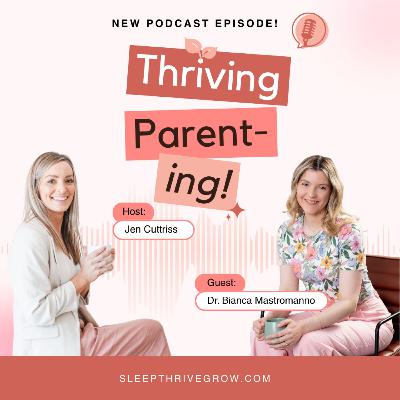
In this heartfelt episode of Thriving Parenting, Jen is joined once again by Dr. Bianca Mastromanno, clinical psychologist and mother of two, to explore one of the most powerful skills we can develop as parents — helping our children (and ourselves) feel safe with big emotions.Together, they unpack why feelings can be so hard to sit with, how our own upbringing shapes the way we respond to emotions, and what it really means to emotionally coach our kids — without trying to fix, rush, or rescue their feelings.From real-life motherhood stories to practical, compassionate insights, this episode helps you embrace imperfection, build emotional trust, and navigate those intense moments with more calm and connection.In This Episode:The impact of our own emotional history on how we respond to our child’s feelingsWhy “good girl/boy” or “stop crying” messages affect emotional safetyWhat emotion coaching really means (and why it starts with your own awareness)How to validate your child’s emotions without rewarding unwanted behaviourUnderstanding guilt vs shame and how self-compassion transforms parentingThe balance between empathy, boundaries, and allowing healthy discomfortWhy repair after rupture matters more than getting it perfect every timeParenting isn’t about eliminating your child’s big feelings, it’s about being their safe place while they learn to move through them. When you show them that emotions are safe, you teach them resilience that lasts a lifetime.Would like to access tailored 1:1 sleep support but don’t know where to start? Jump on a FREE sleep clarity session with Jen here https://sleepthrivegrow.com/For more information on this topic, head to the show notes: Episode 88 Show NotesAnd I’d love to hear your thoughts on this episode! Come and connect with me on Instagram at @sleep_thrive_grow.And click the +Follow button to never miss an episode. New episodes are released every Tuesday!To find out more about how I can support you, visit my website here. Until next time, Thrivers
Are you feeling torn between what you “should” do and what actually feels right for your family? In this bite-size episode, Jen shares five powerful reflection questions to help you reconnect with your instincts and find balance when baby sleep feels confusing, overwhelming, or stuck.These questions are designed from real conversations with parents who’ve been exactly where you are — caught between expert advice, exhaustion, and guilt. Jen helps you gently tune out the noise, explore what you truly want for your family, and discover a version of sleep that feels sustainable for both you and your child.You’ll be invited to reflect on:What would you change if there was no guilt or fear?What does sleep look like if it works for everyone?Are your beliefs helping or limiting your growth?What makes change feel impossible?Is your motivation coming from you — or outside pressure?This episode isn’t about following a formula. It’s about creating space to get curious, honor your needs as a parent, and find a flexible middle ground that feels aligned with your values.Would like to access tailored 1:1 sleep support but don’t know where to start? Jump on a FREE sleep clarity session with Jen here https://sleepthrivegrow.com/For more information on this topic, head to the show notes: Episode 87 Show NotesAnd I’d love to hear your thoughts on this episode! Come and connect with me on Instagram at @sleep_thrive_grow.And click the +Follow button to never miss an episode. New episodes are released every Tuesday!To find out more about how I can support you, visit my website here. Until next time, Thrivers
Why does bedtime often feel like a battle? In this episode of Thriving Parenting, we explore what’s really behind those nightly clashes, and it’s not about sleep. It’s about connection, capacity, and energy.Jen unpacks the real reason bedtime feels so hard: your exhaustion meets your child’s deep need for closeness. You’ll learn how to shift this dynamic with simple, realistic strategies that bring calm back into the evening routine. In this episode:Why bedtime resistance is a sign of unmet connection, not “bad behaviour”How to create a calm transition from awake time to sleep timeThe power of small, quality moments of connection before bedChecking your emotional capacity and resetting through the dayPractical tools to make nights smoother (even when you’re exhausted)Would like to access tailored 1:1 sleep support but don’t know where to start? Jump on a FREE sleep clarity session with Jen here https://sleepthrivegrow.com/For more information on this topic, head to the show notes: Episode 86 Show NotesAnd I’d love to hear your thoughts on this episode! Come and connect with me on Instagram at @sleep_thrive_grow.And click the +Follow button to never miss an episode. New episodes are released every Tuesday!To find out more about how I can support you, visit my website here. Until next time, Thrivers

Comments

Download from Google Play

Download from App Store
 United States