


 Claim Ownership
British Thought Leaders
Subscribed: 39Played: 939
Subscribe

© Copyright 2024 All rights reserved.
Description
British Thought Leaders features in-depth conversations on issues that affect and shape our society and culture, giving a voice to those marginalised by legacy media. Hosted by NTD UK’s News Director Lee Hall.
241 Episodes
Reverse
 1
1Britain's strictest headmistress, Katharine Birbalsingh CBE (@Miss_Snuffy), tells @LeeAlanHall that it's time to ditch progressive teaching and go back to basics: firm discipline, structure, respect for authority, and clear rules.
She says her school Michaela is real-world evidence that a strict, no-nonsense approach delivers outstanding results even in deprived areas.
Katharine calls for a full ban on social media for kids, as well as a strict limiting of electronic device access for children, due to the damaging impact.
Finally, she emphasises that real courage is required from educators and leaders to embrace these proven traditional methods and truly help Britain's children.
In this compelling episode, former school counsellor Lucy Beney says Britain faces a mental health over-diagnosis crisis amongst children.
Beney says what used to be seen as the emotional distress of growing up, is now often diagnosed as mental illness. She talks about kids flaunting their diagnosis as a badge of honour and competing to be the most medicated; parents who are struggling in life using their children as emotional crutches; and a medical industry that is all too happy to get more lifelong patients on board.
Beney talks about why she resigned her membership of the official counselling body and the harm medical professionals have caused in affirming children's gender distress. She calls on professionals and responsible citizens to stand up and oppose medicalising children who are confused about their gender.
Her heartfelt message: adults must put the children first. Society must prioritise their wellbeing, shield them from ideological influences, and focus on addressing root causes to enable true healing and healthy development.
Jacob Reynolds, Head of Policy at MCC Brussels, joins Lee Hall to discuss the growing issue of censorship across Europe and the broader threats facing democratic processes.
He examines how European elites seek to maintain control—from blocking certain candidates and parties from elections, to discrediting and smearing political opponents. Reynolds also says European politicians are openly discussing the replacement of their native populations with immigrants that they see as more favorable voters.
Yet, amid these tactics, is there evidence that the establishment is losing ground? The rise of populist parties throughout Europe suggests voters are increasingly rejecting the dominant narrative and demanding change.
The conversation also turns to the United Kingdom: Is the British state becoming hostile to its own citizens? And do we need leaders who prioritise the interests and needs of their native populations?
In this engaging and thought-provoking discussion, journalist and author Timandra Harkness joins host Lee Hall to explore key ideas from her book Technology is Not the Problem.
Harkness examines how our increasingly fragile sense of self fuels the demand for hyper-personalised technology and services. She delves into the ways these systems harvest vast amounts of personal data to deliver tailored experiences—and the serious risks that arise when such intimate information falls into authoritarian hands or is misused for control.
The conversation also covers the rise of facial recognition technology, its growing legal and ethical implications, and how its widespread deployment contributes to deepening mistrust among citizens, governments, and major tech companies.
A wide-ranging, insightful, and entertaining exchange that challenges us to question not just the tools we use, but the human desires driving their evolution.

Lord David Frost joins Lee Hall on British Thought Leaders to say that despite winning recent battles, the war for British freedoms is far from won.
In this wide-ranging interview, the former Chief Brexit Negotiator reveals how post-Brexit opportunities have been squandered amid a global shift back toward nation states and away from globalism.
He makes the case for leaving the ECHR, questions the establishment's apparent aversion to free debate, and says the government is prioritising ideological schemes like digital ID over urgent crises: defence, the NHS, and a broken migration system.
Lord Frost assesses the Conservative Party's struggle against Reform UK on the right—and shares his vision for the party's future.He also explains why he has taken on the role of Director General at the Institute of Economic Affairs (IEA), and how it will champion free-market economics and individual freedoms to future UK governments.
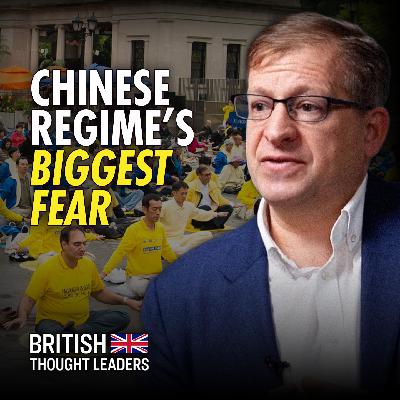
In this episode, Levi Browde, Executive Director of the Falun Dafa Information Center, shares the story of Falun Dafa (Falun Gong)—a spiritual practice based on meditation, qigong, and the principles of Truthfulness, Compassion, and Forbearance.
He covers its rapid rise in the early 1990s, with up to 100 million practitioners in China, followed by the 1999 persecution ordered by then-leader Jiang Zemin.
Levi details the CCP's brutal methods—including arrests, torture, forced labor, brainwashing, and forced organ harvesting—and explains why the campaign began: fear of the group's independence and size.
He highlights practitioners' extraordinary resistance in China and abroad, calling it the world's largest civil disobedience movement—a peaceful, sustained stand against repression that persists today.
Levi also discusses the CCP's overseas efforts to harass and discredit practitioners, plus troubling complicity from Western companies through tools enabling surveillance and censorship.
Matt Ridley, the acclaimed science writer and author, returns to British Thought Leaders declaring the so-called climate crisis effectively over.
Ridley, who was labelled a "climate change denier" and canceled in certain circles for his views, says he accepts the planet is warming due to human activity—but argues it does not constitute an existential threat. He explains how a real phenomenon (planetary heating) was exaggerated, hijacked by ideology, and used to suppress scientific debate and dissenting perspectives.
Ridley warns that pursuing Net Zero would amount to economic suicide for Britain. He discusses how science has become dogmatic for some and calls for a great British renaissance in creativity and ingenuity.
While optimistic about the UK’s future, he believes people may need to experience the full downsides of current government policies before real change can happen.
Molly Kingsley, co-founder of UsForThem, joins Lee Hall for an in-depth conversation exploring the lasting consequences of the UK's Covid-19 pandemic lockdowns.
Beyond digital ID and the suggested prohibition of X's AI tools, she addresses the myriad difficulties faced by the British public after the vaccine introduction, alongside a significant breakdown in societal and institutional trust.
Drawing from her own investigative work, Kingsley shares disturbing revelations about conflicts of interest involving senior decision-makers and pharmaceutical companies during the crisis. She contrasts these findings with the ongoing Covid-19 Inquiry, which she describes as potentially amounting to a costly whitewash that fails to hold those responsible to account.
Kingsley also highlights the severe, long-term damage inflicted on an entire generation of British children by prolonged school closures and lockdowns. She explains how temporary shifts in education—such as increased dependence on digital technology and remote learning—became entrenched, with lasting implications for children's development, well-being, and future prospects.
Education expert Joe Nutt exposes how the government's VAT on private school fees isn't hitting the wealthy as intended — instead, it's punishing children and hardworking, aspirational parents who value quality education.
He calls for schools to be shielded from damaging political meddling and warns of the outsized, concerning influence big tech companies now wield over British classrooms.
Above all, Nutt stresses that a strong, positive school culture remains the true foundation of successful education.
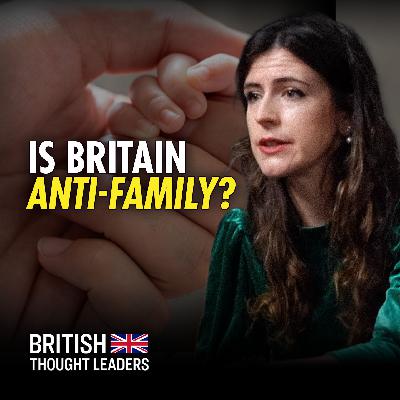
In this wide-ranging conversation, Lois McLatchie Miller explores the mounting pressures on British families in today's cultural and political landscape.
McLatchie Miller addresses critical issues impacting family life, such as Britain's very high levels of abortion, and raises concerns that society is veering towards a culture that devalues human life with assisted suicide on the horizon.
She argues for proactive government policies to prioritise having children and the traditional family unit, explains the UN's recent call to ban surrogacy, and highlights encouraging signs that younger generations are rejecting hedonistic liberalism.
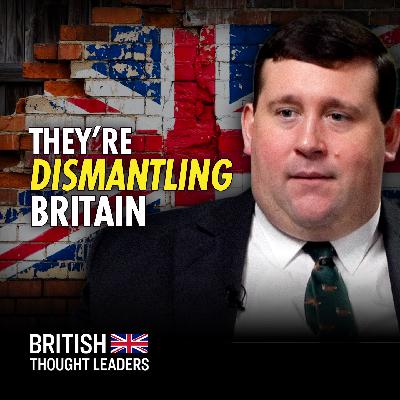
In this wide-ranging discussion, journalist Chris Bayliss provides insightful analysis on the potential collapse of the British state, including possible triggers and the ramifications of civil war.
He explores the contributing factors that have brought Britain to this point, such as an elite class dismissive of traditional British values, who have instead pursued modernising initiatives like multiculturalism. Their approach, he argues, has resulted in multitude of problems, including individuals in key positions who are ill-equipped to tackle the nation’s current challenges.
Bayliss also examines exacerbating events, including the grooming gang scandals, the COVID lockdowns, and the prospects of conflict with Russia.

In this episode Zaha Hadid Architects Principal Patrik Schumacher discusses the current challenges facing architecture and development in Britain.
He explains why building has become extraordinarily difficult, citing entrenched NIMBY attitudes, widespread risk aversion, and excessive regulation that together suppress innovative architectural solutions—despite strong investor appetite for projects in London and other major cities.
Schumacher explores practical ways to address London's acute housing shortages and oversubscribed living conditions, while offering a global perspective on the state of architecture today. He argues that the profession has been ideologically overtaken by social justice priorities, leading to the repeated sacrifice of genuine innovation for the latest fashionable cause.
Ultimately, he emphasises the urgent need to overcome these obstacles in order to restart Britain's cycle of bold design, creative innovation, and ambitious construction.

At a time when traditional British values face unprecedented challenge, we sit down with values expert and conductor Gavin P. Fraser, whose new book tackles this vital issue head-on.
In this episode, you’ll discover how efforts to dilute and homogenise British identity under Tony Blair’s leadership left the nation culturally vulnerable, why generations of British people have been encouraged to feel shame rather than pride in their extraordinary history, and what practical steps we can take to reclaim and reconnect with our proud traditions and heritage.
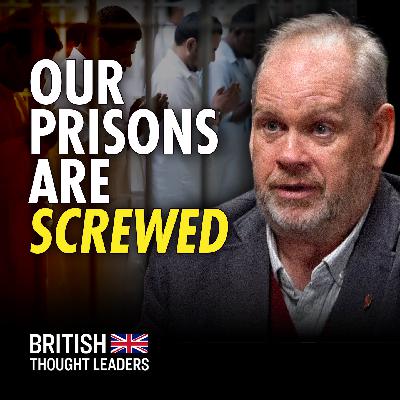
Former prison governor Professor Ian Acheson paints a grim picture of the UK's prison system, highlighting issues that have contributed to a sharp rise in erroneous prisoner releases in recent months.
He attributes chronic understaffing to low pay and poor working conditions, leaving jails reliant on inexperienced officers who are vulnerable to manipulation by charismatic and influential inmates.
Acheson also warns that authorities have failed to counter the growing threat of drones smuggling contraband—primarily illegal drugs—into prisons, raising fears that dangerous weapons or even explosives could soon follow.
Finally, he describes Islamist radicalisation in jails as a serious and escalating problem that remains inadequately addressed.
In this vital episode, Ian Acheson gives us the inside story of Britain's prisons and proposes practical solutions to avert the total collapse of a system teetering on the brink.
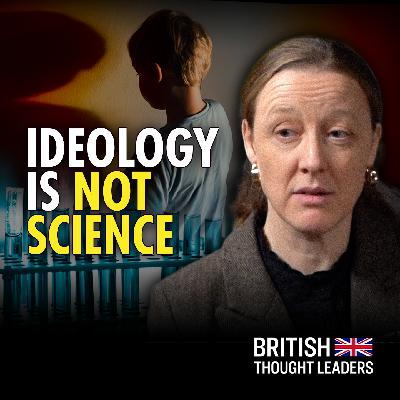
In this hard-hitting episode of British Thought Leaders, parent and campaigner Clare Page tells Lee Hall that the Cass Review gave false hope to those who oppose medicating children with puberty blockers–and is now being used as a springboard for their return.
We discuss the government’s rapid backtracking, the ethical red flags around these new trials, the lack of science behind labelling a child as trans, and why many now fear child safeguarding is being sacrificed on the altar of ideology.
Finally, Clare exposes how activist-led third-party organisations are quietly delivering transgender ideology in schools — bypassing Ofsted, parental consent and transparency — and shares the practical, actionable steps every concerned parent can take right now to push back and protect their children.

Is Football Finance Out of Control? Amid national decline and uncertainty, Britain has quietly built one of its greatest modern exports: the English Premier League (EPL).
In this episode, sports finance expert Professor Rob Wilson reveals how the EPL became a global money-making juggernaut that dwarfs every other British sport. He explains where the billions come from, who’s really cashing in, why top players now earn over $500,000 a week—and whether it’s sustainable. Plus, the growing fear that “The Beautiful Game” is losing its soul under the weight of its own success.
Listen now to discover how English football conquered the world—and what it might cost the sport.

Author Harry Saul Markham talks about rising anti-Semitism and the dangers faced by Jews in modern Britain. Markham says the government failed in its duty to protect Jewish citizens by facilitating mass immigration from countries where anti-Semitism is commonplace. He says we face societal collapse unless Britain finds a new approach to multiculturalism.

Journalist Ashley Rindsberg has spent years researching and reporting on Wikipedia. Rindsberg says there's now a Wikipedia crisis, as the world’s largest information provider has shifted to become a global influencer and a social justice movement of its own. He talks about the editorial process, Wikipedia’s role in politics, and how articles are slanted to communicate its globalist and progressive worldview.
Middle East commentator Catherine Perez-Shakdam returns to British Thought Leaders to talk about Iran's infiltration of Britain. Amid security service warnings to MPs about Iranian spies and even Iranian generals giving speeches to British students, Perez-Shakdam explains how the infiltration works and what the Iranian regime is trying to achieve.
Professor Eric Kaufmann tells NTD’s Lee Hall that "wokeness" is far from over and that there may be a new wave stronger than ever as Gen Zers reach adulthood. Kaufmann talks about the fall from the fashion of transgenderism among young people, how the vibe-shift in British politics is changing taboos, and why Member of Parliament Sarah Pochin received so little kickback when she talked about ethnic representation in advertising.


Download from Google Play

Download from App Store
 United States
A wonderful podcast. Thank you. Subbed.