


 Claim Ownership
Becoming The Vision
Subscribed: 2Played: 4
Subscribe

© Freedom Dreams in Philanthropy
Description
A show about practicing the future we deserve. Hosts Dr. Chera Reid and Dr. Trinel Torian invite visionaries from the field of philanthropy and beyond who believe and practice the idea that we must change ourselves to change the world.
34 Episodes
Reverse
In this special episode, Chera takes us back to the time she met Nikki Giovanni, as a twenty year-old undergraduate student at the University of Virginia. This is a story about putting yourself out there a little more than you thought you could and what happens when people in positions of power reach back. Chera offers us a glimpse into one of the roots of her freedom dreaming.---TRANSCRIPT
Autumn Brown is an artist, facilitator, mother, and theologian. The front woman of the eponymously named soul-pop band, AUTUMN, she is a queer, mixed-race Black woman, a gifted facilitator and orator, and a freedom worker who grounds her approach to building movements for liberation in her belief in the innate capacity for healing that emanates from the human heart. With her sister, adrienne maree brown, Autumn hosts the beloved podcast, How to Survive the End of the World. In 2026 she'll release her new book, Temper: A Fugitive Guide to Freedom. (Pre-order here). Chera and Trinel dive deep into Autumn's creative origin story, her concept of fugitivity, the generative potential of sabbaticals and the importance of embodied practices, like aikido and yoga in navigating this complex moment.
Happy New Year! In this episode we’re joined by Angelique Power, President & CEO @ The Skillman Foundation for a conversation about seeding change and embracing the power of people.Power for a conversation about seeding change and embracing the power of people.Angelique reflects on her Chicago roots, ancestry, and the importance of owning what makes you unique—learning to hold being both apart and a part as a source of strength and grounding for leadership. We talk about her place in a lineage of leadership at the Skillman Foundation, where she is the third Black woman, in succession, to lead the organization—following Carol Goss and Tonya Allen. Angelique speaks candidly about what becomes possible when women of color lead, and how she carries forward the impact, vision, and inspiration of those who came before her.We explore how Skillman stands on vision and with visionaries. Angelique shares a pragmatic look at the foundation’s People Powered Education initiative, underscoring that social change requires both grassroots and grasstops strategies. She speaks about partnering with Detroiters—who deeply own the identity of their city—in shaping education policy rooted in lived experience.We also talk about Detroit youth: their desires for change, their hope for the future, and their insistence on building new systems rather than waiting on old ones to deliver.Angelique describes her role in this moment as creating the conditions for authorship, agency, and lasting change to take root in Detroit.
In this episode of Becoming the Vision, we sat down with Chung-Wha Hong and Sara Mersha, co-executive directors of Grassroots International, for a timely conversation on what it means to be in solidarity with social movements.Drawing on decades of experience supporting collective efforts to transform systems in service to justice, they offer the concept of “Solidarity Philanthropy” to reimagine philanthropy’s role and relationship to social movements and activate the sector’s transformative potential.In the conversation, we discuss solidarity as not an end state, but an ongoing practice and active commitment that goes beyond grantmaking. True solidarity with social movements involves the sector interrogating its own relationship to power, listening to those most proximate to injustice, seeking alignment on core values, and organizing itself in peer networks defined by deep collaboration. In this vision, philanthropy emerges as more than a benefactor, becoming a comrade, ally, and protagonist in the struggle for justice.
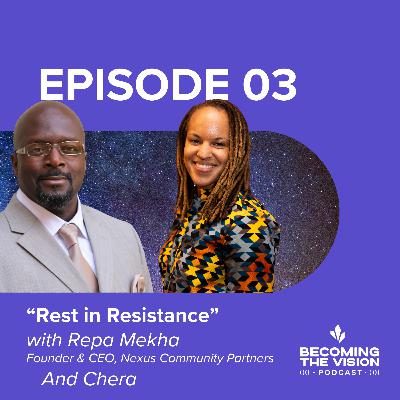
In the midst of injustice and a culture that glorifies hustle, what does it mean to slow down? And how might slowing down be necessary to make justice possible?In this episode, Chera and Trinel are joined by Repa Mekha, founder and CEO of Nexus Community Partners, for a deep and timely conversion about rest as a radical act of care, resistance, and transformation. Together, they illustrate how rest is not retreat, but a reclamation of agency and authorship that is both personal and collective: a way to see the scripts we’ve inherited, to heal, reconnect with identity and calling, and build toward the futures we dream of.
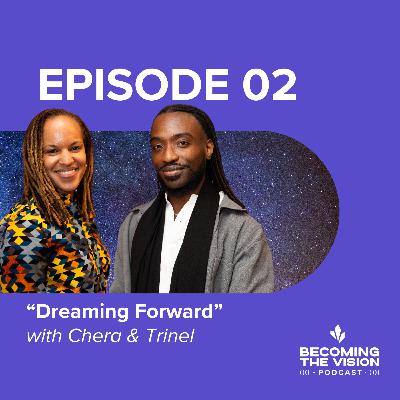
Becoming the Vision is back!This season, we’re Dreaming Forward—reflecting on our lineages and transforming them into legacies of freedom and justice for all.In this episode, the show’s producer, Zak Rosen, turns the mic on our hosts, asking the same question they’ve posed to so many others: What are you meditating on in this work of collective liberation?In our conversation, Chera channels the audacity of her grandmother—who, with steadfast faith in better days ahead, left behind a treasured pair of boots for the next little girl who might need them, as her family sought new opportunities in the segregated South.Trinel shares his practice of return—to self, to purpose—speaking on the reclamation of his personal magic as a daily act of vulnerability: risking embarrassment in service of connection, and daring visibility for the chance to be truly seen. We learn that Freedom Dreams in Philanthropy emerged from and is grounded in Chera’s deeper exploration of education for liberation, further catalyzed by her lived experience in philanthropy and her curiosity about how other leaders of color were seeing and making possibilities from where they stood. This resonates with Trinel’s interest in how we turn these possibilities into practice: creating new ways of seeing, being, and doing, that open pathways for systems level-changeThis conversation makes clear that freedom dreaming is both lineage and living practice—a way of holding possibility and making it real through daily acts of dreaming, boldness, and agency.As we Dream Forward this season, we invite you to reflect on the stories, people, and histories that shaped you—and to consider how they can be seeds of liberation for yourself and others.Join us for this intimate conversation as we trace the roots of our work and practice the futures we’re imagining together.#BecomingTheVision #FreedomDreaming #Philanthropy #Leadership #DreamingForward #CollectiveLiberation
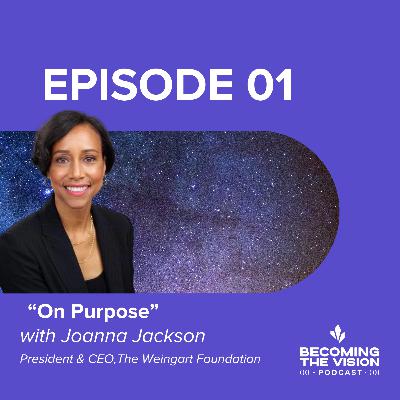
Season Three of Becoming the Vision is here!This season, we’re Dreaming Forward—turning lineage to legacy and purpose into practice. In the first episode, we sit down with Joanna Jackson, President & CEO of the Weingart Foundation.A New Yorker by way of the famed High School of Performing Arts, Joanna shares how her early training in drama shaped a leadership rooted in vulnerability, voice, and imagination. Descending from a family of organizers and activists, her story reflects a deep belief in the personal as collective—the understanding that our individual striving can serve freedom and justice for all.Joanna's leadership journey is one of evolution, not arrival. As a testament to the importance of staying on purpose—doing the work from where you are, letting it be the guide—Joanna now leads the mission she helped to establish across her various roles at the foundation since 2008. Her story illustrates how purpose can align with practice when the organization isn’t static, which Joanna credits to Weingart’s commitment to organizational learning as a posture. Even amid political noise, Joanna focuses on the signal: the hope and solidarity emerging across Los Angeles and California. She names the opportunity and responsibility of this moment: to deepen collective visioning and practice as institutions, as leaders, and as people.Our conversation becomes a meditation on meeting the moment—using everything you have, even that 95%, in service to collective liberation.#BecomingTheVision #FreedomDreaming #Philanthropy #Leadership #DreamingForward #CollectiveLiberation
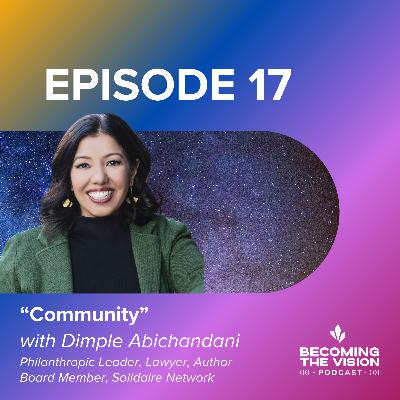
The Freedom Dreamers are thrilled to welcome Dimple Abichandani—philanthropic leader, lawyer, and author of A New Philanthropy: Ten Practices to Transform Wealth Into a More Just and Sustainable Future. Dimple also serves on the Board of Directors at Solidaire Network.In this conversation, Dimple reflects on “community”—for her, it’s where doubt lifts, purpose returns, and change begins—not only for individuals, but for the future of philanthropy itself.She speaks candidly about her journey to writing the book, including the impostor syndrome that nearly kept her from doing so. “Who am I to write a book?” she asked herself—before finding affirmation and solidarity in the Unicorn Authors Club, a community for authors of color. That support became an example of what it takes to answer the call anyway—and what it means to be lovingly witnessed into your voice.Dimple also recalls a chance encounter with a portrait of Andrew Carnegie, which led her to investigate the roots of institutional philanthropy. What she learned—a legacy built on extraction, segregation, and exclusion—sparked a bold call for a new era: one where wealth isn’t just redistributed, but transformed into justice, and where philanthropy serves community over capital.
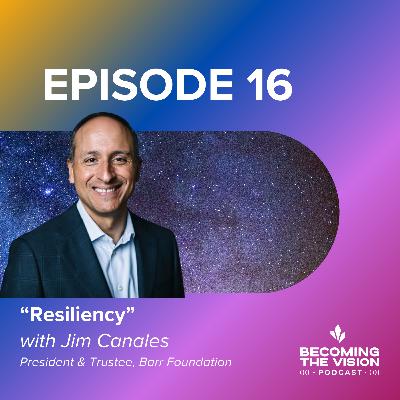
In this episode, we discuss resiliency—both individual and organizational—during times of profound change with Jim Canales, President and Trustee at Barr Foundation.Jim reflects on resiliency in the context of his upcoming transition from President to Board Chair at Barr, noting that it’s not just about weathering the winds of change, but about learning from past experiences, mistakes, and challenges—and using those lessons to guide how we lead into the future.Among those lessons for senior leadership: knowing when to step forward and when to step back.We speak candidly about the dynamics between executives and boards, and the missed opportunities for alignment that arise when boards become an impediment rather than a partner in leadership. For Jim, resiliency means maintaining clarity and continuity around core values, while leaving room for fresh perspectives and new approaches. In fact, we suggest that organizations can—and must—balance bold, new leadership with a deep commitment to their founding values. It’s a delicate dance, and one that truly resilient institutions are capable of performing.As both solution and testimony, Jim brings humility and intentionality to the conversation—offering insight into how senior leaders can create the enabling conditions that empower new leadership to thrive, encourage collaboration, and invite meaningful change.
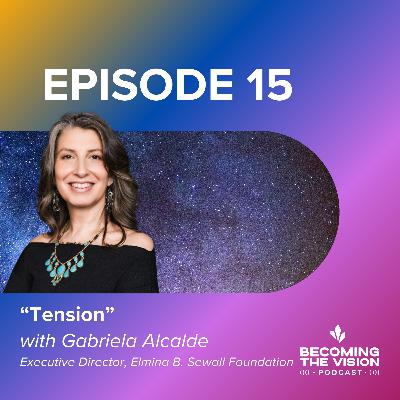
The Freedom Dreamers welcome Gabriela Alcade, Executive Director of the Elmina B. Sewall Foundation, and author of What Your Comfort Costs Us: How Women of Color Reimagine Leadership to Transform Workplace Culture. In this episode, Gabriela reflects on “tension”—reminding us of the critical role discomfort and conflict play in personal and social transformation. Drawing from her lived experience and career-long commitment to equity and systems change, she puts it plainly: “conflict creates friction, creates spark, and that’s how change happens.” Gabriela offers that when we meet discomfort not with fear, but with openness—embracing it as an invitation to evolve, to fly—we free ourselves and others to not only survive, but truly thrive.As Gabriela explains, her book began as an inquiry into the experiences of women of color leaders in the social sector, but expanded into a firm, yet loving invitation for white folks to own their roles in change. She encourages us to consider how the systemic prioritization of white comfort creates deep imbalances—especially in the emotional labor and toll involved in navigating the modern workplace. The conversation is a guiding hand for leaders looking to move themselves and their organizations from passive complicity with workplace inequities to active compassion and responsibility.
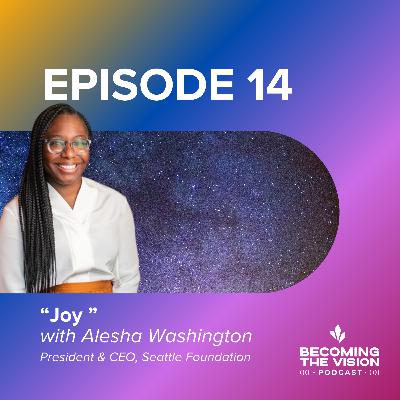
In this episode, we reflect on joy—not only as a feeling, but as a pathway to greater freedom and a deeper sense of possibility—and one that Alesha Washington, President and CEO of Seattle Foundation, has walked throughout her work transforming communities, from her hometown of Cleveland all the way to the Pacific Northwest.Alesha speaks about joy in the context of community philanthropy, sharing that the breakthrough often comes when we move people out of diagnosing problems and into dreaming about what could be. Joy, she reminds us, is what primes us to imagine—to shift our gaze from what’s missing to what’s possible. It allows us to recognize the abundance already present in our communities and within ourselves, even when the world tells us otherwise.
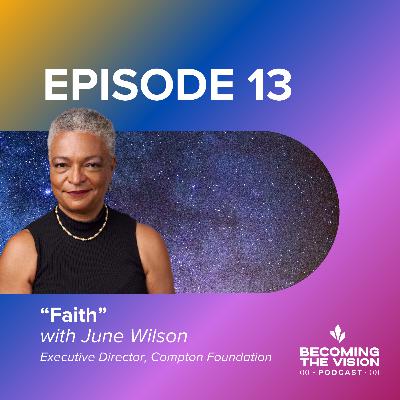
In episode thirteen of Becoming The Vision, we welcome June Wilson, executive director of the Compton Foundation! In this episode, we reflect on “faith”-- as a belief in something yet unseen, a force that can feel unsteady or slow, and one that needs communion with others to build, strengthen, and sustain. We explored faith in the context of work on “relational repair”—an approach that expands the conversation around reparations beyond financial exchange to include addressing our relationships: with one another, and with money itself. It’s about building a shared vision across racial lines, where healing can happen on all sides and reparations becomes a path toward mutual thriving.In the conversation, June reflects on the limits of money as a tool for justice and lifts up the need for healing on all sides. We also speak candidly about the messiness of coalition work—offering that when we begin to see our liberation as interconnected, and choose to step out on faith, new possibilities emerge to bridge divides.
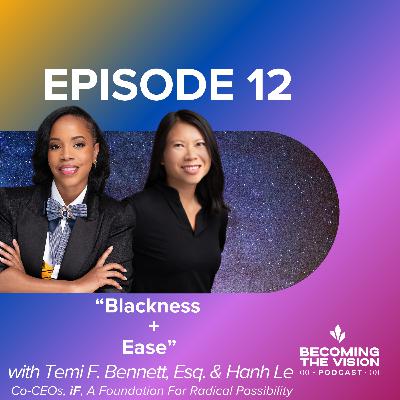
The Freedom Dreamers welcome Temi F. Bennett, Esq. and Hanh Le, Co-CEOs of iF, A Foundation for Radical Possibility. They reflect on "blackness" and "ease," and how iF is staying true to its vision of a world where black people and people of the global majority can live abundant, self-determined lives, free of harm. In the conversation, Temi and Hahn illustrate for us the power of asking "what if? - demonstrating how we can imagine and build organizations that are unapologetically in service to racial justice, while centering beloved community, healing, and rest. They also get into strategies for advancing justice in these times, and reframe the changing political climate from one of a resurgence of white supremacy, to a sign of its impending extinction.
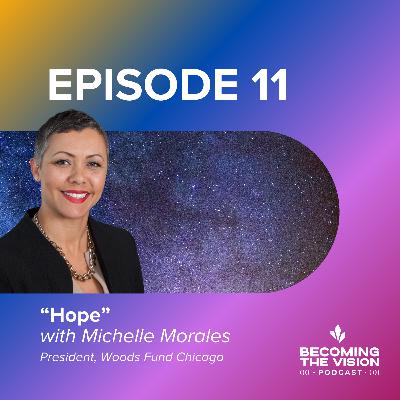
In the eleventh episode of season 2 of Becoming The Vision, we welcome Michelle Morales, President of the Woods Fund Chicago. In this episode, Michelle shares how hope—grounded in a belief in the promise of America, pride in the next generation of activists rising to meet the moment, and the knowing that comes from witnessing change in real time—has sustained and fueled her lifelong commitment to justice.In this expansive conversation, Michelle reflects on her journey in justice, deeply shaped by her Puerto Rican heritage and love of country. Her story illustrates what it means to live in service to our collective liberation, demonstrating how we can show up for justice in every aspect of our lives—as parents, professionals, and community members.We also discuss holding on to hope—especially in times of uncertainty and against the pull toward cynicism—and how faith and spirituality can keep us anchored.
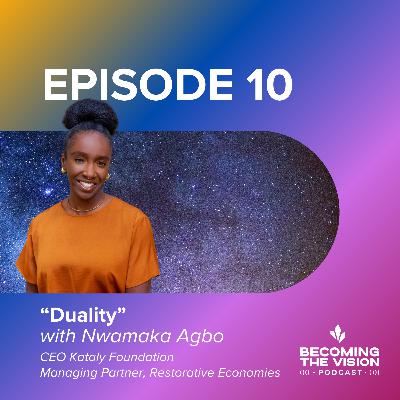
Chera and Efrain engage in a profound conversation with Nwamaka Agbo, CEO of the Kataly Foundation. They explore themes of freedom dreaming, self-determination, and the dualities of life, particularly in the context of parenthood and philanthropy. Nwamaka shares her insights on navigating joy and grief, the importance of land-stewardship, and the need for a transformative approach to philanthropy that centers on community empowerment and healing.
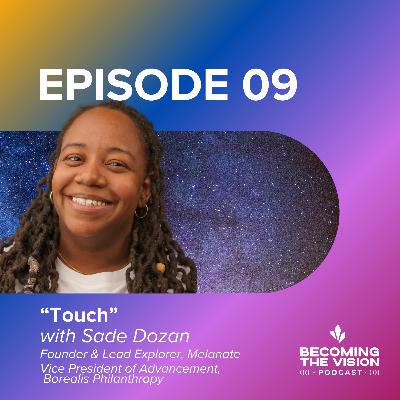
In the ninth episode of season 2 of Becoming The Vision, we welcome Sade Dozan, CFRE— Vice President of Advancement at Borealis Philanthropy and Founder and Lead Explorer at Melanate. In this episode, we discuss Sade's unique "touch" on the work of transforming resource building and wealth movement in philanthropy— how it is shaped by her intersecting identities, personal and professional experiences, and the stories of Black women. Sade shares a bold vision and deep commitment to centering Black women's leadership in the sector, emphasizing the importance of shifting decision-making power and resources toward those most proximal to injustice.
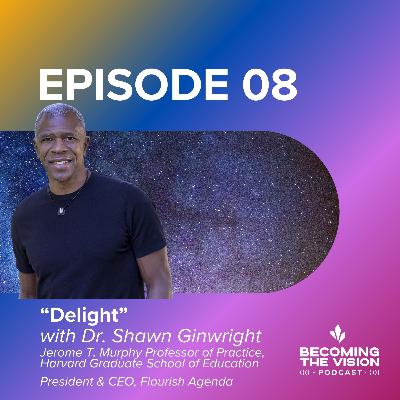
In the eighth episode of our second season, we welcome Shawn Ginwright—Jerome T. Murphy Professor of Practice at Harvard’s Graduate School of Education, author of the The Four Pivots, and President and CEO of Flourish Agenda. In our conversation, we reflected on being lovers of justice, the pull toward despair, and our dual mission to be well in the pursuit of change. Shawn reminds us to pause and find “delight” in the things, big and small, that give us joy—an essential practice for sustaining ourselves as we navigate the ebb and flow of creating inclusive organizations and a more just society. We also get real about transactional versus transformational change, and discuss how honoring our own and others’ full humanity can help us make that shift.
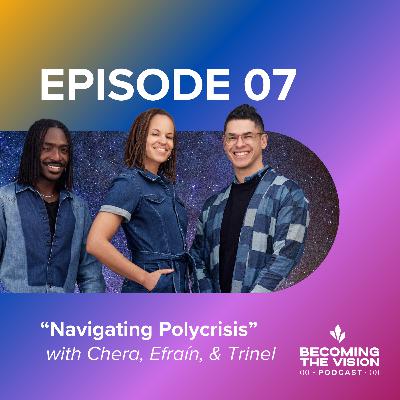
In this episode, Chera, Efraín, and Trinel explore the complexities of social responsibility in the midst of crisis - environmental, political, and cultural. They delve into the pressures on organizations, particularly those with a social justice mission, to speak on current events and the risks of both speaking out and remaining silent. The discussion addresses the challenge of knowing when and how to speak up, emphasizing the importance of defining one's distinct role and contributions.

The Freedom Dreamers welcome Daniel Lee, Director of Philanthropic Transformation at Solidaire. The discussion delves into Daniel's exploration of lineage and its various dimensions, from his family's immigrant journey to his professional path in philanthropy. Daniel's reflections offer a deep dive into the responsibilities of being an 'ancestor in training' and the transformative power of embracing one's humanity and history.
Daniel Lee is the Director of Philanthropic Transformation at Solidaire, leading efforts to transform philanthropic culture and practice toward long-term structural change by engaging senior-level executives in our network. He recently served as Executive-in-Residence at the Council on Foundations. Daniel spent 17 years in a variety of roles at the Levi Strauss Foundation, including service as Executive Director from 2008 to 2021.

Chera, Efrain and Trinel welcome Lulete Mola, Co-Founder and President of the Black Collective Foundation MN. The discussion centers on the foundation's mission to foster Black-led change and build holistic well-being within Black communities. Lulete shares insights on the broader social fatigue permeating our work and world right now. The dialogue offers a powerful reflection on the roadmaps our ancestors have left us and future visions for what we want to build.

Comments

Download from Google Play

Download from App Store
 United States