


 Claim Ownership
Supra Insider
Subscribed: 13Played: 366
Subscribe

© Ben Erez & Marc Baselga
Description
A podcast for product leaders inspired by discussions in the Supra product community, hosted by Marc Baselga and Ben Erez.
suprainsider.substack.com
suprainsider.substack.com
103 Episodes
Reverse

What happens when everyone can build, but no one breaks through the noise?In this episode of Supra Insider, Ben Erez sits down with Elan Miller, founder and CEO of branding and design studio Off-Menu, for the podcast’s first live in-person recording. Elan unpacks why this moment is uniquely challenging for brand storytelling—AI has made it easier than ever to build and ship products, but harder than ever to get people to care. He explains how the standard tech playbook (great product + clever go-to-market) no longer works when 10 competitors can copy you within a month, and why honorable points of view are the only sustainable moat.They explore Anthropic’s Keep Thinking campaign and Super Bowl ads as a masterclass in positioning against OpenAI, discuss why successful positioning must repel people as much as it resonates, and unpack the Granola rebrand (including Ben’s honest reaction as a customer). Elan shares why most rebrands fail (visual makeover without moving anything forward), the different reasons companies should rebrand (talent attraction, internal alignment, crossing the chasm), and his process for finding the “holy s**t insight” that makes people feel seen. Plus, how he’s building AI tools that turn brand strategy into practical inputs for higher-quality outputs, and why strong point of view is the antidote to slop.If you’re building in a crowded space and struggling to stand out, wondering whether a rebrand is the right move, or trying to articulate what makes you different in a way that actually resonates—this episode is for you.All episodes of the podcast are also available on Spotify, Apple and YouTube.New to the pod? Subscribe below to get the next episode in your inbox 👇Want company-specific interview intel?If you’re preparing for PM interviews at OpenAI, Google, Stripe, DoorDash, Uber, or Figma… we think you’re going to love Insider Loops. You can read about it in Ben’s LI post, Marc’s LI post or check out the site directly below.In this episode, we covered the following topics:* (02:25) Never been easier to build with AI, never been harder to get people to care* (03:20) If your product works, 10 people copy you within a month—honorable POV is the only moat* (05:00) Anthropic/Claude case study: Keep Thinking campaign, NYC popup, Super Bowl ads* (10:10) The enemy question: if your brand had an enemy, who would it be and why?* (18:30) Granola rebrand discussion: Ben’s honest reaction as a customer* (29:20) When is a rebrand the right move? Start with the problem you’re trying to solve* (30:20) The process: what do we believe that nobody else believes? Why should anybody care?* (38:00) AI opportunity: strong point of view as input for better outputs—antidote to slop* (50:15) Who Off Menu turns away vs. who they’re perfect for: big bets to reach inflection points* (1:02:25) Tech world about to operate like CPG: best story wins, not best product* (1:12:50) Rubric-based coaching: working backwards from what interviewers actually evaluate* (1:17:20) Personal trainer analogy: not doing reps for you, showing form and pacing* (1:29:10) When things are fun, nobody can compete with you* (1:31:10) Gratitude Corner: thanking his parents and anyone who’s taken a bet on him* And more!Links:* Off-Menu: https://www.off-menu.com/* Off-Menu Newsletter: offmenu.substack.com* Elan’s X: https://x.com/elanmiller* Elan Miller: https://www.linkedin.com/in/elanmiller/* Marc: https://www.linkedin.com/in/marcbaselga/* Ben: https://www.linkedin.com/in/benerez/If you’re a new subscriber, we encourage you to check out some of the recent episodes you might have missed:To support the podcast, please check out the links below:* Check out Ben’s AI Practice Copilot and top-rated Maven course: Self-Paced PM Interview Bootcamp: Product Sense & Analytical Thinking (selected by Lenny Rachitsky as a top course 🔥). Get 25% off the course with promo code suprainsider (auto-applied here).* Supra has teamed up with Maven to bring you something special – courses that our own community members have personally curated. And because you’re part of the Supra family, you can get up to 35% in some of these handpicked selections with code SUPRAxMAVEN. This is a public episode. If you would like to discuss this with other subscribers or get access to bonus episodes, visit suprainsider.substack.com

What if your computer didn’t need a screen in front of you to get work done? That’s the shift Ben Guo, co-founder of Zo, is building toward, and this conversation gets into the specifics of what that actually looks like day to day.In this episode of Supra Insider, Marc Baselga and Ben Erez sit down with Ben Guo to explore Zo: a personal cloud computer with built-in AI agents, file storage, scheduled tasks, and the ability to receive commands over text or email. Together, they unpack how Zo differs from the OpenClaw movement and why Ben thinks the personal cloud becomes a device category everyone eventually owns.The conversation goes deep on how the Zo team actually builds software: writing AI-generated markdown plans before touching any code, reviewing those plans as GitHub PRs, and largely abandoning the traditional to-do backlog in favor of just prompting something and letting it run. They also get into the real overhead that comes with this new way of working, including context management, delegation judgment, and figuring out what belongs where.All episodes of the podcast are also available on Spotify, Apple and YouTube.New to the pod? Subscribe below to get the next episode in your inbox 👇Want company-specific interview intel?If you’re preparing for PM interviews at OpenAI, Google, Stripe, DoorDash, Uber, or Figma… we think you’re going to love Insider Loops. You can read about it in Ben’s LI post, Marc’s LI post or check out the site directly below.In this episode, we covered the following topics:* (01:50) What Zo is: a computer in the cloud with file storage, AI chat, skills, memory, scheduled tasks* (06:00) Zo’s origin story: started as an inference platform in 2023, before agents were a thing* (09:10) OpenClaw appealed to tinkerer/hacker audience, like the Home Brew Computer Club* (15:20) Zo is designed for people who want to get stuff done, not necessarily tinker all day* (27:45) The future: we’ll interact with multiple AI computers in our day-to-day* (30:20) Back to old-school computing: peer-to-peer, FTP, SSH—protocols mostly used by engineers now* (36:45) Could Zo eventually become the default messaging interface? Text Zo instead of friends?* (41:00) The workflow: write PRD, ask Zo to translate to Linear tickets, Zo updates them as work progresses* (46:20) Coding now feels more like managing a team—firing off things, checking back later* (56:45) Ben Erez’s fanboy moment: Zo is his favorite new product of the year so far* (59:15) Gratitude Corner: Thanking Tiff Huang (Ben’s girlfriend) for being supportive through 2.5 years of building* And more!Links:* Zo: https://www.zo.computer/* Tiff Huang: https://bytheophana.substack.com/* Ben Guo: https://www.linkedin.com/in/0thernet* Marc: https://www.linkedin.com/in/marcbaselga/* Ben: https://www.linkedin.com/in/benerez/If you’re a new subscriber, we encourage you to check out some of the recent episodes you might have missed:To support the podcast, please check out the links below:* Supra has teamed up with Maven to bring you something special – courses that our own community members have personally curated. And because you’re part of the Supra family, you can get up to 35% in some of these handpicked selections with code SUPRAxMAVEN.* Check out Ben’s AI Practice Copilot and top-rated Maven course: Self-Paced PM Interview Bootcamp: Product Sense & Analytical Thinking (selected by Lenny Rachitsky as a top course 🔥). Get 25% off the course with promo code suprainsider (auto-applied here). This is a public episode. If you would like to discuss this with other subscribers or get access to bonus episodes, visit suprainsider.substack.com

What does it take to go from “1 out of 10 chance we hit 100 episodes” to actually getting there?In this special milestone episode, Marc Baselga and Ben Erez reflect on reaching 100 episodes of Supra Insider. They share the raw truth about early imposter syndrome—having a Google Doc with pre-written questions, worrying about sounding stupid, focusing more on optics than enjoyment. They discuss the key turning points that made the podcast sustainable: bringing in an editor (reducing their workload from 6-8 hours per week to just recording), stopping the intro recordings, and setting fixed “sacred” time slots that never move.They explore what they’ve learned about guest selection (intuition-based, not heavily strategic), the tension between timeless vs. timely content, and what successful podcasts have in common—regardless of format. Whether it’s Acquired (catalog value, timeless deep dives) or TBPN (daily, day-of relevant), the common thread is two co-hosts who genuinely enjoy each other, are obsessed with making it better over time, stay authentic, and avoid inorganic pressures that force the show to be something it isn’t.If you’re thinking about starting a podcast, struggling to make one sustainable, or wondering how to build something meaningful that fits your life—this episode is for you.All episodes of the podcast are also available on Spotify, Apple and YouTube.New to the pod? Subscribe below to get the next episode in your inbox 👇Want company-specific PM interview intel?If you’re a PM preparing for interviews at Uber, Figma, Stripe, DoorDash and OpenAI… we think you’re going to love Insider Loops. You can read about it in Ben’s LI post, Marc’s LI post or check out the site directly below.In this episode, we covered the following topics:* (01:00) Two years in—episode 100 meant thinking two years into the future, which felt blurry and non-committal* (02:50) Learning to be very present in the conversation and really enjoy it* (05:45) Celebrating wins together along the way has been helpful* (07:40) The importance of having a partner who’s equally committed and brings different strengths* (14:30) The tension between timeless content vs. timely/current events content* (18:30) How fast everything is moving makes it easy to get sucked into novelty* (20:10) Commonalities across successful podcasts: two co-hosts who enjoy each other, obsessed with making it better* And more!Links:* Marc: https://www.linkedin.com/in/marcbaselga/* Ben: https://www.linkedin.com/in/benerez/If you’re a new subscriber, we encourage you to check out some of the recent episodes you might have missed:To support the podcast, please check out the links below:* Check out Ben’s AI Practice Copilot and top-rated Maven course: Self-Paced PM Interview Bootcamp: Product Sense & Analytical Thinking (selected by Lenny Rachitsky as a top course 🔥). Get 25% off the course with promo code suprainsider (auto-applied here).* Supra has teamed up with Maven to bring you something special – courses that our own community members have personally curated. And because you’re part of the Supra family, you can get up to 35% in some of these handpicked selections with code SUPRAxMAVEN. This is a public episode. If you would like to discuss this with other subscribers or get access to bonus episodes, visit suprainsider.substack.com

What does it take to go from zero tech experience to founding PM at a cybersecurity startup in three years?In this episode of Supra Insider, Marc Baselga and Ben Erez sit down with Yaniv Fatal, founding product manager at Blast Security, to unpack his remarkable journey from elite Israeli Air Force pilot to tech. After 13 years in the military and zero technical background, Yaniv failed 20+ interviews before landing at Wiz (later acquired by Google for $32B). He shares how he applied pilot debriefing methodology to each rejection, learned cloud security from absolute zero in weeks, and built credibility through relentless questioning and delivering results nobody else could.They explore Yaniv’s philosophy on learning: mastering fundamentals first (no shortcuts), being comfortable asking “dumb questions,” and the belief that you don’t really understand something until you can teach it. Plus, his approach to long-term goal setting—he and his wife keep a notebook with goals for where they want to be at age 45, including his aim to be CEO or C-level, which drives every decision he makes today. And why product management is his chosen path to that goal, inspired by the fact that CEOs of Google and Microsoft were all PMs first.If you’re considering a major career transition, struggling with imposter syndrome while learning something completely new, or trying to figure out how to set goals that actually drive your daily decisions—this episode is for you.All episodes of the podcast are also available on Spotify, Apple and YouTube.New to the pod? Subscribe below to get the next episode in your inbox 👇Want company-specific PM interview intel?If you’re a PM preparing for interviews at Uber, Figma, Stripe, DoorDash and OpenAI… we think you’re going to love Insider Loops. You can read about it in Ben’s LI post, Marc’s LI post or check out the site directly below.In this episode, we covered the following topics:* (01:10) Yaniv’s journey: elite Air Force pilot to tech, 5 Ironmans completed, 25+ marathons* (03:40) The Wiz interview story: getting an interview for a role he was completely unqualified for* (04:20) The transition moment: leaving the military after 13 years with zero technical experience* (10:25) Hearing Ami Luttwak (Wiz CTO) on a podcast, then a year later Ami became his direct manager* (11:30) The debriefing process from the Air Force: always debrief yourself to see what you can do better* (16:10) The Wiz homework assignment: prove you can learn cloud security fast enough to be valuable* (27:40) Asking the right questions to the right people to build credibility* (36:00) Long-term goal setting: Yaniv and his wife have a notebook with goals for years ahead* (36:40) Personal goal: be C-level or CEO of a company by age 45* (37:00) “If you don’t know where you want to be in 10 years, you’ll never know what you should do today”* (43:40) “I’m almost ready for the next step”—maybe higher role at Blast or starting his own company* (58:30) How to prioritize when everything seems important: connect daily tasks to end goals* (01:01:10) Map what you know and what you don’t know—if something is important and you don’t understand it, learn it* (01:03:30) “You don’t really understand something until you can teach it”* (01:09:35) Gratitude Corner: Ami Luttwak (CTO of Wiz) for believing in him when he needed it* (01:10:05) Ron Konigsberg (colleague and manager at Wiz) for helping him move forward and manage a global team* And more!Links:* Blast Security: https://blast.security/* Blast Security Careers: https://blast.security/careers/* Ami Luttwak: https://www.linkedin.com/in/amiluttwak* Ron Cohen: https://www.linkedin.com/in/ronchn/* Yaniv Fatal: https://www.linkedin.com/in/yaniv-fatal-08a9b2ba/* Marc: https://www.linkedin.com/in/marcbaselga/* Ben: https://www.linkedin.com/in/benerez/If you’re a new subscriber, we encourage you to check out some of the recent episodes you might have missed:To support the podcast, please check out the links below:* Supra has teamed up with Maven to bring you something special – courses that our own community members have personally curated. And because you’re part of the Supra family, you can get up to 35% in some of these handpicked selections with code SUPRAxMAVEN.* Check out Ben’s AI Practice Copilot and top-rated Maven course: Self-Paced PM Interview Bootcamp: Product Sense & Analytical Thinking (selected by Lenny Rachitsky as a top course 🔥). Get 25% off the course with promo code suprainsider (auto-applied here). This is a public episode. If you would like to discuss this with other subscribers or get access to bonus episodes, visit suprainsider.substack.com

What if the biggest barrier to learning AI isn’t the tools—it’s how we approach learning itself?In this episode of Supra Insider, Marc Baselga and Ben Erez sit down with Gagan Biyani, CEO and co-founder of Maven, to unpack why this moment is critical for mid-career professionals to prioritize self-learning. Gagan shares lessons from running a cohort-based learning platform and conducting 30-50 interviews with companies struggling to adopt AI. He explains why AI is like witnessing the internet as a child—you can’t afford not to learn it—and why building the learning habit matters more than what you learn first.They explore the five problems companies face with AI education: trying to generalize training when every role needs different tools, listening to tinkerers instead of bridge adopters, and delegating to chiefs of staff instead of having C-level sponsors run the trainings. Gagan shares Maven’s own journey—why their design team needed to rebuild the design system before AI could be useful, how they’re changing team ratios from 3-4 engineers per designer to just 2, and why social media is terrible for learning anything that requires weeks of dedication.If you’re a mid-career professional feeling overwhelmed by AI, a leader trying to build a culture of self-learning at your company, or wondering how to actually integrate AI into your workflows—this episode is for you.All episodes of the podcast are also available on Spotify, Apple and YouTube.New to the pod? Subscribe below to get the next episode in your inbox 👇Want company-specific PM interview intel?If you’re a PM preparing for interviews at Uber, Figma, Stripe, DoorDash and OpenAI… we think you’re going to love Insider Loops. You can read about it in Ben’s LI post, Marc’s LI post or check out the site directly below.In this episode, we covered the following topics:* (01:35) The AI era creates a velocity of change that people absolutely need to keep up with* (05:28) The fundamental skill of learning new things applies to everything—soccer, AI, anything* (09:40) Create false accountability before you build a habit—some people always need it, others use it as an on-ramp* (12:00) Social media is terrible for learning AI—you can’t learn it in 30 minutes or an hour* (16:30) Every type of work requires a different type of learning about AI tools* (24:40) Problem #1: Every role requires a different set of AI tools depending on what you’re building* (28:40) Problem #2: Companies try to generalize AI education when it needs to be role-specific* (29:10) Problem #3: AI requires system-level changes at the company level—AI consulting is booming* (31:10) Problem #4: Companies listen to tinkerers (top 1-10%) who aren’t the right people to listen to* (34:20) Problem #5: L&D specialists are good at teaching known things, but with AI they need to learn it first* (40:30) Design-to-engineer ratio needs to change because both are more productive with AI* (53:30) Why mid-career folks are least motivated but need learning most (vs early and late career)* (57:40) Best approach: interview through their resume, ask what they learned and accomplished at each step* (01:12:05) Gratitude Corner: Michelle Whitman (first boss), and early Udemy believers—Adeo Ressi, Bubba Murarka, Keith Rabois, Mark Sugarman, Russ Fradin* And more!Links:* Gagan Biyani X: https://x.com/gaganbiyani* Gagan Biyani: https://www.linkedin.com/in/gaganbiyani/* How to Become a Supermanager with AI by Hilary Gridley: https://maven.com/hilary-gridley/ai-powered-people-management* Yuan Wang (Head of Design at Maven): https://www.linkedin.com/in/theyuanstudio/* Michelle Whitman: https://www.linkedin.com/in/michelle-whitman/* Adeo Ressi: https://www.linkedin.com/in/adeoressi/* Bubba Murarka: https://www.linkedin.com/in/bubba/* Keith Rabois: https://www.linkedin.com/in/keith/* Mark Sugarman: https://www.linkedin.com/in/msugarman/* Russ Fradin: https://www.linkedin.com/in/rfradin/* Maven: https://maven.com/* Marc: https://www.linkedin.com/in/marcbaselga/* Ben: https://www.linkedin.com/in/benerez/If you’re a new subscriber, we encourage you to check out some of the recent episodes you might have missed:To support the podcast, please check out the links below:* Preparing for Product Sense & Analytical Thinking interviews? Check out Ben’s AI Practice Copilot and top-rated Maven course: Self-Paced PM Interview Bootcamp: Product Sense & Analytical Thinking (selected by Lenny Rachitsky as a top course 🔥). Get 25% off the course with promo code suprainsider (auto-applied here).* Supra has teamed up with Maven to bring you something special – courses that our own community members have personally curated. And because you’re part of the Supra family, you can get up to 35% in some of these handpicked selections with code SUPRAxMAVEN. This is a public episode. If you would like to discuss this with other subscribers or get access to bonus episodes, visit suprainsider.substack.com

What if the best way to lead product is to build it yourself first?In this episode of Supra Insider, Marc Baselga and Ben Erez sit down with Chase Schwalbach, SVP of Product and Technology at Millie, to unpack a radically different approach to product leadership. Despite his title, Chase spent months as an IC, rolling up his sleeves to build healthcare infrastructure, teach himself AI eval systems, and ship a sophisticated patient chatbot, all before bringing his team in. He explains why shielding the team from early-stage messiness, moving at speed, and feeling the pain yourself leads to better products.They explore how Chase built a team of AI agents (supervisor + specialized sub-agents) from scratch, why treating prompts like deterministic code requires extreme precision, and how he taught himself evals through pure iteration. Plus, the converging worlds of PM and engineering, why technical PMs and product-minded engineers are becoming the same role, why handoffs kill velocity in an AI-native world, and what “context engineering” actually means when your codebase needs to work for both humans and AI agents.If you’re a product leader wondering whether to get more hands-on, an engineer considering the jump to PM (or vice versa), or building AI systems in regulated industries like healthcare, this episode is for you.All episodes of the podcast are also available on Spotify, Apple and YouTube.New to the pod? Subscribe below to get the next episode in your inbox 👇Want company-specific PM interview intel?If you’re a PM preparing for interviews at Uber, Figma, Stripe, DoorDash and OpenAI… we think you’re going to love Insider Loops. You can read about it in Ben’s LI post, Marc’s LI post or check out the site directly below.In this episode, we covered the following topics:* (02:15) The personal story that led Chase to Millie* (06:40) The forward deployed PM story begins, spending the first 6 months building healthcare infrastructure* (09:12) Building a dual technology layer: modern tools in front of Epic instead of integrating directly* (16:45) The infrastructure had to exist first before experimenting, no sandbox environments in traditional healthcare* (24:55) How Chase taught himself to run evals, via trying, retrying and getting it right* (32:22) What surprised Chase most: prompting intent is incredibly hard, every single word matters* (36:25) The most important moat is speed, infrastructure that allows you to move things quickly* (44:30) The infrastructure of coding is moving from pure code to English, AI as the new interface* (53:45) Human + AI is stronger than AI alone (the chess model)* (57:00) What Chase optimizes for: misfits who don’t follow rules and always think “there’s gotta be a better way”* (01:00:20) The AI rule paradox: we want people who don’t follow rules, but they need to set rules for AI* (01:07:25) Gratitude Corner: Una Pipic, his partner at a previous startup who told him to stay a misfit* And more!Links:* Chase’s post on AI Evals: https://www.linkedin.com/pulse/moving-fast-without-breaking-trust-millie-chase-schwalbach-q0tde* Millie: https://www.millieclinic.com/* Una Pipic: https://www.linkedin.com/in/upipic/ * Chase Schwalbach: https://www.linkedin.com/in/schwalbach/* Marc: https://www.linkedin.com/in/marcbaselga/* Ben: https://www.linkedin.com/in/benerez/If you’re a new subscriber, we encourage you to check out some of the recent episodes you might have missed:To support the podcast, please check out the links below:* Supra has teamed up with Maven to bring you something special – courses that our own community members have personally curated. And because you’re part of the Supra family, you can get up to 35% in some of these handpicked selections with code SUPRAxMAVEN.* Preparing for Product Sense & Analytical Thinking interviews? Check out Ben’s AI Practice Copilot and top-rated Maven course: Product Sense & Analytical Thinking Bootcamp for Meta-Style PM Interviews (selected by Lenny as a top course in product 🔥). Get 25% off the course with promo code `suprainsider` (auto-applied here). This is a public episode. If you would like to discuss this with other subscribers or get access to bonus episodes, visit suprainsider.substack.com

What if the best product decision is saying “no” to what everyone else is building?In this episode of Supra Insider, Marc Baselga and Ben Erez sit down with Alexander Danilowicz, founder and CEO of Magic Patterns, to unpack why his AI prototyping tool is the only one refusing to add backend features—even when competitors like Lovable, Bolt, and v0 are racing in that direction. Alex explains how focusing exclusively on front-end code leads to higher quality prototyping, why many use cases don’t actually need a database, and how product teams at large companies can’t risk connecting production data to prototyping tools anyway.They explore what it takes to maintain conviction when investors, customers, and the entire market seem to be moving the opposite way. Alex shares how using your own product daily keeps you honest about what’s actually broken, why real user feedback looks different from “fake” feature requests (like “add dark mode”), and how a strong co-founding relationship helps you resist temptation when external pressure mounts.If you’re a product leader wrestling with feature requests that don’t align with your vision, trying to figure out when to follow the market versus when to trust your gut, or building tools in the AI coding space, this episode is for you.All episodes of the podcast are also available on Spotify, Apple and YouTube.New to the pod? Subscribe below to get the next episode in your inbox 👇Interviewing at Uber, Figma, Stripe, or DoorDash?If you’re a PM preparing for interviews at Uber, Figma, Stripe, and DoorDash… we think you’re going to love Insider Loops. You can read about it in Ben’s LI post, Marc’s LI post or check out the site directly below.In this episode, we covered the following topics:* (00:42) Why Magic Patterns is the only AI prototyping tool not adding backend features* (05:35) Sticking to your guns: maintaining conviction when everyone else is going a different direction* (12:40) Understanding your Ideal Customer Profile (ICP) and saying no to users outside of it* (18:45) Demo: Building a task management prototype from scratch with Magic Patterns* (32:10) Using components and design systems to maintain consistency* (45:30) How to evaluate if AI tools are actually helping or just adding complexity* (56:40) Real user feedback vs. “fake” feature requests—dark mode vs. actual workflow problems* (01:02:45) Getting frustrated with your own tool helps you understand user pain* (01:04:15) Real feedback comes from actual usage, not hypothetical requests* (01:05:10) Gratitude Corner: Shoutout to co-founder Teddy Ni for maintaining product conviction* And more!Links:* Magic Patterns: https://www.magicpatterns.com/* Magic Patterns Slack Community: https://join.slack.com/t/magic-patterns/shared_invite/zt-32w1n7avl-Kk4Db2jqXwQhNR_xC2ijvw* Teddy Ni (Alex’s co-founder): https://www.linkedin.com/in/teddy-ni/* Alexander Danilowicz X: https://x.com/alexdanilowicz* Alexander Danilowicz: https://www.linkedin.com/in/alexanderdanilowicz/* Marc: https://www.linkedin.com/in/marcbaselga/* Ben: https://www.linkedin.com/in/benerez/If you’re a new subscriber, we encourage you to check out some of the recent episodes you might have missed:To support the podcast, please check out the links below:* Preparing for Meta-style Product Sense & Analytical Thinking interviews? Check out Ben’s AI Practice Copilot for Meta-Style PM Interviews and top-rated Maven course: Product Sense & Analytical Thinking Bootcamp for Meta-Style PM Interviews (selected by Lenny as a top course in product 🔥). Get 25% off the course with promo code `suprainsider` (auto-applied here).* Supra has teamed up with Maven to bring you something special – courses that our own community members have personally curated. And because you’re part of the Supra family, you can get up to 35% in some of these handpicked selections with code SUPRAxMAVEN. This is a public episode. If you would like to discuss this with other subscribers or get access to bonus episodes, visit suprainsider.substack.com

What if the thing holding you back from building a public presence is exactly what would make you stand out?In this episode of Supra Insider, Marc Baselga and Ben Erez sit down with Mallory Contois, VP of Growth at Maven, to unpack why this is the perfect moment for product leaders to start sharing publicly—even if they don’t feel polished, interesting, or like they have it all figured out. Mallory explains how we’re leaving the era of glossy, aspirational influencer content and entering one where audiences crave authenticity, relatability, and actionable takeaways.They tackle the three biggest mindsets that hold people back: the “influencer hater” who rejects performative content, the person who doesn’t think they’re interesting enough, and the professional who believes their work should speak for itself. Mallory breaks down why good work alone isn’t enough, why consistency beats virality, and how to find your authentic voice without trying to game algorithms or chase trends.If you’re a product leader who’s been holding back from sharing publicly, wondering whether anyone would find your perspective valuable, or questioning whether personal branding is worth the effort—this episode is for you.All episodes of the podcast are also available on Spotify, Apple and YouTube.New to the pod? Subscribe below to get the next episode in your inbox 👇Interviewing at Uber, Figma, Stripe, or DoorDash?If you’re a PM preparing for interviews at Uber, Figma, Stripe, and DoorDash… we think you’re going to love Insider Loops. You can read about it in Ben’s LI post, Marc’s LI post or check out the site directly below.In this episode, we covered the following topics:* (01:30) Why this moment is uniquely important for personal branding* (03:27) The three mindsets that hold people back from building a public presence* (04:45) Unpacking “my work should speak for itself” and why good work alone isn’t enough* (16:45) How to find your authentic voice without trying to game the algorithm* (26:02) The pressure to figure out your 10-year path before creating content—and why that’s backwards* (27:27) Curation versus creation—different ways to dip your toe in* (31:40) Why product people struggle with personal branding, it’s not an A/B test* (40:27) Gathering smart people and facilitating conversation is content too* (46:20) How Mallory uses AI: as a thought organizer, not as a writer* (58:31) You have to pick your people and be “for someone”—which means you’re not for others* (01:01:35) Why it’s human instinct to maximize options, but that actually makes you less safe* (01:04:20) Gratitude Corner: Shoutout to Fiona Monga (former COO at Substack) and Gagan Biyani (CEO at Maven)* And more!Resources / People Mentioned:* Good Work by Mallory Contois: https://www.readgoodwork.com/* The Old Girls Club: https://www.jointheogc.com/* Mallory Contois: https://www.linkedin.com/in/mallorycontois/* Mallory’s post about Blowing it all up: https://www.linkedin.com/posts/mallorycontois_reminder-its-never-too-late-to-blow-it-activity-7401245453733957632-w-ga* Building a Personal Brand (Course by Mallory): https://maven.com/mallory/building-a-personal-brand* Fiona Monga: https://www.linkedin.com/in/fiona-monga-40621414/* Gagan Biyani: https://www.linkedin.com/in/gaganbiyani/* Grace McCarrick: https://www.linkedin.com/in/gracemccarrick/* Joseph Monroe Olender: https://www.linkedin.com/in/josephmolender/* Lenny Rachitsky: https://www.linkedin.com/in/lennyrachitsky/* Tim Ferriss: https://www.linkedin.com/in/timferriss/* Immad Akhund: https://www.linkedin.com/in/iakhund/* Chris Lee: https://www.linkedin.com/in/thechrislee/* Make Something Heavy: https://www.workingtheorys.com/p/make-something-heavy/* SubwayTakes with Kareem Rahma: https://www.instagram.com/subwaytakes/?hl=en* LLM prompt for EOY:* “i’m reflecting on 2025- can you answer these questions for me? - what did i spend the most time thinking about in 2025? - what was the strangest question i asked you in 2025? - what would you say i learned about myself this year?”* Marc: https://www.linkedin.com/in/marcbaselga/* Ben: https://www.linkedin.com/in/benerez/If you’re a new subscriber, we encourage you to check out some of the recent episodes you might have missed:To support the podcast, please check out the links below:* Supra has teamed up with Maven to bring you something special – courses that our own community members have personally curated. And because you’re part of the Supra family, you can get up to 35% in some of these handpicked selections with code SUPRAxMAVEN.* Preparing for Meta-style Product Sense & Analytical Thinking interviews? Check out Ben’s AI Practice Copilot for Meta-Style PM Interviews and top-rated Maven course: Product Sense & Analytical Thinking Bootcamp for Meta-Style PM Interviews (selected by Lenny as a top course in product 🔥). Get 25% off the course with promo code `suprainsider` (auto-applied here). This is a public episode. If you would like to discuss this with other subscribers or get access to bonus episodes, visit suprainsider.substack.com

What if AI didn’t just give you answers—but helped you understand how the best operators actually think?In this episode of Supra Insider, Marc Baselga and Ben Erez sit down with Casey Winters, former growth leader at Pinterest and Eventbrite, to unpack why he’s building SuperMe, an AI-native professional network designed around perspective, not content or virality.Casey shares why meaningful expertise has disappeared from public platforms, how knowledge has moved into private networks, and why most AI tools miss the thing people actually want: judgment. The conversation explores how AI can responsibly capture a person’s thinking from real artifacts (conversations, writing, podcasts), how trust and consent must be designed into these systems, and why scaling access to expertise doesn’t mean replacing humans.They also dive into mentorship, career leverage, and why peer learning often matters more than traditional top-down advice. If you’re a founder, operator, or product leader thinking deeply about AI, knowledge-sharing, and the future of professional networks, this episode offers a thoughtful and opinionated look at what comes next.Big thanks to Adam Fishman for introducing us to Casey!All episodes of the podcast are also available on Spotify, Apple and YouTube.New to the pod? Subscribe below to get the next episode in your inbox 👇Interviewing at Uber, Figma, Stripe, or DoorDash?If you’re a PM preparing for interviews at Uber, Figma, Stripe, and DoorDash… we think you’re going to love Insider Loops. You can read about it in Ben’s LI post, Marc’s LI post or check out the site directly below.In this episode, we covered the following topics:* (01:16) Casey explains SuperMe: an AI-native professional network with interactive profiles trained on your real artifacts (podcasts, docs, notes, etc.)* (03:31) Why knowledge sharing moved private: algorithms reward virality over nuance, so the best operators stopped posting publicly* (07:22) Trust mechanics: sourcing, timestamps, attribution, and feedback loops designed to make outputs feel credible* (09:50) Why “answers” aren’t enough: founders don’t want one right answer—they want how different great people reason* (12:53) Consent + effort reduction: SuperMe finds insights, redacts, and asks you to approve before adding to your profile* (16:04) The discomfort factor: why new AI-native products feel “weird” at first—and why normalization takes time* (24:03) Even top execs need help telling their story—profiles should communicate what you’re actually great at* (33:26) Mentorship rethought: why “finding a mentor” is often the wrong frame—and why peer learning can be higher leverage* (36:40) What changes when expertise is searchable: relationships, learning, and access to judgment compound differently* (49:33) Strategy angle: network effects, defensibility, and why many AI tools are “one-trick ponies” vulnerable to incumbents* (01:15:52) Casey’s gratitude story: Support system in Kevin Doyle and Apartments.com* And more!Links:* Casey Winters: https://www.linkedin.com/in/caseywinters/* Casey’s Blog: https://www.caseyaccidental.com/* SuperMe: https://www.superme.ai/* Kevin Doyle: https://www.linkedin.com/in/kevindoyle4/* Michael Ricciardelli: https://www.linkedin.com/in/michaeljricciardelli/* Cat Lee: https://www.linkedin.com/in/thecatlee/* Marc: https://www.linkedin.com/in/marcbaselga/* Ben: https://www.linkedin.com/in/benerez/If you’re a new subscriber, we encourage you to check out some of the recent episodes you might have missed:To support the podcast, please check out the links below:* Preparing for Meta-style Product Sense & Analytical Thinking interviews? Check out Ben’s AI Practice Copilot for Meta-Style PM Interviews and top-rated Maven course: Product Sense & Analytical Thinking Bootcamp for Meta-Style PM Interviews (selected by Lenny as a top course in product 🔥). Get 25% off the course with promo code `suprainsider` (auto-applied here).* Supra has teamed up with Maven to bring you something special – courses that our own community members have personally curated. And because you’re part of the Supra family, you can get up to 35% in some of these handpicked selections with code SUPRAxMAVEN. This is a public episode. If you would like to discuss this with other subscribers or get access to bonus episodes, visit suprainsider.substack.com

Switching into product can feel like a one-way door, especially if you’re already successful in another function. But for Michael, the path from product marketing to product management wasn’t a leap of faith, it was a series of low-risk experiments, relationship-driven conversations, and intentional “spikes” he could bring to the PM role.In this episode of Supra Insider, Marc Baselga and Ben Erez sit down with Michael Chen (former PMM at LinkedIn, Slack, and Asana; now a PM at DoorDash) to break down exactly how he made the transition from marketing into product, and what made it work. They unpack the fears people don’t say out loud (title cuts, failing publicly, losing social capital), why internal moves are often more about timing + business need than a single ask, and how to frame the whole process as an exploration rather than a high-stakes bet.Michael also shares how his go-to-market and storytelling background has become a real product advantage, especially in areas like pricing & packaging, subscription tiers, and helping customers “see and believe” the value before they ever click buy. If you’re a PMM, marketer, or operator who wants to become a builder, or a PM who wants stronger GTM instincts - this episode is a practical blueprint.All episodes of the podcast are also available on Spotify, Apple and YouTube.New to the pod? Subscribe below to get the next episode in your inbox 👇Interviewing at Uber, Figma, Stripe, or DoorDash?If you’re a PM preparing for interviews at Uber, Figma, Stripe, and DoorDash… we think you’re going to love Insider Loops. You can read about it in Ben’s LI post, Marc’s LI post or check out the site directly below.In this episode, we covered the following topics:* (1:30) Why PMM and PM are more cyclical than people think: understand needs → build → educate → drive success* (3:40) The deeper origin story including consulting + “full brain thinking” + MBA + design/innovation foundation* (9:16) The real fear: title/trajectory resets are real—acknowledging the risk without over-dramatizing it* (11:34) Why internal transitions are uniquely de-risked by relationships, subject-matter context, and built-in support systems* (16:10) The “spikes” framework: you need at least one clear advantage you can carry into PM (domain, customer, research, etc.)* (22:05) “What if I fail publicly?” Why the stakes felt manageable (supportive manager, exploration mindset)* (29:15) Treat big career moves as experiments—keep doing it if it works, stop if it doesn’t* (37:25) How often to “check in” on opportunities* (41:45) The advantage internal candidates have: tighter line to roadmap + ability to paint vision + make it a no-brainer hire* (50:07) Switching companies and rebuilding credibility, learning culture, and giving yourself grace in a new environment* (58:35) Why now is the best time to switch: AI + prototyping tools let customer-adjacent people show what they mean* (1:03:05) Gratitude corner: Evan (LinkedIn), Ceci (Slack), Lily (Asana) and the “bet on how I think” theme* And more!Links:* Michael Chen: https://www.linkedin.com/in/hashtagmichaelchen/* Evan Ling: https://www.linkedin.com/in/evanling/* Cecilia Stallsmith: https://www.linkedin.com/in/cecistallsmith/* Lili Rachowin: https://www.linkedin.com/in/lilirachowin/ * Marc: https://www.linkedin.com/in/marcbaselga/* Ben: https://www.linkedin.com/in/benerez/If you’re a new subscriber, we encourage you to check out some of the recent episodes you might have missed:To support the podcast, please check out the links below:* Supra has teamed up with Maven to bring you something special – courses that our own community members have personally curated. And because you’re part of the Supra family, you can get up to 35% in some of these handpicked selections with code SUPRAxMAVEN.* Preparing for Meta-style Product Sense & Analytical Thinking interviews? Check out Ben’s AI Practice Copilot for Meta-Style PM Interviews and top-rated Maven course: Product Sense & Analytical Thinking Bootcamp for Meta-Style PM Interviews (selected by Lenny as a top course in product 🔥). Get 25% off the course with promo code `suprainsider` (auto-applied here). This is a public episode. If you would like to discuss this with other subscribers or get access to bonus episodes, visit suprainsider.substack.com

What is the role of education when AI can explain, generate, and tutor instantly, and what does that mean for how we learn, teach, and evaluate understanding?In this episode of Supra Insider, Marc Baselga and Ben Erez sit down with Stephen Cognetta to explore how education is evolving in the age of AI, and why many existing learning models are fundamentally misaligned with how people actually develop understanding. The conversation challenges long-held assumptions about credentials, classrooms, and expertise, and digs into what truly matters when information becomes abundant and cheap.Stephen shares perspectives on how learning really happens, why traditional institutions struggle to adapt, and how AI changes the value of memorization versus intuition, judgment, and synthesis. They discuss the tension between structured education and self-directed learning, how product thinking applies to education systems, and why curiosity and experimentation matter more than polished answers.This episode is especially relevant for product leaders, builders, and operators who care about learning, not just as students, but as designers of systems that help people grow. It offers a thoughtful look at how AI reshapes education, careers, and what it means to be “qualified” in the future.All episodes of the podcast are also available on Spotify, Apple and YouTube.New to the pod? Subscribe below to get the next episode in your inbox 👇Interviewing at Uber, Figma, Stripe, or DoorDash?If you’re a PM preparing for interviews at Uber, Figma, Stripe, and DoorDash… we think you’re going to love Insider Loops. You can read about it in Ben’s LI post, Marc’s LI post or check out the site directly below.In this episode, we covered the following topics:* (2:28) Universities today are shifting from education to job-placement pipelines* (7:27) Why universities buy tools like Exponent instead of changing curricula* (12:25) Should you get a degree to become a PM? Ship real things + get real feedback* (16:55) MBA vs PM bootcamps—and how AI reshapes what bootcamps can actually offer* (20:23) Stephen’s teaching philosophy: professors as performers and simulation designers* (25:30) Ben’s finance program example: in placement-driven rigor and rubric-based prep* (36:10) Self-discovery, contribution, and why time off can accelerate finding your “zone of genius”* (44:21) Can Exponent help people earlier than interviews—before they know what to pursue?* (50:14) Interview is a mental game of anxiety, confidence, and social reinforcement* (59:12) Highest-leverage interview prep: go to the source and maximize simulation fidelity* (1:10:04) The gold-standard mock with calibrated interviewer + scoring breakdown* (1:15:31) Gratitude corner: Stephen thanks his co-founder Jacob* And more!Links:* Stephen Cognetta’s Website: https://www.stephencognetta.com/* Exponent: https://www.tryexponent.com/* Register a guest lecturer at Open Lecture: https://www.openlecture.com/* Jacob Simon (Co-founder of Exponent): https://www.linkedin.com/in/jacobsimon1* Stephen Cognetta: https://www.linkedin.com/in/stephencognetta/* Marc: https://www.linkedin.com/in/marcbaselga/* Ben: https://www.linkedin.com/in/benerez/Resources Mentioned:* Enders Game - book mentioned by StephenIf you’re a new subscriber, we encourage you to check out some of the recent episodes you might have missed:To support the podcast, please check out the links below:* Preparing for Meta-style Product Sense & Analytical Thinking interviews? Check out Ben’s AI Practice Copilot for Meta-Style PM Interviews and top-rated Maven course: Product Sense & Analytical Thinking Bootcamp for Meta-Style PM Interviews (selected by Lenny as a top course in product 🔥). Get 25% off the course with promo code `suprainsider` (auto-applied here).* Supra has teamed up with Maven to bring you something special – courses that our own community members have personally curated. And because you’re part of the Supra family, you can get up to 35% in some of these handpicked selections with code SUPRAxMAVEN. This is a public episode. If you would like to discuss this with other subscribers or get access to bonus episodes, visit suprainsider.substack.com
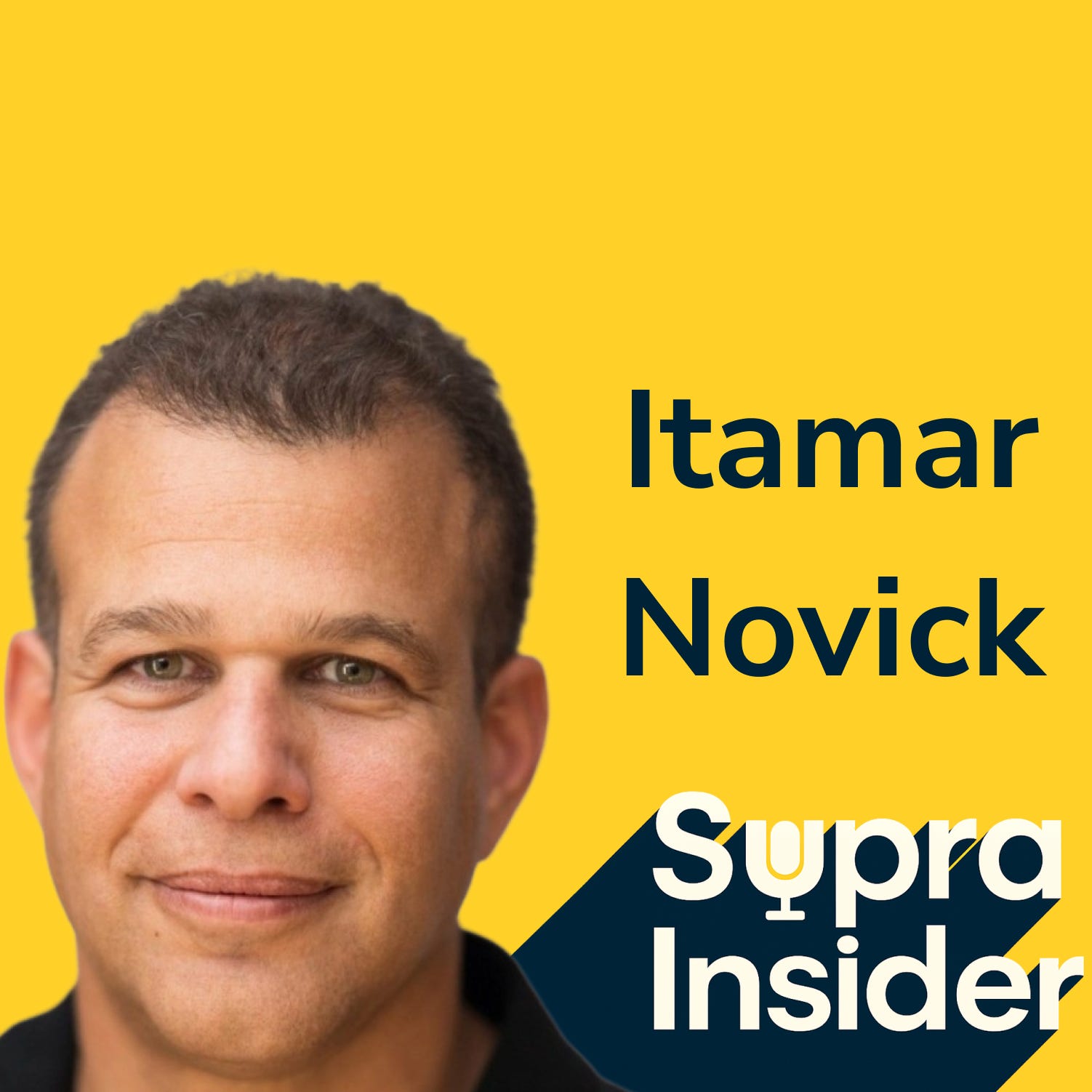
What actually makes a startup defensible anymore, especially when anyone can build a product overnight with AI?In this episode of Supra Insider, Marc Baselga and Ben Erez sit down with Itamar Novick, founder of Recursive Ventures and longtime operator-turned-investor, to unpack how moats are changing in the AI era and what founders (and senior product leaders) need to internalize if they want to build enduring companies.Itamar draws from over 25 years across product leadership, company-building, and early-stage investing to explain why defensibility matters earlier than most founders think, how traditional moats (marketplaces, SaaS velocity, network effects) still apply, and why AI radically compresses time-to-competition. He breaks down how Recursive Ventures evaluates teams, TAM, and moats at the pre-seed stage, why velocity has become a core signal, and how the venture model itself is being reshaped by smaller teams, faster execution, and lower capital requirements.The conversation also goes deep on founder decision-making: how to choose early investors, why community itself can be a moat, what good vs bad VCs look like when companies fail, and why product leaders should seriously consider jumping into AI-native environments, even if it means a short-term step down.If you’re a product leader thinking about founding a company, advising startups, or staying relevant in the next decade, this episode offers a clear, opinionated framework for navigating what’s changed and what still matters.All episodes of the podcast are also available on Spotify, Apple and YouTube.New to the pod? Subscribe below to get the next episode in your inbox 👇Interviewing at Uber, Figma, Stripe, or DoorDash?If you’re a PM preparing for interviews at Uber, Figma, Stripe, and DoorDash… we think you’re going to love Insider Loops. You can read about it in Ben’s LI post, Marc’s LI post or check out the site directly below.In this episode, we covered the following topics:* (05:34) Itamar’s path from VC to operator and back, and why credibility matters in early-stage investing* (09:45) Why Itamar looks for moats even at pre-seed* (12:50) Classic pre-AI moats: marketplaces, SaaS velocity, and network effects* (19:21) How Recursive Ventures evaluates Team, TAM, and Moat at inception* (21:44) Vibe coding and the collapse of traditional barriers to entry* (26:38) How AI breaks traditional venture math, and why seed investing benefits* (30:07) How founders should choose their first investors* (34:49) Three types of VCs: helpers, neutral capital, and destructive investors* (44:13) How much to raise at pre-seed and what that capital is actually for* (51:10) Hiring for leverage: why AI-native mindset matters more than tenure* (54:27) Why working at AI-native companies compounds long-term career value* (57:23) Sales, distribution, and personal brand as differentiators* (1:00:25) How PMs can build sales and founder muscles intentionally* And more!Links:* Startup Anti-patterns by Itamar Novick: https://www.itamarnovick.com/category/anti-patterns/* Itamar Novick: https://www.linkedin.com/in/itamarnovick/* Itamar’s X: https://x.com/Itamar_Novick* Recursive Ventures: https://www.recursiveventures.com/* Marc: https://www.linkedin.com/in/marcbaselga/* Ben: https://www.linkedin.com/in/benerez/If you’re a new subscriber, we encourage you to check out some of the recent episodes you might have missed:To support the podcast, please check out the links below:* Supra has teamed up with Maven to bring you something special – courses that our own community members have personally curated. And because you’re part of the Supra family, you can get up to 35% in some of these handpicked selections with code SUPRAxMAVEN.* Preparing for Meta-style Product Sense & Analytical Thinking interviews? Check out Ben’s AI Practice Copilot for Meta-Style PM Interviews and top-rated Maven course: Product Sense & Analytical Thinking Bootcamp for Meta-Style PM Interviews (selected by Lenny as a top course in product 🔥). Get 25% off the course with promo code `suprainsider` (auto-applied here). This is a public episode. If you would like to discuss this with other subscribers or get access to bonus episodes, visit suprainsider.substack.com

Most candidates treat recruiter calls like a box-checking step. But the candidates who consistently land offers treat recruiters like strategic partners - and use them to get real leverage throughout the process.In this episode of Supra Insider, Marc Baselga and Ben Erez sit down with our repeat guest, Anneli Scopazzi (Boulevard Talent; former recruiting leader across Palantir, Figma, and Notion) to break down what recruiters are actually incentivized by, what they’re looking for in the recruiter screen, and how candidates can use recruiters to prepare more intelligently and avoid preventable missteps.They cover the difference between internal recruiters and agency recruiters, what gets candidates filtered out early, how to ask for “prep” without sounding insecure, what to do when a company refuses to share details, and how to handle compensation conversations without accidentally anchoring yourself into a worse outcome. They also discuss when to save sensitive questions for the offer stage, and how recruiters influence the process behind the scenes (feedback, debriefs, and closing).If you’re interviewing in today’s competitive market, especially for product roles, this episode gives you a tactical playbook for turning recruiters into an advantage instead of an afterthought. All episodes of the podcast are also available on Spotify, Apple and YouTube.New to the pod? Subscribe below to get the next episode in your inbox 👇Interviewing at Uber, Figma, Stripe, or DoorDash?If you’re a PM preparing for interviews at Uber, Figma, Stripe, and DoorDash… we think you’re going to love Insider Loops. You can read about it in Ben’s LI post, Marc’s LI post or check out the site directly below.In this episode, we covered the following topics:* (02:25) Why candidates hesitate- fear of looking bad, mistrust, and cultural differences around recruiters* (06:20) Internal recruiters vs agency recruiters and how incentives differ* (09:04) Reading the room and adapting to the person, “mirror” without being inauthentic* (11:15) The biggest recruiter-screen failure mode for PMs * (14:11) What makes a recruiter champion you? Homework, kindness, calibrated confidence, and being human* (19:16) The most important high-leverage questions to ask recruiters* (22:04) Asking about compensation in recruiter screens and when to share your number* (26:54) “Do you have concerns about me?” question: value + risk, and safer alternative framing* (33:01) The advantage of pre-onsite “prep call” call with the recruiter* (44:41) Offer stage strategy, save sensitive questions for when you have leverage; recruiter’s job is to close* Live Audience Q&A:* (49:39) Why recruiters view your LinkedIn but don’t reach out + how targeting works* (51:05) What decides between final candidates: rapport/working relationship + reducing bias where possible* (53:01) Recruiter “How did it go?” email: why it’s a best practice and a chance to clarify/repair an answer* (54:30) Risk of hiring manager + IC in parallel: why it happens and when it signals “house on fire”* (57:38) Market shift: managers moving back to IC roles + how to explain that story credibly* And more!Links:* Our previous episode with Anneli: https://suprainsider.substack.com/p/82-inside-the-new-recruiting-reality* Anneli Scopazzi: https://www.linkedin.com/in/anneliscopazzi/* Boulevard recruiting: https://www.boulevardrecruiting.com/* Marc: https://www.linkedin.com/in/marcbaselga/* Ben: https://www.linkedin.com/in/benerez/If you’re a new subscriber, we encourage you to check out some of the recent episodes you might have missed:To support the podcast, please check out the links below:* Preparing for Meta-style Product Sense & Analytical Thinking interviews? Check out Ben’s AI Practice Copilot for Meta-Style PM Interviews and top-rated Maven course: Product Sense & Analytical Thinking Bootcamp for Meta-Style PM Interviews (selected by Lenny as a top course in product 🔥). Get 25% off the course with promo code `suprainsider` (auto-applied here).* Supra has teamed up with Maven to bring you something special – courses that our own community members have personally curated. And because you’re part of the Supra family, you can get up to 35% in some of these handpicked selections with code SUPRAxMAVEN. This is a public episode. If you would like to discuss this with other subscribers or get access to bonus episodes, visit suprainsider.substack.com

What does it take to build products that feel thoughtful, emotionally resonant, and unmistakably high-quality, especially inside a company that ships fast and experiments constantly?In this episode of Supra Insider, Marc and Ben sit down with Nickey Skarstad, Director of Product at Duolingo, to unpack how one of the world’s most beloved consumer apps maintains its bar for craft, clarity, and delight while operating at massive scale. Nickey shares how Duolingo operationalizes quality across teams, how they dogfood relentlessly, and why “unreasonable hospitality” applies just as much to software as it does to service.She also shares the internal rituals Duolingo uses - like their “hot trash” Friday forum for sharing early experiments, and how these lightweight mechanisms help PMs, designers, and engineers learn from each other. Nickey walks through Duolingo’s product review process, how senior leaders give feedback, and how the company ensures teams move quickly without shipping work that falls below their quality standards.Whether you’re a PM trying to strengthen your intuition, a design-driven leader aiming for higher quality bars, or a product builder exploring how AI should (and shouldn’t) fit into your workflow, this episode is full of concrete lessons you can use immediately.All episodes of the podcast are also available on Spotify, Apple and YouTube.New to the pod? Subscribe below to get the next episode in your inbox 👇Interviewing at Uber, Figma, Stripe, or DoorDash?If you’re a PM preparing for interviews at Uber, Figma, Stripe, and DoorDash… we think you’re going to love Insider Loops. You can read about it in Ben’s LI post, Marc’s LI post or check out the site directly below.In this episode, we covered the following topics:* (01:35) How Nickey keeps up with AI: newsletters, podcasts, internal Slack channels, and intentional learning time* (07:15) Internal rituals for sharing AI learnings: Slack posts, demos, and Duolingo’s “hot trash” culture* (11:12) Duolingo’s product review process as a mechanism for scaling quality and judgment* (14:12) How Duolingo balances speed (“clock speed”) with rigorous product reviews* (23:31) What makes feedback actually useful—and when it should block shipping* (29:05) The importance of heavy dogfooding for generative AI experiences* (32:22) Turning product taste into evaluators for non-deterministic systems* (37:50) Why slapping “AI” into marketing often hurts more than it helps* (41:52) How to intentionally develop better product taste* (51:28) Why AI has re-energized builders and product teams* (55:01) Why hobbies, fiction, and being “in the world” matter for product taste* (58:40) Nickey’s closing advice: investing in taste is never wasted time* And more!Links:* Nickey’s Newsletter: https://nickey.substack.com/* Nickey Skarstad: https://www.linkedin.com/in/nickeyskarstad/* Marc: https://www.linkedin.com/in/marcbaselga/* Ben: https://www.linkedin.com/in/benerez/Resources Mentioned:* Duolingo’s Product Review Process: https://www.linkedin.com/pulse/how-product-review-works-sneak-peek-key-decision-making-process-lnpoe/* Peter Yang Podcast: https://creatoreconomy.so/* Lenny’s Newsletter: https://www.lennysnewsletter.com/* Book Suggestions:* The Thursday Murder Club - recommended by Nickey* Hyperion - recommended by Ben If you’re a new subscriber, we encourage you to check out some of the recent episodes you might have missed:To support the podcast, please check out the links below:* Supra has teamed up with Maven to bring you something special – courses that our own community members have personally curated. And because you’re part of the Supra family, you can get up to 35% in some of these handpicked selections with code SUPRAxMAVEN.* Preparing for Meta-style Product Sense & Analytical Thinking interviews? Check out Ben’s AI Practice Copilot for Meta-Style PM Interviews and top-rated Maven course: Product Sense & Analytical Thinking Bootcamp for Meta-Style PM Interviews (selected by Lenny as a top course in product 🔥). Get 25% off the course with promo code `suprainsider` (auto-applied here). This is a public episode. If you would like to discuss this with other subscribers or get access to bonus episodes, visit suprainsider.substack.com

Listen now: Spotify, Apple and YouTubeWhat actually changes inside a product and engineering org when a company commits to becoming AI-native—not as a side project, but as the new operating system?In this episode of Supra Insider, Marc and Ben sit down with Gaurav Hardikar, VP of Product at HomeLight, to unpack the company’s ambitious transformation: an executive team hackathon, ten AI initiatives across tech debt and product debt, and a completely new way of scoping, shipping, and collaborating across product, engineering, and design.Gaurav walks through how HomeLight reshaped their workflows to move dramatically faster, built an AI-powered scoping assistant that consolidates inputs across functions, and created a shared “source of truth” that removes one of the biggest product bottlenecks—misalignment.He also introduces a brand-new role inside the org: the AI Product Builder—what it is, why PMs can’t do all of it, and the skills that separate great builders from average ones as AI-native development becomes standard.Whether you’re a product leader trying to accelerate your roadmap, an engineer rethinking how AI changes execution, or a PM who wants to understand what skills will still matter in an AI-native world, this episode gives a practical, inside-the-org look at what real transformation requires.All episodes of the podcast are also available on Spotify, Apple and YouTube.New to the pod? Subscribe below to get the next episode in your inbox 👇Interviewing at Uber, Figma, Stripe, or DoorDash?If you’re a PM preparing for interviews at Uber, Figma, Stripe, and DoorDash… we think you’re going to love Insider Loops. You can read about it in Ben’s LI post, Marc’s LI post or check out the site directly below.In this episode, we covered the following topics:* (01:52) How HomeLight’s AI efforts started: chat, voice, and agent coaching tools* (07:32) The moment leadership realized the org needed to rethink how it works* (12:31) Three process initiatives: the design system, scoped workflows, and automated analytics* (17:53) The #1 pain point in traditional scoping: misalignment* (26:23) Where VPs should insert themselves in the workflow (and where they shouldn’t)* (36:10) Why specs die but scope lives on—defining what’s in, out, and why* (38:10) The dangers of overbuilding before you prototype* (41:19) Introducing the new AI Product Builder role at HomeLight and the traits that make someone great at it* (49:48) How zero-to-one projects graduate—or get collapsed into something simpler* (53:27) The “last mile” problem: QA, edge cases, and Slack interface constraints* (58:37) Leadership’s role in creating psychological safety for experimentation* (1:06:32) Final lessons and what HomeLight wants to learn from other AI-native orgs* And more!Links:* Gaurav Hardikar Newsletter: https://www.insidergrowthhq.com/* Gaurav Hardikar: https://www.linkedin.com/in/ghardikar/* Marc: https://www.linkedin.com/in/marcbaselga/* Ben: https://www.linkedin.com/in/benerez/If you’re a new subscriber, we encourage you to check out some of the recent episodes you might have missed:To support the podcast, please check out the links below:* Preparing for Meta-style Product Sense & Analytical Thinking interviews? Check out Ben’s AI Practice Copilot for Meta-Style PM Interviews and top-rated Maven course: Product Sense & Analytical Thinking Bootcamp for Meta-Style PM Interviews (selected by Lenny as a top course in product 🔥). Get 25% off the course with promo code `suprainsider` (auto-applied here).* Supra has teamed up with Maven to bring you something special – courses that our own community members have personally curated. And because you’re part of the Supra family, you can get up to 35% in some of these handpicked selections with code SUPRAxMAVEN. This is a public episode. If you would like to discuss this with other subscribers or get access to bonus episodes, visit suprainsider.substack.com

Listen now: Spotify, Apple and YouTubeIf you’ve been hearing phrases like “taste is the only thing that will matter for PMs in the AI era” but aren’t sure what that actually means—or more importantly, how to build it—this episode is for you.In this conversation, Marc and Ben sit down with Sachin Rekhi, founder, former LinkedIn product leader, and creator of LinkedIn Sales Navigator, to unpack the real mechanics of taste: where it comes from, how to sharpen it, and why it’s already the defining skill of AI-native product teams.Sachin shares the frameworks he teaches inside companies and in his Reforge course—from Rick Rubin’s “sensitivity & canon” model, to daily design-critique habits, to the patterns he saw across design-driven, metrics-driven, strategy-driven, and sales-driven org cultures.He also tells the untold story of how Sales Navigator went from a tiny skunkworks project to one of LinkedIn’s biggest product lines—why social capital mattered, how he managed leadership skepticism, and how he used prototypes, real customer quotes, and narrative-building to secure executive conviction.Whether you’re trying to level up your product intuition, navigate organizational taste cultures, or use AI without slipping into “AI slop,” you’ll walk away with practical models you can apply immediately to your product work, leadership communication, and team workflows.All episodes of the podcast are also available on Spotify, Apple and YouTube.New to the pod? Subscribe below to get the next episode in your inbox 👇Interviewing at Uber, Figma, Stripe, or DoorDash?If you’re a PM preparing for interviews at Uber, Figma, Stripe, and DoorDash… we think you’re going to love Insider Loops. You can read about it in Ben’s LI post, Marc’s LI post or check out the site directly below.In this episode, we covered the following topics:* (01:01) Sachin’s definition of taste: the ability to recognize high-quality work across design, strategy, and problem selection* (05:36) Why taste matters today (AI slop, generic landing pages, low-quality code, and B-level writing)* (12:47) How to pair domain insight with AI to produce differentiated work* (15:28) Rick Rubin’s framework for building taste: sensitivity and consuming the canon* (28:06) Rick Rubin’s second pillar: consuming the canon of great work (design awards, shareholder letters, essays)* (32:42) Why leadership taste sets the bar—Steve Jobs, Johnny Ive, Bezos, Pincus, and metrics-driven cultures* (40:14) Finding your “product culture fit”: strategy-driven, design-driven, metrics-driven, or sales-driven orgs* (44:32) How Sachin used social capital, prototypes, and customer quotes to earn “rope” for Sales Navigator at LinkedIn* (52:47) Everything is selling: convincing execs, customers, and teams* (59:50) Using AI to craft executive memos—Bezos style guides, Paul Graham metaphors, punch-up techniques* (1:08:36) How customer quotes beat TAM slides—and why new markets look small at first* (1:20:39) Final lessons: conviction, customer obsession, and taste as a lifelong practice* And more!Links:* Sachin Rekhi’s course on Reforge: https://www.reforge.com/courses/ai-productivity* Sachin Rekhi: https://www.linkedin.com/in/sachinrekhi/* David Hahn who supported Sachin in getting Sales Navigator off the ground: https://www.linkedin.com/in/davidwhahn/* Marc: https://www.linkedin.com/in/marcbaselga/* Ben: https://www.linkedin.com/in/benerez/If you’re a new subscriber, we encourage you to check out some of the recent episodes you might have missed:To support the podcast, please check out the links below:* Supra has teamed up with Maven to bring you something special – courses that our own community members have personally curated. And because you’re part of the Supra family, you can get up to 35% in some of these handpicked selections with code SUPRAxMAVEN.* Preparing for Meta-style Product Sense & Analytical Thinking interviews? Check out Ben’s AI Practice Copilot for Meta-Style PM Interviews and top-rated Maven course: Product Sense & Analytical Thinking Bootcamp for Meta-Style PM Interviews (selected by Lenny as a top course in product 🔥). Get 25% off the course with promo code `suprainsider` (auto-applied here). This is a public episode. If you would like to discuss this with other subscribers or get access to bonus episodes, visit suprainsider.substack.com

Listen now: Spotify, Apple and YouTubeIn the first-ever live recording of Supra Insider, Marc and Ben sat down with Jacob Bank, founder of Relay.app, to unpack one of the most urgent questions facing product leaders today: How do AI agents actually change the way we work? Instead of abstract predictions, Jacob shares the very real workflows, failures, and breakthroughs behind running a 10-person company that delegates work to more than 300 AI agents.Across the conversation, the three dig into what PMs must learn next: writing job descriptions for agents, architecting responsibilities, managing automated execution, and understanding how agents influence velocity, product quality, and cross-functional collaboration. Jacob also discusses why PMs are lagging behind engineering and ops in adopting agentic workflows, and what will happen to teams who don’t catch up.If you’re a PM, founder, or operator trying to understand how AI is reshaping product development, or you’ve struggled to translate “agent hype” into concrete, repeatable workflows, this episode gives you a realistic, practitioner-level framework for building with agents today, and preparing for what’s coming next.All episodes of the podcast are also available on Spotify, Apple and YouTube.New to the pod? Subscribe below to get the next episode in your inbox 👇Interviewing at Uber, Figma, Stripe, or DoorDash?If you’re a PM preparing for interviews at Uber, Figma, Stripe, and DoorDash… we think you’re going to love Insider Loops. You can read about it in Ben’s LI post, Marc’s LI post or check out the site directly below.In this episode, we covered the following topics:* (01:27) Jacob’s background and why PMs should care about AI agents* (04:37) Why this session focuses on “hiring AI agents like employees”* (07:38) The AI org chart explained — the Reddit marketing agent* (15:05) Managing agent performance — firing, reviewing, and iterating* (18:39) The hype cycle — why “AI agents are real” matters* (25:55) What tasks should not be agents (one-offs, planning, magic tasks)* (33:13) Building an AI agent live* (37:42) Where agent outputs should land — Slack, Gmail, Docs* (46:54) The six agents every PM should “hire” today* (50:16) Deterministic vs agentic automations — the reliability spectrum* (55:19) Making agents work in enterprise environments with locked-down systems* (1:03:16) Live demo: Natural Language Builder using Relay.app* Live Audience Q&A:* (1:07:46) QA best practices — how to trust agents before delegating* (1:09:21) Cost breakdown — why credits don’t matter if value compounds* (1:12:16) The most expensive agent Jacob runs (customer health scoring* (1:13:45) Why simple feedback loops fail — thumbs up/down isn’t enough* (1:15:20) Agent drift, hallucination, precision, and the role of clarity* And more!Links:* Relay.app: https://www.relay.app/* Six PM Agents (slides Jacob showed in the session): https://ggl.link/six-pm-agents* Jacob’s Maven Course: https://maven.com/jacob-bank/six-ai-agents-every-pm-needs/* Jacob Bank: https://www.linkedin.com/in/jacobbank/* Marc: https://www.linkedin.com/in/marcbaselga/* Ben: https://www.linkedin.com/in/benerez/If you’re a new subscriber, we encourage you to check out some of the recent episodes you might have missed:To support the podcast, please check out the links below:* Preparing for Meta-style Product Sense & Analytical Thinking interviews? Check out Ben’s 🤖 AI Practice Copilot for Meta-Style PM Interviews and self-paced course, Product Sense & Analytical Thinking Bootcamp for Meta-Style PM Interviews (25% off with code `supra insider` auto-applied here). Featured in Lenny’s Newsletter 🔥* Supra has teamed up with Maven to bring you something special – courses that our own community members have personally curated. And because you’re part of the Supra family, you can get up to 35% in some of these handpicked selections with code SUPRAxMAVEN. This is a public episode. If you would like to discuss this with other subscribers or get access to bonus episodes, visit suprainsider.substack.com

Listen now: Spotify, Apple and YouTubeIf you’ve ever wondered whether you could teach a course, how to validate demand for your expertise, or how AI is reshaping learning and personal brand building, this episode is for you.In this conversation, Marc and Ben sit down with Claire Chen, leading Growth at Maven and the person who originally recruited Ben to teach on the platform. Together, they unpack the real mechanics behind becoming a successful instructor - how to choose a topic, validate demand, build credibility, and grow a sustainable “portfolio career” alongside a full-time job. Claire shares the signals she looks for when sourcing new instructors, the biggest misconceptions operators have about teaching, and why course-based learning is booming right now.Whether you’re thinking about launching your first lightning lesson, building a personal brand, diversifying your income, or simply want an inside look at how Maven finds and supports world-class instructors, you’ll walk away with actionable frameworks, candid insights, and plenty of clarity on what it really takes to teach in the AI era.All episodes of the podcast are also available on Spotify, Apple and YouTube.New to the pod? Subscribe below to get the next episode in your inbox 👇Interviewing at Uber, Figma, Stripe, or DoorDash?If you’re a PM preparing for interviews at Uber, Figma, Stripe, and DoorDash… we think you’re going to love Insider Loops. You can read about it in Ben’s LI post, Marc’s LI post or check out the site directly below.In this episode, we covered the following topics:* (02:24) What Maven looks for when identifying strong instructors across functions* (05:00) Understanding topic–market fit and spotting demand before platforms do* (13:13) The rise of portfolio careers, fractional work, and diversified income streams* (19:55) The two levers that matter most: topic positioning and basic marketing instincts* (25:31) Lightning lessons: why they’re the highest-performing awareness tool* (30:10) How Claire discovers emerging ideas and standout operators* (37:01) Using AI for writing while preserving voice, taste, and human judgment* (47:06) Why humans must stay in the loop for hooks, taste, and direction* (56:37) How to choose the right course topic using expertise and emerging demand* (01:05:10) How to validate demand with posts, early signals, and lightning lessons* And more!Links:* Maven: https://maven.com/* Claire’s Substack: Claire Is Working* Claire’s email: claire@maven.com* Claire Chen: https://www.linkedin.com/in/clairechen56/* Ben’s Maven course: https://maven.com/ben-erez/pm-interview* Marc: https://www.linkedin.com/in/marcbaselga/* Ben: https://www.linkedin.com/in/benerez/If you’re a new subscriber, we encourage you to check out some of the recent episodes you might have missed:To support the podcast, please check out the links below:* Supra has teamed up with Maven to bring you something special – courses that our own community members have personally curated. And because you’re part of the Supra family, you can get up to 35% in some of these handpicked selections with code SUPRAxMAVEN.* Preparing for Meta-style Product Sense & Analytical Thinking interviews? Check out Ben’s 🤖 AI Practice Copilot for Meta-Style PM Interviews and self-paced course, Product Sense & Analytical Thinking Bootcamp for Meta-Style PM Interviews (25% off with code `fast25` until EOD Nov 24th). Featured in Lenny’s Newsletter 🔥 This is a public episode. If you would like to discuss this with other subscribers or get access to bonus episodes, visit suprainsider.substack.com

Listen now: Spotify, Apple and YouTubeIf you’re a product leader trying to navigate the shift from single-product focus to a broader portfolio—or wondering how AI is reshaping execution, team design, and strategic planning—this episode is for you.In this episode of Supra Insider, Marc and Ben sit down with Brian Balfour, CEO of Reforge, to explore how product orgs can expand into multi-product portfolios without losing focus, momentum, or clarity. Brian shares how his team shipped five new products in under a year, what most companies miss when trying to adopt AI, and how to avoid common traps like “Frankenstein workflows” and slow-to-die experiments.From deciding when to build vs. buy, to managing zero-to-one teams in parallel, to evaluating strategic threats in the AI era—this conversation is packed with practical frameworks and hard-earned lessons. You’ll hear Brian’s candid takes on M&A, cross-functional execution, PM bottlenecks, and the future of product development when language, code, and design start to collapse into one.Whether you’re expanding your roadmap, building AI-native products, or simply trying to execute faster with fewer resources, this one’s worth a listen.All episodes of the podcast are also available on Spotify, Apple and YouTube.New to the pod? Subscribe below to get the next episode in your inbox 👇Interviewing at Uber, Figma, Stripe, or DoorDash?If you’re a PM preparing for interviews at Uber, Figma, Stripe, and DoorDash… we think you’re going to love Insider Loops. You can read about it in Ben’s LI post, Marc’s LI post or check out the site directly below.In this episode, we covered the following topics:* (01:44) The gap between learning and executing—why Reforge moved into tools* (07:04) How small teams shipped four products in nine months* (11:26) Brian’s framework for the three biggest AI-era threats* (17:40) Build vs. buy decisions—and the case for “outsourced R&D”* (25:21) The three product-market fit expansion paths* (32:51) How Reforge thinks about startup acquisitions* (37:56) Detecting burnout and evaluating founder fit* (50:04) Betting on multiple products instead of a single moonshot* (57:51) AI Frankenstein workflows—and what’s coming next* (1:05:22) The blurry future of design, code, and language merging* (1:13:45) Why copying your product into new platforms doesn’t work* And more!Links:* Reforge: https://www.reforge.com/* Reforge Build (new prototyping product): https://www.reforge.com/build* Brian’s Website: https://brianbalfour.com/* Brian Balfour: https://www.linkedin.com/in/bbalfour/* Marc: https://www.linkedin.com/in/marcbaselga/* Ben: https://www.linkedin.com/in/benerez/If you’re a new subscriber, we encourage you to check out some of the recent episodes you might have missed:To support the podcast, please check out the links below:* Preparing for Meta-style Product Sense & Analytical Thinking interviews? Check out Ben’s 🤖 AI Practice Copilot for Meta-Style PM Interviews and self-paced course, Product Sense & Analytical Thinking Bootcamp for Meta-Style PM Interviews (25% off with code `fast25` until Nov 23rd). Featured in Lenny’s Newsletter 🔥* Supra has teamed up with Maven to bring you something special – courses that our own community members have personally curated. And because you’re part of the Supra family, you can get up to 35% in some of these handpicked selections with code SUPRAxMAVEN. This is a public episode. If you would like to discuss this with other subscribers or get access to bonus episodes, visit suprainsider.substack.com

Listen now: Spotify, Apple and YouTubeWhat happens when a creative side project starts to gain traction—but the founders have different ideas about how far to take it?In this unusually raw episode of Supra Insider, Marc and Ben invite their longtime friend and coach Josh Herzig-Marx to facilitate a live coaching session—on the podcast. Together, they explore the tension between friendship and business, how to manage an unequal split in effort, and whether to go “all in” on Insider Loops or preserve what’s already working.This episode is for anyone navigating high-stakes collaborations, co-founder relationships, or creative projects that start as fun, but might be worth so much more.Expect vulnerability, laughter, some hard truths, and surprisingly actionable advice on alignment, contribution, and staying friends while building together.All episodes of the podcast are also available on Spotify, Apple and YouTube.New to the pod? Subscribe below to get the next episode in your inbox 👇Interviewing at Uber, Figma, Stripe, or DoorDash?If you’re a PM preparing for interviews at Uber, Figma, Stripe, and DoorDash… we think you’re going to love Insider Loops. You can read about it in Ben’s LI post, Marc’s LI post or check out the site directly below.In this episode, we covered the following topics:* (01:55) The intent behind recording a live coaching session* (04:36) Marc & Ben’s backstory as friends and collaborators* (09:32) Launching the podcast and Insider Loops* (17:49) Debating monetization: values, brand integrity, and potential upside* (22:28) The podcast as a stabilizing force—personally and professionally* (30:01) The transitioning period in Ben’s life* (43:44) The shared challenge with this personal and professional relationship* (49:13) Unpacking fairness: hours spent vs impact made* (56:26) Trust, tradeoffs, and marginal utility when lives are different* (1:05:03) Should they try playing Insider Loops on “hard mode”?* (1:09:31) Wrapping up with clarity, superpowers, and gratitude* And more!Links:* Joshua Herzig-Marx Website: https://joshua.herzig-marx.com/* Joshua Herizg-Marx: https://www.linkedin.com/in/joshuaherzigmarx/* Marc: https://www.linkedin.com/in/marcbaselga/* Ben: https://www.linkedin.com/in/benerez/If you’re a new subscriber, we encourage you to check out some of the recent episodes you might have missed:To support the podcast, please check out the links below:* Supra has teamed up with Maven to bring you something special – courses that our own community members have personally curated. And because you’re part of the Supra family, you can get up to 35% in some of these handpicked selections with code SUPRAxMAVEN.* Preparing for Meta-style PM interviews? Check out Ben’s 🤖 AI Practice Copilot for Meta-Style PM Interviews. Get unlimited practice reps with calibrated feedback on Product Sense & Analytical Thinking questions. It’s like having an ex-Meta interview coach available 24/7. Featured in Lenny’s Newsletter 🔥 This is a public episode. If you would like to discuss this with other subscribers or get access to bonus episodes, visit suprainsider.substack.com

Comments

Download from Google Play

Download from App Store
 United States