


 Claim Ownership
The Culture Kit with Jenny & Sameer
Subscribed: 2Played: 26
Subscribe

Description
The world of work is a work in progress, from keeping remote teams engaged to integrating new AI tools to fostering feelings of belonging among all employees. UC Berkeley Haas Professors Jenny Chatman and Sameer Srivastava—experts who have dedicated their careers to studying and advancing workplace culture—answer questions about the most vexing problems your organization is struggling with today. Jenny & Sameer share insights and tools based on evidence from the latest research, and offer concrete steps you can take to fix your company’s culture.
Listen and subscribe to The Culture Kit with Jenny & Sameer wherever you get your podcasts.
The Culture Kit with Jenny & Sameer is produced by UC Berkeley's Haas School of Business and Professors.fm.
Listen and subscribe to The Culture Kit with Jenny & Sameer wherever you get your podcasts.
The Culture Kit with Jenny & Sameer is produced by UC Berkeley's Haas School of Business and Professors.fm.
25 Episodes
Reverse
On this special episode, Sameer turns the tables on Jenny and puts her in the guest chair to talk about the new book she wrote with Stanford Professor Glenn Carroll – Making Organizational Culture Great: Moving Beyond Popular Beliefs, out April 2026. Based on decades of research, Glenn and Jenny’s book takes on the myths, clichés, and wishful thinking about organizational culture and replaces them with what works. In this interview, they give Sameer a sneak preview of some of the top tips in the book and how leaders can start building a great organizational culture today. Learn more about The Culture Kit and find the full transcript: https://haas.berkeley.edu/culture/culture-kit-podcast/*The Culture Kit with Jenny & Sameer is a production of Haas School of Business and is produced by University FM.*4 main takeaways from Sameer’s interview with Jenny and Glenn:Get a spreadsheet: Be deliberate and serious about culture: treat culture like anything else in your organization that you prioritize. That means tracking!Don’t start and end with announcing your values: Be consistent and comprehensive in the changes you make in an organization. Embed cultural values into every process your organization has.Be aware that culture can change: Be willing to continually drive it and cultivate it into the kind of culture you’re hoping for. Be patient and don’t expect overnight success.The science is easy to understand, but executing is hard. Understand the science to operate from a position of confidence.Show Links:Making Organizational Culture Great: Moving Beyond Popular Beliefs by Jennifer Chatman and Glenn Carroll (April 2026)Glenn Carroll’s Stanford faculty profileGlenn Carroll’s personal websiteJenny Chatman’s UC Berkeley Haas faculty profileJenny Chatman’s personal websiteParsing organizational culture: How the norm for adaptability influences the relationship between culture consensus and financial performance in high-technology firmsFitting In or Standing Out? The Tradeoffs of Structural and Cultural Embeddedness,Making Great Strategy: Arguing for Organizational AdvantageStop Hiring for “Cultural Fit”
Learn more about the podcast and the Berkeley Center for Workplace Culture and Innovation at www.haas.org/culture-kit. *The Culture Kit with Jenny & Sameer is a production of Haas School of Business and is produced by University FM.* Hosted by Simplecast, an AdsWizz company. See pcm.adswizz.com for information about our collection and use of personal data for advertising.
Should you bring your “whole self” to work? Why does authenticity matter for organizations? And what does being “authentic” even mean? On this episode of The Culture Kit, Jenny and Sameer sit down with their colleague Erica Bailey, whose research is changing how we think about authenticity and leadership. Bailey, an assistant professor in the Management of Organizations Group at UC Berkeley Haas, talks about why she began studying authenticity, generational differences in attitudes about authenticity at work, and how we might preserve our human value in the age of AI. Learn more about The Culture Kit and find the full transcript: https://haas.berkeley.edu/culture/culture-kit-podcast/*The Culture Kit with Jenny & Sameer is a production of Haas School of Business and is produced by University FM.*3 main takeaways from Jenny & Sameer’s interview with Erica Bailey:Focus on your own authenticity and less on convincing others: Most people’s perception of your authenticity has more to do with their own preconceived notions and less about who you really are. Spend more energy on learning about who you are, at work and in your relationships.Leaders should seek to create a respectful environment:yLeaders foster authenticity in others by valuing their contributions and setting norms of genuine respect and engagement—rather than mandating people to be “authentic” with their managers. Find authentic peer relationships: Authenticity is best nurtured through trusted, horizontal relationships at work. Find peers who earn and nurture your vulnerability and meet you with authenticity in return. Show Links:Erica’s website: http://ericarbailey.com/“The preeminence of communality in the leadership preferences of followers,” By Rebecca Ponce de Leon and Erica Bailey, Journal of Personality and Social Psychology, 2025: https://psycnet.apa.org/record/2025-76072-001“What do workers really want in a leader?” By Erica Bailey, Haas News: https://newsroom.haas.berkeley.edu/research/what-do-workers-really-want-in-a-leader-new-study-challenges-stereotypes/“Positive—More than unbiased—Self-perceptions increase subjective authenticity.” By Erica Bailey and Sheena Iyengar, Journal of Personality and Social Psychology, 2023: https://psycnet.apa.org/record/2024-18545-001?doi=1
Learn more about the podcast and the Berkeley Center for Workplace Culture and Innovation at www.haas.org/culture-kit. *The Culture Kit with Jenny & Sameer is a production of Haas School of Business and is produced by University FM.* Hosted by Simplecast, an AdsWizz company. See pcm.adswizz.com for information about our collection and use of personal data for advertising.
It doesn’t matter where you work—bad meetings are a universal pain point. But they don’t have to be.Rebecca Hinds is an organizational researcher who has spent the past 15 years helping teams fix their broken meetings—and broken collaboration in general. Hinds has applied her Stanford PhD to the future of work, founding think tanks at two technology companies, and is now the author of the forthcoming book, Your Best Meeting Ever: Seven Principles for Designing Meetings That Get Things Done, out February 2026. Hinds joins organizational culture experts Jenny Chatman and Sameer Srivastava to discuss how bad meetings can degrade your company’s culture, the purpose meetings should actually serve, and how to start treating meetings as your most valuable product—and not an inevitable headache.Learn more about The Culture Kit and find the full transcript: https://haas.berkeley.edu/culture/culture-kit-podcast/*The Culture Kit with Jenny & Sameer is a production of Haas School of Business and is produced by University FM.*3 main takeaways from Jenny & Sameer’s interview with Rebecca Hinds:Hold a “meeting doomsday” once a year—ancel every recurring meeting from employees’ calendars for 48 hours and then add meetings in a way that is effective and essential for the current state of business. Get your communication system in order—Get everyone on the same page about where official communication takes place and what information they can rely on. This will help people evaluate when and whether a meeting should be called. Use AI–When it comes to diagnosing dysfunction in meetings and creating equilibrium in contributions, AI can be your best friend. Show Links:Rebecca Hinds’ website: https://www.rebeccahinds.com/Your Best Meeting Ever: 7 Principles for Designing Meetings that Get Things Done: https://www.simonandschuster.com/books/Your-Best-Meeting-Ever/Rebecca-Hinds/9781668067482 (launching February 3, 2025)The Simple Sabotage Field Manual: https://www.cia.gov/static/5c875f3ec660e092cf893f60b4a288df/SimpleSabotage.pdfMeeting Doomsday / Meeting Overload is a Fixable Problem (Harvard Business Review): https://hbr.org/2022/10/meeting-overload-is-a-fixable-problemThe Collaboration Cleanse / Are Collaboration Tools Overwhelming Your Team (Harvard Business Review): https://hbr.org/2023/08/are-collaboration-tools-overwhelming-your-teamThe Hidden Toll of Meeting Hangovers (Harvard Business Review): https://hbr.org/2025/02/the-hidden-toll-of-meeting-hangovers
Learn more about the podcast and the Berkeley Center for Workplace Culture and Innovation at www.haas.org/culture-kit. *The Culture Kit with Jenny & Sameer is a production of Haas School of Business and is produced by University FM.* Hosted by Simplecast, an AdsWizz company. See pcm.adswizz.com for information about our collection and use of personal data for advertising.
With the majority of our waking life spent at work, conversations around mental health are crucial for a healthy workplace culture. But how do you open the conversation at work? How can leaders build the trust and psychological safety needed for these conversations? On this special episode, David Ko, CEO of the sleep and meditation app Calm and author of the book Recharge, shares his leadership journey from investment banking to purpose-driven leadership. Since 2022, he’s guided Calm’s work in over 190 countries, supporting millions of people seeking to improve their wellbeing.Ko describes “the battery check,” a simple framework for starting conversations about mental health, describes how burnout happens when leaders don’t explain the “why” behind decisions, and shares some candid personal anecdotes.The conversation is hosted by Professor Sameer Srivastava and led by UC Berkeley Haas students Avanika Lal and Esa Tilija, both MBA 26. The joint Dean’s Speaker Series and Berkeley Center for Workplace Culture and Innovation event took place at the Haas School of Business on September 30, 2025. Three main takeaways from David Ko: 1. Make mental health conversations accessible: Ask "How's your battery?" instead of "How's your mental health?" This simple reframing normalizes discussions that are otherwise difficult to start, creating psychological safety for your team.2. Stop stacking, start subtracting: Burnout happens when leaders keep adding priorities without removing anything or explaining why. When assigning new work, identify what employees should stop doing. Help them understand the "why" to create shared purpose, not just more tasks.3. Listen first, talk last: Be a "Chief Listening Officer" rather than the first voice in the room. Foster open dialogue where employees feel comfortable challenging ideas and speaking up. Learn more about The Culture Kit and find the full transcript: https://haas.berkeley.edu/culture/culture-kit-podcast/*The Culture Kit with Jenny & Sameer is a production of Haas School of Business and is produced by University FM.*Show Links:Recharge: Boosting Your Mental Battery, One Conversation at a Time by David KoThe Recharge PodcastNational Alliance of Mental Illness (NAMI)UC Berkeley Haas Dean’s Speaker Series
Learn more about the podcast and the Berkeley Center for Workplace Culture and Innovation at www.haas.org/culture-kit. *The Culture Kit with Jenny & Sameer is a production of Haas School of Business and is produced by University FM.* Hosted by Simplecast, an AdsWizz company. See pcm.adswizz.com for information about our collection and use of personal data for advertising.
Think your workplace runs on pure merit? Think again. In this season-opening episode, Berkeley Haas professor and leading sociologist Toby Stuart reveals how hidden status dynamics shape whose ideas get heard, who advances, and why meritocracies might be a “nice myth to think about” but nearly impossible to achieve in practice. But that doesn’t mean you shouldn’t try. Stuart, author of the new book Anointed: The Extraordinary Effects of Social Status in a Winner-Take-Most World, joins organizational culture experts Jenny Chatman and Sameer Srivastava to explore how social status quietly drives decisions, what functions it serves in organizations and society, and how leaders can navigate—and reshape—these hidden hierarchies. The takeaway from Jenny & Sameer’s interview with Toby Stuart:No matter how hard they’ve worked to get where they are, leaders should recognize that only part of their status was truly earned. Act with humility, acknowledge the roles that other people have played, and generously share pass along the status you hold.Show Links:Anointed: The Extraordinary Effects of Social Status in a Winner Take Most World, By Toby Stuart"AI will bring back the old boys’ club", By Toby Stuart, Boston Globe/Haas News, July 27, 2025"Could AI Destroy the Value of an Elite Education?", By Toby Stuart, U.S. News, August 27, 2025“The Philosophical Bet We All Need to Make in the Age of AI”, by Toby Stuart, Time, Sept. 29, 2025"The Matthew Effect in Science,” By Robert Merton, Science, 1968“Orchestrating Impartiality: The Impact of "Blind" Auditions on Female Musicians”, By Claudia Goldin, American Economic Review, 2004.
Learn more about the podcast and the Berkeley Center for Workplace Culture and Innovation at www.haas.org/culture-kit. *The Culture Kit with Jenny & Sameer is a production of Haas School of Business and is produced by University FM.* Hosted by Simplecast, an AdsWizz company. See pcm.adswizz.com for information about our collection and use of personal data for advertising.

With so many shifting rules and cultural norms, career success can feel like mastering a complex game.Jessica Lindl, Vice President of Ecosystem Growth at Unity Technologies and a Haas MBA alum, shows how a gaming mindset can be an advantage in today’s workplace.Her new book, The Career Game Loop: Learn to Earn in the New Economy, launches April 29. Jessica joins hosts Jenny Chatman and Sameer Srivastava in the season 3 finale of The Culture Kit to discuss the gamer mindset, strategies for job crafting, and how leaders can build game-inspired workplace cultures. 3 main takeaways from Jenny & Sameer’s interview with Jessica Lindl:Embrace chaos and uncertainty: Learn how to find opportunity in moments of change.Build durable skills: As AI integrates into the workforce, it’s more important than ever to have durable skills such as problem-solving and collaboration that make you a fundamental asset to your organization.Look for opportunities to job craft and continually evolve your role: This can spur innovation at the company as well as new opportunities in your career.Show Links:Pre-order link for The Career Game Loop: Learn to Earn in the New EconomyJessica Lindl on LinkedInView the full transcript of this episode.For more information about this podcast and a full written transcript, please see http: haas.org/culture-kit.*The Culture Kit with Jenny & Sameer is a production of Haas School of Business and is produced by University FM.*
Learn more about the podcast and the Berkeley Center for Workplace Culture and Innovation at www.haas.org/culture-kit. *The Culture Kit with Jenny & Sameer is a production of Haas School of Business and is produced by University FM.* Hosted by Simplecast, an AdsWizz company. See pcm.adswizz.com for information about our collection and use of personal data for advertising.

From ride-hailing services to warehouses to hiring platforms, algorithms are increasingly taking on the role of manager. What does this mean for worker autonomy and meaningful engagement with work? On this episode of The Culture Kit, hosts Jenny Chatman and Sameer Srivastava interview Lindsey Cameron, assistant professor of management at the University of Pennsylvania’s Wharton School, about the research insights she gained from getting behind the wheel as a ride-hailing driver. Cameron discusses the cultural aspects of gig work, the “good bad job” paradox, and strategies for fostering equity and worker dignity in an increasingly algorithm-driven world.Main takeaway from Jenny & Sameer’s interview with Lindsey Cameron :Keep humans at the center. Rather than optimizing solely for efficiency, use human-centered design to consider worker well-being throughout their lifecycle with the company.For more information about this podcast and a full written transcript, please see http: haas.org/culture-kit.*The Culture Kit with Jenny & Sameer is a production of Haas School of Business and is produced by University FM.*Show Links:View the full transcript of this episode.Lindsey Cameron’s website“The Making of the “Good Bad” Job: How Algorithmic Management Manufactures Consent Through Constant and Confined Choices.” By Lindsey D. Cameron, Administrative Science Quarterly, 2024.“How Microchoices and Games Motivate Gig Workers,” By Lindsey D. Cameron, Harvard Business Review, 2024“‘Making Out’ While Driving: Relational and Efficiency Games in the Gig Economy,” by Lindsey D. Cameron, Organization Science, 2021.“Expanding the Locus of Resistance: The Constitution of Control and Resistance in the Gig Economy,” By Lindsey D. Cameron, & Hatim Rahman. Organization Science, 2022.“Heroes from Above But Not (Always) From Within: Gig Workers Responses to the Public Moralization of their Work During the COVID-19 Pandemic,” By Lindsey D. Cameron, Curtis K. Chan, and Michel Anteby. Organizational Behavior and Human Decision Processes, 2022.“Good Jobs, Bad Jobs: The Rise of Polarized and Precarious Employment Systems in the United States, 1970s-2000s.” By Arne L. Kalleberg, 2011.“Manufacturing Consent: Changes in the Labor Process Under Monopoly Capitalism,” By Michael Burawoy, 1982.“A Numbers Game: Quantification of Work, Auto-Gamification, and Worker Productivity,” by Aruna Ranganathan and Alan Benson, American Sociological Review, 2020“Where Platform Capitalism and Racial Capitalism Meet: The Sociology of Race and Racism in the Digital Society”, by Tressie McMillan Cottom, Sociology of Race and Ethnicity, 2020.Own This! How Platform Cooperatives Help Workers Build a Democratic Internet, by R. Trebor Scholz, Penguin Random House, 2023.Hustle and Gig: Struggling and Surviving in the Sharing Economy, by Alexandrea J. Ravenelle, University of California Press, 2019.
Learn more about the podcast and the Berkeley Center for Workplace Culture and Innovation at www.haas.org/culture-kit. *The Culture Kit with Jenny & Sameer is a production of Haas School of Business and is produced by University FM.* Hosted by Simplecast, an AdsWizz company. See pcm.adswizz.com for information about our collection and use of personal data for advertising.

Why do some workplaces enforce strict rules while others never seem to start a meeting on time? What happens when a rule-following “Order Muppet”—think Kermit the Frog—pairs up with a “Chaos Muppet” like Cookie Monster? And what does how you load the dishwasher reveal about your cultural mindset?In this episode of The Culture Kit, hosts Jenny Chatman and Sameer Srivastava welcome Dr. Michele Gelfand, a professor at Stanford’s Graduate School of Business and pioneer of the “tight-loose” framework for analyzing culture. Gelfand, a cross-cultural psychologist, reveals how invisible cultural forces shape behavior across nations, organizations, and even households, offering a powerful lens to understand why some groups thrive with structure while others flourish with freedom. The conversation unpacks how companies navigate cultural challenges during crises like the pandemic, mergers, and the remote work revolution. Gelfand shares tools for leaders to identify when their organization has become too rigid or too lax, and strategies for achieving “tight-loose ambidexterity—a balance of accountability and empowerment that drives success.3 main takeaways from Jenny & Sameer’s interview with Michele Gelfand:Cultural tightness and looseness exist on a spectrum. This pattern appears at all levels from nations to organizations to families, often developing in response to external threats or coordination needs.Both extremes can be problematic for organizations. Companies that become too tight risk stifling creativity and adaptability, while those that become too loose might lack accountability and coordination. “Tight-loose ambidexterity” balances empowerment with accountability for sustainable success.Leaders can strategically adjust cultural tightness. By identifying which specific domains need structure versus flexibility, organizations can adapt to changing circumstances. This includes using "flexible tightness" in safety-critical areas while maintaining looseness in creative domains, or implementing the "tight-loose-tight" model with clear expectations, freedom in execution, and accountability for results.Show Links:View the full transcript of this episode.Michele Gelfand's website“Rule Makers, Rule Breakers: How Tight and Loose Cultures Wire Our World,” By Michele Gelfand, 2018.“The relationship between cultural tightness–looseness and COVID-19 cases and deaths: a global analysis.” By Michele Gelfand, et al. The Lancet Planetary Health, 2021“Organizational Culture and Firm Performance Under Environmental Volatility: The Case of the COVID-19 Pandemic.” By Jennifer Chatman, Michele Gelfand, et al. 2024“One Reason Mergers Fail: The Two Cultures Aren’t Compatible.” By Michele Gelfand, et al. Harvard Business Review, 2022.Michele Gelfand’s tight-loose mindset quiz“Duality in Diversity: How Intrapersonal and Interpersonal Cultural Heterogeneity Relate to Firm Performance,” by Matthew Corritore, Amir Goldberg, and Sameer Srivastava. Administrative Science Quarterly, 2019.Learn more about the Berkeley Center for Workplace Culture and Innovation.
Learn more about the podcast and the Berkeley Center for Workplace Culture and Innovation at www.haas.org/culture-kit. *The Culture Kit with Jenny & Sameer is a production of Haas School of Business and is produced by University FM.* Hosted by Simplecast, an AdsWizz company. See pcm.adswizz.com for information about our collection and use of personal data for advertising.
IBM Senior Vice President and Chief Human Resources Officer Nickle LaMoreaux is helping to steer the tech giant through the fastest change she’s seen in her two-decade career. In this interview with UC Berkeley Haas professors Jenny Chatman and Sameer Srivastava, she shares how IBM’s bold shift to AI-powered HR helped free up her human team to better support the company’s 275,000 global employees. IBM’s digital AI agent now handles 11 million interactions annually with a 94% resolution rate, and employee satisfaction has soared. LaMoreaux makes the case that this digital transformation has enabled her team to focus on high-value work like leadership coaching and complex problem-solving. She discusses how domain expertise has become more important than ever.3 main takeaways from Jenny & Sameer’s interview with Nickle LaMoreaux:HR should lead by example before asking others to change. Leaders create a lot more credibility by transforming their own function first.Be intentional about AI adoption: What works for another company might not fit your culture or business needs. Focus on solving real problems rather than following trends.HR is uniquely positioned to guide organizations through AI integration, balancing business goals with employee readiness. It’s critical for HR to make sure employees are prepared while maintaining cultural values.View the full transcript of this episode.Show Links:Nickle LaMoreauxHow AI agents could transform your business in 2025, LinkedIn article by Nickle LaMoreaux, Jan. 15, 2025Berkeley Culture Connect Conference
Learn more about the podcast and the Berkeley Center for Workplace Culture and Innovation at www.haas.org/culture-kit. *The Culture Kit with Jenny & Sameer is a production of Haas School of Business and is produced by University FM.* Hosted by Simplecast, an AdsWizz company. See pcm.adswizz.com for information about our collection and use of personal data for advertising.
How can leaders put AI to work without stifling human creativity and innovation? Berkeley Haas organizational culture experts Jenny Chatman and Sameer Srivastava are back for season 3 of The Culture Kit! The season kicks off with Hila Lifshitz, a Professor of Management at Warwick Business School and head of The Artificial Intelligence Innovation Network. She’s also a visiting faculty member at Harvard University’s Lab for Innovation Science (LISH). Jenny, Sameer, and Hila dive into her pioneering research on open innovation at NASA, revealing how they transitioned to an open innovation model and the significant cultural shift it required. They also discuss new research with fashion company H&M that revealed a common pitfall when implementing AI, and how to avoid it. 3 main takeaways from Jenny & Sameer’s interview with Hila LifshitzThink like a scientist and use an experimental mindset rather than an optimization mindset. Managers should understand that we’re still in the early days of AI and be flexible to how these tools might fit into their organizations.Keep pushing on the expertise of your people: Ask them what they are good at, what they want to be good at, and how the organization can set them up for success.Allocate resources for this expertise: How can the organization lean on these areas of expertise to push the boundaries of innovation even further—while using AI for lower-level tasks?Show LinksView Transcript for "How to Cultivate the Human-AI Sweetspot"Hila Lifshitz on LinkedinDismantling Knowledge Boundaries at NASA: The Critical Role of Professional Identity in Open Innovation, by Hila Lifshitz, Administrative Science QuarterlyNavigating the Jagged Technological Frontier: Field Experimental Evidence of the Effects of AI on Knowledge Worker Productivity and Quality, by Fabrizio Dell'Acqua, Saran Rajendran, Edward McFowland III, Lisa Krayer, Ethan Mollick, François Candelon, Hila Lifshitz, Karim R. Lakhani, and Katherine C. Kellogg.More research by Hila LIfshitzThe Artificial Intelligence Innovation Network | Warwick Business SchoolLaboratory for Innovation Science at Harvard
Learn more about the podcast and the Berkeley Center for Workplace Culture and Innovation at www.haas.org/culture-kit. *The Culture Kit with Jenny & Sameer is a production of Haas School of Business and is produced by University FM.* Hosted by Simplecast, an AdsWizz company. See pcm.adswizz.com for information about our collection and use of personal data for advertising.
How can artistic thinking and practices foster a healthier and more effective organizational culture?On this episode of The Culture Kit, hosts Jenny Chatman and Sameer Srivastava host a panel of four experts to discuss using art in the workplace to unleash a team’s creativity and innovation—regardless of the industry. From Google’s art-infused Quantum AI Computing Lab to new methods of teaching, the discussion revolves around the profound impact of integrating art into business, the role of AI in creative processes, and practical advice for overcoming resistance from those who don’t understand the value of the sometimes-messy creative process.Panelists:Erik Lucero leads the Google AI Quantum lab. He believes in the deep relationship between art, beauty, and the ability to innovate. Erik brought art into his new lab for the sole purpose of inspiring creativity in the team.Forest Stearns is the Principal Artist and co-founder of the Artist-in-Residence program at the Google AI Quantum project.Nir Hindie founded The Artian, a training company committed to nurturing an artistic mindset in the business environment. He’s a relentless advocate for the connections between artistic talent and business entrepreneurship as two areas that fuel each other.Léo Boussioux is an assistant professor of Information Systems at the University of Washington’s Foster School of Business. He’s passionate about the transformative power of AI in art and creativity, and believes that we all have an artist within waiting to be unleashed.This episode is based on the CultureXChange forum “Finding the Synergy between Art, Creativity, and Innovation” held on December 2, 2024 by the Berkeley Center for Workplace Culture and Innovation. Learn more.Show Links:Why Google transformed a quantum computing lab into an artistic oasis, by Mike Cerre, PBS News, January 10, 2024: https://www.pbs.org/newshour/show/why-google-transformed-a-quantum-computing-lab-into-an-artistic-oasisDRAWEVERYWHERE PRESENTS: Quantum A.I. Artist in Residence, video by Filmmaker in Residence J.D.Brynn / Cinedata (YouTube): https://www.youtube.com/watch?v=GCWTO8YX2uQQuantum Computing Inches Closer to Reality with Another Google Breakthrough, The New York Times, December 9, 2024: https://www.nytimes.com/2024/12/09/technology/google-quantum-computing.htmlForest Stearns - DRAWEVERYWHERE: https://www.draweverywhere.com/Léo Boussioux’s website: https://www.leobix.us/The Artian website: https://theartian.com/Full Episode Transcript
Learn more about the podcast and the Berkeley Center for Workplace Culture and Innovation at www.haas.org/culture-kit. *The Culture Kit with Jenny & Sameer is a production of Haas School of Business and is produced by University FM.* Hosted by Simplecast, an AdsWizz company. See pcm.adswizz.com for information about our collection and use of personal data for advertising.

Despite efforts to eliminate gender bias at work, women still face barriers their male colleagues don’t. How can companies today identify whether gender bias has crept into their organization and create cultures that are supportive of women?On this episode of The Culture Kit, hosts Jenny Chatman and Sameer Srivastava are joined by Laura Kray, a professor at Berkeley Haas and the faculty director of the Center for Equity, Gender, and Leadership. Laura has been studying the psychological barriers that hold women back at work for decades. Her work sheds light on the hidden biases that persist today. Jenny, Sameer, and Laura chat about the perceived differences between male and female leaders in terms of power versus status, as well as how age plays into how women are perceived. Laura discusses her research debunking the notion that pay disparities between men and women come from differences in negotiation skills and shares strategies for business leaders to uncover and correct inequities. 3 Main Takeaways from Jenny & Sameer’s interview with Laura Kray:Be open minded to the possibility that gender bias may have crept into your company’s culture.Engage in systematic tracking and auditing of things like pay and performance reviews and adopt a data-driven approach to correcting inequities.Be a confronter rather than a bystander. You don’t need to be at the top of an organization to inspire change..Show Links:View the Full Episode Transcript.Laura Kray’s faculty profile at the Haas School of Business, UC BerkeleyCenter for Equity, Gender and Leadership at Berkeley HaasNot All Powerful People Are Created Equal: An Examination of Gender and Pathways to Social Hierarchy Through the Lens of Social Cognition, by Charlotte Townsend, Sonya Mishra, and Laura J. Kray. Psychological ScienceFrom politicians to pop stars to professionals, gender stereotypes shape how we view power and status, Haas NewsA gender gap in managerial span of control: Implications for the gender pay gap, by Maragaret Lee and Laura J. Kray, Organizational Behavior and Human Decision ProcessesThe pay gap for women starts with a responsibility gap, by Laura Kray and Margaret Lee, The Wall Street JournalNow, women do ask: A call to update beliefs about the gender pay gap, by Laura J. Kray, Jessica A. Kennedy and Margaret Lee, Academy of Management DiscoveriesNew research shatters outdated pay-gap myth that women don’t negotiate, by Laura Counts, 2024Agentic but not warm: Age-gender interactions and the consequences of stereotype incongruity perceptions for middle-aged professional women, by Jennifer A. Chatman, Daron Sharps, Sonya Mishra, Laura J. Kray, Michael S. North. Organizational Behavior and Human Decision ProcessesCreativity from constraint? How the political correctness norm influences creativity in mixed-sex work groups, by Jack A. Goncalo, Jennifer A. Chatman, Michelle M. Duguid, and Jessica A. Kennedy, Administrative Science QuarterlyCultures of Genius at Work: Organizational Mindsets Predict Cultural Norms, Trust, and Commitment, by Elizabeth A. Canning, Mary C. Murphy, Katherine T. U. Emerson, Jennifer A. Chatman, Carol S. Dweck, and Laura J. Kray, Personality and Social Psychology Bulletin.
Learn more about the podcast and the Berkeley Center for Workplace Culture and Innovation at www.haas.org/culture-kit. *The Culture Kit with Jenny & Sameer is a production of Haas School of Business and is produced by University FM.* Hosted by Simplecast, an AdsWizz company. See pcm.adswizz.com for information about our collection and use of personal data for advertising.
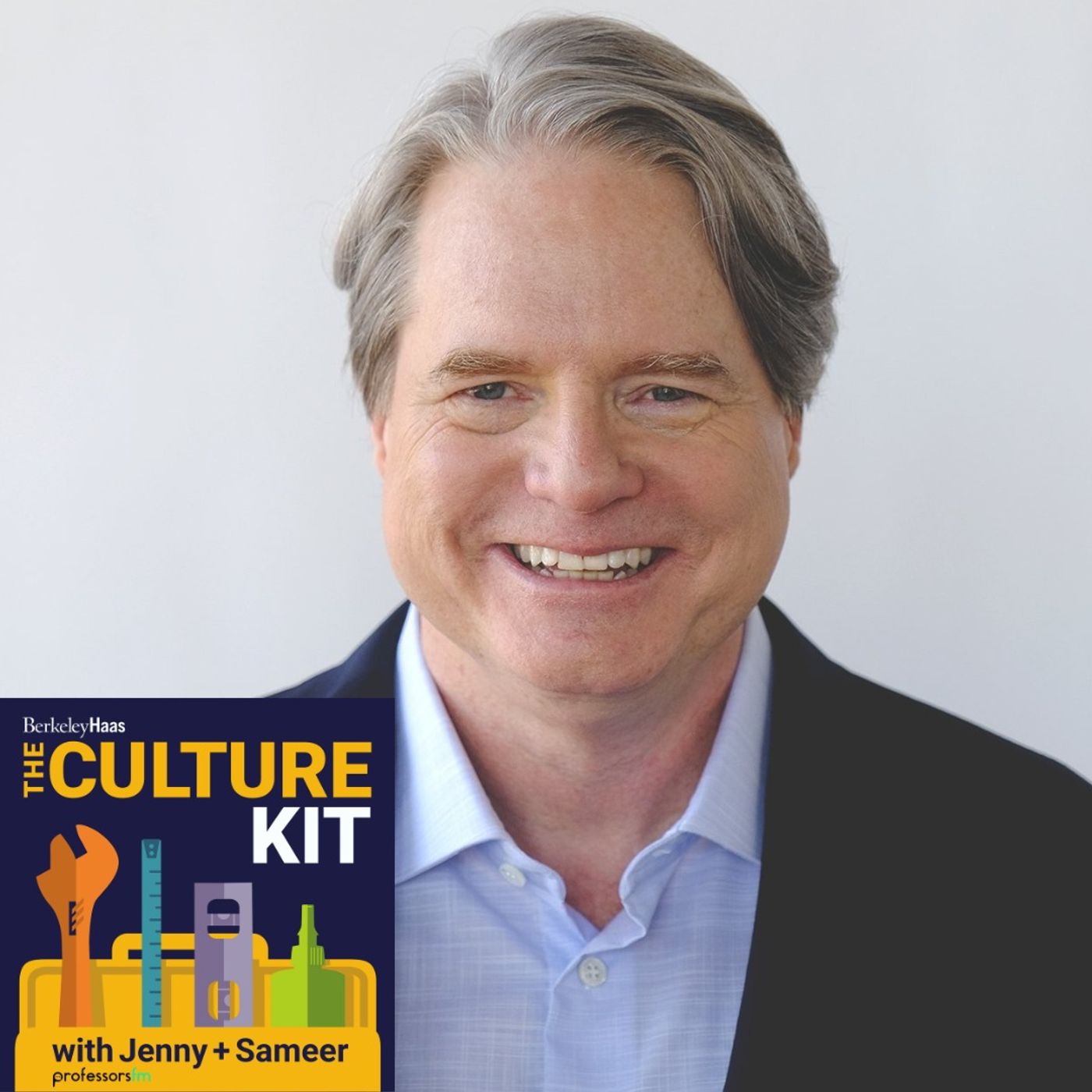
“Tribalism” has a generally negative reputation these days. It’s often used to refer to an us-versus-them mentality, or a culture that’s divisive and exclusionary. But that perception, according to cultural psychologist Michael Morris, “could not be more inaccurate as a description of what human tribal instincts are. They're instincts for solidarity, not for hostility.” On this episode of The Culture Kit, hosts Jenny Chatman and Sameer Srviastava interview Michael Morris, a professor at Columbia Business School, about his new book Tribal: How the Cultural Instincts That Divide Us Can Help Bring Us Together. Jenny, Sameer, and Michael discuss how tribal instincts allowed humans to break away from the primate back, and how these deeply ingrained instincts show up in organizations today. They also delve into modern and historical examples of leaders utilizing tribalism to adapt culture and even heal rifts.3 Main Takeaways from Jenny & Sameer’s interview with Michael Morris:Leaders can recognize and harness the three main types of tribal psychology:The Peer Code – This is the impulse to match the behavior of the people around us.These norms allow for the smooth functioning of human interaction and are the basis for collaboration.The Hero Code – This is the emulation of those with status or prestige. This instinct is triggered by symbols.The Ancestor Code – This is the curiosity and urge to maintain the traditions and customs of past generations. This instinct is triggered by ceremonies and rituals.Show Links:Tribal: How the Cultural Instincts That Divide Us Can Help Bring Us Together, by Michael MorrisMichael Morris’ Website“A Language-Based Method for Assessing Symbolic Boundary Maintenance between Social Groups.” By Anjali Bhatt, Amir Goldberg, and Sameer B. Srivastava. Sociological Methods & Research, 2022.“Two-Sided Cultural Fit: The Differing Behavioral Consequences of Cultural Congruence Based on Values Versus Perceptions.” By Richard Lu, Jennifer A. Chatman, Amir Goldberg, and Sameer B. Srivastava. Organization Science, 2024.2025 Culture Connect Conference, Berkeley Center for Workplace Culture and InnovationFull Episode Transcript
Learn more about the podcast and the Berkeley Center for Workplace Culture and Innovation at www.haas.org/culture-kit. *The Culture Kit with Jenny & Sameer is a production of Haas School of Business and is produced by University FM.* Hosted by Simplecast, an AdsWizz company. See pcm.adswizz.com for information about our collection and use of personal data for advertising.

Should corporate leaders speak out on social and political issues? And if they decide to do so, what’s the best approach?On this episode of The Culture Kit, hosts Jenny Chatman and Sameer Srivastava chat with Matt Kohut, a leadership communications expert, about his new book Speaking Out: The New Rules of Business Leadership Communications. Jenny, Sameer, and Matt dig into historical examples of corporations and politics colliding, the potential pros and cons of deciding to weigh in on social issues, and strategies for business leaders to evaluate risk and maintain accountability when deciding to speak out. This episode’s question came from Laszlo Bock, co-founder of Humu and former Senior Vice President of People Operations at Google. 3 Main Takeaways from Jenny & Sameer’s interview with Matt Kohut:Should you take a position at all? This should always be the first step before deciding what the position is or how to communicate it.Mission relevance: What are your organization’s values and how will taking a stance on an issue align with those values?Evaluate risk: How might this position potentially backfire? Hold a pre-mortem meeting to help determine risk.Show Links:Speaking Out: The New Rules of Business Leadership Communications by Matthew Kohut (October 2024)Compelling People: The Hidden Qualities That Make Us Influential by Matthew Kohut and John Neffinger“When to Talk Politics in Business: Theory and Experimental Evidence of Stakeholder Responses to CEO Political Activism.” Working paper by Tommaso Bondi, Vanessa Burbano, and Fabrizio Dell’Acqua. Cornell Tech and SC Johnson School of Management, Cornell University, New York, 2023.Full Episode Transcript
Learn more about the podcast and the Berkeley Center for Workplace Culture and Innovation at www.haas.org/culture-kit. *The Culture Kit with Jenny & Sameer is a production of Haas School of Business and is produced by University FM.* Hosted by Simplecast, an AdsWizz company. See pcm.adswizz.com for information about our collection and use of personal data for advertising.

In the season two premiere of The Culture Kit, hosts Jenny Chatman and Sameer Srivastava tackle the complex question of how to create a culture of inclusion and belonging in the face of growing polarization in the workplace and society at large.To help answer this question, Jenny and Sameer turn to DEI expert Jarvis Sam. Jarvis is the CEO and founder of the strategy firm, Rainbow Disruption, which advises organizations on developing practical solutions that champion DEI in the workplace. Before that, Jarvis was the Chief Diversity, Equity, and Inclusion Officer at Nike, where he spearheaded initiatives to enhance diverse representation and foster inclusive leadership. He also led organizational efforts around DEI with athletes like Serena Williams and Lebron James, as well as leagues like the WNBA and NFL. Jenny, Sameer, and Jarvis discuss what an inclusive culture really means, go over actionable steps leaders can take to create and manage a culture of inclusion and belonging, and address some of the biggest myths and misconceptions surrounding DEI. Full episode Transcript here.Show Links:Resources referenced by Jarvis Sam:The Rainbow DisruptionDEI C.R.E.D.E.N.T.I.A.L by Jarvis SamAmy C. Edmondson on psychological safetyUncovering Talent: A New Model of Inclusion, by Christie Smith and Kenji Yoshino, Deloitte, 2018.Research by Jenny Chatman on group diversity: Blurred Lines: How the Collectivism Norm Operates Through Perceived Group Diversity to Boost or Harm Group Performance in Himalayan Mountain Climbing (PDF), By Jennifer A. Chatman, Lindred L. Greer, Eliot Sherman, Bernadette Doerr, Organization Science, 2019Political Correctness and Group Composition: A Research Agenda, By Jennifer A. Chatman, Jack A. Goncalo, Jessica R. Kenndy, and Michelle M. Duguid. Research on Managing Groups and TeamsBeing distinctive versus being conspicuous: The effects of numeric status and sex-stereotyped tasks on individual performance in groups, By Jennifer A. Chatman, Alicia D. Boisnier, Sandra E. Spataro, Cameron Anderson, and Jennifer L. Berdahl. Organizational Behavior and Human Decision Processes.The Influence of Demographic Heterogeneity on the Emergence and Consequences of Cooperative Norms in Work Teams Academy of Management Journal, by Jennifer A. Chatman and Francis J. Flynn, Academy of Management Journal.Research by Sameer Srivastava on measuring culture through language using AI tools: The New Analytics of Culture, by Matthew Corritore, Amir Goldberg, and Sameer B. Srivastava, Harvard Business Review, 2020How can AI Enrich Our Understanding of Organizational Culture? By Amir Goldberg and Sameer B. Srivastava, Management and Business Review, 2022Language as a Window into Culture, by Sameer B. Srivastava and Amir Goldberg, California Management Review, 2017Related episodes of The Culture Kit with Jenny & Sameer:Amy Edmondson & Steve Brass on Psychological SafetyHow to Keep Remote Workers Connected to the Mission, with Hubspot CEO Yamini RanganThree main takeaways from Jenny & Sameer’s interview with Jarvis Sam:Know your “why”: Organizations need to ask, “Why are we doing this work from the very beginning? And how does that link to key actions that we may have taken previously?Comprehensive integration is key: Inclusion can’t be an add-on. It should be a key attribute in every area of the organization including talent acquisition, management, and succession planning.DEI Is not just for underrepresented communities: Inclusive cultures are ones where every team member feels that they can show up as their truest selves.
Learn more about the podcast and the Berkeley Center for Workplace Culture and Innovation at www.haas.org/culture-kit. *The Culture Kit with Jenny & Sameer is a production of Haas School of Business and is produced by University FM.* Hosted by Simplecast, an AdsWizz company. See pcm.adswizz.com for information about our collection and use of personal data for advertising.
While “psychological safety” has become somewhat of a buzzword in management circles, it’s a concept that forward-thinking leaders dismiss at their own peril. “I cannot think of a place where lower psychological safety would help you in any way,” says Harvard Business School Professor Amy Edmondson, known for her pioneering research on the topic. “Lower psychological safety would make you take fewer risks, but not necessarily better risks. So having anxiety about what other people think of you isn't a great state for optimal performance.”In this bonus episode of The Culture Kit with Jenny & Sameer, Edmondson, along with WD-40 CEO Steve Brass, joins hosts Jenny Chatman and Sameer Srivastava to discuss how to create a culture of psychological safety—and why it matters. This session was held November 13, 2023 as part of the Culture XChange series sponsored by the Berkeley Center for Workplace Culture and Innovation and is being broadcast publicly for the first time. Show Links:The Fearless Organization: Creating Psychological Safety in the Workplace for Learning, Innovation, and Growth. By Amy C. Edmonson. Hoboken, NJ: John Wiley & Sons, 2018.“What Google Learned From Its Quest to Build the Perfect Team.” By Charles Duhigg, The New York Times Magazine, Feb. 25, 2016.“When feeling safe isn’t enough: Contextualizing models of safety and learning in teams.” Sanner, B., & Bunderson, J. S. (2015). Organizational Psychology Review, 5(3), 224-243. https://doi.org/10.1177/2041386614565145Tribe Culture: How It Shaped WD-40 Company. By Garry Ridge. Telemachus Press, 2020.Full Episode Transcript
Learn more about the podcast and the Berkeley Center for Workplace Culture and Innovation at www.haas.org/culture-kit. *The Culture Kit with Jenny & Sameer is a production of Haas School of Business and is produced by University FM.* Hosted by Simplecast, an AdsWizz company. See pcm.adswizz.com for information about our collection and use of personal data for advertising.
When Patrick Collison and his brother John Collison founded digital payment company Stripe in 2010, he didn't come in with “any kind of enlightened leadership expertise or genetic muscle memory.” As the company took off and grew to a dominant platform with $1 trillion in total payment volume and millions of customers, its culture grew more intentional—and strategic. “Because Stripe's domain is really complicated and the details really matter, if we make a mistake—just one mistake—there's a very good chance that somebody's paycheck is wrong…There's a culture at Stripe of just really prizing the small details,” he says.In this bonus episode of The Culture Kit with Jenny & Sameer, Collison shares his leadership journey and the evolution of Stripe’s unique culture in a fireside chat with hosts Jenny Chatman and Sameer Srivastava. This interview took place on April 16, 2024 as part of the Dean’s Speaker Series, co-sponsored by the Berkeley Center for Workplace Culture and Innovation. Bringing in a diverse mix of preeminent business leaders, the Dean's Speaker Series provides the Haas community with insightful perspectives on effective leadership and opportunities for thought-provoking discussions. Learn more.Full Episode Transcript here.
Learn more about the podcast and the Berkeley Center for Workplace Culture and Innovation at www.haas.org/culture-kit. *The Culture Kit with Jenny & Sameer is a production of Haas School of Business and is produced by University FM.* Hosted by Simplecast, an AdsWizz company. See pcm.adswizz.com for information about our collection and use of personal data for advertising.
What are the benefits and challenges of running a fully remote company? What does research show about the shift to “work from anywhere”? In this bonus episode of The Culture Kit, host Sameer Srivastava interviews Prithwiraj (Raj) Choudhury, the Lumry Family Associate Professor at the Harvard Business School, and Brandon Sammut, Chief People Officer at Zapier, on how to use technology and organizational insights to create high-performing, inclusive, and engaging remote work cultures.Choudhury is one of the pioneers in research on the future of work, especially the changing geography of work. He was included in Forbes’ Future of Work 50 list last year and Time’s Charter 30 list of thinkers and innovators shaping the future of work in 2024.Sammut is a two-time chief people officer currently at Zapier, a software automation platform with an all-remote team that spans over 40 countries. He believes that remote work is the way to expand both individual opportunity and business results, drawing on his prior experience in talent acquisition, talent development, strategy, consulting, business development, and venture capital.This episode is based on a CultureXChange forum held on April 11th, 2024 by the Berkeley Center for Workplace Culture and Innovation. Learn more.Full Episode Transcript here.
Learn more about the podcast and the Berkeley Center for Workplace Culture and Innovation at www.haas.org/culture-kit. *The Culture Kit with Jenny & Sameer is a production of Haas School of Business and is produced by University FM.* Hosted by Simplecast, an AdsWizz company. See pcm.adswizz.com for information about our collection and use of personal data for advertising.
In a fireside chat with host Jenny Chatman, best-selling author Michael Lewis shares the inside story of the strange culture Sam Bankman-Fried created at his failed crypto exchange, FTX. Lewis got to know SBF for his latest book, "Going Infinite: The Rise and Fall of a New Tycoon." The story is a fascinating example of a strong organizational culture gone terribly wrong. Lewis is known for his New York Times bestselling books, including Moneyball, The Big Short, Liar’s Poker, and The Blind Side. He started his career in finance on the bond desk at Salomon Brothers, and then left the business world to become a journalist. His books tell stories about real characters and provide insights into the business world—from working on Wall Street to the 2008 financial crisis to the rise and fall of cryptocurrency. This interview was held on November 8, 2023 as part of the Dean's Speaker Series at Berkeley Haas. Bringing in a diverse mix of preeminent business leaders, the series provides the Haas community with insightful perspectives on effective leadership and opportunities for thought-provoking discussions. Learn more.Full Episode Transcript here.
Learn more about the podcast and the Berkeley Center for Workplace Culture and Innovation at www.haas.org/culture-kit. *The Culture Kit with Jenny & Sameer is a production of Haas School of Business and is produced by University FM.* Hosted by Simplecast, an AdsWizz company. See pcm.adswizz.com for information about our collection and use of personal data for advertising.
With the world of work constantly evolving and the introduction of new technologies like AI, how can leaders prepare themselves to successfully lead their companies into the new frontier?On the season finale of The Culture Kit, Haas School of Business professors and organizational culture experts Jenny Chatman and Sameer Srivastava are joined by a special guest. Laszlo Bock, one of the leading industry voices on people management, was the Senior Vice President of People Operations at Google, served as the CEO of Humu, and then co-founded Gretel AI. He's also the author of The New York Times’ bestseller, Work Rules!: Insights from Inside Google That Will Transform How You Live and Lead. Jenny, Sameer, and Laszlo answer a question from Melissa Wernick, the Global Chief People Officer for Kraft Heinz, on what key skills leaders will need to be successful in the evolving workplace. They also announce the Berkeley Transformative CHRO Leadership Program that they just launched through Berkeley Executive Education.Do you have a vexing question about work that you want Jenny and Sameer to answer? Submit your “Fixit Ticket!” You can learn more about the podcast and the Berkeley Center for Workplace Culture and Innovation at www.haas.org/culture-kit.*The Culture Kit with Jenny & Sameer is a production of Haas School of Business and is produced by University FM.* Jenny & Sameer’s 3 Main Takeaways:The best leaders are diagnostic and deliberate. They look at things on a situation-by-situation basis and ask themselves: How can I add value here? And they plan for that.Cultivate a broad and flexible set of leadership styles. Situations are varied and vast, so have a broad and flexible leadership portfolio that you can draw from depending on what the circumstances are.The best leaders recognize that they're never actually done learning. Leadership development is a lifelong pursuit, so keep working on it and be a student always (as we say at Haas). Show Links:Work Rules!: Insights from Inside Google That Will Transform How You Live and Lead by Laszlo BockNavigating the Jagged Technological Frontier: Field Experimental Evidence of the Effects of AI on Knowledge Worker Productivity and Quality [Harvard Business School]Getting to Diversity: What Works and What Doesn’t by Frank Dobbin and Alexandra KalevRight Kind of Wrong: The Science of Failing Well by Amy EdmondsonCreativity from Constraint? How the Political Correctness Norm Influences Creativity in Mixed-sex Work Groups [Administrative Science Quarterly]Awe: The New Science of Everyday Wonder and How It Can Transform Your Life by Dacher KeltnerCEO Fires 90 Percent of Support Staff, Saying AI Outperforms Them [Futurism]How Google Sold Its Engineers on Management [Harvard Business Review]Chatman, Jennifer A., Sameer Srivastava, and David Rochlin, “How Lyft’s Strategy Informed their Return to Work Approach.” University of California, Berkeley Haas Case Series, 2024. forthcoming.Maersk: Driving Culture Change at a Century-Old Company to Achieve Measurable Results [Berkeley Haas Case Series]Kaiser Permanente: The Electronic Health Record Journey [Kaiser Permanente International]The Next Normal: Let’s Rewrite the Rules Together [Mars]Vodafone: Managing Advanced Technologies and Artificial Intelligence [Harvard Business Publishing]The Berkeley Transformative CHRO Leadership Program co-led by Laszlo Bock [Berkeley Exec Ed]Full Episode Transcript
Learn more about the podcast and the Berkeley Center for Workplace Culture and Innovation at www.haas.org/culture-kit. *The Culture Kit with Jenny & Sameer is a production of Haas School of Business and is produced by University FM.* Hosted by Simplecast, an AdsWizz company. See pcm.adswizz.com for information about our collection and use of personal data for advertising.

Comments

Download from Google Play

Download from App Store
 United States