


 Claim Ownership
The Bearded Bereans
Subscribed: 0Played: 0
Subscribe

© The Bearded Bereans
Description
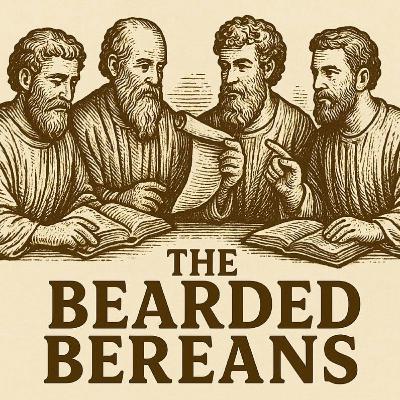
The Bearded Bereans is a video podcast wherein three friends- Jason, Maks, and Cole discuss various topics of the day in the light of the scriptures. A couple of years ago, the idea began to come together in Maks' "Cigarage" where the friends regularly met to enjoy fellowship and discussion- covering theology, politics, culture- all around the sweet aroma of a good stogie! After one such meeting, the idea hit them... maybe someone else would enjoy these conversations! Please comment, like, and follow The Bearded Bereans!
54 Episodes
Reverse
Summary
In this episode, the hosts introduce the third season of the Bearded Bereans podcast, which will focus on the topic of marriage. They discuss the importance of understanding God's design for marriage and how it differs from the cultural views on marriage. They also highlight the high divorce rate within the church and the need for believers to align their understanding of marriage with the teachings of Scripture. The hosts express their desire to bring clarity to the topic and address various aspects of the marriage covenant throughout the season. In this conversation, the speakers discuss the importance of understanding the true nature of marriage and the role of the church in upholding the sanctity of marriage. They highlight the need for the church to be the pillar of truth and rebut falsehoods and lies about marriage. They also explore the influence of neo-Marxist ideologies on the deterioration of marriage as an institution in Western civilization. The speakers emphasize the need for a God-centered theology and a proper understanding of God's love and His purpose for marriage. They encourage listeners to study God's Word and seek His guidance in order to protect the sanctity of marriage.
Chapters
00:00 Introduction and Welcome
12:58 Topic Introduction: Marriage
14:19 The State of Marriage in Society and the Church
19:10 Challenges and Misconceptions Surrounding Marriage
20:36 The Role of the State and the Church in Defining Marriage
21:27 The Church as the Pillar of Truth
27:49 The Impact of Man-Centered Theology
35:08 Embracing a God-Centered Theology
40:36 Understanding the True Nature of the Father
54:36 Objectives for the Season
57:07 New Outro.mp4
Summary
In this conversation, the hosts discuss the importance of recognizing Christ as the King in building a new society. They emphasize the need for a solid foundation and reference point, which can only be found in Christ. They highlight the reality that without Christ as the cornerstone, societies will ultimately fail. They also discuss the importance of repentance and worshiping Christ as the King, rather than just giving lip service. The hosts mention the need for the government to recognize its place under Christ and implement laws that align with His teachings. In this conversation, the speakers discuss various themes related to biblical law and its application in society. They emphasize the importance of structuring the legal system based on the laws given by Christ in the scriptures. They also highlight the need for a victim-centered justice system, where restitution is paid to the victim rather than the government. The speakers argue for the definition of marriage as a covenant union between one man and one woman, and they discuss the impact of biblical principles on family relationships. They conclude by emphasizing the importance of being faithful in our own households and perpetuating a godly society.
Takeaways
Recognizing Christ as the King is crucial in building a new society.
Christ should be the solid foundation and reference point for all aspects of society.
Repentance and worship are essential in acknowledging Christ as the King.
The government should recognize its place under Christ and implement laws that align with His teachings. The legal system should be based on the laws given by Christ in the scriptures.
A victim-centered justice system, where restitution is paid to the victim, is preferable to the current system.
Marriage should be defined as a covenant union between one man and one woman.
Family relationships are the foundation of society, and being faithful in our own households is crucial.
By being faithful in our families and perpetuating a godly society, we can have a positive impact on society as a whole.

Summary
In this episode, Cole and JB discuss the concept of the reign of terror in the context of the current political climate. They explore the rise of extremism and the dismantling of the old regime, as well as the application of neo-Marxism in various aspects of society. They also emphasize the importance of Christians offering an alternative view of the good life and living out the joy of the Lord. In this conversation, Cole and JB discuss the need for Christians to find a community that exhibits the abundant life that Christ calls us to. They also explore the failure of the church in addressing Marxism and the Marxist takeover of education. They emphasize the necessity of secession as a means of protection against the reign of terror and call for repentance of our leaders. They implore listeners to pray for our leaders and for the fruits of repentance to be seen.
Takeaways
The current political climate reflects the beginning stages of the reign of terror, characterized by the rise of extremism and the dismantling of the old regime.
Neo-Marxism is being applied in various aspects of society, such as critical race theory and critical queer theory, with the goal of overthrowing the ruling elite and redistributing power.
As Christians, it is important to offer an alternative view of the good life and live out the joy of the Lord, providing a compelling alternative to the ideologies of the world.
The transgender movement and other similar movements offer a sense of community and acceptance, which should be fulfilled in Christ and in the church.
To offer a true alternative, Christians must first experience and embody the alternative themselves, repenting of any shortcomings and seeking to live according to God's commands. Find a community that exhibits the abundant life that Christ calls us to
The church has failed in addressing Marxism and the Marxist takeover of education
Secession is necessary as a means of protection against the reign of terror
Call for repentance from our leaders and pray for their hearts to be stirred
Repentance starts at home and in the church
Summary
In this conversation, the hosts discuss the essay by Neil Gordon on responding to a tyrannical government as Christians. They touch on the importance of joy in the Lord and share their cigar and drink choices. They then summarize the main points of the essay, including the biblical case for resistance against tyranny, the stages of a revolution, and the concept of counterrevolution through secession. They emphasize the peaceful nature of secession and the need for negotiation and diplomacy in the process. They also highlight the Christian desire for peace and the importance of avoiding bloodshed. The hosts acknowledge the complexity of secession and the challenges of addressing issues such as federal lands, debt, and citizenship. They stress the Christian virtue of seeking what is best for everyone involved and the desire to live in peace. The conversation explores the idea of secession as a means of counterrevolution and discusses the importance of repentance and building a Christian culture. The speakers emphasize that secession is not about overthrowing the current ruling regime, but rather about being left alone to live according to Christian values. They also discuss the possibility of starting Christian schools and establishing Christian influence in society as alternative means of counterrevolution. The conversation concludes with the reminder that the church will survive and thrive, and that God's promises are sure and trustworthy.
Takeaways
The Christian response to a tyrannical government should be characterized by joy in the Lord and a desire for peace.
Secession as a means of counterrevolution should be pursued peacefully and through negotiation and diplomacy.
Avoiding bloodshed and seeking what is best for everyone involved should be the guiding principles in the process of secession.
The complexity of secession requires addressing issues such as federal lands, debt, and citizenship through peaceful means.
The ultimate goal for Christians is to establish the kingdom of God and to patiently wait for His reign. Secession is not about overthrowing the current ruling regime, but about being left alone to live according to Christian values.
Building a Christian culture and establishing Christian influence in society are alternative means of counterrevolution.
The church will survive and thrive, regardless of the outcome of counterrevolutionary efforts.
Repentance is the starting point for any meaningful change in society.
God's promises are sure and trustworthy, and we can trust in His ultimate victory.
Summary
In this conversation, Cole, Maks, and Jason discuss the essay by Neil Gordon on the topic of secession as a means of counterrevolution. They review the Texas versus White Supreme Court case, which concluded that the Union is perpetual and a state cannot secede. They question the logic and reasoning behind this decision and argue that the perpetuity of the Union is not supported by the Constitution. They also emphasize the importance of passing judgment and questioning the government as Christians. The conversation explores the flawed logic and historical inaccuracies in the Supreme Court case Texas v. White, which claimed that the Union is perpetual and states cannot secede. The speakers discuss how the argument of perpetuity is illogical and goes against the historical record of secession being a common topic of discussion. They also highlight the danger of claiming perpetuity for a human institution, as it is an implicit claim of deity. The conversation concludes by emphasizing the importance of consent of the states and the need for open discussions about secession.
Takeaways
Secession as a means of counterrevolution is a topic of discussion in this conversation.
The Texas versus White Supreme Court case concluded that the Union is perpetual and a state cannot secede.
The logic and reasoning behind this decision are questioned, and it is argued that the perpetuity of the Union is not supported by the Constitution.
Passing judgment and questioning the government is important for Christians. The argument of perpetuity in the Supreme Court case Texas v. White is flawed and goes against the historical record of secession being a common topic of discussion.
Claiming perpetuity for a human institution is an implicit claim of deity and goes against the nature of God's kingdom, which is the only perpetual kingdom.
States have the right to discuss secession and it is important to have open conversations about consent of the states.
The conversation highlights the danger of equating perpetuity with human institutions and the need to reject the notion of a perpetual Union.
Chapters
00:00 Introduction and Excitement (Again)
03:35 Discussing the Essay by Neil Gordon
08:35 Secession as a Viable Reaction
13:14 The Supreme Court Case Texas v. White
26:39 Stare Decisis and Overruling Precedents
29:06 The Nature of the Error in Texas v. White
30:12 Introduction and Setting the Stage
32:39 Debt Ceiling and the Implications of a Perpetual Union
37:03 The United States is Not Perpetual
57:49 Rejecting the Notion of a Perpetual Union
01:00:44 The Perpetual Kingdom of God
01:05:11 Avoiding the Trap of Treason and Cessation
01:06:23 New Outro.mp4
Summary
The conversation begins with a lighthearted discussion about the pronunciation of the word 'Mishka' and transitions into a discussion about cigars and whiskey. The main theme of the conversation is the current state of the United States and the potential for a counterrevolution. The hosts discuss the concept of secession and the modern-day nullification crisis happening at the border. They also talk about the Marxist takeover of America and the window for counterrevolution. The conversation ends with a reminder that our hope is in Christ and the importance of organizing and supporting righteous government. The conversation explores the doctrine of the lesser magistrate and the concept of secession. It discusses the role of lesser magistrates in protecting their people from tyranny, even if it means opposing the greater magistrate. The conversation also delves into the constitutional justification for secession, highlighting the 10th amendment and the absence of explicit language granting the federal government the power to regulate states leaving the union. The counter arguments of implied powers and the Supreme Court case of Texas v. White are also addressed.
Takeaways
The pronunciation of the word 'Mishka' sparks a lighthearted discussion among the hosts.
The conversation shifts to cigars and whiskey, with the hosts sharing their preferences and plans for future cigar festivals.
The main theme of the conversation is the current state of the United States and the potential for a counterrevolution.
The hosts discuss the concept of secession and the modern-day nullification crisis happening at the border.
They also talk about the Marxist takeover of America and the window for counterrevolution, which is believed to be closing.
The conversation ends with a reminder that our hope is in Christ and the importance of organizing and supporting righteous government. The doctrine of the lesser magistrate emphasizes the duty of lesser magistrates to protect their people from tyranny, even if it means opposing the greater magistrate.
Secession is a potential remedy for Christians in the face of government tyranny, and it is important for Christians to understand the biblical and constitutional justifications for it.
Constitutionally, the power to regulate states leaving the union is not granted to the federal government, as the 10th amendment reserves powers not delegated to the federal government to the states.
The counter arguments of implied powers and the Supreme Court case of Texas v. White are not sufficient to negate the constitutional viability of secession.
Engaging with local politics and supporting faithful local magistrates is crucial for Christians to protect their values and defend against lawlessness and double standards.
Summary
In this episode, the hosts discuss Neil Gordon's essay titled 'Escaping the Beast' and its analysis of Crane Britton's 'Anatomy of a Revolution'. They explore the stages of a revolution and how they apply to the current state of American society. The conversation touches on the erosion of the old regime, the long march through institutions, and the loss of virtues like honor and courage. They emphasize the importance of recognizing the ongoing revolution and the need for active engagement in preserving the values of the old regime. The conversation explores the concept of God's providence and the current state of the nation from a biblical perspective. The speakers discuss the idea that the nation has become more conservative in its Christian foundation than it actually is. They also touch on the role of Marxism and the belief that it will eventually be overcome by Christ. The conversation emphasizes the need for Christians to understand the sovereignty of God and to recognize the idols that exist in society, particularly the idol of the state. The speakers highlight the importance of knowing the true God and pledging allegiance to Him rather than to the state. They also discuss the stages of revolution and the potential for a reign of terror in the future. The conversation concludes with a call to action and a reminder of the hope that exists in Christ.
Takeaways
The hosts discuss Neil Gordon's essay on the stages of a revolution and its application to the current state of American society.
They highlight the erosion of the old regime, including institutions like the electoral college and the rule of law.
The conversation emphasizes the long march through institutions and the loss of virtues like honor and courage.
They stress the importance of recognizing the ongoing revolution and the need for active engagement in preserving the values of the old regime. The nation has become more conservative in its Christian foundation than it actually is.
Marxism will eventually be overcome by Christ.
It is important for Christians to understand the sovereignty of God and recognize the idols that exist in society, particularly the idol of the state.
The stages of revolution include protest, violence, propaganda, dual sovereignty, and a potential reign of terror.
There is hope in Christ amidst the challenges and uncertainties of the current state of the nation.
Summary
In this episode, the hosts discuss the biblical case for resistance, focusing on an essay by Neil Gordon called 'Escaping the Beast.' They introduce the concept of irreconcilable differences between factions in society and the need for peaceful separation. They also explore John Knox's views on civil government and its limited authority. The hosts analyze Romans 13 and argue that civil government cannot command anything contrary to or outside of God's law. They emphasize the importance of understanding the hierarchy of authority and the role of government as a servant of God. The principle of authority and submission exists in all aspects of society, including the state, the church, and the family. However, we often ignore or selectively choose which authorities to obey. Tyranny is any power exercised that is not expressly given by God. It is power that is stolen and used for personal gain rather than for the good of Christ. The doctrine of the lesser magistrate states that when a magistrate goes beyond the limits of their authority, they become a tyrant and resistance is justified. As Christians, we are called to resist tyranny and come to the aid of those who are being enslaved.
Takeaways
The hosts discuss the biblical case for resistance and the concept of irreconcilable differences between factions in society.
They emphasize the need for peaceful separation and explore John Knox's views on civil government and its limited authority.
The hosts analyze Romans 13 and argue that civil government cannot command anything contrary to or outside of God's law.
Understanding the hierarchy of authority and the role of government as a servant of God is crucial in evaluating its actions. The principle of authority and submission exists in all aspects of society.
Tyranny is any authority that is taken without being given.
The doctrine of the lesser magistrate justifies resistance when a magistrate becomes a tyrant.
As Christians, we are called to resist tyranny and come to the aid of those who are being enslaved.
Chapters
00:00 Introduction and Welcome
01:37 Season 2 Recap
03:46 Choosing Cigars
04:58 Discussion on Cigars
05:44 Boosting Self-Morale
07:06 Introduction to the Essay
07:35 The Two Factions in Society
08:56 John Knox's Definition of Tyranny
09:54 Exposition of Romans 13 by John Knox
12:32 Reading Romans 13:1-4
13:43 Premises and Conclusion of Neil Gordon's Argument
31:39 The Freedom in Government's Limited Authority
32:37 The Principle of Authority in Society
35:47 The Inconsistency in Applying the Regulative Principle
37:02 The Civil Corollary to the Regulative Principle
41:46 The Principle of Tyranny in Various Institutions
46:51 The Doctrine of the Lesser Magistrate
53:14 The Mauburg Pastors and the Doctrine of the Lesser Magistrate
59:37 The Historical Context of Tyranny and Resistance
01:05:57 Recognizing Past Mistakes and Taking Responsibility
01:12:01 The Duty to Come to the Aid of the Enslaved
01:13:42 Seeking a Peaceful Response to Tyranny
01:15:38 New Outro.mp4
Summary
In this conversation, Cole Strawn and Jason Bolt discuss Crane Brinton's book on revolutions and Neil Gordon's analysis of it. They explore the stages of a revolution, including the preliminary signs, the increase in protests and propaganda against the old regime, and the response from the old regime. They also discuss the importance of the old regime's response in determining the success of the revolution. The conversation touches on the American Revolution and the Civil War as examples. They emphasize the significance of self-censorship and the need for truth in society. In this conversation, JB and Cole discuss the stages of a revolution as outlined by Neil Gordon in his essay 'The American Revolution as a Model for the Modern American Revolution.' They identify six stages: the old regime, the moderate wing of the revolution, the extremists, the reign of terror, the new normal, and the new regime. They discuss how these stages play out in historical revolutions and draw parallels to current events. They emphasize the importance of studying history to understand the present and make informed decisions.
Takeaways
Understanding the stages of a revolution can provide insights into the current state of affairs in society.
Preliminary signs, such as structural, economic, political, and social weaknesses, may indicate the possibility of a revolution.
The response from the old regime, either with sufficient or insufficient force, plays a crucial role in the success of the revolution.
Self-censorship is a prevalent issue in society and can hinder the pursuit of truth.
The American Revolution and the Civil War serve as examples of revolutions with different outcomes. Revolutionary movements go through distinct stages, including the old regime, the rise of moderates, the emergence of extremists, the reign of terror, the establishment of a new normal, and the rise of a new regime.
The moderates in a revolution are often displaced by extremists who criticize their progress and demand more radical change.
The reign of terror is a stage in which the third regime of extremists systematically eliminates anything associated with the old regime.
Eventually, the extreme measures of the third regime become unsustainable, leading to a desire for change and the rise of a fourth regime of moderates.
Studying history is crucial to understanding the present and making informed decisions about the future.
The current state of the modern American revolution is discussed in the next part of Neil Gordon's essay.
Summary
In this episode, Cole and JB discuss the topics of Christian liberty and discerning the will of God. They explore how God communicates with us, the importance of the Scriptures, and the role of the Holy Spirit in illuminating the Word. They also address the question of whether God still speaks through prophets today and the doctrine of cessationism. The conversation emphasizes the objective nature of sin and the need for clarity and wisdom in understanding God's expectations for our lives. In evangelical churches, there is often a misunderstanding of what love is, leading to manipulation and guilt-tripping. However, there are churches that prioritize freedom of conscience and allow individuals to live according to the scriptures without being coerced. Sin is defined as any violation or lack of conformity to God's law, and in those areas, there is no liberty. But in everything else, there is freedom. The prevalent mindset of expecting private communication from God is driven by a desire to feel special and have a direct link with Him. This mindset is not normative throughout redemptive history or church history. It is important to rely on the written word of God as the standard for decision-making and to have low expectations of others, allowing them the same freedom and holding them accountable to the scriptures.
Takeaways
God speaks to us primarily through His written Word, the Scriptures.
The Scriptures contain everything we need for life and godliness.
The Holy Spirit helps us understand and apply the Scriptures.
Sin is an objective category, and God's expectations for us are clearly communicated in the Scriptures.
The doctrine of cessationism affirms that God no longer speaks through prophets with new revelation.
Understanding God's expectations and the objective nature of sin is crucial for living a life of Christian liberty. In evangelical churches, there can be a misunderstanding of love, leading to manipulation and guilt-tripping.
Some churches prioritize freedom of conscience and allow individuals to live according to the scriptures without coercion.
Sin is defined as any violation or lack of conformity to God's law, and in those areas, there is no liberty.
In everything else, there is freedom, and God has not typically communicated privately with individuals throughout redemptive history.
It is important to rely on the written word of God as the standard for decision-making and to have low expectations of others, allowing them the same freedom and holding them accountable to the scriptures.
Chapters
00:00 Introduction and Cigar Discussion
09:12 God's Communication through the Scriptures
13:05 The Doctrine of Cessationism
30:51 The Holy Spirit's Role in Illuminating the Scriptures
41:41 The Standard of God's Commandments
57:52 Happiness in Low Expectations
01:10:07 New Outro.mp4
Summary
In this episode, the hosts introduce Season 2 and discuss the themes that will be explored. They highlight the existence of two opposing worldviews in society and the need to recognize the ongoing battle between them. They emphasize the importance of capturing the hearts of those who are unaware of the struggle and the eternal ramifications it holds. The hosts also discuss the uniqueness of the current times, including the impact of technology and the erosion of traditional values. They introduce an essay that will be used as a guide to address these issues and provide biblical perspectives on resistance to tyranny. In this conversation, the hosts discuss an essay by Neil Gordon that explores the idea of counter revolution and the doctrine of resistance to tyranny. They examine the stages of a revolution as outlined in Crane Brinton's book, 'The Anatomy of a Revolution,' and apply it to the modern American context. The conversation emphasizes the importance of developing a doctrine of resistance and understanding the Christian response to the ongoing revolution.
Takeaways
There are two opposing worldviews in society, and it is important to recognize the ongoing battle between them.
Many people are unaware of the struggle and the eternal ramifications it holds, and it is crucial to capture their hearts and open their eyes to the truth.
The current times are unique due to the impact of technology and the erosion of traditional values.
Resistance to tyranny is a biblical concept, and historical examples can provide guidance in addressing the challenges of the present. Counter revolution and the doctrine of resistance to tyranny are important topics to explore in the current political climate.
Understanding the stages of a revolution can provide insights into the progress of the modern American revolution.
Developing a doctrine of resistance and understanding the Christian response to the revolution is crucial for individuals.
Summary
In this episode, Jason and Cole discuss the problems with socialized education and advocate for the abolition of government schools. They emphasize the importance of repentance and truth-telling in addressing the current state of education. They also explore the potential of school vouchers and charter schools as short-term solutions, while cautioning against the dangers of government control in these models. Finally, they discuss the need for individuals and society as a whole to repent and pursue a biblical approach to education. In this episode, Cole and JB discuss the importance of education and the influence of public education. They explore the concept of repentance and how to move forward in making a change. They emphasize the need to speak the truth and repent of pragmatism. They also discuss the importance of moving the Overton window and share a vision for the future. They highlight the rehumanization of society and the reintegration of the family as key aspects of repentance. The episode concludes with a preview of Season Two.
Takeaways
Government schools should be abolished in favor of a free market approach to education.
Education is not a right, but a responsibility of the family.
Initiation into God's world should be the goal of education, rather than conditioning.
Bleeding the beast by reclaiming government funds through tax rebates or vouchers can be a short-term strategy.
Repentance and truth-telling are necessary for meaningful change in the education system. Education plays a crucial role in shaping individuals and society.
Public education can have both positive and negative influences.
Repentance involves acknowledging past mistakes and taking action to make a change.
Speaking the truth and repenting of pragmatism are important steps in transforming society.
Moving the Overton window is essential in shifting the cultural debate.
Rehumanizing society and reintegrating the family are key aspects of repentance.
Season Two will explore new topics and continue the discussion.
Chapters
00:00 Introduction and Cigar Discussion
07:09 Feedback on Previous Episodes
08:35 The Problem with Socialized Education
10:02 The Abolitionist View of Government Schools
12:03 Initiation vs Conditioning in Education
19:20 The Need for Repentance and Truth-Telling
28:46 The Potential of School Vouchers and Charter Schools
38:58 The Limitations and Dangers of Charter Schools
46:26 Repentance and the Future of Education
47:45 The Importance of Education
48:46 Influence of Public Education
49:45 Repentance and Moving Forward
51:10 Taking Action
52:35 Speaking the Truth
53:34 Repenting of Pragmatism
55:52 Moving the Overton Window
57:09 Vision for the Future
58:07 Rehumanizing Society
01:00:26 Reintegrating the Family
01:02:29 Repentance and Society
01:03:33 Conclusion of Season One
01:04:56 Preview of Season Two
Summary
In this episode, the hosts discuss the principles and structure of classical education. They explore the philosophical approach of shaping the whole person and orienting students to God and His creation. The conversation delves into the trivium, which consists of the grammar, logic, and rhetoric stages of learning. The hosts also touch on the quadrivium, which includes arithmetic, geometry, music, and astronomy. They emphasize the importance of Latin in developing logical thinking skills. The hosts share observations from a visit to a classical school and highlight the incorporation of arts and music in the curriculum. They discuss the significance of singing in worship and the value of classical education in a changing world. The episode concludes with a discussion on starting a classical school and ways to get involved in classical education.
Takeaways
Classical education aims to shape the whole person and orient students to God and His creation.
The trivium, consisting of the grammar, logic, and rhetoric stages, provides a natural progression of learning.
The quadrivium, including arithmetic, geometry, music, and astronomy, complements the humanities in classical education.
Latin is taught in classical education to develop logical thinking skills.
Arts and music play a significant role in classical education, fostering creativity and appreciation for God's creation.
Singing is an essential aspect of worship and is emphasized in classical education.
Classical education equips students with the skills and knowledge to navigate a changing world.
Starting a classical school can be done with a small number of students, and there are various ways to get involved in classical education.
Chapters
00:00 Introduction and Small Talk
04:11 Philosophical Approach of Classical Education
07:10 Structure of Classical Education: The Trivium
11:32 Structure of Classical Education: The Quadrivium
24:13 Importance of Latin in Classical Education
28:05 Observations from a Classical School Visit
30:02 Incorporating Arts and Music in Classical Education
32:26 The Importance of Singing in Worship
35:14 The Value of Classical Education in a Changing World
36:21 Starting a Classical School with a Small Number of Students
39:17 Teacher Certification in Classical Education
42:03 Getting Involved in Classical Education
Summary
In this conversation, Kelly Crawford, a homeschooling advocate and blogger, discusses the importance of homeschooling and the challenges and benefits it brings. She emphasizes the need to de-school and move away from traditional classroom models of education. Kelly highlights the goal of education as shaping the whole person and developing character. She also discusses the pitfalls of homeschooling, such as comparing oneself to others and expecting specific outcomes. Overall, the conversation explores the power of conversation, critical thinking, and tailoring education to each child's unique strengths and interests. In this conversation, Kelly and JB discuss various aspects of education and homeschooling. They explore topics such as the right to be educated, the problem with comparison, determining grade levels, encouraging and supporting children, value-added education, resources for homeschooling, the role of parents in homeschooling, the importance of boredom, dealing with boredom, and creating self-learners. They also discuss how to end the episode.
Takeaways
Education should be seen as a right and not something that happens to children.
Comparison in education can be damaging and arbitrary.
Grade levels and behind/advanced labels are not always helpful or accurate.
Parents play a crucial role in homeschooling and should focus on value-added education.
Boredom can be a catalyst for learning and creativity.
Curriculum should be seen as a tool, not a strict guideline.
Parents should teach children how to learn and find the right information.
The ending of an episode can be left open-ended or with a specific message.
Summary
Resourse: For classes referred to in the show, see https://kepler.education/
This conversation explores the topic of education and the different approaches parents can take to ensure their children receive a well-rounded education. The conversation begins with technical difficulties and then delves into the ease of abdicating responsibility for education to the government. The challenge of finding alternative education options is discussed, including the possibility of starting a Christian school. The conversation then explores homeschooling as a generational solution and the importance of Christian education. The philosophy of classical Christian education is introduced, along with a discussion of the Montessori approach. The history and philosophy of classical Christian education are explored, and the conversation concludes with a teaser for a future episode on classical education.
Takeaways
Parents have the responsibility to actively engage in their children's education and not abdicate it to the government.
Alternative education options, such as starting a Christian school or homeschooling, can provide a more tailored and values-based education.
Classical Christian education aims to orient students to God and the world He has created, focusing on the true, the good, and the beautiful.
The Montessori approach emphasizes child-led exploration, but may lack the necessary guidance and objective orientation.
Classical Christian education prepares students for post-secondary education and the workforce, while also shaping their character and instilling virtues.
Chapters
00:00 Introduction and Technical Difficulties
06:55 The Ease of Abdicating Responsibility for Education
11:18 The Challenge of Finding Alternative Education Options
13:41 Starting a Christian School as an Alternative
14:55 Homeschooling as a Generational Solution
18:09 The Importance of Christian Education
20:08 Delegating Education and the Need for Direction
26:01 The Philosophy of Classical Christian Education
36:29 The Montessori Approach to Education
47:13 The History and Philosophy of Classical Christian Education
57:42 The True, the Good, and the Beautiful in Classical Education
58:02 Teaser for Future Episode on Classical Education
Summary
In this episode, the hosts discuss the importance of Christian education and the responsibility of parents in educating their children. They highlight the embedded philosophy of subjectivism in curriculum and the need for parents to take charge of their children's education. The conversation explores the three authoritative institutions and emphasizes the authority and responsibility of the family in educating children. The hosts delve into the concept of catechism and its role in the early years of education. They also discuss the stages of learning and the importance of indoctrination with true facts. The episode concludes with encouragement for parents to engage in catechizing their children and the positive impact it can have on their development.
Takeaways
Parents have the responsibility to educate their children and bring them up in the nurture and admonition of the Lord.
Catechism is an effective tool for teaching children the foundational truths of the Christian faith.
The family has the authority and responsibility to educate children, while the church and state have their own distinct roles.
Indoctrination is inevitable, so it is important for parents to ensure that their children are indoctrinated with true facts and a biblical worldview.
Chapters
00:00 Introduction to Christian Education
04:35 The Embedded Subjective Philosophy in Curriculum
09:04 The Responsibility of Parents in Education
14:48 The Three Authoritative Institutions
21:11 The Authority and Responsibility of the Family
26:10 The Family's Responsibility to Educate Children
34:41 Catechism and the Early Years of Education
44:12 The Stages of Learning and Catechism
50:10 The Importance of Indoctrination with True Facts
58:19 Encouragement for Parents in Catechizing their Children
01:00:09 The Difference in Students who have been Catechized
01:01:52 It's Never Too Late to Start Catechizing
Summary
In this episode, Jason and Cole discuss Chapter 3 of C.S. Lewis' 'The Abolition of Man.' They explore the themes of man's conquest over nature, the power of the innovators, and the creation of a new Tao. They also delve into the concept of nihilism and the Ubermensch, as well as the implications of the abolition of man. The conversation concludes with a reflection on the current state of society and the importance of taking action to rebuild.
Takeaways
The innovators seek to replace the traditional Tao with their own subjective standards based on their instincts and desires.
The apex generation exercises power over subsequent generations, imposing their own concept of the Tao.
The final stage is reached when man has abolished himself, becoming subject to the instincts of previous generations.
Society has collapsed, and we live in the ruins, but there is hope in rebuilding and taking action.
Chapters
00:00 Introduction
03:04 Building a Case
08:05 The Power of the Innovators
14:13 Conquest of Nature
18:19 The Apex Generation
25:13 Defining the New Tao
28:08 Nihilism and the Ubermensch
30:34 The Abolition of Man
36:45 Reflection on the Current State
43:45 Living in the Ruins
50:47 Taking Action
Summary
In this episode, Jason and Cole discuss the themes of Christian education and the implications of removing God from education. They use C.S. Lewis's book, The Abolition of Man, as a guide to explore the concept of the Tao, an objective standard of morality and behavior. They highlight the importance of education in orienting students to God and the world He has created. They also discuss the consequences of rejecting God in education, such as the dehumanization of individuals and the erosion of traditional values. The conversation emphasizes the need for repentance and the hope found in Christian education that embraces the absolute personal being of God.
Chapters
00:00 Introduction and Setting
15:11 Recap of Chapter One and Men Without Chests
26:02 The Tao and Objective Standards
38:56 The Innovators' Arguments and the Existence of an Absolute Personal Being
47:45 Education and the Elimination of God
54:47 The Effects of Removing God from Education
59:50 Identifying the Core Issue: Idolatry
01:01:25 God's Judgment and the Call to Repentance
01:02:48Encouragement and Hope in Christian Education
Summary
In this episode, Jason Bolt and Cole Strawn discuss the role of sentiment in education and the importance of proper emotional responses. They explore the objective of education and the need to orient students to God and His world. They also examine the shift from objective standards to subjectivism in education and the consequences of this shift. The conversation highlights the importance of understanding the past and the need for Christians to reclaim education as the process of making children into mature humans. They emphasize the significance of proper education in shaping culture and society. The conversation explores the purpose of education and the role of classical Christian education in shaping good humans. It emphasizes the importance of orienting children to God's world and developing a biblical worldview. The discussion also highlights the need to prioritize character formation over vocational skills. The chapter concludes by discussing the consequences of a subjective worldview and the erosion of humanity in society.
Takeaways
The purpose of education is to shape children into good humans who live in accordance with the image of God.
Classical Christian education focuses on developing a biblical worldview and orienting children to God's world.
Parents should prioritize character formation and the cultivation of a biblical worldview over vocational skills.
A subjective worldview can lead to the erosion of humanity and negative consequences in society.
Chapters
00:00 Introduction and Setting
02:18 Recap and Setting the Stage
05:56 The Objective of Education
08:31 The Role of Sentiment in Education
12:10 The Importance of Proper Emotional Responses
15:10 Education as Orientation to God and His World
17:06 The Objective of Gaius and Titius
19:03 Education as Molding the Child
20:23 The Utility of Understanding the Past
23:14The Loss of Objective Standards
26:03 The Compartmentalization of Education
28:07 The Need for Proper Orientation
30:29 The Objective Standard of Sentiment
33:35 The Shift to Subjectivism
36:25 The Loss of Proper Emotional Responses
43:13 Excluding the Possibility of Unreasonable Sentiment
44:56 The Production of Men Without Chests
51:31 The Importance of Proper Education
53:47 The Purpose of Education
55:33 Building Good Humans
57:46 Vocational Skills and Priorities
58:49 Classical Christian Education
59:49 The Importance of Being a Good Human
01:00:16 Teaching and Orienting Children
01:01:54 The Primary Function of Parents
01:03:35 The Consequences of a Subjective Worldview
Summary
In this episode, Jason Bolt and Cole Strawn discuss C.S. Lewis's book 'The Abolition of Man.' They start with some casual conversation about cigars and drinks before diving into the first chapter titled 'Men Without Chests.' They explore the concept of Christian liberty and contrarianism, the value of emotions, and the breakdown of communication caused by subjectivism. They also discuss the impact of subjectivism on society, the importance of thinking over feeling, and the consequences of accepting a neutral education. The episode concludes with a preview of the next chapter.
Takeaways
Christian liberty and contrarianism can lead to a flaunting of personal freedoms.
Subjectivism undermines communication and the ability to describe and understand the world.
Education should orient students to God and the world He has created.
Subjectivism is pushed through presuppositions and pseudo realities.
The consequences of subjectivism can be seen in the breakdown of the marriage covenant and society as a whole.
Chapters00:00 Introduction and Cigar Talk
03:43 Christian Liberty and Contrarianism
05:08 Comfortable Smoking on a Podcast06:23Drinks and Cigar Pairings
08:41 Speculating What C.S. Lewis Would Smoke
09:41 Chapter 1: Men Without Chests - Context and Opening
14:29 The Meaning of Descriptions and Feelings16:02The Schoolboy's Experience
17:04 Describing People and the Breakdown of Communication
18:03 The Value of Emotions and the Existence of Objects
19:22 Education and Orientation to God and the World
20:24 The Importance of Thinking over Feeling21:18The Writers' Objective and Presuppositions
24:15 The Subjective World and the Arbiter of Truth
27:03 The Impact of Subjectivism on Society
31:49 The Breakdown of the Marriage Covenant
32:29 The Lack of Logic and the Focus on Feelings
34:07 The Writers' Objective and Presuppositions
35:07 The Pseudo Reality and Unanalyzed Assumptions
36:35 The Push for Subjectivism through Presupposition
39:23 The Consequences of Subjectivism
40:18 The Mistake of Accepting Neutral Education
45:10 The Craftiness of the Government and the Solution
54:28 Conclusion and Preview of Next Chapter

Comments

Download from Google Play

Download from App Store
 United States