


 Claim Ownership
Contact Center Perspectives🎙️
Subscribed: 1Played: 6
Subscribe

© Copyright 2026 wow24-7.io
Description
The podcast presents valuable insights from contact center leaders, tailor-made for their industry peers. We cover a diverse array of topics, such as AI integration, agent turnover management, revenue impact assessment, and transitioning perceptions from cost to value centers for starters.
66 Episodes
Reverse

Simas Tamosaitis, Director of Customer Service at Mastermind.com, outlines a mission-driven CX framework that shifts teams from transactional to transformative. He explains how mindset, mission, and clear KPIs create consistent customer outcomes. He shows why empowered agents turn edge cases into advocacy. He closes with a call to build leaders at every level.“Customer service teams do not succeed just because they answer questions quickly. They need the right foundation, they need mindset, they need mission, and they need measurable KPIs. Mission gives purpose and metrics give direction, and together they build a team that performs and grows.” – Simas TamosaitisThis episode explores how a purpose-driven culture turns routine interactions into measurable outcomes. Simas shares practical ways to align mindset, mission, and KPIs so agents handle edge cases with confidence, drive loyalty, and set a higher standard for consistent customer outcomes.

Tracey Djordjevic, Director of Customer Service at Clarion Medical Technologies, explains why embracing constant change defines effective service leadership. She connects personal mindset with team stability through transitions. Tracey cites the principle that growth demands continuous improvement and learning. She details how her approach helps teams adapt smoothly during ongoing change.“You need to make sure you are gathering customer insights, followed by building your customer personas, building out the voice of the customer, doing your customer journey mapping, and tying all that into your strategic planning. Customer centricity should be a key element of your strategic planning as an organization, and you need your other strategic objectives to tie into that from the bottom up and be pushed from the top down.” – Tracey DjordjevicTracey highlights a practical blueprint for leading change from the contact center. She addresses survival mode, then recommends customer insights, personas, journey mapping, and KPI redesign to link activity to revenue. Djordjevic advocates bottom-up execution supported by top-down sponsorship to turn feedback into growth, alignment, and accountable results.
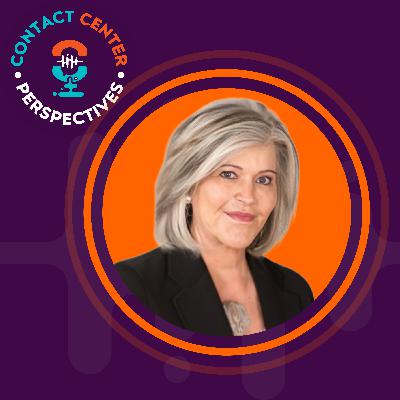
Marcia Daniel, Chief Client Officer at Ferrilli, explains why reliable data is the backbone of customer experience and growth. She connects NPS, CSAT, and help desk insights to business outcomes leaders can trust. Marcia shows how consistency and cybersecurity protect brand credibility and donor confidence. She closes with a blueprint for turning data into stories that align stakeholders.“Your data is going to tell you where your students are coming from, what their background is, if your curricula are on the right track with what you're offering, and what makes up that degree that you are awarding. It's going to tell you who you're weeding out and how you change that all the way through to the consistency in your data.” – Marcia DanielThis episode explores how leaders turn raw metrics into trusted decisions. Marcia outlines a simple stack for proof NPS, CSAT, tickets, and a year-end survey. She explains why unbiased questions matter, how cybersecurity and data integrity protect trust, and how to translate insights into stories that align executives and improve outcomes.
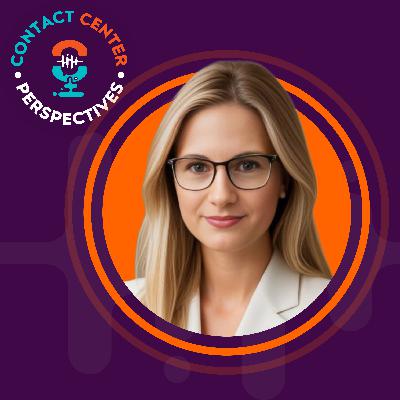
Brie Clements, Senior Director of Customer Service and Support at For The Record, details a practical shift from reactive fixes to proactive services. She maps roles, builds a skills matrix, and stabilizes operations. Brie demonstrates how proactive inspections can generate recurring revenue. She closes with metrics that accelerate trust.“Every interaction we had with a customer was not only an opportunity to solve a problem for them but also to turn that problem into an opportunity to discuss something new that we had or something they didn’t have yet. Customers started to treat us more like an advisor, and that helped us pivot the relationship and provide leads to the sales team.” - Brie ClementsThis episode follows Brie’s practical journey from reactive fixes to proactive, revenue-linked services. You will hear how a skills matrix, role clarity, and cadence-based inspections reduce escalations, create capacity, and unlock recurring revenue. Brie also shares coaching habits and nontraditional KPIs that build trust, inform upgrades, and position support as an advisor to the business.

Amber Scott, VP of Customer Experience at Serta Simmons Bedding, explains why basic empathy is now table stakes. She shares how clear expectations and promise-keeping create trust. Amber connects hospitality with measurable business outcomes. She closes on aligning CX to company objectives for growth.“Customer expectations and behavior continue to evolve, so I encourage leaders to read, stay informed, pay attention, and listen to customers.” - Amber ScottIn this episode, Amber demonstrates that empathy is a table-stakes requirement and explains how clear expectations, consistent promise-keeping, and genuine hospitality translate into measurable outcomes. She illustrates that reliable follow-through and authentic human connection build durable trust across channels. She leaves leaders with a practical charge to keep learning as expectations evolve, speak the language of business, and align CX efforts directly to core objectives for sustainable growth.

Daniela Linero Gamez, Chief Customer Officer at Ontop, shares how to bridge the empathy gap by moving beyond surface requests to real needs. She explains the price value paradox, the hospitality mindset, and the power of vulnerability. Daniela demonstrates why ICP knowledge and cultural nuance are essential globally. She closes with practical steps to turn support into growth."The ICP must be in the data, and it's always in the conversation with clients. It makes us more aware that the relationship between a client and a provider is a human connection, and that we are involved with emotions and things we are seeking. The metrics are important, but being transparent, vulnerable, and setting clear expectations will boost customer satisfaction more than numbers.” – Daniela Linero GamezThis episode delves into why empathy and clarity outperform vanity metrics when the goal is sustainable growth, and it explains how human context makes data more valuable and actionable. Drawing on honest client conversations, Daniela demonstrates how to align price with scope, codify everyday hospitality rituals, and utilize thoughtful vulnerability to rebuild trust in moments that matter for both buyers and internal teams across various markets and regions.
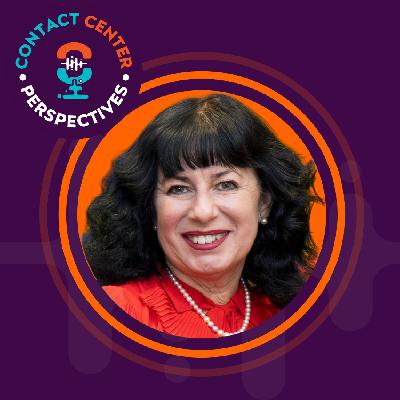
Silke Robeller, Director of Global Customer Care at Rainforest Alliance, explains why customer service is a company’s business card. She demonstrates how a 95 percent satisfaction rate indicates a significant impact on growth. Silke shares tactics to overcome the label of being a cost center. She maps practical steps for proactive cross-functional influence.“Your support is the business card of your company, and if it’s better than your competitor, this pays directly into the customer satisfaction and the loyalty of this customer to your brand.” - Silke Robeller.This episode examines how CX redefines value within the business. Silke shares evidence that shifts cost center perceptions, explains how CSAT signals revenue impact, and shows why involving customer care early in launches improves outcomes across sales, product, and operations.

Jaakko Jutila, Vice President of Customer Support at Basware, explains how support teams escape the cost-center trap. He details how CSAT improvements are linked to retention, providing a defensible business case. He outlines a seamless journey architecture across sales, services, support, and success. He shares a pragmatic approach to AI that starts internally and scales on solid processes. “When the leadership and executive suite sees that there is some correlation between support, satisfaction, and retention, that is one way to help raise the awareness and for them to start considering support not only as a cost center, but actually as an engine for growth.” – Jaakko JutilaThis episode explores how support escapes the cost center label, ties CSAT to renewals, and aligns teams on shared KPIs. Jaakko demonstrates how to initiate AI within operations, strengthen data foundations, and establish R&D partnerships that reduce case volumes while enhancing customer outcomes. Executives get a clear path to quantify impact and win buy-in.

Mazen Moustafa, Director of Customer Service at Reliance Health, Egypt, shares two decades of cross-market customer operations and customer experience leadership. He introduces Then AI Happens, outlining practical AI use cases and workflows. Mazen also spotlights his security-awareness game Mission I.H.I., teaching youth to protect personal data. He closes with a personal note on travel and lifelong learning.“To change the contact center perspective from being just a support function to a growth driver, traditional metrics are not enough. You need to connect and build your own KPIs in a way that directly relates to revenue generation or cost savings with actual numbers. Not intuition, not aspiration, but actual figures.” – Mazen MoustafaMazen highlights how contact centers become growth drivers by tying KPIs to revenue and cost outcomes, not just efficiency. He recommends mapped processes, unified data, and a living knowledge base before scaling AI. He also emphasizes empowerment and strategic planning that earns executive trust and investment.

Karen Lam, Director of Customer Support at Top Hat, outlines a context-driven leadership style grounded in storytelling. She traces her path from retail to EdTech, culminating in managing support and shaping customer dialogue at Top Hat.“Every single company should have a Voice of the Customer program because it's the one way you're going to get a good pulse on not only your customers and your product, but also the pulse of the people who are behind the scenes and working for you and bringing that brand message and reputation forward.” – Karen LamKaren highlights the power of a disciplined Voice of the Customer program to move support from cost containment to growth. She identifies career progression and underused customer insight as core blockers, then shows how AI synthesizes surveys, reviews, and public chatter into clear narratives executives can act on. Karen recommends cross-functional cadence, measurable feedback loops, and storytelling that ties to revenue.
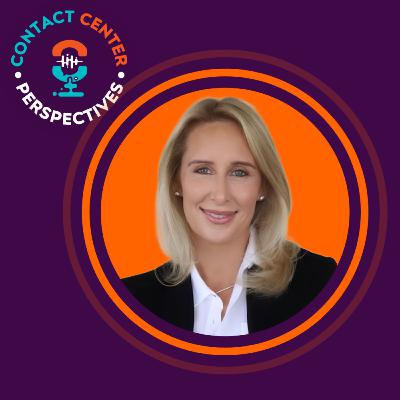
Kimberly Agin, Head of Business Performance and Enablement, Voice & Chat Automation/Contact Center at KeyBank, traces a career across financial services and explains why the contact center is a live window into client needs. She details how journey data and recorded conversations reveal rich behavioral insights. She pairs this with enterprise data for full context. She shows how these insights fuel product improvement.“Whoever owns the data and knows the data is going to win the AI future.” – Kimberly AginThis episode explores how Kimberly transforms contact centers by treating conversations as a core data asset and aligning them with enterprise strategy. She explains how unstructured voice and chat interactions can be paired with enterprise data to reveal behavioral insights, why governing access and building trusted data environments matter for AI, and how clean inputs ensure meaningful outputs. The discussion also highlights how cross-functional collaboration and data-led storytelling shift contact centers from operational cost centers to strategic growth engines.

Cynthia Patterson, Vice President of North American Customer Support at Antech Diagnostics, outlines a new customer support model that blends empathy with business metrics. She explains how aligning value propositions with customer experience creates both loyalty and executive buy-in. Cynthia discusses her team’s extraordinary results: 6% turnover, 93–98% CSAT, and decades of employee tenure. She demonstrates how to communicate the language of the C-suite while preserving the voice of the customer.“Talking about value propositions in the shaping of a support model is critical to engaging the C-suite. You can’t go with a model that is completely contrary to the business model, so I always begin with the end in mind to align customer support with our company’s vision.” - Cynthia PattersonThis episode explores how Cynthia combines her clinical background with business principles to create a support model that resonates with both customers and executives. She explains how value propositions guide the design of support teams, why empathy and tenure matter in delivering consistent customer experiences, and how customer satisfaction directly links to contract renewals. The discussion also highlights the role of cross-functional collaboration and C-suite alignment in sustaining long-term customer relationships.

Katalin Fritz, Chief Customer & People Officer at Marley Spoon, reveals how pairing rock-solid reliability with well-timed surprises secures weekly reorders. She shares why proactive outbound calls transform contact centers from cost drains to revenue engines and shares how to connect empathy, data, and empowered teams for sustainable retention and scaling surprise without sacrificing consistency.“Reliability, empathy, and the courage to listen, combined with enabling our coworkers to act and create surprises, are absolutely crucial, not only in our business but increasingly in every business.” - Katalin FritzKatalin Fritz highlights why pairing rock-solid reliability with well-timed surprises keeps meal-kit subscribers coming back week after week. She explains how proactive outbound calls transform cost-heavy contact centers into revenue engines by connecting data, empowering teams, and fostering empathy for sustainable growth.

Mark Bernardo, VP of Customer Success at IP Fabric, unpacks the Champion Growth Model from naming outcomes and navigating with empathy to building trust through consistency and showing up in emotionally charged moments. He illustrates how every touchpoint can forge champions who drive upsell, renewal, and advocacy. His real-world examples reveal why emotions matter more than data alone.“The Champion Growth Model is about prioritizing outcomes and learning to synthesize them effectively. Let’s clearly name what we’re trying to achieve, and then use empathy as our guide. It’s a navigational tool to help us find our way forward.” – Mark BernardoMark Bernardo leverages his martial arts experience and cross-functional leadership to emphasize empathy-first coaching and proactive communication that transform routine interactions into shared accountability. He demonstrates how asking more profound questions and co-creating solutions reveal hidden obstacles and foster mutual ownership. By leading from the front in high-pressure situations, he galvanizes advocates and demonstrates that weaving human connection throughout the customer journey drives strategic impact beyond any dashboard.

Senthamizh Selvan Pandian, Head of Customer Success at SAP South-East Asia, explains how a people-first mindset transforms customer experience. He connects employee engagement to retention and revenue growth. Selvan details customer-centric innovation and proactive success practices. His insights deliver a complete blueprint for modern CX leadership.“Focus on both the customers’ needs and your own employees' skills development. If you can take care of both together, you will be solving the customers’ problems while keeping people at the core. That becomes your people-first customer experience strategy.” - Senthamizh Selvan PandianSenthamizh Selvan Pandian advocates a balanced approach that puts people at the heart of customer experience. He outlines why modern leaders must pair deep customer insight with committed employee upskilling to drive retention and revenue. Listeners gain actionable guidance on adopting customer-centric innovation, building learning cultures, and turning success teams into growth engines.

Sanjeet Kaur Bali, SVP of Global Customer Support, outlines why organizational dysfunction quietly erodes scale, service, and innovation across every function. She explains how support leaders can surface root causes through data and constructive confrontation. She also describes the power of transforming support into a strategic growth engine.“We need to reassess and thoroughly evaluate what’s ailing our business, then create a culture that encourages critical conversations. Empower problem solvers and constructive critics, and embrace brutal self-assessment. It’s essential for an organization’s survival.” – Sanjeet Kaur BaliBy realigning support from a reactive cost center into a proactive, insight-driven partner, companies unlock both retention and expansion opportunities. When support sits at the table with product, sales, and operations, its frontline perspective becomes a catalyst for innovation. Building these cross-functional bridges ensures that customer feedback drives strategic decisions, turning every support interaction into a step toward sustainable growth.

Kel Kurekgi, Director of Support at Zapier, delves into the transformation of customer support teams, focusing on how to drop the victim mentality and gain a seat at the table. Kel discusses his journey from media to customer experience, sharing insights on overcoming challenges in the customer support sector. He emphasizes collaboration, empathy, and strategic storytelling as key elements in transforming customer support into a recognized business asset.“We need to stop focusing on why we can’t do things and start focusing on what we can do. When people start realizing that the power is in their hands, to be able to tell the right story, their seat at the table, get their voice heard, that whole victim mentality in support will shift.” - Kel KurekgiKel expands on how internal barriers, such as outdated mindsets or a lack of advocacy, can hinder support teams. By embracing strategic collaboration and owning their narrative, support leaders can redefine their value and influence company-wide impact.

Ken Mogensen, Vice President of Sales & Marketing at Sneed Coding Solutions, discusses why treating BPO partners as direct reports transforms customer support into a sales engine. He explains vetting criteria, training approaches, and KPI alignment to ensure partners reflect the company’s values. Throughout the discussion, Ken shares lessons learned from scaling globally.“Our partners should be committed to customer success because our success as a company and our growth are entirely contingent upon our customers growing and being successful. Our business partner should definitely have that same belief.” – Ken MogensenKen highlights how applying core values, rigorous training alignment, and shared ownership transforms outsourced teams into trusted business growth partners. He explains how this approach supports global scalability, fosters deeper customer relationships, and cultivates a performance culture centered on results, not just transactions.

Peter Mullen, Strategic Brand and Growth Leader at Simply Systems LLC, discusses how customer experience can pivot from a cost center into a growth driver. He highlights a $3.7 trillion opportunity resulting from poor customer experience (CX) and explains why AI-driven personalization is now the new baseline. Peter outlines how immersive brand storytelling and C-suite alignment fuel BPO success.“You want zero daylight between you and the brand you're supporting. You want a contact center that looks and feels like it's part of the company itself. You want your BPO partners to understand the brand storytelling, and you want the BPO team and everyone involved to fully buy into it.” – Peter MullenIn this in-depth discussion, Peter Mullen illuminates how transformative leadership, rooted in resilience and personal adversity, reframes customer experience from a cost center to a strategic growth driver. He explores the $3.7 trillion opportunity lost to poor CX, details how AI-driven personalization is rapidly becoming a baseline expectation, and outlines pragmatic steps to align the C-suite's vision with business process outsourcing (BPO) partnerships for sustainable, revenue-focused outcomes.

Tim Wilbourn, SVP Support and Customer Success at Crexendo® Business Solutions, unpacks the challenge of linking CX metrics to revenue in a Wall Street-driven world. He outlines strategies for establishing clear expectations and promoting long-term initiatives. He also explains why short tenures hurt CX leaders and how to build sustained success. “The first thing investors look at is revenue, then free cash flow. But customers are what drive all of that. So, think about it differently. Focus on how many customers have been implemented, the revenue generated from those implementations, and the outcomes that define success.” – Tim WilbournTim Wilbourn highlights how aligning customer success metrics with revenue KPIs drives sustained growth. He shows why embedding customer-focused OKRs across every department prevents short-term thinking and empowers leaders to advocate for long-term investments. With his “press release exercise,” Tim offers a straightforward method to unify teams around multi-year goals.

Comments

Download from Google Play

Download from App Store
 United States