


 Claim Ownership
Translating Proteomics
Subscribed: 16Played: 99
Subscribe

© Copyright 2026 Nautilus Biotechnology
Description
‘Translating Proteomics’ explores the science of proteomics and its growing impact on biological research, biomarker discovery, drug development, food and energy security, and a range of other timely topics. Hosts Parag Mallick Ph.D. and Andreas Huhmer Ph.D. of Nautilus Biotechnology aim to share their perspectives on important issues in proteomics, deepen your love of science, and prompt you to question assumptions about what may be possible.
29 Episodes
Reverse

Translating Proteomics hosts Parag Mallick and Andreas Huhmer discuss our new Nature Methods paper, “Large-scale single-molecule analysis of tau proteoforms.” This publication describes how the Nautilus Voyager™ Platform can be used to quantify proteoforms derived from the neurodegeneration-associated tau protein. These proteoforms are defined by their unique combinations of post-translational modifications and isoform specific sequences. They may make powerful next-generation biomarkers or drug targets, but few technologies can measure them today.In the episode, Parag and Andreas discuss:What proteoforms are and why it’s critical to study them to understand biology.How the Nautilus Voyager™ Platform quantifies proteoforms.The key findings from the tau proteoform analyses in the paper.Potential applications of these findings.The Nautilus Voyager™ Platform as a powerful foundational technology.Access our video series exploring the paper in more detail.

On the latest episode of the Translating Proteomics podcast, Nautilus VP of Scientific Engagement and proteomics industry expert Sheri Wilcox joins hosts Parag Mallick and Andreas Huhmer for a thought-provoking discussion of their proteomics "hot takes.”Each “hot take” is a provocative opinion on a topic in proteomics. Specifically, they cover:Insufficient biological validation is one of the biggest problems in proteomics.Antibody validation remains a distributed, inconsistent, lab-by-lab responsibility, and this model for validation may not be sustainable going forward.AI cell models are overhyped.Check out the episode for deep explorations of each of these hot takes and their potential remedies.After listening, be sure to let us know whether you agree, disagree, or have your own hot take to share!
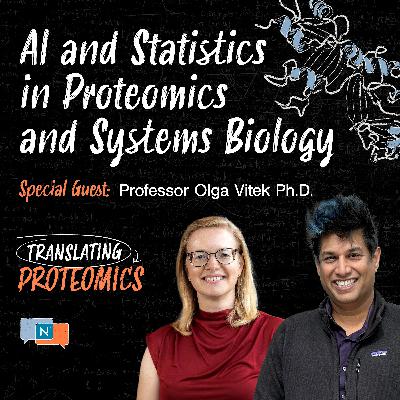
Professor Olga Vitek has a deep understanding of statistics, machine learning, and computational biology. She puts her know-how to work to develop computational tools enabling high-quality proteomic analysis and systems biology approaches. She hopes to apply these tools to the quantitative analysis of large-scale mass spectrometry-based investigations and thereby advance our understanding of organismal function. In this episode, Parag and Professor Vitek discuss:Why statistics is important for experimental designHow statistics and AI can help researchers understand biologyGaps keeping us from using AI and statistics to their maximum potential in biologyResourcesStatistical methods for studies of biomolecular systems websiteOlga’s personal lab websiteBeyond protein lists: AI-assisted interpretation of proteomic investigations in the context of evolving scientific knowledgeGyori and Vitek, 2024 discuss how AI can be used to interpret proteomics data and its biological meaning.A Bayesian Active Learning Experimental Design for Inferring Signaling NetworksNess et al., 2018 show how statistical methods can guide the selection of experiments that optimally enhance understanding
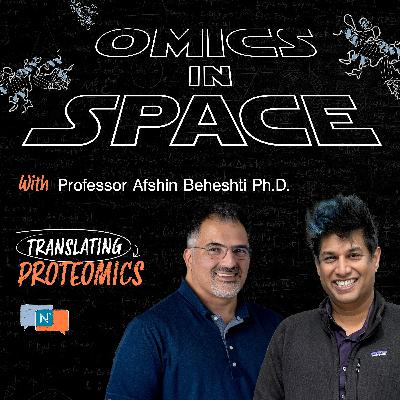
Host Parag Mallick chats with Professor Afshin Beheshti who is a Professor of Surgery, Director of the Center for Space Biomedicine, and Associate Director of the McGowan Institute for Regenerative Medicine at the University of Pittsburgh. In addition, Professor Beheshti has a visiting researcher appointment at the Broad Institute of MIT and Harvard and is president of two non-profits – the COVID-19 International Research Team and Kwaai. The latter aims to democratize access to artificial intelligence through the design, construction, and maintenance of a free personal AI called Kwaai.Professor Beheshti’s research covers a range of topics focused on how circulating mirco RNAs and mitochondria impact health, but this conversation focuses primarily on Professor Beheshti’s work advancing our understanding of how spaceflight impacts biology. We cover:How research on spaceflight and biology is doneGaps that remain in our understanding of spaceflight and biologyOmics studies of spaceflight and biologyHow studying spaceflight and biology enhances our understanding of human health more broadlyResourcesTrivedi Institute for Space and Global BiomedicineNew Institute at the University of Pittsburgh focused on “advancing human health through space-driven innovation”NASA Open Science Data Repository"Provides open access to biological and physical science datasets from spaceflight and ground studies, enabling data reuse for discovery and innovation."Camera et al., 2024. Agining and putative frailty biomarkers are altered by spaceflightStudy on molecular biomarkers and frailty phenotypes in spaceOverbey et al., 2024. The Space Omics and Medical Atlas (SOMA) and international astronaut biobankAn “integrated data and sample repository for clinical, cellular, and multi-omic research profiles” from a variety of space missionsSpace Omics and Medical Atlas (SOMA) websiteCorti et al., 2024. To boldly go where no microRNAs have gone before: spaceflight impact on risk for small-for-gestational-age infantsExplores how miRNA signatures of “small-for-gestational-age” are impacted by the space environmentBeheshti et al., 2013. Age and space irradiation modulate tumor progression: implications for carcinogenesis riskSome of Professor Beheshti’s early work studying connections between spaceflight and cancer progression.KwaaiNonprofit "building a no-cost open source Personal AI assistant"
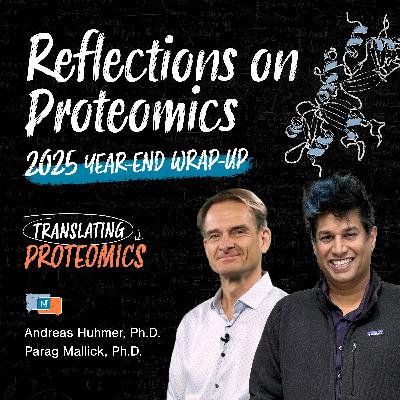
On this episode of Translating Proteomics, Parag and Andreas share their reflections on proteomics developments in 2025 largely inspired by their observations at the World HUPO 2025 conference in Toronto. Whether you agree, disagree, or simply want to share some of your own observations on proteomics, please post your thoughts in the comments.We look forward to even more exciting developments in 2026!Chapters00:00 - 00:35 – Intro00:36 – 07:00 - Increased focus on applications of proteomics and less on method developmentLearn more about One Health from our conversation with Professor Jennifer Geddes-McAlisterhttps://youtu.be/JFwvTdkb5bw07:01 – 12:47 - Increase in people talking about the importance of proteoformsLearn more about proteoforms in our episode featuring proteoform pioneer Professor Neil Kelleherhttps://youtu.be/3pPuxVrMxpw12:47 – 17:26 - An increase in multiomics studies17:27 – 20:03 - A shift to larger scale proteomics studiesFor a great example of a multi-platform comparison study, check out Kirsher et al., 2025https://www.nature.com/articles/s42004-025-01665-120:03 – 25:07 - Increased integration of AI into proteomics workflowsFor an example of how proteomics workflows can be modified with multiomic data, check out Suhre et al., 2025https://www.nature.com/articles/s41588-025-02413-w25:08 – 30:05 – Recognition of the need to assess quality across proteomics workflows30:06 – 32:19 – Less of a focus on spatial proteomics this year than in past years32:20 – 35: 13 - Parag and Andreas share their predictions for 202635:14 – End – Outro

Comments

Download from Google Play

Download from App Store
 United States