


 Claim Ownership
Whole & Holy: Navigating Faith in a Fragmented World
Subscribed: 4Played: 56
Subscribe

© Justin Polsley
Description
This is for those who long to see their faith as more than just a Sunday ritual. In a world that often feels fragmented, this publication explores how spirituality can be a cohesive force, weaving through every part of your life. Join me, a recent Fuller Seminary graduate, as I engage in deep conversations about God, the Bible, and the relevance of faith in our modern world. Subscribe to journey with us towards a more integrated and meaningful spiritual life.
wholenholy.substack.com
wholenholy.substack.com
35 Episodes
Reverse

Most teenagers aren’t rejecting the Bible—they’re just bored or disconnected from it. Dr. Graham Stanton joins Justin Polsley to unpack why “just getting teens to read” misses the point. Together they explore what happens when youth leaders move beyond information transfer toward relational, dialogical, and theologically grounded engagement with Scripture. The conversation reframes what spiritual formation looks like in a culture of expressive individualism—and how the next generation can rediscover the wonder of God’s Word.About the GuestDr. Graham Stanton is a practical theologian and longtime youth ministry educator who has spent his career helping the church think deeply about how young people grow in faith. He founded and led Youthworks College in Sydney, where he taught theology and spiritual formation, and now directs the Youth Ministry Futures Project, a research initiative exploring how faith takes root in changing cultural contexts.Graham’s doctoral work examined how teenagers actually engage with the Bible, blending theology, psychology, and educational theory to uncover why some approaches ignite lasting faith while others fall flat. He currently serves as an associate editor for the Journal of Youth and Theology and continues to invest in local youth ministry at St Jude’s Anglican Church in Parkville, Australia.His book: Wide Awake in God’s World is a MUST READ!!!Mentioned in this episode:* Youthscape’s Research: Translating God* Youth Pastor Theologian* Australian Research: Your Story Get full access to Whole & Holy at wholenholy.substack.com/subscribe

Dr. Al Tizon discusses missiology, the mission of the church, and the intersection of the gospel and mission. He emphasizes the importance of reconciliation in the church and the need to embrace diversity. He also explores the concept of false and half gospels and advocates for a holistic understanding of the gospel. Finally, he offers insights on how youth ministries can engage in mission in a meaningful way.TakeawaysMissiology is the study of the mission of the church as it engages with the cultures of the world.The mission of the church is to bear witness to the whole gospel, which includes the redemption of the whole creation and everyone in it.Reconciliation is a key aspect of the mission of the church, both within the church itself and in the world.The church should prioritize unity and embrace diversity, rather than seeking uniformity.Youth ministries can engage in mission by bearing witness to God's justice, love, peace, mercy, and forgiveness. Get full access to Whole & Holy at wholenholy.substack.com/subscribe

Professor Dan Treier wrote a big book about Jesus. In this podcast, Dan thoroughly explains key things about Jesus. Dr. Treier talks about why Jesus had to be fully God and fully human. He says if Jesus wasn't really God, worshipping him would be wrong. And if Jesus wasn't fully human, he couldn't make all of human life right again. The episode explores how Jesus is the "mediator" between God and humans. As God himself who became human, Jesus unites God and humans. Dan gives tips for teaching young people the Bible's true story of who Jesus is, rather than made-up versions. Knowing the real Jesus can change your life! Get full access to Whole & Holy at wholenholy.substack.com/subscribe
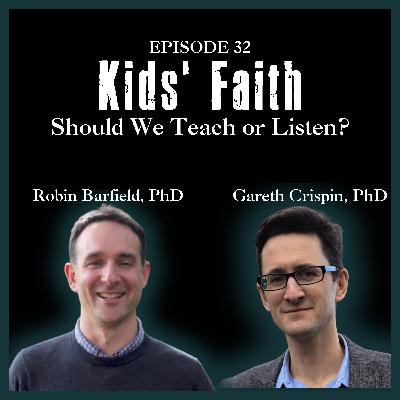
Zero Cost Way To Support Me :)Dr. Gareth Crispin and Dr. Robin Barfield discuss the top-down and bottom-up approaches to children's ministry and the growing tension between the two. They explore the philosophical and sociological factors that have led to the shift from top-down to bottom-up approaches. They also delve into the theological anthropology of James Loder and how it informs their understanding of ministry. The conversation highlights the importance of engaging both the mind and the heart in faith formation and the need for Christian adults to walk alongside children and young people on their spiritual journey. The conversation explores different approaches to youth ministry and the importance of encouraging speculative questions. It also discusses the role of crisis of faith in the development of emerging adults' faith. The conversation highlights the unique context of youth ministry in the UK and the shift towards intergenerational church.Takeaways* There is a shift from top-down to bottom-up approaches in children's ministry, influenced by philosophical and sociological changes.* The top-down approach focuses on transmitting knowledge and objective truth, while the bottom-up approach emphasizes the agency and subjectivity of the individual.* The middle path in children's ministry involves a dialogical process between God and the individual, where both divine revelation and personal experience are valued.* Faith formation should involve engaging the mind, heart, soul, and strength of children and young people, helping them encounter God and respond to His revelation.* Christian adults in ministry should walk alongside children and young people as fellow pilgrims, sharing their own encounters with God and providing guidance and support. Encouraging speculative questions can help children and youth engage in deeper conversations and develop their own understanding of faith.* Experiencing a crisis of faith in youth can lead to a stronger and more personal faith in adulthood.* Youth ministry in the UK is evolving, with some churches adopting new approaches that prioritize intergenerational engagement.* Intergenerational church provides a space for young people to ask questions and participate in a community that includes people of all ages.00:00 - 01:11 Introduction 01:12 Introduction and Background03:12 Top-Down and Bottom-Up Approaches to Children's Ministry10:03 The Shift from Top-Down to Bottom-Up Approaches 19:08 The Growing Tension between Top-Down and Bottom-Up Approaches26:18 The Theological Anthropology of James Loder30:45 The Middle Path and the Task of Faith Formation38:29 Looking Ahead in Children's Ministry40:27 Encouraging Speculative Questions41:26 Crisis of Faith in Youth 42:37 Youth Ministry in the UK43:52 Intergenerational Church Get full access to Whole & Holy at wholenholy.substack.com/subscribe
Support for free by subscribing to my SubstackDr. Collin Cornell discusses the mission of God and challenges the traditional view of God's mission as solely reparative. He emphasizes God's desire to draw near to creation and dwell with it. Dr. Cornell also explores the relationship between God's mission and Israel, highlighting the importance of understanding Israel's purpose beyond being purely instrumental. He discusses the role of the church in God's mission and the significance of encountering God in the church. Finally, he applies these concepts to youth ministry, emphasizing the importance of treating young people with curiosity, delight, and genuine interest.Takeaways The mission of God is not solely reparative but also involves God's desire to draw near to creation and dwell with it. Understanding Israel's purpose beyond being purely instrumental is crucial in reevaluating the traditional view of God's mission. The church plays a special role in God's mission and should be seen as a place where people can encounter God's presence. In youth ministry, it is important to approach young people with curiosity, delight, and genuine interest rather than trying to fix or control them.Chapters00:00 Introduction01:02 Dr. Cornell's Background10:31 The History of Missiology15:24 God's Desire to Dwell with Creation25:18 Israel's Role in God's Mission28:11 The Church's Mission and the Mission of God32:44 Applying Mission in Youth Ministry37:27 Conclusion Get full access to Whole & Holy at wholenholy.substack.com/subscribe
Dr. Felipe Do Vale discusses his book 'Gender as Love: A Theological Account of Human Identity, Embodied Desire, and Our Social Worlds.' He explains his interest in the topic of gender and how it has evolved over the years. Dr. Do Vale argues for a theological approach to gender, bridging the gap between those who focus on gender and those who focus on theology. He proposes that gender is an identity formed by our loves and that a Christian theology of human love provides a way to understand and evaluate gendered goods in our world. He also discusses the application of his theological framework in ministry and everyday life. In this conversation, Dr. Fellipe do Vale discusses the importance of engaging with gender identity and the role of love in understanding it. He emphasizes the need for pastors to have mental and emotional intelligence and to ask questions that delve into a person's love and sense of belonging. Dr. do Vale also explores the influence of social media on gender identity and highlights the interconnectedness of various aspects of a person's life. He encourages pastors to engage people on the level of their loves and to prioritize simple practices of human care. Finally, he discusses the importance of balancing critical scholarship with faith.TakeawaysGender is an important topic that requires a theological approach.A Christian theology of human love provides a way to understand and evaluate gendered goods in our world.Gender is an identity formed by our loves, and we have a responsibility to love rightly.The descriptive and normative tasks of understanding gender should be kept together.The theological framework proposed by Dr. Do Vale can be applied in ministry and everyday life. Engaging with individuals' gender identity requires understanding their loves and sense of belonging.Pastors should prioritize mental and emotional intelligence in their ministry.Social media can tap into common objects of love and influence gender identity.Gender identity is interconnected with various aspects of a person's life.Engaging people on the level of their loves can reveal insights about their gender identity.Recovering simple practices of human care is crucial for creating a sense of belonging in church.Ministry should prioritize caring for the hearts of individuals.Balancing critical scholarship and faith can lead to a more holistic approach to understanding gender identity. Get full access to Whole & Holy at wholenholy.substack.com/subscribe
SummaryDr. Patrick Schreiner discusses the transfiguration of Jesus and its significance. He explains that the transfiguration is often overlooked in comparison to other events in Jesus' life, but it is an important event that reveals Jesus' glory and confirms his identity as the Son of God. The presence of Moses and Elijah represents the law and the prophets, affirming Jesus' role in fulfilling the Old Testament prophecies. The voice of God calling Jesus his beloved son echoes Old Testament passages and emphasizes Jesus' divine nature. The transfiguration provides hope and comfort to believers, reminding them of the future glory that awaits them.TakeawaysThe transfiguration of Jesus is an important event that reveals his glory and confirms his identity as the Son of God.The presence of Moses and Elijah represents the law and the prophets, affirming Jesus' role in fulfilling Old Testament prophecies.The voice of God calling Jesus his beloved son echoes Old Testament passages and emphasizes Jesus' divine nature.The transfiguration provides hope and comfort to believers, reminding them of the future glory that awaits them.Chapters00:00 Introduction and Background03:17 The Transfiguration in the Gospels06:43 The Significance of the Transfiguration10:37 The Presence of Moses and Elijah18:32 The Voice of God22:45 Old Testament Allusions28:54 The Transfiguration and Everyday Believers Get full access to Whole & Holy at wholenholy.substack.com/subscribe
SummaryDr. Carmen Imes, Associate Professor of Old Testament at Biola University, discusses the concept of the image of God in her interview with Justin on the Reorthodox Theology podcast. She explains that the image of God is not tied to a specific human capacity, but rather to our physicality as human beings. Dr. Imes argues that every human, regardless of disability or other differences, is the image of God. She challenges the common belief that the image of God was lost or diminished after the fall, pointing to biblical evidence that affirms the continued presence of the image of God in humanity. Dr. Imes also emphasizes the importance of recognizing the image of God in others and treating every person with dignity and respect.Key Takeaways:- The image of God is not tied to a specific human capacity, but to our physicality as human beings.- Every human, regardless of disability or other differences, is the image of God.- The image of God was not lost or diminished after the fall, but our relationship with God was disrupted.- Recognizing the image of God in others is essential for treating every person with dignity and respect.Quotes:- "It's more physical than what we've assumed, and it's therefore more limited in some ways than what we've assumed." - Dr. Carmen Imes- "Every human being, regardless of disability, is the image of God." - Dr. Carmen Imes- "Jesus is the image of God not because he's divine, but because he's human, and every human being is the image of God." - Dr. Carmen Imes Get full access to Whole & Holy at wholenholy.substack.com/subscribe
Join us for a thought-provoking episode as we dive into the fascinating world of Tertullian's view of Christology and its profound influence on the development of the Western Church. Our guest for this enlightening conversation is Dr. David Wilhite, a distinguished Professor of Christian Theology with a deep expertise in the subject matter.Dr. Wilhite, having obtained his PhD from The University of St. Andrews, brings a wealth of knowledge and insight into the life and works of Tertullian, a renowned early Christian theologian. Together, we explore Tertullian's unique perspective on the nature of Christ and how it contributed to shaping the theological landscape of the Western Church.Throughout this episode, we unravel the complexities of Tertullian's Christology, examining his theological concepts such as the divine nature of Christ, the Incarnation, and the relationship between God and humanity. We delve into Tertullian's influential writings, including his treatises on Christ's two natures, and how these ideas resonated with early Christians. Get full access to Whole & Holy at wholenholy.substack.com/subscribe
Rudolf K. Gaisie is a Research Fellow at the Akrofi-Christaller Institute of Theology, Mission and Culture at Akropong-Akuapem, Ghana, and serves as Director of the Institute’s Centre for Early African Christianity (CEAC).He is brilliant! Get full access to Whole & Holy at wholenholy.substack.com/subscribe
Join us on (Re)Orthodox Theology as we dive into the revolutionary insights of Dr. John Goodrich, a distinguished scholar from the Moody Bible Institute. In this episode, we explore Dr. Goodrich's essay, "Paul’s Suprahumanizing Exegesis: Rewriting the Defeat of God’s Enemies in 1 Corinthians, Romans, and Ephesians," published in Brill's acclaimed volume, Demons in Early Judaism and Christianity (2022).Delve into the depths of Pauline theology as Dr. Goodrich guides us through the cosmic dimensions of Paul's writings, shedding light on how he reimagines the defeat of God's enemies through Jesus Christ. Discover the transformative implications of Paul's suprahumanizing exegesis on our understanding of Jesus' identity and mission.Whether you're a theologian or simply curious about early Christian thought, this episode will provide fresh perspectives on Jesus' unparalleled victory over evil. Tune in to (Re)Orthodox Theology for a captivating conversation with Dr. John Goodrich that will leave you inspired and eager to explore the rich tapestry of Pauline thought. Get full access to Whole & Holy at wholenholy.substack.com/subscribe
Today, I talked to Dr. Janet Timbie, a Professor at the Catholic University of America. She is an expert on all things ancient Egypt and Christianity. We talk about an ancient monk, Shenoute, and his Christology! Get full access to Whole & Holy at wholenholy.substack.com/subscribe
This week I talk to Dr. Sammy Alfaro about his amazing book, Divino Compañero: Toward a Hispanic Pentecostal Christology (Princeton Theological Monograph Series Book 147) Get full access to Whole & Holy at wholenholy.substack.com/subscribe
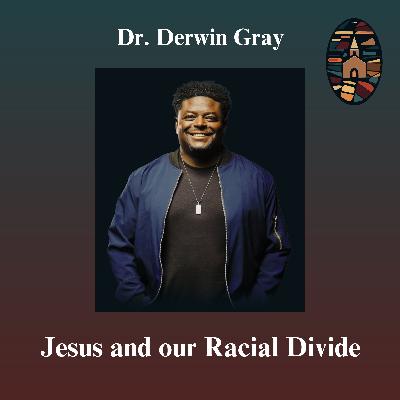
Dr. Derwin Gray joins the show to discuss his book "How to Heal Our Racial Divide" and emphasizes the importance of understanding the theological implications of racism and prejudice. In this conversation, Dr. Gray shares his personal story of transformation, the inspiration behind his book, and the need to embody a holistic gospel that produces justice, evangelism, and discipleship. The discussion delves into issues of racism, prejudice, justice, and evangelism, with a focus on the importance of understanding Jesus' person and work in promoting reconciliation. The show also highlights the multiethnic ministry's role in manifesting God's glory and promoting reconciliation, justice, and discipleship. Get full access to Whole & Holy at wholenholy.substack.com/subscribe
The (Re)Orhodox Theology podcast recently featured Dr. Gregory Vall, a professor of Sacred Scripture at Notre Dame Seminary of New Orleans, to discuss the significance of Ignatius of Antioch and his Christology. Ignatius, a church father who lived around 113 AD, was a member of the church at Antioch, which was significant in the early days of Christianity due to its mixed community of Jewish and Gentile Christians. He was the first person to use the term Christianity and spoke clearly about the relationship between Christianity and Judaism. Ignatius referred to himself as an Episcoposs and was the first to use the term Catholic Church.Dr. Vall discussed Ignatius' role in the early Christian community at Antioch and his teachings on the structure of the local church. Ignatius studied the New Testament writings, including Matthew's gospel, John's thoughts, and Paul's letters, and synthesized them into a constructive theology that foreshadows the work of later church fathers.The conversation then focused on Ignatius of Antioch's Christology. Ignatius emphasized the unique father-son relationship between Jesus and God, recognizing Jesus as divine. He referred to Jesus as the Son of God or the Son of the Father, establishing a unique sonship that differs from the adoption of sons and daughters of God that St. Paul speaks of. Ignatius never suggests that Jesus becomes the Son by being sent into the world, indicating that the Father-Son relationship is always present. Ignatius has a high Christology, referring to Jesus as God in Ephesians and Romans, but also emphasizes the father-son relationship, establishing strict equality and oneness between them.The conversation also touched on the concept of high Christology, which recognizes Jesus as divine, and low Christology, which focuses on his humanity. However, in Ignatius and the New Testament, Christology is high and low because Jesus is God and man.Dr. Vall then discussed Ignatius' rejection of docetism and his belief in Christ's true humanity through his conception of the Virgin Mary. Ignatius sees Mary as significant in His Christology because she is the one through whom and from whom he receives his humanity. The Passion and Resurrection are important moments in Christ's life, where his humanity is transformed.The conversation explored how Ignatius reconciled the Old Testament passages that arguably could be referring to Christ manifested like the divine being wrestling Jacob or a divine being coming and visiting Abraham with two other angels. Ignatius also discussed Mary's role in Christology, referring to her as one of the figures in these statements that grounds the faith in historical reality and has a particular role vis-a-vis the Holy Spirit.Dr. Vall explained that God is eternally happy and perfect in himself and creates out of generosity and love. Despite not needing to create the world or us, God wants to share his happiness with his creatures. The distinction between God in his inner life and God's action in the world, known as the economy of God, is important to understand in order to fully grasp Ignatius' Christology and the New Testament. Ultimately, God's action in creating and redeeming the world is part of his plan or economy, but he himself is eternal, unchangeable, and Father, Son, and Holy Spirit.The conversation ended with the importance of reading Ignatius' work and interpreting Scripture faithfully. Ignatius' writings helped the speaker understand how Scripture and the church fathers went together. Dr. Vall pointed out that Ignatius' work provides insight into the church's reception of the New Testament and interpretation of scripture throughout history.Chapters[0:00:07] Exploring the Christology of Ignatius of Antioch with Dr. Gregory Vall: A Discussion on the Significance of Early Christian Theology and Church Structure[0:06:30] A Discussion on the Significance of Ignatius of Antioch in Early Christianity and His Influence on Theology[0:08:47] Exploring Ignatius of Antioch's Understanding of the Father-Son Relationship in His Christology[0:12:28] Exploring Ignatius' High Christology and the Revelation of God through Jesus[0:15:12] A Discussion on Ignatius' Christology and His Rejection of Docetism[0:17:50] A Discussion on Ignatius of Antioch's Christology and the Role of Mary[0:21:07] A Discussion on the Presence of Christ in the Old Testament and Mary's Role in Christology with a Theologian[0:26:10] A Discussion on Ignatius of Antioch's Christology and the Role of Mary in the Faith[0:28:52] A Discussion on Ignatius and the Distinction between God's Inner Life and Action in the World[0:35:53] A Discussion on God's Creation and the Importance of Reading the Work of Ignatius Today[0:38:04] Interview with a Scholar on the Importance of Ignatius of Antioch in Early ChristianityHis Book: Learning Christ Get full access to Whole & Holy at wholenholy.substack.com/subscribe
In this episode, Dr. Turman discusses her brilliant research on the intersection of race, faith, and gender and how she challenges sexism in the Black church.As a pioneering womanist theologian, Dr. Turman's work aims to empower marginalized communities and address issues of violence against Black women in Christianity. She has received numerous awards for her contributions to the field of theology and has been featured in various documentaries and publications.During the conversation, Justin and Dr. Turman delve into topics such as womanist Christology and the role of Black women in Christianity. They also discuss ways to address the issue of violence against Black women in religious spaces.Listeners are encouraged to support Young and Sanctified by continuing to listen, sharing episodes with friends, leaving reviews, and providing feedback through Justin's email address found in the show notes.Youngandsanctified@gmail.com Get full access to Whole & Holy at wholenholy.substack.com/subscribe
On today's episode, we have Dr. Matthew Lynch, a professor, author, and podcaster, who shares his insights on the Old Testament and how his studies in Israel captured his imagination and deepened his understanding of its context.In this conversation, Dr. Lynch challenges the notion that the Old Testament is simply a source of spiritual edification and life lessons and instead highlights its complexity, tension, mystery, and wonder. Specifically, the conversation centers around the concern with violence in the Old Testament and how it is portrayed in texts such as Genesis three, four, and Six, as well as the flood story.Dr. Lynch rejects reductive and simplistic readings of the text and instead proposes a non-reductive engagement with the problem of violence, acknowledging the exciting and fascinating world of the Old Testament. He warns against bifurcating Jesus and the Old Testament God and proposes a Christotelic approach that reads the Old Testament in light of Jesus' life and teachings.The conversation explores the role of divine action in the Flood story of Genesis and how it represents a controlled cosmic meltdown that allowed God to restore creation to its original state before remaking it. Although there are still questions about violence in the story, Dr. Lynch argues that it is essential to consider how the story wants us to think about God's action and the antagonist.Dr. Matthew Lynch is a professor of theology and philosophy at Regent University and hosts the podcast, On Script. He is also the author of several books, including Flood and Fury: Old Testament Violence and the Shalom of God, which proposes a non-reductive engagement with the problem of violence in the Old Testament. Get full access to Whole & Holy at wholenholy.substack.com/subscribe
In this Episode, we explore the topic of Christology in a pluralistic world with Professor Veli-Matti Kärkkäinen from Fuller Theological Seminary. As we live in an increasingly diverse and globalized world, it's essential to consider finding common ground with those with different beliefs without compromising our orthodoxy. Professor Kärkkäinen shares his perspective on accepting other cultures while remaining true to our faith, emphasizing the importance of engaging with diverse voices worldwide. We also delve into what it means for our world to be pluralistic and how we can navigate this reality as Christians. This conversation is aimed at Gen Z viewers and pastors interested in understanding how to engage with other cultures and perspectives in a pluralistic world. Get full access to Whole & Holy at wholenholy.substack.com/subscribe
In this podcast episode, Patrick Miller, a pastor at The Crossing, and Justin discuss the challenges of navigating politics in a divided society, finding common ground, and engaging in dialogue to understand one another. They also talk about the discomfort Miller feels when referred to as a pastor and speculate that this may be a result of their Midwestern roots. They highlight the need for discipleship in politics among Christians, and Miller's work with Truth Over Tribe, a podcast and book aimed at helping Christians become apprentices of Jesus in their politic.Guest Bio:Patrick Miller is a pastor at The Crossing, a church in Missouri. He is the co-author of Truth Over Tribe: Pledging Allegiance to the Lamb, Not the Donkey or the Elephant and has been featured in various media outlets for his work on faith and politics. Miller is also a podcast co-host, and his show explores how Christians can engage with politics in a way informed by their faith. His show is Truth Over Tribe! Get full access to Whole & Holy at wholenholy.substack.com/subscribe

In this episode of the Young and Sanctified podcast, host Justin interviews Dr. Jessica Joustra, an assistant professor of Religion and Theology at Redeemer University. Dr. Joustra shares her research on the imitation of Christ and the works of Herman Bobbing and John Howard Yoder. The conversation provides valuable insights into how different Christian traditions have explored the question of imitation and the relevance of this topic for Christians today.Guest Introduction:Dr. Jessica Joustra is a professional writer and the Albert M. Walter Center for Christian Scholarship director. She holds a Ph.D. in Christian Ethics from Fuller Theological Seminary and the Free University. Dr. Joustra teaches systematic theology and ethics at a Christian university in Ancaster, Ontario. Her research focuses on how Christian scholarship can contribute to answering the pressing questions of our time. Get full access to Whole & Holy at wholenholy.substack.com/subscribe

Comments

Download from Google Play

Download from App Store
 United States