


 Claim Ownership
A Mind of Her Own
Subscribed: 10Played: 230
Subscribe

© A Mind of Her Own
Description
I'm Dr. Jennifer Reid, a board-certified psychiatrist, author of Guilt Free: Reclaiming Your Life From Unreasonable Expectations, and host of A Mind of Her Own. My mission is speaking out to counter misinformation about mental health, one science-backed topic at a time. I'm so glad you're here!
amindofherown.substack.com
amindofherown.substack.com
115 Episodes
Reverse
Join us for an intimate conversation with Dr. Keri Smotrich, Licensed Clinical Psychologist and Certified Perinatal Mental Health Counselor, about the emotional challenges of fertility struggles, pregnancy loss, and the journey to parenthood. We dive into the identity crisis that often comes with infertility, what to expect from those first medical appointments, and how to be kind to yourself through the process. Dr. Smotrich shares practical advice on setting boundaries with friends and family, managing the emotional roller coaster of hope and disappointment, and finding safe people to talk to. Throughout it all, Dr. Smotrich reminds us that seeking help is actually a sign of strength.*Please note: we briefly discuss pregnancy loss and miscarriage.Resources Mentioned:* Postpartum Support International (PSI) - Offers support groups, virtual meetings, and peer mentor programs for fertility challenges, pregnancy loss, and perinatal mental health* Penn Fertility Care in Philadelphia and surrounding areasConnect with Dr. Smotrich:Licensed in New Jersey, Pennsylvania, and 45+ states via SciPact for telehealth services. Visit her website for more information. https://keri-smotrichpsyd.clientsecure.me/Remember: Seeking support is a sign of strength, not weakness. You don’t have to white knuckle through this journey alone.Thanks for reading A Mind of Her Own! Subscribe for free to receive new posts and support my work.Find Dr. Reid on Instagram: @jenreidmd, LinkedIn, and YouTubeYou can also order Dr. Reid’s book, Guilt Free! (If you are in the UK, you can order here and here.)Also check out Dr. Reid’s regular contributions to Psychology Today: Think Like a ShrinkSeeking a mental health provider? Try Psychology TodayNational Suicide Prevention Lifeline: 1-800-273-8255Dial 988 for mental health crisis supportSAMHSA’s National Helpline - 1-800-662-HELP (4357)-a free, confidential, 24/7, 365-day-a-year treatment referral and information service (in English and Spanish) for individuals and families facing mental and/or substance use disorders.Disclaimer:The views expressed on this podcast reflect those of the host and guests, and are not associated with any organization or academic site. Also, AI may have been used to create the transcript and notes, based only on the specific discussion of the host and guest and reviewed for accuracy.The information and other content provided on this podcast or in any linked materials, are not intended and should not be construed as medical advice, nor is the information a substitute for professional medical expertise or treatment. All content, including text, graphics, images and information, contained on or available through this website is for general information purposes only.If you or any other person has a medical concern, you should consult with your health care provider or seek other professional medical treatment. Never disregard professional medical advice or delay in seeking it because of something that have read on this website, blog or in any linked materials. If you think you may have a medical emergency, call your doctor or emergency services (911) immediately. You can also access the National Suicide Help Line at 1-800-273-8255 or call 988 for mental health emergencies. This is a public episode. If you would like to discuss this with other subscribers or get access to bonus episodes, visit amindofherown.substack.com
Join Dr. Reid, psychiatrist, creator and host of “A Mind of Her Own,” and author of Guilt Free, for this conversation with Nancy Reddy, author of The Good Mother Myth and creator of Be Less Careful and Mara Gordon, family doctor and creator of the Your Doctor Friend by Mara Gordon newsletter. We discuss: * External validation (fellowships, book deals) helps but isn’t the whole story—self-actualization with age matters moreOn Midlife Transformation* The conversation centered on women making big changes in midlife when life seems “set”* Mara just turned 40 and sees a shift toward self-actualization that comes with age* There’s power in coming to realize what doesn’t work for you (as Jennifer noted from Parker Palmer) as much as what doesOn Healthcare and Creativity* Both physicians emphasized the need for creative outlets alongside science—whether theater, writing, or podcasting* The medical system rewards quantitative efficiency over storytelling, yet healthcare contains rich narratives that deserve to be told* Writing in healthcare comes with unique fears: professionalism concerns, employer reactions, HIPAA violations, plus universal impostor syndromeAdvice for Healthcare Writers* Write beyond fear: Identify specific sources of fear (HIPAA, professional image, employer concerns) and name them* Find your values: What matters to you? Build work that lets you grow and shine in alignment with those values* Build community: Connect with other writers, mentors, and trusted friends who can help you navigate fears* Try different formats: Podcasts, newsletters, books—find what feels authentic to your communication styleNotable Quote: “I think anyone in healthcare has really the potential to create some beautiful work. There’s so many stories there that really deserve to be told.”The Takeaway: Writing is an act of courage, especially in fields like medicine where vulnerability feels risky. But midlife offers a gift—enough experience to know what matters, enough confidence to claim your voice, and enough wisdom to write beyond fear.Find Dr. Reid on Instagram: @jenreidmd, LinkedIn, and YouTubeYou can also preorder Dr. Reid’s book, Guilt Free! (If you are in the UK, you can order here and here.)Also check out Dr. Reid’s regular contributions to Psychology Today: Think Like a ShrinkThanks for reading A Mind of Her Own! Subscribe for free to receive new posts and support my work.Seeking a mental health provider? Try Psychology TodayNational Suicide Prevention Lifeline: 1-800-273-8255Dial 988 for mental health crisis supportSAMHSA’s National Helpline - 1-800-662-HELP (4357)-a free, confidential, 24/7, 365-day-a-year treatment referral and information service (in English and Spanish) for individuals and families facing mental and/or substance use disorders.Disclaimer:The views expressed on this podcast reflect those of the host and guests, and are not associated with any organization or academic site. Also, AI may have been used to create the transcript and notes, based only on the specific discussion of the host and guest and reviewed for accuracy.The information and other content provided on this podcast or in any linked materials, are not intended and should not be construed as medical advice, nor is the information a substitute for professional medical expertise or treatment. All content, including text, graphics, images and information, contained on or available through this website is for general information purposes only.If you or any other person has a medical concern, you should consult with your health care provider or seek other professional medical treatment. Never disregard professional medical advice or delay in seeking it because of something that have read on this website, blog or in any linked materials. If you think you may have a medical emergency, call your doctor or emergency services (911) immediately. You can also access the National Suicide Help Line at 1-800-273-8255 or call 988 for mental health emergencies. This is a public episode. If you would like to discuss this with other subscribers or get access to bonus episodes, visit amindofherown.substack.com
“We’re not alone...that’s kind of our mission and why we do the work that we do.”Anu Gorakanti (MD) and Laura Holford (RN) co-founded Introspective Spaces, a collective creating contemplative community spaces for healthcare workers to reconnect with themselves and reimagine a new way forward in healthcare. Now approaching their five-year anniversary, they share how they’re building “small communities of care” across the country—one relationship at a time.Introspective Spaces on SubstackListen to a prior podcast with Anu and Laura here!Key Themes:* The Power of Slow Work: “Change moves at the speed of trust” (Stephen Covey, via adrienne maree brown’s Emergent Strategy). Building authentic community takes time, and that’s exactly what healthcare needs.* From Isolation to Connection: Both founders started Introspective Spaces after feeling alone in their moral distress, believing they were the only ones struggling. Their mission: help healthcare workers realize they’re not alone.* The Imagination Battle: As adrienne maree brown writes, we’re living in someone else’s imagination. Healthcare’s current design is intentional—but healthcare workers can activate their own imagination to create something different.* Humanizing One Another: “What if humanizing healthcare starts with humanizing one another?” Breaking down silos between physicians, nurses, and other healthcare workers can shift the entire culture of care.Introspective Spaces Programs:* Artist’s Way cohorts (including a new healthcare parents group) Next cohort begins March 9th!! Sign up here.* Grief spaces and retreats* Book clubs using foundational texts like Emergent Strategy* Building interdisciplinary communities in 5-6 cities nationwide* Find them in Instagram @IntrospectiveSpacesOther Resources Mentioned:* Emergent Strategy by adrienne maree brown* The Artist’s Way program, based on the book by Julia Cameron* Let Your Life Speak by Parker Palmer (Listen to Dr. Reid’s interview with Dr. Palmer here!)* The Pitt (Max series depicting healthcare moments rarely seen in real life)Thanks for reading A Mind of Her Own! Subscribe for free to receive new posts and support my work.Find Dr. Reid on Instagram: @jenreidmd, LinkedIn, and YouTubeYou can also preorder Dr. Reid’s book, Guilt Free! (If you are in the UK, you can order here and here.)Also check out Dr. Reid’s regular contributions to Psychology Today: Think Like a ShrinkThanks for reading A Mind of Her Own! This post is public so feel free to share it.Seeking a mental health provider? Try Psychology TodayNational Suicide Prevention Lifeline: 1-800-273-8255Dial 988 for mental health crisis supportSAMHSA’s National Helpline - 1-800-662-HELP (4357)-a free, confidential, 24/7, 365-day-a-year treatment referral and information service (in English and Spanish) for individuals and families facing mental and/or substance use disorders.Disclaimer:The views expressed on this podcast reflect those of the host and guests, and are not associated with any organization or academic site. Also, AI may have been used to create the transcript and notes, based only on the specific discussion of the host and guest and reviewed for accuracy.The information and other content provided on this podcast or in any linked materials, are not intended and should not be construed as medical advice, nor is the information a substitute for professional medical expertise or treatment. All content, including text, graphics, images and information, contained on or available through this website is for general information purposes only.If you or any other person has a medical concern, you should consult with your health care provider or seek other professional medical treatment. Never disregard professional medical advice or delay in seeking it because of something that have read on this website, blog or in any linked materials. If you think you may have a medical emergency, call your doctor or emergency services (911) immediately. You can also access the National Suicide Help Line at 1-800-273-8255 or call 988 for mental health emergencies. This is a public episode. If you would like to discuss this with other subscribers or get access to bonus episodes, visit amindofherown.substack.com
Family physician and writer Dr. Mara Gordon interviews psychiatrist Dr. Jennifer Reid about her new book Guilt Free (releasing January, 27, 2026). The conversation explores why women experience disproportionate guilt, how to distinguish toxic from adaptive guilt, and practical strategies for managing guilt—especially during the holidays.The Guilt EquationDr. Reid breaks down guilt into a simple formula: Guilt = Expectations - Perceived Reality“Guilt is the difference between our expectations of ourselves, which are created by many things, the difference between that and how well we feel like we’re meeting them.”The problem? Women often set impossibly high expectations while minimizing what they’re actually accomplishing.Holiday GuiltDecember amplifies guilt because of:* Cultural expectations about creating “perfect” experiences* Pressure to control others’ emotions* Comparison (social media, consumer-driven ideals)* Ambivalence about events we “should” enjoy“There’s a lot of guilt around the sense of I should be feeling a certain way. I should be making sure others are feeling a certain way around this situation... And these expectations, which as we’ll talk about are such a huge part of guilt, can really explode then.” Thanks for reading A Mind of Her Own! Subscribe for free to receive new posts and support my work.Find Dr. Reid on Instagram: @jenreidmd, LinkedIn, and YouTubeFind Dr. Gordon on Instagram: Mara Gordon, MD Dr. Gordon on Substack at My Doctor Friend here: Mara Gordon, MD You can also preorder Dr. Reid’s book, Guilt Free! (If you are in the UK, you can order here and here.)Also check out Dr. Reid’s regular contributions to Psychology Today: Think Like a ShrinkThanks for reading A Mind of Her Own! This post is public so feel free to share it.Seeking a mental health provider? Try Psychology TodayNational Suicide Prevention Lifeline: 1-800-273-8255Dial 988 for mental health crisis supportSAMHSA’s National Helpline - 1-800-662-HELP (4357)-a free, confidential, 24/7, 365-day-a-year treatment referral and information service (in English and Spanish) for individuals and families facing mental and/or substance use disorders.Disclaimer:The views expressed on this podcast reflect those of the host and guests, and are not associated with any organization or academic site. Also, AI may have been used to create the transcript and notes, based only on the specific discussion of the host and guest and reviewed for accuracy.The information and other content provided on this podcast or in any linked materials, are not intended and should not be construed as medical advice, nor is the information a substitute for professional medical expertise or treatment. All content, including text, graphics, images and information, contained on or available through this website is for general information purposes only.If you or any other person has a medical concern, you should consult with your health care provider or seek other professional medical treatment. Never disregard professional medical advice or delay in seeking it because of something that have read on this website, blog or in any linked materials. If you think you may have a medical emergency, call your doctor or emergency services (911) immediately. You can also access the National Suicide Help Line at 1-800-273-8255 or call 988 for mental health emergencies. This is a public episode. If you would like to discuss this with other subscribers or get access to bonus episodes, visit amindofherown.substack.com
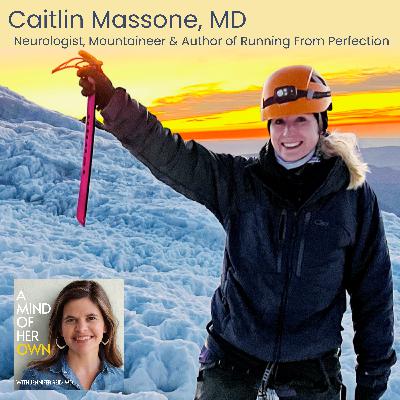
In this episode of A Mind of Her Own, host Dr. Jennifer Reid explores guilt, perfectionism, and recovery with Dr. Caitlin Massone, author of Running from Perfection. This conversation is part of the Guilt-Free series, leading up to the release of Dr. Reid’s book Guilt Free on January 27, 2026.Dr. Massone is a neurologist, ultramarathon runner, and mountaineer who battled eating disorders for 14 years. She shares how family trauma triggered her anorexia at 16, the guilt she carried through medical school while struggling with bulimia, and how nature and endurance sports became her path to healing.Key QuotesOn losing control:“I was really just trying to regain control amidst all of that chaos and turmoil. When my dad left, we went from having a fully stocked fridge and pantry to all of a sudden having this kind of feast and famine cycle.”On teenage guilt:“At the time, I was feeling guilty as if I wasn’t a good enough daughter. Every kid has these questions that go through their head that they never voice. Like, is this in some way my fault?”On being a doctor with an eating disorder:“I felt like I was in some way being hypocritical or not being an example for my patients. That was probably some of the worst guilt that I felt.”On finding empowerment through running:“When I run, I feel powerful and I feel like my body’s so capable and it doesn’t matter what it looks like in the mirror. It really has been just a remarkable transformation.”On nature as medicine:“Exercise and nature have been so integral in helping me heal and just keeping me happy.”More Resources:National Alliance for Eating DisordersNational Eating Disorder AssociationFind Dr. Massone: @drcait23 on Instagram | CaitlinMassone.comFind Dr. Reid on Instagram: @jenreidmd, LinkedIn, and YouTubeYou can also preorder Dr. Reid’s book, Guilt Free! (If you are in the UK, you can order here and here.)Also check out Dr. Reid’s regular contributions to Psychology Today: Think Like a ShrinkThanks for checking out A Mind of Her Own! This post is public so feel free to share it.Seeking a mental health provider? Try Psychology TodayNational Suicide Prevention Lifeline: 1-800-273-8255Dial 988 for mental health crisis supportSAMHSA’s National Helpline - 1-800-662-HELP (4357)-a free, confidential, 24/7, 365-day-a-year treatment referral and information service (in English and Spanish) for individuals and families facing mental and/or substance use disorders.Disclaimer:The views expressed on this podcast reflect those of the host and guests, and are not associated with any organization or academic site. Also, AI may have been used to create the transcript and notes, based only on the specific discussion of the host and guest and reviewed for accuracy.The information and other content provided on this podcast or in any linked materials, are not intended and should not be construed as medical advice, nor is the information a substitute for professional medical expertise or treatment. All content, including text, graphics, images and information, contained on or available through this website is for general information purposes only.If you or any other person has a medical concern, you should consult with your health care provider or seek other professional medical treatment. Never disregard professional medical advice or delay in seeking it because of something that have read on this website, blog or in any linked materials. If you think you may have a medical emergency, call your doctor or emergency services (911) immediately. You can also access the National Suicide Help Line at 1-800-273-8255 or call 988 for mental health emergencies. This is a public episode. If you would like to discuss this with other subscribers or get access to bonus episodes, visit amindofherown.substack.com
*Please note, today’s guest will remain anonymous to protect her privacy.“We’re supposed to be constant caregivers. And we’re supposed to do that even when it makes our lives really difficult...this constant caregiving as what a good person, a good nurse, a good doctor, a good woman, a good mother would do is setting expectations that are just not attainable in modern life.”Alongside the upcoming release of her book, Guilt Free: Reclaiming Your Life from Unreasonable Expectations, on January 27, 2026, Dr. Reid is creating a space for authentic discussions and stories about the experience of guilt across the various roles women inhabit:* As mothers balancing family needs with personal aspirations* As daughters navigating complex family dynamics* As friends trying to show up meaningfully in others’ lives* As partners working to maintain healthy relationships* In careers while striving for work-life harmonyIn this episode, she sits down with an ICU nurse who’s been through it all: night shifts, day shifts, burnout, and everything in between. She opens up about what it really feels like when you realize, “oh my gosh, I’m burnt out”—and more importantly, the guilt that comes with it.The Comparison Trap“All day, I would be like, so-and-so is handling this so much better than I do,” she shares. “Or how is it that so-and-so not only has time to get her work done, but to help everybody else and is so generous with that help when I am constantly so overwhelmed by my own work?”Sound familiar? We dig into why comparison becomes such a crushing weight and introduce a key framework from the book Guilt Free: guilt is the mismatch between our expectations of ourselves and how well we believe we’re meeting them.Find Dr. Reid on Instagram: @jenreidmd, LinkedIn, and YouTubeYou can also preorder Dr. Reid’s book, Guilt Free! (If you are in the UK, you can order here and here.)Also check out Dr. Reid’s regular contributions to Psychology Today: Think Like a Shrink.Seeking a mental health provider? Try Psychology TodayNational Suicide Prevention Lifeline: 1-800-273-8255Dial 988 for mental health crisis supportSAMHSA’s National Helpline - 1-800-662-HELP (4357)-a free, confidential, 24/7, 365-day-a-year treatment referral and information service (in English and Spanish) for individuals and families facing mental and/or substance use disorders.Disclaimer:The views expressed on this podcast reflect those of the host and guests, and are not associated with any organization or academic site. Also, AI may have been used to create the transcript and notes, based only on the specific discussion of the host and guest and reviewed for accuracy.The information and other content provided on this podcast or in any linked materials, are not intended and should not be construed as medical advice, nor is the information a substitute for professional medical expertise or treatment. All content, including text, graphics, images and information, contained on or available through this website is for general information purposes only.If you or any other person has a medical concern, you should consult with your health care provider or seek other professional medical treatment. Never disregard professional medical advice or delay in seeking it because of something that have read on this website, blog or in any linked materials. If you think you may have a medical emergency, call your doctor or emergency services (911) immediately. You can also access the National Suicide Help Line at 1-800-273-8255 or call 988 for mental health emergencies. This is a public episode. If you would like to discuss this with other subscribers or get access to bonus episodes, visit amindofherown.substack.com
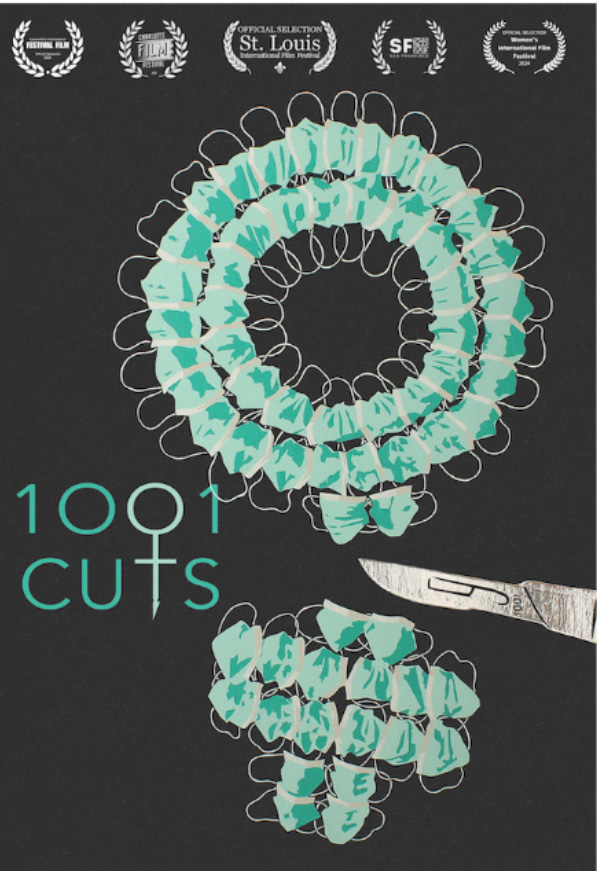
“It wasn’t like overnight I woke up and I was like, I don’t like medicine anymore... It was just like this gradual onslaught and accumulation of events that felt very much like beating my head against a wall, just trying to do my job.” -Sarah Temkin, MDIn this powerful conversation, Dr. Sarah Temkin—gynecologic oncologist turned first-time filmmaker—shares her journey from loving clinical medicine to leaving practice in 2020, and how those experiences inspired her documentary “1001 Cuts” about women surgeons.Dr. Temkin reveals the accumulation of challenges women face in male-dominated fields: from being told she was “too nice” to be a surgeon, to equipment that doesn’t fit female hands, to the exhausting tightrope of being perceived as either too aggressive or not assertive enough. Yet this episode is ultimately about hope and change. Dr. Temkin’s documentary has sparked conversations across professions, with women in law, journalism, and trades recognizing their own experiences. She calls for a generational shift toward medicine that maintains excellence while accommodating diverse personalities, schedules, and bodies—creating space for all the talent we’re currently losing.Guest BioDr. Sarah Temkin is a gynecologic oncologist who spent over two decades providing surgical and medical care for women with cancer. She is widely published in medical literature and has contributed to conversations about equity in healthcare throughout her career. After leaving clinical practice in 2020, she became a first-time filmmaker, directing and producing the documentary “1001 Cuts,” which examines the experiences of women surgeons and has become an educational tool for medical institutions nationwide.Resources* “1001 Cuts” Documentary - Learn more about the film and opportunities to hold educational screenings in your organization or community.* Impact Campaign Partnership - The Video Project and American Medical Women’s Association collaborationA Mind of Her Own explores the intersection of gender, health, and professional life through conversations with remarkable individuals.Find Dr. Reid on Instagram: @jenreidmd, LinkedIn, and YouTubeYou can also preorder Dr. Reid’s book, Guilt Free! (If you are in the UK, you can order here and here.)Thanks for reading A Mind of Her Own! Subscribe for free to receive new posts and hear about episodes and book events.Also check out Dr. Reid’s regular contributions to Psychology Today: Think Like a Shrink.Seeking a mental health provider? Try Psychology TodayNational Suicide Prevention Lifeline: 1-800-273-8255Dial 988 for mental health crisis supportSAMHSA’s National Helpline - 1-800-662-HELP (4357)-a free, confidential, 24/7, 365-day-a-year treatment referral and information service (in English and Spanish) for individuals and families facing mental and/or substance use disorders.Disclaimer:The views expressed on this podcast reflect those of the host and guests, and are not associated with any organization or academic site. Also, AI may have been used to create the transcript and notes, based only on the specific discussion of the host and guest and reviewed for accuracy.The information and other content provided on this podcast or in any linked materials, are not intended and should not be construed as medical advice, nor is the information a substitute for professional medical expertise or treatment. All content, including text, graphics, images and information, contained on or available through this website is for general information purposes only.If you or any other person has a medical concern, you should consult with your health care provider or seek other professional medical treatment. Never disregard professional medical advice or delay in seeking it because of something that have read on this website, blog or in any linked materials. If you think you may have a medical emergency, call your doctor or emergency services (911) immediately. You can also access the National Suicide Help Line at 1-800-273-8255 or call 988 for mental health emergencies. This is a public episode. If you would like to discuss this with other subscribers or get access to bonus episodes, visit amindofherown.substack.com
“If I didn’t have hope defined as an action—defined as every day doing something to try to close the gap between what is and what could and should be—I don’t know what else I’d do.”In this profound episode, legendary educator and activist Dr. Parker Palmer (author of Let Your Life Speak) joins Dr. Jennifer Reid to explore what it means to live an authentic life aligned with your deepest calling—especially during times of political and social upheaval.At 86, Palmer shares hard-won wisdom about recognizing your true vocation, not by emulating heroes or following society’s script, but by paying attention to your own inner voice. He explains why burnout often comes from “trying to give what we don’t have to give” and offers the powerful question he poses to young people struggling with direction: “Is there anything you feel you can’t not do?”The conversation takes on urgency as Palmer addresses our current political moment, explaining why he’s been calling out fascism since 2016 and how face-to-face encounters across America’s struggling small towns have deepened his understanding of why people vote against their own interests. Most powerfully, Palmer speaks to maintaining hope as an action—something we practice daily by “closing the gap between what is and what could and should be.” About Our GuestDr. Parker Palmer is a writer, speaker and activist who focuses on issues in education, community, leadership, spirituality and social change. He is the founder of the Center for Courage & Renewal and the award-winning author of ten books. He is also the creator of the Substack, Living the Questions. He has a PhD in sociology from the University of California at Berkeley, and 14 honorary doctorates, among many other accolades.Find Dr. Reid on Instagram: @jenreidmd, LinkedIn, and YouTube You can also preorder Dr. Reid’s book, Guilt Free! (If you are in the UK, you can order here and here.)Thanks for checking out A Mind of Her Own! Subscribe for free to receive new posts and hear about upcoming events.Also check out Dr. Reid’s regular contributions to Psychology Today: Think Like a Shrink.Seeking a mental health provider? Try Psychology TodayNational Suicide Prevention Lifeline: 1-800-273-8255Dial 988 for mental health crisis supportSAMHSA’s National Helpline - 1-800-662-HELP (4357)-a free, confidential, 24/7, 365-day-a-year treatment referral and information service (in English and Spanish) for individuals and families facing mental and/or substance use disorders.Disclaimer:The views expressed on this podcast reflect those of the host and guests, and are not associated with any organization or academic site. Also, AI may have been used to create the transcript and notes, based only on the specific discussion of the host and guest and reviewed for accuracy.The information and other content provided on this podcast or in any linked materials, are not intended and should not be construed as medical advice, nor is the information a substitute for professional medical expertise or treatment. All content, including text, graphics, images and information, contained on or available through this website is for general information purposes only.If you or any other person has a medical concern, you should consult with your health care provider or seek other professional medical treatment. Never disregard professional medical advice or delay in seeking it because of something that have read on this website, blog or in any linked materials. If you think you may have a medical emergency, call your doctor or emergency services (911) immediately. You can also access the National Suicide Help Line at 1-800-273-8255 or call 988 for mental health emergencies. This is a public episode. If you would like to discuss this with other subscribers or get access to bonus episodes, visit amindofherown.substack.com
In this thoughtful conversation, Dr. Jennifer Reid welcomes back an old friend and UCLA training colleague, Dr. Marissa Caudill, to explore one of parenting’s most pervasive emotions: guilt. Dr. Caudill, who specializes in coaching parents of tweens with anxiety and ADHD, brings both clinical expertise and personal vulnerability to a discussion that every parent needs to hear.The conversation begins with a fascinating dive into the neurobiology of new parenthood—how becoming a parent literally grows your amygdala (the brain’s fear center) and creates a new baseline of anxiety that never quite returns to pre-baby levels. Both doctors share their own experiences with postpartum intrusive thoughts, the kind that almost no one talks about but nearly 90% of new mothers experience. (More on the topic of postpartum intrusive thoughts and OCD in Dr. Reid’s interview with Jenna Overbaugh, LPC)From there, they tackle the heart of parental guilt: the gap between our sky-high expectations and the reality of raising imperfect humans in an increasingly competitive world. Dr. Caudill offers a refreshing reframe—that pushing our kids to meet our script rather than honoring their story can actually undermine the attunement they need to develop resilience. She shares practical wisdom on distinguishing between anxiety that needs gentle pushing and resistance that deserves respect, and why sometimes doing “nothing” (just being present) is exactly what struggling kids need most.You can also hear Dr. Caudill’s earlier conversation with Dr. Reid about Key Parenting Tips for the 21st CenturyAbout Today’s GuestDr. Marissa Caudill, MD, PhD is a child and adolescent psychiatrist, mother, and parent coach. She focuses on coaching and education of parents of tweens with anxiety and/or ADHD (about 11% of kids have one of these diagnoses), empowering them to step up to minimize the chances their kids will suffer mental illness in adolescence. Parents have so much influence and power over their kids’ development, we just need guidance to cut through the noise. Find her on all of the socials as The Parent Doctor. Find Dr. Caudill on Instagram, LinkedIn, Facebook, and YouTubeFind Dr. Reid on Instagram: @jenreidmd and LinkedInYou can also preorder Dr. Reid’s book, Guilt Free! (If you are in the UK, you can order here and here.)Thanks for checking out A Mind of Her Own! Subscribe for free to receive new posts and hear about upcoming events..Also check out Dr. Reid’s regular contributions to Psychology Today: Think Like a Shrink.Seeking a mental health provider? Try Psychology TodayNational Suicide Prevention Lifeline: 1-800-273-8255Dial 988 for mental health crisis supportSAMHSA’s National Helpline - 1-800-662-HELP (4357)-a free, confidential, 24/7, 365-day-a-year treatment referral and information service (in English and Spanish) for individuals and families facing mental and/or substance use disorders.Disclaimer:The views expressed on this podcast reflect those of the host and guests, and are not associated with any organization or academic site. Also, AI may have been used to create the transcript and notes, based only on the specific discussion of the host and guest and reviewed for accuracy.The information and other content provided on this podcast or in any linked materials, are not intended and should not be construed as medical advice, nor is the information a substitute for professional medical expertise or treatment. All content, including text, graphics, images and information, contained on or available through this website is for general information purposes only.If you or any other person has a medical concern, you should consult with your health care provider or seek other professional medical treatment. Never disregard professional medical advice or delay in seeking it because of something that have read on this website, blog or in any linked materials. If you think you may have a medical emergency, call your doctor or emergency services (911) immediately. You can also access the National Suicide Help Line at 1-800-273-8255 or call 988 for mental health emergencies.This episode is part of the “A Mind of Her Own” podcast series called Guilt Free: Real Women, Real Voices, exploring how guilt shows up in women’s lives and how to move away from its painful influence. This is a public episode. If you would like to discuss this with other subscribers or get access to bonus episodes, visit amindofherown.substack.com
As an avid reader, I’m always seeking that next great book. The one that allows me to see myself and the world more clearly, comforts me when I’m lost, or inspires me to move through my day differently. This series is my opportunity to pass these remarkable books onto you, as readers of A Mind of Her Own, both for your own enjoyment and also, as a self-serving shout-out to the universe to send me more amazing, life-changing reads. I’m excited to hear what you think, and I’m so glad you’re here!Life-Changing Reads: A Series1. Let Your Life Speak: Listening for the Voice of Vocation, by Parker Palmer“Vocation does not come from willfulness. It comes from listening…vocation does not mean a goal that I pursue. It means a calling that I hear.”I read this book when I was feeling lost, searching for a life that aligned with my values and desires, and doubting myself at every step. I kept hearing this call to write, to create, but I thought it was something I should do in my “non-work” time, because it wasn’t a serious activity for a physician. Parker’s discussion of his own struggle to find his true vocation, through an altruistic but ultimately unsustainable career path, was a fundamental guide on my journey.2. Quiet: The Power of Introverts in a World that Can’t Stop Talking, by Susan Cain“So when introverts assume the observer role, as when they write novels, or contemplate unified field theory—or fall quiet at dinner parties—they’re not demonstrating a failure of will or a lack of energy. They’re simple doing what they’re constitutionally suited for.”I listened to this book in the car, sitting in LA traffic, during my psychiatry residency. I still remember the feeling of hearing these words, suggesting my tendency to prefer listening to talking, observing to acting, thinking to doing was not because I was lazy, overly shy or antisocial. It was what I was “constitutionally suited for.” This was a revelation.Here I am now, writing books, listening as a psychiatrist and podcast host, and taking time to think about life’s great mysteries. Thank you, Susan, for your beautiful writing.3. The Good Life: Lessons From the World’s Longest Scientific Study of Happiness, by Robert Waldinger, MD and Marc Schulz, PhD“Do I matter? Some of us have lived the majority of our lives and find ourselves looking back, others have most of our lives in front of us and are looking forward. For all of us, regardless of age, it helps to remember that this question of mattering, of leaving something for future generations and of being part of something bigger than ourselves, is not just about our personal achievements—it’s about what we mean to other people. And it’s never too late to start now and leave a mark.”This book, by the directors of the Harvard Study of Adult Development, is a powerful summary of the lives of two generations of individuals from the same families for over 80 years. It’s remarkable to read their quotes as they navigate joy, loss, struggles and successes over the years. The reason I’ve found it so important to read and reread is its powerful reminder of the importance of our relationships in creating happiness. Not money. Not fame. Not a perfect body. Not prizes or rings or medals. It’s all about the love and connection we have in our lives.Today, as I try to navigate the overwhelmingly stressful news and constant churn of social media, it grounds me in my day-to-day life to reflect on those in my closest orbit. How can I connect with them today? How do I show my love and interest in ways both silly and sincere? Even if I’ve been feeling disconnected, I trust that it is never too late to leave my own mark in their lives and remember the joy of having them in mine.4. How Do You Feel? One Doctor’s Search for Humanity in Medicine, by Jessi Gold, MD, MS“Sometimes, the heaviest emotional burden is to bear witness or to hold space for someone else’s story. To do my job well and be someone whom people can trust, I need to care. I need to be truly empathetic. I need to be raw and available.”This beautiful book, by Jessi Gold, describes so many aspects of my experience as a psychiatrist. She writes about the unique emotional toll of meeting with patients during some of their darkest moments, as they are working to overcome trauma, abuse, loss or grave illnesses. Reading this was incredibly validating. In the past, when I had finished my clinical week, I would look back and wonder, “Why can’t I do more? Why didn’t I see more patients? There is so much need.”Dr. Gold’s book helped me to be self-compassionate, recognizing I could only be truly present if I also took care of myself. This is a message I now try to pass along to the psychiatry residents I teach. We are human, and we have limits. Thank you, Jessi, for generously sharing your life with us. Your work is so important.Listen to Dr. Gold on The Reflective Mind Podcast at https://amindofherown.substack.com/p/speaking-the-quiet-part-out-loud?r=1wdz1l5. Finding Meaning in the Second Half of Life: How to Finally, Really Grow Up by James Hollis, Ph.D.“To engage with the summons of our souls is to step into the deepest ocean, uncertain whether we will be able to swim to some new, distant shore. And yet, until we have consented to swim beyond the familiar lights of the port left behind, we will never arrive at a newer shore.”This stunning book, by Dr. James Hollis, a Jungian scholar and prolific writer, shares his own story of midlife depression and his decision to leave the familiar to seek training in Zurich and become a Jungian analyst. He writes beautifully about his struggle to identify his own path with the guidance of Jung’s theory of individuation, defined as “the lifelong project of becoming more nearly the whole person we were meant to be.” I read and re-read this book as I was struggling with my own path to meaning in midlife, and I found such comfort in his powerful belief that we all can tap into what we already know: the person we are most meant to be.You can listen to his beautiful description of his path here: https://amindofherown.substack.com/p/a-nameless-longing-when-your-soul?r=1wdz1l6. Shrill, by Lindy West (I also highly recommend the Hulu series by the same name, starring Aidy Bryant )“I am my body. When my body gets smaller, it is still me. When my body gets bigger, it is still me. There is not a thin woman inside me, awaiting excavation. I am one piece.”Thinking back on my training during medical school and beyond, I can summarize any lecture about body size with one phrase: overweight equals unhealthy. This repeated conflation means I now must consciously uncouple one from the other in my clinical work, stepping back from the broad and imprecise shorthand to consider how they are, and are not, actually related.Lindy West’s book helped me significantly as I was trying to shift my thinking on this topic. Her frank depiction of life in her larger body was at times heartbreaking (especially in the doctor’s office), frequently humorous (with chapter titles like “Are you there, Margaret? It’s me, a person who is not a complete freak.”) and overall a powerful motivator for change. I think all health care providers should read it at least once.If this resonates, check out my interview with Dr. Mara Gordon all about the size-inclusive healthcare revolution. https://amindofherown.substack.com/p/the-size-inclusive-healthcare-revolution?utm_source=publication-search7. Words Are My Matter: Writings on Life and Books by Ursula K. Le Guin“Fiction offers the best means of understanding people different from oneself, short of experience. Actually, fiction can be lots better than experience, because it’s a manageable size, it’s comprehensible, while experience just steamrollers over you and you understand what happened decades later, if ever.”I grew up in a very small town in North Dakota, just a few miles from the South Dakota border. I didn’t recognize the enormity of the sky above my childhood home until I returned as an adult, head tipped back, staring upward in awe. I grew up there with a loving family and a surrounding community willing to cheer me on in events from basketball games to theater performances, but I always felt a bit out of place. Reading became my reassurance that the world was as big as the sky overhead, and I would eventually find my own path. Books also helped me recognize the importance of placing myself in another’s shoes, virtual empathy-building machines that taught me about those whose lives were so incredibly different from my own.This book of Ursula K. Le Guin’s essays, poems and book reviews reveals a grounded, opinionated, brilliant woman who decided to create entire worlds with stunning clarity, illuminating the challenges existing in our own. Readers and writers alike will not be sorry for taking a moment to absorb her work.If this interests you, please feel free to listen to my short essay, Books are Empathy Machines.8. Intimations by Zadie Smith“Talking to yourself can be useful. And writing means being overheard.”This book by Zadie Smith, a collection of six essays, was published in 2020, and provides a glimpse into the author’s life during the early months of the Covid-19 virus. I’ve long been an admirer of her fiction, but this series allowed a much more intimate window into her wandering mind, trying to comprehend her place in a society turned inside out with uncertainty and fear.What does it mean to be an artist when people are being categorized as “essential workers?” Is loyalty to a place something that can outlast a feeling of unique vulnerability? How can writing provide an outlet for survival when the world is so fraught? There was comfort in her struggle to understand and in her feeling of disorientation, which I certainly shared. I emerged from her writing feeling more hopeful and far less alone.If this essay resonated, please feel free to check out this podcast episode Hope is the Best Antidote for Demoralization with Dr
Listen to a new episode of Guilt Free: Real Women, Real Stories on A Mind of Her Own with host Jennifer Reid, MD, who sits down with Dr. Hope Seidel, a board-certified pediatrician turned parenting coach, to explore the pervasive guilt that shadows modern parenting. Drawing from two decades of clinical experience and her own personal journey—including navigating her husband’s addiction and eventual loss—Dr. Seidel offers a refreshingly honest perspective on what it truly means to be a “good enough” parent.Our Guest’s Bio:Hope Seidel is a mom of two young adults, a board certified pediatrician, a certified parenting coach and a passionate advocate for children’s wellness. A partner for 21 years at her practices in North Carolina, she retired in December of 2023. She began her private coaching practice “Parent with Hope” in 2020, and now works virtually supporting parents 1:1 to create more connection with their kids, confidence in their parenting and wellness in their homes.www.parentwithhope.comFB link: https://www.facebook.com/parentwithhopeInstagram link: https://www.instagram.com/parentwithhope/Find Dr. Reid on Instagram: @jenreidmd and LinkedInYou can also preorder her upcoming book, Guilt Free!Thanks for reading A Mind of Her Own! Subscribe for free to receive new posts and hear about future episodes and book events.Also check out Dr. Reid’s regular contributions to Psychology Today: Think Like a Shrink.Seeking a mental health provider? Try Psychology TodayNational Suicide Prevention Lifeline: 1-800-273-8255Dial 988 for mental health crisis supportSAMHSA’s National Helpline - 1-800-662-HELP (4357)-a free, confidential, 24/7, 365-day-a-year treatment referral and information service (in English and Spanish) for individuals and families facing mental and/or substance use disorders.Disclaimer:The views expressed on this podcast reflect those of the host and guests, and are not associated with any organization or academic site. Also, AI may have been used to create the transcript and notes, based only on the specific discussion of the host and guest and reviewed for accuracy.The information and other content provided on this podcast or in any linked materials, are not intended and should not be construed as medical advice, nor is the information a substitute for professional medical expertise or treatment. All content, including text, graphics, images and information, contained on or available through this website is for general information purposes only.If you or any other person has a medical concern, you should consult with your health care provider or seek other professional medical treatment. Never disregard professional medical advice or delay in seeking it because of something that have read on this website, blog or in any linked materials. If you think you may have a medical emergency, call your doctor or emergency services (911) immediately. You can also access the National Suicide Help Line at 1-800-273-8255 or call 988 for mental health emergencies.This episode is part of the “A Mind of Her Own” podcast series called Guilt Free: Real Women, Real Voices, exploring how guilt shows up in women’s lives and how to move away from its painful influence. This is a public episode. If you would like to discuss this with other subscribers or get access to bonus episodes, visit amindofherown.substack.com
In this first of the Guilt Free: Real Women, Real Voices series with Dr. Jennifer Reid, she speaks with Kerry Chaput, author and creator of the Substack “Badass Women in History.” Kerry opens up about spending decades working in physical therapy—a career chosen to please her parents rather than follow her passion for writing and women’s history. She discusses how guilt over having the “wrong dream” kept her from pursuing her authentic path for years, and what finally prompted her to take the leap.About the GuestKerry Chaput is a multi-award-winning author dedicated to highlighting badass women in history. Born and raised in California, she now lives in the Pacific Northwest where she spends her time on trails, researching historical rabbit holes, and creating content for her popular Substack. Her upcoming novel “The Secret Courtesan” explores themes of erased women’s contributions to art and history.www.kerrywrites.comFind Dr. Reid on Instagram: @jenreidmd and LinkedInYou can also preorder her upcoming book, Guilt Free!Thanks for reading A Mind of Her Own! Subscribe for free to receive new posts and support my work.Also check out Dr. Reid’s regular contributions to Psychology Today: Think Like a Shrink.Seeking a mental health provider? Try Psychology TodayNational Suicide Prevention Lifeline: 1-800-273-8255Dial 988 for mental health crisis supportSAMHSA’s National Helpline - 1-800-662-HELP (4357)-a free, confidential, 24/7, 365-day-a-year treatment referral and information service (in English and Spanish) for individuals and families facing mental and/or substance use disorders.Disclaimer:The views expressed on this podcast reflect those of the host and guests, and are not associated with any organization or academic site. Also, AI may have been used to create the transcript and notes, based only on the specific discussion of the host and guest and reviewed for accuracy.The information and other content provided on this podcast or in any linked materials, are not intended and should not be construed as medical advice, nor is the information a substitute for professional medical expertise or treatment. All content, including text, graphics, images and information, contained on or available through this website is for general information purposes only.If you or any other person has a medical concern, you should consult with your health care provider or seek other professional medical treatment. Never disregard professional medical advice or delay in seeking it because of something that have read on this website, blog or in any linked materials. If you think you may have a medical emergency, call your doctor or emergency services (911) immediately. You can also access the National Suicide Help Line at 1-800-273-8255 or call 988 for mental health emergencies.This episode is part of the “A Mind of Her Own” podcast series called Guilt Free: Real Women, Real Voices, exploring how guilt shows up in women’s lives and how to move away from its painful influence. This is a public episode. If you would like to discuss this with other subscribers or get access to bonus episodes, visit amindofherown.substack.com
Trying to raise kids who have a genuinely healthy relationship with food and their bodies? Join Jennifer Reid, MD as she speaks with Oona Hanson, educator, writer and parent coach, about how much power parents have to nurture kids who trust their own hunger cues, enjoy movement for joy rather than punishment, and develop the kind of inner voice that supports rather than sabotages them throughout life.Understanding Diet CultureDiet culture isn't just about dieting—it's pervasive beliefs about food and bodies that we're systematically taught."It's the air we breathe. It's the water we're swimming in... We aren't born with these ideas [about good/bad foods]. These are something we're systematically taught through culture."Parent Guilt and Self-Compassion"Parents don't cause eating disorders and parents can actually be the most powerful source of support for recovery."About OonaOona Hanson is a writer, educator, and parent coach specializing in helping families navigate diet culture. She holds master's degrees in educational psychology and English, is a regular CNN contributor, and writes the "Parenting Without Diet Culture" newsletter. Her first book will be published by Cambridge University Press in 2026.Resources Mentioned* "Fearing the Black Body" by Dr. Sabrina Strings - explores connections between racism and diet culture* "Parenting Without Diet Culture" newsletter by Oona Hanson* Division of Responsibility feeding framework by Ellyn Satter* Eating disorder specialists - therapists, psychiatrists, registered dietitians with ED experienceIf you enjoyed this episode of The Reflective Mind podcast, here are others you may like:* Size-Inclusive Healthcare with Dr. Mara Gordon, MD* New Hope in Treatments for Eating Disorders with Dr. Joanna Steinglass, MDFind Dr. Reid on Instagram: @jenreidmd and LinkedIn You can also preorder her upcoming book, Guilt Free!Thanks for checking out The Reflective Mind podcast! Subscribe for free to hear about future book events and podcast episodes.Also check out Dr. Reid's regular contributions to Psychology Today: Think Like a Shrink.Seeking a mental health provider? Try Psychology TodayNational Suicide Prevention Lifeline: 1-800-273-8255Dial 988 for mental health crisis supportSAMHSA's National Helpline - 1-800-662-HELP (4357)-a free, confidential, 24/7, 365-day-a-year treatment referral and information service (in English and Spanish) for individuals and families facing mental and/or substance use disorders.Disclaimer:The views expressed on this podcast reflect those of the host and guests, and are not associated with any organization or academic site. Also, AI may have been used to create the transcript and notes, based only on the specific discussion of the host and guest and reviewed for accuracy. The information and other content provided on this podcast or in any linked materials, are not intended and should not be construed as medical advice, nor is the information a substitute for professional medical expertise or treatment. All content, including text, graphics, images and information, contained on or available through this website is for general information purposes only.If you or any other person has a medical concern, you should consult with your health care provider or seek other professional medical treatment. Never disregard professional medical advice or delay in seeking it because of something that have read on this website, blog or in any linked materials. If you think you may have a medical emergency, call your doctor or emergency services (911) immediately. You can also access the National Suicide Help Line at 1-800-273-8255 or call 988 for mental health emergencies. This is a public episode. If you would like to discuss this with other subscribers or get access to bonus episodes, visit amindofherown.substack.com
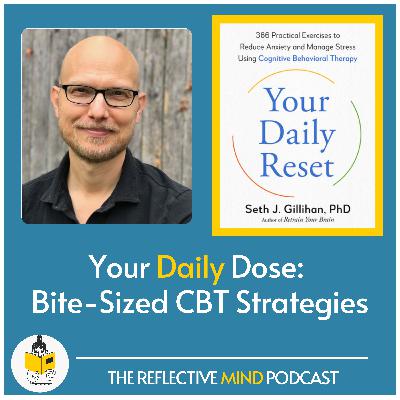
Episode OverviewLicensed psychologist Dr. Seth Gillihan returns to discuss his latest book, Your Daily Reset: 366 Practical Exercises to Reduce Anxiety and Manage Stress Using Cognitive Behavioral Therapy. In this candid conversation, Dr. Gillihan shares practical strategies for building sustainable mental health habits, explains why mindfulness and CBT work better together, and even opens up about his own parenting anxieties and recent psilocybin journey.Key PointsBuilding Daily Practices That Stick* Brief, consistent practices (40 words average) can create significant change* Focus on functional analysis: what's actually preventing the habit?* Small environmental changes (book placement, timing) matter more than willpowerCombining Mindfulness and CBT* Mindfulness addresses how our minds work (the process)* CBT addresses what our minds tell us (the content)* Together they create a more flexible relationship with thoughtsFacing Fear Through Values* Identify what you value more than your fear* Use values to guide action even when anxiety is present* Model courage for children by not avoiding what scares usKey QuotesOn making room for natural anxiety:"Of course, of course you're a parent. You're going to feel anxious about these things. And feeling anxious in and of itself is not a bad thing. It's not a problem that we have to get rid of."On the power of small daily practices:"If I can just remember that once a day, I think that that can be a big deal... the thoughts that my mind is telling me aren't necessarily true, and they're probably more helpful ways of looking at things."On self-compassion in mental health:"I think it's really one of the main things I want to do... it's just really wanting people to go easier on themselves, you know, like to not be overly critical of themselves and especially in the area of their own mental health."Daily Reset Strategies* Keep practices brief (1-2 sentences)* Focus on awareness and perspective shifts* Make the book/practice visible in your environment* Don't aim for perfection—consistency matters moreAbout Dr. Seth GillihanDr. Seth Gillihan is a licensed psychologist, host of the Think Act Be podcast, and author of multiple books on mindfulness and CBT. He completed his doctorate at the University of Pennsylvania and has been in private practice since 2012. His latest book, Your Daily Reset, provides 366 brief exercises combining cognitive behavioral therapy techniques with practical daily applications.Dr. Reid on Instagram: @jenreidmd and LinkedIn and her upcoming book, Guilt Free.Thanks for listening to The Reflective Mind podcast and reading A Mind of Her Own! Subscribe for free to receive new posts and learn about upcoming book events.Also check out Dr. Reid's regular contributions to Psychology Today: Think Like a Shrink.Seeking a mental health provider? Try Psychology TodayNational Suicide Prevention Lifeline: 1-800-273-8255Dial 988 for mental health crisis supportSAMHSA's National Helpline - 1-800-662-HELP (4357)-a free, confidential, 24/7, 365-day-a-year treatment referral and information service (in English and Spanish) for individuals and families facing mental and/or substance use disorders.Disclaimer:The views expressed on this podcast reflect those of the host and guests, and are not associated with any organization or academic site.The information and other content provided on this podcast or in any linked materials, are not intended and should not be construed as medical advice, nor is the information a substitute for professional medical expertise or treatment. All content, including text, graphics, images and information, contained on or available through this website is for general information purposes only.If you or any other person has a medical concern, you should consult with your health care provider or seek other professional medical treatment. Never disregard professional medical advice or delay in seeking it because of something that have read on this website, blog or in any linked materials. If you think you may have a medical emergency, call your doctor or emergency services (911) immediately. You can also access the National Suicide Help Line at 1-800-273-8255 or call 988 for mental health emergencies. This is a public episode. If you would like to discuss this with other subscribers or get access to bonus episodes, visit amindofherown.substack.com
Welcome to A Mind of Her Own! I'm sharing some personal thoughts before interviewing Dr. Seth Gillihan about his new book "Your Daily Reset" - which offers 366 brief, actionable mindfulness and CBT techniques for daily practice. Check out this episode of my podcast, The Reflective Mind when I post it early next week!How do I nurture my own mindfulness practices?* Bird watching (aka nature's reality TV) - I sit outside watching birds duke it out for their favorite sunflower seeds. Plus I've got a hummingbird feeder that I'm convinced only attracts hummingbirds when my mom visits - she's basically a joy magnet.* Puzzle therapy - Working on jigsaw puzzles helps me focus and zone out in a non-stressful way, concentrating on colors and shapes, rather than my lengthy to-do list.* Family connection - I wear my great-grandmother's wedding ring and reflect on her remarkable story - she raised 11 children in a two-room house in rural North Dakota, all of whom went to college, including my grandmother, who became a teacher and librarian (which is the coolest career, for sure).* Library wandering - Speaking of librarians, I'm that person who gets a library card within 24 hours of moving anywhere. I wander the aisles like I'm shopping, but with zero buyer's remorse when I "impulse buy" seven books I may never finish.I realize, as a psychiatrist I'm supposed to be all zen and mindful, but I'm human too. Sometimes my brain refuses to cooperate with meditation apps or reminders to breathe deeply. The trick is finding what actually works for you.I’m so glad you’re here! Thanks for reading A Mind of Her Own! Subscribe for free to receive new posts and hear about upcoming book events and podcast episodes! This is a public episode. If you would like to discuss this with other subscribers or get access to bonus episodes, visit amindofherown.substack.com
I’m so glad to see you all here! I’m exciting to share some upcoming projects I’m involved in. First, this Friday I’m interviewing psychologist Seth Gillihan, PhD about his new book, Your Daily Reset: 366 Practical Exercises to Reduce Anxiety and Manage Stress Using Cognitive Behavior Therapy. He was on the podcast in the past, sharing a very personal and moving story about his own challenges with depression and his path to recovery. I encourage you to check it out here. Next, I’m thrilled to be speaking at two upcoming career days, sharing my path in psychiatry to private practice, writing, podcasting and teaching psychiatry residents. If you’re interested, the link to the Philadelphia Chapter of the Pennsylvania Psychiatry Society event is here. I’m in the process of launching my Substack and podcast series, Guilt Free: Real Women, Real Stories, featuring the experiences of women trying to navigate guilt in their lives. If you’d like to contribute, feel free to fill out this form for a chance to be featured in a future essay or podcast episode! Lastly, tomorrow marks 6-months to the release of my first book, Guilt Free: Reclaiming Your Life from Unreasonable Expectations, coming January 27, 2026! Writing it has truly changed my own relationship with guilt, and I can’t wait to share it with all of you. If interested, preorder at the link! Take care, everyone, and be well. Thanks for reading A Mind of Her Own! Subscribe for free to receive new posts, and hear about upcoming podcast episodes and book events. This is a public episode. If you would like to discuss this with other subscribers or get access to bonus episodes, visit amindofherown.substack.com
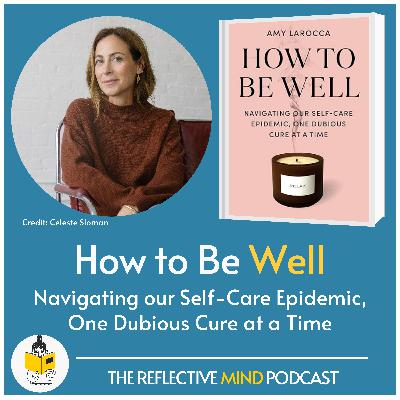
"You're supposed to be striving for more, but also be really pleased with what you've got... You're never supposed to be seen wanting. You're supposed to be just filled with gratitude for everything that you have, but also constantly trying." -Amy LaroccaListen in as Dr. Jennifer Reid chats with Amy Larocca, former New York Magazine fashion director and author of How to Be Well: Navigating Our Self-Care Epidemic, One Dubious Cure at a Time. Amy pulls back the curtain on how the wellness industry has become the new fashion industry—using the same aspirational marketing tactics to make women feel perpetually inadequate.If you've ever felt guilty for being "just fine" or pressured to optimize every aspect of your life, this episode is your permission slip to stop. Amy's journey from fashion journalism to wellness investigation reveals the dangerous messaging targeting women and offers a refreshing antidote to optimization culture.Key Quotes:On the pressure to optimize:"It feels irresponsible to be satisfied with fine... especially if you're a woman, it's like, okay, well, what about my family? Like, who am I, if I'm saying that's okay. Should be trying to optimize at all times."On the myth of returning to yourself:"The idea that the self is fixed...if I could piece together what this self that we're endlessly being sold promises...but it's not a sustainable idea of itself."On wellness as the new status symbol:"Fashion was becoming less exclusive, which meant people interested in aspiration had to find something more exclusive. And weirdly, it became health. Do you know this doctor? I have better health than you."On the core message:"I look at my daughters and I'm like, you don't have to improve anything. And all I would wish for them is to not waste that time thinking that they're not enough... you're so more than enough."About the Guest:Amy Larocca is an award-winning journalist who spent 20 years at New York Magazine as fashion director and editor at large. Her writing has appeared in The New York Times, Vogue, Town & Country, and The London Review of Books. She lives with her family in New York and North London. Her book How to Be Well: Navigating Our Self-Care Epidemic, One Dubious Cure at a Time, is a love letter to her daughters and all women caught in the optimization trap.Resources Mentioned:* The Invisible Kingdom: Reimagining Chronic Illness by Megan O'Rourke* "Welcome to the Menopause Gold Rush" (NYT article by Amy Larocca)Dr. Reid on Instagram: @jenreidmd and LinkedIn and her upcoming book, Guilt Free.Thanks for listening to The Reflective Mind and reading A Mind of Her Own! Subscribe for free to receive new posts and support my work.Also check out Dr. Reid's regular contributions to Psychology Today: Think Like a Shrink.Seeking a mental health provider? Try Psychology TodayNational Suicide Prevention Lifeline: 1-800-273-8255Dial 988 for mental health crisis supportSAMHSA's National Helpline - 1-800-662-HELP (4357)-a free, confidential, 24/7, 365-day-a-year treatment referral and information service (in English and Spanish) for individuals and families facing mental and/or substance use disorders.Disclaimer:The views expressed on this podcast reflect those of the host and guests, and are not associated with any organization or academic site.The information and other content provided on this podcast or in any linked materials, are not intended and should not be construed as medical advice, nor is the information a substitute for professional medical expertise or treatment. All content, including text, graphics, images and information, contained on or available through this website is for general information purposes only.If you or any other person has a medical concern, you should consult with your health care provider or seek other professional medical treatment. Never disregard professional medical advice or delay in seeking it because of something that have read on this website, blog or in any linked materials. If you think you may have a medical emergency, call your doctor or emergency services (911) immediately. You can also access the National Suicide Help Line at 1-800-273-8255 or call 988 for mental health emergencies. This is a public episode. If you would like to discuss this with other subscribers or get access to bonus episodes, visit amindofherown.substack.com

In this informative episode, Dr. Reid Mergler, Assistant Professor of Clinical Psychiatry at University of Pennsylvania and Reproductive Psychiatrist at Penn Center for Women's Behavioral Wellness, describes how you can recognize this common diagnosis, Polycystic Ovary Syndrome (PCOS), and how to get the support you need. 🔍 The PCOS Reality Check* Affects approximately 10% of women (that's 1 in every 10!)* Often goes undiagnosed for years, especially in women on birth control* Can be misdiagnosed as bipolar disorder due to irregular mood patterns🧠 The Mental Health Connection PCOS significantly increases risk for:* Depression and anxiety disorders* Eating disorders and body image issues* Sexual dysfunction* Sleep disturbances and mood swingsThe Diagnostic Dilemma🚨 Red Flags to Watch For:* Irregular periods that don't regulate after age 16* Difficulty losing weight despite diet and exercise* Severe acne that doesn't respond to typical treatments* Unwanted hair growth on face, chest, or other areas* Mood swings that don't follow a predictable pattern* Fertility Challenges💡 Dr. Mergler's Screening Questions:* "When was your last menstrual period?"* "Are your periods fairly regular (every 21-35 days)?"* "Did your periods become regular only after starting birth control?"🌐 Resources Mentioned:* Penn PCOS Center* Mass General's Women’s Mental Health Site: womensmentalhealth.org* Online PCOS support organizations, including PCOS Awareness Association* "Textbook of Women's Reproductive Mental Health" (APA)If this episode resonated with you, please share it with someone who might benefit. Women's health deserves to be taken seriously, and knowledge is the first step toward better care.About Dr. Reid Mergler, MDDr. Reid Mergler is an Assistant Professor of Clinical Psychiatry at the Perelman School of Medicine at the University of Pennsylvania. She works as a reproductive psychiatrist at the Penn Center for Women’s Behavioral Wellness where she specializes in women’s mental health across the lifespan. She completed her adult psychiatry residency at Tufts in June 2023 after completing an OB/GYN internship at Montefiore. She co-founded the National Reproductive Psychiatry Trainee Interest Group (Repro Psych Trainees) in 2021, providing monthly lectures and advocacy events to over 800 members. She is part of the Executive Council of the Association of Women Psychiatrists, and she is a member of the American Psychiatric Association Women’s Mental Health Council. She has a special interest in trauma-informed care, polycystic ovary syndrome, perimenopause and perinatal mood and anxiety disorders with national presentations and publications.Dr. Reid on Instagram: @jenreidmd and LinkedIn and her upcoming book, Guilt Free!Thanks for listening to The Reflective Mind Podcast and reading A Mind of Her Own! Subscribe for free to receive new posts and support my work.Also check out Dr. Reid's regular contributions to Psychology Today: Think Like a Shrink.Seeking a mental health provider? Try Psychology TodayNational Suicide Prevention Lifeline: 1-800-273-8255Dial 988 for mental health crisis supportSAMHSA's National Helpline - 1-800-662-HELP (4357)-a free, confidential, 24/7, 365-day-a-year treatment referral and information service (in English and Spanish) for individuals and families facing mental and/or substance use disorders.Disclaimer:The views expressed on this podcast reflect those of the host and guests, and are not associated with any organization or academic site.The information and other content provided on this podcast or in any linked materials, are not intended and should not be construed as medical advice, nor is the information a substitute for professional medical expertise or treatment. All content, including text, graphics, images and information, contained on or available through this website is for general information purposes only.If you or any other person has a medical concern, you should consult with your health care provider or seek other professional medical treatment. Never disregard professional medical advice or delay in seeking it because of something that have read on this website, blog or in any linked materials. If you think you may have a medical emergency, call your doctor or emergency services (911) immediately. You can also access the National Suicide Help Line at 1-800-273-8255 or call 988 for mental health emergencies. This is a public episode. If you would like to discuss this with other subscribers or get access to bonus episodes, visit amindofherown.substack.com
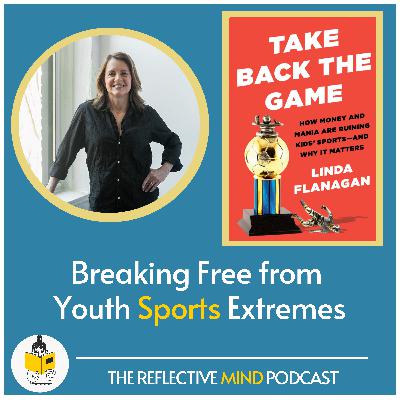
In this revealing conversation, freelance journalist and former coach Linda Flanagan describes how youth sports have transformed from neighborhood fun into a $30 billion industry that's reshaping American families. Drawing from her book "Take Back the Game: How Money and Mania Are Ruining Kids' Sports and Why It Matters," Flanagan explores the cultural shifts since the 1970s that have turned children's athletics into high-stakes enterprises demanding extraordinary parental sacrifice.The Parental Pressure Paradox* Parents now spend an average of 202 minutes (over 3 hours) daily on their children's athletics* 36% of families reduce family vacations and struggle to save money due to sports expensesThe College Myth * Only 6-7% of high school athletes go on to play in college, and just 2% of these receive any athletic scholarship money.Red Flags to Watch For in Youth Sports* Family life revolving entirely around one child's sports schedule* Siblings feeling resentful or left behind* Parents' emotional wellbeing tied to their child's athletic performance* Pressure to specialize in one sport before adolescence* Sacrificing family relationships, activities, friendships, and personal interestsFlanagan's controversial but liberating advice: "Flee the bleachers at the middle school gym, skip the tournament at school across town, resuscitate your own interests and relationships instead."This isn't about not caring for your children—it's about showing them that:* Their activities belong to them, not you* Adult life has purpose and joy beyond child-serving* Independence and resilience are valuable life skills* Your wellbeing matters tooThe Bottom LineYouth sports can be wonderful for children when kept in proper perspective. The key is resisting cultural pressures that turn childhood athletics into family-consuming enterprises. By maintaining balance, protecting family relationships, and modeling fulfilling adult lives, parents can help their children enjoy sports without sacrificing everything else that makes life meaningful.Website: lindaflanaganauthor.comResources Mentioned* "Take Back the Game" by Linda Flanagan* Aspen Institute Sports and Society Program research* Beyond Stigma Documentary on Women in Collegiate SportsThanks for listening to The Reflective Mind Podcast and reading A Mind of Her Own! Subscribe for free to receive new posts and support my work.About Linda FlanaganLinda Flanagan is a freelance journalist, former cross-country and track coach, and author of "Take Back the Game: How Money and Mania Are Ruining Kids' Sports and Why It Matters." A graduate of Lehigh University with master's degrees from Oxford University and the Fletcher School of Law and Diplomacy, she was an analyst for the National Security Program at Harvard University. She is a founding board member of the New York City chapter of the Positive Coaching Alliance, a contributor to Project Play at the Aspen Institute, and a regular writer for NPR’s education site MindShift. Her columns on sports have appeared in The New York Times, The Atlantic, and Runner’s World, and she is currently co-producing a documentary series on mental health in collegiate women athletes. (A mother of three and a lifelong athlete, Flanagan lives in Summit with her husband and a small menagerie of pets. She is still floating over Malcolm Gladwell’s recent claim that Take Back the Game was one of his favorite books last year.)Dr. Reid on Instagram: @jenreidmd and LinkedIn and her upcoming book, Guilt Free!Also check out Dr. Reid's regular contributions to Psychology Today: Think Like a Shrink.Seeking a mental health provider? Try Psychology TodayNational Suicide Prevention Lifeline: 1-800-273-8255Dial 988 for mental health crisis supportSAMHSA's National Helpline - 1-800-662-HELP (4357)-a free, confidential, 24/7, 365-day-a-year treatment referral and information service (in English and Spanish) for individuals and families facing mental and/or substance use disorders.Disclaimer:The views expressed on this podcast reflect those of the host and guests, and are not associated with any organization or academic site.The information and other content provided on this podcast or in any linked materials, are not intended and should not be construed as medical advice, nor is the information a substitute for professional medical expertise or treatment. All content, including text, graphics, images and information, contained on or available through this website is for general information purposes only.If you or any other person has a medical concern, you should consult with your health care provider or seek other professional medical treatment. Never disregard professional medical advice or delay in seeking it because of something that have read on this website, blog or in any linked materials. If you think you may have a medical emergency, call your doctor or emergency services (911) immediately. You can also access the National Suicide Help Line at 1-800-273-8255 or call 988 for mental health emergencies. This is a public episode. If you would like to discuss this with other subscribers or get access to bonus episodes, visit amindofherown.substack.com
What if the key to a happier, more fulfilling life was something you did effortlessly as a child, but have almost forgotten as an adult? Meet Laura Haver, the author of "Play Together” who’s on a mission to help families rediscover the transformative power of play. Dr. Jennifer Reid sits down with this happiness and play expert to uncover why so many of us have lost touch with joy, and more importantly, how to get it back. Key Points: * Play isn't a luxury - it's a fundamental human need that requires us to overcome internalized blocks, guilt, and cultural pressures. By starting small, being intentional, and honoring both our own and our children's natural creativity, we can reclaim this essential pathway to joy and connection.* Laura's definition of play - "Play is an invitation to do something for yourself for the pure joy of it and play is a pathway to living a vibrant and fulfilling life"* Self-directed nature - One key aspect of play is "that it's self-led. You want to do it because you want to do it"Practical Tools Mentioned* Meditation and mindfulness: Body scan meditations for getting present* Gratitude practice: "Three new things that you're grateful for" each night to build gratitude muscle* Free playlist planner: Available to help adults remember what they enjoy doingRecommended Resources: Take Back the Game by Linda Flanagan1000 Hours Outside, founded by Ginny YurichLet Grow OrganizationLaura’s Playlist PlannerAbout the GuestLaura Haver is on a mission to inspire people of all ages around the world to infuse their lives with play. She is a happiness and play expert, author, speaker and life, book, and energy coach. She has helped thousands of people to experience more fun, fulfillment and joy in their lives. She is the author of Play Together: Games & Activities for the Whole Family to Boost Creativity, Connection & Mindfulness. She's been featured on the Today Show, Fox, CBS, Parents, Shape and more. Laura is also the founder of the Author Moms community, which connects, supports and inspires fellow writing moms. Visit laurahaver.com and @lauramhaver on Instagram for more info.Thanks for listening to The Reflective Mind Podcast and reading A Mind of Her Own! Subscribe for free to receive new posts and support my work.Dr. Reid on Instagram: @jenreidmd and LinkedIn and her upcoming book, Guilt Free!Also check out Dr. Reid's regular contributions to Psychology Today: Think Like a Shrink.Seeking a mental health provider? Try Psychology TodayNational Suicide Prevention Lifeline: 1-800-273-8255Dial 988 for mental health crisis supportSAMHSA's National Helpline - 1-800-662-HELP (4357)-a free, confidential, 24/7, 365-day-a-year treatment referral and information service (in English and Spanish) for individuals and families facing mental and/or substance use disorders.Disclaimer:The views expressed on this podcast reflect those of the host and guests, and are not associated with any organization or academic site.The information and other content provided on this podcast or in any linked materials, are not intended and should not be construed as medical advice, nor is the information a substitute for professional medical expertise or treatment. All content, including text, graphics, images and information, contained on or available through this website is for general information purposes only.If you or any other person has a medical concern, you should consult with your health care provider or seek other professional medical treatment. Never disregard professional medical advice or delay in seeking it because of something that have read on this website, blog or in any linked materials. If you think you may have a medical emergency, call your doctor or emergency services (911) immediately. You can also access the National Suicide Help Line at 1-800-273-8255 or call 988 for mental health emergencies. This is a public episode. If you would like to discuss this with other subscribers or get access to bonus episodes, visit amindofherown.substack.com

Comments

Download from Google Play

Download from App Store
 United States