


 Claim Ownership
Pangea Podcast
Subscribed: 2Played: 7
Subscribe

© COPYRIGHT 2024 BY Pangea Design | Build, LLC | ALL RIGHTS RESERVED | POWERED BY SOLAR POWER
Description
Pangea Design | Build is an architectural design and construction firm providing sustainable buildings for residential, commercial and government use. We are specialists in Modern Off-Grid Designs, Systems and Construction. As we stand on the brink of a pivotal era, it is evident that our approach to design and construction must evolve. Pangea Design | Build was born out of a profound commitment to fostering sustainability in every aspect of our lives. The name “Pangea” itself, derived from the supercontinent that once united Earth’s landmasses, reflects our vision of a united effort to create a sustainable future. Together We Are Strong.
8 Episodes
Reverse
KSFR | By Dennis Carroll
Published September 2, 2025 at 2:48 PM MDT
https://pangeabuilders.s3.us-west-2.amazonaws.com/wp-content/uploads/20250905090515/finalmainbiotecture-copy.wav00:00:00 [Speaker 1]
When it comes to building affordable houses and towers, Jonah Reynolds will tell you that there are only three words that really matter, sustainable, sustainable, and sustainable.
00:00:13 [Speaker 1]
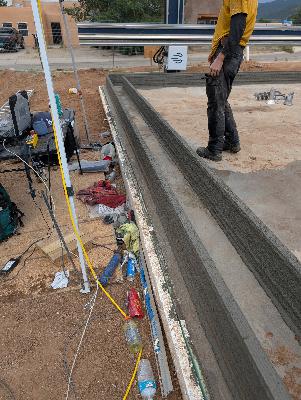
Reynolds, the son of Michael Reynolds, who gave us the off grid earthships of the seventies, is owner of Pangea Design Build The company recently began building seven homes with a three d printer, a method Jonah Reynolds is convinced will or should, anyway, dominate home construction around the world for reasons Reynolds will explain later.
00:00:36 [Speaker 1]
Reynolds’ three d printer Chamisa Verde project is eventually expected to result in a community of about 200 what are considered affordable homes, all built with a three d printer.
00:00:48 [Speaker 1]
Homes are expected to cost between 180 and $200,000.
00:00:54 [Speaker 1]
Qualified buyers are expected to be able to walk in the door with help from the city for about fifty eight thousand dollars with a mortgage payment of around a thousand dollars a month.
00:01:04 [Speaker 1]
Before we get into the details of how three d houses are printed and whether you might qualify to purchase such a home or whether you even would want one, Reynolds gives us a little insight into his personal vision of the role logic, appropriateness, and even compassion play in the construction of sustainable affordable houses and what all that has to do with a three d printer.
00:01:31 [Speaker 2]
When you’re designing things that need to be sustainable, you’re always looking at your resources and how many resources you have, both materials and money.
00:01:41 [Speaker 2]
That is at the root of things and so from that stems a lot.
00:01:47 [Speaker 2]
One of them is what is appropriate, what is not appropriate, what is logical and that’s really at the center of designing and building things that are sustainable or regenerative and so when you follow that at the root, affordable housing comes out of it, whether it’s small, like three bedrooms and a thousand square feet for the town of Taos at Trimisa Verde or if it’s 10,000 square feet and eight bedrooms.
00:02:16 [Speaker 2]
It makes sense to do what is most helpful and appropriate for the people and the planet.
00:02:23 [Speaker 2]
You put that together with feeling empath and passionate and caring for it also, and it’s a really good combination.
00:02:31 [Speaker 2]
How do we do that in such an extremely tight budget?
00:02:36 [Speaker 2]
That’s three d printing because it’s really fast, and I can still get a building that that performs in terms of heating and cooling.
00:02:43 [Speaker 2]
These buildings, there’s not enough room in the budget for the off grid systems and so we’ve adjusted how buildings that are built with three d printing are designed and fortunately we’re able to design something that’s compatible with the printer as well as compatible with the budget and compatible with something that is actually affordable for locals in Taos.
00:03:09 [Speaker 1]
Draws from the past as well as keeping his eye on the future.
00:03:13 [Speaker 2]
Fortunately, we here in Taos live in a place that has had people here for over a thousand years, the Red Willow people, and and the way they’ve lived and their knowledge and their culture.
00:03:25 [Speaker 2]
And so we wanna look backwards in time and learn as much as we can and apply that to what we do today so that we can, hopefully, if we’re open and learning and aware enough, we can say, yeah, we’re doing things available for people some generations from now.
00:03:43 [Speaker 1]
In terms of what his buildings look like, Reynolds describes a home that is simple but quite pleasing to the eye.
00:03:51 [Speaker 2]
The look is the textured concrete.
00:03:54 [Speaker 2]
So it’ll look like a bunch of rows of concrete with a beautiful texture.
00:03:59 [Speaker 2]
They’re just simple square rectangle buildings because that’s the most affordable, and that’s the finish.
00:04:06 [Speaker 2]
So we’re gonna water seal the walls on the inside and the outside, but that’s it.
00:04:10 [Speaker 2]
Once they’re printed, the walls are.
00:04:12 [Speaker 1]
Taos city planner Bill Evans gives us an insight into who was expected to be living in these homes.
00:04:18 [Speaker 3]
We wanna get these homes, you know, to the mom and the dad and the couple of the children that never had an opportunity for their own place.
00:04:27 [Speaker 3]
They’re stuck in a high rent cycle and it just doesn’t get any better.
00:04:30 [Speaker 3]
Here they have something, to come home to that they can call theirs and it fits in their budget.
00:04:35 [Speaker 1]
If you’re hearing this in Santa Fe and are now dreaming of moving into one of these three d printed homes, you need not apply.
00:04:43 [Speaker 1]
That explains the qualifications.
00:04:45 [Speaker 3]
You gotta be living in Taos County and working in Taos County for five years.
00:04:51 [Speaker 3]
We don’t want these getting sold outside.
00:04:54 [Speaker 3]
We want them to come to the people here in our neighborhoods that we see every day and let them have the first opportunity at these homes.
00:05:01 [Speaker 3]
We will allow people to apply that make up to about 71,000.
00:05:07 [Speaker 3]
This is not, someone to come along and buy all seven of them and make them short term rentals.
00:05:12 [Speaker 1]
To control the continued affordability of homes over a a long period of time, Evans says the city has tacked on numerous deed restrictions.
00:05:22 [Speaker 3]
We have deed restrictions in place that will not allow that.
00:05:26 [Speaker 3]
You know, just as a person, a family deserves to get into this home, they also deserve to move on if they like.
00:05:34 [Speaker 3]
And we have first right to buy that home back.
00:05:38 [Speaker 1]
The city?
00:05:38 [Speaker 3]
Yes.
00:05:38 [Speaker 3]
Because we want to then be able to turn that right back around for affordable housing for somebody else.
00:05:44 [Speaker 3]
You can make a 100 homes for 200 people if you stick to that over the years.
00:05:50 [Speaker 1]
The city also picks up the cost of the land, the 5% down payment, and cost of water and sewer hookups.
00:05:56 [Speaker 1]
These costs must be returned to the city when the home is sold.
00:06:01 [Speaker 1]
To say that Reynolds has high hopes with the three d printing of homes would be the understatement of understatements.
00:06:10 [Speaker 2]
I think this is gonna change things more than the Internet has.
00:06:13 [Speaker 2]
I know that says a lot.
00:06:14 [Speaker 2]
Well, it’s it’s fast and time is money.
00:06:18 [Speaker 2]
So it just it allows these buildings to go up faster and and much more affordably.
00:06:24 [Speaker 2]
When designers and contractors are looking at budgets, you know, that makes all the difference.
00:06:30 [Speaker 2]
You know, like, right now, I can’t think of a reason not to print every single building.
00:06:35 [Speaker 1]
If you’d like more information about three d printed homes, you can visit Reynolds’ website at angiabuild.com/3d-printingforwardslash.
00:06:47 [Speaker 1]
For KSFAR Radio News, Dennis Carroll.
Dennis Carroll
Dennis J. Carroll is an award-winning veteran journalist whose reporting has appeared in newspapers and other news media around the country. His clients have included The New York Times, The Boston Globe, The San Francisco Chronicle and many others.
See stories by Dennis Carroll
The post Housing Revolution in Taos first appeared on Pangea Biotecture.
Podcast Transcript: Waste Water Treatment
Alright. So imagine this. You’re off grid, living the dream, totally self sufficient, maybe even, like, sipping lemonade in your greenhouse. Right? But then it hits you.
What about water? It’s one of those things we take for granted, you know, until it’s not there. Exactly. And that’s where Earthships come in with this, like, seriously ingenious water system. It’s basically sustainability redefined.
I love that. Sustainability redefined. So we’re diving deep into Earthship water systems today, and we’ve got this awesome manual all about liquid wastewater treatment. It’s like rediscovering ancient water wisdom, but for the 21st century. Totally.
Okay. So big question. How much water do you think the average person uses every single day? Oh, it’s a scary number, actually. I mean, we use water for everything.
It’s gotta be, what, like, 50 gallons? Get ready to be shocked. It’s way more than that. No way, really. Yeah.
Try 80 to a 100 gallons per person every single day. See, that’s what I mean about taking it for granted. We just don’t realize how much we’re actually using. It’s wild. Right.
And that’s exactly why these alternative solutions like what Earthships are doing are so important. Absolutely. They force us to rethink our entire relationship with water. Exactly. So let’s break it down starting with this whole gray water thing.
And don’t worry, it’s not as ominous as it sounds. Yeah. People hear gray water and they think, I don’t know, something out of a black and white movie. Right. But it’s actually much simpler than that.
We’re just talking about the water from your sinks, showers, laundry, basically, everything except the toilet water. The stuff we use every day. Exactly. And here’s where Earthships get really clever. Instead of sending all that gray water to a treatment plant, they use this cool system with the diverter valve.
It’s like sending that used water on a whole different adventure. Yeah. Like giving it a second life instead of just flushing it away. Exactly. And that second life involves a whole lot of plant power.
Which is where it gets really interesting. Okay. So walk me through this. We’ve got our gray water. It’s been diverted.
What happens next? So picture this, a mini botanical treatment plant built right into your home. Okay. I like where this is going. That’s basically what an interior botanical treatment cell is.
It’s a specially designed indoor planter that filters and cleans that gray water. So instead of sending it down the drain, we’re sending it to the plants. That’s brilliant. And I’m guessing California’s gray water regulations probably played a role in shaping the system. Right?
Oh, absolutely. Those regulations were actually really forward thinking, and they’re worth noting because, thanks to them, you can actually use treated graywater for things like you guessed it. Flushing toilets. Bingo. It’s a closed loop system.
Exactly. And the best part is these California regulations have kinda become a blueprint for other areas. So even if you’re not in California, this is still relevant. Absolutely. It’s all about pushing for more sustainable water practices.
Totally. So we’ve covered the gray water getting its botanical makeover inside. But what about the, shall we say, other stuff? Yes. The other stuff.
The stuff we don’t talk about at the dinner table. Right. Well, this is where the exterior pretreatment reception cell comes in. Okay. And forgive my ignorance here, but what exactly is that?
So in simplest terms, think of it like a smaller, more natural version of a septic tank. Okay. Got it. So still treating the waste, but in a more eco friendly way. Exactly.
And the beauty of this whole system is its flexibility. You can actually use it with or without a conventional septic system. So it’s adaptable to your needs and whatever your local regulations might be. Exactly. It’s designed to work for you.
I love that. Now I know what you’re thinking because it’s what I was thinking when I first read about this. Building something like this sounds intimidating. Right? It can seem daunting at first.
Yeah. But this manual actually breaks it down in a way that’s surprisingly approachable. Oh, totally. They walk you through every step of the process. There’s even a formula in here to help you figure out the right size for the exterior cell based on how much water your household uses.
All about figuring out how much water you need to be able to process and how long the system needs to operate independently, you know, just in case. Right. So you’re prepared for anything. Exactly. And, honestly, the manual does such a good job of demystifying the whole process.
It’s less about feeling intimidated and more about empowering you to take control of your water usage. I love that. And that’s what we need more of. Right? Absolutely.
You know, one of the things I love about this manual, it doesn’t just give you the big picture. It gets into the, like, the nuts and bolts of how to actually build the system. And they use some pretty unexpected materials, I gotta say. Oh, yeah. For sure.
Like, they use women’s pantyhose. Pantyhose. Wait. Seriously? I’m telling you.
Seriously. Okay. I gotta hear this. So they use it as a screen right in the reception box. It catches debris before the water even gets to the planter.
So it’s like a first line of defense. Exactly. And it’s brilliant because it’s low tech. It’s affordable. And you know what?
It’s super effective. That’s such a classic Earthship thing, finding these really smart solutions using stuff you probably already have lying around. Right. Total ingenuity. It makes you appreciate the whole approach even more.
You know? Yeah. And speaking of clever design, the manual also talks a lot about the importance of a good slope. Oh, yeah. That’s crucial.
Like, a quarter inch per foot for both the interior and exterior cells? Exactly. Gotta have that slope. Something about making sure everything flows properly. Right?
It’s all about flow. And that’s where a little physics comes in handy. Okay. So break it down for me. So that precise slope, that quarter inch per foot, it lets gravity do its thing.
You know, it keeps the water moving through the system. No clogs. Totally efficient. It’s like earthships are taking these really simple principles and using them to create something so innovative and sustainable. Exactly.
Simple solutions, big impact. I love it. Okay. So we’ve got our pantyhose filter. We’ve got our perfect slope.
Time to actually build this planter. Right? Time to get our hands dirty. What’s the process like? Okay.
So first things first, the lining. This is crucial. Gotta get it right. Okay. So no pressure then.
No shoes allowed. Seriously, the manual is very clear about this. We need a completely smooth, totally tear free surface. Makes sense. Any little gaps could mess with the whole system.
100%. We’re talking socks only construction crew for this part. Love it. Okay. Linings in place.
What’s next? This is the fun part filling the planter. I bet. So what’s the secret? Just regular old dirt?
Not quite. It’s all about the layers, my friend. Oh, layers. Okay. I’m intrigued.
So we start with big rocks at the very bottom. Okay. Drainage makes sense. Exactly. Then we’ve got gravel, then sand, then regular dirt.
We’re building up to something here. And finally, the top layer, the soil for your plants. So it’s like, I don’t know, a parfait, but for water filtration? That’s a great analogy because each layer has a specific purpose. Okay.
So it’s not just about making it look pretty. Definitely not. It’s all about filtration. Think of it like a natural riverbed. Right?
Okay. I see where you’re going with this. The big rocks let the water flow freely. The gravel and sand, they trap the larger particles. And then the dirt and soil, that’s where the magic happens.
Right? Exactly. That’s where all those beneficial microbes hang out. Breaking down the, the stuff we don’t wanna talk about. Exactly.
And turning it into something that’s actually beneficial for the plants. It’s incredible how nature already has the blueprints for these elegant solutions. We just gotta know where to look. That’s the beauty of it. So the water’s flowing.
It’s getting filtered. And now it’s surrounded by all these plants. But these aren’t just any plants, are they? You’re catching on. We’re talking about plants that are basically water drinking champions.
Like, they could out drink a marathon runner. Pretty much. This process is called transpiration, and it’s key to the whole system. Okay. So give me some examples.
Which plants are the superstars of this whole transpiration thing? Alright. So when you’re first starting out, you want plants that are known for being thirsty and for growing quickly. Like, they’re ready to work. I like their style.
Geraniums are fantastic. Total workhorses. Okay. Geraniums. Got it.
Anything from the Wandering Jew family, they love a good drink. They sound like my kind of plants. And believe it or not, banana trees. Banana trees here in, like, North America. They can handle it, and they are incredibly efficient at using up water.
So it’s like having a tropical vacation in your water treatment system. Exactly. And it just goes to show choosing the right plants makes a huge difference. It’s not just about practicality. It’s about, like, reconnecting with nature.
You know? Totally. It’s a beautiful thing. And speaking of connecting with nature, this is where my, like, inner gardener gets really excited because it’s not just about cleaning the water. Right?
We’re growing food too. Oh, yeah. Absolutely. That’s the beauty of a closed loop system. It’s like the circle of life, but for your water and your veggies?
Exactly. The same water that gets cleaned by those plants. Mhmm. It can then be used to nourish edible plants. I love that.
So what can we grow? Oh, the manual’s got a whole list. Veggies, herbs, you name it.
FAQ: Heating and Cooling Buildings
What is a Passive Building?
A Passive Building is a structure designed to maintain a comfortable interior climate primarily through passive heating and cooling strategies, minimizing the need for mechanical systems. These buildings emphasize energy efficiency through elements like insulation, airtight construction, strategic window placement, and thermal mass.
How does climate influence building design?
Climate plays a crucial role in dictating suitable building designs. Factors like solar orientation, prevailing winds, temperature fluctuations, and humidity levels influence the selection of materials, building orientation, window placement, and shading strategies. For instance, in hot, arid climates, thick walls with high thermal mass help moderate indoor temperatures, while in humid climates, cross-ventilation becomes essential.
What is thermal mass, and how does it contribute to energy efficiency?
Thermal mass refers to the ability of a material to absorb and store heat energy. Materials like concrete, stone, or water act as thermal batteries, absorbing heat during the day and slowly releasing it at night. This process moderates temperature fluctuations, reducing the reliance on heating and cooling systems.
What are Trombe walls, and how do they work?
Trombe walls are passive solar heating systems that utilize a south-facing wall made of a dark, heat-absorbing material like concrete or stone. A layer of glass or glazing is installed a few inches in front of the wall, creating an air space. Sunlight heats the wall, and the trapped air circulates heat into the building. Vents at the top and bottom of the wall can control airflow.
How does the greenhouse effect contribute to passive heating?
South-facing windows function similarly to greenhouses, allowing short-wave solar radiation to enter but trapping the longer-wave infrared radiation emitted by heated surfaces inside. This “greenhouse effect” passively heats the building during the day, and thermal mass materials store the heat for later use.
What is the difference between R-value and U-value in insulation?
R-value measures a material’s resistance to heat flow; higher R-values indicate better insulation. Conversely, U-value (or U-factor) measures heat transfer; lower U-values mean better insulating properties. Both values help assess the energy efficiency of insulation materials.
What are earth tubes, and how can they be used for cooling?
Earth tubes are buried pipes that utilize the stable, cooler temperatures of the earth to cool and dehumidify air drawn through them. As warm air flows through the tubes, it loses heat to the surrounding soil. The cooled air, often with reduced humidity due to condensation within the tubes, then enters the building, providing passive cooling.
What are the advantages of using natural building materials like adobe or rammed earth?
Natural building materials like adobe or rammed earth offer several advantages. These materials are often locally sourced, reducing transportation costs and environmental impact. Their inherent thermal mass properties contribute to passive heating and cooling, and they can create unique, aesthetically pleasing structures. Additionally, these materials are often more sustainable and healthier for occupants compared to some conventional building materials.
The post Pangea Podcast Episode 5: Heating & Cooling Buildings first appeared on Pangea Biotecture.

The “Water Organizing Module” (WOM), as described in the sources, is a key component of a sustainable water management system, primarily by enabling rainwater harvesting and filtration for various household needs. Here’s how it contributes to sustainability:
●
Promotes Water Independence: The WOM facilitates a move away from reliance on municipal water grids by allowing homeowners to collect, filter, and pressurize rainwater for their use. This reduces the strain on public water infrastructure and lessens the impact of potential water shortages or contamination events on individual households.
●
Reduces Chemical Consumption: By filtering rainwater to a potable standard, the WOM eliminates the need for chemical treatment, providing a healthier and more natural water source for consumption.
●
Supports Localized Water Cycles: The sources emphasize that using locally harvested rainwater helps maintain natural water cycles. Instead of drawing water from distant sources and potentially disrupting ecosystems, the WOM encourages a closed-loop system where water collected from the property is used and naturally returned to the local environment.
●
Offers Cost Savings: While the initial investment for setting up a WOM and a rainwater harvesting system is significant (around $1,000 according to the sources), the long-term cost savings on water bills can be substantial, potentially offsetting the initial costs within a few years.
●
Provides Resilience and Security: In the event of power outages, the gravity-fed design of the cistern, coupled with the WOM’s plumbing configuration, ensures a continued supply of water for essential functions like toilet flushing and handwashing.
Functionally, the WOM serves as the central hub for processing and distributing the harvested rainwater:
●
Filtration: The WOM houses a series of progressively finer filters (50 mesh, 500 mesh, and 1000 mesh), along with a dedicated drinking water filter (6-cone ceramic or UV), to remove sediments, debris, and harmful contaminants, ensuring water quality meets safety standards.
●
Pressurization: Equipped with a pump and pressure tank, the WOM pressurizes the filtered water to meet building code requirements, allowing it to be distributed throughout the house for typical uses like showering, washing, and flushing toilets.
●
Integration: The WOM is designed to be integrated with various water sources, including cisterns, wells, and even municipal water supplies, offering flexibility and redundancy in water sourcing.
The sources emphasize the relative simplicity and durability of the WOM, highlighting its minimal maintenance requirements, which primarily involve regular filter cleaning. They also provide detailed instructions and parts lists for assembling and installing a WOM, encouraging a DIY approach.
Overall, the WOM plays a crucial role in achieving sustainable water management goals by enabling a shift towards self-sufficiency, reducing reliance on centralized and potentially unsustainable water sources, and promoting responsible water use practices.
Ever stop to think how much water you use every day? The average American household, they use a crazy amount, like, 80 to a 100 gallons. And, you know, the funny thing is, most of that isn’t even for drinking. Really puts things in perspective. Right?
The convenience we have, just turning a tap and getting water, it’s pretty amazing. But it makes you wonder, could we be doing this better? Sourcing and using water, I mean, especially when it comes to our homes. Totally. And that’s actually what we’re looking at today, the idea of water autonomous homes.
We’ve been going through excerpts from Atanja Builders. They’re experts in sustainable building. And they’re really into this idea of, get this, rainwater harvesting. So, basically, your roof is not just a roof anymore. It’s, like, this giant rain collector.
Mhmm. It’s such an elegant solution when you think about it. The roof acts as a big catchment, directs the rainwater into a natural filtration, and then it all goes into storage. Okay. I gotta say, I’m intrigued.
Walk me through how this works. Pangaea Builders, they have this 3 part Catchment, silk catch, and then the cisterns. The roofs, the catchment, obviously, but what’s next? Okay. So the rainwater, normally, we would just run off.
But in this system, it’s channeled toward the silk catch. Think of it like a giant strainer, basically. Super important for getting rid of leaves, twigs, anything that could clog things up or mess with the water quality. Gotcha. So it’s all about making sure that the water that ends up getting stored is, you know, clean already.
Exactly. So the water passes through the silk catch and then it goes into the cisterns. They have these big underground tanks that hold all that rainwater. And get this, Pangea Builders actually talks about using these cisterns as part of a building’s interior design. Wait.
So you could have, like, a built in waterfall that’s also part of your water storage system? That’s amazing. Right. It’s not just a cool design feature either, though. Indoor cisterns, they can actually act like thermal mass, helping to regulate the building’s temperature naturally.
It’s like the definition of sustainable design. Okay. That’s so cool. So we’ve got all this rainwater being collected, but how do you even start to figure out how much storage you actually need? This is where it gets really interesting.
Pangaea Builders, they’ve got this formula for calculating the rainwater supply you can expect. It all comes down to 2 main things, the size of the roof and, of course, how much rain you get in a year. Okay. For our listeners who are like, wait. What?
Well, let’s go through an example here. Let’s say you’ve got a pretty standard 1,000 square foot roof and you’re in a place that gets, I don’t know, around 6 inches of rain a month, which is like, what, 72 inches a year? Perfect example. So Pangaea Builder says that each square foot of roof can usually collect about 0.62 gallons per inch of rain. So you multiply that by the roof size we’re talking about and then by the yearly rainfall.
Hold on. Let me grab my calculator. Oh, okay. This is kinda blowing my mind. But we’re talking about the potential to collect over 44,000 gallons of water a year.
That’s insane. It really makes you realize how much water we could be harnessing. To put that number in perspective, think about it per day. If you divide that by 365 That’s like a 122 gallons of water a day. Wow.
Okay. So now I’m really curious to see how that compares to how much water people actually use. Didn’t Pangaea Builders do some research on that, like comparing a regular home to a sustainable one? Yeah. They did.
And it’s kind of an moment for a lot of people. Let’s stick with our example, a wetter climate, a 2 person household. Even with the rainwater harvesting, they’d only have, like, 5 gallons left over each day. Wow. That’s cutting it close.
Yeah. Especially compared to a sustainable home with the same setup, they would have a surplus of over 90 gallons a day. Now that’s the difference. I think this really shows how much we take water for granted, for sure. And it shows why it’s so important to think about water efficiency from the get go no matter where you live.
It really makes you think about those, you know, those droughts you were talking about and all the water restrictions. That buffer from a rainwater harvesting system seems like it would be a game changer. Totally. And those calculations we were looking at, that was just for 2 people. Imagine a bigger family or even like a department building.
The benefits are huge. Makes sense. But it got me thinking, what about places that don’t get as much rain? Like, is rainwater harvesting even a thing in drier climates? That’s a great question.
And Pangaea Builders, they actually talk about that. They say that, yeah, a wetter climate definitely makes it easier. But even in drier areas, you can still make rainwater harvesting work. You just have to tweak it a bit. Like, what kind of tweaks?
Bigger cisterns maybe? Exactly. You need more storage capacity if you’re not getting as much rain. Panggbuilders even mentioned some cool design ideas, like adding gutters to the front of a building, not just the roof, to catch even more water. So even those little bits of rain, you’re trying to grab them.
What about other things? Like, would you have to change how you use water in a drier climate? Oh, for sure. Water conservation becomes super important. You’re looking at things like low flow shower heads and toilets, energy efficient appliances, even just being more aware of how much water you’re using every day.
It’s all about realizing that every drop counts. Right. Right. Okay. So we’ve got the collecting part down.
We’ve talked about storing water even in different climates. But, before we can actually use any of this water, there’s a whole filtration thing. Right? It’s rainwater after all. Totally.
Can’t forget about that. That’s where the really cool part comes in, the water organizing module. Pangea Builders calls it the WUM. The WUM. Sounds kinda futuristic.
Okay. Break it down for me. What is it exactly? Think of it this way. The WUM is like the brain and the heart of your water system all in one.
It takes that collected rainwater from the cisterns and make sure it’s safe to use all over the house. Okay. That’s a pretty good way to put it. So I’m guessing it involves filters of some kind? You got it.
Mhmm. Pangaea Builders really stresses that you need a multistage filtration process. First, the WUM has a simple mesh filter. It catches any big stuff that might have made it past the silt catch. It’s all about protecting your pipes and appliances.
Yeah. No one wants a clogged shower head. Okay. So after that first filter, then what? That’s where the serious purification happens.
The water goes through even finer filters, usually ceramic ones, sometimes even a UV
Building Resilience: Disaster Relief and Climate-Informed Design with Jonah Reynolds
Welcome back to the Pangea Podcast! In Episode 3, Jonah Reynolds, the innovative principal and founder of Pangea Design | Build, takes us on a deep dive into how sustainable off-grid design can play a critical role in disaster relief and climate resilience. This episode explores the intersection of environmental challenges and personalized client needs, showcasing how adaptable living systems can provide practical solutions in a rapidly changing world.
Episode 3 Highlights:
1. Disaster Relief and Sustainable Solutions Jonah begins by discussing the vital role that sustainable design plays in disaster relief efforts. With the increasing frequency and severity of natural disasters due to climate change, the need for resilient, off-grid housing solutions has never been greater. Jonah shares examples of how Pangea Design | Build has contributed to disaster relief projects, providing safe, durable, and quickly deployable shelters for those affected by calamities. He emphasizes the importance of designing structures that can withstand extreme weather conditions while minimizing environmental impact.
2. Climate and Client-Informed Design In this segment, Jonah delves into the dual considerations of climate and client needs in the design process. He explains how Pangea’s approach to sustainable architecture is tailored not only to the environmental conditions of a specific location but also to the unique preferences and requirements of each client. By integrating climate data—such as local weather patterns, temperature ranges, and natural hazards—into the design, Pangea ensures that their structures are both efficient and resilient. Simultaneously, client input is crucial in creating spaces that are not only functional but also personalized and comfortable.
3. Adaptable Living Systems Jonah highlights the adaptability of Pangea’s living systems, demonstrating how they can be customized to meet the specific needs of clients while responding to climatic challenges. He discusses various systems, such as renewable energy setups, water conservation technologies, and waste management solutions, which can be adjusted based on the client’s lifestyle and the environmental context. Whether it’s installing solar panels to maximize energy independence or designing greywater systems for water reuse, Pangea’s flexible approach ensures that each home is both sustainable and suited to its inhabitants.
4. Community-Centric Design One of the core values of Pangea Design | Build is creating spaces that foster community and resilience. Jonah shares inspiring stories of projects that have successfully integrated community-focused design elements, such as shared gardens, communal gathering spaces, and cooperative living models. These projects not only promote sustainability but also strengthen social bonds and enhance the overall quality of life.
5. Real-World Applications and Case Studies To bring theory into practice, Episode 3 features case studies of successful sustainable off-grid projects. Jonah walks us through the design and construction processes of these projects, highlighting the challenges faced and the innovative solutions implemented. These stories serve as powerful examples of how sustainable design can be both practical and transformative.
Join us in Episode 3 of the Pangea Podcast as we explore how sustainable off-grid living can offer practical and resilient solutions in the face of climate change and natural disasters. Whether you’re interested in disaster relief, climate-informed architecture, or personalized sustainable living, this episode provides valuable insights and inspiration.
Tune in and discover how Pangea Design | Build is not only responding to the challenges of today but also paving the way for a resilient, sustainable future. Let’s work together towards a world where our homes and communities are built to thrive in harmony with the environment.
The post Pangea Podcast Episode 3: Jonah Reynolds Sustainable Off-Grid first appeared on Pangea Biotecture.
Exploring Affordable Housing and Client-Centric Approaches with Jonah Reynolds
Welcome back to the Pangea Podcast! In Episode 2, we dive deeper into the world of sustainable off-grid design and construction with Jonah Reynolds, the visionary principal and founder of Pangea Design | Build. Building on the foundation set in the pilot episode, this installment takes listeners on an immersive journey into the key aspects that make sustainable living accessible and impactful for everyone.
Episode 2 Highlights:
1. Affordable Housing Solutions Jonah addresses one of the most pressing issues of our time: affordable housing. He explores innovative strategies and design principles that can reduce costs without compromising on sustainability or quality. From modular homes to the use of cost-effective, eco-friendly materials, Jonah shares insights on how Pangea Design | Build is making sustainable housing accessible to a broader audience. Real-life examples illustrate how affordable, off-grid homes can provide safe, comfortable, and environmentally responsible living spaces for all.
2. Client-Centric Design and Care At the heart of Pangea Design | Build is a commitment to taking care of clients and ensuring their needs and preferences are met. Jonah delves into the importance of personalized design processes, where client input and satisfaction are prioritized. He discusses how maintaining open communication, providing transparent project timelines, and offering post-construction support are essential to creating a positive experience for clients. This segment emphasizes the human element in sustainable construction, showing that a client-centric approach leads to better outcomes for both people and the planet.
3. The Importance of Education Education is a cornerstone of Pangea’s mission. Jonah highlights how educating clients, communities, and the next generation of builders about sustainable practices is crucial for fostering widespread change. He shares various educational initiatives, from workshops and seminars to partnerships with schools and community groups. These efforts aim to spread knowledge about sustainable living and empower individuals to make informed decisions that benefit the environment. Jonah’s stories of successful educational programs underscore the transformative power of knowledge in driving the sustainability movement forward.
4. Community-Centric Design One of the core values of Pangea Design | Build is creating spaces that foster community and resilience. Jonah shares inspiring stories of projects that have successfully integrated community-focused design elements, such as shared gardens, communal gathering spaces, and cooperative living models. These projects not only promote sustainability but also strengthen social bonds and enhance the overall quality of life.
5. Real-World Applications and Case Studies To bring theory into practice, Episode 2 features case studies of successful sustainable off-grid projects. Jonah walks us through the design and construction processes of these projects, highlighting the challenges faced and the innovative solutions implemented. These stories serve as powerful examples of how sustainable design can be both practical and transformative.
Join us in Episode 2 of the Pangea Podcast as we continue to explore the fascinating and ever-evolving field of sustainable off-grid living. Whether you’re an aspiring eco-builder, a sustainability enthusiast, or simply curious about the future of construction, this episode offers valuable knowledge and inspiration.
Tune in and discover how Pangea Design | Build is pushing the boundaries of what’s possible in sustainable architecture. Let’s work together towards a future where our buildings are not just structures, but harmonious extensions of the natural world.
The post Pangea Podcast Episode 2: Jonah Reynolds Sustainable Off-Grid first appeared on Pangea Biotecture.
Pangea: Building a Sustainable Future
In the pilot episode of the Pangea Podcast, viewers are introduced to Jonah Reynolds, the principal and founder of the company, Pangea Design | Build, as he embarks on a journey to showcase the innovative world of sustainable off-grid design and construction.
The episode dives into the core principles of Pangea, highlighting its mission to create environmentally friendly structures that harmonize with nature. Viewers follow Jonah as he discusses the importance of sustainable living and the impact it can have on the planet.
Throughout the episode, Jonah engages with diverse subjects in the field of sustainable off-grid living, ranging from systems and materials to 3D printing off-grid buildings and coming together as a united group to bring sustainable solutions to the issues facing an evolving planet. Together, we explore various topics such as renewable energy systems, eco-friendly materials, water conservation techniques, and the integration of sustainable practices into everyday life.
As the episode unfolds, viewers are treated to insightful discussions and practical advice on how to embrace a more sustainable lifestyle and society. Through inspiring stories and real-world examples, the Pangea Podcast and guests demonstrate the potential for sustainable design to not only benefit the environment but also enhance quality of life for individuals and communities alike.
With its blend of expertise, passion, and practicality, the pilot episode of the Pangea Podcast sets the stage for an exciting new podcast series dedicated to exploring the endless possibilities of sustainable off-grid living. Join us as we pave the way towards a brighter, more sustainable future for all.
The post Pangea Podcast Episode 1: Jonah Reynolds Sustainable Off-Grid first appeared on Pangea Biotecture.
Pangea: Building a Sustainable Future In the pilot episode of the Pangea Podcast, viewers are introduced to Jonah Reynolds, the principal and founder of the company, Pangea Design | Build, as he embarks on a journey to showcase the innovative world of sustainable off-grid design and construction. The episode dives into the core
Comments

Download from Google Play

Download from App Store
 United States