


 Claim Ownership
Return the Key: Jewish Questions for Everyone
Subscribed: 1Played: 5
Subscribe

© Return the Key: Jewish Questions for Everyone copyright Julie Carr. The original music is composed and performed by Ben Roberts.
Description
“We are all…the unchosen, but we are nevertheless unchosen together.” - Judith Butler
This is podcast in which Julie Carr and occasional cohosts interview artists, writers, activists, scholars, religious leaders and others, asking questions related to Jewish (and non-Jewish) themes, such as oneness and the one, time and the infinite, home and diaspora, return and renewal, knowing and unknowing, law and practice, text and textuality, the idea of justice and the idea of love.
41 Episodes
Reverse
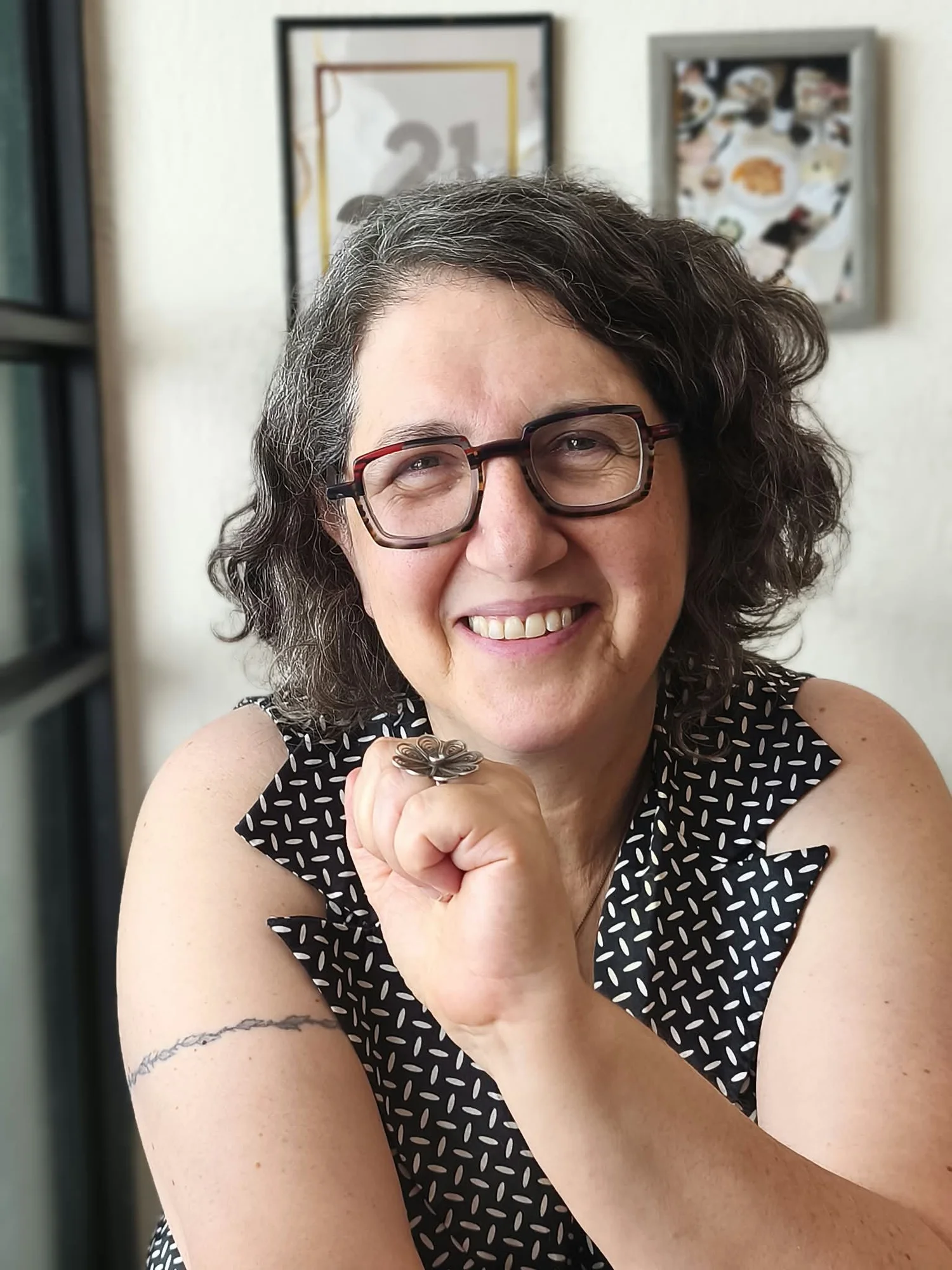
In Episode 41 I talk with Ayelet Ben-Yishai, a non-Zionist activist and professor of English literature at the University of Haifa and an old friend of mine. Born in Jerusalem in 1968, Ayelet spent her childhood between Israel, Germany, and the U.S., eventually finding her way to the University of California, Berkeley for a PhD in Comparative Literature where we met. We discuss the results of the Israeli elections, especially the unprecedented turnout of Palestinian and Arab voters and what this could mean for the future politics of Israel-Palestine. We then turn to Ayelet’s writing and activism, asking what does it mean to be “born on the wrong side of history”? What happens when we recognize our collective complicity and act from there? A long-time activist for Palestinian freedom and justice, Ayelet describes campus and street protests and the ongoing and complicated work of “protective presence.” We discuss at length Eyes on Gaza, an incredibly and bracingly informative twice-weekly on-line lecture series Ayelet co-founded with colleagues Lior Levy and Ido Shahar in 2025, featuring scholars, activists, and people on the ground in Gaza and the West Bank. “We insisted on keeping our eyes on Gaza…on the destruction, devastation, starvation, displacement, and expulsion that Israel is wreaking at this very moment…to find ways to think and resist, and to refuse to accept in silence the crimes being committed in our name,” write Ayelet and Lior.We dig into two episodes in particular, one with Palestinian philosopher Professor Raif Zraik on “The Discourse of Intentions: The Psychomoral Iron Dome,” and another with Woroud Amir, a mother in Gaza who speaks about her struggles to protect her children and her persistent work supporting other women. We end by discussing why Ayelet chooses to stay in Israel and the abiding question of how best to be of service to liberty and justice. Note: The title of this episode, and Ayelet’s work on the subject, owes a debt to Fiona Wright’s 2018 book, The Israeli Radical Left: An Ethics of Complicity. Lectures and websites mentioned or discussed:Woroud Amir, “Life and Survival in Gaza Today” Eyes on Gaza, April 23, 2026.Dr. Hasan Jabareen, “A Common Future: After the Genocide in Gaza?” Eyes on Gaza, August 6, 2025. Raif Zraik, “The Discourse of Intentions: Psychomoral Iron Dome” Eyes on Gaza, July 6, 2026New Israel Fund exit-poll showing 59% of opposition bloc voters prefer a government formed with the support of Israel’s Arab parties over any other option. See also this post from Ron Gerlitz, CEO of the aChord Center. On Genasys Inc. formerly the Long Range Acoustic Device (LRAD) Corporation, from the Investigate website. “US Universities Rake in Millions Doing Israeli Military Research” on Inkstick Media website.Ayelet Ben-Yishai teaches postcolonial and Victorian literature at the English Department at the University of Haifa, where she specializes in the history and theory of the novel, with particular focus on questions of realism, genre, and literary epistemology. A comparatist by training, she has written extensively on the intersection of law and literature in Victorian culture, especially in Common Precedents (Oxford, 2013). Her second book, Genres of Emergency (Oxford 2023), focuses on Indian writing in English and conceptualizes new ways of imagining the relationship between politics, history, and genre.Alongside her academic work, she has also long been active on the radical left in Israel, most recently co-founding and running a bi-weekly mini-lecture series, Eyes on Gaza. Indeed, her teaching, research, and way of being in the world often overlap, allowing her to think and write about the political and discursive problems of complicity, the subject of her current book-in-progress.Music by Ben Roberts : [email protected] and ideas to [email protected]
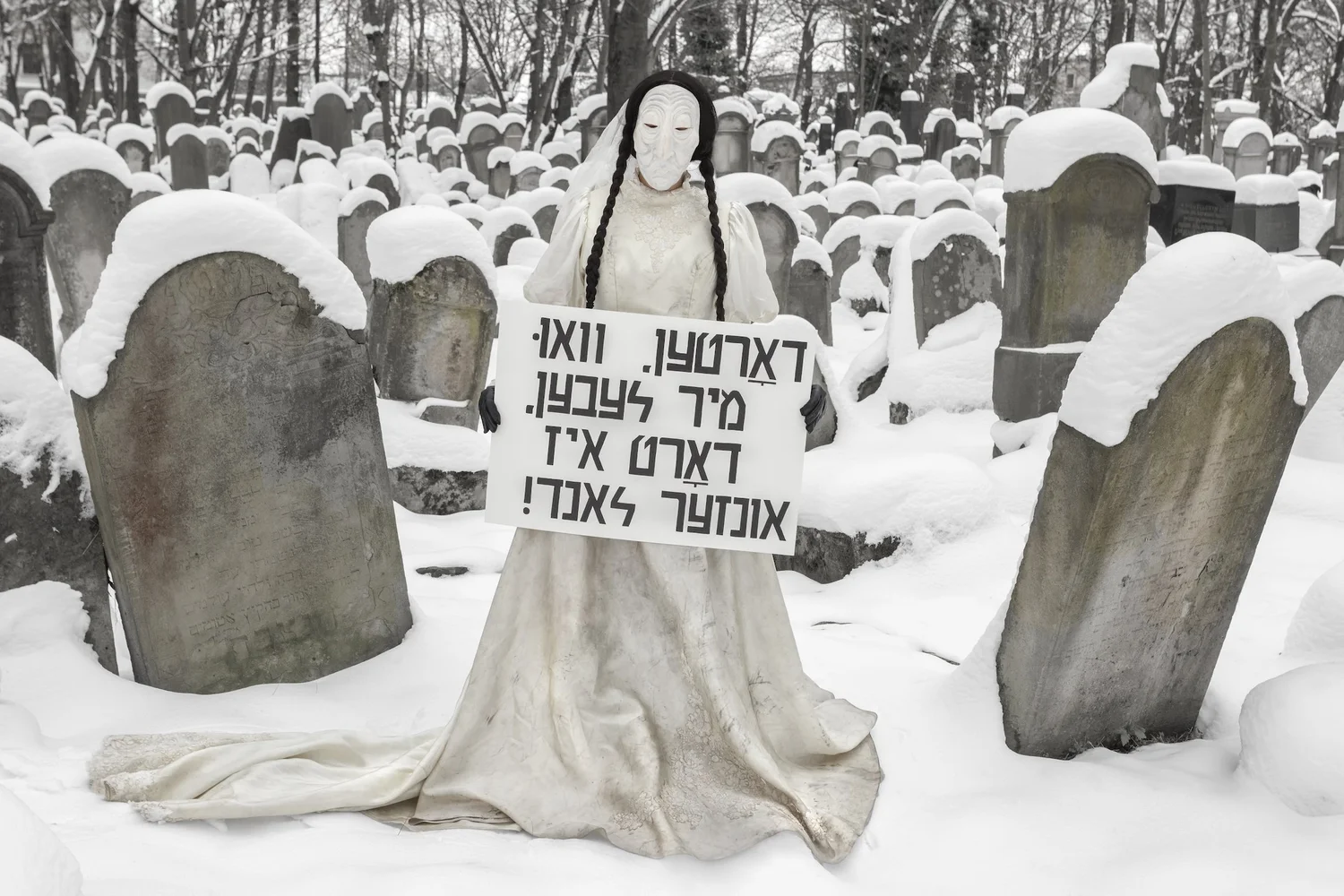
In Episode 40 I talk with Berlin-based visual artist, performer, and researcher Julie Weitz. After dipping into Julie’s childhood in a religious Jewish family in Chicago, we discuss her substack essay, “I don’t know, Adonai,” in which she wrote movingly about the late songwriter and musician David Berman in the context of a ritual she led at the Walter Benjamin memorial in Port Bou, Spain. We think together about walking backwards, the Angel of History, and the metaphysics and politics of not-knowing. We then discuss two of Julie’s other projects grounded in her deep research into Yiddish folk culture and history. In the site-specific performance work, “Holy Names for our Dybbuk,” Julie performs as a dybbuk (possessive spirit) at sites of historical violence in Poland, including a former Nazi concentration camp in Kraków and the former Warsaw Ghetto. In “Hereland,” an ongoing educational and activist project, Julie, Daniel Voskoboynik and their collaborators have been deeply studying the early-twentieth century pacifist Rabbi Aaron Samuel Tamares (1869–1931), whose prophetic anti-political-Zionist views and embrace of the condition of exile are vital to us today. We discuss “Hereland” and its many incarnations including the film, “A Grenets-Mayse | A Border-Story,” soon to be exhibited at the Polin Museum in Warsaw. Along the way we talk about the overlap between ritual and performance, the Jewish practice of speaking directly to the dead, the relationship between grief and land, the need to reclaim our anti-Zionist ancestors, and the memories of trees. Texts, works, artists and activist groups mentioned and discussed:Walter Benjamin, On the Concept of HistoryYudith BergDavid Berman and the Silver JewsB'nai AvrahamChaiaAnnie Guthrie CohenMolly Crabapple, Here Where we Live is our CountryLewis Hyde, Trickster Makes this World: Mischief, Myth and ArtDani Karavan, “Passages”: Hommage to Walter BenjaminDaniela Naomi Molnar: Return the Key Episode “Memory of a Larger Mind”Benjamin Moser, Anti-Zionism: A Jewish HistoryMagdalena PrzybyszJenny Romane at Klez Canada: walking backward ritualMichael Rothberg, Multidirectional Memory: Remembering the Holocaust in the Age of DecolonizationAbraham Sutzkever, “What Will Stay Behind” translated by Zackery Sholem BergerRabbi Aaron Samuel Tamares, A Passionate Pacifist: Essential Writings, edited, translated and introduced by Everett GendlerMichael Waszynski, The Dybbuk (film)Julie Weitz, “I don’t know, Adonai”Julie Weitz “Holy Names for our Dybbuk”Julie Weitz and Daniel Voskoboynik, Hereland: Reforesting Diasporic Jewish Imagination; A Grenets-Mayse | A Border-StoryJulie Weitz is a visual artist, performer, and researcher whose interdisciplinary practice moves between site-specific performance and participatory ritual, extending into video, photography, textiles, drawing, writing, and cultural organizing. Across these forms, she translates between archival and embodied research, activating ancestral memory and folklore as living, improvisational methodologies for collective experience. Weitz approaches diasporic culture as an experimental field shaped by rupture, transmission, and reinvention, where performance and material form become tools for re-sensing how histories persist in the present.Weitz is a Fulbright Scholar (2023–24) and a Wallis Annenberg Helix Fellow at Yiddishkayt (2020–23). Her performances have been presented at Jewish Museum (Amsterdam), Dokumentale (Berlin), ExtraCity Kunsthal (Antwerp), and Harvard Divinity School (Cambridge), among other venues. Her artwork has been exhibited at the Contemporary Jewish Museum (San Francisco), POLIN Museum (Warsaw), Jewish Museum (Vienna), Coaxial Arts Foundation (Los Angeles), and the Jüdisches Museum (Augsburg). Weitz has been featured in Artforum, Art in America, The Los Angeles Times, The New York Times, BOMB, and Hyperallergic. She is currently based in Berlin.For regular updates, follow Weitz on substack.Music by Ben Roberts : [email protected] and ideas to [email protected]
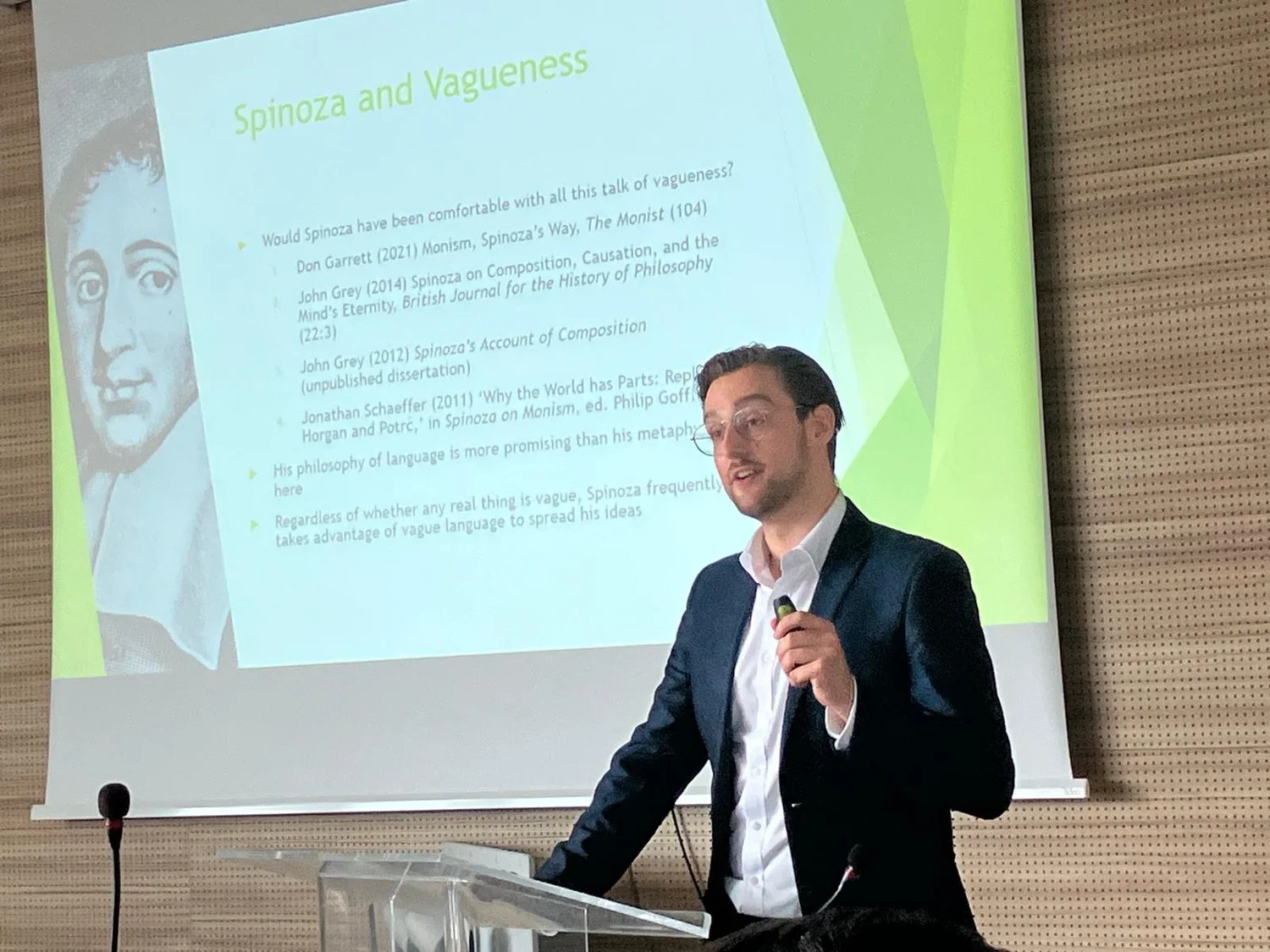
“Spinoza’s universe is crisscrossed by flows of power like tides that sweep into space before departing.” This sentence, from a talk Kenneth Novis recently gave about Gilles Deleuze and Baruch Spinoza (1632-1677) frames our conversation about Spinoza’s theories of God-nature-substance, virtue and ethics, power, self-contentment, joy, sadness and especially desire. We begin with Kenneth’s education in Edinburgh and Oxford, his work on Spinoza, Simone Weil, Deleuze and Bayle. After briefly discussing the ideological stranglehold on the study of Marxism in the UK and the special brilliance of twelve-year-olds, we turn to Spinoza’s biography—his early life in the Sephardic Jewish community of Amsterdam, the writ of herem against him, and his subsequent life spent mostly in solitude in The Hague. We touch on the question of whether Spinoza was a theist, a pantheist, or an atheist and we query the influence of Maimonides and Kabbala on his thinking. In the second half of the conversation Kenny explains that for Spinoza, desire (which for him can be objectless!) is both one of the primary affects and our essence. We “undergo desire “but “it is also what we are, it is our essence.” Not only this, desire is also the essence of all things, from animals to trees to even chunks of granite! How might ethics or virtue derive from such a capacious understanding of desire and its status? This episode was recorded during the day before Yom Kippur. For this reason, we end with Ben playing Kol Nidre. Texts / scholars mentioned and discussed:A.W. MooreCaroline WarmanA Philosopher and a Child: Does Infinity Exist? (Warning: if you click on this you might not be able to leave)Louis Althusser on Spinoza Pierre Bayle, An Historical and Critical Dictionary (pub date is 1697, not ‘99 as stated)Simone Weil, First and Last NotebooksSteve NadlerRené Descartes, Principles of PhilosophyAlexander Douglas, The Philosophy of Hope: Beatitude in SpinozaMatthew KisnerGilles Deleuze and Felix Guattari, Anti-Oedipus: Capitalism and SchizophreniaMusic by Ben Roberts : [email protected] and ideas to [email protected]
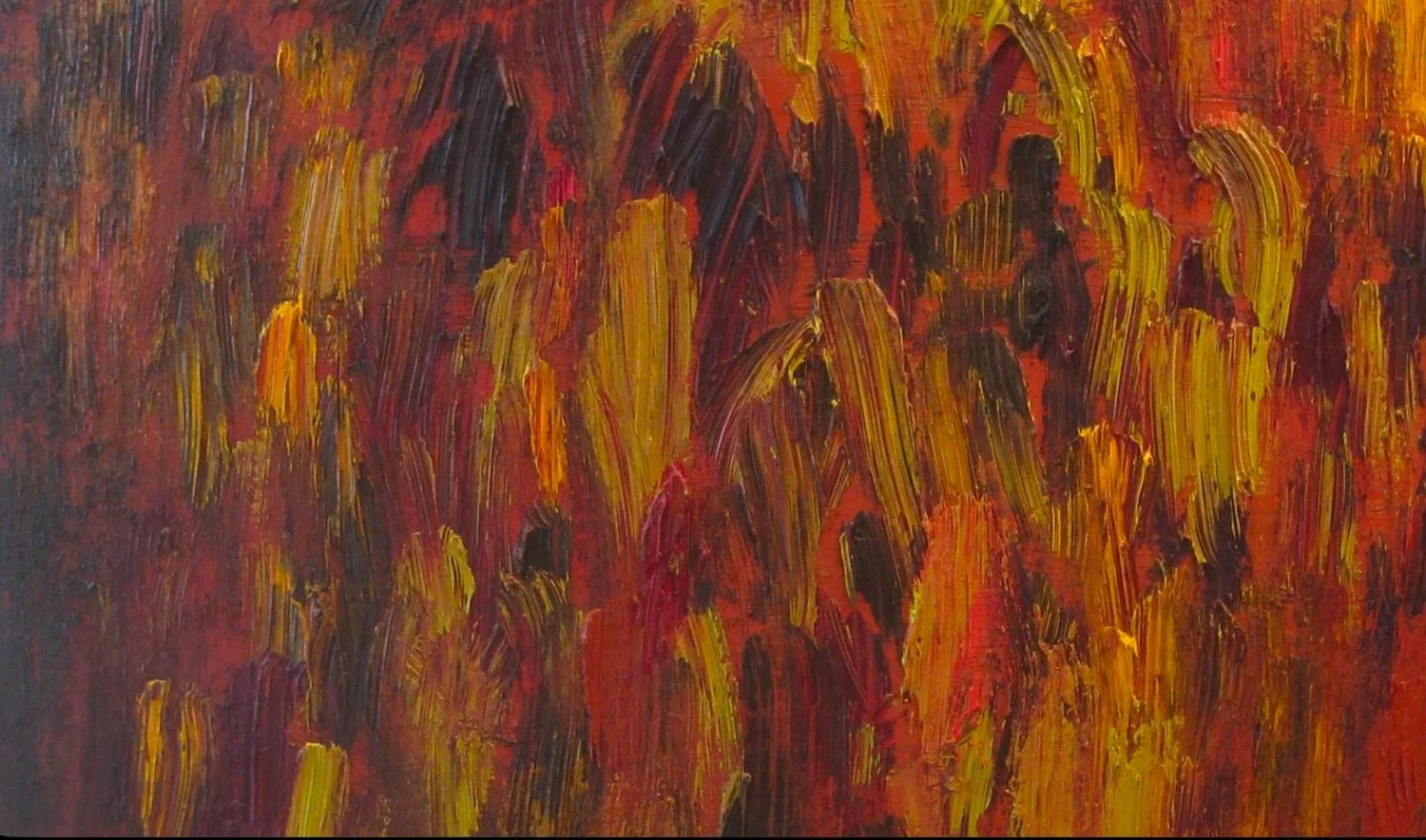
In episode #38 I talk with painter, poet, and renowned scholar of philosophy and Jewish mysticism, Elliot Wolfson. We begin by touching on Elliot’s relationship with Kabbalah “beyond” the scholarship, even while he insists that no absolute division can be made between the practitioner and the scholar: “textual interpretation itself is a modality of ecstatic experience.” After acknowledging the short barrier of celebrity fascination with Kabbalah, Elliot offers a general history of Jewish mysticism, and defines some key Kabbalist terms: ein sof, sephirot, emanation, tzimtzum, reshimu, and the “breaking of the vessels.” We then move to a conversation about the concept of the infinite and the dynamic between the infinite and the finite, which includes questions about the relationship between good and evil and between judgment (din) and loving-kindness (chesed). Bob Dylan comes up (“there is violence in the eyes, girl”) as we think about the problem of desire. We touch on Elliot’s description of time as a “linear circularity,” and on the problem of speaking about what cannot be said except by un-saying. As Elliot has written on the first page of his newest book, Apophasis and Envisioning the Invisible: Unveiling Veils of Infinity, “Whatever scheme the inquisitive mind proposes to corroborate the contours of infinity, it is always at an infinite distance from the goal it seeks to achieve,” which is to say, this conversation is of necessity unfinished. We hope to continue. A note: towards the end of the conversation, we talk briefly about tikkun olam (to repair the world) and Jewish messianism. We did not have time to go into these important themes in any depth, but it should be said, as a corrective to my too quick summary, that the concept of tikkun olam is at the heart of the long traditions of Jewish commitments to social justice and is not the same thing as Jewish messianism, which itself has a wide range of interpretations and applications. For some past conversations that touch on these themes see episodes 33 with Rabbi Jessica Rosenberg, 30 with Daniela Naomi Molnar, and 13 with Almút Shulamit Bruckstein Çoruh. Future conversations will return to these themes and their endlessly complex meanings and manifestations. Texts / authors mentioned and Discussed:Sefer Yetzirah at the Sefaria LibraryMoses Maimonides, The Guide to the Perplexed Translated and with Commentary by Lenn E. Goodman and Phillip I. Lieberman Plotinus, The Six EnneadsThe ZoharDaniel C. MattGershom Scholem, On the Kabbalah and its SymbolsEmmanuel Levinas, introduction to French editions of Nefesh ha-Hayyim, L'Âme de la VieNathaniel Mackey, Splay AnthemElliot R. Wolfson, a Fellow of the American Academy of Jewish Research and the American Academy of Arts and Sciences, is the Marsha and Jay Glazer Endowed Chair in Jewish Studies and Distinguished Professor of Religion Emeritus at University of California, Santa Barbara. He is the author of many publications including most recently The Duplicity of Philosophy’s Shadow: Heidegger, Nazism and the Jewish Other(2018); Heidegger and Kabbalah: Hidden Gnosis and the Path of Poiēsis(2019); Suffering Time: Philosophical, Kabbalistic, and Ḥasidic Reflections on Temporality(2021); The Philosophical Pathos of Susan Taubes: Between Nihilism and Hope(2023); Nocturnal Seeing: Hopelessness of Hope and Philosophical Gnosis in Susan Taubes, Gillian Rose, and Edith Wyschogrod(2025); Apophasis and Envisioning the Invisible: Unveiling Veils of Infinity(2026). His most recent work is Mystical Nihilism, Theopolitical Agnosis, and the Atheology of Faith: A Philosophical Defense of Nothing.Music by Ben Roberts: [email protected] and ideas to [email protected]
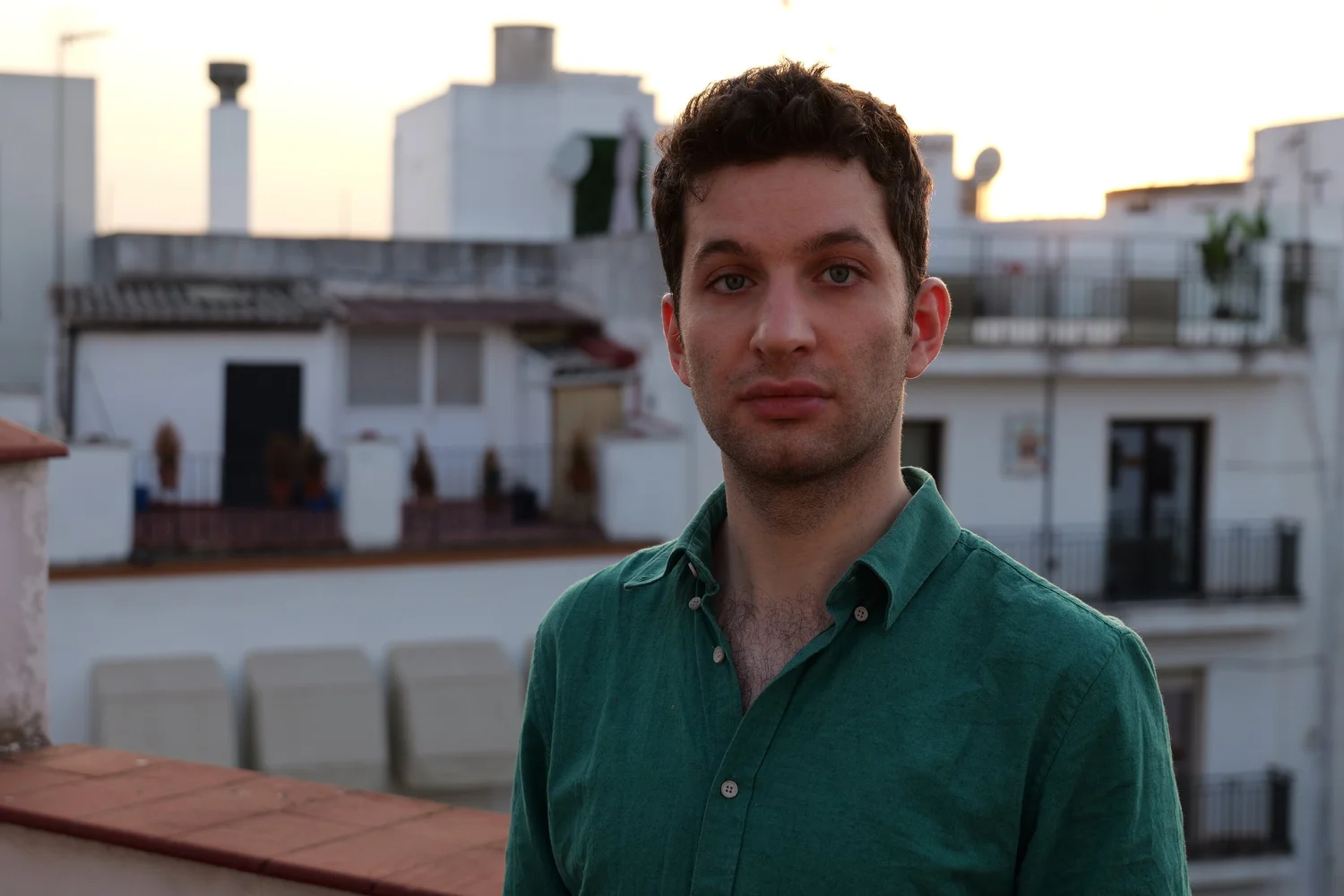
In episode #37 I talk with scholar and poet Ben Meyerson about his research and writing surrounding “voice” in diasporic song. Ben researches three musical forms: Troubadour lyric, Sephardic Romanzas, and Flamenco song, all of which originate from the Iberian Peninsula, dating from the 11th century to the present. Ben addresses some of the problems in theories of “voice” from thinkers such as Deleuze and Adriana Cavarero, who, he argues, in seeking to universalize “voice” risk losing track of individual, historical, cultural and physical voices. Ben’s interest lies in the complex ways that the singing voice can both protest particular historical losses and draw listeners into its community. We discuss and read from an essay we both deeply revere, Nathaniel Mackey’s “Sound and Sentiment, Sound and Symbol” and we talk about Édouard Glissant’s Poetics of Relation as articulating how voice/voices can both be “in relation” while also maintaining “rootedness.” Finally, Ben reads one of his own poems and speaks about how his research is connected to his Jewish identity. In this poetics-enthusiast’s episode, we also touch on Kristeva, Doug Kearney, Lorca, and Moten. A special treat: we listen to a live recording of New York-based Flamenco singers Juan Pedro Jimenez, Barbara Martinez, and Jackson Scott, courtesy of Tara Laraway’s Salon of the Bittersweet. Listen to the end for that! Texts / authors mentioned and DiscussedAdriana Cavarero, For More Than One Voice: Toward a Philosophy of Vocal ExpressionGilles Deleuze, Expressionism in Philosophy: SpinozaGilles Deleuze,Difference and RepetitionFederico García Lorca,Theory and Play of the DuendeÉdouard Glissant, Poetics of RelationDouglas Kearney, Optic SubwoofJulia Kristeva, Revolution in Poetic LanguageNathaniel Mackey, “Sound and Sentiment, Sound and Symbol”Nathaniel Mackey, Splay AnthemBenjamin Meyerson, SeguiriyasBenjamin Meyerson, “Over-Abundance and Ineffability: Flamenco, Mysticism and the Joyful Language-Game” Jean-Luc Nancy, ListeningMichel Serres, The Birth of PhysicsSteven J. Zipperstein, Pogrom: Kishinev and the Tilt of History. Ben Meyerson is the author of the poetry collection Seguiriyas (Black Ocean, 2023) and five prior chapbooks: Near Enough (Seven Kitchens Press, 2023), After Boabdil (The Alfred Gustav Press, 2023), An Ecology of the Void (Above/Ground Press, 2019), Holcocene (Kelsay Books, 2018) and In A Past Life (The Alfred Gustav Press, 2016). He holds an MFA in creative writing from the University of Minnesota and an MA in philosophy from the Universidad de Sevilla. He is currently a PhD candidate in comparative literature at the University of Toronto, where he studies oral poetries of the Iberian Peninsula and philosophies of material complexity. INTRO Music by Ben Roberts : [email protected] and ideas to [email protected]

Comments

Download from Google Play

Download from App Store
 United States