


 Claim Ownership
HEATED
Subscribed: 3Played: 23
Subscribe

© Emily Atkin
Description
19 Episodes
Reverse
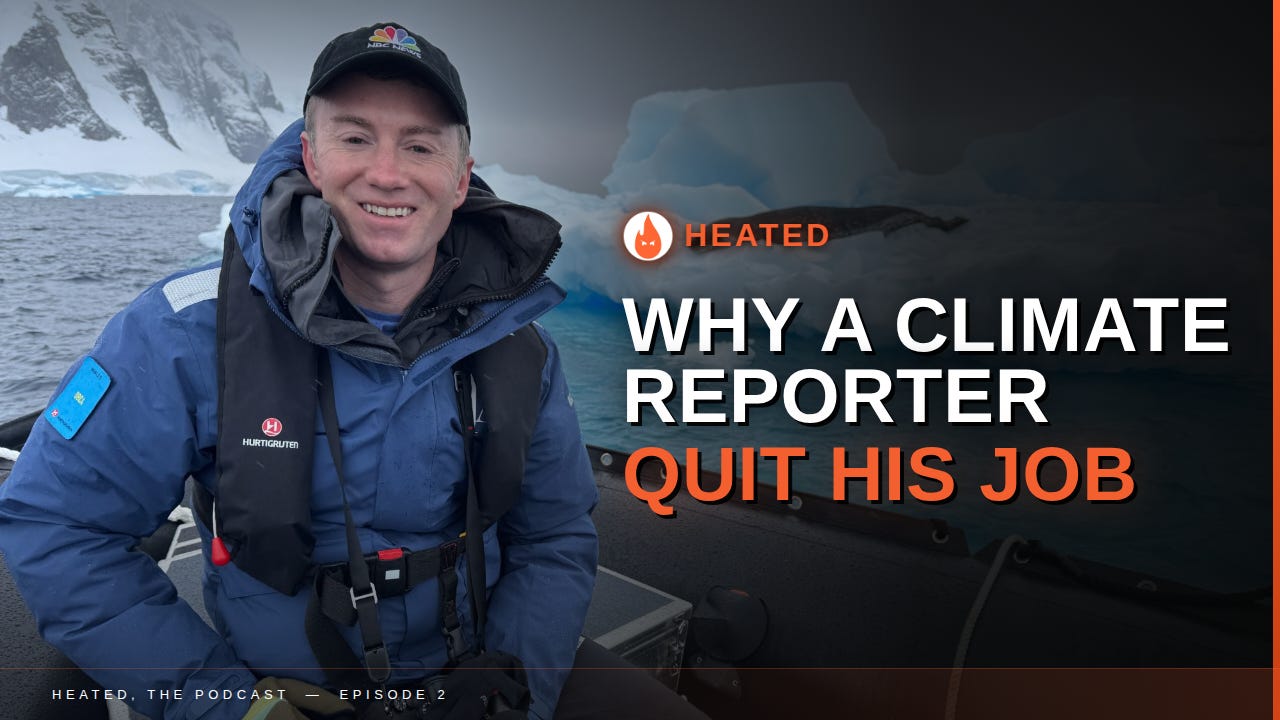
For nearly eight years, Chase Cain covered the most existential threat to humanity for one of the country’s biggest broadcast networks. But last week, the veteran journalist resigned, citing burnout from near-constant internal fighting to get important climate stories on air. In an exclusive interview, Cain talks about the subtle ways climate coverage is suppressed at NBC—not through explicit directives, but through a thousand small cuts over time. HEATED podcast producer Tracy Wholf, a veteran of both CBS and ABC, shares similar experiences. You can follow Chase’s independent reporting journey by subscribing to his YouTube channel. You can also find him on TikTok and Instagram. This is a public episode. If you'd like to discuss this with other subscribers or get access to bonus episodes, visit heated.world/subscribe

In this new series, we’re going to investigate and explain the powerful, systemic forces driving inaction on climate change. We’re going to debunk polluter-funded propaganda; call out media complicity; and press people seeking power on what they’ll actually do about the crisis. And that’s just what we have planned for our first few episodes!Meet our powerhouse new producer in episode one. This is a public episode. If you'd like to discuss this with other subscribers or get access to bonus episodes, visit heated.world/subscribe

With the Trump administration’s attack on America’s climate and environmental protections getting more extreme by the day, it’s easy to feel like there is no path forward for effective climate action in the United States. But Bill McKibben, the longtime environmentalist and journalist, says that’s only what the fossil fuel industry wants you to believe. For the last few years, Bill has been immersed in reporting a book on the global solar energy revolution—and he’s convinced this is possible right here, right now. To move the needle on climate progress, he proposes bringing together a broad coalition of Americans to pressure local and state governments to loosen choking regulations on rooftop solar, the cheapest energy source on Earth. In an interview with HEATED, Bill explains why a U.S. rooftop solar renaissance is entirely possible in this political climate; why it’ll be wildly effective in the fight against climate change; and why its success will be the fossil fuel industry’s worst nightmare. He also pitches a national day of action to celebrate the power and potential of solar and wind—Sun Day. This is a public episode. If you'd like to discuss this with other subscribers or get access to bonus episodes, visit heated.world/subscribe
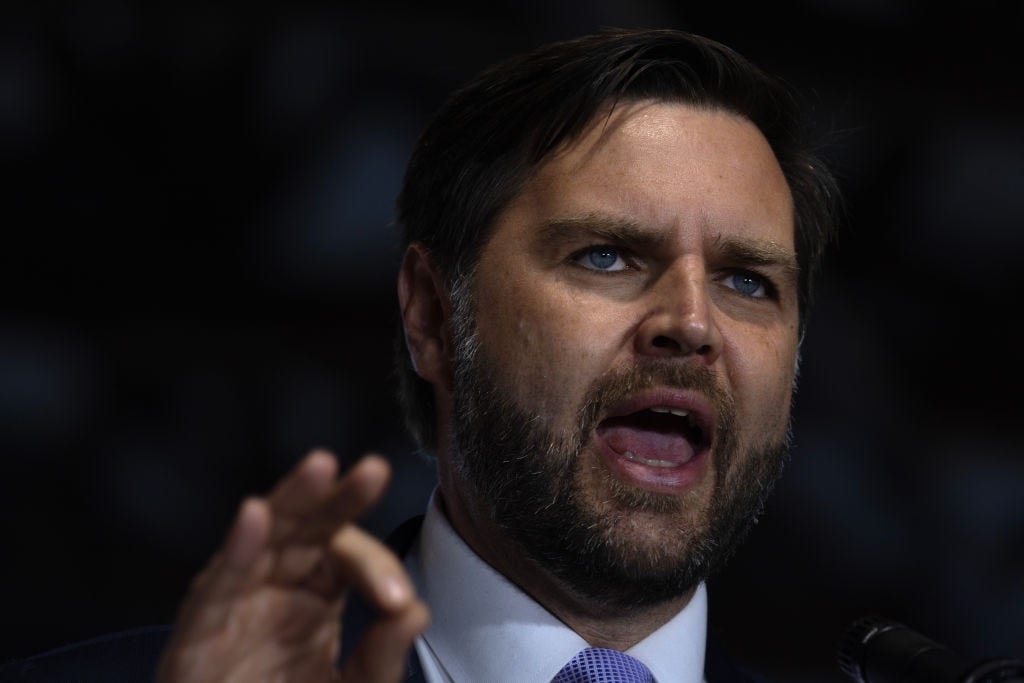
Sometimes, being a climate reporter feels like being in a twisted version of Groundhog Day. Every time you think the world has finally moved beyond debating whether climate change is real or fake, you wake up to find that the day has reset—and a white guy with oil money seeking power pushed the button.Last night, JD Vance pushed the button while thousands of Americans were suffering from one of the deadliest hurricanes in U.S. history. At the vice presidential debate on Tuesday, Donald Trump’s running mate cast doubt on the “idea” that heat-trapping pollution heats the atmosphere, calling it “weird science” that he would only accept “for the sake of argument.”“One of the things that I’ve noticed some of our Democratic friends talking a lot about is a concern about carbon emissions—this idea that carbon emissions drive all the climate change,” he said. “Let’s just say that’s true, just for the sake of argument, so we’re not arguing about weird science. Let’s just say that’s true.” Vance went on to criticize the Democratic Party’s climate policies, claiming they wouldn’t solve the hypothetical problem of climate change that Vance continually refused to acknowledge, even when pressed again by the moderator. The only environmental problems Vance would acknowledge? "Donald Trump and I support clean air, clean water," he said. Fantastic. Meanwhile, in actual reality, climate scientists were sounding the alarm about the impact of fossil fuel development on extreme weather events like Hurricane Helene. They said current warm ocean temperatures, which rapidly turned Helene into a massive Category 4 hurricane, were made 300 times more likely by climate change. They also estimated that climate change caused 50 percent more rainfall in Georgia and the Carolinas—a shocking number given the unprecedented 40 trillion gallons of rain. Only a few days ago, Trump told supporters at a rally that climate change is “one of the greatest scams of all time.” Vance did not take this direct route of denial, likely because it would have seemed insensitive in the face of such destruction from Helene. He’s trying to seem like the adult in the room.But Vance’s comments were the same old Trumpian climate denial, albeit a far more cowardly form. On a national stage, amid unprecedented extreme destruction, Vance was too afraid to tell Americans what he actually believes: That we should stay stuck in this Groundhog Day forever, and allow the window for action to run out of time. Many news outlets claim to be “independent.” HEATED actually is. We take no ad money, billionaire money, or foundation money—only reader subscriptions. Help climate journalism say principled and join today!What else happened in last night’s debate?* The moderators thankfully executed a climate fact-check. “The overwhelming consensus among scientists is that the Earth’s climate is warming at an unprecedented rate,” said CBS’s Norah O’Donnell after Vance’s comments. But it’s easy to be prepared with a climate basic fact-check when you’ve been stuck reliving the same, settled debate for decades.* Walz acknowledged that climate change is real. Don’t you love the bare minimum? The Minnesota governor said that many people know climate change is dangerous, regardless of party affiliation. “These are not folks that are Green New Deal folks,” he said. “They are farmers that have seen 500-year droughts, 500-year floods back-to-back.” Walz went on to say that “Reducing our impact is absolutely critical,” and touted the job-creating aspects of the Inflation Reduction Act. * Walz also touted the Biden administration’s expansion of fossil fuels. The Minnesota governor also doubled down on Harris’ appeal to moderate voters by promoting the Biden administration’s expansion of fossil fuels, while failing to acknowledge the role fossil fuels play in causing the climate crisis—much less the fact that experts say we need to phase them out. Under Biden, Walz noted, the U.S. is now producing more oil and gas than any country in the world; and Biden approved a record number of oil and gas leases compared to Trump. And Walz added, the U.S. is also producing more clean energy under the Biden administration, which is also true.* Vance said that the U.S. has the cleanest economy in the world. (It doesn’t.) The U.S. emits more carbon dioxide per capita than any other country in the world, including China, and is the second-largest emitter overall (but the largest historic emitter). We also don’t have the cleanest economy, which is measured by comparing carbon emissions to GDP. According to that measurement, the U.S. emitted 0.26 kilograms per dollar of GDP in 2022, putting the country squarely in the middle of the road.* Vance also said that Trump cares about the cleanest air and water. (He doesn’t). Vance said that both he and Trump want “the environment to be cleaner and safer.” During his term in office, Trump rolled back more than 100 environmental protections, including rules governing clean air and water.* Walz called out Trump’s proposed $1 billion deal with oil executives. Right at the end of his time, the governor pointed out that Trump met with oil executives and offered to repeal all of the Biden’s Administration’s climate policies if they donated $1 billion to his campaign. “We could be smarter than that,” said Walz. It was perhaps the understatement of the night.Further reading:* Trump will attend two fundraisers in oil-rich Texas today. The Guardian, October 1, 2024.First, he will hold an invite-only lunch in the Permian Basin, the world’s most productive oilfield. Later, he’ll reportedly hold a Houston cocktail party co-hosted by Jeff Hildebrand, who runs Hilcorp Oil and has been a major donor to Trump since 2017.Last week, Trump’s vice-presidential pick, JD Vance, also attended two fundraisers thrown by oil industry executives in Dallas and Fort Worth, before being forced to cancel two Georgia fundraisers due to the hurricane.* JD Vance is one of the top recipients of oil and gas money. Now he’s shilling for their interests. Ohio Capital Journal, September 5, 2023.J.D. Vance, the wealthy venture capitalist who moved back to Ohio to become a U.S. Senator as a reborn MAGA zealot, owes his deep-pocketed benefactors big time. Chief among them are the titans peddling fossil fuel. Vance was among the top 20 of all recipients of oil and gas donations in the 2022 campaign. * Ohio reaps benefits from climate law JD Vance repeatedly attacks. New York Times, October 1, 2024.Despite Vance’s critiques, residents in his state — including in the senator’s hometown, Middletown, Ohio — have been big beneficiaries of Biden’s Inflation Reduction Act. Many local leaders and residents say they do not want to see the new investments, which are already starting to revitalize the local economy, disappear. Since the bill’s passage in mid-2022, companies have announced more than $7 billion in clean energy investments in Ohio, according to an analysis from E2, an environmental nonprofit organization. Only six other states have surpassed that amount, according to the analysis.Catch of the Day: Did you guys miss Fish? He’s been out getting pizza. But he’s back now. Want to see your furry (or non-furry!) friend in HEATED? Send a picture and some words to catchoftheday@heated.world. This is a public episode. If you'd like to discuss this with other subscribers or get access to bonus episodes, visit heated.world/subscribe

Over the last year, Republicans have begun championing a new and novel environmental cause. It’s not the air; it’s not the water; it’s not the climate crisis. It’s refrigerators. Apparently they’re getting way too efficient. This is a public episode. If you'd like to discuss this with other subscribers or get access to bonus episodes, visit heated.world/subscribe
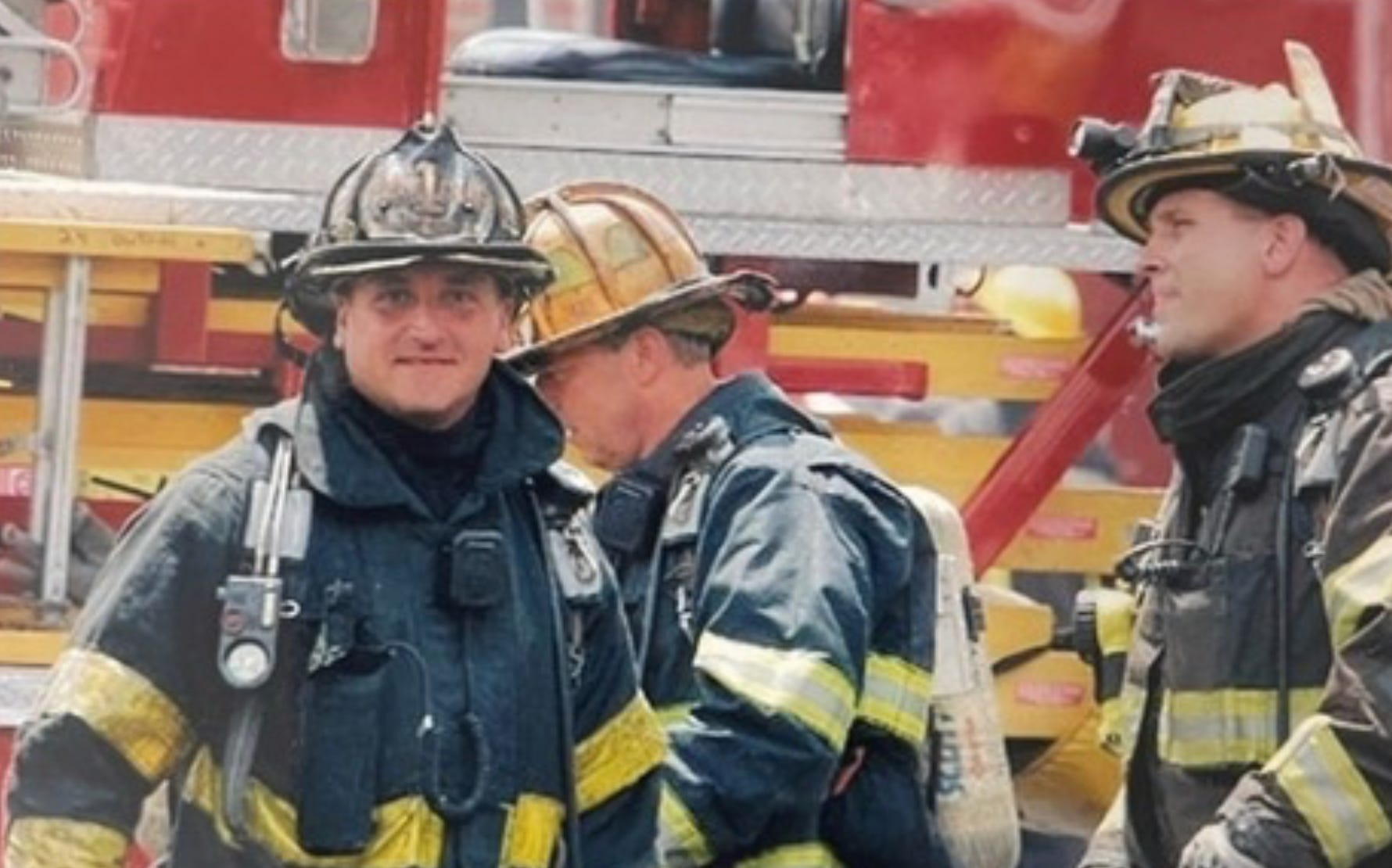
The blueprint for Trump’s second term envisions deregulating ubiquitous and carcinogenic “forever” chemicals. This is a public episode. If you'd like to discuss this with other subscribers or get access to bonus episodes, visit heated.world/subscribe
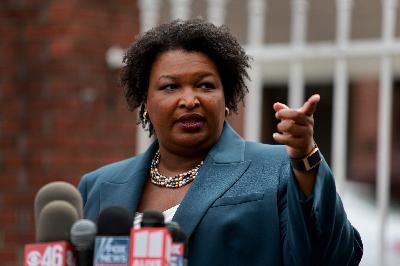
This is a free preview of a paid episode. To hear more, visit heated.worldIn our full interview with Stacey Abrams, we dive deeper into her personal and professional experience with climate change; details of the electrification incentives in the IRA; the potential challenges with ensuring equity in electrification; and her views on the role of fossil fuels in a net zero future. We also discuss how Abrams’s love of sci-fi influences her imagination of the future.That full interview—both transcript and audio—is available to paid subscribers only. If you’re a free subscriber, the first part of our interview is available for you via audio at the top, and transcript at the bottom.
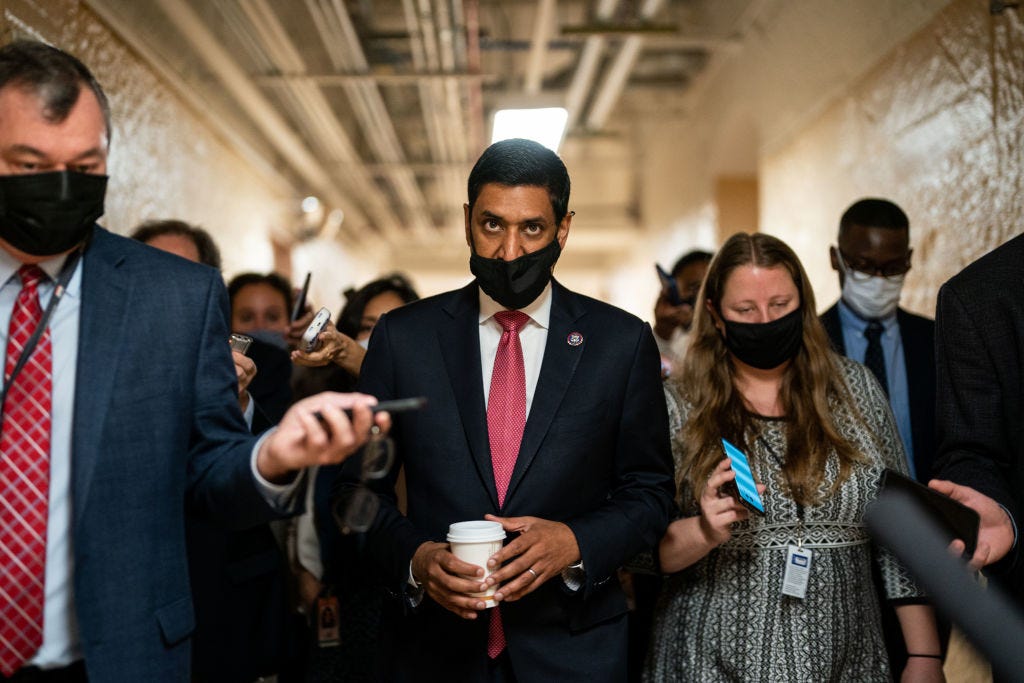
It is very difficult to get television news networks to tell climate change stories—especially ones that place the blame on fossil fuels. The House Oversight Committee’s ongoing investigation into Big Oil, and its role in misleading the American public about climate change, is an example.According to Rep. Ro Khanna (D-CA), who is leading the investigation with committee Chairwoman Rep. Carolyn B. Maloney (D-NY), it’s been tough to get television news to cover this—but not because it’s not an important story. “I've been told by bookers who have me on their television shows that climate is hard to get ratings for,” he told HEATED in an extensive interview about the investigation. “They say climate is a tough thing to cover on television.”So Khanna is vying for attention from other sources. In a 30-minute interview, we discuss the investigation’s challenges—from media coverage, to the fierce backlash from Republicans and the oil industry, as well as resistance from some Democratic colleagues. We also talk about the successes of the last year, where the investigation goes from here, and what interested citizens can do to help. This is a public episode. If you'd like to discuss this with other subscribers or get access to bonus episodes, visit heated.world/subscribe
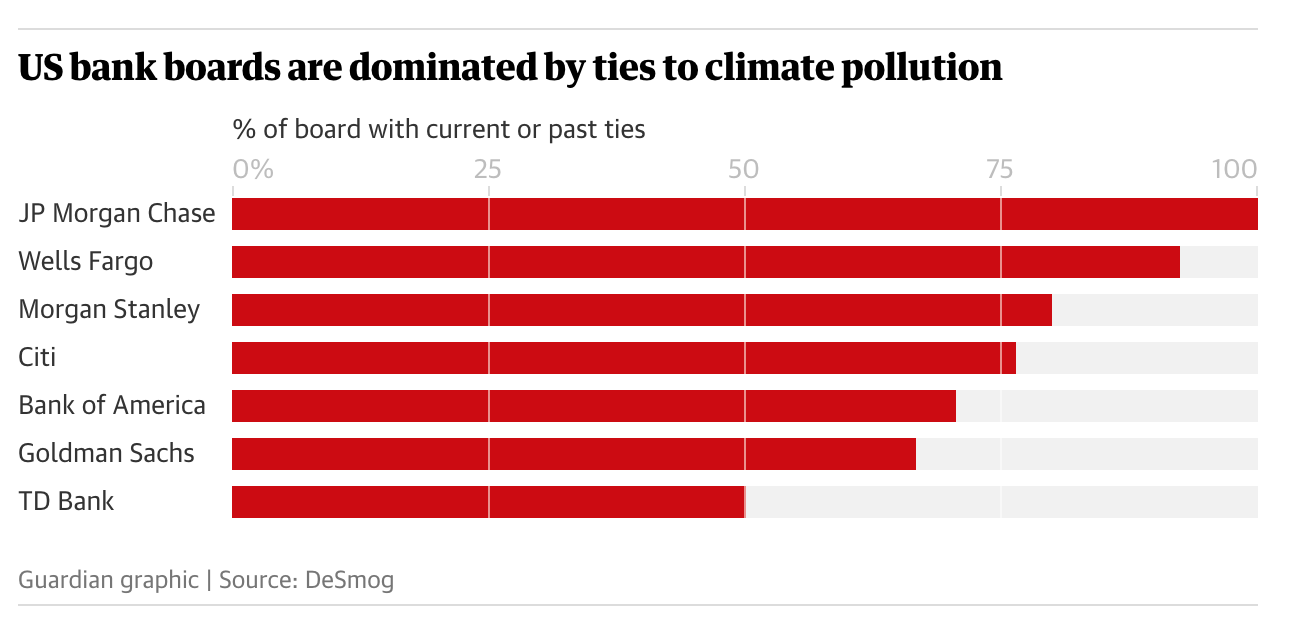
Today’s newsletter is a collaboration with Emily Holden at Floodlight, a new non-profit news organization dedicated to investigating the corporate and ideological interests holding back climate action. ICYMI, we ran an interview with Holden about Floodlight’s launch last month.Our article today investigates how decision-makers at major banks have conflicts of interest on climate, and what that means for the projects they back—like Line 3 in Northern Minnesota. It is also running in The Guardian.At the top of today’s e-mail, you’ll also find a behind-the-scenes, podcast-style audio interview about this story. It starts with a discussion between Emily and I, and then ends with an interview with Giniw Collective founder Tara Houska, who’s been leading direct actions against the Line 3 pipeline.I hope you enjoy this collaboration! Let me know what you think in the comments, and please consider supporting this 100 percent reader-funded, independent journalism with a subscription if you can.By Emily Holden for Floodlight and Emily Atkin for HeatedU.S. banks are pledging to help fight the climate crisis alongside the Biden administration, but their boards are dominated by people with climate-related conflicts of interest, and they continue to invest deeply in fossil fuel projects.Three out of every four board members at seven major US banks (77%) have current or past ties to 'climate-conflicted' companies or organizations—from oil and gas corporations to trade groups that lobby against reducing climate pollution, according to a first-of-its-kind review by climate influence analysts for the blog DeSmog. One of the controversial projects those board members have chosen to back is the new Line 3 tar sands oil pipeline, currently under construction in northern Minnesota. If completed, the project would allow Canadian oil giant Enbridge to double the amount of high-polluting tar sands oil it currently transports through the region to 760,000 barrels per day.Environmental groups estimate the new Line 3 would add 50 new coal plants’ worth of carbon emissions to the atmosphere every year for the next three to five decades. They say it is incompatible with the Biden administration’s climate and environmental goals, and they argue the project never should have been approved. They add that the Trump administration didn’t independently review the risks of building a tar sands pipeline underneath the headwaters of the Mississippi River, which flows all the way to the US Gulf Coast.Neither Biden nor the banks funding Line 3 have acknowledged these concerns, and time is running out to halt construction. So in recent weeks, Indigenous water protectors in Minnesota have resorted to physically chaining themselves to Enbridge equipment, while activists across the country have been chaining themselves to the doors of the banks who finance the pipeline.“There’s been a lot of complacency. People have been pursuing comfortable routes of advocacy,” said Tara Houska, whose group Giniw Collective has led several direct actions against Line 3. “I don’t think we’re going to get the answers we need comfortably.”The financing behind Line 3Enbridge has seven active loans relevant to Line 3, totaling $11.5bn, according to the Rainforest Action Network. In addition, banks have underwritten bonds to Enbridge totaling $5bn since the autumn of 2019, the group said.From the U.S., Bank of America, Citigroup, JPMorgan Chase and Wells Fargo have made the project possible with billions of dollars in loans, although it’s impossible to tally precisely how much they have financed for the pipeline specifically. Another five large Canadian banks are also financing Enbridge, according to Ran.Out of these nine North American banks backing Enbridge, six have recently published net-zero climate goals, pledging to align their investments with the international Paris climate agreement.“The banks are gorging on doughnuts and then eating an apple afterwards,” said Richard Brooks, the Toronto-based climate finance director for Stand.earth. “We certainly can’t rely on banks or the private sector to lead us into climate safety and lead us toward emissions reductions. We need policy, we need regulation. We need government to act.”DeSmog found Canadian banks have the highest percentage of directors with climate-conflicted ties: 82%. That figure was significant in the UK and elsewhere in Europe as well, at 78% and 61%, respectively.The struggle to get banks to defund Line 3In February, the group Stop the Money Pipeline began a campaign to demand that banks withdraw their financial support of Line 3.But despite numerous direct actions across the country, the effort has not been nearly as successful as previous climate campaigns targeted at banks, like the campaign to end funding for drilling in the Arctic national wildlife refuge.The progressive Minnesota congresswoman Ilhan Omar pointed to previous environmental victories and said activists must keep fighting. “We were able to stop the construction of the Keystone XL pipeline because activists collectively organized in large numbers to oppose it—we must use that same energy to stop this pipeline from causing irreversible damage,” she said.Juli Kellner, an Enbridge spokesperson, argued Line 3 was a safety-driven project because it was replacing an older pipeline. She said it had received all its permits after a thorough review process.“Shutting down existing pipelines does not erase demand. It merely forces the transport of essential energy by less efficient means such as ship, truck, and most notably rail,” Kellner said. “It is Enbridge’s responsibility to transport the energy people rely on daily by pipelines - the safest, most efficient means of transporting energy. It is also our responsibility to do what we can to address climate change. That is why we’ve set a target of net-zero emissions by 2050 and laid a credible path to achieving it, including tying compensation of our executives to our performance in this area.”The most climate-conflicted banks: JPMorgan, Wells FargoMuch of the U.S. economy is built on fossil fuels, and people with enough experience to be appointed to bank boards are likely to have some connection to climate-conflicted organizations. But the DeSmog analysts said the heavy representation of industry on boards shows a “lack of creativity” in recruitment and is probably why bank policies aren’t more environmentally progressive.“Some of these banks have pledges, but it’s about ensuring that they see them through. We’re simply asking the question of: ‘With this person on the board, what’s the likelihood of them seeing them through?’” said Mat Hope, editor of DeSmog UK.“When it comes to the consumer holding their bank card, we want to put the information out there that lets them know that these are the directors of the boards of the banks they’re banking with.”DeSmog reviewed the careers of board directors and flagged any connections with high-polluting sectors, including fossil energy, agribusiness, steelmaking and mining. The group also relied on indexes that measure polluting companies, such as the Climate Action 100 list, which includes companies like Nestlé – which has contributed to deforestation. And they reviewed links to trade groups, lobbying firms and thinktanks that have opposed climate action.JPMorgan Chase tops the list for directors with climate conflicts. All of its 10 directors have current or past ties to companies or organizations contributing to the climate crisis. Wells Fargo comes in second, with 12 out of 13 directors.Most of the seven banks declined to comment or did not respond to requests for comment. Wells Fargo noted its net-zero commitment and its plans to disclose near-term climate targets, as well as its taskforce on climate-related financial disclosures.All seven of the banks have potential climate conflicts among at least half the directors on their boards.For example, Theodore Craver, a director at Wells Fargo, is also on the board of Duke Energy, a power company that owns significant coal and gas generation. Duke has vowed to reach net-zero carbon pollution by 2050, but environmental advocates have argued the company’s plan still includes a large amount of gas. Craver is also the retired CEO of Edison International, another energy company.Michael Neal, who is on the board at JPMorgan Chase, was vice chairman of General Electric Company until his retirement in 2013.Those kinds of connections could be significant obstacles to the Biden administration’s hopes that banks will commit to climate-friendly finance, activists warn.Biden administration remains silent on Line 3 and banking conflictsJohn Kerry, Biden’s climate envoy, wants banks to commit to more near-term goals, according to Politico. But the White House has also met with environmental and watchdog groups who want the administration to be more aggressive with banks.The White House did not respond to requests to comment for this story.Collin Rees, a campaigner for Oil Change International, said advocates have consistently heard there is a desire within the White House to move forward on climate finance regulation, to require banks to have capital requirements and pass stress tests, for example.“That’s the way we would like to see it approached,” Rees said. “To talk about how we are regulating Wall Street. And to also talk about the fact that they are not only potential sources of clean energy investment, which is good, but also still driving the climate crisis.”Last week, 145 organizations wrote Kerry a letter urging him to help end “the flow of private finance from Wall Street to the industries driving climate change around the world – fossil fuels and forest-risk commodities”. They asked Kerry to “recognize that Wall Street is not yet an ally”.“As long as US firms continue to pour more money into the drivers of climate change, they are actively undermining President Biden’s climate goals,” they said.In Alida, Mi

Good afternoon everyone! Happy Monday and Happy Indigenous Peoples Day. Today being a federal holiday, I wasn’t intending to send out a newsletter. But it turns out, the newsletter I sent on Thursday—my interview with Ayana Elizabeth Johnson and Katharine Wilkinson, the editors of All We Can Save: Truth, Courage, and Solutions for the Climate Crisis—never actually sent. So I’m trying this again now, and hopefully this time it successfully hits your inboxes.One reason I probably didn’t notice Thursday’s newsletter slip by was because, real talk, these last two months have been a total brain/soul suck. Sometimes, particularly on Thursdays, I just hit send and tune alllll the way out. And I think in retrospect, last week—after that awful Vice Presidential debate—I probably just tuned out about 15 seconds too early. I need to be super *on* if I’m going to cover the climate crisis effectively every day. So in the interest of delivering on that promise, I’m going to take a small break this week. Book club will go on as planned; you’ll get discussion questions and further reading for All We Can Save on Tuesday and a new Q&A with a section author on Thursday. But I’m gonna take Wednesday off, as a birthday present to myself and all of you. (Wednesday is my 31st birthday. Please clap).In the meantime, please enjoy my interview with Ayana and Katharine about All We Can Save’s “Begin” section, which you can read in its entirety in Elle magazine. We go over the topic of “climate feminism,” what it’s like to release a climate book in the middle of a record-breaking extreme weather season, and who the best “climate dudes” are. I wish we could have had this conversation in a bar, but alas, it’s still COVID season. So we did it on the phone, and now it’s in the newsletter. The written interview below is edited and condensed for clarity, but I also uploaded the whole audio file at the top of this email, so you can listen to our conversation in its entire, unedited glory if you’d like. As always, thanks for allowing me the ability to take these small breaks when I need them. I’ll see you back in full force next week.Value interviews like this? They’re made possible by paid subscribers. HEATED is 100 percent independent and reader-funded, and every subscription makes a difference.Scene: The rage hike in Colorado when @drkwilkinson and @ayanaeliza came up with the idea for this book. It was an idea born out of our frustration that so many of the incredible women climate leaders we know don’t get the recognition they deserved or the resources they need. And born from knowing most of them won’t stop doing their critical climate work to write a book, which is still a primary path to thought leadership. So, we brought the book, the megaphone, the spotlight to them. Emily Atkin: You opened up the book by introducing the concept of climate feminism. I think that's very lovely, but there's also potential for that to be kind of risky. Just from my own experience, every time I combine climate change and feminism—even in a community as progressive as HEATED—I find myself getting some pushback from men and women who say it’s divisive in some way. I'm wondering if that jives with your experience at all. Katharine Wilkinson: Yeah, this is an interesting question. It’s making me think back to when, after the point that we could no longer make edits, Ayana and I realized: “Maybe we should have included somewhere that feminism just means gender equality?”Ayana Elizabeth Johnson: It’s on a list of possible changes to make for our next edition.KW: Feminism should not be such a loaded word. It's only a loaded word because forces have made it so, in the same way that forces have made climate change a loaded term.I would hope that people could bring their critical faculties and b******t detectors with them beyond beyond the climate space.This is just historical reality. We started with the beginning of women's climate leadership, which starts with Eunice Newton Foote, who was both a scientist and a feminist. That is just a truth of her story. So I wonder if it will actually kind of help people to realize that actually, these two things have gone together from the beginning. And we've had now more than a century and a half to get with the program. AEJ: I would just add that at no point did we worry about this when writing the book. The only time we did was when we were deciding on the title and the subtitle. This is a book written by women, but it's a book for everyone. So we did opt not to say, like, “writings of 40 women on climate” as the subtitle—in part because we wanted something a bit more poetic—but also because we wanted everyone to pick up this book. It's the same thing we thought about when we designed a cover. We got some really pink options that we rejected.EA: No, you didn't. Really?AEJ: Oh yeah. I mean, fuchsia, but still.EA: Were there ever like, boobs on it? Or flowers? Orchids? KW: Boobs in the form of two Earths! That was one. No, not really.AEJ: I wish. But I think to your point, we certainly want everyone to feel like this book is for them. And perhaps it is the people who would most recoil from a book that mixes feminism with climate that we would most like to read the book. But we don't really have the ability to tiptoe around these issues. I will say that the essays themselves are not about feminism. It's just a book written by women. Like every essay is not about like “being a woman in climate.” They’re about farming and geo-engineering and policy and journalism. Right. So I think that's an important distinction. It's a book by women, but it's not about being women. And it's not just for women.EA: And it’s not a man-bashing book.AEJ: No. Except to the extent that some people find facts uncomfortable. The fact is that women are involved in environmental policy.That's just statistics. So if you feel bashed by facts, you might be slightly upset with the introduction. KW: And we make the point really intentionally that this is not about only women. It's about ensuring we have diverse leadership and diverse talent coming to the climate movement, and also that leadership that is more characteristically feminine and has a more feminist commitment is not limited to people of any gender. Don Cheadle and Mark Ruffalo have proclaimed themselves proud climate feminists also. EA: That’s hot. I like that. EA: I want to talk about the timing of the release of the book. When I released HEATED last year, it was September—which meant the release landed right in the middle of hurricane and wildfire season. I didn't even think about this at the time, but I think that had a big impact on how many people signed up. It was this horrifying marketing tool that I did not realize I was using. I'm wondering if if you have been experiencing a similar phenomenon. Have you been seeing people interested in this book, specifically because of the particular moment that we're in? And did you intend the release to coincide with this moment?KW: Oh my god. Yeah, I think [our marketing person] messaged Ayana at some point, saying “Oh wow, not at all intended, but I guess good work having this land in the overlap of hurricane and fire season?” Because I think we are seeing that. But our intention was twofold. One, we were trying to aim for a Climate Week release, because we figured a lot of people who are contributors above would be in New York, and we might have a chance to celebrate together. Ha-ha, not a thing anymore! And the other was that we wanted to get it out before the election. AEJ: We wanted to perhaps even influence the public discourse and make the discussion around electoral politics consider climate a bit more deeply. We also started putting this book together in December, and didn't predict that a Democratic primary would have been so focused on climate—which is obviously a wonderful relief. We had an incredible essay by Maggie Thomas, who had been Elizabeth Warren's climate adviser after being Jay Inslee’s. So we have her story about that. But yeah, our choices were basically September or February. And we just couldn't wait to get this out into the world, and busted our butts to make an entire book in nine months.KW: And that is not recommended.EA: I remember meeting you guys in New York, and seeing you guys bunkered down working in a corner in between having to do talks and network, and I was like, “This looks like it's not fun.”AEJ: It was actually such a joy. There were moments we were just like, “what were we thinking?” But almost always it was very clear to us that it was worth the effort, and that a lot of the extra work was because we tend towards the perfectionist side of the spectrum.EA: Which, honestly, those are the those are the type of people you want at the forefront of leading the response to a very complicated climate crisis. You don't want them to be like, whoops, forgot about the ocean!This question is kind of broad, but what are you individually most proud of about the book? When you hold the final product in your hands and you're flipping through what do you find yourself going to first, or feeling first?AEJ: I am most proud of how many incredible climate leaders never told their stories before, and wrote them down for this book. Like Mary Anne Hitt, who’s led the Beyond Coal campaign for a decade, which has shut down over 320 coal-fired power plants. She’s never written her story and her lessons learned. The same goes for Maggie from the [Warren] campaign, and Jacquie Patterson from the NAACP. These are people who just do the work, and don't worry about getting credit or being climate celebrities—although, they could, now that there's a weird category for that. So that brings me like a lot of joy and even pride, to know that we were a part of helping to write this little bit of history in a way and helping people to tell their own stories. KW: I am teaching the book to an undergraduate seminar course called “The Call of Clima

Early this morning, I came across an article in Axios that I did not like. The headline: “Clean energy and climate change unlikely to lead American recovery.”Written by columnist Amy Harder, the article argues that significant climate and clean energy policy won’t make it into Congress’s next coronavirus economic relief package.“Reality check,” she writes: “Such prospects face uphill battles almost everywhere, and especially in the United States, where proponents [of solving climate change] are on defense while the Trump administration and lawmakers are in crisis mode.”I do not dislike this article because it is wrong. I dislike it because Harder is right. We are not on the path toward passing an economic recovery package that will address the next global health and economic crisis while addressing the current one.Our political leaders are about to spend trillions of public dollars on simply getting “back to normal,” when we know that “normal” is what got us into this mess. We know “normal” guarantees an imminent climate crisis, one that will cause just as much if not more health and economic devastation as COVID-19. We know “normal” is a death trap. So why are we trying so hard to go back?We’re not talking enough about the climate/COVID connection The necessity of addressing coronavirus and climate change together was not always clear. Back in March, when the virus had just started taking over America, climate activists actually encouraged people not to talk about the two issues in tandem, fearing they would be seen as opportunistic or insensitive. That didn’t seem right. After all, the climate crisis makes viral pandemics more likely to occur. Both crises threaten millions of lives and economies around the world. And climate change wasn’t taking a break for the virus; both were getting worse at the same time. So if anything, the pandemic made climate change seem more relevant, not less.That’s why, back in March, this newsletter took the opposite tack: we launched a rapid-response podcast to emphasize the connections between climate change and coronavirus. Over the course of 18 days, my podcast team and I produced and released six interviews with experts who could shed light on different aspects of the COVID/climate connection. Those interviews all served distinct purposes:* Bill McKibben of 350.org provided the overall climate activist perspective;* Kate Aronoff of the New Republic gave expert analysis of national policy and politics;* Anthony Rogers-Wright of the Climate Justice Alliance provided an overview of the effects on vulnerable communities;* Dr. Aaron Bernstein of Harvard C-CHANGE gave a rundown of the medical and scientific connections;* Mary Heglar of Columbia University dove into the emotional complexities of both crises and gave an ever deeper justice perspective;* and Ali Velshi of MSNBC spoke of the challenges of covering both crises as a mainstream journalist.The series garnered a lot of attention. It got us a feature story in the print edition of The Guardian. It got us on MSNBC, and on the Earth Day episode of public radio’s 1A, featuring EPA administrator Andrew Wheeler and former EPA administrator Gina McCarthy.Since launching, the podcast has been featured in Columbia Journalism Review; on Science Friday; on StateImpact Pennsylvania and New Hampshire Public Radio; and on PRI's The World and Living on Earth, among others. Our podcast was also featured on Spotify’s official Climate Crisis playlist (updated once a month), and people on Instagram made cool memes about it.But this clearly has not been enough. People still don’t seem to understand how inseparable these two issues are.So today, we’re releasing a 7th episode of the HEATED podcast, in an attempt to provide an overview of what we learned in episodes 1 through 6 — and in an effort to fundraise so we can make more episodes as both crises continue to unfold. Episode 7 is at the top of this email as an audio file. We also have our own feeds now on Apple and Stitcher; you can listen to it there, too, or click the button below.What we learned: It’s now or neverIn case you don’t feel like listening to the episode now, I’ll excerpt the two parts I think are the most relevant. The first part is where we talk about the biggest overall lesson we learned from doing this podcast: that it’s never been more important to talk about climate change. Because while we sit and don’t talk about climate change—while we accept going “back to normal” as a solution—the fossil fuel industry and Republicans are not trying to go back to normal. In fact, they are pushing through policies to worsen the climate crisis.The same people who have historically told us that we cannot do anything about climate change—those are the people telling us right now that “now is not the time.” And these are the same people who are themselves being opportunistic with coronavirus by not talking about climate change. They’re trapping us in the same cycle of doing what we've been doing. To go back to the way things were. But the way things were is a death trap. And the way things were is a huge profit machine for Republican lawmakers, for the fossil fuel industry, for everyone who profits off of the pandemic, and everyone who profits off of climate change. The whole concept that we shouldn't talk about climate change right now is a smash and grab for the fossil fuel industry, for the plastics industry and for everybody in power who benefits from their profits. Think of how many lives we could have saved, and think of how many millions, billions of dollars we could have saved if we started listening to climate scientists three decades ago. We literally can't afford to keep going down this path. Coronavirus is showing us that now more than ever is the time to talk about the connection between these two things. Because if we don't talk about it now, we're never gonna talk about it. We're just going to let climate change do the exact same thing coronavirus is doing to us right now, which is kill us and destroy our economy.What we learned: the community is powerfulThe second part of Episode 7 I think is most relevant is where we talk about the power of this community to shift the national conversation around climate change. Hand to heart, it’s unlike anything I’ve ever experienced in my journalism career. I finally I feel like I'm serving a community. The only time in my professional life when I ever felt close to that was when I was 20 years old, and I was reporting on state government in New York. I was covering these issues like pesticide bills that were important to mom’s groups, and domestic violence protection bills that were important to domestic workers and single parents. And it meant so much to the people who were advocating for those bills, just to see the issue in the paper, and just to get the recognition from those people that it was meaningful to them. Then I came to Washington, D.C. to do national journalism, and I felt like that purpose of fulfilling a community need almost disappeared. And it wasn't until I started the newsletter, and then this podcast, that I started to feel it again for the first time. But it wasn’t about a local issue. It was about a global issue.That's what I think is so special about this community. We've created a close knit, almost local-like community around a global issue. I don't know anywhere else where that exists. I’m not trying to pat my own back here, because it's not me, it’s everyone else. But I really find that that's the most valuable thing about this community. And the story of climate change and coronavirus isn't over. There are more chapters being written every single day, as the Trump administration writes bailouts for the fossil fuel industry; as Congress seeks to put sneaky language in economic recovery bills to prop up coal companies that have supported the Trump administration financially. And we can't cover those things without the community support.So I'm so excited that we found this niche, and this community, and that potentially we have the opportunity to keep exposing this smash and grab, to keep telling the story that they don't want us to tell. They're going to keep telling us to shut up about climate change and coronavirus. They're going to keep telling us that we're being opportunistic. They're going to keep saying that it's irrelevant. That is because they're scared of what will happen if we don't shut up.The podcast is a separate venture from the newsletter, and is 100 percent listener funded. We’d like to continue it—albeit on a much slower, more sustainable pace than the first six episodes—but we can’t do it without you. If you’d like us to keep not shutting up about the connections between COVID-19 and climate change, you can help support the podcast by clicking the button below. No matter what, though, the podcast team and I are so proud of the impact you’ve helped us make with this project. (IMO, it is probably because you have been staying so healthy and hydrated during this quarantine. Proud of you!)And I’ll always continue yelling here, podcast or no podcast, because that’s the dream.See you later! OK, that’s all for today—thanks for reading/listening to HEATED!If you liked today’s issue/episode, please feel free to forward it to a friend. If you are a paid subscriber and would like to post a comment, click the “view comments” button below:If you’ve been forwarded this email, and you’d like to support the spread of independent climate journalism that focuses on the powerful, become a subscriber today: This is a public episode. If you'd like to discuss this with other subscribers or get access to bonus episodes, visit heated.world/subscribe

Below is a written transcript of Episode 6 of the HEATED podcast, out today on all your podcast apps, or at the audio file at the top. My guest is MSNBC anchor Ali Velshi. This is the last episode of our limited-run mini series on COVID-19 and climate change! Next week, HEATED’s publishing schedule will return back to normal. Free subscribers will get at least one email a week, and paid subscribers will get four—every morning, Monday through Thursday. I’ll make all essential COVID-19 reporting free, too.Hope you all enjoyed the series as much I enjoyed making it. Unlike the newsletter, the podcast was a team production. So if you’ve enjoyed it, and you’d like to support the four-person band behind it, consider making a donation at our GoFundme page.Enjoy the chat with Ali! Emily Atkin: Thank you for doing this. Thank you for taking some time out of your day for climate change.Ali Velshi: We should be doing it every day. So thank you for continuing to force the issue on us. I mean that in a good way, because what we tend to do in this world is jump from crisis to crisis. and it's becoming increasingly obvious that this is the one crisis that looms in the background all the time, and gets shoved out by other crises. EA: I mean, that's my whole life. Literally the only thing I do is just poke people and tell them to pay attention to climate change. AV: And this situation [with COVID-19] is interesting, right? It's the urgency. It's the unknown outcome. It's the suddenness. Suddenly, you're healthy, then you're not. Suddenly you know people who have died. So it's just this compressed timeline that we know nothing about that is scaring us. And with climate we just don't experience it the same way. EA: Yeah. There's plausible deniability with climate change. You can have a loved one die from the effects of climate change and still be able to convince yourself that it wasn't that. Whereas with coronavirus, there's no denying that’s what it is. But I want to start by having you tell listeners a little bit about your personal journey into climate reporting. We aren't seeing a lot of broadcast reporter interest in climate change. I see your interest growing. Can you just tell us a little bit about your journey to becoming someone who's interested in climate change?AV: I have a history of being a reporter who explains complicated things to people. It came from economics but it morphed into other things. And like a lot of reporters, I read and I understood climate change from the perspective of someone who reads. I certainly always thought I was on the right side of it.But probably five years ago, it became about the fact that this isn't going to inevitably solve itself. The idea that right-minded people all sort of probably shared my view, but our regulations are not built to actually acknowledge it, and our media is not built to actually acknowledge it. And so I started becoming more involved in understanding it.But it was difficult. I can explain to you why the Dow dropped a thousand points today. How do I explain to you two degrees compared to pre-industrial times in a hundred years? How do I make that understandable to people on TV? Because we have a way of doing things, and they don't lend themselves to large conceptual discussion. But then what started to happen is two things. One is the movement started to get bigger, and started to bring new people into it. It became kids teaching their parents that, “Okay, this isn't gonna change unless we're all involved in it.” And the second thing is we started to associate it with things that were urgent, that did lend themselves to television—like hurricanes, like wildfires, like flooding.And what I found was that every time I made that connection on TV, I would get people really angry at me. They'd say, this isn't the time to talk about climate. And I started to wonder: Why not? This is the only time I have your attention. And the two things are actually connected. There's real science as to the way hurricanes form now and how they develop and why temperature makes them more intense. Then people like you trying to force the discussion. There were books out there that spoke to me in my language. There were candidates who started to make this an actual priority. There were people who started to build policy around it. There were articles written that didn't feel the same. And it all came together and caused me to understand that this is my job. Being on the right side of the issue is fine. But the job is actually using your platform to express to people why something is important, and what role they might play in it, whether it's a policy role or whether it's an individual behavior role, and even what the competing interests are within those roles.EA: One of the things I've seen you do is have an increased focused on the powerful forces that have driven climate denial in our society. And I see that as an opportunity for broadcast and cable news in particular to make climate change more interesting to people—to tell the story in the language of corruption, as opposed to the language of science. Is that part of your evolution? And is that indeed an easier story to tell on broadcast?AV: It's part of my evolution in that it’s part of my evolution as a journalist. Again, probably five or six years ago, I realized that having people on TV to give you their PR-honed pitches about their business or their company is not serving my viewers interest. I would go to award ceremonies in New York for broadcasters around the world. These were people who were under threat from their governments. They would wear bulletproof vests to just do their job. And I was thinking, yeah, I don't really do a lot of that. Like I book people through their PR agencies, and they come on my show and they tell me about stuff. We call ourselves journalists, but these people speak truth to power to the extent that they endanger their lives every single day.Maybe I’m not endangering my life every day, but maybe I can actually start to say, “what can I give my viewers?” As a business journalist, most of your interviews are CEOs or marketing people. So you are just constantly being barraged by their hard sell. They spend millions of dollars being trained to deliver information, and you act as a conduit for that to your audience. And I sort of said, “This can't be what this is about.” So why not hit this disinformation part of things hard? Particularly in business journalism and economic journalism, in which lot of this climate denial is rooted. We don't do enough of a job of telling people whom we interview, holding them to the fire, because we want them to come back and interview with us again. Maybe it's my age, and how long I've been in this, but I've decided I don't need the access anymore. I don't need you to give me your interview anymore. I'm a journalist. I've actually got resources, and I've got ways in which to get to the bottom of the story. and that's how I'll do it. And if I never get a fancy interview again, or the CEO of an oil company, or a politician who wants to talk about this, that's fine. Because they've got lots of airtime. You can always hear from them. A coal company or an oil company or anyone involved with those industries—there's no time you won't get their message. You may not know that you're getting it all the time, but you're getting it. And we have to work hard to bring the other message into mainstream media. EA: Have you seen a change at all in how receptive people are at MSNBC to telling climate change stories on the air? AV: So we have a climate unit now, which we never had before. It probably corresponded with around the time that we did that presidential forum that you were at in Washington at Georgetown. So it was in the fall. And climate now doesn't seem like some weird left turn to a different discussion. We now have it as part of all policy discussions, or at least most. And that helps a great deal. You've probably seen in the last couple of weeks in mainstream media, pictures of smog that isn’t there in places where it normally is. Now, I don't think most people think, “wow, coronavirus is the solution to climate change.” But boy, that's pretty good TV. And it says, we can solve these problems. We want to solve this without it being about coronavirus—but this does mean there is proof, right? That if you stop running your engines as much, and you stop burning fossil fuels as much, some good may come of it. So let that be instructive to us.EA: It's true, but I also see some of these stories about how coronavirus is cleaning our air as a smokescreen. Not to put it so literally, but a smokescreen to what is actually happening during the pandemic, which is that we're seeing all these regulatory rollbacks on climate at the state, local and federal level—and we're not actually seeing that much coverage on it from broadcast news.[Note: In the unedited version of this interview for paid subscribers only, Velshi noted that he and Chris Hayes have covered the rollbacks—which is true! See here, here, and here.]AV: Network news has a smaller footprint. Far more viewers, but far less time to cover stories. And these things are definitely harder to get on network news. So I think that criticism is A) valid, and B) probably valid regardless because that's how these things slip through, right? That's what happens when we're all busy watching something else.There are a lot of fronts on which [loosening regulations] can make sense [during a pandemic], but that can become a slippery slope. We may allow business owners with a slightly lower-than-acceptable credit score to get a loan during this time, because if they can stay open, they can pay 10 of their employees and that's money that's not going to be used for unemployment. There's a place where we might allow some like regulatory slippage. But we have to come to terms with the fact that from a climate perspective, we’ve had decades of reg
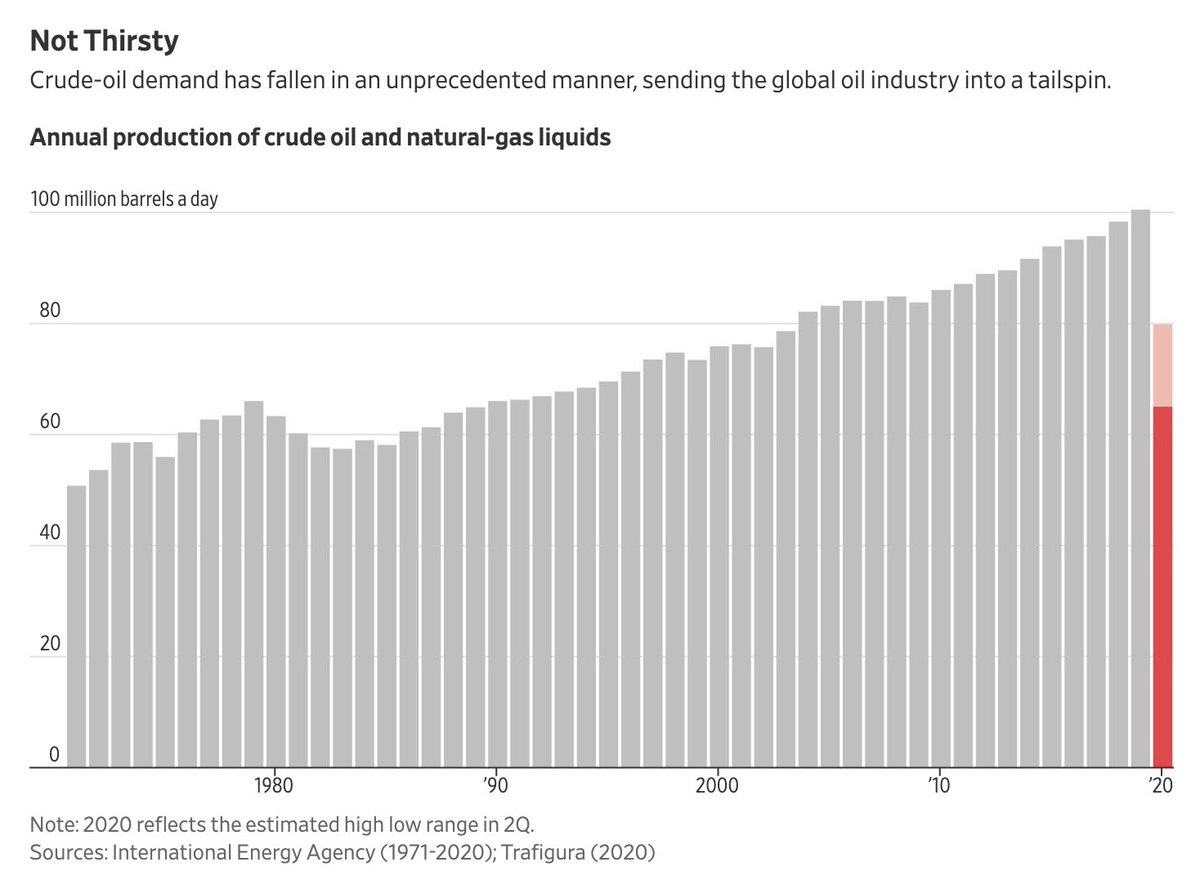
Today’s newsletter contains the audio and edited transcript for Episode 5 of the HEATED podcast, out today on all your podcast apps. My guest is climate justice essayist and Columbia University writer-in-residence Mary Heglar. But before we get into that, I want to talk real quick about what’s happening to the oil industry.I keep hearing these January and February quotes from CNBC financial analyst Jim Cramer in my head as I watch it all happen:“I’m done with fossil fuels ... They’re just done ...”“My job is to help you try to make money. And the honest truth is I don’t think I can help you make money in the oil and gas stocks anymore.”I’m sure the investors who followed Cramer’s advice back then are glad they did now. Cramer, of course, expected oil’s downfall would come at a much slower pace. He also thought it’d be because investors would increasingly reject fossil fuel companies because of their role in driving catastrophic climate change. I don’t think anyone expected it to happen like this. Because of coronavirus, “The global oil industry is experiencing a shock like no other in its history,” International Energy Agency executive director Fatih Birol told the Wall Street Journal on Tuesday. People aren’t going anywhere, or doing anything—so there isn’t a huge demand for oil. Prices are therefore dropping to historically low levels. Twenty dollars a barrels! Look at these charts from the Wall Street Journal and Business Insider. Look at them! No one knows when life will go back to normal again—if it ever does (yikes). So the oil industry has no idea when demand will go back to normal again. That’s why over the weekend, oil-producing nations led by the U.S., Russia, and Saudi Arabia agreed to a historic 10 percent cut in oil production, to hopefully have demand meet supply again, and raise oil prices enough where oil companies can make money.This all obviously has implications for climate change. Do I know how significant they’ll be? Do I know what this drop in price, demand, and production will mean in the long-term for the oil industry or for the climate crisis? That’s a hard nope, and a hard nope—but I’ll at least attempt to answer those questions in tomorrow’s newsletter. I’ve already put out a few feelers, but if you know of any experts who could speak to these questions, shoot me an email. I’m at emily@heated.world.For now, I’m just going to list a few things that cost more than a barrel of oil right now.* An 18-pack of 2-ply toilet paper.* A 30-rack of Bud Light Lime.* Two 24-packs of Klondike bars.* An original, unopened copy of Now That’s What I Call Music Volume One on compact disc.* Delivery avocado toast.* The bobblehead of former New York Governor David Paterson I bought off e-Bay for my friend Andrew Beam for his wedding. (Beam doesn’t read the newsletter so he’ll never see this. Eat dirt Beam!)Anyway, here’s my interview with Mary Heglar, condensed for clarity. And stay tuned for Mary’s suggested reading list at the very end.If you enjoy the interview, consider making a donation to support the team behind the podcast. There’s never been a more important time to support independent journalism, and the content you care about.EA: In your work, you think a lot about framing the issue of climate justice—presenting it in a way that will make people pay attention, that will grab people. You understand the power of presentation to move people. I love what you wrote once for Inverse. “I want to coax and cajole the English language with all of its inadequacies—all its flaws, all the blood at its mouth—into the liberating language that we desperately need. I don't want a fact-finding mission. I want a truth telling movement.”How do we make a truth-telling movement right now about climate change? MH: I think we were very close before corona hit. But then, corona took over, and there started to be this narrative within climate circles of, “Now's not the right time.”I see the climate movement running into this same wall quite frequently. It's really shown up with the way the climate movement tries to interact with communities of color. Instead of connecting climate to the issues that communities of color already care about, they will either not say anything about [those issues] at all, or they'll try to trump it and be like, “oh, you're worried about police violence? Well, climate change is much bigger.” They’ll eithergo way too far with it or go way too far back with it.I'm seeing the exact same thing with corona. People are either not connecting corona to climate change, or they're when they talk about corona and climate, they're like, “oh, well, climate change is much, much worse.” But instead of going to either one of those extremes, you could just connect them. Because climate and corona are going to play out on one another's backyards. Now is the time to make those connections. It's not the time to shut up. And it's also not a time to hush down the corona conversation either. They both need to happen in tandem with one another because the crises are going to interact. There they are interacting already. EA: Yeah, we see it everywhere. Even with the just the fact that [coronavirus] is disproportionately already affecting black communities. And with hurricane season starting. These are compounded threats. MH: Right. We don't have to look to the future. One of my good friends lives in Indiana, and she's not sure if it was a tornado, but they had a pretty powerful storm last night. Now she's quarantined with no power. Normally, during circumstances like that, you would take your neighbor in or your relatives in. But now you've got a socially isolate. The natural response to extreme weather events is to be compassionate and to be kind to one another. As much as like New York gets a bad rap for not being a very kind city, I've been here through a few disasters and people are actually quite compassionate at those times. But now we're in a position where we literally have to walk away from each other. So now what happens if a Sandy rips through here when we're all in quarantine and all afraid of each other?I shudder to think about how we're going to treat each other, because I firmly believe that empathy is the biggest muscle that we need to face the climate crisis. If we can't have empathy, I don't know what our odds of survival as a species are. EA: I relate to that, because I balance between wanting to have empathy for people, and being really pissed off at everybody all time. You've written on both the need to be really angry, and the need to have empathy. In a piece you wrote last year, you said, “Given the sheer enormity of the crisis, it's it's okay to be depressed. But please don't stay there for too long. We need you.” But at the same time, if it was hard to get people to act on climate change before, it’s way harder now. People are not only retreating into their homes, they're retreating into themselves. MH: Both my empathy and my anger are both part of what I consider my core emotion at my response to climate change, which, believe it or not, is love. And I know that sounds fuddy-duddy or whatever, but it's real. The reason I am able to like write about regular people with so much empathy is because I love them. I love them deeply. And then the people I hate, I really, really f*****g hate them. And I hate them because they've jeopardized the things that I love. I also think that it just helps people to understand that's the way they feel is OK. Once you can say, “I understand why you're in pain, and I'm in pain, too,” it disarms them. Because usually when people are disengaged, that is because of some sort of defensiveness or some sort of feeling that they're not good enough. But if you can say to them, “I understand why you feel the way you feel, and I feel the same way,” then that can sort of break that barrier down. And now they're sort of ready to at least start thinking about acting. That's why when I started writing, I decided to do it from a personal perspective and do it always in first person. The other reason I decided to this is because I'm not a real journalist, and I don't want to like have to argue with somebody about the facts of my piece. You can't tell me that I don't feel the way I feel. EA: Going back to that quote that you wrote for Inverse: “I don't want a fact finding mission. I want a truth telling movement” for climate change. What was on your mind when you wrote that?MH: Because I think for just way too long, the climate movement has just tried to communicate in very black and white terms. And I just don't think that's useful when you're trying to save something as blue and green and colorful as this beautiful planet. I think truth about climate change includes the facts. But it also includes feelings. It includes passion and it’s visceral. This is powerful. On our side, we only have facts. On the other side, they only have feelings and lies. So I think we would be much more powerful if we had feelings and facts up against feelings and lies.EA: I say this a lot in journalism talks when I'm talking about how I think journalists should cover climate change. I always say that the principles of the Society for Professional Journalists stay to “seek truth and report it.” They don't say seek facts and report them. The fact about climate change is that millions of people are going to die if we don't act. But the truth is so much more than that. It means so much trauma to our economy, to our ecosystems, to our society, the way we live our lives. That can only be described through the language of feelings. It’s the same way with coronavirus.MH: Right. You have to humanize the facts. You have to contextualize the facts. My thing about corona and climate is that it seems like corona is worse than climate in the sense that it’s on such an accelerated timescale. It got so drastic, so fast. And climate is worse in the sense that it's for all intents and purposes, in our lifetime
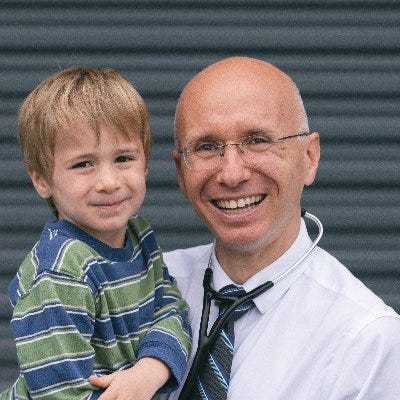
Below is a written transcript of Episode 4 of the HEATED podcast, out today on all your podcast apps, or at the audio file at the top. My guest is pediatrician and Harvard C-CHANGE interim director Dr. Aaron Bernstein. In it, he makes the case that fighting climate change is essential preventative care for the next pandemic.My favorite quote from Dr. Bernstein comes at the very end: “The healthcare community doesn't wait weeks to tell you that, if you don't want to have a heart attack again, you need to stop smoking, change your diet, and the other factors that contribute to heart disease. We're in that moment now.”If you enjoy the interview, consider making a donation to support the team behind the podcast. There’s never been a more important time to support independent journalism, and the content you care about.Photo credit: Dr. Bernstein’s twitter, @DrAriBernsteinEmily Atkin: Dr. Bernstein, thank you so much for taking some time to come on to the HEATED podcast. Aaron Bernstein: Thanks for having me. EA: A few months ago, the Nieman Foundation for Journalism at Harvard hosted this training workshop for journalists on covering climate change, to help us help each other tell the story of climate change better. You were there, and you made this really compelling case for why we as journalists should be focused on the health impacts of climate change over everything. Could you make that case for our listeners?AB: Sure. It's an easy one to make. We know that climate is a politicized issue in this country, which is a problem because it has nothing to do with politics. It has to do with reality. And so our charge is to figure out how to make it non-political. So how do you do that? The evidence I've seen is by talking about climate change as a health problem. And not just as a health problem, but also as a health solution. Even more so, the message is best communicated through healthcare providers, and that's based on research that has been done across the country looking at a whole suite of folks who could be the messenger on climate and health. The evidence is clear that primary care providers, doctors, and nurses are the most effective communicators. So I think that's a key part of moving forward on climate. Bringing it down to size, making it personal, making it about health, and making it clear that when we do things, they benefit our health right now. Burning less fossil fuels means less air pollution. It that people are going to lead healthier lives, we're going to have less children showing up in emergency rooms with asthma attacks, we're going to have less adults going to emergency rooms and getting hospitalized with heart and lung problems and a whole suite of other outcomes.EA: Is there a similar case to be made right now in the middle of the coronavirus pandemic?AB: I've been working in the hospital off and on in the middle of this, and I'll be going back a week or so now. And one of the first children I cared for, we had to dress ourselves as if we were martians to go see. And you can rest assured that children are generally apprehensive of physicians, and dressing like a martian doesn't help. As I was with that family and child, trying to form a bond through a layer of yellow gown, green mask and face shield, I realized pretty quickly that if we really want to talk about preventing this—because every time I'm with the family, the parents always want to know, “what could I have done to prevent this”—we have to talk about climate change. Of course hand washing is important. Social distancing is important. But that's actually not going to prevent this from happening again. What's going to prevent this from happening again is tackling climate change, is addressing the causes of biodiversity loss. Many of us have a hard time grappling with the reality that we're losing life on Earth at a pace that hasn't happened since an asteroid struck 65 million years ago and wiped out half of life on earth. But that loss of life is really a major problem when it comes to these diseases. So if you really care about not having this happen again, we've got to come to grips with the changing climate, and with the loss of life on Earth—of which climate change, by the way, is a major factor. EA: It reminds me of the testimony that you gave to Congress last year on the health impacts of climate change to children. I'll read very briefly from your testimony. You said: “I've cared for children with asthma whose lungs have been so damaged by contaminated air they were scarcely able to breathe. I've sat with parents whose children had Lyme disease as they worried about whether their child's half paralyzed face would ever get better. I've cared for children who no longer had a will to live, having survived floods that once washed away their homes and their peace of mind. And I've held in my own arms, infants whose brains were deformed by Zika virus whose prospects of living a healthy life vanished before they were even born. What ties all these experiences together is our reliance on fossil fuels, which when extracted from the earth and burned damage our children's health, through climate change, and through the air and water pollution that they produce.”How does the COVID-19 crisis compare with those personal experiences?AB: Well, I think the difference is that we see COVID as a virus, and we put it in a group of experiences that we're all familiar with. People get the flu every year; they get stomach bugs; we get infections. It fits within a framework that people have already in their mind. The challenge we face with climate is we don't have in our minds a direct connection with all those diseases you talked about. And so that's my job. I need to talk about how burning fossil fuels is, in fact, causing these problems. I need to make clear that, if you want to address these problems, we've got to do something about that. That's an uphill lift. And it’s an uphill lift because it's not within the day to day experience of anybody. The other reality which we have to confront is that there are very powerful, wealthy individuals and corporations in this country around the world that extract and process fossil fuels, who would rather not change what they do—or more frankly, to accelerate the change we need. And so I think there are real differences. And that really, in my mind, makes it even more important for those who are in medicine and in public health, to talk about climate change despite the obstacles that may be in the way.EA: How would you as a pediatrician, as an educator, talk to an average person about the link between climate change and coronavirus?AB: As a pediatrician, one of the first things you learn is that you have to meet people where they're at. If somebody's been smoking a pack of cigarettes every day for years, and you start off by telling them smoking is really going to be bad for your health, you're not going to get very far if their mind is not in a place to recognize the reality that smoking is going to kill them. And so I have seen huge amounts of blowback from making assertions about climate change, and why dealing with climate change is important for preventing the next pandemic and potentially making less pandemic more severe. So if I were talking to one of them, I would start by saying, “What do you think caused this virus to emerge?”—trying to get at where their understanding is. I think one of the challenges we face in this era is that science and scientific understanding is increasingly seen as another belief system. And I don't know that frankly, that's so different than any other point in human history. One might reasonably argue that more people in the world today understand that science is a method of discovering truth than perhaps at any point in human history. I think the difference is that for those who don't want to see science in any sort of fair way, there are any number of places they can go on social media or the internet to validate their worldview. And that's a huge challenge for those of us in public health. It's a huge challenge for those of us in medicine, when we're dealing with Dr. Google, or dealing with somebody who's being funded by a vested interest to confuse the public about an issue. So I think it's really important to get at where people are starting from in their position and understanding on climate change, and or where this pandemic came from.EA: Speaking of bad actors, I wanted to ask you about this talking point I saw spreading yesterday on conservative Twitter. There's this idea that warm weather kills off viruses, that if we just had a little more global warming right now, we’d be fine. Is that even true? It's my understanding that scientists are still trying to figure out whether this particular coronavirus would behave like that when it comes to warmer weather.AB: You know, we don't know whether warmer weather is going to matter or not. There's certainly evidence from other viruses, like influenza. And there's reason to believe that that may be true with COVID. But the truth is, we don't know. You wouldn't go to see a dermatologist if you had a heart problem. And you wouldn't talk to a politician if you needed to figure out how to wire your house or internet. We, as human beings, are enormously vulnerable to people in prominent positions making pronouncements regardless of their actual understanding of what they're talking about. And so it's challenging in the realm of climate change. You know, it turns out that there are precious few folks in the public health or the medical world who have spent much time really studying climate change and health. And I think those folks are sitting within a cultural world that is really antagonizing and threatening to other parts of the country. And we're the elitist snobs who are in our ivory towers, and just don't share the values that other people have, people who are just as smart as we are. So we have the ability now, if for

Hey there, paid subscribers! ICYMI, episode 3 of the HEATED podcast is out now. You should have gotten an email with the final cut and written transcript about an hour ago. The above audio file contains my raw, unedited interview with Climate Justice Alliance policy coordinator Anthony Rogers-Wright. Do not listen to it if you do not like cursing. Actually maybe don’t listen to the episode in general if you don’t like cursing. There is… quite a bit of cursing.We’re only cursing, though, because s**t is fucked up! (Sorry). Climate change and coronavirus are both massive injustices—and that’s no a coincidence. Every societal problem is an injustice when the systems holding society together are unjust. COVID-19 demands that the most privileged in society reflect on how to change these systems. If we don’t, black and brown and indigenous and poor people will continue to die at a disproportionate rate. Also, cursing makes talking about terrible things more fun. As I think I’ve shown many times, getting angry feels way better than being sad. I think today’s podcast, edited or unedited, will do the former more than the latter. Hope you enjoy.ONE MORE THING: Like the HEATED newsletter, the HEATED podcast is 100 percent listener supported. But unlike the newsletter, it’s not just me producing the podcast. A team of four makes it possible. I couldn’t do it without them.So, if you’re enjoying the podcast, please consider supporting the team through our GoFundme page. It’s the only way we get paid for this work.See you tomorrow! This is a public episode. If you'd like to discuss this with other subscribers or get access to bonus episodes, visit heated.world/subscribe
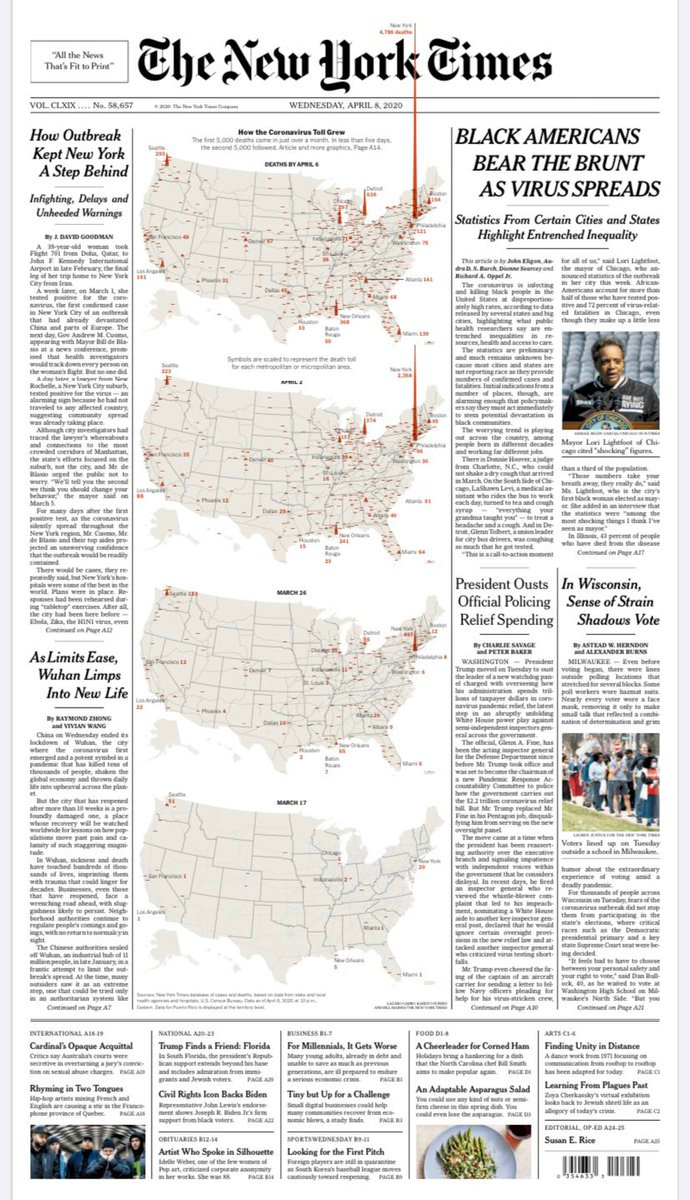
Below is a written transcript of Episode 3 of the HEATED podcast, out today on all your podcast apps, or at the audio file at the top. My guest is climate justice advocate Anthony Rogers-Wright. Today’s interview is extremely timely, coinciding with the release of troubling racial data about COVID-19 cases and deaths. Just like climate change, coronavirus is disproportionately harming the most vulnerable in society. It’s imperative that the most privileged in society understand that, and put in the work to understand how they can fix it.Today’s interview was conducted with that goal in mind. If you enjoy it, consider supporting the team behind it. We’re not getting paid for this work otherwise.This is HEATED, a podcast where we’re showing how the COVID and climate crisis stories are actually the same story. I’m Emily Atkin.If you’re finding us here on our third episode, make sure you also check out episodes one and two. In episode one, the legendary environmentalist Bill McKibben explains how and why to be a climate activist during a pandemic. And in episode 2, journalist Kate Aronoff explains how Congress is and isn’t addressing climate change while dealing with the virus. Today, we’re talking with environmental justice advocate and organizer Anthony Rogers-Wright. Anthony and I have gone through a lot together; he’s been a source of mine since at least 2014. As you’ll hear, Anthony cuts through the jargon and the niceties. He’s intense, and this is a conversation that wouldn’t show up in the mainstream climate or health press.Anthony is the policy coordinator for the Climate Justice Alliance, a huge network of communities on the front lines of climate change. Indigenous communities, urban black communities, rural low-income communities—the people Anthony works with all share one thing in common: They are all disproportionately harmed by the effects of climate change and pollution. And now, these communities are being disproportionately harmed by COVID-19, too.I wanna make clear that Anthony is speaking only for himself, not the Alliance, today. But his work advocating for environmental justice communities is why he’s here. As an environmental justice activist, Anthony is here advocating for the idea that all people, regardless of race, class, or social status, have the equal right to live in a healthy environment and a safe climate. But that’s much more an aspiration than a reality right now. The reality that we have to face right now is that we will not be equal in our suffering when it comes to climate change. And we will not all be equal in our suffering when it comes to coronavirus, either.Black people, in particular, are on the front lines of both crises. In Chicago, 70 percent of the people who have died from COVID-19 are black, even though black people make up less than 30 percent of the population. In Michigan, 40 percent of COVID-19 deaths are among black people, even though they’re only 14 percent of the population. In Milwaukee county, Wisconsin, black people make up 26 percent of the population -- but 80 percent of coronavirus deaths. Meanwhile, scientists on Tuesday found that coronavirus patients are more likely to die if they live in areas with high air pollution. And Black Americans are 75 percent more likely than white people to live near oil and gas facilities. These facilities`spew air pollutants that trigger not only lung problems, but a whole host of other health problems that worsen COVID-19. All this from the pollution we create to heat our homes.Clearly, COVID-19 and the climate crisis are connected issues. But so are COVID-19 and climate justice: an issue the environmental movement as a whole really needs to do better on. I brought Anthony on today to help us reflect on that. What he says can either make you feel guilty, or it can make you feel motivated. It can make you defensive, or it can make you reflective. You can be sad for yourself, or you can use this moment to act on behalf of populations more vulnerable than you are. The choice is yours. Enjoy the chat.EA: Anthony. Welcome to the podcast. I'm really excited to have you onARW: Thank you so much, Emily, love talking to you. It's been years and you're not just one of my favorite climate journalists, but one of my favorite people. So thanks for having me.EA: Aw thanks, Anthony. I understand that you are coming to us today at a particularly raw moment. Would you mind just explaining that?ARW: The network that I'm a part of Climate Justice Alliance—and obviously as you stated earlier, speaking for myself here—people that our member organizations are affiliated with, some who I knew personally and some who I knew vicariously, we lost about 10 people over the last three or four days. These are folks who are in areas that were already in crisis before COVID-19 impacted them even more. Places like Mississippi, where people were being turned away for testing and treatment because of their lack of having health care access. And then yesterday, I got the news that one of my mentors, Sabina, after a very valiant fight with pancreatic cancer for two years, succumbed to a combination of the two. So s**t has gotten very, very real. This isn't just news stories for us anymore. Those of us who represent frontline communities, environmental justice communities—many of our elders are feeling the impacts of COVID-19. Some have taken off work. Many are self quarantined. And I myself tomorrow, I'm going to get tested as well for COVID-19. So it's a very real moment. It's a heavy moment. But at the same time, it sounds kind of paradoxical, but I think that it's also a moment for massive opportunity. And I'm really hoping that we can seize this moment as a climate community and as a left movement as well. Because what COVID-19 has really done is put a magnifying glass on everything that wasn't working already. Our economic infrastructure. Our healthcare infrastructure. Our racial justice infrastructure, or lack thereof. The prison systems. Everything is being exposed at once for how inadequate and anemic that it is. And so maybe that represents a silver lining and an opportunity in a paradoxical way.EA: I'm so sorry. And I'm blown away by that number: 10 people in your network alone, in the Climate Justice Alliance network alone. And I feel like it just, like you said, puts this magnifying glass on what we mean when we say vulnerable communities. It's not just to climate change, it's coronavirus, too.ARW: Good point. When we think about the climate shock events that really have gotten us speaking about the quintessential threat of climate change, right, we're talking Katrina, obviously, we're talking Maria we're talking Sandy, which, you know, really impacted our home state of New York. We're talking to Harvey, but even you know, ahead of those storms, Right, there were so many things that were already going wrong. And those storms exacerbated the issues that vulnerable populations were already going through. We know for instance, that even to this day in places in New York City, like Staten Island, there are still public housing units that are connected to diesel gas generators, because the electricity hasn't fully been restored. This is years after Sandy. One of my mentors, what she said to me was that COVID-19 is a dress rehearsal for the climate apocalypse. And it's up to us to do everything to make sure that that show never actually gets produced, and never sees its first day, its opening day. And I would have to agree with her. She's absolutely right. Because as you just said, communities like that were already in crisis are now close to apocalypse. We're talking about indigenous communities, people indigenous to Turtle Island, where this virus could wipe them out. I mean, that's not hyperbolic, at all. We have context, like with smallpox. And when you talk about the lack of infrastructure and investment in these indigenous communities, who are also many times rural communities who don't have the health care infrastructure that is no different from the lack of health care infrastructure. In places like my original homeland, Sierra Leone, I was talking to my dad the other day, and he straight up said, He's like, son, you know, you thought Ebola was bad. This continent is about to lose millions of people.EA: And I feel like I hear so much every day on the news, from corporations, from doctors, from big media personalities. And I'm just not finding that many people who are speaking up for the most endangered, most marginalized in society. And you come to us working at Climate Justice Alliance, working with frontline communities across the country. Who exactly are we talking about when we're talking about vulnerable populations to both COVID and climate?ARW: That's a really great question. We're talking about communities that have been rendered into sacrifice zones since FDR’s New Deal. Whether it's redlining, and the selection of certain communities that were selected for the placement of toxic facilities, refineries, mountaintop removal. So we're not just even talking about black, brown, and indigenous people. We're also talking about poor white folks from Appalachia, from West Virginia, who also happen to be the folk where Bill Clinton's welfare reform really, really impacted them with work requirements for Temporary Assistance for Needy Families and things like that. So we're talking about people who the government has basically stated, in no uncertain terms, that your life is not worth as much as someone who either lives in a coastal city or someone who is wealthy. That we are going to poison your water, we are going to prevent you from having access to clean water. We're talking about Flint. We're talking about Detroit, where there's f*****g water shutoffs. Like in Michigan right now, water is shut off. Or places like the Ponca here in Omaha, or the Omaha Nation where they don't have access to clean water because of years and years of negl
Welcome to Episode 2 of HEATED, a podcast for people who are pissed off about COVID-19 and the climate crisis. Today, we’re talking with The New Republic’s Kate Aronoff. Kate’s been writing brilliantly about creative policy solutions to the pandemic for a long time now—weeks, even, before COVID-19 took over the national discussion. These solutions would not only help revitalize the economy; they would help it become resilient against the next global crisis: climate change. They include a green stimulus, a green jobs guarantee, and nationalizing the fossil fuel industry.And yet, when Kate and I chatted, no one in power seemed to be talking about forward-looking solutions like these. We spoke on Monday, and things have changed a little bit since our discussion—but not by much. The basic elements are the same: our political leaders have utterly failed to imagine what a better world could look like after this pandemic. What has happened is that fossil fuel interests are currently capitalizing on that failure.As thousands of Americans have been suffering and dying from COVID-19, the EPA stopped enforcement of environmental health regulations. The country’s pipeline safety regulatory agency relaxed compliance enforcement, too. The Trump administration rolled back public health regulations to reduce pollution from cars. And three states signed laws restricting the ability of climate activists to protest fossil fuel projects. In the last two weeks alone, the plastics industry—which is part of the fossil fuel industry—successfully lobbied several states to bring back single-use plastic bags. The National Mining Association asked the White House to let it stop paying into the Black Lung Disability Trust Fund..And today, to top it all off, several oil and gas executives are meeting at the White House, because they want the next coronavirus relief package to include bailout provisions.All the while, Republicans have been claiming that anyone who introduces climate policy into the COVID relief conversation is taking advantage of tragedy. Trump called it “ridiculous” and “nonsense” to address climate change in a COVID relief package. Benny Johnson from Turning Point USA said Democrats were “b******s” for using “a national crisis” to push for “Green New Deal goodies.” Former White House press secretary Sarah Huckabee Sanders accused Democrats of “leveraging Americans’ suffering during this crisis to win concessions on their Green New Deal.” The list goes on and on.The whole thing makes me think of the song, “You,” by the rapper Q-Tip. He says, “The things that you would accuse me of/It seems were the things you were doing, love.” This is the pathology of the fossil fuel industry—and it’s why they’re winning the fight against climate change now. Because they’re not afraid to take what they’re doing, and project it onto their opponents. Democrats, meanwhile, have been suckered into silence. Too scared to be accused of taking advantage of a crisis, they allowed a $2 trillion spending package to be passed with no climate provisions whatsoever. And they called it a victory. Pathetic.Apparently the next spending package is going to be different. This week, Democratic leaders in Congress said they would push for several green infrastructure provisions, including a "substantial investment" in high-speed rail, in the next COVID relief bill. Joe Biden has also said he’d like to see the next relief package include elements of his “green deal,” as he called it. We’ll see what happens. In the meantime, enjoy my conversation with Kate, audio file above. I’ll send out an email with the written transcript when I get some time. (Sorry guys, I’m exhausted).You can also listen to the podcast on your podcast app of choice, thanks to Amy Westervelt at Drilled, who’s letting us drop into her feed. Just search DRILLED on your favorite podcast app, or find it directly by clicking HERE.SPEAKING OF PODCAST FEEDS: The second episode of the HEATED podcast is also featured on the feed of The New Republic’s podcast, The Politics of Everything. This is also a good podcast that you should check out if you have time. In the most recent episode, the Pulitzer-prize-winning science writer Laurie Garrett talks about the making of a pandemic: how years of budget cuts, privatization, pharmaceutical consolidation got us here. Check it out HERE.ONE LAST THING: The HEATED newsletter is a one woman operation, but the HEATED podcast is produced by a team of four. This team came together in the span of a week, because we wanted to make sure people were regularly getting up-to-date information about how the climate crisis and the coronavirus are connected. Because the podcast team is separate, our financial operations are separate, too. We fronted everything to create it, and are depending on donations from listeners like you to keep it going.If you find value in the podcast, please consider making a donation at our GoFundme. 100 percent of what you give goes to production costs and supporting the four person team who is producing the series. If fundraising goes well, we can keep the project going beyond the six-episode series. The HEATED podcast is produced by HEATED, with support from Limina House. Our production team is my co-executive producer Mikel Ellcessor, Paul Chuffo is our engineer and producer, and Jessica Frantz runs our operations.Remember to stay hydrated, eat plants, and do push-ups. I’ll see ya next week.OK, that’s all for today—thanks for reading (and/or listening) to HEATED!If you liked today’s issue/episode, please feel free to forward it to a friend. If you are a paid subscriber and would like to post a comment, click the “view comments” button below:If you’ve been forwarded this email, and you’d like to support the spread of independent climate journalism that focuses on the powerful, become a subscriber today:See you on Monday! This is a public episode. If you'd like to discuss this with other subscribers or get access to bonus episodes, visit heated.world/subscribe
Below is a written transcript of my interview with lauded environmentalist Bill McKibben, author of The New Yorker’s Climate Crisis newsletter. It was featured in Episode 1 of the HEATED podcast, a limited-run, six-episode series created in response to the COVID-19 crisis. You can listen to the podcast by clicking the audio file at the top of this email. Or you can find it in your podcast app of choice by clicking HERE. As tough as things are right now, I came away from my conversation with Bill reenergized on a basic truth: that working together for our common good isn't just the right thing to do. It actually makes us feel better.It also made me really pissed off at everything, but like, what doesn’t, am I right???You can help support the team behind this podcast, and I’ll tell you how at the bottom of the newsletter. For now, enjoy this interview with Bill. I know I certainly did. Emily Atkin: Bill, welcome to the first ever episode of the HEATED podcast.Bill McKibben: Emily, what a pleasure to join you and many, many thanks for doing this. It's important work.EA: Thank you for being on, especially since we are such fierce newsletter competitors, you and I. How is the newsletter going for you?BM: People seem to be reading it, so that’s good. I mean, [the newsletter is] called the Climate Crisis, but the emphasis, at least for the moment, is on the last of those words. We're living through a crisis that in certain ways mimics the climate crisis that I've been working on for 30 years. But this one is measured out not in decades, but in weeks. And in a weird way allows us, I think, as you point out, to see some of the dynamics of crises in general. I think we're probably learning a lot right now.EA: How has coronavirus changed how you've been approaching your own work so far?BM: Well, I've just been trying to write about my sense about what we're dealing with as we deal with coronavirus. And I think that, in fact, there's some obvious but profound points that lead directly into the larger discussion about the overwhelming, overlapping climate crisis. Number one: I mean, look—from the day that I wrote The End of Nature in 1989, the basic point that I've been trying to get across to people about the world is that reality is indeed real, that you can't negotiate with physics and chemistry, that you can't compromise with them or spin them away. Coronavirus is teaching us precisely this lesson about biology, as well.And that's a very useful thing, to have people reminded in the very nitty-gritty way that the world around them isn't, in the end, composed of screens or abstractions like the Dow index or something. In the end, is physical. It’s something that's hard for modern Americans to remember, myself included sometimes. And it seems to me that that's the beginning of the discussion here. Reality is real and sometimes it bites pretty hard.EA: It reminds me of this line in Ed Yong's piece [about coronavirus] for The Atlantic: "We don't want to live in fear, but a virus doesn't care about your fear. It only cares about your cells." [Note: the actual line is, “Following 9/11, Americans resolved to not live in fear. But SARS-CoV-2 has no interest in their terror, only their cells.”] And it reminds me of what you're saying now. It reminds me of climate change. Climate change doesn't really care about the economy. It cares about physics.BM: And what's interesting, for me, is that [coronavirus] not only echoes [climate change] in the kind of very large, broad sense; science is real, that's good to know. But it echoes it in a much more direct sense too. If there's one lesson that's applicable across both these crises, it's that time is your enemy and that acting quickly is what you desperately want to do. You know the story here. Both the U.S. and South Korea had their first case of coronavirus on the 24th of January, I think. The South Koreans went to work, started testing everybody, started telling people, "Don't go to weddings." You know, adjust your lives.So people did. It was disruptive. It was inconvenient. It cost money. But they are now more or less looking at this thing in the rearview mirror. The U.S., we did nothing. Trump started going on and on about how maybe it was a hoax or perhaps it would all just disappear on its own or it would go to zero or like a miracle it would vanish or so on. We didn't prepare, we didn't test, we didn't do anything.So now we're having to take actions that are far more disruptive than anyone took in South Korea, and we're not going to get the payoff. Tens of thousands of people are going to die. And we're going to disrupt our economy in insane ways. The analogy to climate change couldn't be clearer.EA: I hope it really pisses people off, too, because it really pisses me off. Honestly, because it's the exact same thing that's pissed me off about climate change, which is that we knew for a long time based on science what we needed to do to prevent lots of disruption, lots of catastrophe, lots of lives from being lost. And we didn't do it. And now it's on the backs of me and you to change our behavior and institute new social norms to try and pressure these fuckos to act. I'm sorry.BM: And all the while, while we're all being unemployed and so forth.EA: I really hope that the key lesson on both of these things is just, value public officials who understand science and reality and the implication of it, because this never had to be on mine and your shoulders. Obviously I feel very freaking guilty about a lot of the individual choices I've made, given the reality that I know. But the fact that I'm even in this reality, I'm sorry, just destroys my ability to not go into a rage spiral at all moments.BM: One of the differences here, and it's a helpful one, is that in the case of the virus, there's happily not a trillion dollar industry whose job it is to spread viruses. So at least we're not dealing with that level of crazy denial, disinformation, deceit, whatever.EA: What about the pharmaceutical industry? I know it's not their job to spread viruses, but there is financial interest there.BM: I mean, clearly there's a deeper, broader financial interest—or at least in the Trump world of people thinking, "We should get back to normal.” They're clearly thinking poorly, because the thing about getting back to normal, stopping social distancing and things is: you're not going to have a well-working economy that's having to step around piles of bodies on the corner, you know? So clearly, it's as silly as arguing that the economy would be better off in not dealing with climate change. Clearly, climate change in any rational calculation makes more sense to deal with, economically, sooner rather than later. But at least in this case, there's no functional equivalent of Exxon just hour-by-hour lying to us about what's going on.EA: That's a good transition to what happened on the Internet the other day with you and some conservatives. You tweeted the other day that you thought members of Congress should take the climate crisis into consideration when passing an economic relief bill for the coronavirus. You said, "Congress: don't waste this chance. If you're going to bail out corporations, in return demand that they take serious climate action. We could actually work on both crises at once!" And a lot of people did not like this tweet! I read yesterday in The Washington Examiner, which is sort of a conservative-leaning paper, that climate activists like you are using the current virus crisis to leverage your political agenda. And so my question to you is, Bill: how dare you?BM: I missed most of whatever the pushback is, because one of my social distancing maxims that I do my best to follow is: stay out of the comments section. I just think it's completely obvious that if you're going to be spending trillions of dollars, you don't want to just set up the pins in the bowling alley again. You might as well use these moments to do something productive, especially since a lot of the industries that are asking for a bailout are precisely the ones that need to shift. The Obama administration, which I've had my problems with on climate issues, actually is exemplary in this regard. You know, they used the bailout of the car companies in 2008 to make sure that GM and Chrysler agreed to dramatic increases in fuel economy requirements. It was probably the best thing that got done on climate during the Obama years, and that was the leverage they used. So obviously, Trump's not going to use that leverage. And it doesn't appear, at least in this round of stimulus bailouts, that Congress did much in the way of anything either, which is about what you'd expect from a chamber dominated by corporate libertarians.I think that the the most revealing single action of almost any American so far was [libertarian-identifying Republican Senator] Rand Paul going and getting a coronavirus test because he had some symptoms, and then spending the next six days before the results of the test came back merrily wandering around the Senate and going to the Senate gym and swimming in the Senate pool.EA: He swam in the pool! That made me scream at my computer. I was like, you have created a literal cesspool in Congress. Oh my God.BM: If you ever want to really just understand what libertarianism is about, that's what it's about. “I don't have to worry about you at all. I just think about myself.” And that's been the dominant political philosophy in power in our country since the Reagan years in a lot of ways, and you see where it gets you. They've strived mightily to make government—what did Grover Norquist say?—"So small you could drown it in a bathtub." Look, the government is so weak and incompetent that it can't, at this point, do the most basic tasks of government, protecting citizens from a threat like the coronavirus.EA: I get the ideology of small government and of doing things for yourself. That as long as we all do the bes

What’s uh… what’s goin’ on everyone? Everything cool over there? Are you perhaps perpetually vacillating between bouts of intense activity and lethargy, each dictated by your ever-shifting outlook on humanity’s future? Are you perhaps opening your refrigerator every hour, only to stare blankly at your dwindling fizzy water supply before shutting the door empty-handed, because deciding what to eat requires too much emotional energy? Oh yeah, me either. Not me at all. Tiger King though, am I right? Those music videos, man. They’re great. (Kinda weird how everyone is ignoring the whole abused tigers thing, though). Anyway, you may have noticed there’s an audio file on top of today’s newsletter. Weird, right? That’s never happened before!Well, get used to it. Because starting this week, HEATED will begin releasing a 6-episode podcast, showing that COVID-19 and the climate crisis cannot be separated. In a series of up-to-the-minute interviews, we’ll connect the dots on how two of the most pressing issues of our time are really one and the same. The podcast will be co-executive produced by myself and Mikel Ellcessor, the co-creator of RadioLab. If you’re a subscriber to the newsletter, the episodes will come directly to your inbox as soon as they’re released, in audio files like the one at the top of today’s issue. There will also be options to listen on your podcast app of choice, thanks to our awesome partners at Drilled News, who are letting us drop into their podcast feed. I’ll also send out interview transcripts for those of you who prefer to read rather than listen. In the meantime, though, go make sure you’re subscribed to Drilled, so you don’t miss an episode. The audio file at the top of today’s newsletter is just a little teaser. A “trailer,” if you will. (I don’t know anything about podcasts). Mostly, it exists to announce our first guest: author and environmentalist Bill McKibben. That’s right y’all—we’re featuring HEATED’s fiercest climate newsletter competitor on the first episode of the podcast. Will there be an on-air brawl? Who knows! You’ll only find out if you listen.The first episode of the HEATED podcast is scheduled to be released this Wednesday, April 1. As a reminder, while we’re putting the podcast together, the newsletter is on a limited publishing schedule. Full articles will be released on Mondays and Thursdays only. My hope is that this series will meet the urgency of the moment without delving into hysterics; that it will be educational and cathartic without being anxiety-inducing. I have already learned a ton from recording the first episode. I can’t wait to hear what you think. Alright. Enough good news. What’s better than a bailout? Silencing climate activists.(Photo credit: Erik McGregor/LightRocket via Getty Images)Even in the midst of an earth-shattering pandemic, things haven’t been all bad for Big Oil. Sure, oil prices are currently the lowest they’ve been in decades. But the renewable energy industry is taking an even bigger hit, with analysts predicting a “decimated” outlook for the next two years. That’s simply not the case for fossil fuels. Unlike renewables, fossil fuels are expected to benefit slightly from the $2 trillion economic relief package Congress passed last week. As Emily Holden reported in the Guardian, the COVID-19 relief legislation “will dole out billions to struggling airlines and offer low-interest loans that fossil fuel companies could compete for—without requiring any action to stem the climate crisis.” And though Democrats bragged that they “eliminated a $3 billion bailout for Big Oil” from getting passed, Earther reports there’s still a $4.5 trillion corporate bailout mechanism in the bill that would allow Treasury Secretary Steve Mnuchin to grant large payouts to the fossil fuel industry. A bailout, in other words, is still on the table.Pair all of that with the plastics industry’s recent success in halting state bans on single-use plastic bags—which are, of course, made out of petroleum—and it’s not hard to see how the fossil fuel industry could come out of the COVID-19 pandemic with a few decent wins.The biggest win the fossil fuel industry could receive during the coronavirus crisis, however, would not be the temporary decimation of the renewable industry; or the resurgence of single-use plastic bags; or even a large corporate bailout. Indeed, the biggest win the fossil fuel industry could achieve would be the ability to silence their most effective political opponents—climate activists—by threatening them with hefty financial penalties, felonies, and prison time for protesting their operations. Believe it or not, the COVID-19 crisis is providing Big Oil with an opportunity to do just that. Criminalizing climate protests during a pandemicSince COVID-19 was declared a pandemic on March 11, three states have passed anti-protest laws specifically aimed at preventing climate activists from practicing civil disobedience. Known as “critical infrastructure bills,” these laws impose harsh criminal penalties and steep fines on activists who attempt to physically block the construction of oil and gas pipelines or other so-called “critical” fossil fuel infrastructure. Such acts have become increasingly popular—and effective—since the Standing Rock Sioux protests against the Dakota Access pipeline captured the world’s attention in 2016.HuffPost’s Alexander Kaufman has the scoop:First came Kentucky. On March 16, Gov. Andy Beshear (D) signed legislation that ― while removing some of the original bill’s more extreme proposals ― designated “natural gas or petroleum pipelines” as “key infrastructure assets” and made “tampering with, impeding, or inhibiting operations of a key infrastructure asset” a “criminal mischief in the first degree.” Two days later, it was South Dakota. On March 18, Gov. Kristi Noem (R) signed a bill that expanded the definition of “critical infrastructure” to include virtually any oil, gas or utility equipment, and raised the charges for causing “substantial interruption or impairment” of such facilities to felonies. Five days later, on March 23, the governor approved a second measure defining a felony “riot” as “intentional use of force or violence by three or more persons” that causes “any damage to property.” On Wednesday, West Virginia followed suit. Gov. Jim Justice (R) greenlighted legislation assigning the same critical infrastructure status to a wide range of oil, gas and pipeline facilities, slapping fines as high as $20,000 on anyone found guilty of causing “damage, destruction, vandalization, defacing or tampering” that totals $2,500 or more.The anti-protest laws signed in the last two weeks came as many state legislatures across the country suspended or postponed their sessions due to the spread of coronavirus. They also came as climate activists across the country were encouraged to stay home, and move their protest activities online. This caused some activists to suspect that the timing wasn’t a matter of coincidence. “While we are all paying attention to COVID-19 and the congressional stimulus packages, state legislatures are quietly passing fossil-fuel backed anti-protest laws,” Connor Gibson, a Greenpeace USA researcher who has been tracking the bills, said in a statement. These laws indeed appear to be fossil-fuel backed, as each share similarities with model legislation promoted by the conservative American Legislative Exchange Council. Though fossil fuel companies like Exxon, Shell, and BP have dropped their ALEC memberships in recent years, the group remains funded by fossil fuel industry giant Koch Industries. These laws are also broadly supported by fossil fuel industry players, who say harsher fines and criminal penalties on climate protesters are necessary to ensure infrastructure security. Groups like the ACLU, however, are challenging many of the anti-protest laws, arguing they exist solely to halt free speech activity. After all, climate protestors practicing civil disobedience can still be charged with trespass and vandalism in states without “critical infrastructure” laws. But states with “critical infrastructure” laws sharply increase those penalties when the civil disobedience involves fossil fuel projects. In Oklahoma, for example, activists who protest pipelines can be hit with a $100,000 fine and 10 years in prison.At least 11 states now have such “critical infrastructure” on the books, according to the International Center for Not-for-Profit Law.(Image source: International Center for Not-for-Profit Law) Similar bills may continue to progress as the COVID-19 crisis continues. As Kaufman reported last week, “The Alabama state Senate passed its own version on March 12, just before the officials, alarmed at the spread of the new virus, postponed legislative hearings until April. Similar legislation is active in at least five other states ― Illinois, Minnesota, Mississippi, Ohio and Pennsylvania ― but has not progressed in the past month.”This would be a huge blow for climate activists, because much of the movement’s success in the last four years has been due to peaceful civil disobedience. Indeed, civil disobedience is quickly becoming the dominant climate activism strategy across the world, advocated for by Greta Thunberg and Jane Fonda. “The most effective way to change society in a rapid way is through mass, nonviolent civil disobedience,” longtime British climate activist Roger Hallam, the co-founder of Extinction Rebellion, told Vox back in January. “We need lots of people going to their capital city and blocking the roads until the government substantially bends to the demands or collapses.” Of course, no one is allowed to do that now because of COVID-19. And if the fossil fuel industry gets its way, no one will be allowed to do it afterward, either. OK, that’s all for today—thanks for reading HEATED!If you liked today’s issue, please feel free to forward it to a friend. If you are a paid subscriber a
Comments

Download from Google Play

Download from App Store
 United States