


 Claim Ownership
Minimum Viable Podcast with Elliott Poppel
Subscribed: 1Played: 1
Subscribe

© Elliott Poppel & Minimum Viable Podcast
Description
Each episode of 'Minimum Viable Podcast' features an intimate conversation with visionary product leaders, who shares battle-tested strategies and practical insights that you can implement with your team today.
Hosted by 3x venture-backed founder and accomplished product leader, Elliott Poppel.
www.elliottpoppel.com
Hosted by 3x venture-backed founder and accomplished product leader, Elliott Poppel.
www.elliottpoppel.com
18 Episodes
Reverse

Matt Mireles reveals how he revolutionized his startup by firing his development team and fully replacing them with AI tools. Using sophisticated prompting techniques and synthetic personas, he's pioneering a new founder archetype—one who leverages AI to build faster with smaller teams and deeper context. In a groundbreaking shift that challenges conventional startup wisdom, TalkTastic founder Matt Mireles reveals how he transformed his company by replacing his entire product team with AI tools—and why it's working better than he ever imagined.Discover how Mireles went from frustrated CEO to AI-powered product builder, using a sophisticated system of synthetic personas and specialized prompts to tackle complex engineering challenges that his human team couldn't solve. Through his revolutionary approach, he's not just building software faster—he's pioneering a new model for entrepreneurship that could redefine how startups are built."I feel like I've gone from walking to riding a horse," Mireles explains. "I'm no longer a pedestrian. I'm an equestrian traveling at a gallop." This transformation didn't happen overnight. Facing a spaghetti-code nightmare and scaling challenges as user engagement exploded 600% in a single month, Mireles took a radical step: he dove into the code himself, armed with AI tools that gave him unprecedented capabilities."I feel like I've gone from walking to riding a horse," Mireles explains. "I'm no longer a pedestrian. I'm an equestrian traveling at a gallop." The results speak for themselves. TalkTastic—a Mac app that transcribes speech with contextual awareness—continues to thrive with users creating hundreds of voice notes daily. Meanwhile, Mireles is methodically untangling his code base with AI assistance, creating compressed representations that both humans and machines can understand.While acknowledging he's "playing on extreme hard mode" by applying this approach to existing code rather than starting fresh, Mireles is convinced this represents the future of entrepreneurship—smaller teams, lower burn rates, and founders who stay deeply engaged with product development rather than becoming pure managers.Matt Mireles is the founder of TalkTastic, a revolutionary Mac app and system extension for context-aware speech-to-text that transforms spoken language into polished written communication.Where to find Matt Mireles: accelerate * Newsletter: http://accelerateordie.com* LinkedIn: https://www.linkedin.com/in/mattmireles/* X: https://x.com/mattmireles Plus…* Check out Matt’s contextually-aware speak-to-text startup, TalkTastic. It’s 100% free to use while in beta.* Read Matt’s recent Substack posts to learn more about how ‘(He) Fired (His) Product Team and Replaced Them with AI’ and get a behind the scenes look at his interactions with synthetic personas in ‘A Conversation with Ilya Sutskever’.* Try Matt’s open source tool, Flatty, which will transforms your codebase into a plain text format that AI models can understand and reason over in entirety.In this episode, we cover:(00:01) Introduction to Matt Mireles and TalkTastic(01:52) What TalkTastic is: a Mac app for context-aware speech-to-text(05:39) Matt's decision to fire his product team and replace them with AI(10:20) Current team structure with Matt and an AI researcher(15:32) How AI enabled Matt to do engineering work himself(17:29) Creating synthetic personas for different AI functions(24:07) Challenges with understanding a complex codebase(31:36) Limitations of current AI context windows(34:11) How Matt would build differently if starting over today(44:40) Resources for using AI in development: Claude, Cursor, Flatty(46:43) Triangulating between multiple AI tools for accuracy This is a public episode. If you would like to discuss this with other subscribers or get access to bonus episodes, visit www.elliottpoppel.com
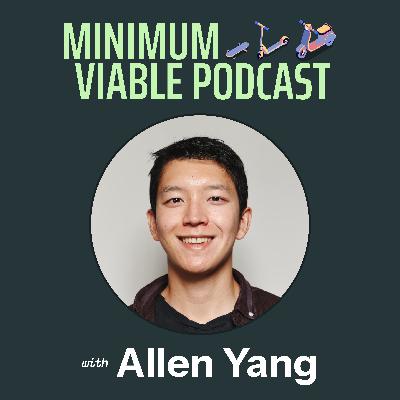
Allen Yang shares all that went into his decision to walk away from his Head of Product role at no-code pioneer Bubble to found his new startup Liminary. On this week’s episode, get a raw and behind-the-scenes look at all the decisions that go into making such a major life decision.On this episode, Yang reveals his experience managing family finances, investor relationships, and the emotional weight of entrepreneurship. Learn why collecting experiences across tech giants and scaling startups both empowered and potentially delayed his founder journey.Yang exposes the raw truth about early-stage fundraising—from critical tactical errors in investor sequencing to the delicate art of story evolution. His journey illuminates the stark contrast between product management excellence and founder leadership, offering invaluable insights for product leaders contemplating their own entrepreneurial leap.Previously Head of Product at Bubble for five years, Alan Yang helped scale the company into a leader in the no-code movement. His experience spans roles at Google and Better Mortgage before co-founding Liminary, where he's pioneering the future of knowledge work through AI innovation.Where to find Allen Yang:* LinkedIn: https://www.linkedin.com/in/allenjhyang/* X: https://x.com/allenjhyang Plus…* Check out his new startup, Liminary, and signup for their waitlist!In this episode, we cover:(00:00) Introduction and background on Alan's role at Bubble(04:21) Duration and experience at Bubble as Head of Product(04:35) Initial consideration of leaving to start a company(06:58) Discussion on personal risk tolerance and career preparation(13:34) Family considerations and financial planning for startup journey(17:42) Overview of Liminary and its mission as a cognitive companion(26:04) Transition from Head of Product to founder role(31:58) Evolution of fundraising pitch and targeting strategy(38:56) Marketing challenges and new skill development(44:50) Lessons learned from fundraising process(49:57) Advice for product leaders considering the startup journey(53:14) Closing remarks and contact information This is a public episode. If you would like to discuss this with other subscribers or get access to bonus episodes, visit www.elliottpoppel.com

Mike Heller is a renowned go-to-market advisor who has helped shape the sales strategies at companies like Dropbox, Whimsical, and Clearbit. He currently advises seed to Series A founders on crafting and executing their go-to-market strategies, while serving as a venture scout for Craft Ventures.In this episode of ‘Minimum Viable Podcast’, go-to-market expert Mike Heller unveils the hidden playbook of founder-led sales—from his groundbreaking work as Clearbit's first go-to-market hire to transforming early-stage startups into sales powerhouses. Drawing from his experience scaling Clearbit's sales team, Heller reveals the counterintuitive principles that separate successful founder-sellers from those who struggle.Discover why most founders sabotage their sales efforts by talking too much, and learn the two fundamental pillars that drive every successful early-stage sale. Through real-world examples from his consulting practice, Heller demonstrates how authentic positioning and strategic silence can transform skeptical prospects into enthusiastic buyers. Plus, he shares the surprising truth about AI in sales—why it's revolutionizing deal strategy but falling flat in execution.From leveraging advisory boards to turning company size into a competitive advantage, Heller breaks down the sophisticated frameworks that help seed-stage founders punch above their weight class. His approach combines tactical precision with strategic vision, showing founders how to balance immediate wins with long-term market positioning.Where to find Mike Heller:* LinkedIn: https://www.linkedin.com/in/mike-s-heller/* X: https://x.com/MikeHeller88In this episode, we cover:(00:00) Introduction to Mike Heller's Journey (06:28) Transitioning to Consulting and Advising (14:57) Sales Methodologies for Founders (20:18) The Importance of Positioning in Sales (25:28) Navigating Founder-Led Sales Challenges (35:51) Scaling Relationships and Customer Success (41:07) Authenticity in Sales and Building Trust This is a public episode. If you would like to discuss this with other subscribers or get access to bonus episodes, visit www.elliottpoppel.com
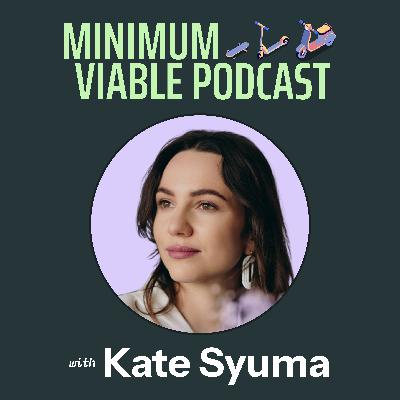
Kate Syuma reveals the hidden psychology behind user onboarding and why most companies get it catastrophically wrong. Drawing from her transformation of Miro's growth strategy, Kate shares the principles and tactics that she believes separate successful products from those that lose 60% of users before they experience any value.Kate is the founder of Growthmates, where she advises companies on product-led growth and user experience design. Previously, as Head of Growth Design at Miro, she built and led a team of over 10 designers while scaling the company from startup to industry leader.Through a live teardown of General Collaboration's onboarding flow, Kate exposes the subtle psychological barriers that cause user drop-off and shares battle-tested frameworks for crafting irresistible first-time experiences. Learn why most onboarding improvements fail, how to compress time-to-value from days to minutes, and the surprising truth about when fancy tooltips actually hurt more than help.Discover why the most successful products focus on delivering value before asking for investment, how to leverage "artificial aha moments" to boost activation, and why fixing core product experience trumps surface-level onboarding fixes every time. Plus, Kate reveals the data-backed "six steps of holistic user onboarding" that transformed activation rates at companies like Miro.Where to find Kate Syuma:* Website: https://growthmates.club/* Newsletter: https://growthmakes.news/* LinkedIn: https://www.linkedin.com/in/ekaterina-syuma/ Plus…* If you’d like to schedule a personalized onboarding audit / teardown, just like the one Kate did for General Collaboration, you can learn more and schedule and intro call with her here!* Kate is launching her new User-centric Product Led Growth course this coming March. And ‘MVP’ listeners/readers get $120 off! Register today!In this episode, we cover:(00:00) Introduction to Growth Design and Onboarding (11:56) Kate's Career Journey and Insights (24:05) User Onboarding: Importance and Strategies (36:00) Live Teardown of General Collaboration's Onboarding Flow (37:52) Optimizing User Onboarding Experience (41:40) Enhancing User Engagement Through Personalization (44:00) Navigating Sign-Up Friction (48:20) Improving Permission Requests (52:46) Creating Immediate Value for Users (01:01:02) Key Insights for Effective User Onboarding This is a public episode. If you would like to discuss this with other subscribers or get access to bonus episodes, visit www.elliottpoppel.com
From LEGO to Apple, community architect Jake McKee reveals how to transform product development through deep customer engagement. Learn his field-tested framework for weaving user voices into every stage, turning feedback into breakthrough innovations.---Jake McKee, a pioneering community architect since 1996, reveals the hidden framework behind successful product development that most companies miss. Drawing from his groundbreaking work with LEGO, Apple, and Southwest Airlines, McKee unpacks his revolutionary "Community-Driven Product Development" methodology that transformed how industry giants build and launch products.Through compelling case studies—from LEGO's Mindstorms revolution to a game-changing golf technology launch—McKee demonstrates how bringing customers directly into the development process creates products that resonate deeply with markets. Learn why traditional beta testing fails, and discover the counterintuitive approach that turns customers into product co-creators and lifelong advocates.McKee shares his sophisticated "Big Four" framework for building effective community-product partnerships: finding the right voices, timing their involvement perfectly, focusing on concrete business outcomes, and designing engaging experiences that keep participants actively invested. Whether you're a Fortune 500 company or an early-stage startup, these battle-tested strategies bridge the crucial gap between product vision and market reality.Jake McKee is a community strategy pioneer who has shaped how global brands like LEGO, Apple, and Southwest Airlines engage with their customers. He currently advises companies on building effective community-driven product development programs and hosts two exclusive monthly events focused on customer experience and AI innovation.---00:00 Introduction to Community-Driven Product Development11:19 Case Study: Golf Launch Monitors20:25 The Importance of Relational Feedback26:37 The Importance of Customer Feedback32:43 Finding the Right People and Timing42:48 Engaging with Existing Communities This is a public episode. If you would like to discuss this with other subscribers or get access to bonus episodes, visit www.elliottpoppel.com
Anthony Pierri has a knack for taking complex ideas and turning them into clear, compelling messages. As the co-founder of Fletch PMM, Anthony has helped over 300 companies (mostly in SaaS), refine their positioning to stand out in competitive markets. This week on Minimum Viable Podcast, Anthony spoke to the tricky balance between strategy and execution, and how even the best product ideas can fizzle out if they aren’t communicated clearly.In this episode, we get real granular on how Anthony helped us at General Collaboration reshape our homepage messaging, the common pitfalls companies face when positioning their products, and why staying focused on core features is key. Anthony also talks about the importance of internal alignment and how to avoid losing sight of your strategy during the design process. This is a public episode. If you would like to discuss this with other subscribers or get access to bonus episodes, visit www.elliottpoppel.com
Emily Kramer, Founder of Kramer HQ and Co-founder of MKT1, has led marketing teams at fast-growing companies like Asana and Carta. Now, she's on a mission to change how founders and leaders approach marketing.In this episode of Minimum Valuable Podcast, she shares common mistakes founders make, such as undervaluing marketing early on or copying their pitch deck directly onto their website. Emily also details the strategies that drive growth for her and her clients, including leveraging founder-market fit and identifying unique marketing advantages that can be doubled down on. This is a public episode. If you would like to discuss this with other subscribers or get access to bonus episodes, visit www.elliottpoppel.com
Launching on Product Hunt is a huge moment for any startup. We’ll be launching General Collaboration on Product Hunt on October 8th, so ahead of our launch, I recently sat down with two experts who have it down to an art form.Leo Bosuener heads up Social Growth Labs, they specialize in helping startups find their first thousand users through Product Hunt. Joining him is Tomás Hernando Kofman, co-founder of Not Diamond. Their AI tool for selecting LLM models was recently top dog on Product Hunt, racking up over 600 upvotes.Our conversation covered the full spectrum of Product Hunt, from nailing your launch day to building long-term momentum. What really stood out was the scope of how they use Product Hunt – it's not just about one big day, but a platform for ongoing growth and connection with users.Leo and Tomás shared strategies for crafting an irresistible tagline and timing your launch for peak impact. We also dug into how you can leverage your initial success and how to approach multiple launches over time. Whether it’s your first launch or you’re looking to refine your approach, there's great stuff here for everyone. This is a public episode. If you would like to discuss this with other subscribers or get access to bonus episodes, visit www.elliottpoppel.com
On this episode of Minimum Viable Podcast, I had the pleasure of sitting down with Tal Saraf, Head of Corporate Engineering at Atlassian. With a career spanning heavyweights like Microsoft, Amazon, Cisco, and Meta, Tal knows about building and scaling world-class products. But what really caught my attention was his experience the forefront of distributed collaboration for years, even before the pandemic upended everything. Tal has a unique perspective on what it takes to foster a thriving, connected culture when your team is scattered across time zones.Our conversation centered around a theme of navigating this new world of remote work without losing what makes your company, well, your company. Tal shared a wealth of practical strategies for not just surviving but thriving in remote settings. From reimagining onboarding to driving efficiency with reusable components, he painted a picture of a future where distributed teams aren't just getting by, but where they are actually able to be more effective. And the best part? These aren't just lofty theories—they're tested practices that Atlassian has put into action with incredible results.So if you're looking for fresh ideas and proven tactics to take your remote team to the next level, this episode is for you.Here's a breakdown of the key topics covered in the episode:- [03:55] Tal's journey from Microsoft to Atlassian - [10:55] Navigating the challenges of the pandemic at Facebook - [14:57] Adopting a hybrid work model at Atlassian - [22:26] The importance of diving deep into customer needs - [27:34] Balancing speed and stability in product development - [32:21] Leveraging Atlassian's tools for internal processes - [37:16] The role of AI in enhancing Atlassian's products - [44:38] Tal's approach to build vs. buy decisions - [49:53] Fostering a strong dogfooding culture at Atlassian This is a public episode. If you would like to discuss this with other subscribers or get access to bonus episodes, visit www.elliottpoppel.com
Anthony Nardini, the founder of NEXT Careers, knows a thing or two about navigating career transitions. After spending 11 years at Goldman Sachs across various cities and roles, Anthony found himself volunteering with organizations focused on career mentorship in his spare time. This experience inspired him to leave behind his successful finance career and dive headfirst into the world of career development. Since then, he's built job search programs, worked in talent at VC firms, and now helps mid-career and senior-level professionals be more intentional about their next career moves.In this conversation, Anthony shares his thoughts on what it takes to make a successful career transition, whether you're looking to change industries, pivot to a new role, or just be more proactive in managing your professional journey. He challenges the conventional wisdom around job searching and networking, offering fresh perspectives and practical strategies for standing out in a competitive market. If you've ever felt stuck or uncertain about your career path, this episode is a must-listen. This is a public episode. If you would like to discuss this with other subscribers or get access to bonus episodes, visit www.elliottpoppel.com
On this week's episode of Minimum Viable Podcast, I had the pleasure of chatting with Evan Walden and Maveric Real, the dynamic duo behind Getro, a network management platform that's made waves in the venture capital and private equity world. Evan, the company's CEO, is a seasoned pro when it comes to all things sales and growth, while Maveric, Getro's President, is the engineering and product development guru. Together, they've grown Getro from a scrappy startup to a serious player over the past eight years, all while navigating the tricky balance of scaling fast and building an awesome product.Evan and Maveric were super open about the lessons they've learned as leaders with different strengths and priorities trying to collaborate and communicate effectively. Listening to them, a clear through line emerged: the key to their partnership's success is a genuine commitment to understanding where the other is coming from. Whether they're hashing out Getro's big-picture strategy or going back and forth on which customers to prioritize, these two have built a relationship grounded in mutual respect and a shared vision for where they want to take the company. They've also managed to create a culture that puts a premium on human connection, even while running a fully remote operation. Honestly, any startup founder looking to build a company that can roll with the punches and come out stronger could learn a thing or two from Evan and Maveric. This is a public episode. If you would like to discuss this with other subscribers or get access to bonus episodes, visit www.elliottpoppel.com
This episode features Joe Toscano, founder of DataGrade and author of "Automating Humanity." Joe's journey into the world of data privacy is pretty wild - it all started during his time as a consultant for Google, where he saw firsthand just how much potential there was for abuse and how little ethical oversight there was around data usage. That experience lit a fire under him to become a vocal advocate for digital privacy. He's since advised the US attorneys general on antitrust cases against big tech, helped shape privacy laws across multiple states, and even got featured as an expert in the Netflix documentary "The Social Dilemma."Our conversation took a deep dive into the complex landscape of data privacy and the unique challenges startups face in balancing innovation with responsible data practices. We grappled with some big questions: How do we protect individual privacy while still reaping the benefits of data-driven innovation? What does it really mean for a startup to prioritize privacy, and how can they make it a core part of their culture? How can companies build trust with their users in an era of increasing skepticism? Joe's insights offer a roadmap for navigating these tricky issues. Whether you're a founder just starting out or a seasoned entrepreneur, this episode is full of practical wisdom and thought-provoking ideas that will challenge how you think about data privacy. This is a public episode. If you would like to discuss this with other subscribers or get access to bonus episodes, visit www.elliottpoppel.com
This episode of Minimum Viable Podcast features Charles Hudson, Managing Partner and Founder of Precursor Ventures. Under Charles' leadership, Precursor has raised four funds totaling over $175 million and has backed more than 375 companies led by over 400 founders. Prior to founding Precursor, Charles was a Partner at Uncork Capital, Co-Founder and CEO of Bionic Panda Games, and held various product roles.This conversation covered a lot of ground, from Charles' journey into VC to his hard-won lessons on what makes for fruitful founder-investor relationships. Charles willingly shared his experiences candidly – the good, the bad, and the gruesome. His insights are a goldmine for founders and investors alike who want to build lasting partnerships that drive meaningful outcomes. This is a public episode. If you would like to discuss this with other subscribers or get access to bonus episodes, visit www.elliottpoppel.com
The latest episode of Minimum Viable Podcast features Andrew Rea. Andrew grew up in Ohio and was the first in his family to attend college. With a whole lot of grit and hard work, he worked his way into the tech scene. He became an early team member at On Deck and later served as Head of Growth at Capital, where he played a key role in initiatives like New York Tech Week. These days Andrew is working on his next big thing, a venture-backed startup building products to solve state and international tax & compliance burdens for scaling companies.During this conversation, Andrew opened up about the highs and lows of being a young founder building a B2B product. If you're a founder looking to create a brand story that connects with your audience on a deeper level, this episode is full of actionable advice. Andrew doesn't hold back in sharing the lessons he's learned on his journey - from the importance of grounding your story in customer conviction, to why brand building needs to be a priority from day one. This is a public episode. If you would like to discuss this with other subscribers or get access to bonus episodes, visit www.elliottpoppel.com
Jeff Bussgang is a veteran entrepreneur, investor, and educator, currently serving as Co-Founder and General Partner at Flybridge Capital Partners, a seed-stage venture capital firm based in Boston and New York City. With over two decades of experience in the startup world, Jeff has been on both sides of the table as an entrepreneur (Upromise, Open Market) and as an investor in numerous successful companies. He also shares his insights with the next generation of business leaders as a Senior Lecturer at Harvard Business School, where he has taught entrepreneurship for the past 12 years.On this episode of the Minimum Viable Podcast, Jeff and I had a fascinating conversation about the role of AI in the startup world. He shared eye-opening insights and practical advice on how founders and product managers can make the most of AI to supercharge their decision-making, product development, and overall company success. Our discussion really drove home the point that AI isn't just another passing fad – it's a seismic shift that's fundamentally transforming the way startups operate. This is a public episode. If you would like to discuss this with other subscribers or get access to bonus episodes, visit www.elliottpoppel.com
Dev Bala is a seasoned product executive with over 20 years of experience at some of the world's most influential technology companies. He has led product teams at Microsoft, Google, and Facebook, and currently serves as Vice President of Product Management at Coursera. Throughout his career, Dev has honed his ability to make tough decisions in fast-paced, high-stakes environments.In this episode of the Minimum Viable Podcast, Dev and I explored the essence of what it takes to be an effective product leader. Through candid reflections on his career journey, Dev illuminates the critical role that decision-making plays in driving product success. He shares hard-won lessons about the courage required to put users first, the strategic thinking needed to balance competing priorities, and the wisdom to know when to take calculated risks. Dev's insights underscore that great product leadership is not just about having the right answers, but about asking the right questions, learning from failure, and rallying teams around a shared vision. Whether you're navigating the challenges of a startup or the complexities of a large organization, Dev's experiences offer a roadmap for making tough calls with confidence and integrity. This is a public episode. If you would like to discuss this with other subscribers or get access to bonus episodes, visit www.elliottpoppel.com
Tem Nugmanov, Founder & CEO of Optemization was my guest on the Minimum Viable Podcast this week. He shared a story with me about a hard-hitting question he was asked by some VC and founder types during LA Tech Week:"If you come across a Notion workspace that's a 4 out of 5, how do you make it a perfect 5?"It's a question that makes you think about a big issue in digital workspace design - the dangers of over-optimization. With tools like Notion that let you customize everything, it's super easy to get sucked into tweaking and perfecting, trying to chase that perfect 5/5 workspace. But when do the benefits start to fade? When does all that complexity actually start to slow you down?In this episode, we dive into keeping things simple in digital workspace design. We'll look at the psychology behind why we love to over-optimize, the pros and cons of Notion's flexibility, and why simplicity is ultimately the secret to a workspace that helps you get stuff done. Because as Tem puts it, "There is a diminishing return. At some point, you just have to draw the line and use the workflow, and that's going to be good enough." This is a public episode. If you would like to discuss this with other subscribers or get access to bonus episodes, visit www.elliottpoppel.com
Welcome to "Minimum Viable Podcast" – a new podcast and content series that goes beyond the surface to explore the depths of product creation. Each episode, hosted by Elliott Poppel, is a masterclass in innovation, combining deep insights, cross-disciplinary perspectives, and hands-on product analysis.In our first episode, host Elliott Poppel interviews David Fano, the founder of Teal. David shares his journey from being an architect to becoming a product leader in the tech industry.Key takeaways:- Designers must avoid the trap of designing for themselves and prioritize understanding user motivations and needs.- Techniques like Jobs-to-be-Done and empathy mapping can help uncover deeper user insights to inform design decisions.- Iterative design and user testing are essential for validating assumptions and ensuring products meet user needs over pure aesthetics.- Fostering a user-centric culture through cross-functional collaboration and design thinking methodologies is key to embedding user-centricity at every organizational level.- Ultimately, putting the user first requires a relentless focus on understanding and meeting evolving user needs, as the user is everything in product design.___Minimum Viable Podcast is presented by General Collaboration and hosted by Elliott Poppel.Produced by Thursday LabsRead the full article here: minimumviablepodcast.comFollow Minimum Viable Podcast:LinkedIn: https://www.linkedin.com/in/elliottpoppel/Instagram: https://www.instagram.com/gcdotme/Twitter: https://twitter.com/elliottpoppelTikTok: https://www.tiktok.com/@minimumviablepod This is a public episode. If you would like to discuss this with other subscribers or get access to bonus episodes, visit www.elliottpoppel.com
Comments

Download from Google Play

Download from App Store
 United States