


 Claim Ownership
Ana & Al's Big Portuguese Wine Adventure
Subscribed: 1Played: 20
Subscribe

© Alastair Leithead
Description
Travelling Portugal, visiting vineyards, collecting stories and learning about Alentejo wine
wineportugal.substack.com
wineportugal.substack.com
14 Episodes
Reverse
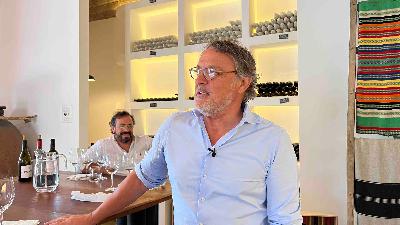
If you enjoyed our trip to the iconic Mouchão winery, and the stories Iain Reynolds Richardson told about his family’s 200 year old adventure into the Alentejo, here’s a bonus episode about their wine.Sometimes there’s just too much to cram into half an hour, so I hope you enjoy our 14 minute whiz through a wine of Mouchão’s range of different wines led by Iain and by winemaker Hamilton Reis who we met way back in Episode 4.Valley of the BarsWe loved our deep dive into the Alicante Bouschet grape so much that we organised an event around it!Our new eco-luxe tourism lodge Vale das Estrelas, or Valley of the Stars, on the southwestern edge of Portugal’s Alentejo is finally ready and we’re putting wine at the centre of it all.In celebration of the French grape which the Portuguese have made their own, we invited Alicante-aficionados, winemakers and interested amateurs like ourselves to taste their way through the reddest grape.It’s easy to plunge into the weeds of winemaking, but it’s a lot harder to keep everything accessible and demystify wine a bit, and so that’s our mission.French winemaker Baptiste Carrière Pradal of Domaine de la Massole in the Languedoc – who we heard from in the episode – brought his single varietal Alicante Bouschet from his family vineyard in the same region where Henri Bouschet created the grape.The Big Portuguese Wine Adventure is a reader-supported publication. To receive new posts and support my work, consider becoming a free or paid subscriber.He explained the generations of his family’s grape-growing history, the wines he now creates and how his plans to pull up the old vine Alicante Bouschet grapes hit a snag when he tried the berries and then made the wine!Iain Richardson brought his flagship Mouchão wine – the 2017 which was released at the end of 2024.He also gave us a sneaky peak into the future with a straight from the barrel sample of his top end 2021 Tonel 3/4 which won’t be released until 2035. This is a winery which makes wine worth waiting for.But as you’ll hear from this bonus episode, there are other Mouchão red and white wines ready to drink including the Dom Rafael and the Ponte.The Ponte white is 100% Verdelho – another grape Mouchão is famous for – and they even do a line in garrafeiras, or flaggons.These two litre bottles wrapped in wicker can be topped up at the winery straight from a barrel for a bargain – continuing on a tradition of make fresh, affordable wine available to the locals.We wrapped up the tasting with some fortified and lusciously sweet Tonel Aged Dessert wine from 2015...again 100% Alicante Bouschet.We were also delighted to showcase a couple of local Alicante Bouschet growers and winemakers.Diogo Ribeiro from Adega dos Nascedios brought their Alicante, as did Niels Ulmers from Quinta de Cegonha.We’ll be doing a lot more to showcase our local suppliers in the future and bring winemakers from across Portugal to our wild coast.Hopefully this – and our first event with Howard’s Folly – is just the start of a series of wine tastings and events at our lodge Clubhouse.* The best way to try these wines is to visit the wineries, or drop in for a tasting here at Vale das Estrelas, but if you’d like to order some in the interim we’ll post the details on the page soon Get full access to The Big Portuguese Wine Adventure at wineportugal.substack.com/subscribe
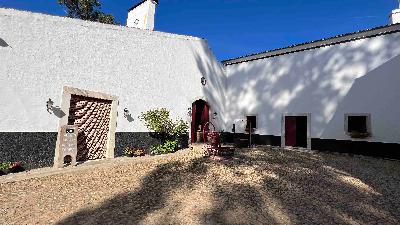
I love wine and I love stories, and I can’t think of a better place to find both than Mouchão in the Alentejo.And this episode takes us from Portugal across the globe to the Languedoc region of southern France, and to Sonoma County in California on the trail of “the reddest grape.”The history of Mouchão winery is intertwined with the 200 year history of the British-Portuguese Reynolds family, and the story of both lie at the heart of our latest podcast episode.The family arrived in Portugal a little late to join the fast unfolding Port rush, and instead headed south into the Alentejo to become cork producers.Over generations they lived in palaces, were spies and explorers, smuggled Jews from Nazi-occupied Europe, retained their love of fine wine...and still keep John Wayne’s gun in their chimney.They survived the vine uprooting policies of the Salazar regime, and had their land and winery expropriated for ten years in the aftermath of the 1974 revolution, but produce wine which can be laid down for decades.Today Iain Reynolds Richardson is custodian of Mouchão, and still makes wine the traditional way: hand picking, foot treading, manual pressing and then passing time in giant tonel 5,000 litre barrels.The latest release of their flagship Mouchão brand is from 2017 – their high end “Tonel 3/4" sells for hundreds of euros a bottle.The reddest grape which Mouchão brought to Portugal is Alicante Bouschet – a French teinturier variety which Portugal has made its own.Most red wine grapes have clear juice – the colour comes from the skins – but a few run red.The Big Portuguese Wine Adventure is a reader-supported publication. To receive new posts and support my work, consider becoming a free or paid subscriber.Their history dates back to 1824 Montpellier when Louis Bouschet crossed two grapes to create Petit Bouschet.His son Henri continued the work cross-fertilising different grape varieties until he combined Petit Bouschet with the Spanish grape Garnacha and called it Alicante Bouschet after the city.French winemaker Baptiste Carrière Pradal of Domaine de la Massole explains how in the mid-1800s, a lot of French wine was being produced intensively for daily consumption and lacked colour.Everyone started to grow a little Alicante Bouschet to blend in to made weak coloured wine look stronger and better.Baptiste approached a gifted parcel of Alicante Bouschet with caution until he tried it, loved it and now produces a single varietal wine from it!And Morgan Twain Peterson of Bedrock wine company in Sonoma, California tells the backstory to why Napa was 40% Alicante Bouschet in the 1920s and 30s and how prohibition actually increased the area of vineyards.But the grape’s Big Portuguese Wine Adventure began in 1882 when William Reynolds was leading Portugal’s fight against the phylloxera bug which was destroying Europe’s vineyards at the time.Studies at Montpellier University into Monsieur Bouschet’s red-juiced variety presented some hope the grape could be immune to attack, and so cuttings were brought to Mouchão and experiments began.Sadly it wasn’t immune to the bug, but the grape thrived in the heat of Alentejo in a way it hadn’t in France.In the 1990s there were perhaps only 100ha of Alicante Bouschet in Alentejo, but today there are 8,000ha...and as famous international wine critic Jancis Robinson explained...that was mostly down to Mouchão.It’s now a favourite of Portuguese winemakers.The reason we visited Mouchão is traced back to one stupid question I asked every Alentejo winemaker we have met so far: “what’s your favourite grape?” and “what’s your favourite winery?”Thanks for reading The Big Portuguese Wine Adventure! This post is public so feel free to share it.In a country of 250 indigenous grapes, you’d be amazed just how many came back with the answers “Alicante Bouschet” and “Mouchão.”We hope you enjoy our latest adventure, and look out for our even deeper dive into Mouchão’s wine which is coming soon. Get full access to The Big Portuguese Wine Adventure at wineportugal.substack.com/subscribe

What do Jimmy Hendrix, Elton John and Queen Elizabeth II all have in common?They all used to enjoy a glass of Mateus Rosé when it was one of the world’s most popular wines in the 1960s and 70s.Elton sang about “getting juiced on Mateus”, Jimmy Hendrix was photographed drinking from the bottle, and we understand the Queen preferred to use a glass.The distinctive bottle design was based on a Portuguese First World War water canteen and it took the name and image of a local palace.Not convinced, the manor’s owners took the option of a one-off payment for the rights, rather than a share of the profits...something they’ve no doubt regretted ever since.Rosé hasn’t traditionally been a popular drink in Portugal, so it’s outsiders it appeals to – even if that is now starting to change.The story of Mateus Rosé and the giant Sogrape empire began during a Port wine crisis at the height of the second world war and continues to this day.Mateus Rosé is still Portugal’s biggest wine export, with a bottle being sold every 90 seconds...and the story is always at the heart of it all.And the stories of wine and winemaking are also at the heart of Ana & Al’s Big Portuguese Wine Adventure.The Big Portuguese Wine Adventure is a reader-supported publication. To receive new posts and support my work, consider becoming a free or paid subscriber.This podcast season is all about Alentejo, so Episode 7 heads deep into the vineyards and cork forests to visit Sogrape’s beautiful new Herdade do Peso winery in Vidigueira – home to one of the most recognisable and popular Alentejo wines.The black-pig-on-an-orange-label is called Trinca Bolotas, or “acorn muncher” reflecting the importance of the porco preto pigs which live off acorns in the savannah-like plains, known as montado in Portugal and dehesa in Spain.As I wrote in a BBC article on Why Cork in Making a Comeback, it’s a biodiverse landscape of cork, holm oaks and olive trees where black Iberian pigs snuffle acorns, deer and wild boar roam the shrub alongside the cattle, sheep and goats that graze the interwoven pastures.The ecosystem sustains the endangered Iberian lynx, and threatened Imperial and Bonelli Eagles, but it's also a man-made landscape which has thrived for hundreds of years on the proceeds of cork.The yellow labelled Sossego shows the image of a giant holm oak and its name means the nostalgic feeling of tranquil calm that’s often associated with the Alentejo.Herdade do Peso’s imagery gives us a good excuse to join the cork harvest and meet the axe-wielding men who roam the countryside every summer, prizing precious cork bark from ancient trees.Half the world’s cork is produced in Portugal, where a third of the world’s cork trees grow – most of them in Alentejo.The cork industry is big business, and so we visit Amorim – the world’s largest cork producer – to discover the many different uses of cork and how new technology is creating new materials and removing the “cork taint” which can leave fine wines “corked” or tasting cardboardy.I’ve written more about it in a previous despatch:Herdade do Peso produces a range of wines – from the popular Trinca Bolotas to fine estate wines such as Revelado, Reserva, Parcelas and Ícone which sells for more than €100 a bottle.We visit at harvest time to see how the winery uses a combination of gentle-giant picking machines and traditional singing hand-pickers to strike a good balance of efficiency and quality.And we meet winemaker Luís Cabral de Almeida who won the coveted Revista de Vinhos winemaker of the year title in 2023.I hope you enjoy the latest episode of Ana & Al’s Big Portuguese Wine Adventure.There are more in the pipeline, and next episode we’ll be heading to the winemakers winery: the iconic Mouchão, to learn about a French grape which Portugal has made its own.Thanks for reading The Big Portuguese Wine Adventure! This post is public so feel free to share it.Maybe you’re reaching for a bottle of Mateus Rosé again this Christmas, but why not also try something a bit different...try some Trinca Bolotas and maybe munch some Alentejo acorns instead!Happy holidays one and all.A&A Get full access to The Big Portuguese Wine Adventure at wineportugal.substack.com/subscribe

Welcome to Episode 6 of Ana & Al’s Big Portuguese Wine Adventure and a story woven through so many layers of history it’s hard to know where to start.The boulder fields around the World Heritage city of Évora - in the heart of Alentejo wine country - give the name to one of Alentejo’s most famous and famously expensive wines.Thanks for reading The Big Portuguese Wine Adventure. The podcast’s free: please share it. It’s also on Spotify and Apple Podcasts.Pêra Manca which means “wobbling” or “rolling” stone, is made in only the finest years and it sells for hundreds of euros a bottleBut the name “Peramanca” dates back centuries.In the year 1500, bottles of the already famous Évora regional wine were said to be on board explorer Pedro Álvares Cabral’s ship when he landed in Brazil.The winery producing the latest iteration of Pêra Manca is called Cartuxa, (pronounced Car-TOUSH-ah) which is at the centre of this story.For decades the silent presence of an ancient order of monks has guarded Cartuxa’s most precious bottles in a dark dusty cellar beneath a lake.We were lucky enough to spend a couple of hours in the Santa Maria da Scala Coeli monastery - a name meaning “Stairway to Heaven.”It’s now closed to visitors, but we toured a place built in the late 1500s for the Carthusian monastic order which was founded by an 11th century saint.You can read much more all about St Bruno of Cologne, and the link between Green Chartreuse, Charterhouse schools, the Rolling Stones and the Stairway to Heaven in this previous article.But we’re here for the wine.Pêra Manca was a name which would have been doomed to obscurity had it not been for the Count of Vill’alva.Vasco Maria Eugénio de Almeida – Count Vasco de Vill’alva – was the last heir to a family fortune and the founder of the Eugénio de Almeida Foundation in 1963.He fell in love with Évora, the Alentejo and the monastery his grandfather had bought in 1871, and it was just one of the historic buildings he restored in the city. He even invited the Carthusian monks back for the first time since the Portuguese dissolution of the monasteries in 1834.The Big Portuguese Wine Adventure is a reader-supported publication. To receive new posts and support my work, consider becoming a free or paid subscriber.The foundation runs programmes for arts and culture, scholarship and support and puts profits back into the foundation. It supports the farming community mostly through grape and olive planting and owns Cartuxa.That’s the connection: the reason that bottles of Pêra Manca languish under the monastery lake.Cartuxa has 600ha of vineyards and produces a whole range of wines from its Monte de Pinheiros winery which gives its name to the “entry level” brand.Cartuxa’s most well recognised bottles are labelled “EA” taking the initials of the foundation, but their whole portfolio of wines include Cartuxa branded wines, Scala Coeli (taking its name from the monastery) right up to Pêra-Manca reds which sell for hundreds of euros a bottle.Made from the same blocks of the same two Portuguese grapes Aragonez and Trincadeira, the wines are only produced if they’re good enough to hold the historic name handed over to the foundation in 1987 by descendants of the Casa Soares family.The characteristic label is adapted from a famous 18th century advert.I haven’t tried it yet – but here’s the story of a vertical tasting from someone who has. If you can find one and afford one let us know what it’s like!I hope you enjoy this episode’s dip into a different part of Portuguese history.We’d love to know what you think about our podcast, and please help us spread it by rating it and sharing it with your friends.See you next time,A&A Get full access to The Big Portuguese Wine Adventure at wineportugal.substack.com/subscribe

Hey there are welcome to Episode 5 of Ana & Al’s Big Portuguese Wine Adventure.This episode we take an even deeper dive into Portugal’s Roman history through Torre de Palma - a wine hotel built on the remains of a Roman winemaking villa.Mosaics discovered by archaeologists at Torre de Palma are now being protected at the National Museum of Archaeology in Lisbon.Portugal loves to celebrate its many layers of history and so we begin this story at a Roman reenactment festival in Beja, the capital of the Lower Alentejo.We meet a real life Roman soldier, a god of wine, tour a beautiful wine hotel and its cathedral of a cellar and plunge into the story of two families with similar ideas…separated by nearly two thousand years of history.And after figuratively plunging into Alentejo’s winemaking so far in the series, this time we literally plunge into it…up to our knees in fermenting grapes to crush them underfoot.I’ve already written about Roman winemaking history and our adventures at Torre de Palma, so rather than repeating it all, please have a read (once you’ve listened to the episode).We do a wine tasting with head winemaker Duarte de Deus (whose last name means “of God”) and try a Tinta Miúda grape.He says it “gives freshness to the red wines – it gives the salt and pepper to that special wine, you know, that special touch. It's really elegant.”And there’s even a connection to Luís Duarte - one of the former Esporão winemakers we met in Episode 2.The Big Portuguese Wine Adventure is a reader-supported publication. To receive new posts and support my work, consider becoming a free or paid subscriber.He designed the vineyard, choosing the grapes and setting up the winemaking.If you haven’t heard that episode yet do have a listen.Thanks so much for following our journey - please tell all your friends about us and of course you can find this podcast series in all the usual places.And don’t forget to check in here to see the bonus content we post each week for a deeper dive into that week’s wine, winery or story.See you soon,A&A Get full access to The Big Portuguese Wine Adventure at wineportugal.substack.com/subscribe

I love talking about talha or amphora wine - it’s one of the most exciting and popular winemaking techniques in the Alentejo.It’s natural wine, it’s gastronomic, and it works well with the traditional Alentejo foods like black pork…but it doesn’t taste like regular wine.Talha has an earthiness about it and is often quite heavy - like a lot of wines from Alentejo have traditionally been.But everyone here wants to make some wine in a clay pot - that’s why the ancient vessels are so hard to get hold of!And so winemakers are using talhas as one of the tools of their trade along with barrels and stainless steel vessels - to give certain tastes and flavours to their wines.That doesn’t mean they all throw their whole field-blended harvest, stalks and all, into an amphora and leave it there until November 11th.For this week’s bonus episode we’re being bundled into a car by Gerações de Talha’s Teresa Caeiro who took us to a talk we just couldn’t miss, while celebrating the opening of the talhas in Vila de Frades (Friars’ Town).For this week’s bonus episode we’re being bundled into a car by Gerações de Talha’s Teresa Caeiro who took us to a talk we just couldn’t miss, while celebrating the opening of the talhas in Vila de Frades (Friars’ Town).She took us to Natus - a fabulous small collection wine produced by Hamilton Reis…whose day job is head winemaker at Mouchão where we’ll be heading later in the series.He explained how it took him so long to come up with the perfect use for his talhas and about his passion project.Have a listen!The Big Portuguese Wine Adventure is a reader-supported publication. To receive new posts and support my work, consider becoming a free or paid subscriber.We hope you like it - please tell your friends to subscribe for the podcast and the extra weekly bonus episodes we put out there if the episode is of particular interest. Get full access to The Big Portuguese Wine Adventure at wineportugal.substack.com/subscribe

One of the hottest trends in Portuguese winemaking is using amphorae clay pots - just like the Roman’s did two thousand years ago.In Portugal they are known as talhas, and it’s the way people in Alentejo have been making wine for generations - fermenting field-blended grapes in ancient clay vessels to produce young wines.In the town of Vila de Frades (Friars’ Town) they claim to have been making it this way - constantly - since Roman timesThe clue’s in the title of course…the monks had a thirst for it and the nearby monastery was built on the site of a Roman villa and vineyard.And Vinho de Talha has its own DOC geographical classification (Denominação de Origem Controlada), even though it can be made in various parts of Alentejo.Thank you for reading The Big Portuguese Wine Adventure. This post is public so feel free to share it.We’re taking a similar, broader approach this episode by basing our story around Vila de Frades in Vidigueira rather than just at one winery.I’ve written quite a bit about talha winemaking over the last couple of years, so here are a few links to articles for you to read at your leisure.It’s tough to find a talha that’s less than a hundred years old as the skills to make them and the kilns to fire them have been lost. Vila de Frades is a small, typical Alentejo town with different coloured barras around the buildings – yellows and blues and reds. There’s a little walkway in the centre of town, lined with orange trees which were in blossom when we visited. The Big Portuguese Wine Adventure is a reader-supported publication. To receive new posts and support my work, consider becoming a free or paid subscriber.There are talha cellars throughout town and on the corner of the main road is the Interpretative Centre which is a beautiful modern museum. The other country famous for its amphora wine making is Georgia (the country, not the State!), but there they call them qvevri - and bury them.The museum has bottles that you look through for videos and to smell a wine, there’s a table with two overhead projectors. We met the mayor of Vidigueira, Rui Raposo, who explained why he wants talha wines to be given heritage status by UNESCO...as happened with Cante Alentenjao singing, which you’ll also hear this episode.We visit Gerações de Talha – a small winery set up by Teresa Caeiro who gave up a career in diamond mining to return to her roots for love and to make wine with her grandfather Prof Arlindo Ruivo. They have a few different wines including Natalia and Farrapo and she explains the whole process - including the story of “the mother and the son”.We tour ROCIM with winemaker Pedro Ribeiro who champions amphorae and whose latest wine sells for €1000 a bottle. We had dinner and did a blind wine tasting at O País das Uvas which has a "Cella Vinaria Antiqua (Historical Wine Cellar)." Ruben Honrado is managing partner of Honrado Vineyards and he gave us a wine tasting with a difference – a blind tasting where we drank from black glasses and were challenged to tell red wine from white, and talha wine from more regular blends.We hope you enjoy the episode - it’s one of our favourite stories so far.A&A Get full access to The Big Portuguese Wine Adventure at wineportugal.substack.com/subscribe

We packed so much into our third episode on the Plansel winery - new wine grapes, why every new grape plant must be grafted on to an American rootstock…and the great story of Jorge Bohm, Dorina Lindemann and three generations of winemakers.But one of the things we wanted to tell you more about was their international wine school, and so that’s the topic for this week’s bonus episode.It’s a basic introduction to wines and wine tasting, so if you’re already an expert please skip straight on to our next episode where we dive deep into the Roman history of Portugal’s wine.The Big Portuguese Wine Adventure is a reader-supported publication. To receive new posts and support my work, consider becoming a free or paid subscriber.While immersing ourselves in the wines of Alentejo, we’ve been trying to improve our broader wine knowledge, and so signed up for an online course with the Wine & Spirits Educational Trust (WSET).I’ve written about it more detail before - here’s an introduction to the course we joined…and to three grapes you may not have heard about before.Once Dorina Lindemann heard about it she scolded us for not trying all the international grape varieties and wines and so invited us along to Plansel for one of the courses Wilmy Matum was running.She’s a Dutch wine exporter and qualified trainer and was hosting a group of students from all over the world for her course.In this bonus episode she tells us all about WSET, about why the description of wine needs to be standardised and what she teaches here in Portugal.The wine school is on hiatus at the moment, but if you’re interested in applying for a course, you can email: wine-school@plansel.comPlease let us know what you think of the podcast series so far - and the bonus episodes we’re dropping. We’d love to know what you think?And in the next episode we’ll be diving deep into Portugal’s Roman history of wine.Thanks for following our adventure! Please spread the word…A&A Get full access to The Big Portuguese Wine Adventure at wineportugal.substack.com/subscribe
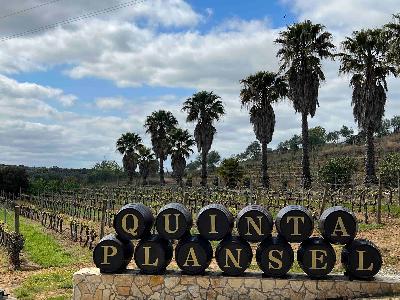
This episode we discover how a shipwrecked German wine heir accidentally changed Portuguese wines from the roots up, and why his daughter Dorina Lindemann began her winemaking journey with a fizz.Now her daughters are following in the family’s footsteps at Quinta da Plansel winery and plant nursery. We visit their estate in Montemor-o-Novo to learn about vinhos and vinhas – grapes and vines – the varieties, the grafts and the pesky pests that ruined Europe’s vineyards for half a century.After a gentle introduction to Portugal’s wines and grapes, this episode we are learning a lot: how to make champagne, we meet a couple of new grape varieties…and we head into the classroom to start our formal wine training.But we begin with some hard graft.Now in his 80s, Jorge explained how two types of vines were being grafted together by hand as half-metre lengths of American roots were being cut and interlocked with small clippings of Portuguese grape varieties using something called an “omega cut.”It’s how almost all European grapes survive the destructive phylloxera pest that arrived from America in the second half of the nineteenth century and still bugs vineyards today.“It was phylloxera, it was oidium and mildew. These diseases destroyed the European wine culture for half a century,” said Jorge, who has dedicated his life to Portuguese grapes after washing up in Lisbon in 1961 when a damaged sailing boat nipped his voyage to the Seychelles in the bud.Wine was in his blood as heir to a centuries old German “Hock” family which was shipping millions of bottles to the US and UK.But while exporting Portuguese wine home, Jorge realised how unpredictable its quality could be, and when the family business took a downturn in the 1970s he decided to help do something about it.“Portugal has officially 340 different varieties in the national catalogue of grapevine varieties, but there are very few – about 80 or 90 which are really studied,” Jorge said.He knows because he moved here to study and help develop them.“The process of grape vine production is a technology which has been developed since the beginning of the last century.”American root stocks were resistant to the phylloxera, oidium and mildew which invaded unprotected European vineyards when they arrived aboard ship.The Big Portuguese Wine Adventure is a reader-supported publication. To receive new posts and support my work, consider becoming a free or paid subscriber.Grafting the old, traditional varieties on to the resistant roots allowed wineries to rebuild, recover and thrive, but the pests remain and the process continues today.Once grafted, wax is used to protect the join and the little Frankensteins are packed into boxes with peat and substrate to be locked away in a warming room for two or three weeks to grow together.They are then planted in the ground for a while before being uprooted, pruned and sold to winemakers – and wannabes like us – in Portugal and all over the world.The nursery began 40 years ago with a an in-depth study of Portuguese grapes and now produces one and a half million planting vines a year.Back in the late 1970s, Jorge worked with the Portuguese government and winemaking universities of Évora in Alentejo and Geisenheim in Germany to select the top 40 most promising grapes, made a load of wine and took it on a global tasting road trip.“We went to France to Montpellier University, to the Masters of Wine in London, to the university of Geisenheim and even to America to make a ranking of which are the best in the world and by this knowledge we started our breeding programme,” he said.“The result was always the same: the Touriga Nacional was normally the best and we started to build up these varieties in different forms.”He wrote a thick reference book on their work and began to select the best clones to make the best wines.Plansel also hosts an International Wine School which is featured in the podcast. Here’s an introduction to the course we joined…and to three grapes you may not have heard about before.“In 1980 my daddy brought 150 native varieties down to the Alentejo to be planted here. We tested them for quality, quantity, performance and everything,” said Dorina Lindemann, Jorge’s daughter who moved here in 1993 after studying oenology in Germany.She was dedicated to following the increasing international trend towards using single grape varieties for her wines.“I started with monovarietal wines, but nobody wanted to taste my wines because everybody in Portugal was used to the blends – they had at least a five, six or seven grape varieties mixture. It changed, but the beginning was very hard for me.”Dorina Lindemann still produces single variety wines, fresh sparkling wines and powerful blends from Quinta da Plansel.Her two daughters are following her into the business and her father still wanders remote vineyards in the summer heat looking for new clones.“He goes every day to the field: he goes to Spain, to the borders, he looks for which Aragonez [grape] has got more resistant, thicker skins,” said Dorina.Thank you for reading The Big Portuguese Wine Adventure. This post is public so feel free to share it.Bordeaux has elevated Touriga Nacional, one of the most famous Portuguese grapes, as an official grape for use in their famous and famously regulated blends – and that’s because they thrive in the searing temperatures of the Alentejo and the climate is changing.“We did never overcome the problem of what happened in 1850, when the English imported plants from America and brought the diseases,” said Jorge.“We reacted not by finding a variety which was resistant, but by using an excess of chemical intervention. And chemical intervention is not the solution.“It is destroying the bees and a thousand other things, and this cannot be a solution. It was a solution for 100 years, but it's not the future.“And that's why I'm working on that – I think this is important to maintain a natural, growing culture,” he said about his continuing, lifelong vocation of finding the perfect grapes.* To find out where you can buy Plansel wines where you live contact their online store here* Plansel also do tours and tasting visits and have accommodation Get full access to The Big Portuguese Wine Adventure at wineportugal.substack.com/subscribe
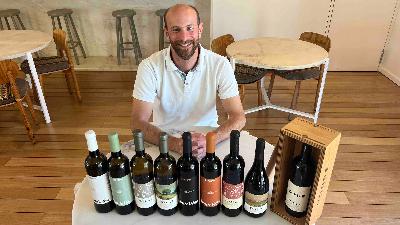
Herdade do Esporão has a huge range of wines from the entry level Monte Velho to the once-in-a-blue-moon Torre…with all sorts of wines in between.These are some of the Alentejo wines that you are most likely to find all over the world. There are links to UK and US suppliers below so you can order the wines and drink along with João Ramos’ amazing tasting.João’s moved on - back to Setúbal - and also makes his own amazing wines…but the wines he talked us through were wines made on his watch!Of course the best way to try these wines is to come and visit!Esporão serve the most amazing lunches, dinners, tastings and pairings at their winery (and Michelin starred restaurant) in Alentejo…or you could come to see us in Vale das Estrelas and we’ll sort you out!We hope you enjoy our deep dive tasting into the wines of Esporão - please let us know what you think about these bonus episodes and what more you’d like to hear.And please spread the word about our podcast series - we’re excited to get it out there and to tell our stories to new listeners.As promised, here are the places where you can buy Esporão wines in the US and UK. If you speak to real people, do mention us when you buy (we don’t get a cut, but it’d be good for us if you could let them know!)To order in the US contact Now Wine, or buy them directly from wine.com here.And if you’re listening in the UK, you can buy Esporão wines here:* The Wine Society* Field & Fawcett* Great Grog* Bon Coeur* Cheers Wine Merchants* Cambridge Wine MerchantsPlease watch out for the next episode which will be from Plansel nursery and winery.Thanks for listening,A&A Get full access to The Big Portuguese Wine Adventure at wineportugal.substack.com/subscribe
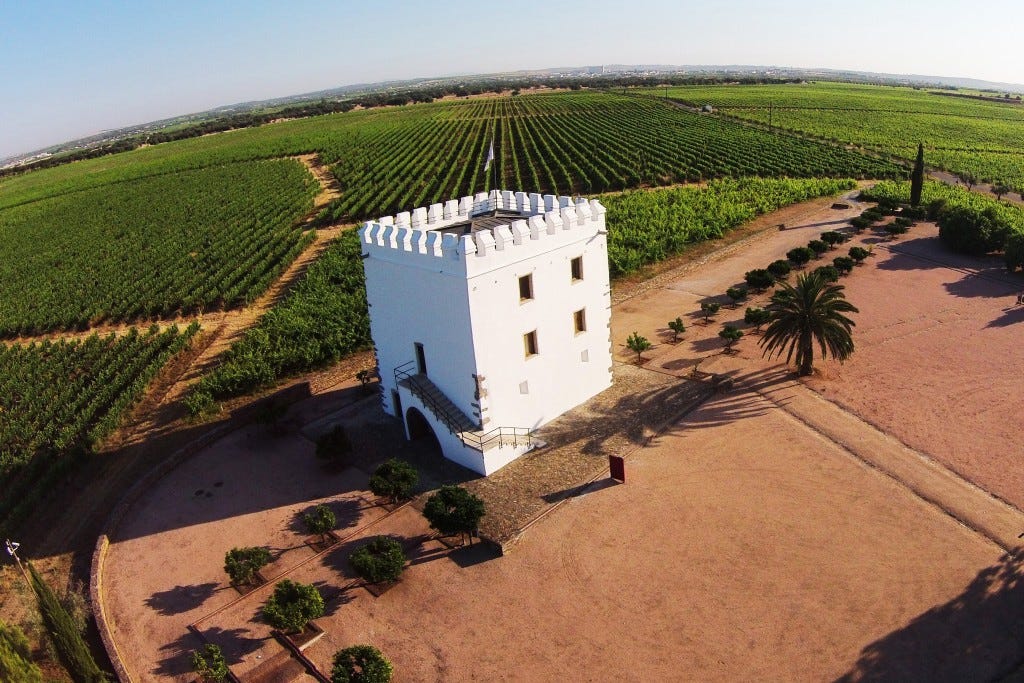
Now it’s time to head deep into the heart of Alentejo wine country: the hot, dry interior where most of the region’s wines are produced.This episode is centred around the Esporão winery and some of its iconic winemakers, to help tell the story of a wine revolution which has shaped the Alentejo over the past 40 years.Portugal’s wine history goes back even further than the Romans, who brought large scale wine-making to the Iberian Peninsula.The Catholic Church and its sacrament kept the vineyards producing, and after England fell out with France it came to Portugal for its wine…and Port was born.During the four decades of dictatorship under António de Oliveira Salazar and the regime’s “Estado Novo” or “New State” plan, centuries of wine history in Alentejo were erased when vines were ripped out to be replaced by cereals…in a region never really suitable for grains.In 1974 the Carnation Revolution brought the regime to an end, and after a few years of instability, the Alentejo – with its sunshine, rich soils and multiple microclimates – began to once again emerge as the home of amazing wines.Drink along with our podcast series! If you want to buy Esporão wines in the US or UK there are links at the end of this postJosé Roquette bought Esporão in 1973, but the post-revolutionary communist movement seized the property until it was returned in the mid 1980s, when he began re-planting, modernising, hiring, and producing great wine.“It was something incredible,” says Luís Duarte, who joined Esporão in 1987 straight out of the very first oenology class at the University of Trás-os-Montes close to the Douro in Vila Real. That marked the beginning of Portugal’s modern approach to winemaking.“When I arrived we started building one of the most famous and beautiful wineries in Portugal, but it was very difficult to build in three months: below the ground with big tunnels – it was crazy,” Luís said.A few years later he was joined by David Baverstock, an Australian winemaker who by then had met his Portuguese wife and had been in Portugal for a decade.“In the early days, when I first came over here, it was very hit or miss,” said David. “You’d buy red wine in a supermarket and it was maybe a little bit fizzy, a bit gassy or dirty or something because the malolactic fermentation hadn't been properly controlled. There were a lot of basic winemaking faults back then.“A lot of it was just sort of handed down from generation to generation, there wasn't a lot known about the grape varieties, and suddenly they realised they've got these 250 indigenous grape varieties that no other country in the world has.”Portugal’s entry into the then European Economic Community (EEC) in 1986 made a huge difference.“The money just poured in: the roads got better, there was money for vineyards and wineries,” added David.And the money was put to good use – investment in research, stainless steel tanks, temperature-controlled fermentation, university courses and the knowledge to grow the right grapes in the right places.The region is now the biggest producer for the domestic market. Unlike the narrow terraced hillsides of the Douro, the wide rolling hills provide plenty of space for more vineyards and mechanised harvesting.Deep below the ground, Esporão’s cellar is as impressive today with an amazing and refreshingly cool temperature despite the intense Alentejo heat.The cavernous cellar space resembles a cathedral or a subterranean football field.“Or a metropolitan station – an underground station?” suggested Sandra Alves, the third winemaker we spoke to for this lesson in wine history…and who gave us a tour of the iconic winery.It’s a great place to visit in Reguengos de Monsaraz, and well set up for visitors, with tours, tastings and restaurant with a Michelin star and a Michelin green star for sustainability.Thank you for reading The Big Portuguese Wine Adventure. This post is public so feel free to share it.José Roquette’s son João took over the running of the winery and made another ambitious step in the 2000s when he decided the whole estate should become organic.With more than 600ha of vines, Esporão is now one of the top ten largest organic vineyards in the world.Esporão produces a whole range of wines in Alentejo from the famous mass-market Monte Velho to the Reservas, Private Selection bottles and the “Torre” wines which are only produced in exceptional years.Named after the famous tower, they have only been released from the 2004, 2007, 2011 and 2017 vintages, picked up a lot of points from wine critics and sell for hundreds of euros.To receive a bonus episode features a wine tasting of Esporão’s range of wines by former winemaker João Ramos please sign up as a paid subscriberAll Alentejo’s eight DOC’s (Denominaçãos de Origem Controlada) nuzzle up to the border with Spain.Any regional wines not produced inside a DOC are known as “Alentejano” wines.“We started to follow the ideas that David brought from Australia – from the new world,” said Luís Duarte, of the time when Esporão started to experiment.“When this happened it was very important for Portugal because it added a lot of people with knowledge of the new technology,” which Luís said led to increased confidence from investors that Portuguese wine was a good place to spend their money.“We belong to the old world of wine but we are very new in terms of our knowledge,” especially when compared to places like France that didn’t suffer the disruption of dictatorship.“The generalisation is still that Alentejo can produce very, very easy drinking commercial style wines in quite big volumes,” added David Baverstock.“There's a general stereotype, particularly with the reds, that they're going to be a bit on the heavier side, they're going to have soft tannins...a fair bit of alcohol and they're going to be quite ripe fruit flavour.”But he explained winemakers are now moving towards making fresher and more elegant wines which the different terroirs and better understanding of Portuguese grapes encourages.“Alentejo is really drinkable wine, a really intense wine – at some stage really fruity. Almost exotic for an American market, but at the same time, it's gastronomic as well,” said Sandra Alves, looking out over the parched soil, the cork oak trees and the big skies.“All the intensity that you see all around you...all this yellow and green and blue – I think the wines show these colours, all this intensity is everything very powerful, very intense, very unique.“I would say that you need to taste to understand and you need to come here as well to understand what I'm talking about,” she said.Of all the wines we’re drinking in this series, Esporão is one of the easiest for you to find outside of Portugal.To order in the US contact Now Wine, or buy them directly from wine.com here.And if you’re listening in the UK, you can buy Esporão wines here:* The Wine Society * Field & Fawcett * Great Grog* Bon Coeur* Cheers Wine Merchants * Cambridge Wine MerchantsPlease let us know how that goes…and we’ll see you next time for a lesson in grafting grapes and some wine classes for us at Plansel. Get full access to The Big Portuguese Wine Adventure at wineportugal.substack.com/subscribe
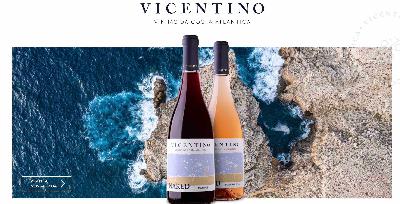
You’ve heard the story of Vicentino…now enjoy a tour around the new winery.Every week when we launch a new episode of the podcast we will be putting out a midweek deeper dive into one aspect: the winery, the winemaker or the story.Episode 1 is just down the road from our new home on this wild Alentejo west coast and they’ve just built a huge new winery to produce and showcase their wines.We followed their progress - we captured the moment when their roof went on in May 2023.The building was finished just in time for the 2023 harvest and general manager of Vicentino Wines, Filipe Caetano, pulled out the first wine to be bottled at the new winery.“This is a wine made with Arinto and it is unfiltered - so that’s the first one,” he grinned - the bottle was still waiting for its label.Thank you for reading The Big Portuguese Wine Adventure. This post is public so feel free to share it.“It’s from one of our ranges of wines, which is the Naked range, which is wines with the lowest intervention possible.”The head winemaker is Bernardo Cabral who also consults with other wineries and is known for his winemaking on Pico island in the Açores.The resident assistant winemaker is Ana Rita Bouça, and having worked in the Açores and in New Zealand, is excited about the saltiness of Vicentino wines.“I fell in love for salty wines when I was working at Pico,” Ana Rita said.“Always in my life I have been very close to the ocean. So for me the proximity to the ocean is very important.”Little expense has been spared in the new winery with concrete tulips, stainless steel tanks and lines of wooden barrels.The Big Portuguese Wine Adventure is a reader-supported publication. To receive new posts and support my work, consider becoming a free or paid subscriber.“The purpose is really to allow to give all the conditions to the winemakers team to deliver the best wines possible,” said Filipe who took us down into the cellar which is partly built underground to expose the bedrock.Please let us know what you think about our Bonus Episode - deep dives into a winery may not be for everyone, so feel free to pass over these additional updates and make sure you listen in every weekend when new episodes drop.And here is Episode 1 for you to enjoy, in case you haven’t heard it yet.And if you’d like to get hold of some Vicentino wines to try, the easiest way is to come and see us here in the Valley of the Stars…and to visit Vicentino.But while you wait, it is available in the UK at the moment through Vindependents - here’s the link.See you next time, when we’re heading deep into traditional Alentejo wine country to visit the legendary Esporão winery. A&A x Get full access to The Big Portuguese Wine Adventure at wineportugal.substack.com/subscribe
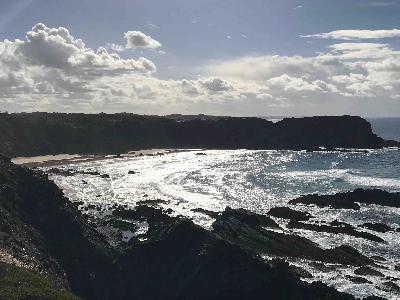
Our part of Portugal is known as the last wild coast in Europe and it’s a beautiful place to start a podcast series on Portuguese wine.Long-distance hikers pound the Rota Vicentina Fisherman’s trail which follows more than 200km of clifftops, surfing spots and secret beaches on the country’s Atlantic west coast.And one stretch of this epic two week walk features the first winery on the list for our Big Portuguese Wine Adventure – Vicentino.The wines are fresh and fruity and instilled with the saltiness of the Atlantic Ocean which their 60 hectares of grape vines overlook.We decided to start local: Vicentino is the nearest vineyard to the place we now call home in Portugal’s Alentejo region.The Spanish might call it Allan-tay-HOE, but here in Portugal it’s Allan-tay-JOE and it’s Portugal’s biggest province covering a third of the country.As early adopters to The Big Portuguese Wine Adventure blog will know – the name comes from Alem-Tejo...Portuguese for “beyond” the Tejo, or Tagus River, on which Lisbon is situated.And we are?We travelled the world together as a diplomat and journalist couple, but one day we decided to give up our jobs and move to the Portuguese countryside – to build an eco-luxe lodge (which is almost finished!) and learn about wine.Inspired by a scraggy line of overgrown grapes that emerged from our land when we moved in, we decided to plant our own vineyard and maybe one day make our own wine...but first there was a lot of learning to do!Our house isn’t connected to any municipal water or power grid and so we also had to learn how to live off-the-grid.If you want to read how hard that’s been, Al also writes a blog called Off-Grid and Ignorant in Portugal, but given his previous job as a BBC foreign correspondent we thought making a podcast series was more in our comfort zone!We’ve spent the last couple of years exploring Alentejo’s history and geography through wine, winemakers and the stories they tell...and wanted to share our journey with you.So thanks for reading, but most importantly thanks for listening, and welcome to Episode 1!So what’s Alentejo wine?Vicentino doesn’t make wine that is typical to this region.Most Alentejo wines are grown inland – far from the moderating effect of the ocean – and are heavier, stronger and more powerful with all the heat and sunshine.Alentejo produces more than 40% of Portugal’s wines and is known for its great value, easy drinking reds, as well as some amazing white wines.But it’s also home to talha wine – made in amphorae or clay pots like the Romans did two thousand years ago...and people here have been making it that way ever since.We’ll be delving into the heart of Alentejo wine country in Episode 2 and trying some talha later in the series, but for the first instalment we’re drinking pinot noir naked and learning the connection between French grapes, cat pee and the Beatles.Salivating storytellersOur guide to Vicentino is maverick Norwegian owner Ole Martin Siem who salivates over the Chardonnay grapes gifted to him from Burgundy and talks in simple terms about taste and bouquet.We’re not wine experts, just enthusiastic amateurs, eager to demystify wine appreciation and its sometime intimidating language, and Ole Martin enthusiastically sets us off on that path.He has farmed in Alentejo since the 1980s but is relatively new to winemaking – his first grapes were planted in 2007 – but Vicentino is now one of the biggest Pinot Noir producers in Portugal and is doing something a little bit different.Touriga Nacional, Aragonez, Alvarinho and Arinto are among the 250 indigenous Portuguese grapes which are grown in Vicentino’s vineyards and we’ll learn much more about them later in the series.But international grapes including Pinot Noir, Sauvignon Blanc, Syrah and Chardonnay all do really well on this coast – as they do in regions with similar climates, latitudes and ocean influence: South Africa’s Western Cape and the Californian Central Coast.Listening and learningIn every half hour episode we learn a new skill – starting off this time at the very beginning of the growing season with pruning, and some advice about what to do with our scraggy, overgrown vines.We stop to have a “Clink and a Think” about Portuguese wine history dating back to 800BC and the Phoenicians, and hear a great story about this remarkable “green triangle” of agricultural land and why the viticulturalists have their eye on our coast.But let’s not spoil the journey! You can find The Big Portuguese Wine Adventure wherever you get your podcasts: Spotify, Apple Podcasts...you name it.I need a drinkPortuguese wine makers like to keep the best for themselves, so it’s not always easy to get hold of the wines we’ve been tasting and discovering.Obviously the best way to taste the wine is to drop by our place Vale das Estrelas (or the Valley of the Stars).Our eco-luxe lodge is opening this year and we’re stocking our cellar full of Alentejo wines.The views are outstanding, the wines are great and the stories are even better.I really need a drink...nowWhile you plan your trip to Portugal we’ll help you get hold of the wines we’re tasting wherever you are...when they’re available.It’s tough to find them in the US right now, but there are some stockists you can find in the UK through Vindependents.PODCAST SCRIPT: ANA: Hello, I’m Ana.AL: And I’m Al. HellooooANA: And welcome to Ana and Al’s Big Portuguese wine adventure!AL: We used to have proper jobs – I was a foreign correspondent, and Ana was a diplomat, but we decided to give up all the globetrotting to move here...ANA: To southwestern Portugal...AL: It’s so beautifully quiet and peaceful here...the view over the forests and the mountains is just stunning.ANA: Yeah, Alentejo is this landscape of rolling hills, cork oaks and olive trees. My dad’s family is from Alentejo, but further inland. Here we are closer to the ocean.AL: When we moved here we found those scraggy vines just over there by the fruit trees...about 20 of them...they must be pretty old...ANA: They’re on the slope at the edge of a terrace and they’re a complete mess…AL: totally overgrown with bramblesand I have no idea what kind of grapes they are.ANA: Our lovely friend Baptiste, who happens to own a real wine-estate in France kindly called these little things “A not un-managable parcel.”AL: Haha...but it did get us thinking: maybe we could plant our own grapes and make our own wine down here or up on the flat land on top of the hill.ANA: So after decades on the road we are finally putting down some rootsAL: literally as well as figuratively.ANA: But first we have so much to learn about wine – especially Portuguese wine. AL: Which is why we’re going on a big adventure to learn as much as we can.and rather than keeping it all to ourselves we thought you might like to join us!ANA: At least we know a few of the basics....AL: P is for PortANA: V is for Vinho VerdeAL: T is for Touriga Nacional, A is for Aragonez...but I’m getting ahead of myself. There are very few places in the world where you can buy such good value wine.ANA: And so many are now getting noticed around the world. Remember the wine merchant we met in California? He told us that compared to other European countries you can’t buy that quality at this price whether you want fine wine, of value-for-money vino.ANA: In each episode we’ll go to a different vineyard in Portugal, go behind the scenes, hear the maverick winemakers tell some great stories as we ask stupid questions so you don’t have to.AL: If you’re as curious about Portuguese wine as we are – with a bit of history and exploring on the side – then you’ve come to the right place! ANA: So welcome to Ana and Al’sAL: Big Portuguese Wine Adventure.ANA: Episode One.AL: Vineyard One.ANA: VicentinoAL: So…there they are…fields of dormant vines…waiting for the perfect temperature to burst into life.ANA: Vicentino vineyard is just 20 minutes from our house and it’s a great story to start us off.AL: In this episode we’ll learn the connection between French grapes, cat pee and the Beatles.ANA: We’ll try drinking pinot noir nakedAL: We will?ANA: You’ll see.AL: I hope so.ANA: Haha. I’ll develop some serious secateur envy.AL: And there’s a strong Scandinavian connection...OM: My name is Ole Martin Siam. I’m a Norwegian and I came out here for 35 years ago for the first time. I've been building up this farm which we are standing from scratch. I didn't think of wine before 2007. AL: Wow, you didn't think about wine before then?OM Well, I consumed wine, I enjoyed wine but not gave it any thought of producing wine.AL So what was the business to start with?OM Frupor is the name of the company and we are in vegetables, decorative foliage, which is leaves you never asked for, but you get when you buy flowers.OM And wine was on my desk many times but I said it's so competitive. It's so many doing it is so different from what we are doing. So I said no, no, no, no, no. Until I read that good wine is all about producing good grapes. So I said well, we are good growers. We are professional and growing. So I started reading more and found out obviously that we are in a very special terroir compared to the rest of Alentejo, because we are so close to the sea. So the temperatures are much lower in the summertime it's milder in the winter, but lower in the summertime. So I thought maybe it can be different enough to stand out in the marketplace and have a chance to do something special. The first plants were planted in 2007.AL Is that when you came in, or have you been a later addition to the business?Filipe No, actually I joined very, very recently. I'm a newcomer. Not to the region, because I've been here quite a lot of times during the years…Filipe And I'm, yeah, I'm Filipe Caetano. That's my name. I'm Portuguese. And I joined to be the head of the wine business.AL Excellent. That's good. All right. Well, let's have a little tour then. Shall we? got the keys? In the car?Filipe
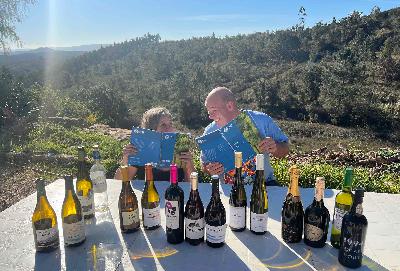
After months of criss-crossing Alentejo in search of stories, storytellers and the best possible wines, our documentary-style podcast is almost ready to go live.We’ve increased the number of episodes from ten to a dozen to squeeze in some extra elements of a Portuguese wine story.Today we’re launching the latest series trailer - if there’s anyone you think would like to be a part of our journey please ask them to sign up for free, or to subscribe if they want early access to the episodes and a deeper dive.The series is a fascinating travelogue through the history and geography of Portugal through wine.We meet maverick winemakers, visit some of the biggest and the smallest vineyards and taste our way through two thousand years of grape-growing history...while having a lot of fun at the same time.The first season begins in Alentejo – a new world wine region in an old world wine country and the place we now call home. The Big Portuguese Wine Adventure is a reader-supported publication. Please consider becoming a free or a paid subscriber.From May 2024 we’ll be launching an episode every weekend and subscribers will receive an extra midweek episode - a deeper dive into the winery of the week, longer interviews and tastings and special offers for those with a deeper interest in Portuguese wine.And if you want to hear more about the off-grid, wine-themed eco-luxe lodge we’re building on the Alentejo coast, sign up for the weekly blog Off-Grid and Ignorant in Portugal.And we want your thoughts and your feedback…please get in touch! We’ll let you know as soon as the first episode drops! Get full access to The Big Portuguese Wine Adventure at wineportugal.substack.com/subscribe
Comments

Download from Google Play

Download from App Store
 United States