


 Claim Ownership
Books of Titans Podcast
Subscribed: 643Played: 28,275
Subscribe

© Erik Rostad
Description
Welcome to the Books of Titans Podcast where I (Erik Rostad) seek truth & beauty in the Immortal Books. My goal is to read the Great Books written by 200 authors over the next 15 years and share what I’m learning. I’ll talk a bit about each book, tie ideas together from a variety of genres, and share the one thing I always hope to remember from each of the Immortal Books.
www.booksoftitans.com
www.booksoftitans.com
338 Episodes
Reverse
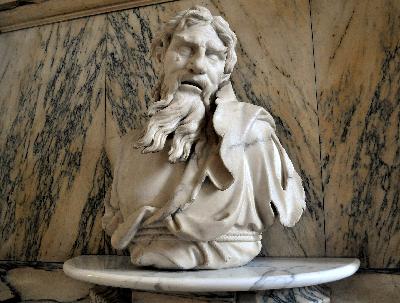
For the next month or so, I’m going to highlight different early Greek Philosophers on the podcast and in my Substack articles. Last year, I started reading Plato’s dialogues and realized that I didn’t know the philosophers or their ideas that he was referencing. I stopped reading the dialogues in order to get to know these Greek Philosophers.In this episode, I cover Heraclitus, a philosopher famous for his ideas on flux, fire, and the logos. While we don’t have his complete work On Nature, we do have fragments that provide an understanding of his main ideas. This will be a two-part episode with this first one focusing on the life and ideas of Heraclitus and the second one focusing on Heraclitus’ idea of the logos.Here are the books I referenced for this podcast episode:* Early Greek Philosophy - Translation by Jonathan Barnes - Penguin Classics* Heraclitus Fragments - Translation by Brooks Haxton - Penguin Classics* The First Philosophers - Translation by Robin Waterfield - Oxford World’s Classics* Heraclitean Fire - Erwin Chargaff - Book 20 in 2017* Lives of the Eminent Philosophers by Diogene Laertius - Vol 2 of Loeb.* Major Works of Gerard Manley Hopkins - Oxford University Press This is a public episode. If you'd like to discuss this with other subscribers or get access to bonus episodes, visit www.booksoftitans.com/subscribe
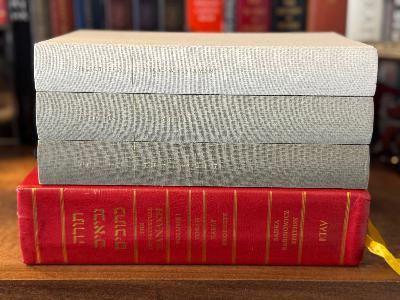
I start each year reading straight through a different version of the Bible during January & February. This year, I selected the Intertextual Tanakh for the Five Books of Moses and the Early Prophets and used the Bibliotheca version for The Latter Prophets, The Writings, and The New Testament. In this episode, I share what stuck out this year over the 80 hours of reading through the Bible. This is a public episode. If you'd like to discuss this with other subscribers or get access to bonus episodes, visit www.booksoftitans.com/subscribe
Here’s episode 7 covering my 2026 read-through of the Bible. I talk about the ideas that have stuck out to me while reading the New Testament books of the Gospels, Acts, Romans, Corinthians, Galatians, Ephesians, Philippians, and Colossians.Show Notes:Dr. Jason Staples’ Suggested Bible Reading Order (start at the 1hr 16 minute mark): This is a public episode. If you'd like to discuss this with other subscribers or get access to bonus episodes, visit www.booksoftitans.com/subscribe
 1
1Here’s episode 6 covering my 2026 read-through of the Bible. I talk about the ideas that have stuck out to me while reading the books of Daniel, Ezra, Nehemiah, and Chronicles.Show Notes:Purchase The Intertextual Tanakh from Landmark Booksellers.Dr. Jason Staples’ Suggested Bible Reading Order (start at the 1hr 16 minute mark): This is a public episode. If you'd like to discuss this with other subscribers or get access to bonus episodes, visit www.booksoftitans.com/subscribe
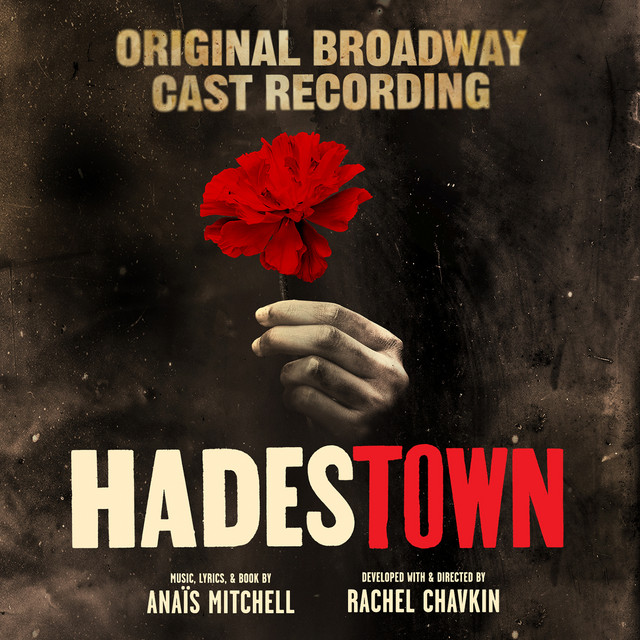
This special mid-week episode is a deep dive into the musical Hadestown, Anaïs Mitchell’s folk opera that reimagines the myth of Orpheus and Eurydice in a haunting, jazz-inflected underworld. Last week, I had the joy of playing violin in the on-stage band for a series of local youth-theater performances of Hadestown, and sharing the stage with my daughter made the entire experience unforgettable.During preparation, I became captivated by the music, the storytelling, and the rich threads of Greek mythology woven throughout Hadestown. I also discovered that the show’s writer published a book, Working on a Song: The Lyrics of Hadestown, which opens a window into the creative process behind the musical.In this episode, I explore:* The Greek myths at the heart of Hadestown* The subtle ways the musical reshapes and reimagines those myths* The connection points between this story and narratives found in the BibleThis musical moved me in a way that very few others ever have.Audio RecordingsOriginal Broadway Cast RecordingSpotify / Apple MusicLive from LondonSpotify / Apple MusicThis one is my personal favorite but it only contains about half of the songs. Hermes is played by a female and she just absolutely kills it. I love her passion.Talking Hadestown: Commentary & SongsSpotify / Apple MusicThis is a neat recording where Anaïs Mitchell talks about some of the songs from Hadestown.The BookWorking on a Song: The Lyrics of Hadestown by Anaïs MitchellThe Band This is a public episode. If you'd like to discuss this with other subscribers or get access to bonus episodes, visit www.booksoftitans.com/subscribe
Here’s episode 5 covering my 2026 read-through of the Bible. I talk about the ideas that have stuck out to me while reading the books of Psalms, Proverbs, Job, Song of Songs, Ruth, Lamentations, Ecclesiastes, Esther, and Daniel. I also highlight some overarching themes so far from this reading.Show Notes:Purchase The Intertextual Tanakh from Landmark Booksellers.Dr. Jason Staples’ Suggested Bible Reading Order (start at the 1hr 16 minute mark): This is a public episode. If you'd like to discuss this with other subscribers or get access to bonus episodes, visit www.booksoftitans.com/subscribe
Here’s episode 4 covering my 2026 read-through of the Bible. I talk about the ideas that have stuck out to me while reading the books of Ezekiel, the 12 Minor Prophets (Hosea, Joel, Amos, Obadiah, Jonah, Micah, Nahum, Habakkuk, Zephaniah, Haggai, Zechariah, and Malachi), and the Psalms. I also highlight some overarching themes so far from this reading.Show Notes:Purchase The Intertextual Tanakh from Landmark Booksellers.Dr. Jason Staples’ Suggested Bible Reading Order (start at the 1hr 16 minute mark) This is a public episode. If you'd like to discuss this with other subscribers or get access to bonus episodes, visit www.booksoftitans.com/subscribe
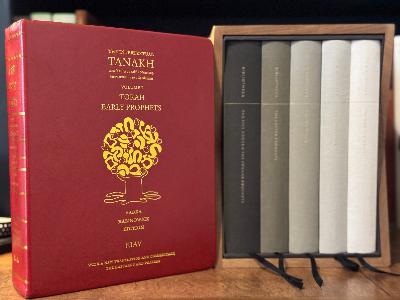
Here’s episode 3 covering my 2026 read-through of the Bible. I talk about the ideas that have stuck out to me while reading the books of Samuel, Kings, Isaiah, and Jeremiah. I also highlight some overarching themes so far from this reading.Show Notes:Purchase The Intertextual Tanakh from Landmark Booksellers.Dr. Jason Staples’ Suggested Bible Reading Order (start at the 1hr 16 minute mark) This is a public episode. If you'd like to discuss this with other subscribers or get access to bonus episodes, visit www.booksoftitans.com/subscribe
Here’s episode 2 covering my 2026 read-through of the Bible. I talk about the ideas that have stuck out to me while reading the books of Deuteronomy, Joshua, Judges, and Samuel. I also highlight some overarching themes so far from this reading.Show Notes:Purchase The Intertextual Tanakh from Landmark BooksellersDr. Jason Staples’ Suggested Bible Reading Order (start at the 1hr 16 minute mark) This is a public episode. If you'd like to discuss this with other subscribers or get access to bonus episodes, visit www.booksoftitans.com/subscribe
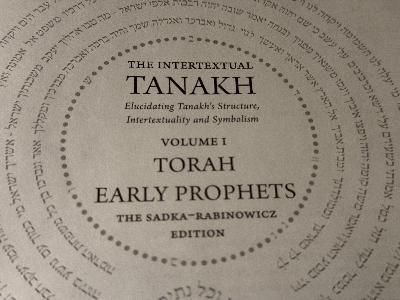
Over the next two months, I’m going to present quick podcast check-ins as I make my way through the Bible. I start each year reading a different translation of the Bible during the months of January and February. This year, I’m starting off with the Intertextual Tanakh, which covers The Five Books of Moses and The Former Prophets (Joshua, Judges, Samuel, Kings).In this episode, I share a few ideas that have stuck out so far as well as a theme that is developing that I plan to track as I make my way through the rest of the Bible.Show Notes:Dr. Jason Staples’ Suggested Bible Reading Order (start at the 1hr 16 minute mark)Also, here’s a way to crush your 2026 Bible reading plan! This is a public episode. If you'd like to discuss this with other subscribers or get access to bonus episodes, visit www.booksoftitans.com/subscribe
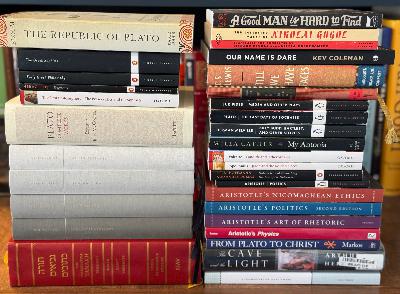
READING YEAR THEME: GREEK PHILOSOPHYI’ll be spending most of 2026 ploughing the depths of Plato and Aristotle. I divide eating reading year into semesters:* Spring Semester - March - June* Summer Break - July* Fall Semester - August - November* Winter Break - DecemberI start each year reading straight through the Bible during January & February. The versions I’m using this year are The Intertextual Tanakh (tah knock), Bibliotheca (The Latter Prophets, The Writings, The Apocrypha, and The New Testament)Spring Semester Book List (Subject to Change)I started Plato during Fall Semester last year. I’ll be continuing on, but am first taking a look at philosophers before Plato since he keeps referencing them. I’ll then return to the 20 or so dialogues of Plato that I have remaining within the Complete Works set.* The First Philosophers: The Presocratics and the Sophists* Early Greek Philosophy* Heraclitus Fragments* The Greek Sophists* Plato: Complete Works* The Republic / Bloom* A Commentary on Plato’s Meno / Jacob Klein* From Plato to Christ / Louis Markos* The Cave and the Light / Arthur HermanSummer BreakI’m going to dedicate the month of July to Gilgamesh. I love that epic so much and am going to read some of the books pictured above. I’ve been collecting anything I find about Gilgamesh and it’s time to read those books. If you know of other books related to Gilgamesh that I must read, please let me know in the comments below.Fall Semester (Subject to Change)If I finish reading Plato during the Spring Semester, I’ll begin reading Aristotle in the Fall Semester. Like Plato, I’m planing on reading the complete works of Aristotle. I realize that’s excessive and may change my tune, but why not. He’s one of the greatest philosophers of all time.* The Complete Works of Aristotle Volume 1 / Hackett* The Complete Works of Aristotle Volume 2 / Hackett* From Aristotle to Christ / Louis MarkosWinter BreakI’m going to explore another area of interest during December - Trees! I know nothing about these strange things surrounding us outside and simply want to know more. I don’t have a list yet, so suggestions are welcome. There’s only one book so far that I keep seeing over and over again:* The Hidden Life of TreesShort Great Books Reading GroupI lead a reading group in Franklin, TN and this year we’ll be covering the following books, so I’ll be interspersing these books with the list above. More details here.* A Good Man is Hard to Find by Flannery O’Connor - Jan 12* The Overcoat by Nikolai Gogol - Feb 2* Our Name is Dare by Kev Coleman - March 2* One Day in the Life of Ivan Denisovich by Aleksandr Solzhenitsyn April 6* Medea by Euripides - May 4* Apology (Defense of Socrates) by Plato - June 1* Till We Have Faces by C.S. Lewis - July 6* Billy Budd by Herman Melville - August 3* My Antonia by Willa Cather - September 7 (Labor Day)* Candide by Voltaire - October 5* Jason and the Golden Fleece by Apollonius - November 2* The Nutcracker and the Mouse King by E.T.A. Hoffmann - December 7 This is a public episode. If you'd like to discuss this with other subscribers or get access to bonus episodes, visit www.booksoftitans.com/subscribe
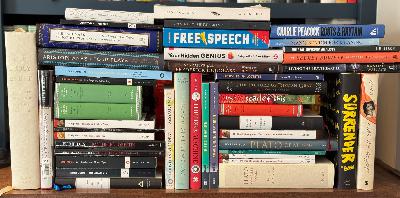
Each year, I stack all of the books from the previous year’s reading list next to me and reminisce over the reading year. It’s one of my favorite yearly podcast episodes and it’s a great way for you to hear about some books to add to your reading list.2025 was an incredible year of reading. I continued on in the third year of my Immortal Books project. The main focus was on Greek Tragedies, Comedies, History, and Philosophy.In this episode, I cover the year as a whole, some of my favorite works, and some best of lists.Here are some of my favorite podcast episodes from 2025: This is a public episode. If you'd like to discuss this with other subscribers or get access to bonus episodes, visit www.booksoftitans.com/subscribe
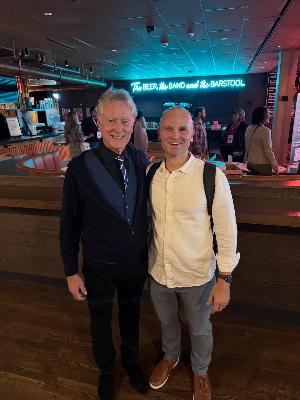
The Braveheart film has had an outsized impact on my life. It first sparked a deep interest in the country of Scotland, that try as I might, I cannot shake. It inspired me to purchase a set of bagpipes and then learn how to play them. But it also had deeper implications in the areas of faith and living.In this book, the author of both the novel Braveheart as well as the screenplay that became the famous film, Randall Wallace, provides an autobiography that shows a close connection between his life and the Braveheart story. It’s an exploration of fatherhood, faith, and truth. And I loved it. This is a public episode. If you'd like to discuss this with other subscribers or get access to bonus episodes, visit www.booksoftitans.com/subscribe
![#271 - Rhetorica Ad Herennium by [Cicero]](https://s3.castbox.fm/f4/c0/b0/edb30379be9dd6e3fc2ed0475468594fda_scaled_v1_400.jpg "#271 - Rhetorica Ad Herennium by [Cicero]")
The two pillars of this reading project are to read more books and to remember what I read. To that end, I’ve experimented with a variety of practices to attempt to assist with memory. I’m always on the hunt for new ideas.That’s how I came across Rhetorica Ad Herennium by [Cicero]. Cicero is in brackets because it’s not certain that he is the author. So, author unknown, but content exceptional. This is the oldest surviving work we have about ways to remember what you hear and learn.This was written around 90BC and the techniques are still used today. The main idea is to place an intermediary background between your memory and the thing you are trying to remember. I always just go right to the thing. If I want to memorize a poem, I brute force my way into my memory bank by reading it over and over again. I never thought to place that poem against a background to enhance the likelihood of remembrance.In this episode, I cover a very short 10-page section of this larger work that deals with memory. I share how Cicero or not-Cicero suggests creating a background or room in which to place images that relate to words or subject matter. The more striking and odd the image, the more likely it will be remembered.This practice is not natural to me and it actually seems counterintuitive. But, if it’s worked for 2,000+ years, there’s something to it. I’m going to give it a try.Book Version - Loeb Classical Library book 403 - Rhetorica Ad Herennium This is a public episode. If you'd like to discuss this with other subscribers or get access to bonus episodes, visit www.booksoftitans.com/subscribe
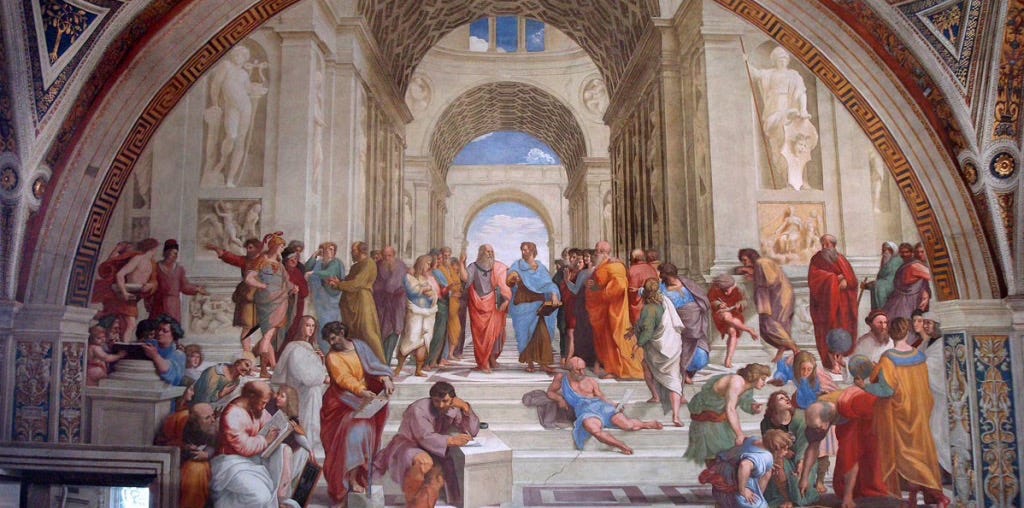
I started reading through the complete dialogues of Plato this year. I came to a point where I realized that Plato was referencing philosophers who came before him and I didn’t know anything about them or their ideas. I took a break from Plato to consider these philosophers who gave the seeds to Plato’s philosophy.These philosophers are called the Presocratics and the Sophists. They are Pre-Socrates in that their ideas precede Socrates, not necessarily that they preceded him historically. The Presocratic philosophers discussed in this podcast episode lived between 600 - 400BC. Socrates lived between 469 - 399BC.I read The First Philosophers with a translation and introduction by Robin Waterfield. In the introduction, Waterfield says “Presocratic thought was holistic : it was an attempt to give a systematic account of the whole known universe and all its major features.” They cover ideas such as the soul, happiness, and the makeup of things. You can see not only their intellectual method but also their ideas in the dialogues of Plato.In this episode, I cover four of my favorite Presocratic philosophers (Heraclitus, Parmenides, Pythagoras, and Empedocles) and some of their ideas. I also share the one thing that stuck out to me the most about these fathers of philosophy. This is a public episode. If you'd like to discuss this with other subscribers or get access to bonus episodes, visit www.booksoftitans.com/subscribe
An introduction to this reading project for anyone new to Books of Titans. I started this in 2017 as an attempt to read more books and experiment with ways to help me remember what I read. It’s morphed into a lifelong reading project that I now expect to last until I die as I slowly make my way through The Immortal Books. Give this episode a listen to learn more and then give my wife Stephanie’s music a listen as well! This is a public episode. If you'd like to discuss this with other subscribers or get access to bonus episodes, visit www.booksoftitans.com/subscribe
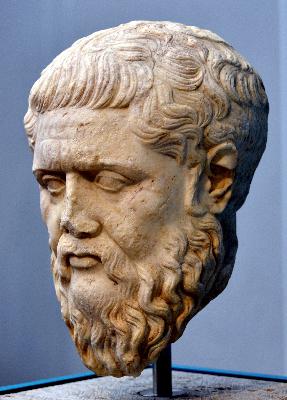
“The safest general characterization of the European philosophical tradition is that it consists of a series of footnotes to Plato.”~ Alfred North WhiteheadI’ve been enjoying my Plato Project where I’ve decided to read through the Complete Works of Plato. I’ve read 9 dialogues so far and realized I needed to take a step back and learn more about the philosopher himself. This was the perfect book for that endeavor.Robin Waterfield covers the basic known facts about the life of Plato, his friendships, his practical application of philosophy, especially with the king of Syracuse, and the Academy he started in Athens. It is a fascinating look at how Plato’s life fed into his philosophy.In this episode, I cover the main things I learned about Plato and share the One Thing that stuck out the most.Enjoy! This is a public episode. If you'd like to discuss this with other subscribers or get access to bonus episodes, visit www.booksoftitans.com/subscribe
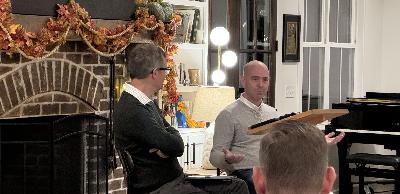
I’m making the wild assumption that you like books. Perhaps that’s because you like what’s inside of books - the stories, ideas, information, history. But do you ever just stop and think about the book itself? The physical book that you hold in your hand?Joel J Miller has a book coming out this Tuesday, November 18th, 2025 called The Idea Machine: How Books Built Our World and Shape Our Future. It’s a book about the book. It’s a richly researched account of the history of the book through the ages, how Christians played a large role in its eventual format, and how the organization and categorization of ancient and moderns libraries led to the A.I. tools of today.I read an advance copy of the book a few months back and absolutely loved it. It gave me a new appreciation for book, the perfect idea transfer technology. In this podcast episode, I share some of my favorite ideas from the book and tie in some things Joel spoke about during a book event I attended on Thursday evening, November 13th.If you live in the Nashville area, Joel will be at Landmark Booksellers on the book’s release date of Tuesday, November 18th at 6pm. Jeff Goins will conduct the interview.You can also order a signed copy of the book from Landmark Booksellers. I think you’ll enjoy it. This is a public episode. If you'd like to discuss this with other subscribers or get access to bonus episodes, visit www.booksoftitans.com/subscribe
The goal of this dialogue is to define the Sophist. We’ve seen the Sophist pop up in Greek Tragedy and Comedy and it’s never a pretty picture. They are often contrasted with the Philosopher, the true lover of wisdom, and are denigrated as those who have the appearance of wisdom. They are known for charging money to teach their students how to argue a point, irrespective of its truth.In attempting to define the Sophist, Plato must overcome a snag put forward by the philosopher Parmenides. Parmenides has stated that false statements are impossible:“This should not ever prevail in your thought: that the things that are not, are; rather do you keep your mind well shut off from just this way of searching.”Basically, don’t think or talk about things that have no being; things that don’t exist. However, if that is the case, there is nothing false and everything a person says is true. Everything is relative.In order to define the Sophist, Plato must show that something that is not, is. He does this by saying that the false is something other than or different from the true. Plato’s Forms must be true. Do things that are false also have Forms? No, they are simply other than or different from Forms.Therefore, the Sophist is one who makes false imitations of true things. He is not a philosopher.This dialogue hurt by brain. I read it three times using different translations in an attempt to struggle through it and try and understand it. I share what I learned in this episode and I hope the work makes it so that you see the dialogue in a fresh way. As always, if I’ve gotten anything incorrect, please help me learn by commenting below.Show Notes:Book Versions I Read:* Plato Complete Works - edited by John M. Cooper - translated by Nicholas P. White* Plato: Collected Dialogues - edited by Edith Hamilton & Huntington Cairns - translated by F.M. Cornford* Plato Sophist: The Professor of Wisdom by Eva Brann, Peter Kalkavage, Eric SalemThe Division Thicket (from the introduction in Plato Sophist: The Professor of Wisdom): This is a public episode. If you'd like to discuss this with other subscribers or get access to bonus episodes, visit www.booksoftitans.com/subscribe
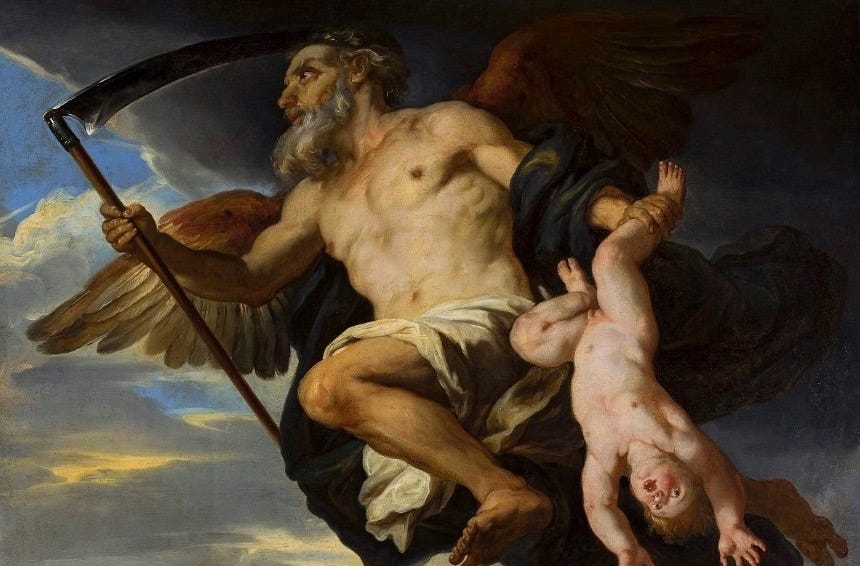
The goal of this dialogue is the definition of a statesman. Can Plato show us the essence or nature of the statesman? This dialogue is a sequel to Sophist. In each dialogue, an attempt at a definition is sought through the method of division. For example, Statesman begins with Knowledge, which is divided into practical and theoretical knowledge. The statesman would be on the theoretical side.This division occurs until the discussion partners Visitor from Elea and Socrates the Younger describe the statesman as a shepherd or herder of humans. That doesn’t work, and so a Deus Ex Machina of sorts jumps in through the telling of a myth. In the myth, the ages of Cronus and Zeus are contrasted and the dialog is set on a different path. That path leads to a definition or essence of the statesman as more of a weaver of disparate parts.The dialogue then gets into different types of governments and the role of law within each set. It posits the best form of government (rule by statesman through special, expert knowledge) but admits that such a person is unlikely. The next best thing is the rule by imitator (Sophist?) who rules by the existing set of laws, despite the likelihood of injustice.I loved this dialogue. The surprise appearance of the myth was so delightful and the discussion about law, types of government, courage, and governance utterly fascinating. In this episode, In this episode, I give an overview of the arguments and take a look at the myth and it’s relation to the definition of the statesman.Show Notes:* Want to discuss White Nights by Fyodor Dostoevsky? Simply become a paid subscriber here on the Books of Titans Substack and you’ll receive details about our November 12th Zoom call to discuss this short novel. This is a public episode. If you'd like to discuss this with other subscribers or get access to bonus episodes, visit www.booksoftitans.com/subscribe


Download from Google Play

Download from App Store
 United States
With all the respect I wanted to express my feelings and opinion about how you are presenting the books. You are to much emphasizing on your own views and opinions about the books rather than talking more about the books contents and let the listeners to judge a little themselves. Also you guys are not talking smoothly, to many interruptions in talking and cutting each other. I gave up listing to you guys. Thank you
Thanks for sharing!
Thanks for sharing!!
I'm not sure how you can dislike something because of nihilistic content? Pulp fiction is a terrible reference point as well. I mean if you don't agree with nihilism then you could at least put forth an alternative. what meaning is there to be attached to a wholesale massacre? I'm sure the concentration camps were sort of a factory of nihilism, in the survivors. And whichever one of you is "careful" about what you put in your head, you shouldn't be reviewing books. reality is harsh. Ignoring it doesn't make it all go away.