


 Claim Ownership
History of Philosophy Audio Archive
Subscribed: 79Played: 3,523
Subscribe

© William Engels
Description
Curated lectures, interviews, and talks with philosophers, social scientists, and historians together in one place. Each week, we explore brand new research in history, economics, psychology, political science, philosophy, indigenous studies, and human rights while presenting the work of canonical scholars in a way that is accessible to newcomers while retaining interest for students and specialists. If you are an author in nonfiction or a scholar in the humanities/social sciences and are interested in being interviewed for the show please email me at williamengels@substack.com or @Bluesky.
245 Episodes
Reverse

https://cdn.preterhuman.net/texts/thought_and_writing/philosophy/Russell,%20Bertrand/Russell,%20Bertrand%20-%20Prologue%20-%20What%20I%20Have%20Lived%20For.pdfMusic Credit: Mozart Piano Concerto No 23 Movement 2https://youtu.be/DCKuMmHm5qM
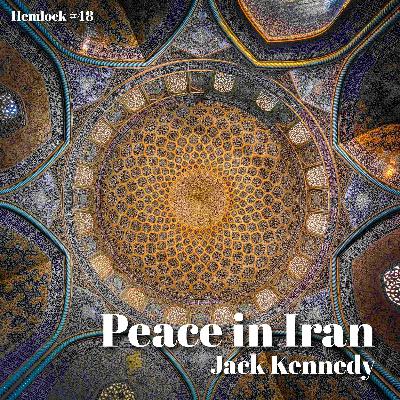
Nuclear Risk Editorial Fellow Jack Kennedy https://jackkennedy.ie/about/ comes back for the second time to talk Strait of Hormuz, Israel's nuclear option, NATO proliferation risks, Nixon, Kissinger, and Vietnam. "Belt of radioactive cobalt" mentioned. By the way, ships are already paying in Yuan to access the Strait, and the IRGC has confirmed control of a working route through the Strait - if you pay in Chinese money...Follow Jack on BlueskyFollow Will on Substack - by the way, if you haven't rated the show on Spotify or Apple, please do so. The algo is suppressing my ratings to some degree. The Patreon version of this show has better music.Sources Mentioned:Iran’s Parliament working on bill to impose fees on ships in Strait of Hormuz (March 26 2026, AP)Interview with Zbigniew Brzezinski (Carter Admin, Operation Cyclone) admits to using Mujahedeen fighters to create quagmire for Soviets - Jan 1998Poland seeks as much autonomy as possible in terms of nuclear arms, Tusk says (Reuters, March 3 2026)Not One Inch - M. E. SarotteGoverning From the Skies by Thomas HipplerThe Samson Option by Seymour HershWAS IT OBLITERATION? The US attack on Iran may not have wiped out its nuclear ambitions but it did set them back years by Seymour HershCamus editorial after Hiroshima (Aug 8th 1945)In The Loop (2009 British Diplomatic Comedy)The Thick of It (Also British Political Comedy)Inside the Kremlin's Cold War by Zubok and Pleshakov 1890 treatise Alfred Thayer Mahan The Influence of Sea Power on HistoryMusic and Image Credits:Didn't Know What I Was In For by Better Oblivion Community CenterCurb Your Enthusiasm Song Cover (YouTube)Cover Image: by Domiri Ganji (permission requested)GeneralOperation Unthinkable (Churchill)Arkangel Intervention / North Russia interventionHuman Remains in Space over Navajo ObjectionsThe Algiers Putsch 1961Operation Vulture (US Nuclear Negotiation with France over Dien Bien Phu, 1954, Dulles and Radford)1979 Vela Incident

Hiroshima rages while Nagasaki prays. FULL EPISODE DESCRIPTION ON PATREONI'm joined for a second time by friend of the show Franco Castro Escobar, a PhD researcher at Keele University in the UK. This time we discuss life in Nagasaki before, during, and after the nuclear attack, trauma and education, the developmental origins of youth antinuclear activists, hibaku Maria and the destruction of the Urakami Cathedral, Iwo Jima and the Pacific Theater, disaster storytelling and kataribe, militarism in San Diego, efforts to rewrite and suppress history in Japan, Iris Chang and Nanking, and American imperial activities vis a vis the dreaded "counterproliferation" - empowering allies to acquire nuclear weapons or attack adversary states with nuclear breakout potential as an alternative to diplomacy.We also talk about the beautiful camphor trees in Nagasaki, many of which are still alive today despite being charred and cracked by nuclear blast, the longstanding commitment to nonviolence and prayer as an alternative to hatred in Nagasaki, and some important poetry and theology connected to the hibakusha (atomic bomb survivor) movement that expresses the 'ultimate aspiration' of Hiroshima and Nagasaki to be the last cities attacked by atomic bombs as we transition to a more peaceful world, one that must be free of nuclear weapons and threats of their retention and use.This episode aims to answer a few questions that ought to be important to all of us, namely:How can children be taught the truth about the historical effects and current reality of nuclear weapons proliferation?Why did the United States really attack Hiroshima and Nagasaki?How do religious beliefs (and the lack thereof) influence how people interpret collective tragedies and respond?SHOW NOTESFranco's article Youth antinuclear socialisation in Japan: early encounters with the concept of nuclear weaponsUrakami Cathedral, largest Catholic cathedral in AsiaBook: The Bells of Nagasaki by Takashi NagaiResearch Center for Nuclear Weapons AbolitionKataribe StorytellingDisaster StorytellingMinamata Mercury Poisoning ScandalBarefoot Gen (Best Hiroshima teaching resource for kids, acc to Franco, genre: Anime and Manga)Book: Nagasaki by Susan SouthardBook: Sadako and the Thousand Paper Cranes by Eleanor CoerrBook: Flags of Our Fathers by James BradleyBook: When We Say Hiroshima: Selected Poems by Kurihara SadakoBook: Command and Control by Eric SchlosserBook: Nuclear War: A Scenario by Anne JacobsenBook: The Rape of Nanking by Iris ChangThe 1971 Blood Telegram (Bangladesh Genocide/US State Dept)Music Credit (Fair Use Asserted by Author): 福山雅治 - クスノキ-500年の風に吹かれて-(KUSUNOKI PROJECT ver.) https://youtu.be/JumRmUwmOgs
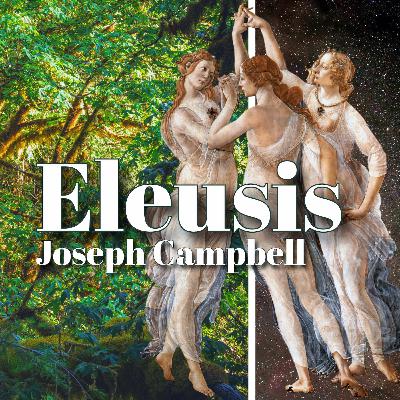
Happy Equinox. The Beginning, is at last: beginning.Music Credit: Beethoven / Piano Concerto No. 5 "Emperor" Gernot Schmalfuss / Music Director and Chief Conductor Gwhyneth Chen / Piano Evergreen Symphony Orchestra National Concert Hall, Taipei, Taiwan 13 Nov. 2020 (Creative Commons).Percy Bysshe ShelleyHymn to the Spirit of Nature (1820).from Prometheus Unbound (Act II, Scene V):Life of Life! Thy lips enkindleWith their love the breath between them;And thy smiles before they dwindleMake the cold air fire; then screen themIn those locks, where whoso gazesFaints, entangled in their mazes.Child of Light! Thy limbs are burningThrough the veil which seems to hide them,As the radiant lines of morningThrough thin clouds, ere they divide them;And this atmosphere divinestShrouds thee wheresoe'er thou shinest.Fair are others; none beholds Thee;But thy voice sounds low and tenderLike the fairest, for it folds theeFrom the sight, that liquid splendor;And all feel, yet see thee never,—As I feel now, lost for ever!Lamp of Earth! Wheree'er thou movestIts dim shapes are clad with brightness,And the souls of whom thou lovestWalk upon the winds with lightnessTill they fail, as I am failing,Dizzy, lost, yet unbewailing!

You can find the full talk from March 2025, officially-titled "Normalizing Genocide and the New World Order" at the link below, via The Sanctuary for Independent Media, which Chris has lectured at for years. Chris also writes on Substack "The Chris Hedges Report" and has a podcast of the same name.Hedges also wrote something like 12 books, which I've read about 9 of, personally. Each was life-changing. I would start with "Our Class: Trauma and Transformation in an American Prison" (2014) by Chris Hedges.Rest of episode description available free on Patreon.
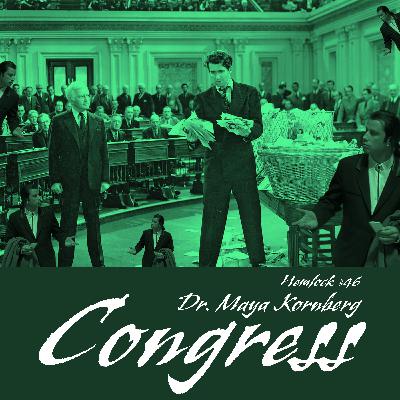
Full episode description on PatreonI am joined (just in time for the all-important Vernal Equinox on March 21st) - with the brilliant and timely Dr. Maya Kornberg https://www.mayakornberg.com/.Her new book STUCK: How Money, Media, and Violence Prevent Change in Congress was released March 10th and can be purchased now. (Non-affiliate link). Personal Disclaimer: I was given a hardcover of this book to review by Page One Media. I have never paid anyone, nor has anyone ever paid me, nor will anyone ever pay, to come on my show.Dr. Kornberg is a senior research fellow at NYU Law's Brennan Center for Justice and the author of Inside Congressional: Committees: Function and Dysfunction in the Legislative Process.SOUND AND IMAGE CREDITS:Intro: Schubert, Impromptu No. 3 in G-flat Major by Max John. Link's to Max's work in other episode descriptions or by searching YouTube.Please watch as much Frank Capra as possible, including Mr. Smith Goes to Washington (1939) from which I derive the cover image as well, apparently, as the absolutely bizarre trailer at the end, which you can watch here, courtesy Sony Pictures Entertainment (don't DMCA me, you swine! - it is artistic commentary and I assert Fair Use!):https://youtu.be/bXoF7w6IWAc
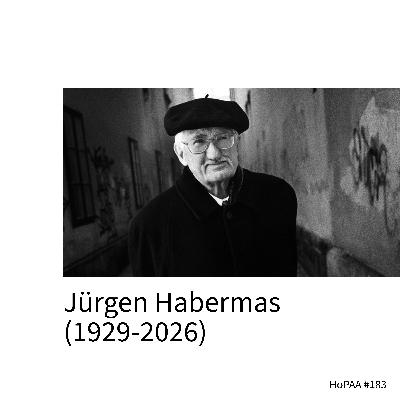
RIP Habermas. Rick Roderick and Michael Sugrue (both also gone, Sugrue earlier this year) remember the life and theory of Jürgen Habermas and the Frankfurt School."Don't think that this is some fancy-Dan academic exercise. A lot of people have died because they read a book the wrong way. "-Rick Roderick on Habermas and the importance of the humanities.

If you enjoy this work, please support the show on Patreon!Will (the host) writes a Substack page about various and sundry topics. Plotinus (204-270 CE) was a mystical philosopher who transformed Plato's metaphysical ideas about the Forms and the divine intellect or nous into a spiritual path. In this lecture, Pierre Grimes (1924-2024 CE) introduces Plotinus and his work as recorded by his student Porphyry in The Enneads - a six-part treatise on the mystical ascent of the soul."That which gives pre-eminence to the members of any class...is the word 'Greatness... No one would have an interest in that experience, if it was not also Beautiful"-this 03/24/1998 lecture, catalogue number NSPRS 092You can find the original video, with chalkboard explanations here.https://youtu.be/Cvs52cBjpgU?list=PLp6rnhCy8XkqKXmCtLRqC4hOFnEaVVWZxThe Internet home for the Noetic Society is available here, on YouTube:https://www.youtube.com/@NoeticSocietyPierre Grimes had a remarkable life. He was an American boy who volunteered to fight Fascism at the age of 17, and earned a Bronze Star with an Oak Leaf Cluster, a Purple Heart, and a Bronze Arrowhead (for the amphibious landing at Dramont "Red Beach" in the south of France, part of Operation Dragoon). For WW2-heads he served in the 1st Battalion, 142nd Infantry Regiment (part of the 36th Infantry Division). He saw heavy combat in the European theater, and participated in the grotesque and shocking liberation of 'satellite' concentration camps outside of Dachau.After the war, Grimes used philosophy to work with alcoholics on substance abuse. He thought the Socratic method of maieutics or 'midwifery' was a broadly-applicable dialectical procedure that could show false and disempowering beliefs for what they were, thus eliminating the root cause of a patient's substance-seeking and self-defeating behaviors. He wrote a pair of modern Socratic-style dialogues titled the Vinodorus and the Alcibiades in an attempt to promote philosophy as psychotherapy, and philosophy as a way of life.In this way, he resembles another philosophical psychotherapist whose work was transformed by his experience of the Nazi Holocaust, Jewish survivor Viktor Frankl. Frankl, like Grimes, was horrified at how casually otherwise decent people could commit acts of total moral worthlessness. He saw their easily parallelized nature, a normalized schizophrenia: at once decent family men who put others first and strove for wisdom and faith, and at the other extreme: disciplined killers and torturers who accomplished their task with vigor, clarity, enthusiasm, and yes, even Joy (As in Joy Division). The shock of Grimes' experience liberating these camps, combined with the heavy fighting he saw near the Monte Artemisio ridge and elsewhere left a deep mark, and triggered a search for wisdom in Greek and Hellenistic philosophy as well as the classics of Indian, Hindu, and Buddhist spirituality.In 1967 he started the Noetic Society to study Socrates, Plato, and the Neoplatonists along with Indian religion, tantra, and Zen. One of his most intriguing experiments was the software program "To Artemis: The Challenge to Know Thyself" which used "400 structured questions" to model a process users could follow to solve their own problems and explore their beliefs. This is no longer extant anywhere on the Internet - I have posted in various places trying to resurrect it, but to no avail. If you are willing to waste some time, contact whoever is left at this place, and see if we can revive Artemis, or at least read the questions.https://www.noeticsociety.org/members--//--Music by Max John, Schubert Impromptu No.3 in G-flat Majorhttps://www.youtube.com/watch?v=icowasnkEqw
ADVISORY - Contains explicit description of warfare, killing, torture, and mutilation.FULL EPISODE DESCRIPTION ON PATREONMusic by Anapse.

FULL EPISODE DESCRIPTION ON PATREONI, William Engels, write articles on Substack.Books Mentioned:Arendt: Origins of TotalitarianismArendt: The Human ConditionArendt: Between Past and FutureProgressive Stages of Meditation on Emptiness by Ven. Khenpo Tsultrim Gyamtso Rinpoche"Natality" as a conceptThe Heart Sutra2666 by Roberto Bolaño (review so far, on page 250 of 1000 - no exaggeration - depressing and smart, but still a bit boring.The VALIS Trilogy by Philip K. Dick
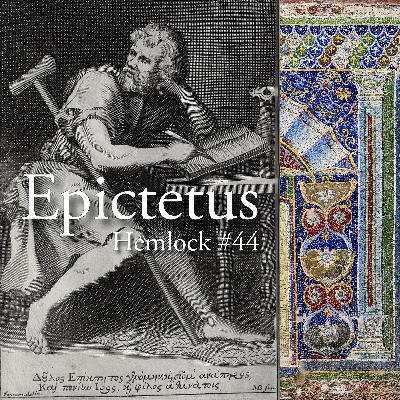
I read Epictetus Discourses and Enchiridion with Professor Gregory Sadler https://gregorybsadler.substack.com/ - although we both started off by dunking a bit on Bertrand Russell.Full show notes with books/links for free on Patreon
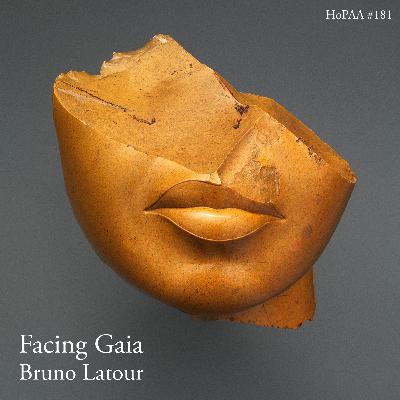
RIP Bruno Latour (1947-2022)Follow Will’s writing on his Substack page, Hemlock:https://williamengels.substack.comSupport the entire show on Patreon and get early access:https://patreon.com/c/hemlockpatreonIn 2013, philosopher Bruno Latour delivered his lecture series “Facing Gaia: Six Lectures on the Political Theology of Nature” at the St. Cecilia Hall inside the University of Edinburgh. These are the six lectures:Lecture 1: Once Out of NatureLecture 2: The New Climatic RegimeLecture 3: The Puzzling Face of a Secular GaiaLecture 4: Anthropocene and the Destruction of the GlobeLecture 5: War of the WorldsLecture 6: Inside the "Parliaments of Nature"For further context, you can read the full discussion guide (144 pages) here. Here's a quick intro taken from the discussion guide (which was dedicated to Continental philosopher Peter Sloterdijk):Summary of the lectures: Those six lectures in ‘natural religion’ explore what it could mean to live at the epoch of the Anthropocene when what was until now a mere décor for human history is becoming the principal actor. They confront head on the controversial figure of Gaia, that is, the Earth understood not as system but as what has a history, what mobilizes everything in the same geostory. Gaia is not Nature, nor is it a deity. In order to face a secular Gaia, we need to extract ourselves from the amalgam of Religion and Nature. It is a new form of political power that has to be explored through a renewed attempt at political theology composed of those three concepts: demos, theos and nomos. It is only once the multiplicity of people in conflicts for the new geopolitics of the Anthropocene is recognized, that the ‘planetary boundaries’ might be recognized as political delineations and the question of peace addressed. Neither Nature nor Gods bring unity and peace. ‘The people of Gaia’, the Earthbound might be the ‘artisans of peace’.The lectures are organized by groups of two, the two first ones deal with the question of Natural Religion per se and show that the notion is confusing because on the one hand 'nature' and 'religion' share too many attributes and, on the other, the two notions fail to register the originality of scientific practice and the specificity of the religious regime of enunciation.Once the pleonasm of Natural Religion is pushed aside, it becomes possible to take up, in the next two lectures, the question,first of Gaia as it has been conceived by James Lovelock and of the Anthropocene, as it has been explored by geologists and climate scientists. It is thus possible to differentiate the figure of the Earth and of the agencies that populate it from the notion of nature and of the globe thus bringing to the fore the geostory to which they all belong.In the last two lectures, after the notion of Natural Religion has been put aside, and after the complete originality of Gaia and geostory have been foregrounded, it becomes possible to reopen the political question at the heart of what will be life at the Anthropocene. Once the key question of war has been introduced, the search for a peace along the delineations allowed by politically relevant 'planetary boundaries' to which Earthbound (the new word for Humans) accept to be bound become again possible.Credits:Art Credit: Egyptian Fragment of Queen's Face, Amarna Period, Ancient Egypt, Metropolitan Museum of New York. Carved in yellow jasper. Creative Commons.Source Material, University of Edinburgh, 2013. Fair Use.Ending Song: Anastasia Huppmann performs Beethoven, Piano Sonata No.30 in E major. Creative Commons.Interlude Song: Beethoven Piano Sonata No. 4 in E-flat major, performed by Burhan Erdemir. Creative Commons.Intro Song: Schubert, Impromptu No.3 in G-flat major, performed by Max John. Creative Commons.

"Fascism is the desire for a simple folk tale" - Thomas Mann, I think.Substack's and LEPHT HAND's own Emma Stamm https://substack.com/@elftheory rejoins Will for a follow-up conversation on nuclear weapons technology, Martin Heidegger's Question Concerning Technology (1954), artificial intelligence, psychedelics research, and why becoming idiots might save us in the end.Follow William Engels' writing on Substack:williamengels.substack.comFollow Will's entire creative output on Patreon.com:patreon.com/c/hemlockpatreonReferences:Walter Benjamin, Sixth Thesis on the Concept of HistoryJudith Herman (Trauma and Recovery)Castle Bravo Thermonuclear Bomb TestAtoms for Peace (1954)William Lovitt edition of Heidegger's essays, including Question Concerning Technology
RIP Michael Parenti (1933-2026). A brave, undimmed (sometimes controversial, of course) critic of that great juggernaut of death: the American Empire.HoPAA #180Watch the full video here from the College of DuPage here:https://youtu.be/OOF56wYTl1wREAD TRANSCRIPT AND POST MEMES ON PATREON:https://www.patreon.com/posts/151201440

Reading Martin Heidegger is tough. Here to introduce us to some core concepts in The Question Concerning Technology (1954) is Greg Sadler, whose YouTube channel https://www.youtube.com/@GregoryBSadler "That Philosophy Guy" has just racked up over 170K subscribers and whose podcast Sadler's Lectures (Spotify Link) is updated almost every day, including an ongoing discussion of Jeremy Bentham.This 2-part lecture, which you can watch on YouTube here covers Heidegger's discussion of Aristotelian causality, including the so-called 'Four Causes' as well as Heidegger's discussion of unveiling and bringing-forth (aletheia, Greek), enframing (Gestell) and standing-reserve. Rest of the shownotes on the Patreon post.
Hemlock #42 - Support the History of Philosophy Audio Archive on Patreon, and follow William Engels's writing on Substack.I am joined on this episode by independent writer and philosopher Emma Stamm to discuss the late, great, Mark Fisher. Emma is a member of the theory collective LEPHT HAND, and she has a new online course enrolling soon/now on Mark Fisher's "Acid Communism." You can also follow Emma's writing (Elf Theory) on Substack.SHOW NOTES:Books and Articles Referenced:Books by Mark Fisher:Acid Communism (Unfinished Introduction, 2016)Capitalist Realism: Is There No Alternative? (2009)The Weird and the Eerie (2016)Postcapitalist Desire: The Final Lectures (2020)Ghosts of My Life: Writings on Depression, Hauntology, and Lost Futures (2014)K-Punk: Politics (Anthology, 2020)More Everything Forever: AI Overlords, Space Empires, and Silicon Valley's Crusade to Control the Fate of Humanity (2025) by Adam BeckerTrauma and Recovery: The Aftermath of Violence - From Domestic Abuse to Political Terror (1992) by Judith HermanPostscript on the Societies of Control (1990) by Gilles DeleuzeWorks by philosopher Byung-Chul Han:The Agony of Eros (2017)Psychopolitics: Neoliberalism and New Technologies of Power (2014)The Burnout Society (2010)Gaia Wakes: Earth's Emergent Consciousness in an Age of Environmental Devastation (2025) by Topher McDougalBook that Emma and I did NOT like about 'longtermism' and Effective Altruism: What We Owe the Future (2022) by William MacAskillOther Events, People, References:Haight-Ashbury Human Be-In (January 1967)Jacob Chansley the " QAnon Shaman"Timothy Leary and Eldridge Cleaver do LSD in Algeria (1970)
For Hemlock #41 on the History of Philosophy Audio Archive I am joined by MKUltra survivor Bill Yarborough to discuss government secrecy, Cold War hijinks, the refinement of torture techniques over the years, and the history of domestic covert operations in the United States.This episode contains descriptions of torture and child abuse, so please be forewarned.Bill has recently published a book (a work of fiction inspired by real experiences) about MKUltra. We dug in deep on the Cold War, the nuclear arms race, the Third Reich, movies about Nixon, Johnson, and Kennedy, and the origin of US torture programs in Latin America and elsewhere.NOTESBooks Referenced on the Show:Poisoner in Chief: Sidney Gottlieb and the CIA Search for Mind Control by Stephen Kinzer. (Highly Recommended / Excellent Author)The Search for the Manchurian Candidate: The CIA & Mind Control by John D. MarksThe Shock Doctrine: The Rise of Disaster Capitalism by Naomi Klein (also highly recommended. Klein is a marvelous journalist and writer).The Crying of Lot 49 (1966) by Thomas Pynchon (see the bit about "Dr. Hilarius" from Wikipedia:Dr. Hilarius – Oedipa's psychiatrist, who tries to prescribe LSD to Oedipa as well as to other housewives. Toward the end of the book, he goes crazy and admits to being a former Nazi medical intern at Buchenwald concentration camp, where he worked in a program on experimentally-induced insanity, which he supposed was a more "humane" way of dealing with Jewish prisoners than killing.JFK and the Unspeakable: Why He Died & Why It Matters by James W. Douglass (2008). Very good Kennedy assassination book. Includes an interesting discussion of Thomas Merton's (possible) assassination as well, along with rich connections to liberation theology.Movies Referenced on the Show:Secret Honor (Robert Altman, 1984)Thirteen Days (Roger Donaldson, 2000)Nixon: Director's Cut (Oliver Stone, 1995)Historical Events and Other References:Lead article in the Canadian Press about MKUltra lawsuitsOperation Paperclip (OSS/CIA Operation to bring Nazis to US)Hemi-Sync (Project Stargate developed guided meditation album for out-of-body experiences, one friend called it 'DIY MKUltra')Operation Sea-Spray (Domestic US Navy biological warfare experiment in SF)Operation Sunrise (OSS/Allen Dulles attempt to negotiate separate peace with Heinrich Himmler, AKA the Berne incident)Otto Ambros (Nazi concentration camp chemist, developer of Sarin gas and thalidomide)Otto Skorzeny (Waffen SS officer, rescued Benito Mussolini from prison, GLADIO operative)Unit 731 (Japanese Imperial Army biological warfare unit)Mike Mansfield (Senator, called for CIA oversight committee)Project Plowshare (theoretical nuclear terraforming of landscapes)Operation Gladio (stay-behind paramilitary network in Europe of far-right gangsters and mercenaries)40 Committee (Assassination program established under Eisenhower and headed by VP Nixon, responsible for planning Castro's assassination)Operation Midnight Climax (subproject of MKUltra, sex and interrogation)E. Howard Hunt (CIA agent, White House "plumber" under Nixon, prolific author)Happy nightmare reading...
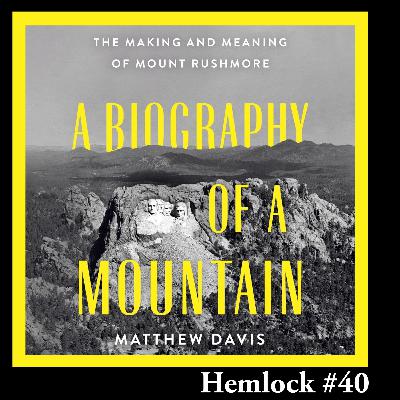
Support the Archive on Patreon! Follow William Engels's writing on Substack. Who do the Black Hills really belong to? Was George Armstrong Custer a hero, an idiot, or a fanatic? Who carved Mount Rushmore, and what was it supposed to represent (the "apotheosis of Western Civilization?") What happened at Wounded Knee (in 1890, and 1973) - and why does Secretary of War (sic) Pete Hegseth (sick) want to make sure that those Medals of Honor are preserved?My guest on Hemlock #40 was Matthew Davis, author of A Biography of a Mountain: The Making and Meaning of Mount Rushmore available now in bookstores. You can read more about Matthew on his website, https://www.matthewdaviswriter.com/NOTESBooks:The Heartbeat of Wounded Knee by David TreuerAmerican Holocaust: The Conquest of the New World by David E. StannardDeath Sonnet for Custer by Walt Whitman (later titled "From Far Dakota's Canons" in Leaves of Grass:FROM far Dakota's cañons,Lands of the wild ravine, the dusky Sioux, the lonesome stretch, thesilence,Haply to-day a mournful wail, haply a trumpet-note for heroes.The battle-bulletin,The Indian ambuscade, the craft, the fatal environment,The cavalry companies fighting to the last in sternest heroism,In the midst of their little circle, with their slaughter'd horsesfor breastworks,The fall of Custer and all his officers and men.Continues yet the old, old legend of our race,The loftiest of life upheld by death, 10The ancient banner perfectly maintain'd,O lesson opportune, O how I welcome thee!As sitting in dark days,Lone, sulky, through the time's thick murk looking in vain for light,for hope,From unsuspected parts a fierce and momentary proof,(The sun there at the centre though conceal'd,Electric life forever at the centre,)Breaks forth a lightning flash.Thou of the tawny flowing hair in battle,I erewhile saw, with erect head, pressing ever in front, bearing abright sword in thy hand, 20Now ending well in death the splendid fever of thy deeds,(I bring no dirge for it or thee, I bring a glad triumphal sonnet,)Desperate and glorious, aye in defeat most desperate, most glorious,After thy many battles in which never yielding up a gun or a colorLeaving behind thee a memory sweet to soldiers,Thou yieldest up thyself.

Support this work on PatreonRead the full write-up on this archive on William Engels's Substack, Hemlock.Part 1 of 2:We all have our little solipsistic delusions, ghastly intuitions of utter singularity: that we are the only one in the house who ever fills the ice-cube tray, who unloads the clean dishwasher, who occasionally pees in the shower, whose eyelid twitches on first dates; that only we take casualness terribly seriously; that only we fashion supplication into courtesy; that only we hear the whiny pathos in a dog's yawn, the timeless sigh in the opening of the hermetically-sealed jar, the splattered laugh in the frying egg, the minor-D lament in the vacuum's scream; that only we feel the panic at sunset the rookie kindergartner feels at his mother's retreat. That only we love the only-we. That only we need the only-we. Solipsism binds us together, J.D. knows. That we feel lonely in a crowd; stop not to dwell on what's brought the crowd into being. That we are, always, faces in a crowd."-Westward The Course Of Empire Takes Its Way", Girl With Curious HairIn an act of desperate folly, I have collated (by my count, which could be wrong) twenty-nine different recordings of DFW, (29!) - and placed them in as strict a chronological order as the otherwise-degraded catalogues of 90s and 00s public radio metadata will allow. There are various (much older) DFW audio archive projects - which I have used to make this - but they are half the size/accuracy/detail of THIS behemoth. May its 14 hour bulk guide you through the 14-hour night of the Winter Solstice. Depending on latitude.If you listen to this, you are empowered to say with a straight face that you have heard every interview that David Foster Wallace ever gave. This is my holiday gift to all of you, and my sign-off for the year, as I head home for Christmas.Enjoy.Music Credits: Creative Commons: Chopin, Raindrop Prelude Op 28 No 15, CC-0 performed by Rousseau (YouTube)

Support this work on PatreonRead the full write-up on this archive on William Engels's Substack, Hemlock.Part 2 of 2:We all have our little solipsistic delusions, ghastly intuitions of utter singularity: that we are the only one in the house who ever fills the ice-cube tray, who unloads the clean dishwasher, who occasionally pees in the shower, whose eyelid twitches on first dates; that only we take casualness terribly seriously; that only we fashion supplication into courtesy; that only we hear the whiny pathos in a dog's yawn, the timeless sigh in the opening of the hermetically-sealed jar, the splattered laugh in the frying egg, the minor-D lament in the vacuum's scream; that only we feel the panic at sunset the rookie kindergartner feels at his mother's retreat. That only we love the only-we. That only we need the only-we. Solipsism binds us together, J.D. knows. That we feel lonely in a crowd; stop not to dwell on what's brought the crowd into being. That we are, always, faces in a crowd."-Westward The Course Of Empire Takes Its Way", Girl With Curious HairIn an act of desperate folly, I have collated (by my count, which could be wrong) twenty-nine different recordings of DFW, (29!) - and placed them in as strict a chronological order as the otherwise-degraded catalogues of 90s and 00s public radio metadata will allow. There are various (much older) DFW audio archive projects - which I have used to make this - but they are half the size/accuracy/detail of THIS behemoth. May its 14 hour bulk guide you through the 14-hour night of the Winter Solstice. Depending on latitude.If you listen to this, you are empowered to say with a straight face that you have heard every interview that David Foster Wallace ever gave. This is my holiday gift to all of you, and my sign-off for the year, as I head home for Christmas.Enjoy.Music Credits: Creative Commons: Chopin, Raindrop Prelude Op 28 No 15, CC-0 performed by Rousseau (YouTube)

Comments

Download from Google Play

Download from App Store
 United States