


 Claim Ownership
Sex and Psychology Podcast
Subscribed: 2,228Played: 108,589
Subscribe

© Justin J. Lehmiller. All rights reserved.
Description
The Sex and Psychology Podcast is the sex ed you never got in school—and won’t find anywhere else. Kinsey Institute researcher Dr. Justin Lehmiller takes you on a journey through the psychology of sex and relationships, offering practical tips along the way that can help you take your intimate life to the next level. Learn more on Dr. Lehmiller’s blog at sexandpsychology.com
487 Episodes
Reverse
Dating apps make it seem like you can swipe your way to the perfect partner. But attraction isn’t something we can fully predict from profiles. It emerges through interaction. So what happens when we try to optimize something that’s inherently unpredictable? In this episode, we break down the psychology of online dating and how to approach it more effectively.
I am joined once again by Dr. Paul Eastwick, a Professor of Psychology at UC Davis, where he serves as the head of the Social-Personality Psychology program. He hosts the popular podcast Love Factually with his long-time colleague, Eli Finkel, where they analyze rom-coms and romantic dramas from the perspective of relationship science. Paul is also author of the new book Bonded by Evolution.
Some of the specific topics we explore in this episode include:
Why might using multiple dating strategies improve your odds?
Can AI predict attraction better than we can ourselves?
How accurate are first impressions on dating apps?
Is there an optimal timeline for meeting in person after matching?
What strategies lead to healthier online dating experiences?
You can check out Paul’s website to learn more about his work.
Got a sex question? Send me a podcast voicemail to have it answered on a future episode at speakpipe.com/sexandpsychology.
***
Thank you to our sponsors!
Head to https://paired.com/JUSTIN and download the #1 app for couples to start maintaining your lasting love today.
If you’re looking to gain a broad understanding of human sexuality or refresh your knowledge, check out the upcoming Human Sexuality Intensive courses at the Kinsey Institute: https://kinseyinstitute.org/learning/human-sexuality-intensive.html
***
Want to learn more about Sex and Psychology? Click here for previous articles or follow the blog on Facebook, Twitter, or Bluesky to receive updates. You can also follow Dr. Lehmiller on YouTube and Instagram.
Listen and stream all episodes on Apple, Spotify, or Amazon. Subscribe to automatically receive new episodes and please rate and review the podcast!
Credits: Precision Podcasting (Podcast editing) and Shutterstock/Florian (Music). Image created with Canva; photos used with permission of guest.
Most of us think we know what we’re looking for in a partner. We have a “type,” a mental checklist, and the belief that if someone checks enough boxes, everything else will fall into place. But decades of research suggest that attraction and compatibility don’t work that way. In this episode, we’ll unpack how attraction really unfolds and why chemistry is so hard to predict.
My guest is Dr. Paul Eastwick, a Professor of Psychology at UC Davis, where he serves as the head of the Social-Personality Psychology program. He hosts the popular podcast Love Factually with his long-time colleague, Eli Finkel, where they analyze rom-coms and romantic dramas from the perspective of relationship science. Paul is also author of the new book Bonded by Evolution.
Some of the specific topics we explore in this episode include:
What’s the link between what we say we want and who we actually fall for?
Do we really have a “type” when it comes to romantic partners?
Why is it so hard to predict whether two people will feel a spark?
How can we improve our chances of finding a compatible partner?
How much does long-term satisfaction depend on initial compatibility?
You can check out Paul’s website to learn more about his work.
Got a sex question? Send me a podcast voicemail to have it answered on a future episode at speakpipe.com/sexandpsychology.
***
Thank you to our sponsors!
Discover how care in every detail transforms simple routines into moments of true comfort and ease. Head to cozyearth.com and use my code JUSTIN for up to 20% off. Experience the craft behind the comfort with Cozy Earth, and make every day feel intentional.
***
Want to learn more about Sex and Psychology? Click here for previous articles or follow the blog on Facebook, Twitter, or Bluesky to receive updates. You can also follow Dr. Lehmiller on YouTube and Instagram.
Listen and stream all episodes on Apple, Spotify, or Amazon. Subscribe to automatically receive new episodes and please rate and review the podcast!
Credits: Precision Podcasting (Podcast editing) and Shutterstock/Florian (Music). Image created with Canva; photos used with permission of guest.
Humans have always been kinky, but what we fetishize and why has changed over time. In this episode, we’re revisiting the fascinating history behind some of the most common fetishes. From leather and nylon to the enduring appeal of feet, we’ll unpack how culture, technology, and history shaped these desires. We’ll also dive into the unexpected history of pornography and explore how hentai emerged as a major form of erotic storytelling.
My guest is Esmé Louise James, who is best known for her Kinky History podcast and social media series which has amassed nearly 3 million followers. Esmé is author of the book Kinky History: A Rollicking Journey Through Our Sexual Past, Present, and Future.
Some of the specific topics we explore in this episode include:
How did leather and nylon come to be associated with sex?
When did foot fetishes start to become popular?
How long have humans been making porn?
Historically, why was porn often used for political purposes?
When did cartoon/animated porn begin to rise in popularity?
To hear more from Esmé about our kinky history, check out her previous appearances on the show in episodes 207, 208, and 343.
Got a sex question? Send me a podcast voicemail to have it answered on a future episode at speakpipe.com/sexandpsychology.
***
Thank you to our sponsors!
Load Boost is a supplement designed to improve the taste, volume, and overall health of your semen. If you want to elevate your sexual performance, check out Load Boost from VB Health. Visit vb.health to learn more and save 10% with code JUSTIN.
If you’re looking to gain a broad understanding of human sexuality or refresh your knowledge, check out the upcoming Human Sexuality Intensive courses at the Kinsey Institute: https://kinseyinstitute.org/learning/human-sexuality-intensive.html
***
Want to learn more about Sex and Psychology? Click here for previous articles or follow the blog on Facebook, Twitter, or Bluesky to receive updates. You can also follow Dr. Lehmiller on YouTube and Instagram.
Listen and stream all episodes on Apple, Spotify, or Amazon. Subscribe to automatically receive new episodes and please rate and review the podcast!
Credits: Precision Podcasting (Podcast editing) and Shutterstock/Florian (Music). Image created with Canva; photos used with permission of guest.
How much do you really know about orgasms? In this episode, we answer common questions about climax and explore the concept of orgasm equity, including what it really means to close the orgasm gap. We’ll also discuss strategies for experiencing more pleasure, and whether becoming multi-orgasmic is something you can actually learn.
My guest is Dr. Candice Nicole Hargons, an award-winning Associate Professor at Emory University’s Rollins School of Public Health, where she studies sexual wellness and liberation. With over 70 published articles, Dr. Hargons has made substantial contributions to the field. Her work has also been featured widely in the popular media. Her latest book is titled Good Sex.
Some of the specific topics we explore in this episode include:
Who’s responsible for your orgasm during partnered sex?
What do porn and popular media get wrong about how orgasms are portrayed?
Why do some people feel like they need to fake orgasms?
Is it ever okay to fake an orgasm?
Scientifically, what actually is an orgasm anyway?
Check out Candice’s website to learn more about her work.
Got a sex question? Send me a podcast voicemail to have it answered on a future episode at speakpipe.com/sexandpsychology.
***
Thank you to our sponsors!
Load Boost is a supplement designed to improve the taste, volume, and overall health of your semen. If you want to elevate your sexual performance, check out Load Boost from VB Health. Visit vb.health to learn more and save 10% with code JUSTIN.
Passionate about building a career in sexuality? Check out the Sexual Health Alliance. With SHA, you’ll connect with world-class experts and join an engaged community of sexuality professionals from around the world. Visit SexualHealthAlliance.com and start building the sexuality career of your dreams today.
***
Want to learn more about Sex and Psychology? Click here for previous articles or follow the blog on Facebook, Twitter, or Bluesky to receive updates. You can also follow Dr. Lehmiller on YouTube and Instagram.
Listen and stream all episodes on Apple, Spotify, or Amazon. Subscribe to automatically receive new episodes and please rate and review the podcast!
Credits: Precision Podcasting (Podcast editing) and Shutterstock/Florian (Music). Image created with Canva; photos used with permission of guest.
When people open a relationship, they often start by asking: what are the rules? But the real key to healthy non-monogamy isn’t rules. It’s clarity about needs, desires, and expectations. In this episode, we’re talking about how to design relationship agreements that actually work.
I am joined once again by Dr. Nicole Thompson, a sex and relationship psychotherapist and host of the popular podcast, Modern Anarchy. She is the author of The Psychedelic Jealousy Guide: Crafting Secure Non-Monogamous Relationships. She is also the founder of The Pleasure Practice, where she supports individuals in crafting pleasurable sex lives and expansive non-monogamous relationships.
Some of the specific topics we explore in this episode include:
What’s the difference between our needs and our desires?
How can partners discuss and negotiate different desires in healthy ways?
What kinds of things should go into a relationship agreement?
How do you cultivate feelings of security in a non-monogamous relationship?
To learn more, check out the Modern Anarchy website.
Got a sex question? Send me a podcast voicemail to have it answered on a future episode at speakpipe.com/sexandpsychology.
***
Thank you to our sponsors!
Level-up your bedroom skills with Beducated. Featuring more than 150 online courses taught by the experts, Beducated brings pleasure-based sex ed directly into your bedroom. Kick off your journey by taking Beducated’s Quiz to get your personalized roadmap to sexual happiness at https://beducate.me/pd2610-lehmiller
If you’re looking to gain a broad understanding of human sexuality or refresh your knowledge, check out the upcoming Human Sexuality Intensive courses at the Kinsey Institute: https://kinseyinstitute.org/learning/human-sexuality-intensive.html
***
Want to learn more about Sex and Psychology? Click here for previous articles or follow the blog on Facebook, Twitter, or Bluesky to receive updates. You can also follow Dr. Lehmiller on YouTube and Instagram.
Listen and stream all episodes on Apple, Spotify, or Amazon. Subscribe to automatically receive new episodes and please rate and review the podcast!
Credits: Precision Podcasting (Podcast editing) and Shutterstock/Florian (Music). Image created with Canva; photos used with permission of guest.
Beginning a consensually non-monogamous relationship can trigger reactions you never saw coming. For example, the first time your partner connects with someone else, your body might react like there’s danger. So why is that? Today, we’re going to explore how to craft secure non-monogamous relationships and work skillfully with intense emotions that might arise along the way.
My guest is Dr. Nicole Thompson, a sex and relationship psychotherapist and host of the popular podcast, Modern Anarchy. She is the author of The Psychedelic Jealousy Guide: Crafting Secure Non-Monogamous Relationships. She is also the founder of The Pleasure Practice, where she supports individuals in crafting pleasurable sex lives and expansive non-monogamous relationships.
Some of the specific topics we explore in this episode include:
In what ways is exploring non-monogamy akin to the experience of taking a psychedelic?
How can somatic regulation help when we’re experiencing jealousy and other intense emotions?
What factors contribute to feelings of jealousy in non-monogamous relationships?
What does it look like to transform our relationship with jealousy?
To learn more, check out the Modern Anarchy website.
Got a sex question? Send me a podcast voicemail to have it answered on a future episode at speakpipe.com/sexandpsychology.
***
Thank you to our sponsors!
Discover how care in every detail transforms simple routines into moments of true comfort and ease. Head to cozyearth.com and use my code JUSTIN for up to 20% off. Experience the craft behind the comfort with Cozy Earth, and make every day feel intentional.
Passionate about building a career in sexuality? Check out the Sexual Health Alliance. With SHA, you’ll connect with world-class experts and join an engaged community of sexuality professionals from around the world. Visit SexualHealthAlliance.com and start building the sexuality career of your dreams today.
***
Want to learn more about Sex and Psychology? Click here for previous articles or follow the blog on Facebook, Twitter, or Bluesky to receive updates. You can also follow Dr. Lehmiller on YouTube and Instagram.
Listen and stream all episodes on Apple, Spotify, or Amazon. Subscribe to automatically receive new episodes and please rate and review the podcast!
Credits: Precision Podcasting (Podcast editing) and Shutterstock/Florian (Music). Image created with Canva; photos used with permission of guest.
Humans evolved for face-to-face courtship in small communities, where attraction unfolded gradually and choices were limited. Today, we’re navigating global dating markets, algorithms, AI recommendations, endless novelty, and constant rejection. So what happens when ancient mating psychology collides with modern technology?
I am joined once again by Dr. Justin Garcia, evolutionary biologist and Executive Director of the Kinsey Institute at Indiana University. He is the chief scientific advisor for Match, and author of the new book The Intimate Animal: The Science of Sex, Fidelity, And Why We Live and Die For Love.
Some of the specific topics we explore in this episode include:
How do dating apps shape our dopamine responses and bonding tendencies?
Could AI actually improve mate selection, or is that better left to humans?
Are changing relationship patterns a sign of human adaptability, or something else?
Where might the future of sex, dating, and intimacy be headed?
To learn more about Dr. Garcia, follow @drjustingarcia on the socials.
Got a sex question? Send me a podcast voicemail to have it answered on a future episode at speakpipe.com/sexandpsychology.
***
Thank you to our sponsors!
If you’re ready to ditch the shady stuff and choose a libido supplement that’s effective and that you can feel confident about, it’s time to check out Drive Boost. Visit vb.health and use code JUSTIN for 10% off.
If you’re looking to gain a broad understanding of human sexuality or refresh your knowledge, check out the upcoming Human Sexuality Intensive courses at the Kinsey Institute: https://kinseyinstitute.org/learning/human-sexuality-intensive.html
***
Want to learn more about Sex and Psychology? Click here for previous articles or follow the blog on Facebook, Twitter, or Bluesky to receive updates. You can also follow Dr. Lehmiller on YouTube and Instagram.
Listen and stream all episodes on Apple, Spotify, or Amazon. Subscribe to automatically receive new episodes and please rate and review the podcast!
Credits: Precision Podcasting (Podcast editing) and Shutterstock/Florian (Music). Image created with Canva; photos used with permission of guest.
Why do we fall in and out of love so quickly? Why does love feel intoxicating at first, but complicated over time? The answer may be simpler than we think: humans are animals. Our brains were shaped by ancient mating systems that developed long before dating apps and modern culture. So what does it mean to be an “intimate animal?” And how much of our love lives today are still being driven by our evolutionary past?
My guest is Dr. Justin Garcia, evolutionary biologist and Executive Director of the Kinsey Institute at Indiana University. He is the chief scientific advisor for Match, and author of the new book The Intimate Animal: The Science of Sex, Fidelity, And Why We Live and Die For Love.
Some of the specific topics we explore in this episode include:
What makes intimacy such a defining part of our species?
Are humans built for monogamy or non-monogamy?
What happens inside the brain when we fall in love with someone?
Why does navigating sex and relationships in the modern world feel so challenging?
To learn more about Dr. Garcia, follow @drjustingarcia on the socials.
Got a sex question? Send me a podcast voicemail to have it answered on a future episode at speakpipe.com/sexandpsychology.
***
Thank you to our sponsors!
If you’re ready to ditch the shady stuff and choose a libido supplement that’s effective and that you can feel confident about, it’s time to check out Drive Boost. Visit vb.health and use code JUSTIN for 10% off.
Passionate about building a career in sexuality? Check out the Sexual Health Alliance. With SHA, you’ll connect with world-class experts and join an engaged community of sexuality professionals from around the world. Visit SexualHealthAlliance.com and start building the sexuality career of your dreams today.
***
Want to learn more about Sex and Psychology? Click here for previous articles or follow the blog on Facebook, Twitter, or Bluesky to receive updates. You can also follow Dr. Lehmiller on YouTube and Instagram.
Listen and stream all episodes on Apple, Spotify, or Amazon. Subscribe to automatically receive new episodes and please rate and review the podcast!
Credits: Precision Podcasting (Podcast editing) and Shutterstock/Florian (Music). Image created with Canva; photos used with permission of guest.
Research shows that couples who bring playfulness into conversations about sex report greater satisfaction and emotional connection. A well-timed joke can lower defenses and make high-stakes topics feel safer. Today, we’re diving into how humor works inside relationships, and how it can be an effective tool, when used appropriately, to enhance sexual communication.
I am joined once again by Jenny Zigrino. You’ve seen her on late-night television, in film and streaming specials, and lighting up social media with bits that are bold, self-aware, and sharply observant. You can see her in the new show Crowd Control on Dropout TV and her most recent Don’t Tell Comedy special is out now.
Some of the specific topics we explore in this episode include:
Why does humor lower sexual tension?
When does humor help sexual communication, and when does it derail it?
Is being funny actually sexy?
What do sex and stand-up teach us about staying open instead of defensive?
How can you blend humor with honest sexual communication?
You can check out Jenny’s website to connect with more of her work.
Got a sex question? Send me a podcast voicemail to have it answered on a future episode at speakpipe.com/sexandpsychology.
***
Thank you to our sponsors!
Head to https://paired.com/JUSTIN and download the #1 app for couples to start maintaining your lasting love today.
Why do we love who we love? Why do some relationships thrive while others fall apart? In The Intimate Animal, Dr. Justin Garcia explores the science of attraction, intimacy, and love by blending cutting-edge research with real-world insight.
***
Want to learn more about Sex and Psychology? Click here for previous articles or follow the blog on Facebook, Twitter, or Bluesky to receive updates. You can also follow Dr. Lehmiller on YouTube and Instagram.
Listen and stream all episodes on Apple, Spotify, or Amazon. Subscribe to automatically receive new episodes and please rate and review the podcast!
Credits: Precision Podcasting (Podcast editing) and Shutterstock/Florian (Music). Image created with Canva; photos used with permission of guest.
Talking about sex is one of the hardest things for people to do. People want to communicate about desire, boundaries, and fantasies, but the conversation can feel painfully high-stakes. And yet, in one place, sex gets discussed openly in front of strangers: the comedy club. Today, we’re exploring why sex is so funny, how comedians navigate taboo topics, and the tightrope between normalizing sex and reinforcing stigma.
I am joined by Jenny Zigrino. You’ve seen her on late-night television, in film and streaming specials, and lighting up social media with bits that are bold, self-aware, and sharply observant. You can see her in the new show Crowd Control on Dropout TV and her most recent Don’t Tell Comedy special is out now.
Some of the specific topics we explore in this episode include:
Why is sex such irresistible comedy material?
How can stand-up bits about sex also serve as a form of sex education?
When do sex jokes normalize conversation, and when do they reinforce shame?
How has talking about sex in stand-up evolved over time?
You can check out Jenny’s website to connect with more of her work.
Got a sex question? Send me a podcast voicemail to have it answered on a future episode at speakpipe.com/sexandpsychology.
***
Thank you to our sponsors!
Level-up your bedroom skills with Beducated. Featuring more than 150 online courses taught by the experts, Beducated brings pleasure-based sex ed directly into your bedroom. Kick off your journey by taking Beducated’s Quiz to get your personalized roadmap to sexual happiness at https://beducate.me/pd2607-lehmiller
Passionate about building a career in sexuality? Check out the Sexual Health Alliance. With SHA, you’ll connect with world-class experts and join an engaged community of sexuality professionals from around the world. Visit SexualHealthAlliance.com and start building the sexuality career of your dreams today.
***
Want to learn more about Sex and Psychology? Click here for previous articles or follow the blog on Facebook, Twitter, or Bluesky to receive updates. You can also follow Dr. Lehmiller on YouTube and Instagram.
Listen and stream all episodes on Apple, Spotify, or Amazon. Subscribe to automatically receive new episodes and please rate and review the podcast!
Credits: Precision Podcasting (Podcast editing) and Shutterstock/Florian (Music). Image created with Canva; photos used with permission of guest.
 1
1When we talk about hormones and women’s sexual health, the focus is almost always on estrogen. But testosterone also plays a key role in desire, arousal, and overall sexual well-being. Despite being labeled a “male hormone,” women produce (and need) it too. In this episode, we separate myth from fact about testosterone in women and why it remains one of the most overlooked topics in sexual medicine.
I am joined once again by Dr. Maria Sophocles, a board-certified OB/GYN and Menopause Society Certified Practitioner. She is the CMO of EMBR Labs, a Boston-based wellness device company. Maria is also author of the new book, The Bedroom Gap, which is all about sex at midlife.
Some of the specific topics we explore in this episode include:
What testosterone does in women’s bodies and sex lives
How levels change across the lifespan
When testosterone may help menopausal symptoms
Potential risks and side effects
Why there’s still no FDA-approved testosterone treatment for women
To learn more about Maria’s work, you can check out her website.
Got a sex question? Send me a podcast voicemail to have it answered on a future episode at speakpipe.com/sexandpsychology.
***
Thank you to our sponsors!
Soaking Wet from VB Health is the world’s first probiotic specifically designed for vaginal and vulva health and wellness. It’s a doctor formulated blend of prebiotics, probiotics, and vitamins specifically designed to restore balance and increase lubrication. Visit vb.health and use code JUSTIN for 10% off.
The Kinsey Institute is where the world turns to understand sex and relationships. You can help continue its expert-led research by donating to the Kinsey Institute Research Fund. Learn more and make a donation here: https://give.myiu.org/centers-institutes/I380010749.html
***
Want to learn more about Sex and Psychology? Click here for previous articles or follow the blog on Facebook, Twitter, or Bluesky to receive updates. You can also follow Dr. Lehmiller on YouTube and Instagram.
Listen and stream all episodes on Apple, Spotify, or Amazon. Subscribe to automatically receive new episodes and please rate and review the podcast!
Credits: Precision Podcasting (Podcast editing) and Shutterstock/Florian (Music). Image created with Canva; photos used with permission of guest.
For many women, the menopause transition brings painful sex and low libido—issues that have long been endured in silence. Meanwhile, men have had access to highly effective sexual performance treatments for decades. The result is what my guest calls the bedroom gap: the widening divide in sexual expectations and capabilities between men and women in midlife.
I am joined by Dr. Maria Sophocles, a board-certified OB/GYN and Menopause Society Certified Practitioner. She is the CMO of EMBR Labs, a Boston-based wellness device company. Maria is also author of the new book, The Bedroom Gap, which is all about sex at midlife.
Some of the specific topics we explore in this episode include:
Defining the bedroom gap
The often overlooked sexual effects of menopause
How Viagra widened the divide at midlife
Barriers to treatment for women’s sexual health
How to close the bedroom gap
To learn more about Maria’s work, you can check out her website.
Got a sex question? Send me a podcast voicemail to have it answered on a future episode at speakpipe.com/sexandpsychology.
***
Thank you to our sponsors!
Wrap the ones you love in luxury with Cozy Earth. Share a little extra love this February and wrap yourself—or someone you care about—in comfort that truly feels special. Head to cozyearth.com and use my code JUSTIN for up to 20% off.
Soaking Wet from VB Health is the world’s first probiotic specifically designed for vaginal and vulva health and wellness. It’s a doctor formulated blend of prebiotics, probiotics, and vitamins specifically designed to restore balance and increase lubrication. Visit vb.health and use code JUSTIN for 10% off.
Passionate about building a career in sexuality? Check out the Sexual Health Alliance. With SHA, you’ll connect with world-class experts and join an engaged community of sexuality professionals from around the world. Visit SexualHealthAlliance.com and start building the sexuality career of your dreams today.
***
Want to learn more about Sex and Psychology? Click here for previous articles or follow the blog on Facebook, Twitter, or Bluesky to receive updates. You can also follow Dr. Lehmiller on YouTube and Instagram.
Listen and stream all episodes on Apple, Spotify, or Amazon. Subscribe to automatically receive new episodes and please rate and review the podcast!
Credits: Precision Podcasting (Podcast editing) and Shutterstock/Florian (Music). Image created with Canva; photos used with permission of guest.
When people think about great sex, they often picture what happens at the peak (i.e., the orgasm). But what if we stopped thinking about pleasure as a single moment and, instead viewed it as a cycle? In today’s episode, we’re going to explore the three phases of the pleasure cycle–wanting, liking, and learning–and discuss how cultivating each of them can transform your sex life.
I am joined once again by Dr. Nicole McNichols, an Associate Teaching Professor in the Department of Psychology at the University of Washington. Nicole’s course, “The Diversity of Human Sexuality,” is the largest and most popular course in the university’s history with four thousand enrolled students each year. Nicole is author of the new book You Could Be Having Better Sex.
Some of the specific topics we explore include:
How does connection to your own erotic self shape attraction to your partner?
What happens in each phase of the pleasure cycle?
How does modern life disrupt desire and dopamine?
How can we leverage the power of anticipation to build more pleasure?
You can check out Nicole’s website to learn more about her work.
Got a sex question? Send me a podcast voicemail to have it answered on a future episode at speakpipe.com/sexandpsychology.
***
Thank you to our sponsors!
With Erika Lust, you get more than porn. You get real intimacy. Real stories. Get 45% off all subscription plans at erikalust.com when you use the code JUSTIN.
The Kinsey Institute is where the world turns to understand sex and relationships. You can help continue its expert-led research by donating to the Kinsey Institute Research Fund. Learn more and make a donation here: https://give.myiu.org/centers-institutes/I380010749.html
***
Want to learn more about Sex and Psychology? Click here for previous articles or follow the blog on Facebook, Twitter, or Bluesky to receive updates. You can also follow Dr. Lehmiller on YouTube and Instagram.
Listen and stream all episodes on Apple, Spotify, or Amazon. Subscribe to automatically receive new episodes and please rate and review the podcast!
Credits: Precision Podcasting (Podcast editing) and Shutterstock/Florian (Music). Image created with Canva; photos used with permission of guest.
Most people think of sexual consent as a simple yes-or-no question. But it’s rarely that clear-cut. In this episode, we unpack why consent is about more than permission, how power and context shape sexual choices, and what it means to build experiences that feel mutual, ethical, and genuinely good for everyone involved.
My guest is Dr. Nicole McNichols. She is an Associate Teaching Professor in the Department of Psychology at the University of Washington. Nicole’s course, “The Diversity of Human Sexuality,” is the largest and most popular course in the university’s history with four thousand enrolled students each year. Nicole is author of the new book You Could Be Having Better Sex.
Some of the specific topics we explore include:
What are we getting wrong about sexual consent, and what’s missing from the way we typically define it?
What does “intentional awareness” actually look like in a sexual encounter?
Why does honesty about your motivations matter just as much as a verbal yes?
Should pleasure be considered a core part of consent? If so, why?
How can we practice consent not just as a rule to follow, but as a relational and erotic skill that makes sex better?
You can check out Nicole’s website to learn more about her work.
Got a sex question? Send me a podcast voicemail to have it answered on a future episode at speakpipe.com/sexandpsychology.
***
Thank you to our sponsors!
With Erika Lust, you get more than porn. You get real intimacy. Real stories. Get 45% off all subscription plans at erikalust.com when you use the code JUSTIN.
Passionate about building a career in sexuality? Check out the Sexual Health Alliance. With SHA, you’ll connect with world-class experts and join an engaged community of sexuality professionals from around the world. Visit SexualHealthAlliance.com and start building the sexuality career of your dreams today.
***
Want to learn more about Sex and Psychology? Click here for previous articles or follow the blog on Facebook, Twitter, or Bluesky to receive updates. You can also follow Dr. Lehmiller on YouTube and Instagram.
Listen and stream all episodes on Apple, Spotify, or Amazon. Subscribe to automatically receive new episodes and please rate and review the podcast!
Credits: Precision Podcasting (Podcast editing) and Shutterstock/Florian (Music). Image created with Canva; photos used with permission of guest.
Knowing someone loves you is one thing. Actually feeling that love in your body and daily life is another—and that’s where many relationships get stuck. In this episode, we move from problem to solution, exploring five research-backed mindsets that help love land and deepen real connection.
I am joined once again by Dr. Sonja Lyubomirsky, a Distinguished Professor of Psychology at the University of California, Riverside and author of the best-selling books The How of Happiness and The Myths of Happiness. Her latest book, co-authored with Dr. Harry Reis, is titled How To Feel Loved: The Five Mindsets That Get You More Of What Matters Most.
Some of the specific topics we explore in this episode include:
How does the “Relationship Sea-Saw” explain the give-and-take of feeling loved?
What does healthy self-disclosure actually look like in a relationship?
How can couples sustain curiosity in long-term partnerships?
How can we approach our relationships with more compassion and less scorekeeping?
How can we learn to become better listeners and stop having repetitive conflicts?
To learn more about How to Feel Loved, click here.
Got a sex question? Send me a podcast voicemail to have it answered on a future episode at speakpipe.com/sexandpsychology.
***
Thank you to our sponsors!
Wrap the ones you love in luxury with Cozy Earth. Share a little extra love this February and wrap yourself—or someone you care about—in comfort that truly feels special. Head to cozyearth.com and use my code JUSTIN for up to 20% off.
If you’re ready to ditch the shady stuff and choose a libido supplement that’s effective and that you can feel confident about, it’s time to check out Drive Boost. Visit vb.health and use code JUSTIN for 10% off.
The Kinsey Institute is where the world turns to understand sex and relationships. You can help continue its expert-led research by donating to the Kinsey Institute Research Fund. Learn more and make a donation here: https://give.myiu.org/centers-institutes/I380010749.html
***
Want to learn more about Sex and Psychology? Click here for previous articles or follow the blog on Facebook, Twitter, or Bluesky to receive updates. You can also follow Dr. Lehmiller on YouTube and Instagram.
Listen and stream all episodes on Apple, Spotify, or Amazon. Subscribe to automatically receive new episodes and please rate and review the podcast!
Credits: Precision Podcasting (Podcast editing) and Shutterstock/Florian (Music). Image created with Canva; photos used with permission of guest.
You can be deeply loved—and still not feel it. In this episode, we’re exploring the gap between being loved and feeling loved, the myths that keep love from landing, and how modern life can amplify disconnection. If you’ve ever felt unseen, insecure, or lonely inside an otherwise good relationship, this conversation will help you understand why, and what you can do about it.
My guest is Dr. Sonja Lyubomirsky, a Distinguished Professor of Psychology at the University of California, Riverside and author of the best-selling books The How of Happiness and The Myths of Happiness. Her latest book, co-authored with Dr. Harry Reis, is titled How To Feel Loved: The Five Mindsets That Get You More Of What Matters Most.
Some of the specific topics we explore in this episode include:
Why do so many people struggle to feel loved, even when they clearly are?
How can admiration and praise actually leave us feeling lonelier?
Why does believing you have to “earn” love block you from experiencing it?
What happens to our mental health, relationships, and desire when we don’t feel loved?
How is modern technology undermining our sense of connection?
To learn more about How to Feel Loved, click here.
Got a sex question? Send me a podcast voicemail to have it answered on a future episode at speakpipe.com/sexandpsychology.
***
Thank you to our sponsors!
If you’re ready to ditch the shady stuff and choose a libido supplement that’s effective and that you can feel confident about, it’s time to check out Drive Boost. Visit vb.health and use code JUSTIN for 10% off.
Passionate about building a career in sexuality? Check out the Sexual Health Alliance. With SHA, you’ll connect with world-class experts and join an engaged community of sexuality professionals from around the world. Visit SexualHealthAlliance.com and start building the sexuality career of your dreams today.
***
Want to learn more about Sex and Psychology? Click here for previous articles or follow the blog on Facebook, Twitter, or Bluesky to receive updates. You can also follow Dr. Lehmiller on YouTube and Instagram.
Listen and stream all episodes on Apple, Spotify, or Amazon. Subscribe to automatically receive new episodes and please rate and review the podcast!
Credits: Precision Podcasting (Podcast editing) and Shutterstock/Florian (Music). Image created with Canva; photos used with permission of guest.
Limerence is an intense state of romantic preoccupation where someone takes over your thoughts and emotions. It can feel exhilarating and even spark new love. But it can also become unhealthy, especially when the feelings are unrequited, inappropriate, or tied to someone who is unavailable or toxic. In this episode, we explore when limerence becomes a problem, and how to work through it.
I am joined once again by Dr. Tom Bellamy, a neuroscientist and honorary Associate Professor at the University of Nottingham. He has published over forty scientific works on neurophysiology. He runs the popular blog Living with Limerence and is author of the new book Smitten: Romantic Obsession, the Neuroscience of Limerence, and How to Make Love Last.
Some of the specific topics we explore include:
What keeps limerence going, and what do you need to understand before breaking the cycle?
How do you shift into a recovery mindset?
What practices help interrupt rumination?
What should you look for in a therapist if you need help working through limerence?
How does living more purposefully protect against limerence?
You can check out Tom’s website to learn more about his work.
Got a sex question? Send me a podcast voicemail to have it answered on a future episode at speakpipe.com/sexandpsychology.
***
Thank you to our sponsors!
With Erika Lust, you get more than porn. You get real intimacy. Real stories. Get 45% off all subscription plans at erikalust.com when you use the code JUSTIN.
Wrap the ones you love in luxury with Cozy Earth. Discover bedtime bliss with Cozy Earth’s bamboo sheet set and loungewear. Using code JUSTIN to get 40% off your purchase.
Passionate about building a career in sexuality? Check out the Sexual Health Alliance. With SHA, you’ll connect with world-class experts and join an engaged community of sexuality professionals from around the world. Visit SexualHealthAlliance.com and start building the sexuality career of your dreams today.
***
Want to learn more about Sex and Psychology? Click here for previous articles or follow the blog on Facebook, Twitter, or Bluesky to receive updates. You can also follow Dr. Lehmiller on YouTube and Instagram.
Listen and stream all episodes on Apple, Spotify, or Amazon. Subscribe to automatically receive new episodes and please rate and review the podcast!
Credits: Precision Podcasting (Podcast editing) and Shutterstock/Florian (Music). Image created with Canva; photos used with permission of guest.
Have you ever been unable to stop thinking about someone? They’re the first thing on your mind when you wake up and the last before you fall asleep. When they text, you’re ecstatic. When they don’t, you feel deflated. That experience has a name: limerence. In this episode, we unpack what it is, where it comes from, and why the brain can become so powerfully attached to another person.
My guest is Dr. Tom Bellamy, a neuroscientist and honorary Associate Professor at the University of Nottingham. He has published over forty scientific works on neurophysiology. He runs the popular blog Living with Limerence and is author of the new book Smitten: Romantic Obsession, the Neuroscience of Limerence, and How to Make Love Last.
Some of the specific topics we explore include:
How is limerence different from lust and love?
What happens in the brain during limerence?
Why does uncertainty fuel romantic obsession?
Is modern dating making limerence more common?
What emotional needs or life circumstances make someone more vulnerable to limerence?
You can check out Tom’s website to learn more about his work.
Got a sex question? Send me a podcast voicemail to have it answered on a future episode at speakpipe.com/sexandpsychology.
***
Thank you to our sponsors!
With Erika Lust, you get more than porn. You get real intimacy. Real stories. Get 45% off all subscription plans at erikalust.com when you use the code JUSTIN.
Firmtech’s Tech Ring will help you to track your sexual health–and keep it up. Visit myfirmtech.com/justinlehmiller and use code JUSTIN15 for 15% off your purchase.
Head to https://paired.com/JUSTIN and download the #1 app for couples to start maintaining your lasting love today.
***
Want to learn more about Sex and Psychology? Click here for previous articles or follow the blog on Facebook, Twitter, or Bluesky to receive updates. You can also follow Dr. Lehmiller on YouTube and Instagram.
Listen and stream all episodes on Apple, Spotify, or Amazon. Subscribe to automatically receive new episodes and please rate and review the podcast!
Credits: Precision Podcasting (Podcast editing) and Shutterstock/Florian (Music). Image created with Canva; photos used with permission of guest.
We often think good sex mostly comes down to physical technique. But many people feel disconnected from their bodies, stuck in their heads, or unable to access desire and pleasure. And that’s something technique alone can’t fix. Today, we’ll explore how attending to unconscious factors like shame, anxiety, and trauma can open the door to deeper pleasure.
I am joined once again by Juliane Maxwald, a licensed psychoanalyst, couples therapist, and AASECT-certified sex therapist based in New York City. She has over fifteen years of experience working with individuals and couples. She is the author of the new book Psychoanalytic Sex Therapy: Exploring the Unconscious Life of Sexuality.
Some of the specific topics we explore in this episode include:
Why orgasm is more than a physical response
How shame and trauma quietly shape your sex life
Why “spectatoring” kills pleasure
When trying to fix your partner backfires
How to reconnect with your body during sex
To learn more about Juliane’s work, visit her website and find her on Instagram @julianemaxwald. Listeners can receive 20% off her new book, Psychoanalytic Sex Therapy, via this link.
Got a sex question? Send me a podcast voicemail to have it answered on a future episode at speakpipe.com/sexandpsychology.
***
Thank you to our sponsors!
Wrap the ones you love in luxury with Cozy Earth. Discover bedtime bliss with Cozy Earth’s bamboo sheet set and loungewear. Using code JUSTIN to get 40% off your purchase.
The Kinsey Institute is where the world turns to understand sex and relationships. You can help continue its expert-led research by donating to the Kinsey Institute Research Fund. Learn more and make a donation here: https://give.myiu.org/centers-institutes/I380010749.html
Load Boost is a supplement designed to improve the taste, volume, and overall health of your semen. If you want to elevate your sexual performance, check out Load Boost from VB Health. Visit vb.health to learn more and save 10% with code JUSTIN.
***
Want to learn more about Sex and Psychology? Click here for previous articles or follow the blog on Facebook, Twitter, or Bluesky to receive updates. You can also follow Dr. Lehmiller on YouTube and Instagram.
Listen and stream all episodes on Apple, Spotify, or Amazon. Subscribe to automatically receive new episodes and please rate and review the podcast!
Credits: Precision Podcasting (Podcast editing) and Shutterstock/Florian (Music). Image created with Canva; photos used with permission of guest.
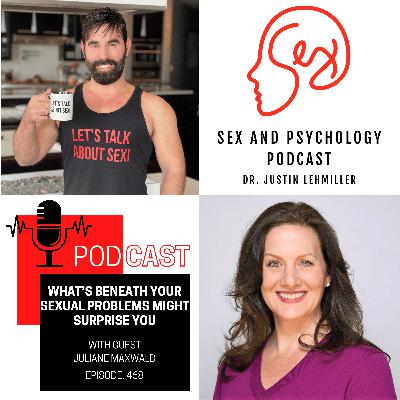
When people experience sexual problems, the instinct is often to ask, “What’s wrong with me?” or “How do I fix this?” But what if those struggles are actually meaningful signals or clues that something deeper needs attention? In today’s show, we’re exploring a different way of understanding sexual difficulties: as doorways to unconscious emotional and relational truths.
My guest is Juliane Maxwald, a licensed psychoanalyst, couples therapist, and AASECT-certified sex therapist based in New York City. She has over fifteen years of experience working with individuals and couples. She is the author of the new book Psychoanalytic Sex Therapy: Exploring the Unconscious Life of Sexuality.
Some of the specific topics we explore in this episode include:
What does it mean to treat sexual symptoms as a form of unconscious communication?
Why is it important to get curious about the deeper issues behind sexual problems?
If someone is experiencing “out of control” porn use, what might the deeper issue behind that be?
What kind of emotional information do sexual fantasies carry?
What does healing or recovery from a sexual problem actually look like?
To learn more about Juliane’s work, visit her website and find her on Instagram @julianemaxwald. Listeners can receive 20% off her new book, Psychoanalytic Sex Therapy, via this link.
Got a sex question? Send me a podcast voicemail to have it answered on a future episode at speakpipe.com/sexandpsychology.
***
Thank you to our sponsors!
If you want to make this year less about fixing yourself and more about understanding yourself, check out Beducated. Featuring more than 100 online courses taught by the experts, Beducated brings pleasure-based sex ed directly into your bedroom. Kick off your journey by taking Beducated’s Quiz to get your personalized roadmap to sexual happiness at https://beducate.me/pd2602-lehmiller
Load Boost is a supplement designed to improve the taste, volume, and overall health of your semen. If you want to elevate your sexual performance, check out Load Boost from VB Health. Visit vb.health to learn more and save 10% with code JUSTIN.
Passionate about building a career in sexuality? Check out the Sexual Health Alliance. With SHA, you’ll connect with world-class experts and join an engaged community of sexuality professionals from around the world. Visit SexualHealthAlliance.com and start building the sexuality career of your dreams today.
***
Want to learn more about Sex and Psychology? Click here for previous articles or follow the blog on Facebook, Twitter, or Bluesky to receive updates. You can also follow Dr. Lehmiller on YouTube and Instagram.
Listen and stream all episodes on Apple, Spotify, or Amazon. Subscribe to automatically receive new episodes and please rate and review the podcast!
Credits: Precision Podcasting (Podcast editing) and Shutterstock/Florian (Music). Image created with Canva; photos used with permission of guest.


Download from Google Play

Download from App Store
 United States
I actually have a great orgasm alone way beter than with a partner. It can be very intense. however there are times when I feel no stimulation at all and unable to climax. Great show I always learn alot , keep up the good work.
Men are not flocking to Andrew Tate because they feel rejected by society. They're doing it because the patriarchy has raised them to hate women. Now that women are starting to push back on all bullshit (as they've always done), these men who already hated women flock to Andrew Tate because he encourages their pre-existing misogynistic ways of thinking..
only 12 mins in and have already learnt a LOT that I should be thinking about
great episode! gave me some good ideas!
such a great and informative conversation, love your work as always
Love Dr. Lehmiller! As a psychologist I m learning so much about human natur in a fun an easy going way :)
Yes definitely get that moment of clarity. You took the words out of my mouth 'clarity' I was thinking as you started describing that. Definitely a happy brain moment.