


 Claim Ownership
Future Finance
Subscribed: 30Played: 491
Subscribe

© Copyright 2026 Glenn Hopper & Paul Barnhurst
Description
Future Finance is a podcast that delves into the transformative world of finance hosted by Paul Barnhurst, aka The FP&A Guy, and Glenn Hopper, emphasizing the impact of technology and artificial intelligence within the finance profession. Each episode brings listeners the latest news on AI and financial technology, insightful discussions, expert analyses, and forward-thinking ideas, exploring how AI and technological innovations are reshaping corporate finance as we know it. The podcast will become a must-listen for anyone interested in the evolving intersection of technology and finance
86 Episodes
Reverse

In this episode of Future Finance, host Paul Barnhurst is joined by Glenn Hopper and special guest Shannon Nash to explore how AI is transforming the role of finance leaders and boardrooms. The conversation dives into AI adoption, governance, and the shift from traditional finance responsibilities to more strategic, decision-driven roles.Shannon Nash is a global C-suite leader, CPA, attorney, and board director with over 30 years of experience across finance, technology, and governance. She is a Partner at Alpha AI, where she helps organizations strengthen AI governance and strategic decision-making. Shannon has served as CFO at companies like Wing, Reputation.com, and Inside Source, and currently sits on multiple boards, including SoFi Bank and NetScout Systems.In this episode, you will discover:Why finance professionals must continuously retool in the age of AIHow AI is changing the role of CFOs and decision-makingThe importance of AI governance at the board levelHow to manage AI investment alongside “AI sprawl.”What key questions boards should be asking about AIAI is rapidly evolving from a tool that supports workflows to one that actively drives decisions. As Shannon highlights, this shift requires stronger governance, better alignment between leadership and operations, and a proactive approach from both CFOs and boards. The future of finance will belong to those who can balance innovation with control and strategy with execution.Follow Shannon:LinkedIn: https://www.linkedin.com/in/shannonknash/Podcast: https://www.noboxesjustverses.com/ Follow Glenn:LinkedIn: https://www.linkedin.com/in/gbhopperiiiFollow Paul:LinkedIn - https://www.linkedin.com/in/thefpandaguyFollow QFlow.AI:Website - https://bit.ly/4i1EkjgFuture Finance is sponsored by QFlow.ai, the strategic finance platform solving the toughest part of planning and analysis: B2B revenue. Align sales, marketing, and finance, speed up decision-making, and lock in accountability with QFlow.ai. Stay tuned for a deeper understanding of how AI is shaping the future of finance and what it means for businesses and individuals alike.In Today’s Episode:[02:37] – Shannon Nash Background[04:53] – Career Journey & Non-Linearity[09:00] – Finance Leaders & Operations Mindset[11:44] – AI & Alpha AI[17:47] – AI Across Companies[24:32] – AI Governance & Board Questions[31:31] – AI in Decision-Making[35:26] – Shannon’s Podcast[42:22] – AI Questions & Closing

In this episode of Future Finance, hosts Glenn Hopper and Paul Barnhurst are joined by John Thomas Foxworthy, the founder and CEO of the Global Institute of Data Science (GIDS). John discusses the role of augmented intelligence in the future of AI, particularly in finance, and shares his insights from his book The Augmented Intelligence Revolution: How Leaders Win in the AI Century.John Thomas is the Founder and CEO of the Global Institute of Data Science (GIDS), a consulting and professional development organization focused on helping organizations successfully implement AI and data science initiatives. He serves as a Fractional Chief AI Officer for Fortune 500 companies and teaches AI and machine learning courses at Caltech CTME and UC San Diego Extended Studies.In this episode, you will discover:The role of augmented intelligence in financeHow GIDS helps companies implement AIOvercoming AI adoption challenges and cognitive biasesThe evolution of machine learning and AI terminologyHow AI enhances decision-making and operations in financeJohn highlights how the rapid evolution of AI can create challenges in its adoption, especially within complex industries like finance. The Global Institute of Data Science addresses these issues by focusing on feasibility studies, AI strategy, and tackling cognitive biases, ensuring the successful integration of AI in business operations.Follow John:GIDS: https://gidsco.substack.comLinkedIn: https://www.linkedin.com/in/john-thomas-foxworthy-m-s-data-science-1718073/Future Alpha Event: https://www.alphaevents.com/events-futurealphaglobal/agenda-page/filter?_gl=1*1j0347f*[…]ovIhoCWOYQAvD_BwE&gbraid=0AAAAAomEzrlLzh-epjUJjbfXNnASlChgaFollow Glenn:LinkedIn: https://www.linkedin.com/in/gbhopperiiiFollow Paul:LinkedIn - https://www.linkedin.com/in/thefpandaguyFollow QFlow.AI:Website - https://bit.ly/4i1EkjgFuture Finance is sponsored by QFlow.ai, the strategic finance platform solving the toughest part of planning and analysis: B2B revenue. Align sales, marketing, and finance, speed up decision-making, and lock in accountability with QFlow.ai. Stay tuned for a deeper understanding of how AI is shaping the future of finance and what it means for businesses and individuals alike.In Today’s Episode:[01:50] – John’s Background and Expertise[03:11] – The Augmented Intelligence Revolution[05:40] – Machine Learning vs. Augmented Intelligence[08:45] – The Global Institute of Data Science[11:04] – Feasibility Studies in AI Projects[15:17] – Managing AI Expectations[17:18] – Closing Thoughts and Book Release

In this episode of Future Finance, hosts Paul Barnhurst and Glenn Hopper explore how leaders can cut through the hype around artificial intelligence and focus on real-world impact. The conversation dives into why so many AI initiatives fail, how cognitive biases affect AI adoption, and why finance professionals must learn to ask better questions before deploying models. John Thomas is the Founder and CEO of the Global Institute of Data Science (GIDS), a consulting and professional development organization focused on helping organizations successfully implement AI and data science initiatives. He serves as a Fractional Chief AI Officer for Fortune 500 companies and teaches AI and machine learning courses at Caltech CTME and UC San Diego Extended Studies.In this episode, you will discover:Why 85% of AI projects fail and how to avoid The difference between AI hype and real implementationHow augmented intelligence improves human decision-makingWhy asking the right questions about AI models matters mostHow AI can help with risk analysis and financial decision-makingThis episode highlights that successful AI adoption is not about chasing the latest technology trends but about asking better questions, understanding assumptions, and focusing on real business problems. As AI continues to evolve, finance leaders who combine human judgment with intelligent systems will be best positioned to turn AI from hype into measurable results.Follow John:GIDS: https://gidsco.substack.com LinkedIn: https://www.linkedin.com/in/john-thomas-foxworthy-m-s-data-science-1718073/Future Alpha Event: https://www.alphaevents.com/events-futurealphaglobal/agenda-page/filter?_gl=1*1j0347f*[…]ovIhoCWOYQAvD_BwE&gbraid=0AAAAAomEzrlLzh-epjUJjbfXNnASlChgaFollow Glenn:LinkedIn: https://www.linkedin.com/in/gbhopperiiiFollow Paul:LinkedIn - https://www.linkedin.com/in/thefpandaguyFollow QFlow.AI:Website - https://bit.ly/4i1EkjgFuture Finance is sponsored by QFlow.ai, the strategic finance platform solving the toughest part of planning and analysis: B2B revenue. Align sales, marketing, and finance, speed up decision-making, and lock in accountability with QFlow.ai. Stay tuned for a deeper understanding of how AI is shaping the future of finance and what it means for businesses and individuals alike.In Today’s Episode:[03:05] – Meet John Thomas[04:11] – Augmented intelligence explained[11:21] – Global Institute of Data Science[15:18] – Why AI projects fail[21:29] – Understanding AI models[24:45] – AI in portfolio risk analysis[30:16] – Best advice for finance leaders[32:15] – Rapid-fire questions & wrap-up
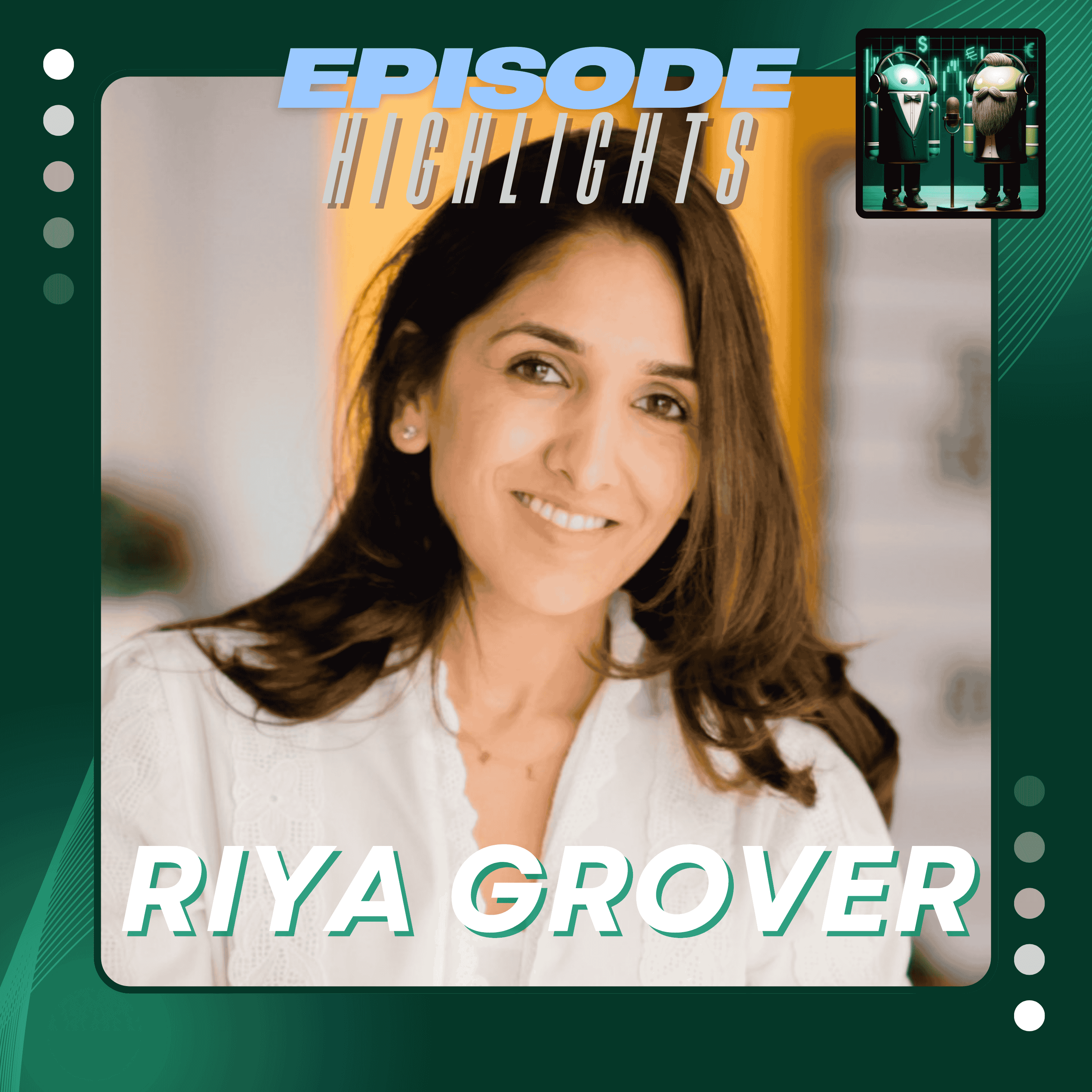
In this highlights episode of Future Finance, hosts Paul Barnhurst and Glenn Hopper chat with Riya Grover about how AI is transforming order-to-cash workflows. Riya shares insights into billing automation, revenue operations, and the evolving role of finance teams. She also discusses her entrepreneurial journey and the evolution of Sequence, the first agentic AR platform, which is revolutionizing B2B pricing and contracts.Riya Grover is the Co-founder and CEO of Sequence, an AI platform automating accounts receivable for B2B companies. Backed by a16z with $40M raised, Sequence streamlines quoting, billing, invoicing, and revenue recognition. Before Sequence, Riya founded Feedr, a venture-backed company acquired by Compass Group in 2020. She holds an MBA from Harvard and a BA from Oxford University.In this episode, you will discover:The role of AI in automating order-to-cash workflowsHow Sequence helps B2B companies with custom pricing and revenue operationsInsights into building and scaling a venture-backed companyWhy talent density is key to scaling businessesRiya explains how complex contracts, usage-based pricing, and custom deal structures create massive billing challenges for growing companies. Sequence solves this by combining deterministic billing foundations with AI-powered workflow agents.Follow Riya:LinkedIn: https://www.linkedin.com/in/riya-grover-a22a4822/Website: https://www.sequencehq.com/Sequence Series A Fundraising: AnnouncementFollow Glenn:LinkedIn: https://www.linkedin.com/in/gbhopperiiiFollow Paul:LinkedIn - https://www.linkedin.com/in/thefpandaguyFollow QFlow.AI:Website - https://bit.ly/4i1EkjgFuture Finance is sponsored by QFlow.ai, the strategic finance platform solving the toughest part of planning and analysis: B2B revenue. Align sales, marketing, and finance, speed up decision-making, and lock in accountability with QFlow.ai. Stay tuned for a deeper understanding of how AI is shaping the future of finance and what it means for businesses and individuals alike.In Today’s Episode:[00:26] – Riya’s background[04:05] – Challenges of a Two-Sided Marketplace[05:57] – Building Sequence: AI for AR[10:00] – Human Oversight vs. AI Automation[12:52] – Revolutionizing Billing & Invoicing[14:18] – Defining Workflow Rules for AI[19:23] – Final Thoughts

In this episode of Future Finance, hosts Paul Barnhurst and Glenn Hopper sit down with Riya Grover to explore how AI is transforming order-to-cash workflows. The conversation explores billing automation, revenue operations, and the evolving role of finance teams. Riya shares her entrepreneurial journey and how Sequence is building the first agentic AR platform. This episode is packed with practical insights for modern finance leaders navigating AI adoption.Riya Grover is the Co-founder and CEO at Sequence. Sequence, backed by a16z with $40M raised, is building the first agentic platform for accounts receivable. The company helps B2B businesses automate quoting, billing, invoicing, and revenue recognition, especially for complex pricing and custom contracts. Prior to Sequence, Riya founded Feedr, a venture-backed company that exited to Compass Group in 2020. She holds an MBA from Harvard Business School and a BA in Economics and Management from Oxford University.In this episode, you will discover:Why building a two-sided marketplace is incredibly difficultHow modern B2B pricing models break traditional billing systemsThe difference between deterministic systems and generative AI in financeWhy human-in-the-loop design is critical for financial AI agentsWhat the future finance tech stack will look like in the next five yearsRiya explains how complex contracts, usage-based pricing, and custom deal structures create massive billing challenges for growing companies. Sequence solves this by combining deterministic billing foundations with AI-powered workflow agents. The discussion highlights where AI should and should not be used in finance operations. Trust, auditability, and human oversight remain central to successful AI implementation.Follow Riya:LinkedIn: https://www.linkedin.com/in/riya-grover-a22a4822/Website: https://www.sequencehq.com/Sequence Series A Fundraising: AnnouncementFollow Glenn:LinkedIn: https://www.linkedin.com/in/gbhopperiiiFollow Paul:LinkedIn - https://www.linkedin.com/in/thefpandaguyFollow QFlow.AI:Website - https://bit.ly/4i1EkjgFuture Finance is sponsored by QFlow.ai, the strategic finance platform solving the toughest part of planning and analysis: B2B revenue. Align sales, marketing, and finance, speed up decision-making, and lock in accountability with QFlow.ai. Stay tuned for a deeper understanding of how AI is shaping the future of finance and what it means for businesses and individuals alike.In Today’s Episode: [02:05] – Riya’s Startup Journey[06:55] – Marketplace Challenges[08:28] – Modern Billing Gaps[10:46] – AI in Finance[13:10] – Human-in-the-Loop Design[18:35] – ML vs. Gen AI[24:26] – Series A & Scaling[30:11] – Future Finance Stack[35:15] – Rapid Fire & Wrap-Up

In this episode of Future Finance, hosts Paul Barnhurst and Glenn Hopper discuss their latest experiences in the finance world. They explore how tools like Claude and Copilot are transforming workflows, and Glenn shares how he tackled personal finance challenges, from tracking expenses to handling journal entries. Glenn also highlights a real-world example of using these tools for bookkeeping and expense tracking, giving listeners insights into how these technologies can streamline financial tasks.In this episode, you will discover:How tools are changing workflows in finance and accountingReal-world use of tools for bookkeeping and expense trackingThe speed of technology development and its impact on financial tasksHow small businesses can leverage Excel for planning and reportingThe challenges and benefits of using financial assistants for business workflowsPaul and Glenn discuss how tools like Claude and Copilot are transforming finance workflows, saving time, and improving efficiency. The future of finance is evolving rapidly, and businesses of all sizes should embrace these innovations to stay ahead.Follow Glenn:LinkedIn: https://www.linkedin.com/in/gbhopperiiiFollow Paul:LinkedIn - https://www.linkedin.com/in/thefpandaguyFollow QFlow.AI:Website - https://bit.ly/4i1EkjgFuture Finance is sponsored by QFlow.ai, the strategic finance platform solving the toughest part of planning and analysis: B2B revenue. Align sales, marketing, and finance, speed up decision-making, and lock in accountability with QFlow.ai. Stay tuned for a deeper understanding of how AI is shaping the future of finance and what it means for businesses and individuals alike.In Today’s Episode:[00:45] – Glenn's Recent AI Breakthroughs[02:24] – Frustration with ChatGPT & Switching to Claude[04:22] – Using Claude for Personal Finance[07:00] – Organizing Expenses & Journal Entries[09:45] – Claude’s Role in Financial Workflow Automation[11:15] – Copilot vs. Claude: A Quick Comparison[14:00] – AI’s Influence on Financial Planning Tools[16:45] – Rapid AI Advancements and Global Competition[19:15] – Closing Thoughts & Final Remarks

In this episode of Future Finance, Paul Barnhurst and Glenn Hopper explore how AI tools like Claude, Copilot, and Excel agents are transforming financial workflows in 2026. As the finance industry continues to evolve, AI is playing an increasingly crucial role in automating routine tasks, improving accuracy, and boosting efficiency.Paul and Glenn discuss their firsthand experiences with AI-driven tools, from tracking expenses and managing journal entries to building financial models. They also dive into the ways small and medium businesses are utilizing AI-powered Excel agents to streamline their financial processes without the need for expensive, traditional planning tools.In this episode, you will discover:The impact of AI agents in finance and how they simplify workflows.Personal experiences with Claude and Copilot in real-world finance tasks.How to integrate AI into your finance team’s daily tasks.The benefits and challenges of AI-powered automation in finance.Paul and Glenn emphasize the importance of embracing AI in finance, highlighting how tools like Claude, Copilot, and Excel agents are transforming everyday workflows. They encourage finance professionals to experiment with AI, even if it means starting small.Follow Glenn:LinkedIn: https://www.linkedin.com/in/gbhopperiiiFollow Paul:LinkedIn - https://www.linkedin.com/in/thefpandaguyFollow QFlow.AI:Website - https://bit.ly/4i1EkjgFuture Finance is sponsored by QFlow.ai, the strategic finance platform solving the toughest part of planning and analysis: B2B revenue. Align sales, marketing, and finance, speed up decision-making, and lock in accountability with QFlow.ai. Stay tuned for a deeper understanding of how AI is shaping the future of finance and what it means for businesses and individuals alike.In Today’s Episode:[00:00] – AI’s Role in Finance[03:47] – AI Agents in Excel[06:12] – Claude vs. Copilot[09:27] – Automating Expenses & Journal Entries[15:56] – AI for Financial Models[21:21] – Future of AI in Small Business Finance[26:26] – Workflow Automation in Finance[35:28] – AI & Human Collaboration[39:31] – Experimenting with AI in Finance[41:45] – Data Quality & Governance[43:07] – Key Takeaway
In this episode of Future Finance, hosts Paul Barnhurst and Glenn Hopper talk with Kevin Thomas and Drew Hyatt, co-founders of Omniga, about solving persistent issues in bookkeeping and the monthly close process for small and mid-sized businesses. They discuss how finance leaders often struggle with unreliable data and how Omniga is creating a more structured, review-ready accounting workflow.Kevin Thomas brings a background in corporate FP&A and a CFA perspective. His hands-on experience with messy books and data integrity problems in SMBs led him to co-found Omniga. Drew Hyatt is a technology leader with a background in FinTech integrations and data pipelines. He previously worked in construction finance and medical supply chains, building systems that manage high-volume, rule-based transactions.In this episode, you will discover:Why clean financial data is essential for any finance function to scale.What makes SMB accounting workflows difficult and how Omniga is addressing it.How Omniga uses automation to classify, normalize, and escalate accounting entries.The structure of a scalable, review-focused operating system for fractional CFOs.Kevin and Drew share how Omniga is tackling the core challenges of bookkeeping and monthly close for SMBs. Their approach brings structure, control, and scalability to finance operations where it’s needed most.Follow Kevin:LinkedIn: https://www.linkedin.com/in/kevin-a-thomas/Company: https://www.linkedin.com/company/omniga-ai/Follow Drew:LinkedIn: https://www.linkedin.com/in/drew-a-hyatt/Follow Glenn:LinkedIn: https://www.linkedin.com/in/gbhopperiiiFollow Paul:LinkedIn - https://www.linkedin.com/in/thefpandaguyFollow QFlow.AI:Website - https://bit.ly/4i1EkjgFuture Finance is sponsored by QFlow.ai, the strategic finance platform solving the toughest part of planning and analysis: B2B revenue. Align sales, marketing, and finance, speed up decision-making, and lock in accountability with QFlow.ai. Stay tuned for a deeper understanding of how AI is shaping the future of finance and what it means for businesses and individuals alike.In Today’s Episode:[00:15] - Meet Kevin and Drew[01:28] - Why Omniga Started[04:38] - Drew’s Tech Background[07:04] - The Name “Omniga”[10:33] - Controlling AI Output[13:57] - Guardrails and Escalation[16:18] - Final Thoughts

In this episode of Future Finance, hosts Paul Barnhurst and Glenn Hopper sit down with Kevin A.Thomas and Drew Hyatt, the co-founders of Omniga, to discuss the often-overlooked but critical challenges facing small business finance teams. While enterprise companies get most of the attention, Kevin and Drew are focused on the backbone of the economy, businesses under $30 million in revenue—and the unique struggles they face when it comes to closing the books, managing data, and generating strategic insight.Kevin A.Thomas, CFA, is the founder of Omniga and a seasoned strategic finance leader focused on scaling digital businesses. Kevin is passionate about rebuilding the back office to help businesses make smarter decisions, faster. Drew Hyatt is the Co-Founder and CTO of Omniga. He plays a key role in architecting Omniga’s infrastructure, translating complex workflows into scalable technology for finance teams.In this episode, you will discover:Why clean books are the foundation for strong financial decisionsThe hidden risks in small business bookkeeping and how to fix themThe difference between replacing tasks and supporting human judgmentHow to expand from bookkeeping to full finance strategy supportHow to structure a finance workflow that scales with your businessKevin and Drew leave us with a clear message: better finance starts with a stronger foundation. By focusing on clean books and scalable workflows, Omniga is reshaping how small businesses manage finance. It’s not about replacing people, it’s about empowering them to do more with less.Join hosts Glenn and Paul as they unravel the complexities of AI in finance.Follow Kevin:LinkedIn: https://www.linkedin.com/in/kevin-a-thomas/Company: https://www.linkedin.com/company/omniga-ai/Follow Drew:LinkedIn: https://www.linkedin.com/in/drew-a-hyatt/Follow Glenn:LinkedIn: https://www.linkedin.com/in/gbhopperiiiFollow Paul:LinkedIn - https://www.linkedin.com/in/thefpandaguyFollow QFlow.AI:Website - https://bit.ly/4i1EkjgFuture Finance is sponsored by QFlow.ai, the strategic finance platform solving the toughest part of planning and analysis: B2B revenue. Align sales, marketing, and finance, speed up decision-making, and lock in accountability with QFlow.ai. Stay tuned for a deeper understanding of how AI is shaping the future of finance and what it means for businesses and individuals alike.In Today’s Episode:[00:00] –Trailer[03:39] – Why They Started Omniga[07:11] – Drew’s Tech Journey[09:28] – What "Omniga" Means[11:26] – Rules vs. Suggestions[14:33] – How the Workflow Scales[19:28] – Above the Ledger[25:40] – From Inputs to Entries[29:50] – Real-World Use Cases[35:05] – When to Add FP&A[37:45] – Closing Fun Segment
In this episode of Future Finance, hosts Paul Barnhurst and Glenn Hopper discuss the AI landscape and how CFOs and finance leaders should approach AI in 2026. Reflecting on the developments of 2025, they explore how AI adoption is progressing at the individual and company levels and discuss the surprises and challenges they've encountered in the AI space.Paul and Glenn discuss how individuals have become far more comfortable using AI tools in their own work, while companies as a whole have moved much more slowly. Topics include ongoing data quality problems, hesitation around governance and security, and why many organizations still struggle to integrate AI into core systems and workflows.In this episode, you will discover:The current state of AI adoption by individuals and companies.Surprising shifts in AI companies like OpenAI and Microsoft in 2025.The growing role of specialized AI models and their potential impact on industries like finance.Predictions for the future of AI in 2026, including advancements in LLMs and robotics.Glenn and Paul discussed the evolving AI landscape and its impact on finance, offering insights into key developments and predictions for 2026. They highlighted the challenges, growth, and opportunities AI presents for finance leaders and businesses.Follow Glenn:LinkedIn: https://www.linkedin.com/in/gbhopperiiiFollow Paul:LinkedIn - https://www.linkedin.com/in/thefpandaguyFollow QFlow.AI:Website - https://bit.ly/4i1EkjgFuture Finance is sponsored by QFlow.ai, the strategic finance platform solving the toughest part of planning and analysis: B2B revenue. Align sales, marketing, and finance, speed up decision-making, and lock in accountability with QFlow.ai. Stay tuned for a deeper understanding of how AI is shaping the future of finance and what it means for businesses and individuals alike.In Today’s Episode:[00:15] - Reflections on AI in 2025[05:07] - Paul’s Surprises on AI’s Progress[11:05] - OpenAI’s Consumer Focus[13:23] - Predictions for Specialized Models[14:51] - AI and Robotics[17:20] - Small vs Large Models[18:28] - Closing Thoughts on AI in Finance

In this first episode of Future Finance for 2026, hosts Paul Barnhurst and Glenn Hopper take time to reflect on how AI actually showed up in finance over the past year, and what that means going forward. Without a guest, the conversation focuses on real experiences, observations, and lessons from working directly with finance teams, CFOs, and operators who are navigating AI adoption day to day.Paul and Glenn discuss how individuals have become far more comfortable using AI tools in their own work, while companies as a whole have moved much more slowly. Topics include ongoing data quality problems, hesitation around governance and security, and why many organizations still struggle to integrate AI into core systems and workflows. They also share their thoughts on notable developments from 2025, including OpenAI’s shift toward consumer use, Microsoft Copilot’s mixed results, Google Gemini’s rapid improvement, and Nvidia’s continued growth.In this episode, you will discover:How AI adoption differs between individuals and organizationsWhy poor data quality still limits many finance teamsWhat recent changes from OpenAI, Microsoft, Google, and Nvidia suggestWhere Microsoft Copilot works well today and where it falls shortWhy automation and basic app-building are becoming more importantPaul and Glenn share concrete examples from Excel, Outlook, reporting, and close processes. They also emphasize that banning AI use is no longer realistic and that clear guidelines matter more than strict restrictions.Join hosts Glenn and Paul as they unravel the complexities of AI in finance.Follow Glenn:LinkedIn: https://www.linkedin.com/in/gbhopperiiiFollow Paul:LinkedIn - https://www.linkedin.com/in/thefpandaguyFollow QFlow.AI:Website - https://bit.ly/4i1EkjgFuture Finance is sponsored by QFlow.ai, the strategic finance platform solving the toughest part of planning and analysis: B2B revenue. Align sales, marketing, and finance, speed up decision-making, and lock in accountability with QFlow.ai. Stay tuned for a deeper understanding of how AI is shaping the future of finance and what it means for businesses and individuals alike.In Today’s Episode:[02:47] – How Individuals vs. Companies Used AI in 2025[06:12] – OpenAI, Monetization, and Market Signals[09:27] – Google Gemini’s Turnaround[15:56] – Big Models vs. Specialized Tools[21:21] – Consumer AI and Platform Control[26:26] – Real Copilot Use Cases in Excel[35:28] – What Finance Professionals Should Focus on in 2026[39:31] – What Finance Leaders Need to Do Now[41:45] – Automation, Vibe Coding, and What’s Next[43:07] – Final Thoughts and Closing

In this episode of Future Finance, hosts Paul Barnhurst and Glenn Hopper sit down with Sasha Orloff, CEO of Puzzle, to discuss the future of accounting and how AI is poised to transform the finance industry. Sasha Orloff shares his journey from founding LendUp and Mission Lane to building Puzzle, an innovative accounting software platform designed to solve the industry’s most pressing challenges. Sasha Orloff is the CEO of Puzzle, a modern accounting software platform focused on building the future of finance. Before Puzzle, Sasha Orloff founded LendUp and Mission Lane, which both scaled to hundreds of millions in revenue. He has a deep background in finance, technology, and AI, and his insights are helping to shape the next wave of innovation in the industry.In this episode, you will discover:The challenges of traditional accounting systems and outdated softwareHow AI and predictive analytics can streamline financial tasks and improve decisionsThe need for an evolving general ledger and the role of blockchain in enhancing transparencyHow AI reduces errors and provides more accurate insights for finance professionalsThe future of accounting and how AI will enable faster, smarter decision-makingSasha Orloff explains how Puzzle is addressing the foundational issues with traditional accounting software by focusing on trust, transparency, and flexibility. He also shares his thoughts on the importance of building the right data infrastructure to enable AI-driven insights in finance.Join hosts Glenn and Paul as they unravel the complexities of AI in finance.Follow Sasha:LinkedIn: https://www.linkedin.com/in/sashaorloff/Company: https://www.linkedin.com/company/puzzlefin/Follow Glenn:LinkedIn: https://www.linkedin.com/in/gbhopperiiiFollow Paul:LinkedIn - https://www.linkedin.com/in/thefpandaguyFollow QFlow.AI:Website - https://bit.ly/4i1EkjgFuture Finance is sponsored by QFlow.ai, the strategic finance platform solving the toughest part of planning and analysis: B2B revenue. Align sales, marketing, and finance, speed up decision-making, and lock in accountability with QFlow.ai. Stay tuned for a deeper understanding of how AI is shaping the future of finance and what it means for businesses and individuals alike.In Today’s Episode:[01:00] - Meet Sasha Orloff[03:30] - The Problem with Traditional Accounting Software[06:00] - The Future of the General Ledger and Data Transparency[10:30] - How AI Enhances Finance and Accounting Tasks[12:45] - Blockchain’s Role in Financial Trust[17:30] - The Role of AI in Business Decision-Making[20:00] - How Puzzle is Revolutionizing Financial Software[27:00] - AI and the Democratization of Data Science[33:00] - Lightning Round: Fun Personal Questions

In this episode of Future Finance, hosts Glenn Hopper and Paul Barnhurst are joined by Ian Wong, co-founder and CEO of Summation, a cutting-edge AI platform designed to help enterprise leaders navigate complex data and make smarter business decisions. Ian shares his journey from CTO at Opendoor to founding Summation, inspired by his frustration with the inefficiencies of traditional reporting and analysis systems.Ian Wong is the co-founder and CEO of Summation, an AI-powered decision platform built to help enterprise leaders better understand how their businesses are performing. Before Summation, Ian co-founded Opendoor and served as CTO through its journey to going public. He was also Square’s first data scientist, where he built early fraud and risk systems. Ian holds degrees in electrical engineering and statistics from Stanford University and brings a rare blend of deep technical expertise and business leadership experience.Expect to Learn:The Monday Morning Problem and its impact on business operationsHow AI can eliminate tedious data analysis processesThe difference between traditional BI tools and the AI-powered platform SummationThe importance of real-time, decision-grade data for enterprise leadersJoin hosts Glenn and Paul as they unravel the complexities of AI in finance:Follow Ian:LinkedIn: https://www.linkedin.com/in/ian-wong/Company: https://www.linkedin.com/company/summation-hq/Follow Paul: LinkedIn - https://www.linkedin.com/in/thefpandaguyFollow QFlow.AI:Website - https://bit.ly/4i1EkjgFuture Finance is sponsored by QFlow.ai, the strategic finance platform solving the toughest part of planning and analysis: B2B revenue. Align sales, marketing, and finance, speed up decision-making, and lock in accountability with QFlow.ai. Stay tuned for a deeper understanding of how AI is shaping the future of finance and what it means for businesses and individuals alike.In Today’s Episode:[01:01] - The Monday Morning Problem and Decision-Making[03:46] - The time and effort spent on manual data analysis[08:48] - Ian’s Motivation Behind Summation[10:40] - What Makes Summation Different[12:48] - The Importance of Accurate Data in Finance[13:53] - Wrapping Up and Farewell

In this episode of Future Finance, hosts Paul Barnhurst and Glenn Hopper sit down with Ian Wong, co-founder and CEO of Summation, to talk about one of the most frustrating challenges in finance and analytics: getting timely, trustworthy answers to basic business questions. Ian shares the story behind what he calls the “Monday Morning Problem” and explains why finance teams often spend weeks chasing insights that arrive too late to matter. The conversation explores the limits of dashboards, the risks of AI hallucinations in finance, and what decision-grade analytics really means.Ian Wong is the co-founder and CEO of Summation, an AI-powered decision platform built to help enterprise leaders better understand how their businesses are performing. Before Summation, Ian co-founded Opendoor and served as CTO through its journey to going public. He was also Square’s first data scientist, where he built early fraud and risk systems. Ian holds degrees in electrical engineering and statistics from Stanford University and brings a rare blend of deep technical expertise and business leadership experience.In this episode, you will discover:What the “Monday Morning Problem” is and why it slows down decision-makingWhy dashboards and ad hoc reports often fail finance leadersThe risks of relying on generic AI tools for financial analysisHow decision-grade analytics differ from conversational AIWhat the coming “query flood” could mean for data infrastructure and costsIan explains how Summation helps finance and operations teams move from manual data stitching to faster, more reliable insights. The discussion also covers AI hype versus reality, why trust matters so much in finance analytics, and how leaders can think more clearly about where AI fits into real business workflows.Join hosts Glenn and Paul as they unravel the complexities of AI in finance.Follow Ian:LinkedIn: https://www.linkedin.com/in/ian-wong/Company: https://www.linkedin.com/company/summation-hq/Follow Glenn:LinkedIn: https://www.linkedin.com/in/gbhopperiiiFollow Paul:LinkedIn - https://www.linkedin.com/in/thefpandaguyFollow QFlow.AI:Website - https://bit.ly/4i1EkjgFuture Finance is sponsored by QFlow.ai, the strategic finance platform solving the toughest part of planning and analysis: B2B revenue. Align sales, marketing, and finance, speed up decision-making, and lock in accountability with QFlow.ai. Stay tuned for a deeper understanding of how AI is shaping the future of finance and what it means for businesses and individuals alike.In Today’s Episode:[01:58] – Meet Ian Wong[05:25] – The “Monday Morning Problem”[09:23] – What Empathetic Leadership Really Means[13:15] – How Enterprise Research Really Works[16:34] – The Monday Morning Numbers Meeting[21:25] – A Balance Sheet That Still Doesn’t Balance[25:53] – Where AI actually helps finance teams[28:27] – The AI Hype Question of 2025[33:07] – Moving into Personal Questions

In this episode of The Future Finance Show, hosts Paul Barnhurst and Glenn Hopper sit down with Cindy Vindasius, an expert in accounting and process transformation with over 30 years of experience in the Silicon Valley ecosystem. Cindy, the founder and CEO of her advisory practice, shares her expertise on ERP implementations, system transformations, and how AI is reshaping the finance landscape. They discuss her experiences with ERP failures, her new online course for ERP readiness, and the challenges companies face when navigating ERP transformations and adopting AI tools.Cindy Vindasius is a CPA and MBA with over 30 years of experience guiding high-growth technology and manufacturing companies through complex ERP, finance transformation, and AI-readiness initiatives. As the founder of Vindasius Advisory, she has led 12 ERP implementations, 8 IPO and M&A, and numerous SOX compliance projects. Her clients include industry leaders such as Tesla, Apple, 23andMe, and TenX. Through her ERP Preparedness Master Workshop and executive advisory programs, Cindy helps CFOs and CIOs align systems and processes for scale, resilience, and efficiency.Expect to Learn:Why legacy ERP systems are fundamentally flawed in designCindy’s journey into ERP transformations and system implementationsThe complexity of ERP migrations and why they’re often harder than expectedHow AI is changing ERP systems and the finance industryCindy’s ERP readiness course, which helps businesses prepare for successful ERP transformationsJoin hosts Glenn and Paul as they unravel the complexities of AI in finance:AI Readiness Assessment: Take the free 3-minute AI Readiness Assessment to clearly identify your strengths and weaknesses across Finance and Operations: https://cindy-tooq6nwx.scoreapp.com/AI First Vendor Evaluation Checklist:Evaluate smarter and avoid costly mistakes with this AI First Vendor Evaluation Checklist packed with key criteria: https://www.vindasius.com/opt-inFollow Cindy:LinkedIn: https://www.linkedin.com/in/cindy-vindasius/Website: https://www.vindasius.comFollow Paul: LinkedIn - https://www.linkedin.com/in/thefpandaguyFollow QFlow.AI:Website - https://bit.ly/4i1EkjgFuture Finance is sponsored by QFlow.ai, the strategic finance platform solving the toughest part of planning and analysis: B2B revenue. Align sales, marketing, and finance, speed up decision-making, and lock in accountability with QFlow.ai. Stay tuned for a deeper understanding of how AI is shaping the future of finance and what it means for businesses and individuals alike.In Today’s Episode:[00:29] - Cindy’s Background and ERP Experience[03:30] - The Challenges of ERP Implementations[07:00] - AI’s Role in Changing ERP Systems[10:10] - Lessons from AI-Native ERP Platforms[12:00] - Cindy’s ERP Readiness Course[16:30] - Closing Thoughts and Thanks

In this episode of Future Finance, hosts Paul Barnhurst and Glenn Hopper are joined by systems and finance transformation expert Cindy Vindasius to explore why so many ERP implementations fail, and what companies can do to fix that. They discuss the often-overlooked groundwork needed before selecting a system or deploying AI tools, and why jumping straight to automation without strong data and processes is a recipe for chaos. Whether you're planning an ERP rollout or modernizing finance operations, this conversation is packed with practical guidance for long-term success.Cindy Vindasius is a CPA and MBA with over 30 years of experience guiding high-growth technology and manufacturing companies through complex ERP, finance transformation, and AI-readiness initiatives. As the founder of Vindasius Advisory, she has led 12 ERP implementations, 8 IPO and M&A, and numerous SOX compliance projects. Her clients include industry leaders such as Tesla, Apple, 23andMe, and TenX. Through her ERP Preparedness Master Workshop and executive advisory programs, Cindy helps CFOs and CIOs align systems and processes for scale, resilience, and efficiency.In this episode, you will discover:Why 70% of ERP implementations fail and how to avoid common misstepsWhat ERP readiness really means, and why it's often overlookedHow AI-native ERPs compare to legacy systems in real-world implementationsWhy scalable data governance and documented processes are essentialHow Cindy’s ERP Preparedness Master Workshop helps teams succeedThis episode highlights the often-missed foundations of ERP and AI success: preparation, clarity, and scalability. Cindy Vindasius shares the roadmap finance leaders need to transform systems from a source of chaos into a driver of growth.Join hosts Glenn and Paul as they unravel the complexities of AI in finance.AI Readiness Assessment: Take the free 3-minute AI Readiness Assessment to clearly identify your strengths and weaknesses across Finance and Operations: https://cindy-tooq6nwx.scoreapp.com/AI First Vendor Evaluation Checklist:Evaluate smarter and avoid costly mistakes with this AI First Vendor Evaluation Checklist packed with key criteria: https://www.vindasius.com/opt-inFollow Cindy:LinkedIn: https://www.linkedin.com/in/cindy-vindasius/Website: https://www.vindasius.comFollow Glenn:LinkedIn: https://www.linkedin.com/in/gbhopperiiiFollow Paul:LinkedIn - https://www.linkedin.com/in/thefpandaguyFollow QFlow.AI:Website - https://bit.ly/4i1EkjgFuture Finance is sponsored by QFlow.ai, the strategic finance platform solving the toughest part of planning and analysis: B2B revenue. Align sales, marketing, and finance, speed up decision-making, and lock in accountability with QFlow.ai. Stay tuned for a deeper understanding of how AI is shaping the future of finance and what it means for businesses and individuals alike.In Today’s Episode:[01:36] – Meet Cindy[04:33] – ERP Beginnings[07:43] – AI-Native ERP Landscape[11:41] – AI in Finance[15:25] – ERP Readiness Course[21:36] – Data Migration Issues[25:53] – ERP vs AI Readiness[29:44] – Outsourcing Pitfalls[30:46] – Rapid-Fire & Fun[32:57] – Closing Thoughts

In this episode of The Future Finance Show, hosts Glenn Hopper and Paul Barnhurst speak with Santiago Nestares, co-founder and CEO of DualEntry, about the urgent need for modern ERP systems built from the ground up. Santiago shares the origin story behind DualEntry, born from his frustrations with legacy finance systems while scaling a $100M+ global business. The conversation explores how DualEntry eliminates painful ERP implementations, delivers live data in under 24 hours, and empowers finance teams to operate with greater automation and controlSantiago Nestares is the CEO and co-founder of DualEntry, an AI-native ERP platform. Prior to DualEntry, he co-founded Benitago, which scaled to over $100 million in revenue. His first-hand struggles with outdated ERP systems inspired him to build a finance platform that automates workflows, simplifies migrations, and improves operational transparency, without the typical consulting overhead or nine-month implementations.Expect to Learn:Why legacy ERP systems are fundamentally flawed in designHow DualEntry enables 24-hour data migrations with minimal disruptionThe practical difference between AI-native vs. AI-layered ERP platformsHow consumer-grade experience is redefining enterprise finance softwareWhy ERP implementation doesn’t have to feel like back surgeryJoin hosts Glenn and Paul as they unravel the complexities of AI in finance:Follow Santiago:LinkedIn: https://www.linkedin.com/in/santiago-nestares/Website: https://www.dualentry.com/Follow Paul: LinkedIn - https://www.linkedin.com/in/thefpandaguyFollow QFlow.AI:Website - https://bit.ly/4i1EkjgFuture Finance is sponsored by QFlow.ai, the strategic finance platform solving the toughest part of planning and analysis: B2B revenue. Align sales, marketing, and finance, speed up decision-making, and lock in accountability with QFlow.ai. Stay tuned for a deeper understanding of how AI is shaping the future of finance and what it means for businesses and individuals alike.In Today’s Episode:[00:58] - ERP Pain Points from Scaling a $100M Business[02:39] - Why Simple ERP Migrations Are Surprisingly Hard[06:13] - From Stealth to $90M Series A[10:01] - Where Finance Teams Will See ROI First[14:42] - How 24-Hour ERP Migration Works[19:26]- Fixing ERP: From Back Surgery to Massage

In this episode of Future Finance, hosts Paul Barnhurst and Glenn Hopper talk with Santiago Nestares, co-founder and CEO of DualEntry, about the reinvention of ERP systems through AI-native design. After scaling a global e-commerce business to over $100 million in revenue, Santiago experienced the frustrations of legacy finance systems firsthand. That pain sparked the vision for DualEntry: an ERP platform built from the ground up for the AI era.Santiago Nestares is the CEO and co-founder of DualEntry, an AI-native ERP platform. Before DualEntry, he co-founded Benitago, a leading Amazon brand aggregator. His experience running a multi-entity, high-growth business exposed the inefficiencies in traditional finance systems, inspiring him to build a next-gen ERP solution from scratch.In this episode, you will discover:Why legacy ERP systems are fundamentally broken, and how AI changes the gameHow DualEntry enables 24-hour ERP data migrationThe role of AI in journal entries, reporting, and reconciliationHow auditors are embracing automation and AI for compliance and accuracyWhy ERP systems must evolve beyond just being "AI-enabled" to truly AI-nativeSantiago Nestares joins Paul and Glenn to reveal how DualEntry is transforming ERP for the AI era. From eliminating painful migrations to building systems finance teams actually enjoy using, Santiago makes it clear: the future of ERP is AI-native, fast, and built with users in mind. ERP doesn’t have to be a burden. With the right tools, it can become a strategic advantage.Join hosts Glenn and Paul as they unravel the complexities of AI in finance:Follow Santiago:LinkedIn: https://www.linkedin.com/in/santiago-nestares/Website: https://www.dualentry.com/Follow Glenn:LinkedIn: https://www.linkedin.com/in/gbhopperiiiFollow Paul:LinkedIn - https://www.linkedin.com/in/thefpandaguyFollow QFlow.AI:Website - https://bit.ly/4i1EkjgFuture Finance is sponsored by QFlow.ai, the strategic finance platform solving the toughest part of planning and analysis: B2B revenue. Align sales, marketing, and finance, speed up decision-making, and lock in accountability with QFlow.ai. Stay tuned for a deeper understanding of how AI is shaping the future of finance and what it means for businesses and individuals alike.In Today’s Episode:[01:36] - Lessons from Scaling to $100M & ERP Frustrations[03:37] - Why ERP Migrations Are So Broken[07:47] - How DualEntry Raised a $90M Series A[10:51] - AI-Native vs. AI-Enabled ERP Systems[18:23] - Challenges and Realities of 24-Hour ERP Migration[23:26] - Why Building a Mid-Market ERP Is a Bold Move[28:18] - Using AI in Audits & Real-Time Reporting[31:45] - Rapid-Fire AI Questions[35:52] - Final Reflections & Wrap-Up

In this episode of Future Finance, Glenn Hopper and Paul Barnhurst sit down with Joe Friedman and Ranga Bodla from Oracle NetSuite to explore how AI is transforming enterprise resource planning (ERP) systems. Amidst rising competition and a rapidly changing tech landscape, NetSuite is doubling down on intelligent automation, open platforms, and embedded AI to redefine how finance teams operate.Joe Friedman is the Senior Director of AI Innovation at Oracle NetSuite, driving efforts to integrate practical AI across finance and operations. With over 15 years at NetSuite, Joe focuses on converting AI into measurable productivity gains. Ranga Bodla is the Vice President of Field Engagement and Marketing at Oracle NetSuite, with more than 20 years in enterprise software. He leads industry strategy across verticals, helping businesses convert innovation into performanceExpect to Learn:Why AI is reinvigorating interest in ERP platforms like NetSuite.How NetSuite’s AI strategy balances “AI every day” and “AI your way.”What the MCP connector does and why it’s a game-changer for data analysis.How NetSuite’s clean data models fuel better AI outcomes and user productivity.Joe Friedman and Ranga Bodla offer a compelling look at how NetSuite is embedding AI into the core of ERP to drive smarter, faster decision-making. Their insights show that clean data, open platforms, and practical AI tools are key to transforming finance operations today.Join hosts Glenn and Paul as they unravel the complexities of AI in finance:Follow Joe:LinkedIn: https://www.linkedin.com/in/friedman-ns/Follow Ranga:LinkedIn: https://www.linkedin.com/in/ranga-bodla-bb45b/Follow Paul: LinkedIn - https://www.linkedin.com/in/thefpandaguyFollow QFlow.AI:Website - https://bit.ly/4i1EkjgFuture Finance is sponsored by QFlow.ai, the strategic finance platform solving the toughest part of planning and analysis: B2B revenue. Align sales, marketing, and finance, speed up decision-making, and lock in accountability with QFlow.ai. Stay tuned for a deeper understanding of how AI is shaping the future of finance and what it means for businesses and individuals alike.In Today’s Episode:[02:00] – Where NetSuite Stands in Today’s ERP Landscape[05:17] – Why ERP and AI Go Hand-in-Hand[07:29] – AI Every Day, AI Your Way: What NetSuite’s MCP Connector Unlocks[10:29] – Practical AI Integration Inside NetSuite[13:30] – Real-World Use Cases for AI in Finance[16:22] – AI Agents, Automation, and What’s Coming Next[18:05] – SaaS as the Real Driver of AI Adoption[19:48] – Why Clean Data Fuels Better AI Outcomes[21:12] – Closing Thoughts

In this episode of Future Finance, hosts Paul Barnhurst and Glenn Hopper sit down with NetSuite’s Joe Friedman and Ranga Bodla to explore how AI is transforming enterprise resource planning (ERP) systems. With decades of combined experience in enterprise software, Joe and Ranga discuss how NetSuite is innovating ERP through AI-native capabilities, open platforms, and real-time automation. The conversation spans AI agent adoption, data clarity, and how finance teams can start harnessing AI today without major overhauls.Joe Friedman is the Senior Director of AI Innovation at Oracle NetSuite, driving efforts to integrate practical AI across finance and operations. With over 15 years at NetSuite, Joe focuses on converting AI into measurable productivity gains. Ranga Bodla is the Vice President of Field Engagement and Marketing at Oracle NetSuite, with more than 20 years in enterprise software. He leads industry strategy across verticals, helping businesses convert innovation into performance.In this episode, you will discover:Why NetSuite believes ERP is the core of AI transformation in financeHow the new MCP connector integrates AI agents like Claude and ChatGPTPractical AI use cases: from variance analysis to journal entry creationWhy clean ERP data is essential for effective AI outcomesHow companies can start AI initiatives without high risk or costJoe Friedman and Ranga Bodla offer a compelling look at how NetSuite is leading the charge in making AI practical and accessible within ERP systems. Their insights show that businesses don’t need massive overhauls to start seeing value from AI, just clean data and the right tools. As ERP evolves, NetSuite’s hybrid approach positions it to stay ahead. This episode is a must-listen for anyone navigating the intersection of finance, tech, and AI. Join hosts Glenn and Paul as they unravel the complexities of AI in finance:Follow Joe:LinkedIn: https://www.linkedin.com/in/friedman-ns/Follow Ranga:LinkedIn: https://www.linkedin.com/in/ranga-bodla-bb45b/Follow Glenn:LinkedIn: https://www.linkedin.com/in/gbhopperiiiFollow Paul:LinkedIn - https://www.linkedin.com/in/thefpandaguyFollow QFlow.AI:Website - https://bit.ly/4i1EkjgFuture Finance is sponsored by QFlow.ai, the strategic finance platform solving the toughest part of planning and analysis: B2B revenue. Align sales, marketing, and finance, speed up decision-making, and lock in accountability with QFlow.ai. Stay tuned for a deeper understanding of how AI is shaping the future of finance and what it means for businesses and individuals alike.In Today’s Episode:[04:15] - Competing with New ERP Platforms[09:42] - What is MCP & AI Everyday?[13:47] - AI Use in Daily Finance Tasks[20:18] - Why Many AI Projects Fail[27:14] - How to Start with AI in NetSuite[30:25] - Building AI Workflows Without Engineers[35:19] - Future of ERP: Embedded AI vs. External Agents[39:33] - The Most Human Thing About AI[43:49] - Closing Thoughts & Takeaways


Download from Google Play

Download from App Store
 United States
Future Finance is all about providing quick and effective financial solutions for individuals and businesses who can’t afford to wait. In today’s fast-paced world, opportunities come and go in an instant, and that’s where Fast Bridging Finance becomes a game-changer. Whether you’re securing a property deal, covering urgent expenses, or need short-term funding, bridging finance offers the speed and flexibility traditional loans often can’t. With the right approach, Future Finance ensures you never miss out on valuable opportunities by giving you access to fast, tailored financial support exactly when you need it most. Website:- https://maps.app.goo.gl/wswovSsqxCtdTH4e8