


 Claim Ownership
 Focus and Chill - productivity tactics for AuDHDers and other neurodivergent folks
Focus and Chill - productivity tactics for AuDHDers and other neurodivergent folksSubscribed: 14Played: 200
Subscribe

© Focus Bear Pty Ltd
Description
Welcome to the Focus and Chill podcast where we discuss productivity tactics that work for AuDHDers and other neurospicy people.
Every episode we interview guests with lived experience of neurodivergence who also have a solid productivity and habit game and pass the learnings on to you, our wise and benevolent audience.
Podcast sponsored by https://focusbear.io
Every episode we interview guests with lived experience of neurodivergence who also have a solid productivity and habit game and pass the learnings on to you, our wise and benevolent audience.
Podcast sponsored by https://focusbear.io
132 Episodes
Reverse
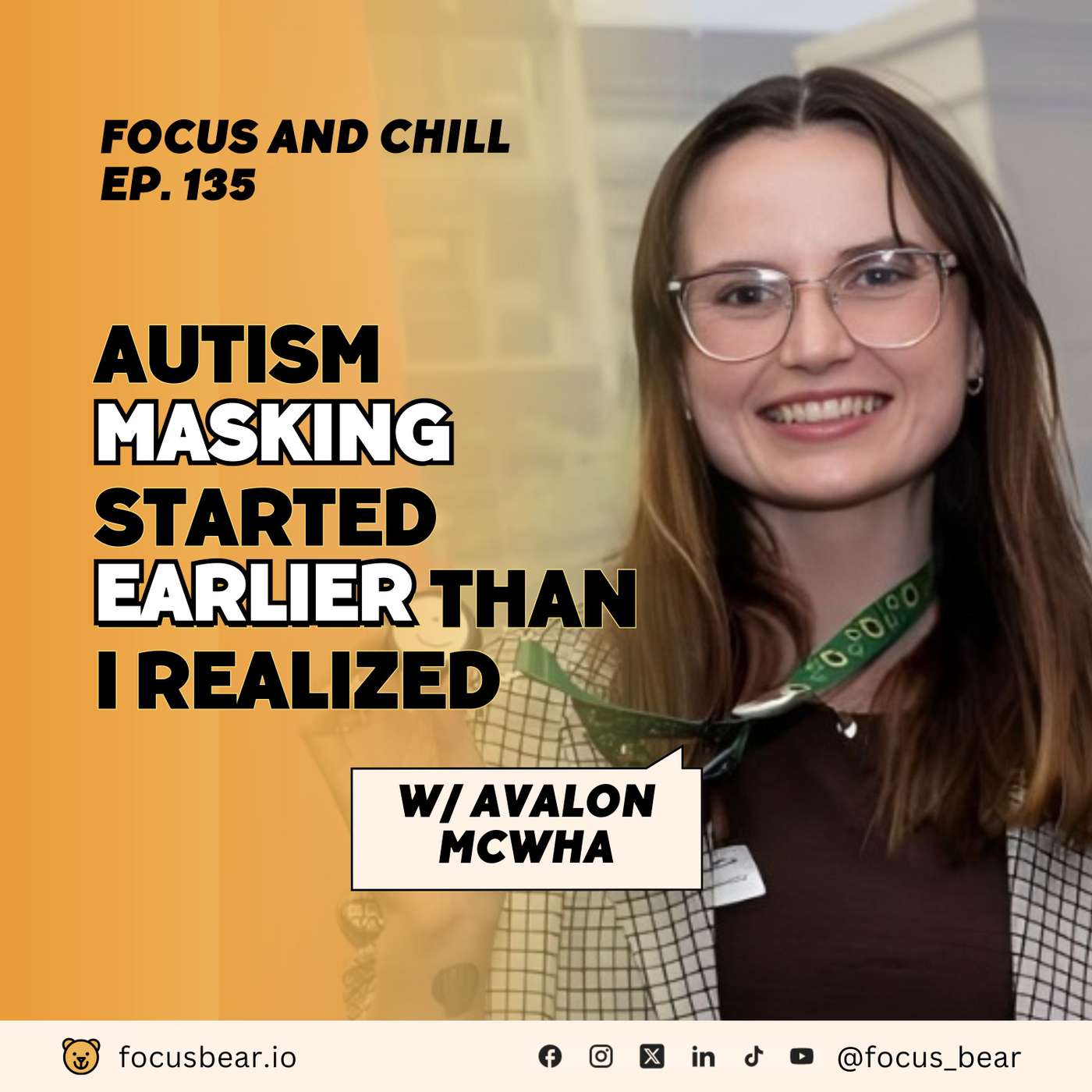
“I think I’ve always felt a bit like an alien… even in preschool I remember watching other kids like curious creatures.”Avalon McWha spent much of her childhood feeling different without knowing why. Behaviours like stimming or walking on tiptoes were explained away as “just a ballet moment,” and it wasn’t until later in life that she discovered she was autistic and ADHD.If you’ve ever felt like an outsider growing up, struggled with masking, or are navigating a late autism or ADHD diagnosis, this conversation explores what changes once you finally understand your brain. Avalon McWha is an ADHD advocate, autism consultant at the Royal Melbourne Hospital, and founder of Pebbl Tech. She works to improve autism diagnosis services and create more sensory-friendly environments in healthcare. Avalon is also developing Pebbl, a wearable assistive device designed to support executive functioning through simple voice reminders.Episode Highlights00:01:48 — Feeling like an alien in early childhood Avalon recalls observing other children even in preschool and feeling like she was fundamentally different. Without understanding why, she experienced social interactions almost like watching a different species operate.00:03:35 — When autism traits were mistaken for something else Growing up doing ballet meant that behaviours like stimming or walking on tiptoes were interpreted as dance habits rather than autistic traits. These misinterpretations helped hide the signs of autism for years.00:09:30 — Burnout from masking in the workplace While early design roles allowed her to work independently, startup environments demanded constant meetings and social interaction. The cognitive load of masking eventually led to severe burnout and moments of going nearly nonverbal.00:12:53 — Processing a late autism diagnosis After receiving her diagnosis, Avalon went through a long period of reinterpreting past experiences and confronting internalized ableism. Realizing autism wasn’t inherently negative helped reshape her understanding of herself.00:18:09 — Advocating for better autism diagnosis systems In her role at Royal Melbourne Hospital, Avalon works alongside clinicians to ensure autistic perspectives are included in the diagnostic process. Her focus is helping professionals remember that behind every diagnostic score is a real person.00:20:23 — Building Pebbl to reduce cognitive load Avalon explains how her own struggles with executive functioning led her to develop Pebbl, a wearable device designed to simplify reminders without adding more mental effort or screen time.Connect with Avalon:LinkedIn: linkedin.com/in/avalon-mcwha-2a3876baWebsite: https://pebbl.tech/Connect with Jeremy:LinkedIn: https://linkedin.com/in/nageljeremyEmail: jeremy@focusbear.ioMore from Focus Bear:Website: https://focusbear.ioLinkedIn: https://www.linkedin.com/company/focus-bear/Youtube: https://www.youtube.com/@focusbearappTwitter: https://twitter.com/focusbear1Instagram: https://www.instagram.com/focus_bear/Facebook: https://www.facebook.com/focusbearapp/Podcast: https://podcast.focusbear.ioTiktok: https://www.tiktok.com/@focusbear
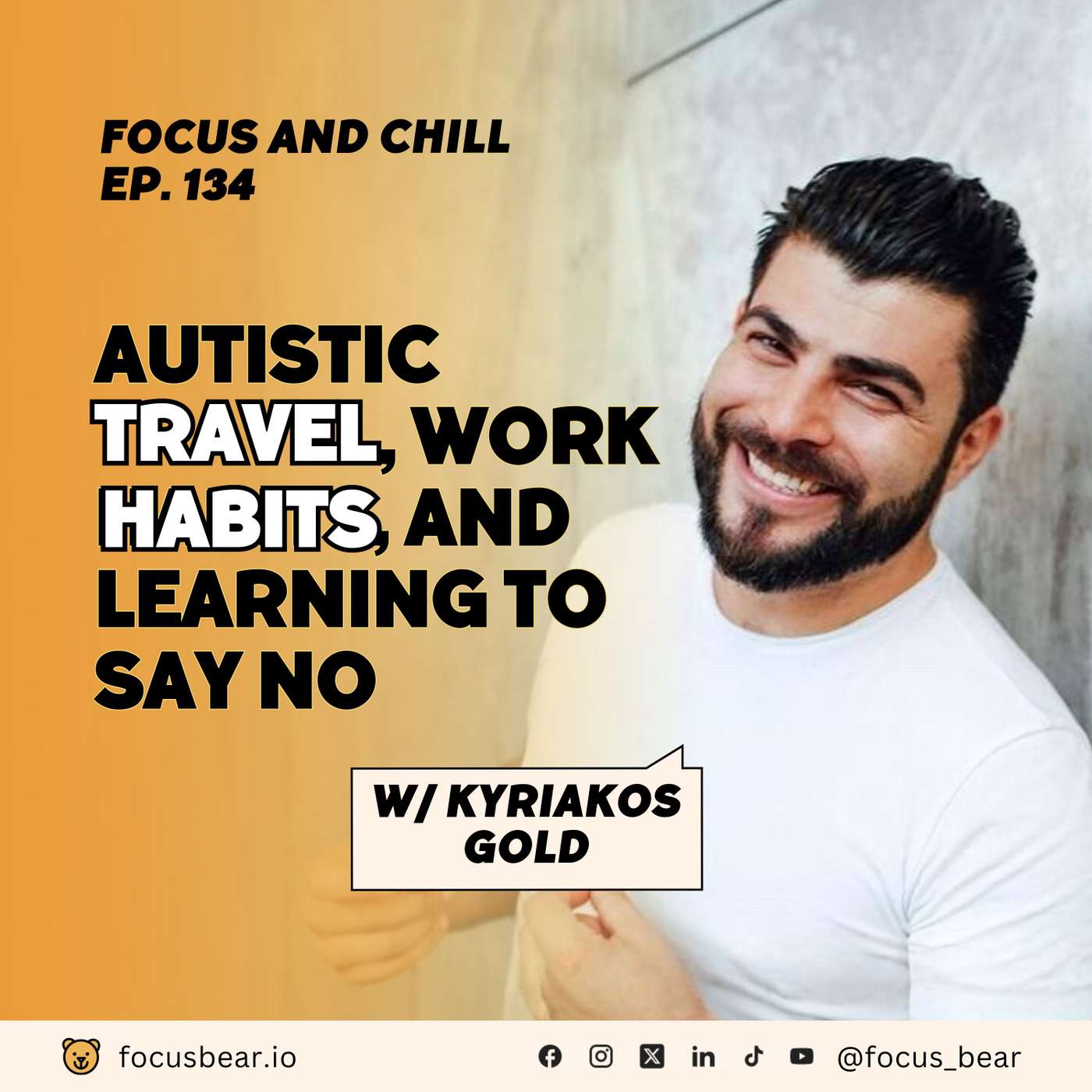
“My work’s my special interest… it’s just the way it works.”In this follow-up conversation, Gold returns to talk about autistic routines, sensory-friendly travel, evolving productivity habits, and what changes as you get older and learn to pace yourself.From choosing quieter hotels to letting go of perfectionism and learning to say no, this episode explores the small, practical adjustments that can make work and life more sustainable for autistic adults.If you’ve ever struggled with sensory overload while traveling, found it hard to switch off from work, or are learning to balance productivity with self-acceptance, this conversation offers grounded, real-world insights.Kyriakos Gold is the founder of Just Gold Agency and a passionate advocate for neurodivergent inclusion. Through storytelling, community impact initiatives and social entrepreneurship, he helps create workplaces and environments where autistic and otherwise neurodivergent people don’t need to mask to belong. Kyriakos is also a leader in Autistic Pride Day and has driven multiple projects empowering neurodivergent voices globally.Episode Highlights00:01:05 — When your work becomes your special interest Gold shares how his work naturally became his primary special interest. Rather than forcing separation, he has learned to work with this tendency while still building in breaks and enjoyable rituals like food and travel.00:03:35 — What makes a hotel sensory-friendly He explains that “sensory friendly” often comes down to lighting, acoustics, materials, and spatial design. Small environmental details like noise bleed and harsh lighting can dramatically affect comfort.00:17:00 — Letting go of all-or-nothing productivity Earlier in his career, he would work extreme hours to complete every task before resting. Over time, he shifted toward weekly planning and allowing unfinished work without self-punishment.00:20:30 — Learning to say no and trust body signals Gold describes becoming more selective about commitments and listening to physical fatigue cues. This shift has made work and life significantly more sustainable.00:22:00 — Navigating social situations without drinking He shares practical scripts for declining loud pub environments and suggesting quieter alternatives. Framing the request around environment rather than diagnosis often works well.00:26:09 — Trying new things without forcing yourself to keep them In his closing reflection, Gold encourages experimenting with new strategies slowly and safely. The goal is not to copy what others do, but to build a life that genuinely fits.Connect with Kyriakos Gold:LinkedIn: https://www.linkedin.com/in/kyriakosgold/Website: https://justgold.net/Connect with Jeremy:LinkedIn: https://linkedin.com/in/nageljeremyEmail: jeremy@focusbear.ioMore from Focus Bear:Website: https://focusbear.ioLinkedIn: https://www.linkedin.com/company/focus-bear/Youtube: https://www.youtube.com/@focusbearappTwitter: https://twitter.com/focusbear1Instagram: https://www.instagram.com/focus_bear/Facebook: https://www.facebook.com/focusbearapp/Podcast: https://podcast.focusbear.ioTiktok: https://www.tiktok.com/@focusbear
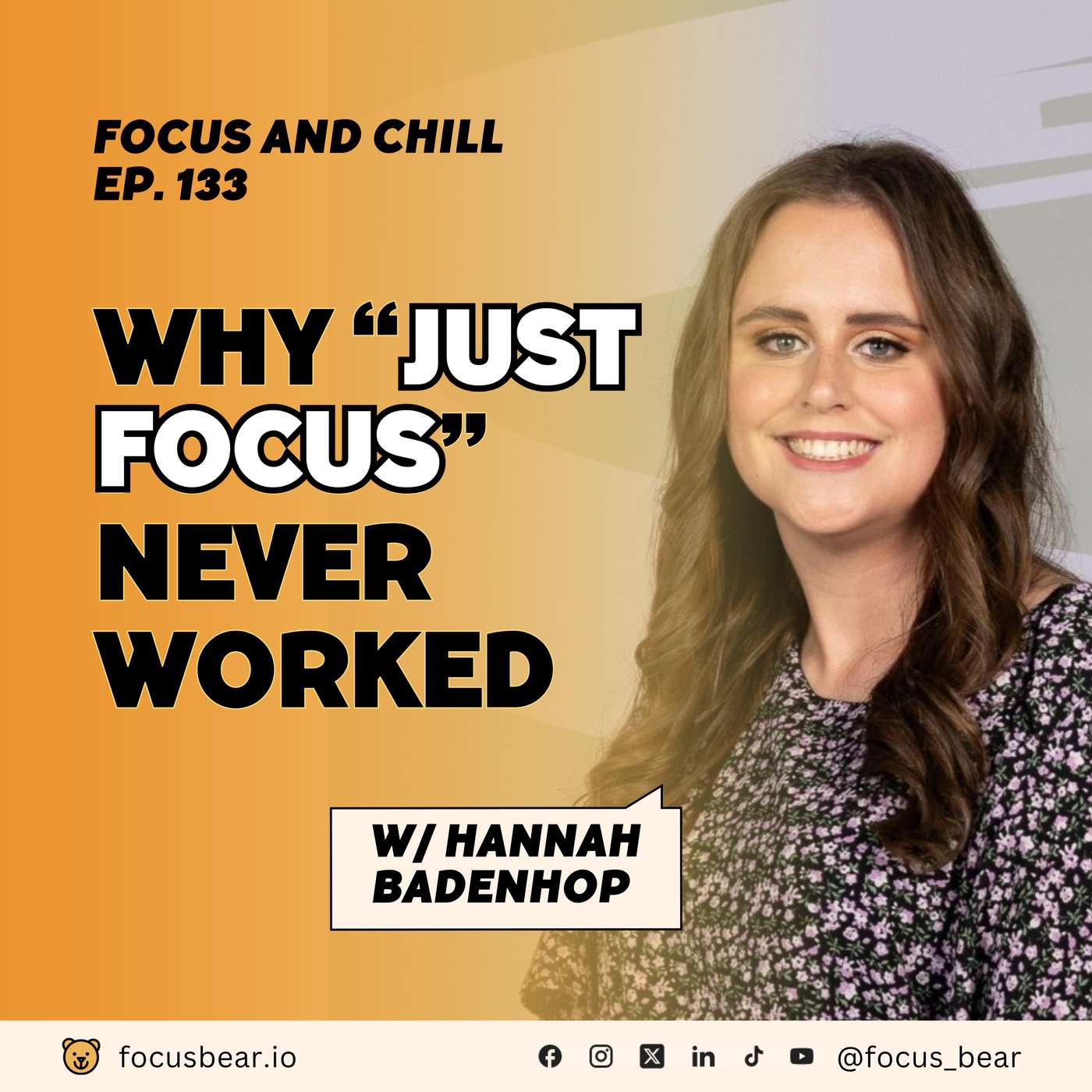
“I always felt a bit like an alien… I was different to everyone else and wasn’t really sure why.”Before her ADHD and autism diagnoses, Hannah Baden Hop kept hearing the same advice: just focus. But in the classroom, that instruction never made sense. In this episode, she shares what school was really like as a neurodivergent student, how understanding her brain changed her confidence, and why visual learning and interest-driven focus made such a difference.If you’ve ever struggled to pay attention in traditional classrooms, felt “different” growing up, or are supporting neurodivergent learners, this conversation explores what actually helps and why one-size-fits-all learning often misses visual thinkers.Hannah Badenhop has worked across multiple roles at Autism South Australia, where she champions neuro-inclusive practice through community engagement and resource development. As a neurodivergent professional herself, she contributes to initiatives such as Neuro Inclusive Recruiting and the Autistic Guide to Adulthood, helping ensure autistic voices shape the supports designed for them.00:02:46 — Feeling like an outsider in class Hannah describes growing up feeling “like an alien” compared to her peers. Without understanding why she struggled socially and academically, the disconnect was both confusing and isolating. 00:02:55 — When “just focus” didn’t make sense Teachers often told her to simply pay attention, but she couldn’t understand why focusing felt so difficult. The advice created pressure without addressing how her brain actually worked. 00:04:30 — Grades changed when she followed her interests Earlier schooling was difficult when subjects didn’t engage her attention. But once she could hyperfocus on business and graphic design, she achieved top marks, showing how interest-driven focus shaped her learning. 00:07:06 — Why visual learning works better Hannah explains that diagrams, visuals, and varied communication styles help her stay engaged. Lecture-only teaching made it much harder to absorb information effectively. 00:15:16 — Using hyperfocus strategically at work She now watches for moments when her brain “locks in” and uses them to complete high-impact work quickly. Building momentum with quick wins helps on lower-energy days. 00:28:40 — Self-acceptance is a journey Hannah reflects on initially feeling hesitant to disclose her neurodivergence. Over time, connecting with other autistic people helped her grow more confident and accepting of how her brain works. Connect with Hannah:LinkedIn: https://www.linkedin.com/in/creativemarketingdesigner/Connect with Jeremy:LinkedIn: https://linkedin.com/in/nageljeremyEmail: jeremy@focusbear.ioMore from Focus Bear:Website: https://focusbear.ioLinkedIn: https://www.linkedin.com/company/focus-bear/Youtube: https://www.youtube.com/@focusbearappTwitter: https://twitter.com/focusbear1Instagram: https://www.instagram.com/focus_bear/Facebook: https://www.facebook.com/focusbearapp/Podcast: https://podcast.focusbear.ioTiktok: https://www.tiktok.com/@focusbear
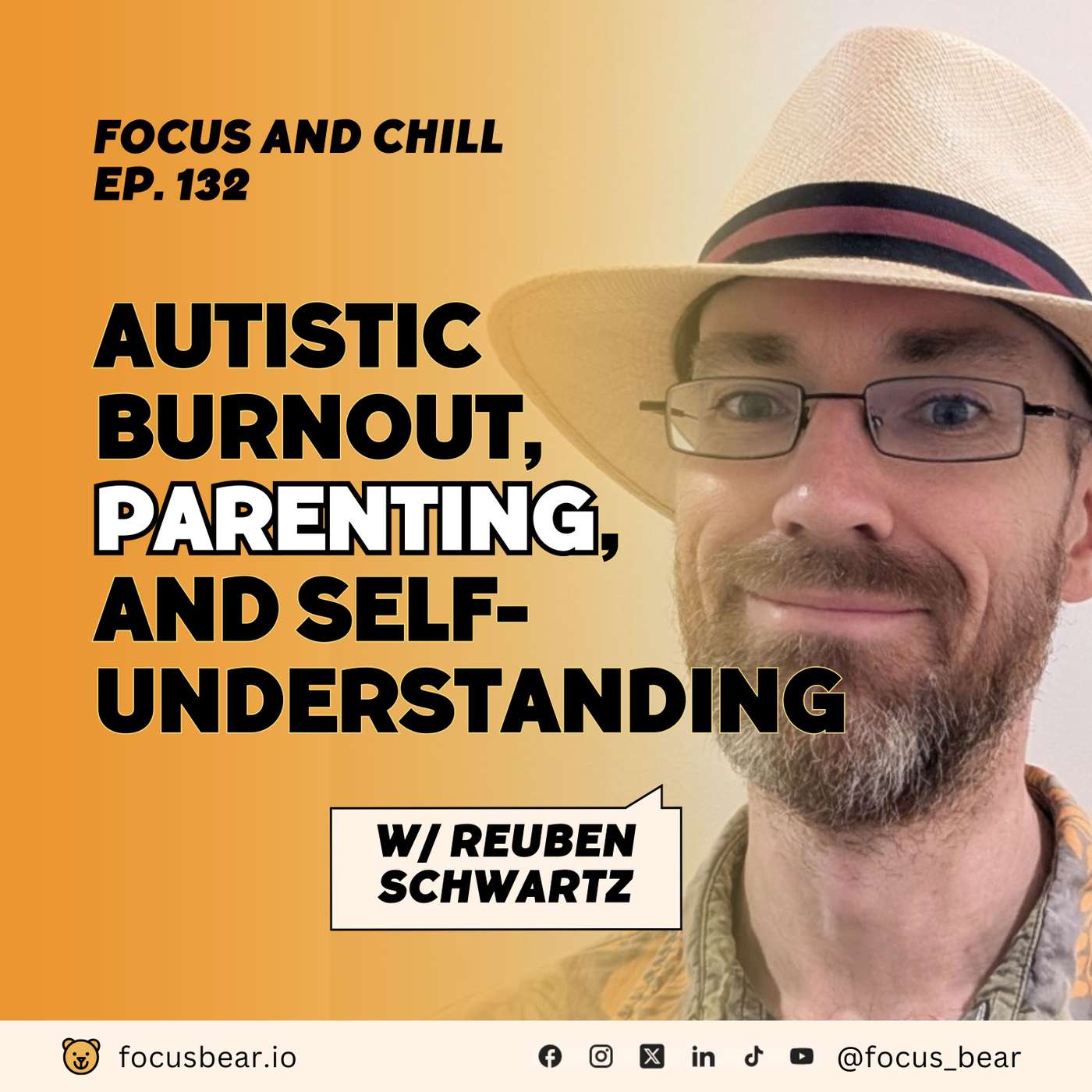
“…you internalized that you’re doing something wrong because you don’t feel or act the way other people do.”In this candid conversation, Reuben Schwartz shares what autistic burnout actually felt like behind the scenes, from years of sleep deprivation as a parent to the quiet habit of constantly judging himself for being different.If you’ve ever felt pressure to be “normal,” struggled with burnout, or wrestled with the realities of autistic parenting, this episode explores what changes after diagnosis, why pacing matters more than pushing through, and how self-understanding can reduce the constant inner pressure.Ruben is a startup consultant based in Sydney. He’s on his 13th different career, currently writing Choose Your Own Adventure books for startup founders, while wearing many other hats. After 45 often confusing years, including the last five raising a young child, he was diagnosed as autistic last year and is still working through what that means.Episode Highlights00:01:22 — Four years of severe sleep deprivation Reuben describes how his daughter’s sleep issues led to years of chronic exhaustion while he was still working full time. The prolonged sleep deprivation began affecting his health, decision-making, and overall functioning.00:09:13 — When parenting exhaustion becomes physical He shares how extreme fatigue pushed his body to its limits, including hallucinations and loss of control. The experience reshaped his understanding of what true exhaustion can do to a person.00:29:14 — Stopping the self-judgment spiral After his autism diagnosis, Reuben began recognizing how often he had been harshly judging himself for his natural responses and needs. Accepting how his brain works helped him stop trying to “correct” himself constantly.00:45:00 — Trying to be “normal” for years He reflects on how many life choices in his twenties were driven by copying what others were doing. Only later did he realize he had been chasing normality rather than what he actually wanted. 00:46:23 — Pacing energy to be a better parent Understanding autistic burnout helped him recognize his limits around sensory and emotional load. By pacing his time more intentionally, he can now show up more patiently with his daughter. 00:47:00 — Learning to be less hard on himself Reuben explains how diagnosis helped him reframe his constant self-criticism. Instead of viewing his needs as moral failures, he now sees them as physical and neurological realities. Subscribe for more honest conversations about autism, ADHD, burnout, and neurodivergent life.Connect with Reuben Schwartz:LinkedIn: https://www.linkedin.com/in/reubenschwarz/Connect with Jeremy:LinkedIn: https://linkedin.com/in/nageljeremyEmail: jeremy@focusbear.ioMore from Focus Bear:Website: https://focusbear.ioLinkedIn: https://www.linkedin.com/company/focus-bear/Youtube: https://www.youtube.com/@focusbearappTwitter: https://twitter.com/focusbear1Instagram: https://www.instagram.com/focus_bear/Facebook: https://www.facebook.com/focusbearapp/Podcast: https://podcast.focusbear.ioTiktok: https://www.tiktok.com/@focusbear
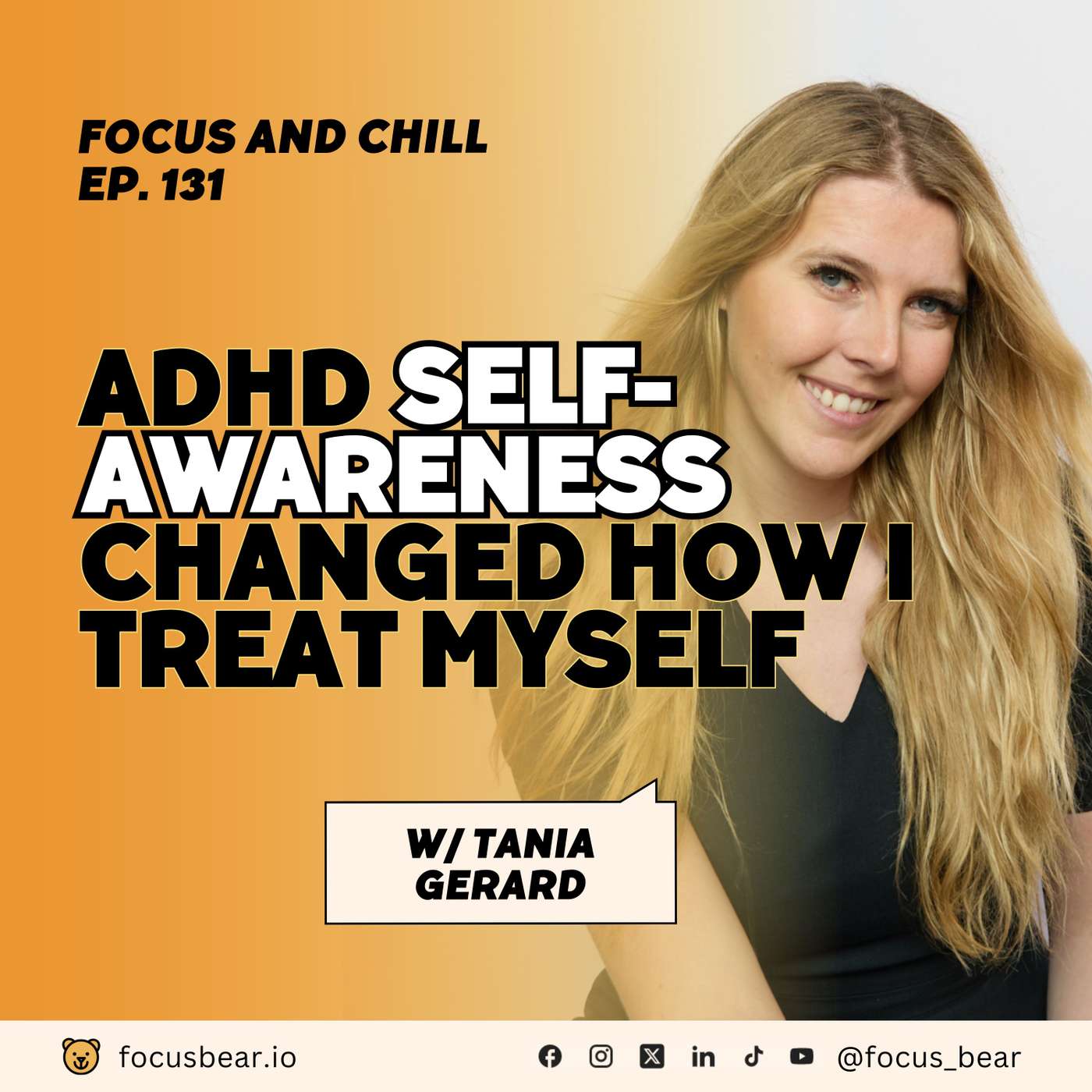
“I used to really get annoyed with myself for not being able to just be up and ready and start the day. Now I know my brain works differently, and I’ve stopped punishing myself for it.”In this episode, Tania Gerard shares how ADHD self-awareness changed the way she treats herself, works, and lives. She talks openly about slower mornings, letting go of “normal,” hyperfocus, burnout, and the relief that comes from finally understanding how your brain actually works.If you’ve struggled with ADHD, late diagnosis, self-judgment, burnout, or feeling like you’re constantly failing invisible expectations, this conversation explores what shifts when awareness turns into self-acceptance, and why working with your brain matters more than fixing it.Tania Gerard is an Accessible Marketing Consultant, Keynote Speaker and Founder of Tania Gerard Digital UK, one of the UK’s first consultancies focused on accessible marketing and neurodiversity. She works with companies to improve accessibility, inclusion and digital communication for diverse audiences.Episode Highlights00:05:26 — Learning to stop punishing herself Tania explains how self-awareness helped her recognize she was constantly blaming herself for not coping like others. Accepting how her brain works allowed her to prepare for environments instead of judging herself afterward.00:08:33 — Hyperfocus as a strength and a cost She describes hyperfocus as both a superpower and a risk. Getting days of work done in hours often comes at the expense of bodily needs and rest.00:12:00 — What accessible marketing really means Tania breaks down accessible marketing as making content easier for everyone to understand and act on. It’s not about compliance, but reducing friction for real human brains.00:18:00 — Burnout, rest, and “potato days” She shares how ignoring rest eventually forces it upon you. Planned rest becomes essential fuel, not a reward for productivity.00:23:22 — Visual systems to support an ADHD brain Tania explains how sticky notes, color, and visual cues help her manage overwhelm and follow through. External systems reduce cognitive load when memory and focus fluctuate.00:37:13 — Accepting slower mornings and letting go of “normal” She reflects on how ADHD self-awareness changed her mornings. Waking up slower became an act of self-respect instead of something to fix.Connect with Tania: Website: https://www.taniagerard.co.uk/LinkedIn: https://www.linkedin.com/in/tania-gerard-neurodiversity/Instagram: https://www.instagram.com/taniagerard.coConnect with Jeremy:LinkedIn: https://linkedin.com/in/nageljeremyEmail: jeremy@focusbear.ioMore from Focus Bear:Website: https://focusbear.ioLinkedIn: https://www.linkedin.com/company/focus-bear/Youtube: https://www.youtube.com/@focusbearappTwitter: https://twitter.com/focusbear1Instagram: https://www.instagram.com/focus_bear/Facebook: https://www.facebook.com/focusbearapp/Podcast: https://podcast.focusbear.ioTiktok: https://www.tiktok.com/@focusbear
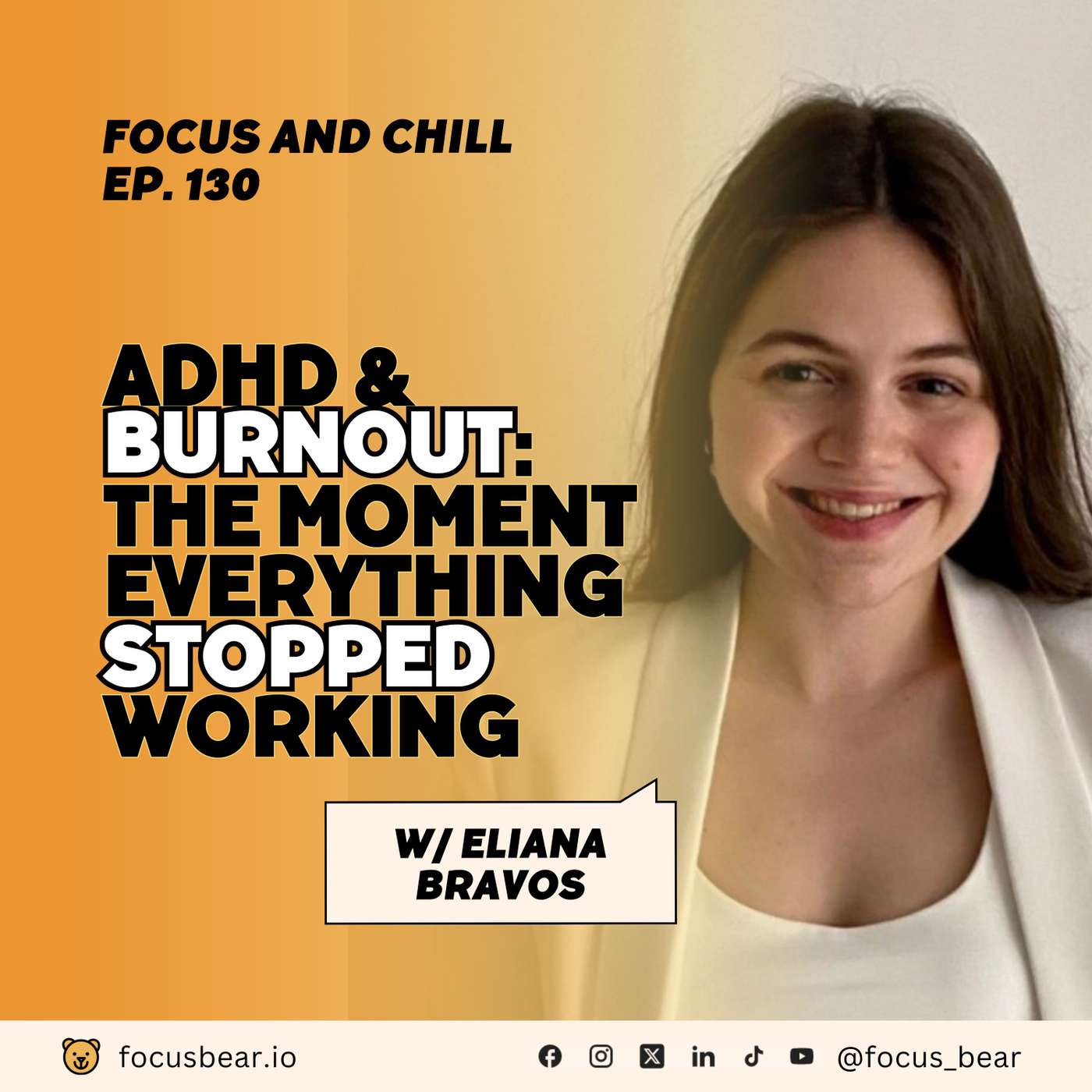
“I don't feel like I can do all the things that I used to do, and I'm still me. So this is very confusing.”Eliana Bravos shares what neurodivergent burnout actually felt like, how it disrupted her sense of self, and why pushing harder only made things worse.If you’ve experienced ADHD burnout, chronic overwhelm, identity loss, or the fear that you “can’t do what you used to anymore,” this episode explores what burnout really is, why it happens, and how community, self-accommodation, and nervous-system-aware work designEliana Bravos is the co-founder of ND Connect, a community platform helping neurodivergent adults form meaningful, supportive relationships. A social impact entrepreneur with an Honors Bachelor of Science from the University of Toronto, she has supported over 1,000 leaders in building more accessible cultures and has facilitated non-hierarchical peer programs for neurodivergent people since 2018.Episode Highlights00:07:00 — When something inside you breaks Eliana describes pushing her body past its limits for so long that it felt like something inside her broke. She explains the confusion of still being “herself,” but no longer being able to do what she used to.00:04:08 — Finding hope through a neurodivergent mentor Meeting a mentor with ADHD changed how Eliana saw her future. Seeing someone thriving on their own terms made happiness feel possible again.00:09:24 — Why working from home changed everything She explains how overstimulation in school and offices made focus nearly impossible. Having control over her environment finally allowed her to concentrate and conserve energy.00:23:04 — Outsourcing what you’re bad at Eliana shares why being a non-solo founder is essential for her. Letting others handle operations and admin frees her to work in her strengths.00:25:58 — Creating communication boundaries She talks about scheduling email time, setting expectations, and preferring calls over long message threads. Clear communication norms reduce overwhelm.00:34:17 — Struggling with sleep hygiene Eliana explains why nighttime routines are hard and how she often falls asleep to shows. Sleep remains a major work in progress.Connect with Eliana: LinkedIn: https://www.linkedin.com/in/eliana-bravos/Website: https://www.ndconnect.app/Instagram: https://www.instagram.com/elianahyperfixates/Tiktok: https://www.tiktok.com/@eliana_focusConnect with Jeremy:LinkedIn: https://linkedin.com/in/nageljeremyEmail: jeremy@focusbear.ioMore from Focus Bear:Website: https://focusbear.ioLinkedIn: https://www.linkedin.com/company/focus-bear/Youtube: https://www.youtube.com/@focusbearappTwitter: https://twitter.com/focusbear1Instagram: https://www.instagram.com/focus_bear/Facebook: https://www.facebook.com/focusbearapp/
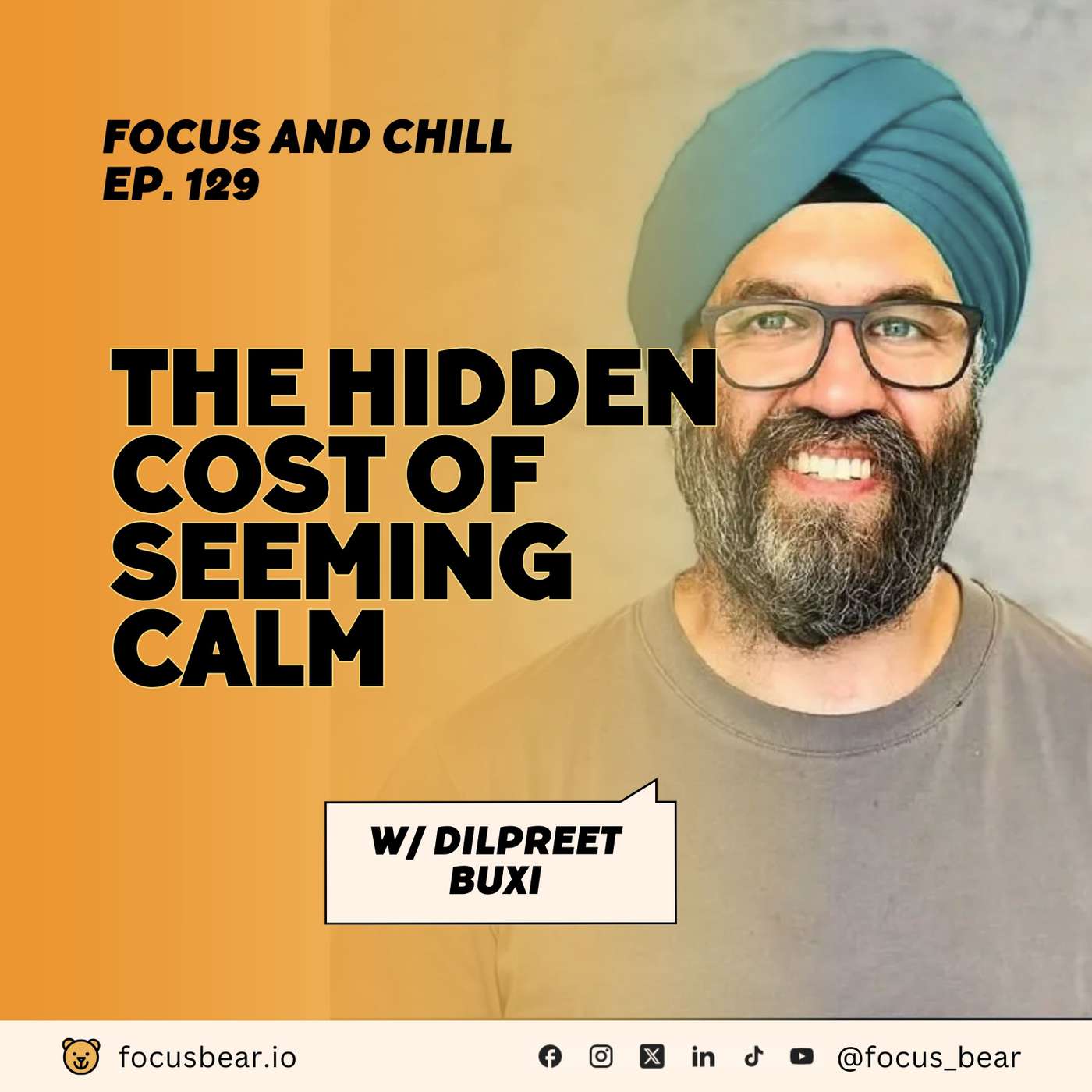
Calm on the outside. Spiraling on the inside.Dilpreet Buxi shares what it was like to grow up masking anxiety, living with a constantly racing mind, and slowly realizing his nervous system works differently.If you struggle with chronic stress, masking, emotional dysregulation, or feeling “fine” while everything feels too much inside, this episode explores why stress begins in the body, how autistic and ADHD nervous systems process stress differently, and what actually helps.Dilpreet Buxi is the CEO and Co-founder of Philia Labs, a Melbourne-based company using wearable technology and biomedical engineering to make stress measurable and manageable. With a PhD in Electrical Engineering from Monash University, his work focuses on supporting autistic people, people with anxiety, and their caregivers through objective stress measurement and early intervention.Episode Highlights:00:03:05 — Masking anxiety behind calm He describes learning to appear calm while feeling deeply stressed inside. The disconnect between outer presentation and inner reality shaped how he understood himself.00:07:27 — Realizing he may be neurodivergent After pivoting his company toward supporting autistic people, he began recognizing the same patterns in his own life. Reading about nervous system differences forced uncomfortable self-reflection.00:13:00 — Choosing to pivot or shut down After hearing caregiver stories, the team faced a choice: pivot or wind down the company. The decision became personal when his co-founder connected the mission to his autistic brother.00:19:00 — Acute vs chronic stress He explains the difference between moment-to-moment stress and stress that reshapes the body over months. Chronic stress quietly drives fatigue, sleep problems, and emotional dysregulation.00:24:16 — You can’t outthink stress Stress regulation starts in the body, not the mind. Movement, breathing, and vagus-nerve-stimulating practices matter more than positive thinking.00:32:23 — Winding down for real sleep Evening yoga, meditation, gratitude, and keeping the phone out of reach help his nervous system switch into rest mode. Better sleep becomes the foundation for everything else.Connect with Dilpreet:LinkedIn: https://www.linkedin.com/in/dilpreet-buxi/Website: https://solutions.philialabs.com.au/Connect with Jeremy:LinkedIn: https://linkedin.com/in/nageljeremyEmail: jeremy@focusbear.ioMore from Focus Bear:Website: https://focusbear.ioLinkedIn: https://www.linkedin.com/company/focus-bear/Youtube: https://www.youtube.com/@focusbearappTwitter: https://twitter.com/focusbear1Instagram: https://www.instagram.com/focus_bear/Facebook: https://www.facebook.com/focusbearapp/Podcast: https://podcast.focusbear.ioTiktok: https://www.tiktok.com/@focusbear
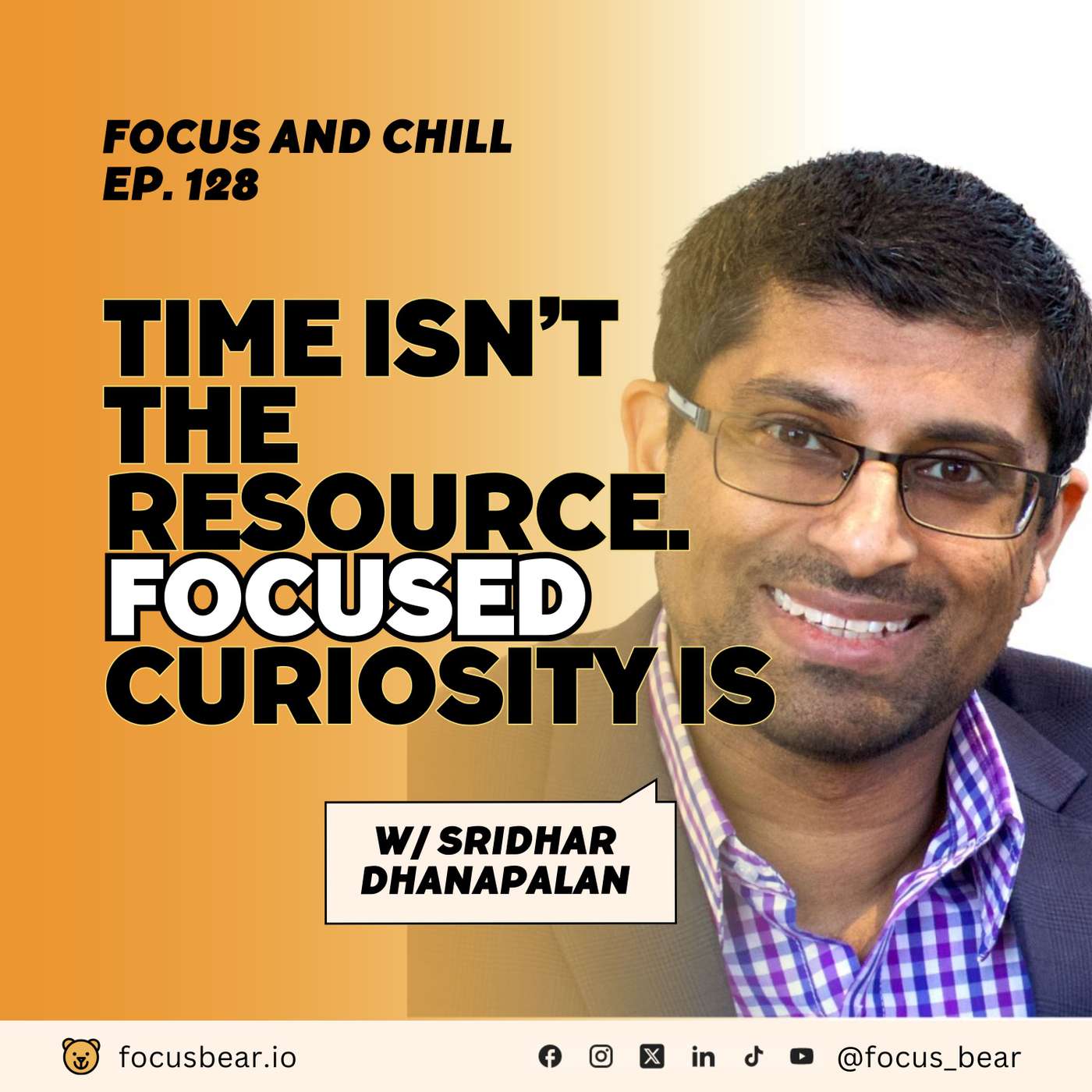
Time isn’t your greatest resource. Focused curiosity is.In this episode, Sridhar Dhanapalan shares how being late-diagnosed with autism and ADHD reshaped his approach to focus, motivation, emotional regulation, and productivity at work. We talk about “focused curiosity” as a core resource, hyperfocus as both a gift and risk, the role of purpose-driven alignment, and practical strategies like focus modes, yoga rituals, and Gmail Priority Inbox to reduce overwhelm and protect deep work.Sridhar Dhanapalan is an Enterprise Agile Coach at IBM Consulting and a mindset coach who helps teams and individuals align purpose, values, and execution. He brings a “thinking-first” approach to productivity and leadership, with lived experience as a neurodivergent parent and late-diagnosed autistic + ADHD adult.Episode Highlights:00:01:00 — Late diagnosis as an opportunity for growth Sridhar shares that he was diagnosed with autism under 12 months ago, and ADHD about 10 months ago. Instead of treating it as a setback, he frames it as a curiosity-driven opportunity to grow and better support his neurodivergent children. 00:04:00 — Screeners missed ADHD… but the full assessment didn’t He explains how ADHD screeners showed “nothing,” even though something clearly felt missing. He took a chance on a full ADHD assessment anyway, and it revealed ADHD, which clarified patterns he’d struggled to explain for years. 00:06:00 — “Time isn’t our greatest resource. Focused curiosity is.” Sridhar challenges the common idea that time is the most valuable resource. For him, the key is turning curiosity into a laser: compartmentalizing attention and focusing curiosity is what unlocked sustained growth and confidence. 00:09:00 — Hyperfocus: superpower AND kryptonite He describes hyperfocus as incredibly productive, but dangerous without strict boundaries. When he doesn’t put time limits around it, he burns out, stays up too late, crashes, and loses momentum the next day. 00:11:00 — Emotional regulation is the foundation for clear thinking Sridhar explains why calming the nervous system matters: emotions fire first, and critical thinking only works well once the mind is regulated. Yoga, breathing, and mindfulness become practical tools for keeping the “fast brain” from hijacking decision-making. 00:18:00 — Productivity begins with “thinking first” and purpose He argues most productivity advice focuses too much on implementation (“do, do, do”). His approach starts with purpose and alignment first, so decisions become simpler and focus becomes easier to protect. 00:24:00 — Automating focus: do-not-disturb + yoga rituals Sridhar shares how he uses focus mode and automation to reduce friction. For example, his phone automatically switches to do-not-disturb during yoga so he can create space mentally without distractions.00:26:00 — Email overwhelm solution: Gmail Priority Inbox He recommends Priority Inbox as a surprisingly powerful tool that most people ignore. Training the inbox helps him focus on what matters and mentally categorize everything else as “other,” reducing overload.00:29:00 — Motivation hack: use “towards” AND “away from” Sridhar explains motivation as both purpose-driven movement toward a goal and awareness of the pain of staying stuck. The key is defining the “towards” first so “away from” doesn’t turn into anxious chaos and avoidance.00:41:00 — Final message: create space + be kind to yourself He closes with a grounded summary: build space in your mind, focus your curiosity (especially inward), practice self-compassion, and remember everyone experiences the world through different internal “maps.”Connect with Sridhar:LinkedIn: https://www.linkedin.com/in/sridhard/Connect with Jeremy:LinkedIn: https://linkedin.com/in/nageljeremyEmail: jeremy@focusbear.ioMore from Focus Bear:Website: https://focusbear.ioLinkedIn: https://www.linkedin.com/company/focus-bear/Youtube: https://www.youtube.com/@focusbearappTwitter: https://twitter.com/focusbear1Instagram: https://www.instagram.com/focus_bear/Facebook: https://www.facebook.com/focusbearapp/Podcast: https://podcast.focusbear.ioTiktok: https://www.tiktok.com/@focusbear
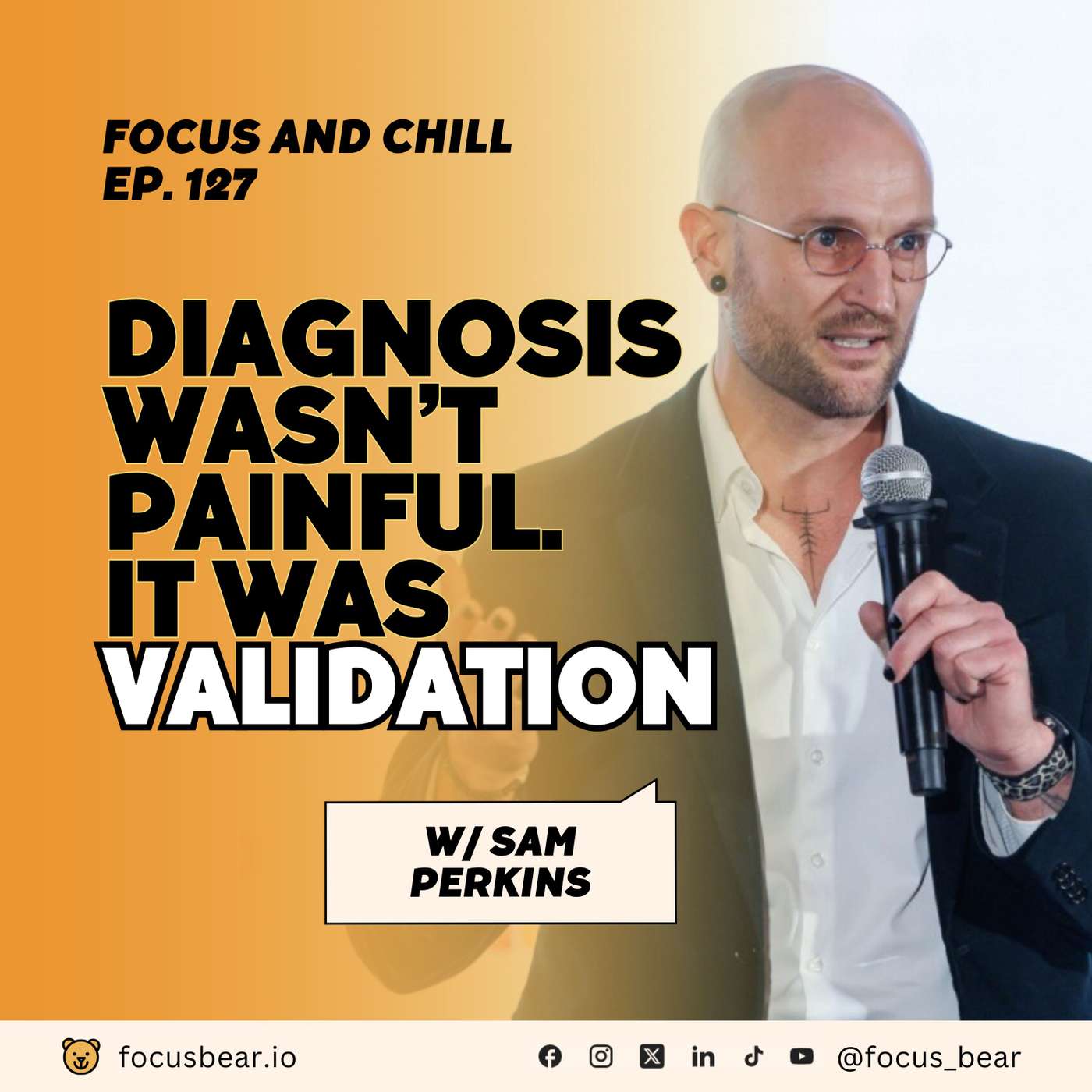
What if your biggest “flaws” were actually invisible load you’ve carried for years?Sam Perkins is the CEO of Cellular Agriculture Australia. He’s a proudly neurodivergent leader with 15+ years across academia, humanitarian work, and industry, and a PhD in aeronautical engineering. Sam now helps shape the future of food through policy, ecosystem building, and innovation.In this episode, Sam shares what changed after being late-diagnosed with dyslexia, ADHD, and autism and how it reshaped his work, identity, and communication.If you’ve ever felt overwhelmed by “simple tasks,” struggled with memory, found networking exhausting, or questioned your productivity, this episode gives a brutally honest look at neurodivergent leadership, ADHD working styles, and practical self-advocacy that improves real life (not just motivation).Episode Highlight:00:01:58 — The dyslexia diagnosis that finally made sense Sam explains how a book conversation exposed a gap: he was deeply engaged while reading, but couldn’t recall what he’d just absorbed. That moment led him to the Cambridge Disability Center and a dyslexia diagnosis that “validated what we already knew.”00:04:00 — ADHD and autism: “Someone read my life back to me” After reading Chloe Hayden’s Different, Not Less, Sam recognized his lived experience in her ADHD traits. His formal journey led to an ADHD diagnosis in Oct 2023, followed by therapy and an autism diagnosis in 2024.00:05:30 — The most powerful part wasn’t the label, it was the validation He describes the process as overwhelmingly positive, with self-reflection as the main benefit. It helped him acknowledge the hidden cognitive and emotional load he’d been carrying for years.00:09:45 — How he compensated in uni: rewriting entire textbooks Sam shares a brutally practical workaround: handwriting content word-for-word to slow down processing and improve recall. It worked well when time was flexible, but became a major barrier under exam time limits.00:11:10 — The turning point: leaving Formula One to chase purpose His PhD path originally aimed at Formula One, a childhood dream. But after discovering Buddhism and Eastern philosophy, he questioned the meaning of making cars go faster and pivoted toward purpose and impact.00:14:43 — Autistic networking: the “role” hack that makes it possible Sam says unstructured networking is close to his nightmare. But if he has a clear role (facilitator, presenter), he’s comfortable and effective, proving structure can flip social difficulty into competence.00:19:30 — Meditation for ADHD: it’s not sitting still, it’s training your mind He reframes meditation as “working on your mind,” not forcing stillness. He also notes stimulants helped him access calm more easily, and describes psychedelics as another pathway toward that stereotypical meditative clarity.00:27:40 — Productivity without hustle: time boundaries and knowing your cliff Sam doesn’t obsess over productivity hacks, but he’s strict on time: work hours are work hours. He thrives in an early deep-work block (7am to 1/2pm), then drops “off a cliff,” so he structures life to protect that rhythm.00:37:04 — 70,000 unread emails: why email fails neurodivergent brains Emails are overwhelming because they demand sustained attention on mostly irrelevant written info. Sam explains he rarely reads top-to-bottom, needs clear signposting, and prefers Slack/WhatsApp because channels provide context and reduce cognitive load.Connect with Sam:LinkedIn: https://www.linkedin.com/in/sam-perkins-612b4143/Website: https://www.cellularagricultureaustralia.org/Connect with Jeremy:LinkedIn: https://linkedin.com/in/nageljeremyEmail: jeremy@focusbear.ioMore from Focus Bear:Website: https://focusbear.ioLinkedIn: https://www.linkedin.com/company/focus-bear/Youtube: https://www.youtube.com/@focusbearappTwitter: https://twitter.com/focusbear1Instagram: https://www.instagram.com/focus_bear/Facebook: https://www.facebook.com/focusbearapp/Podcast: https://podcast.focusbear.ioTiktok: https://www.tiktok.com/@focusbear
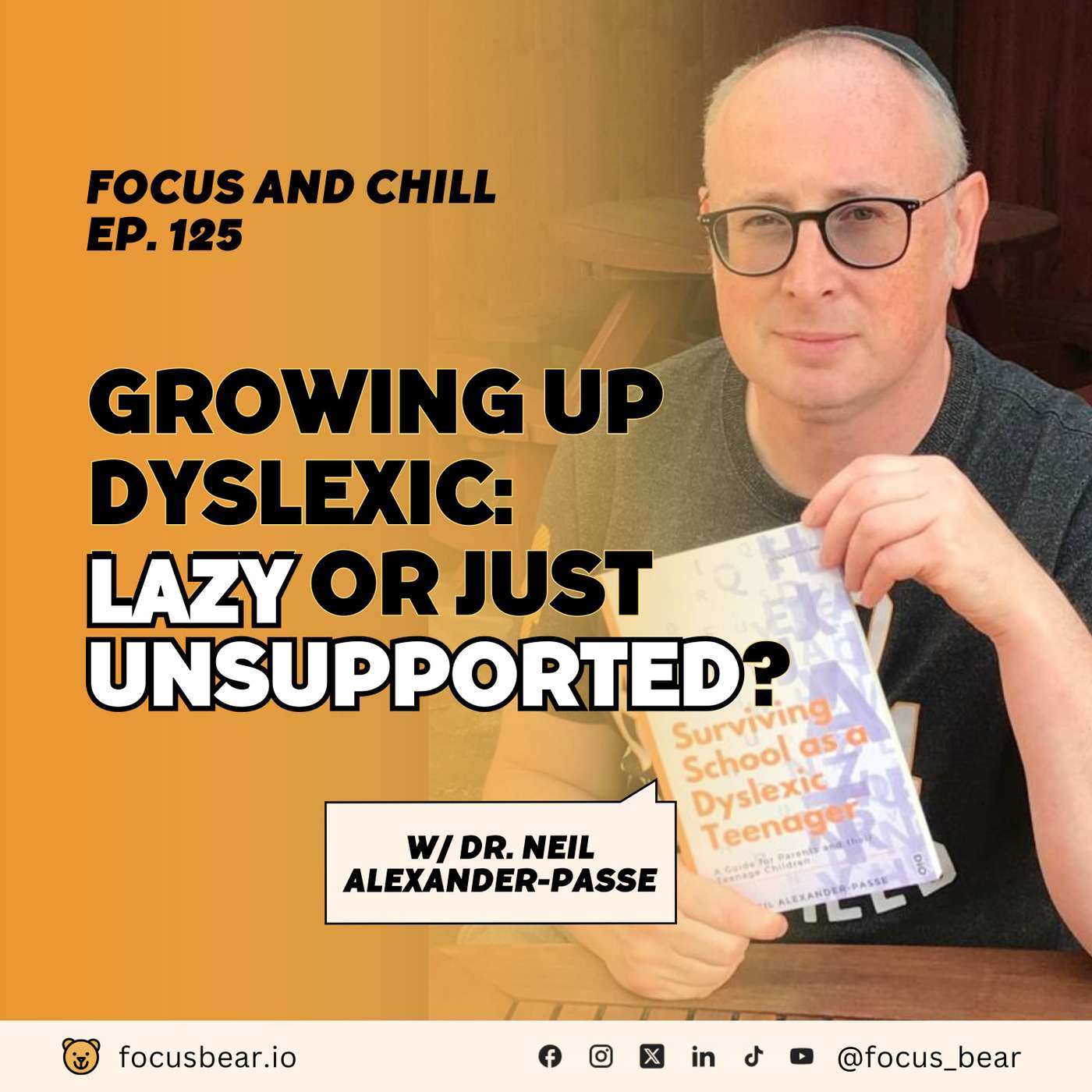
Growing up neurodivergent can leave you believing you’re stupid or lazy — even when the real issue is the way school is structured.In this episode we interviewed Dr. Neil Alexander-Passe about the lived experience of dyslexia, school-based trauma, and how neurodivergent people make sense of education systems that weren’t designed for them. They discuss identity, learning differences, productivity, and what it means to find ways of working that actually fit.Dr. Neil Alexander-Passe is a psychologist, researcher, and author who has dyslexia himself and has spent over 20 years specialising in the emotional and mental-health experiences of people with learning differences. He has published 18 books (in English and Italian) and 13 peer-reviewed papers on dyslexia and neurodiversity, exploring links with trauma, creativity, success, parenting, and mental health. He completed his PhD in 2018, researching dyslexia, traumatic schooling, and post-school success, and currently works as an exam access assessor while continuing his research and writing.Episode Highlights01:44 – Late dyslexia diagnosis and growing up feeling “stupid”Neil describes being diagnosed with dyslexia at 12 and how years of misunderstanding at school led him to internalise the belief that he was “stupid,” shaping his self-concept well into adulthood.02:40 – Changing schools and not fitting traditional learningHe reflects on moving schools repeatedly and realising later that the issue wasn’t effort or intelligence, but a mismatch between dyslexia and rote, traditional teaching methods.04:13 – Discovering strengths through artNeil shares how art college became the first place where learning made sense, allowing him to build confidence and a career after years of academic failure.05:00 – Returning to education as an adult with the right supportsAs an adult learner, he explains how time, reduced pressure, and practical accommodations transformed his ability to succeed academically.11:21 – ADHD traits and having multiple careersNeil talks about being assessed for ADHD and how having multiple roles and projects suits his neurotype far better than the idea of a single “job for life.”22:30 – Writing at night and layered editingHe describes his non-traditional writing process, including working late at night and using layered editing across digital and paper formats to support focus and clarity.39:02 – Growing up neurodivergent: shame, strengths, and finding your keysIn his closing reflection, Neil explains how neurodivergent children can grow up feeling “stupid or lazy,” and why finding individual strengths — rather than focusing on deficits — is key to long-term wellbeing.Connect with Dr. Neil:LinkedIn: https://www.linkedin.com/in/dr-neil-alexander-passe-0b10b22/Connect with Jeremy:LinkedIn: https://linkedin.com/in/nageljeremyEmail: jeremy@focusbear.ioMore from Focus Bear:Website: https://focusbear.ioLinkedIn: https://www.linkedin.com/company/focus-bear/Youtube: https://www.youtube.com/@focusbearappTwitter: https://twitter.com/focusbear1Instagram: https://www.instagram.com/focus_bear/Facebook: https://www.facebook.com/focusbearapp/Podcast: https://podcast.focusbear.ioTiktok: https://www.tiktok.com/@focusbear
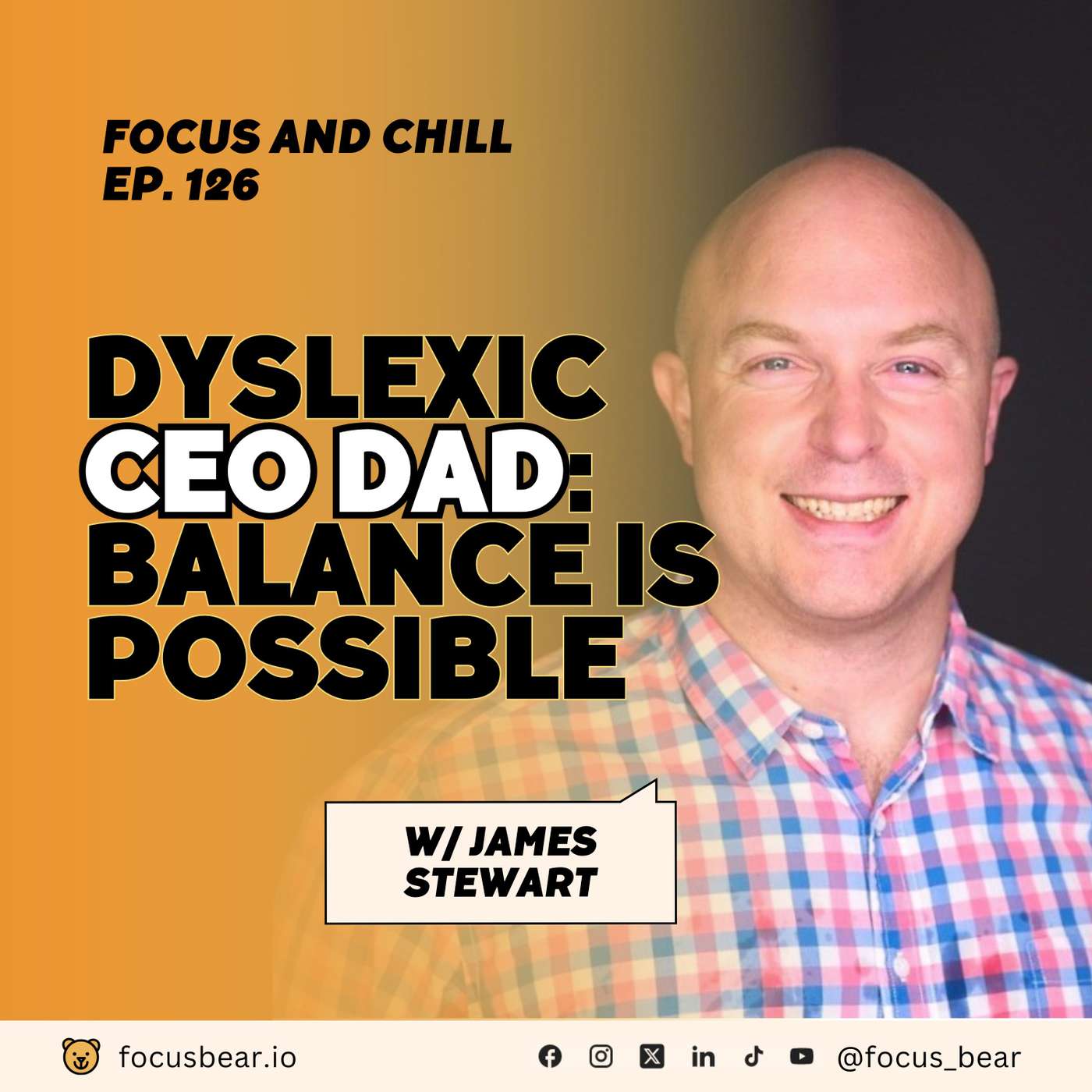
What happens when a dyslexic engineer enters venture capital, climate tech, and leadership? In Ep 126, James Stewart shares how neurodiversity shaped his education, career, parenting, and his work at Always Carbon.James Stewart is a UK chartered mechanical engineer (Cambridge), MBA holder, angel investor, venture partner at Loyal VC, and CEO/co-founder of Always Carbon, a company focused on carbon removal using biochar.Episode Highlights:00:02:04 — Diagnosed dyslexic at six James shares he was diagnosed with dyslexia early, and how it shaped both his educational and professional life. His relationship with dyslexia has changed significantly in recent years, especially in how he now views it as something to build with rather than “fix.”00:03:30 — Swimming saved his confidence A teacher threatened to stop him from going swimming because he struggled in school. That moment helped his parents realize something deeper was happening, and it became the turning point that led to assessment and support.00:07:30 — Cambridge wasn’t neurodiverse-friendly He describes Cambridge in the 2000s as not welcoming for neurodiverse students, despite the prestige. But he credits support systems and learning how to study in ways that worked for his brain as what carried him through.00:10:00 — Neurodiversity drives progress James argues neurodiverse thinkers bring huge value by challenging the status quo and solving problems differently. He frames it as a feature of human evolution: society advances because some people are wired to think outside the “normal” system.00:11:12 — Visual thinking in engineering He strongly agrees dyslexic thinkers often excel in spatial reasoning and 3D thinking, which fits engineering naturally. His approach is visual: diagrams and mind maps beat long documents because they surface structure and meaning faster.00:15:00 — Always Carbon and biochar explained James breaks down biochar simply: plants pull CO2 from the air, and converting plant waste into stable carbon can lock it away for hundreds to thousands of years. The key insight: the same material also improves agriculture through water retention, microbiome support, and fertilizer effectiveness.00:21:11 — Water is everything (and we forget it) Jeremy brings up water utilities and James goes deep into appreciation for reliable clean water. He points out many people don’t realize how fragile water systems can be globally until they experience unsafe supply firsthand.00:27:00 — A venture fund for dyslexic founders James shares he’s investigating launching a VC fund specifically investing in dyslexic and neurodiverse founders. The emotional core here: late diagnosis often comes with trauma, and he’s not willing to accept that as “normal.”00:30:24 — Parenting changes your priorities As a founder dad, he became more ruthless about what deserves his time: if it’s not worth missing time with his child, it’s not worth doing. He also shares a practical scheduling tactic: clustering “unbreakable meetings” on specific days to stay flexible for parenting responsibilities.00:48:30 — Networking is a benevolent act James closes with a powerful lens shift: networking isn’t selfish when your motives are good. It becomes a way to connect people to opportunities they couldn’t reach alone, making networking a form of service.Connect with James:LinkedIn: https://www.linkedin.com/in/james-stewart-a38626/Website: https://www.alwayscarbon.com/Connect with Jeremy:LinkedIn: https://linkedin.com/in/nageljeremyEmail: jeremy@focusbear.ioMore from Focus Bear:Website: https://focusbear.ioLinkedIn: https://www.linkedin.com/company/focus-bear/Youtube: https://www.youtube.com/@focusbearappTwitter: https://twitter.com/focusbear1Instagram: https://www.instagram.com/focus_bear/Facebook: https://www.facebook.com/focusbearapp/Podcast: https://podcast.focusbear.ioTiktok: https://www.tiktok.com/@focusbear
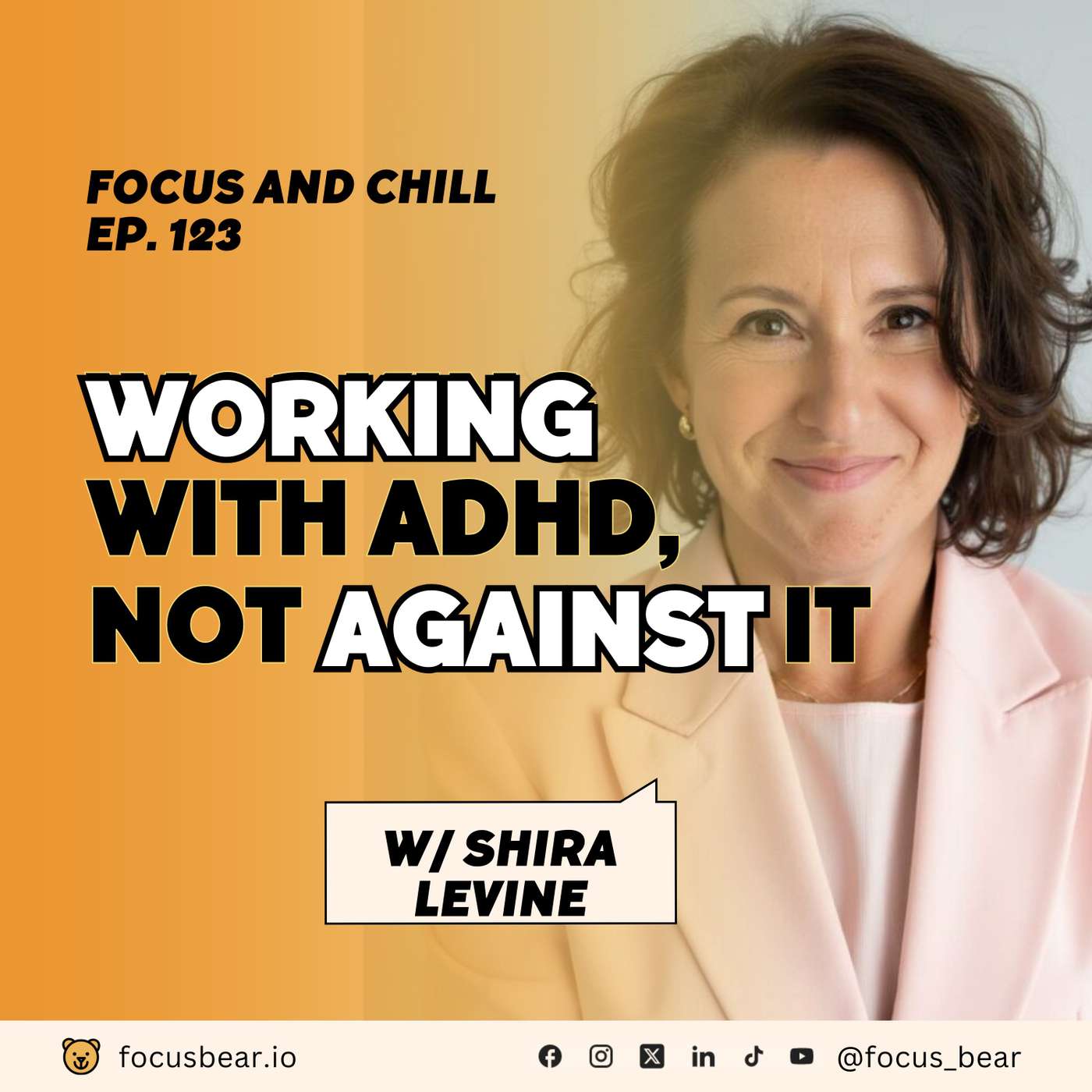
What does ADHD actually feel like in your body and mind?Shira Levine was diagnosed in the 1980s — and describes the moment medication helped her feel grounded for the first time.Shira is a Silicon Valley–trained marketing and customer engagement strategist with decades of experience in retention, loyalty, and community-driven growth. Diagnosed with ADHD as a teenager in the 1980s, she brings a rare long-term perspective on neurodiversity, work, creativity, and self-acceptance.Episode Highlights:00:06:30 — What ADHD feels like in the body Shira describes living with ADHD as walking on pavement covered by a thin layer of water — never fully grounded. Medication didn’t “fix” her, but helped her finally feel present and connected to the world.00:17:20 — Productivity, dragons, and scope creep She explains how neurodivergent people often solve problems that aren’t theirs to solve. Learning when to say no became essential to doing meaningful work.00:18:45 — Ruthless prioritization without shame Shira reframes prioritization not as discipline, but as protection against overwhelm. Seeing too much can be a strength — if boundaries exist.00:29:00 — Why she rejects minimalism Minimalism and rigid productivity systems never worked for her ADHD brain. She gives explicit permission to reject trends that create more shame than clarity.00:30:30 — Fidgets, movement, and regulation From shells to paper clips, Shira explains how keeping her hands busy helps her stay present. Regulation, not stillness, is the goal.00:33:00 — Designing tools for real ADHD lives She describes the need for multidimensional timers that match how neurodivergent people actually multitask. ADHD isn’t a failure of focus — it’s a different operating system.00:35:30 — Night routines and protecting sleep Putting her phone on another floor and reading fiction nightly helped Shira become a “gold medal sleeper.” Structure supports rest, not restriction.00:38:00 — A simple mental exercise for racing thoughts Listing seven things seen and seven things done becomes a grounding practice when sleep feels impossible. Focus follows structure.00:40:30 — Self-acceptance, obsession, and dialing it down Shira reflects on learning to work with ADHD rather than against it. Obsession and intensity aren’t flaws — the work is knowing when to modulate them.Connect with Shira:LinkedIn: https://www.linkedin.com/in/supershiralevineWebsite: https://fanchismo.com/Connect with Jeremy:LinkedIn: https://linkedin.com/in/nageljeremyEmail: jeremy@focusbear.ioMore from Focus Bear:Website: https://focusbear.ioLinkedIn: https://www.linkedin.com/company/focus-bear/Youtube: https://www.youtube.com/@focusbearappTwitter: https://twitter.com/focusbear1Instagram: https://www.instagram.com/focus_bear/Facebook: https://www.facebook.com/focusbearapp/Podcast: https://podcast.focusbear.ioTiktok: https://www.tiktok.com/@focusbear
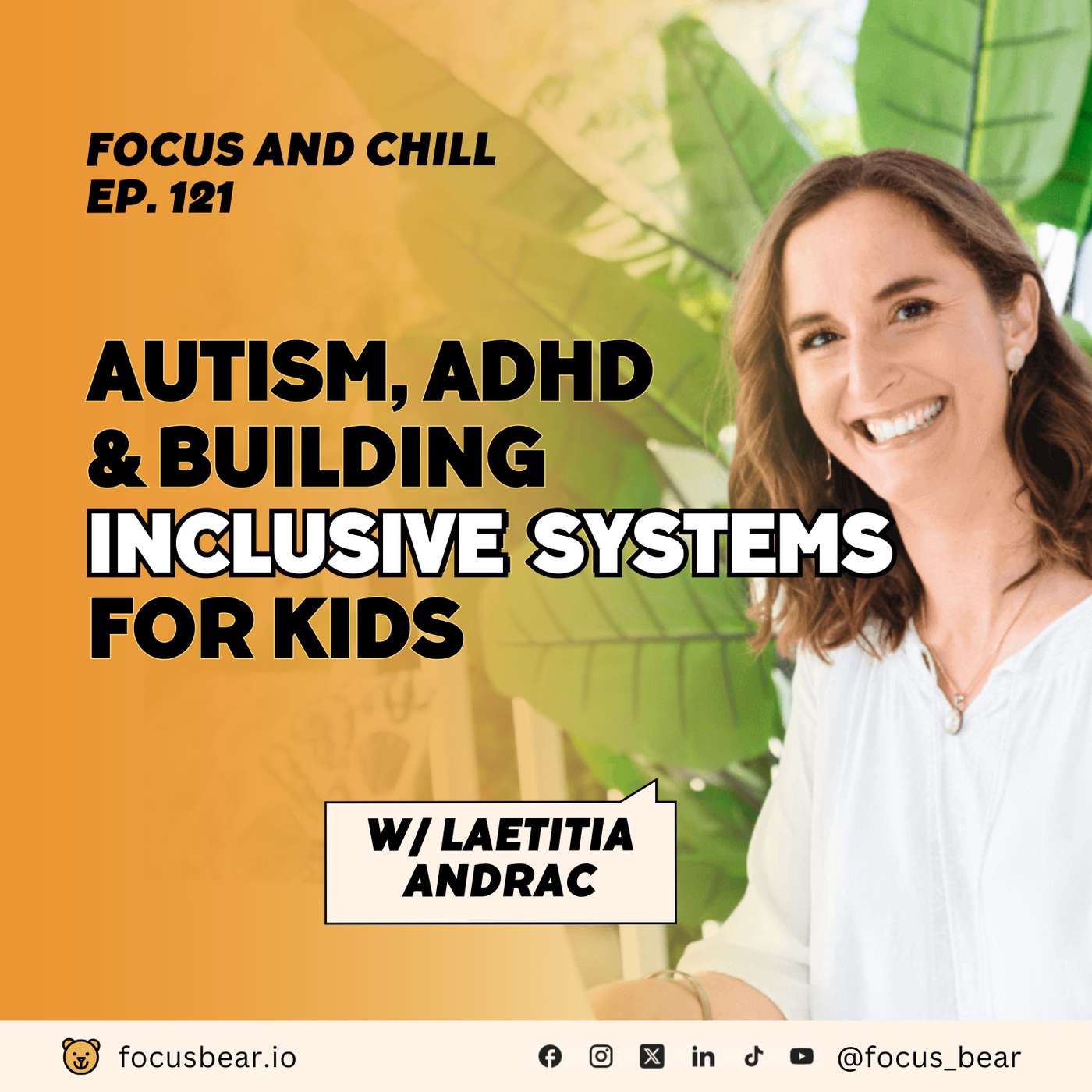
What if nothing was ever wrong with you or your child, just misunderstood?In this episode, Laetitia Andrac shares how late autism and ADHD diagnosis reshaped her identity, parenting, and mission to build truly inclusive systems for neurodivergent children.Laetitia Andrac is a five-time founder, bestselling author, and CEO of Understanding Zoe, an AI-powered platform helping parents, educators, and therapists better support neurodivergent children. Late diagnosed autistic and ADHD, she brings lived experience to systems-level change in education, healthcare, and leadership.Episode Highlights00:00:41 — Discovering neurodivergence through motherhood Laetitia explains how concerns raised about her daughter’s development triggered a deeper exploration of autism and ADHD in her family. What started as advocacy for her child became self-discovery.00:03:00 — Late autism diagnosis and reclaiming identity After initially dismissing autism, Laetitia describes the moment everything clicked. The diagnosis brought relief, validation, and self-compassion.00:06:11 — Childhood exclusion and autistic burnout She shares early experiences of rejection sensitivity, boredom at school, and later autistic burnout in high-pressure consulting roles. These patterns only made sense in hindsight.00:08:42 — From lived experience to systemic change Understanding Zoe was born from the desire to prevent children from growing up confused and unsupported. The goal is shared understanding, not constant parental advocacy.00:09:14 — Why diagnosis should never feel like being “broken” Laetitia emphasizes choosing neurodiversity-affirming clinicians. Diagnosis should explain, not pathologize.00:14:00 — When unmasking is not safe Unmasking is personal, but environments are not always ready. She describes shutdowns caused by neurotypical networking expectations.00:17:56 — Hyperfocus as a real strength Her ability to solve complex problems quickly powered her consulting career. Without recovery time, however, it also led to collapse.00:22:38 — How Understanding Zoe reduces parental load The platform centralizes assessments, therapy notes, and insights so educators and carers can support children consistently.00:29:17 — Productivity through agile, not pressure Letitia explains why agile ways of working suit neurodivergent brains better than rigid schedules.Connect with Laetitia:Websites:https://understandingzoe.com/https://www.essentialshift.co/LinkedIn:https://www.linkedin.com/company/understandingzoehttps://www.linkedin.com/company/essential-shift/Instagram: https://www.instagram.com/understanding.zoehttps://www.instagram.com/essential.shiftConnect with Jeremy:LinkedIn: https://linkedin.com/in/nageljeremyEmail: jeremy@focusbear.ioMore from Focus Bear:Website: https://focusbear.ioLinkedIn: https://www.linkedin.com/company/focus-bear/Youtube: https://www.youtube.com/@focusbearappTwitter: https://twitter.com/focusbear1Instagram: https://www.instagram.com/focus_bear/Facebook: https://www.facebook.com/focusbearapp/Podcast: https://podcast.focusbear.ioTiktok: https://www.tiktok.com/@focusbear
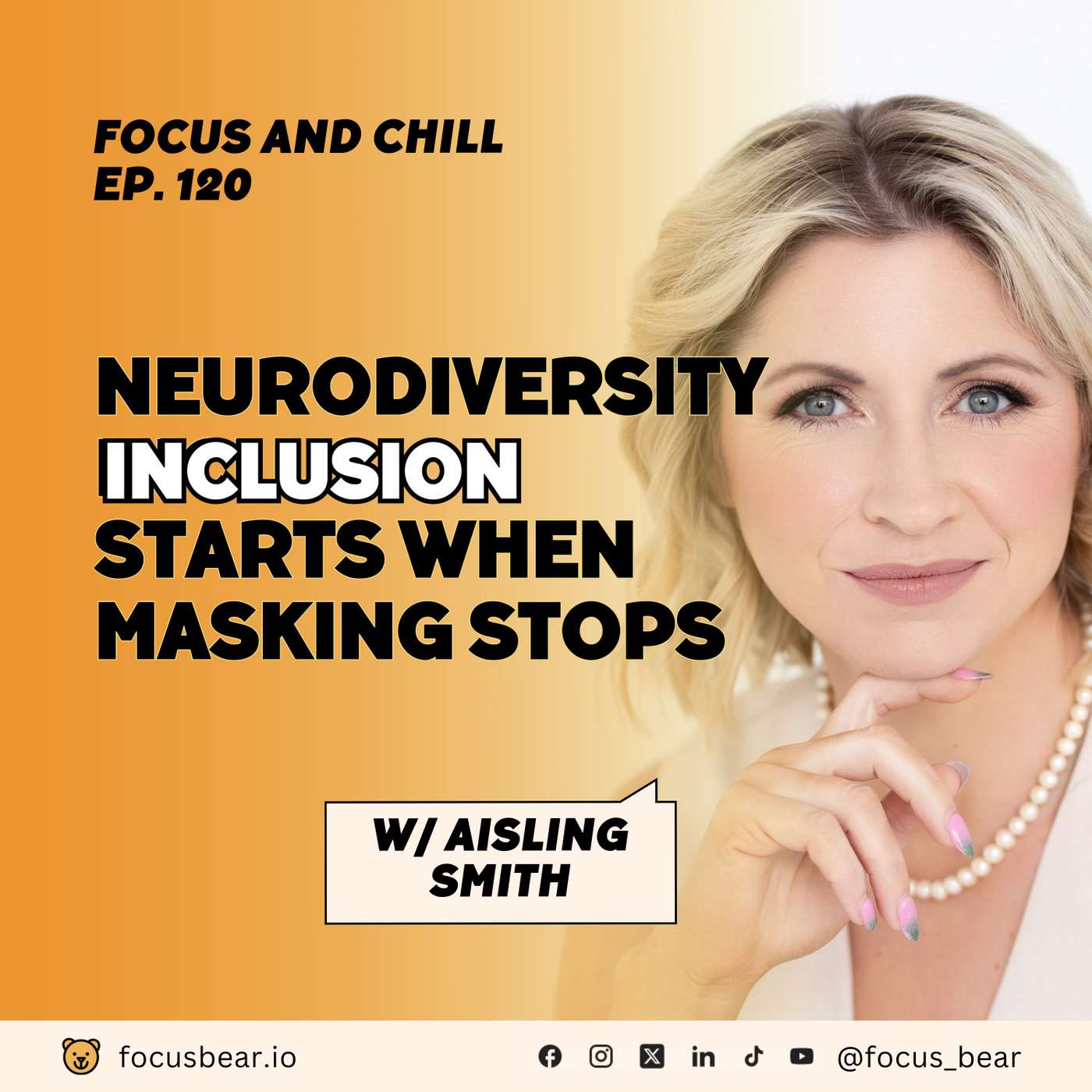
“I’ve masked so much. I’m a chameleon. I didn’t even know who I was anymore.”In this episode, Aisling Smith explains how unmasking, self-knowledge, and better workplace design can transform both careers and confidence.Aisling Smith is an award-winning neurodiversity trainer, international speaker, and inclusion consultant. Late diagnosed autistic and ADHD, she works with organizations worldwide to create neuro-inclusive workplaces and empower neurodivergent employees to thrive without masking.Episode Highlights00:02:27 — Discovering neurodivergence through motherhood Aisling shares how her son’s autism diagnosis led her to recognize her own ADHD and autism. What began as advocacy for her child became a profound personal awakening.00:07:37 — Masking and losing your sense of self She describes lifelong masking as becoming a “chameleon” and believing this was normal. The realization reframed decades of exhaustion and emotional strain.00:10:57 — When labels become tools, not limits Aisling explains how labels only limit us if we inherit society’s biases. Reclaiming them as self-knowledge creates freedom rather than restriction.00:16:29 — Leaving corporate training to work authentically After diagnosis, she realized she could no longer train leadership through a neurotypical lens. This moment sparked her shift into neurodiversity inclusion work.00:22:00 — Why neurodivergent employees burn out Workplaces are designed for 80% of people, leaving others to mask and suffer. Burnout is not failure, but a predictable outcome of poor systems.00:25:30 — The ‘volcanic’ moment at work Meltdowns are never about one incident. Aisling explains how small ignored stressors build until the final breaking point.00:27:30 — Empowerment beats accommodation True inclusion isn’t about special treatment. It’s about empowering everyone to work in ways that suit their nervous system and strengths.00:33:30 — Productivity doesn’t have one solution She challenges productivity dogma, arguing that tools work temporarily and must adapt to seasons, energy, and regulation.00:47:45 — Rebuilding identity with affirmations Aisling describes dismantling years of internalized criticism by intentionally rewriting self-belief and identity.00:50:18 — Routines change with life seasons From 5am routines to single motherhood, she explains why flexibility matters more than discipline when building sustainable habits.Subscribe for more conversations on focus, identity, and meaningful work. Listen to the full episode and follow Aisling Smith on LinkedIn for neurodiversity insights and training resources.Connect with Aisling:Website: https://aisling-smith.com/LinkedIn: linkedin.com/in/aisling-smith-vance-neurodiversityConnect with Jeremy:LinkedIn: https://linkedin.com/in/nageljeremyEmail: jeremy@focusbear.ioMore from Focus Bear:Website: https://focusbear.ioLinkedIn: https://www.linkedin.com/company/focus-bear/YouTube: https://www.youtube.com/@focusbearappTwitter: https://twitter.com/focusbear1Instagram: https://www.instagram.com/focus_bear/Facebook: https://www.facebook.com/focusbearapp/
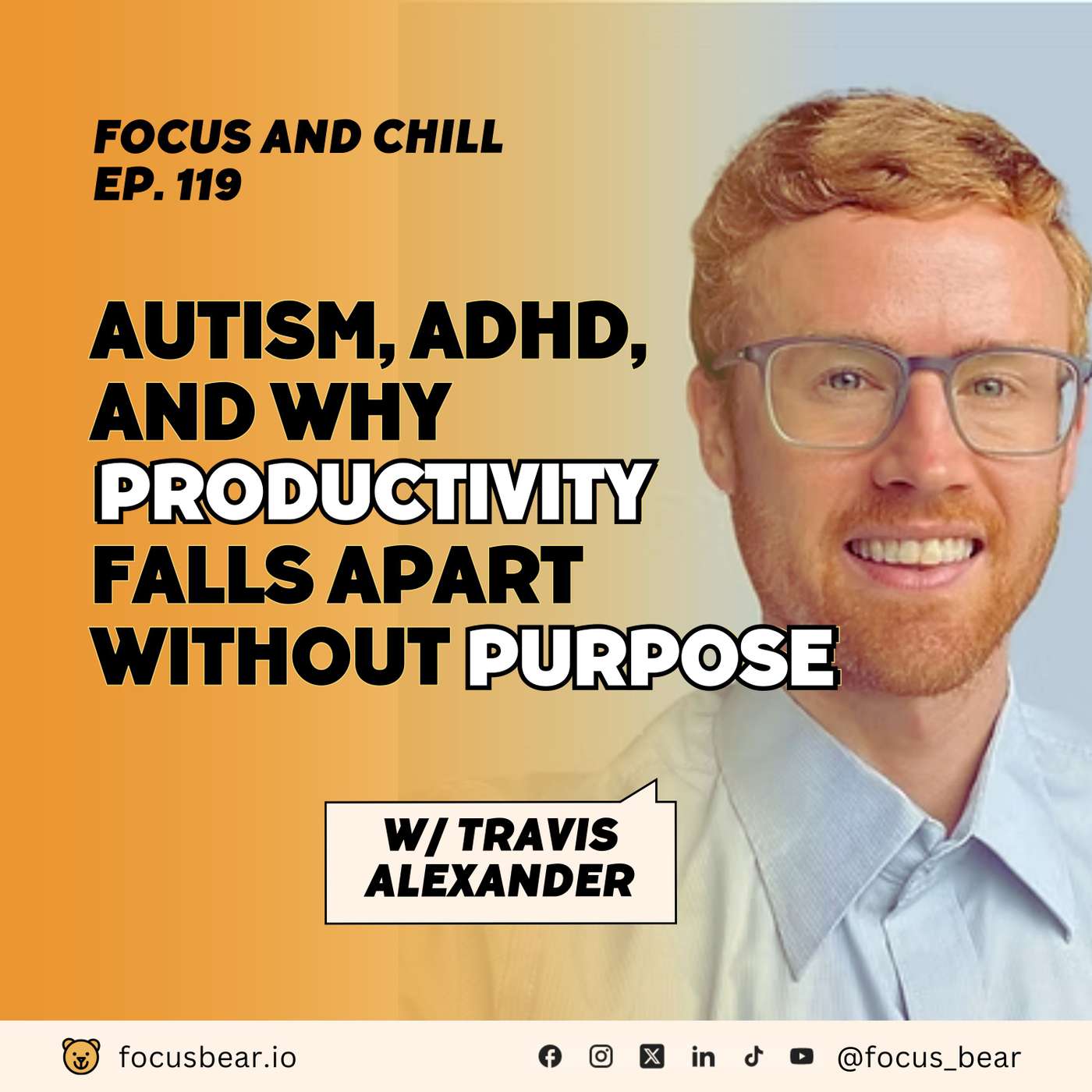
“I’m very good at starting things, then halfway through I ask: why am I doing this?”In this episode, Travis Alexander shares an honest conversation about career confusion, productivity struggles, and the long road to self-understanding after late diagnoses of autism, ADHD, and dyslexia. Together, we explore why work can feel harder without clear purpose, how masking shows up in careers and productivity, and what actually helps when motivation keeps collapsing halfway through.Travis Alexander is a science and engineering master’s graduate who has worked across startups, corporate medical technology, and creative projects. Diagnosed with dyslexia, autism, and ADHD later in life, he is now a neurodivergent advocate and author of Stairway to the Spectrum, where he reflects on identity, work, and self-awareness. Outside of work, Travis enjoys breakdancing, running, and spending time with his wife.Episode Highlights: 00:02:02 – Diagnosed with dyslexia, but answers didn’t last Travis shares how his first diagnosis explained some struggles, but didn’t stop problems from resurfacing in work, relationships, and decision-making.00:03:00 – Autism and ADHD discovered much later A decade after dyslexia, Travis realizes autism and ADHD were still unrecognized, helping explain long-standing confusion and burnout.00:09:15 – Self-awareness after late diagnosis Rather than “fixing” productivity, diagnosis gave Travis clarity, closure, and a way to understand past mistakes without self-blame.00:14:30 – Fifteen to twenty jobs and still searching Travis reflects on job-hopping across industries and why finding the right career fit has been so difficult but necessary.00:21:06 – Productivity collapses without a clear ‘why’ He explains why he often starts strong, loses motivation halfway, and how reconnecting to purpose is what actually sustains productivity.00:23:19 – Masking at work and following instructions A candid look at workplace conflict, masking through compliance, and why “just do it this way” can be deeply exhausting for neurodivergent people.Connect with Travis:Website: https://www.travisalexander.com.au/Connect with Jeremy:LinkedIn: https://linkedin.com/in/nageljeremyEmail: jeremy@focusbear.ioMore from Focus Bear:Website: https://focusbear.ioLinkedIn: https://www.linkedin.com/company/focus-bear/Youtube: https://www.youtube.com/@focusbearappTwitter: https://twitter.com/focusbear1Instagram: https://www.instagram.com/focus_bear/Facebook: https://www.facebook.com/focusbearapp/Podcast: https://podcast.focusbear.ioTiktok: https://www.tiktok.com/@focusbear
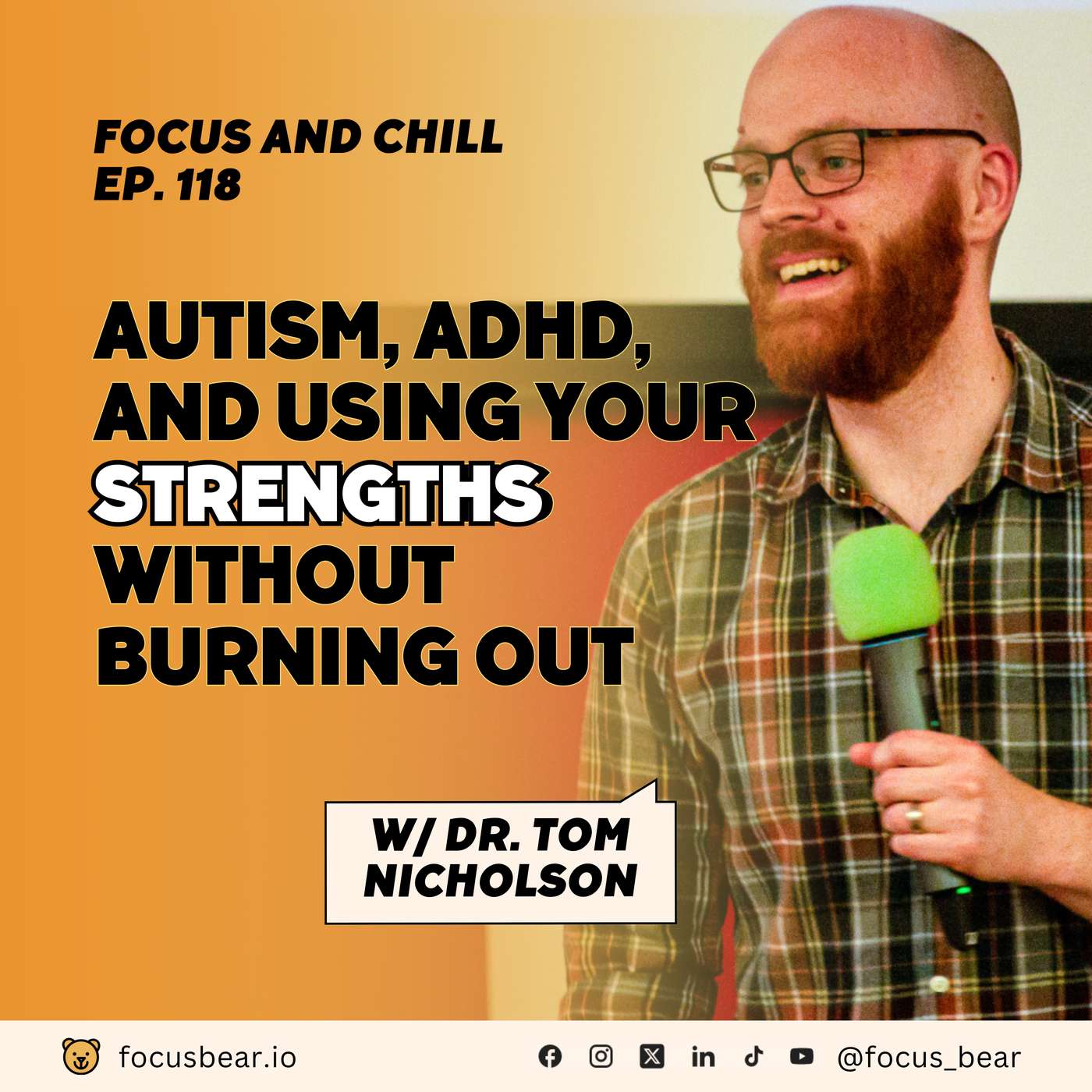
Burnout is your body telling you: stop. I’m going to make you stop.In this episode, Dr Tom Nicholson breaks down how productivity, overperformance, and even “success” can quietly become coping mechanisms that lead to burnout. Drawing from lived experience, academia, and clinical work, he explores how neurodivergent people can use their strengths without masking themselves into exhaustion.Dr Tom Nicholson is an assistant professor of mental health nursing, public speaker, and trainer specializing in neurodivergence and inclusion. He combines lived experience with clinical and academic expertise to help individuals and organizations rethink productivity, burnout, and sustainable ways of working.Episode Highlights 00:02:12 – Diagnosed with ADHD at five and labeled “the problem child” Dr Tom describes being diagnosed in the mid-1990s and quickly framed as disruptive rather than supported. Despite doing well academically, he internalized the message that effort and compliance mattered more than wellbeing, laying the groundwork for overworking later in life.00:03:37 – Discovering autism later in adulthood He explains diagnostic overshadowing and how ADHD became the explanation for every difficulty he had. Autism was missed entirely, even as he became a specialist himself, showing how easily burnout risks can be overlooked when people appear “high functioning.”00:06:08 – Reframing school trauma and constant effort With a later autism lens, Dr Tom revisits his school experiences and recognizes how much energy went into coping, masking, and adapting. This reframing helps explain why productivity and overperformance often feel compulsory rather than optional.00:17:30 – Productivity works in bursts, not all day Dr Tom explains that his productivity comes in intense, focused bursts followed by long recovery periods. Expecting steady, all-day output ignores how many neurodivergent brains actually function and pushes people into boom-and-bust cycles.00:25:23 – Early fatherhood collides with productivity culture He speaks candidly about sleep deprivation, routine collapse, and identity shifts during the first year of parenting. Hustle culture and productivity myths make this period far harder, especially for neurodivergent parents with high sensory and rest needs.00:32:36 – When productivity advice turns into self-punishment Dr Tom reflects on consuming large amounts of self-help and productivity content. Instead of helping, it reinforced the belief that he was never doing enough, turning tools into weapons for self-criticism rather than support.00:39:30 – Burnout as a forced stop After pushing through a PhD, lockdown, and a newborn, his body shut everything down. He describes burnout not as weakness, but as the body enforcing boundaries when the mind refuses to listen.00:44:59 – The question behind overworking The episode closes with a powerful reflection: much productivity is driven by old narratives and the need to prove something. Dr. Tom invites listeners to ask whether their drive comes from genuine values or from trying to outrun past judgments.Connect with Dr. Tom:LinkedIn: linkedin.com/in/dr-tom-nicholson-089727131Instagram: https://www.instagram.com/drtomnicholsonConnect with Jeremy:LinkedIn: https://linkedin.com/in/nageljeremyEmail: jeremy@focusbear.ioMore from Focus Bear:Website: https://focusbear.ioLinkedIn: https://www.linkedin.com/company/focus-bear/Youtube: https://www.youtube.com/@focusbearappTwitter: https://twitter.com/focusbear1
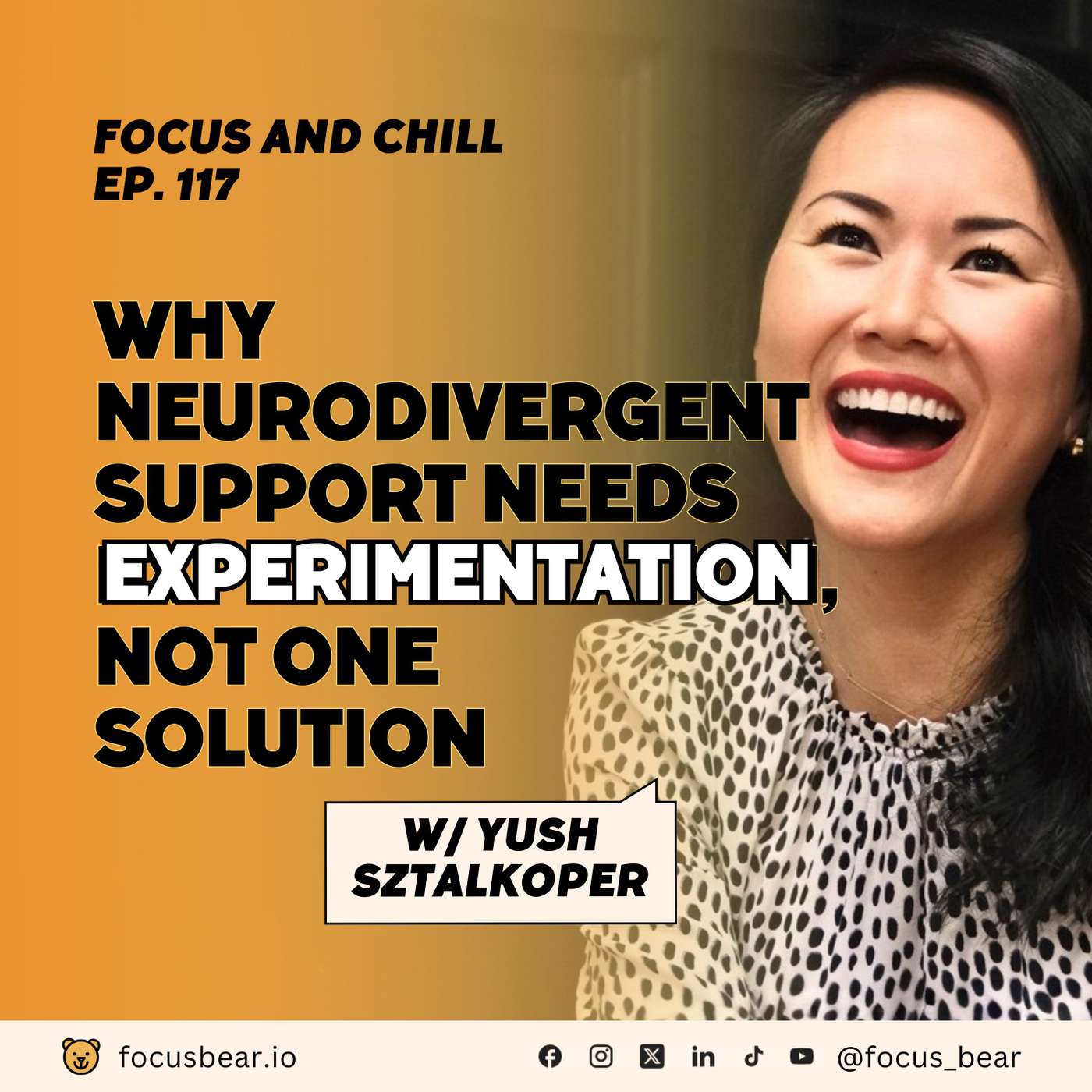
Understanding your neurodivergent brain isn’t about following one-size-fits-all solutions. In this episode, Yush Sztalkoper shares how experimentation, personalization, and a holistic approach helped her support herself and her neurodivergent children. From biohacking and genetics to AI tools that actually make daily life easier, this conversation explores what happens when you focus less on forcing outcomes and more on building systems that work for YOUR wiring.Yush is a neurodivergent entrepreneur, coach, and parent of a twice-exceptional child. She integrates positive intelligence, parenting experience, and individualized strategies to help neurodivergent people build sustainable emotional capacity, productivity, and regulation.Subscribe for more neurodivergent lived experiences, honest conversations, and strategies that actually help.Episode Highlights00:02:59 — Understanding biohacking for neurodivergent needs Yush explains that biohacking isn’t about supplements, but about understanding how your brain and body respond to lifestyle, environment, and support systems. She describes it as trial-and-error rooted in data rather than “one magic solution”.00:04:00 — One-size-fits-all approaches don’t work Many neurodivergent people try generic strategies and feel like they “failed” when nothing changes. Yush reframes this as insufficient solutions, not personal failure, and emphasizes individualized experimentation.00:09:30 — Dopamine and impulsivity explained Instead of treating impulsivity as a behavior issue, Yush and her naturopath looked at neurotransmitter pathways. Understanding dopamine differences helped them address impulsivity at the root, not just on the surface.00:10:30 — Small discoveries can drive big change A vitamin deficiency played a surprising role in her son’s impulsivity. By combining nutrition, lifestyle, and behavior support, they saw measurable changes in daily life.00:12:23 — Epigenetics as empowerment Yush shares how genetics and lifestyle interact, and how understanding these systems helps people make empowered choices without feeling destined to struggle. She reframes genetics as information, not limitation.00:19:21 — Using AI to maximize neurodivergent strengths AI becomes a cognitive amplifier, helping her process information faster, spot patterns, and make decisions with less overwhelm. She uses multiple tools depending on the task.00:22:30 — Parenting support through AI and gamification Yush uses AI creatively in parenting, turning overwhelming routines like cleaning into engaging, playful tasks. This shifts regulation and reduces stress at home.00:28:00 — Spotting blind spots with AI AI isn’t just practical; it helps her identify missing perspectives and stay curious about what she might be overlooking. This helps her adapt more quickly to challenges.00:33:52 — Harmful productivity advice Pushing through, forcing productivity, or “just powering through” can damage capacity and emotional regulation. Yush argues that protecting the nervous system matters more than finishing a task.00:41:55 — Executive function sprints in real life Her mornings are intense sensory and logistical routines requiring planning, flexibility, and capacity. She shows how executive functioning plays a central role in daily parenting.Connect with Yush:LinkedIn: https://www.linkedin.com/in/yushsztalkoper/Website: https://www.neurosparkplus.com/Connect with Jeremy:LinkedIn: https://linkedin.com/in/nageljeremyEmail: jeremy@focusbear.ioConnect with Joey:LinkedIn: https://www.linkedin.com/in/joeycorea/Newsletter: https://thepluckyjester.com/newsletter/More from Focus Bear:Website: https://focusbear.ioLinkedIn: https://www.linkedin.com/company/focus-bear/Youtube: https://www.youtube.com/@focusbearappTwitter: https://twitter.com/focusbear1Instagram: https://www.instagram.com/focus_bear/Facebook: https://www.facebook.com/focusbearapp/Podcast: https://podcast.focusbear.ioTiktok: https://www.tiktok.com/@focusbear
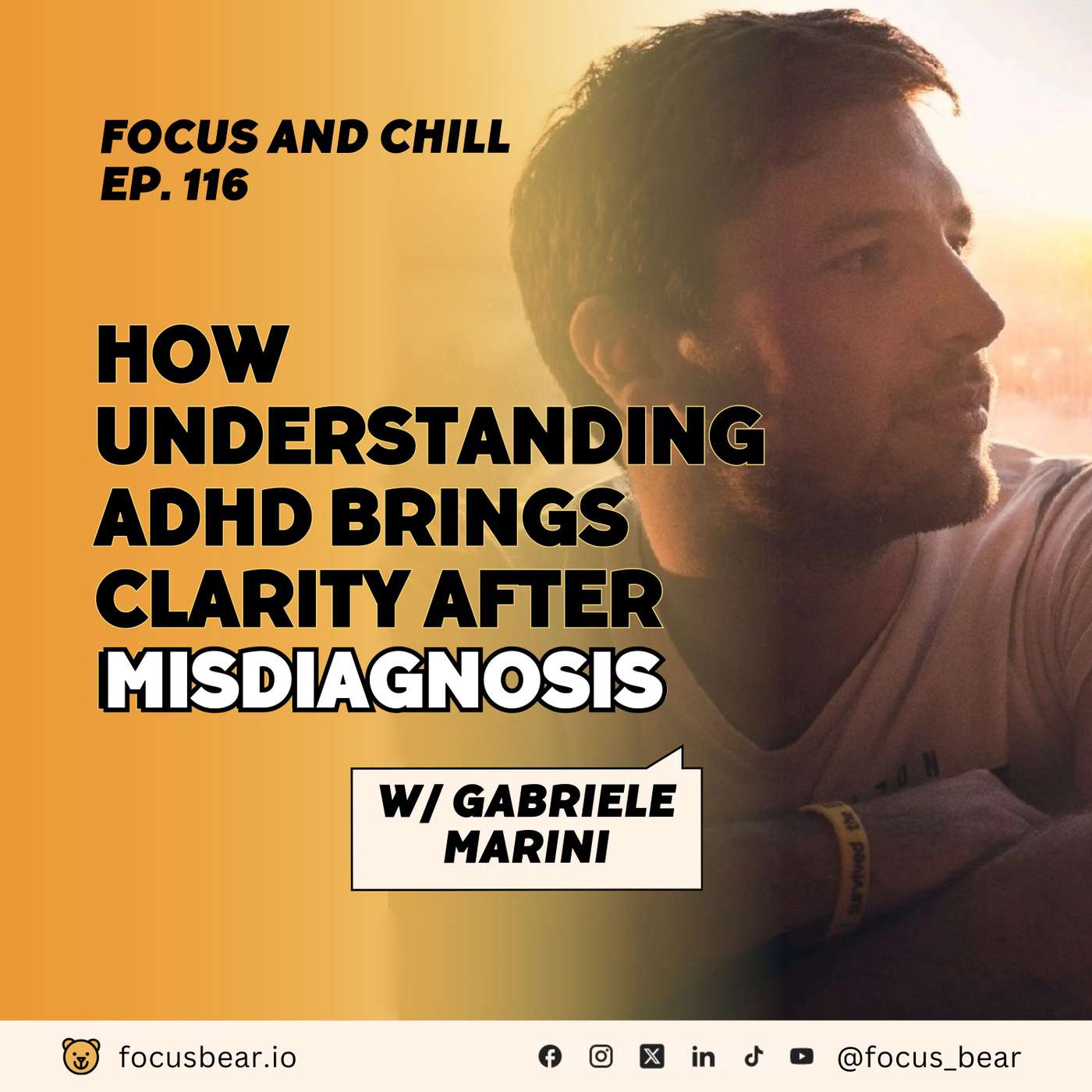
ADHD and high achievement don’t cancel each other out. Gabriele Marini shares how his neurodevelopmental evaluation suggested he was “too smart” for ADHD, which led him to reflect on what ADHD really looks like in adults who appear successful from the outside. He opens up about the pressure to perform, the confusion around symptoms, and how finally understanding his brain allowed him to replace doubt with clarity and self-acceptance. Gabriele Marini is a PhD researcher and lecturer living in Australia. He studies computational linguistics and brings a unique perspective on ADHD through his academic journey, lived experience, and immigrant background.Subscribe for more neurodivergent experiences, lived stories, and honest conversations.🔍 Episode Highlights 00:02:40 — “Why can’t I just sit down and do it?” Gabrielle describes sitting at his desk for hours, rereading the same paragraph and blaming himself for not being able to focus. He explains how trying harder didn’t help and how he punished himself by staying there all day instead of living his life.00:04:30 — “If I’m lazy… how did I move to another country?” He shares how someone close to him challenged the idea that he was “lazy,” pointing out that moving internationally to pursue a PhD isn’t something a lazy person does. It helped him understand that his struggles weren’t moral failings, but neurodivergent challenges.00:06:30 — “Your IQ is too high for ADHD.” During a neurodevelopmental evaluation, he was dismissed because his IQ was above average, even though he was anxious, exhausted and struggling daily. This shaped his view of how professionals often misunderstand ADHD in high-achieving adults.00:07:00 — Sleepless nights, anxiety and invisible suffering Gabrielle explains that his academic success didn’t mean things were easy. It came at the cost of sleeplessness, stress and physical and emotional exhaustion, which people around him rarely saw.00:17:30 — ADHD as a different way of being He reframed ADHD not as something broken, but as a different way of experiencing the world. Instead of forcing himself to be methodical, he started leaning into his strengths and natural abilities.00:19:30 — Twin comparisons and identity pain Growing up with a twin led to constant comparison, judgement and feeling “less than.” Those early comparisons deeply influenced his internal identity and self-esteem.00:32:00 — Listening to his body and avoiding burnout Gabrielle reflects on learning to slow down, notice what his body is telling him and allow himself rest. He explains how pushing through exhaustion led to burnout and why pacing himself is now essential.00:36:30 — Revenge bedtime procrastination and protecting rest He talks about staying awake late at night as a way to reclaim time and autonomy, even when it harms sleep. He is learning to protect rest, recognizing how much his nervous system actually needs it.Connect with Gabriele :Website: https://findanexpert.unimelb.edu.au/profile/831603-gabriele-mariniInstagram: https://www.instagram.com/gabryxx7/?hl=enConnect with Jeremy:LinkedIn: https://linkedin.com/in/nageljeremyEmail: jeremy@focusbear.ioMore from Focus Bear:Website: https://focusbear.ioLinkedIn: https://www.linkedin.com/company/focus-bear/Youtube: https://www.youtube.com/@focusbearappTwitter: https://twitter.com/focusbear1Instagram: https://www.instagram.com/focus_bear/Facebook: https://www.facebook.com/focusbearapp/Podcast: https://podcast.focusbear.ioTiktok: https://www.tiktok.com/@focusbear
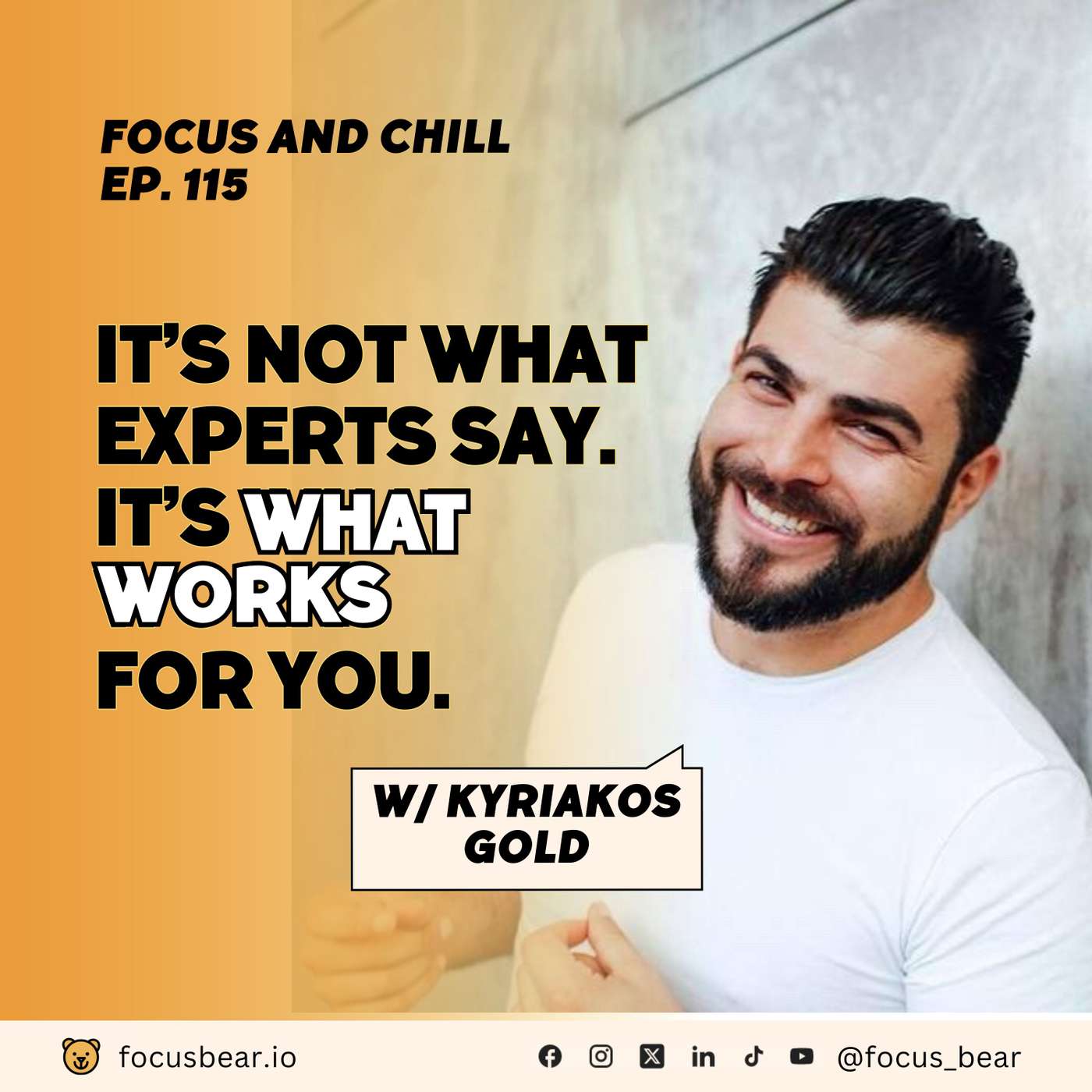
What if healing didn’t come from discipline, masking or “doing better,” but from kindness? In this episode, Kyriakos Gold shares his story of unmasking after an autistic diagnosis and the life-changing shift from self-criticism to self-kindness. Instead of trying to live according to what research, experts or society prescribe, Kyriakos talks honestly about rebuilding life around what actually works for your brain.About the GuestKyriakos Gold is the founder of Just Gold Agency and a passionate advocate for neurodivergent inclusion. Through storytelling, community impact initiatives and social entrepreneurship, he helps create workplaces and environments where autistic and otherwise neurodivergent people don’t need to mask to belong. Kyriakos is also a leader in Autistic Pride Day and has driven multiple projects empowering neurodivergent voices globally.🔍 Episode Highlights (with accurate timestamps)00:01:40 – Late diagnosis & a new autistic lens Kyriakos talks about getting an autism diagnosis in midlife and feeling like he’s “five years old in autistic years.” He explains how autism became the main lens he sees the world through, more stable than culture, nationality or environment.00:08:31 – The unmasking process: freeing and traumatic When he began unmasking, it wasn’t a gentle shift but a feeling of falling off a cliff emotionally. He describes mentally revisiting old memories, reinterpreting past interactions, and how liberating honesty came with fights, broken relationships and a complete rebuild of his ecosystem.00:12:30 – From guilt and shame to being unapologetically autistic Kyriakos shares how years of not knowing he was autistic led to constant self-criticism: every barrier felt like a personal failure. Moving toward being “unapologetically autistic” meant dropping shame and guilt without using autism as an excuse, and learning where he’d genuinely been unkind so he could repair it.00:15:00 – Dyspraxia, “laziness” and redefining effort He describes growing up in Greece, being expected to work on farms and constantly being called lazy when his body simply wouldn’t cooperate. Later he realized this was likely dyspraxia: his brain was willing, but his body sometimes felt like it was stuck in a high gear, making basic movement feel impossibly heavy.00:20:00 – “Mickey Mouse way”: what works for your brain, not experts Instead of obsessing over doing things the “proper” way, he builds what he calls the “Mickey Mouse way”: systems that actually work for him, even if they aren’t textbook-perfect. He’ll learn the official method later, then blend it with his own adaptations, always prioritising what his brain and body can realistically handle.00:23:30 – Designing a sensory-safe, dopamine-friendly environment From AI-generated art on the walls to smells, light, fresh air and a clean bedroom, Kyriakos shows how his home is intentionally built to support his autistic and dyspraxic needs. When his room is ordered and the sensory input feels right, getting moving and functioning becomes significantly easier.00:33:23 – Sleep, coffee and realising he’s rarely truly rested Kyriakos explains that while he can fall asleep fast, his brain often works all night, replaying work scenarios or arguments. Coffee helps him function, but too much stimulation worsens sleep, so he uses music, temperature and routine to try to coax his nervous system into deeper rest.00:36:30 – Kindness as regulation: not everything has to happen today He talks about the “kindness” he mentioned earlier as the courage to slow down: taking breaks, extending his morning routine, and accepting that not every task must be done immediately. When he gives himself that space, his day moves slower, his sleep improves, and he’s less like a “cranky baby” running on empty.00:41:30 – How to connect: LinkedIn, Just Gold & Autistic Pride Day To close, Kyriakos shares how people can reach out personally, work with Just Gold, or join / support the Autistic Pride Day campaign, including free resources and opportunities for organisations to get involved.Connect with Kyriakos Gold:LinkedIn: https://www.linkedin.com/in/kyriakosgold/Website: https://justgold.net/Connect with Jeremy:LinkedIn: https://linkedin.com/in/nageljeremyEmail: jeremy@focusbear.ioConnect with Joey:LinkedIn: https://www.linkedin.com/in/joeycorea/Newsletter: https://thepluckyjester.com/newsletter/More from Focus Bear:Website: https://focusbear.ioLinkedIn: https://www.linkedin.com/company/focus-bear/Youtube: https://www.youtube.com/@focusbearappTwitter: https://twitter.com/focusbear1Instagram: https://www.instagram.com/focus_bear/Facebook: https://www.facebook.com/focusbearapp/Podcast: https://podcast.focusbear.ioTiktok: https://www.tiktok.com/@focusbear
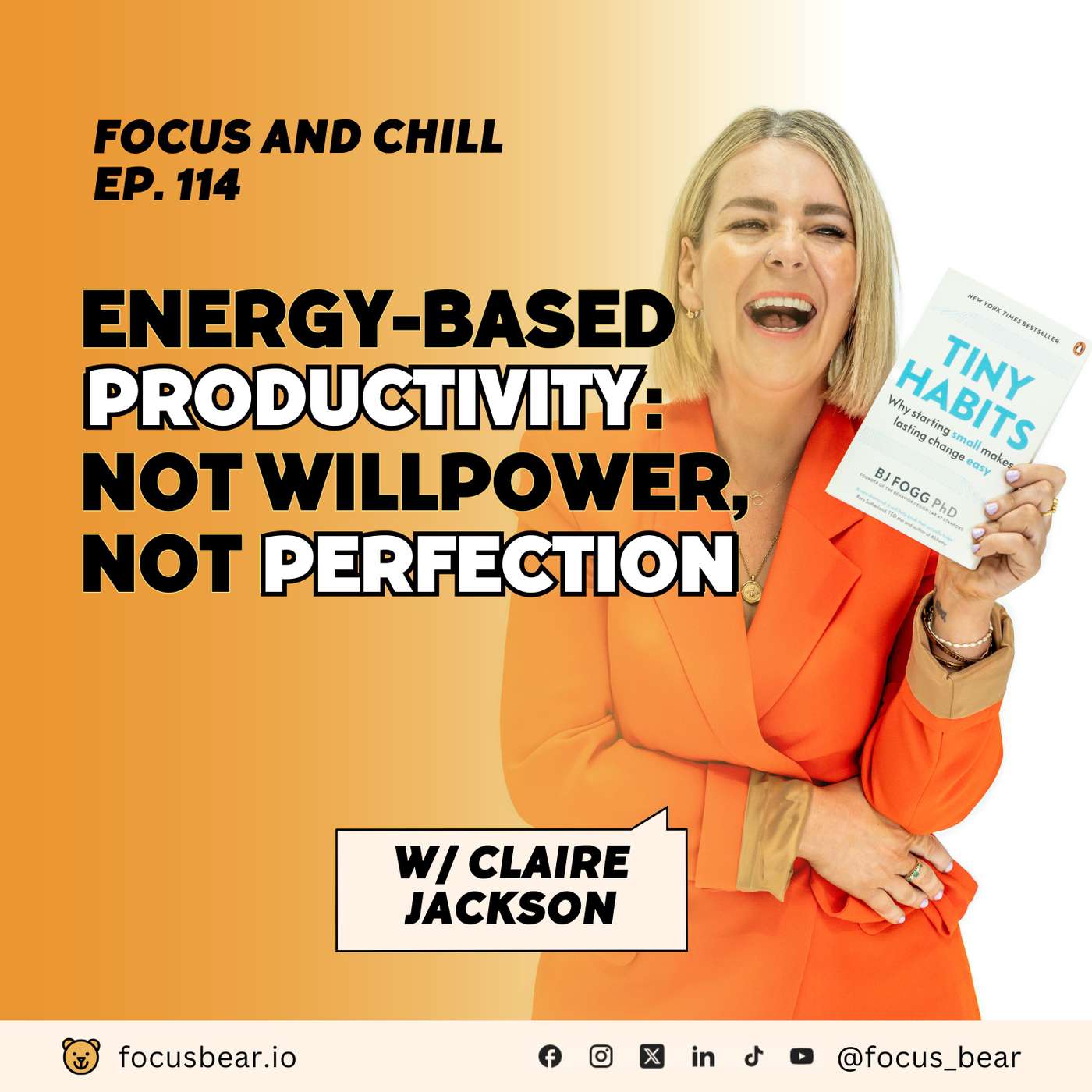
Ever wonder why building habits feels easy one week and impossible the next?In this episode, Australia’s Chief Habits Officer Claire Jackson joins Jeremy and Joey to break down why willpower doesn’t work for neurodivergent brains or neurotypical brains—and how habits stick when they’re built around energy, compassion and real dopamine needs, not perfection.Claire opens up about her ADHD journey, motherhood, energy management, and practical rituals that made her home and work life calmer and more meaningful. From morning non-negotiables to dopamine-positive environments and the three-task rule, this episode blends science, lived experience, and real-world habit design.If you’ve ever tried to “just be more disciplined,” this conversation will feel like a breath of relief.🔍 Episode Highlights• [00:04:12] Why willpower doesn’t work for ADHD or neurotypical brains Habits collapse when they rely on self-control alone. Claire explains how dopamine, executive function and emotional load determine whether habits stick.• [00:09:00] Energy-based productivity instead of hustle or perfection Learn how to plan your day based on your internal “battery” instead of guilt, deadlines or pressure.• [00:14:30] Creating dopamine-positive environments Bright colours, sensory cues and physical spaces that feed your need for stimulation before unhealthy impulses kick in.• [00:27:37] The “three non-negotiables” habit rule A practical method for reducing overwhelm: three tasks count, everything else is optional.• [00:15:49] Rest as a productivity strategy — not a reward Why protecting the nervous system matters more for progress than grinding harder.• [00:12:55] Building identity-anchored habits Real change sticks when habits reinforce: “I matter, and this action proves it.”• [00:17:33] Compassion over perfection Success isn’t “never missing a habit” — it’s knowing what to return to when life gets messy.• [00:18:58] Designing a life that feels good for you Claire shares how she now builds routines, parenting systems and work rhythms based on values, energy and lived experience.Connect with Claire:LinkedIn: https://www.linkedin.com/in/claire-jackson-5635592bWebsite: https://thehabitlab.com.au/Connect with Jeremy:LinkedIn: https://linkedin.com/in/nageljeremyEmail: jeremy@focusbear.ioConnect with Joey:LinkedIn: https://www.linkedin.com/in/joeycorea/Newsletter: https://thepluckyjester.com/newsletter/More from Focus Bear:Website: https://focusbear.ioLinkedIn: https://www.linkedin.com/company/focus-bear/Youtube: https://www.youtube.com/@focusbearappTwitter: https://twitter.com/focusbear1Instagram: https://www.instagram.com/focus_bear/Facebook: https://www.facebook.com/focusbearapp/Podcast: https://podcast.focusbear.ioTiktok: https://www.tiktok.com/@focusbear

Comments

Download from Google Play

Download from App Store
 United States