


 Claim Ownership
Azeem Azhar's Exponential View
Subscribed: 4,200Played: 136,690
Subscribe

© Copyright 2024 EPIIPLUS1 Ltd
Description
How will the future unfold? What is the impact of AI and other exponential technologies on business & society? Join Azeem Azhar, founder of Exponential View, on his quest to demistify the era of exponential change.
225 Episodes
Reverse

Welcome to Exponential View, the show where I explore how exponential technologies such as AI are reshaping our future. I've been studying AI and exponential technologies at the frontier for over ten years.
Each week, I share some of my analysis or speak with an expert guest to make light of a particular topic.
To keep up with the Exponential transition, subscribe to this channel or to my newsletter: https://www.exponentialview.co/
-----
AI has become so embedded in how I work that I can no longer cleanly separate it from my thinking. That raises a question I find genuinely unsettling: is intensive AI use making me a sharper thinker, or quietly doing the opposite? In this episode I pull back the curtain on my full research and writing process — the custom tools, the friction points, and the places where I'm still not sure I've got it right. For Ezra Klein, having AI summarize material is a disaster for original thought. But my AI systems are designed to protect the cognitive work that has to stay human, while they handle everything else. Knowing where to draw that line turns out to be the hardest and most important question.
I covered:
00:00 - Is AI worsening our thinking?
02:35 - Ezra Klein on AI and the death of original thought
04:02 - Cognitive offloading vs cognitive surrender
09:20 - Signal detection at scale
11:06 - Why I use several AI personas to scan for different insights
13:37 - AI tells me what NOT to think about
16:25 - The value of quietness
19:07 - Small notebooks, small ideas
20:01 - Writing reveals what you don't yet know
23:24 - The golden thread
25:20 - Speaking drafts aloud
28:05 - How I stress-test my arguments before publishing
29:35 - Using AI to stress-test my own house views
31:44 - Stylometer: my AI style and grammar tool
33:10 - Did AI make the thinking better?
For more on this week’s topics, subscribe to my newsletter https://www.exponentialview.co/
-----
Where to find me:
Exponential View newsletter: https://www.exponentialview.co/
Website: https://www.azeemazhar.com/
LinkedIn: https://www.linkedin.com/in/azhar/
Twitter/X: https://x.com/azeem
Production by EPIIPLUS1
Production and research: Baba Films, Chantal Smith, Marija Gavrilov. Hosted by Simplecast, an AdsWizz company. See pcm.adswizz.com for information about our collection and use of personal data for advertising.
Welcome to Exponential View, the show where I explore how exponential technologies such as AI are reshaping our future. I've been studying AI and exponential technologies at the frontier for over ten years.
Each week, I share some of my analysis or speak with an expert guest to make light of a particular topic.
To keep up with the Exponential transition, subscribe to this channel or to my newsletter: https://www.exponentialview.co/
-----
Meet R Mini Arnold - my OpenClaw chief of staff, which manages the equivalent of a ten-person team from a Mac mini in my garden studio. While I slept, that AI team debugged its own code at 3am, researched a trending Substack essay using five parallel investigators, and wrote a 4,600-word script for this very episode in 40 minutes. The gap between people who've started building this way and those who haven't is widening every week.
I covered:
00:51 Introducing my OpenClaw agent “R Mini Arnold”
03:59 What my AI chief of staff actually does
07:58 The hardware and software stack
10:38 A morning brief before you wake up
12:05 Overnight agents: research and code
15:00 How I communicate with my agent
18:56 Example 1: the sovereign wealth fund
22:41 Example 2: how this video was written
26:34 What it costs
29:22 The soul.md personality spec
32:39 Am I losing the judgment muscle?
35:46 Individuals vs. Fortune 500s
38:25 What to try this week
-----
Where to find me:
Exponential View newsletter: https://www.exponentialview.co/
Website: https://www.azeemazhar.com/
LinkedIn: https://www.linkedin.com/in/azhar/
Twitter/X: https://x.com/azeem
Production by EPIIPLUS1
Production and research: Baba Films, Chantal Smith, Marija Gavrilov. Hosted by Simplecast, an AdsWizz company. See pcm.adswizz.com for information about our collection and use of personal data for advertising.
Welcome to Exponential View, the show where I explore how exponential technologies such as AI are reshaping our future. I've been studying AI and exponential technologies at the frontier for over ten years.
Each week, I share some of my analysis or speak with an expert guest to make light of a particular topic.
To keep up with the Exponential transition, subscribe to this channel or to my newsletter: https://www.exponentialview.co/
-----
This is the first episode of AI Vistas, a new series where I bring together people I trust and respect to tackle a major question collectively.
Today’s question: are we in charge of our AI tools, or are they in charge of us?
Joining me are Nita Farahany, distinguished professor of law and philosophy at Duke University and a leading thinker on cognitive liberty and mental privacy; Eric Topol, founder of the Scripps Research Translational Institute and one of the world's most cited medical researchers; and Rohit Krishnan, engineer, former hedge fund manager, and AI builder. Moderating the conversation is Nick Thompson, CEO of The Atlantic.
We covered:
(01:33) Introducing AI Vistas
(03:51) The AI agent that made a financial decision mid-drive
(05:48) What does it mean to act autonomously anymore?
(08:42) Why AI harms are rarer than you'd expect
(10:24) When AI outperforms doctors – and why that's complicated
(15:20) Constituent competence: the skill you must never offload
(18:50) De-skilling is already happening
(31:20) What can schools do better?
(42:50) AI slop and "hollow-ware"
(46:40) What is lost when AI does the creating?
(49:18) When a tool gets good enough, we hand it off
(50:11) Deliberate intent: keeping AI as a tool
-----
Where to find me:
Exponential View newsletter: https://www.exponentialview.co/
Website: https://www.azeemazhar.com/
LinkedIn: https://www.linkedin.com/in/azhar/
Twitter/X: https://x.com/azeem
Where to find Nick, Nita, Eric and Rohit:
Thinking Freely with Nita Farahany: https://nitafarahany.substack.com/
Ground Truths with Eric Topol: https://erictopol.substack.com/
Strange Loop Canon with Rohit Krishnan: https://www.strangeloopcanon.com/
The Most Interesting Reads with Nick Thompson: https://nxthompson.substack.com/
Production by EPIIPLUS1
Production and research: Baba Films, Chantal Smith, Marija Gavrilov. Hosted by Simplecast, an AdsWizz company. See pcm.adswizz.com for information about our collection and use of personal data for advertising.

Welcome to Exponential View, the show where I explore how exponential technologies such as AI are reshaping our future. I've been studying AI and exponential technologies at the frontier for over ten years.
Each week, I share some of my analysis or speak with an expert guest to make light of a particular topic.
To keep up with the Exponential transition, subscribe to this channel or to my newsletter: https://www.exponentialview.co/
-----
In this episode, I sit down with my friend Rohit Krishnan - writer of the Substack newsletter Strange Loop Canon - for a hands-on conversation about what it actually looks like to build with AI agents today. Between us we're burning through tens of billions of tokens a month - I hit nearly 100 million in a single day this week - and we share what we're each running on our own machines.
We dig into the quirks and surprising power of tools like OpenClaw, Claude Code, and Cowork, debate why AI remains stubbornly bad at good writing, and zoom out to ask what a world of trillions of agents might actually look like — and what economic infrastructure it will need.
We covered:
(03:15) What's on your screen right now?
(04:30) OpenClaw
(06:27) Rohit’s agent, Morpheus
(11:06) Azeem's agent, R. Mini Arnold
(19:25) The analyst is now a machine
(22:36) 100 million tokens in a day: the new normal
(24:44) Building tools to improve AI writing: Horace and Broca
(32:19) Why writing is the hardest eval for LLMs
(39:18) Towards a trillion agents
(42:09) The agentic economy: coordination, identity, and exchange
(46:33) How to get started with OpenClaw
(51:18) The hardest leap for new users
-----
Where to find me:
Exponential View newsletter: https://www.exponentialview.co/
Website: https://www.azeemazhar.com/
LinkedIn: https://www.linkedin.com/in/azhar/
Twitter/X: https://x.com/azeem
Production by EPIIPLUS1
Production and research: Baba Films, Chantal Smith, Marija Gavrilov. Hosted by Simplecast, an AdsWizz company. See pcm.adswizz.com for information about our collection and use of personal data for advertising.
Welcome to Exponential View, the show where I explore how exponential technologies such as AI are reshaping our future. I've been studying AI and exponential technologies at the frontier for over ten years. Each week, I share some of my analysis or speak with an expert guest to make light of a particular topic. To keep up with the Exponential transition, subscribe to this channel or to my newsletter: https://www.exponentialview.co/ ----In this episode, I'm joined by Jaime Sevilla, founder of Epoch AI; Hannah Petrovic from my team at Exponential View; and financial journalist Matt Robinson from AI Street. Together we investigate a fundamental question: do the economics of AI companies actually work? We analysed OpenAI's financials from public data to examine whether their revenues can sustain the staggering R&D costs of frontier models. The findings reveal a picture far more precarious than many assume; we also explore where the real infrastructure bottlenecks lie, why compute demand will dwarf energy constraints, and what the rise of long-running agentic workloads means for the entire industry. Read the study here: https://www.exponentialview.co/p/inside-openais-unit-economics-epoch-exponentialviewWe covered: (00:00) Do the economics of frontier AI actually work? (02:48) Piecing together OpenAI's finances from public data (05:24) GPT-5's "rapidly depreciating asset" problem (13:25) Why OpenAI is flirting with ads (17:31) If you were Sam Altman, what would you do differently? (22:54) Energy vs. GPUs; where the real infrastructure bottleneck lies (29:15) What surging compute demand actually looks like (33:12) The most surprising finding from the research (38:02) The race to avoid commoditization (43:35) Agents that outlive their models Where to find me: Exponential View newsletter: https://www.exponentialview.co/ Website: https://www.azeemazhar.com/ LinkedIn: https://www.linkedin.com/in/azhar/ Twitter/X: https://x.com/azeem Where to find Jamie: https://epoch.ai or https://epochai.substack.com Where to find Matt: https://www.ai-street.co Production by supermix.io and EPIIPLUS1 Production and research: Chantal Smith and Marija Gavrilov. Hosted by Simplecast, an AdsWizz company. See pcm.adswizz.com for information about our collection and use of personal data for advertising.
Welcome to Exponential View, the show where I explore how exponential technologies such as AI are reshaping our future. I've been studying AI and exponential technologies at the frontier for over ten years.Each week, I share some of my analysis or speak with an expert guest to make light of a particular topic.To keep up with the Exponential transition, subscribe to this channel or to my newsletter: https://www.exponentialview.co/-----A week before OpenClaw exploded, I recorded a prescient conversation with Mustafa Suleyman, CEO of Microsoft AI and co-founder of DeepMind. We talked about what happens when AI starts to seem conscious – even if it isn’t. Today, you get to hear our conversation.Mustafa has been sounding the alarm about what he calls “seemingly conscious AI” and the risk of collective AI psychosis for a long time. We discussed this idea of the “fourth class of being” – neither human, tool, nor nature – that AI is becoming and all it brings with it.Skip to the best bits:(03:38) Why consciousness means the ability to suffer(06:52) "Your empathy circuits are being hacked"(07:23) Consciousness as the basis of rights(10:47) A fourth class of being(13:41) Why market forces push toward seemingly conscious AI(20:56) What AI should never be allowed to say(25:06) The proliferation problem with open-source chatbots(29:09) Why we need well-paid civil servants(30:17) Where should we draw the line with AI?(37:48) The counterintuitive case for going faster(42:00) The vibe coding dopamine hit(47:09) Social intelligence as the next AI frontier(48:50) The case for humanist super intelligence-----Where to find Mustafa:- X (Twitter): https://x.com/mustafasuleyman- LinkedIn: https://www.linkedin.com/in/mustafa-suleyman/- Personal Website: https://mustafa-suleyman.ai/Where to find me:- Substack: https://www.exponentialview.co/- Website: https://www.azeemazhar.com/- LinkedIn: https://www.linkedin.com/in/azhar- Twitter/X: https://x.com/azeemProduced by supermix.io and EPIIPLUS1 Ltd. Production and research: Chantal Smith and Marija Gavrilov. Hosted by Simplecast, an AdsWizz company. See pcm.adswizz.com for information about our collection and use of personal data for advertising.
Welcome to Exponential View, the show where I explore how exponential technologies such as AI are reshaping our future. I've been studying AI and exponential technologies at the frontier for over ten years.Each week, I share some of my analysis or speak with an expert guest to make light of a particular topic.To keep up with the Exponential transition, subscribe to this channel or to my newsletter: https://www.exponentialview.co/-----At Davos 2026, the mood was unlike any previous World Economic Forum gathering. With Donald Trump arriving amid escalating geopolitical tensions and European leaders sounding alarms about sovereignty, I recorded live dispatches from the ground. In this special episode, I bring together observations from four days at the annual meeting, tracking the seismic shifts in global order alongside the practical realities of AI adoption in the enterprise.Skip to the best bits:(00:38) Day one at Davos(02:10) Three recurring themes through the week(03:55) Day three at Davos(05:12) Mark Carney's stirring speech(05:52) Why European leaders are sounding the alarm(06:51) Why technological sovereignty just became urgent(09:31) Day four at Davos(12:59) What leaders really have to say on AI adoption(14:07) The case for only using open source modelsWhere to find me:Exponential View newsletter: https://www.exponentialview.co/Website: https://www.azeemazhar.com/LinkedIn: https://www.linkedin.com/in/azhar/Twitter/X: https://x.com/azeemProduction by supermix.io and EPIIPLUS1. Production and research: Chantal Smith and Marija Gavrilov. Hosted by Simplecast, an AdsWizz company. See pcm.adswizz.com for information about our collection and use of personal data for advertising.
Welcome to Exponential View, the show where I explore how exponential technologies such as AI are reshaping our future. I've been studying AI and exponential technologies at the frontier for over ten years.Each week, I share some of my analysis or speak with an expert guest to make light of a particular topic.To keep up with the Exponential transition, subscribe to this channel or to my newsletter: https://www.exponentialview.co/------In this episode, Peter McCrory, Head of Economics at Anthropic, unpacks the company's new Economic Index report. His team analysed millions of real Claude conversations to map exactly where AI is augmenting human work today and where it isn't. We explore the striking divergence between API and chat usage, why businesses need to extract tacit knowledge to unlock AI's potential, the "hollow ladder" risk for junior workers, and Anthropic's estimate that AI could add 1.0-1.8% to annual productivity growth over the next decade.Skip to the best parts:(00:00) Anthropic's Economic Index report(01:20) Claude's two distinct usage patterns(06:22) Examining AI's impact on the labor market(09:20) Where most businesses think too small(12:03) Why extracting tacit knowledge is so important(20:33) How do we create the next generation of experts?(23:22) Why people need to develop cognitive endurance(29:55) Long-term vs. short-term productivity(35:56) The future of human knowledge(37:46) Could AI's greatest impact go unmeasured?(41:55) How task bottlenecks have moved(46:09) Implementation resembles a staircase - not a curve(50:47) "Capability doesn't instantly deliver adoption"------Where to find me:Exponential View newsletter: https://www.exponentialview.co/Website: https://www.azeemazhar.com/LinkedIn: https://www.linkedin.com/in/azhar/Twitter/X: https://x.com/azeemProduction by supermix.io and EPIIPLUS1. Production and research: Chantal Smith and Marija Gavrilov. Hosted by Simplecast, an AdsWizz company. See pcm.adswizz.com for information about our collection and use of personal data for advertising.
Welcome to Exponential View, the show where I explore how exponential technologies such as AI are reshaping our future. I've been studying AI and exponential technologies at the frontier for over ten years. Each week, I share some of my analysis or speak with an expert guest to make light of a particular topic. To keep up with the Exponential transition, subscribe to this channel or to my newsletter: https://www.exponentialview.co/ -------- In this episode, I share my outlook for 2026 and explain why AI tools now feel genuinely different. I explore how the act of making has been transformed, why authenticity and meaning will become the new scarcity, and whether the foundations of energy and capital can hold. I also address the question I was asked most in 2025: when will the AI bubble burst? Skip to the best bits: 00:00 Why AI feels different in 2026 01:59 The six shifts in AI 03:32 The "done list" era 06:43 From execution to orchestration 09:02 The agentic coding revolution 11:10 What's a Chief Question Officer? 13:58 Three ways value will be created 16:27 "Claude told me to use ChatGPT" 18:02 The AI usage gap 20:30 The new moat in 2026 26:10 How does solar growth affect AI? 28:53 Revisiting the bubble or boom question ------ Where to find me: Exponential View newsletter: https://www.exponentialview.co/ Website: https://www.azeemazhar.com/ LinkedIn: https://www.linkedin.com/in/azhar/ Twitter/X: https://x.com/azeem Production by supermix.io and EPIIPLUS1 Production and research: Chantal Smith and Marija Gavrilov. Hosted by Simplecast, an AdsWizz company. See pcm.adswizz.com for information about our collection and use of personal data for advertising.
Welcome to Exponential View, the show where I explore how exponential technologies such as AI are reshaping our future. I've been studying AI and exponential technologies at the frontier for over ten years. Each week, I share some of my analysis or speak with an expert guest to make light of a particular topic. To keep up with the Exponential transition, subscribe to this channel or to my newsletter: https://www.exponentialview.co/ ------ In this episode, Nobel Prize-winning economist Paul Krugman and I discuss how a strong US economy, high asset valuations, and rapid AI adoption are sitting in uneasy tension. We explore what past technology cycles can teach us, why safety nets struggle to address disruption, and where genuine optimism still makes sense. This is a January 2025 rerun, which remains strikingly relevant today. We covered: (01:09) State of the US economy (02:28) "That end of 1999 feeling" (05:08) Insights and lessons from the dotcom bubble (09:57) Why today's market is different (13:44) Understanding AI's role in labor displacement (16:05) Are LLMs "souped-up autocorrect"? (20:14) How job displacement erodes communities (23:40) 2025's looming threat of tariffs (26:16) AI's surprising impact on globalization (30:15) Can markets address inequality? (33:06) The maximum level of sustainable national debt (36:31) When should the Fed raise interest rates? (38:57) The need to revitalize local economies (44:53) Did Paul's 2025 predictions come true? ------ Where to find me: Exponential View newsletter: https://www.exponentialview.co/ Website: https://www.azeemazhar.com/ LinkedIn: https://www.linkedin.com/in/azhar/ Twitter/X: https://x.com/azeem Production by supermix.io and EPIIPLUS1 Production and research: Chantal Smith and Marija Gavrilov. Hosted by Simplecast, an AdsWizz company. See pcm.adswizz.com for information about our collection and use of personal data for advertising.

Welcome to Exponential View, the show where I explore how exponential technologies such as AI are reshaping our future. I've been studying AI and exponential technologies at the frontier for over ten years. Each week, I share some of my analysis or speak with an expert guest to make light of a particular topic. To keep up with the Exponential transition, subscribe to this channel or to my newsletter: https://www.exponentialview.co/ --- What made 2025 special? In this episode, I reflect on the past year and what it revealed: a K-shaped divide. On one track, AI models are now doing hours of high quality work, improving at exponential pace, and shifting how we work from doing to judging. On the other, organisations and the broader economy are struggling to keep up. Stay to the end for my seasonal film recommendation. I cover:(00:00) Intro (00:45) The state of tool usage in 2025 (6:10) The gap between AI progress and organizational adoption (9:53) AI’s shockingly rapid revenue growth (11:17) The biggest mistake smart people make with AI (14:14) The inescapable need for physical infrastructure (16:06) What everyone was asking in 2025 (18:08) The new winners of the AI economy (20:48) Why “K” is the letter of 2025 (24:08) Seasonal movie recommendation ---- Where to find me: Exponential View newsletter: https://www.exponentialview.co/ Website: https://www.azeemazhar.com/ LinkedIn: https://www.linkedin.com/in/azhar/ Twitter/X: https://x.com/azeem Production by supermix.io and EPIIPLUS1 Production and research: Chantal Smith and Marija Gavrilov. Hosted by Simplecast, an AdsWizz company. See pcm.adswizz.com for information about our collection and use of personal data for advertising.
 1
1Welcome to Exponential View, the show where I explore how exponential technologies such as AI are reshaping our future. I've been studying AI and exponential technologies at the frontier for over ten years. Each week, I share some of my analysis or speak with an expert guest to make light of a particular topic. To keep up with the Exponential transition, subscribe to this channel or to my newsletter: https://www.exponentialview.co/ --- In this episode, I’ve distilled a year of extraordinary dialogue into one 20-minute briefing. I’ve spent 2025 in conversation with the architects of our future - the builders and thinkers redefining AI, energy, and the global economy.These are the "eureka" moments from my most exclusive interviews. From the future of "protopia" with Kevin Kelly to the hidden tech gaps with Dan Wang, this is your strategic roadmap for the exponential age.What you'll hear about:Part 1: AI as a general purpose techKevin Weil: The heuristic for startupsMatthew Prince: The “Socialist” pricing debateTyler Cowen: This will stifle the AI boomNick Thompson: The "NBA-ification" of JournalismKevin Kelly: From utopia to protopiaKevin Kelly: Technology as a "possibility factory”Part 2: How work is changingSteve Hsu: The future of educationThomas Dohmke: The inspectability turning pointBen Zweig: The new role for entry-level workersBen Zweig: Why are there so many hiring freezes?Ben Zweig: The eroding signal of higher educationPart 3: The physical world, compute, and energyGreg Jackson: The "crossing the road" metaphorGreg Jackson: Building a “show don’t tell” companyDan Wang, The "physical reality" of AIPart 4: The changing US China landscapeDan Wang: The West’s hidden tech gapJordan Schneider: The two types of accelerationismJordan Schneider: Why the US can learn from ChinaWhere to find me: Exponential View newsletter: https://www.exponentialview.co/ Website: https://www.azeemazhar.com/ LinkedIn: https://www.linkedin.com/in/azhar/Twitter/X: https://x.com/azeem Production by supermix.io and EPIIPLUS1 Production and research: Chantal Smith, Marija Gavrilov and Hannah Petrovic Hosted by Simplecast, an AdsWizz company. See pcm.adswizz.com for information about our collection and use of personal data for advertising.

Welcome to Exponential View, the show where I explore how exponential technologies such as AI are reshaping our future. I've been studying AI and exponential technologies at the frontier for over ten years. Each week, I share some of my analysis or speak with an expert guest to make light of a particular topic. To keep up with the Exponential transition, subscribe to this channel or to my newsletter: https://www.exponentialview.co/ --- In this episode, I look at the next 24 months of AI. The technology is improving rapidly – so what could hold back widespread transformation of how we work and live? I dig into the real constraints, from electricity shortages to institutional inertia, why mid-2026 matters for enterprise AI, and why so many people remain uneasy about a technology they use every day. I cover: (00:03) Predicting AI's next two years (01:50) How life changing are chatbots, really? (03:36) Our current biggest AI constraint (07:58) The remarkable increase in token efficiency (10:43) Why mid-2026 is a crucial turning point (13:01) Do we actually want AI in our lives? (15:28) Should organizations wait to jump in? (16:39) How is OpenAI reckoning with Gemini? (18:41) The market's reaction to OpenAI's code red (19:32) Where will value accrue in the supply chain? (20:51) What's the best strategy for middling powers?Where to find me: Exponential View newsletter: https://www.exponentialview.co/ Website: https://www.azeemazhar.com/ LinkedIn: https://www.linkedin.com/in/azhar/Twitter/X: https://x.com/azeem Production by supermix.io and EPIIPLUS1 Production and research: Chantal Smith and Marija Gavrilov. Hosted by Simplecast, an AdsWizz company. See pcm.adswizz.com for information about our collection and use of personal data for advertising.
Welcome to Exponential View, the show where I explore how exponential technologies such as AI are reshaping our future. I've been studying AI and exponential technologies at the frontier for over ten years. Each week, I share some of my analysis or speak with an expert guest to make light of a particular topic. To keep up with the Exponential transition, subscribe to this podcast or to my newsletter: https://www.exponentialview.co/ --- In this episode, I reflect on the third anniversary of ChatGPT's launch as a marker of where we are in the exponential age. As a product, ChatGPT captures the speed of technological progress, the new behaviours emerging around it and the widening gap between innovation and institutional change – all symptomatic of the era I called the exponential age in my 2021 book. I cover: (00:09) How ChatGPT became synonymous with AI (01:41) The rise of the reasoning model (03:53) Why NVIDIA's chip cycle is exponential (05:53) How general-purpose tech changes everything (07:59) The subtle power of building bespoke software (11:46) The iPhone calculation that breaks everything (14:53) Who profits from a general-purpose technology? (16:38) The software market example (20:07) Are we headed towards another .com crash? Where to find me: Exponential View newsletter: https://www.exponentialview.co/ Website: https://www.azeemazhar.com/ LinkedIn: /azhar Twitter/X: https://x.com/azeem Production by supermix.io and EPIIPLUS1 Production and research: Chantal Smith and Marija Gavrilov. Hosted by Simplecast, an AdsWizz company. See pcm.adswizz.com for information about our collection and use of personal data for advertising.
The AI industry is sending mixed signals, with markets turning red while teams report real productivity gains. In this session I explore why we are living in a split reality, where individuals move faster with these tools but the wider economy is ambivalent. We once assumed juniors would get the biggest lift from AI, yet the newer agentic tools seem to reward senior workers who know how to structure problems and judge output. In this podcast, I look at the evidence behind that shift and explain how these gains collide with the slow grind of organisational processes. I cover: (00:00) AI productivity: A split reality (00:31) Decoding the stock market drop (02:53) Unpacking three years of AI productivity data (06:09) Does AI help junior or senior developers more? (09:54) The surprising group benefitting from AI (11:45) Why is there a productivity gap? (13:08) Most companies need a process overhaul (14:33) Anthropic's alarming discovery (16:45) So, are we moving quickly enough? (17:29) The counterintuitive truth about AI productivity Where to find me:- Exponential View newsletter: https://www.exponentialview.co/ - Website: https://www.azeemazhar.com/ - - LinkedIn: https://www.linkedin.com/in/azhar - Twitter/X: https://x.com/azeem Production by supermix.io and EPIIPLUS1 Production and research: Chantal Smith, Hannah Petrovic and Marija Gavrilov. Hosted by Simplecast, an AdsWizz company. See pcm.adswizz.com for information about our collection and use of personal data for advertising.
Junior roles in AI-exposed fields are disappearing fast. The obvious culprit is AI rapidly automating entry-level jobs. And yet, this isn't quite right. What is driving the drop is managers’ expectations about what AI will do, not the work that it's already replacing. I discussed this with Ben Zweig of Revelio Labs, which builds global workforce data from millions of individual profiles to track hiring, separations and job flows. Their data shows how expectation and uncertainty are reshaping the market.Together, we explored the future of work and shared practical advice for new grads. We covered: (01:15) What's happening in the labor market? (05:27) The inherent complexity of the labor market (06:24) How Revelio Labs captures labor market data (08:39) "The Canary in the Coal Mine" (11:52) Who does AI exposure harm the most? (13:01) How AI anticipation is harming the job market (15:15) Testing the expectation mismatch hypothesis (17:30) Could AI be creating more jobs? (20:44) Breaking down jobs into smaller tasks (27:33) Why large companies struggle to reorganize (30:35) Focus on creating adaptive, flexible roles (36:03) Managing AI's increasing capability (39:11) What entry-level workers need to do Where to find me: - Exponential View newsletter: https://www.exponentialview.co/ - Website: https://www.azeemazhar.com/ - LinkedIn: https://www.linkedin.com/in/azhar - Twitter/X: https://x.com/azeem Where to find Ben: - https://www.linkedin.com/in/ben-zweig/ - Twitter/X: https://x.com/BJZweig - Revelio Labs: https://www.reveliolabs.com/ Production by supermix.io and EPIIPLUS1 Production and research: Chantal Smith, Hannah Petrovic and Marija Gavrilov. Hosted by Simplecast, an AdsWizz company. See pcm.adswizz.com for information about our collection and use of personal data for advertising.
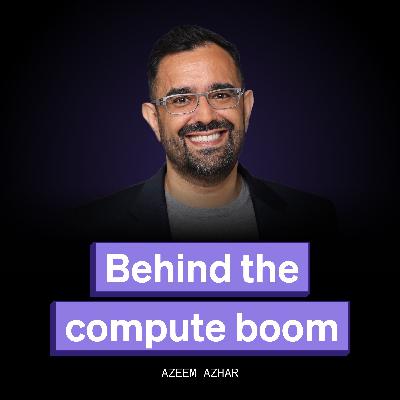
The AI boom isn’t just about chatbots.In this video, I explain why cloud companies and chipmakers are exploding in value: we’re moving into an economy where computation becomes a fundamental input – like steel, electricity or oil.If that’s true, our demand for compute could approach infinity.I also break down new data from Wharton’s 2025 AI Adoption Report, which shows how AI agents and automated workflows are already spreading through major U.S. companies: https://knowledge.wharton.upenn.edu/special-report/2025-ai-adoption-report/Timestamps:(00:00) The economic shift to computation (00:40) The surprising Cloud business boom (02:52) Is the hardware industry growth a bubble? (03:18) What is computing, really? (04:31) Our insatiable appetite for computing (09:15) Our economic dependence on computation (10:54) The rise of agentic workforces (13:05) What does infinite demand actually mean? (15:23) The future of compute demandWhere to find me:Exponential View newsletter: https://www.exponentialview.co/Website: https://www.azeemazhar.com/LinkedIn: https://www.linkedin.com/in/azharTwitter/X: https://x.com/azeemProduction by supermix.io and EPIIPLUS1Production and research: Chantal Smith, Hannah Petrovic and Marija Gavrilov. Hosted by Simplecast, an AdsWizz company. See pcm.adswizz.com for information about our collection and use of personal data for advertising.
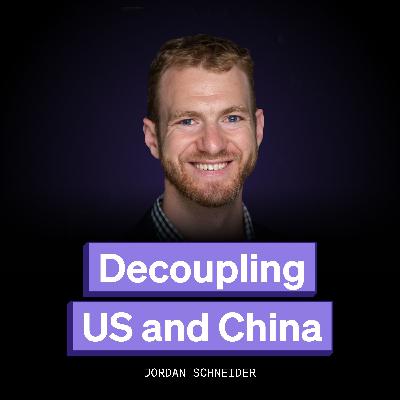
In this episode, I speak with Jordan Schneider, creator of Chinatalk, to explore the new phase of US–China competition. Both countries are using trade policy, export controls and industrial strategy to shift the balance of global power. Yet, their economies remain tightly bound. We cover: (01:34) The US and China’s decoupling (07:28) Why attempts to control China backfired (08:51) Understanding the Oct. 9th rare Earth rules (11:27) The modern iteration of Chinese communism (14:23) Is decoupling a strategy to avoid weaponization? (16:12) US leadership might be shooting from the hip (19:22) Are system changes inherently messy? (21:27) “Vibe-based” sovereignty (26:03) AI incumbents aren’t entrenched—yet (29:07) Why China remains focused on AI deployment (32:45) The different versions of tech-accelerationism (33:37) How will societies withstand rapid change? (36:54) What the West can learn from China (40:10) Where China is most misunderstood (43:14) Imagining an improved US-China relationship Where to find Jordan:Substack: https://substack.com/@chinatalkYouTube: @ChinaTalkMediaLinkedin: / jorschneiderX: https://x.com/jordanschnycWhere to find me:Substack: https://www.exponentialview.co/Website: https://www.azeemazhar.com/LinkedIn:/ azharX: https://x.com/azeemProduced by EPIIPLUS1 Ltd and supermix.io Production and research: Chantal Smith, Hannah Petrovic and Marija Gavrilov. Hosted by Simplecast, an AdsWizz company. See pcm.adswizz.com for information about our collection and use of personal data for advertising.
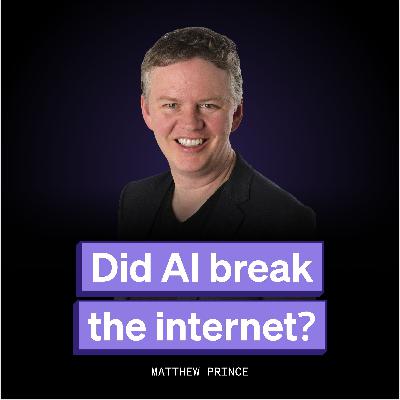
Azeem Azhar sat down with Matthew Prince, co-founder & CEO of Cloudflare. Matthew is a rare operator with the vantage point to answer a simple question: if agents do the reading, who gets paid? This conversation is a practical map of how AI “answer engines” upend the web’s traffic-funded model – and what could replace it.Chapters: (00:46) The currency of the web is dying (06:08) Google's inflection point (10:08) Why a broken business model might save the internet (14:44) The incentivization of ragebait (20:38) Content scarcity as a solution (24:35) What could a new content business model look like? (28:51) The challenge of pricing information (29:31) How Cloudflare thinks about the creator economy (32:06) Should smaller companies pay less? (34:24) Can markets solve this without Congress? (39:11) How does the agentic web affect content? (43:40) A rare chance to redesign the internet Produced by EPIIPLUS1 Ltd and supermix.io Production and research: Chantal Smith, Hannah Petrovic, Nathan Warren and Marija Gavrilov. Hosted by Simplecast, an AdsWizz company. See pcm.adswizz.com for information about our collection and use of personal data for advertising.
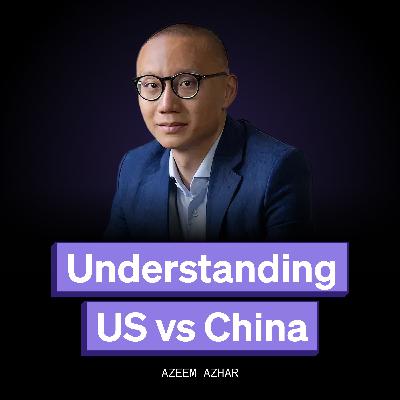
In this episode, I spoke with Dan Wang, author of “Breakneck: China’s Quest to Engineer the Future”, shortlisted for the FT & Schroders Business Book of the Year.Dan is one of the most astute observers of China’s technological and industrial development, and his annual letters from Beijing have long been required reading for those seeking to understand the country’s evolving role in the world.We unpacked a bold thesis: China is not merely a competitor in AI and tech, but is re-imagining its entire state apparatus as an engineering state - in contrast to the more “lawyerly” institutions of the US and UK.If you’re interested in AI, energy or geopolitics, this conversation is for you.We covered: (00:47) Why China is an engineering state(03:40) China’s pro-engineering disposition(06:08) The role of market competition in China(08:07) Living through Zero COVID(11:35) What political science terms get wrong(12:58) Characteristics of a lawyerly society(15:23) What Americans misunderstand about China(21:54) Has China produced essential tech?(23:50) The AI divide: China vs. US(27:45) Differences in energy production(32:07) The inherent value of process knowledge(38:34) Is the US developing pro-engineering policies?(44:23) What does it take for countries to compete?Where to find me:Substack: https://www.exponentialview.co/Website: https://www.azeemazhar.com/LinkedIn: https://www.linkedin.com/in/azharTwitter/X: https://x.com/azeemWhere to find Dan:Website: https://danwang.co/LinkedIn: https://www.linkedin.com/in/danwang15/Twitter/X: https://x.com/danwwangProduction by supermix.io and EPIIPLUS1 Ltd, including Chantal Smith, Marija Gavrilov, Nathan Warren and Hannah Petrovic. Hosted by Simplecast, an AdsWizz company. See pcm.adswizz.com for information about our collection and use of personal data for advertising.


Download from Google Play

Download from App Store
 United States
The transition to electric vehicles marks a pivotal moment in Ford's long history, challenging the traditional notions of car design and ownership. As Hau Thai-Tang and Azeem Azhar delve into the imminent EV revolution, the prospect of exponential uptake within the next five years prompts a necessary reimagining of the automotive industry, drawing parallels to the transformative models of companies like Netflix and Apple. I have read on https://royalprinceautocare.com/
Supply Chain digitization is the need of the hour. Thisbis a very timely podcast.
really excellent conversation
Excellent conversation!
Great podcast, just frustrating the guest being interrupted several times.
You cut the guest off a few times towards the end of the interview
Very interesting discussion but was very concerned at the implication of something Missy said re the B737max scandal. She said some carriers don't buy the same training packages for their pilots. The B737max is aerodynamically unstable, so a fundamentally flawed airframe. The MCAS and single AoA detector are flawed design and implementation problems. All compounded by Boeing not disclosing the MCAS even existed to carriers/pilots in the POH/training materials. This is criminal and raises the question, how can pilots trust a Boeing POH again in the future? This was not a choice by foreign carriers, but a decision imposed by Boeing to avoid the regulatory implications of disclosing the system. They applied the fail fast, fail often principle to try and catch up with Airbus and the failure cost lives.
an excellent uncomplicated interview and discussion regarding the future of health care and technology
great talk that drived me to think more consciously about the tech