


 Claim Ownership
Byline Times Audio Articles
Subscribed: 53Played: 4,761
Subscribe
Description
The latest articles from Byline Times converted to audio for easy listening
1444 Episodes
Reverse
Read our Monthly Magazine
And support our mission to provide fearless stories about and outside the media system
SUBSCRIBE TODAY
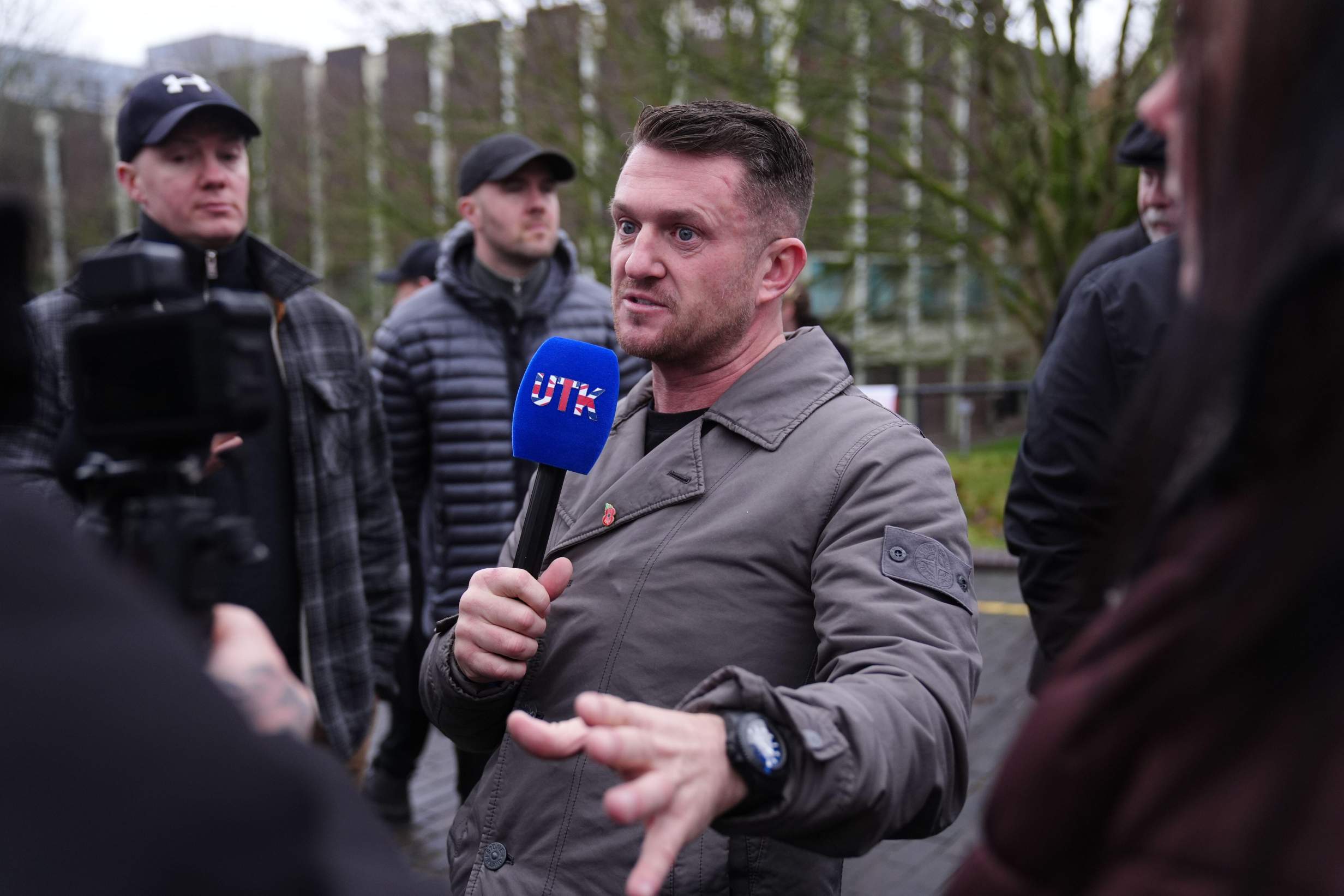
In February 2020, far-right activist Stephen Yaxley-Lennon ('Tommy Robinson') travelled to Moscow and St Petersburg, giving interviews to Kremlin-backed broadcaster RT and meeting figures linked to Russian nationalist movements. Since then, questions have long swirled about his Russian connections and the sources of his funding amid mounting legal debts.
Byline Times can now reveal that years before that trip to Russia, Robinson was hired as a "goodwill ambassador" for an unregistered charity fronting a secretive Russian propaganda network that worked directly for President Vladimir Putin's administration, and has ties to a sanctioned Russian state-linked oil giant.
The unregistered charity – the MMBF Trust – is part of a network centred around the London Post.
At first glance, the London Post resembles a local news website covering UK gambling regulations and London restaurant reviews. It has featured articles about Borough Market's grocery ordering service, and good spots for ramen.
But sources who spoke to Byline Times described it as part of what intelligence analysts call a 'black PR' operation: coordinated disinformation campaigns designed to manipulate public opinion while concealing their true sponsors.
Robinson's appointment to the unregistered charity was first reported by anti-extremism organisation Hope Not Hate in 2017.
Last year, Press Gazette revealed that the London Post – which had announced the appointment – had surprising Russia links.
Byline Times can now reveal further details about the suspected funding behind the website, including cryptocurrency payment trails to Russian 'black PR' agents, and ties to major Russian state enterprises.
The site's Russian backers operate through a company called Moscow Media Group.
Its subsidiary, MMG Brainstorming, has publicly advertised its work for Putin's presidential office, the State Duma, the Federation Council, and various Russian Government ministries and agencies.
Moscow Media Group also has ties to a wide range of Russian state-backed energy and infrastructure enterprises, including to the sanctioned Russian oil company Gazprom Neft.
'Domestic Terrorism': ICE Contractor Palantir's Tools for Tracking Dissent
Peter Thiel's controversial data firm – which holds contracts with the UK's NHS and Ministry of Defence – researched protest prediction for the US Army before agreeing to build ICE's data platform to conduct mass deportation. Are its tools now targeting democratic dissent as well as illegal immigration?
Nafeez Ahmed
The Unregistered Charity
The public face behind the London Post is a Zimbabwean-English film producer named Matthew C Martino (also known as Mathetes Chihwai).
Martino runs a UK-based entity called the Matthew Martino Benevolent Fund (MMBF Trust), the website of which states that it is a charity supporting filmmakers and others who wish to study or work in the performing arts.
However, the organisation neither registered with the UK's Charity Commission nor provided any notable support to filmmakers.
In 2017, the MMBF Trust made waves on social media when the London Post announced Tommy Robinson as its new goodwill ambassador.
Robinson, the co-founder of the English Defence League, is a convicted fraudster whose disinformation helped fuel the 2024 Southport riots which involved unprecedented racist violence.
According to the London Post's announcement, Robinson was hired by the MMBF Trust to help oversee a £100,000 arts grant programme that would launch in February 2018.
The nature of the work Robinson undertook for the MMBF Trust is unclear. But the charity appears to have been a front to provide legitimacy to a Russian-backed propaganda operation.
The 2Trom Network
The London Post is part of a media consortium of ostensibly British news organisations, operating under an entity called 2Trom News Group.
Although inco...

Read our Monthly Magazine
And support our mission to provide fearless stories about and outside the media system
SUBSCRIBE TODAY
"The enemy has only images and illusions… behind which he hides his true motives. Destroy the image and you will break the enemy."
— Shaolin Master to Bruce Lee, Enter the Dragon
That line appears at the very start of Enter the Dragon, delivered before a punch is thrown. It frames the entire film. The struggle it describes is not one of brute force, but of credibility. Power, Bruce Lee's Shaolin master suggests, rarely confronts you directly. It shelters behind images. Strip those away, and what remains is exposed.
It is difficult for me not to think about that line when looking at what has just happened inside the Labour Party.
For years, the Labour right under Sir Keir Starmer's leadership has carefully cultivated an image. The staging is familiar: the Union Jack backdrop, the language of seriousness, duty, restraint and responsibility. Even the careful emphasis on titles and institutional roles plays its part. The claim is not merely of competence, but of public duty. That power is exercised reluctantly. That decisions are taken in the national interest, not out of factional advantage. That this is public service, not politics as usual.
That image has mattered because it has functioned as legitimacy. It reassured voters, quietened dissent and disarmed critics. It suggested that whatever internal disagreements existed, those in charge were acting from a higher sense of responsibility.
But images only work if behaviour sustains them.
Freebiegate and repeated policy U-turns have already eroded that credibility. But the decision to block Manchester Mayor Andy Burnham from the Gorton and Denton by-election did something more profound. It did not simply remove a political obstacle. It punctured the image itself, publicly and unmistakably.
Keir Starmer's Labour Government Is Much Better Than the Media Admits
There is a deep disconnect between the Government's actions to improve the country and its standing in the polls, argues Professor Chris Painter
Professor Chris Painter
This was not persuasion. It was not democratic judgement. It was not even subtle strategy. It was the open deployment of bureaucratic power to neutralise a figure whose authority rests on precisely the things the leadership claims to value: electoral success, public trust and a strong local mandate.
In that moment, the illusion failed.
When power reaches for administrative force rather than argument or consent, it reveals its true priorities. What was exposed here was not country before party, but self-preservation. Not public service, but control. Not national interest, but institutional self-interest.
Once that becomes visible, the language no longer works. The symbolism no longer covers the act. Claims of seriousness and duty ring hollow when set against naked factional enforcement.
This is not simply about Andy Burnham as an individual. It is about what happens when a political leadership becomes more invested in managing threats to itself than in advancing a project rooted in democratic confidence. When maintaining control becomes an end in itself, rather than a means to serve a wider purpose.
MPs may spend much of their lives inside the Westminster bubble, but we are never fully enclosed by it. We return each week to our constituencies. We sit in surgeries. We hear frustration, anger and disillusionment unfiltered. We see how political decisions land beyond the chamber and the lobby briefings.
What Keir Starmer Should Have Done With Andy Burnham
The PM's decision to block Burnham from standing in the Gorton and Denton by-election risks handing the seat to Nigel Farage, and ultimately triggering his own downfall. It didn't have to be this way, argues Adam Bienkov
Adam Bienkov
It is in that space, between Westminster and the country, that legitimacy is tested.
When MPs themselves begin to conclude, alongside the public, that th...
Read our Monthly Magazine
And support our mission to provide fearless stories about and outside the media system
SUBSCRIBE TODAY
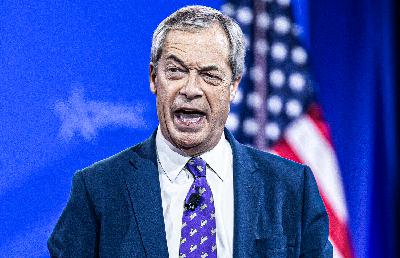
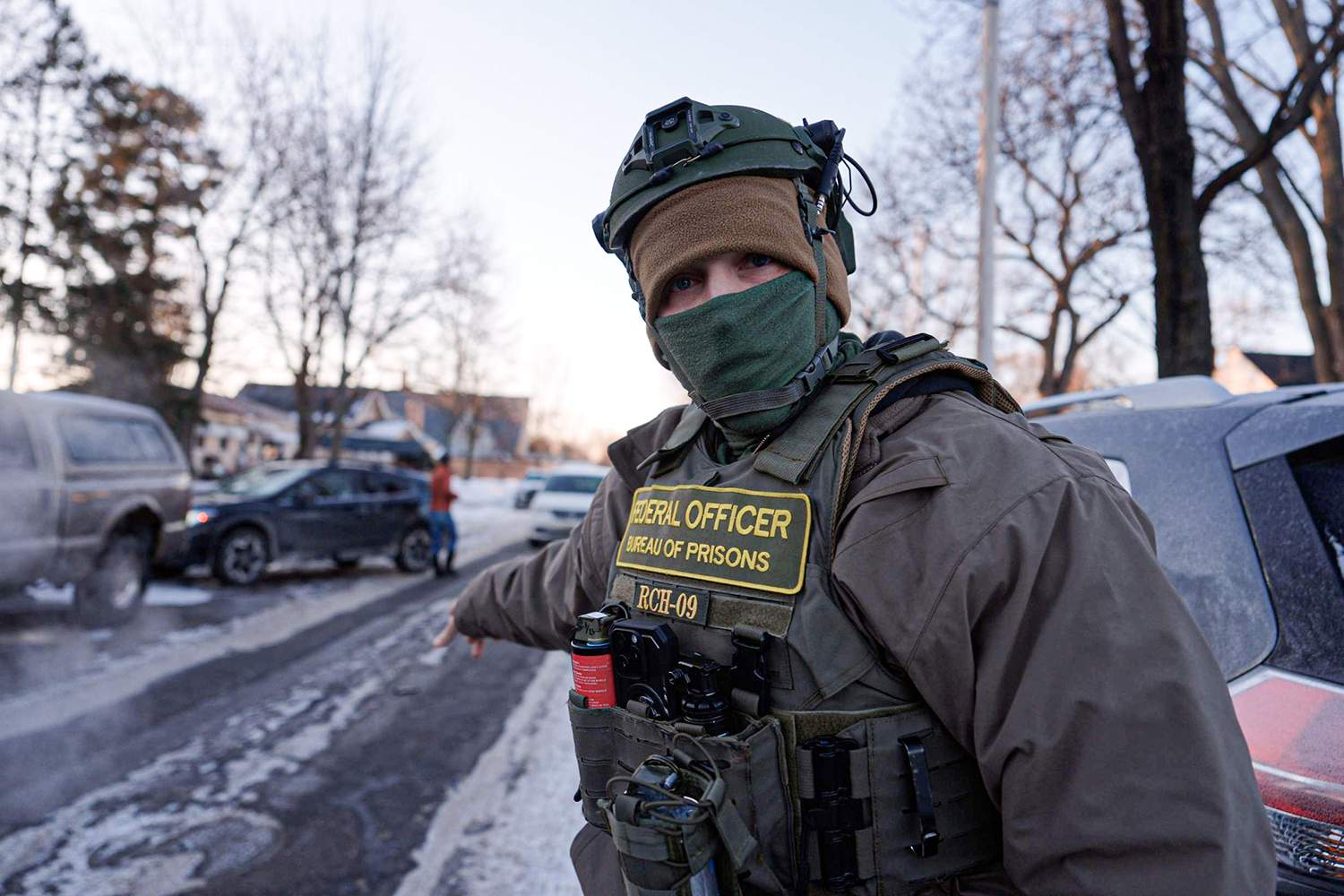
Reform councillors Joseph Boam and Michael Squires faced a wave of backlash on X, the website formerly known as Twitter, this week for posting favourably about ICE, the US immigration enforcement agency which is accused of operating like a paramilitary force, following the killing of nurse Alex Pretti in Minneapolis.
The footage of Pretti's death showed him intervening to help a protester being assaulted by an ICE agent, before being pinned to the floor by several agents who then realised he had a holstered gun (for which he had a license) on his hip. Pretti's hands were pinned to the ground, with one agent shown reaching for the holstered weapon, then another pushing that agent away and firing his own gun into Pretti's prone body. The killing occurred just two weeks after ICE agents in Minneapolis shot Renee dead as she drove away from them.
The posts from Boam and Squires appeared in immediate reaction to Pretti's shooting, with Boam reposting an image from the US Department of Homeland Security bearing the slogan "I stand with ICE". Squires then shared the image and added his approval: "100% chance of ICE forecast. Well done and huge congratulations to ICE for their heroic work saving the United States of America". The men were accused of endorsing the killing.
Squires has since deleted his post, and Boam hurriedly clarified that it was not the killing that he stood by, saying: "When I said I support ICE's work, I mean that I support the enforcement of immigration law, which is the task of Immigration Control and Enforcement, aka ICE. That is what I stand by".
'Domestic Terrorism': ICE Contractor Palantir's Tools for Tracking Dissent
Peter Thiel's controversial data firm – which holds contracts with the UK's NHS and Ministry of Defence – researched protest prediction for the US Army before agreeing to build ICE's data platform to conduct mass deportation. Are its tools now targeting democratic dissent as well as illegal immigration?
Nafeez Ahmed
Boam has got form. According to the anti-racism campaign group Hope Not Hate, he used to endorse Andrew Tate on Twitter. However, it would be wrong to dismiss support for the agency as merely the outbursts of two renegade provocateur councillors. Indeed, support for ICE, and the desire to create a British equivalent, runs deep in the Reform UK project.
At Reform UK's conference last September, Professor James Orr, a senior advisor to Farage, said on a panel about preparing Reform for government: "We know what needs to be done, we know what needs to be repealed. We need a new borders taskforce, a British ICE and so on".
Orr is a key player in Reform, acting as a trans-Atlantic bridge to the Trump administration. He is a mentor to Vice President JD Vance, who memorably described the Cambridge don as his "British sherpa".
In the same speech, Orr argued that the party should hold its cards close to its chest before entering government, keeping certain operational decisions under wraps before governing, to prevent a backlash from political opponents.
Other prominent figures in Reform are also signalling their approval for the creation of a British version of ICE, even if concrete policy proposals have not yet been published. In an interview on GB News, Reform rising star and candidate for London Mayor, Laila Cunningham, was asked if she thought there needed to be a British equivalent to ICE.
She replied: " I think we need a deterrent and we need law and order and we need to protect our borders", before adding that the men of ICE "are just enforcing" deportation orders and that the UK needs a "strong border force, like ICE, to be a deterrent [to irregular migration]".
Trump's Violent Assault on Minnesota Is an Operation in 'Reflexive Control'
The President is using Soviet-style redirection to wage an information war across America, argues Grant Stern
Grant St...
Read our Monthly Magazine
And support our mission to provide fearless stories about and outside the media system
SUBSCRIBE TODAY
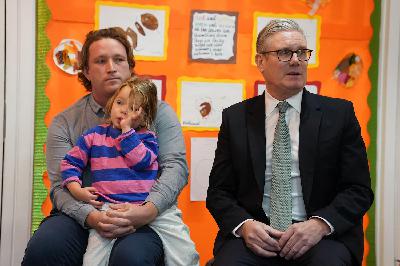
The most striking aspect of Keir Starmer's Government has been the disconnect between its actions on policy and it's standing in the polls.
The Government has received far too little credit for much of these. Both its child poverty strategy, a centrepiece of which is the scrapping of the two-child cap on universal credit, and its national youth strategy, including young futures hubs, signify its willingness to tackle inter-generational fairness. The same applies to rolling out Best Start family centres. Even its means-testing of winter fuel allowance can be justified on the same basis, albeit with a qualifying threshold that was initially drawn far too tightly.
Major changes to employment law begin a redress of the imbalance between capital and labour so entrenched since the 1980s. Likewise, advances in renters' rights rebalance landlord-tenant relations. These reforms are complemented by increases in taxation on capital gains, inheritance, high-value properties and non-domiciled status. They are all significant redistributive measures, whether of power or wealth.
Similarly, changes to the formulae used for local government funding geared to relative need, providing latitude too on how resources are deployed, a harbinger of whole place strategies as opposed to funding silos. A new violence against women and girls' strategy also placed gender vulnerabilities at the heart of public policy, in circumstances where domestic and online abuse has reached epidemic proportions.
Then there was the Government's industrial strategy designed to enhance the competitiveness, resilience and security of the UK economy, with associated sectoral plans. Complementary is its upgrading of public infrastructure, including transition towards low-carbon energy, with fiscal rules adjusted accordingly.
Admittedly, not all these policy initiatives will be game-changers. Rachel Reeves' tax reforms have been piecemeal rather than systematic in aligning levies on different revenue streams. Stretched funding for the most deprived areas and extent of deep poverty remain scourges on the country's conscience. Nonetheless, the directions of travel is clear. So, why the poor popularity ratings?
Weaponizing Words: How the Trump Administration Used Language to Distort the Truth in Minnesota
Government and media organisations used the power of words to shift moral responsibility for the ICE killings, argues linguist Dan Clayton
Dan Clayton
Polls Apart
The first thing to acknowledge is that the Government faces a deeply hostile media. This hostility is arguably worse than ever given the character of those owning and controlling legacy media, combined with the algorithmic biases built into the main digital platforms that so readily accommodate far-right disinformation and imagery.
The Government's dire inheritance of a lethal cocktail of taxes at relatively high levels for the post-1945 era; deteriorating public services; depleted civic assets; atrophying high streets; and cumulatively high levels of public borrowing leaving the UK economy seriously exposed in international markets, have also contributed.
However, such a defence inevitably wears thin with the passing of time.
Another explanation for the lack of popularity centres on its failures of political leadership in developing a compelling over-arching narrative for how its policy will change the country for the better. This has led to calls for an overhaul of the Government's whole communication strategy.
However, much of Starmer's time and energy as Prime Minister has had to be devoted, in co-ordination with other European and Commonwealth leaders, to managing the security threats posed not only by Vladimir Putin's state terrorism, but also from a rogue President in the White House susceptible to Russian propaganda and impulsive actions on the global stage.
A Populist Revolt
Polit...
Read our Monthly Magazine
And support our mission to provide fearless stories about and outside the media system
SUBSCRIBE TODAY
If you – like me – have spent far too much time recently looking at a phone screen, replaying from different angles and from multiple different sources the last moments of Alex Pretti and Renee Nicole Good, as their lives were snuffed out by masked ICE agents in Minneapolis, then you probably already have a clear idea about what you saw. So, when such murders, or summary executions, as many might see them, are referred to as 'officer-involved shootings' in media reports, it certainly feels that the language being used is not doing justice to the events we see unfolding in front of our very eyes.
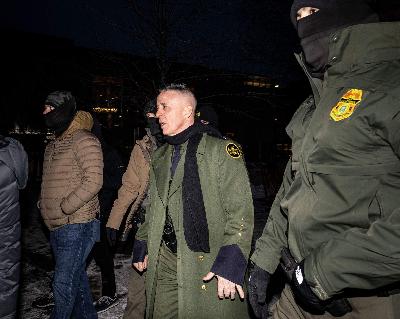
And when Greg Bovino, the US Border Force Commander whose sartorial choices are not the only thing that have a whiff of Gestapo about them, says that the shooting of Alex Pretti was "a situation where an individual wanted to do maximum damage and massacre law enforcement", it feels like a moment of jaw-dropping mendacity. Let's remember what the multiple videos of Pretti's shooting show: a man using his phone to film an ICE action on a street, stepping between the masked ICE agents to shield another observer who had been pushed over and then being pepper-sprayed and wrestled to the ground by several agents, apparently having his (legally owned and licensed) handgun removed from his belt while on the ground before being shot multiple times and killed.
Any attempt to retell or write an account of an event will by its very nature encode a version of events that reflect different perspectives – both literal and ideological – and while I have tried to be as neutral as possible in my account above, I have made several significant vocabulary, syntax and punctuation choices, because I cannot attempt to mask my revulsion for the actions that I've seen, nor shake the sickening feeling that this is part of a wider authoritarian crackdown that is being sanctioned, encouraged and celebrated by those at the very top. We are all entitled to recast events in a way that reflects our own take on what happens, but what – I hope – most of us agree on is that we have to convey the events, actions and participants in a way that is at least truthful to a shared grasp of reality.
Trump's Downfall Will Come Much Quicker Than Anyone Thinks
The growing backlash against ICE's killing of Alex Pretti will be a turning point in public opinion towards the President, predicts Alexandra Hall Hall
Alexandra Hall Hall
Orwellian Language
In a press conference shortly after Pretti's killing, Kristi Noem, Trump's Homeland Security Secretary claimed that "an individual approached US Border Patrol officers with a nine millimetre semi-automatic handgun. The officers attempted to disarm the suspect, but the armed suspect reacted violently". Meanwhile, White House adviser Stephen Miller posted on X that Pretti was a "would-be assassin" who "tried to murder federal law enforcement", a claim retweeted by Vice President JD Vance.
Orwell gets overquoted all the time, but if you can't quote "The Party told you to reject the evidence of your eyes and ears" now, then when can you quote it?
None of the videos show Pretti holding, let alone 'brandishing' a handgun (as Noem also claimed). In fact, the only people holding guns are the ICE agents, one of whom appeared to take Pretti's own handgun from his belt or holster shortly before the fatal shots, using it later in a picture shared by Government social media accounts to present evidence of the victim being armed and dangerous.
As we know, Pretti's was not the first death in this current ICE crackdown, nor even the first in Minneapolis this month. Two weeks before, Renee Nicole Good, a woman involved in observing and attempting to head-off ICE snatch squads, was shot at almost point-blank range by another ICE agent. She died only a couple of blocks away from where George Floyd was murdered by the police in ...
Read our Monthly Magazine
And support our mission to provide fearless stories about and outside the media system
SUBSCRIBE TODAY
The Trump administration chose Minnesota as ground zero for an operation that can best be described in the parlance of Washington DC as 'counter-programming'. That's shorthand for the use of Government power in an intentionally newsworthy way to change the media narrative away from another inconvenient story.
In this case, they are executing a complex political approach which echoes a sophisticated Russian military strategy called 'reflexive control'. Developed in the Soviet Union, the primary goal of this strategy is to dominate the information space in order to force your opponent to voluntarily make bad decisions.
When the US Government floods a major city with law enforcement agents, people with cameras on their cellphones are going to be there to oppose the movement, news outlets are going to cover the chaos. Soon after will follow the organizers, the activists, and the provocateurs who amplify these narratives.
Reflexively, the media narrative will move towards this stimulus – and rightfully so – given the Government's illegal actions.
EXCLUSIVE
'Trump Has Already Rigged the 2028 Presidential Election': US Defence Insider
Regardless of how people vote, the chances of a Democrat Government coming to power in 2029 is now virtually nil, argues Brynn Tannehill
Brynn Tannehill
However, the voluntary bad decision Donald Trump wants to trigger is simple.
He wants for the information space to stop focusing on his sex trafficking cover-up, his trillion dollar healthcare cut to fund equally massive tax cut to his elite political donors, and the White House's enormous consumption tax levies while dictating by Executive Order the transformation of America's heretofore strong economy into right-wing socialist paradise for loyal oligarchs.
And that is how the Trump administration is using its counter-programming efforts to achieve reflexive control over the media narrative, the discussions of activists and the broader national conversation about politics.
Trump and his regime are desperate to move away from their cover up of the Jeffrey Epstein files exposing a trans-Atlantic pedophile ring, desperate to deflect from their multiple major policy failures that are economically oppressing hundreds of millions of Americans.
And this is the White House's only plan.
Distraction Tactics
What we are witnessing in Minnesota is the deadly use of counter-programming on a level not even seen during the first Trump administration.
Minneapolis, surrounding the banks of the mighty Mississippi River, is part of its thriving Twin Cities metropolitan area, including the Minnesota state capital city of St. Paul lying just to its east along a bend of the river.
Home to about 3.8 million residents, the Minneapolis region holds a global political relevance far greater than the size of its population owing to its concentration of the headquarters of 14 prominent companies in the Fortune 500 from 3M to Ecolab Inc to Target.
Minneapolis is globally known for its notoriously awful relations between police and citizens of color, in the wake of international protests set off by one of its officers' murdering George Floyd, while his co-workers complicity watched for nine long minutes.
What we are seeing in Minneapolis and throughout Minnesota is nothing short of using the full might of the American federal government's law enforcement powers to just redirect the national political narrative.
How big has the operation grown?
Recently, I learned from Minneapolis Mayor Jacob Frey – who went viral for saying "ICE, get the fuck out of Minneapolis" – that the city only has roughly 600 sworn law enforcement officers on its city police force, and the ICE task force occupying the city numbers over 3,000 federal agents.
Trump's Downfall Will Come Much Quicker Than Anyone Thinks
The growing backlash against ICE's killing of Alex Pretti will be ...
Read our Monthly Magazine
And support our mission to provide fearless stories about and outside the media system
SUBSCRIBE TODAY
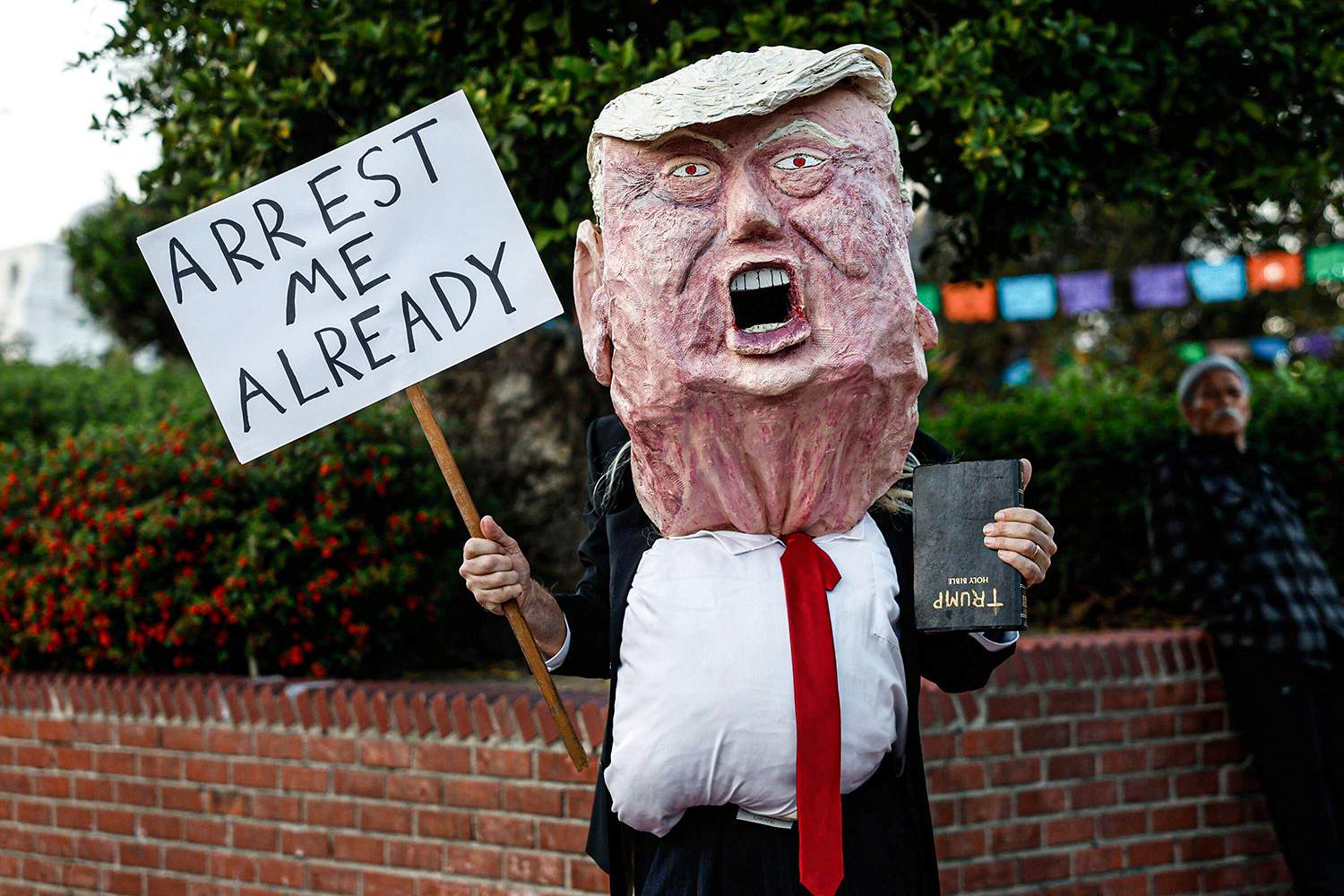
Members of a leading far-right and fascist organisation were radicalised via YouTube's 'autoplay' function, taking them from right-wing and libertarian content into a rabbit hole of neo-nazism, a new study has found.
A researcher in the criminology department at City St George's University analysed podcasts, interviews and articles by 40 members of the group Patriotic Alternative describing their "red pill moment" when they became members of the far right.
33 out of the 40 PA activists analysed by the study cited social media as important to their radicalisation, with three quarters citing YouTube as a key instrument in their political journey.
Patriotic Alternative was launched in 2019 by Mark Collett, a former BNP organiser who recommends Mein Kampf to his followers. At the core of the group's ideology is a belief in the concept of a "white genocide" and a "great replacement" of white people committed by Jewish and liberal elites, who they believe undermine the white race by allowing immigrants into European nations.
The study which sifted through 1000 hours of material from PA activists, found that the users eventually drawn to PA began their political journey as consumers of online content from the likes of British right wing YouTuber Sargon of Akkad and were moved on to content from Patriotic Alternative by YouTube's autoplay function.
A PA activist who went under the pseudonym "Hope on the Horizon" described his 'redpill' journey, stating that: "[Y]ou go through all the different Sargon era and Ben Shapiro and all that sort of nonsense, you know, the sort of civ nat rebellion sort of rubbish. And then eventually you come across the people like [PA leaders] Mark Collett, Laura [Melia]. And then you find things like [12-hour-long, neo-Nazi propaganda film] Europa: The Last Battle, that sort of stuff. And then, you know, you've hit the bottom of the rabbit hole, there's nowhere else to go".
Patriotic Alternative: The Threat from the Far Right
A revitalised Europe wide white supremacist movement is growing in the UK, gaining recruits through social media and online gaming
Michal Grant
James Owens, a PA activist who was branded "Britain's most racist YouTuber" by The Times, who used the pseudonym "The Ayatollah", noted that the "algorithm is definitely real", crediting it with his radicalisation and recalling that while he had been doing his washing one evening, YouTube fed him the six-hour pro-Hitler propaganda film The Greatest Story Never Told.
Dr Tony Karas, the researcher behind the study, told Byline Times that the members of PA he studied "narrate their [political journey] almost entirely in terms of content they consumed".
"PA sustains their involvement [in the far right]. The fact that they can chat to people in their little Telegram groups and meet up online. But I think the content and the power of the parasocial relationship is really important".
Sargon of Akkad, the pseudonym used by YouTuber and former UKIP candidate for the European parliament Carl Benjamin, was the most frequently cited gateway channel into Patriotic Alternative content, according to Karas.
Patriotic Alternative's recruitment tactics have targeted young internet users in the past. One report from Anglia Ruskin University found that the group had been attempting to recruit young members through video game live streams.
In 2019, Collett made £7,265.93 from his videos on YouTube, with the platform taking a 30% cut of his total earnings.
EXCLUSIVE
'Wipe Jews Off the Face of the Earth': Racism and Antisemitic Slurs of Viral YouTuber Exposed
A recording exclusively obtained by Byline Times exposes YouTuber and Infowars alumnus Paul Joseph Watson using racist, homophobic and antisemitic slurs
Byline Times Team
Patriotic Alternative has lost momentum since 2023, with several of its members defecting to the Homeland Party,...
Read our Monthly Magazine
And support our mission to provide fearless stories about and outside the media system
SUBSCRIBE TODAY
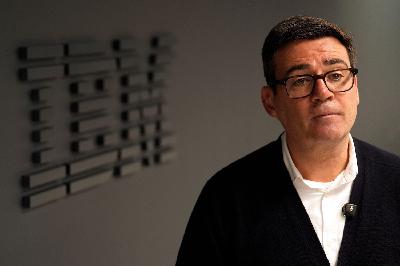
I predict that Donald Trump's fall from grace, when it comes, will be swift and definitive, just like former UK Prime Minister Boris Johnson's fall after partygate.
I remember living through Johnson's premiership in a state of permanent shock and outrage. Shock, that someone so puerile, self-serving, and manifestly unsuited for high office could be elected as Britain's Prime Minister. Outrage, that so many people around him who should have known better – Ministers, advisers, fellow MPs, senior civil servants, journalists – were willing to go along with his serial lying, cavalier disregard for the norms of British democracy, dangerous affiliation with Russian contacts, and wilful misrepresentation of the implications of Brexit, despite the massive danger all these things posed for every aspect of the British state, purely for the sake of their own careers and self-interest.
I have felt the same shock and outrage throughout the first year of Trump's second term as President.
It is not so much that I expected him to become a more competent and honourable leader second time round. His vanity, arrogance, bigotry, ignorance, dishonesty, and greed are too deep-seated for him to ever change.
EXCLUSIVE
'Trump Has Already Rigged the 2028 Presidential Election': US Defence Insider
Regardless of how people vote, the chances of a Democrat Government coming to power in 2029 is now virtually nil, argues Brynn Tannehill
Brynn Tannehill
Nor did I expect those in his immediate orbit to attempt to curtail his worst instincts, as happened in his first Presidency. It was obvious that he was going to surround himself with sycophants and toadies this time round, to avoid being subject to any kind of restraint on his behaviour or actions.
I did, nevertheless, cling on to the hope that the other two branches of America's government – Congress, and the Courts, would continue to do their jobs properly, and insist on their rights and prerogatives being respected.
I did cling on to the hope that at least some in the Republican Party would find just enough spine to raise at least some objections, when he nominated utterly compromised or unfit individuals to critical positions in his cabinet, including Pete Hegseth as Defence Secretary, Tulsi Gabbard as Director of National Intelligence, Kash Patel as head of the FBI, Pam Bondi as Attorney General, and Robert Kennedy Jr as Health Secretary.
I did cling on to the hope that more than one or two of them might be willing to speak out when Trump's actions clearly crossed a constitutional line, or were actively harmful to America's interests, such as his crazy notion to seize Greenland at the cost of destroying NATO.
I did cling on to the hope that the battered, unpopular Democrat Party, might be able to shake themselves out of the doldrums, and conduct more effective opposition in Congress.
I did cling on to the hope that even in the compromised Supreme Court, the more serious judges would recognize the dangers of allowing the President to continue to accrue so much executive power without pushback.
I also, naively as it turns out, assumed that the major organisations most badly affected by Trump's erratic policy making – such as businesses damaged by his tariff policy, universities by his clampdowns on free speech, companies dependent on migrant labour, lawfirms and media companies bullied by his lawsuits – would not cave so rapidly to his demands, or remain so cravenly silent.
Though there have been some honourable cases, particularly within the Department of Justice, of people stepping down from their positions in protest at his administration's unlawful actions, I had also assumed that there would be far more mass resignations from his government, as his outrageous actions mounted.
Unfortunately, it turns out that, amongst America's elites, fear and self-interest are powerful ba...
Read our Monthly Magazine
And support our mission to provide fearless stories about and outside the media system
SUBSCRIBE TODAY
While the Labour leadership deploy their time and effort to block the best-placed candidate, in Andy Burnham, to win a crucial by-election and keep Reform at bay, normal people with normal lives struggle to get on and get by.
Labour's leadership claim that this is what they are focussed on – making our lives better. But the reality is quite different. This is the short story of who, what and why some in the party seem hell bent, under no pressure from anywhere, on actually making our lives even harder.
What is the good society and the good life? Too often we struggle to just keep up, to keep our heads above water, to survive the day, to have the luxury of time to even contemplate how life could be transformatively better. But without a lodestar, a utopian vision of what could and should be, progressives offer little hope or sense of direction. To be a dreamer, in a world ruled by scarcity, fear, insecurity, the clock, endless and mindless consumption, coercion and control, is deemed to be wasted idleness. But nothing good happens, has ever happened or ever will, without a dream.
Enter the Governments Non-Dreamer in Residence, Steve Reed the Secretary of State for Local Government, who took it upon himself to crush the dreamers in councils with his pre-Xmas Scrooge like rebuke to even consider a four-day working week. He said full time work for part time pay could be an indicator of "failure".
As such Reed joins his soul mates at that bastion of progressive campaigning the Taxpayers Alliance in their predictable and dreary campaign to stop people having more time and instead keep their noses to the grindstone.
Control over the working week is of course part of a centuries long battle between capital and labour. From the enclosures, through to the fabrication of the Protestant work ethic, the poor laws and the creation of the never ending turbo-consumption race that can never be won and should never have been started, people have battled for the right to spend more of their time how they want to.
What Keir Starmer Should Have Done With Andy Burnham
The PM's decision to block Burnham from standing in the Gorton and Denton by-election risks handing the seat to Nigel Farage, and ultimately triggering his own downfall. It didn't have to be this way, argues Adam Bienkov
Adam Bienkov
"There are many definitions of the good society" wrote the American economist JK Galbraith "the treadmill is not one of them". But today we learn, to work, to buy. Many do more than one job to make ends meet. Parents pass like ships in the night with barely a moment to do the precious things in life, like the time to read a child a bedtime story.
The remorseless and relentless grind of growth without purpose, the so-called 'hard-working families', the denigration of the so called 'scroungers' as opposed to 'strivers', the politicians who kick down and kiss up are all symptoms of a governing system that has lost its connection to us as human beings.
Whatever Steve Reed says and does the demand for more time and greater freedom are only likely to grow as supply of work is likely to decline, while AI takes his grip on the vociferous and politically crucial middle class jobs of people who live in swing seats, and work in professions like law and accountancy. Every technological revolution leads to fears over systemic and permanent net job losses, only to see new areas of work arise. The AI revolution looks like it could be different, with a structural decline in the demand for mental labour, as opposed to the physical labour job displacement of the past. The option to work less should be available to everyone, even as it becomes a fait accompli for many.
The savings and benefits of a four-day week to individuals and society are almost incalculable, from mental physical health and well-being, care, volunteering retraining, the lis...
Read our Monthly Magazine
And support our mission to provide fearless stories about and outside the media system
SUBSCRIBE TODAY
When Reform UK announced it would accept cryptocurrency donations through a payment processor called Radom, the decision was presented by the party as a breakthrough in the modernisation of political fundraising. But a Byline Times investigation reveals that Radom's origins lie deep within the same Silicon Valley networks that have bankrolled and built the technological infrastructure for President Donald Trump's political movement in the United States.
The company's leadership emerged from corporations and venture capital firms deeply connected to some of Trump's most prominent tech-world supporters. They include Peter Thiel, the billionaire who became MAGA's chief evangelist in Silicon Valley with over a dozen allies in Trump's second administration, and Larry Ellison, Oracle's controlling shareholder described by a Trump advisor as a "shadow president" behind Trump himself. Byline Times can also confirm that Amazon, a major pro-Trump donor controlled by Jeff Bezos, provided seed-funding to Radom.
Radom had already exerted its influence in the UK Parliament years before Farage's announcement, through an All-Party Parliamentary Group (APPG) whose secretariat was run by an organisation advertising close relationships with pro-Trump tech giants including Oracle, Google and Microsoft.
Byline Times can reveal that the APPG's secretariat had not only received funding from Oracle, but at the time was dominated by Conservative Party politicians – including current Conservative Party leader Kemi Badenoch.
From Oracle to Radom: Silicon Valley's Republican Vanguard
Radom's founder and chief executive, Christopher Wilson, cut his teeth as a software engineer at Oracle, the technology giant controlled by Larry Ellison. Wilson worked at Oracle's Greater Dublin office from 2015 to 2017.
Oracle is not merely another Silicon Valley firm. Under Ellison's stewardship, it has become synonymous with a particular strain of pro-Trump, anti-regulatory conservatism rare among major tech companies.
Ellison has hosted fundraisers for Trump, donated substantial sums to Republican Party causes, and positioned himself as one of the President's most prominent backers. A decade ago, senior Oracle executives were hobnobbing with people in Trump's orbit shortly before the 2016 election. Oracle CEO Safra Catz and chief lobbyist Ken Glueck went on to join the Trump administration's transition teams.
Wilson's tenure at Oracle does not necessarily mean he shares Ellison's politics. But it situates Radom's technical leadership within a corporate environment closely entangled with Trump-aligned networks and narratives throughout the MAGA era.
EXCLUSIVE
Nigel Farage Paid by Trump Crypto Adviser Who Worked With Russia Operative Paul Manafort
The Reform UK leader received payment from David Bailey, who collaborated with the convicted fraudster behind the Trump-Russia influence scandal
Nafeez Ahmed
The Thiel Connection
The Trump network connections deepen when examining Radom's other co-founder. Mariel Yonnadam, the company's former chief technology officer from 2022 until 2025, previously worked as a front-end engineer from 2018 to 2019 at Faire, a San Francisco-based marketplace that has become one of Silicon Valley's most highly valued 'unicorn' start-ups.
Faire's meteoric rise was powered by a roster of venture capital investors that reads like a who's who of Trump-aligned tech finance. Among the most significant are Founders Fund, co-founded by Peter Thiel, the billionaire venture capitalist who spoke at the 2016 Republican National Convention, joined Trump's presidential transition team, and has since incubated numerous hard-right political projects whilst providing intellectual scaffolding for tech nationalism. Another is Sequoia Capital, which in recent years has become increasingly associated with powerful Trump-supporting partne...
Read our Monthly Magazine
And support our mission to provide fearless stories about and outside the media system
SUBSCRIBE TODAY
If things were going well for Keir Starmer then he would have nothing to fear, and indeed much to benefit, from the return of a political big beast to Westminster like Andy Burnham.
If the Prime Minister had a clear plan for the country then the return of a rival, even one as determined to become Prime Minister as Burnham, would barely ruffle the feathers of those cooped up in Downing Street.
Previous Prime Ministers have acted differently.
When Boris Johnson, as London Mayor, announced his own return to Westminster, there was no attempt by David Cameron to block him from doing so, despite Johnson's own plans to become "world king" being well established.
Instead Cameron actively encouraged him to come back and then sought to use his talents in Government for the benefit of his own party and leadership.
Johnson proved to be an irritant, but he never seriously threatened Cameron's leadership for the simple reason that the then Prime Minister was in a position of strength.
Andy Burnham: These Dangerous, Alienating Times Call for Radical Change of Our Politics
From imposter syndrome and proportional representation, to fixing the fundamentals and the 'incestuous' Westminster media-political class – Labour's Greater Manchester Mayor believes the right can be defeated at the ballot box if bold changes to connect with the public and their day-to-day lives are made now
Hardeep Matharu
Of course Johnson did arguably end up playing a part in Cameron's downfall, backing the Brexit campaign which ultimately toppled him.
But that failure, just like the decision to accept Johnson back to Westminster, was ultimately in Cameron's hands. Had Cameron fought a better campaign, or even opted to remain in Downing Street post-referendum, then he could have remained as Prime Minister for years more to come.
The same cannot be now said of Starmer. His decision to block Burnham from becoming a an MP has been taken, not from a position of strength, but from a position of potentially irreversible weakness.
By blocking the Greater Manchester Mayor, he has made it all but impossible for Labour to cling on to their previously safe seat in Gorton and Denton, with Nigel Farage's Reform, or even potentially the Greens, poised to take it instead.
Either of these outcomes would severely weaken the Prime Minister's position and bring the point at which Labour MPs move against him to a head.
An Alternative Path
It didn't have to be this way. Had Starmer instead welcomed Burnham's return and then gone on to win the Gorton by-election together, then both the Prime Minister and the Labour party would have emerged in a stronger position.
He could then have offered Burnham a seat in the Cabinet, just as Cameron did with Johnson, and sought to hold him to his word of wanting to help the Government succeed. Had Burnham either refused, or then used his new position to undermine that Government then it would have been Burnham, rather than Starmer, whose position would have been weakened.
Of course such a path would have carried risks, but those risks could have been manageable. Instead the Prime Minister has chosen a path that looks all but certain to end in disaster for his Premiership
It may sound simplistic to the point of absurdity, but in politics winning comes from winning. It does not come from losing. If Labour loses the Gorton by-election, after blocking the man most likely to have won it, then no amount of Downing Street shenanigans are going to save Starmer from a concerted attempt to remove him as leader. The Prime Minister's Chief of Staff, Morgan McSweeney, may feel that he has won a battle, but he now faces losing the wider war as a result.
These considerations may not worry those in Downing Street too much. Over the last few years it has become clear that the overwhelming priority of those around the Prime Minister is to pursu...
Read our Monthly Magazine
And support our mission to provide fearless stories about and outside the media system
SUBSCRIBE TODAY
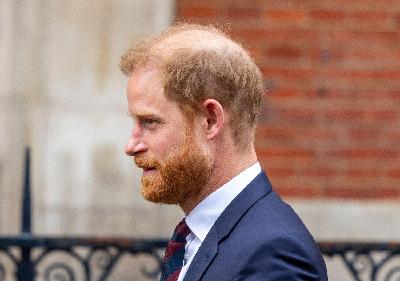
Prince Harry and Elizabeth Hurley, each giving evidence at the Royal Courts of Justice earlier this week, have alleged that the Mail tore apart relationships, drove its targets to paranoia, and made life miserable for anyone caught in its crosshairs.
The publisher did so, they claim, by illegally spying on them, publishing their secrets, and invading the privacy of their families, partners and closest friends.
It was a bruising opening week for the Mail, whose publisher, Associated Newspapers Limited, is defending itself against litigation brought by Prince Harry, Sadie Frost, Sir Elton John, David Furnish, Sir Simon Hughes, Baroness Doreen Lawrence and Elizabeth Hurley.
The claims allege widespread illegality at the publisher, arguing that the Mail's prolific use of private investigators known to use unlawful methods demonstrates that the publisher was illegally spying on its targets.
The claimants argue that private information about the lives of the claimants was obtained by listening in on voicemail messages and even live phone calls, and published in the newspaper – all to sell more papers and make the publisher more money.
The Mail's defence is that there is no direct evidence of illegality, arguing that journalists got hold of private information through friends and other associates of the claimants.
They also argue that the claims have been brought too late, and should have been brought years ago – despite the Mail's own heated denials of wrongdoing at the Leveson Inquiry – into the culture, practices and ethics of the press following the exposure of the phone-hacking scandal in 2011-12 – and since.
BREAKING
Daily Mail Trial: British People Say Press Standards Haven't Improved Since Phone Hacking Scandal
As the Daily Mail goes on trial for alleged lawbreaking, a new poll finds seven-in-ten voters demand independent regulation of the press
Byline Times Team
The Wider Picture
The summary of the claimants' case, published on Monday, threatens to suck other senior figures in the press into the litigation.
The current editor of The Sun, Victoria Newton, is alleged to have been a "habitual" user of unlawfully accessed information, while the editor of the Mail on Sunday, David Dillon, is alleged to have commissioned private investigators for criminal activity.
The findings in the case could have implications for the online and print news media more broadly. If it is found that yet another newspaper engaged in illegal behaviour, calls for the second part of the Leveson Inquiry are likely to intensify.
Hacked Off even came up once or twice during the course of evidence given by both Hurley and Prince Harry, with the Duke of Sussex generously praising the campaign for its "fantastic work".
"Hacking of my voicemails, landline tapping, blagging, obtaining itemised phone bills, hardwire tapping, and obtaining private flight information for my former girlfriend, Chelsy Davy, amongst other criminal methods… was deliberately undertaken with the purpose of publishing articles about me in the Mail newspapers because it made them money."
Witness Statement of Prince Harry
On Wednesday Prince Harry took to the witness stand and his witness statement, setting out his allegations in his own words, was published.
An object of relentless fascination to the press throughout the 2000s was Harry's romantic life. In his statement, he highlights an article entitled 'Harry's Older Woman', a piece which covered his relationship with a former girlfriend. He was 18 at the time.
At best, this was obsessive coverage of a teenager's relationship. But Harry alleges that it was published as a direct result of phone hacking or "blagging" – the use of impersonation to get someone's personal information. In other words, Harry's claim is that the Mail was actively and illegally spying on the private communications of a teenager and...
Read our Monthly Magazine
And support our mission to provide fearless stories about and outside the media system
SUBSCRIBE TODAY
British people believe standards in the UK press have not improved since the phone hacking scandal 15 years ago, with seven-in-ten voters demanding the industry be independently regulated for the first time, according to a new poll.
The survey conducted by pollsters Opinium for the Press Justice Project charity, found that 54% of those surveyed said press standards either haven't improved or have got worse over the past decade, with a further 71% saying the press should now be regulated by a body independent from the industry and politicians.
Voters want publications to be more accountable for inaccurate reporting. Seventy three percent of those surveyed said they believed press corrections should be published with the same size and prominence as the original misleading reporting.
Support for reforming the press could be found across supporters of all parties, according to the poll, including voters for Nigel Farage's Reform UK.
Of all the potential options for reforming the press, the most popular was for newspapers and their websites to be regulated by an independent statutory regulator, like Ofcom.
'A Victim All Over Again': The Mail Trial and the Murders of Stephen Lawrence and Daniel Morgan
Peter Jukes looks at how an ongoing High Court case plunges us back over thirty years to two murders in south-east London and to a nexus of corrupt police officers and private investigators
Peter Jukes
According to the poll, readers of the Metro (45%) the Daily Mail (38%), the Daily Express (37%), The Sun (35%), the Daily Telegraph (33%) and The Times (31%) all backed independent statutory regulation as their favoured option.
None of these papers are currently independently regulated.
Stephen Kinsella OBE, chair of the Press Justice Project, said: "Newspaper publishers often say they have 'cleaned up their act' since the appalling practices revealed by the phone hacking scandal, and argue there is no need for reform of press regulation.
"Every week, we at the Press Justice Project hear from people affected by wrongdoing in the press, which proves otherwise. These results show that the wider public shares our concerns. There is a clear public demand for independent press regulation that provides effective remedies when newspapers fail to uphold ethical standards.
"Press wrongdoing continues to affect people from all walks of life. Almost 15 years on from the phone hacking scandal, there is still an urgent need to protect the public from press abuse. The Press Justice Project shares the public's support for legislation that encourages industry compliance with independent and effective press regulation, in the interests of the victims of press wrongdoing we were established to assist."
EXCLUSIVE
Daily Mail High Court Trial Casts Shadow Over Lord Rothermere's Telegraph Bid
Allegations that the Mail engaged in phone hacking, landline tapping, burglaries, and the theft of medical records are threatening to derail its £500 million takeover of the Telegraph
Dan Evans
The findings come in the same week a High Court trial opened into alleged lawbreaking at the Daily Mail, including allegations of phone hacking, landline tapping, burglaries, and the theft of medical records.
More than 400 potential victims have been identified by the claimants' lawyers, after evidence was uncovered suggesting they were hacked and blagged by the Mail titles.
The claimants allege phone hacking and other unlawful practices stretching back decades.
ENJOYING THIS ARTICLE? HELP US TO PRODUCE MORE
Receive the monthly Byline Times newspaper and help to support fearless, independent journalism that breaks stories, shapes the agenda and holds power to account.
PAY ANNUALLY – £44.75 A YEAR
PAY MONTHLY – £4.50 A MONTH
MORE OPTIONS
We're not funded by a billionaire oligarch or an offshore hedge-fund. We rely on our readers to fund our journalism....

Read our Monthly Magazine
And support our mission to provide fearless stories about and outside the media system
SUBSCRIBE TODAY
You did not dream the last fortnight: that really just happened. Fresh from illegally abducting a foreign head of state, the President of the United States turned his attention to seizing part of the territory of a close NATO ally while declaring economic war on those European allies who dared to object.
The Greenland fiasco not only represented the lowest point in UK-US relations in 70 years, it quite literally threatened to blow apart Europe's post-war geopolitical and security architecture.
Thankfully, Donald Trump has now – at last – confirmed that he will not invade Greenland. He also walked back his threats to impose fresh, punitive tariffs on the UK and other allies.
But these feel like temporary reprieves. Trump's presidency has three years to run and more instability surely awaits. The old world, with its reassuring alliances and certainties, no longer exists.
The new world brings fresh and urgent demands for the continent of Europe – in particular, the European country that, ten years ago, chose to leave the only trade bloc capable of rivalling the United States.
Engage, for one moment, in a small thought experiment. Imagine that we had not left the EU. That in 2016, we narrowly voted to remain, and then stumbled through the following ten years with our economic and geopolitical framework essentially unchanged.
Why Is the Government Really Refusing to Investigate Russian Interference in Brexit?
Keir Starmer's decision to exclude Russian interference in the 2016 EU referendum from his inquiry into foreign interference in our elections should ring alarm bells, argues Sergei Cristo
Sergei Cristo
Imagine the last decade of geopolitical turbulence, but where we were neither obsessing about tearing ourselves from our regional bloc, nor finding our way once we had.
Would Theresa May have debased herself to invite Trump on his first state visit to the UK, all for the comprehensive trade deal to mitigate Brexit's damage – a deal which never came? Would the UK's global voice and reputation have been stronger or weaker? Did our economy – pummelled by so many events out of our control – need the additional voluntary hit or not?
Imagine just the last year. Would Keir Starmer have had to prostrate himself before the new American king, offering an unprecedented second state visit, if the UK were not so weakened on the global stage by Brexit? Would Trump have still been able to get everything he wanted – pomp, prestige and royalty – without offering anything except, as it subsequently transpired, political and economic threats and personal insults.
Now imagine the last two weeks. When Trump issued his threats of tariffs for the crime of upholding Denmark's territorial integrity and Greenland's self-determination, all Starmer could do was protest the move and appeal to Trump's better nature. Compare that with the muscular responses of France and Germany, who resolved to respond in kind. They knew they could plausibly do so thanks to the power of the EU behind and alongside them. The UK could only act in isolation. Given the vast power imbalance against the US, that meant, in practice, failing to act at all.
Never has the UK been so exposed. Even in 2016, in a more benign global environment, Brexit was a catastrophic error. Ten years later, it looks incalculably more damaging. Both Britain and the EU are weaker at a time they need collective strength more than ever. Brexit's only beneficiaries have been Russia, China and, as it turns out, an actively hostile United States.
Brexit Failures
Who, apart from Nigel Farage, would be advocating for Brexit right now if we were still in the EU? The verdict of voters would be overwhelming.
The power of the EU was something the UK considered to be a threat instead of what it was: an opportunity.
The bloc enables free nation states to pool some of their sovereignty a...
Read our Monthly Magazine
And support our mission to provide fearless stories about and outside the media system
SUBSCRIBE TODAY
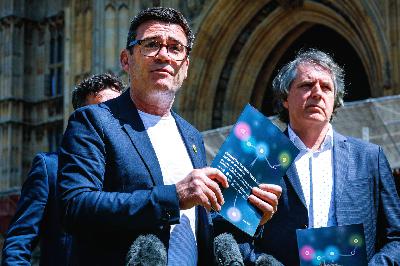
Head North by two Scousers, Andy Burnham and Steve Rotheram, is the most original, interesting and important book by serving Labour politicians that I've read.
It was published in 2024 to a pitiful number of mainly patronising reviews in the London media – all of which missed the larger point of its call for a new constitution that enshrines a Basic Law, includes PR, and empowers Members of Parliament. A failure that perhaps confirms the authors' assertion that London has lost the plot and does not grasp how intolerable our system of government has become for the country as a whole.
Of the two, Burnham is well-known as a high-flying Labour politician, who entered Parliament in 2001, and rose swiftly to become a senior Cabinet member under Gordon Brown. When he tried to become Labour leader in 2015, he lost out to Jeremy Corbyn. A year later, he left Westminster altogether to become the first Mayor of Greater Manchester.
Rotheram is less well-known nationally, but his rise from being a bricklayer to becoming a Labour MP and then Mayor of Liverpool is also impressive.
The book opens with the two of them shaking hands in 2016 and pledging their joint determination to leave the House of Commons and seek election to the twin cities of England's north-west – where the novelty of elected mayors was about to become a reality for the first time.
The first half of the book is a dialogue between the two of them as they share the experience of their personal journeys close to the heart of power. Again and again, they are shocked to the point of being traumatised by the cold indifference of the centre to the legitimate needs of their communities.
From Hillsborough to COVID, they draw two personal conclusions from 20 years.
First, in a crisis "you have to speak to the soul of the place you are in".
Second, that the UK has "an unaccountable state that tries to divide and rule and foist decisions taken by a small cabal on millions". It prioritises private vested interests over the public interest while "Whitehall does not regard all people and places as equal".
Andy Burnham: These Dangerous, Alienating Times Call for Radical Change of Our Politics
From imposter syndrome and proportional representation, to fixing the fundamentals and the 'incestuous' Westminster media-political class – Labour's Greater Manchester Mayor believes the right can be defeated at the ballot box if bold changes to connect with the public and their day-to-day lives are made now
Hardeep Matharu
The way they share their account of experiencing the built-in failures of the British state is comparable to Rory Stewart's Politics on The Edge.
Stewart's is a more sustained blow-by-blow account of his journey, in his case through the ruins of the Conservative tradition. It culminates in his attempt to become Prime Minister and his humiliation. Whereas Burnham's takes off after his Westminster ambitions are crushed.
The second half of Head North sets out the way in which Burnham and Rotheram believe the country has to change.
They conclude by demanding a written constitution. They spell out the need for a proportional voting system; empowering Members of Parliament by the removal of the whipping system; a senate of the nations and regions to replace the House of Lords; full devolution; two equal paths in education; a Grenfell law for those in public housing; a Hillsborough law to impose a duty of candour on all public servants; and ecological sustainability.
Missing from their list of constitutional demands is the need for a justice system that works for regular people – something, however, that emerges vividly in their account.
Many others have proclaimed the need for systematic constitutional reform in the United Kingdom, going back to Charter 88 and beyond. Burnham's and Rotheram's call is unique in that it emerges from, and is rooted in, their ...
Read our Monthly Magazine
And support our mission to provide fearless stories about and outside the media system
SUBSCRIBE TODAY
Britain's biggest middle-market newspaper stands accused of phone hacking, landline tapping, burglaries, and the theft of medical records in a nine-week High Court trial which began on Monday.
But in a week that on Wednesday saw Prince Harry become emotional in the witness box as he talked about the impact of media intrusion on his wife Meghan, tensions are rising not just between the Mail and its critics, but between the publisher and its own bankers.
NatWest, the Mail's long-standing lender and the principal funder of the Telegraph bid, has the power to pull the plug if internal auditors conclude the legal risks are too great. And City scrutiny has intensified as allegations of industrial-scale criminality inside the Mail's newsrooms are tested in court.
Against this backdrop, the Mail on January 8 publicly attacked its financial backer with a story headlined "NatWest Dirty Money Farce". The two-page article recycled a five-year-old case in which Britain's fourth-largest bank paid a record £264.8 million fine for accepting criminal proceeds.
EXCLUSIVE
'Trump Has Already Rigged the 2028 Presidential Election': US Defence Insider
Regardless of how people vote, the chances of a Democrat Government coming to power in 2029 is now virtually nil, argues Brynn Tannehill
Brynn Tannehill
NatWest, however, is not the only party to the Telegraph deal facing allegations of serious wrongdoing. In the ongoing litigation brought by Prince Harry and Baroness Doreen Lawrence—whose son Stephen was murdered in a racist attack—more than £3 million in payments from the Mail to private investigators have been disclosed over the past three years.
Mr Justice Matthew Nicklin's verdict now hangs over Lord Rothermere's biggest ever newspaper acquisition.
His company, Daily Mail and General Trust (DMGT), has agreed to assume the debts of Telegraph Media Group's current investor, RedBird IMI, paying £400 million up front and a further £100 million within two years.
The deal must still pass detailed due diligence by City lawyers and accountants who are acutely sensitive to allegations of criminal activity while the impact of the proposed takeover on competition and the public interest will be investigated.
City public relations expert Brian Basham said: 'The timing of this deal, which comes in the middle of a nine-week trial for phone hacking, couldn't be worse.
'NatWest will not like this. The reputational damage to their client, of being on the news every night for months, about unlawful intrusion, is a risk.'
Mr Basham, who previously gave evidence in a phone hacking trial against the Mirror after warning its then chief executive of a cover-up, added: 'But it will the liability of future claims which the bank will be very worried about.'
City insiders say NatWest is weighing whether the Mail could survive a "contingent liability" running to as much as £1 billion if hundreds of additional claims are launched. The estimate is based on the scale of payouts made by Rupert Murdoch's companies following the News of the World hacking scandal.
Shares analyst Paul Scott has reviewed DMGT's accounts and concluded that a £1 billion hit 'would probably either bankrupt DMGT, or at least stretch it to the limit.'
DMGT has secured a funding package with NatWest, its preferred lender, and has finalised the terms of the transaction. But the City remains wary as the litigation approaches, set to begin in just over a week.
The case has already cost the Mail around £30 million, despite involving only seven "test" claims at the Royal Courts of Justice. Associated Newspapers Limited (ANL), DMGT's main newspaper subsidiary, is defending actions brought by Prince Harry, Baroness Doreen Lawrence, Sir Elton John and David Furnish, Elizabeth Hurley, Sir Simon Hughes, and Sadie Frost.
EXCLUSIVE
'That Phone Could Hold the Truth': Levi Davis Family Say...

Read our Monthly Magazine
And support our mission to provide fearless stories about and outside the media system
SUBSCRIBE TODAY
The Home Office has been accused of treating asylum seekers like "lab rats" after moving to "warehouse" the first batch of migrants into a military barracks, despite opposition from campaigners and local politicians.
Twenty-seven men have been moved into the Crowborough military barracks, as part of the Government's plans to move migrants from hotels to military sites.
The site in East Sussex has a capacity of 500 bed spaces, allocated for single adult males, who will be housed there for up to three months while their claims are processed. If their asylum application is rejected, the department say they will be removed from the country.
The plans have already triggered anti-migrant protests in the local area, prompting fears about an increase in far-right activity.
Conservative MP for Sussex Weald Nusrat Ghani has warned of the "grave impact" of moving the men onto the site.
In a letter to Immigration Minister Alex Norris on Wednesday, seen by Byline Times, Ghani stated that there was "clear evidence that the site is not an empty army barracks, but a functioning and much used and loved training camp". Crowborough is currently used as a training facility for the local Royal Air Force Cadets and for fire, police and other public service agencies.
She added that the site was "unable to be signed off as safe, legal and compliant, and one of the reasons was the cost and displacement of services and the Cadets". Despite asking yesterday for a detailed assessment of how the Home Office intended to "square that circle", the first migrants were moved to Crowborough this morning.
Wealden District Council leader James Partridge has also voiced opposition to the plans, saying it was the "wrong decision". Protests have taken place around the site on a weekly basis since last October when the plans were first announced. "Despite our strong objections, the minister [Alex Norris] has not listened to us," Partridge said.
The latest move marks the start of the Government's plans to 'warehouse' asylum seekers in former military camps in an attempt to close hotels by the end of this parliament. More than 200 hotels remain in use, at a cost of more than £5.7 million per day. The Home Office has consistently said that hotels are a "pull factor" for small boat crossings.
Campaigners have described the use of former military sites to accommodate asylum seekers as a "sleeper issue", with the potential for protests starting at a local level to become more widespread.
"It's like they're using asylum seekers as lab rats," said Lou Calvey, Director of Asylum Matters. "The Government should be building policy in the interests of people in local communities – a fiscally-responsible policy – but they're not even doing that. When are they going to wake up? We know these sites are incredibly damaging and this will only mean more community tensions and problems."
EXCLUSIVE
'They've Ruined Christmas': Nigerian Student Blocked By Home Office From Visiting UK Family for Holidays
British academic and his Nigerian wife repeatedly stopped from hosting family members, including at their own wedding, due to visa restrictions brought in by Keir Starmer's Government
Nicola Kelly
A report from the National Audit Office last year found that military barracks were projected to cost £46 million more than hotels over the next decade. A leaked forecast from the Office of Budget Responsibility (OBR) warned that the expected cost to house asylum seekers has tripled from £4.5 billion to £15.3 billion for contracts from 2019-2029.
In a statement released this morning, the Home Secretary Shabana Mahmood said that opening Crowborough camp was "just the start".
"I will bring forward site after site until every asylum hotel is closed and returned to local communities," Mahmood said.
In October, the Government announced it would also open Cameron barracks ...
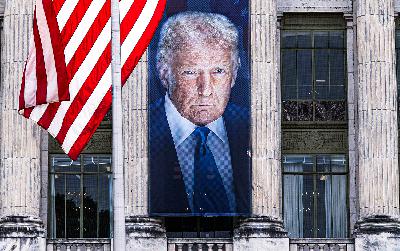
Brynn Tannehill has worked for years for one of the largest US Government defence contractors in the country.
Writing pseudonymously for Byline Times, in November 2024 she predicted the astonishingly rapid militarisation of the homeland that Donald Trump would pursue; and in February 2025 she accurately forecast some of the most shocking turns of the Trump administration – including how serious it is about annexing places like Venezuela and Greenland.
Now she casts her eye on what pivotal presidential elections will hold in 2028 – and warns that Democrats are dangerously unprepared for what's coming.
The outcome of the election has already been determined: Democrats just don't realise it yet.
Donald Trump's first year in office has largely been an exercise in consolidating all power in the executive branch, and then wielding this power to punish his enemies, whether they are recalcitrant blue state governors, people who have angered him (like James Comey and Letitia James), and unpopular minorities (immigrants and transgender people), or the Chairman of the Federal Reserve.
The Legal Coup
So far, the Project 2025 Heritage Foundation and Claremont Institute plan to codify the 'Unitary Executive theory' into law has been successful. Until recently, the Unitary Executive Theory was a fringe constitutional doctrine asserting the President holds sole authority over the entire executive branch, derived from Article II's vesting of "the executive Power" in one person, meaning Congress can't limit presidential control over executive officials or agencies. The US Supreme Court has now mostly embraced this idea, and has consistently removed Congressional oversight powers, or even the power to dictate where and how funds are spent.
The other two branches have yielded power willingly; the Republican controlled Congress has handed over the power of the purse to the executive branch, and the Supreme Court of the United States (SCOTUS) has nearly universally accepted Department of Justice (DOJ) arguments that the executive branch cannot be countermanded via injunctions. SCOTUS also granted near-blanket immunity to the President to commit crimes while in office, so long as they are a part of "official acts."
The Republican Party is increasingly behaving like a party that believes it will never face a competitive election again, which I believe is exactly what is happening. The administration increasingly doubles down on unpopular policies and positions, including defending young Republican leaders who got caught admiring Hitler and looking forward to gassing and burning the bodies of their political opponents.
Trump is deep underwater in opinion polls across most of his signature issues, including tariffs, the economy, and immigration. Yet Republican leadership seems to assume they have the capability to decide Presidential elections in perpetuity, regardless of how people vote.
Trump's Greenland Delusion Runs Aground in Davos
For all his attempted bullying, taunts and threats, Trump's delusional Davos speech revealed a man who is far weaker than he appears, argues Alexandra Hall Hall
Alexandra Hall Hall
This doesn't apply to the 2026 mid-terms, but they do not matter anyway: SCOTUS has largely allowed the executive branch to bypass Congress, nor will the executive branch cooperate with a democratic Congress, and all the mechanisms to enforce actions by Congress are controlled by the executive branch anyway, such as the Department of Justice. At this point, the only election that matters is for President, and the results are already being determined by the incumbent party.
When you run a step-by-step analysis of what it takes to decide who is President, it rapidly becomes obvious that a great many things must happen for the process to evade subversion. Republicans have set things up such that it is nearly impossible for everything to go the way it was intended, and instead the process of selecting a President is almost guaranteed to be suc...
Read our Monthly Magazine
And support our mission to provide fearless stories about and outside the media system
SUBSCRIBE TODAY
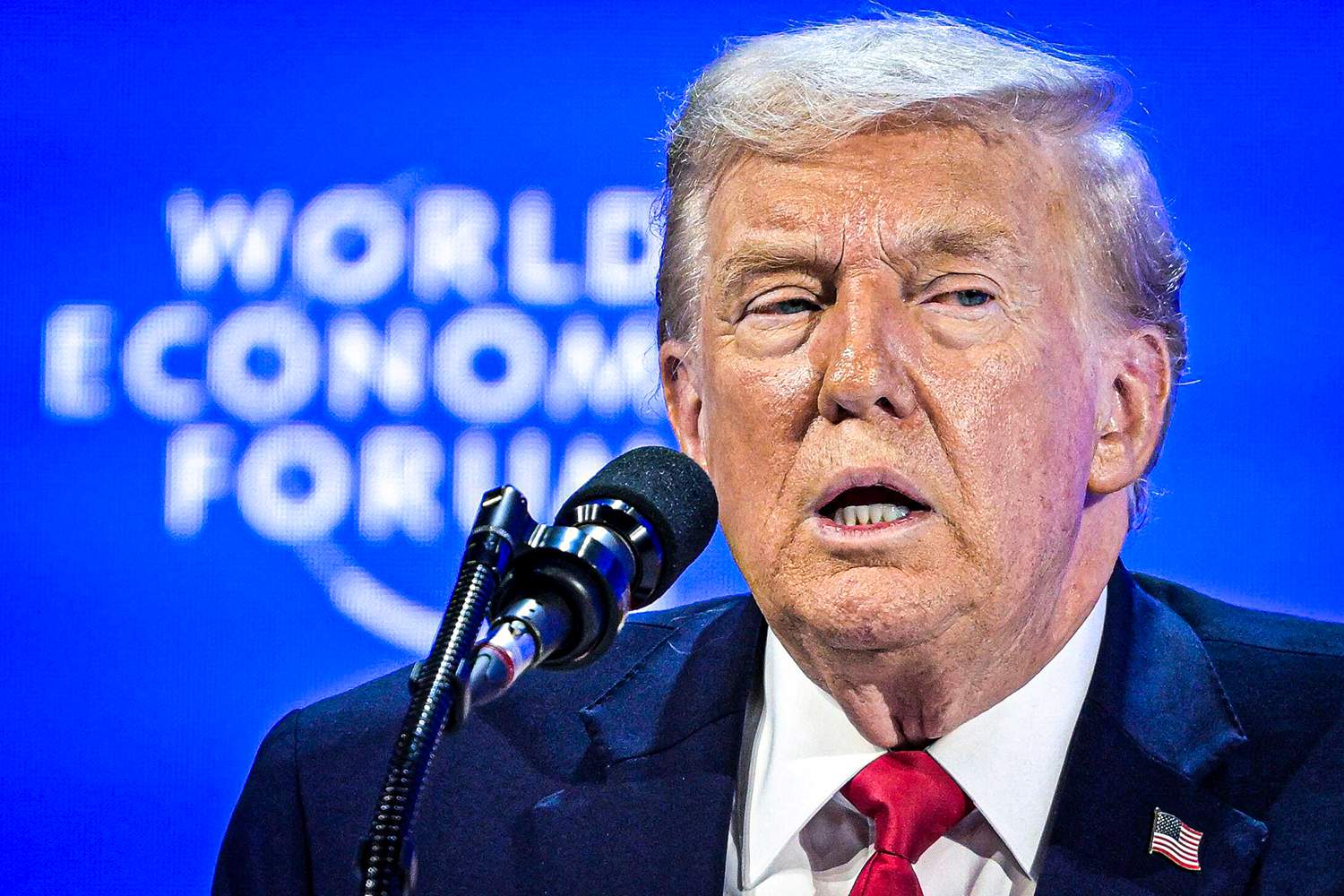
Trump is a narcissistic, psychopathic bully. But a weak one.
I started listening to Trump's speech at Davos with anger and outrage. But as he went on and on, I slowly felt a growing sense of relief. I realised that all his bullying, taunts and threats reflected weakness. He sounded like a needy, spoilt child frustrated that he could not get his own way.
His deranged tendencies were on full display with repeated hints at all the damage he could cause to those who did not bend to his will – like a mafia boss threatening to cut off a former partner's fingers if he did not cooperate. "I really like you, actually. I don't want to hurt you. It's a shame. I tried my best to be nice. But, I gotta do what I gotta do."
His neediness was on full display with his repeated mentions of how much everyone loves him, and appreciates his achievements. Only someone unsure of his popularity needs to keep claiming he has lots of friends.
His childishness was on full display with his petty taunts and jibes at other global figures – such as French President Emmanuel Macron, Canadian Premier Mark Carney, California Gavin Newsom, and Fed Chair Jerome Powell, even as he simultaneously claimed that they were "great guys, actually" and that he liked them.
Mark Carney's Speech Showed America and Britain the Sort of Global Leadership They Have Now Abandoned
The Canadian Prime Minister's powerful response to the growing threat from Donald Trump has put other world leaders to shame, argues Simon Nixon
Simon Nixon
His vanity was on full display with his repeated boasts about how brilliant he was, and how great America had become under his leadership.
His insecurity was on full display with his continued need to lash out at defeated foes, such as Joe Biden. A truly self-confident person would not need to repeatedly big up his own alleged achievements in office, rather than letting them speak for themselves.
His self-delusion was on full display with his claims that he really cares about Europe and NATO, respects the people of Greenland and Denmark, and is only trying to do what's best for them. A genuine friend does not bully and threaten allies.
His dishonesty was on full display with his claim that he is only motivated to end the war in Ukraine because he is concerned about how many young men and women are dying there, when what he has actually been doing since returning to office is trying to extort Ukraine's natural wealth and force it into an unjust peace deal.
His bullying tendency was on full display with his repeated reminders of the strength of the US military and economy. Trump is not a man to "speak softly and carry a big stick" – but a schoolyard bully who inadvertently reveals weakness by over-emphasising his physical attributes. "Yah, boo, I'm bigger than you. I could beat you up if I wanted to."
His greed, and cavalier disregard for the fate of the planet, was on full display with his attacks on Europe for pursuing its "scam" green agenda, exhortations on the UK to do more more to extract oil from the North Sea, and boasts about how much oil the US was going to pick up from Venezuela.
His whiny tendency was on full display with his complaints about how NATO has treated the US "unfairly" and that he personally never gets enough credit for his achievements – such as allegedly ending eight wars – an obvious reflection of his continued frustration at not being awarded the Nobel Peace Prize.
His ignorance, or is it deteriorating mental health, was on full display with his repeated reference to Iceland, when he meant Greenland, and his false claims that the US "gave back" Greenland to Denmark.
A Year of Living Dangerously in Trump's America
I no longer feel safe to speak or act freely in a country where people are being arbitrarily detained and killed and where the truth is becoming whatever Donald Trump says it is, repor...
Read our Monthly Magazine
And support our mission to provide fearless stories about and outside the media system
SUBSCRIBE TODAY
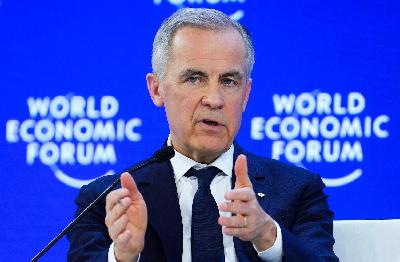
Mark Carney's speech in Davos on the end of the world order is rightly being hailed as one of the most powerful interventions by any political leader in the year since Donald Trump returned to the White House. My social media feed and WhatsApp groups have been filled with veterans of past Davos gatherings telling me it was the most important speech they had ever heard delivered in the Swiss mountain town – or indeed expect to hear this year.
The Canadian Prime Minister's argument tempered brutal realism— "we are in the midst of a rupture, not a transition" —with optimism. He set out a way that middle powers such as Canada, Britain and other advanced economies can maintain some sovereignty and control over their own destinies in a new era of superpower rivalries. His speech was an eloquent call for middling powers to work together to face down the great powers whose trashing of global rules and weaponisation of dependencies had turned integration into a source of subordination.
Carney was better placed than anyone in the world to have delivered such a speech. As one of the high priests of the global financial system over the last two decades – having previously served as Governor of the Bank of Canada and then the Bank of England – he will have no illusions about the costs of the collapse of the old rules-based order. What's more, as Prime Minister of a country whose own territory it is the stated policy of the US president to annex- and which would be encircled by America if Trump succeeds in his ambition of seizing Greenland – he surely feels both the gravity and urgency of the moment keenly.
It's Time for an Apology From the Trump Apologists
The politicians and commentators who mocked those warning about the threat posed by the US President as being "hysterical" need to face up to their own role in the calamity now unfolding, argues Adam Bienkov
Adam Bienkov
But above all, Carney understands what is at stake with greater clarity than other world leaders because he has been thinking about these issues for longer. As Governor of the Bank of England, he watched as Britain committed what he privately considered to be a monumental act of stupidity with Brexit. He appeared to allude to the lessons he took from that experience in his speech, noting that "the cost of strategic autonomy and sovereignty can also be shared. Collective investments in resilience are cheaper than everyone building their own fortress. Shared standards reduce fragmentation. Complementarities are positive sums."
What is depressing is that it is almost impossible to imagine Keir Starmer or any other British political leader delivering such a speech, even assuming they understood the arguments. Starmer himself, no doubt, is keenly aware of the dangers of this moment and the risk to Britain's national interest posed by a rogue United States. But he is incapable of articulating them, paralysed by his own timidity and buoyed by overconfidence in his capabilities as a "Trump whisperer" who can convince the capricious US President to change course.
Besides, in his decade at the front rank of UK politics, Starmer has never delivered a single notable speech. Indeed, the only memorable phrase ever to pass his lips—a claim that Britain was becoming an "island of strangers"—had such obvious racist connotations that he was later obliged to disown it. As for the rest of the British political class, one detects little sign that either of the two parties currently leading in the polls – Reform and the Conservatives – have any understanding of the consequences of this moment of rupture for Britain, of the costs that Carney rightly warns countries will have to incur to boost their resilience, and of the trade-offs that will be required as the price of preserving some autonomy.
This is partly a reflection of what has happened to British politics i...

Comments

Download from Google Play

Download from App Store
 United States