


 Claim Ownership
Outback To Orbit
Subscribed: 3Played: 16
Subscribe

© Copyright 2024 All rights reserved.
Description
The official podcast of the Australian Space Agency, introducing you to the people and technologies leading Australia’s space future.
10 Episodes
Reverse
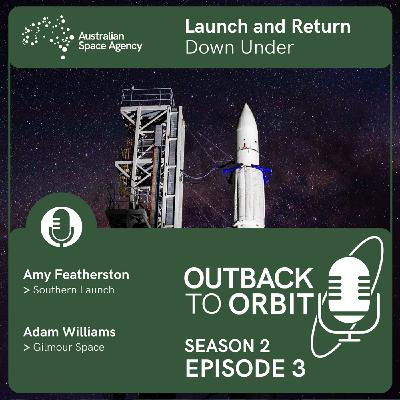
Capitalising on numerous advantages – including an expansive landscape and ease of access to desirable orbits – Australia is growing its reputation as a valuable launch and return destination for the international space community. Southern Launch and Gilmour Space are two companies leading the way with support from our Agency. In this episode, we talk with them about their growing offering of commercial launch and return technologies and services on our shores.
Our featured guests for this episode are Amy Featherston (Southern Launch) discussing her company’s operations from South Australia, including a mobile launch rail system and space capsule return collaborations with American company Varda, and Adam Williams (Gilmour Space) discussing his company’s Eris rocket program, with ambitions to launch the first ever Australian-made rocket from Australian soil in Bowen, Queensland.
The next decade will see humanity reach further, dig deeper, and discover more about our universe. Australia's space industry is helping to make it happen - and in this episode of Outback To Orbit, you'll meet two Aussie companies headed for the Moon, with support from our grant programs.
Our featured guests for this episode are Matthew Suntup (Advanced Navigation) discussing his company’s trailblazing navigation systems, including the LUNA Laser Velocity Sensor which will help Intuitive Machines land on the Moon, and Braeden Borg (Fleet Space Technologies) discussing SPIDER, a small seismic payload that will search the Moon for water ice deposits by recording the natural seismic waves in the lunar subsurface.
Welcome to a brand new season of Outback to Orbit, which comes as we build up to the 2025 International Astronautical Congress (IAC). It's the biggest space industry event on the planet - and this year, it’s happening in Sydney.
To mark the occasion, we’re looking at some key space capabilities Australia has to show the world, and we begin with the 2025 IAC theme of 'Sustainable Space: Resilient Earth'.
In this episode, we meet some Australian space innovators who've created technologies that help keep valuable space activities safe, efficient, and economically viable for the long-term - plus one company refining how we use space data to improve environmental sustainability on Earth.
Our featured guests for this episode are Paddy Neumann (Neumann Space) discussing the Neumann Drive electric spacecraft thruster fuelled by metal, Julia Mitchell (Space Machines Company) discussing in-orbit spacecraft servicing and the Space MAITRI mission, William Crowe (HEO) discussing non-Earth imaging cameras that monitor objects and activities in space, and Venkat Pillay (LatConnect 60 / LC60 AI) discussing how to make insights from Earth observation satellite data more useful and affordable. We also kick things off with a quick history lesson on IAC from the Agency's resident space historian Kerrie Dougherty.

The idea of this podcast series is to highlight how Australian space technology valuably intersects with our lives and the services we use down here on Earth - so, to wrap things up neatly for Season 1, we’re looking at some Australian companies that have found ways to ‘spin out’ their space technology to serve needs on Earth, or ‘spin in’ to the space industry by pushing their Earth-based technology to new extremes... quite literally going from Outback To Orbit.
Hear about Conflux Technology creating a 3D-printed heat exchanger for a rocket engine, Myriota expanding their Internet of Things data transmission services across the globe to the Moon and beyond, and Human Aerospace channelling its spacesuit expertise into custom-made compression garments for better healthcare on Earth.
Our featured guests for this episode are Glenn Rees (Conflux Technology), Nicole Russo (Myriota), and Dr James Waldie (Human Aerospace).

Launched in December 2023, SpIRIT is a landmark Australian nanosatellite. It’s a collaborative industry mission led by the University of Melbourne, bringing together some of the most advanced satellite technology Australia currently has to offer. It's supported by close to $7 million of grant funding from the Australian Space Agency. And it’s also an international cooperation - SpIRIT is carrying the HERMES x-ray detector from the Italian Space Agency, designed to locate high-energy gamma ray bursts in space that occur when stars die and become black holes.
Just shy of halfway through the two years it will spend in orbit, SpIRIT has marked some key achievements, and there's much more to look forward to as it showcases its range of Australian innovations to the world.
Our featured guests for this episode are Professor Michele Trenti (University of Melbourne) and Simone Pirrotta (Agenzia Spaziale Italiana - Italian Space Agency).
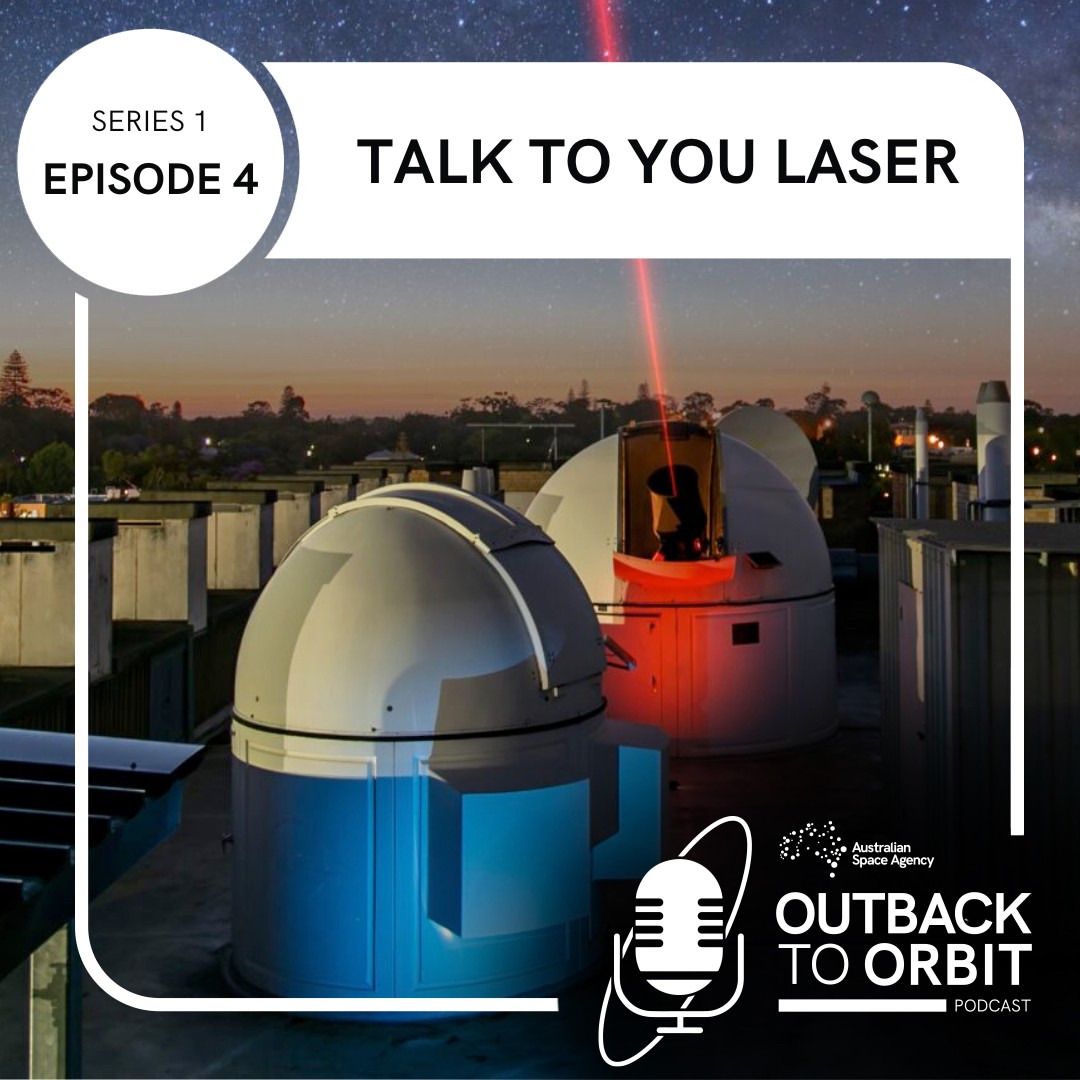
Did you know that shooting laser beams up into space is a hugely powerful way of exchanging data between spacecraft and Earth? It's called optical communications - and sending messages or pictures or other data through a laser beam is actually a thousand times better than traditional radio communication, because of the much higher frequency. Better yet, it’s happening in Australia right now.
The University of Western Australia and the Australian National University are both at the forefront of this field - they've both recently established optical communications ground stations. They’re also both part of the Australasian Optical Ground Station Network, which aims to link these types of stations together across Australia and New Zealand, and provide immense new capacity for space communications in our region.
Our featured guests for this episode are Associate Professor Sascha Schediwy (University of Western Australia) and Associate Professor Francis Bennet (Australian National University).

When astronauts base themselves on the Moon and beyond in the coming decades, they’ll need to be fairly self-sufficient with their health and nutrition - which includes finding quick, reliable ways to grow good-quality plants in zero gravity.
As such, plant growth in space is a pivotal field for the future of human space exploration, and the lessons we learn from it will also help us improve how we approach agriculture on Earth.
Excitingly, Australian researchers are the forefront of this field. The Australian Research Council Centre of Excellence in Plants for Space and Lunaria One are two organisations supported by the Australian Space Agency making great strides forward, and they're gearing up to take their work to the Moon in the next few years.
Our featured guests for this episode are Professor Matthew Gilliham (The University of Adelaide / Australian Research Council Centre of Excellence in Plants for Space) and Lauren Fell (Lunaria One).
This episode also features a bonus stroll through the Exhibition Hall at the 17th Australian Space Forum in Adelaide in July 2024!
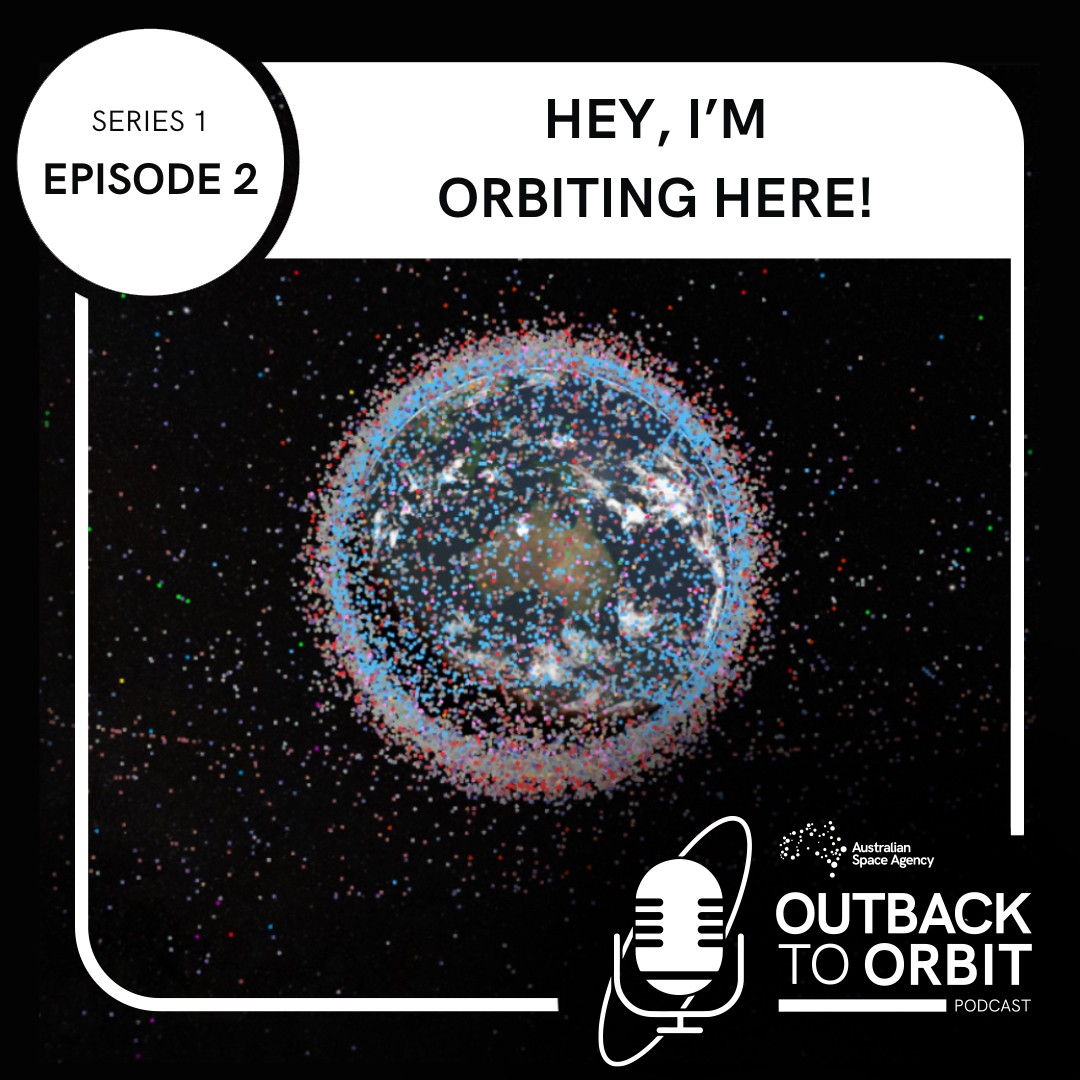
There are thousands of satellites and other artificial objects in Earth’s orbit - and that number is constantly growing, as we depend more and more on space technology to support our everyday lives.
Managing the traffic is an important part of what's known in the industry as Space Situational Awareness. On this episode, we meet a couple of Australians who are helping to stop space objects crashing into each other… or into the millions of pieces of debris flying around up there as well.
Our featured guests for this episode are Jason Held (Saber Astronautics) discussing the Responsive Space Operations Centre in Adelaide, and David Shteinman (Industrial Sciences Group) talking us through the Manoeuvre Decision Support System for predicting and averting collisions.

To kick off Outback To Orbit, we meet a couple of people working to take Australia to the Moon. They’re coming up with brand-new, cutting-edge designs for autonomous rovers - and one of those designs will be chosen to make history later this decade in our nation’s first lunar mission.
As part of NASA's Artemis program, the rover mission will support an attempt to collect lunar soil (known as regolith) and extract oxygen from it. This process will be crucial in establishing a long-term human presence on the Moon, which is a key goal of the Artemis program. Developing such an advanced rover will also help us do more with autonomous and remote-controlled machines back here on Earth.
Our featured guests for this episode are Ben Sorensen (ELO2) and Dr Sarah Cannard (AROSE).
Welcome to the new podcast from the Australian Space Agency, introducing you to the people and technologies shaping Australia's space future.
Comments

Download from Google Play

Download from App Store
 United States