


 Claim Ownership
Liberating Motherhood
Subscribed: 70Played: 2,306
Subscribe

© Zawn Villines, LLC
Description
Mothers are tired of anti-mother misogyny, household labor inequality, and a culture that expects mothers to bear the burdens of its many shortcomings--all without complaint. Mothers are vital to feminism, and have been neglected in feminist discourse for far too long. Mothers are constantly told that political problems are personal--that if we communicate better, mother better, behave better, things will improve. The only path to change is through widespread political change. That's what this podcast is about. Maternal feminism is an important prong of social justice work, and all people interested in a just world should care about what happens to mothers, families, and children.
42 Episodes
Reverse
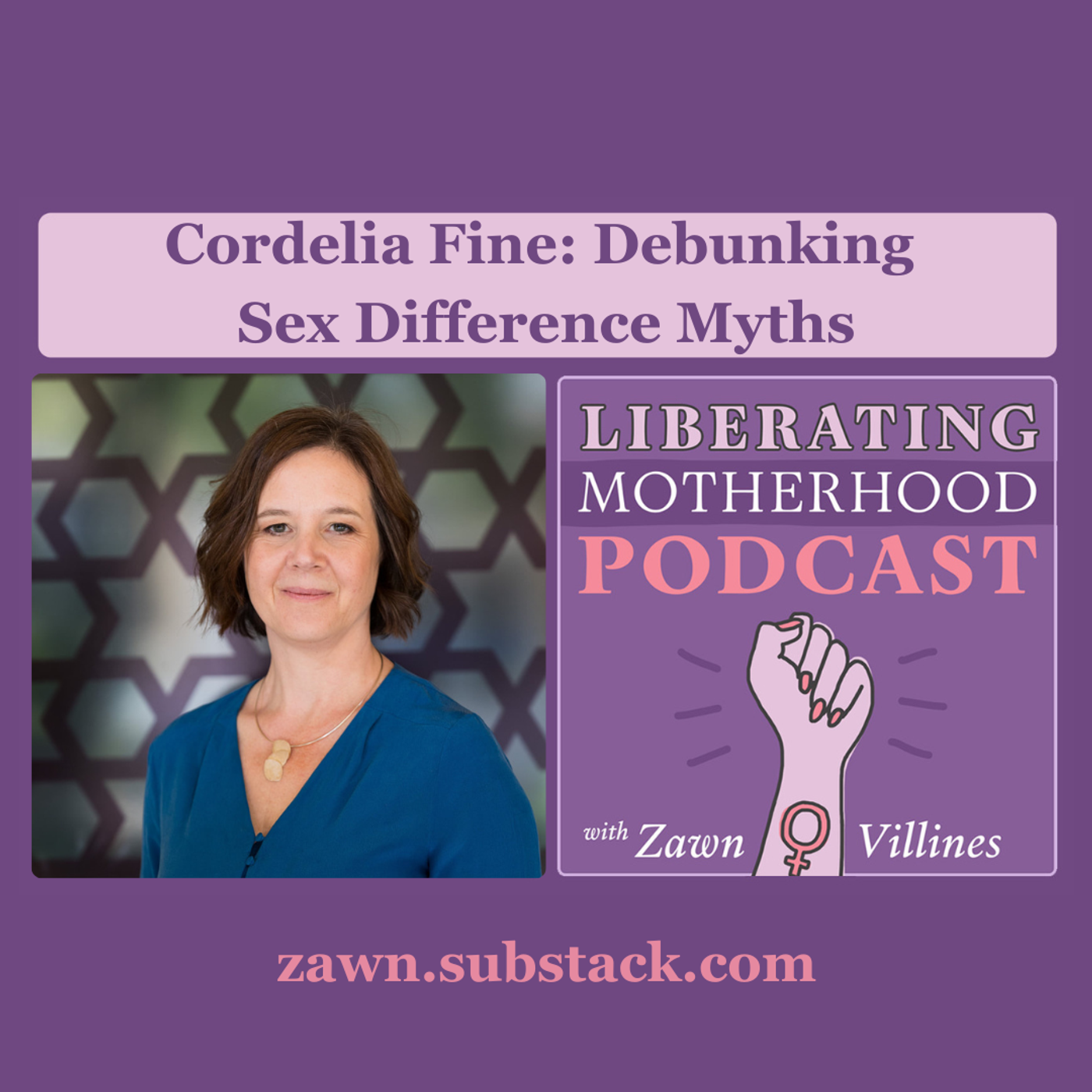
You’re being lied to about gender difference science. Researchers are inflating, overstating, and falsifying their data, or building biases into the research that render it unreliable. Stories about research inflate the limited differences these flawed studies find, and parenting advice suggests that we should treat girls and boys as radically different types of humans. So we do exactly that, and then we insist that different outcomes mean that gender differences must be innate and unchangeable. No matter what researchers see in scans of female brains—and even when they see different things in different brains—they conclude that their data prove that women are naturally and inevitably more emotional than men. Lots of activity in a particular brain region, limited activity in that same region, lots of activity in some women and limited activity in others—it’s all used as evidence to support the same bias. This research is everywhere, and everyone seems to “know” that the differences between men and women are significant and vast. When you dig into the research, though, that turns out not to be the case. The challenge is that most of us lack the expertise and time to read the research—especially since the promulgators of scientific sexism are constantly producing more research (and more questionable research). Cordelia Fine is a researcher who argues that the science is weak, the assumptions underlying it are flawed, and that the goal isn’t scientific truth or progress. She’s written extensively about harmful gender difference science, and I was so thrilled to bring her on the podcast. Some of the topics we discuss include:
The myriad problems with studies of sex differences: research that doesn’t prove what it claims to, popular media that overstates research claims, and more.
The false assumptions that go into gender difference research, and how those assumptions affect research outcomes.
The misrepresentation, and occasional outright fabrication, of scientific research.
The cornucopia of myths about testosterone specifically, and hormones more generally, that color our perceptions about gender.
The numerous forces putting gender role pressure on children, including before they are even born.
The normalization of gender roles in casual social relationships, and how often these issues come up in parenting small talk.
Why something being biological does not mean it is innate, inevitable, or unchangeable.
Spurious results, and the replication crisis in behavioral science.
The just-so stories we tell to understand research findings and defend the existence of gender differences.
The weaponization of perimenopause to stigmatize and dismiss women.
Find Cordelia’s books, all of the books recommended on the podcast, and numerous reading lists at the Liberating Motherhood Bookshop. About Cordelia FineCordelia Fine is an academic and writer. Her work analyses scientific and popular biological explanations of behavioral sex differences and workplace gender inequalities, explores the effects of gender-related attitudes and biases on judgments and decision-making, and contributes to debates about workplace gender equality. She was recently named a “living legend” of research by The Australian.She is the author of Patriarchy Inc., Testosterone Rex, Delusions of Gender and A Mind of Its Own and has been published in more than a dozen languages. Among other accolades, Testosterone Rex won the Royal Society Insight Investment Science Book Prize. Delusions of Gender was listed in ‘Ten books about women that will change your life’ (Sunday Times), ‘22 books women think men should read’ (Huffington Post), ‘Top 10 books on women in the past 30 years’ (The Australian) and the New York Public Library’s Essential Reads on Feminism, 100 Years After the 19th Amendment, among others. In recognition of her work on the understanding of gender stereotypes, challenging gender perceptions and contributions to public discourse to close the gender gap, Cordelia Fine was awarded the 2018 Edinburgh Medal by the City of Edinburgh Council, to honor men and women of science who have made a significant contribution to the understanding and well-being of humanity. Cordelia Fine has degrees from Oxford University, Cambridge University and UCL and is now a professor in the History & Philosophy of Science programme in the School of Historical & Philosophical Studies at the University of Melbourne.
“The adoption industry needs vulnerable pregnant women.” — TJ RaphaelWho gets to be a mother? And who gets to decide? This is the question at the heart of TJ Raphael’s incredible podcast series, Liberty Lost. Much of the adoption industry treats women as vessels for someone else’s child. Their trauma, their desires, their beliefs do not matter. Nowhere is this more apparent than in the right-wing adoption industry, where women and girls are often coerced or even forced into giving up their babies. Reproductive justice demands not only that women have the right not to have children, but also that women have the right to have and raise their children if they want. We see over and over again how patriarchy undermines both via abusive ideas about single mothers, sexuality, motherhood, and child development. There is no doubt that some women truly do wish to give their babies up for adoption, and that not all adoptions are coercive. But the data suggest that coercive, ideology-based adoptions may be the norm. Up to 80% of adoptions are through religious institutions. Moreover, most women who give their babies up for adoption say that, if their financial situation were better, they would not give up their babies. In her podcast series, TJ digs into just one religious institution: the Liberty University Godparent Home. It markets itself as a safe and supportive space for young mothers, but TJ’s podcast series reveals the coercive tactics it uses to take women’s babies. Research consistently shows that women who give up their babies for adoption experience intense grief and trauma. This is a fact that compels the question: Why are so many organizations pouring so much money into taking women’s babies rather than helping them to keep them? You can listen to Liberty Lost here. About TJ RaphaelT. J. Raphael is an award-winning investigative journalist focusing on the intersection of reproductive health, politics, and science. In June 2025, she released the multi-episode audio documentary Liberty Lost with Wondery, one of the world’s leading podcast production companies. The series dives deep into a modern-day maternity home where motherhood is treated as a privilege, not a right. The show paints a vivid picture that exposes the coercion and manipulation birth mothers often experience across the adoption industry. Following its release, Liberty Lost quickly climbed Apple’s coveted Top 200 Podcasts chart, topping out as the No. 2 series in America, and reaching No. 1 in their Society & Culture section. The show was praised by critics across the globe for its raw vulnerability and startling revelations, and won Gold at the 2025 Signal Awards for Best Documentary. For her work on Liberty Lost, T. J. won a Front Page Award from the Newswomen’s Club of New York for investigative reporting, and she is currently nominated by the Podcast Academy for an Ambie Award for best reporting.Before her time with Wondery, T. J. was an on-air host, reporter, and senior producer for Sony’s Global Podcast Division. Two of her most notable podcasts with Sony include Cover Up: The Pill Plot, about the American abortion wars, and BioHacked: Family Secrets, about the shadowy business of sperm and egg donation.Prior to Sony, T. J. was part of the leadership team overseeing Slate Magazine’s podcast network, which garnered 180 million downloads a year. She began her career in audio journalism in 2013 when she took on a multifaceted role at WNYC — the largest public radio station in America.T. J. began her career in print journalism, with reporting and editorial roles at The Village Voice, The New York Daily News, and The Legislative Gazette, grounding her audio work in traditional investigative and accountability reporting.T. J. is mixed race — Puerto Rican and Irish — and was born and raised in the New York City metro area. She is the first in her family to graduate from college.Today, T. J. lives in the world’s borough — Queens. When she’s not making podcasts, she likes to take trips to ride the Coney Island Cyclone, and spend time with her husband, Christopher, her border collie Smokey, and her Great Pyrenees, Cooper.
Patriarchy destroys relationships, and it has turned dating into a nightmare. Jennie Young is fighting back with her Burned Haystack method, and now the method is a book. Through her work, Jennie endeavors to teach women to detect red flags before they become obvious, and to thwart abuse before it happens. Dating is the most dangerous thing most of us do, and I have no doubt that Jennie is saving lives. In this podcast episode, Jennie and I discuss:
Why dating is so awful, and why men seem like they’re getting worse.
What the Burned Haystack method is, and how it can reduce the stress and misery of dating.
Specific rhetorical and behavioral patterns to look out for in early dating.
Why dating advice really is a matter of life and death.
And much more!
The first date video I mentioned early in the podcast is here. Jeff and I discuss the Application to be Zawn’s Boyfriend here. Jennie Young’s book will be out April 7th. If you want publishers to take on more feminist authors, please consider pre-ordering. Pre-orders are a huge determinant of a book’s success, and you can create a more thriving marketplace for all feminist authors by buying Jennie’s book. About Jennie YoungJennie Young is a professor of writing and rhetoric at the University of Wisconsin-Green Bay, specializing in applied rhetoric, humor, and feminism. She holds a Ph.D. in rhetoric and discourse studies from Case Western Reserve University and a satire writing certificate from Second City Chicago. Her work has been published in McSweeney’s, Ms. Magazine, HuffPost, and others and covered by major media outlets such as The New York Times, RollingStone, Washington Post, Newsweek, and Wall Street Journal.Visit Jennie at her website here, and be sure to check out her Substack. You can join her man-free support group on Facebook.You can preorder her book, Burn the Haystack, here.Find all books referenced on the podcast, as well as additional book recommendations, here.
 1
1
Why is misogyny so widespread, even when men claim to love and care about women, even among those who believe they are feminists? Male supremacy helps explain this phenomenon. The Institute for Research on Male Supremacism defines male supremacy as follows: [A] cultural, political, economic, and social system, in which cisgender men disproportionately control status, power, and resources, and women, trans men, and non-binary people are subordinated. Such systems are underpinned by an ideology of male supremacism, the belief in cisgender men’s superiority and right to dominate and control others. While male supremacism also intersects with other axes of oppression, such as racism, xenophobia, antisemitism, and heterosexism, it motivates and undergirds the types of events described above. Male supremacism manifests in various ways, including physical and sexual violence, militarism, and exertion of control over women’s, trans men’s, and non-binary people’s bodies.
These norms pervade everything we do, even if we rarely or never speak about them out loud. Soraya Chemaly has been writing about, and fighting, male supremacy for decades. Her new book, “All We Want is Everything,” analyzes male supremacy, cogently demonstrates its existence, and offers insight on how we build a better world. I truly loved this book. It’s so tightly argued, chock full of accessible statistics. It might be the book to give to the man in your life, if only to see that his beliefs do not change in response to new information. This is Soraya’s second appearance on the podcast, and I’m so lucky we got to talk again. In this episode, we discuss a wide range of topics, such as:
What male supremacy is, and how it interlocks with other systems of oppression.
Why and how male supremacy conceals its own existence.
The myth of a boy crisis in education, and the social purposes it serves.
The norm of affirmative action for men in colleges and elsewhere.
How schools reinforce gendered labor in parenting and marriage.
Men’s refusal to accept anything women do as work.
The weaponization of women’s fatigue, and why depriving women of rest plays such an important role in their oppression.
The nature of activism as a group struggle across generations, and how we sustain activism when we become demoralized.
You can find “All We Want is Everything,” all of Soraya’s books, and all of the books I mention on the podcast at the Liberating Motherhood Bookshop. About Soraya ChemalySoraya Chemaly is an award-winning author and activist, who writes son topics related to gender norms, inclusivity, social justice, free speech, sexualized violence, and technology. She is the director and co-founder of Women’s Media Center Speech Project. She is also the author of Rage Becomes Her: The Power of Women’s Anger, The Resilience Myth, and the newly released All We Want is Everything.You can find her articles in numerous publications and anthologies, in talks and media appearances, and just about everywhere anyone is discussing gender.
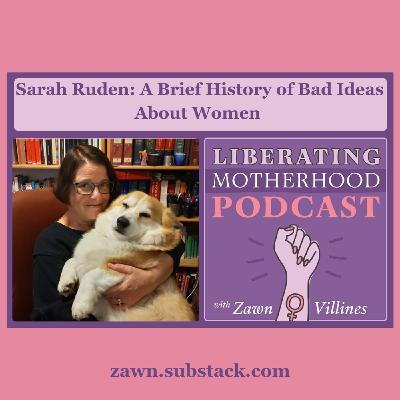
I wrote recently about how men are using AI to prop up their belief in their own superiority. This propaganda is nothing new. Men have, for thousands of years, used every tool at their disposal to spread false ideas about women’s inferiority and demonic nature. Sarah Ruden is a translator, a classicist, and the author of Reproductive Wrongs: A Short History of Bad Ideas About Women. She came on the podcast to discuss her new book, which outlines how popular literature and culture have long normalized women’s subjugation by spreading lies about women. We ended up having a sprawling conversation during which we talked not just about this book, but about her translations work, Biblical views of womanhood, and so much more. It was such a treat to get to pick such a brilliant mind. No matter what you’re interested in, I think you’ll find something compelling in this episode. A few of the topics we discuss include:
The long history of constraining women’s reproductive rights in service of men, including anti-abortion poems by the poet Ovid.
The alliance between anti-abortion ideology and authoritarianism.
Why history is more than a set of facts, and why it matters who tells stories from the past.
What Sarah has learned as a translator of the Biblical Gospels, and why good translations are so crucial to our understanding of the world. Sarah talks specifically about how the canonical translations of the Gospels suppress women’s point of view and demean women.
Why our beliefs do not spring up out of nowhere. Not only is propaganda everywhere, but it has always been everywhere.
The similarities between red pill bros and the men who have translated sacred texts and beloved secular literature.
The line from Roman anti-abortion rhetoric to the rhetoric of today’s far right, including a focus on genocide.
The role of anti-abortion politics in imperialism.
Why the anti-abortion movement has co-opted the Holocaust to justify extreme violence.
The Catholic church’s shift toward more flexibility on everything except for abortion.
About Sarah RudenSarah Ruden is a leading translator of the ancient literature of the West. In a career spanning both essential Greek and Roman Classics and sacred literature, she has set new standards for accuracy, stylistic integrity, and accessibility. Her work, including cultural and human-rights journalism, is deeply concerned with questions of power and truth, in accordance with her Quaker faith. She has won Guggenheim, Whiting, and Silvers grants, and numerous other awards.She has a PhD in classical philology from Harvard University.Her latest book, Reproductive Wrongs: A Short History of Bad Ideas About Women, came out March 3rd. You can find this wonderful book, as well as several of Sarah’s other books, in the Liberating Motherhood Bookshop.
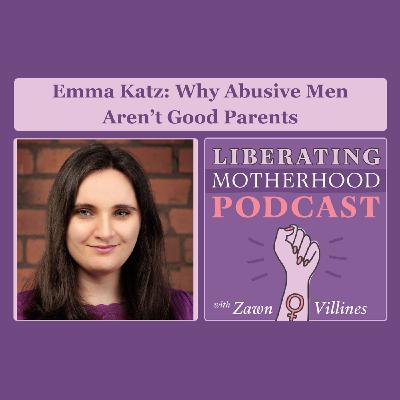
I’m on vacation this month, so am re-releasing this excellent episode with Dr. Emma Katz. Content warning: This podcast extensively discusses all forms of intimate partner violence, some child abuse, and briefly discusses the death of a child, but not in graphic detail. Intimate partner violence is much more than physical violence. Every physically violent perpetrator was, for a time, not physically violent. The emotionally abusive, degrading, and controlling environment these perpetrators create is ultimately what enables the physical violence. Our society recognizes only a very limited number of behaviors as abusive, which is why so many women feel shocked and stunned when their partners finally become violent. When you understand coercive control, though, it becomes clear that the violence is part of a controlling strategy. Coercive control is the environment abusers create, and it’s much more—and much worse—than just violence. While it is deeply isolating, it follows very predictable patterns. In this podcast, we talk about topics such as:
What coercive control is, and why it is the norm in heterosexual relationships.
Why a relationship can be abusive even if there is no physical violence.
How to tell if your relationship is abusive.
Why abusers abuse their partners.
The most common strategies abusers use.
Why abusers cannot be good fathers.
Helping a child recover from exposure to domestic violence.
How gender socialization renders women more vulnerable to abuse.
Risk factors for the father weaponizing the child against the mother.
Emma Katz, a world-renowned expert on coercive control, focuses her research and writing on the effects of coercive control on children. She dispels the notion that a man can abuse the mother but still be a “good dad,” and talks extensively about how courts often replicate abusive norms. These coercively controlling men might seem cunning, but they’re largely following the same playbook. Understanding that playbook empowers women to recognize abuse earlier, to identify when it is happening, and potentially, to leave. I highly recommend Dr. Katz’s Substack. Find that here. Read more about her on her website, or buy her incredible book here.
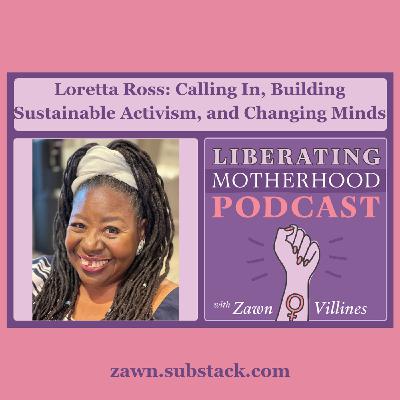
Today we are going to be learning from the legendary reproductive justice activist Loretta Ross. Loretta is my feminist hero and role model, and I feel so lucky that she was willing to share some time with me. How is it that a human rights movement rooted in the shared value and worth of every human being so often devolves into a toxic stew of abuse and hurt feelings? Anyone who participates in leftist political movements has seen small disagreements spiral into mutual attacks, psychological brutality, and worst of all, fractured and less powerful movements. Lasting change requires us to build solidarity across difference. At the very least, we must be able to resolve small disagreements. Ideally, though, we have to bring more people into the fold—including people we really don’t like, including people with whom we have very significant moral disagreements. I’ve often noted that the anti-choice movement succeeded by standing in lockstep with one another, no matter how much they hated each other. They built a movement for 50 years, and they succeeded. We can learn a lot from them. But leftist coalitions are diverse and highly principled. These are good things, but they can make it challenging to work together. So I’ve been thinking a lot about how we can do this. And then I found Loretta Ross’s book, Calling In. It has helped me to consider my own role in toxic call-out culture, and to seize opportunities to build consensus and coalitions rather than elevating myself and my ego. This, I think, is the only way we move forward. There’s lots of advice about how to be a better activist, what this moment means, and how to deal with people who disagree with us. I think the most useful advice comes from people who have actually succeeded at sustaining a lifetime of activism. Loretta has changed hearts and minds over and over, working with people many of us would never even want to talk to. She has done the work that progress demands, and now she’s here to teach us how to do it, too. You’ll recognize some of what we discuss from my earlier episode about sustaining hope as an activist. I cannot over-emphasize how much Loretta’s work has shifted my consciousness and influenced my own work, and I hope you find her wisdom as valuable as I do. Some of the topics we cover in this conversation include:
Toxic call-out culture, and how it is destroying individual well-being as well as activist movements.
How childhood wounds create toxic shame that we then foist onto our activist colleagues.
How we build resilience and capacity to work across difference.
Calling out vs. calling in, and how we know when to do each.
Loretta’s experiences working with rapists and deprogramming white supremacist.
How our egos can undermine our activism, and how we resist that temptation.
The components of an effective call-in, and how to know when a call-in is likely to work.
“When you ask people to give up hate, you must be prepared to be there for them when they do.”
The concept of the victimized violator—the person who feels entitled to violate others because of their own victimization.
How to respond to a call-out or call-in.
Can we use calling in with ICE officers?
How we can acknowledge the humanity of those doing harm without losing sight of their victims.
How we sustain hope and avoid despair.
About Loretta Ross Loretta J. Ross is a Professor at Smith College in Northampton, MA in the Program for the Study of Women and Gender. She teaches courses on white supremacy, human rights, and calling in the calling out culture. She has taught at Hampshire College and Arizona State University. She is a graduate of Agnes Scott College and holds an honorary Doctorate of Civil Law degree awarded in 2003 from Arcadia University and a second honorary doctorate degree awarded from Smith College in 2013. She also has credits towards a Ph.D. in Women’s Studies from Emory University. She serves as a consultant for Smith College, collecting oral histories of feminists of color for the Sophia Smith Collection, which also contains her personal archives. Loretta also is a recipient of a MacArthur Fellow, Class of 2022, for her work as an advocate of Reproductive Justice and Human Rights, and an inductee into the 2024 National Women’s Hall of Fame.Loretta’s activism began when she was tear-gassed at a demonstration as a first-year student at Howard University in 1970. As a teenager, she was involved in anti-apartheid and anti-gentrification activism in Washington, DC as a founding member of the DC Study Group. As part of a 50-year history in social justice activism until her retirement from community organizing in 2012, she was the National Coordinator of the SisterSong Women of Color Reproductive Justice Collective from 2005-2012 and co-created the theory of Reproductive Justice in 1994.Loretta was National Co-Director of April 25, 2004, March for Women’s Lives in Washington D.C., the largest protest march in U.S. history at that time with 1.15 million participants. She founded the National Center for Human Rights Education (NCHRE) in Atlanta, Georgia from 1996-2004. She launched the Women of Color Program for the National Organization for Women (NOW) in the 1980s and was the national program director of the National Black Women’s Health Project. Loretta was one of the first African American women to direct a rape crisis center in the 1970s, launching her career by pioneering work on violence against women, as the third Executive Director of the D.C. Rape Crisis Center. She is a member of the Women’s Media Center’s Progressive Women’s Voices. Watch Makers: Women Who Make America video.Loretta has co-written three books on reproductive justice: Undivided Rights: Women of Color Organize for Reproductive Justice in 2004; Reproductive Justice: An Introduction in March 2017; and Radical Reproductive Justice: Foundations, Theory, Practice, Critique in October 2017. Her newest book, Calling In: How to Start Making Change with Those You’d Rather Cancel is available now!Loretta is a rape survivor, forced to raise a child born of incest, and also a survivor of sterilization abuse at age 23. She is a model of how to survive and thrive despite the traumas that disproportionately affect low-income women of color.Loretta is a mother, grandmother, and great-grandmother.You can find all of Loretta’s books, as well as all books recommended on the podcast, at the Liberating Motherhood Bookshop page.
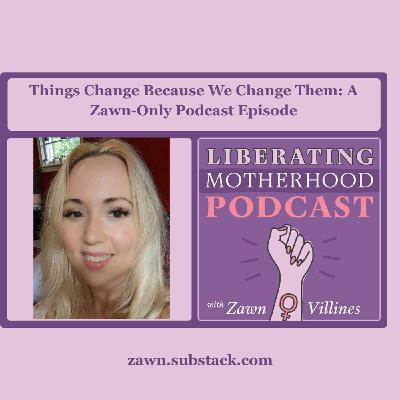
This is the first podcast episode I’ve done by myself, because I wanted to speak directly to all of you. If you like it, I may do more. On a recent AMA, someone asked me how I sustain hope when I’m surrounded by horror and despair. Here’s what I told her: I know that the only thing that makes things actually hopeless is giving up hope. If my foremothers could fight through coverture, through legal rape, through legal violence, if other women could continue to fight through slavery, through a Holocaust, through witch burnings, through endless war, then surely I can honor them by continuing to fight. I will not allow despair to cause me to drop my link in the chain that extends to my ancestors and toward freedom.
I decided to record this podcast episode because so many of you have contacted me wondering how we can possibly keep going with things as terrifying as they are. I’ve been an activist for a long time, and I’ve been lucky enough to learn from many elders (several of whom will be on this podcast in the next few weeks). I hope that I can offer you some strategies for thriving. I also know there’s value in hearing another human voice—hopefully someone you trust—reassuring you. So I decided to record this, off the cuff, by myself. I could have edited. I could have gone back and added more, and I probably should have taken a decent photo rather than a frazzled selfie. I think, though, there’s sometimes value in showing up as we are, and in hearing someone else free-associate. I wanted to deliver this message as quickly as possible, rather than as perfectly as possible, so I hope it still has value. In this episode, I talk about how I sustain hope, why I think you need to sustain hope, and how to build effective activist networks. If you’re out there doing the work, I love you for that. Let’s join hands together and get as much done as we can. I hope you like this episode. I hope it helps you.
“Black men have been held accountable for things they didn’t do for so long, that we have forgotten how to hold them accountable for the things they do.” — Kiki BryantMen are stealing women’s lives by stealing their time. So why is it that we have widespread notions of women as spoiled, entitled gold diggers? The words we use matter. They focus our attention and make it easier (or harder) to speak about a topic. This is a sweeping conversation that covers a lot of ground. Some of what we talk about:
How social media is using bans without any due process to suppress the voices of minority creators. Kiki lost her Facebook account, and we talk extensively about how many other writers this has happened to, drawing on research Kiki conducted. Social media has the power not just to silence people, but to remove everything they’ve ever previously said.
The importance of memory in constructing philosophical beliefs, and how social media bans undermine collective memory.
Kiki’s framework of labor diggers.
The economic impact of being the default parent.
Labor digging begins in childhood, and how gendered childhood norms set people up for miserable heterosexual relationships.
The effects of mass incarceration on Black relationships specifically, and how this ongoing trauma contributes both to lower Black marriage rates and to misogynoir.
The commonalities between Black manhood and white womanhood.
The unique challenges facing Black women leaving abusive Black men.
The pick-me feminist: the feminist who wants to talk about how she’s not like all the other feminists.
Competitive parenting, breastfeeding while Black, and the use of parenting culture to reinforce hierarchy.
About Kiki BryantKiki Bryant, known online as the Uppity Negress, is a mother, writer, and sociopolitical critic located in Chicago, IL.Follow her on Facebook here. Check out her amazing Substack here. Follow her on threads here. Buy her books on her website, which also has other merch and a ton of great information.
If you like this episode or this podcast, please consider heart-reacting, sharing, commenting, or leaving a positive online review. It helps the podcast continue to attract great guests!Motherhood is a cultural, political experience. But in many places, especially the United States, we pretend culture doesn’t exist, and that everything about motherhood is both inevitable and an individual problem. Abigail Leonard is an American journalist who, inspired by her own experiences living abroad in Tokyo, set out to explore how different cultures support (or don’t support) mothers, and how this influences outcomes for everyone. Abigail’s book highlights how cultural norms determine the bounds within which we mother. And while the social networks and community support women can access vary greatly from nation to nation, the profound impacts of patriarchy persist across cultures, making motherhood much harder than it needs to be. In this podcast, we talk about:
Similarities and differences between motherhood experiences in Japan, Kenya, Finland, and the United States.
The social structures that can make motherhood easier or more difficult.
How men’s refusal to participate equitably in parenting negatively affects women across cultures—and how social safety nets can either intensify or offset these negative effects.
The political role of motherhood, and how a culture of mother blame can destroy an entire society.
The rampant violence of life in the United States.
The long-term effects of parental leave on parent-child relationships.
You can find Abigail’s book, a reading list, and all books I recommend on the podcast, at the Liberating Motherhood Bookshop. About Abigail LeonardAbigail Leonard is an award-winning international reporter and the author of Four Mothers: An Intimate Journey through the First Year of Parenthood in Four Countries. It follows women in Japan, Kenya, Finland and the US during their first year as mothers, and was named an Amazon “Best nonfiction book of the year so far”, and a Sunday Times “Book of the week”. Abigail was previously based in Tokyo, where she was a frequent contributor to NPR and New York Times video... and where she had her own three children.Visit her website here, or find her on Instagram @AbigailLeonardAuthor.
“Everyone is impacted by racism.” — Sabia Wade We’re back! It’s now Season 3 of the Liberating Motherhood podcast. As promised, this season you’ll be getting an episode every single week. Please consider helping this podcast continue to grow by: heart-reacting on Substack, liking on your favorite platform, leaving a comment on social media, leaving a positive review on your favorite podcast platform, and sharing the podcast with friends. Your support can help the podcast continue to grow and bring on great guests. The American birthing system is in crisis, with women dying at higher rates now than they did a generation ago. Birth if often traumatic, leaving lasting physical and emotional injuries. While everyone who gives birth is touched by this system, thing are especially bad for Black women, who die at roughly four times the rate of white women. No amount of education or money can reduce this risk; racism and misogyny are the factors that matter.Sabia Wade argues that the birth crisis is inseparable from the larger crises our culture faces, and that collective liberation means birth liberation, too. I was so excited to get to talk to her. Here are a few of the topics we discuss:
The Prison Birth Project, prison birth, and the crises facing incarcerated women.
How racism erodes everyone’s humanity, including by divorcing white people from their own humanness.
The competing demands of accountability and inclusion, and how we build bigger, more powerful movements for liberation.
What activism means, and how we cultivate meaningful activism.
Racism in maternity care, the fact that the problem is getting worse, and what we need to do to stop this crisis.
The racist social norms that have steadily pushed Black midwives out of obstetric care.
The racist roots of modern obstetrics and gynecology.
Care is more important than profit—and why a for-profit system will never provide comprehensive care.
How racism limited Black people’s access to medical care, and how Black communities have responded with building their own systems of care. But now, for-profit medicine is seeking to commodify Black bodies and disrupt these community systems of care.
Harm is inevitable, which is why we all must work to be more accountable.
The defensiveness many obstetricians feel when confronted with the racist, misogynist reality of our birthing system.
You can find all of the books I reference on the podcast, as well as many lists of recommended books, at the Liberating Motherhood Bookshop. About Sabia WadeSabia Wade (she/they) is a Black, queer, multi-disciplinary reproductive justice advocate, entrepreneur, and thought leader. As the creator and CEO of Birthing Advocacy Doula Trainings and founder of For The Village, Inc., Sabia has built accessible pathways for community care workers and birth justice advocates across the country.With roots as a volunteer doula at the Prison Birth Project, Sabia’s work now spans curriculum design, organizational strategy, full-spectrum doula care, and executive coaching. They are also the author of Birthing Liberation: How Reproductive Justice Can Set Us Free, a groundbreaking exploration of bias, healing, and collective freedom in reproductive care.Beyond advocacy and education, Sabia leads Tend & Mend Healing Studio in Wilmington, NC, offering herbalism, spiritual care, mediumship, Reiki, death doula support, and human design sessions—bringing a holistic, liberatory approach to healing and leadership.Find Sabia at sabiawade.com. You can also follow her on Instagram or LinkedIn, buy her book here, visit Tend and Mend Healing Studio, learn more about Birthing Advocacy Doula Trainings, or support her nonprofit, which trains the next generation of liberation-focused doulas. https://www.sabiawade.com/Sabia also was generous enough to offer a discount code for Liberating Motherhood listeners: Use coupon 15off at Tend & Mend Studio: shopAnd for BADT programming: https://birthingadvocacy.thinkific.com/
I am so excited about this episode! Jane Ward is a brilliant queer feminist scholar who has written extensively about the harmful dynamics heterosexual relationships normalize. Her book, The Tragedy of Heterosexuality, has heavily influenced my own work, and I am so grateful to her. She’s working on a new book about parenting that we hit on a bit, but we mostly talk about what is going on in heterosexual relationships.
Some of the topics we cover include:
Why maybe it’s not being queer that is difficult, but being straight. Perhaps rather than worrying about our queer children, we need to worry about straight kids.
The misery of heterosexual culture, and why queering relationships can make them better.
How heteronormative culture conceals the horrors of heterosexual relationships to reel women into these often-harmful romances.
The phenomenon where heterosexual marriage often puts women in a worse situation than they otherwise would have found themselves in.
The normalization of marital hatred, and how male homosociality influences everyone.
Why queer divorce rates indicate a healthier approach to relationships.
What it means to queer parenting practices, and how we can embrace a truly liberatory parenting ethic.
Parenting as a cultural experience rather than an individual one.
Quick scheduling note: For December, I’ll have a podcast every other week, in addition to the paid bonus at the end of the month. In January, I will be returning permanently to the new schedule of weekly podcasts. Season three will be out the first full week of January.
As always, please consider leaving a quick review and heart-reacting or sharing. It really helps a lot!
About Jane Ward
Jane Ward is professor and chair of Feminist Studies at University of California Santa Barbara. She teaches and writes about gender and sexual cultures and has published on topics including the anti-gender movement, online misogyny, the marriage self-help industry, the ebb and flow of interest in lesbian feminism, the meaning of sex between straight-identified men, queer childhood and parenting, the corporatization of gay pride festivals, and the labor of producing gender.
Ward is the author of multiple books, including The Tragedy of Heterosexuality, described by The New York Times Book Review as “at heart a somber, urgent academic examination of the many ways in which opposite-sex coupling can hurt the very individuals who cling to it most.” Her book Not Gay: Sex Between Straight White Men (2015) was a Lambda Literary Award finalist. She is the co-editor, with Soma Chaudhuri, of the first global feminist collection of academic and popular essays about witches and witchcraft, The Witch Studies Reader.
Jane is also cofounder or SURJ DENA, the Altadena chapter of Showing Up for Racial Justice, and a member of the board of the racial justice and mutual aid organization My TRIBE Rise.
You can find all of Jane’s books, as well as numerous booklists and book recommendations, at the Liberating Motherhood Bookshop.
“White feminism is often about becoming equal to men, which makes you the leading oppressor across the globe. It leaves everyone else behind.”—Desiree Stephens
I’ve been thinking a lot lately about how we bring more women—especially white women—into the feminist fold. And then, once they’re there, how do we get them to embrace an intersectional approach that acknowledges and tackles the entirety of supremacy culture? I think the answer begins and ends with community—building community, working through conflict, determining who in our community to support and prioritize.
I brought my friend Desiree Stephens on the podcast to talk about how we build community across difference, how we recruit more women to the cause, and why things between Black women and white women so often break down.
In this episode, we talk about:
Why white women often end up feeling so defensive and aggrieved in anti-racist spaces.
Why the closer proximity of white and Black women, as opposed to white men and Black women, fosters both conflict and opportunities for change.
The notion that white women are in charge of social change while white men are in charge of systemic change.
Shame as a colonial construct, and how the cycle of shame often keeps white women stuck.
Why you cannot call yourself an ally—and why no one can attest that any person is a universal ally, or even a consistently reliable ally.
What Desiree means when she says to give white men grace (and why it’s not about overlooking abuse).
What it actually means to say that there are no good white people, and how “goodness” is a creation of supremacy culture.
The link between mean girl culture and white supremacy.
How white women should respond to call-outs.
How leaving white supremacy can be similar to leaving abusive relationships.
Worth is inherent; access is earned.
About Desiree Stephens
Desireé B. Stephens, CSP-P, is a dynamic educator, counselor, and community builder dedicated to liberation through decolonization and whole-self healing. As the founder of Make Shi(f)t Happen and creator of the LIBERATE Framework™, she helps individuals and organizations dismantle systems of oppression, foster inclusive spaces, and embrace sustainable transformation.
With a background rooted in trauma-informed care and intersectional approaches, Desireé specializes in wellness-centered, anti-harassment education and training. Her work spans personal growth, workplace equity, and community healing, offering tools that empower people to take actionable steps toward liberation.
Desireé combines deep empathy with practical strategies, ensuring her teachings are both accessible and transformative. Through her Liberation Education Substack, seasonal circles, and workshops, she inspires changemakers to embrace introspection, dismantle oppressive systems, and build intentional, intersectional communities.
Desireé’s passion for equity, reflection, and transformation is informed by her lived experiences and her commitment to co-creating a world where everyone can thrive. She believes in the power of rest, reflection, and intentional action to drive meaningful change—within ourselves and in the world around us.
Childbirth is an incredibly powerful rite of passage. The literal creation of life could be a source of empowerment, no matter how any individual person chooses to do it. Instead, patriarchy weaponizes birth as a tool of trauma and oppression that steadily normalizes the dehumanization of motherhood.
My transition to motherhood included a massive fight against the hospital where I intended to give birth, multiple threatened lawsuits, and ultimately, a terrified hospital board attempting to appease me. That experience taught me that patriarchy depends on our silence, fear, and submission. When we fight back, we often win. The opening vignette for this podcast is the story of my first birth—the birth that solidified my identity as a birth justice activist.
I met Cristen Pascucci of Birth Monopoly during the protest surrounding my first birth, and she’s been a friend and ally ever since. She’s a rich font of knowledge about birth and reproductive justice, and I think you’re going to love her.
Some of the many topics we cover include:
How patriarchy uses childbirth to enforce women’s submission and subjugation.
The ways patriarchy weaponizes childbirth to get women to accept the devalued role of mother.
Why even many feminists don’t take issues of birth justice seriously.
The notion of birth as a punishment.
Why we demand that women have no specific requests or desires surrounding their births, and why we stigmatize women for having any needs at all.
The psychological effects of birth trauma, and why physical safety (which is wholly lacking in the American maternity care system) is not the only type of safety that matters.
Why going along with the system doesn’t work, and why this is not about natural or crunchy birth.
How a healthy birth system can manage medical interventions and save lives without also traumatizing families.
Why we frame women as selfish for having any needs at all when they give birth.
Patriarchy as a tool for controlling birth.
The epidemic of racism in childbirth, and the role of white women as both victims and victimizers in the birth justice movement.
How abusive clinicians weaponize the same tools as domestic abusers, such as by pretending to be victims.
The stunning degree of abuse and neglect we expect women to accept during postpartum.
The collective trauma of women in an abusive birthing system, and how this system steals years of women’s lives.
How meeting patriarchy’s production demands can conceal women’s trauma, especially after birth.
If you’re unfamiliar with the American birth system, you might not know that birth has gotten more dangerous here over the last generation, not less, and that we are the only wealthy nation in which this is happening. Maternal mortality here is skyrocketing, and abuse is rampant.
It’s not just an American problem, though. Patriarchy weaponizes birth to hurt women across the globe. Even in nations where birth is physically safe as compared to the United States it is often not psychologically safe. I’ve written extensively about the state of birth in the US. You can read some of those pieces over on my Daily Kos column, as well as here, here, and here.
About Cristen Pascucci
After the birth of her son in 2011, Cristen Pascucci left a career in public affairs to study American maternity care and women’s rights within it. In 2012, she joined ImprovingBirth as vice president, spearheading a multi-year grassroots media strategy to get the maternity care crisis in national news, creating a legal advocacy hotline for pregnant women, and raising awareness around obstetric violence through consumer campaigns, including 2014’s #BreaktheSilence–a campaign adopted in multiple European countries as a consumer advocacy strategy.
Cristen has helped organize, strategize, and publicize major lawsuits related to obstetric violence in hospitals. She is co-creator of the Exposing the Silence Project and host of Birth Allowed Radio. As founder of Birth Monopoly, Cristen advocates for a freer maternity care market, working closely with leading national advocates, organizations, and birth lawyers, as well as educating the public and healthcare providers about women’s human and legal rights in childbirth. After a decade of full-time work on the issue of obstetric violence, Cristen is now working on a documentary film on the subject: Mother May I.
Podcast scheduling note
We almost hit our goal of 50,000 downloads this month, so I’ve decided to keep doing weekly podcasts for as long as I can. Because things are slow in December, I will only release two episodes that month, I will then pick back up the second full week of January, with weekly podcasts for season three. Thanks for your ongoing support. Please continue to comment, like, share, and most importantly, leave positive reviews on your favorite podcast platform.
LC DeShay is a reproductive justice sociologist, as well as a doula and lactation consultant who has worked on the front lines of women and children’s health. I brought them on as a witness, as someone who has seen what we do to women at their most vulnerable moments. I wanted to talk specifically about the male loneliness epidemic, and how it is weaponized to extract even more labor from women at their most vulnerable moments.
But LC never disappoints. They also moonlight as a coach/domme/marriage destroyer (and maybe saver), and in that capacity, they’ve worked directly with the sort of men I write about—and often, gotten them to make real change.
What started as a conversation about male loneliness turned into a sweeping fever dream about what it means to be a person, to love, and to truly court change.
LC has a lot to say, and so much experience to draw upon, so I can promise you with certainty I will definitely be bringing them back!
About LC DeShay
LC is a genderqueer IBCLC, Doula, & reproductive health analyst & gender journalist who focuses on sexual ethnography. In the first 15 years of their career, they worked at the UCLA Roxbury & at various clinics on skid row facilitating and coordinating data collection and case management for various risk reduction sexual and behavioral health research projects. Once she completed her sexual health counseling & doula training, as well as completed her IBCLC credential at UCSD, began practicing with their local Midwifery and Pediatric private clinician group. She spent her time there fighting locally and on a state level to ensure that breastfeeding and perinatal mental health care was approved, covered, and included in ACA health care coverage, whilst advocating for universal health care and paid leave.
LC also was then assistant instructor for the UC system global perinatal & lactation program and continued to work in L&D, Peds, NICU, and other reproductive in and out patient departments in UC, Providence, & civic hospitals & clinic systems up until the pandemic and the birth of their fourth child. In the last 5+ years, they expanded their career consulting with healthcare technology companies & communication in the sexual and family health fields to combat the impact of prejudice in technology and media for sexual and gender health.
Though proud of their professional life by day, they use their platform as the Digital Dominatrix to advocate fiercely for the socioeconomic protection of domestic violence victims and sex workers of child bearing age “by night”. LC is also a married parent of four, a gender deconstructionist, & proud ecofeminist.
Quick reminder that I’m sure you’re tired of hearing by now: This month, I’ve been inundated with messages from folks who love the new pace of podcasts—weekly instead of every other week. I love making the podcast and love giving you what you want, but the podcast is a ton of work, and it underperforms in the algorithm. My data show that people listen to the podcast, but they don’t otherwise engage after or before listening, which pushes it down in the all-powerful algorithm.
So I’m asking for your help, and offering something in return: Please heart-react, leave a review, leave a substantive comment (not one-word comments, which actually hurt visibility in the algorithm), like, share, etc. This is hugely beneficial. I believe with a bit more engagement we can get this podcast performing just as well as my written work. I will continue posting weekly episodes through the month of November. If, by the end of that period, the podcast can get to 50,000 monthly downloads (double the usual number), then I will continue weekly posting. Let’s do it.
Violence and abuse are normalized in every aspect of our culture, and particularly in parenting. No wonder so many women tell me they didn’t recognize abuse until it was too late.
Authoritarian parents set their children up for abusive relationships, and they damage their kids’ self-esteem and emotional intelligence in the process. Whether you call it authoritative parenting, gentle parenting, compassionate parenting, or just not parenting like a jerk on a power trip, a more conscious approach to parenting is one of the best gifts we can give our children.
The challenge is that many parenting experts peddle in shame: shaming mothers, diminishing their struggles, demanding an aesthetic of perfection instead of a commitment to progress.
I’ve long wanted to bring a parenting expert on the podcast, but so much parenting advice just ends up making us feel worse. I don’t think that’s the case with Devon Kuntzman, who specializes in toddlers, but whose core principles can apply to most children. In this podcast episode, we tackle your parenting questions about sensory needs, parenting disputes, screen time, childcare, and so much more.
About Devon Kuntzman
Devon Kuntzman, PCC, is the founder of Transforming Toddlerhood, a certified coach, and a mom to a 3-year-old. She’s on a mission to rewrite the narrative on the “terrible twos” and beyond, helping parents see toddlerhood as a once-in-a-lifetime opportunity to build social, emotional, and relationship skills.
As the original toddler parenting coach on Instagram, with a background in psychology and child development, Devon has guided tens of thousands of families worldwide to parent with more calm, confidence, and joy.
Her new book, Transforming Toddlerhood, is designed to support, not guilt, parents, offering tools, encouragement, and a fresh perspective to turn this challenging season into one of the most meaningful chapters of the parenting journey.
Follow her on Instagram here.
This month, I’ve been inundated with messages from folks who love the new pace of podcasts—weekly instead of every other week. I love making the podcast and love giving you what you want, but the podcast is a ton of work, and it underperforms in the algorithm. My data show that people listen to the podcast, but they don’t otherwise engage after or before listening, which pushes it down in the all-powerful algorithm.
So I’m asking for your help, and offering something in return: Please heart-react, leave a review, leave a substantive comment, like, share, etc. This is hugely beneficial. I believe with a bit more engagement we can get this podcast performing just as well as my written work. I will continue posting weekly episodes through the month of November. If, by the end of that period, the podcast can get to 50,000 monthly downloads (double the usual number), then I will continue weekly posting. Let’s do it.
In a patriarchy, motherhood is impossibly hard. That’s by design. Because if every woman struggles with motherhood, then every mother feels inadequate. This causes us to feel guilty, and to blame our challenges on our individual failings rather than correctly identifying the political forces that make motherhood feel so impossible.
Alex Bollen has worked with mothers, especially in the vulnerable postpartum period, for years. Her new book, Motherdom: Breaking Free from Bad Science and Good Mother Myths, explores the politics of motherhood and especially how myths about “good mothers” set all mothers up for failure.
In this podcast episode, we discuss a wide range of issues, including:
The critical importance of motherhood as a focus of feminist activism.
How the myth of the good mother (and its bad mother opposite) is used to control all women and all mothers.
How patriarchy weaponizes “science” to control and shame mothers.
The weaponization of attachment parenting.
Why we pretend that mothers are stupid, and that nothing mothers do is challenging or intellectual.
How disadvantaged mothers typically must accumulate more skills and ingenuity than other mothers, but are treated like they know and deserve less.
The concept of unmothering, and how we rob Black and other less-privileged mothers of their status as mothers.
How systems of oppression isolate women from other women and destroy systems of community.
Why we devote so much energy to telling mothers to “tough it out,” while robbing them of all resources that would make it possible for them to manage the challenges of motherhood.
About Alex Bollen
Alex Bollen is the author of Motherdom: Breaking Free from Bad Science and Good Mother Myths. She was a director of the research agency Ipsos and is now a freelance researcher. Alex is also a Postnatal Practitioner with the NCT, the UK’s largest parenting charity, and has run groups for new mothers in London for over a decade. Motherdom is Alex’s first book. She was inspired to write it because she felt incensed about all the guilt-inducing garbage which is peddled about motherhood.
You can find Alex’s book, as well as all other books recommended on the podcast, along with a detailed reading list, at the Liberating Motherhood Bookshop.
I’ve been thinking a lot lately about what it means to be a public intellectual who also happens to be a woman. The constant criticism feels like a crushing weight that no amount of therapy, resilience, or blocking can render manageable.
Philosopher
Kate Manne has long argued that the abuse patriarchy hurls at women is a policing mechanism designed to punish women who step out of line. It seems clear to me that the endless policing of women who have any public presence is designed to silence us. It is that knowledge that keeps me writing and talking, even when both are incredibly painful.
I brought Kate onto the podcast to talk specifically about this attempt to silence public women and public feminists. Our conversation ended up being about so much more:
What it’s like to speak publicly about anything when you’re a woman.
Feminist moralism as a corrosive force in our movement.
Why women are canceled for everything and men are canceled for just about nothing, and how it leads to a public sphere in which low-value men have replaced women who could have otherwise made great contributions.
The role of shame in moral education and moral behavior, and how resistance to shame might influence feminist discussions.
How we can have better feminist conflict—and why conflicts in feminism are so difficult to manage.
Sex work as an example of one of feminism’s hardest-to-discuss conflicts.
We really could have pulled any of the threads in this episode into their own episode; it’s that dense. I always love having Kate on the podcast, and I hope this episode offers lots of food for thought.
I’m releasing this episode along with this post, in which I also discuss the policing of women who speak publicly about anything. I hope that, together, both posts will encourage us all to think more deeply and broadly, and to build solidarity rather than demanding immediate consensus.
About Kate Manne
Kate Manne is an associate professor at the Sage School of philosophy at Cornell University. She specializes in moral, social, and feminist philosophy, and has written three books: DOWN GIRL: The Logic of Misogyny (Oxford University Press, 2018), ENTITLED: How Male Privilege Hurts Women (Crown, 2020) and UNSHRINKING: How to Face Fatphobia (Crown, 2024), a National Book Award finalist in non-fiction. In addition to academic work, she regularly writes opinion pieces and essays for a wider audience, including in outlets such as The New York Times, The Cut, The Washington Post, The Atlantic, The Nation, and Time. She writes a substack newsletter, More to Hate, exploring misogyny, fatphobia, and their intersection.
You can find all of Kate’s books, all the books I discuss on the podcast, and a long list of book recommendations, at the Liberating Motherhood Bookshop.
If you like this podcast or find my work valuable, I hope you’ll consider supporting it! Your paid support ensures I never have to take advertiser dollars, and am beholden only to my readership. You’ll also get access to one more podcast episode each month, eight additional pieces of written work, and membership in the Liberating Motherhood Community.
You can also support this podcast for free! Heart-reacting makes a huge difference, as does commenting and sharing on social media. If you listen to this podcast on a podcast platform, please leave a positive review; it makes a huge difference. Oh, and tell the people you love about this podcast too!
The devaluation of fatness in patriarchy is no accident—and it’s not about health. Patriarchy convinces every woman she’s fat, or at risk of becoming fat, and forces us to spend our lives thinking about our bodies instead of the things that truly matter most to us. As we’ve seen over and over again, a woman who hates herself is more vulnerable to abuse and less likely to abandon shame, band together with other women, and demand better.
But we can and must demand better. Virginia Sole-Smith is on a mission to end anti-fatness and diet culture for good. She came on the show to talk to me about fatphobia, diet culture, and strategies for raising kids who are not so preoccupied by their bodies and food.
Some of the topics we discuss include:
What diet culture is, and how it extends well beyond diets.
Why diet talk isn’t really about health, and how best to respond to concern-trolling about weight.
Giving yourself permission to not forever live on a hamster wheel of weight loss.
Healthy strategies for talking to kids about bodies, beauty, and weight.
How to talk to kids about gendered beauty labor.
Managing negative food and body messages from friends, school, and daycare—plus, when to opt out of diet and body-related assignments.
Is perimenopause content diet content?
The problem with Dr. Becky, and with parenting advice generally.
How we can feel hopeful in a political climate that seeks to demoralize us.
About Virginia Sole-Smith
As a journalist, Virginia Sole-Smith has reported from kitchen tables, graduated from beauty school, and gone swimming in a mermaid’s tail. Virginia’s latest book, Fat Talk: Parenting in the Age of Diet Culture, is a New York Times bestseller that investigates how the “war on childhood obesity” has caused kids to absorb a daily onslaught of body shame from peers, school, diet culture, and families— and offers research-based strategies to help parents name and navigate the anti-fat bias that infiltrates our schools, doctor’s offices and dinner tables.
Virginia began her career in women’s magazines, alternatively challenging beauty standards and gender norms, and upholding diet culture through her health, nutrition and fitness reporting. This work led to her first book, The Eating Instinct: Food Culture, Body Image and Guilt in America, in which Virginia explored how we can reconnect to our bodies in a culture that’s constantly giving us so many mixed messages about both those things.
Virginia’s work appears in the New York Times Magazine, Scientific American, and many other publications. She now writes the popular body liberation newsletter Burnt Toast and hosts the Burnt Toast Podcast. Virginia lives in New York’s Hudson Valley with her two kids, two cats, a dog, two geckos, eight chickens, and way too many houseplants.
You can find all of Virginia’s books, all books we talk about on the podcast, and a ton of book recommendations at the Liberating Motherhood Bookshop.
“Hope is a muscle.” — Marlene Gerber Fried
Marlene Gerber Fried has been a leading reproductive justice and choice activist for decades. She’s seen and survived times of both hopelessness and triumph. She partners often with women of color, especially Loretta Ross, and her expansive vision of what a better world might look like feels like exactly what we need right now. It was such a gift to talk to her. It left me feeling more hopeful, and much more energized. I hope our conversation has the same effect on you.
In these episode, Marlene and I talk about a wide range of topics, including:
What a “good abortion” might look like in a healthier, safer world.
Reproductive justice and liberation as more expansive visions of reproductive choice.
Why we must sustain hope, and how we do that as everything burns around us.
How the Republican fascist overreach may destroy itself.
Why we must simultaneously take fascist threats seriously and avoid being daunted by them.
How we can parent children in a world that makes us terrified for their futures.
What it takes to sustain a lifetime of successful activism.
About Marlene Gerber Fried
Marlene Gerber Fried is a longtime reproductive rights activist and scholar. She was the founding president of the National Network of Abortion Funds and the Abortion Rights Fund of Western Massachusetts. Currently she is Professor Emerita at Hampshire College, where she taught for 37 years. She is Senior Faculty Advisor to Collective Power for Reproductive Justice, serves on the board of Women Help Women, and co-chairs the Our Bodies Ourselves expert panel on Abortion and Contraception with Pamela Merritt and Candace Bond-Theriault. She edited, From Abortion to Reproductive Freedom: Transforming A Movement, and co-authored with Jael Silliman, Elena Gutierrez and Loretta Ross, Undivided Rights: Women of Color Organize for Reproductive Justice. Her most recent book, Abortion and Reproductive Justice; An Essential Guide to Resistance, co-authored with Loretta Ross has just been released.
You can buy Abortion and Reproductive Justice, the latest book by Marlene Fried and Loretta Ross, here.
When Roe fell, I interviewed a wide range of experts about how to survive in this new and frightening world. I talk about that piece in the podcast. You can find it here. You can also read my long-running Daily Kos abortion column, which painstakingly outlines the case for reproductive rights (why bans don’t stop abortion, why abortion is vital for health, how abortion laws affect an entire community, and so much more) here.
A quick programming note: I am experimenting with publishing a podcast every week for the month of October. I want to see if this pace feels sustainable for me, and if it helps the podcast grow. If you like the more-frequent posting schedule, you can vote by sharing the podcast, leaving a positive review on your favorite podcast platform, heart-reacting it on Substack, or sharing on social media. These actions help the podcast reach a wider audience and can make it easier for me to continue making this podcast.


Download from Google Play

Download from App Store
 United States
This was such a fascinating podcast, and so many of the good mother myths were familiar from when my kids were little. They are often also contradictory, which translates to there being no way to be a mother without being shamed for it - while being told that the whole thing is supposed to be easy.
excellent 👌