



 Claim Ownership
Paths of Practice: Conversations on Journeys into Buddhism
Subscribed: 14Played: 167
Subscribe

© Vincent Moore
Description
Paths of Practice (PoP) is a podcast that features interviews with people sharing their experiences with Buddhism and Buddhist practice.
The podcast includes conversations with folks from a wide variety of backgrounds, both those that have been on the path for a while and those just starting out as well as everyone in between. In a way, the podcast sets out to explore the "84,000 paths to enlightenment," one Buddhist at a time.
PoP was created and is hosted by Vincent Moore. Vincent is a relatively new practitioner of Soto Zen and has an MA from the Institute of Buddhist Studies.
The podcast includes conversations with folks from a wide variety of backgrounds, both those that have been on the path for a while and those just starting out as well as everyone in between. In a way, the podcast sets out to explore the "84,000 paths to enlightenment," one Buddhist at a time.
PoP was created and is hosted by Vincent Moore. Vincent is a relatively new practitioner of Soto Zen and has an MA from the Institute of Buddhist Studies.
124 Episodes
Reverse
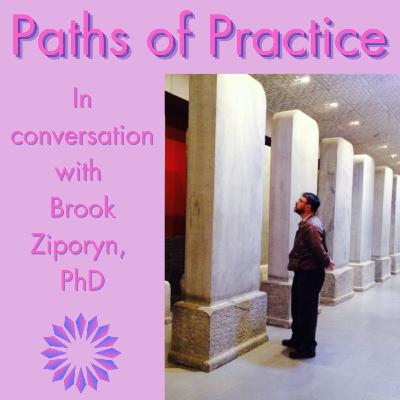
Brook Ziporyn is a scholar of ancient and medieval Chinese religion and philosophy at The University of Chicago Divinity School and College. Professor Ziporyn received his BA in East Asian Languages and Civilizations from the University of Chicago, and his PhD from the University of Michigan. Prior to joining the Divinity School faculty, he has taught Chinese philosophy and religion at the University of Michigan (Department of East Asian Literature and Cultures), Northwestern University (Department of Religion and Department of Philosophy), Harvard University (Department of East Asian Literature and Civilization) and the National University of Singapore (Department of Philosophy). He is the author and translator of several books including his latest work, Experiments in Mystical Atheism: Godless Epiphanies from Daoism to Spinoza and Beyond, which was published by the University of Chicago Press in October of 2024. (A longer list of Ziporyn's work can be found towards the end of this description.)Please see below for the link to the Stanford Encyclopedia of Philosophy article mentioned in this podcast episode here:https://plato.stanford.edu/entries/buddhism-tiantai/Please also see below for links to Ziporyn's book, Experiments in Mystical Atheism: Godless Epiphanies from Daoism to Spinoza and Beyond, as well as its online appendix (free):https://press.uchicago.edu/ucp/books/book/chicago/E/bo230169826.htmlhttps://press.uchicago.edu/sites/ziporyn/index.htmlWe discussed walking the mandalas of sacred Buddhist sites, approaching Buddhism as both a scholar and practitioner, Tiantai meditation techniques and broken teapots, Dogen and the connections between Tendai and Soto Zen, and the importance of finding the Buddhist path that best suits you.Ziporyn is also the author of:-Evil And/Or/As the Good: Omnicentric Holism, Intersubjectivity and Value Paradox in Tiantai Buddhist Thought (Brill, 2000)-The Penumbra Unbound: The Neo-Taoist Philosophy of Guo Xiang (SUNY Press, 2003)-Being and Ambiguity: Philosophical Experiments With Tiantai Buddhism (Open Court, 2004)-Zhuangzi: The Essential Writings with Selections from Traditional Commentaries (Hackett, 2009)-Ironies of Oneness and Difference: Coherence in Early Chinese Thought; Prolegomena to the Study of Li (SUNY Press, 2012)-Beyond Oneness and Difference: Li and Coherence in Chinese Buddhist Thought and its Antecedents (SUNY Press, 2013)-Emptiness and Omnipresence: An Essential Introduction to Tiantai Buddhism (Indiana University Press, 2016)-Zhuangzi: The Complete Writings (Translator, Hackett 2020)-Daodejing (Translator, Liveright Books and the Norton Library 2022)
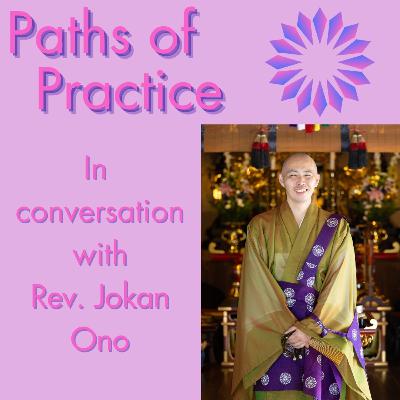
Rev. Jokan Ono is the 43rd Abbot and Head Priest of Fugenji Temple (Tendai School), Fuchu City, Tokyo. Born in Tokyo in 1986, he is a graduate of Waseda University and also studied at Lewis & Clark College in Oregon, USA. During his university years, he completed the Tendai ascetic training, Shido Kegyo, on Mount Hiei.After working in corporate consulting and the IT sector, he founded “Kechien Kikaku,” a project aiming to strengthen the bond between temples and communities. He later completed the first 100 days of the Kaihōgyō on Mount Hiei. He became the Head Priest of Fugenji in 2020. In 2023, he spoke as one of Japan’s representatives at the International Sangha Forum in Bodh Gaya, hosted by His Holiness the Dalai Lama. Rev Ono’s aspiration is to become “an international monk who connects the Japanese Buddhism of harmony with the world."For more information about Fugenji, please visit the following link:https://www.fugenji.com/We discussed:*Ordaining at the age of ten, training at Mount Hiei, and becoming the 43rd abbot of Fugenji*Returning to Mount Hiei after living in the secular world and working in business*Kaihōgyō, Sennichi-e, and engaging with practices around emptiness and interdependence through nature*Fudō Myō-ō and practicing the Goma fire ritual *Tendai, meditation, and the Threefold Contemplation in a Single Mind*Cafe Terrace Fugenji and supporting an online sangha*Toei Tama Cemetery and impermanence *and the importance of letting your motivation for awakening serve as your compass along the Buddhist path
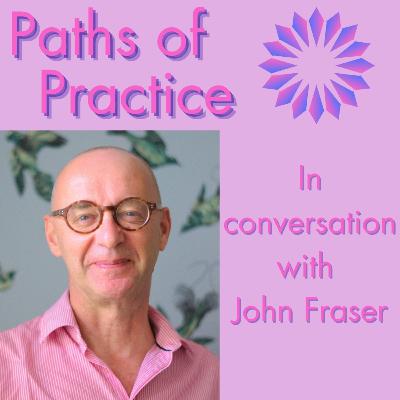
John Fraser is the principal teacher of the Glasgow Zen Group and received Shiho or dharma transmission from Michael Eido Luetchford in 2006. John is also a somatic sex therapist & sex coach, working in Edinburgh, Scotland, with individuals and couples.The Glasgow Zen Group was established in 1990 within the auspices of the International Zen Association, and has operated as an independent fellowship of practitioners since 2000, practicing within the broad Soto Zen tradition.For more information about John and the Glasgow Zen Group, please visit the following links:https://www.loveandsexcoaching.co.uk/https://glasgowzengroup.com/We discussed:*Dharma transmission as the freedom to be your full self as a teacher*First happening upon Zen in a ski chalet and the origins of the Glasgow Zen Group*Authenticity, sexuality, dance, and embodiment *And the importance of finding a practice that makes the most sense for you and that it’s not about being remembered, it’s about being useful
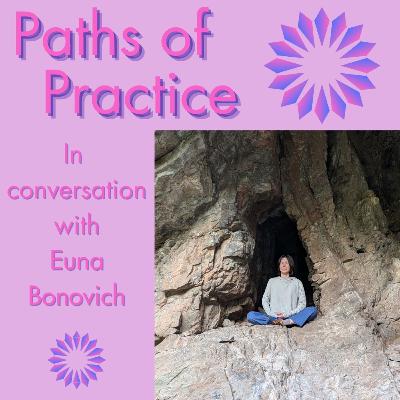
Euna is a multicultural, unaffiliated renunciate dedicating their life to the Dhamma (Laws of Nature) as taught by Buddha. Cave yogi-poet who loves exploring diverse, inclusive, and fun routes to awakening. Enthusiastic about ascetic training in caves and wilderness, nervous system theory, and Brahma-Vihara practices. Primary focus is on Cittanupassana and Hwadu. Formally trained in Vipassana & Samatha meditation (Myanmar Theravada and Korean Seon lineages), and monasticism at Mahapajapati Monastery. Completed BA in Ethnic Studies: Race, Gender, and Power at Mills College. Currently, board secretary at Mahapajapati Foundation, resident steward at Mahapajapati Monastery, and Registered Behavior Technician. Learn more about their adventures at scoby.substack.com.For other resources mentioned in the episode, please visit the following links:https://mahapajapatiinfo.wordpress.com/https://dharmatreasure.org/We talked about:*Recovery Dharma at San Francisco Zen Center and developing a meditation practice*Daehaeng Sunim, Mahapajapati Monastery, and dharma in the wilderness *Cave meditation, renunciation, and learning what feels good and what doesn't*Cooking at a Korean monastery, identity, and poetry*Leading meditation and the excitement and fulfillment of facilitating queer retreats*And the importance studying your role models and safely jumping into your practice.
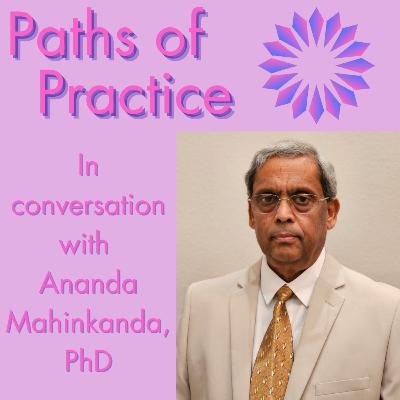
Ananda Mahinkanda is an accomplished Accounting and Finance professional and Business Administrator with a Doctorate in Humanity. His life journey has taken him across South Asia, the Middle East, Africa, and North America, giving him a rich multicultural perspective and a deep appreciation for the diversity of human experience.A lifelong animal lover, Ananda is deeply committed to ahimsa and to promoting compassion toward all beings. He actively advocates for a plant-based lifestyle, recognizing its profound benefits for animal welfare, human health, and the protection of the environment.Ananda is also a serious meditation and Dhamma practitioner. His spiritual path includes a period of temporary ordination, and he continues to maintain a dedicated practice grounded in mindfulness, insight, and ethical living.He is the founder of Samahitha Nature Foundation, USA, and serves as the International Advisor to the Sri Lanka Non-Violence Society.For more information about Ananda and the Samahitha Nature Foundation, please visit the following link:https://www.youtube.com/@SamahithanaturefundationWe talked about:*Mahinda, growing up Buddhist in Sri Lanka, and right action*Meditation and receiving temporary ordination in Burma*Mindfulness and the joy of interconnection *No-self, ahimsa, and the benefits of a plant-based diet*And the importance of observing your mind and taking time to think about how you want to live your life
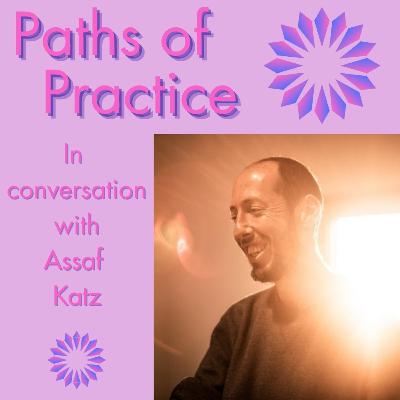
Assaf Katz is an activist and Buddhist teacher in Israel who opposes the Israeli governments’ devastating military action and long occupation in Palestine, and is dedicated to finding a path to peace. He has been practicing meditation and the path of the Dharma since 2007, mostly from the Vipassana tradition and also from Non-Duality traditions, and has practiced for long periods in Israel and abroad. Since 2016, he has been living in Clil and taking part of the staff of Meshiv Nefesh, a center and home for spiritual practice in the spirit of Buddhism.Assaf's focus mostly deals with bringing the practice to everyday life and strengthening the wide vision of the Dharma as a whole spiritual path which includes the development of wisdom, moral conduct and development of the mind.Assaf sees much importance in developing and creating communities which practice the Dharma, as a way for personal and collective liberation. Assaf is also active in social, environmental and political issues.For more information about the resources Assaf mentioned, please see the following links:https://tovana.org.il/enhttps://engagedharma.wordpress.com/https://www.sanghaseva.org/https://www.tarabrach.com/https://plumvillage.org/We discussed:*Dharma and being introduced to the teachings of HH Dalai Lama through Assaf’s brother*Exploring nonduality through Advaita Vedanta at Meshiv Nefesh*October 7th and listening to Martin Luther King Jr.'s teachings*Vulnerability and the potential that comes from being with suffering*And the importance of truly loving this world, all of it, and applying that love and care towards liberation
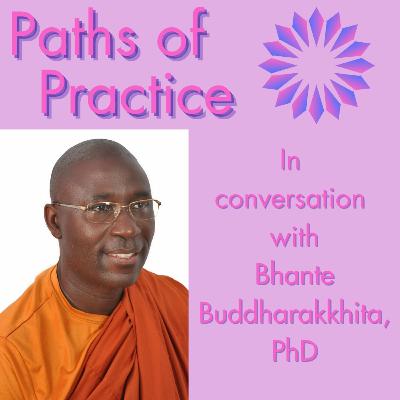
Bhante Buddharakkhita was born in Uganda to a Christian family in 1966 in Kampala, Uganda, East Africa. He first encountered Buddhism in 1990 while studying in India. He was fully ordained as a Theravada Buddhist monk by the late Most Venerable U Silananda in 2002 at the Tathagata Meditation Centre in San Jose, California. He then spent eight years under the guidance of Bhante Henepola Gunaratana at the Bhavana Society, in West Virginia.Founder/Abbot of the Uganda Buddhist Centre, Bhante is also the founder of the Buddhist Peace School (Pre-School), Buddhist Peace School (Primary section), and African Buddhist High School in Garuga, Entebbe, Uganda.Bhante has been teaching mindfulness meditation in Africa, the U.S., Singapore, and worldwide since 2005. He is a Teaching Professor of Theravada Buddhism at Union Theological Seminary, Columbia University, New York City, USA.He is a long-time member of Buddhist Global Reliefs’ advisory council in New Jersey. Bhante is a much-loved teacher in many countries. His book, Planting Dhamma Seeds: The Emergence of Buddhism in Africa, tells the story of his religious and spiritual work in Africa.For more information about Bhante and the Uganda Buddhist Centre, please visit the following links:https://ugandabuddhistcenter.org/https://bhantebuddharakkhita.org/We discussed:*The Uganda Buddhist Centre's 20th anniversary and Bhante's reflections on it's past, present, and future*Ordination and repaying his mother through sharing the dharma with her*Meeting HH The Dalai Lama, international travel, and eventually finding that Buddhism "hit the spot"*And the importance of meditation and undertaking the fascinating work of observing your own mind
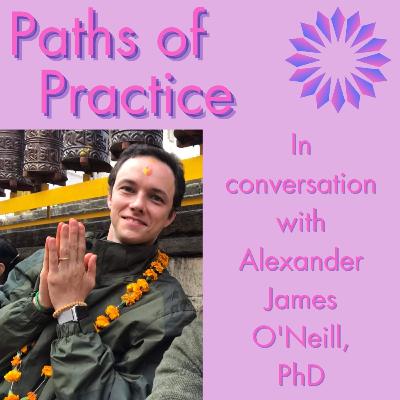
Alexander James O'Neill is a specially appointed assistant professor at the Department of Liberal Arts at Musashino University, Tōkyō. He was previously a research fellow at the Department of East Asian Languages and Cultures at the School of Oriental and African Studies (SOAS), University of London. He received his PhD from the University of Toronto's Department for the Study of Religion.He has a broad range of interests, including Sanskrit Buddhist texts and manuscripts from South Asia, especially Nepal. He has a passion for Newar Buddhism and the Newar language and culture. In addition, he is interested broadly in Mahāyāna Buddhism, ranging from Sanskrit and Newar literature to Chinese and Japanese Buddhist texts and practices.For more information about Dr. O'Neill, please see the following links:https://www.alexanderjoneill.com/https://www.shingansportal.com/https://www.zonkakuproject.org/We talked about:*Zonkaku and creating open source dharma resources*The Secrets of the Tathāgata and the Buddha meeting us as we are*Practicing in different traditions and finding Jōdo Shinshū through a connection with Amitabha*Newar Buddhism, Hiranya Varna Mahavihar, and Buddhist book worship*And the importance of focused reading and finding a teacher or trusted dharma friend to help guide you along the path
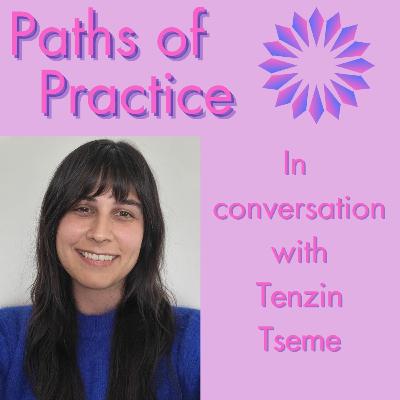
Tseme (they/them) practices in the Himalayan Gelugpa tradition. Their Buddhist Studies degree at UC Berkeley included studying Tibetan and Japanese languages and they are now undertaking a Master of Divinity at Harvard to become a Buddhist Chaplain. Tseme also publishes innovative content about being queer and Buddhist on their Instagram @neo_queer and dreams of starting their own publishing house one day.For more information about Rainbodhi, please check out the following link:https://rainbodhi.org/We talked about:*Mental prostrations and weaving Tibetan Buddhist practices into a busy schedule*Rainbodhi USA and pursuing chaplaincy to support and facilitate queer communities and spaces*Buddhist Studies and how to approach “post-post" colonial critique*Engaged Buddhism and approaching activism through subversive art*And the importance of remaining curious about your practice
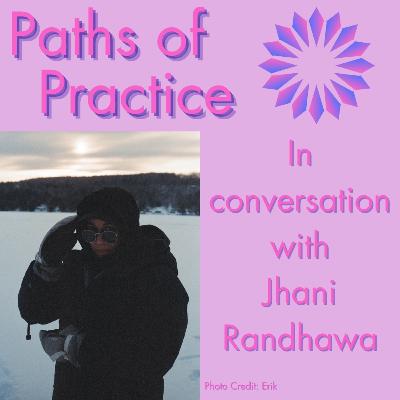
Jhani Randhawa is an interdisciplinary artist and scholar, whose praxis centres the performative uses of literature, archival marginalia, and bodies to illuminate limits of legality, memory, and racially gendered power within the ongoing ecological crises of settler colonialism. Winner of the 2024 California Book Award for their debut poetry collection, Time Regime (Gaudy Boy, 2022), Jhani’s work has appeared in the New Art Gallery Walsall (Walsall, England) and the Czong Institute for Contemporary Art (Gyeonggi-do, South Korea), as well as publications A Mouth Holds Many Things: A Hybrid Literature Anthology, ASAP/J, 128 Lit, Footnotes, and O BOD, among others. You can learn more about their work at www.jfkrandhawa.com.For more information about Sujatha Baliga and Spiritual Fitness, please see the following link:https://www.sujathabaliga.com/spiritual-fitnessFor more information about Annah, Infinite by Khairani Barokka, please see the following link:https://www.tiltedaxispress.com/annah-infiniteWe discussed:The relationship between Buddhist practice and artDiving deep in community during a retreat at the Upaya Zen CenterSurabhi (aka Kamadhenu) and early experiences with SikhismObsessive-Compulsive Disorder and learning to accept your whole selfAnd the importance of taking your time with the tensions that come up along the Buddhist path and practicing “looking again”Also, think about creating a photo journal!
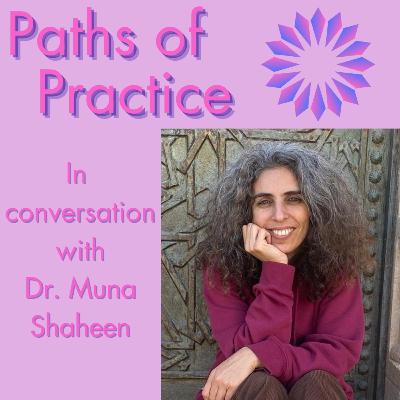
Muna Shaheen is a Palestinian single mother of three living in Haifa. She is a long-term practitioner, who co-founded “Ihna-Hon,” an open Arabic-speaking mindfulness-meditation space, and later founded “Marsa” a dedicated Arabic-speaking Sangha, in which she teaches Dharma. In addition she is an assistant teacher in an MBSR teacher-training-course.Muna regards mindfulness teaching as her major social activism, while she holds a veterinarian certificate and promotes awareness to animal welfare both as an educational consultant in the Ministries of Agriculture and Education and teaching at university level. She is an environmental activist, co-founder of the “One Climate” movement, and formerly established a Palestinian Sea advocacy community in Haifa. Muna also leads children’s group in nature bonding them to earth.For more information about One Climate, please visit the following link:https://www.facebook.com/climatejustice4all/To make a donation, Muna recommends the following link:https://www.every.org/youth-passageways/f/special-projects-donorWe discussed environmental education for children and teaching youths about non-violence through compassion towards animals, belonging to the land and receiving olives as gifts from ancient beings, anxiety and finding a personal Vipassana practice as well as a heart connection to Native American spirituality, developing Palestinian sanghas and viewing practice as social activism, and the importance of knowing that the Buddhist path reveals itself.
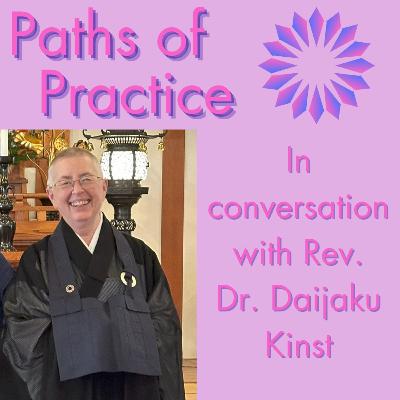
Daijaku was ordained in 1988, completed her priest training Tassajara Zen Mountain Center, and received Dharma transmission (full authorization as a Soto Zen teacher), in 2004 from Sojun Mel Weitsman Roshi (Abbot of Berkeley Zen Center and Abbot of San Francisco Zen Center from 1988- 1997).After her priest training, Daijaku completed a master’s degree in counseling psychology and a PhD on the teachings and practice of Soto Zen with a focus on effective ways to support a deep engagement with the path of practice. Daijaku has taught and led retreats in a variety of settings including Gampo Abbey with the Venerable Pema Chodron and at Buddhist temples throughout the U.S. She continues to learn from and incorporate teachings and wisdom from Buddhist traditions beyond Soto Zen, while remaining deeply rooted in the Soto Zen way.She is a Professor Emerita at the Institute of Buddhist Studies (IBS), a Buddhist seminary and graduate school and member school of the Graduate Theological Union in Berkeley California, where she founded and directed the Buddhist chaplaincy graduate program, as well as the Certificate in Soto Zen Studies. She continues her involvement at IBS in a less formal way.Jaku was appointed Kokusaifukyoshi (International Teacher) by the Soto Zen School (Sotoshu) in Tokyo Japan in 2009 and is a board member of the Association of Soto Zen Buddhists, a Sotoshu organization of Kokusaifukyoshi in North America. She is also a full member of the Soto Zen Buddhist Association, served as a board member of that organization from 2007 – 2013, and is a member of the American Zen Teacher’s Association. She is the author of Trust Realization and the Self in Soto Zen Practice and numerous articles on Buddhism. For more information, please visit the following link:https://oceangatezen.org/We talked about preparations for an upcoming Jukai at Ocean Gate Zen Center, beginnings in Zen and the invitation to enter practice “completely as you are," Tassajara Zen Mountain Center and pursuing a degree in counseling, developing the Buddhist chaplaincy program and the Certificate in Soto Zen Studies at the Institute of Buddhist Studies, and the importance of remembering that "discipline is following what you love" and that you can find a way to be in this world as it is.
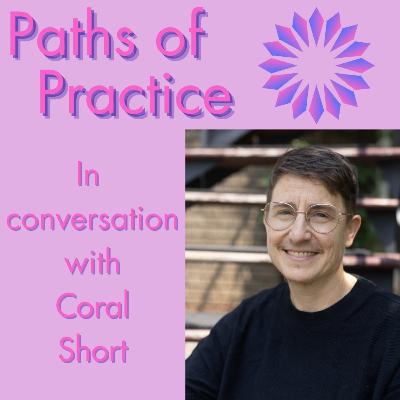
Coral Short is a queer, non-binary, white settler born in 1973. They completed their Somatic Experiencing Practitioner (SEP) training in March 2023 with Dea Parsanishi. They specialize in working with LGBTQIA+ folks, recovery, activism, creativity, and all forms of radical sexuality. They are a graduated active Community Dharma Teacher at True North Insight in Tiohtià:ke/Montreal and co-lead a weekly Queer Sangha. Coral has been working with the Stretch Festival in Berlin for several years at the Somatische Akademie/ Village Berlin and at the Montreal Somatics Festival. They offer anti-racist courses, somatic workshops, and eco-somatic walks to international communities. They have been an organizer, activist, and artist for the last two decades.For more information about Coral, please visit the following website:https://www.coralshort.com/We talked about co-facilitating the Poly Dinner Club and supporting polyamorous community discussions with Buddhist practices, anattā (non-self) and accepting the fluidity of identity and body, performance art and celebrating community through joint creativity, digital dharma offerings and eco-somatic hikes, and the importance of sangha and exploring what forms of Buddhism resonate with you.
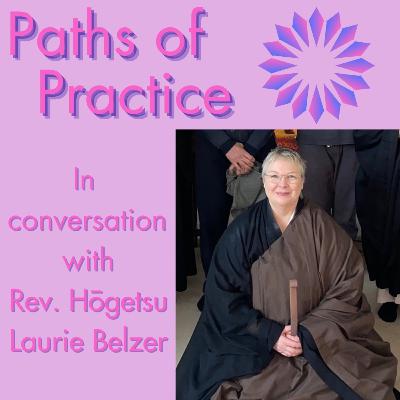
Rev. Hōgetsu Laurie Belzer is the Guiding Dharma Teacher at Ancient Dragon Zen Gate (ADZG) in Chicago, Illinois, and succeeds their founding guiding teacher, Taigen Dan Leighton. She is a lineage holder in the Soto Zen tradition of Shunryu Suzuki-roshi, and received dharma transmission from Rev. Taiyo Lipscomb. Since 1989, Hōgetsu has trained intensively at all three of San Francisco Zen Center’s temples, where she served as Shuso (Head Monk) with Tenshin Reb Anderson at Green Gulch Farm. A founding member of ADZG, Hōgetsu has supported the evolution of the practice center since its genesis. As guiding teacher, Hogetsu joyfully serves the wonderful ADZG community in many ways, including as dharma teacher, sangha leader, board member, Thursday morning zazen host, and sewing practice mentor.For more information about Rev. Hōgetsu and Ancient Dragon Zen Gate, please visit the following website:https://www.ancientdragon.org/We discussed practice conversations and how a sangha sharing individual experiences with each other around practice informs a sense of community, zazen as a practice that touches the heart and caring for our conditions, meditating with incense as a child and finding Soto Zen through a cross-country peace walk, and the importance of appreciating the preciousness of practice.
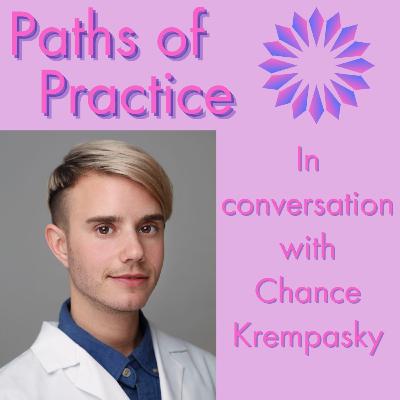
Chance Krempasky is a vegan cyclist, cold water swimming weirdo, and meditator. He works as a family nurse practitioner specializing in queer and transgender medicine, drug user health, and care for people living with HIV. Chance is a practice leader at New York Insight Meditation Center, co-author of Developing Trans*Competence: A Short Guide to Improving Transgender Experiences at Meditation and Retreat Centers, and a contributor to Transcending: Trans Buddhist Voices. He has led gatherings for TGNC Buddhists and allies both online and at venues including the Spirit Rock Teacher Training Program, the Philadelphia Trans Health Conference, and Brooklyn Zen Center.Please see below for links to Chance's written work and recommended organizations/causes:Developing Trans*Competence: A Short Guide to Improving Transgender Experiences at Meditation and Retreat Centershttps://www.transbuddhists.org/retreat-guide/about-the-guide/(also see Transbuddhists.org)Transcending: Trans Buddhist Voices (book)https://www.northatlanticbooks.com/shop/transcending/Recovery Dharma Globalhttps://recoverydharma.org/The Sameer Projecthttps://www.instagram.com/thesameerproject/?hl=enWe discussed Chance's recent retreat experience at the Temple Forest Monastery in New Hampshire and engaging in service as practice, Transbuddhists.org and the origins of the zine “Developing Trans*Competence," Recovery Dharma Global and applying the Four Noble Truths towards navigating recovery and support, Mudita and the practice of celebrating the joys of others as a healthcare provider, and the importance of remembering that the Buddhist journey is a marathon not a sprint.
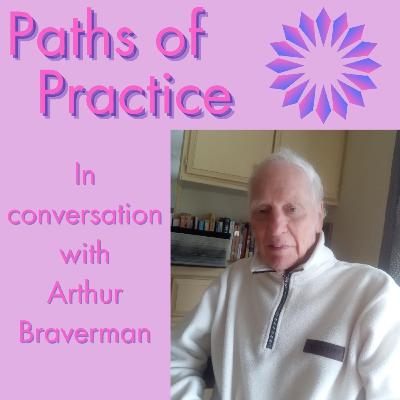
Arthur Braverman studied at Antaiji temple in Japan under Uchiyama Roshi from 1970 to 1975. He is an author and translator, whose works include Mud and Water: The Collected Teachings of Zen Master Bassui, and the novel, Dharma Brothers Kodo and Tokujoo. He lives in Ojai, California.For more information, please visit the following link for purchasing options for some of Arthur's books (you can also check out your local independent bookstore):https://greenapplebooks.com/search?q=arthur%20bravermanWe discussed volunteering with the Peace Corps in Nigeria and his early experiences with Zen in Japan, Uchiyama Roshi and his lessons on old age and death, writing historical fiction vs translation, independence and recognizing zazen as your teacher, and the importance of keeping your ideals in check and seeing what happens when you just sit.
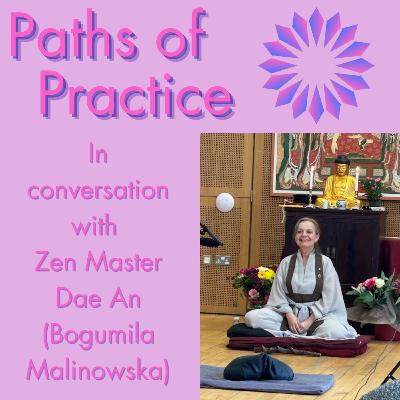
Zen Master Dae An (Bogumila Malinowska) is a Guiding Teacher at The London Zen Centre of the Kwan Um School of Zen and currently lives in London. She was born in North-west Poland and met Zen Master Seung Sahn in 1981 on one of his visits to the country. In 1988 she participated in a 100 day solo retreat. She was leading zen groups in Pila and Poznan while she was living in Poland from 1985 to 2003 before she left for the UK. She is a licensed counselor/psychotherapist in private practice in North London and registered with British Association of Counsellors and Psychotherapists (BACP). In 2005, she established the London Zen Centre two years after moving to the UK with the spiritual support of Zen Master Wu Bong. She received Inka (authority to teach koans and lead retreats) from Zen Master Wu Bong in September 2009 at the Warsaw Zen Centre (Wu Bong Sa). She received transmission from Zen Master Ji Kwang on June 15th, 2024 and was given the title Zen Master Dae An.For more information about The London Zen Centre (Kwan Um School of Zen), please see the link below:https://kwanumzen.co.uk/Please also see the following link for more information about Bogumila Malinowska's private therapy practice:https://www.londoncounsellingcentre.org/We talked about Gestalt therapy and how to cultivate an environment for clients to be in the moment, recognizing the boundaries involved with being a zen teacher and a therapist, Zen Master Seung Sahn and solo practice vs. group settings, the Kwan Um School’s approach to bowing, meditation, and kong-ans (koans), and the importance of knowing your needs when you’re exploring Buddhism and Buddhist communities.
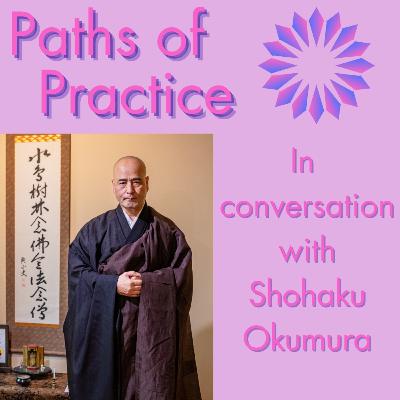
Shohaku Okumura, founder and abbot of Sanshin Zen Community, was born in Osaka, Japan, in 1948. In 1970, he was ordained by the late Kosho Uchiyama Roshi, one of the foremost Zen masters of the twentieth-century. He received Dharma transmission from his teacher in 1975 and, shortly after, became one of the founding members of Pioneer Valley Zendo in Massachusetts. He returned to Japan in 1981 and began translating the works of Dogen Zenji, Uchiyama Roshi and other Soto masters from Japanese into English. In 1993, he moved back to the United States with his wife, Yuko, and their two children. He has previously served as teacher at the Kyoto Soto Zen Center in Japan and at the Minnesota Zen Meditation Center in Minneapolis, and was Director of the Soto Zen International Center in San Francisco for thirteen years.Today he is recognized for his unique perspective on the life and teachings of Dogen Zenji derived from his experience as both practitioner and translator, and as a teacher in both Japanese and Western practice communities. He gives frequent lectures on the Shobogenzo and other foundational texts. His translations and commentaries include Dogen’s Extensive Record: A Translation of the Eihei Koroku, Realizing Genjokoan, Living by Vow: A Practical Introduction to Eight Essential Zen Chants and Texts, and The Mountains and Waters Sutra: A Practitioner’s Guide to Dogen’s “Sansuikyo”. His lectures have appeared in Buddhadharma: The Practitioner's Quarterly, Dharma Eye, and Buddhism Now.For more information, please visit the links below:Sanshin-ji (Sanshin Zen Community)https://www.sanshinji.org/The Dōgen Institutehttps://dogeninstitute.wordpress.com/We discussed Kosho Uchiyama Roshi and early Zen practice at Antaiji, jiko and how understanding the emptiness of the self fosters compassion, the poetry of Dōgen Zenji and Taigu Ryōkan, practicing Zen Buddhism through lectures and translation, Kannon and the sound that perceives the world, and the importance of finding a teacher and sangha.
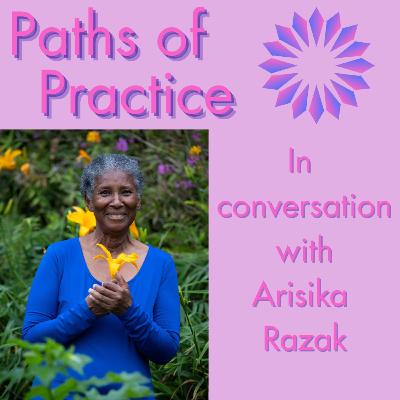
Arisika Razak is Professor Emerita at the California Institute of Integral Studies in San Francisco, where she also served as the director of the Women’s Spirituality MA and PhD program and as Director of Diversity. She has been an inner-city midwife for over two decades, has performed nationally and internationally as a spiritual dancer, and has led embodied healing workshops for over thirty-five years. She teaches at East Bay Meditation Center in Oakland.Please see below for Arisika's upcoming and ongoing events as well as recommended resources:Afrikan Healing and Wisdom With Vimalasara Mason-John, Arisika Razak, and Aleta Toure’ First Sundays at East Bay Meditation Center (online)https://eastbaymeditation.org/calendar/online-afrikan-wisdom-and-healing-2-2-2/Honoring the Past, Revisioning the Future: Afrikan Healing & Wisdom Taught by Vimalasara, Arisika Razak, and Aleta Toure’In-person, Residential Retreat: February 5 - 8, 2026https://www.dhammadena.org/retreats/Afrikan-Wisdom-Retreat-Feb-2026Middle East Children’s Alliancehttps://www.mecaforpeace.org/Crushing Wheelchairs (Film)https://wraphome.org/2025/11/03/crushing-wheelchairs-premiere-of-the-movie-in-the-sf-bay-area/We discussed civil rights activism and growing up listening to Malcolm X in Harlem, midwifery and identifying connections between breath techniques used during labor and meditation, karma and the caste system, kinship and learning how to recognize those that are different than us as meaningful and integral to our shared sacred hoop, and the importance of remembering to trust that you have a life purpose and that you have your own path of heart.
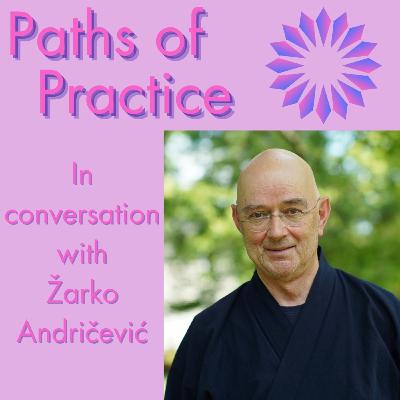
Žarko Andričević is the founder of Dharmaloka Chan Buddhist Community and Chan Retreat Centre (Chan centar Hartovski vrh) in Croatia, where he currently lives and teaches. Žarko first encountered Buddhism 1975 and has been a martial arts and yoga teacher since the 1970s. In the mid-80s, he started the first Buddhist study and meditation group in Croatia. In 1996, he meet Chan Master Sheng Yen and became one of his students. Žarko received Dharma transmission from Master Sheng Yen in June 2001. Since then, he teaches and leads Chan retreats in Europe, USA, Canada, Taiwan and Australia.For more information about Žarko and Chan centar Hartovski vrh, please visit the following link:https://chan.hr/en/chan-retreat-center-croatia/We talked about martial arts and forming Croatia's first Buddhist practice group, Master Sheng Yen and silent illumination practice, Zenyoga and awakening your body through physical movement, and the importance of remembering to approach dharma with a joyful seriousness.

Comments

Download from Google Play

Download from App Store
 United States