


 Claim Ownership
Perspective Shift: Unveiling Paradigms in Perceptions
Subscribed: 0Played: 0
Subscribe

© DA 2024
Description
Navigating the diverse landscape of Christian doctrines can indeed feel overwhelming at times. Returning to the core of Biblical interpretation is vital for clarity and unity. Exploring various paradigms in perception and shifting our perspectives to align with the unadulterated Word of God can bring back sanity and authenticity to our faith. Let's embark on this journey together, seeking truth and understanding with open hearts and minds.
98 Episodes
Reverse
In this episode of Perspective Shift: Unveiling Paradigms in Perceptions, Dare Akinsanya explores a sobering yet vital question for believers: Is it possible for Christians to unknowingly practice idolatry?While many associate idolatry with ancient statues and pagan rituals, Scripture reveals that idols can also exist in the heart. When blessings, success, traditions, or even a self-created image of God take the place that belongs to Him alone, devotion can quietly shift away from the truth of who God truly is.Drawing from passages such as Ezekiel 14:3, Colossians 3:5, John 4:23–24, and Romans 1:25, this episode examines how subtle forms of idolatry can appear within modern Christianity and why Jesus emphasized that the Father is seeking true worshippers who worship in spirit and truth.You will also discover why some people may still experience results even when their understanding of God is incomplete, and why experiencing outcomes does not necessarily validate the accuracy of our theology.This conversation challenges listeners to examine their hearts, realign their understanding of God with Scripture, and pursue a deeper, authentic relationship with Him.If you are ready to rethink assumptions and rediscover what true worship really means, this episode will invite you into a powerful perspective shift.
S02E42 Lover and Judge Personified: Recovering a Faithful Vision of GodIs it possible for God to be infinitely kind yet perfectly just without contradicting Himself?In this powerful episode of Perspective Shift, we confront the modern tendency to "repackage" God into a version that fits our personal comfort. We often trade the biblical reality of God for a cultural cliché—viewing Him either as a permissive grandfather who ignores sin or a distant tyrant who enjoys punishment.Join us as we bridge the gap between these distortions, looking at the Cross as the ultimate intersection of divine love and righteous judgment. We dive deep into the mysteries of divine silence, the "fullness of time," and our responsibility as ambassadors to represent His character accurately to a watching world.🎙️ In This Episode, We Explore:The Danger of Reshaping God: How our disappointments and cultural shortcuts lead us to defame God’s character rather than honor it.The Divine Duality: Understanding how God is both Lover and Judge—complementary attributes that reveal His holiness.Decoding "Divine Silence": Why perceived delays are often a call to alignment rather than a sign of divine hesitation.Power and Sovereignty: A look at how God delegates authority to humanity and the accountability that follows its misuse.Living as Accurate Reflections: Moving beyond "correct theology" into a life that truthfully mirrors the reliability of God.📖 Key Scriptures & Highlights:The Methuselah Perspective: Reflecting on Genesis 5:27 and the limits of human lifespan vs. the infinity of God.The Cross: The place where divine justice was satisfied and divine love was fully displayed.The Definition of Faith: Moving from emotional optimism to a grounded trust in God’s unchanging nature.🕊️ A Special InvitationIf you are searching for a true connection with the Creator, stay tuned until the end of the episode for a guided prayer of salvation.Listener Gift: If you made a decision to follow Christ during this episode, visit akinsd.com/connect to let us know. We would love to send you a complimentary copy of the book “Yes and Amen” (including the audiobook version) to support you in your new journey.Connect with the Community:If this episode challenged your perspective or encouraged your faith, please share the link with a friend. Don’t forget to like, subscribe, and leave a review to help us spread biblical clarity.Remember: Jesus Christ is Lord of all. Hallelujah!
The God Who Vindicates His NameIn this powerful episode of Perspective Shift: Unveiling Paradigms in Perceptions, Dare Akinsanya explores a profound biblical truth: God is committed to the vindication of His name.Throughout Scripture, God repeatedly declares, “Then they will know that I am the Lord.” This is not the language of insecurity, but of divine integrity. His name represents His character, His holiness, His faithfulness, and His truth. When His name is misrepresented, He acts, not merely to correct circumstances, but to defend His glory.Drawing from Ezekiel 36:22 and Philippians 2:11, this episode reveals that a day is coming when every distortion about God will be corrected. His love will be seen in its fullness. His holiness will be honored in its beauty. His sovereignty will stand beyond dispute. Every tongue will confess that Jesus Christ is Lord.But this message does not remain theological. It turns inward.Why are we so quick to judge others without knowing their battles? Why do we form confident conclusions about lives we have never lived? And more importantly, have we crossed the line into judging God Himself based on partial understanding and temporary discomfort?With sober reflection, this episode examines the spiritual danger of harsh judgment, the warning of Isaiah 58 regarding the pointing of fingers, and the difference between condemnation and righteous judgment. It confronts the uncomfortable reality that those who judge others freely often misjudge God as well.Through the example of Job and the prayer of Psalm 119:29, listeners are challenged to confront self deception and reconsider assumptions shaped more by emotion than by truth.This episode is an invitation. An invitation to humility. An invitation to repentance. An invitation to know God as He truly is rather than as circumstances have painted Him.Before the day comes when God publicly vindicates His name before all creation, He invites us now to align our hearts with His truth.Listen in. Reflect deeply. Repent where necessary. And pursue a deeper relationship grounded in knowledge, reverence, and surrender.Remember that Jesus is Lord!
Podcast Episode DescriptionWelcome to Perspective Shift: Unveiling paradigms in perceptions, where we examine deeply held beliefs in the light of Scripture and the truth of God’s Word.In today’s episode, “Judge and Restorer: Justice That Leads to Renewal,” we confront one of the most misunderstood aspects of God’s character: His role as Judge.Modern culture prefers a God defined by tolerance, affirmation, and indulgence. No one enjoys being judged, especially by imperfect people. Accountability feels uncomfortable. Holiness can seem restrictive. And when we compare ourselves to a perfectly holy God, judgment may feel like an automatic guilty verdict.Yet Scripture consistently presents God as both righteous Judge and merciful Redeemer.This episode explores why judgment is necessary from God’s perspective. Because God is just, evil cannot be ignored. Because He is righteous, wrongdoing cannot be excused. Because He is holy, injustice cannot be allowed to remain unchecked. Judgment is not cruelty. It is moral coherence. A judge who refuses to judge is not compassionate, but incompetent.At the same time, God’s compassion provided an escape. Knowing humanity could never live sinless like Christ, He made provision through the cross. There, justice and mercy converge. In Christ, judgment is not dismissed but borne. God remains just while justifying those who trust in Him.We also examine the Genesis account of the ram provided in place of Isaac. While often described as a prototype of Jesus, it is more accurately understood as proof of concept. The ram did not volunteer, did not choose the altar, and did not rise again. Jesus did. Judgment fell on the ram so Isaac could walk away. Judgment fell on Christ so mercy could fall on us.The episode culminates in a prophetic vision of restoration:Revelation 21:5 (NKJV) “Then He who sat on the throne said, ‘Behold, I make all things new.’”Isaiah 11:9 (NKJV) “They shall not hurt nor destroy in all My holy mountain, For the earth shall be full of the knowledge of the LORD As the waters cover the sea.”Peace, we discover, is not the absence of justice but its fruit. Where accountability is absent, chaos is inevitable. Where God’s righteous order is established, restoration follows.This message invites listeners to see that God’s judgment flows from holiness and His mercy flows from love. They do not contradict each other. They complete each other.If you have wrestled with the idea of God as Judge, this episode offers clarity, hope, and an invitation to experience the mercy made available through Christ.Share this episode with someone seeking a deeper understanding of God’s character.And remember, Jesus Christ is Lord of all.
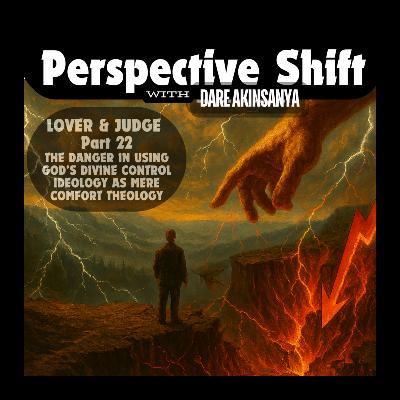
Welcome to Perspective Shift: Unveiling paradigms in perceptions, the podcast where deeply held beliefs are examined through the lens of Scripture, truth, and lived experience.In today’s episode, “The Danger in Using God’s Divine Control as Mere Comfort Theology,” we confront a popular yet often misunderstood phrase: “God had a plan.” While frequently offered as comfort in times of pain, this statement can unintentionally misrepresent God’s nature, distort accountability, and silence honest faith.This episode challenges listeners to discern the difference between God’s sovereignty and ownership, and to recognize that divine control does not mean God authors every tragedy. Through Scripture, personal testimony, and biblical case studies, we explore when God truly intervenes directly, and when suffering is the result of human free will, a fallen world, or spiritual opposition.Key discussions include:Why God’s sovereignty does not mean He causes painBiblical examples of rare, intentional divine interventionLeadership disappointment, integrity, and God’s redemptive signature in lossThe difference between faith-based confessions and religious languageHow free will, knowledge, and spiritual guidance shape our outcomesThe episode culminates in a heartfelt invitation to surrender fully to Jesus Christ, including a guided prayer of repentance and salvation. Listeners are encouraged to begin a new journey of being led by the Holy Spirit, not by comfort theology, fear, or religious clichés.If this message blesses you, share it with someone who needs clarity, healing, and truth today.Remember that Jesus is Lord!
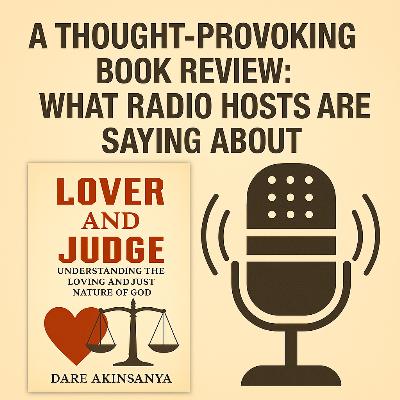
Hear what radio hosts are saying about Lover and Judge as they offer a thoughtful review that brings the book’s message and biblical insights to light.https://amzn.to/46kxBg4
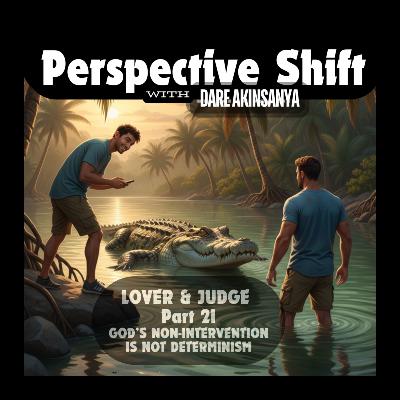
In this episode of Perspective Shift: Unveiling Paradigms in Perceptions, we confront one of the most damaging theological misconceptions in modern Christianity: the belief that God’s omnipotence means He determines every outcome.Building on last week’s discussion about God’s foreknowledge versus causation, this episode addresses the claim that if God does not intervene in a situation, it must be because He needs it for a greater good. While Scripture affirms that God can redeem any situation, it does not teach that He requires evil in order to accomplish good.We examine common Christian phrases such as “Nothing catches God by surprise” and “If God didn’t stop it, He must have wanted it,” and expose how these ideas subtly misrepresent God’s character and assign Him responsibility for destruction He never authored.Through biblical reasoning, practical illustration, and a compelling FDA guideline analogy, this episode explains why omnipotence does not equal micromanagement, why free will does not cancel moral law, and how careless living can remove spiritual defense without removing God’s love.We also address frequently misused Scriptures on predestination and Romans 8:28, restoring their proper biblical context, and reaffirm that God is sovereign without being manipulative, powerful without being coercive, and redemptive without being the author of evil.The episode concludes with a clear exhortation, an invitation to salvation, and encouragement to align daily living with the guidance of the Holy Spirit, our Helper, Advocate, and Defense Attorney.
What does it really mean when we say, “God is in control”?In this episode of Perspective Shift: Unveiling paradigms in perceptions, we begin a three-part series that confronts one of the most frequently used, yet most misunderstood phrases in Christian culture. While the statement is biblically sound, it is often overstretched in ways that unintentionally remove human responsibility, misrepresent God’s character, and create confusion around suffering, sin, and spiritual accountability.In Part One, Dare Akinsanya shares a deeply personal journey that began with a season of prayer, fasting, and divine consecration that unexpectedly became a “spiritual school.” Through that process, God began to dismantle long-held assumptions and reframe truths that had been taught, heard, and even defended for years. This journey ultimately gave birth to the book Yes and Amen and a renewed mandate to represent God accurately.This episode explores the first major misconception: the belief that because God is in control, He must be responsible for everything that happens on earth. Drawing from Scripture, lived experience, and biblical examples such as Job and Joseph, Dare explains the critical difference between God’s permission and God’s approval, and why confusing the two distorts both theology and faith practice.You will also learn:Why allowing something does not mean God caused itHow spiritual accusations operate and why Christ’s intercession mattersHow God’s sovereignty works alongside free will, not in opposition to itWhy misrepresenting God’s character deeply displeases HimThe episode concludes with a clear invitation to alignment through salvation, a guided prayer of repentance, and an opportunity to connect and receive a complimentary audiobook of Yes and Amen.Remember that Jesus Christ is Lord of all.
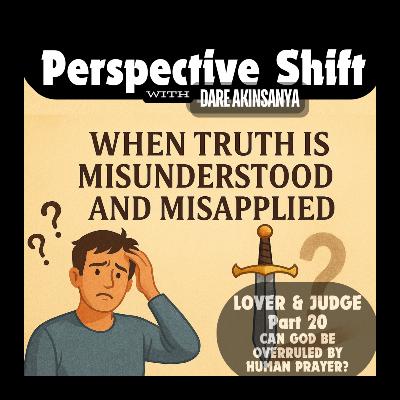
Can prayer change God’s mind, and if so, does that mean God is no longer sovereign?In this episode of Perspective Shift: Unveiling Paradigms in Perceptions, we confront the 10th common argument used to suggest that God is not truly in control:“If God can be overruled, then He is not really sovereign.”At first glance, this claim sounds reasonable. But does it hold up under biblical scrutiny?Using two often-misunderstood passages of Scripture, we take a closer look at:Hezekiah’s prayer for extended life (Isaiah 38)Moses’ intercession for Israel after the golden calf (Exodus 32)Were these moments examples of humans overriding God’s will, or something far deeper?In this episode, you’ll discover:The difference between appeal and authority in prayerWhy prayer does not coerce God, but functions within His sovereigntyHow divine mercy expresses sovereignty rather than diminishes itWhy God responds to intercession without ever surrendering controlWe also examine Moses’ later plea to enter Canaan (Deuteronomy 3) to show that God cannot be manipulated, even by His most faithful servants.The episode concludes with a call to repentance and salvation, an invitation to surrender fully to God, and a prayer for those seeking restoration and truth.If you’ve ever wondered whether prayer weakens God’s authority or strengthens your relationship with Him, this episode will bring clarity, balance, and biblical grounding.🎧 Listen, reflect, and share with someone who needs this perspective shift.Remember that Jesus Christ is Lord of all.
Welcome to another thought-provoking episode of Perspective Shift: Unveiling Paradigms in Perceptions. In this installment, host Dare Akinsanya continues the ongoing exploration of God’s sovereignty, building on the foundation laid in the previous two episodes.Today’s discussion engages a long-standing theological tension. On one side are those who argue that God is not truly in control. On the other are those who affirm God’s control but interpret it in ways that push the concept to unhealthy extremes. Rather than dismissing either camp, this episode carefully examines the valid concerns raised by both and reframes them through a biblically grounded perspective.The focus centers on the concept of God’s self-limitation. Does the fact that there are things God “cannot” do mean He lacks control, or does it reveal something deeper about His nature, integrity, and governance? Drawing from key passages in Psalms, Isaiah, the Gospels, and the Epistles, this episode demonstrates that God’s restraint is voluntary, principled, and rooted in His commitment to His word and character.You will explore commonly cited statements such as “God cannot lie,” “God cannot deny Himself,” and “God cannot be tempted by evil,” not as signs of weakness, but as evidence of moral perfection and sovereign consistency. The episode also addresses passages where Jesus did not perform many miracles due to unbelief and contrasts them with moments where He healed, provided, or raised the dead apart from any demonstrated faith, emphasizing the role of authority, compassion, and divine purpose.Through clear biblical examples, leadership insights, and theological clarity, this episode reframes restraint not as absence, but as one of the highest expressions of integrity in governance.The key takeaway is this: most objections to God’s control are not objections to His sovereignty, but to a narrow and coercive definition of control. Scripture reveals a God who delegates authority without losing sovereignty, allows freedom without forfeiting power, operates through covenant without being bound by it, and restrains Himself without compromising justice.God is in control, but His control is not coercive. It is sovereign.
In this episode of Perspective Shift: Unveiling Paradigms in Perceptions, host Dare Akinsanya continues the foundational conversation on the sovereignty of God. After establishing key truths in the previous two episodes, we now examine the opposing perspectives, including those who argue that God is not in control, and those who affirm God’s control but push it into unhealthy extremes.This episode is designed to bring balance and biblical clarity by confronting the most common arguments people raise against divine governance, including:The existence of evil and sufferingHuman free will and the question of delegated authorityDelayed or unanswered prayers and the misunderstanding of prayer as manipulationNatural disasters, tragedy, and the overlooked laws and layers through which God governsPassages that seem to suggest God changes His mind or makes mistakesThe prosperity of the wicked and the myth that God is partialScientific discovery being mistaken for replacement of God rather than evidence of HimThe misuse of God’s name to justify atrocities and the difference between permission and endorsementWith supporting Scriptures such as Isaiah 45:7, Jeremiah 9:12–13, 2 Chronicles 7:13–14, Psalm 62:11, Deuteronomy 32:4, Matthew 5:45, and Psalm 90:2, this episode challenges listeners to rethink how God exercises authority, how covenant and timing function, and why sovereignty does not mean constant interference.This is not an argument for fatalism. It is a call to mature understanding. God’s rule is not tyrannical control but relational governance, expressed through law, covenant, delegated authority, and divine timing.As always, the episode closes with an invitation to salvation and restoration for anyone who is ready to return to Jesus, followed by partner acknowledgments and an invitation to connect at akinsd.com/connect to receive additional resources and a complimentary audiobook offer.
Perspective Shift: Unveiling Paradigms in Perceptions Episode Title: “God Is in Control” vs. Human Responsibility: The Oversights We Keep Missing (Part 1)Is God truly in control, or does human responsibility contradict divine sovereignty? In this deeply needed and often heated conversation, Dare Akinsanya confronts one of the most emotionally charged debates in the body of Christ, not through doctrinal sparring, but through the lens of Scripture and the guidance of the Holy Spirit.Many believers find comfort in the phrase “God is in control,” while others struggle with it because of evil, suffering, tragedy, unanswered prayer, and the reality of human free will. But what if the conflict is not about whether God is sovereign, but about what we mean when we say “control”?In this episode, Dare re-centers the conversation on the purpose of creation and reveals a crucial truth many overlook: everything God created exists primarily for His pleasure. Drawing from Revelation 4:11 and unpacking the parable of the wheat and tares (Matthew 13:24–30, NKJV), he highlights a sobering insight Jesus made clear: “while men slept.” This was not physical sleep, but spiritual negligence and abandoned responsibility. The tares did not prove the farmer lost ownership of the field. They revealed what happens when delegated authority is not exercised.You will learn why sovereignty is not micromanagement, why God sometimes restrains Himself even when He has the power to intervene instantly, and how premature attempts to uproot evil can destroy what God is trying to preserve.This is Part 1 of a series. Next week, we will examine the major arguments people use to claim God is not in control and expose the assumptions behind them.And if your faith has been shaped by pain, disappointment, or confusion, this episode ends with an invitation to return to Christ through repentance and restoration, followed by a guided salvation prayer.Connect with Dare and access a complimentary audiobook offer at: akinsd.com/connectRemember: The tares exist, but the harvest is coming. The enemy is active, but the King is still on the throne.Remember that Jesus is Lord!
Where Was God? Understanding the Omnipresent, Omniscient, and Omnipotent GodIn this episode of Perspective Shift: Unveiling Paradigms in Perceptions, we confront one of the most enduring and emotionally charged questions humanity has ever asked: Where was God?When nations collapse, evil prevails, prayers seem unanswered, and life unfolds in unexpected ways, God is often placed on trial. Yet Scripture consistently reveals a different truth. God has never been absent, never unjust, and never powerless. He is omnipresent, omniscient, and omnipotent.This episode explores why suffering exists in a world governed by a sovereign God, clarifying that much of what we blame on God is actually the result of human choice and the misuse of delegated authority. We examine the mystery of God’s ways, the danger of spiritual blindness, and why knowing about God is not the same as truly knowing Him.You will also be introduced to God as El Elyon, the Most High God, whose supremacy is revealed through Scripture, history, and lived experience. From Abraham’s submission to Nebuchadnezzar’s humbling, from David’s secret place to the call for divine submission, this episode challenges us to stop defending God and instead surrender to Him.If you have ever struggled with questions about God’s sovereignty, His goodness, or His role in your circumstances, this episode offers clarity, perspective, and hope. It also extends an invitation to align your life with Christ and experience the peace, purpose, and assurance that come from dwelling under the shadow of the Most High.Listen with an open heart, and be ready for a shift in perspective.And as always, remember that Jesus is Lord.
Turning a New Leaf: Representing God AccuratelyHow we speak about God reveals how we understand Him, and how we understand Him shapes how the world perceives Him. In this episode of Perspective Shift: Unveiling paradigms in perceptions, Dare Akinsanya challenges believers to examine both their words and their actions as ambassadors of Christ.Using a relatable analogy of company representation, this episode exposes how sincere loyalty without true understanding can still lead to misrepresentation. You will be encouraged to ensure that your testimony about God reflects His faithfulness rather than personal distortions, cultural clichés, or seasons of discouragement.The conversation then transitions into a biblical and practical teaching on repentance. Far from being guilt-driven or optional, repentance is presented as a lifestyle of alignment, restoration, and daily fellowship with God. Drawing from Luke 9:23 and Lamentations 3:22–23 (NKJV), this episode highlights repentance as a pathway to renewed joy, clarity, and spiritual vitality.The episode concludes with a heartfelt altar call and guided prayer of repentance and salvation, inviting listeners to return to God or fully surrender their lives to Jesus Christ. New believers are encouraged to connect for discipleship support, including a complimentary audiobook of Yes and Amen.This episode is a call to integrity, reflection, and renewal for anyone desiring to represent God accurately in word and in deed.Remember that Jesus is Lord!
In this episode of Perspective Shift: Unveiling Paradigms in Perceptions, Dare Akinsanya invites you into a transformative exploration of what Scripture truly means by “the fullness of time.” Many believers assume that God is holding back breakthroughs, waiting for an undisclosed heavenly schedule. But what if the delay we experience has less to do with God’s timing and more to do with our readiness?Using Galatians 4:4, Dare uncovers the depth behind the phrase “fullness of the time,” revealing that God sent Jesus at the precise moment when human conditions matured and aligned with divine purpose. This episode exposes the misconception that God is withholding blessings and instead invites listeners to recognize how God works through preparation, alignment, and the stewardship of opportunities.Jesus’ lament over Jerusalem in Luke 19:41 to 44 serves as a sobering reminder that people can long for salvation and still miss their moment of visitation. Dare explains how life unfolds in stages and sequences, and why sometimes a breakthrough requires the final step to be completed before the next season can begin. We are called to redeem the time, make the most of every opportunity, and avoid the spiritual trap of waiting passively for “God’s timing” to arrange everything.Through practical insight and biblical wisdom, this episode shifts the focus from waiting on heaven to partnering with God through obedience, readiness, and action. God is constant. We are the variable. When the variable aligns with the constant, the fullness of time appears.This episode concludes with an invitation to salvation and encouragement for believers to embrace the dominion life God designed for them. Dare also expresses gratitude to partners, supporters, and listeners who continue to make this kingdom assignment impactful.If you desire clarity in your walk with God and want to understand how heaven’s purpose meets human readiness, this episode is for you.
In this transformative episode of Perspective Shift: Unveiling Paradigms in Perceptions, Dare Akinsanya guides listeners into the heart of personal supplication — the sacred act of bringing our deepest needs, desires, and struggles before God. Through powerful scriptures like Psalm 86, Philippians 4, and Jeremiah 33, this episode explores how God invites us to cry out, seek His help, and trust His answers even in seasons of uncertainty.With heartfelt prayers and reflective insights, listeners are led into a space of surrender, faith, and expectation. Whether you're praying for clarity, strength, breakthrough, or emotional rest, this episode will help you connect deeply with God’s presence and find renewed confidence in His faithfulness. It’s an intimate conversation that will empower your spiritual journey, strengthen your trust in God’s timing, and awaken hope where it has felt dim.Tune in, breathe, and let your heart rise in supplication as heaven leans in to listen.
In this eye-opening episode, Dare Akinsanya unpacks one of the most misunderstood truths in the Christian journey: the origin, purpose, and responsibility of power. All power begins with God, yet the way it is used in the world depends entirely on those who wield it. Through Scripture, creation metaphors, and spiritual insight, Dare reveals how God designed life, nature, and the spiritual realm to function in perfect balance.You will learn how the cycles of water, oxygen and carbon dioxide, and the interconnectedness of every organism mirror the divine balance God intends for power, authority, and dominion. You will also discover why evil exists, how it distorts God’s original goodness, and why believers cannot blame God for the misuse of power by humans or spiritual beings.With passages from Genesis, Ecclesiastes, Corinthians, Peter, and Jude, this episode exposes the danger of misplaced identity, the tragedy of spiritual negligence, and the consequences of abusing God-given authority. But it also reveals an empowering truth: in Christ, believers have access to a far greater power than anything darkness can produce.This episode will challenge you, equip you, and call you into your rightful position of dominion, stewardship, and righteous influence in every sphere of life. Prepare for a paradigm shift that will awaken your awareness of the divine power available to you and the responsibility that comes with it.
In this episode, Dare Akinsanya dives deep into a truth many believers overlook: faith cannot exist without hope. Drawing from 1 Peter 1:3, Dare explores how biblical hope is not wishful thinking or emotional optimism, but a living, anchored confidence in the faithfulness of God.You’ll discover how hope and faith rise and fall together — and why a weakened hope can quietly undermine strong faith. Through Scripture and real-life reflection, this message unveils how God designed hope to be both the anchor of the soul and the atmosphere of true faith.Dare also exposes how modern culture has diluted the meaning of hope, replacing it with wishfulness. But the Bible restores its strength — defining hope as confident expectation rooted in God’s character, not our circumstances.Key passages include 1 Peter 1:3, Romans 5:5, Hebrews 6:19, and Psalm 5:12 — each showing that hope is not just something we hold; it is Someone we live in. Because if Christ is our hope, and He lives in us, then we live from hope — not toward it.If you’ve been struggling to believe again, or if your faith feels shaken by uncertainty, this episode will remind you that your hope was never meant to depend on what you see, but on who He is.💡 In this episode you’ll learn:Why biblical hope and faith are inseparable.How misplaced hope weakens faith.What it means to live from hope instead of for hope.How hope acts as the believer’s anchor in times of trial.How to restore your confidence through the promises of God.📖 Featured Scriptures: 1 Peter 1:3, Romans 5:5, Hebrews 6:19, Psalm 5:12, Romans 15:13🙏 Salvation Invitation: If you’ve never received Jesus Christ as your Lord and Savior, Dare guides you through a heartfelt prayer of repentance and renewal — the first step toward living in unshakeable hope.🌐 Connect & Grow: If you prayed the salvation prayer, visit akinsd.com/connect and let Dare know. You’ll receive a free audiobook copy of Yes and Amen to help strengthen your walk of faith.📣 Support the Mission: To all partners and listeners — thank you for your continued support, encouragement, and prayers. Your engagement helps spread this message of truth and transformation around the world.🎧 Listen now and rediscover the strength of living hope — the anchor of your faith and the evidence of Christ within you.
Welcome to another inspiring episode of Perspective Shift: Unveiling Paradigms in Perceptions with Dare Akinsanya. In this installment of our “Love and Justice” series, we dive into a profound and often misunderstood experience: when it feels like God is silent. Many believers struggle with delayed answers and spiritual stillness, but could it be that divine silence is not absence but instruction waiting to be completed?Dare explores how procrastination, often masked as delay or hesitation, can actually hinder the manifestation of God’s promises. Drawing lessons from Abraham, Naaman, and Job, this episode unpacks how obedience, readiness, and collaboration play crucial roles in our walk with God. With practical insights inspired by Scripture and the wisdom from Who Not How by Dan Sullivan and Dr. Benjamin Hardy, Dare shows how procrastination can serve as a signal for partnership rather than paralysis.You will learn how to identify when God is waiting on you to act, how to transform procrastination into purposeful motion, and how full obedience leads to breakthrough. Whether you are facing spiritual stagnation or simply seeking clarity in your journey, this message will challenge and inspire you to move from waiting to walking in faith.Stay tuned till the end for a powerful salvation prayer and a special invitation to connect and grow deeper in your faith journey.
In this thought-provoking episode of Perspective Shift: Unveiling Paradigms in Perceptions, Dare Akinsanya explores one of the most confusing concepts in Christianity — Faith. Many view faith as blind optimism or a spiritual transaction to convince God to act, but true biblical faith is far deeper. Dare breaks down the divine partnership between faith and hope, revealing how faith operates in the present while hope anchors the future. Through vivid analogies — from flipping a light switch to growing up with Nigeria’s unreliable power grid — he illustrates how trust in God’s unchanging nature distinguishes real faith from mere belief. You’ll hear personal reflections on surrender, humility, and the power that flows when faith aligns with God’s will. This episode invites listeners to move beyond emotional religion and into a grounded relationship built on God’s reliability. Whether you’re struggling to believe again or looking to deepen your spiritual walk, this conversation will reignite your confidence in the Source who never fails. Stay tuned until the end for a heartfelt prayer of renewal and a special invitation to connect with Dare for continued growth in your journey of faith.

Comments

Download from Google Play

Download from App Store
 United States