


 Claim Ownership
Turkish Journey
Subscribed: 29Played: 265
Subscribe

Description
In this podcast series, you will listen to the audio versions of the videos in the Turkish Journey Youtube channel.
Turkish Journey focuses on the Turkish grammar and daily usage intricacies with a multilingual twist! This channel uncovers Turkish's essence beyond textbooks, showcasing its vibrant use in everyday life.
Youtube : https://www.youtube.com/@TurkishJourney
Website: https://yourturkishjourney.com
Instagram: https://www.instagram.com/turkishjourneyy
108 Episodes
Reverse
Practice the difference between demek and söylemek in Turkish through guided reported speech examples. This lesson is designed for English speakers learning Turkish, focusing on sentence formation, applying previous grammar naturally. You’ll have 5 seconds to form each sentence, helping you actively practice reported speech structures learned in Parts 1–3.
Learn the difference between demek and söylemek in Turkish when forming reported speech, especially in sentences where someone says something to someone else. You’ll also learn how Turkish reports nominal sentences and how the verb "olmak" is necessary to make the connection while using the verb "söylemek". This lesson is designed for English speakers learning Turkish, focusing on sentence structure, verb choice and natural reported speech usage.
Learn the difference between demek and söylemek in Turkish when forming reported speech, especially in sentences where someone says something to someone else.You’ll also learn how Turkish reports imperative sentences and how söylemek changes the sentence structure.This lesson is designed for English speakers learning Turkish, focusing on sentence structure, verb choice and natural reported speech usage.
Have you ever wondered what the real difference is between “demek” and “söylemek” in Turkish? In this video you’ll learn how to use it correctly in reported speech.
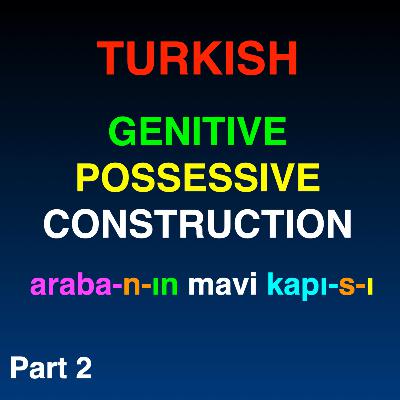
In Part 2 of Turkish Grammar: Genitive–Possessive Construction (Belirtili İsim Tamlaması), you’ll move from basics to confident, natural use. I clarify how tamlayan/tamlanan work together, where adjectives belong in the structure, and how to keep agreement and suffixing correct under vowel harmony, buffer letters, and consonant mutation. You’ll learn a simple pattern you can reuse, quick diagnostics to check if your phrase is well-formed, and a practical way to hear when a construction sounds natural in everyday speech
 1
1Want to master Turkish verb forms like passive, reflexive, and causative? In this clear and practical lesson, you’ll explore 7 key Turkish verb voices (Fiil Çatısı) with real examples — no complex grammar terms!

Welcome to your Turkish journey! In this podcast, you’ll learn 21 essential Turkish words to describe emotions and feelings—each one explained with simple example sentences in both Turkish and English. From mutlu (happy) to çaresiz (helpless), you’ll see how these words are used in everyday situations.
Learn how to express possession in Turkish with genitive–possessive constructions (Belirtili İsim Tamlaması)! In this podcast, we’ll break down suffixes, vowel harmony, buffer letters, and more—with lots of clear examples. You’ll learn how to say things like “the car’s door” or “my goal” the natural Turkish way. Perfect for beginners aiming to master essential grammar.

In this podcast, we’ll take a deep dive into the Turkish verb “sevinmek” and explore how to use it correctly in different contexts. “Sevinmek” means “to be happy” or “to be glad” — a useful verb for expressing positive feelings in Turkish!

Learning how to negate verbs in Turkish is essential for building sentences and expressing yourself accurately. In this lesson, I’ll cover how to conjugate Turkish verbs in negative forms step-by-step. Whether you’re a beginner or looking to improve your grammar, this video will give you a solid foundation in Turkish verb negation.
Welcome to our Turkish language lesson! In this podcast, we’ll explore the conjunction “ama” in Turkish, which means “but” in English. Whether you're a beginner or looking to refine your Turkish grammar skills, this lesson will help you understand how to use “ama” correctly in sentences.
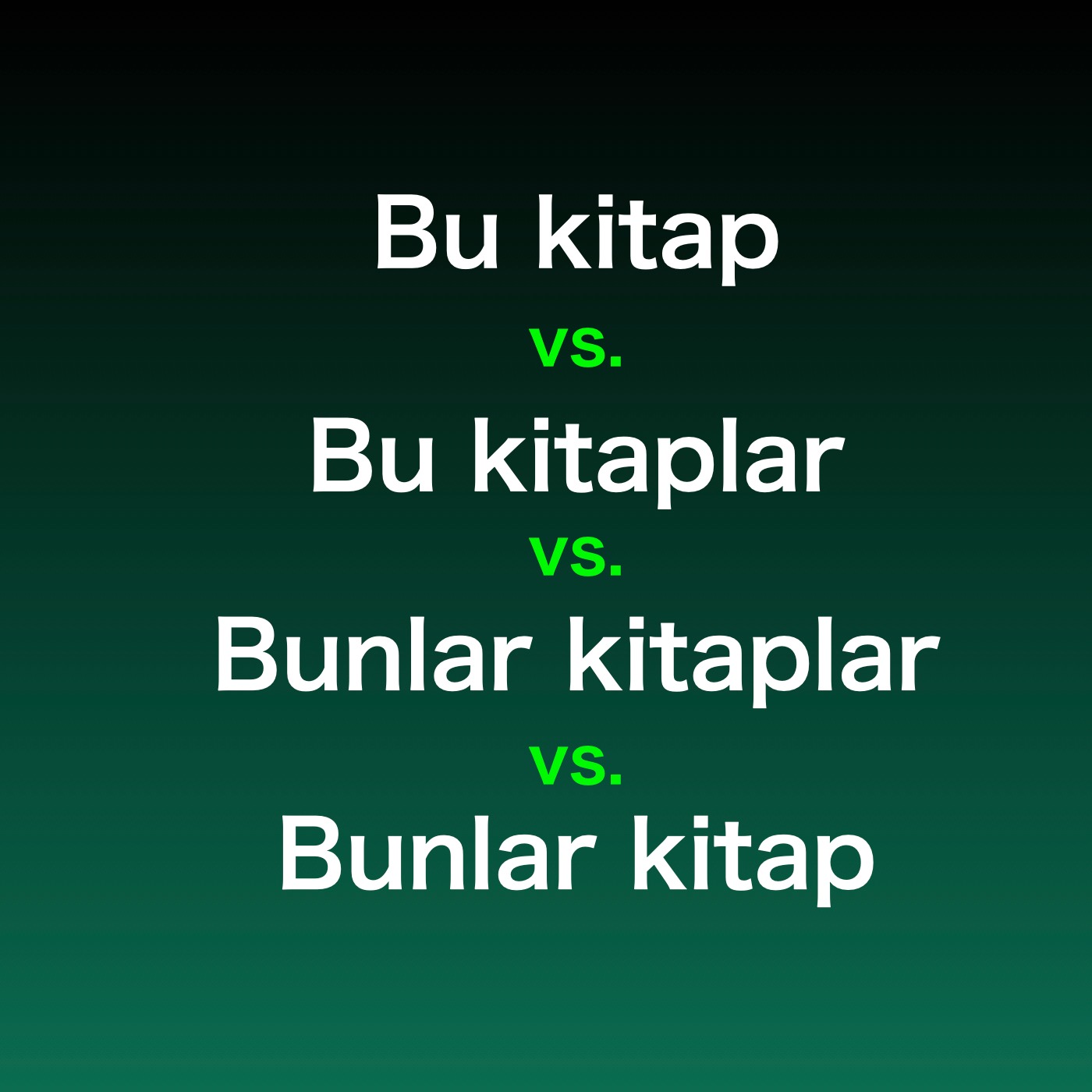
In this podcast, we break down the differences between these important Turkish structures: Bu kitapBu kitaplarBunlar kitapBunlar kitaplar
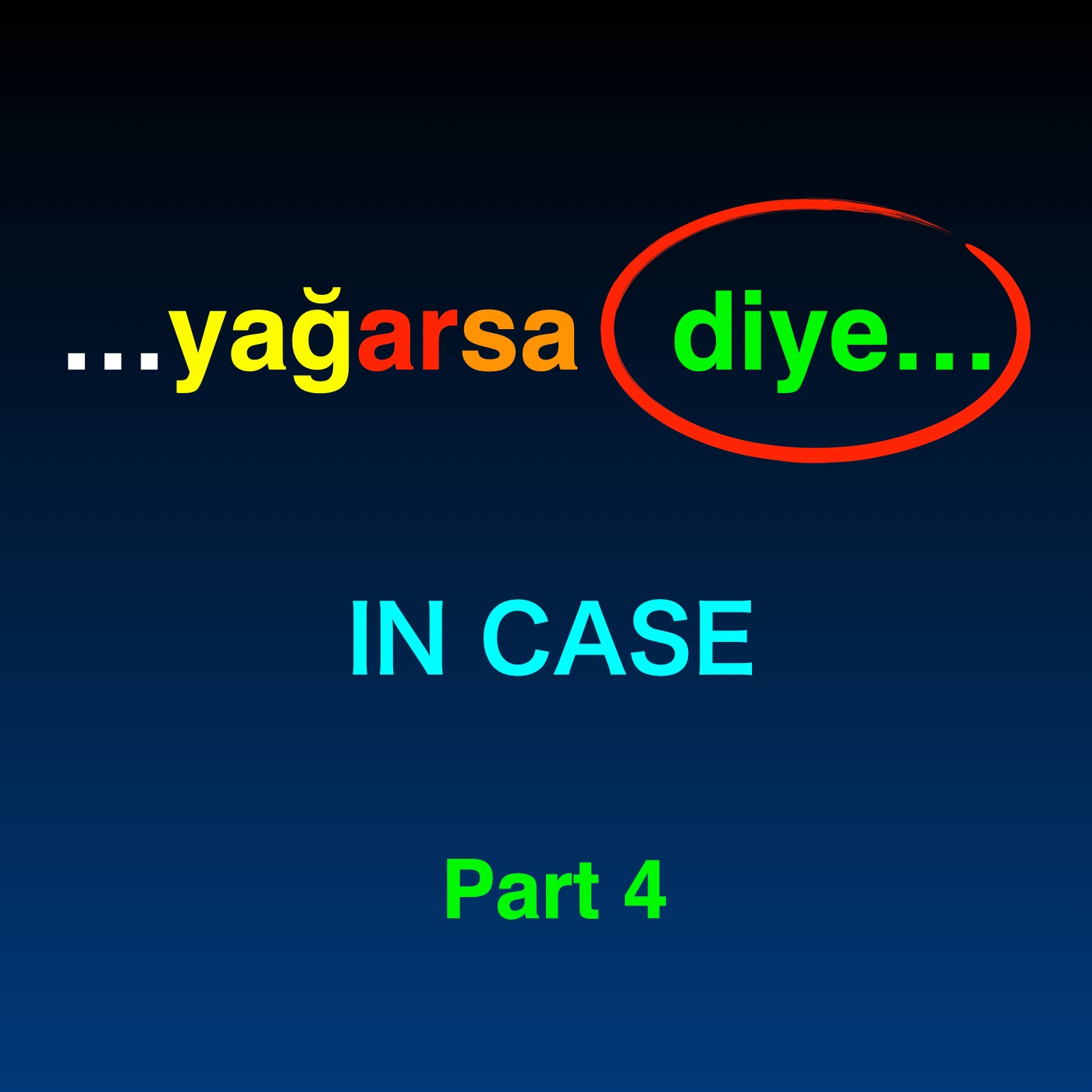
Dive into Part 4 of our Turkish Grammar: “diye”series, where we continue to explore the subordinator “diye” in Turkish! In this lesson, you’ll learn how to use “diye” to express precautionary meanings like “in case”. This is an essential video for anyone looking to deepen their understanding of Turkish grammar and sentence structures.
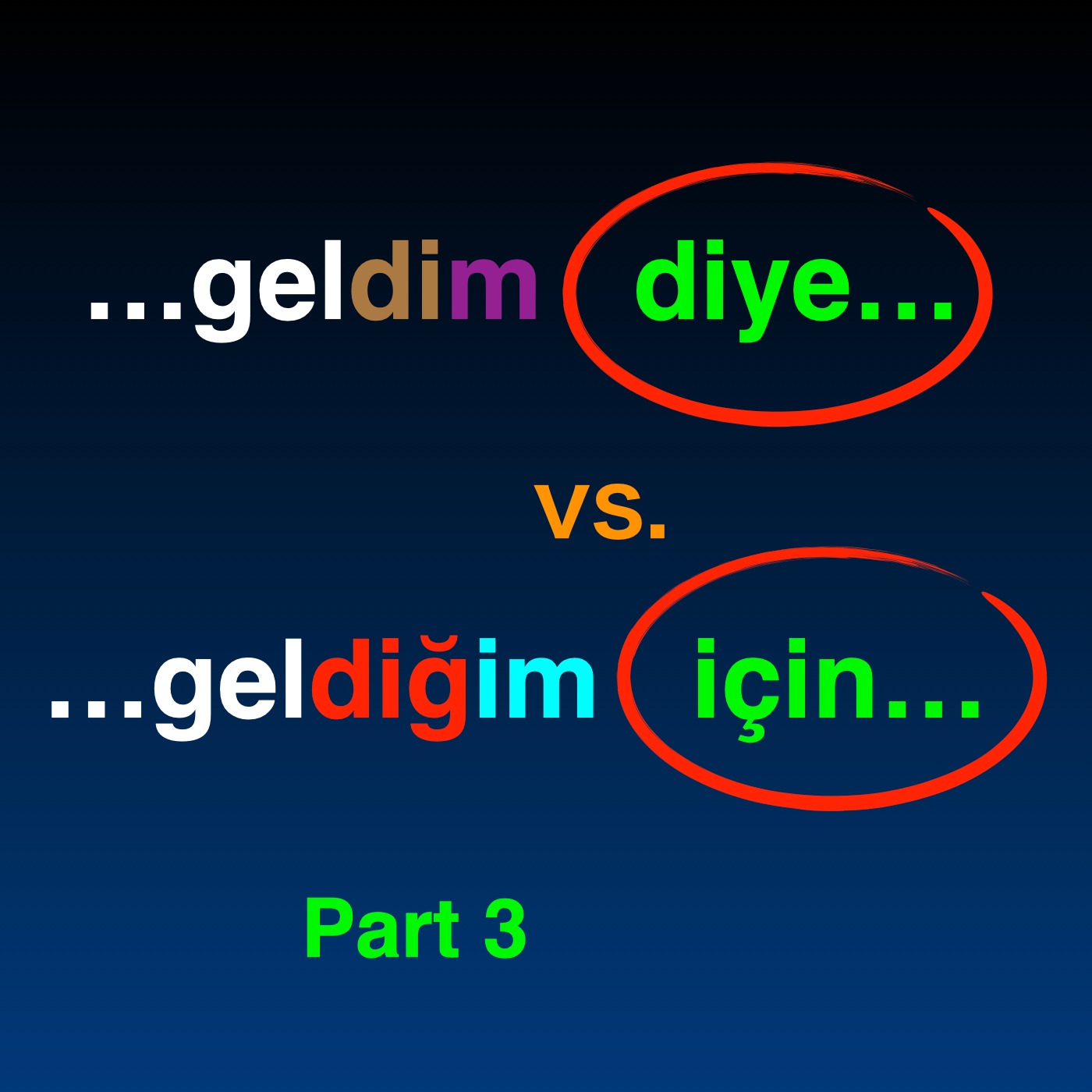
What you’ll learn in this podcast: ✅ How to use “diye” with result sentences ✅ How to use “diye” with purpose sentences ✅ The difference between “diye” and “için” ✅ How to connect reason and result sentences using “diye” ✅ Essential tips for mastering Turkish grammar
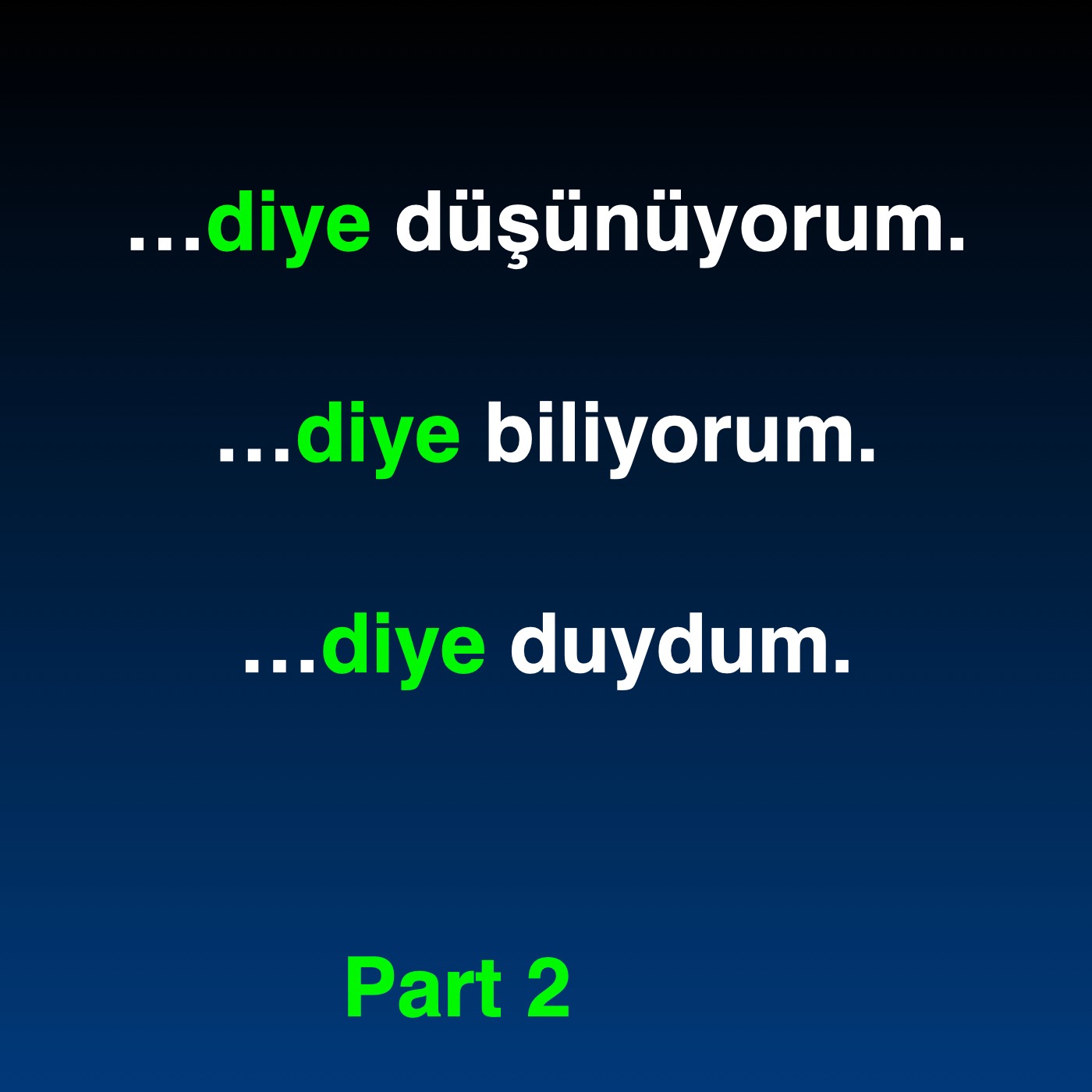
In this podcast, you’ll learn: ✔️ How to use “diye” with verbs of perception like duymak 🗣️ ✔️ The role of “diye” with verbs of cognition like düşünmek and bilmek 🧐 ✔️ Tips to form complex Turkish sentences using “diye” 🌟 ✔️ Practice examples for confident communication 🚀
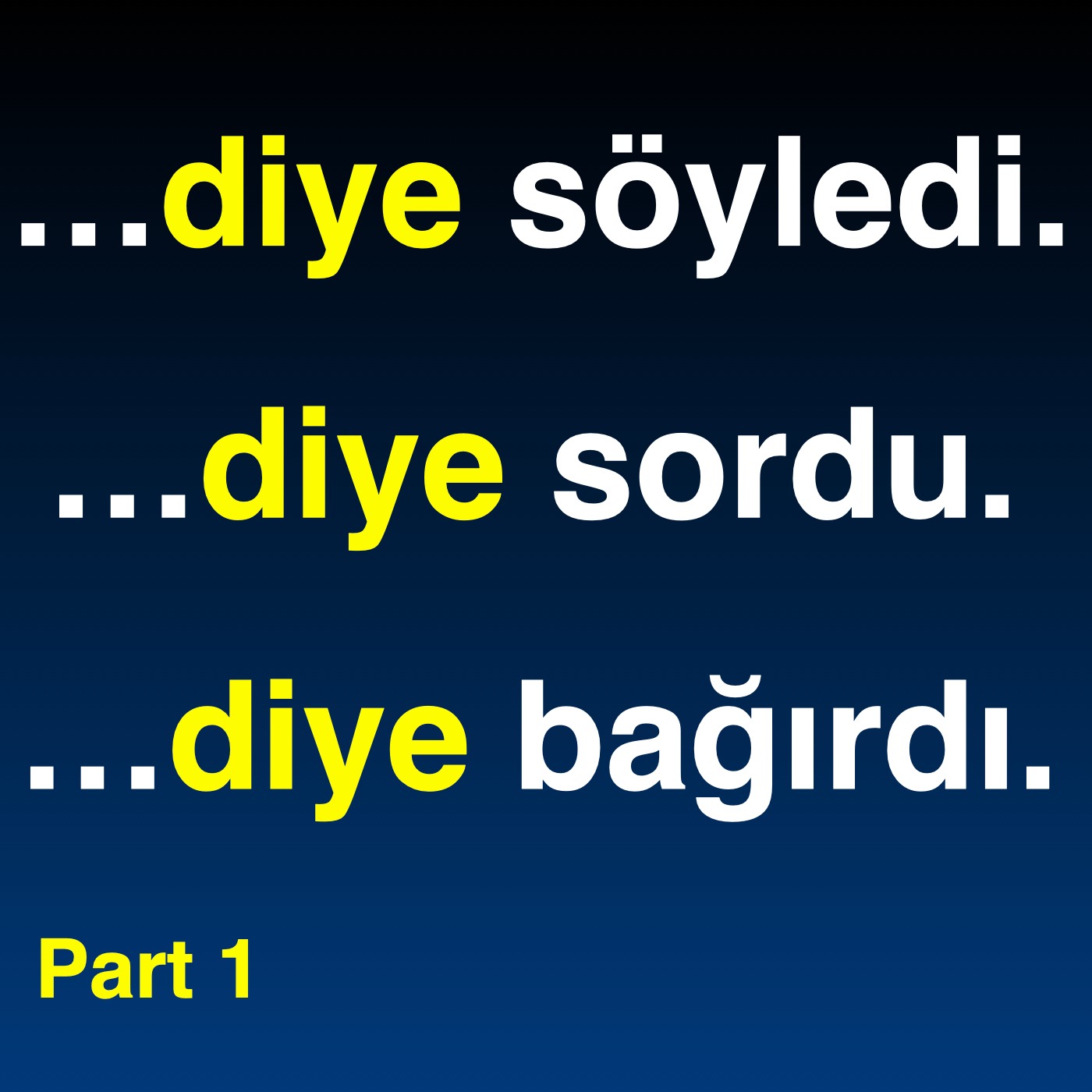
In this Part 1 of our series, we’ll explore: ✔️ What “diye” means in Turkish grammar 🌟 ✔️ How to use “diye” in Turkish sentences 🔤 ✔️ Its connection with verbs of communication 🗨️ ✔️ Practical examples to help you learn faster 🚀
🫖 What You’ll Learn : ✔️ Key phrases for ordering tea in Turkish restaurants. ✔️ Useful vocabulary for Turkish cafés and social settings. ✔️ Insight into Turkish tea culture and its importance in daily life. ✔️ Beginner-friendly conversation tips for speaking Turkish with confidence.
In this podcast, I dive deep into "demek," covering its essential conjugations in the present continuous and known past tenses. I’ll guide you through its structure, pronunciation, and practical usage, especially how it brings life to direct speech in Turkish.
✅ In this podcast, you’ll learn: • How to order food and drinks in Turkish 🥤 • Key Turkish vocabulary for restaurants 🍛 • Useful Turkish sentences for tourists 🚶♂️ • Polite expressions to enhance your dining experience 🥰
In this lesson, we explore two essential Turkish postpositions, “için” and “üzere”, commonly used for expressing purpose. I explain when to use "üzere" instead of "için" and highlight the key differences between them.

Comments

Download from Google Play

Download from App Store
 United States