


Marketing, Media & Adtech
Subscribed: 2Played: 29
Subscribe

© Copyright 2024 ADOTAT and Pesach Lattin - The Adtech God
Description
Dive into the vibrant pulse of the digital landscape with the ADOTAT Show, a podcast that serves as your compass in the ever-evolving world of marketing, media, and advertising technology. Hosted by the insightful Pesakh Lattin, each episode is a deep dive into the latest trends, strategies, and breakthroughs that are shaping the future of digital communication. pesach@adotat.com
From in-depth discussions with industry leaders to analyses of groundbreaking campaigns, the ADOTAT Show offers a unique blend of expertise and entertainment. Whether you're a marketing professional, a media enthusiast, or simply fascinated by the intersection of technology and advertising, this podcast is your gateway to staying ahead in a rapidly changing field.
Join Pesach Lattin as he navigates through complex concepts with ease, breaks down technical jargon, and brings you the most compelling stories from the forefront of digital innovation. The ADOTAT Show isn't just a podcast; it's an experience that educates, inspires, and connects listeners to the heart of today's digital world. Get ready to transform your understanding of adtech and beyond with the ADOTAT Show!
(C) Pesach Lattin, the Adtech God
From in-depth discussions with industry leaders to analyses of groundbreaking campaigns, the ADOTAT Show offers a unique blend of expertise and entertainment. Whether you're a marketing professional, a media enthusiast, or simply fascinated by the intersection of technology and advertising, this podcast is your gateway to staying ahead in a rapidly changing field.
Join Pesach Lattin as he navigates through complex concepts with ease, breaks down technical jargon, and brings you the most compelling stories from the forefront of digital innovation. The ADOTAT Show isn't just a podcast; it's an experience that educates, inspires, and connects listeners to the heart of today's digital world. Get ready to transform your understanding of adtech and beyond with the ADOTAT Show!
(C) Pesach Lattin, the Adtech God
148 Episodes
Reverse
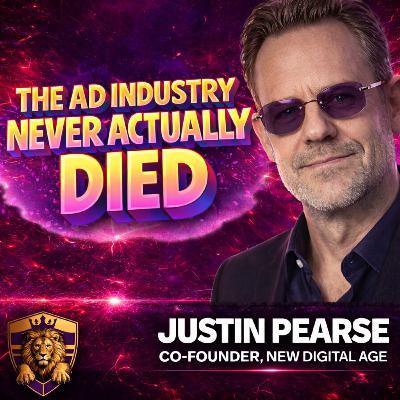
Justin Pearse, editor of New Digital Age and co-founder of BlueStrike Group, joins Pesach Lattin on the ADOTAT Show for a conversation spanning thirty years of digital advertising history, the rise and fall of attention metrics, the future of trade media, the BlueStrike model of owning both a PR agency and a trade publication simultaneously, and why the advertising industry has survived every near death experience thrown at it and will probably survive the next one too.Justin started as a journalist covering the dot com boom, watched programmatic advertising get built from scratch, covered every major wave of digital media from search to social to CTV to retail media, and co-founded BlueStrike Group and New Digital Age to cover the industry differently than anyone had before. He brings a thirty year perspective that very few people in advertising actually have and even fewer are willing to share this honestly.In this episode we cover:Why the advertising industry keeps surviving everything that should kill itThe AI panic in advertising: why it already peaked and what that tells us about how the industry processes fearThe resilience paradox: is the industry genuinely resilient or just world class at kicking the can down the roadAttention metrics: why they emerged, why they are already going off the boil, and what is replacing themWhy outcomes measurement is the next frontier and why most of the industry is still grading its own homeworkRetail media as the closest thing to honest attribution the industry has ever producedThe wave theory of innovation: why the best ideas fail not because they are wrong but because the timing is offThe BlueStrike model: owning a PR agency and a trade publication simultaneously and why radical transparency makes it workWhy people who have actually worked in the industry write better about it than journalists who have notThe decimation of trade press and the unexpected renaissance happening right nowBruce Daisley, love your work, and what building teams around people actually looks like in practiceWhy the dot com era was the greatest entrepreneurial moment in history and what it felt like to cover it from the press sideWhat thirty years of chronicling the industry actually teaches you about where it is going nextWhy the average CMO in 2026 is fundamentally different from the average CMO ten years agoThe black box era of programmatic: why it ended not because the industry fixed it but because clients got educated enough to demand betterWhat younger Justin should have done earlier and what he would tell anyone starting out in the industry todayThe legacy question: what does it mean to actually push an industry forwardWhether you work in programmatic advertising, digital media, ad tech, trade publishing, attention metrics, retail media, marketing technology, media buying, brand strategy, or content marketing, this conversation will give you a perspective on where the industry came from and where it is actually going that you will not find in a conference keynote or a vendor white paper.CHAPTERS: 00:00 Introduction 02:00 Why the industry never actually dies 06:00 The AI panic and what it tells us 10:00 The resilience paradox: survivor or can kicker 15:00 Attention metrics: rise, peak, and what comes next 21:00 Outcomes measurement and grading your own homework 27:00 Retail media and honest attribution 32:00 The BlueStrike model explained 38:00 Owning a PR agency and a publication simultaneously 43:00 The trade press decimation and renaissance 48:00 Bruce Daisley and building teams around people 53:00 Thirty years of dot com to now 58:00 What younger Justin should have done earlier 62:00 The legacy questionTAGS: ad tech podcast 2026, digital advertising trends, attention metrics advertising, programmatic advertising history, trade media advertising, retail media attribution, outcomes measurement advertising, Justin Pearse, New Digital Age, BlueStrike Group, ADOTAT Show, Pesach Lattin, advertising industry resilience, dot com era advertising, AI advertising 2026, CMO strategy 2026, advertising measurement, vanity metrics advertising, viewability advertising, brand safety, ad tech trade press, B2B media publishing, PR agency trade publication, advertising podcast, media buying strategy, programmatic buying, cookie deprecation, privacy advertising, contextual advertising, advertising attribution, marketing measurement, advertising ROI, media strategy, digital media trends, advertising industry history, advertising innovation, gaming advertising, CTV advertising, connected television, streaming advertising, walled gardens, first party data, identity resolution, advertising technology, martech 2026, advertising creative measurement, advertising outcomes, retail media networks, advertising industry future, advertising people, advertising culture, Bruce Daisley, joy of work, workplace culture advertising, London ad tech, UK advertising industry, European advertising, trade publishing model, media business model, revenue diversification publishing, audience first publishing, advertising black box, programmatic transparencyABOUT THE ADOTAT SHOW: The ADOTAT Show with Pesach Lattin is the advertising and marketing technology industry's most irreverent and honest podcast. No PR speak. No vendor talking points. No polite nodding at things that do not make sense. Just the people who actually built this industry telling you what they actually think. New episodes every week. Subscribe so you do not miss what comes next.SUBSCRIBE TO ADOTAT+ for the full three part written series on Justin Pearse, plus every premium episode, analysis, and industry breakdown at ADOTAT.comThe ADOTAT Show is sponsored by Troutman Amin LLP and Incremental.com
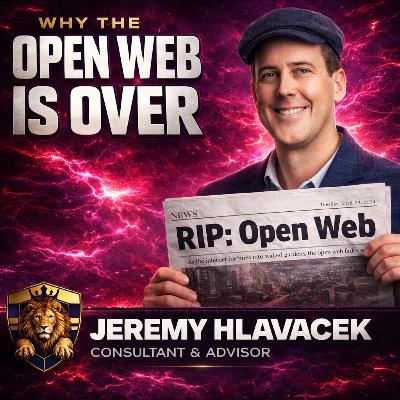
Jeremy Hlavacek, former VP at The Weather Company, IBM Watson Advertising, and Experian Marketing Services, joins Pesach Lattin on the ADOTAT Show for one of the most honest conversations about the state of digital advertising, programmatic, identity resolution, and connected television that you will find anywhere in 2026.Jeremy built one of the first programmatic publisher operations in the industry at The Weather Company, ran revenue strategy at IBM Watson Advertising, and led identity and data strategy at Experian Marketing Services before launching his independent consulting practice. He has been inside every major wave of digital advertising at exactly the moment it mattered most.In this episode we cover:Why the open web advertising model is structurally degrading and what replaces itThe island paradigm: how TikTok, Instagram, YouTube and streaming platforms have replaced the open web and what that means for publishers and advertisersWhy the deterministic versus probabilistic identity debate is the wrong question entirelyWhat signal agnostic identity strategy actually means in plain EnglishWhy CTV targeting works completely differently than the conference stage version suggestsHow the death of the cable bundle accidentally broke identity in ways nobody anticipatedWhy the programmatic industry was too Wild West for too long and what it actually costThe cookie as accidental infrastructure: free, ubiquitous, never designed for identity, and somehow the thing everyone built onWhy context is the missing variable that identity alone cannot solveWhat thirty years across startups, Weather Company, IBM, and Experian actually teaches you about building a career in a volatile industryWhy the Wanamaker quote still applies in 2026 and what that means for everyone selling measurement solutionsThe open web idealism versus the reality of what an unregulated information ecosystem actually producesWhy his ten year old son thinks the internet is for old people and why Jeremy thinks the kid is rightWhether you work in programmatic advertising, digital media, ad tech, publisher monetization, connected television, identity resolution, data strategy, marketing technology, or media buying, this conversation will change how you think about where the industry is actually going versus where the conference keynotes say it is going.CHAPTERS: 00:00 Introduction 02:30 The open web is for old people 08:00 The island paradigm and what it means for publishers 14:00 Follow the money: why the chaos is completely rational 19:00 The programmatic dream versus the programmatic reality 26:00 Signal agnostic identity strategy explained 33:00 CTV targeting: promise versus reality 41:00 The missing variable: context 48:00 Thirty years of hard lessons 55:00 The LSE idealist meets the industry realityTAGS: programmatic advertising 2026, digital advertising trends, connected television advertising, CTV targeting, identity resolution, third party cookie deprecation, open web advertising, publisher monetization, ad tech podcast, digital media strategy, marketing technology, martech, data strategy, advertising measurement, Jeremy Hlavacek, ADOTAT Show, Pesach Lattin, Weather Company programmatic, IBM Watson Advertising, Experian Marketing Services, signal agnostic identity, deterministic vs probabilistic, first party data strategy, retail media, streaming advertising, walled gardens advertising, ad tech 2026, programmatic buying, trading desk, identity graph, hashed email, mobile advertising ID, cookie deprecation, privacy advertising, contextual advertising, brand safety, advertising podcast, media buying, CMO strategy, marketing measurement, advertising ROI, ad fraud, viewability, attention metricsABOUT THE ADOTAT SHOW: The ADOTAT Show with Pesach Lattin is the advertising and marketing technology industry's most irreverent and honest podcast. No PR speak. No vendor talking points. No polite nodding at things that do not make sense. Just the people who actually built this industry telling you what they actually think. New episodes every week. Subscribe so you do not miss what comes next.SUBSCRIBE TO ADOTAT+ for the full three part written series on Jeremy Hlavacek, plus every premium episode, analysis, and industry breakdown at ADOTAT.comThe ADOTAT Show is sponsored by Troutman Amin LLP and Incremental.com
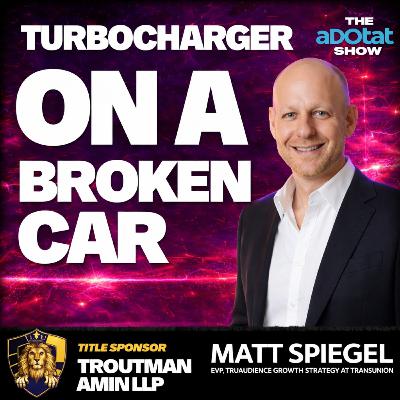
Everyone in ad tech slapped AI-powered on their homepage and called it a product update. Matt Spiegel calls it what it is.Matt Spiegel — founder, Omnicom exec, programmatic pioneer, and EVP of True Audience Growth and Strategy at TransUnion — sits down with Pesach Lattin to deliver the most uncomfortable truth in digital advertising right now: AI doesn't solve broken data problems. It amplifies them.In this episode we cover:The real reason cookie deprecation was never the crisis everyone claimedHow the industry went from mass media to programmatic to identity — and what comes nextWhy marketers with 16 martech solutions have a junk drawer, not a strategyThe "easy button" evolution: TV, ad networks, walled gardens — same mistake, different decadeWhy 62% of marketers are confidently measuring the wrong thingsHow gen AI will eventually make precision marketing easier — but only if you fix the foundation firstMatt Spiegel has been riding every wave in digital advertising since the late 90s, from founding Resolution Media at 25 to running identity strategy at TransUnion. He's not here to sell you anything. He's here to tell you what's actually broken.Season 8. Episode 1. We're back.🎙️ Host: Pesach Lattin | ADOTAT 📍 Guest: Matt Spiegel | TransUnionSponsors: ⚖️ Troutman Amin LLP 📊 Incremental.comStay bold. Stay curious. Know more than you did yesterday.#AdTech #AI #DigitalMarketing #ProgrammaticAdvertising #MarTech #IdentityResolution #DataStrategy #Measurement #ADOTATShow #TransUnion #MattSpiegel #Season8 #PesachLattin
He Thinks Your CTV CPMs Are Too Low (And He Has Receipts) | Jordan Greene | ADOTAT Show Jordan Greene has spent 25 years collecting unpopular opinions about digital advertising and occasionally being proven right about all of them. As co-founder and Chief Media Officer of Alpha Precision Media -- the only NMSDC-certified minority-owned Amazon ecosystem partner in the country -- he has watched mobile advertising grow from carrier-based WAP pages into a $200 billion industry, and he is now making the same bet on connected television that most of the industry is still too nervous to make out loud. His position: CTV CPMs are too low. Not all of them. But enough of them that the entire upfront conversation is happening around the wrong number. He will explain exactly why, with the kind of specificity that makes media buyers deeply uncomfortable. We also get into: 🎮 The Twitch experiment that may have been the most expensive production ever put on the platform, what it proved about branded content, and why the chat told them everything they needed to know before the campaign data did 🏀 Undeniable -- the women's basketball show produced by Cynthia Cooper, Asia Wilson, and Cameron Brink, and why Jordan thinks female sports is the most undervalued media bet in advertising right now 📊 The Plural acquisition -- the data company built on Census Bureau methodology that Jordan claims delivers 30 to 60 percent stronger demographic targeting than standard segments 💰 The streaming wars endgame -- Amazon has $72 billion in cash. Paramount has $3 billion. Jordan has thoughts. 🎯 Why your CMO keeps asking for Disney Plus even after they told you they wanted audience-first buying, and what that says about the gap between what brands say and what their agencies actually do Plus: Pat Riley, George Carlin, Thomas Keller, the greatest Twitch chat in advertising history, a QSR client who ran back to NCAA basketball, and one man's completely unreasonable optimism about the future of connected television. Jordan Greene is either two years ahead of the industry or two years ahead of reality. Watch and decide for yourself. 🔔 Subscribe to ADOTAT for the full three-part written series, including the paywalled deep dives on Alpha's business model, the Plural acquisition, and the content-driven advertising bet: adotat.com 📧 Subscribe to the ADOTAT newsletter -- the most widely read trade publication in digital advertising that tells you what everyone else is afraid to say. Sponsored by: Troutman Amin LLP -- The TCPA attorneys you call before the class action, not after. troutmanamin.com Incremental.com -- Measure what's actually working. incremental.com
116 views Feb 26, 2026 #AI #audio #podcastingTim Armstrong went from a dairy farm in rural New Zealand to leading digital transformation at Mangrove Digital in Australia. Somewhere between herding 200 cows through lightning storms at 5 a.m. and optimizing programmatic supply paths, he picked up a take so hot it might melt your entire AI strategy: People still matter more than your algorithm. Yeah. We said it. In this episode of the ADOTAT Show, Pesach Lattin sits down with Tim to talk about why 53% of marketers think their AI is underwhelming (they're being generous), why companies are firing humans based on vibes and pitch decks, why soft skills are the actual hard part, why audio advertising is the dark horse nobody's betting on, and why the ad tech industry has an "artificial complexity" problem that Tim is absolutely done tolerating. Also: desert islands, Dave Grohl on driftwood guitar, Elon Musk building coconut blockchains, and why Tim's three-year-old thinks dad just "goes to work." If you've ever sat in a meeting where someone said "let's leverage AI to synergize our pipeline" and wanted to scream — this episode is for you. Stay Bold. Stay Curious. Know More Than You Did Yesterday. #adtech #AI #programmatic #digitaladvertising #podcasting #audio #adotat
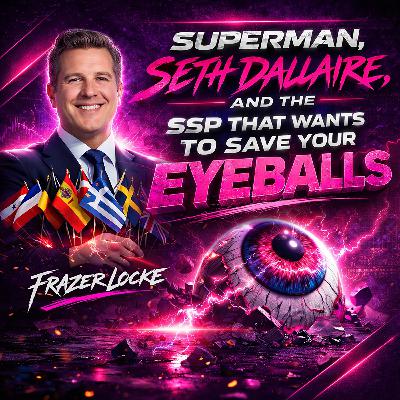
Frazer Locke has 34 years of retail and ad tech scars. He spent a decade inside Amazon building the ads machine before anyone took it seriously, and now he's SVP of International Sales at TripleLift, the creative SSP trying to keep retail media from becoming an unwatchable Blade Runner hellscape of infinite ads.In this episode of the ADOTAT Show, Pesach Lattin sits down with Frazer to talk about what's actually broken in retail media (even though he's too British to use that word), why frequency capping is a sanity check the industry is failing, what he learned from Seth Dallaire in the early Amazon Ads trenches, why Aldi and Lidl might be the dark horses nobody's watching, and whether full funnel measurement is real or just a really convincing PowerPoint slide.We also strand him on a desert island with Superman, Tom Hanks, and a British comedian you've never heard of. It goes exactly how you'd expect.🔥 WHAT WE COVER: 0:00 - Intro 0:56 - Who is Frazer Locke 2:42 - Career journey from Sainsbury's to Amazon to TripleLift 3:51 - What's broken in brand-consumer relationships 5:29 - The refresh ad problem nobody asked for 7:08 - When ad tech rewrote the retail playbook 8:37 - Retail media internationally vs the US 9:54 - If 1991 Frazer walked into today's office 11:23 - What separates real integration from bolt-on media 13:12 - Creative tech: innovation or automated mediocrity 16:02 - Is TripleLift still just an SSP? 17:50 - Cultural vs technological barriers to creative innovation 19:02 - Does contextual advertising actually work? 19:56 - AI-generated dynamic supermarket shelves 20:26 - The Aldi and Lidl retail media dark horse theory 21:40 - Retail media gold rush or cable TV fragmentation? 22:06 - Does full funnel measurement actually exist? 25:47 - Is retail media brand building or a click casino? 26:43 - Sacred cows: what would Frazer burn down? 28:16 - Programmatic transparency or smarter ways to hide fees? 30:35 - Will most DSPs exist in 10 years? 31:36 - If publishers and advertisers swapped roles 32:30 - Leadership across continents and time zones 33:28 - LinkedIn leadership vs real leadership 34:42 - Are we over-romanticizing culture? 35:32 - Desert island companions 39:04 - AI takes over: first question to robot overlords 39:29 - What the island teaches about ad tech 40:02 - What drives Frazer when the decks close 41:23 - The Seth Dallaire mentor lesson 44:00 - Frequency capping as industry sanity check 44:44 - If not advertising, then what? 45:22 - Legacy: what Frazer wants to be remembered for📰 READ THE FULL BREAKDOWN on ADOTAT.com — including the ADOTAT+ deep dive on what Frazer was too diplomatic to say out loud, why he really left Amazon, and whether "creative SSP" is genius positioning or a holding pattern.👉 Subscribe to ADOTAT+ for the inside baseball: [link]🎙️ THE ADOTAT SHOW — where we cut through the buzzwords, the hype decks, and the endless talk of revolutionary solutions to talk about who's actually moving the needle in advertising. Hosted by Pesach Lattin.Be bold. Be curious. Know more than you did yesterday.💼 SPONSORS: Troutman Amin LLP — the ad tech lawyers who actually get it Incremental — measure what actually moves the needle#retailmedia #adtech #programmaticadvertising #amazonads #triplelift #retailmedianetwork #CTV #connectedTV #digitaladvertising #SSP #DSP #commercemedia #creativetechnology #marketingstrategy #brandbuilding #walmartconnect #ecommerce #advertisingtechnology #mediaplanning #digitalmarketing #marketingpodcast #adtechpodcast #retailmedia2025 #futureofadvertising #programmatic #supplypathooptimization #nativeadvertising #frequencycapping #adindustry #mediainnovation #retailmedianetworks #offsite #amazon #tesco #aldi #Lidl #marketplaceLoaded with the high-search-volume terms: retail media, programmatic advertising, Amazon Ads, connected TV, DSP, SSP, digital marketing, e-commerce, creative technology, and brand building.
Liz DeAngelis from Brainlabs joins Pesach Lattin on the ADOTAT Show to tear apart everything the ad tech industry pretends is working. From programmatic advertising's broken incentives to why attribution is theater, why video completion rate is an emotional support KPI, and why cheap never actually means efficient, this conversation pulls no punches. Liz has seen it all. Mobile app marketing. The Ad Council's COVID-19 vaccine campaign. Growth at Monks. And now leading programmatic strategy at Brainlabs where she's asking the questions nobody wants to answer: does any of this actually drive business impact or are we just funding a swamp? We get into the Pinterest CTV Scientific acquisition and what it means for intent-based TV buying, why "performance CTV" is a branded concept and not a real capability, why Google can't reconcile its own platforms, why display advertising destroyed itself through measurement, why agencies can't figure out which team owns new channels, and what actually breaks first when growth outpaces maturity. Plus: hustle culture is dead, founder intuition is bullshit, and the opinion Liz softens in public but holds privately is that advertising has ruined a lot of the internet.
Gaming is the single largest media channel on the planet. Bigger than streaming. Bigger than social media. Bigger than CTV. 3.5 billion people play at least one game every month — that's 90% of everyone connected to the internet. And yet the advertising industry has spent the last two decades pretending gaming doesn't exist. In this interview, I sit down with Itamar Benedy, the founder and CEO of Anzu, the company pioneering programmatic in-game advertising with native 3D ad placements inside video games. After eight years building Anzu, Itamar says they haven't even hit 1% of the journey — and explains why that's both the most honest and the most terrifying thing a founder can admit. We dig into why "the year of gaming advertising" has been promised every single January since the Blackberry era and never delivered. Why brands are finally moving budget into gaming — some because the performance arbitrage is undeniable, others because every other channel is collapsing under them. And some just because McKinsey told them to. We break down the infamous Netflix campaign disaster — when Netflix ran ads inside games telling players to stop playing and go watch Netflix — and why that's the perfect case study for everything brands get wrong about gaming audiences. The irony? Netflix is now a gaming company with an ad-supported tier as its fastest-growing revenue line. Itamar explains why lumping 3.5 billion people into one category called "gamers" is the laziest move in media buying, why in-game advertising is essentially digital out-of-home but with actual measurement and targeting, and why the gaming industry sabotaged its own advertising potential for years by going to war with the companies that make advertising work. This conversation is essential viewing for CMOs, media buyers, brand strategists, ad tech professionals, and anyone trying to understand where attention is actually going in 2025 and beyond. ABOUT ITAMAR BENEDY: Itamar Benedy is the founder and CEO of Anzu, a leading in-game advertising platform that delivers programmatic, brand-safe ad placements rendered natively in 3D within video game environments. Anzu works with major brands and game publishers to bridge the gap between where audiences spend their time and where advertising dollars actually go.
Sam Bloom, Head of Partnerships at PMG, returns to the ADOTAT Show for round two. Either that's heroic or deeply concerning. In this episode, Sam gets brutally honest about the AI hype cycle flooding ad tech, why most "agentic" tools are just the same old crap with a .ai domain, and how to tell the difference between real innovation and vendor theater. He breaks down his two-question filter that every pitch must pass, explains why 70% of agency time disappears into work nobody enjoys, and reveals why he fears two people in a garage more than the big holding companies. We also dive deep into CTV's graduation from high school (still figuring out laundry), why attention metrics are overrated, the coming tsunami of AI slop hitting connected TV, and how retail media is becoming identity infrastructure for a post-cookie world. Plus: the transparency paradox, why CMOs keep signing deals with agencies whose profits depend on opacity, and what happens when agencies disappear entirely. 🔥 IN THIS EPISODE: 00:00 - Intro 02:15 - The AI Hype Cycle: Sorting Wheat from Slop 08:30 - Sam's Two-Question Vendor Filter 12:45 - What "Agentic" Actually Means (And How It's Abused) 18:20 - The 70% Problem: Why Agency Work Sucks 24:00 - Mental Health in Advertising 28:15 - The Garage Threat: Why Small Teams Win 35:40 - What AI Cannot Replace 42:00 - CTV: Graduating High School 48:30 - Why Attention Metrics Are Overrated 54:15 - The AI Slop Tsunami Coming to CTV 59:00 - Retail Media as Identity Infrastructure 1:05:30 - The Measurement Reckoning: Killing Last-Click 1:12:00 - The Transparency Paradox 1:18:45 - What Clients Actually Need 1:24:00 - The Agency Extinction Scenario 📢 SPONSORS: Troutman Amin LLP - https://www.troutmanamin.com/ Incremental - https://www.incremental.com/ 🎙️ ABOUT THE ADOTAT SHOW: The ADOTAT Show with Pesach Lattin. Where ads get torched, truth gets told, and the industry pretends not to read us. Stay Bold. Stay Curious. Know More Than You Did Yesterday. 👉 SUBSCRIBE for weekly episodes with the sharpest minds in advertising, media, and ad tech. CONNECT WITH US: 🌐 Website: https://www.adotat.com 📧 Newsletter: https://new.adotat.com 🐦 Twitter: https://x.com/pesach_lattin?lang=en 💼 LinkedIn: https://www.linkedin.com/in/pesach-lattin/ #AdTech #DigitalMarketing #AI #ArtificialIntelligence #CTV #ConnectedTV #RetailMedia #ProgrammaticAdvertising #MediaBuying #MarketingStrategy #AgencyLife #PMG #SamBloom #ADOTATShow #PesachLattin #MarketingPodcast #AdvertisingPodcast #MediaPlanning #Attribution #Transparency #AdAgency #MarketingTech #MarTech Tags: sam bloom, pmg, adotat show, pesach lattin, ad tech, advertising technology, ai in advertising, agentic ai, connected tv, ctv advertising, retail media, retail media networks, programmatic advertising, media buying, digital marketing, marketing strategy, agency life, marketing podcast, advertising podcast, ai hype, attention metrics, last click attribution, incrementality, media mix modeling, transparency in advertising, principal media, holding companies, marketing technology, martech, cmo, media planning, ad agency, future of advertising, ai slop, streaming advertising
Bob Lord: The Quantum Computing Defector Who Escaped Advertising, Spent 8 Years Learning How Technology Actually Works at IBM, and Then Came Back to Burn Down the FTE ModelHere's a career arc that sounds like a fever dream: He ran Razorfish, sold it to Microsoft, sold it again to Publicis, became president of AOL during Verizon's $4.4 billion acquisition, then completely abandoned advertising to become a senior vice president at IBM where he got "steeped in large language models, neural networks, quantum computing" and learned to track a single product floating somewhere in the South China Sea. Now he's back as President of Horizon Media—one of the largest independent agencies in the country with $10 billion in billings—and he has some thoughts about why everything is broken.In this wide-ranging conversation, Bob Lord walks us through the career nobody plans, the lessons that shaped how he operates, and why he thinks the entire agency compensation model is a dying relic that's holding the industry hostage.We get into:The great escape and return: Why would anyone leave advertising at the top of their game, spend nearly a decade at IBM learning about quantum computing and supply chain software, and then voluntarily come back to an industry that had only gotten more chaotic in his absence?The damning comparison: At IBM, Lord could track a single product across global supply chains and tell you exactly when it would dock in San Francisco. Meanwhile, back in advertising? "I still couldn't tell a marketer how their campaign ran in the last week. Something went wrong."The Rube Goldberg problem: More ad tech vendors. More data companies. More martech platforms. More confusion. More complexity. Less clarity. The industry spent a decade building an elaborate machine and forgot what it was supposed to be making.The FTE model must die: Lord is pitching clients on performance-based compensation tied to actual business outcomes—not marketing qualified leads, not downloads, but actual transactions. Cars sold. Internet packages purchased. Widgets moved. "If I can swap out technology and cut the staff by a third—shouldn't that be the model?"The boots story: How a 19-year-old Bob Lord on a GM factory floor learned the hard way that not everyone operates from goodness—a lesson that's guided his trust-but-verify approach for four decades.Growth and comfort don't coexist: The mantra he picked up from IBM's Ginni Rometty that sounds like a LinkedIn platitude but that Lord means literally. He talks about being in the "muddy middle" at Horizon—knowing where he wants to go, not having all the answers, watching everyone's role change in real time.The first P&L: The exhausting, trial-by-fire experience of running a $20 million business in North Carolina with no idea how to hire, fire, or run a sales department—and why he keeps putting himself through these sink-or-swim moments decade after decade.
Jason White has spent 20+ years actually BUILDING technology at Viacom, OpenX, CBS, Fox MySpace, and multiple startups. Unlike the PowerPoint warriors flooding LinkedIn, he's coded real systems, invented RTB structures, and survived every hype cycle from the dot-com bubble to today's AI frenzy. In this brutally honest conversation, Jason exposes: ❌ Why 60-70% of "AI features" are just rule-based logic with an LLM wrapper ❌ The platform risk nobody talks about (spoiler: when ChatGPT builds your feature, you're done) ❌ Why ChatGPT is only right 50% of the time—and argues when it's wrong ❌ How ad blockers are inexplicably allowed in buying platforms ❌ Why programmatic "transparency" is the industry's biggest joke ❌ The real reason companies blow $100M on shiny objects (metaverse, anyone?) ✅ But also what ACTUALLY works: ✅ The three-circle test for real innovation (save money + bandwidth + revenue = unicorn) ✅ Why ad networks worked better than what replaced them ✅ How to build culture that doesn't turn teams into "office hostages" ✅ The future of AdCP and agents talking to each other ✅ Why democratizing information still matters 🔥 CONTROVERSIAL TAKES: "Programmatic guaranteed pricing makes no sense" - Google's $0.40 on $2 CPM vs $6 on $30 CPM "SSPs were taking 30-50% margins as intermediaries" "The Trade Desk hasn't integrated with a new SSP in 8 years" "Token costs are going to rise—this automation party won't last" "ChatGPT will lose a billion dollars a month... not for long" 📊 BY THE NUMBERS: 60-70% of AI features are just rule-based logic AI costs went from $50/month to $1,000/month in one year 30-50% margins taken by intermediary SSPs Only 10% of companies survive hype bubbles—but they change the world 🎯 WHO IS JASON WHITE? 20+ years building advertising technology across: Fox MySpace (invented client-side programmatic) CBS Interactive (built MyAds) OpenX (ad exchange infrastructure) TrueCar (growth) Arena Group (revenue turnaround) Jiffy AI (RPA-based ad operations) Mula (current: combining ML, RTB, header bidding, analytics) Survived: dot-com bubble, ad networks, programmatic, mobile, and now AI hype 🗣️ QUOTES THAT HIT DIFFERENT: "I've never seen an absolute. I immediately discount it when somebody says everything." "There's little people behind the green curtain running data back and forth." "Maybe if ad networks were just transparent with their margins..." "Culture is how people behave when things go wrong, not the posters you put up." "My religion is democratizing information." "Life is what happens when you're busy making other plans." 📚 READ THE FULL SERIES: This interview is being turned into a 4-part article series: Part 1: The AI Hype Bubble (FREE) Part 2: Revenue Discipline in the Age of Shiny Objects (FREE) Part 3: The Programmatic Paradox (PAID) Part 4: The Future of Advertising Technology (PAID) 🔔 SUBSCRIBE for more unfiltered conversations with people who actually build technology instead of selling PowerPoint decks. 👍 LIKE if you're tired of AI theater and want to hear the truth. 💬 COMMENT: What's the biggest BS claim you've heard about "AI" in your industry? 🎙️ The ADOTAT Show Hosted by Pesach Lattin Where we separate real innovation from LinkedIn theater #AIinAdvertising #AdTech #Programmatic #ChatGPT #MarketingTechnology #DigitalAdvertising #AdOperations #SSP #DSP #AIHype #TechForGood #StartupLessons #JasonWhite #ProgrammaticAdvertising #AdExchange #RevenueGrowth
Local TV has been written off as plumbers, pizza shops, and leftover budgets for far too long. Jason Manningham is here to explain why that take is lazy, expensive, and wrong. In this episode of The ADOTAT Show, Pesach Lattin sits down with Blockgraph CEO Jason Manningham to unpack the part of the TV ecosystem everyone pretends to understand and absolutely does not. We dig into why local advertising is actually a $170B market, why zip codes are a blunt instrument, and why proximity and household identity outperform the buzzword soup most decks are built on. This conversation covers: Why local TV is bigger than national TV, and why brands keep missing it Household identity vs “targeting a person” on a shared screen Why IP targeting is mostly fiction and why geo still matters when done right Attribution dashboards as cosplay and the limits of last-click thinking Currency wars, outcomes measurement, and why Nielsen isn’t the whole story What AI gets wrong about TV and why the real world still matters Why most “performance TV” claims collapse under basic scrutiny No hype. No vendor theater. Just infrastructure, incentives, and the uncomfortable math underneath modern TV advertising. Sponsored by: Troutman Amin LLP – When ad tech deals get complicated, regulated, or quietly risky. Incremental.com – Because lift beats vibes, and proof beats promises. This is The ADOTAT Show. Stay Bold, Stay Curious, and Know More than You Did Yesterday.
Nick Stark didn’t come on The ADOTAT Show to talk about “the future of CTV” in soft-focus buzzwords. He came to talk about why connected TV advertising quietly bleeds money every day and why most of the industry pretends it’s normal. Nick is the CEO of GoGoCTV, a company that exists for one uncomfortable reason: streaming ads are often built on bad metadata, missing signals, broken ad plumbing, and contracts nobody audits after signing. If you’ve ever seen premium CTV inventory monetize like clearance-bin display, this episode explains exactly how that happens and why it keeps happening. We unpack how a single missing metadata field can slash revenue by up to 90%, why “data-driven marketing” often means “staring at dashboards you don’t fully understand,” and how optimization culture turned creativity into a hostage negotiation with math. Nick breaks down dirty vs missing metadata, IVT detection gone sideways, why new devices get punished for not being on whitelist spreadsheets, and how “fixed pricing” quietly sabotages performance in a dynamic market. There’s also a blunt conversation about: CTV ad tech infrastructure and ad serving Metadata hygiene, data quality, and monetization leakage Programmatic advertising myths and supply chain confusion IVT, SIVT, fraud detection, and false positives Attention economics vs impressions vs results Dynamic pricing, floor management, and latency realities Why audits matter more than optimism Why half the industry is confident their stack works and wrong Plus desert-island adtech hypotheticals, a reality check on AI in advertising, why consultants behave exactly like mosquitoes, and an honest look at leadership when everything runs in milliseconds and ego runs in seconds. If you work in CTV, streaming advertising, programmatic media, ad operations, ad tech infrastructure, media buying, data engineering, or revenue optimization, this episode is required listening. If you don’t, it’s still a great tour of how complex systems fail politely while everyone nods. Huge thanks to our sponsors: Troutman Amin LLP, because when ad tech deals get strange, you want lawyers who actually understand how this industry breaks. Incremental.com, because outcomes beat vibes, lift beats dashboards, and proof beats promises. This is The ADOTAT Show. Stay Bold, Stay Curious, and Know More than You Did Yesterday.

Founders love telling you they’re “building the future.” Most of them are really just building new ways to charge you for the same old chaos. On this episode of The ADOTAT Show, Pesach Lattin runs a rare double-header: Amol Waishampayan (the product philosopher behind Full Throttle AI) and David Regn (the guy who helped build Stream into a 27-year force of nature without lighting the building on fire). Together, they walk straight into adtech’s identity problem and do the unthinkable: talk like adults. Topics include: First-party identity: why the industry treated it like optional kale until the cookies started entering hospice care “95%+ confidence” household identity: less magic, more math, way more uncomfortable truths Third-party data: useful, sure… if you enjoy navigating by fog Mid-market miniaturization: why measurement is finally getting shrink-wrapped instead of locked behind enterprise gates Automation: the kind that replaces five humans and three spreadsheets, not the kind that needs constant supervision and snacks Leadership delusion: why “tools” won for so long and “outcomes” got avoided like an audit Desert island adtech: no dashboards, no WiFi, just coconuts and the terrifying realization you might need common sense Also: Flash nostalgia, Newgrounds deep cuts, and Pesach attempting to strand two executives on an island for content. Because this is what passes for “media” now. Stay Bold, Stay Curious, and Know More than You Did Yesterday.
If you’ve ever wondered why half the industry still behaves like cookies are a personality trait, welcome to the episode that’s about to ruin a lot of vendor slide decks. Rabbi Pesach Lattin breaks down how Keith Gooberman, founder of Pontiac Intelligence, quietly engineered one of the only CTV-first DSPs that isn’t dragging a decade of open-web baggage behind it like a wounded pack mule.This isn’t your standard adtech kumbaya chat.This is the part where we look under the hood, point at the wires, and ask why everyone else keeps pretending their bidders “support CTV” while behaving like they’re still loading banners on a recipe blog in 2013.Here’s what we cover (and why CTV vendors should start sweating):• The Pontiac DSP’s stateless, cookieless-by-design architectureKeith Gooberman didn’t “go cookieless.”He built a bidder that never needed identity maps, lookup tables, sync storms, or any of the legacy machinery that makes other DSPs choke during high-volume TV moments.• Why legacy optimization fails on CTV every single timeCPM-chasing, remnant-sniping, bid-density “AI” that was fine for the open web but collapses the moment it touches premium pods.If your CTV campaigns feel like chaos, this is why.• How CTV really operatesPods, rotations, pacing windows, dayparts, MVPD pipes, app-level supply differences, publisher metadata games, curated PMPs, and the real economics behind premium impressions.The stuff no one says out loud on stage.• The new DSP model Pontiac proved is the futureSmall. Lean. Stateless. Infrastructure-like. Built for curated CTV, not welded onto a display bidder with duct tape and optimism.And yes, it’s packed with keyword fuel for the YouTube gods:Keith Gooberman, Pontiac Intelligence, Pontiac DSP, CTV advertising, CTV-first DSP, programmatic CTV, connected TV strategy, premium video advertising, identity-free bidding, stateless bidder, SSP CTV integrations, curated PMP strategy, Roku ads, Amazon Fire TV advertising, MVPD CTV supply, predictive allocation, pod-level pacing, programmatic optimization, DSP engineering, adtech architecture, supply path optimization, premium video supply, cross-screen strategy, streaming adtech trends, advanced TV advertising, privacy-safe programmatic, cookieless DSP design, 2025 CTV buying.Why this episode matters more than your fifth “What’s Next in CTV?” webinar of the monthBecause this isn’t hype.It’s the forensic breakdown of how one DSP actually solved the physics of television while everyone else tried to rebrand their failures as “AI-driven.”Because Keith Gooberman didn’t follow the industry map — he burned it and built something that actually respects CTV’s structure, rules, and supply constraints.Because if you’re buying CTV, planning budgets, leading a media team, building a platform, or just trying not to embarrass yourself in the next meeting about streaming strategy, this is the stuff you can’t afford to misunderstand anymore.And if you want the version with the spicy parts I can’t say on YouTube without getting emergency calls from PR teams, that’s waiting inside ADOTAT+.Stay Bold, Stay Curious, and Know More than You Did Yesterday.
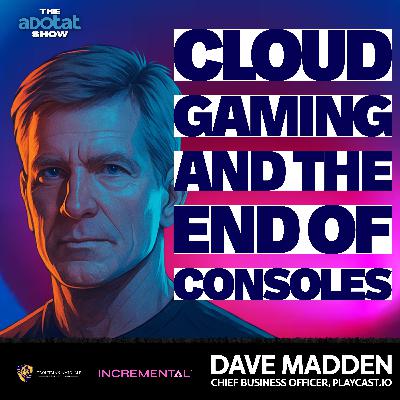
Dave Madden is the rare executive who doesn’t just have stories. He has receipts. In this episode of The ADOTAT Show, we walk straight into the eye of modern gaming, advertising, cloud chaos, and one of the wildest brand partnerships ever attempted. It’s a full tour of an industry desperately trying to innovate while tripping over its own jargon.Dave takes us all the way back to his WildTangent years, where rewarded ads were born long before today’s pitch decks pretended to invent them. He breaks down how he and Alex St. John reunited after decades apart, why a “barn full of PhDs” might actually be the future of cloud gaming, and how Playcast.io could rewrite discovery, access, and game economics in a way hyperscalers probably don’t want you thinking about.We also get the uncensored version of the Titanfall-Mt. Dew-Doritos incident: a global promo with hundreds of millions of packages already printed, sitting on shelves, while the game itself flirted with a delay. Dave describes the moment he realized the entire operation could implode. And what he did next. Survival mode, not spin.From there, we dive into Dave’s unfiltered assessment of adtech’s chronic delusion problem. He talks about “vaporware,” Cannes cosplay, and the industry’s obsession with pretending innovation is whatever shiny buzzword someone stapled to a slide last week. His quote about adtech being “an industry of lampreys sitting on the back of a whale” is the kind of line that should probably be printed on a plaque and sent to every CMO.We talk brand soul, too. Dave walks us through the Lululemon campaign that almost got Duke Stump fired but ended up saving the brand. He breaks down why some brands should be excommunicated from the Church of Authenticity entirely, and why gamers don’t hate ads—they hate being treated like idiots. There’s a difference.We wrap with the desert-island picks, the identity that actually matters when everything collapses, and the “achievement unlocked” Dave wants on the final screen of his life. Spoiler: it’s not about titles. It’s about people.If you want the real story of where gaming and adtech are heading—not the sanitized conference version—this is the episode. Pour a drink, cancel your next meeting, and watch a master dismantle the mythology.Stay Bold, Stay Curious, and Know More than You Did Yesterday.
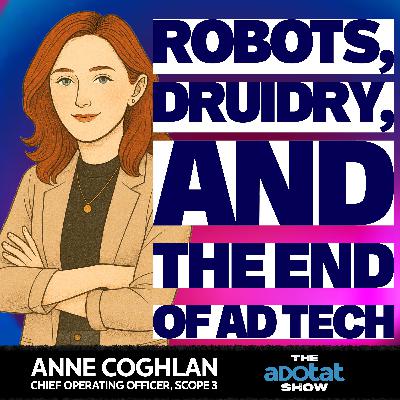
Strap in. Anne Coghlan — co-founder of Scope3 and one of the few adults supervising the industry’s AI experimentation — joins The ADOTAT Show to explain why the ad-tech ecosystem is teetering on the edge of a long-overdue reckoning.If you’ve ever tried to understand programmatic and ended up feeling like you were reading a ransom note assembled from mismatched acronyms, Anne is here to decode the mess. She walks through why AI agents shouldn’t be treated like futuristic prophets, but rather like “smart interns” who need guardrails, human supervision, and — most importantly — a protocol that prevents them from burning the house down.We dive deep into the logic, engineering, governance, and sheer absurdity of a marketplace where one publisher can somehow have 24,000 resellers, entire layers profit from “data mud,” and MFA sites thrive by gaming the gaps that no one wants to talk about publicly.Anne doesn’t do euphemisms.She talks plainly about waste, fraud, obfuscation, sustainability, outcomes, and why the industry is held together by habit more than design. She explains how AdCP rewrites those rules, how agentic negotiation actually works, and why it’s time for the ecosystem to evolve on purpose — rather than stumbling forward on top of a decade’s worth of duct tape.This episode is far more than another AI-ad-tech fireside chat. It’s a blueprint for the next era of digital marketing, created by someone who actually understands the pipes, the politics, and the incentives.If you want to know where the ecosystem is heading — and who’s sweating behind the scenes — this is the episode you don’t skip.💬 Deep-Dive Topics We Hit(yes, we hit all of this)• How AdCP actually functions (beyond slide-deck mythology)• Why AI agents need guardrails, supervision, and human veto power• Multi-hop supply chains & why 24,000 resellers is not a rounding error• Ad fraud, MFA patterns, and the “crap and waste” Anne wants gone• The carbon footprint of bad media and why sustainability correlates with outcomes• What “agentic negotiation” looks like — and why it's nothing like RTB• Creative + context reasoning: the missing puzzle piece• Why publishers finally regain leverage in an agentic marketplace• How brands shift from “spend allocation” to genuine outcome architecture• The coming political battle: AdCP vs ARTF vs UCP vs “the old guard”• Who gets left behind when transparency stops being optional• Human-in-the-loop: what automation still absolutely cannot do• What goes extinct, and what replaces the ad-tech fossils🔎 SEO-Friendly Keywords (integrated into description)adcp, “ad context protocol”, “agentic ai”, ai agents, scope3, “anne coghlan”, programmatic advertising, ad-tech interview, adtech podcast, supply chain transparency, ssp, dsp, retail media, mfa, ad fraud, inventory quality, attention metrics, ctv advertising, sustainability advertising, carbon measurement, media buying automation, artf, ucp, iab tech lab, bidstream, openrtb, ad auctions, privacy, identity, ad marketplace, media innovation, future of digital ads, “pesach lattin”, adotat, incremental.com, troutman amin, adtech news
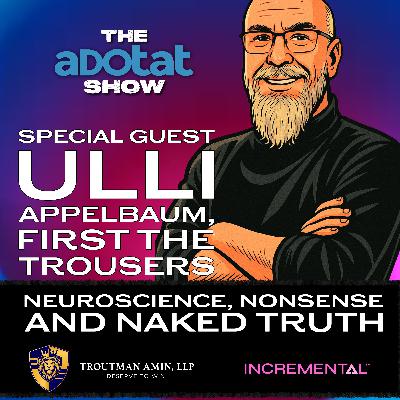
What do frozen pizza pilots, Febreze rituals, and Liquid Death have in common? According to brand strategist Ulli Appelbaum, they all prove one thing: your brand isn’t a logo—it’s a neural network firing in your consumer’s brain.In this episode, Pesach Lattin sits down with Ulli, founder of First the Trousers Then the Shoes, to strip branding down to its underwear and rebuild it with science, scent, and a splash of sarcasm.💡 Highlights:The Red Baroness: How turning a WWI pilot into a mom’s wingwoman made frozen pizza cool again.Brand as a neural network: Why your consumer’s brain is basically your brand’s hard drive.Febreze & ritual marketing: The psychology behind that final “clean” spray.The Liquid Death illusion: When cool branding hides an empty can.Purpose vs. pretense: Why Ulli calls corporate virtue signaling “lazy strategy in yoga pants.”Science over slogans: The 26 “association levers” that make memory your most valuable media channel.McDonald’s redemption arc: How emotional recall beats rational defense every time.This is branding without the buzzwords—a masterclass in meaning, memory, and merciless honesty about what actually moves market share.📚 From First the Trousers Then the Shoes to The Science of Brand Association, Ulli’s work merges cognitive science and marketing craft to prove that good strategy is just organized curiosity.🧠 Watch it. Think differently. And maybe stop pretending your purpose campaign is saving the planet.👉 Subscribe to The ADOTAT Show — where the industry’s brightest minds get grilled, lovingly, in HD.#ADOTATShow #BrandStrategy #MarketingScience #NeuralBranding #UlliAppelbaum #PesachLattin #Advertising #BrandLove #MarketingPsychology #LiquidDeath #Febreze #RedBaroness #FirstTheTrousersThenTheShoes
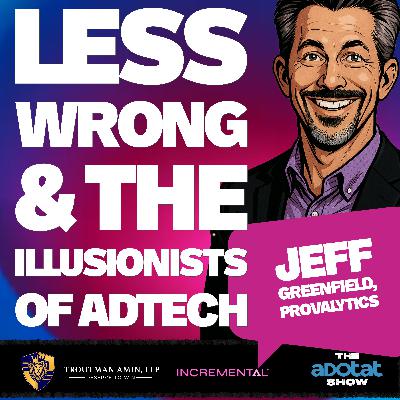
Jeff Greenfield doesn’t just work in adtech — he’s lived long enough to watch it become a tragicomedy of dashboards and delusion. He’s been a magician, a chiropractor, a pilot, and a data scientist — which makes him uniquely qualified to explain how this entire industry pulled a coin out of your ear, called it “attribution,” and invoiced you twice for it.In this episode of The ADOTAT Show, Pesach Lattin sits down with Jeff to unravel the most absurd, revealing, and occasionally magical truths about advertising’s obsession with proof. Together, they dissect the “data is the new oil” myth that turned measurement into a religion, analyze how last-click attribution became the Church of Denial, and explore why “optimization” now sounds suspiciously like “creative bankruptcy.”Greenfield explains what happens when you treat marketing like math — you get precision without persuasion, certainty without soul. He walks us through his now-famous “hose story,” where one brand cut awareness spend and accidentally proved that faith-based measurement isn’t just for religion anymore. And he dives into the Garden State Parkway analogy: a system clogged with SSPs, DSPs, exchanges, and verification vendors, all extracting tolls on the way from advertiser to audience.There’s talk of magic and measurement, of Jungian archetypes and the “collective unconscious” of advertising — that deep, emotional undercurrent brands used to tap before the spreadsheet became the creative brief. “People don’t actually want the truth,” Jeff says. “They want the story that feels true.”And that’s the point. AI can mimic creativity, but it can’t feel wonder. Data can measure engagement, but not belief. Great advertising isn’t a product of optimization — it’s a human act of imagination.Pesach and Jeff pull no punches as they expose how adtech’s “innovation layers” became little more than rent extraction, why Supply Path Optimization turned into “spiritual theater,” and how ad fraud remains the highest-reward, lowest-risk crime in the world. They end with the one metric that matters: the Return on Meaning.This episode closes the series “The Illusion of Precision,” where ADOTAT explores the gap between what the industry claims to know and what it actually understands. It’s a rare mix of humor, insight, and uncomfortable honesty — proof that data might tell you what happened, but only imagination can tell you why.🧠 Topics Covered:The Gospel of “Less Wrong” MeasurementThe Death of the Upper Funnel and the Rise of Left-Brain MarketingHow Over-Targeting Destroys Reach and ProfitThe Toll-Booth Economy of Adtech: Fraud, Fees, and Fake EfficiencyJungian Archetypes and the Lost Art of StorytellingAI’s Limits: Why Machines Can’t Channel InspirationThe Island Test: Can Your Marketing Survive Without Dashboards?Proof Without Magic Is Just Math💬 Best Quote:“All models are wrong,” Greenfield says, “but some are useful.”Sponsored by Troutman Amin and Incremental.com, who keep the lights on, the servers running, and the hosts just depressed enough to stay interesting. Without them, this show would be powered entirely by irony, caffeine, and broken attribution reports.🎩 Watch if you’ve ever wondered:Why your brand feels smaller even as your data gets bigger.#TheADOTATShow #JeffGreenfield #Adtech #MarketingPodcast #Advertising #AI #Creativity #Data #MediaBuying #Programmatic #Measurement #Attribution #LessWrong #adtechgod #adtechlearnbd
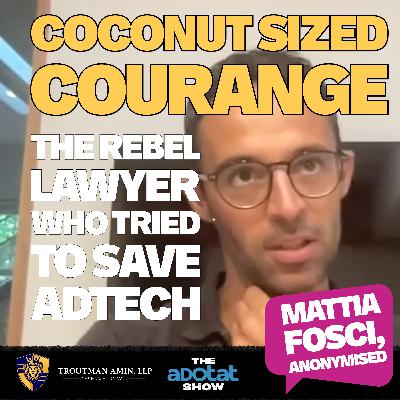
Welcome to The ADOTAT Show, where integrity meets insanity — and the only thing more dangerous than ad fraud is honesty.This week, Pesach Lattin sits down with Mattia Fosci, the lawyer-turned-activist-turned-ad-tech-CEO who’s been kicked out of Congress, nearly killed in a jungle, and somehow decided to take on the wildest beast of them all: programmatic advertising.Now leading Anonymized, Fosci is on a mission to prove that advertising doesn’t need to spy on you to work. He calls out the industry’s biggest myth — that IDs and endless data syncing make ads more effective — and explains why the obsession with attention metrics, click-through rates, and PowerPoint transparency reports is nothing but performance art.He doesn’t stop there. Fosci breaks down how AI should supervise machine learning, not replace it, why large language models are too slow to keep up with real-time bidding, and how his custom algorithms have already outperformed human planners two-thirds of the time. And yes, he actually says:“We’ve got access to all the world’s knowledge in our pockets, and we use it for cat videos.”Between jokes and truth bombs, Fosci talks about leadership, rebellion, and the art of staying human in a system designed to turn people into data. He explains why he’ll never sell out to Big Tech — even when offered millions — and why his grandfather’s old-fashioned lesson still guides him today: “There’s right and there’s wrong, and you always want to be in the right.”And then, with the dry grin of a man who’s survived both politics and ad tech, Fosci sums up his own legacy:“Smart guy with a bold vision — and two balls the size of coconuts.”It’s not just a punchline. It’s a business plan.Featuring:– Brutal honesty about ad tech’s supply chain rot– A masterclass in how AI actually works in programmatic– Leadership that’s part rebellion, part rationality– A reminder that decency still scales — if you let itSponsored by:Incremental – Helping marketers measure what really matters.Troutman Amin LLP – The legal sharp minds who keep innovation on the right side of the chaos.The ADOTAT Show:Where candor still counts, jargon dies young, and every guest leaves slightly more self-aware than they arrived.Stay bold. Stay curious. And know more than you did yesterday.

Comments

Download from Google Play

Download from App Store
 United States